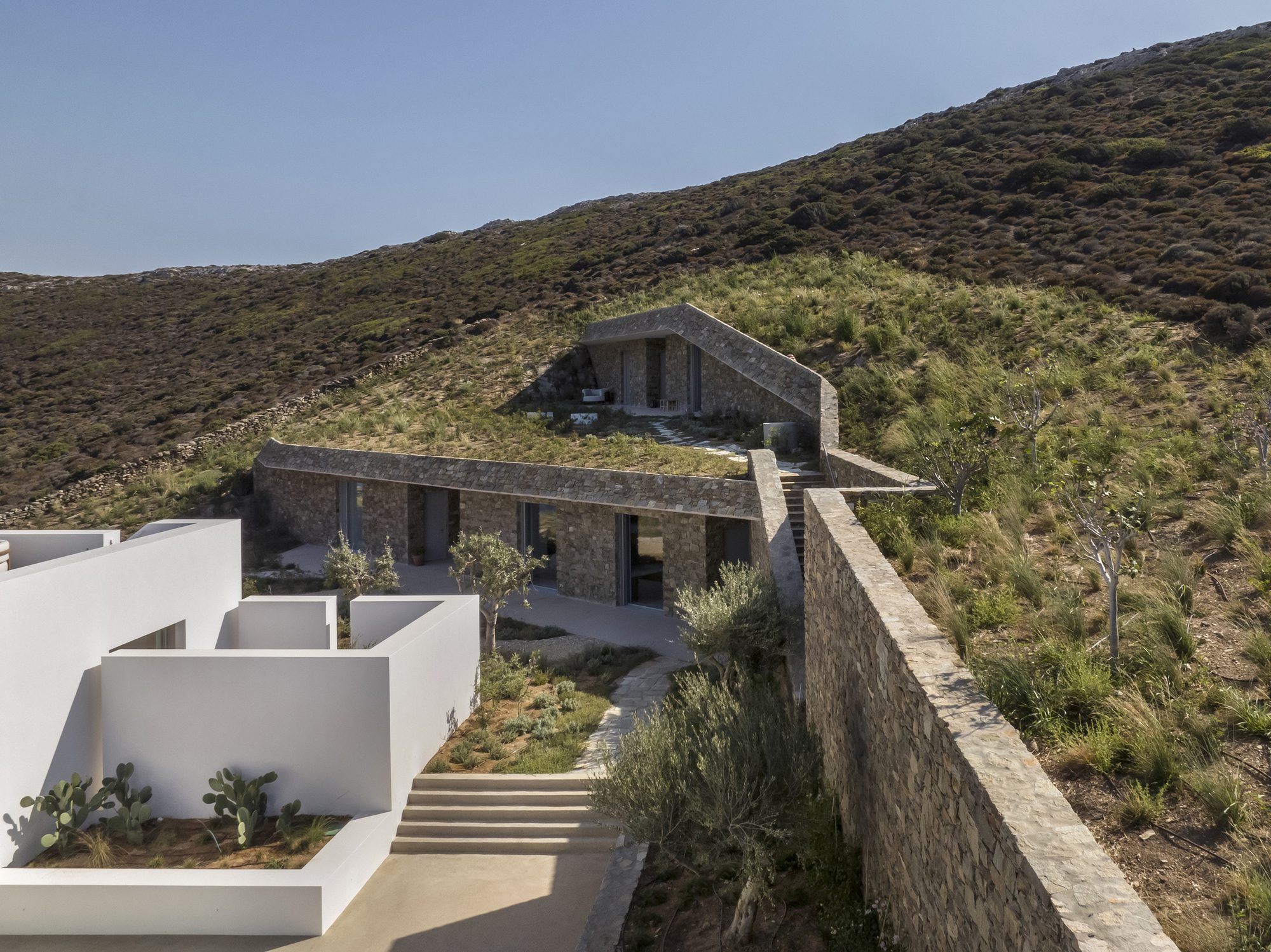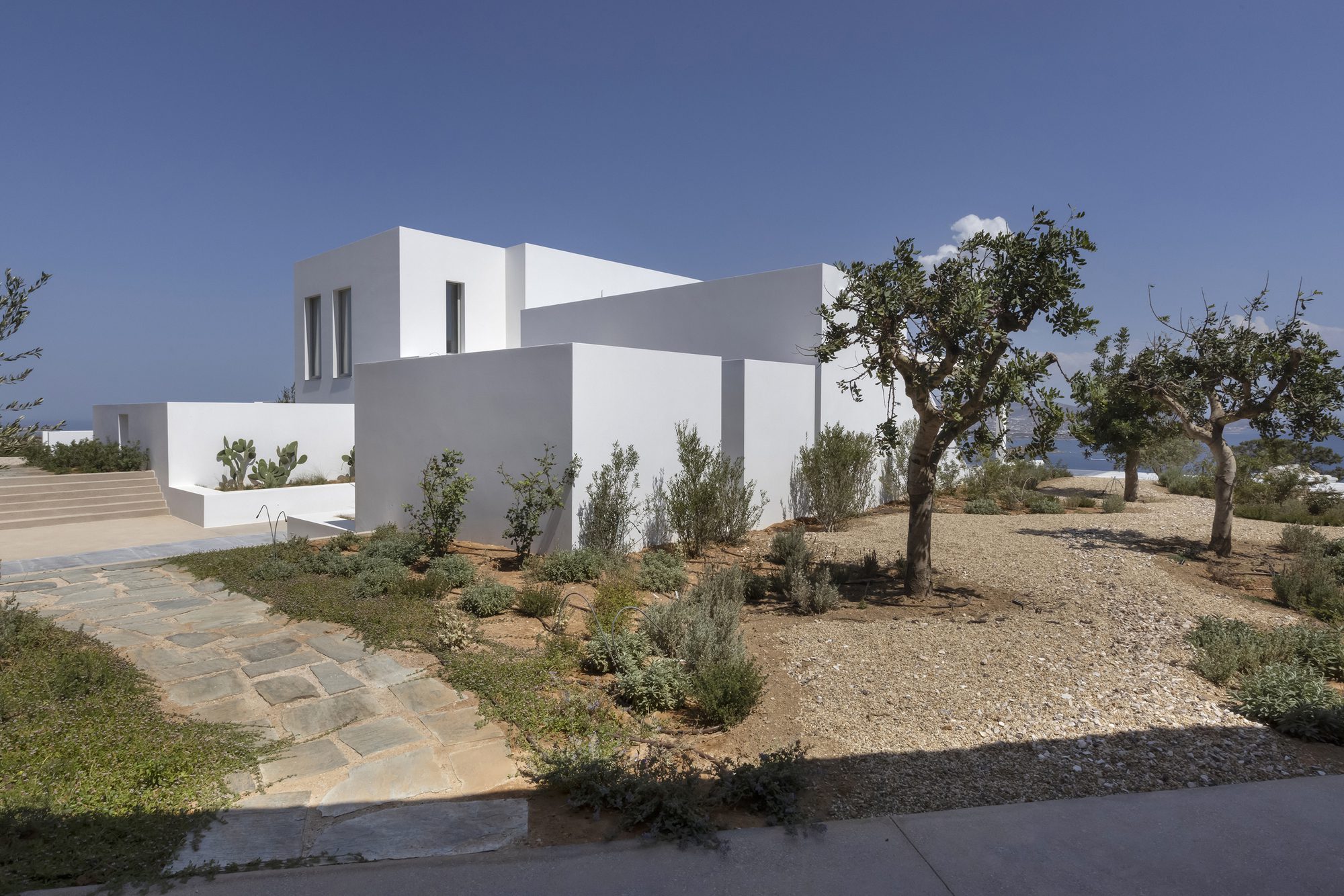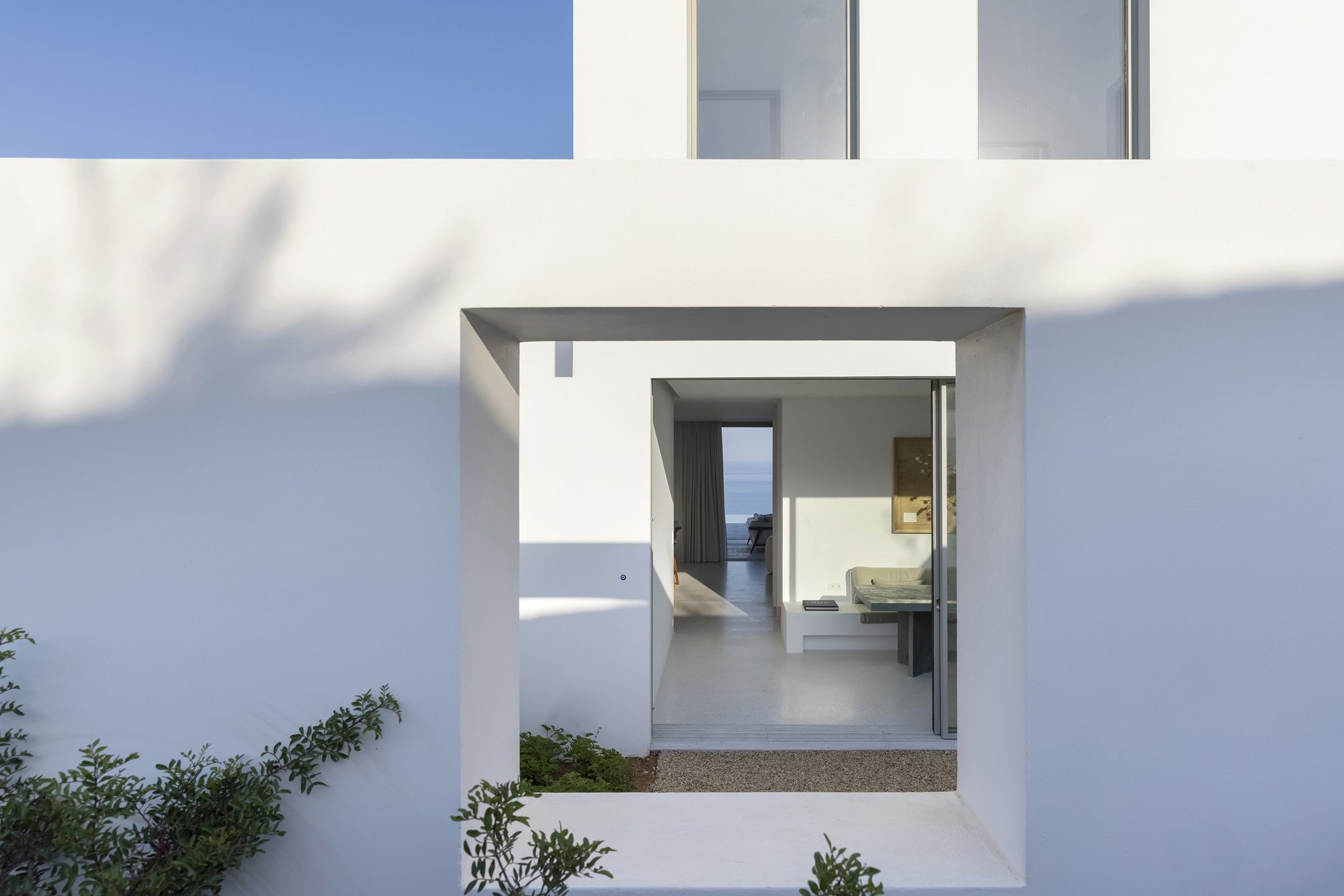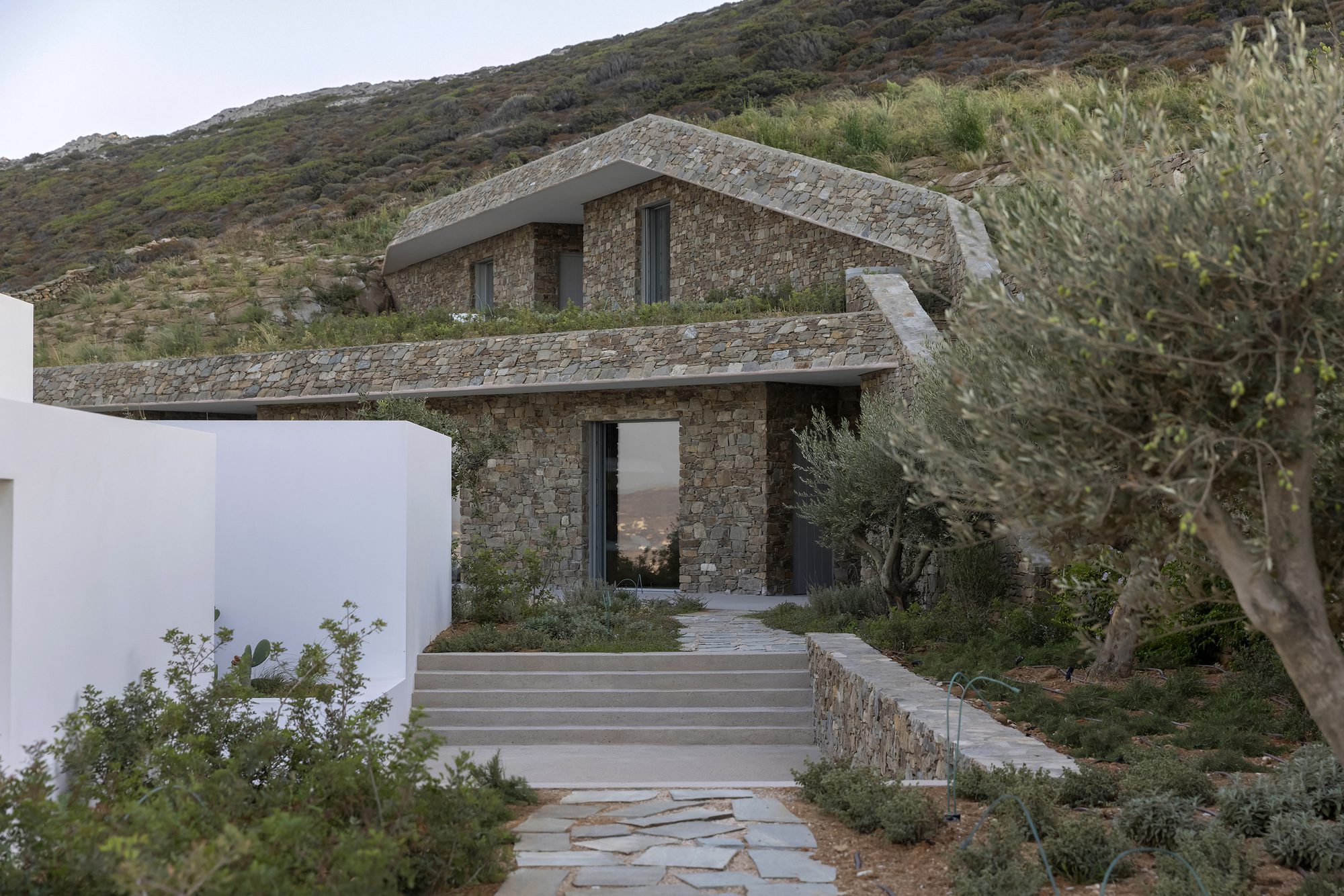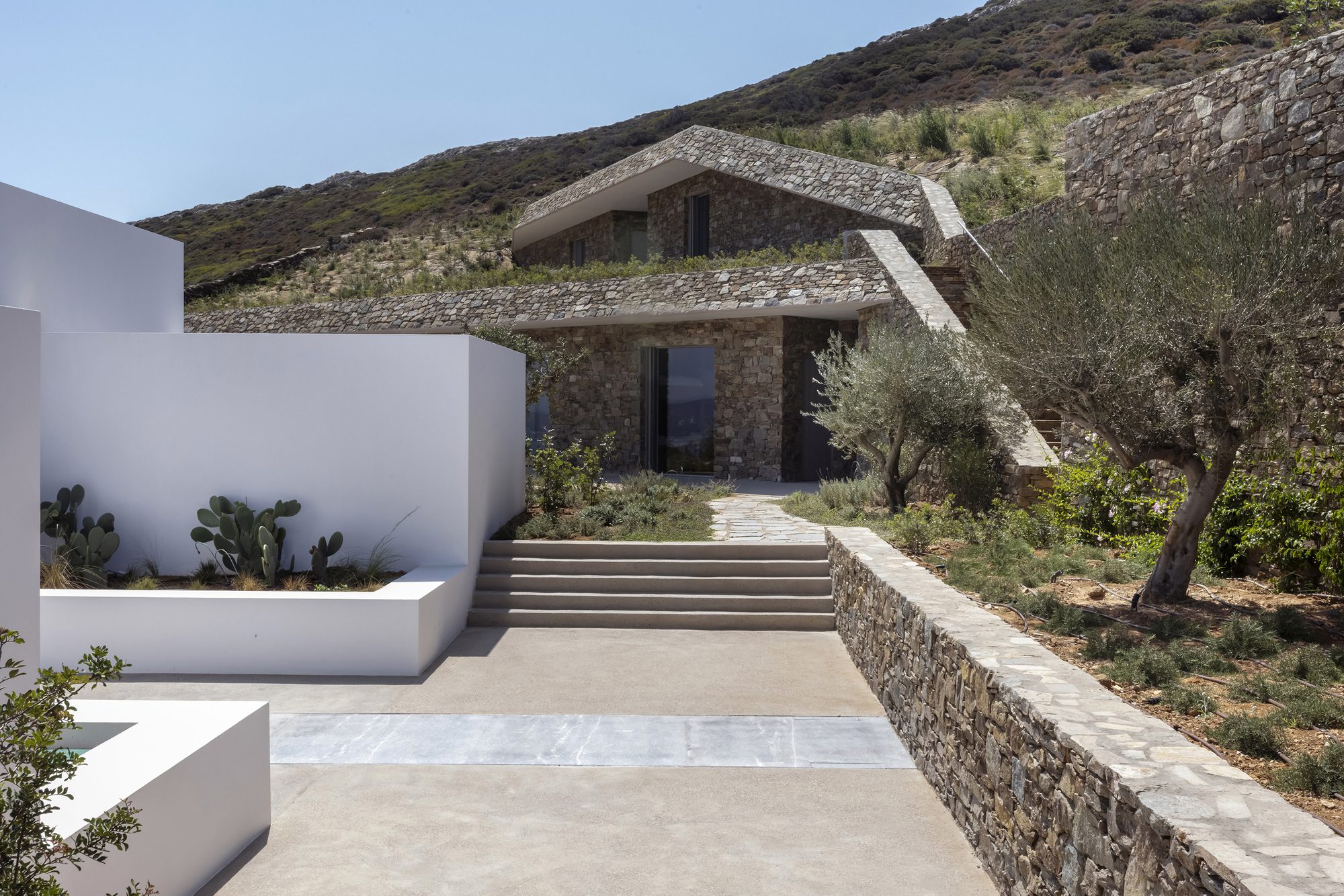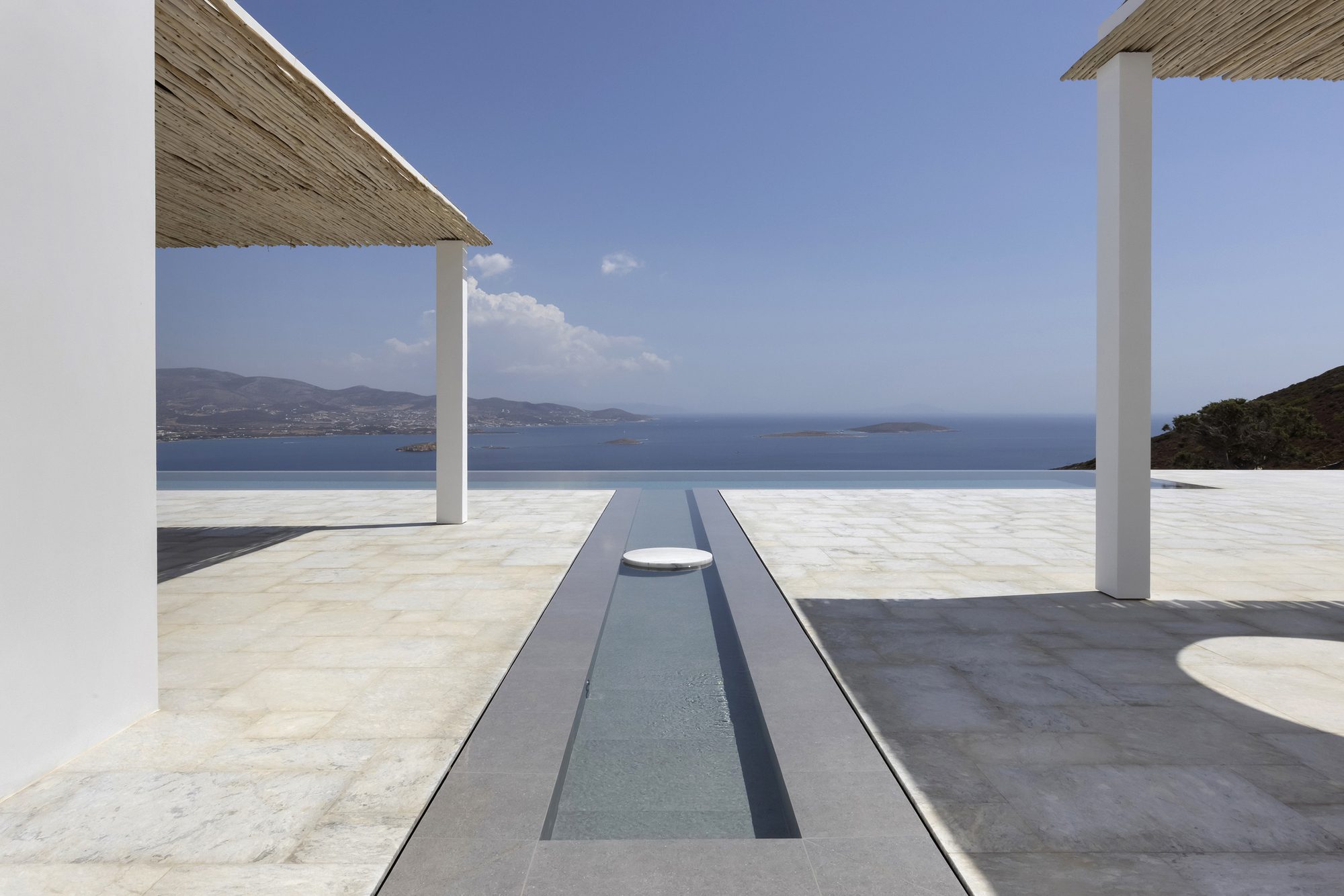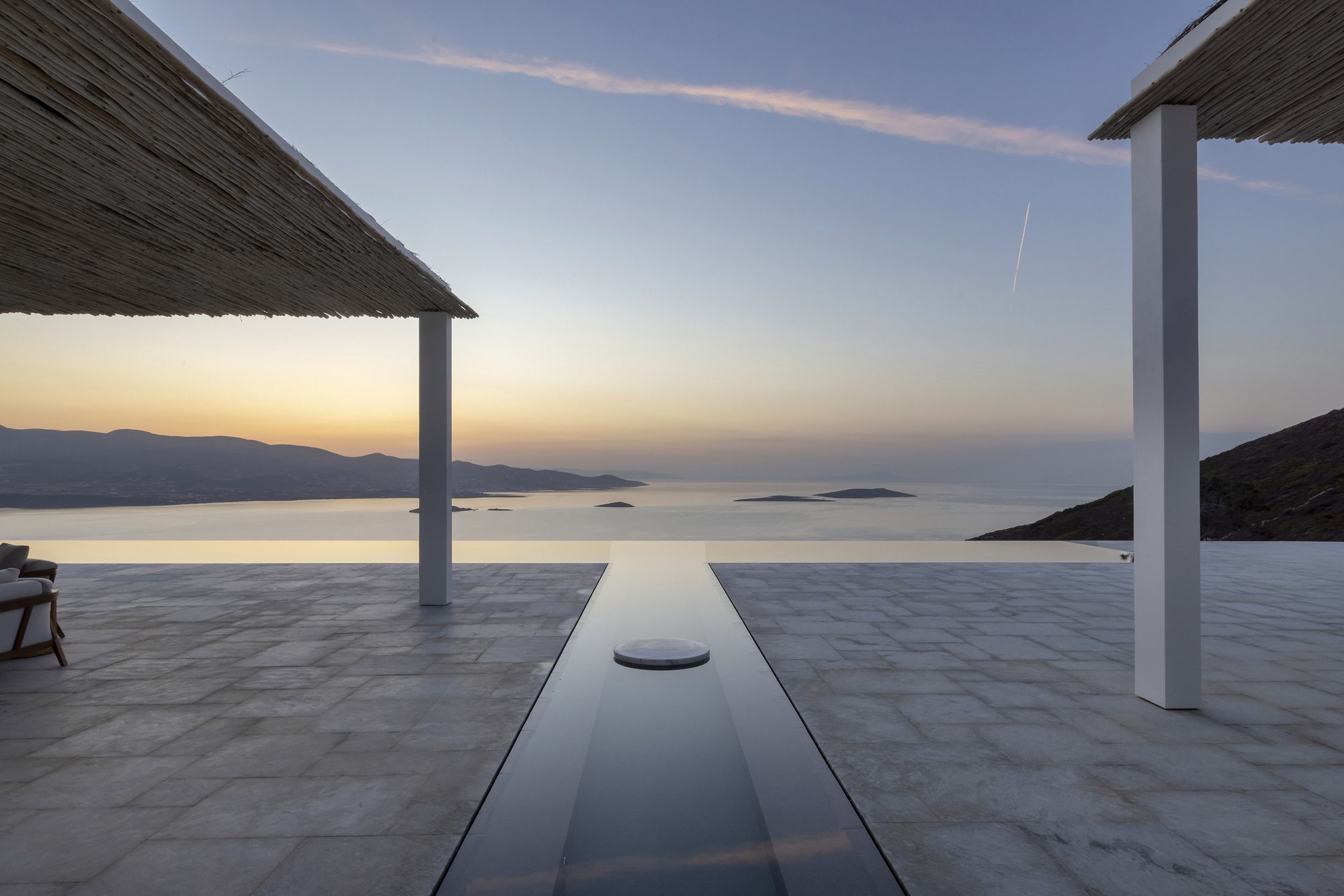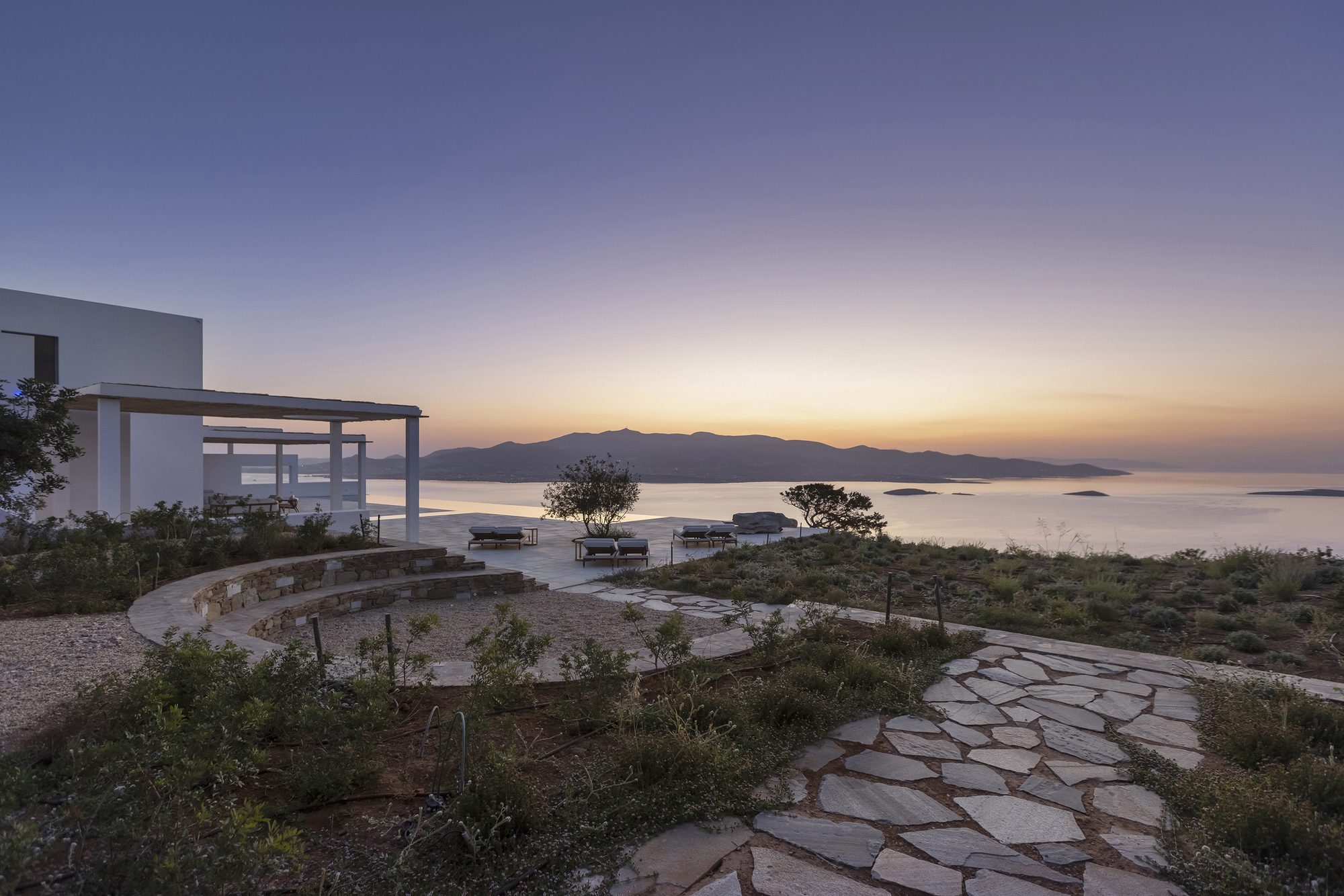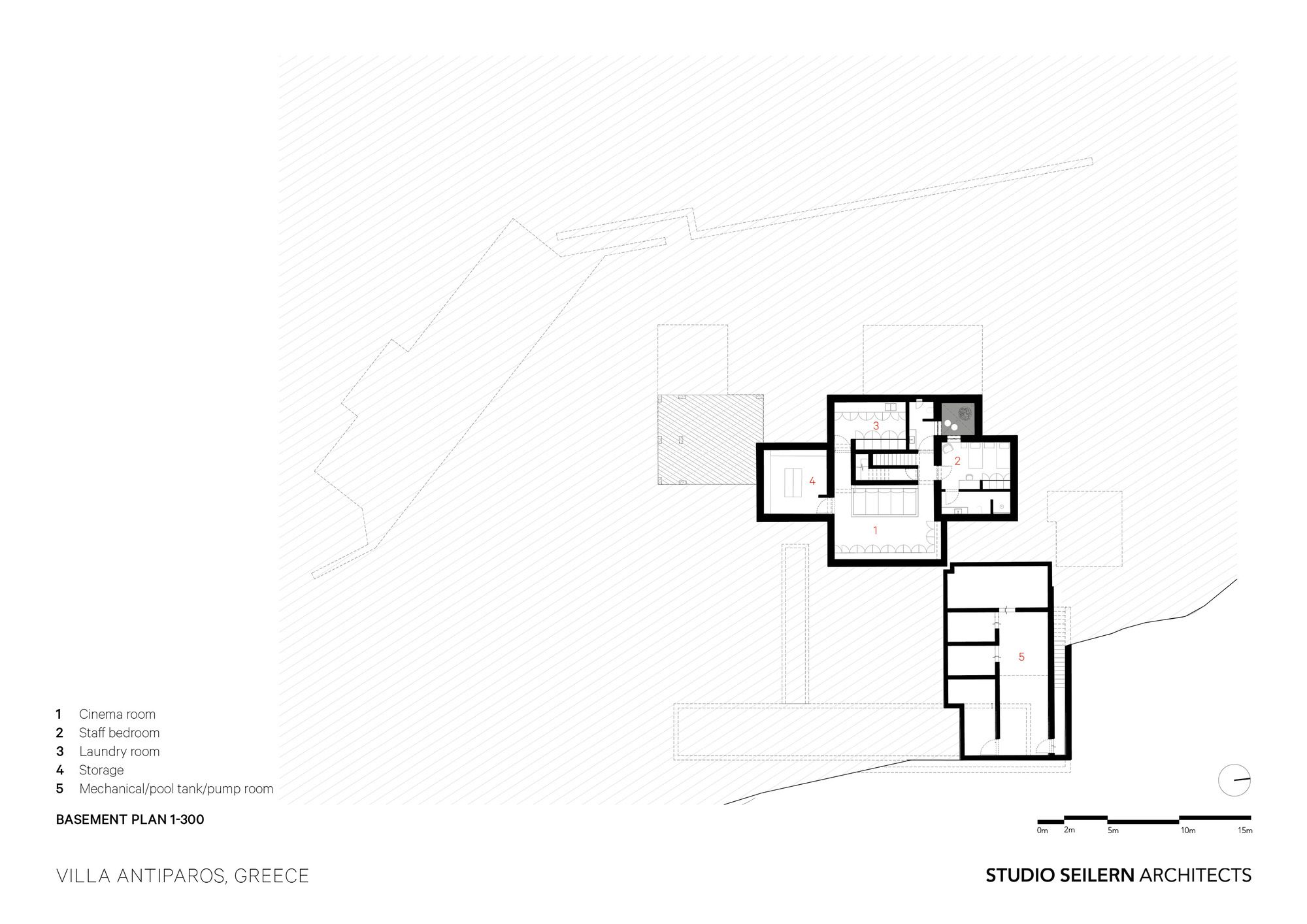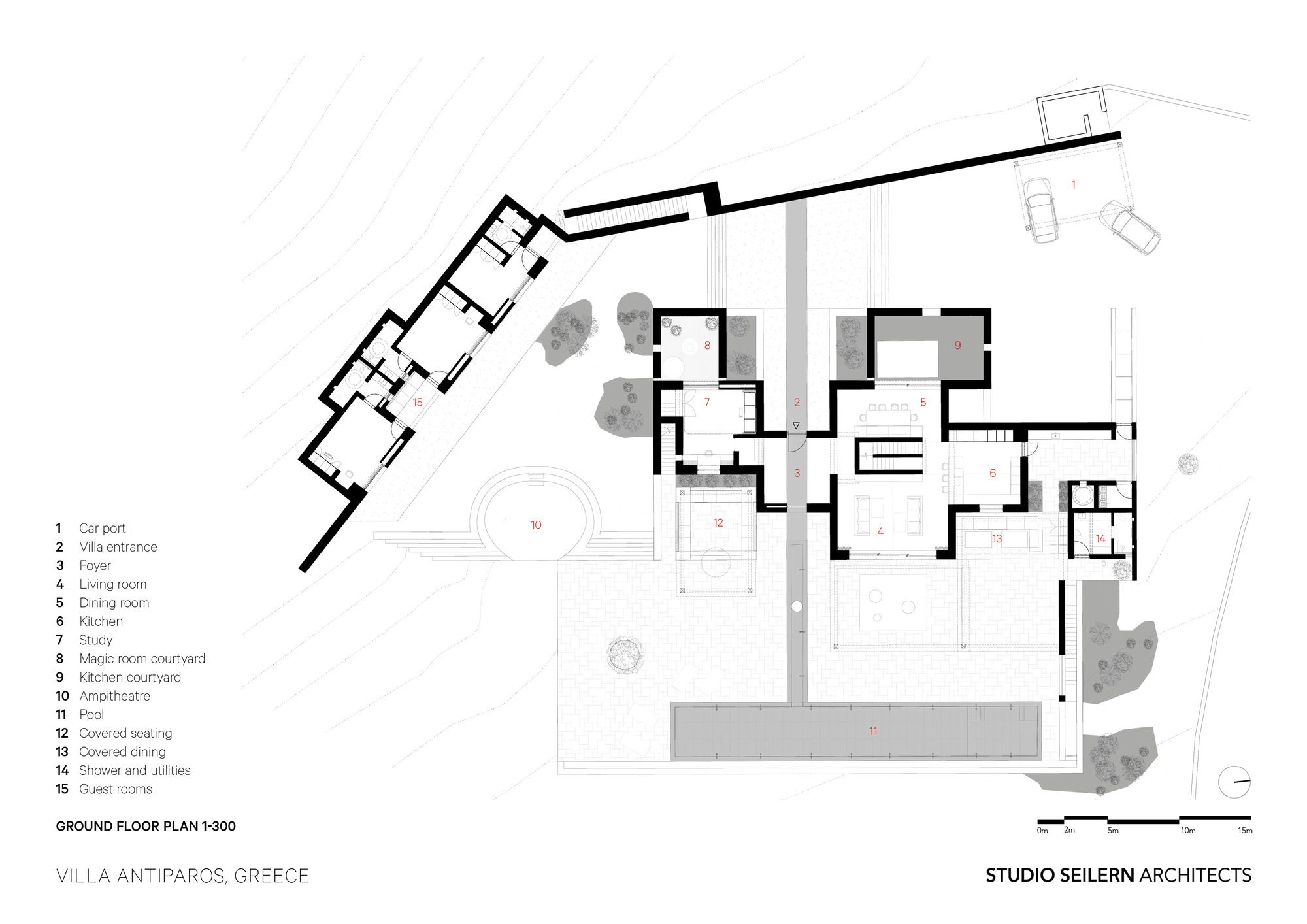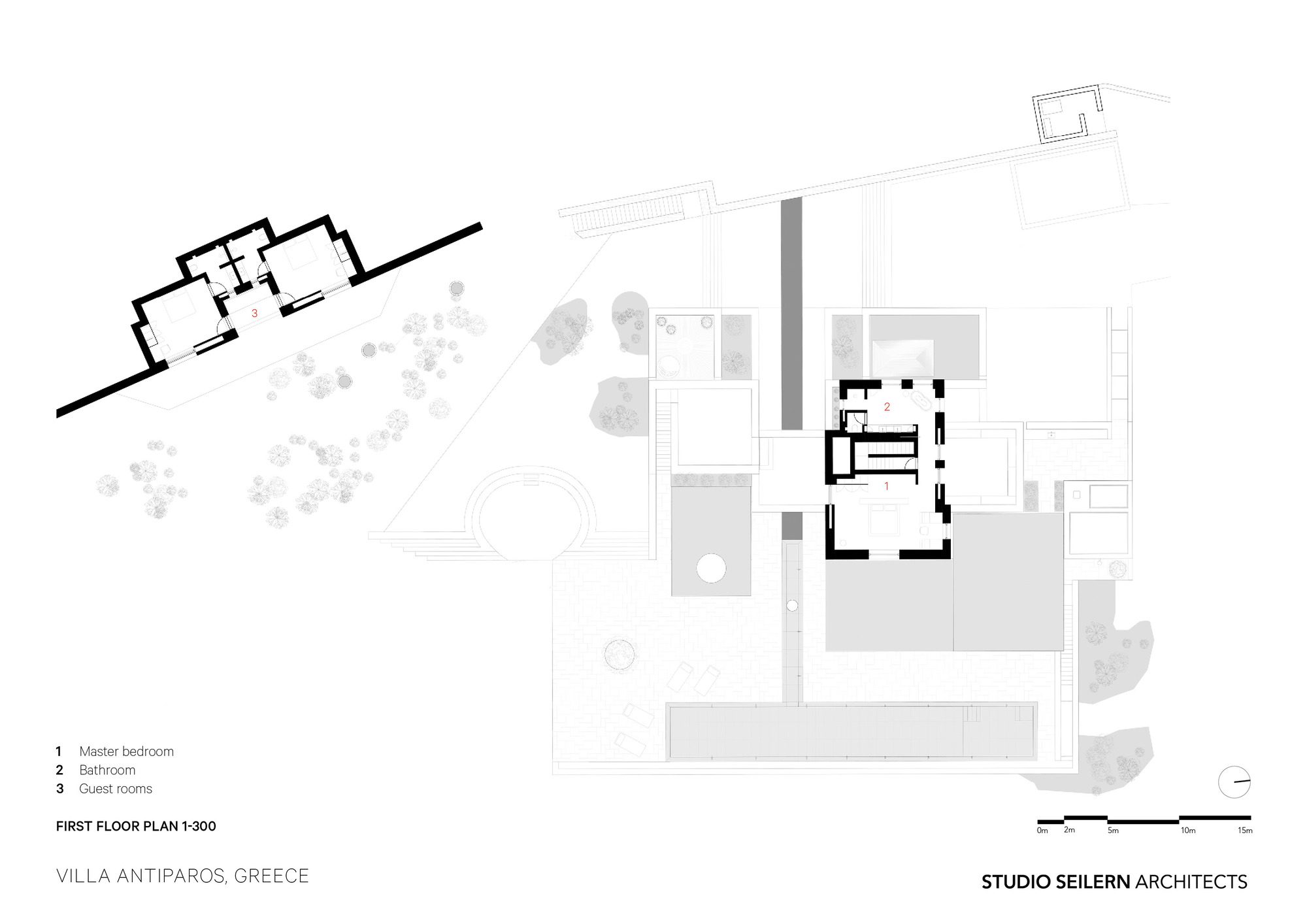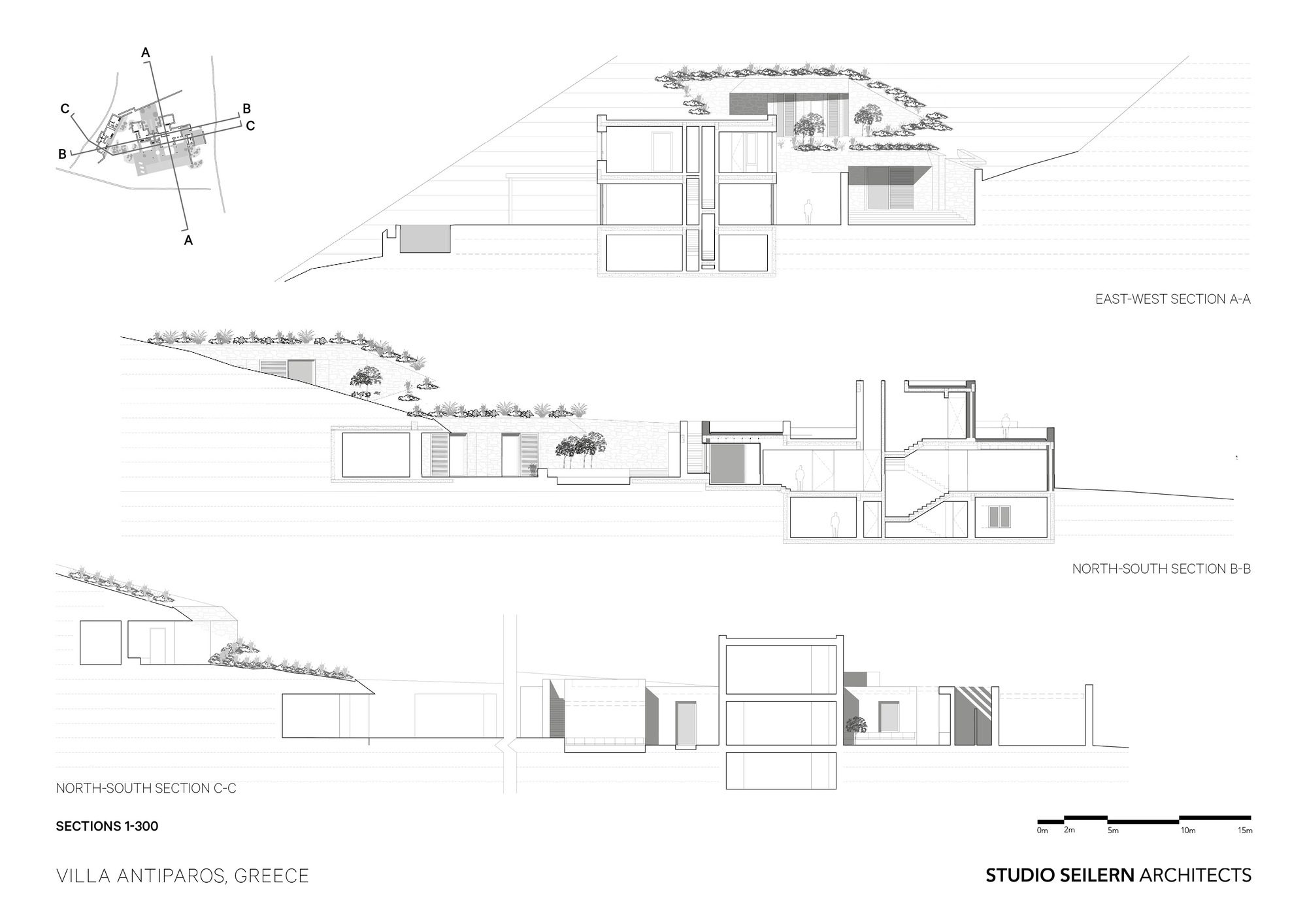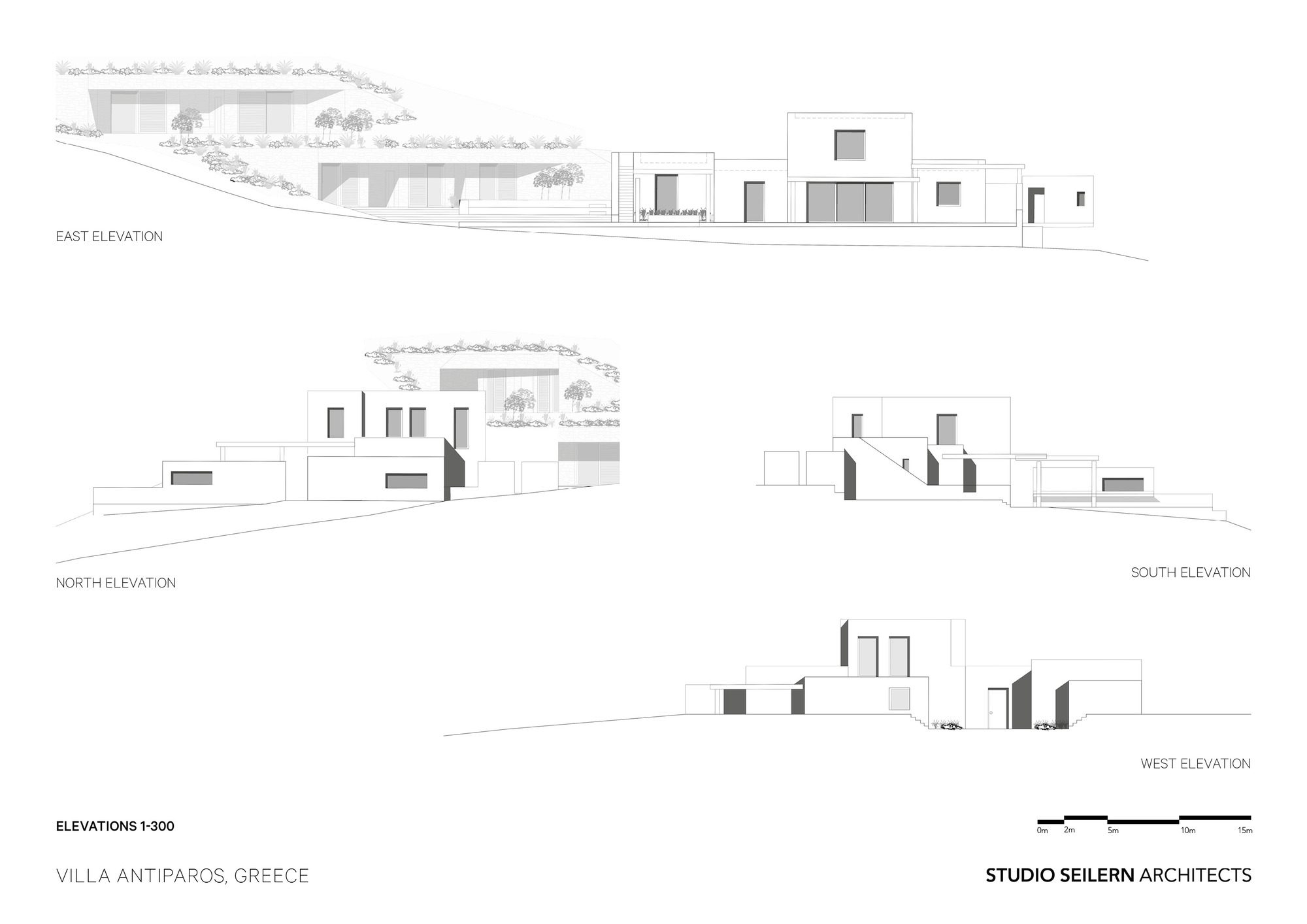

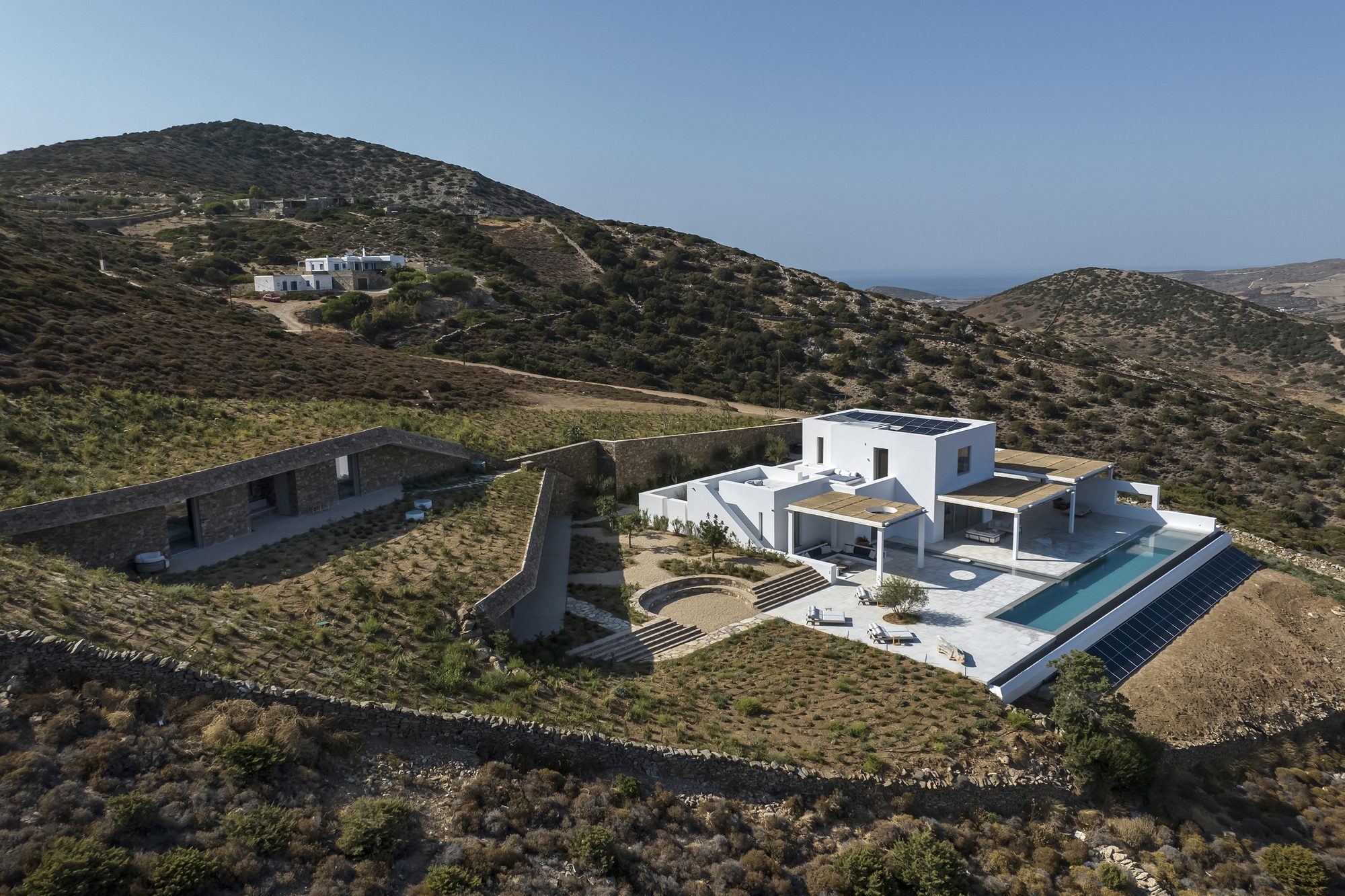
Antiparos Village, Perched on the hills surrounding Antiparos Islands’ caves, this seasonal residence boasts expansive views of the Cycladic archipelago from the island of Tinos as far south as Sikinos. The sloping property is dotted with three building clusters – a white house and two subterranean slits on the mountainside – giving the project the name ‘Antiparos Village.’ Between these volumes, a sensitive landscaping of trees and shrubbery reveals organic pathways through a terraced garden, which connect the distinct buildings into an intimate, yet quietly private, whole.
© Louisa Nikolaidou
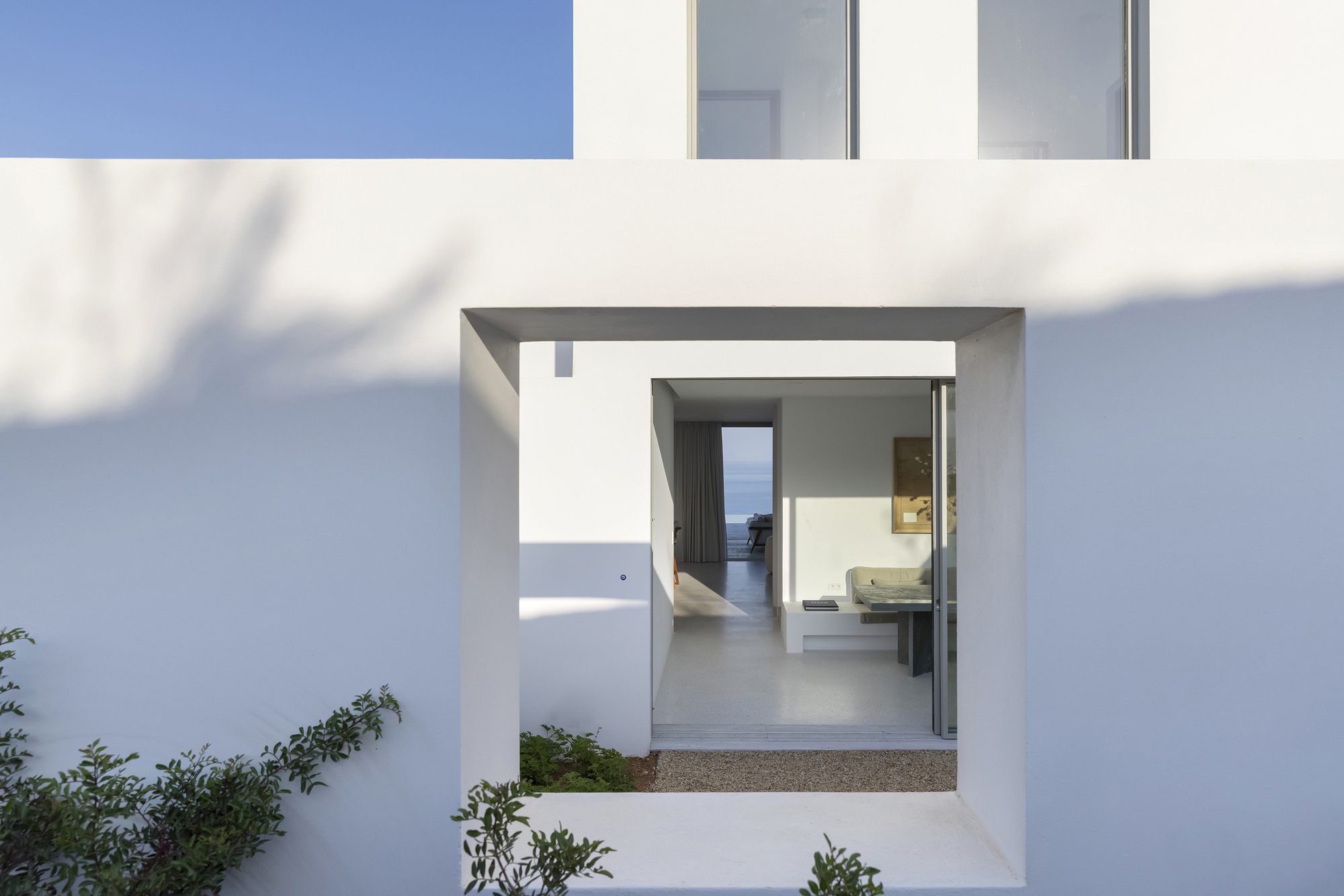
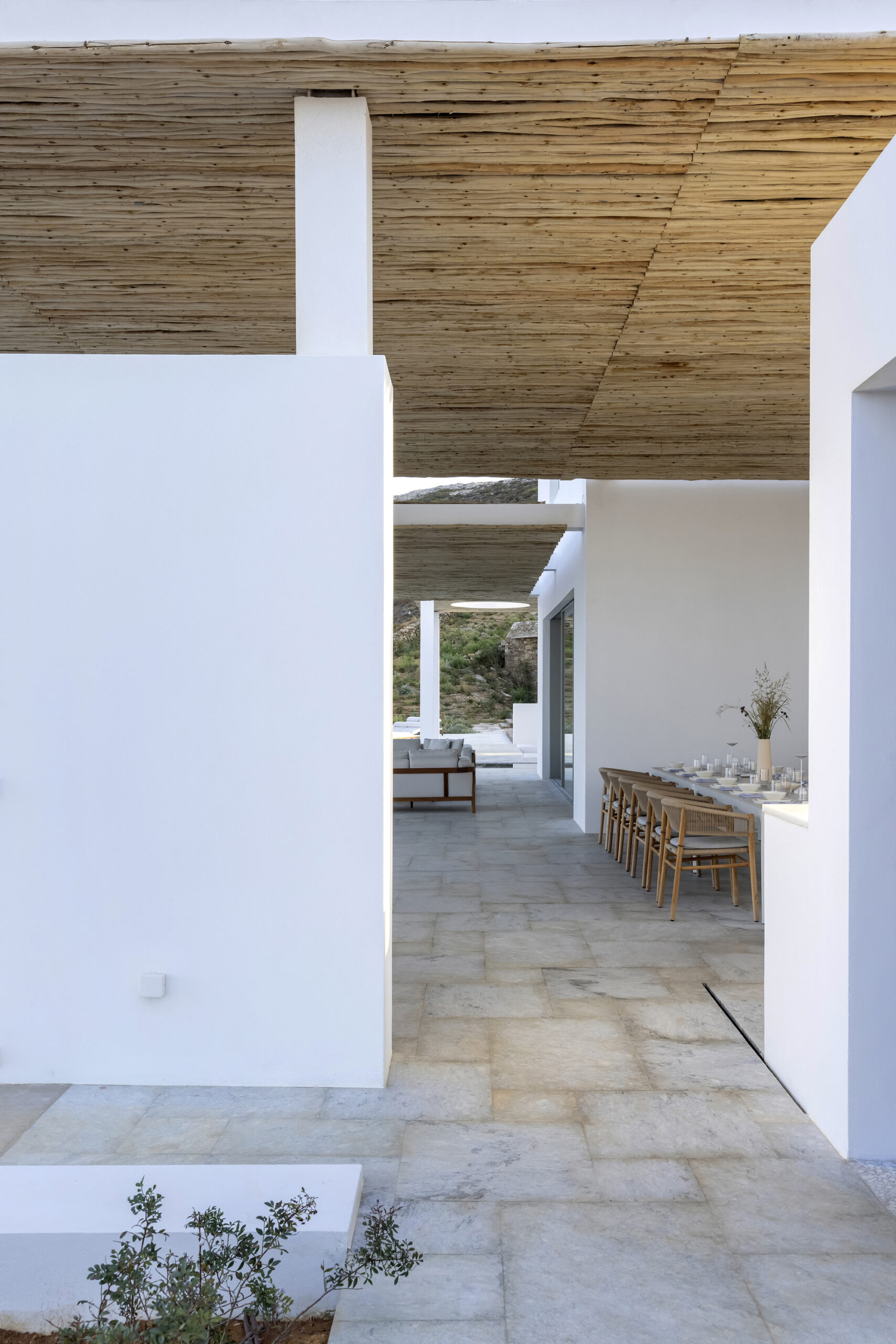
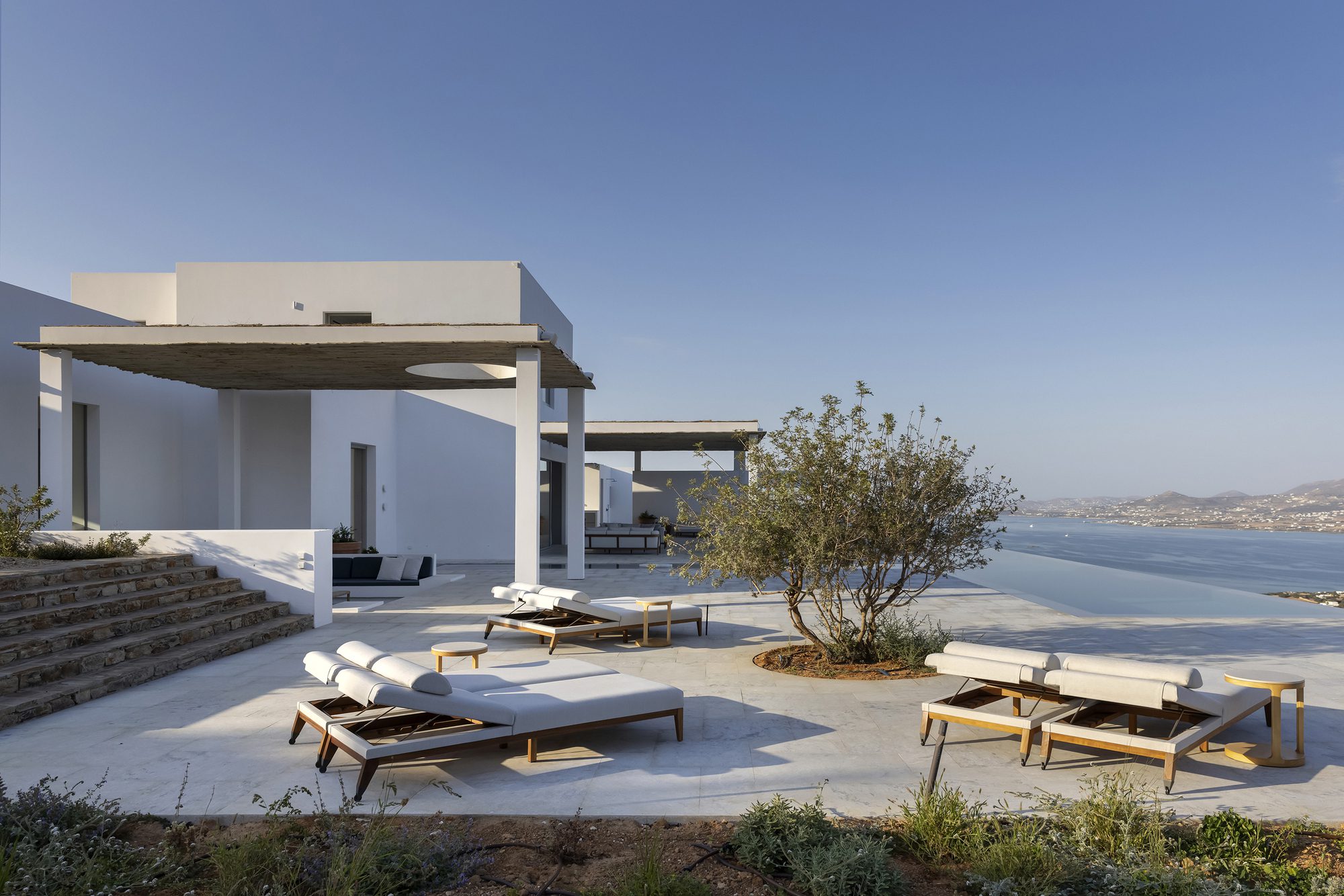
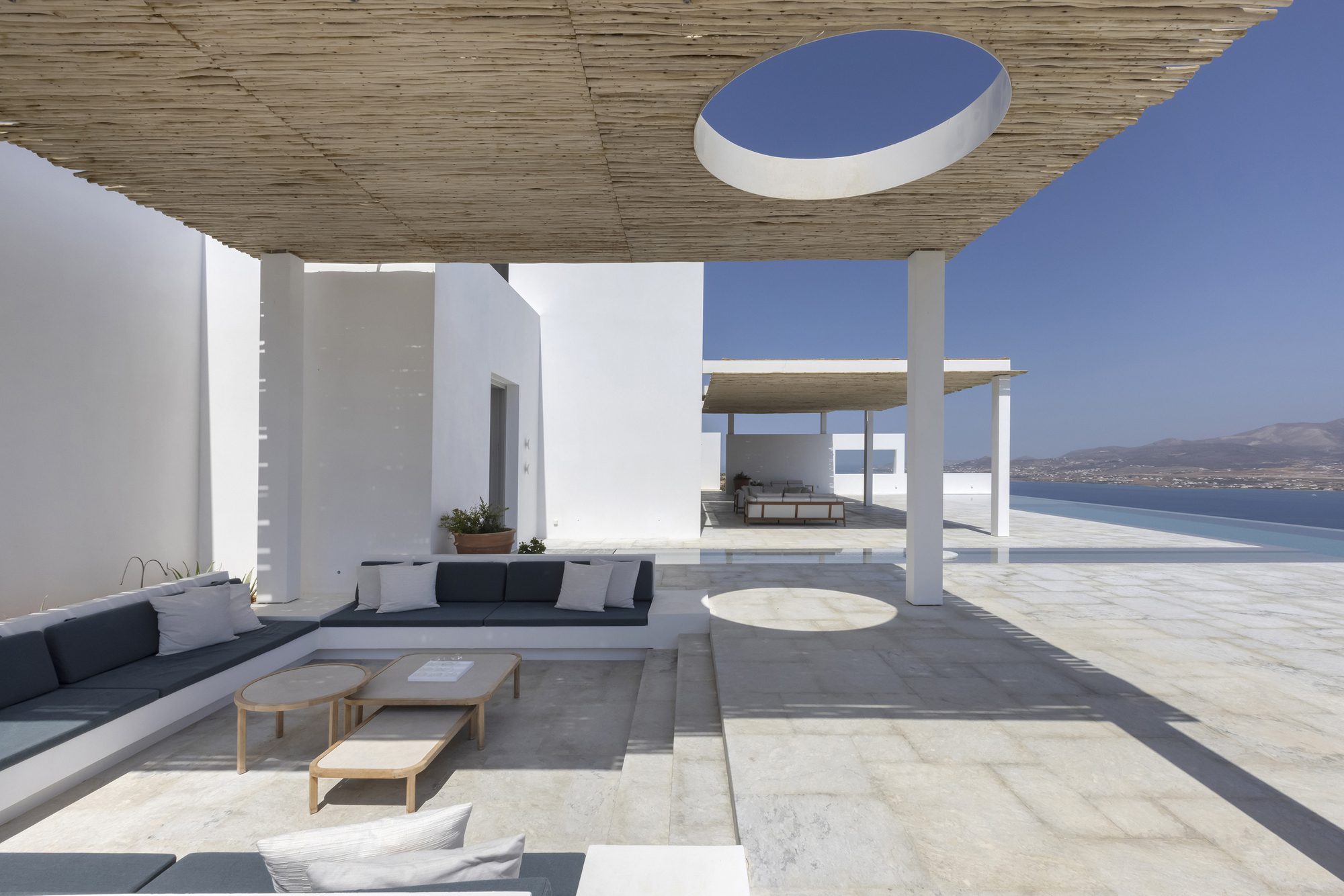
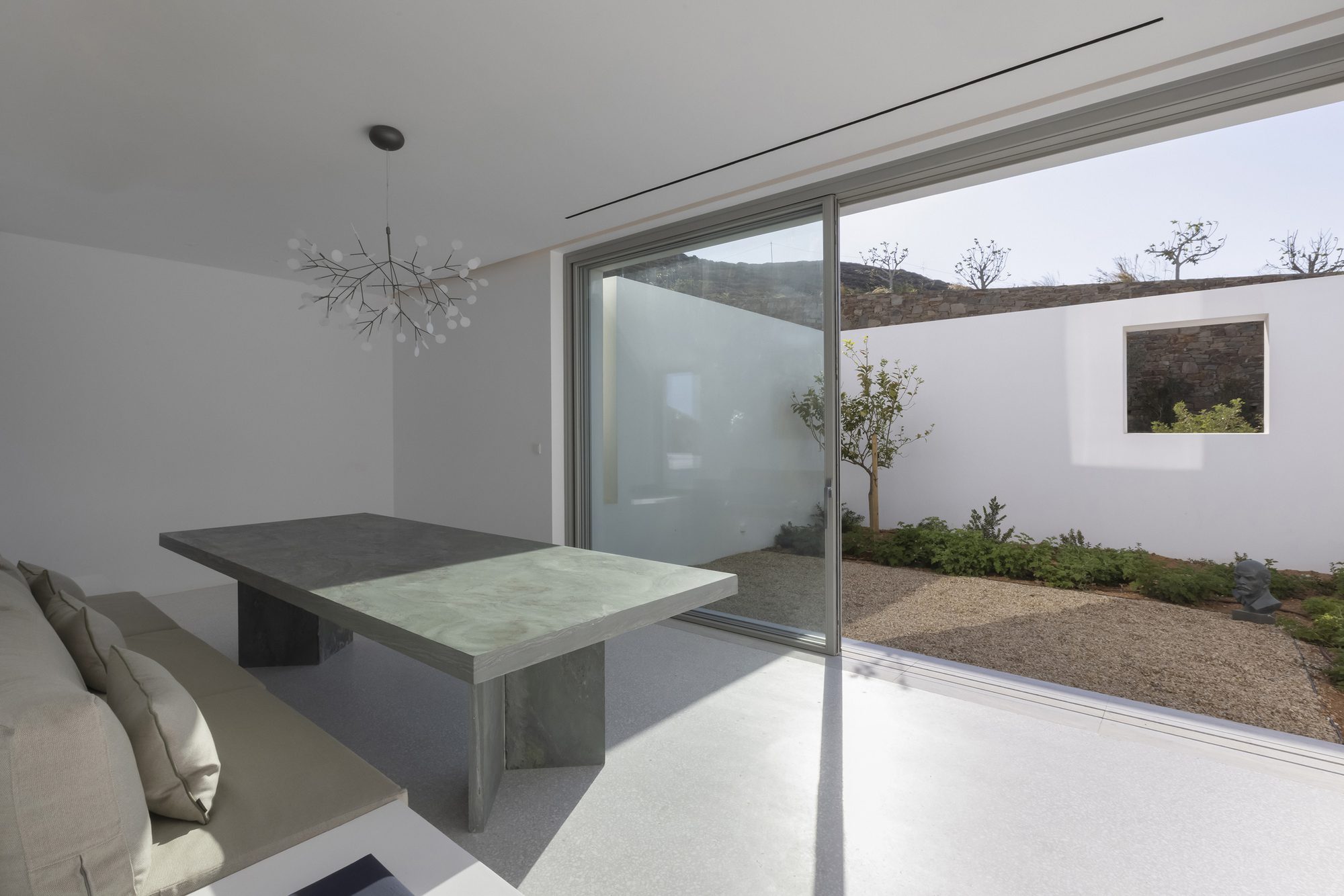
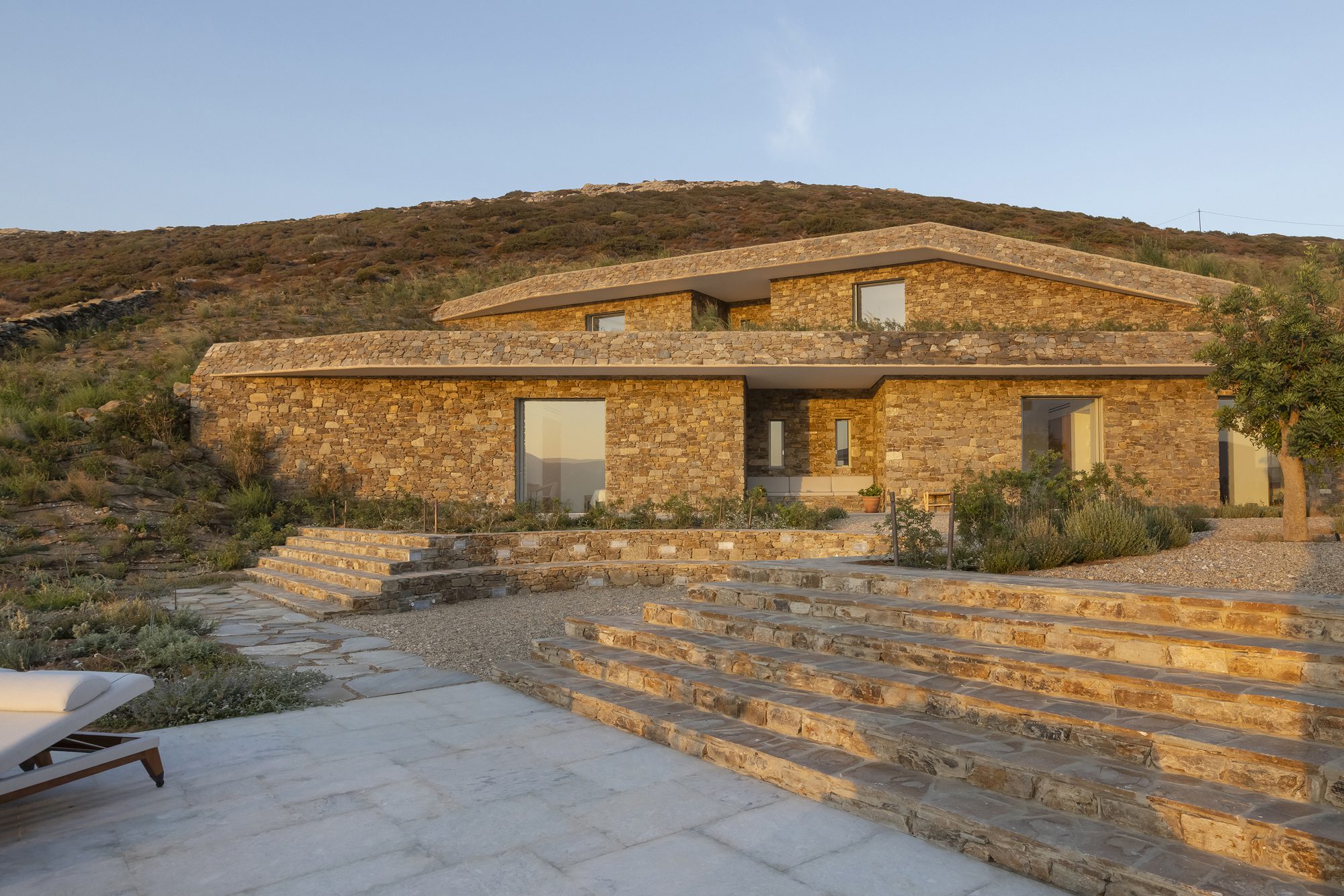
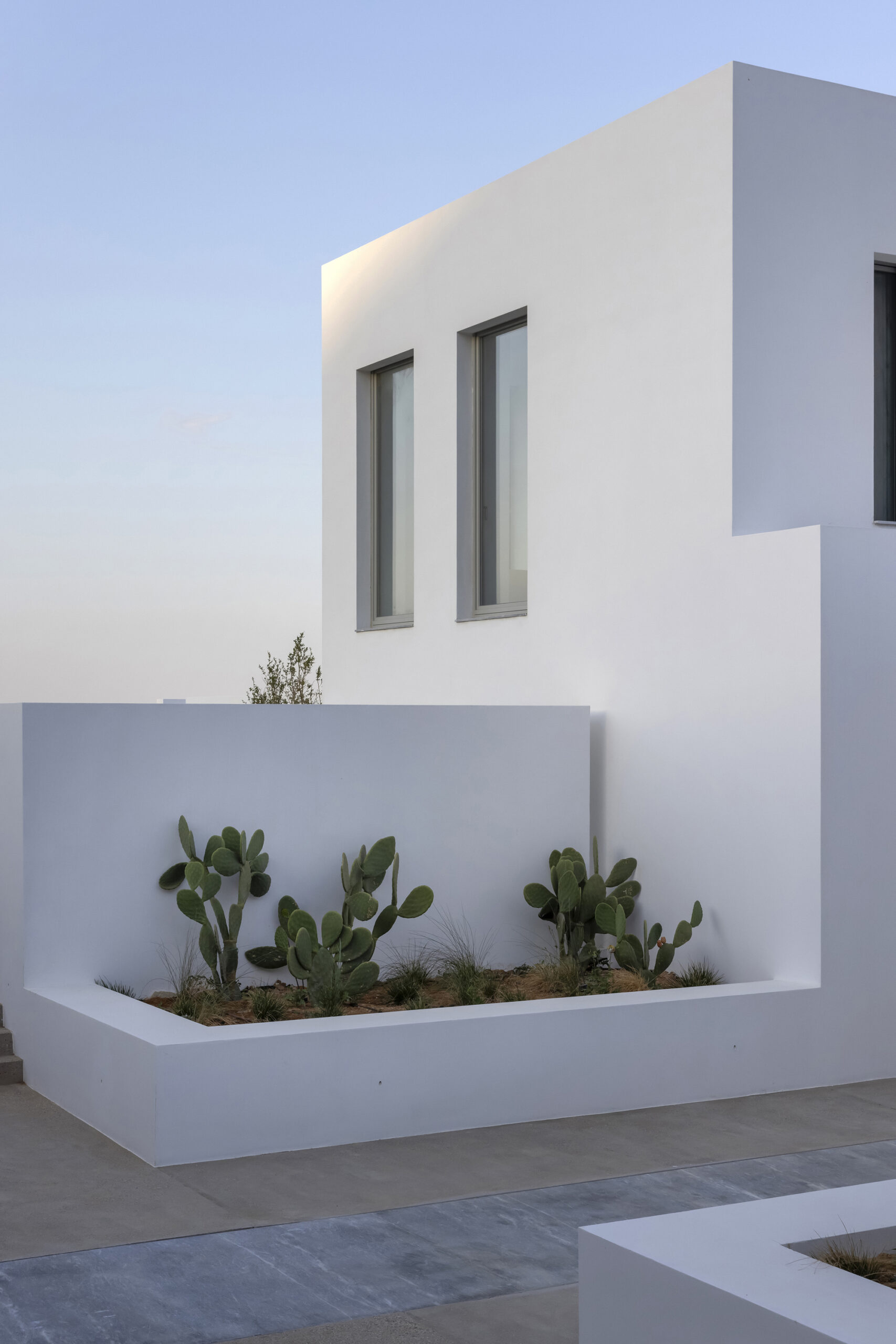
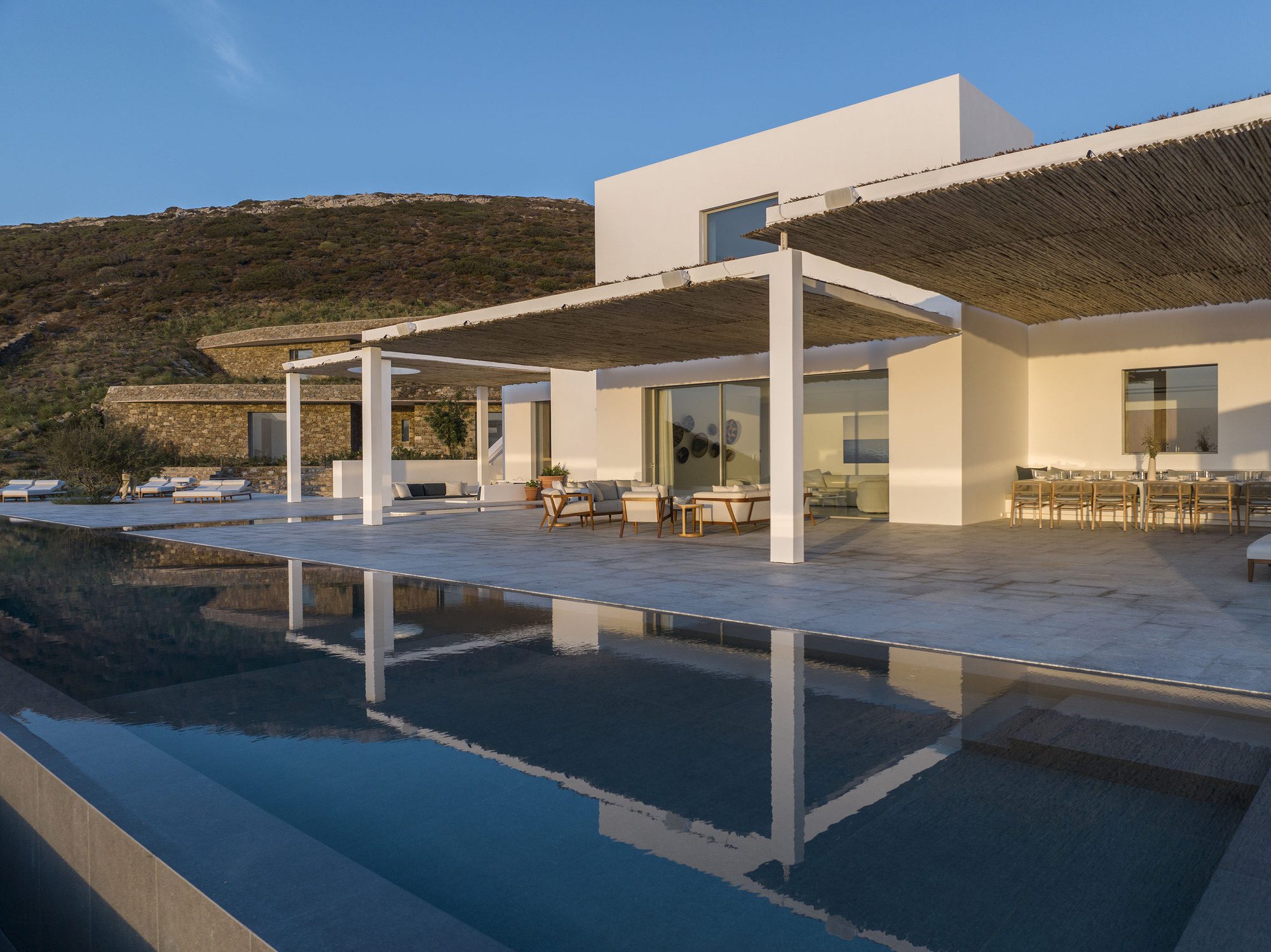
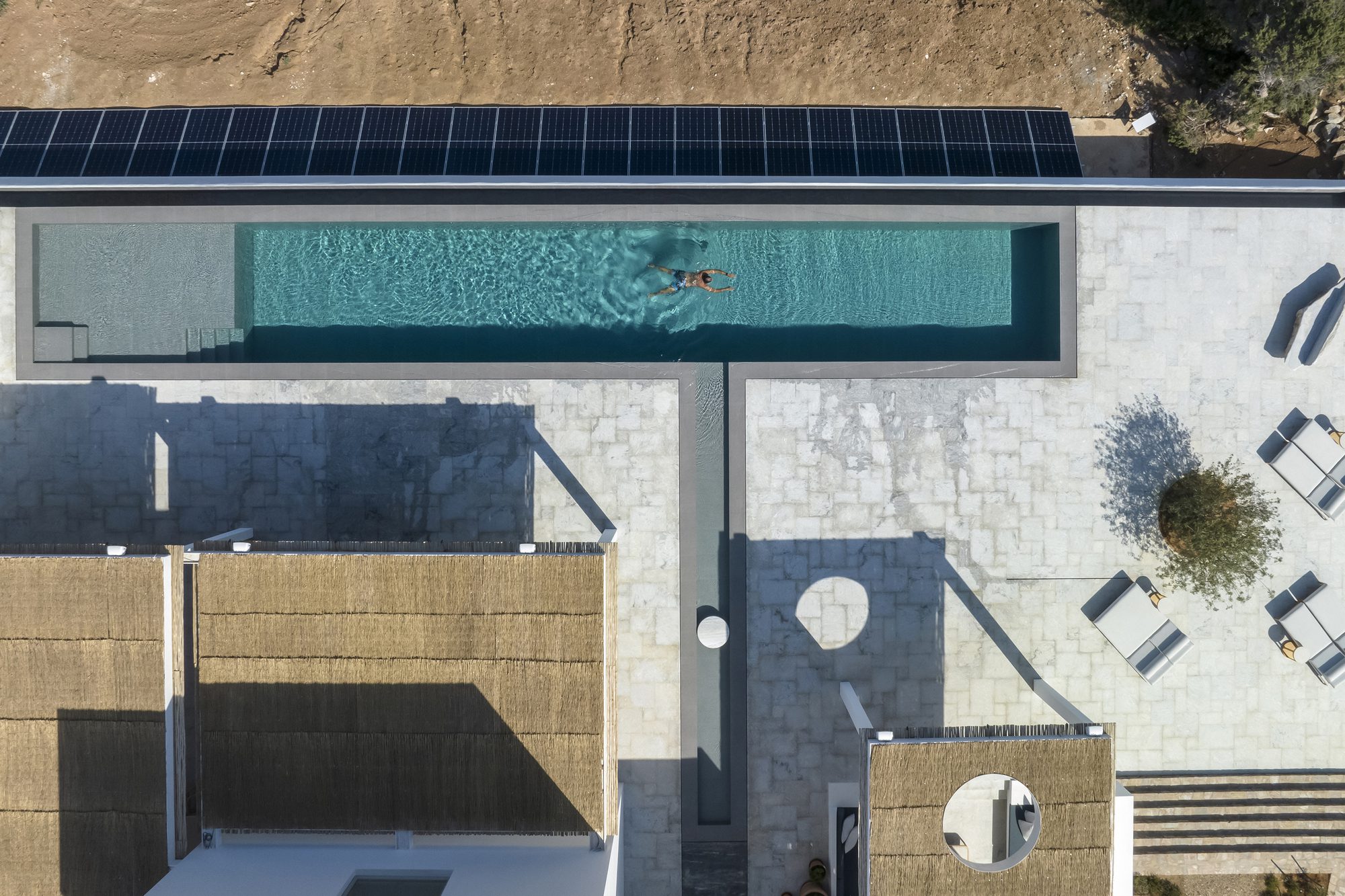
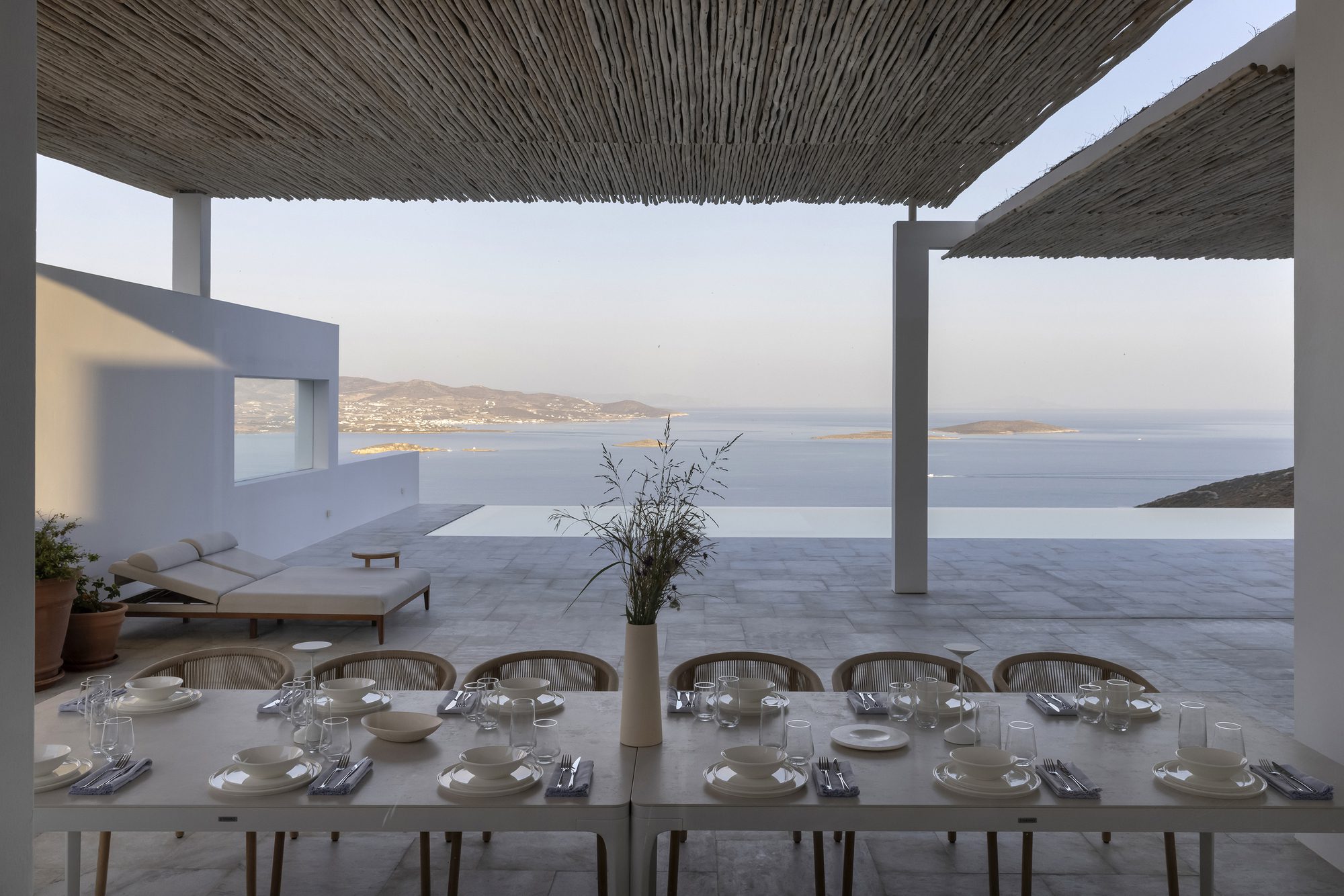
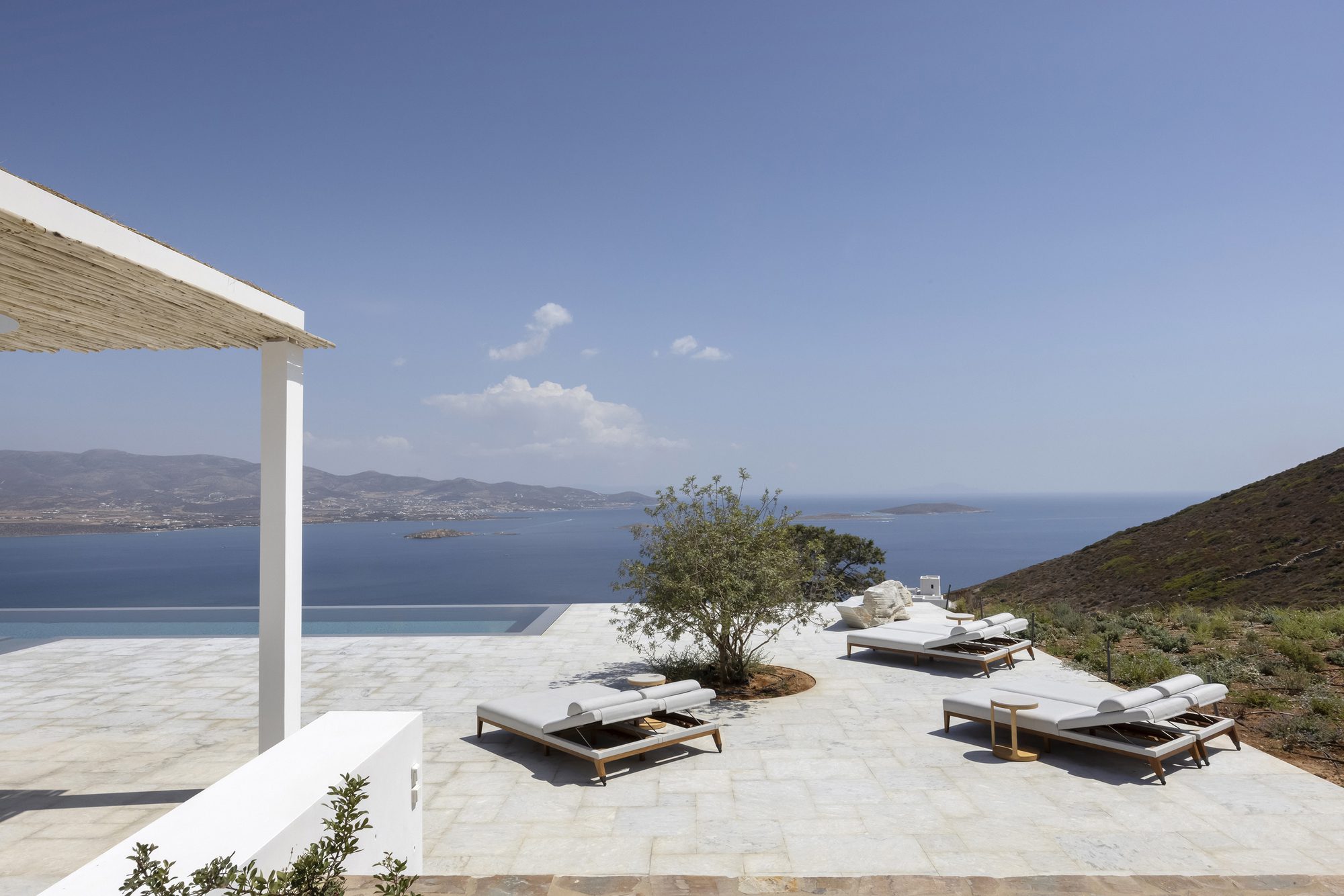
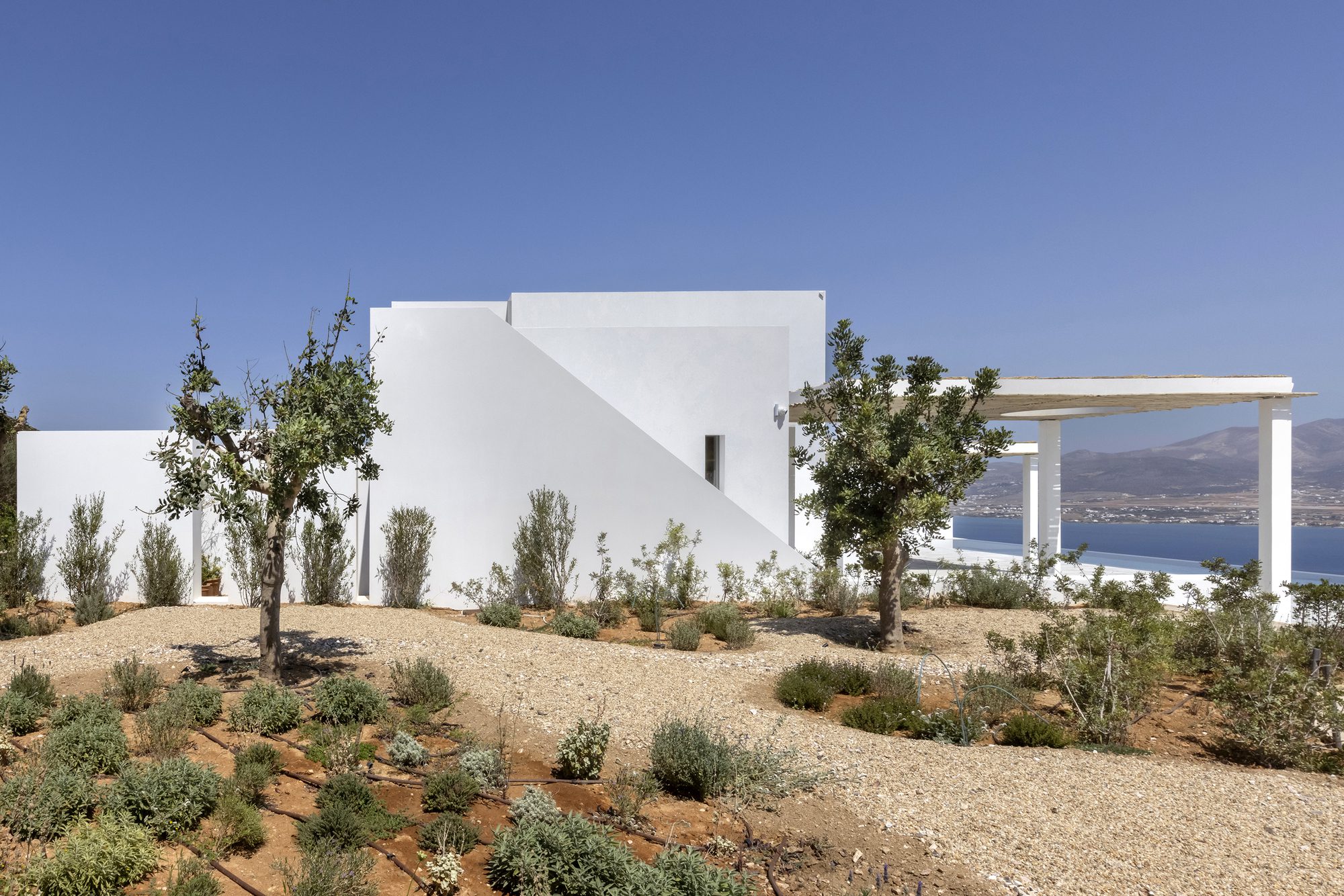
Oriented towards the blue lagoon in the strait between Paros and Antiparos, the main house consists of overlapping rectilinear volumes, creating a geometry familiar to the village architecture of the Greek islands, with closely built edifices protecting residents from the wind and harsh sunlight. Similarly, the stacked volume of the main house creates a protected plaza covered by three overlapping pergolas. This outdoor covered space, open enough to allow for views but protected for comfort, becomes the heart of the house where activities like swimming, lounging, and dining take place.
© Louisa Nikolaidou
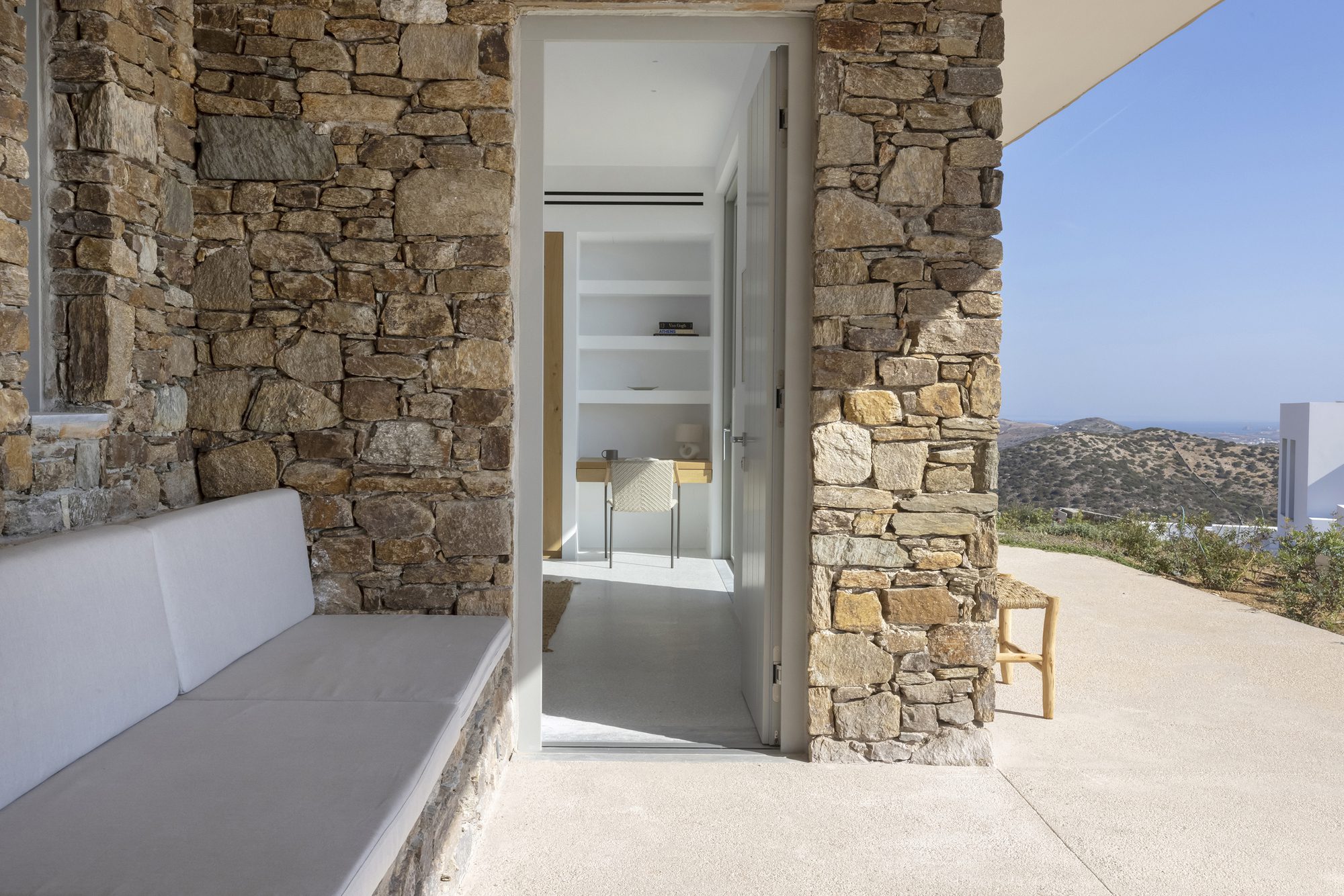
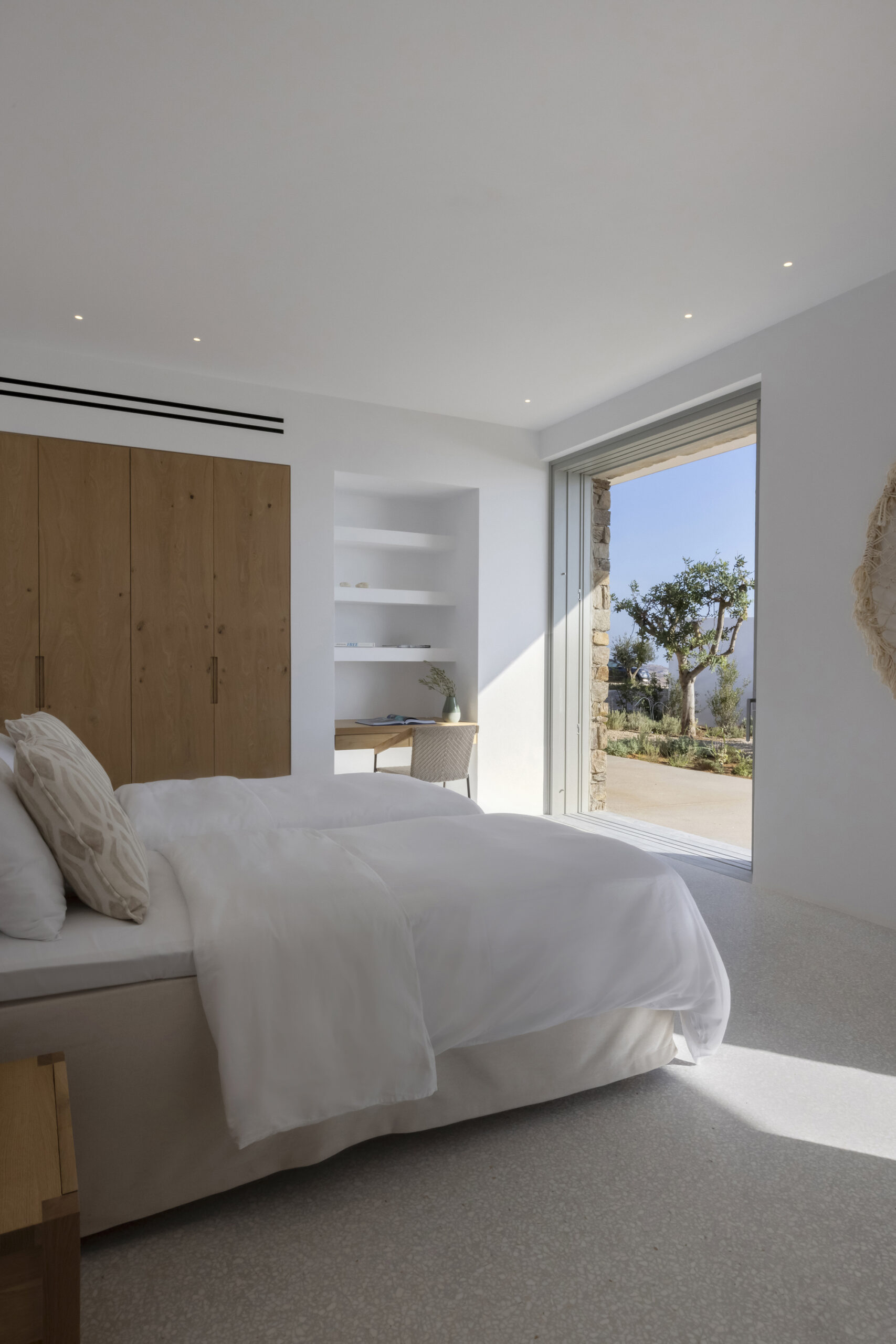
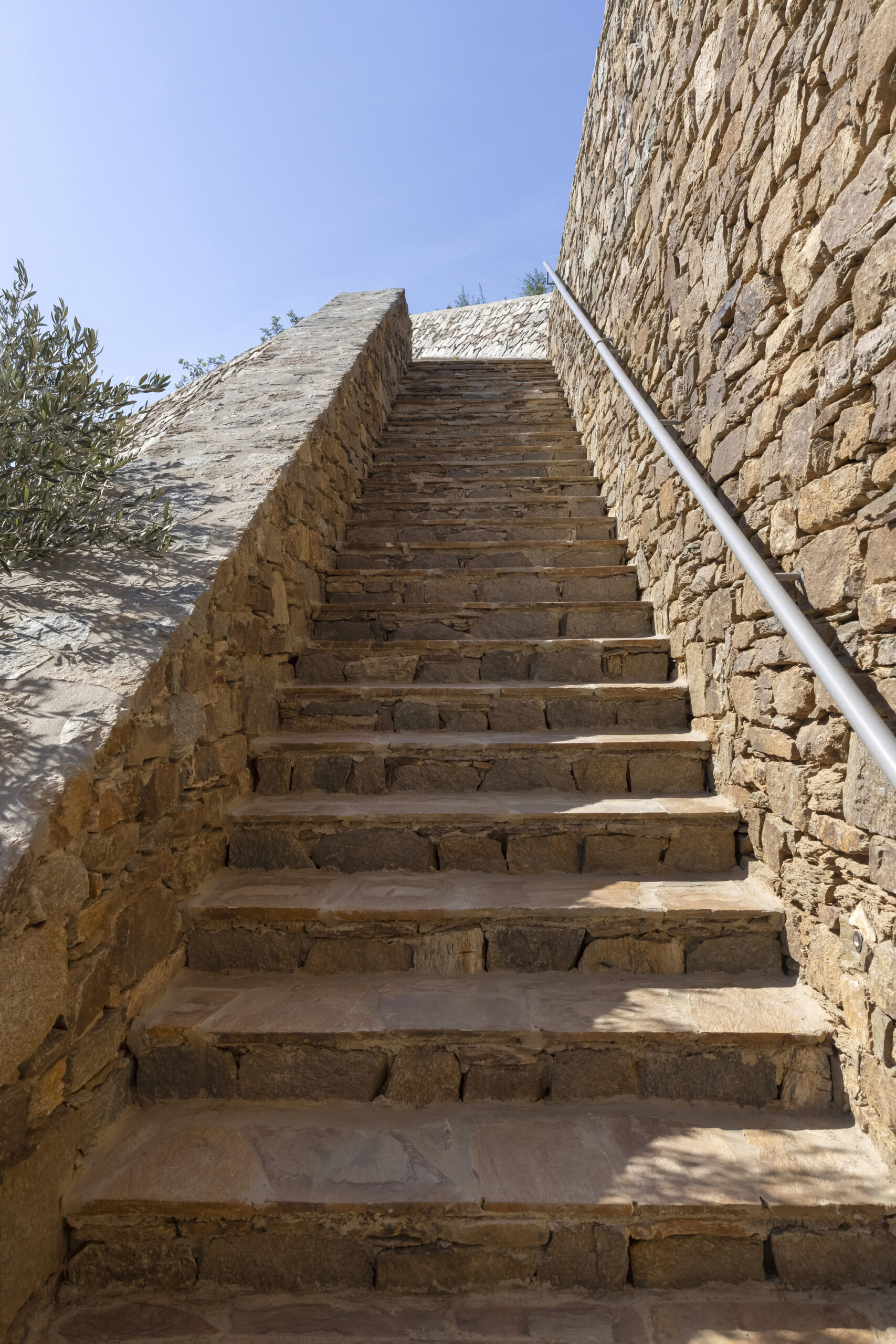
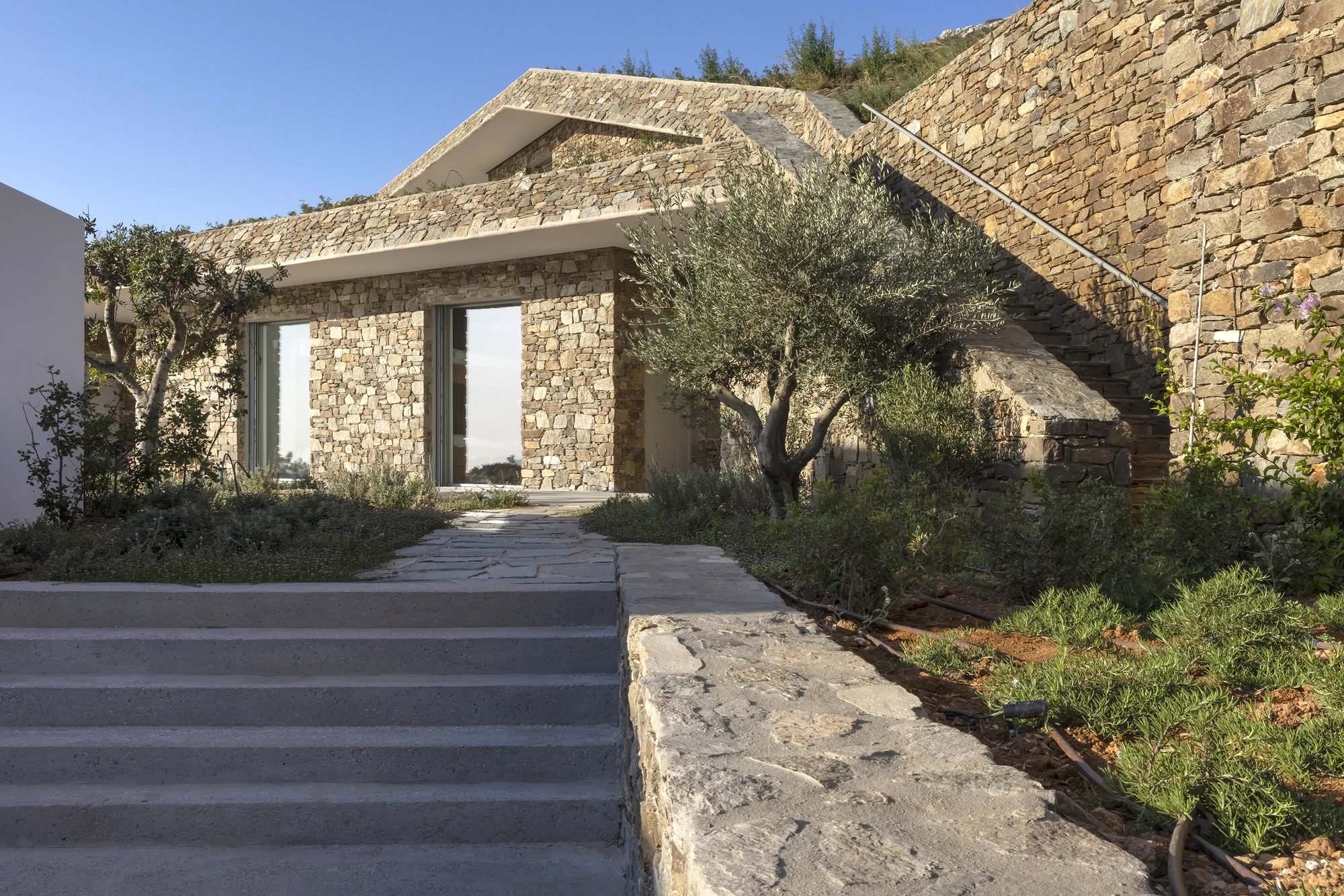
The two subterranean volumes break away from the easterly orientation of the main house, following the contours of the mountain instead. Built from local rustic stone and nestled into the rocky hillside, these two guest wings appear as camouflaged slits on the sloping parcel of land. With one volume looking out to the Paros-Antiparos strait, and another onto an intimate garden of olive trees, these discreet buildings house five guest bedrooms, which double up as office space for the owners when they are alone on the property.
© Louisa Nikolaidou
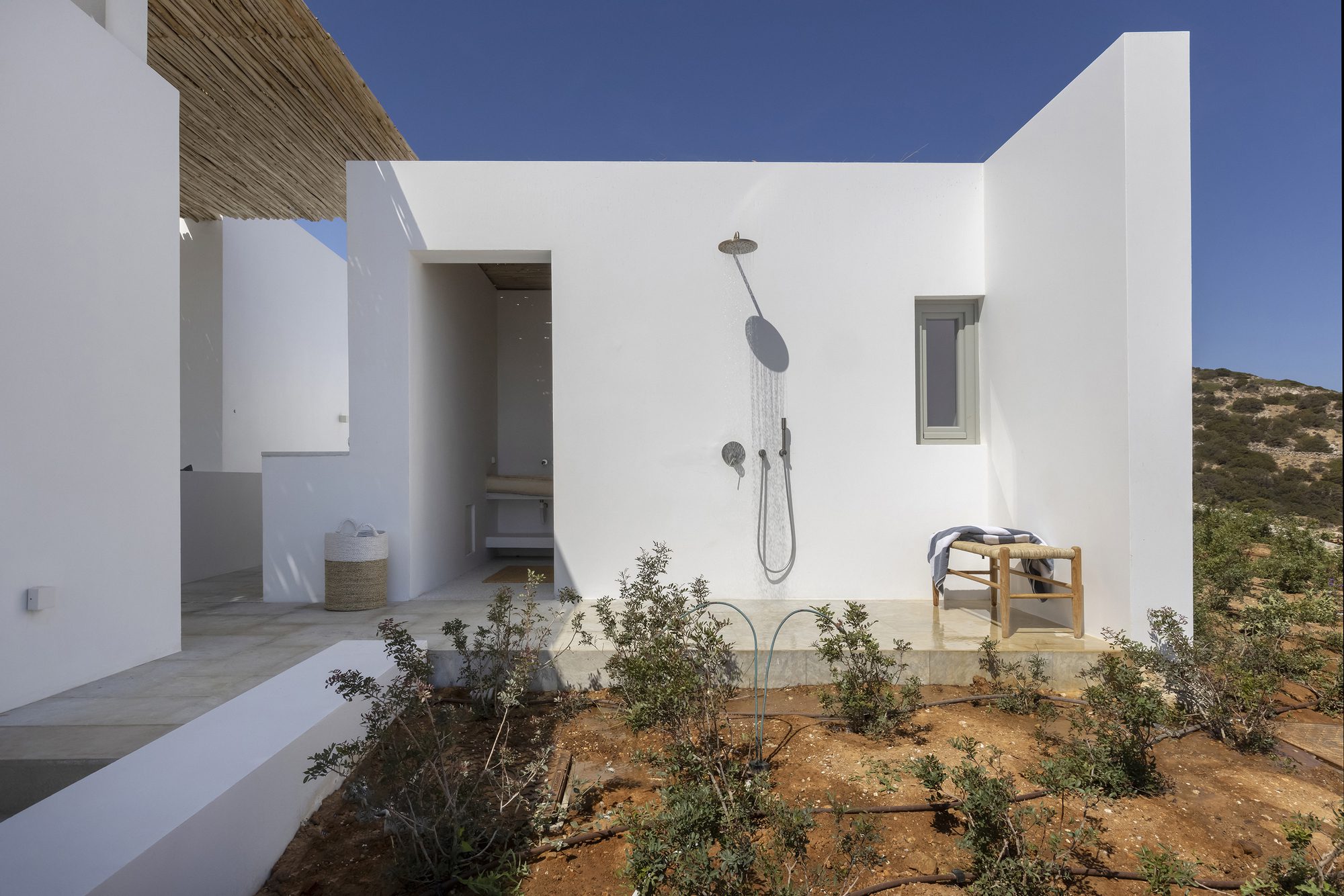
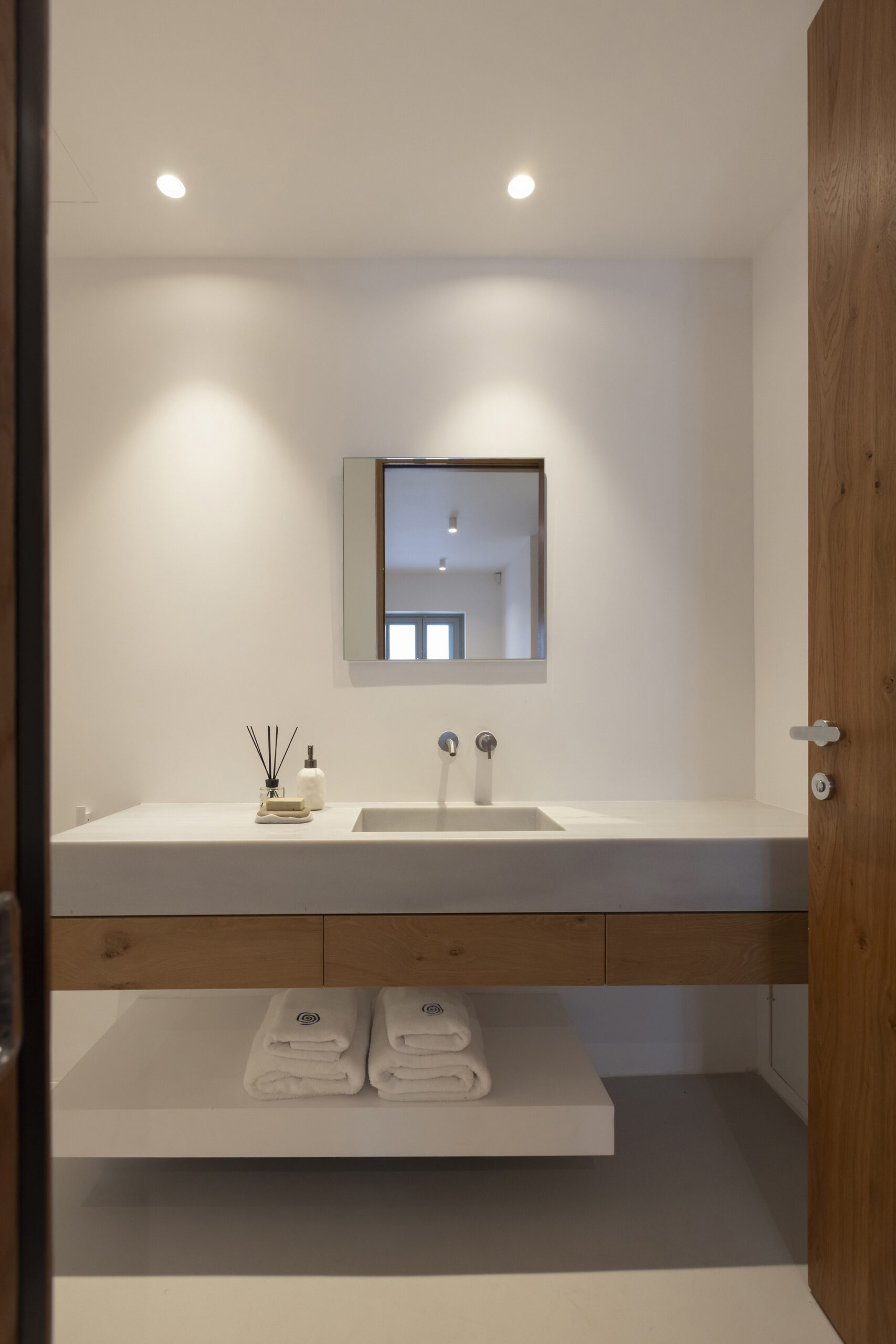
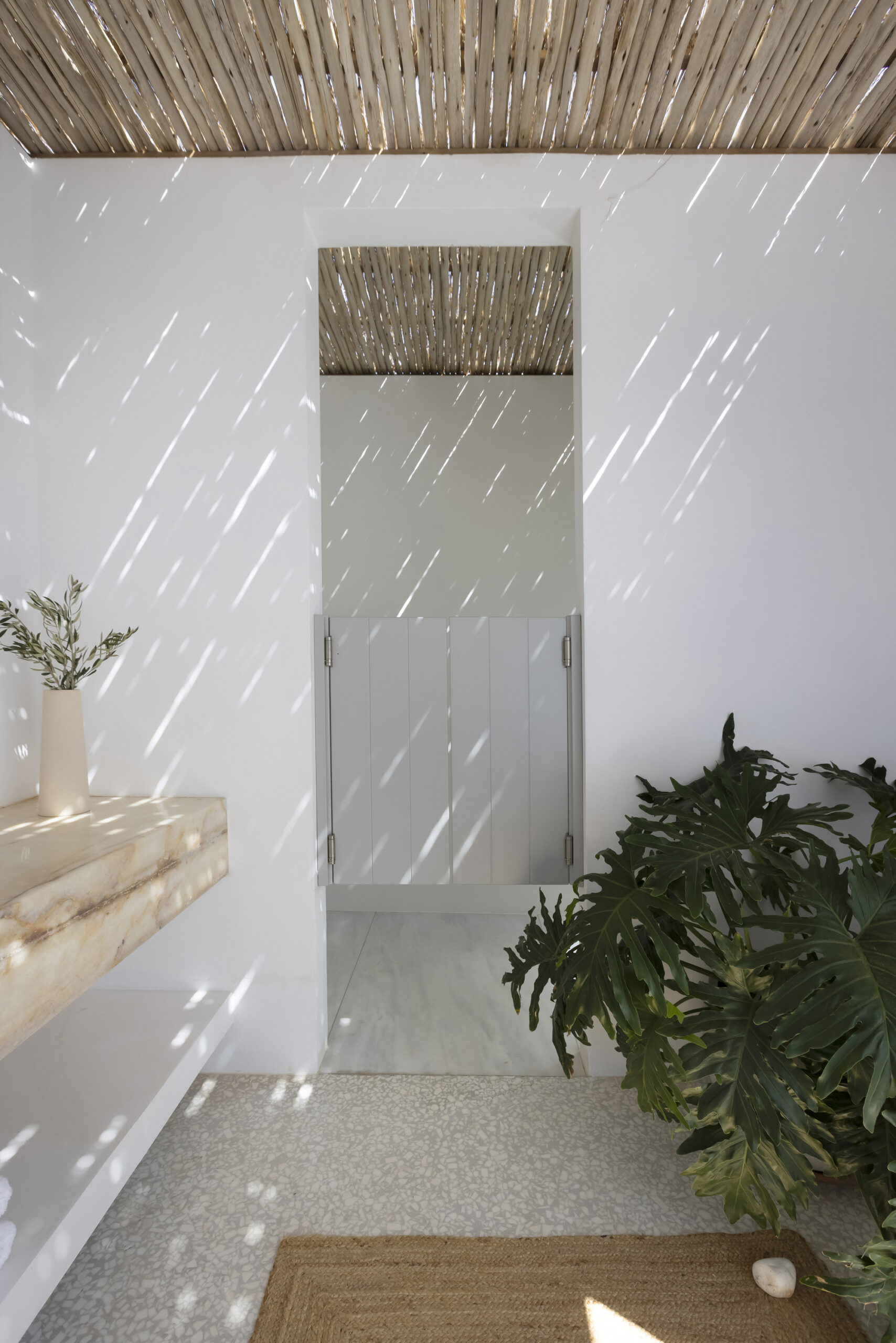
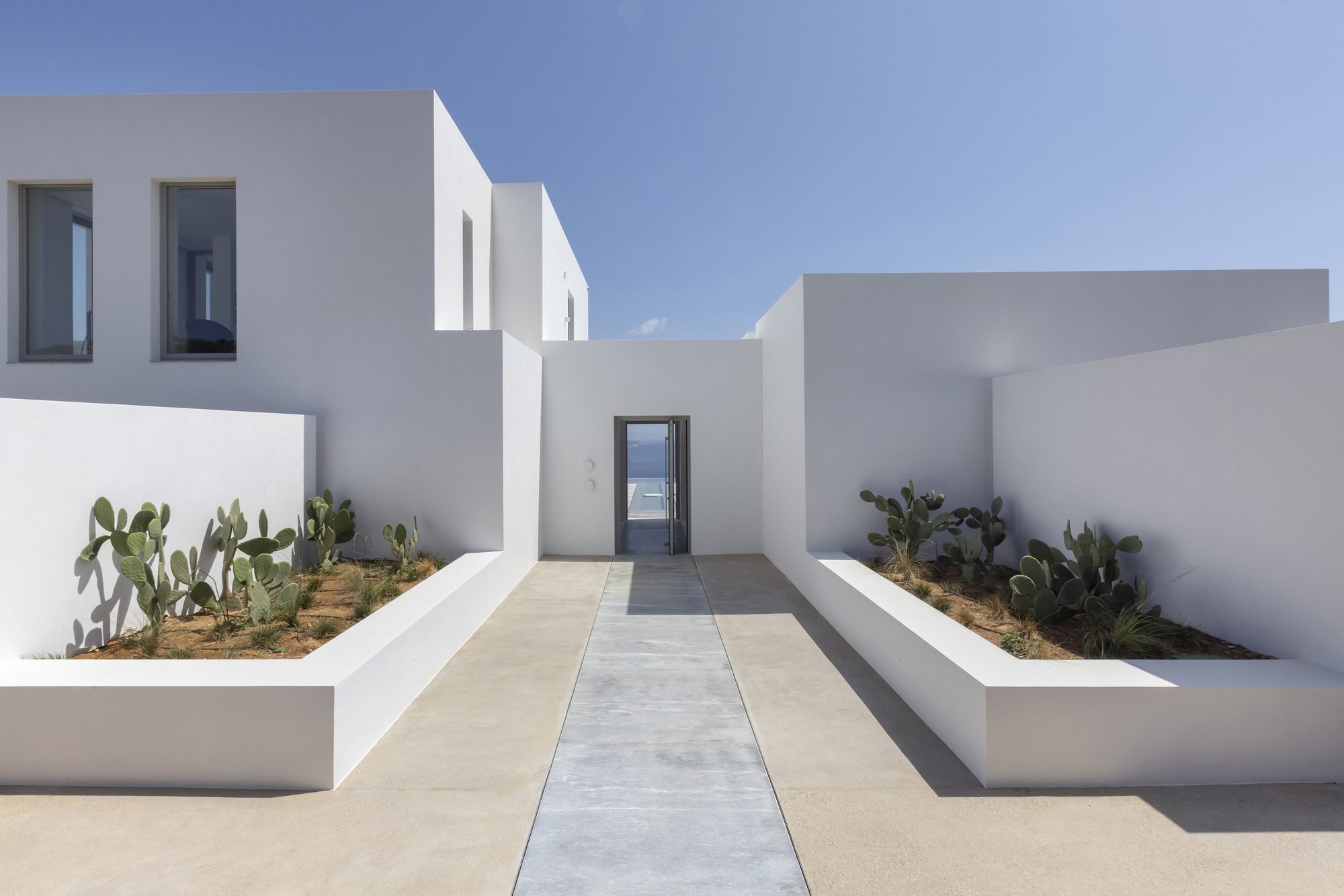
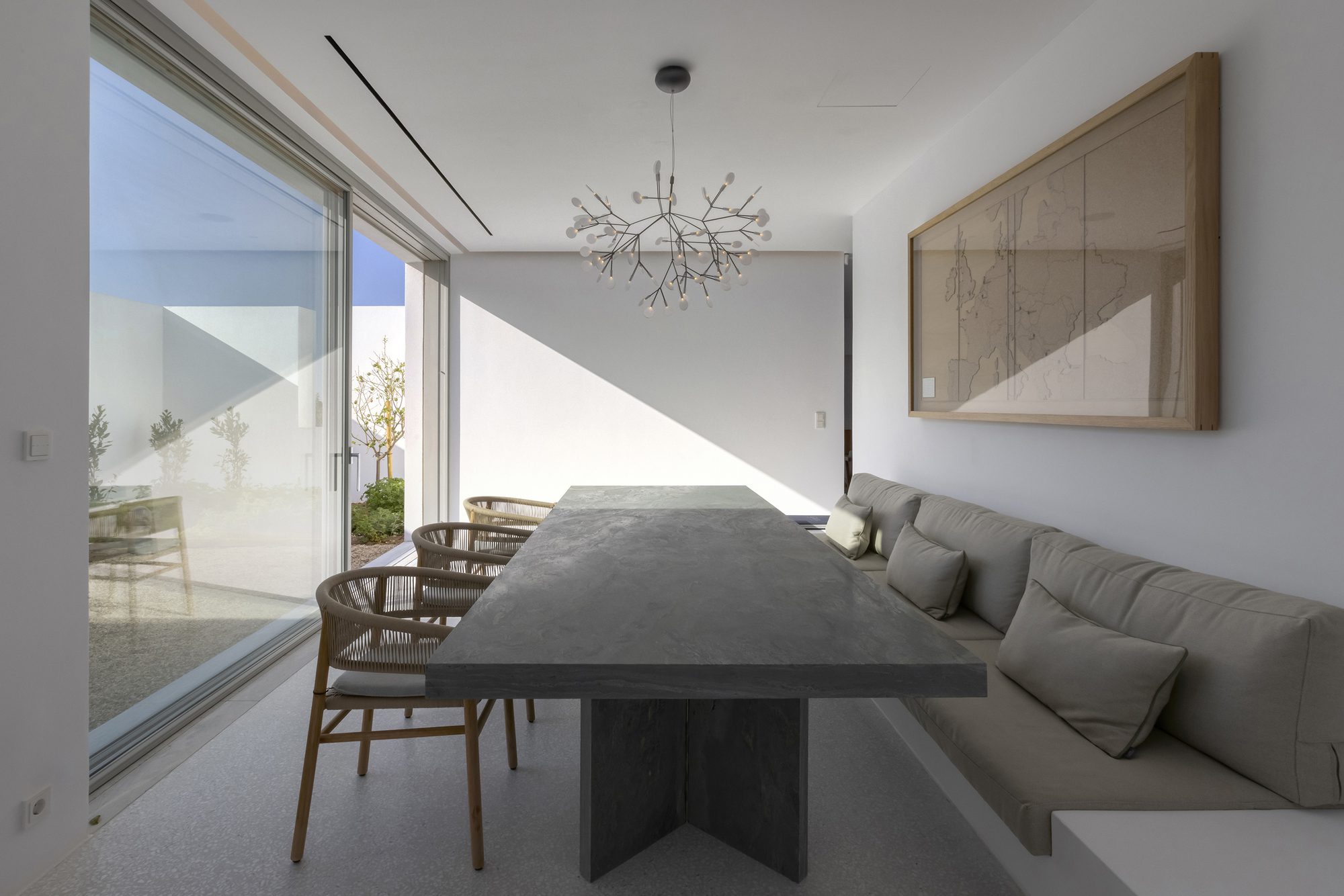
Materially, Antiparos Village embraces the simplicity of the windswept mountainside. Besides the white limewash of the main house and the cracked stone of the guest wings, the organic planting of the site is only broken by the cool grey marble tiles of the outdoor hardscape. Inside the house, these grey tones transition onto a terrazzo floor, while the whiteness of the walls is punctuated by the warmth of oak cabinetry and shelving.
© Louisa Nikolaidou
Together with the simple geometric forms of the architecture, these natural materials and subtle color tones create a modest home which focuses one on the uniqueness and breathtaking beauty of the island, with its sweeping views of deep blue and the sounds of its relentless August wind. As a tribute to the nature that makes this island special, Antiparos Village is designed as an off-the-grid residence, powered by solar energy and fed by groundwater found on site. Paired with a smart home system that optimizes their use, these natural resources on-site provide the necessary energy for the functioning of the house, with any excess power stored in an array of batteries.
Project Info
Architects:Studio Seilern Architects
Country: Greece, Antiparos
Area: 780 m²
Year: 2024
Photographs: Louisa Nikolaidou
Office Lead Architects: Christina Seilern
Design Team: Studio Seilern Architects
General Constructing: Parostec
Engineering & Consulting > Structural: Spiros Pentheroudakis (METE)
Engineering & Consulting > Mechanical: Armodios Vovos
Landscape Architecture: Helli Pangalou
Engineering & Consulting > Other: Stelnic, Ioannis Roussos (Audiophile)
Engineering & Consulting > Lighting: IFI Group