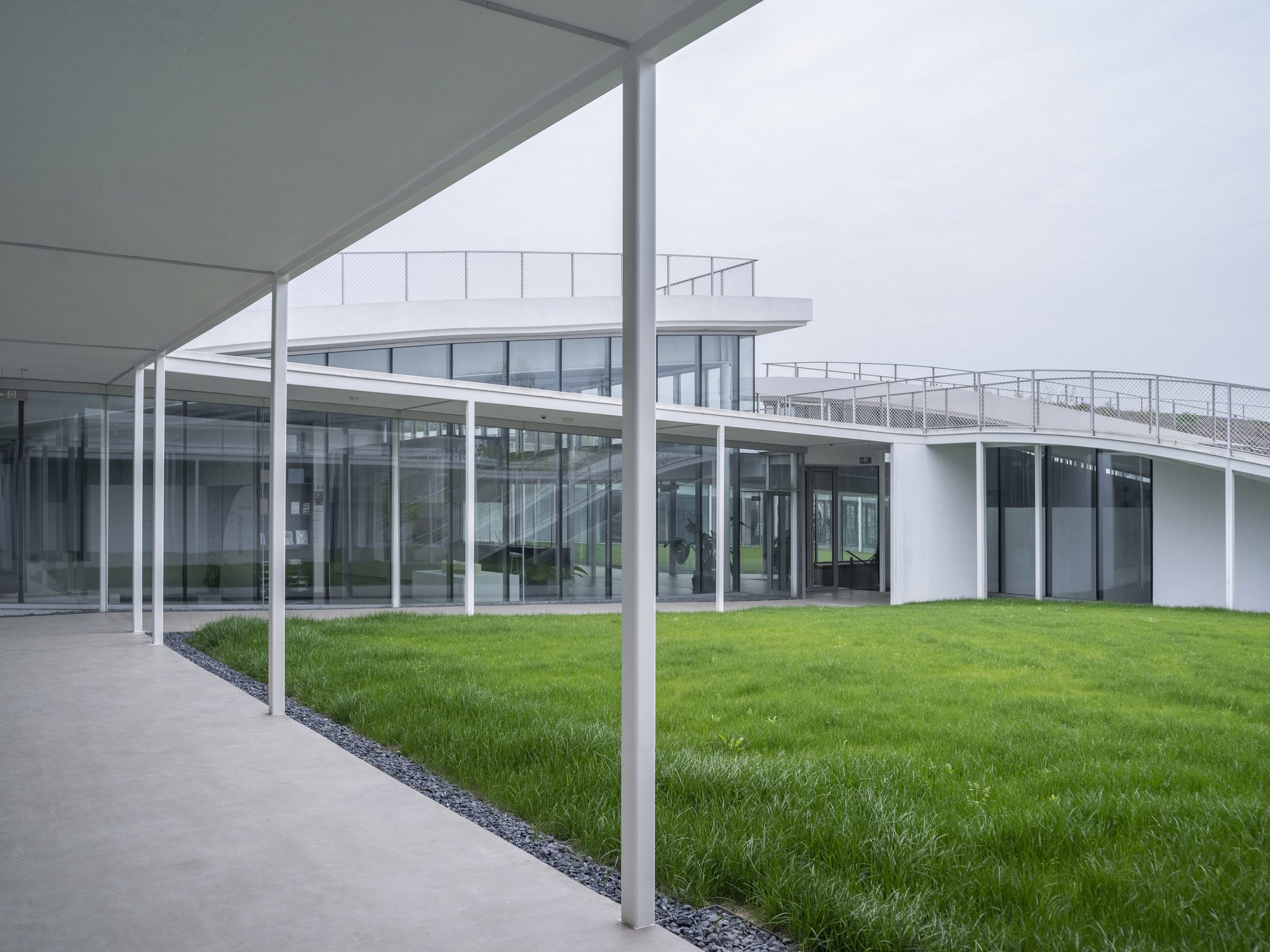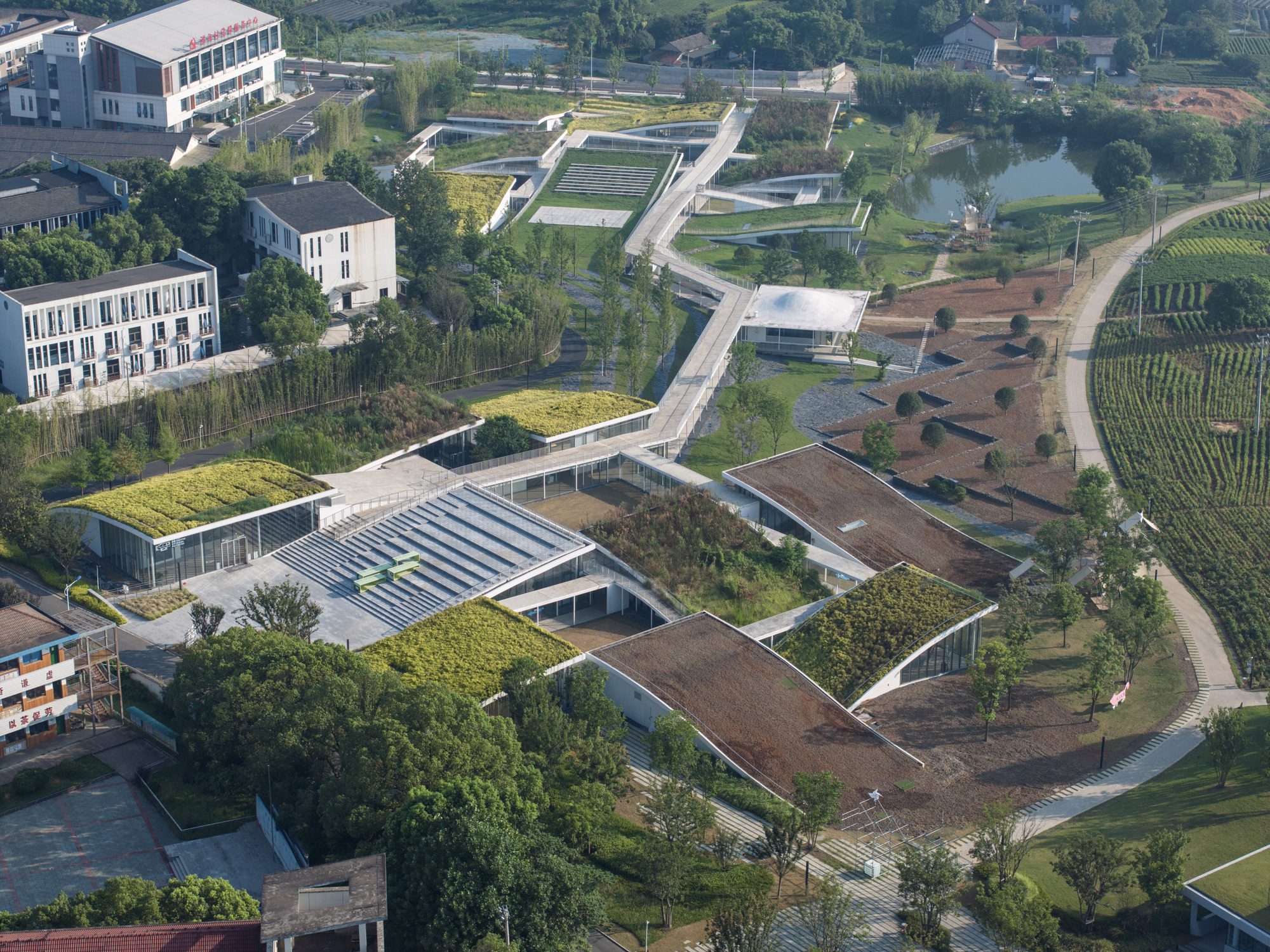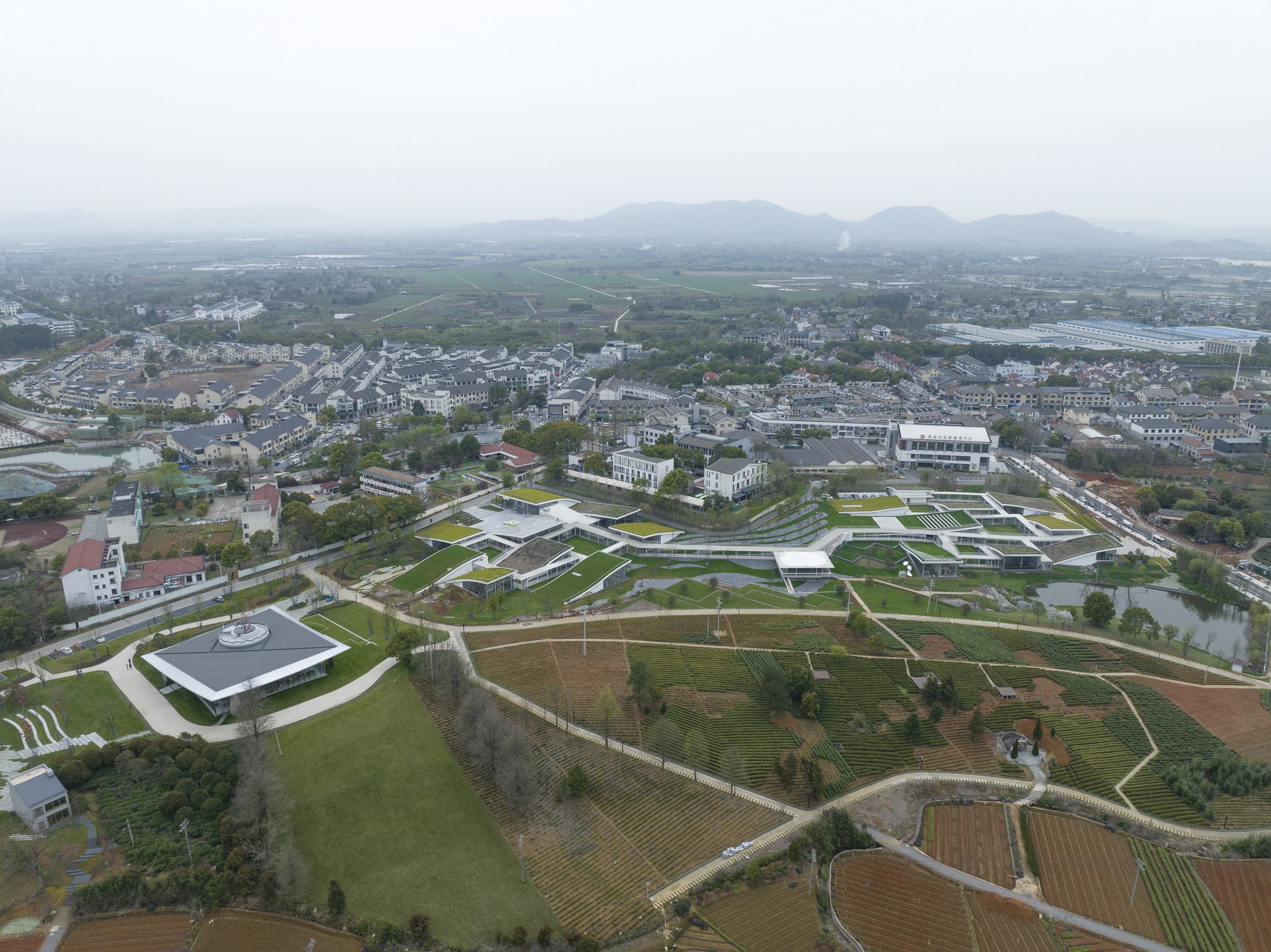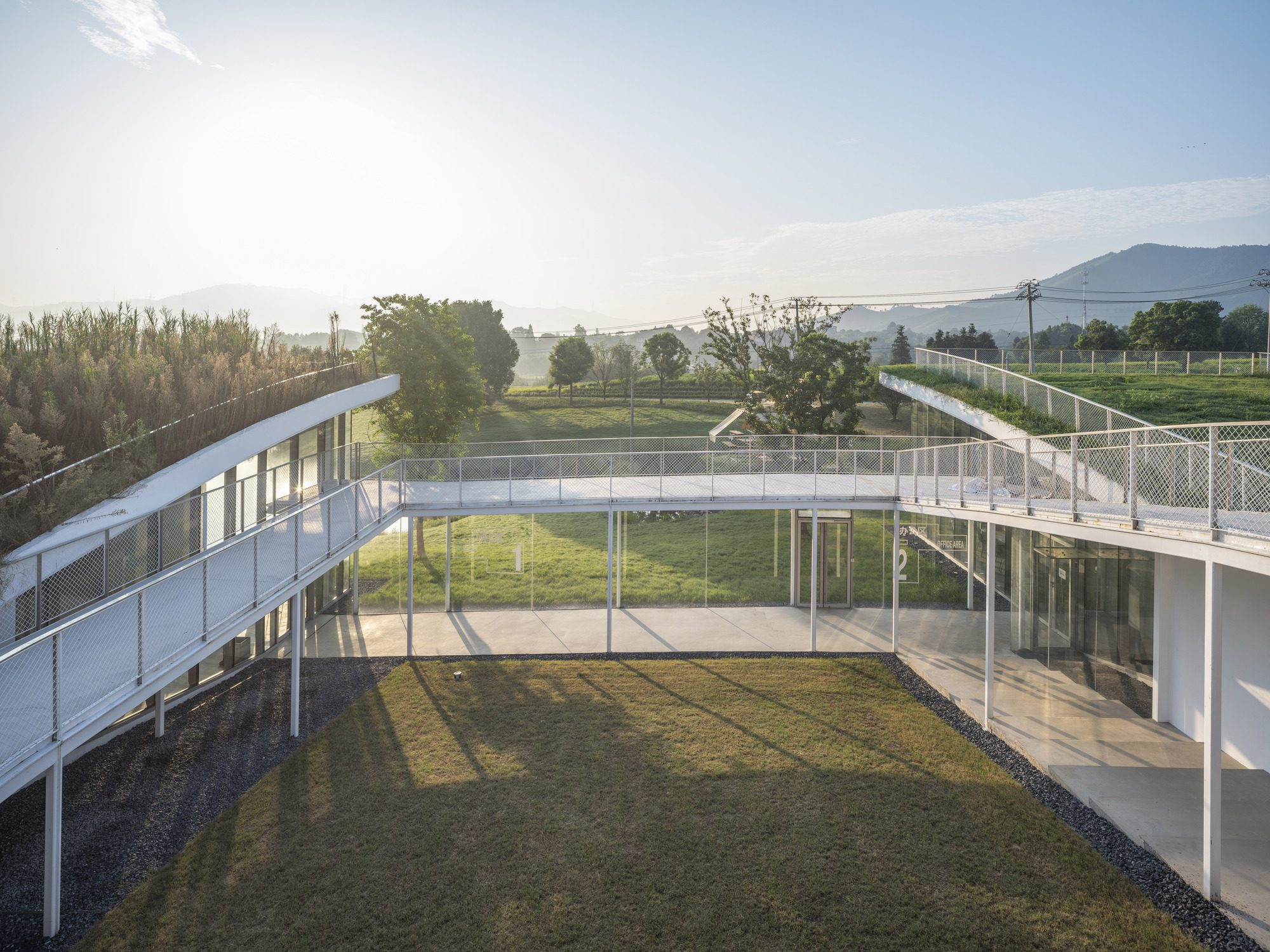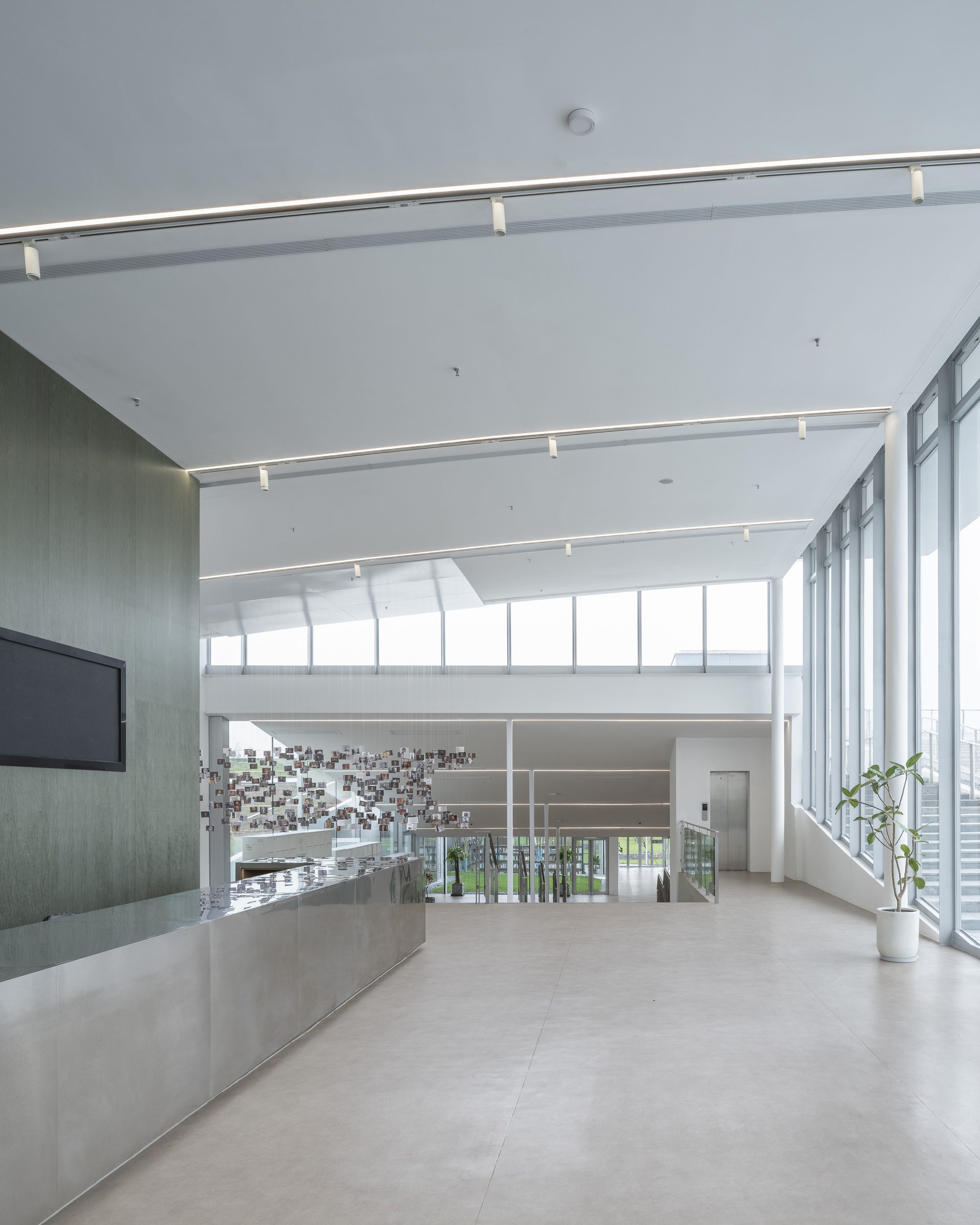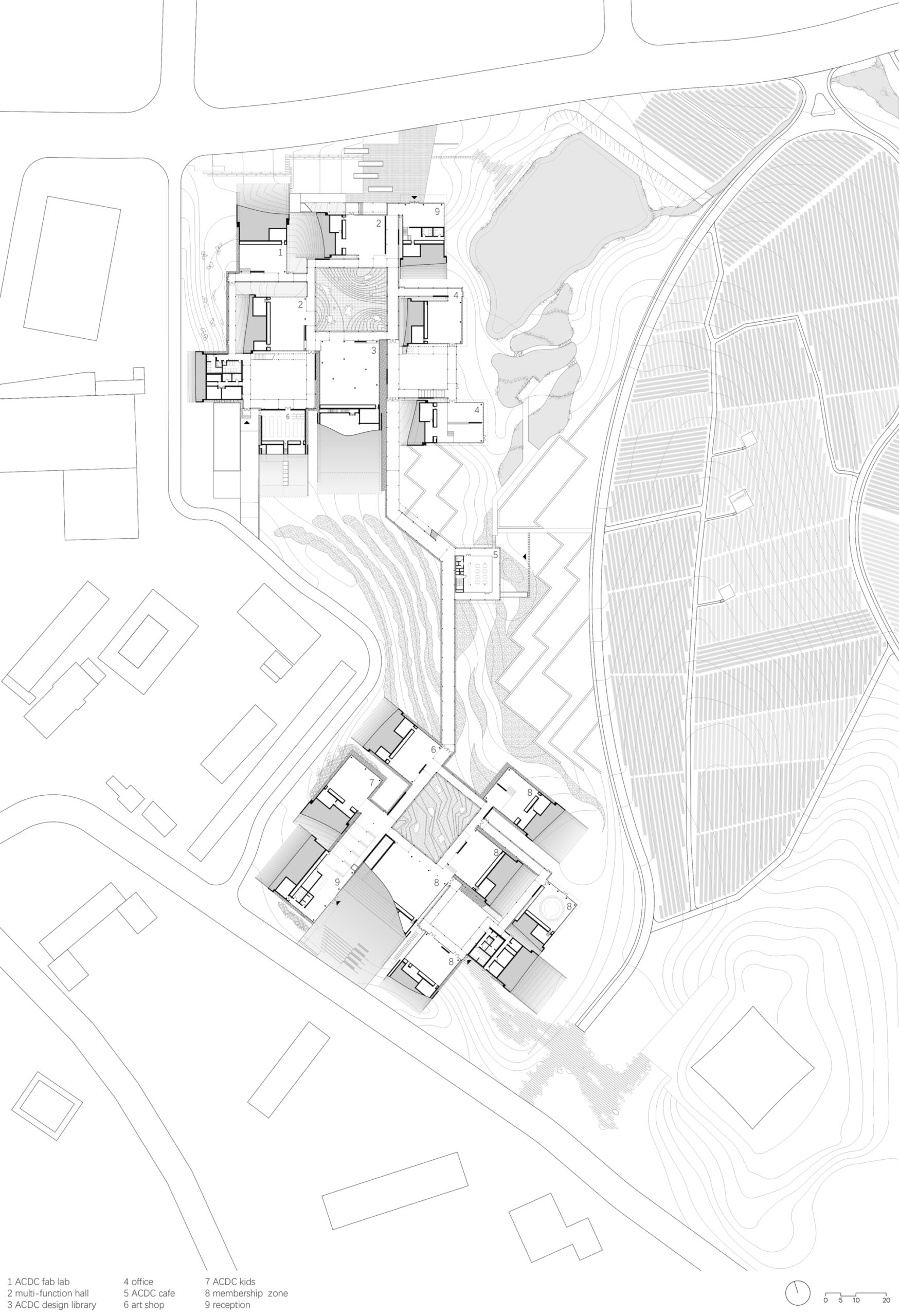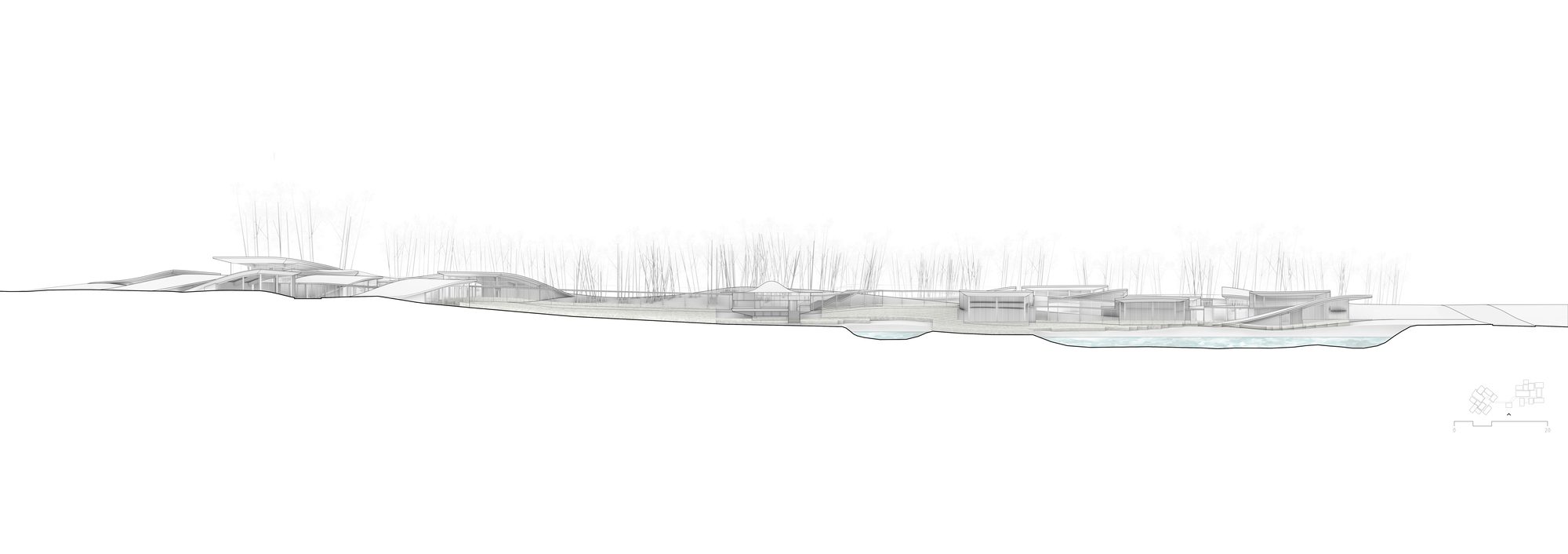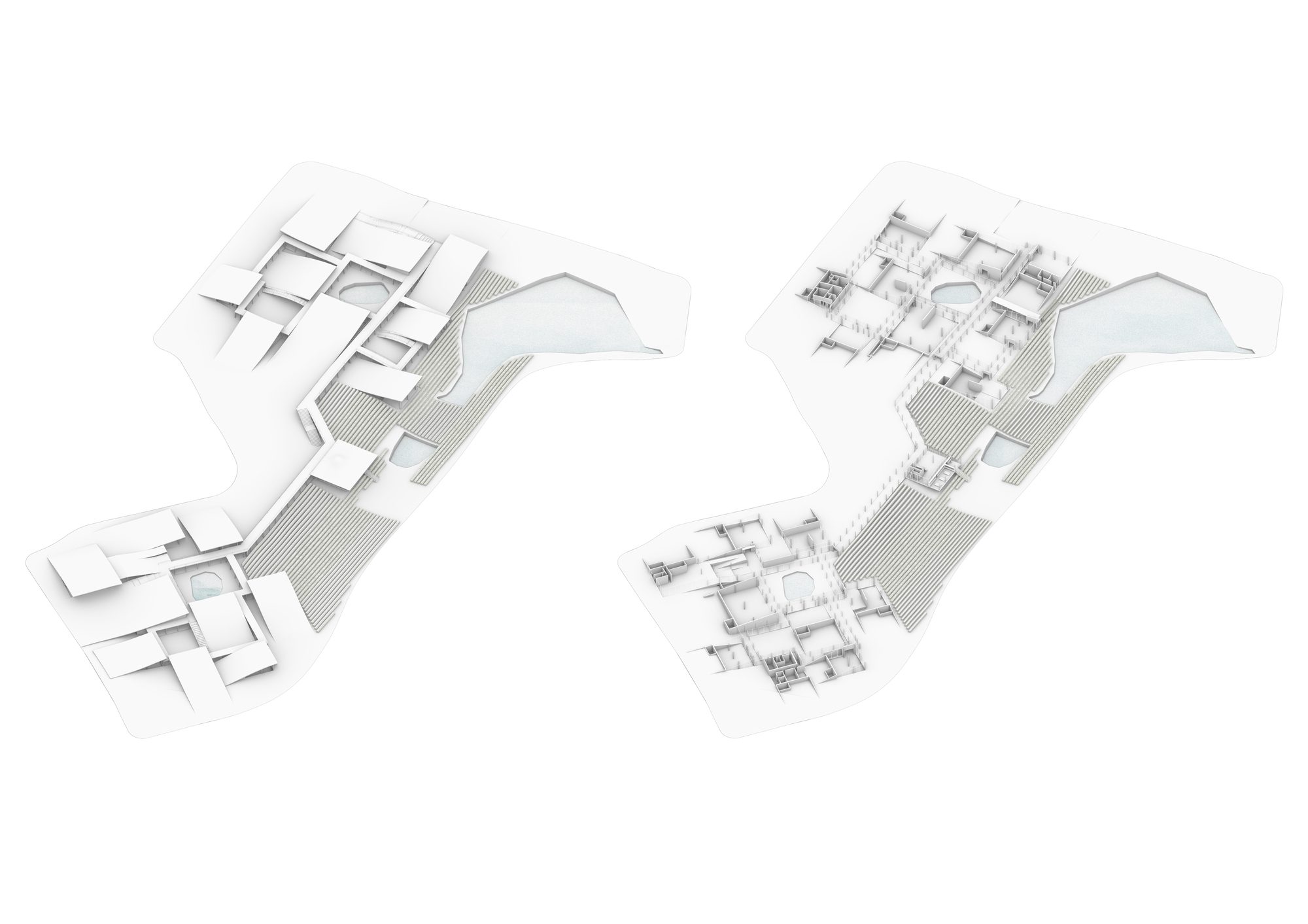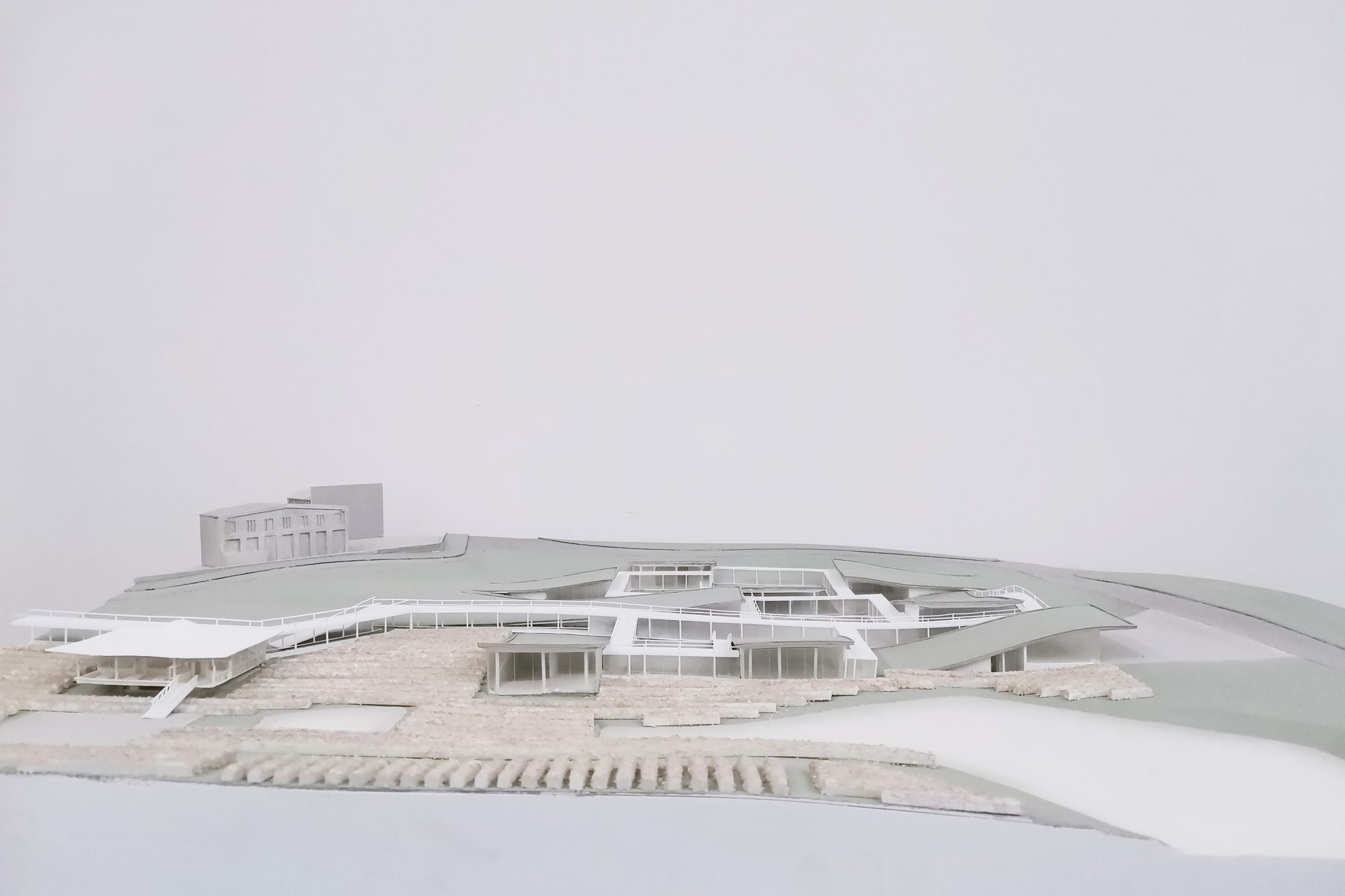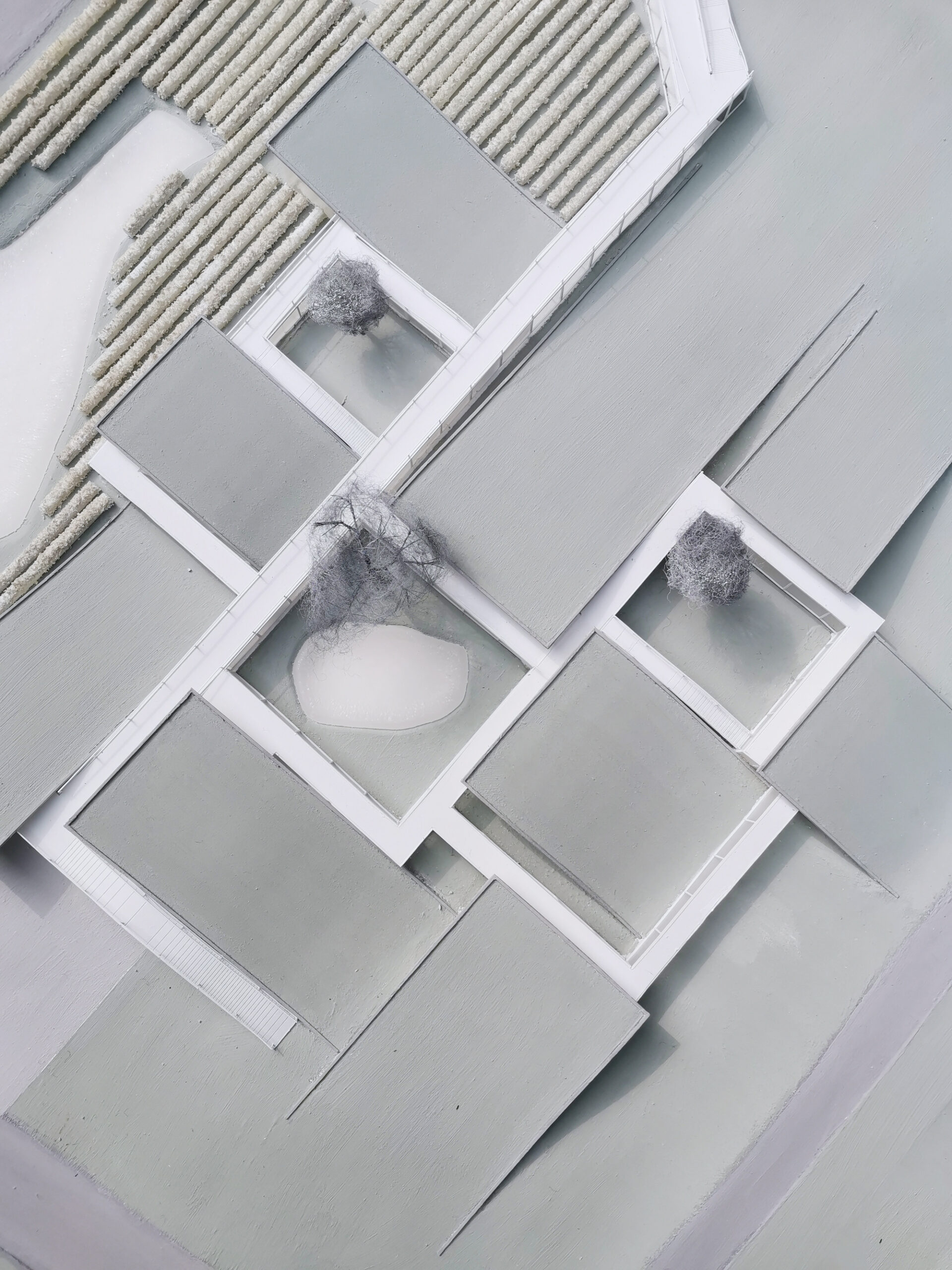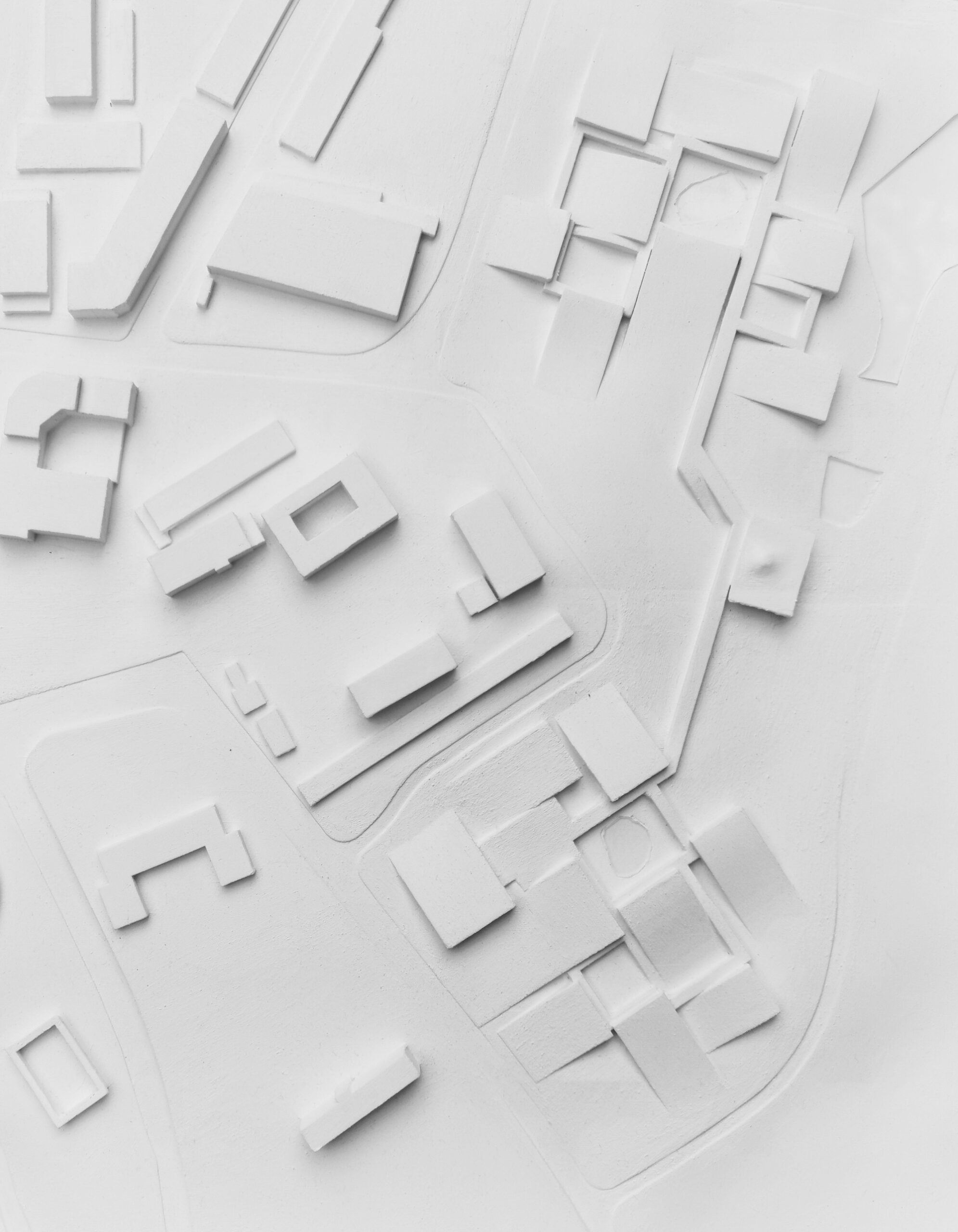


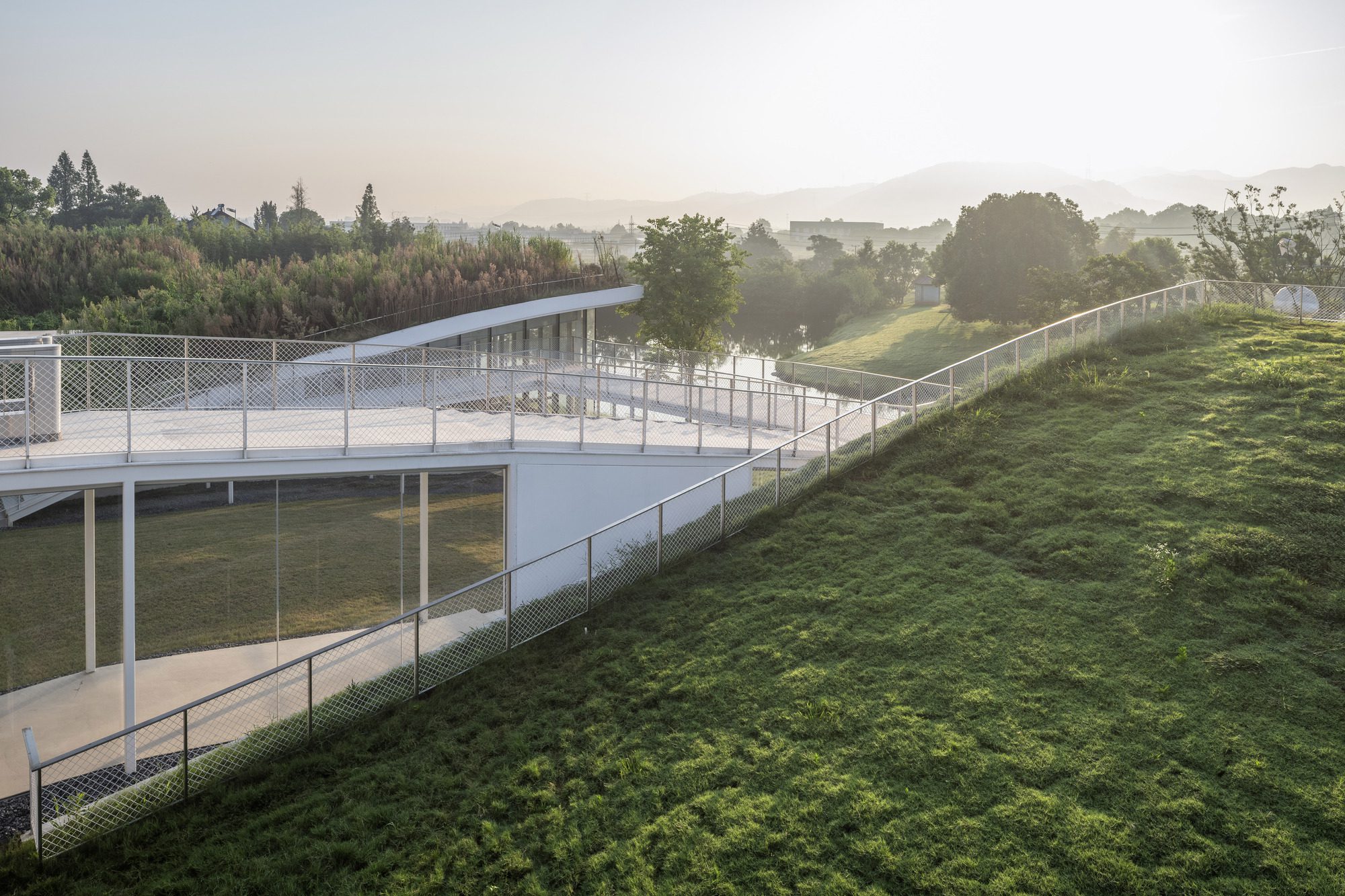
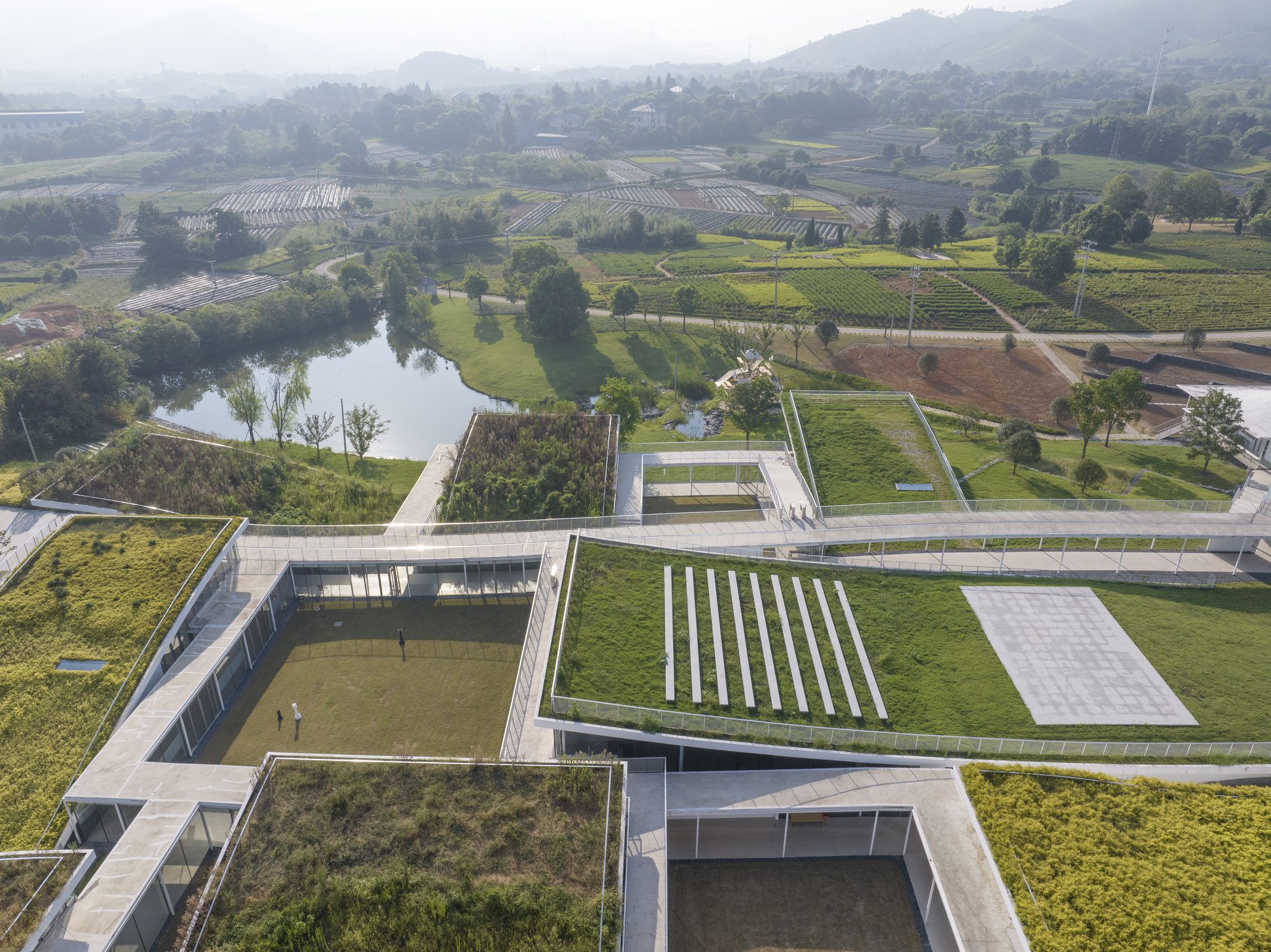
Anji Creative & Design Center, Situated in Xilong Township of Anji County, Zhejiang Province—an area renowned as one of China’s premier white tea-producing regions—the project occupies a previously unused plot on the edge of the tea fields near the town center. Originally, the site was designated for the construction of a White Tea Museum, as well as a museum for the nearby Paleolithic archaeological site of Shangmakan. In response, the building was conceived as two courtyard-based clusters extending between tea fields and a natural pond, with green roofs designed to merge the architecture seamlessly into the surrounding agricultural landscape.
© Fangfang Tian
After its completion, the building underwent a shift in program—or rather, the idea of a rural agricultural product museum evolved into a new model that emphasizes engagement and participation. White tea remains the central theme of the project, but its role has been redefined—from passive exhibition to active promotion and creative reinterpretation. At the same time, the operating entity envisioned the site as a new type of creative hub, one that would attract young people away from the congested city and into the countryside. The aim was to offer a new model of remote work and rural living for travelers, digital nomads, and other contemporary users.
© Fangfang Tian
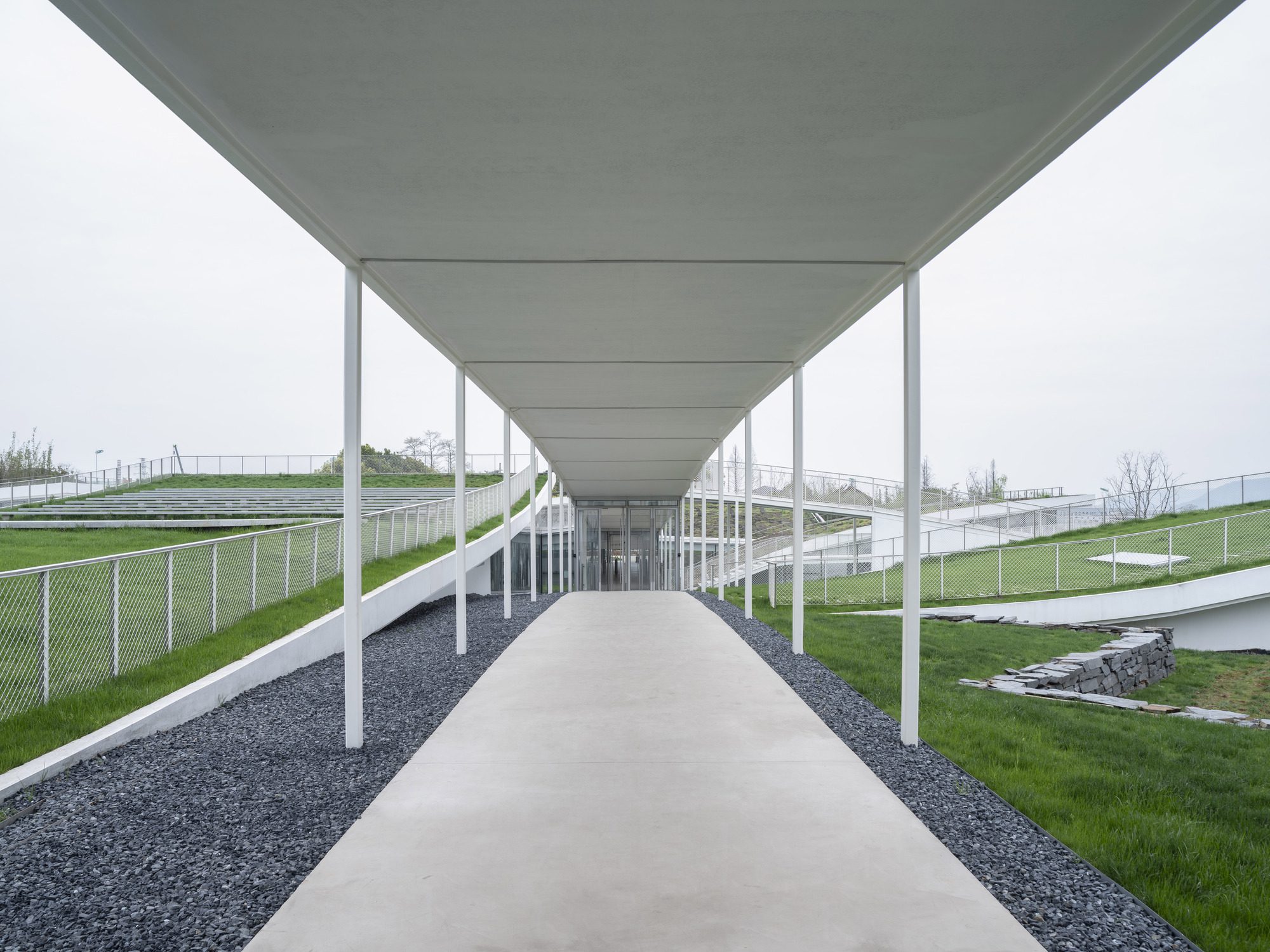
The layout of ACDC benefits from the original architectural strategy of flexible spatial distribution. Exhibition halls of various sizes are dispersed across the undulating terrain and connected by covered walkways. This approach allows the scattered-yet-connected clusters of exhibition halls, workspace, educational space, retail spaces, and tea rooms to serve multiple purposes: accommodating diverse forms of creative work, addressing different user groups, and supporting a range of thematic cultural events through both independent and shared programs.
© Fangfang Tian
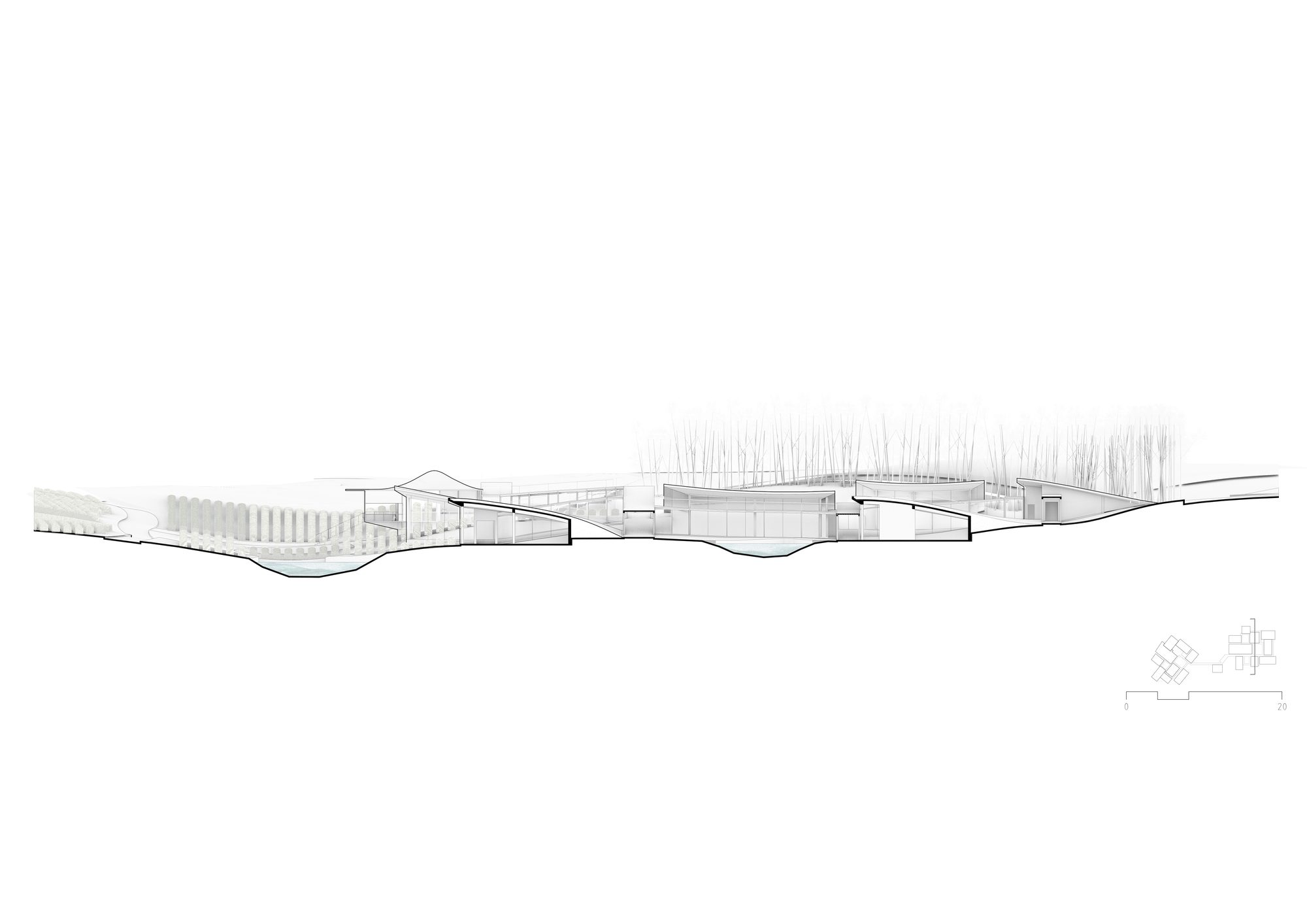
The undulating tea fields of Anji represent a human-made abstraction of natural topography—a unique kind of cultivated landscape shaped by the rhythm of tea planting. The architecture adopts a similar strategy. On plan, it follows an orthogonal grid reminiscent of an urban extension; yet in section, it mirrors and amplifies the site’s natural undulations. This dual gesture not only serves the building’s functional needs but also resonates with the hidden order of the original terrain, becoming a re-formation of the landscape itself. Together with the meandering tea fields, the architecture helps generate a new hybrid landscape on this land.
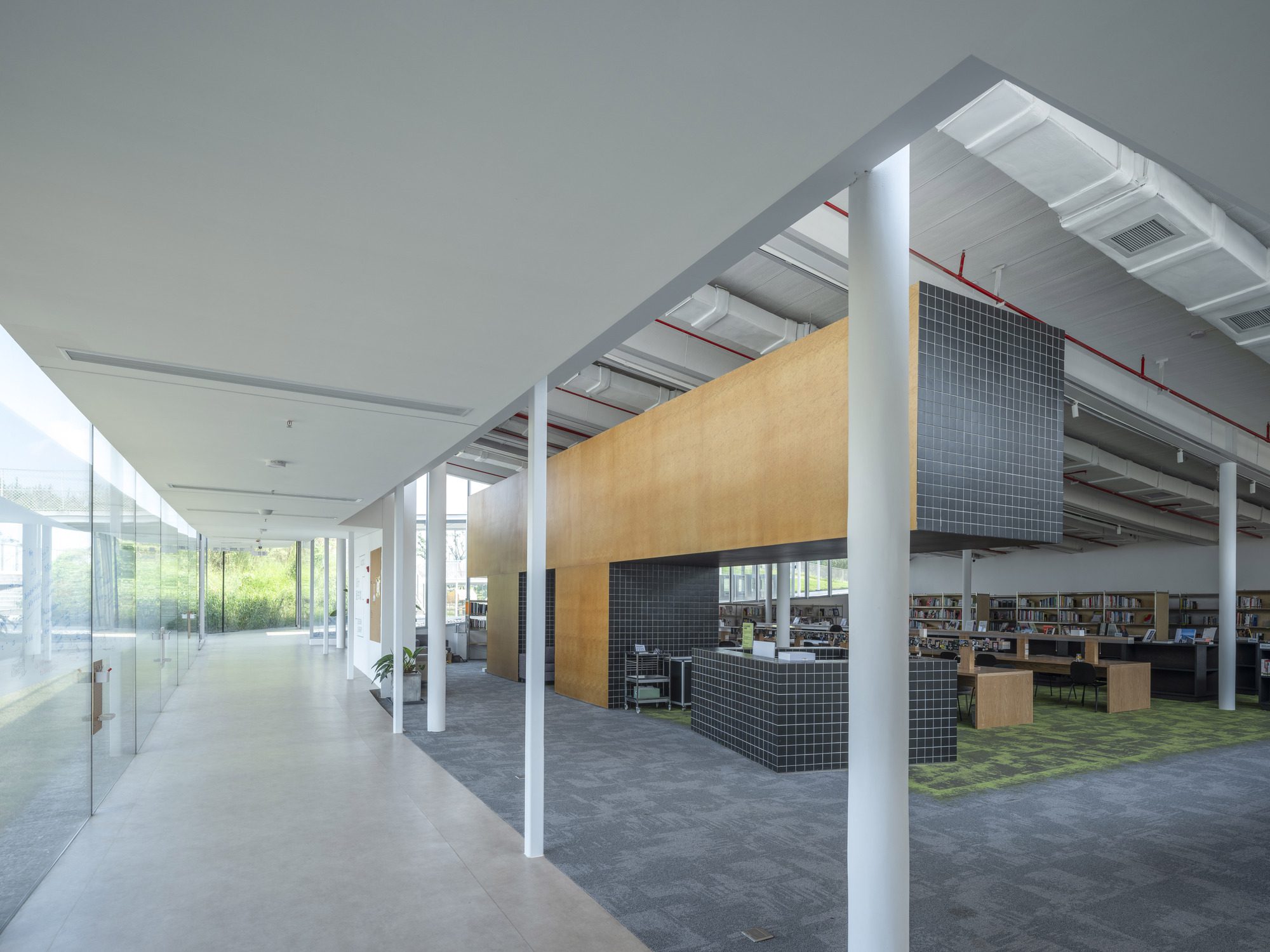
© Fangfang Tian
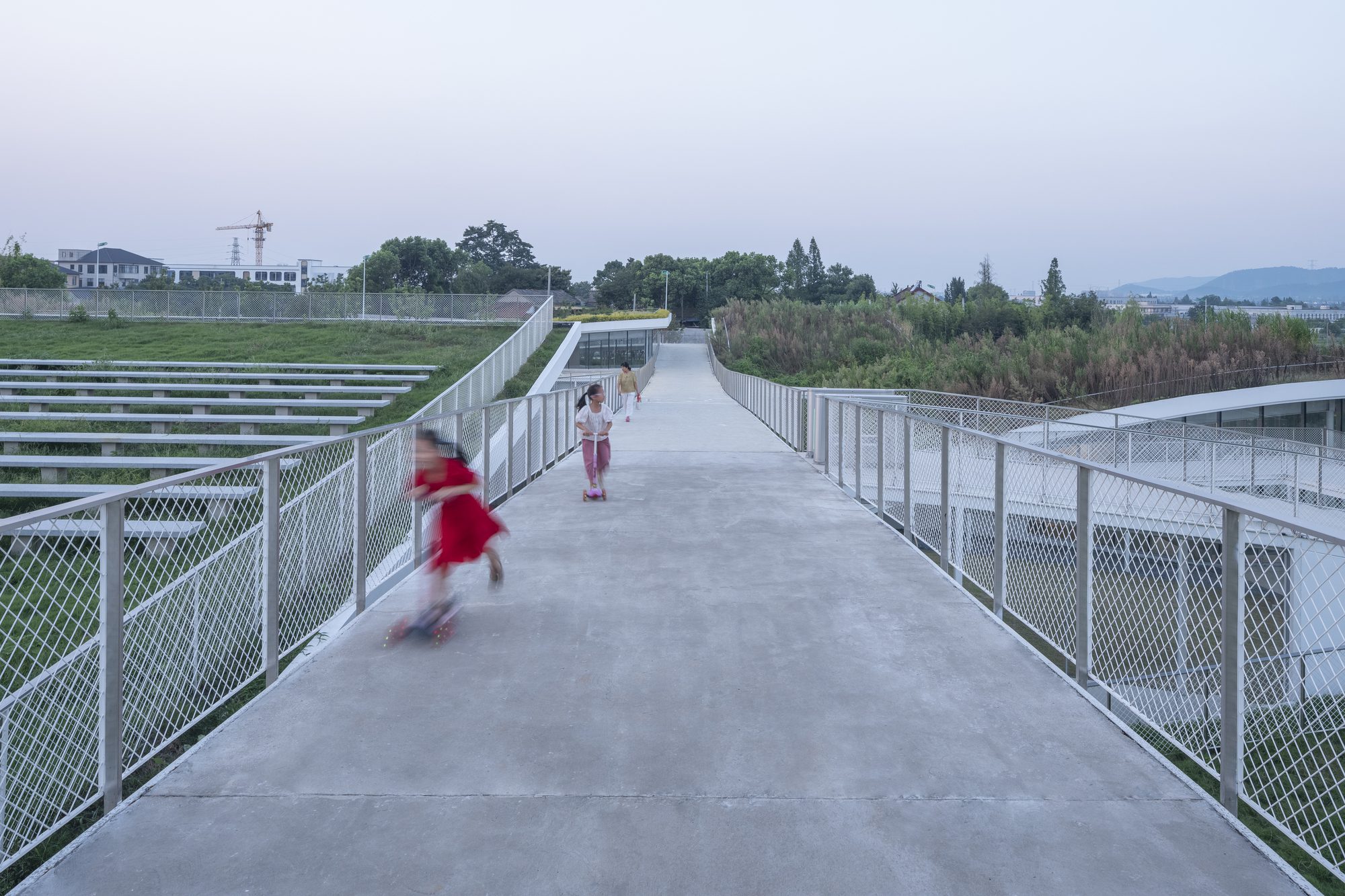
This landscape is not merely visual. While the design employs a traditional courtyard-and-corridor typology, it also renders the courtyards as walkable topographies. Whether the center is open or closed, visitors can roam freely along the upper surfaces of the courtyards and corridors, experiencing the architecture as if moving through the fields themselves.
Project Info
Architects: Atelier Deshaus
Country: China, Huzhou
Area: 7000 m²
Year: 2025
Photographs: Fangfang Tian
Design Team: LIU Yichun, WANG Zhuohao, CHAN Hiongai, SHEN Wen, Cao Ye, CHEN Chihhan, TANG Yun