


3D Glass Printer, The glass manufacturing craft has been around for over 4,500 years. Closely guarded techniques, dating back to Mesopotamia and Ancient Egypt, were passed on from generation to generation, constantly evolving with every scientific discovery – including contemporary ones. Recently, a group of researchers led by Prof.
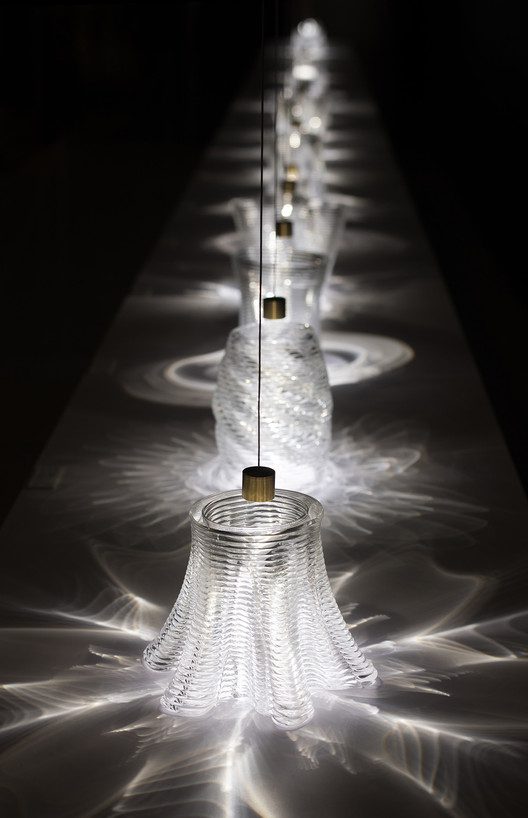
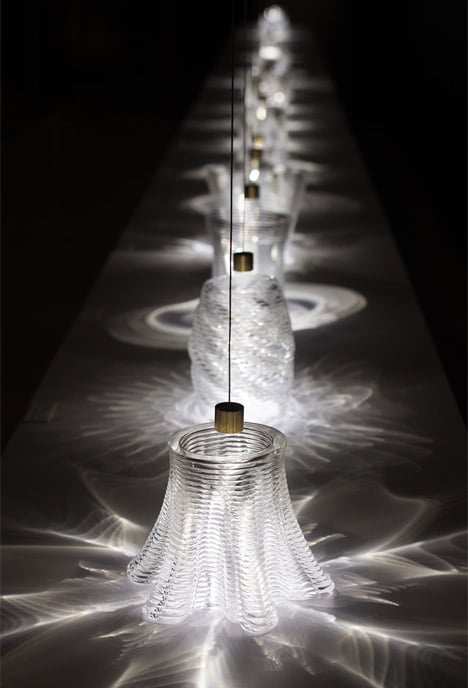
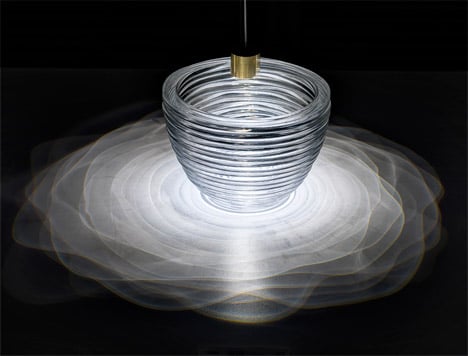
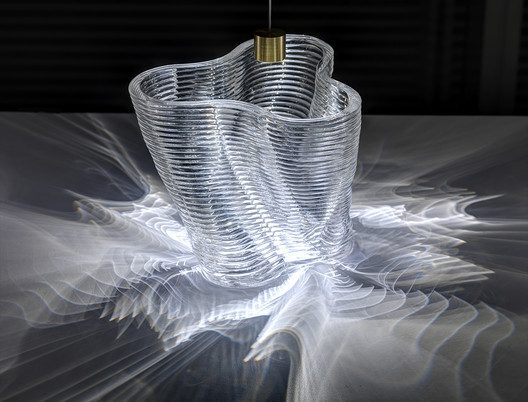
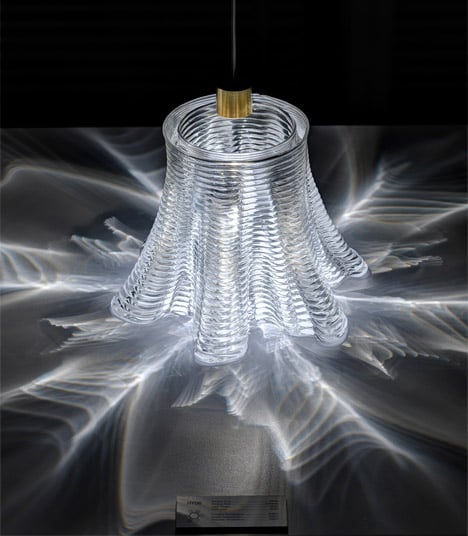
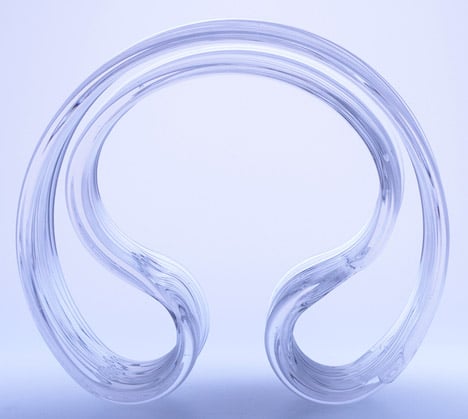
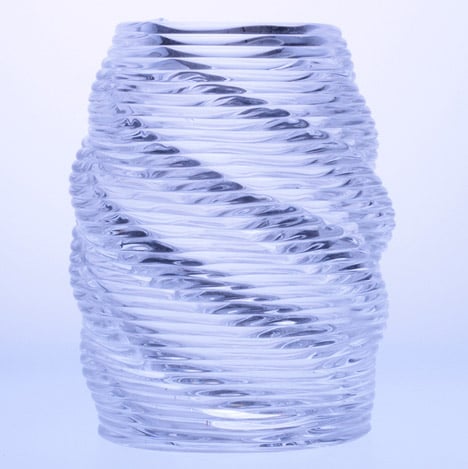
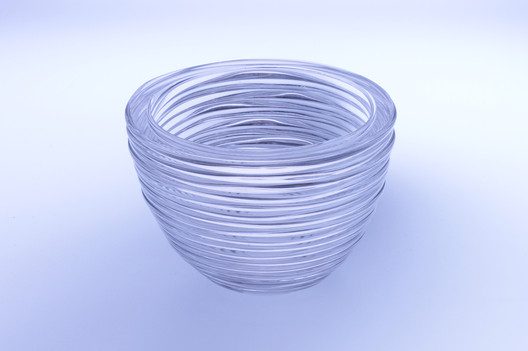
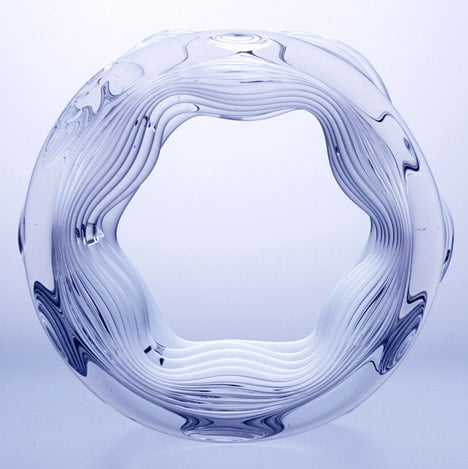
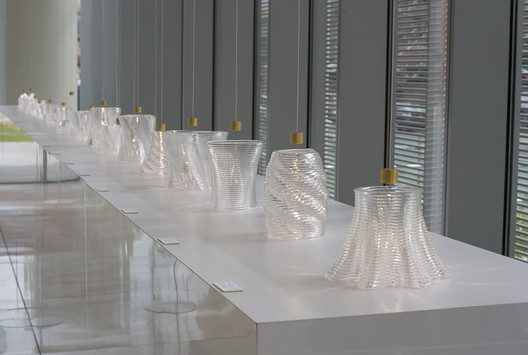
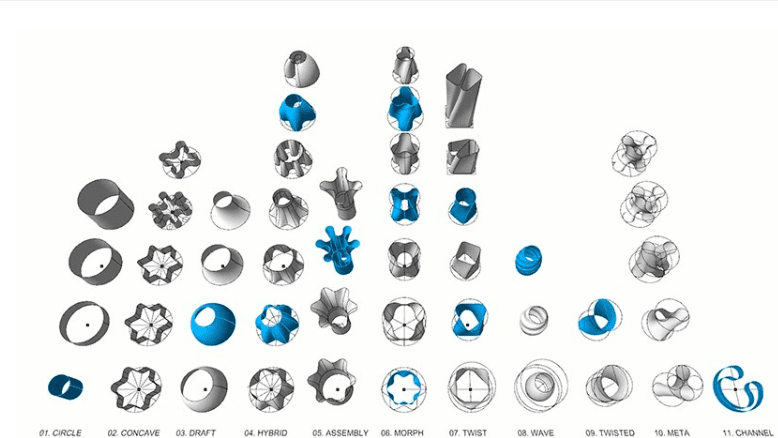
Neri Oxman, founder and director of Mediated Matter, collaborated with MIT’s Department of Mechanical Engineering, Wyss Institute and MIT’s Glass Lab to develop an advanced glass 3D printer, or G3DP – “an additive manufacturing platform designed to print optically transparent glass”, as they explain. The group of researchers – with members John Klein, Michael Stern, Markus Kayser, Chikara Inamura, Giorgia Franchin, Shreya Dave, James Weaver, Peter Houk – combined latest technologies with traditional tools to create the advanced 3D printer.
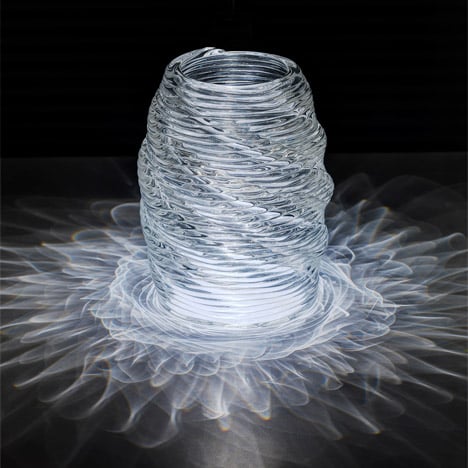
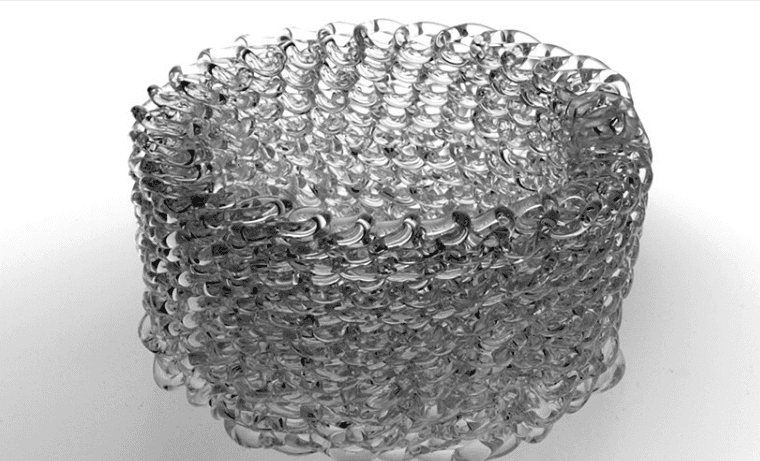
Additive manufacturing is a common technical process used in 3D printing. The principle is based on adding layer-upon-layer of material. Until now, materials with a low melting point were used – primarily plastics. Glass, on the other hand, has a high melting temperature, completely liquefying at approximately 1400°C to 1600°C. Although previous attempts to print glass have been conducted – by Micron3DP, a small Israeli company, for instance – results were never as accurate as the ones reached by the team of researchers at Mediated Matter. Moreover, by experimenting with optically transparent glass, the team expanded the research on light transmission, optical variation, transparency and color variation.
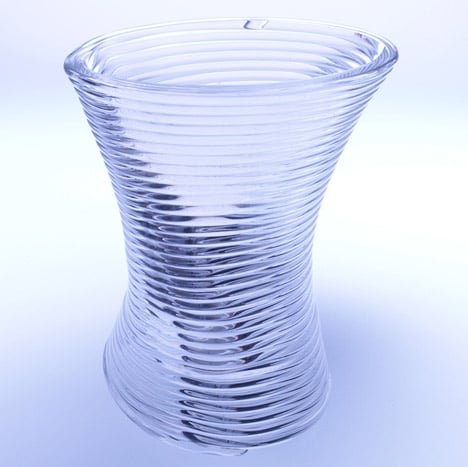
© Chikara Inamura
G3DP’s platform evolves around a dual heated chamber concept. The first one acts as a small kiln where glass is melted at a temperature of approximately 1900°F (1037°C). The lower section of the printer consists of an alumina-zircon-silica nozzle which funnels down the molten glass, similarly to a hotend on a desktop FDM 3D printer. Compressed air lowers the temperature of the nozzle to stop the printing.
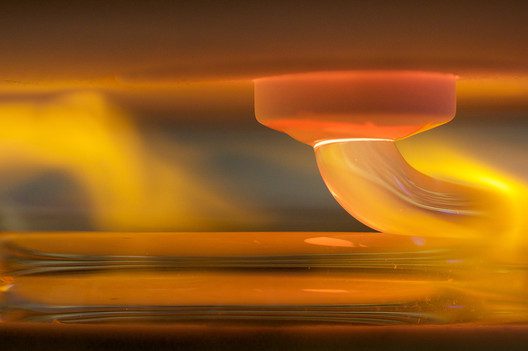
© Steven Keating
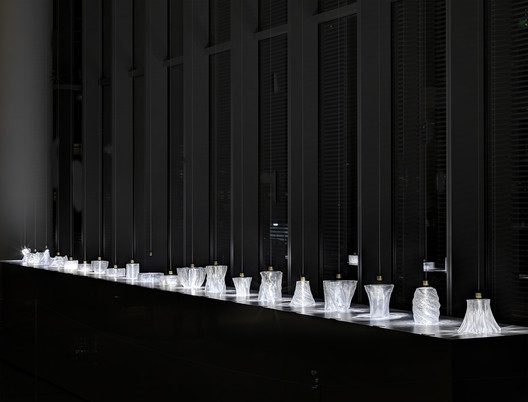
The movement process is similar to typical Cartesian-based 3D printers. With dimensions of approximately 4.5mm and 7.95mm, the printed glass samples were extremely accurate. A full description of “Additive Manufacturing of Optically Transparent Glass” will appear in the September 2015 issue (Vol. 2, Issue 3) of 3D Printing and Additive Manufacturing (3DP+). Furthermore, a selection of Glass pieces will be exhibited at Cooper Hewitt, Smithsonian Design Museum in 2016.



Ana Cosma is an editor at Arch2O with a deep-rooted passion for architecture and urban design. Drawing on nearly a decade of architectural experience across prominent firms in Stuttgart, Germany—including Exyte, BWK.Architekten, and SCD Architekten—Ana brings a practiced eye and international perspective to her editorial work. Her academic foundation in Architecture and Urbanism from Politehnica University of Timișoara, complemented by a study period at Sapienza Università di Roma, informs her nuanced approach to exploring contemporary urban challenges and design innovations. At Arch2O, Ana curates and contributes insightful articles that bridge professional practice with emerging trends in urbanism and architectural theory.