


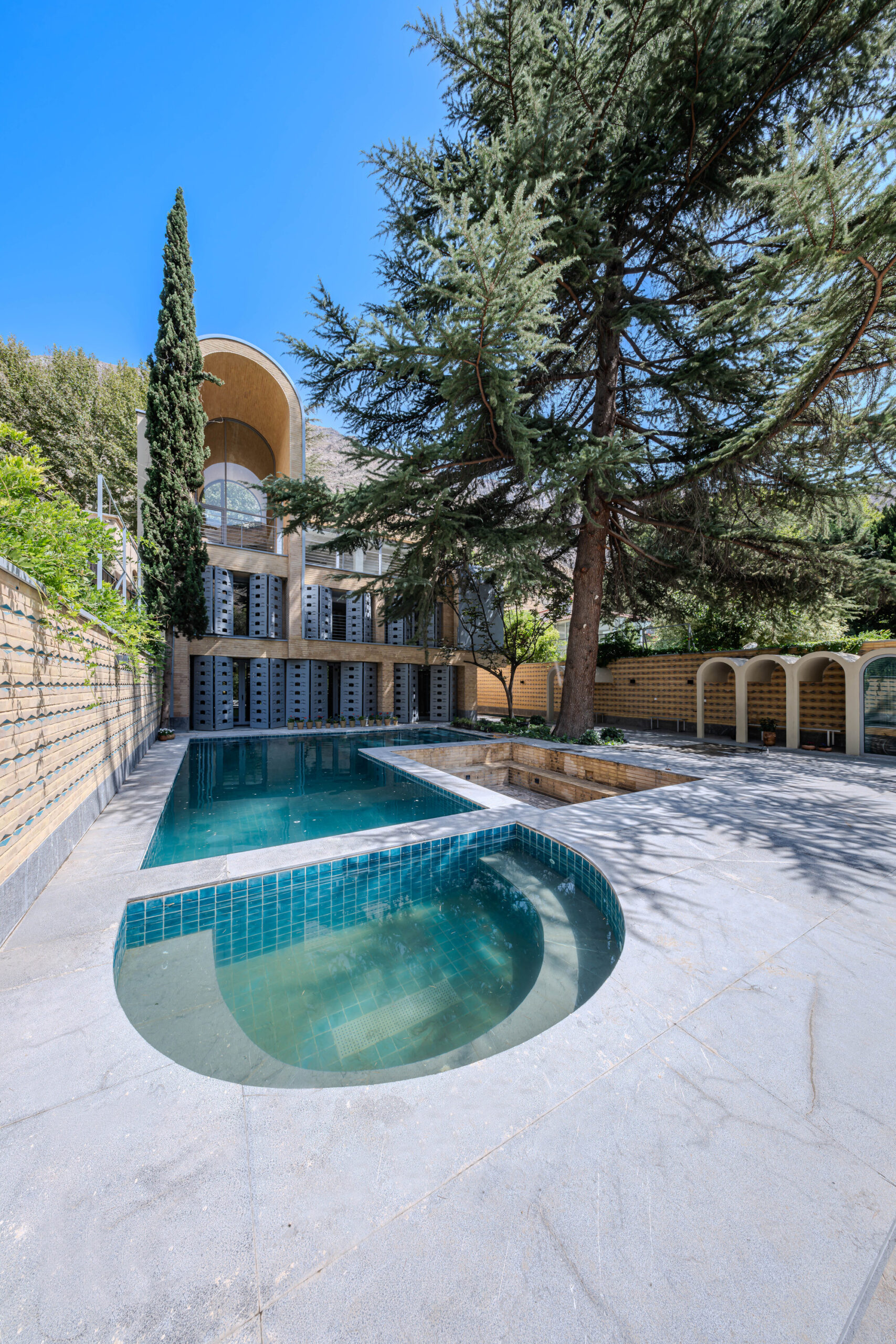
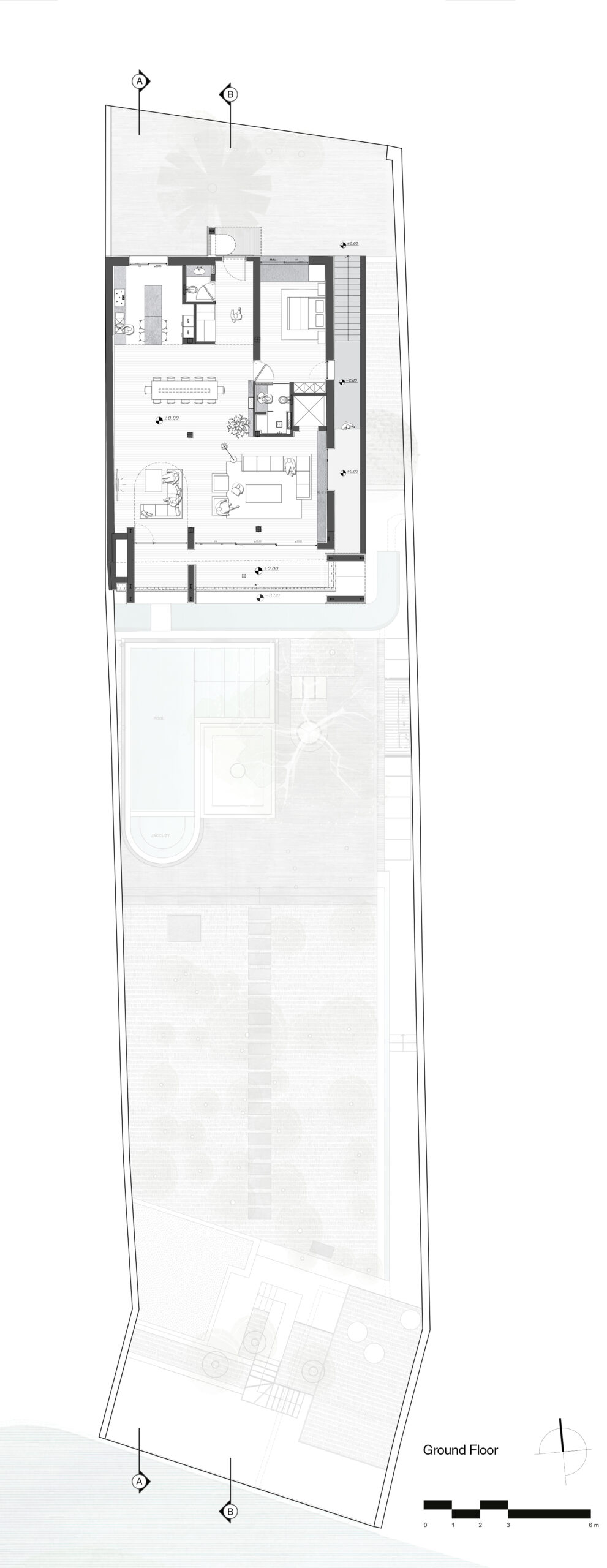
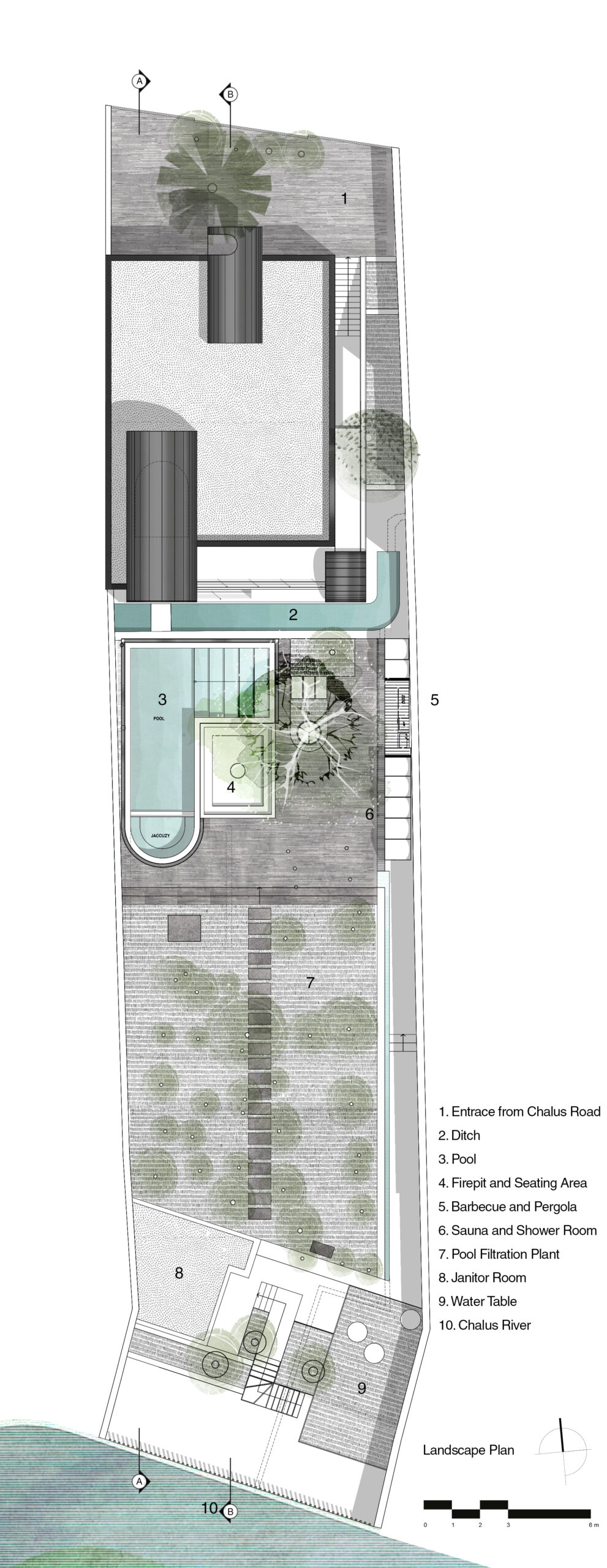
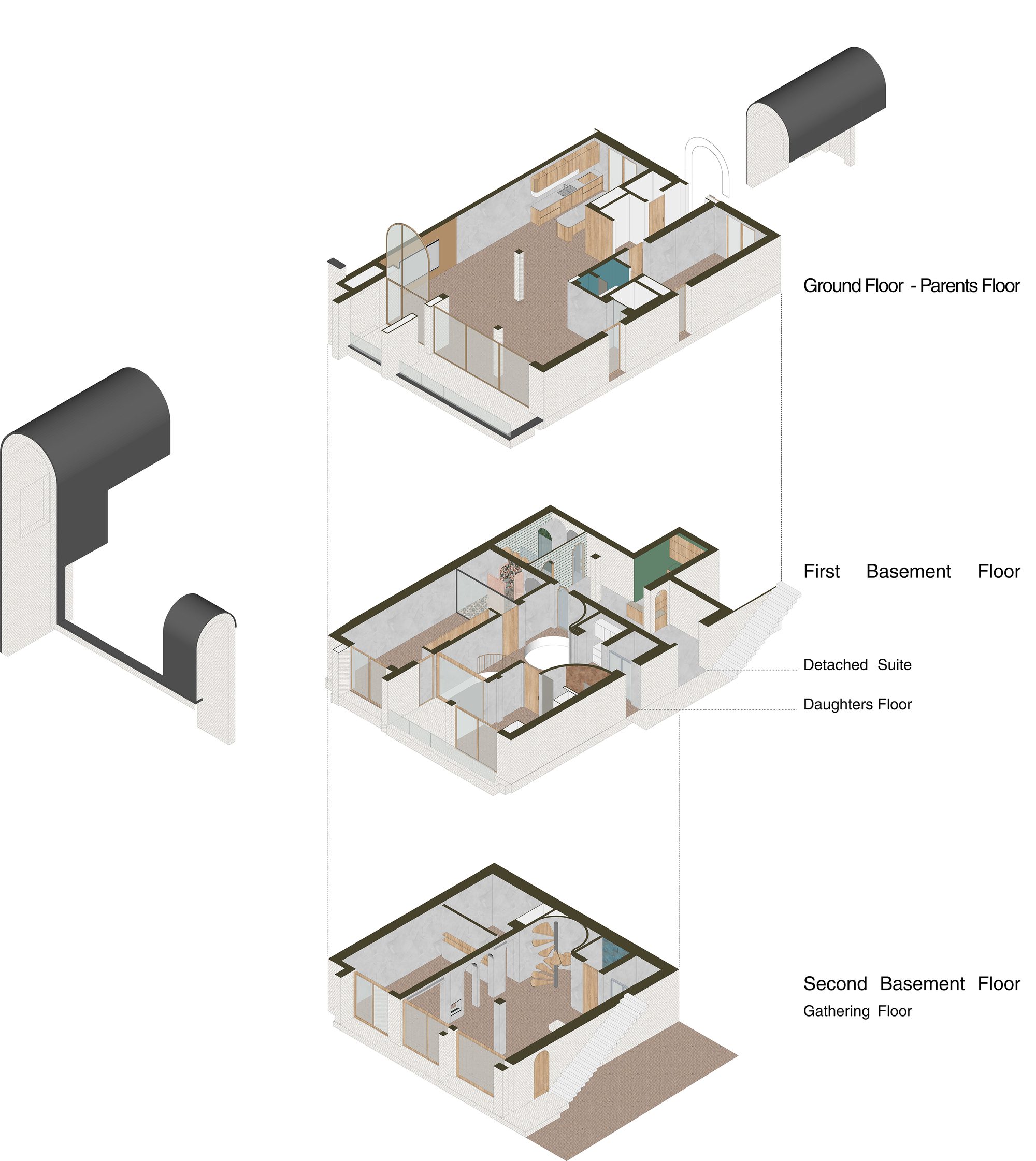
A House Looking to A Cedrus Tree, This renovation project is located in Alborz Province, on a 1,150-square-meter plot beside a river and a decades-old Cedrus tree. The original structure—an unfinished villa dating back more than 50 years—featured a load-bearing wall system and covered an area of approximately 590 square meters. The project now serves as a recreational residence for a family with two daughters and their spouses.
© Mohammad Hosein Hamzehlouei
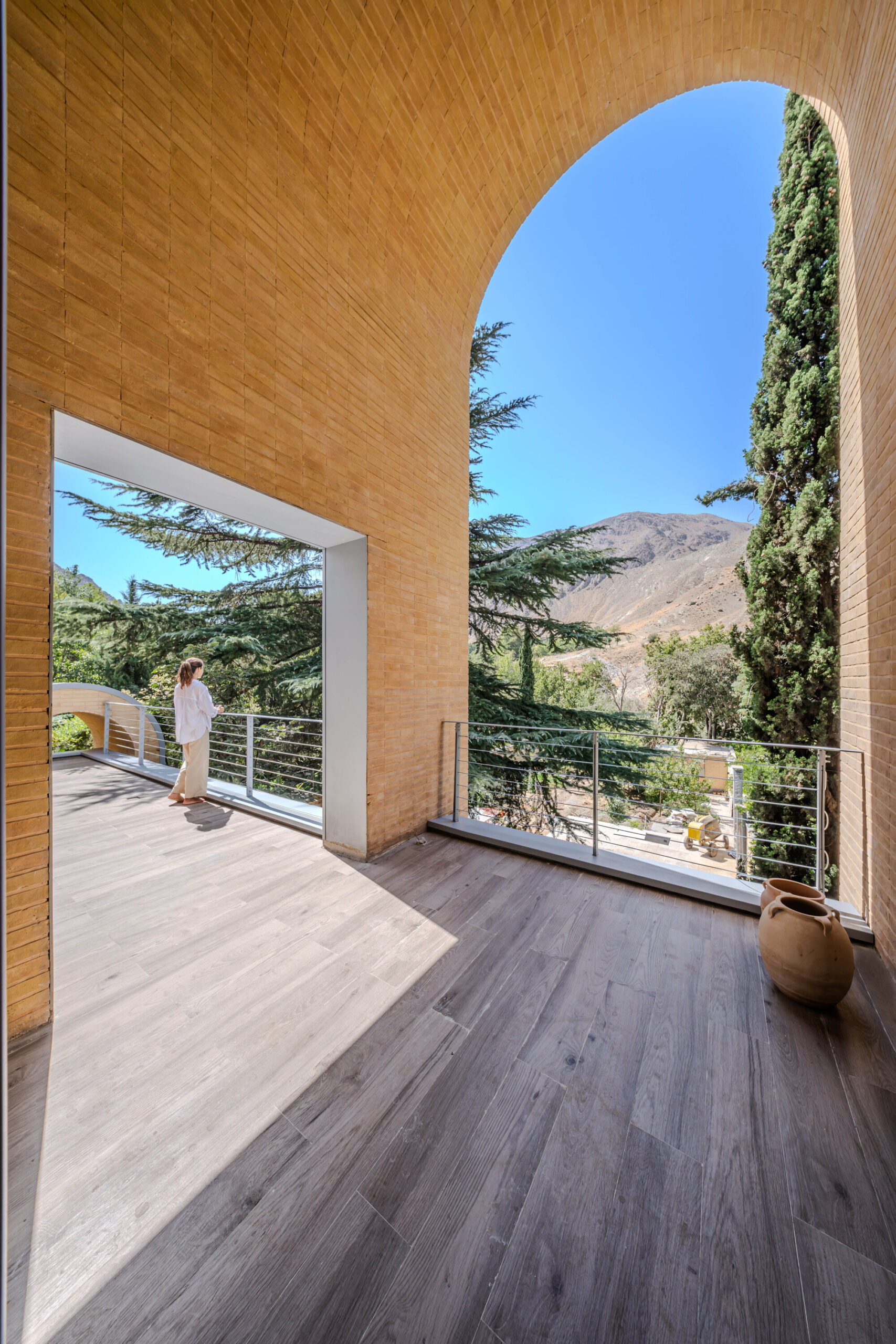
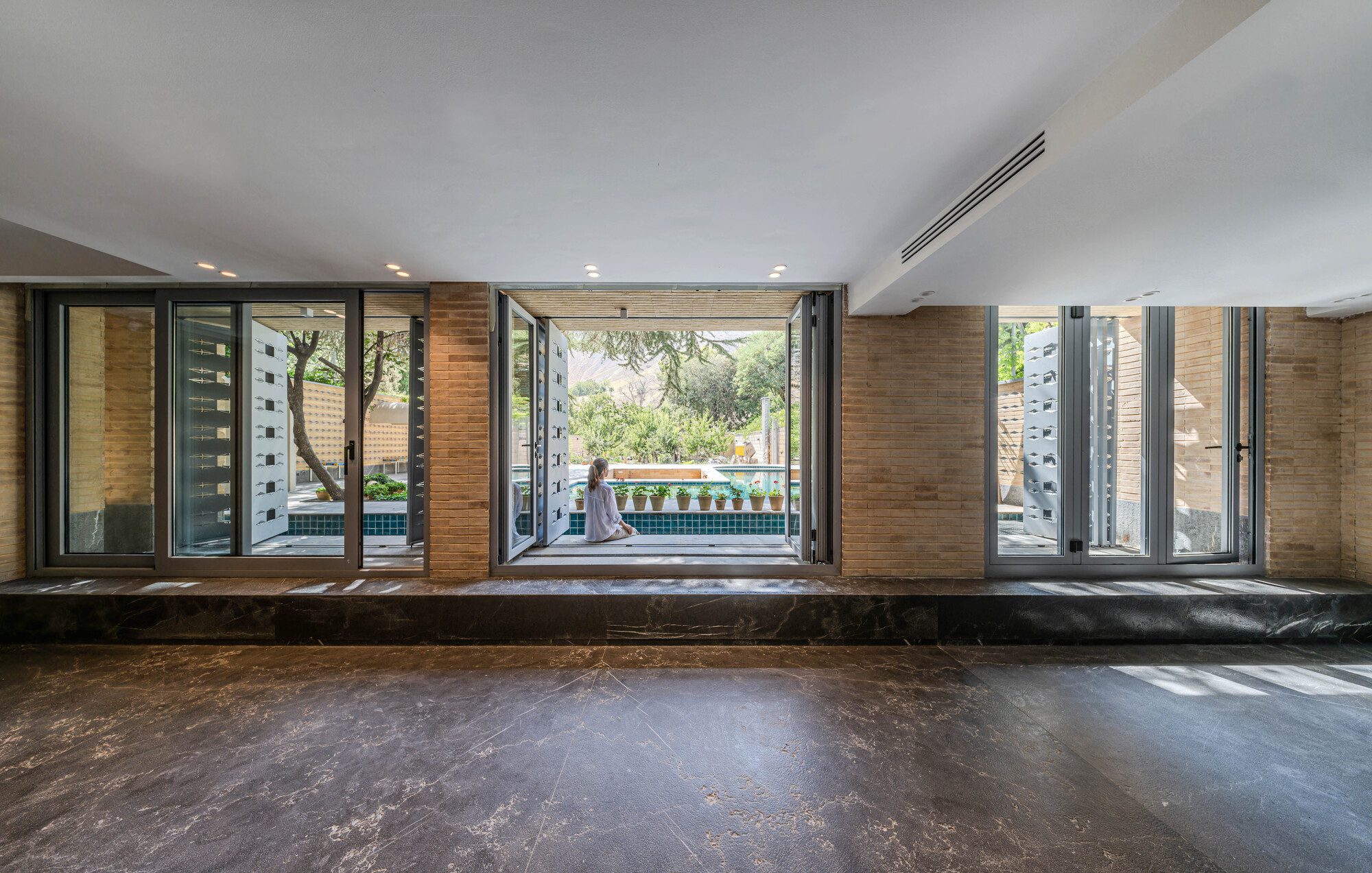
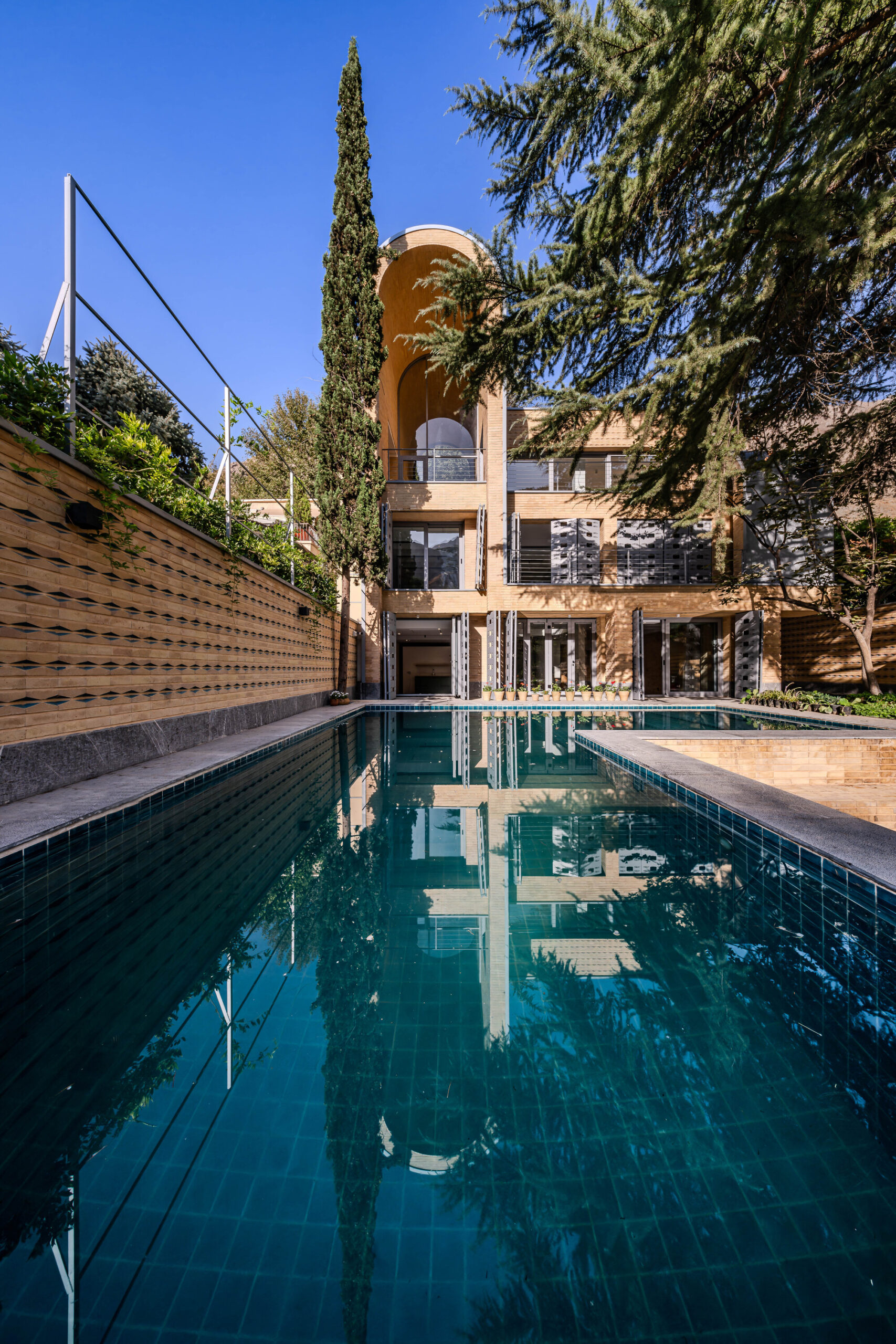
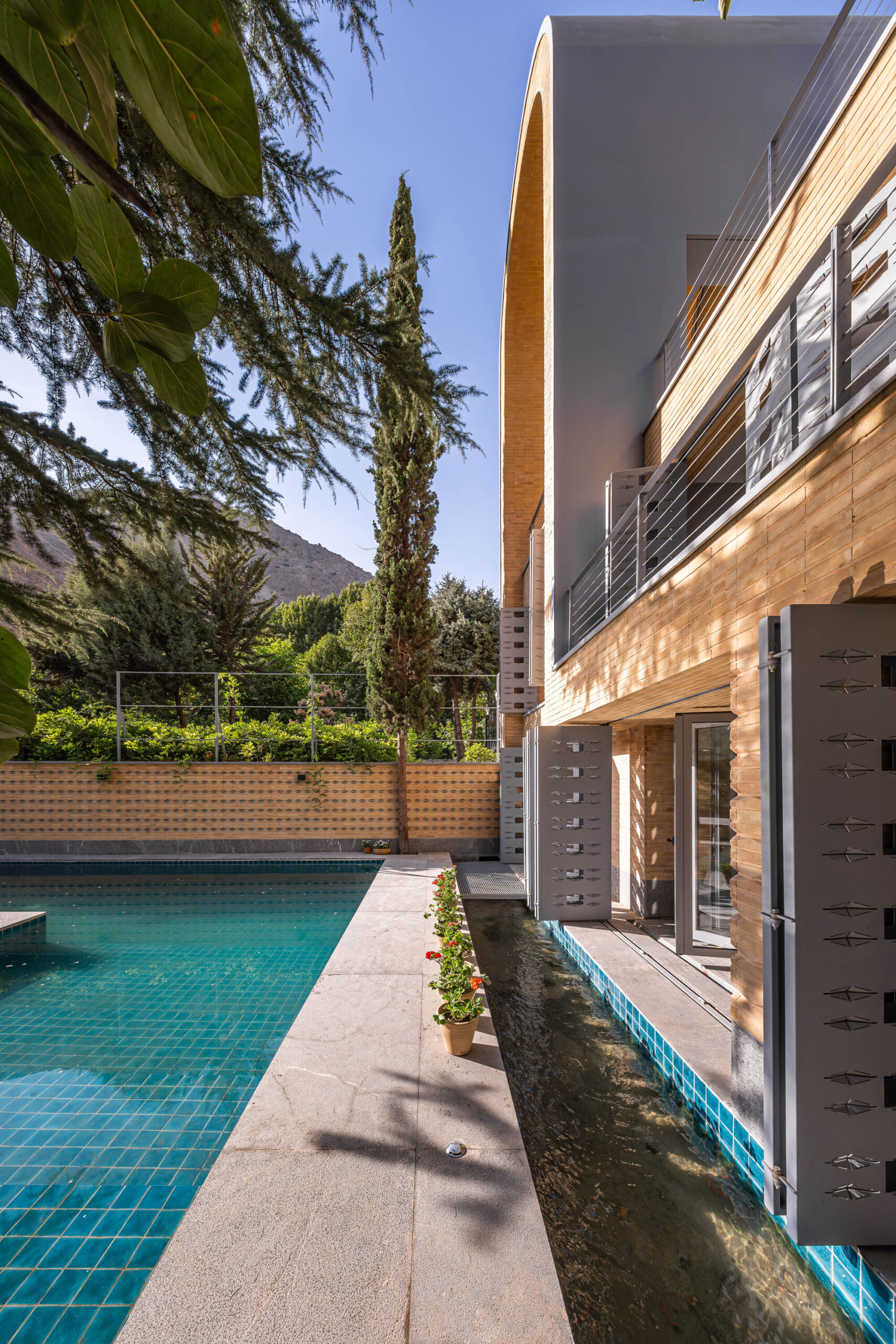
Nature was the project’s most influential design driver. The house is situated between the solid presence of the mountains to the north and the flowing river to the south, under a vast open sky. The central concept was to welcome nature inside the house, allowing sunlight, water, wind, and vegetation to flow gently through the space in slow, circular motion. The Cedrus tree acts as the symbolic anchor of this experience, both as a natural landmark and as a constant presence throughout the design.
© Mohammad Hosein Hamzehlouei
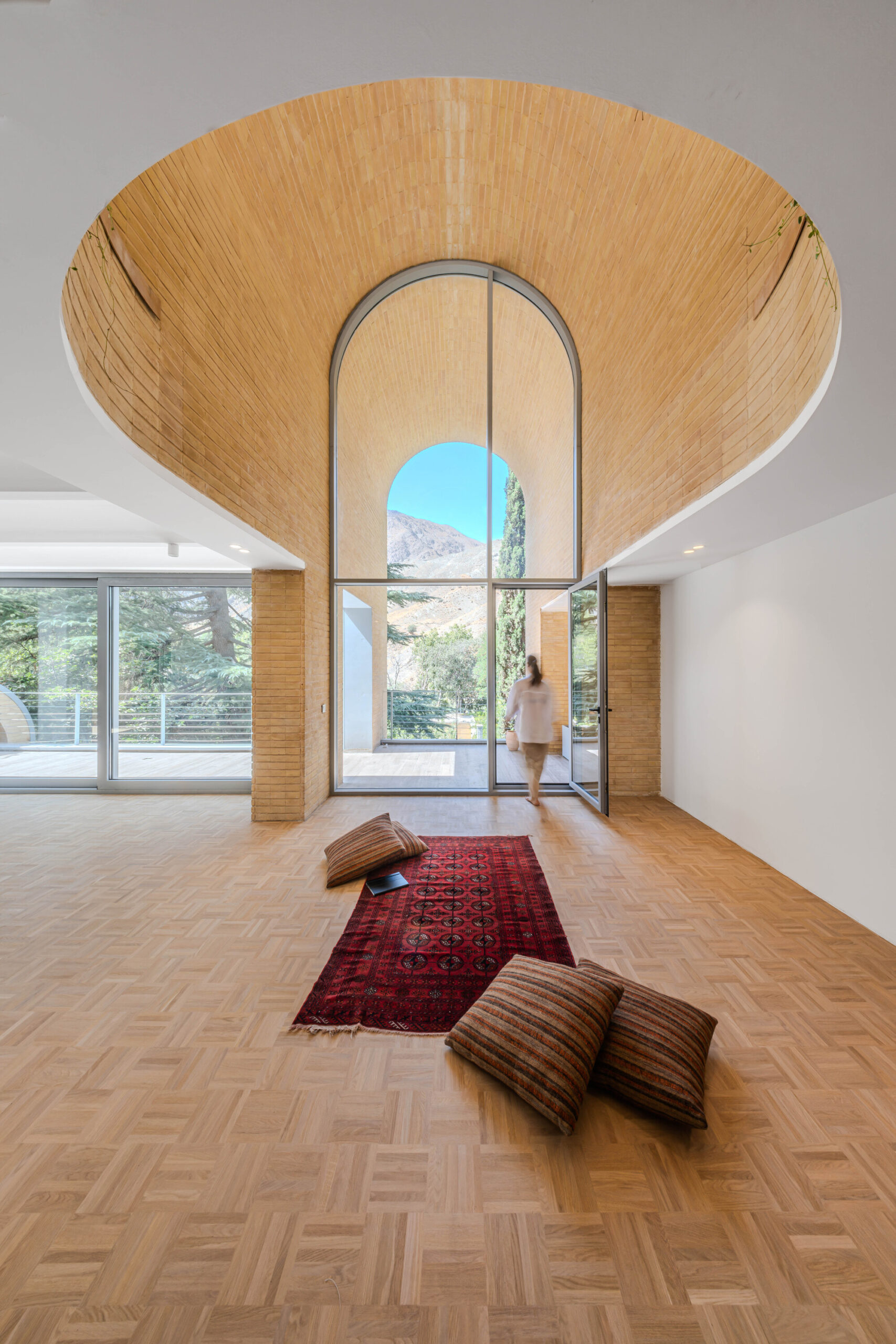
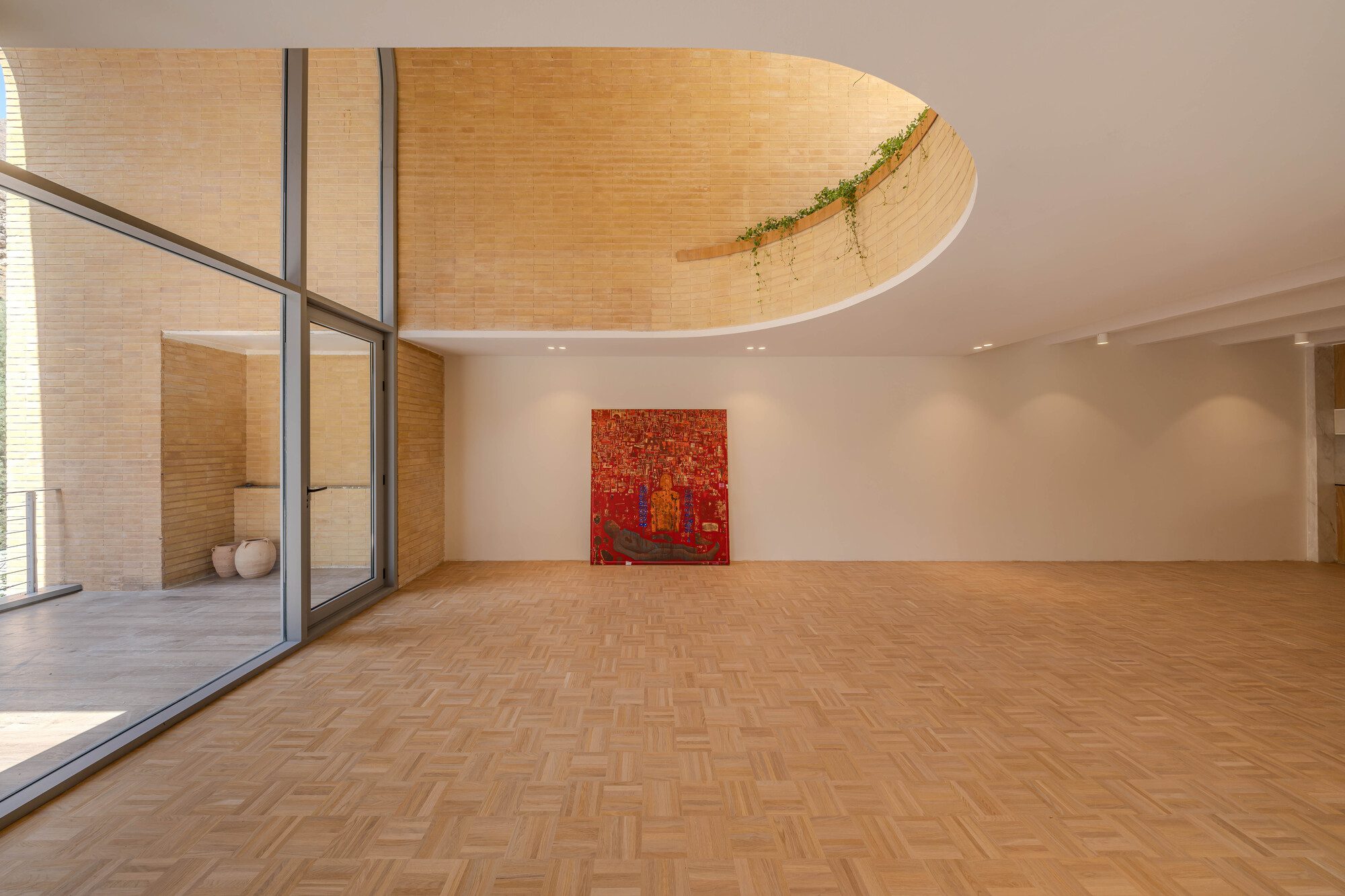
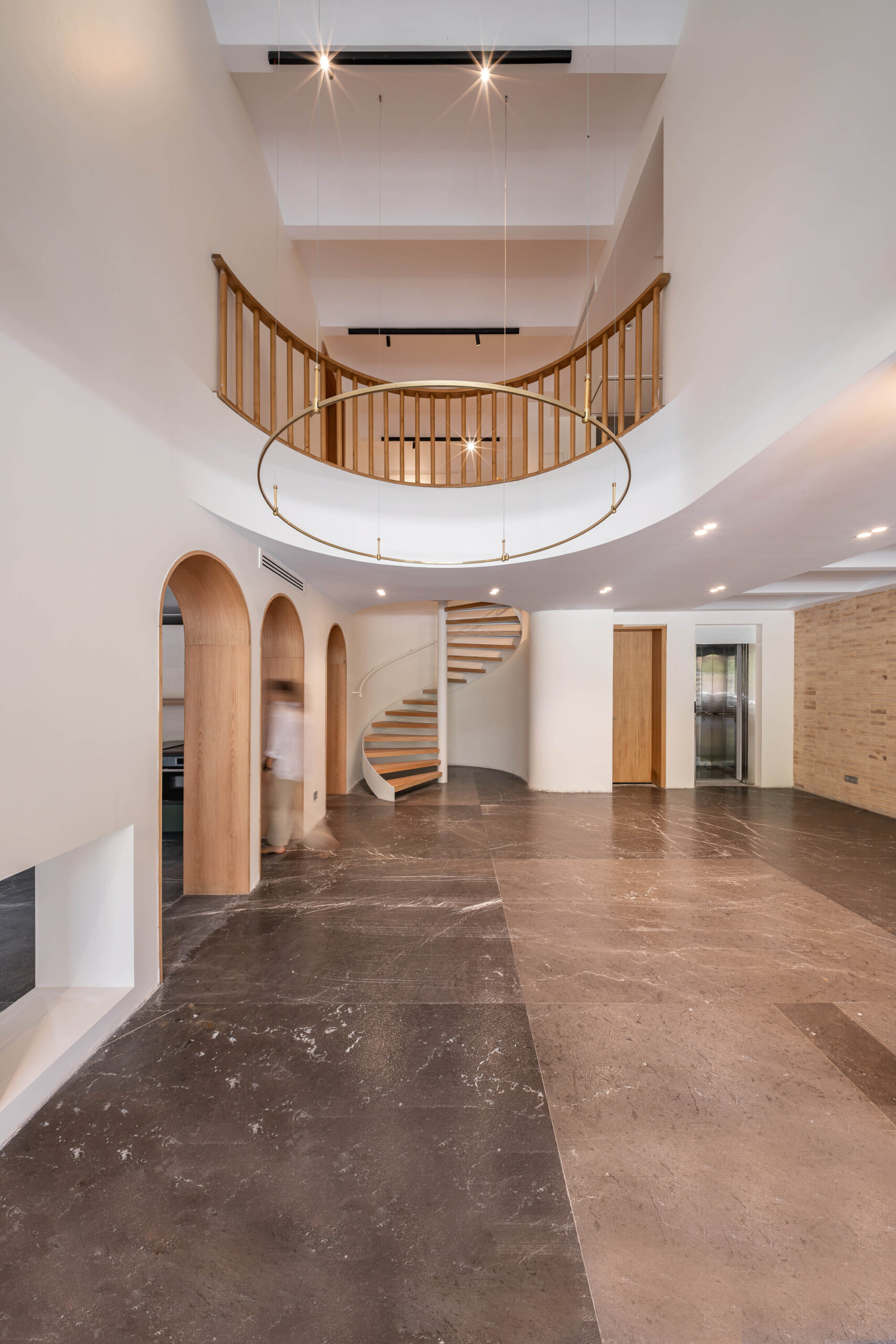
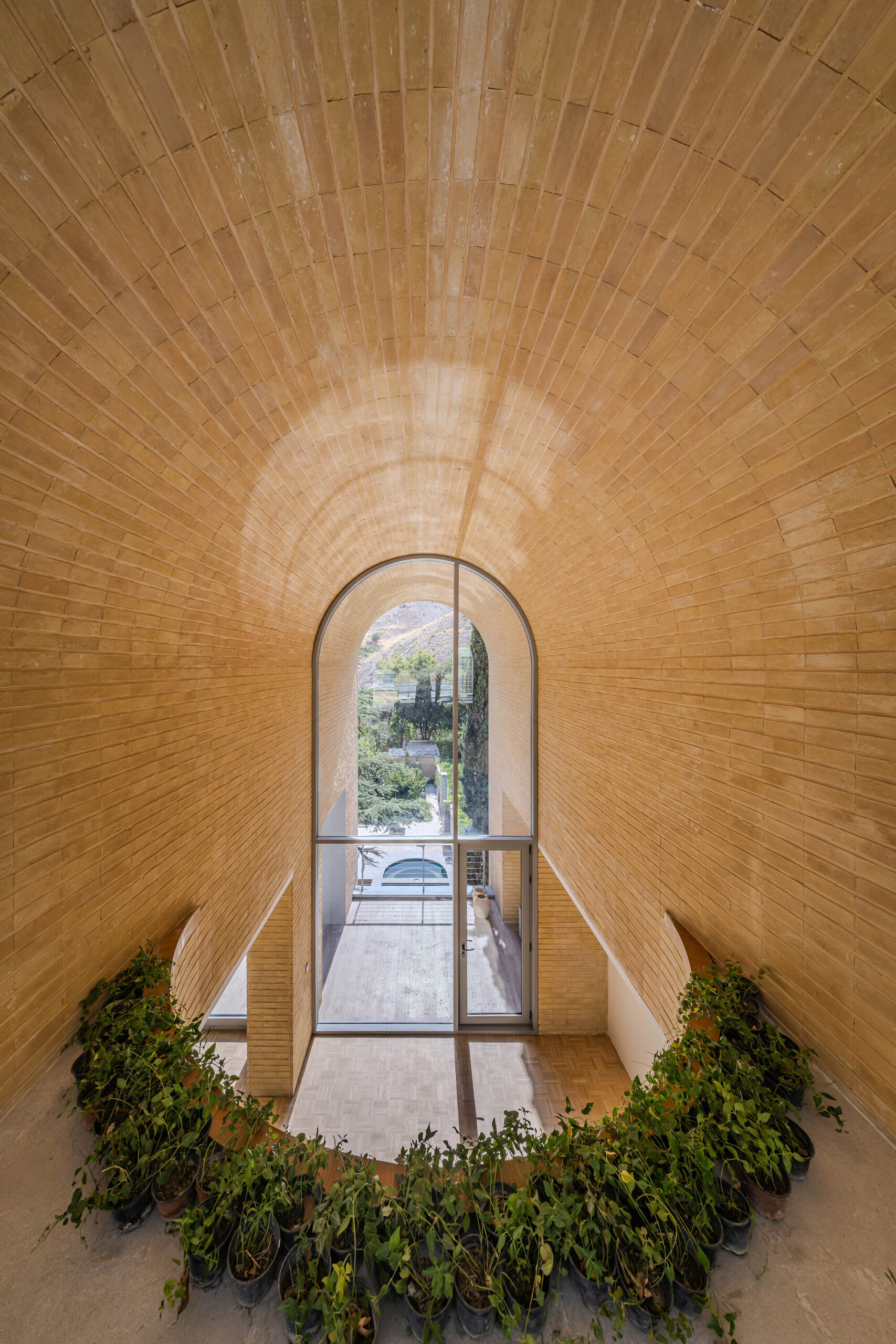
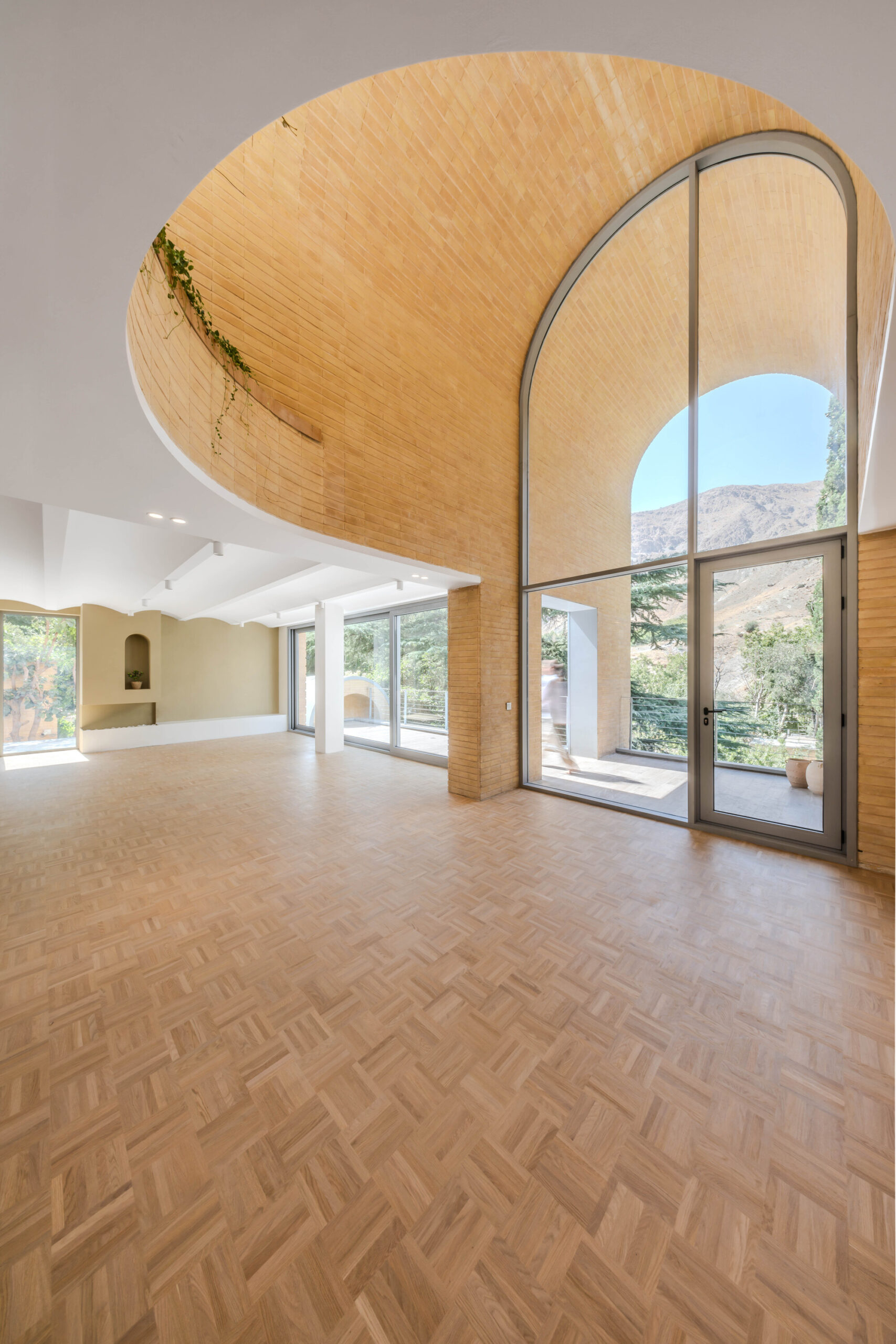
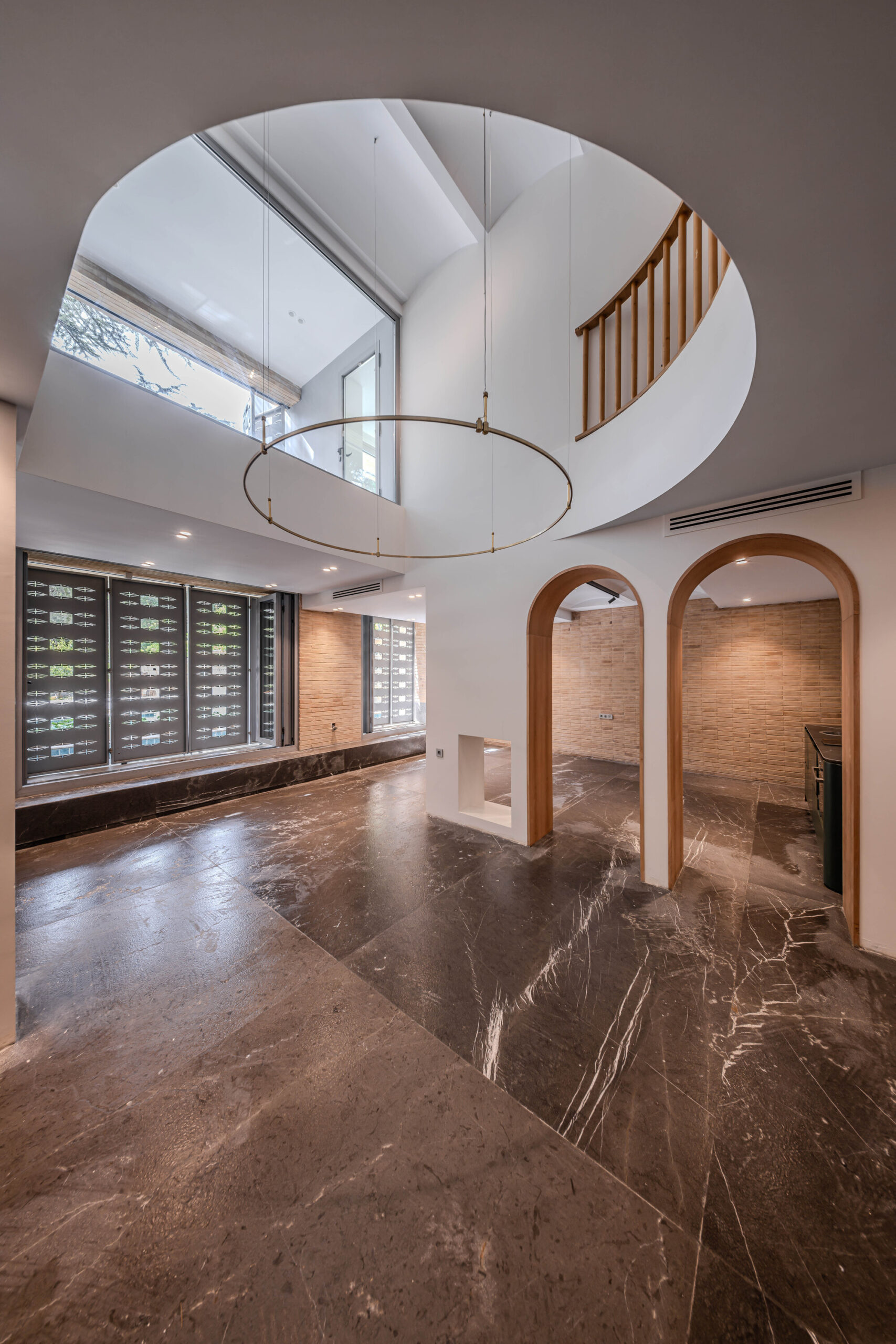
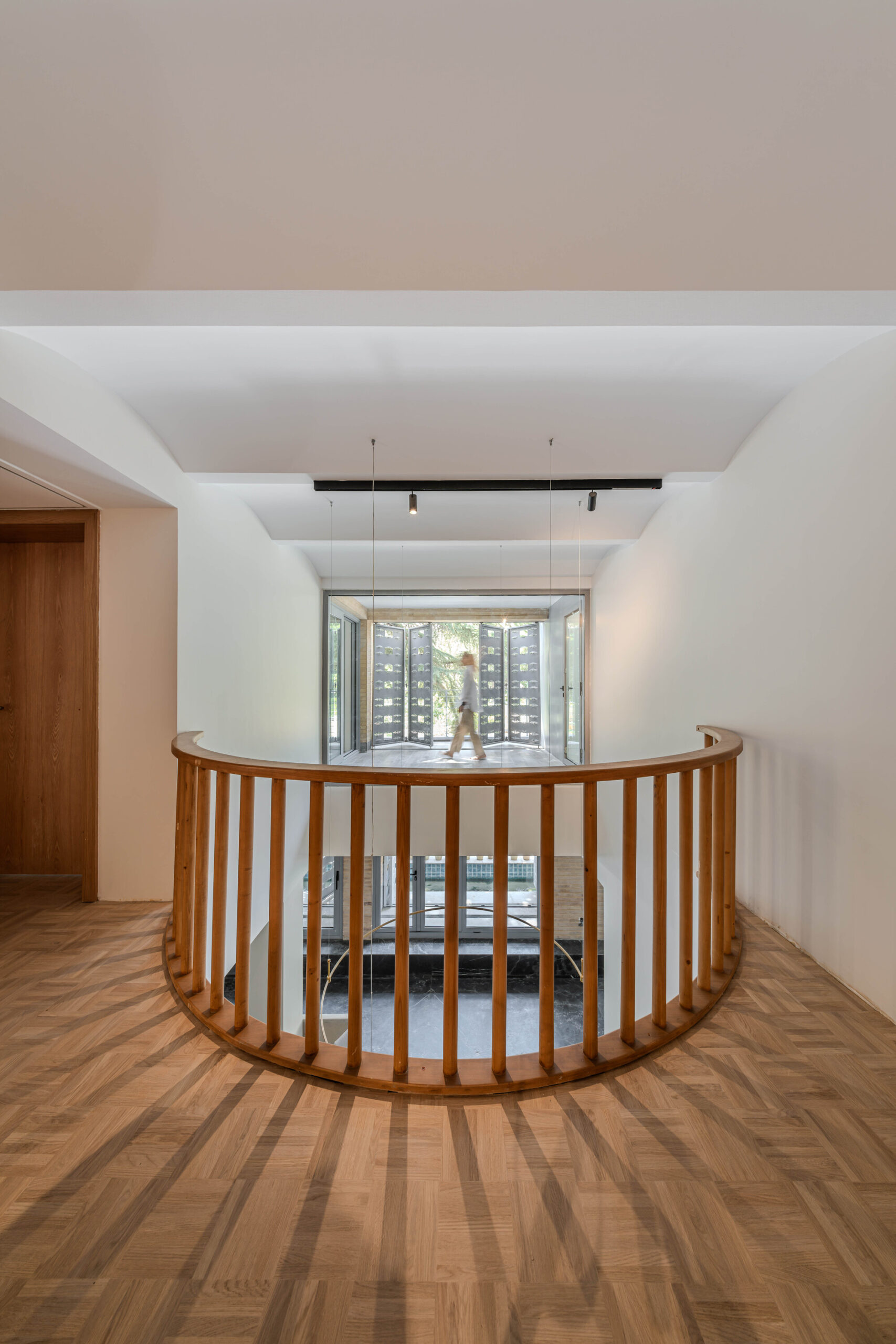
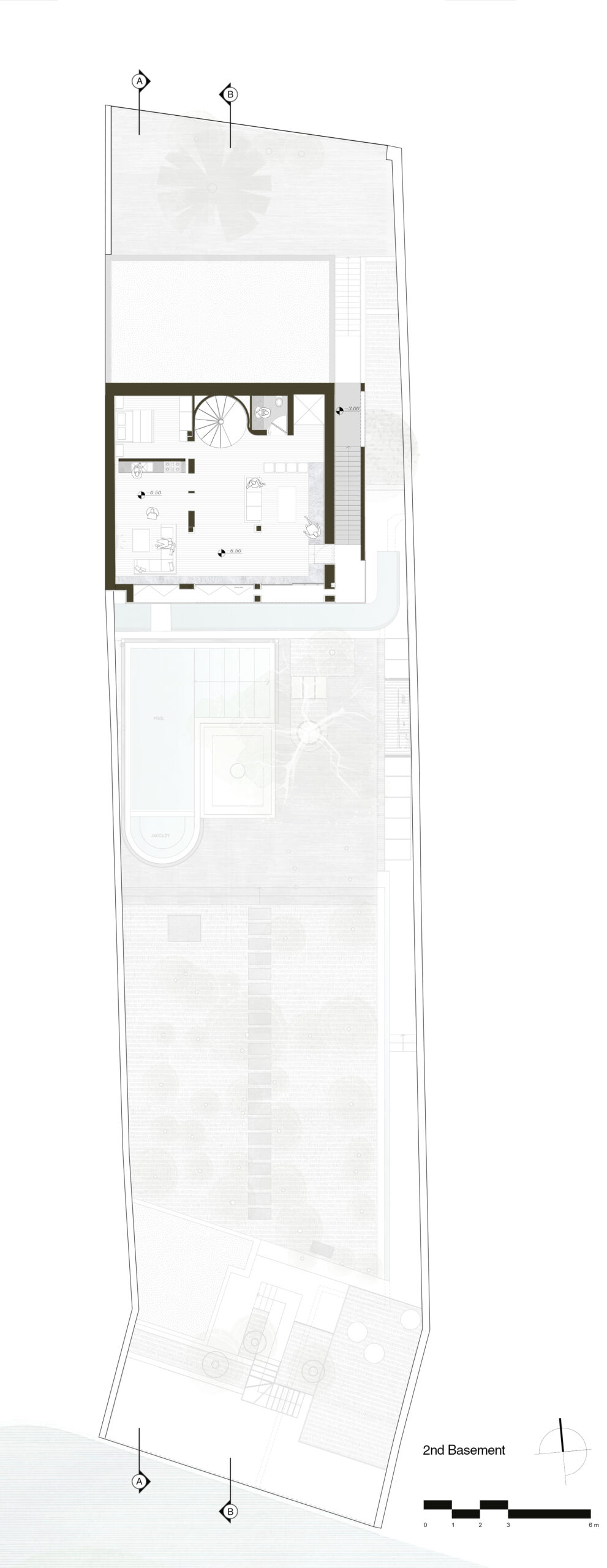
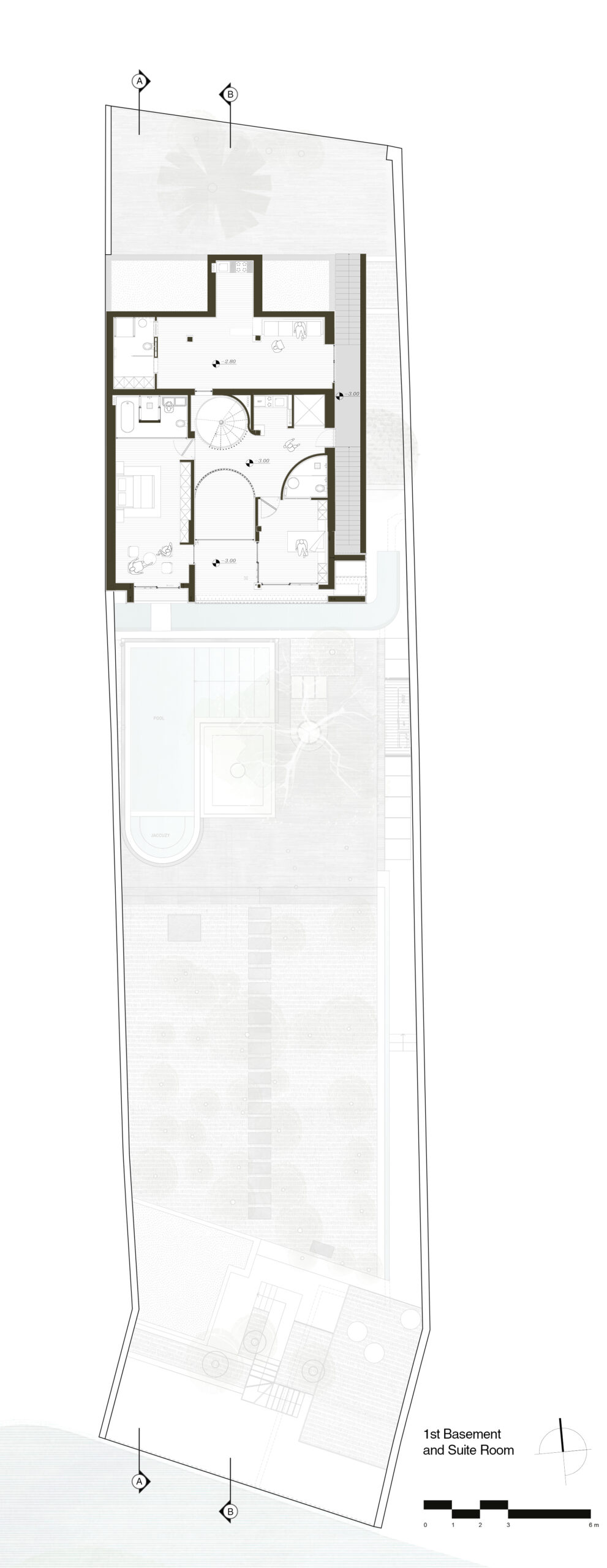
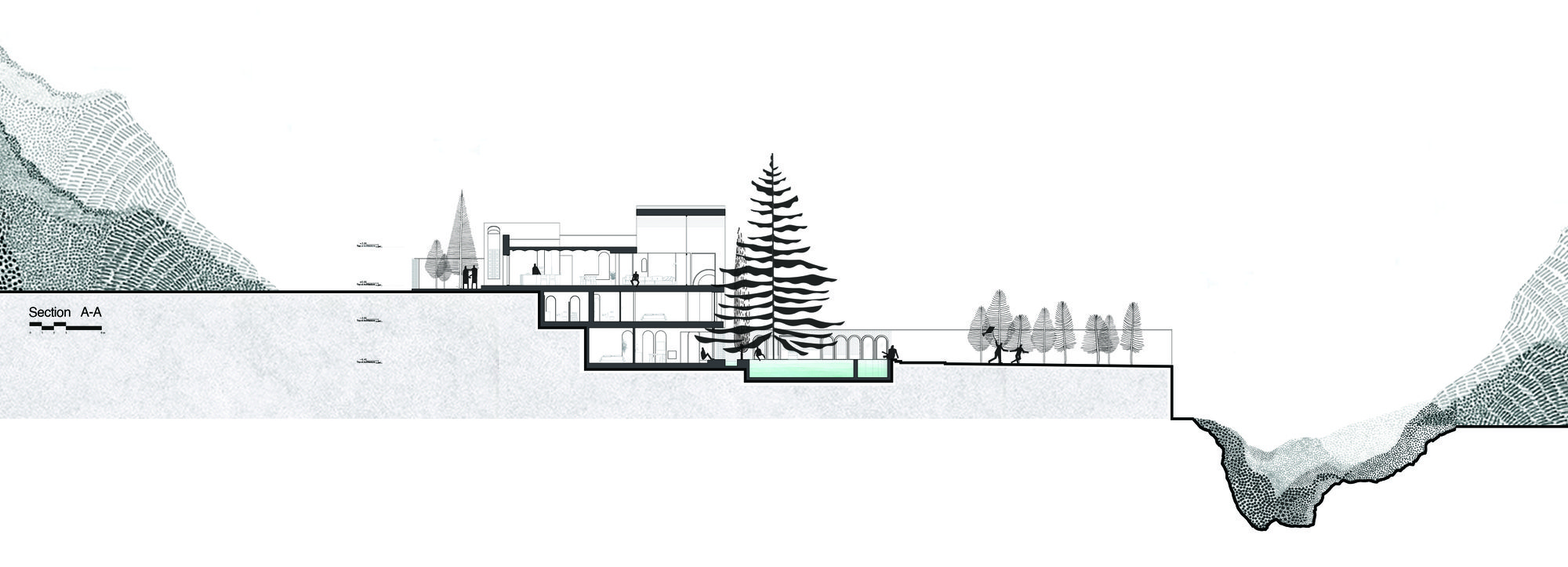
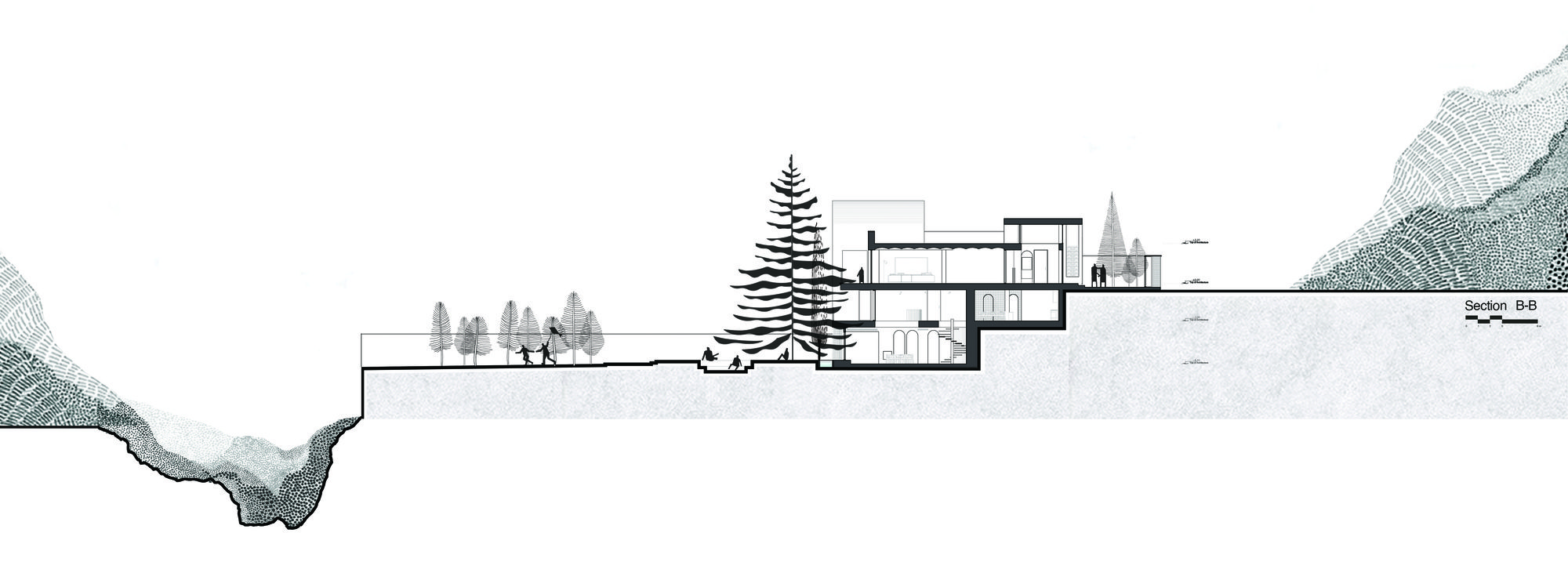
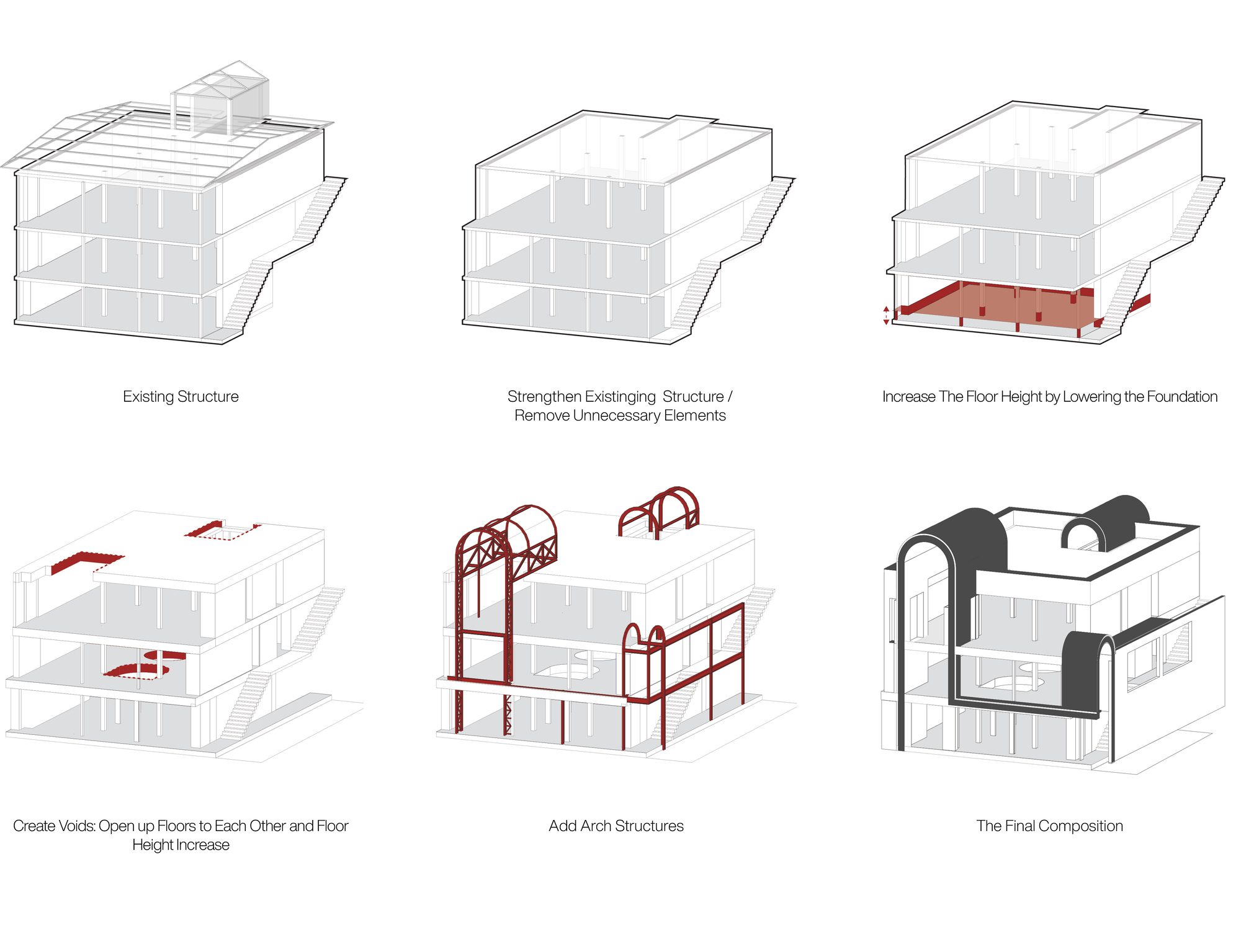
Strict zoning regulations prohibited any new construction or vertical extension. Yet the existing building posed major challenges: low ceiling heights, disconnected floor levels, and structural limitations. To resolve these issues, the design introduced two strategic voids—one beneath the roof ridge and another in the living room—to create spatial verticality, open views toward the sky, and strengthen the relationship between different floors.
© Mohammad Hosein Hamzehlouei
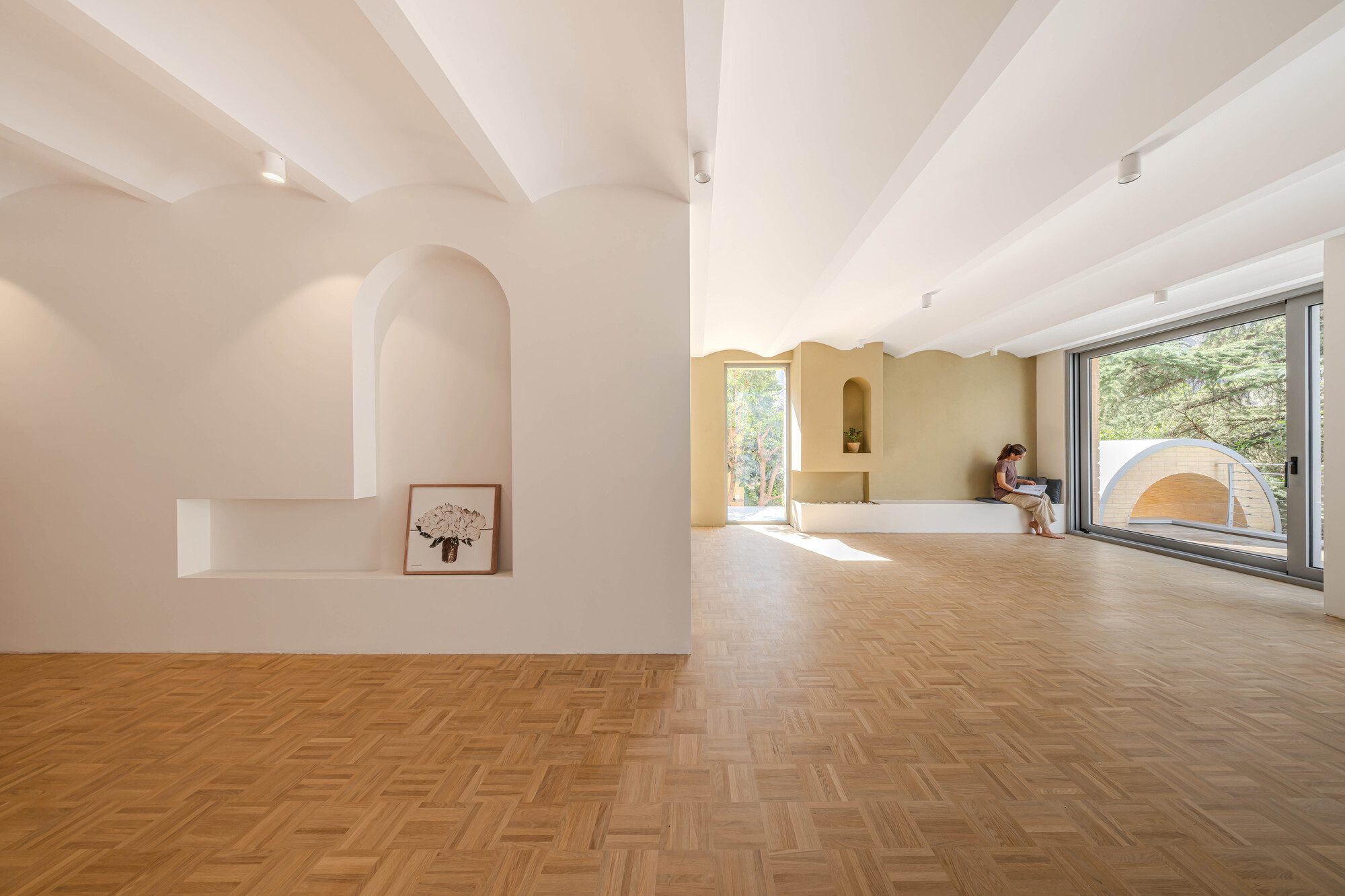
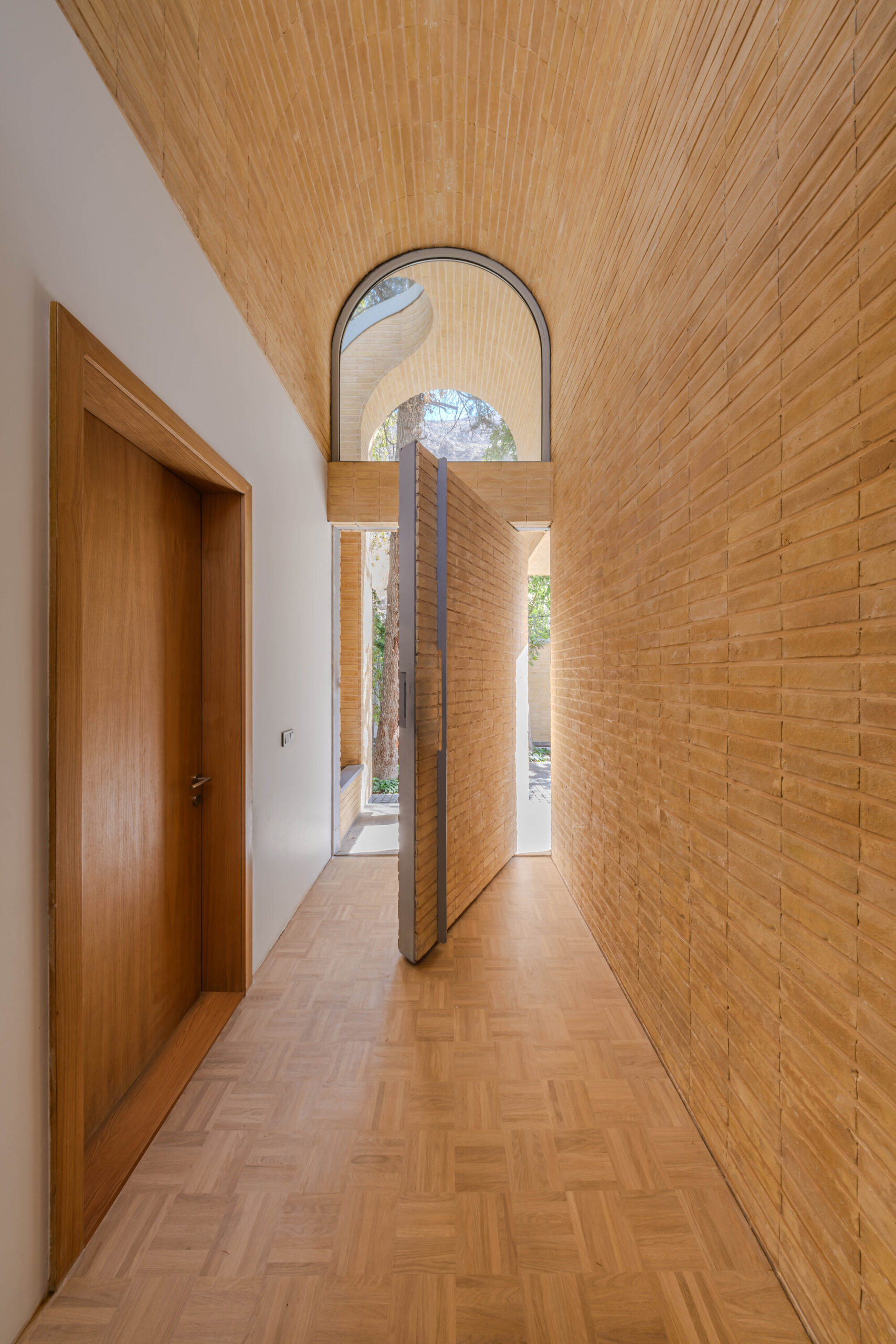
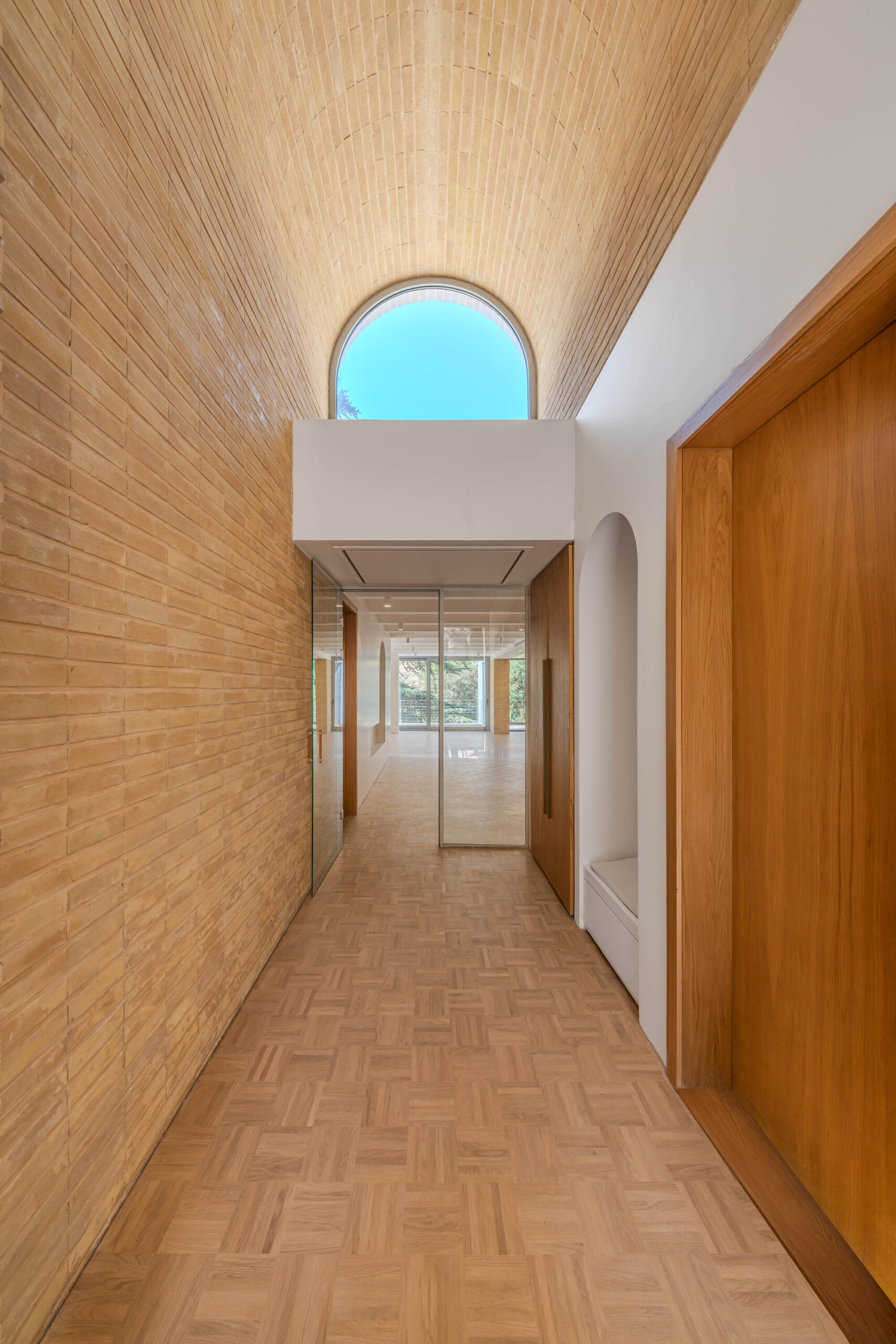
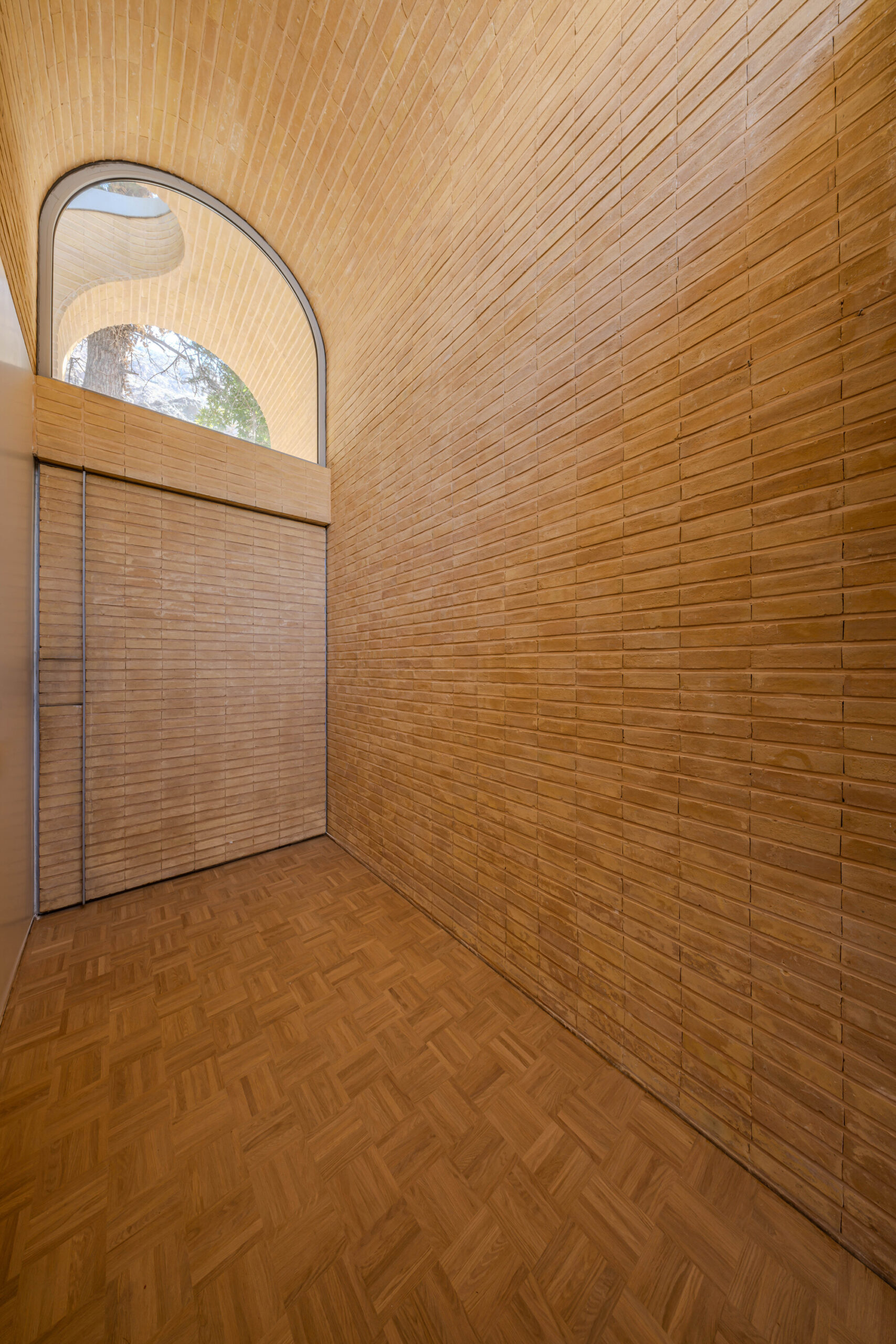
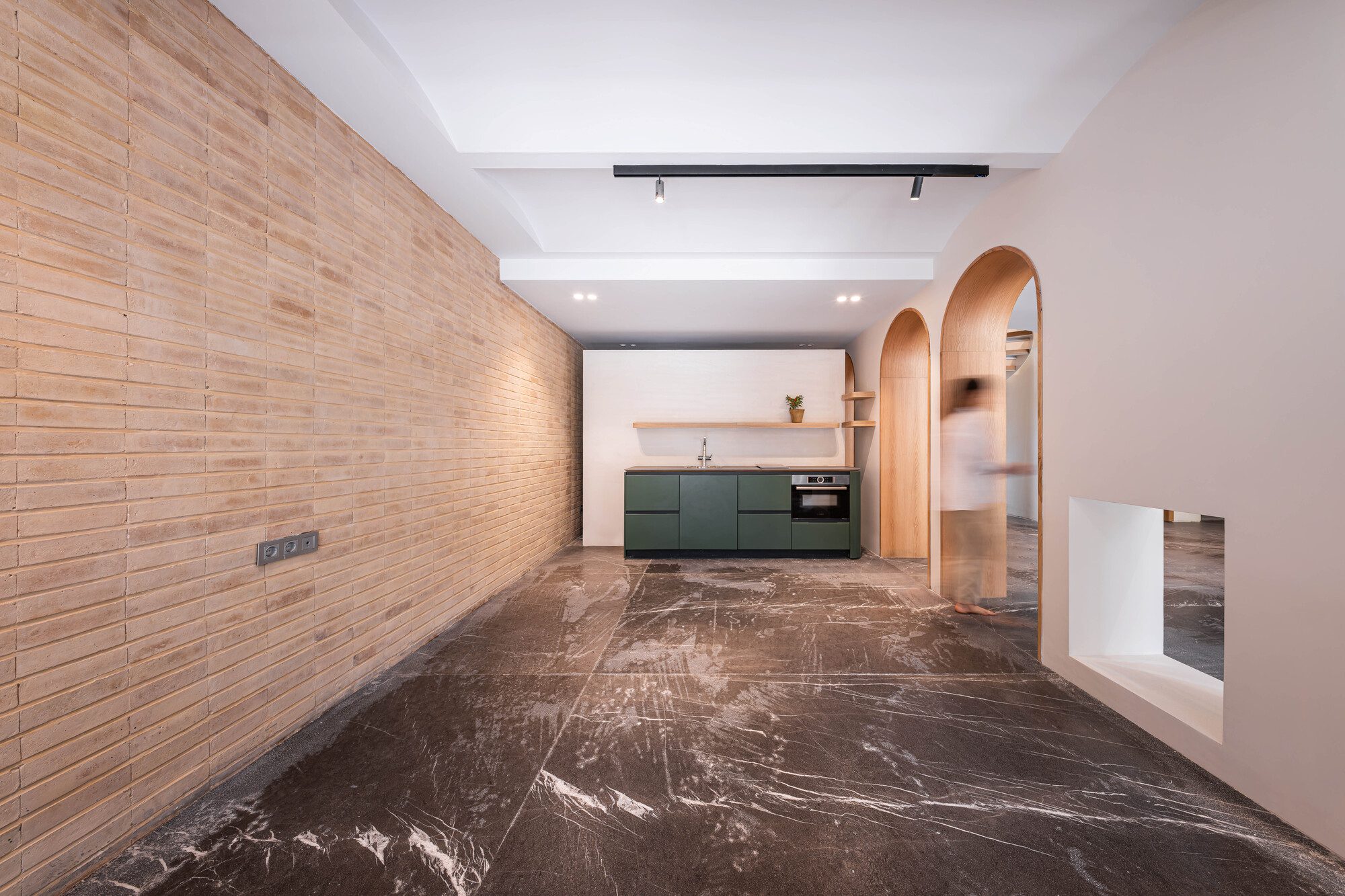
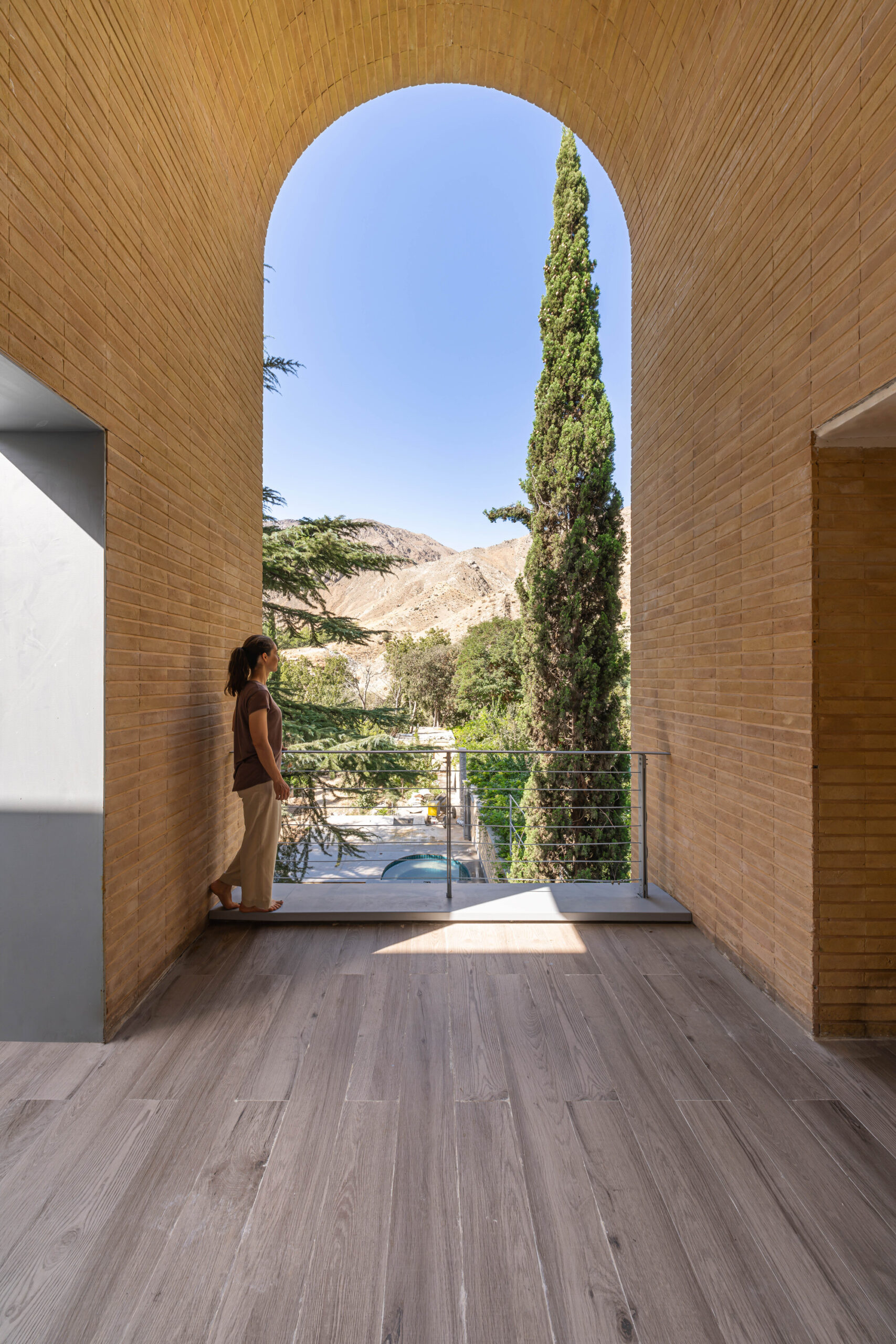
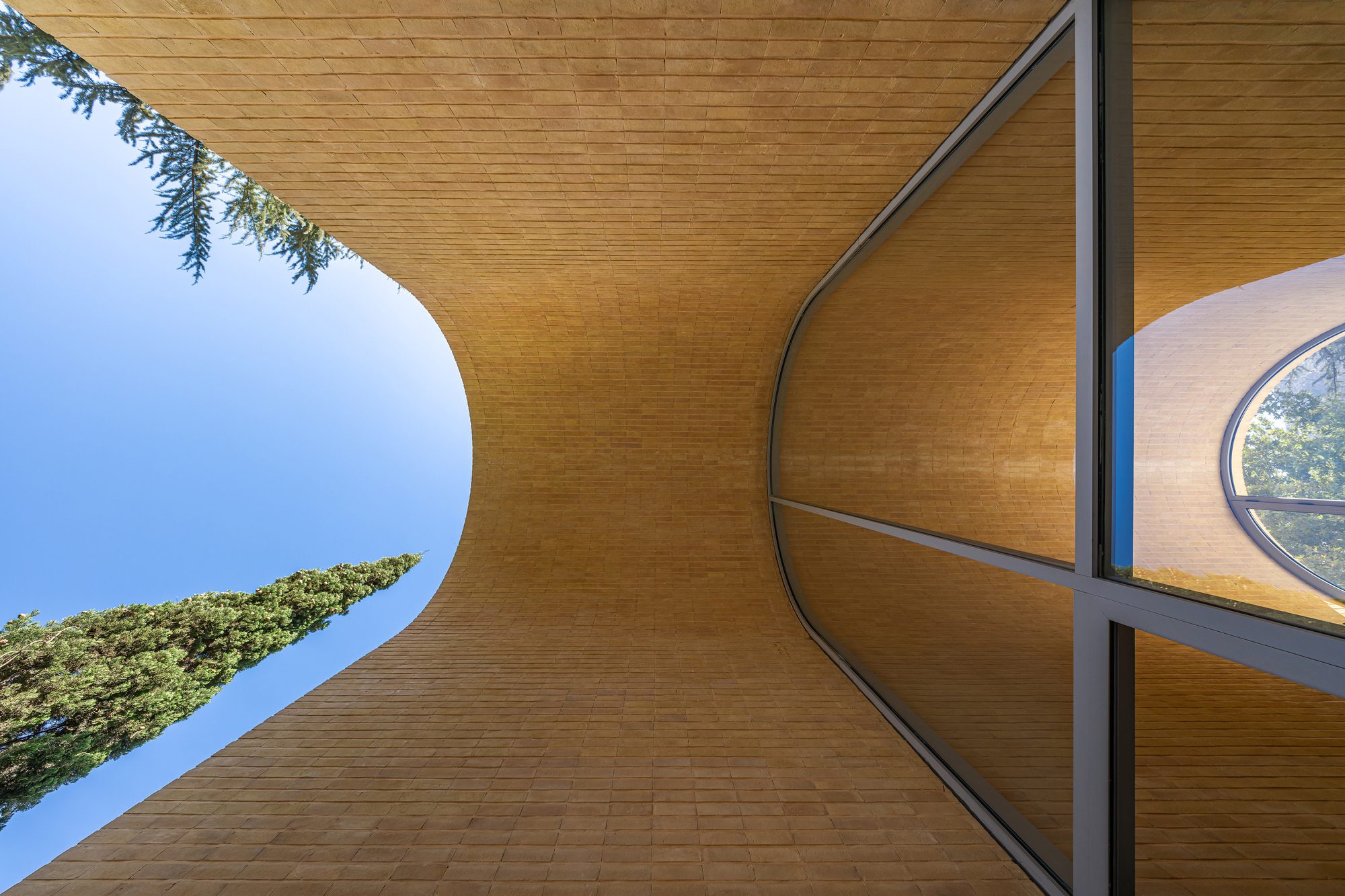
While the gable roof was preserved in its silhouette, the interior volumes were redefined through a series of intersecting arches, drawing inspiration from the vaulted geometry rooted in Iran’s architectural heritage. The original structure was reinforced and unified with a steel frame. In the second basement, the foundation was lowered by 90 centimeters, increasing usable floor height. Point loads were redistributed with new support systems, and existing columns were extended, freeing up the plan and enhancing spatial fluidity.
© Mohammad Hosein Hamzehlouei
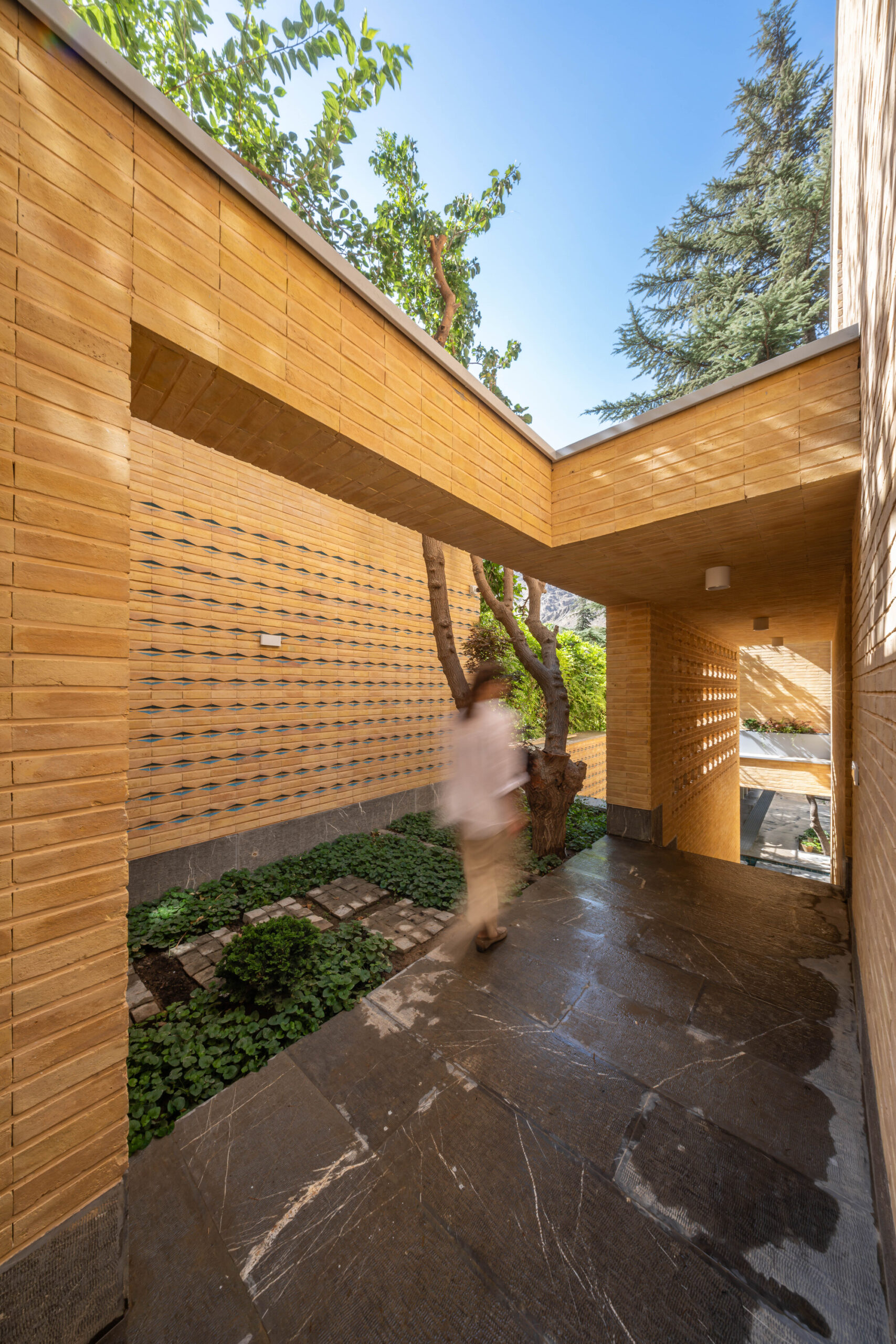
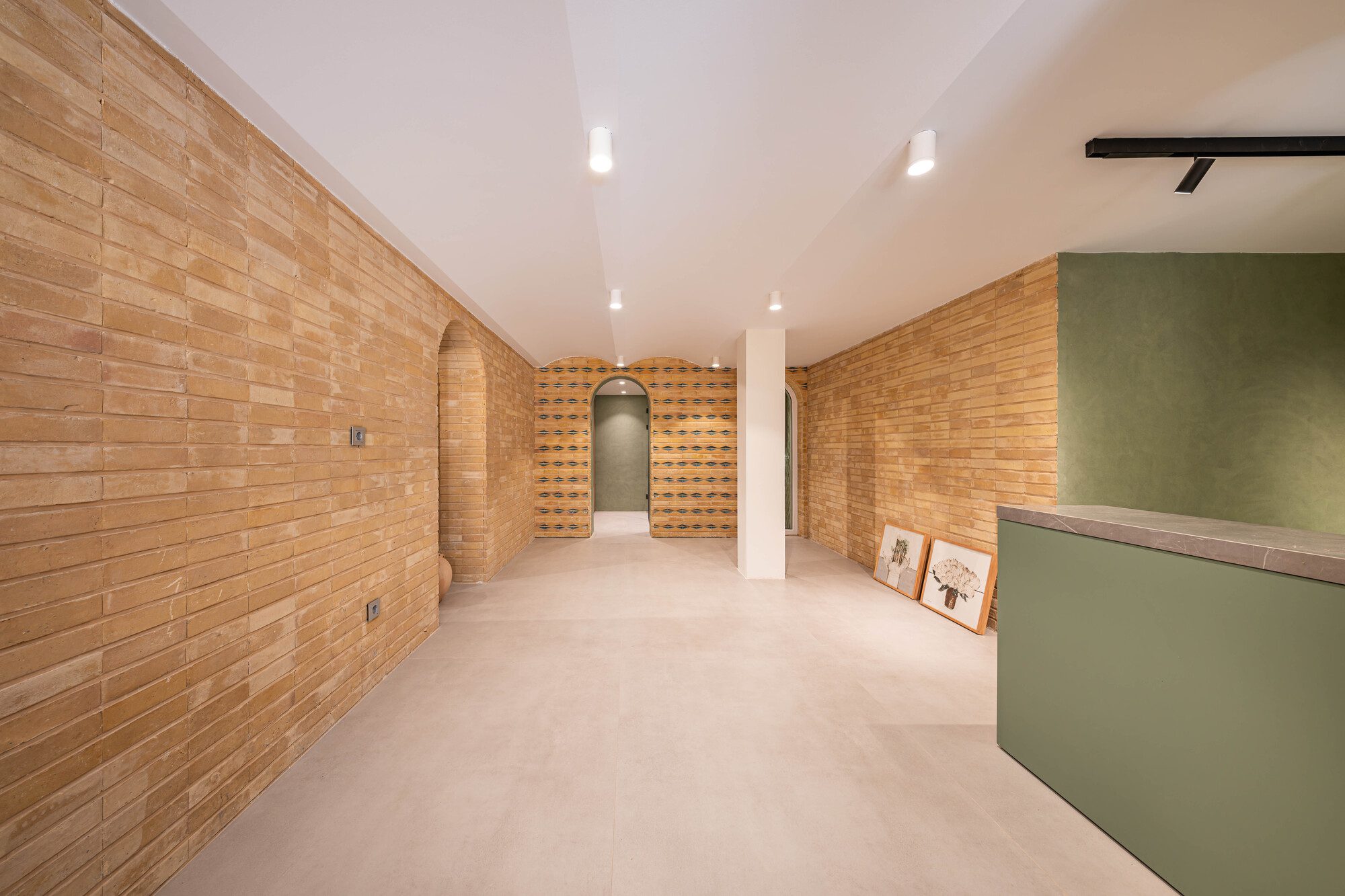
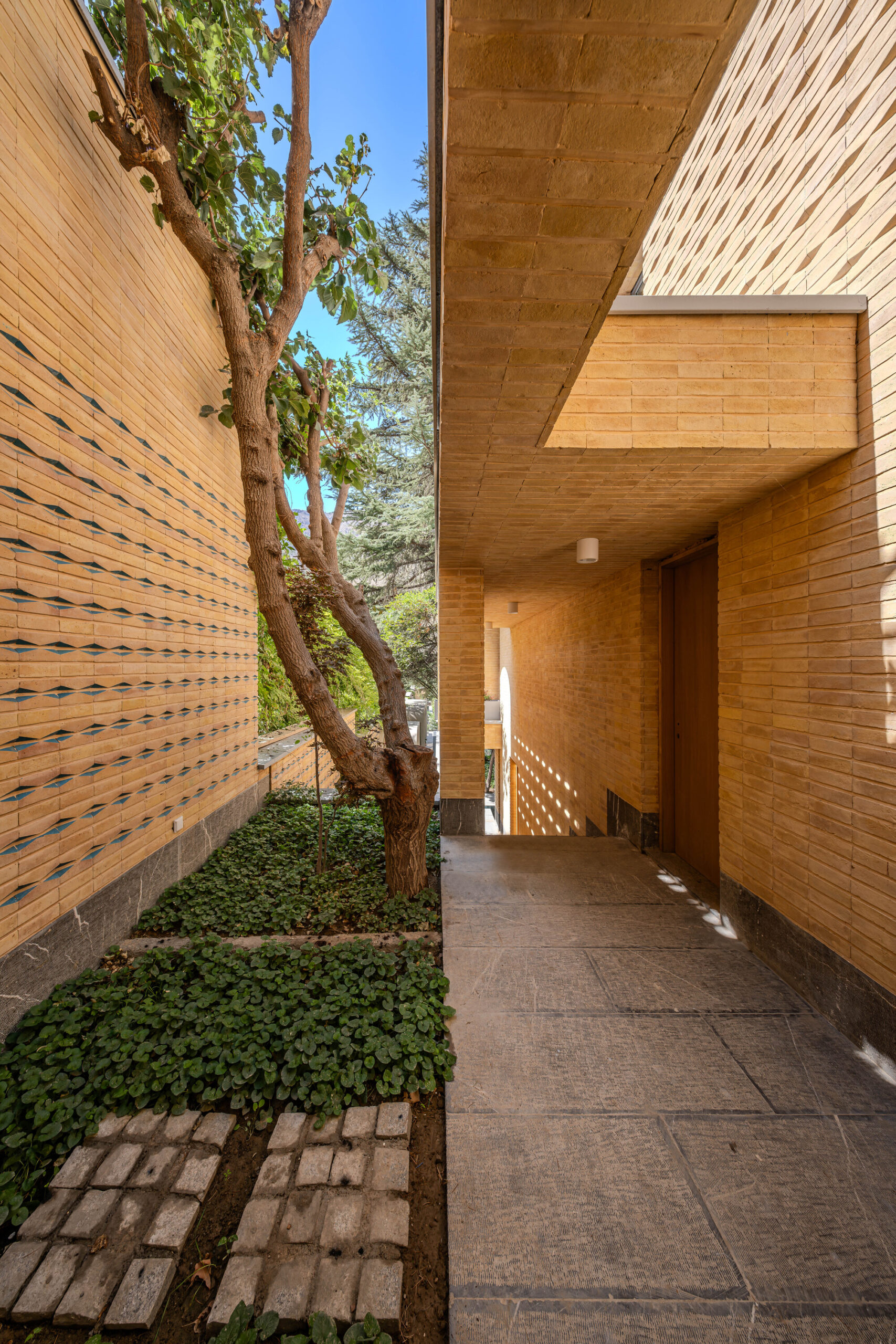
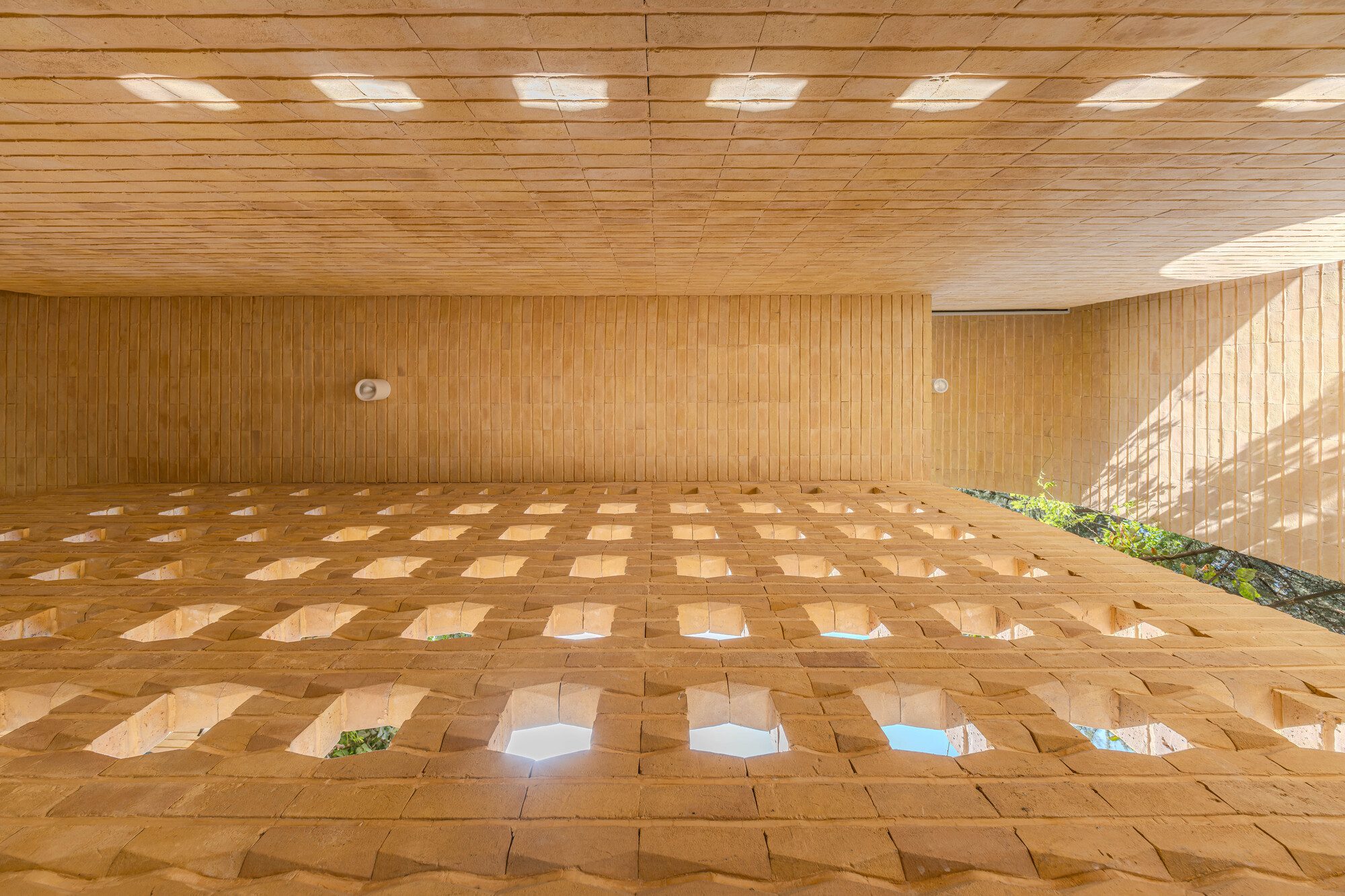
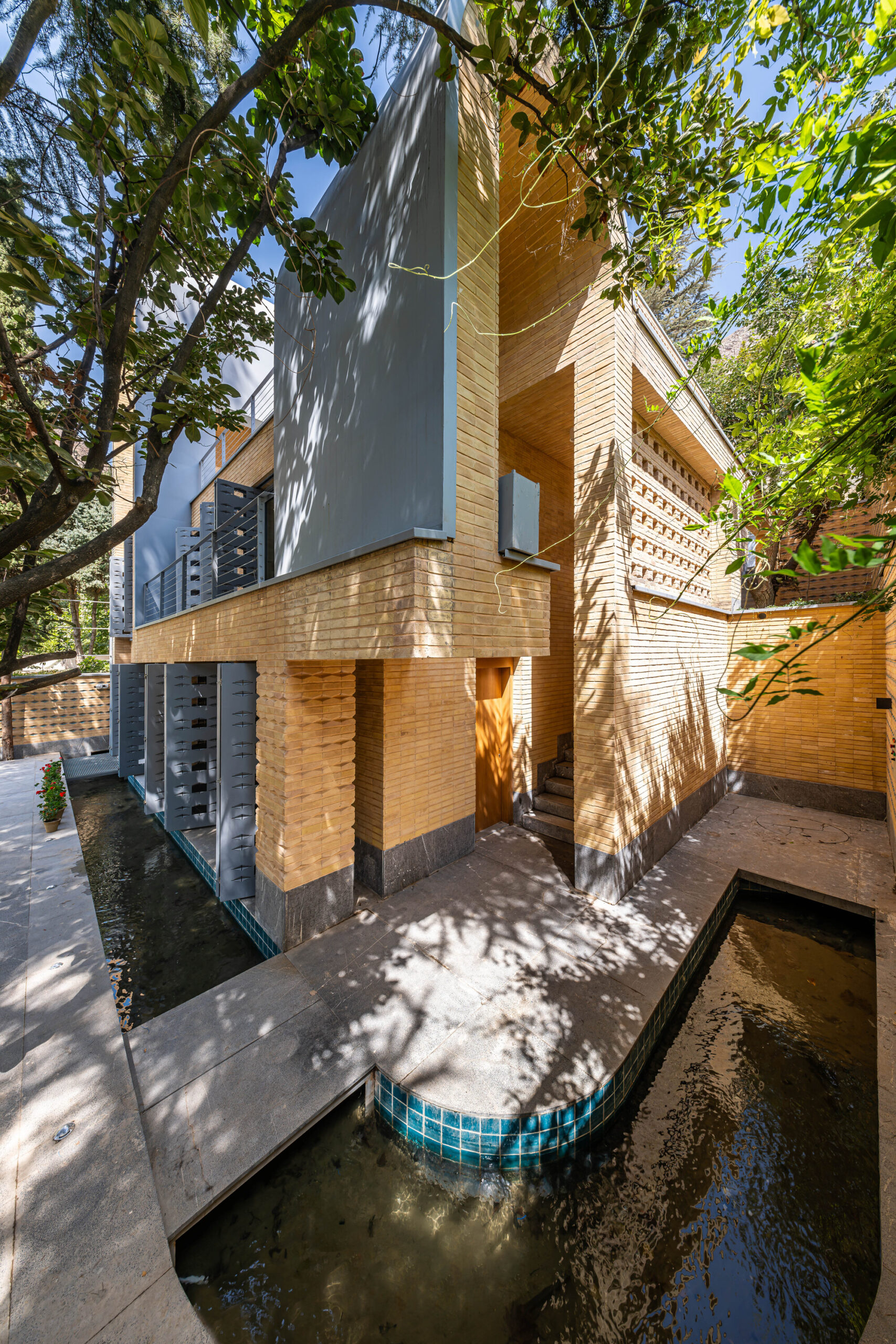
Material selection aimed to create warm and comforting atmospheres. Handmade brick—deeply embedded in Iran’s architectural collective memory—was chosen as the primary material, linking inside and outside and offering a tactile sense of familiarity. Curved interior lines echo the soft contours of the landscape and integrate with the arched spatial geometry of the building.
© Mohammad Hosein Hamzehlouei
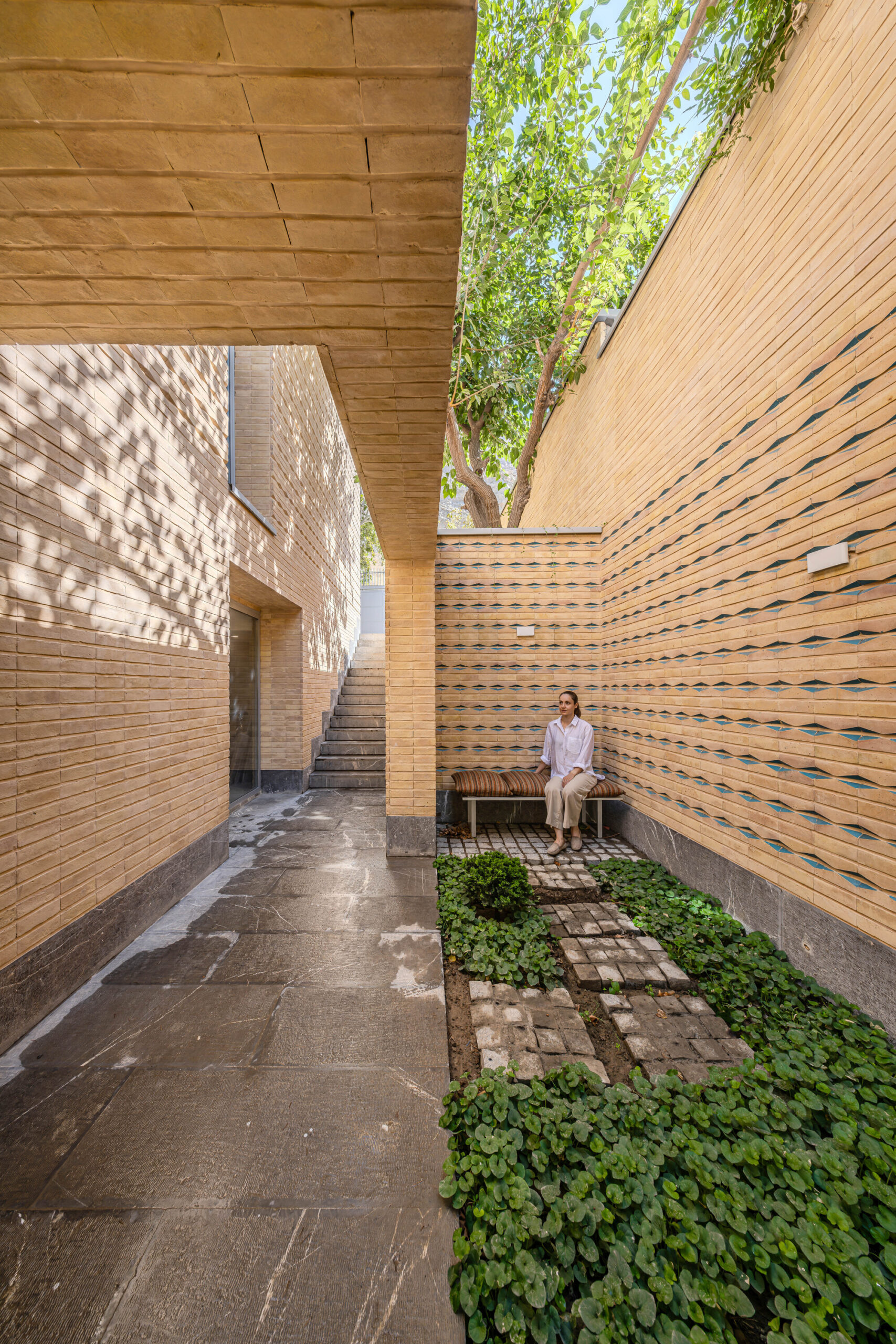
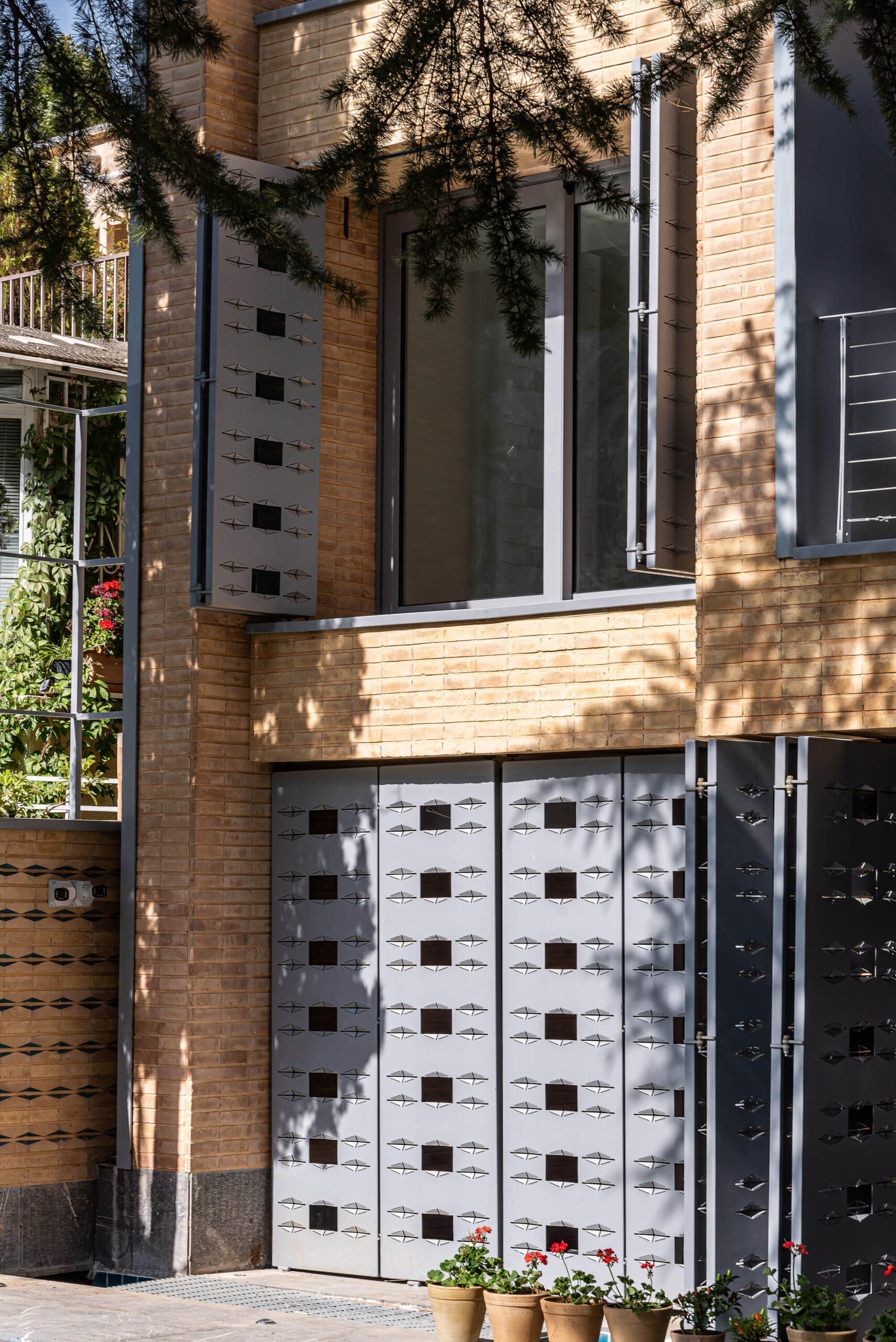
The Cedrus tree reveals itself in a sequence of visual moments: first as a soft shadow on the stairs, then as a silhouette behind an arch, and finally as a full presence in the courtyard. This progression fosters a deeper emotional connection between the inhabitants and their natural surroundings. The façade design draws inspiration from the grain of pine cones scattered by the wind, translated into textured brickwork and perforated metal louvers on the southern elevation. While the house sits in a context with little visible Iranian architectural heritage, the use of arches subtly reclaims that lineage, forming a contemporary dialogue between memory, place, and nature.
Project Info
Architects: Cedrus Studio
Country: Iran
Area: 590 m²
Year: 2024
Photographs: Mohammad Hosein Hamzehlouei
Graphics: Maryam Dabiri, Sanaz Shabani, Ghazal Lahouti
Landscape Architecture: Cedrus Studio
Design Team: Shadi Hajian, Sanaz Shabani
Technical Team: Mahsa Masoumzadeh, Kamyar Tolo Behboud, Shahbaz Shaheli
Construction: Cedrus Studio
Construction Supervision: Masoud Vand Hatami, Farhad Nikfaraz

Isabelle Laurent is a Built Projects Editor at Arch2O, recognized for her editorial insight and passion for contemporary architecture. She holds a Master’s in Architectural Theory from École Nationale Supérieure d’Architecture de Paris-Belleville. Before joining Arch2O in 2016, she worked in a Paris-based architectural office and taught as a faculty adjunct at the École Spéciale d’Architecture in Paris. Isabelle focuses on curating projects around sustainability, adaptive reuse, and urban resilience. With a background in design and communication, she brings clarity to complex ideas and plays a key role in shaping Arch2O’s editorial