

A Forest in the House ,“When the phrase ‘the trees prevent us from seeing the forest’ is repeated, its exact meaning may not be understood. Perhaps the mockery behind the phrase backfires on the person who utters it. The trees prevent us from seeing the forest, and thanks to that, the forest exists. The mission of the visible trees is to keep the rest latent, and only when we realize that the visible landscape hides other invisible landscapes do we feel ourselves to be inside a forest.”— Meditations on Don Quixote. Depth and Surface — José Ortega y Gasset (1914)
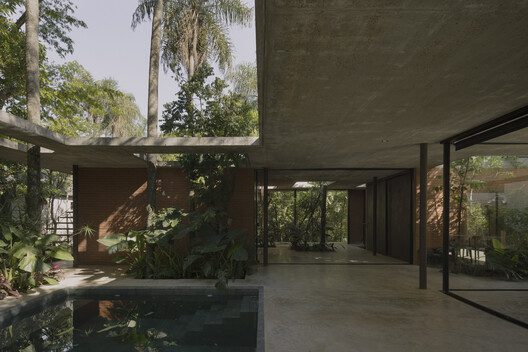
© Federico Cairoli
There is a profound similarity between architecture and music. Not in their final manifestation, but in the initial process of composition. Although music is the most abstract art form and architecture is the opposite, the way in which both disciplines are composed shares many points in common.
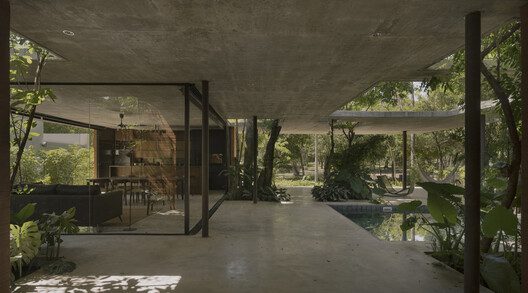
© Federico Cairoli
Bill Evans, jazz pianist par excellence and a fundamental reference for the authors, expressed it this way in an interview: “Jazz is a concrete process that is not intellectual. You use your intellect to break down the materials, learn to understand them, and learn to work with them. But in reality, it takes years and years of practice to develop the skill necessary to be able to forget all that, relax, and just play.”
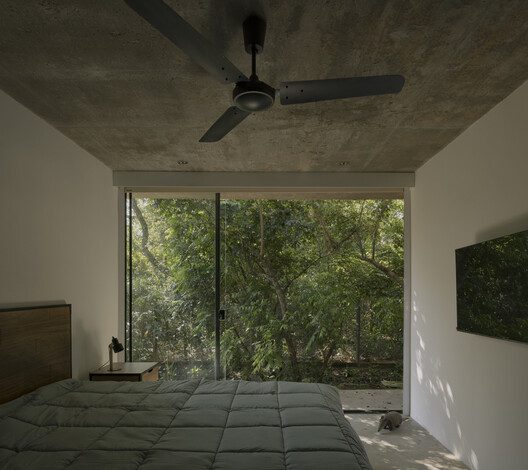
© Federico Cairoli
We believe that the initial process of composing an architectural project connects and resonates with what Evans proposes. Jazz uses a foundation as a structure to define the boundaries of music; within that framework, instruments take turns improvising or intuitively accommodating themselves to a pre-existing structure. Silences are as important as notes, and rhythm is what organizes the distribution of sounds in time.
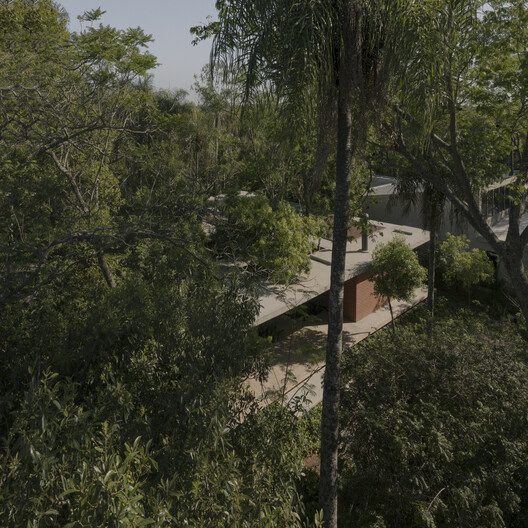
© Federico Cairoli
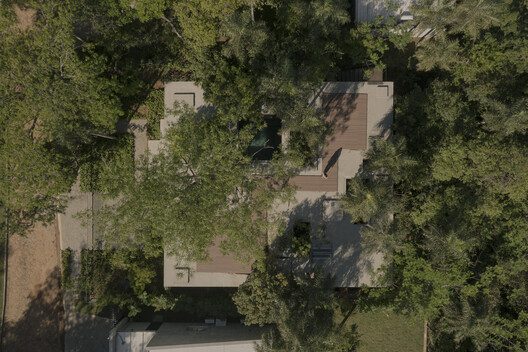
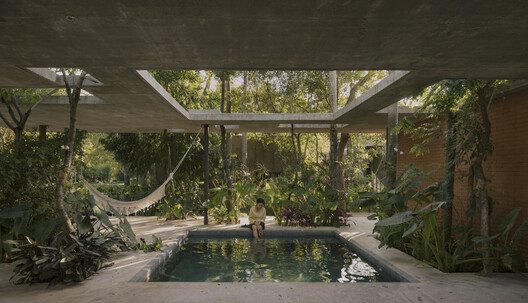
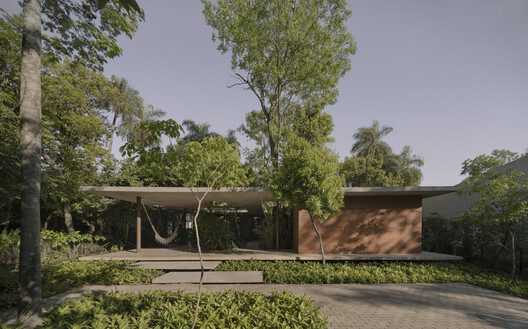
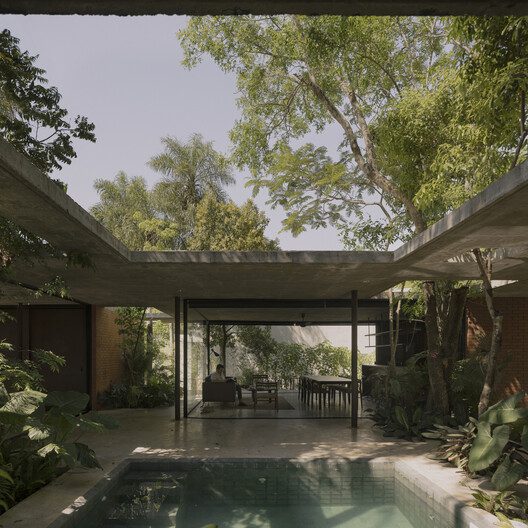
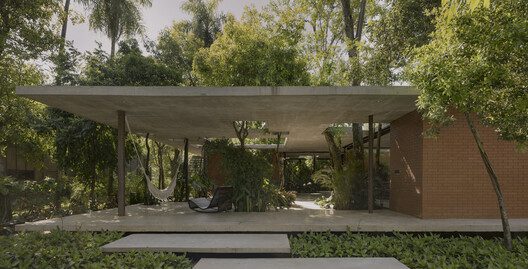
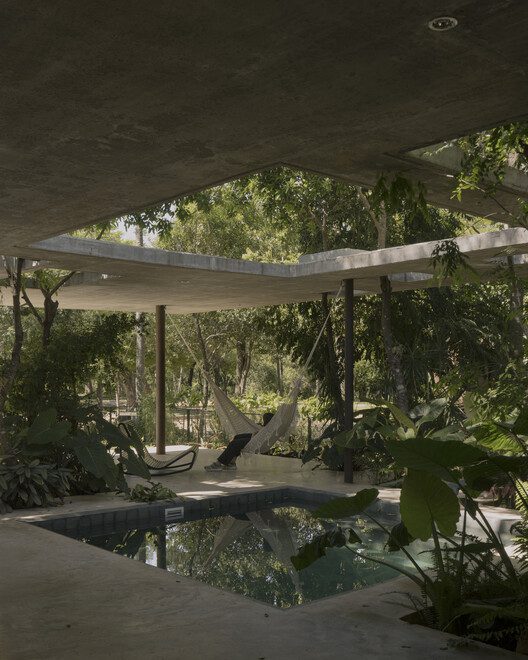
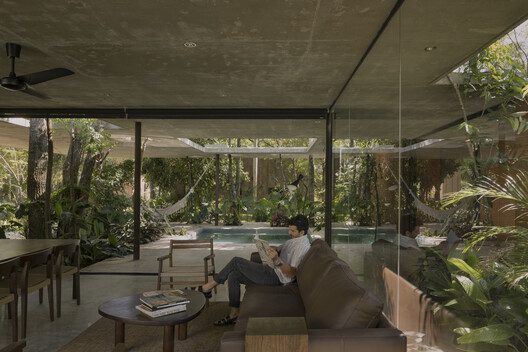
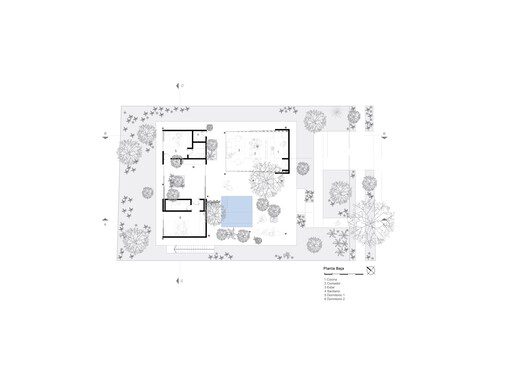
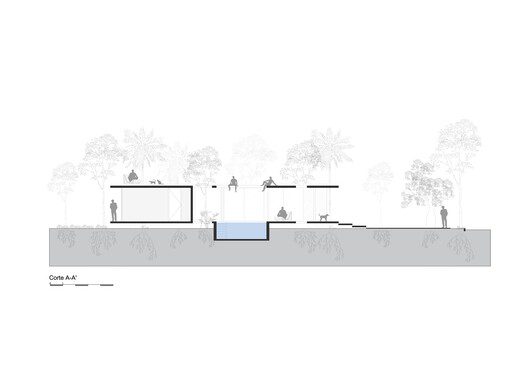
In this project, the boundary is given by the perimeter edge of the roof, which defines the scope of the construction. Inside, the solids and voids configure the space and the program of the house in close relation to the natural pre-existing elements. Natural light defines time in the experience of the work, producing changing shadows and atmospheres, similar to what John Abercrombie does in Timeless. The wind that blows through the space and sweeps the leaves can evoke Philly Joe Jones’ brushes alongside the Miles Davis Quintet.
© Federico Cairoli
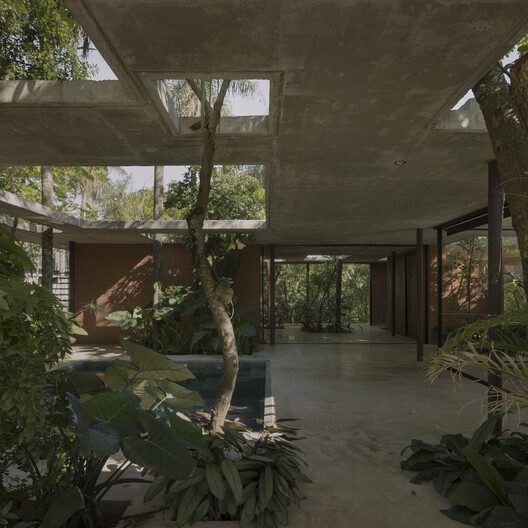
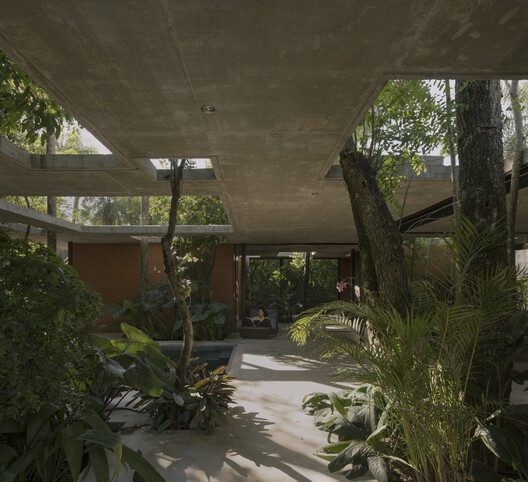
A Forest in the House proposes an alternative approach to harmonizing the built form with its natural surroundings. Rather than treating existing trees as obstacles, the project embraces them as fundamental guides that shape the spatial program.
© Federico Cairoli
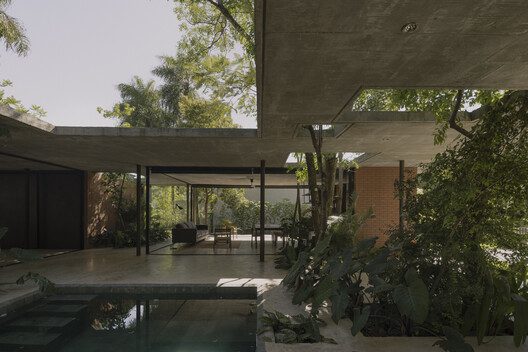
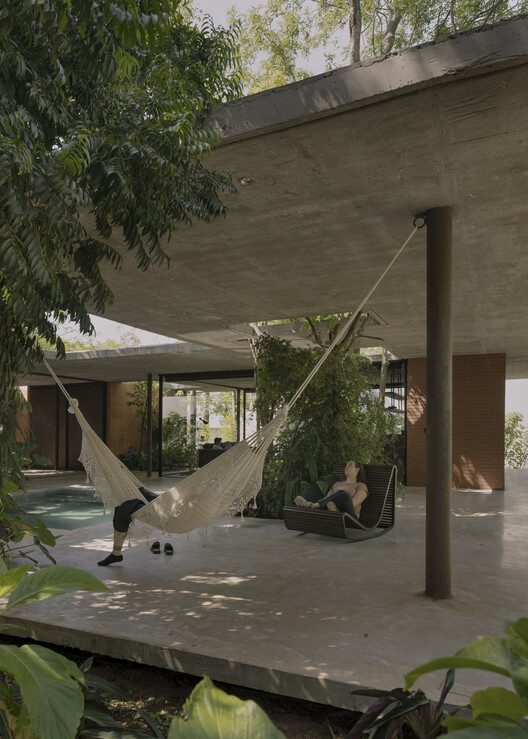
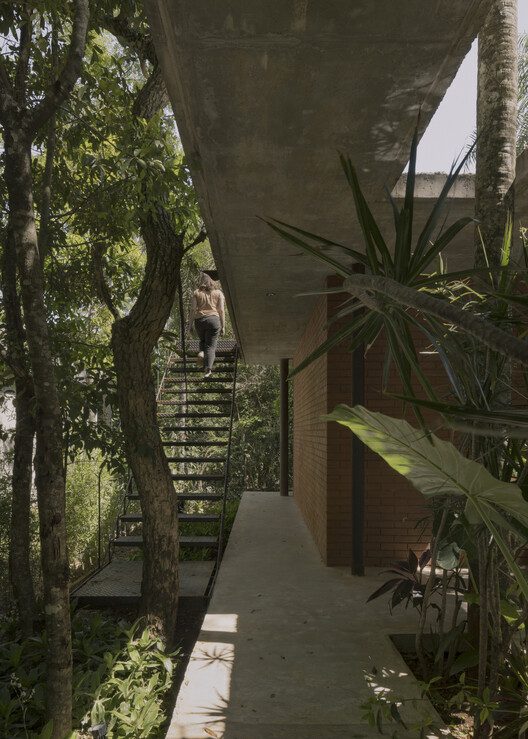
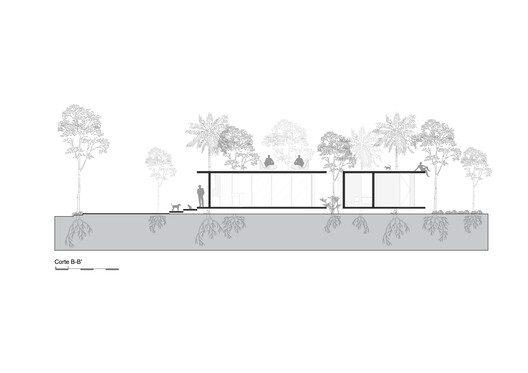
The trees delineate the relationship between occupied spaces and voids, freeing the structure from conventional grid systems and establishing a dynamic rhythm that reflects the patterns of nature. This non-orthogonal disposition of the pillars contributes to the structure’s lateral stability. The solid volumes are constructed using compressed earth blocks (CEBs), reinforcing the project’s commitment to a material dialogue with the landscape.
© Federico Cairoli
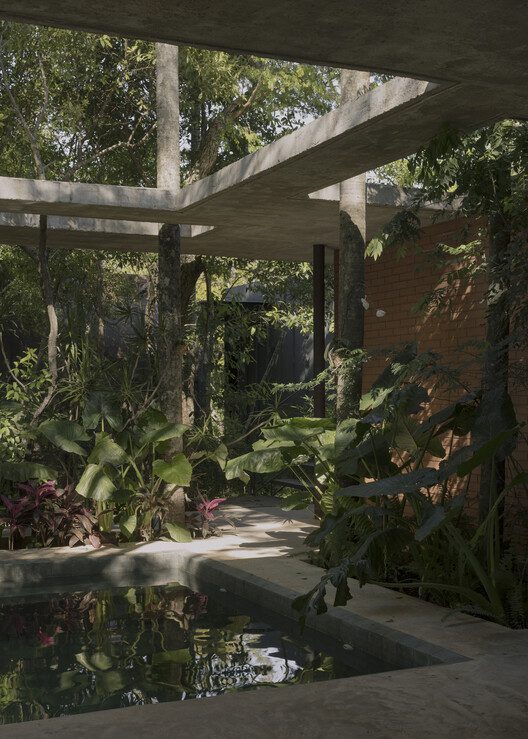
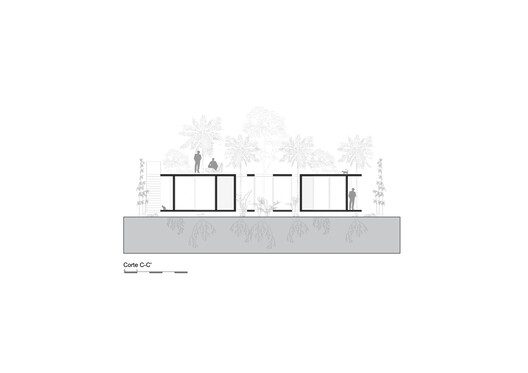
Vertical structural elements are carefully arranged among the trees. By aligning themselves so as not to interfere with the roots, they recede visually and integrate into the background, blending with the natural logic of the surrounding trunks. This conscious integration generates a dialogue in which artifice and nature speak the same language.
© Federico Cairoli
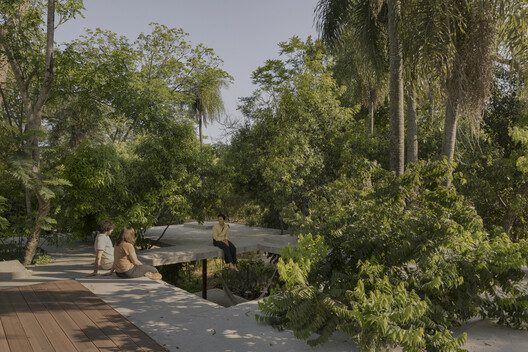
The spatial composition unfolds across two distinct horizontal planes. The primary plane, the floor, rises subtly, allowing tree roots to evolve freely over time. In parallel, the secondary plane, the ceiling, replicates this geometry to form a terrace that invites occupants to enjoy panoramic views of the treetops.
© Federico Cairoli
Ultimately, the project imagines a future in which the boundaries between architecture and nature dissolve: a future in which the built environment is as organic as its natural context. This vision not only proposes a different spatial solution, but also offers a reminder of the potential for coexistence and balance. Thus, in unison, all the elements of the house compose a big band that, depending on the season or time of day, plays the music that best accompanies the experience.
© Federico Cairoli
Project Info :
-
Architects: Equipo de Arquitectura
- Country: San Bernardino, Paraguay
- Area: 260 m²
- Year: 2025
- Photographs : Federico Cairoli
- A Lead Architects: Horacio Cherniavsky, Viviana Pozzoli
- Collaborators: Fabiana Godoy, Andrés Riera, Daniela Callizo, Camila Rojas, Milagros Egüez
- Landscape Design: Viviana Pozzoli
- Structural Engineer: Felipe Ramírez
- Metal Workshop: Javier Giménez
- Carpentry: Marcial Careaga
- Electrics: Lorenzo Caire
- Plumbing: Jorge Colmán

Sophie Tremblay is a Montreal-based architectural editor and designer with a focus on sustainable urban development. A McGill University architecture graduate, she began her career in adaptive reuse, blending modern design with historical structures. As a Project Editor at Arch2O, she curates stories that connect traditional practice with forward-thinking design. Her writing highlights architecture's role in community engagement and social impact. Sophie has contributed to Canadian Architect and continues to collaborate with local studios on community-driven projects throughout Quebec, maintaining a hands-on approach that informs both her design sensibility and editorial perspective.