

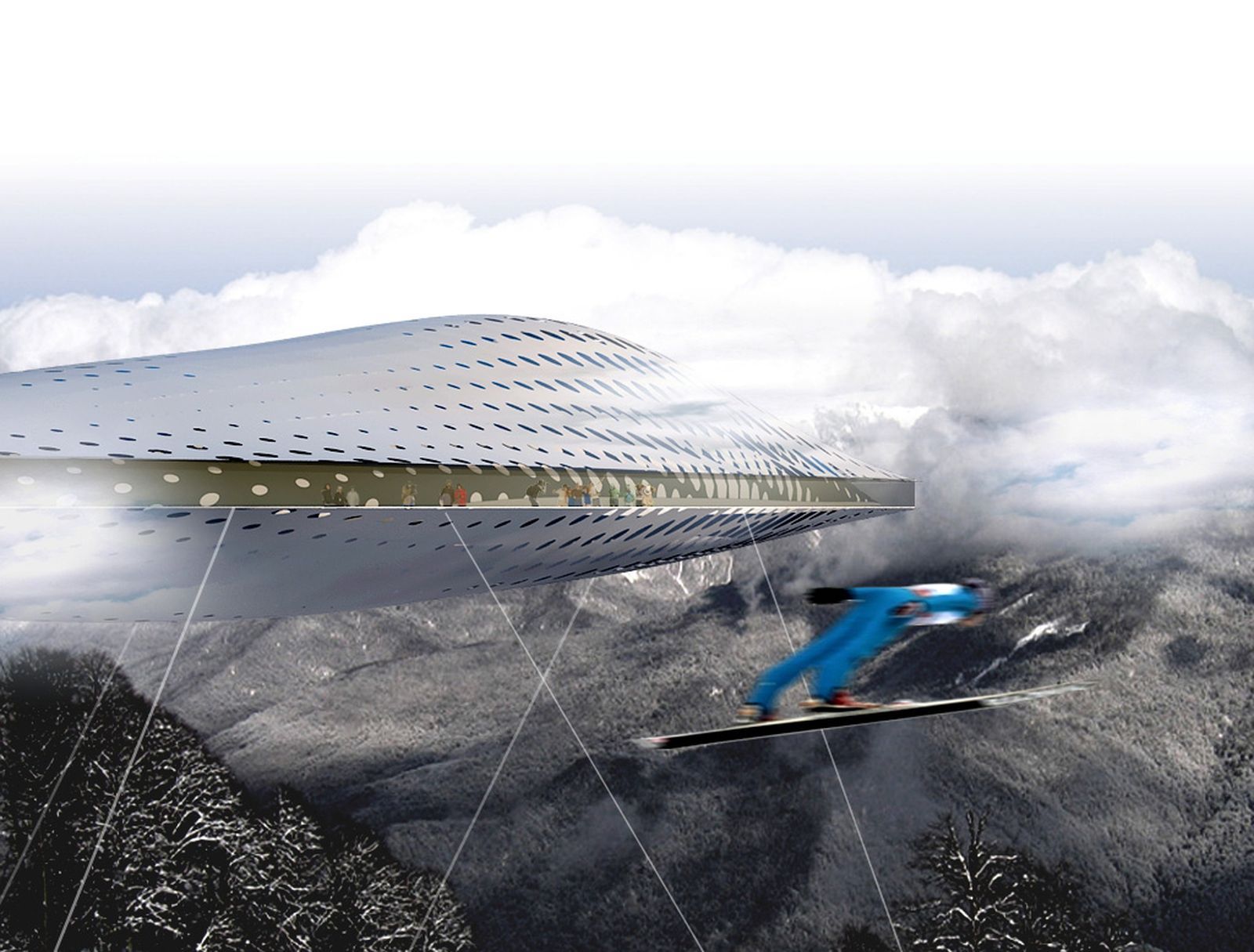
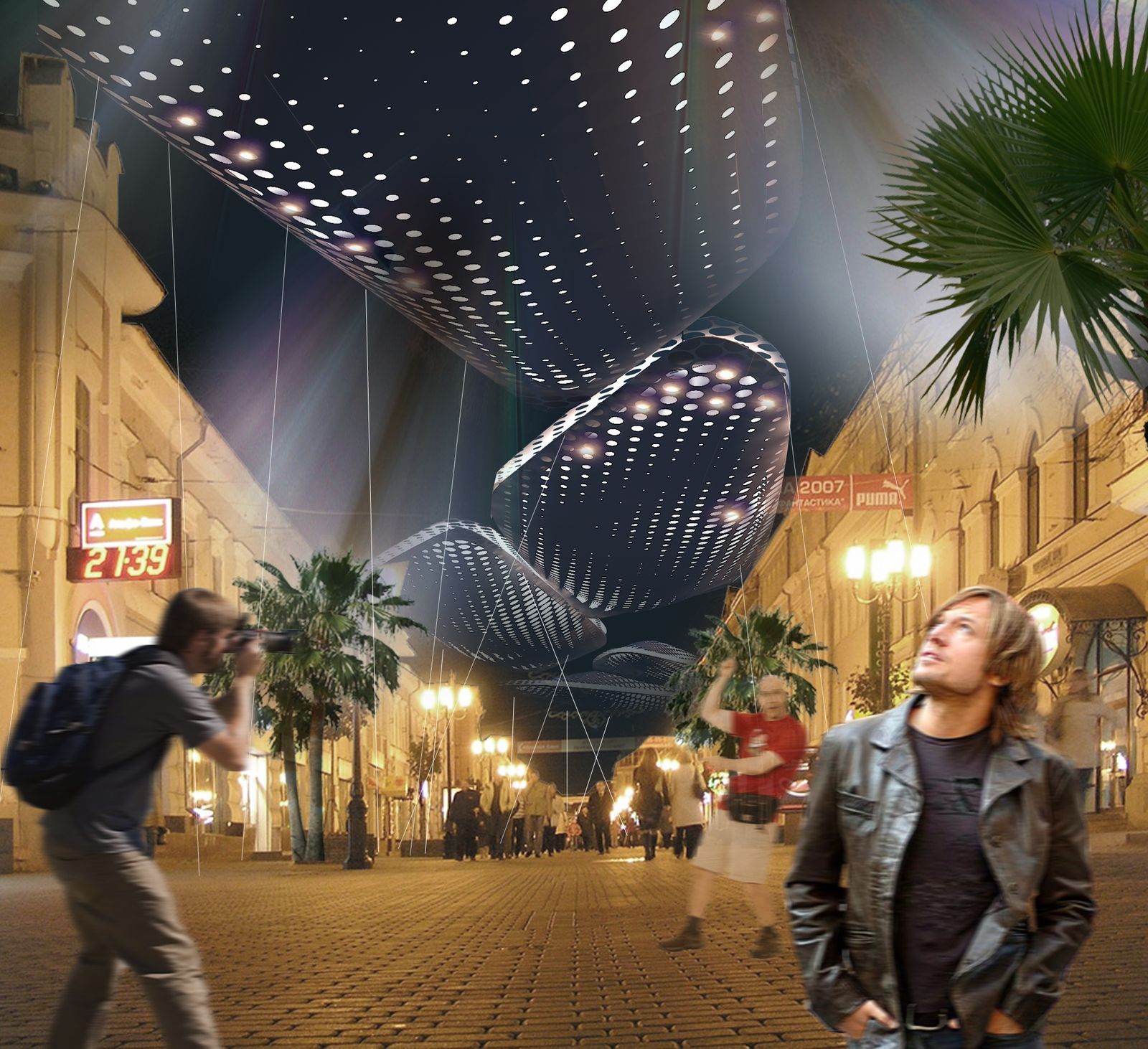
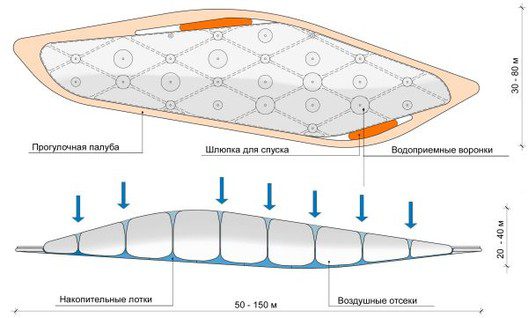
Cloud, the idea of rigid inflatable structures is not a new one to human civilization. The first Zeppelins were rigid shells very similar to these ‘Clouds’ designed by Asadov Architecture Studio for the Aerostatic Architecture Competition in 2010 and with the 2014 Sochi Winter Olympic Games in mind.
© Asadov Studio
The major, all important and infamous difference between the new and old, is the element used for levitation. Hydrogen will help one go up, but more likely it’ll be going up in a boom. (The pun for the day) These cloud-like structures will utilize Helium for their buoyancy and aluminum skeletons fitted with membrane fabric for lightness of weight.
© Asadov Studio
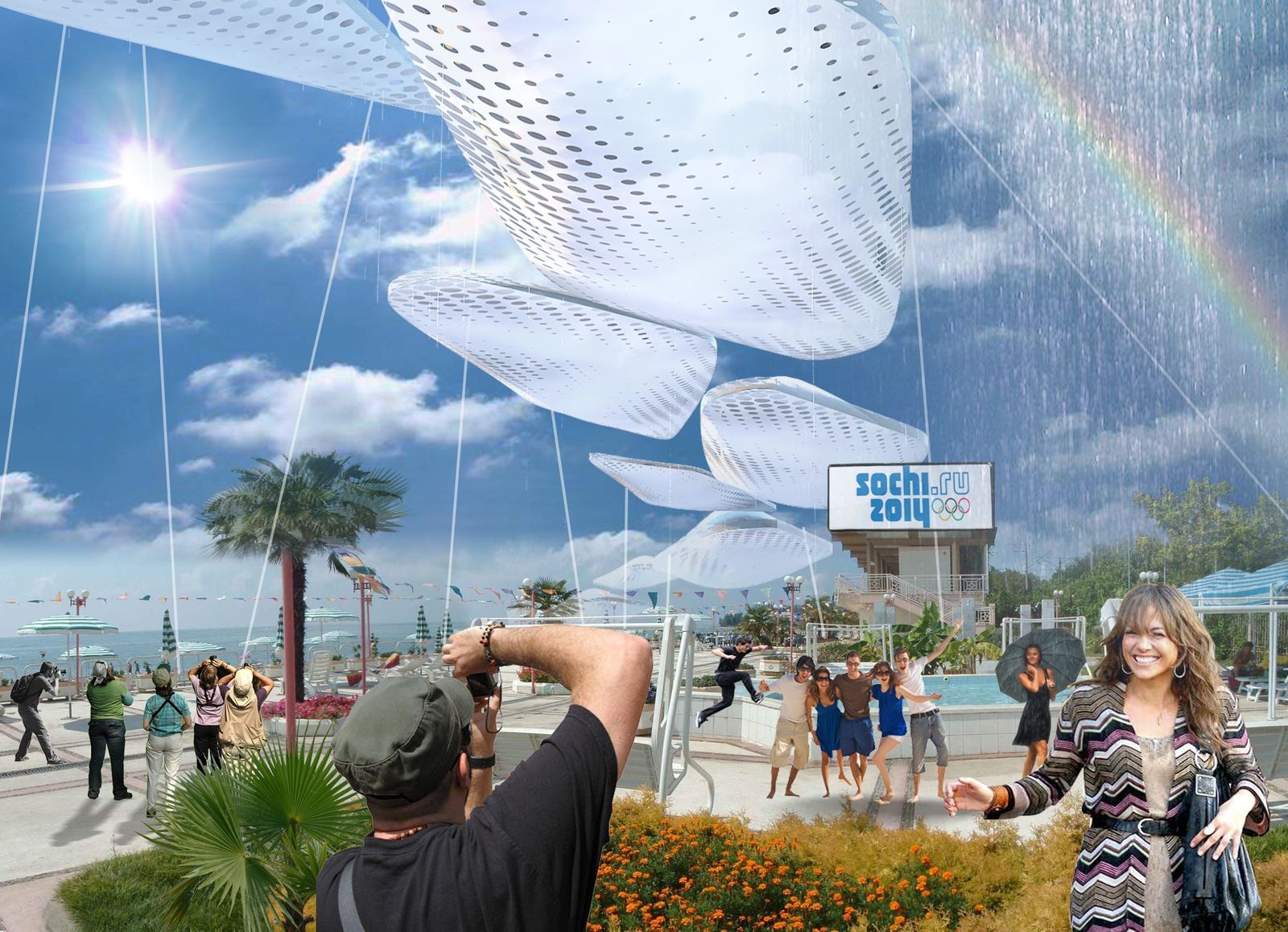
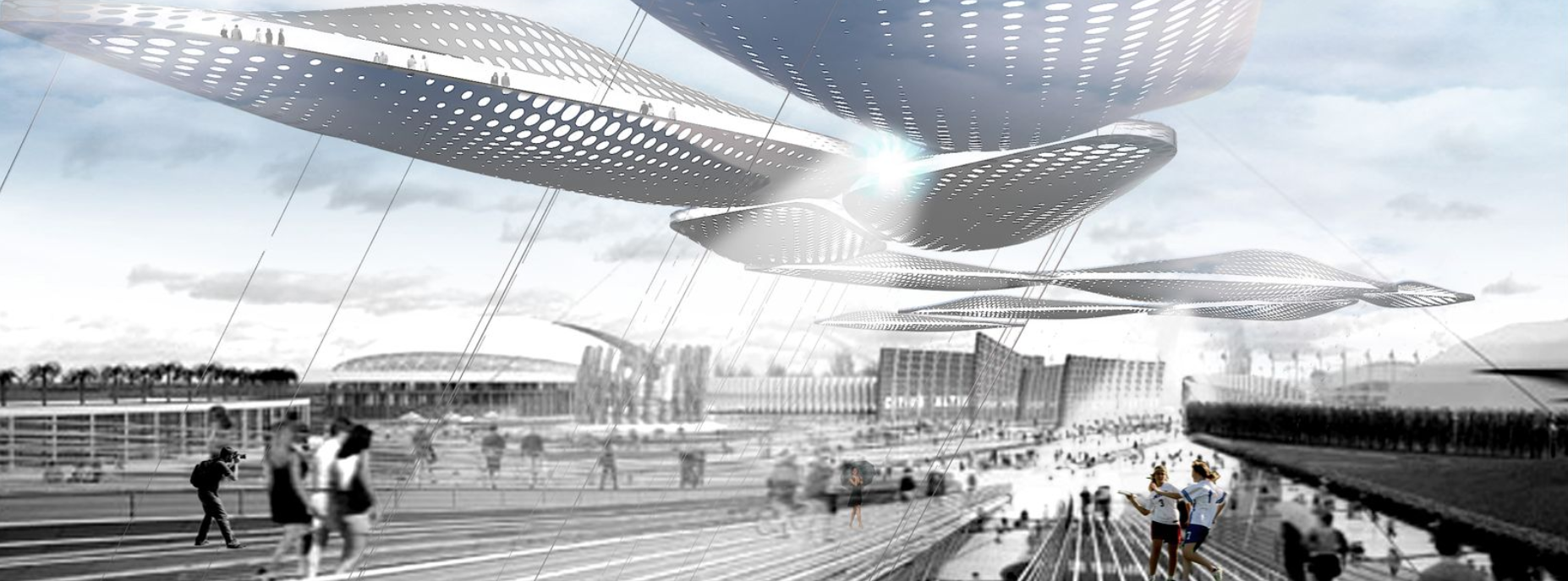
The structures will be linked by way of rigid connections, which will stabilize not only individual ‘clouds’ but the network as a whole. The structures provide cooling and shade for those on the ground, and exceptional vantage points of the Games for those VIPs dwelling within and will be accessible by way of what the architects call ‘platform-boats’, linked with each module form.
© Asadov Studio
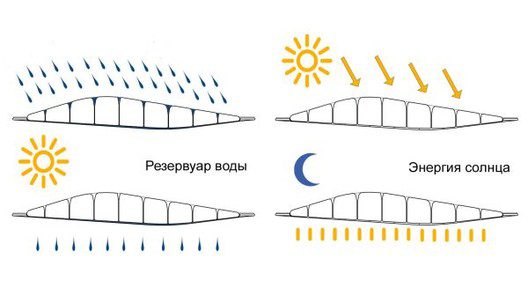
Each module will collect its own energy for internal processes by way of PV cells on their roofs, as well as rainwater, which will be funneled at a controlled rate down to ground level.

Matt Davis is a Virginia Tech graduate and one of the founding editors behind Arch2O. Launching the platform in mid‑2012 alongside fellow Hokies, he helped shape its identity as an international hub for design innovation and critical dialogue . With a foundation in architectural education and a passion for uncovering unconventional design approaches, Matt has contributed significantly—both editorially and strategically—to Arch2O’s growth, ensuring that emerging architects, academics, and creatives have a space to question, explore, and elevate the built environment.