

Corten steel panels are cladding sheets made from weathering steel, a low-alloy steel that forms a dense, rust-coloured surface layer (patina) which slows further corrosion, so the panels need no paint. They suit dry and moderately wet climates, landscapes and buildings meant to age visibly, but they stain whatever lies below them, and they fail where they stay wet or salty. This guide is for architects, specifiers and homeowners. It explains how the patina forms, where corten steel panels work, how to control run-off staining, how to detail them, and three well-known projects, with sources for the technical points.
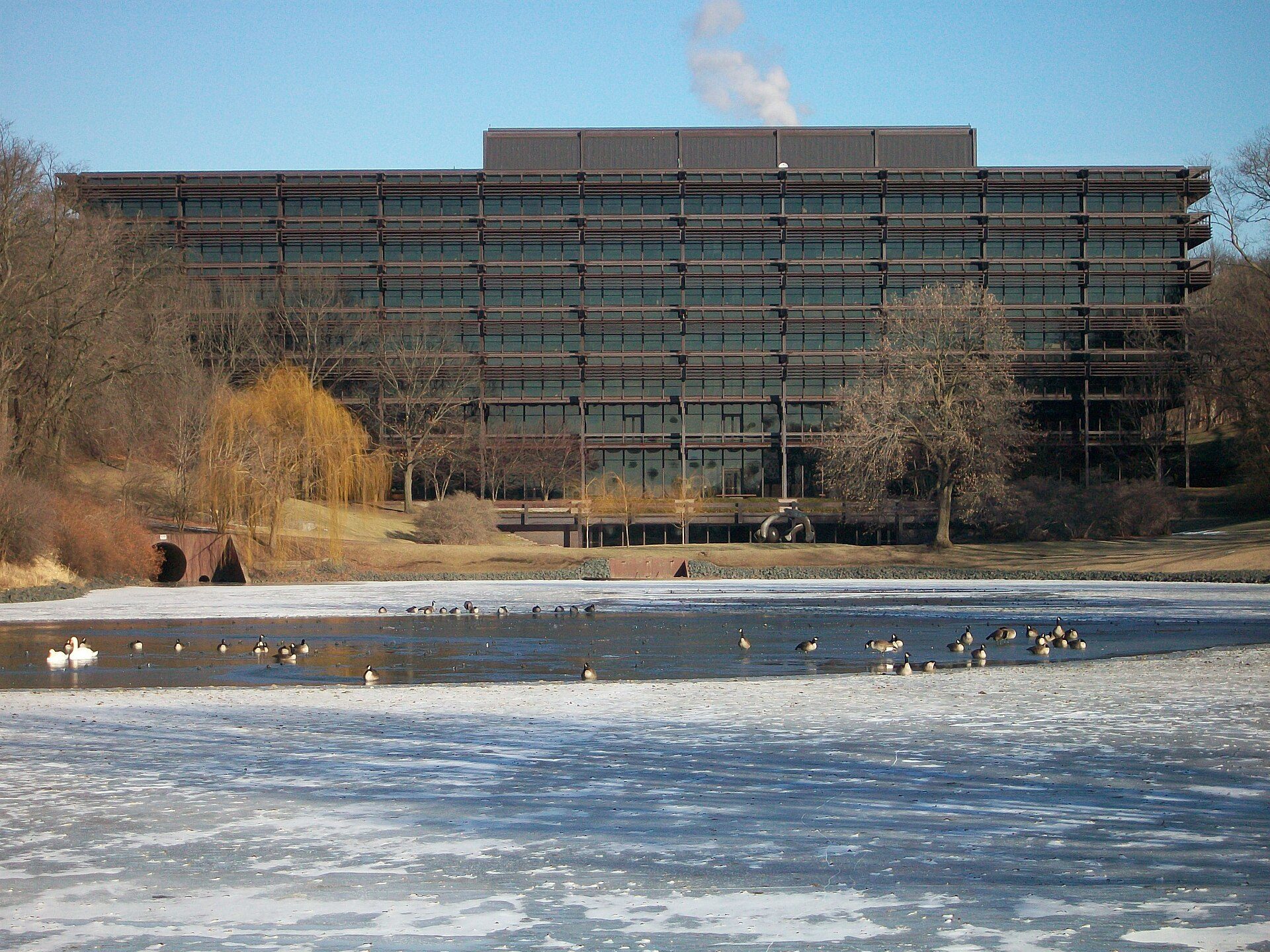
Eero Saarinen's John Deere World Headquarters in Moline, Illinois (1964). Photo: Ctjf83, CC BY-SA 3.0, via Wikimedia Commons. Ctjf83, source, CC BY-SA 3.0
How weathering steel works
“COR-TEN” is a trade name originally registered by United States Steel; “corten” is now used loosely for all weathering steels. In Europe these steels are specified to EN 10025-5, and grade S355J2W is the most common; their mechanical properties are similar to ordinary structural steels (SteelConstruction.info). In the United States, ASTM A588 and A606-4 are typical specifications for structural and sheet products.
Small additions of copper, chromium, nickel and phosphorus change how the steel rusts. Ordinary steel forms loose, flaky rust that falls away and exposes fresh metal. Weathering steel forms a fine, tightly bonded oxide layer that slows the passage of moisture and oxygen. This layer only forms under alternate wetting and drying: rain or dew followed by drying in sun and wind. Where the surface stays damp, the patina never stabilises and corrosion continues.
| Condition | Patina | Why |
|---|---|---|
| Exposed to rain, then sun and wind | Forms and stabilises | Needs alternate wetting and drying |
| Sheltered but ventilated (e.g. soffits) | Slower; may stay lighter | Less wetting; check drainage |
| Constantly damp, buried or in soil contact | Does not stabilise | Never dries; corrosion continues |
| Coastal, high airborne chloride | Unstable | Chlorides disrupt the patina; UK guidance avoids within ~2 km unless chloride class S2 or less (EN ISO 9223) |
| De-icing salt splash | Unstable | Chlorides |
Source: SteelConstruction.info, Weathering steel (SCI); general weathering-steel guidance (as of 28 October 2026).
As a rule of thumb, the patina takes one to three years to develop its stable dark brown colour, depending on climate. Until then the panels shed loose rust particles with every rain.
Uses
- Rainscreen cladding: flat, folded or perforated panels fixed to a ventilated subframe, the most common architectural use.
- Roofs and soffits: possible, but only where water drains quickly and the underside is ventilated.
- Screens and perforated façades: patterns cut by laser or CNC, often over glazing.
- Landscape: retaining edges, planters, steps and walls, where its earthy colour suits planting.
- Bridges and sculpture: the longest track record, where the material avoids repainting.
Corten is one of several metal options; for a wider comparison of performance and cost, see our guide to how to choose facade cladding materials.
Staining and run-off
The most common complaint about corten steel panels is not corrosion but staining. While the patina develops, and to a lesser extent afterwards, rainwater carries iron oxide down the façade. It leaves orange-brown marks on concrete, stone, render, paving and glazing below, and the marks are hard to remove from porous materials.
Plan for run-off from the start:
- keep light-coloured porous materials (limestone, light render, pale paving) away from the drip line, or protect them;
- collect water at the base of the cladding in a gutter or a gravel strip rather than letting it run across paving;
- use dark or easily cleaned materials below the panels;
- consider pre-weathered panels, which have been through accelerated wet-dry cycles at the factory, to reduce early run-off on site;
- warn clients and neighbours: staining of adjoining surfaces is a common cause of disputes.
Detailing
Most failures of weathering steel come from details that keep the steel wet. The key rules are:
- Drain and ventilate: leave a ventilated cavity behind rainscreen panels so the back face dries; avoid horizontal ledges and pockets where water or debris can collect.
- Avoid crevices: overlapping plates and tight joints trap moisture and can cause “pack rust” that forces joints apart. Use open joints, or seal crevices fully.
- Separate dissimilar metals: isolate corten from aluminium or galvanised fixings and subframes with gaskets or washers, and use fixings recommended by the panel supplier.
- Allow for thickness loss: some steel is consumed while the patina forms; structural designers add a corrosion allowance, and thin sheet needs particular care at edges and holes.
- Protect the base: keep panels clear of soil, vegetation and splash zones, with a gap above ground or roof level.
- Weld with matching consumables: welds should use consumables that weather to a similar colour and performance.
A typical rainscreen detail therefore has: a weather-resistant membrane and insulation on the wall, a ventilated cavity of at least a few centimetres, isolated rails or brackets, panels fixed with open joints, a drip at the base, and a gravel or drainage strip below to catch run-off.
Where not to use corten steel panels
- Near the sea: chlorides prevent a stable patina. UK bridge guidance, for example, advises against weathering steel within 2 km of the coast unless airborne chloride is shown to be low (salinity class S2 or less to EN ISO 9223), and treats 2 km as guidance rather than a fixed limit (SteelConstruction.info).
- Continuously wet or shaded places: below ground, in planters with constant soil contact, or under dripping trees.
- Where de-icing salts splash: near roads and car parks salted in winter.
- Heavily polluted industrial air: high sulphur dioxide levels can also disrupt the patina.
Even on landmark buildings, investigations of older weathering steel cladding have found corrosion continuing where panels cannot dry out (WJE case study).
Projects
John Deere World Headquarters, Moline, Illinois (1964)
Eero Saarinen’s headquarters for the farm machinery maker, completed in 1964 after his death, is widely cited as the first major building to use COR-TEN as a primary architectural material, for both its frame and its sun-shading louvres (Landmarks Illinois). The deep brown steel was chosen to suit the company’s machinery and the surrounding landscape, as the photo at the top of this guide shows.
Barclays Center, Brooklyn, New York (2012)
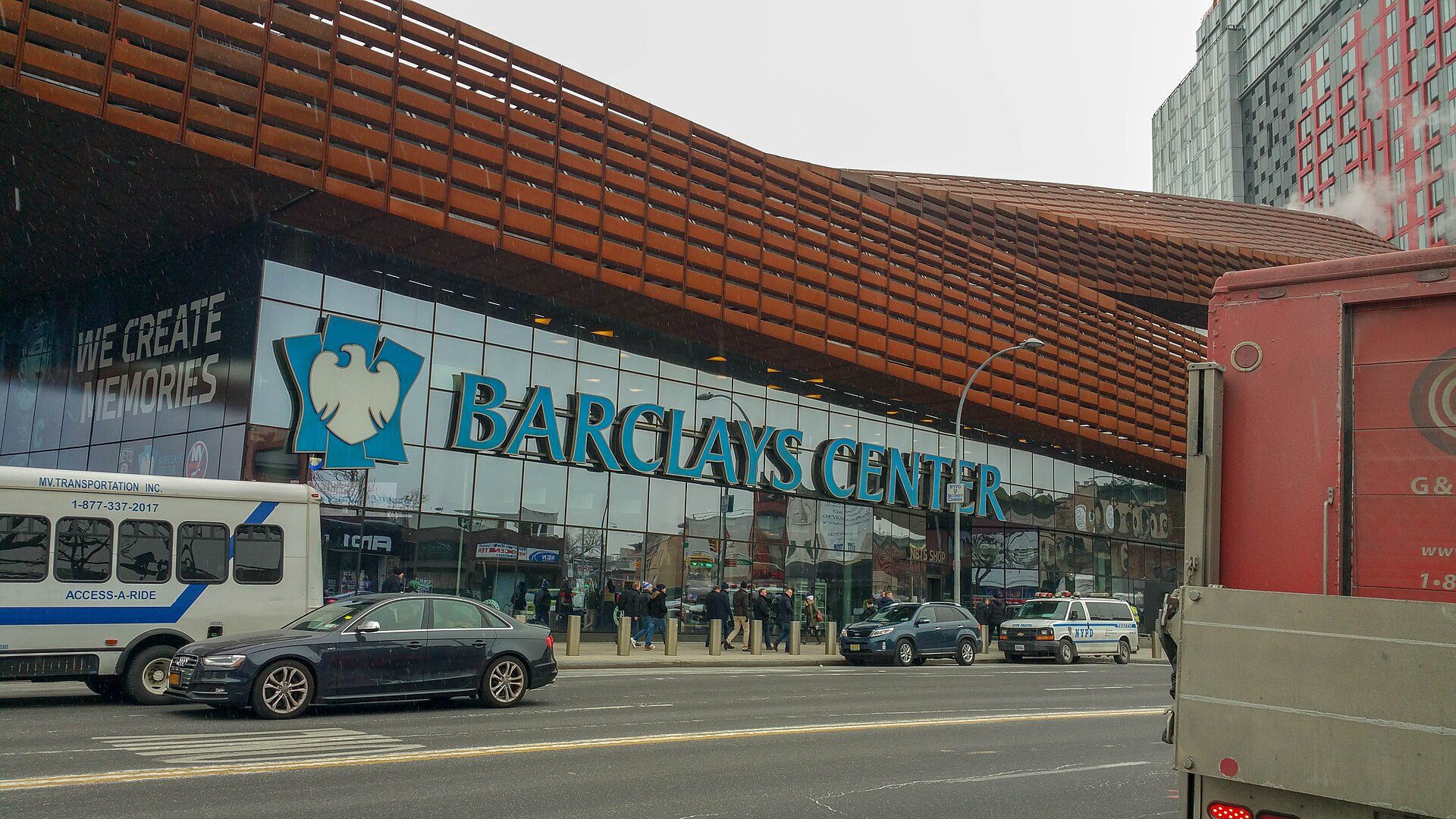
Barclays Center, Brooklyn (2012): bands of pre-weathered steel panels over the glazed entrance. Photo: Andrew nyr, CC BY-SA 4.0, via Wikimedia Commons. Andrew nyr, source, CC BY-SA 4.0
SHoP Architects and Ellerbe Becket wrapped the arena in about 12,000 panels of A588 weathering steel. To reduce run-off on the surrounding streets, the panels were pre-weathered for several months at a plant before installation, using repeated wet-dry cycles (The Architect’s Newspaper, 2012).
Angel of the North, Gateshead, England (1998)

Antony Gormley's Angel of the North, Gateshead (1998), in weathering steel. Photo: Mike Peel (www.mikepeel.net), CC BY-SA 4.0, via Wikimedia Commons. Photograph by Mike Peel (www.mikepeel.net)., source, CC BY-SA 4.0
Antony Gormley’s sculpture, about 20 metres tall with a wingspan of about 54 metres, is made of weathering steel. It shows the material at its best: an exposed, windy hilltop where the steel dries quickly after rain, with no surfaces below it to stain.
Summary
Choose corten steel panels when you want a robust, unpainted metal that will age visibly, and when the site allows the steel to dry between rains. Avoid them near the coast, in constantly wet places and above pale porous materials. Detail for drainage, ventilation and run-off from the first sketch, and ask the panel supplier for its technical data and fixing guidance before you specify.

Luca Moretti is a content strategist with a foundation in urban design and architecture. Based in Milan, he focuses on writing that bridges aesthetics, material culture, and everyday spatial experiences.