

An environmental product declaration (EPD) is an independently verified document that reports the environmental impacts of a building product over its life cycle, such as its embodied carbon, measured with a common method so that products can be assessed in a building life-cycle assessment. EPDs are most useful for comparing products of the same type and for whole-building carbon calculations; their main drawback is that numbers are only comparable when they follow the same rules and declared unit. This guide is for architects and students: it explains what an EPD contains, how to read its tables, a worked comparison, where EPDs help and where they mislead, and the checks to make before you rely on one.
Quick answer: what an EPD is, best uses and main drawbacks
- What it is: a “Type III” environmental declaration under ISO 14025:2006, based on a life-cycle assessment (LCA) carried out to product category rules (PCR). For construction products in Europe the core PCR is EN 15804:2012+A2:2019; internationally, ISO 21930:2017 plays a similar role. An independent verifier checks the LCA and the EPD is published by a programme operator.
- Best uses: choosing between similar products (for example two concrete mixes or two insulation boards) on carbon and other impacts; supplying data for a whole-building LCA; meeting procurement or certification requirements.
- Main drawbacks: EPDs report per declared unit, not per building element; results depend on the modules declared; and products are only comparable within the same PCR, standard version and building context.
The anatomy of an EPD
Most construction EPDs follow the same structure: general information, product description, LCA rules, results tables and verification. The parts to read first are the declared unit, the system boundary (which life-cycle modules are included), the results table and the validity and verification details.
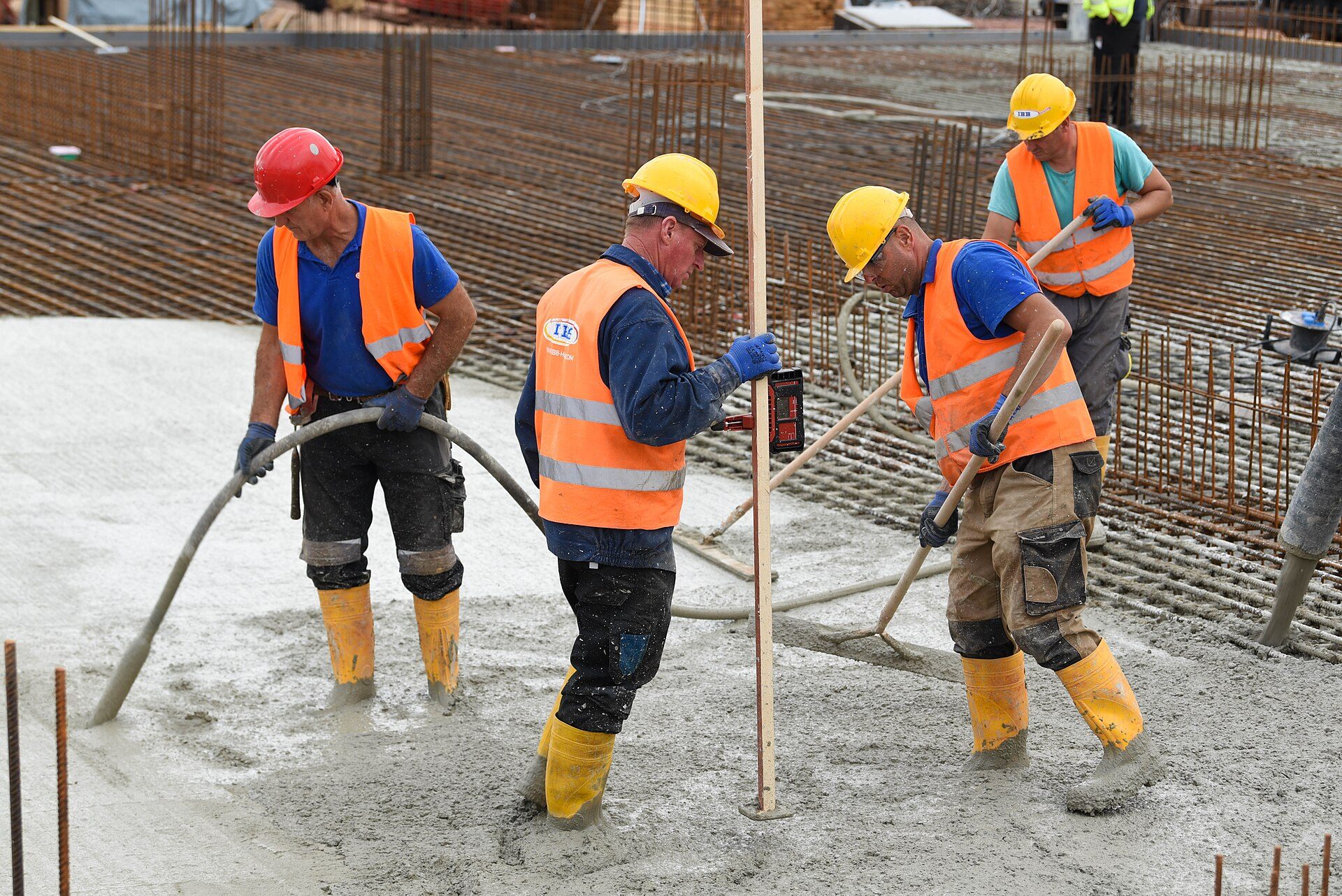
Ready-mix concrete being placed in a reinforced slab: concrete EPDs usually declare results per cubic metre. Photo: U.S. Air Force / Airman Sydney Franklin, public domain, via Wikimedia Commons. Image: U.S. Air Force photo by Airman Sydney Franklin (Public domain (verified))
Declared unit and functional unit
The declared unit is the quantity the results refer to: 1 m³ of concrete, 1 tonne of steel, 1 m² of insulation at a stated thermal resistance. A functional unit goes further and describes a function over a time, such as “1 m² of wall with a U-value of 0.18 W/m²K for 60 years”. Comparing products only makes sense once you convert their declared units to the same function in your building: 1 m³ of a lightweight block and 1 m³ of a dense block do not do the same job.
Life-cycle modules
EN 15804 divides a product’s life into modules. The table summarises them. Under the 2019 revision (A2), EPDs for most products must declare A1-A3, C1-C4 and D; earlier EPDs often declared only A1-A3 (“cradle to gate”).
| Stage | Modules | What they cover |
|---|---|---|
| Product stage | A1-A3 | Raw material supply, transport to factory, manufacturing (cradle to gate) |
| Construction process | A4-A5 | Transport to site, installation and site waste |
| Use stage | B1-B7 | Use, maintenance, repair, replacement, refurbishment, operational energy and water |
| End of life | C1-C4 | Demolition, transport, waste processing, disposal |
| Beyond the system boundary | D | Potential benefits and loads from reuse, recovery and recycling (reported separately) |
Source: EN 15804:2012+A2:2019 module structure (summarised); A2 requirement for A1-A3, C1-C4 and D for most products per One Click LCA guidance (as of 2026-11-01).
Indicators: more than one carbon number
EN 15804+A2 splits global warming potential (GWP, in kg CO₂-equivalent) into GWP-fossil, GWP-biogenic (carbon taken up and released by biomass, such as timber) and GWP-luluc (land use and land-use change), which together make GWP-total. Results under A2 and the older A1 version should not be mixed in one calculation. For timber products, A1-A3 often shows a negative GWP-biogenic value because the wood stores carbon; that carbon is released again in end-of-life modules C3-C4 if the wood is burned or decays, so always read A and C together (One Click LCA help: EN 15804+A2 indicators).
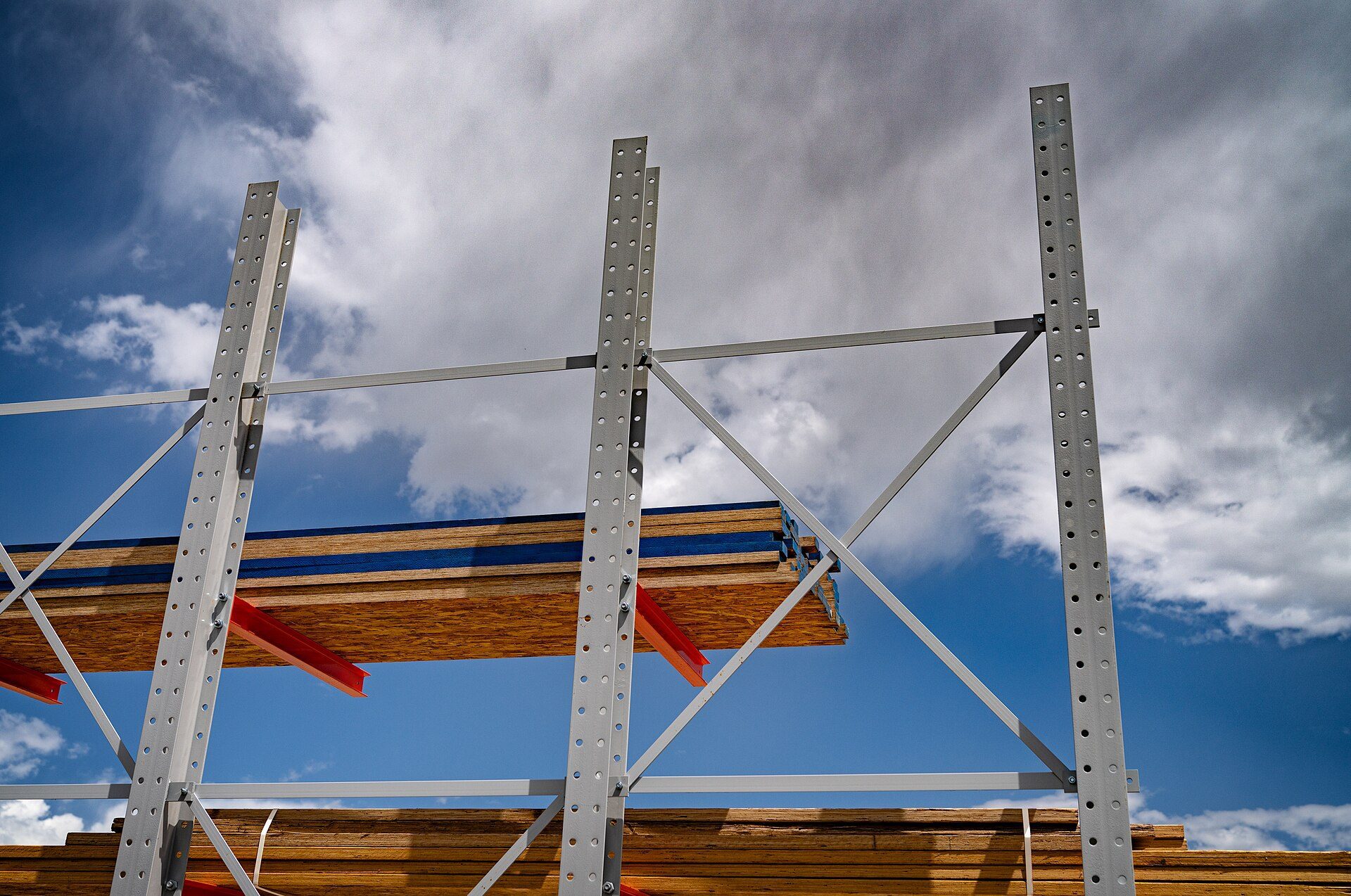
Sawn timber in a lumber yard: timber stores biogenic carbon that EPDs report as GWP-biogenic. Photo: Tony Webster, CC BY 2.0, via Wikimedia Commons. Tony Webster, source, CC BY 2.0
Other indicators include acidification, eutrophication, ozone depletion, resource use, water use and waste. They matter for a full assessment, though carbon is usually the focus in early design.
A worked comparison
Suppose you are choosing a concrete mix for a 25 m² ground-floor slab, 200 mm thick (5 m³). Two ready-mix suppliers offer EPDs for C30/37 concrete. The figures below are illustrative, not from real EPDs:
| Mix A (CEM I) | Mix B (with cement replacement) | |
|---|---|---|
| Declared unit | 1 m3 | 1 m3 |
| GWP-total, A1-A3 (kg CO2e per m3) | 280 | 200 |
| Slab volume | 5 m3 | 5 m3 |
| Slab A1-A3 GWP (kg CO2e) | 1,400 | 1,000 |
| Difference | – | -400 kg CO2e (about 29% lower) |
Source: Arch2O worked example; GWP values are hypothetical round numbers chosen for illustration (as of 2026-11-01).
Mix B saves 400 kg CO₂e for this slab, about 29%. Before choosing it, check that both EPDs use the same PCR and EN 15804 version, the same declared unit and strength class, and similar data years; that Mix B meets the structural and durability specification (cement replacements can slow early strength gain); and whether the EPDs are product-specific or industry averages. An EPD does not tell you whether you need 5 m³ in the first place: a thinner slab or a different structural solution may save more.
Where EPDs help and where they mislead
Where they help
- Comparing like with like: two insulation boards of the same thermal resistance, two steel sections from different mills, two concrete mixes of the same class.
- Whole-building LCA to EN 15978 (Europe) or comparable methods, where EPD data replace generic database values.
- Procurement: the Buy Clean California Act, for example, requires EPDs for structural steel, concrete reinforcing steel, flat glass and mineral wool board insulation on state-funded projects, and sets maximum GWP limits that products must meet (California Department of General Services).
- Certification: schemes such as LEED and BREEAM award credits for using products with EPDs.
Where they mislead
- Different declared units (per m³ versus per tonne versus per m²).
- Different system boundaries: a cradle-to-gate EPD compared with a cradle-to-grave one.
- Different PCRs or standard versions (EN 15804+A1 versus +A2, or EN 15804 versus ISO 21930).
- Industry-average versus product-specific EPDs: an average hides the spread between manufacturers.
- Module D benefits (such as future recycling) reported as if they were certain savings today; most methods report D separately.
- Expired EPDs: EPDs are normally valid for five years, after which the data may no longer reflect production.
Checklist before you rely on an EPD
- Is it third-party verified and published by a recognised programme operator?
- Which standard and version (EN 15804+A2, ISO 21930) and which PCR?
- Is it product-specific, manufacturer-average or industry-average?
- What is the declared unit, and how will you convert it to your building element?
- Which modules are declared? Are A1-A3 and C1-C4 both present?
- Is it still valid? Check the issue and expiry dates.
- For bio-based products, are GWP-fossil and GWP-biogenic reported separately?
- Does the product still meet the technical specification (strength, fire, durability) for your use?
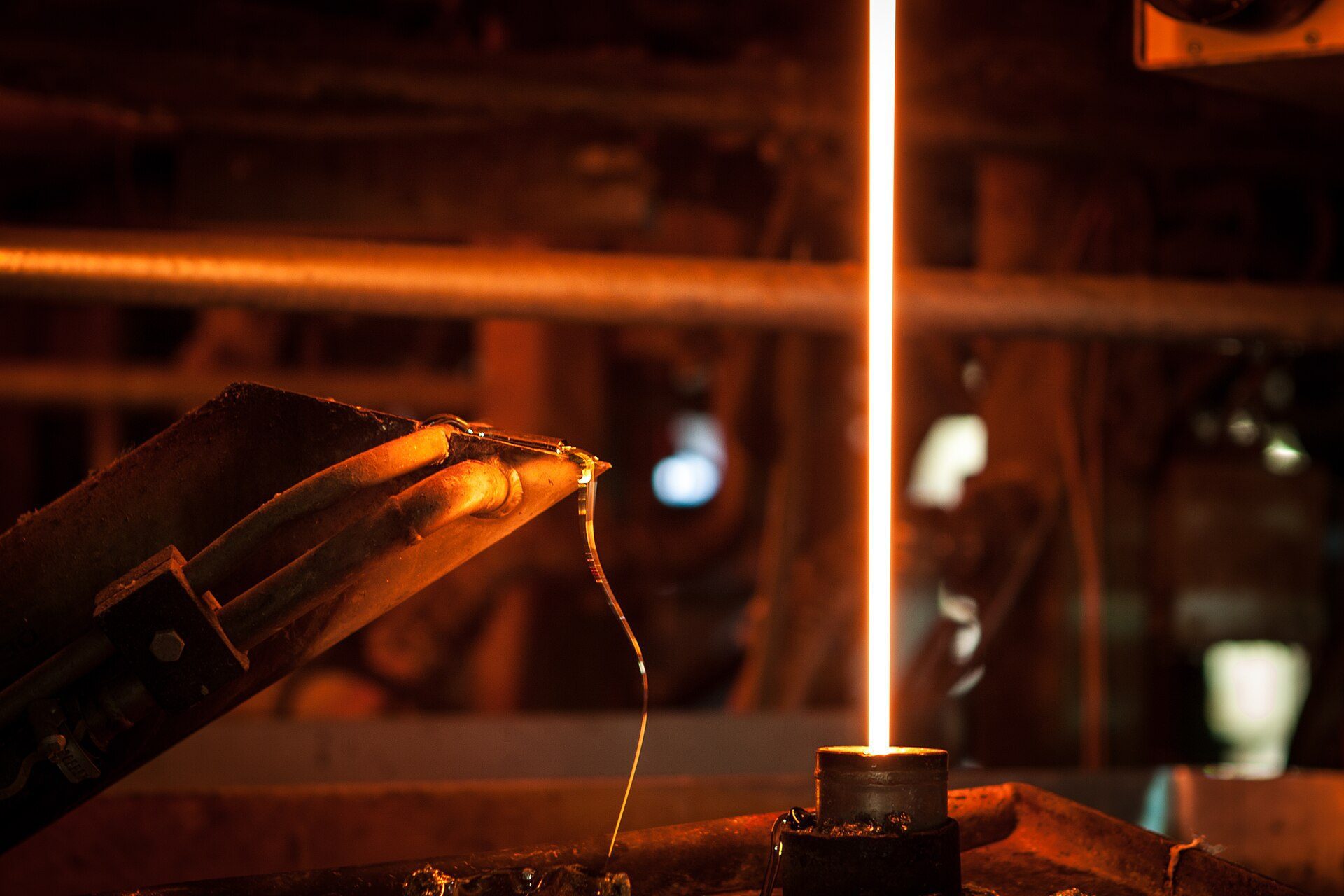
Glass wool being made: molten glass is spun into fibres. Manufacturing is part of the product stage (A1-A3) in an EPD. Photo: FMI / Marc Wiegelmann, CC BY-SA 3.0, via Wikimedia Commons. FMI/ Marc Wiegelmann, source, CC BY-SA 3.0
Maintenance, lifespan and cost factors
An EPD describes the product at the time of the study. Use-stage modules (B1-B7) depend on assumptions about service life and maintenance, which may not match your project. In a building LCA, set the service life of each product for your project (for example a 60-year reference study period for the building) and count replacements explicitly. EPDs are usually free to download from programme operators’ libraries; producing one costs a manufacturer the LCA study, verification and registration, which is one reason smaller manufacturers may only have industry-average EPDs. Costs vary by country and programme, so they are not quoted here.
Decision summary
Use an environmental product declaration to compare products of the same type on the same basis and to feed a whole-building carbon assessment, not as a label on its own. Convert declared units to your building element, check the standard version, modules and validity, and remember that design decisions such as using less material often save more carbon than switching products. For wider context, see our introduction to what is sustainable architecture, our overview of sustainable products and materials, and examples of bio-based hempcrete buildings.
Sources and further reading
- ISO 14025:2006, Environmental labels and declarations: Type III environmental declarations.
- EN 15804:2012+A2:2019, Sustainability of construction works: Environmental product declarations: Core rules for the product category of construction products (CEN, Europe).
- ISO 21930:2017, Sustainability in buildings and civil engineering works: Core rules for environmental product declarations of construction products and services.
- One Click LCA: EN 15804+A2 indicators.
- California DGS: Buy Clean California Act.
- The International EPD System: EPD library.

Emily Reyes is a Brooklyn-based architecture writer and Article Curator at Arch2O, known for her sharp eye for experimental design and critical theory. A graduate of the Southern California Institute of Architecture (SCI-Arc), Emily’s early work explored speculative urbanism and the boundaries between digital form and physical space. After a few years in Los Angeles working with boutique studios on concept-driven installations, she pivoted toward editorial work, drawn by the need to contextualize and critique the fast-evolving architectural discourse. At Arch2O, she curates articles that dissect emerging technologies, post-anthropocentric design, and contemporary spatial politics. Emily also lectures occasionally and contributes essays to independent design journals across North America.