

Published 05 May, 2024
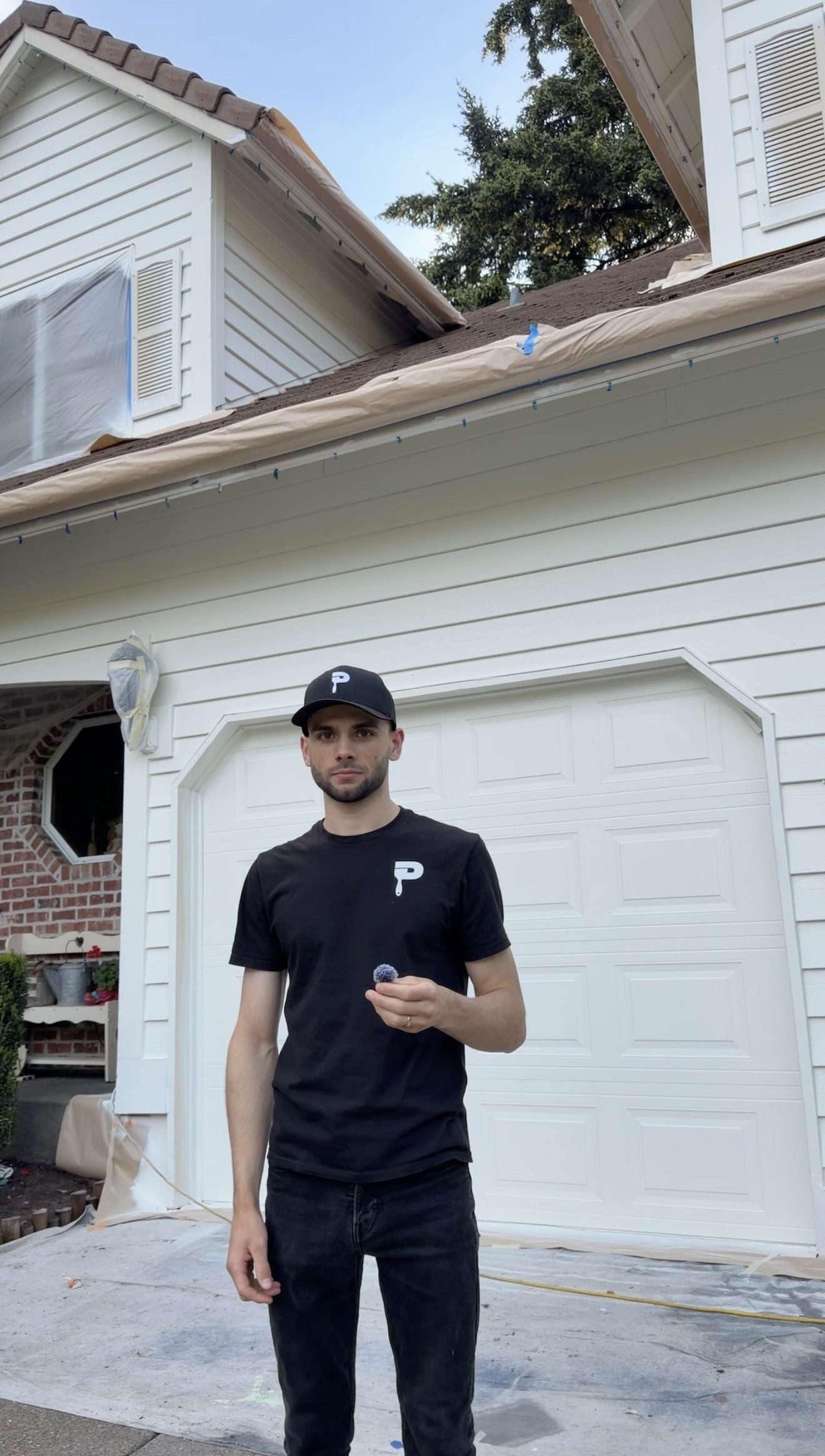
When painting exterior facades, homeowners often believe that the quality and longevity of the coating depend directly on the quality of the paint itself. Premium materials do last longer and crack less over time; however, without proper surface preparation, their maximum lifespan is a mere four years. These practical observations were shared by entrepreneur Pavlo Chaban, owner of PaintPaul Painting, a residential painting company serving Portland, Vancouver, and Camas, Washington.
Another side of the longevity issue lies in the specific dynamics of the painting service market, where high levels of price-cutting (dumping) have long been a defining trait. The industry lacks unified, mandatory work protocols, leaving each contractor to act at their own discretion—focusing more on speed of execution than on the durability of the result. Using his own company as an example, Pavlo Chaban explained how a business can standardize house painting processes to guarantee coating longevity for 10 years and beyond.
Standards That Begin with the Estimate
Pavlo believes that short-lived paint coatings are primarily the result of an irresponsible approach by contractors toward their duties.
“I came to this conclusion directly from my own projects: 60% of our clients are homeowners who need repainting,” says Pavlo. “This points to one clear issue: previous painters applied paint over rotten wood without evaluating the material’s condition, wear, moisture saturation, or any of the other underlying factors that cause paint to fail.”
Under such a superficial approach, the final quote for the customer naturally comes out lower even when expensive paint is included, because a thorough property assessment is omitted from the service list. At PaintPaul Painting, the process is built in reverse: a careful walk-through of the property, an analysis of the wood condition, identification of areas prone to moisture accumulation, and an evaluation of the existing sealant’s quality — all key parameters affecting durability — are assessed and documented in advance.
This data is entered into a specialized software program that precisely calculates the exact surface area requiring replacement, the volume of materials needed, crew labor hours, and specific site prep conditions (such as working on a three-story building versus a single-story home).
This accurate calculation forms the foundation of a transparent proposal, representing the first project management standard implemented by Pavlo. The client receives a document detailing the scope of work, materials used, number of coats applied, surface treatment methods, and most importantly the exact factors that could hinder long-term paint adhesion.
“Even the most expensive paint will crack if the surface is not prepared properly. Removing old caulk, repairing damaged wood, and re-priming — longevity depends entirely on these crucial steps,” he adds.
How Preparation Translates into Longevity
Every prep step in Chaban’s system addresses a common flaw prevalent in the painting service market. Adherence to these steps is directly tied to the physics of paint coatings: paint applied to an un-dried or improperly primed surface loses adhesion significantly faster, causing cracking and peeling in as little as 1 to 2 years instead of the 7 to 10 years promised by manufacturers.
“I see most competitors skip the prep phase to save time and finish the job faster,” explains Chaban. “This inevitably impacts quality. That is why our standard operating procedures always require an initial assessment, even if the house appears ideal for painting with no visible cracks or peeling paint. However, that doesn’t mean the wood underneath hasn’t begun to deteriorate.”
Quality Control at Every Stage
Chaban builds his company’s operations on total process transparency for both employees and clients. Before any project begins, the project manager reviews the work order alongside the subcontractor. During execution, checklists accompany every stage, and the finish coat is never applied until the preparation stage has been inspected and approved.
Client communication is equally standardized. Once an estimate is signed, the client receives weekly project status updates, and a few days prior to launch, all details such as colors, target areas, and scope of work are re-confirmed. During active work, the client receives a morning summary of the crew’s daily plan from Pavlo, followed by an end-of-day progress report every evening.
“The results of a standardized system are measurable. Since the beginning of the year, the company has completed around 50 projects, and not a single homeowner has reached out due to a failing coating or requested warranty service,” shares Pavlo Chaban. “This approach directly cuts overall costs for homeowners and the U.S. construction industry on repeat repairs, which amount to billions of dollars annually due to premature facade damage.”
A System That Protects Clients and Employees
PaintPaul Painting’s operating model relies on working with subcontractors, a structure where process standardization becomes even more critical than in traditional businesses with direct employees.
“In my management philosophy, I rely on an insight by author James Clear: ‘We don’t rise to the level of our goals; we fall to the level of our systems.’ This idea illustrates why the system itself serves as the guarantor of our service quality, virtually eliminating risks,” comments Pavlo. “When a new employee or subcontractor joins the company, they immediately encounter a transparent framework and clear algorithms where responsibilities are sharply defined. There is no room for blame, as everyone understands their area of responsibility, expected outcomes, and the consequences of non-compliance.”
Why a Systemic Approach Is the Future of the Industry
The U.S. painting industry remains structurally fragmented. According to IBISWorld data, no single company holds more than a 5% market share, and the average business employs only 1 to 2 workers. This landscape, dominated by small players operating without unified operational standards, has fostered a race-to-the-bottom pricing culture in an effort to win clients, Pavlo notes.
In an industry where over 200,000 small enterprises compete primarily on price rather than quality, Pavlo Chaban’s model provides an example of a systematic approach to project execution—refusing to skip surface assessment and preparation while providing clients with complete transparency regarding their home’s condition.
Documented property assessments, standardized surface prep protocols, and transparent client communication reduces the financial losses homeowners face from premature repainting, a burden the average American family typically encounters every 4 to 5 years. The entrepreneur is confident that spreading his painting methodology will help extend this timeframe to at least 10 years, ultimately increasing the overall durability of the residential housing stock.

Ruba Ahmed, a senior project editor at Arch2O and an Alexandria University graduate, has reviewed hundreds of architectural projects with precision and insight. Specializing in architecture and urban design, she excels in project curation, topic selection, and interdepartmental collaboration. Her dedication and expertise make her a pivotal asset to Arch2O.