

Butcher block countertops are kitchen worktops made of strips or blocks of solid hardwood glued together into a thick slab, traditionally maple, but also walnut, oak, cherry and other species. They are warm to the touch, can be sanded and refinished many times, and are gentler on knives than stone, but they need regular oiling, careful sealing around sinks, and more attention to water than quartz or granite. This guide explains how butcher block countertops are constructed, compares common species, sets out the finishes and what each is suitable for, and gives a practical care routine.
It is written for architects, kitchen designers and homeowners weighing wood against stone and composite worktops.
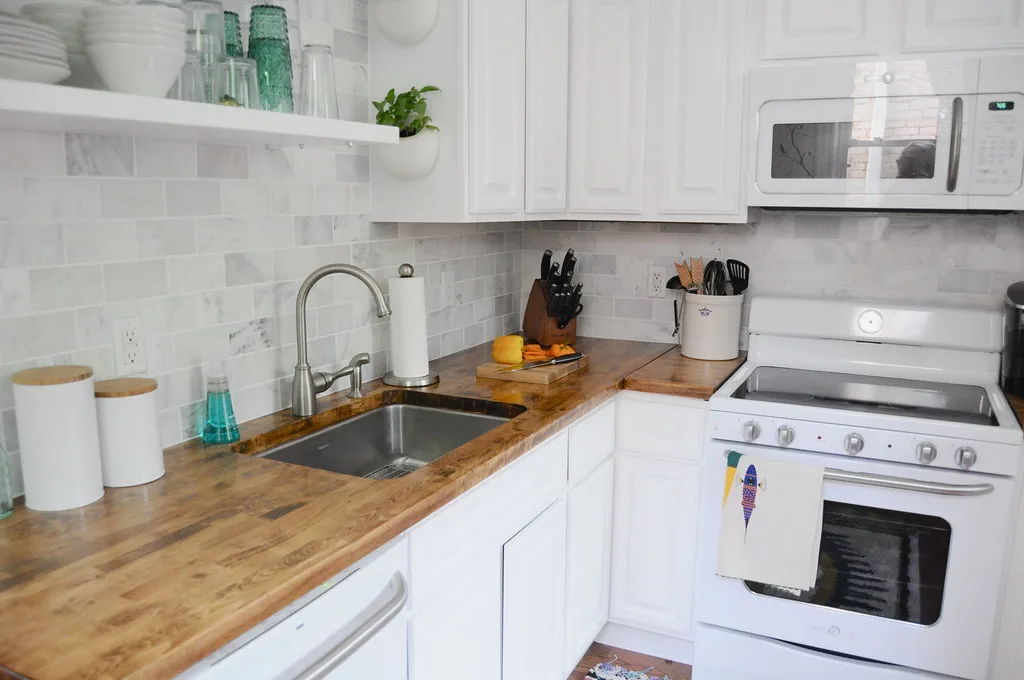
Construction of butcher block countertops
The way the wood is arranged determines the look, strength and use of a butcher block. There are three main types:
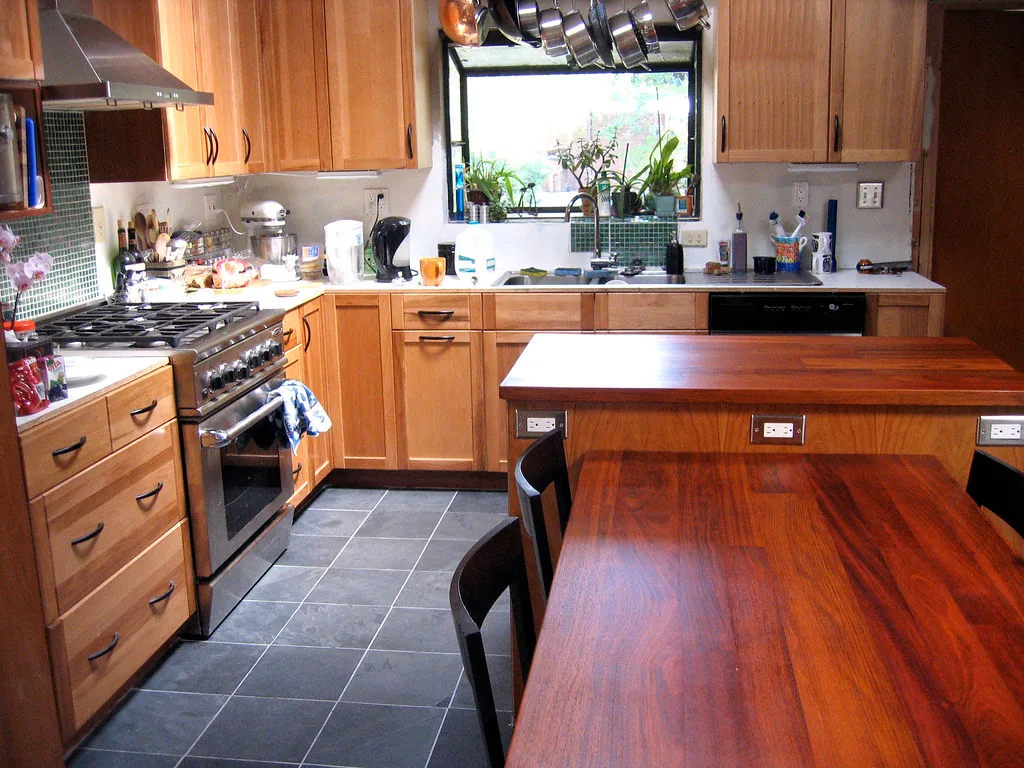
- Edge grain: long strips glued side by side with the narrow edge facing up. This shows straight, linear grain, is stable and strong, and is the most common choice for countertops.
- Face grain (wide plank): wider boards glued with the broad face up, showing the most figure in the wood. It looks like a table top but is softer to knife marks and more prone to movement.
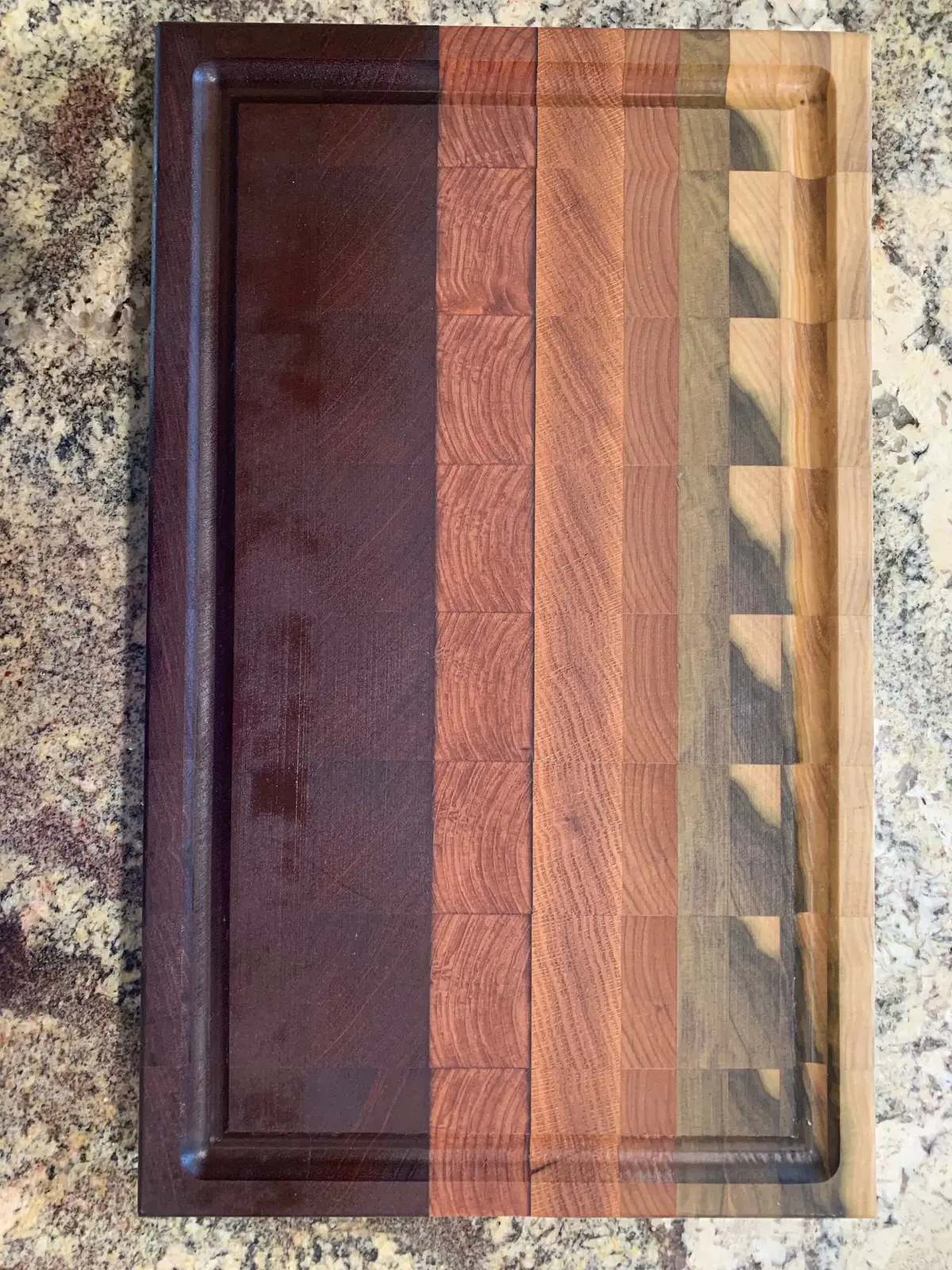
- End grain: short blocks glued with the end grain facing up, giving a chequerboard pattern. The wood fibres face upward, so knives slip between them, which makes end grain the most knife-friendly and the traditional surface for chopping blocks. It is also the most expensive and absorbs oil and water most readily.
Typical countertop thicknesses are around 30–40 mm (1.25–1.5 in), with thicker slabs for islands and chopping surfaces. Wood moves with changes in humidity, mostly across its width, so slabs must be fixed with slotted brackets or screws in elongated holes that allow movement, never glued rigidly to the cabinets.
| Species | Janka hardness | Decay resistance | Look | Notes |
|---|---|---|---|---|
| Hard maple | 1,450 lbf (6,450 N) | Non-durable to perishable | Pale, fine grain | Classic butcher block; keep sealed near sinks |
| White oak | 1,350 lbf (5,990 N) | Very durable | Light brown, strong grain | Stains with iron when wet |
| Black walnut | 1,010 lbf (4,490 N) | Very durable | Dark brown | Shows dents; decorative |
Source: The Wood Database (hard maple, white oak, black walnut pages) (as of 21 October 2026).
Species
The species affects hardness, colour, durability and cost. Hardness is usually compared with the Janka test, which measures the force needed to press a steel ball halfway into the wood.
Hard maple
The classic butcher block wood: pale, fine-grained and hard, at 1,450 lbf (6,450 N) on the Janka scale. The Wood Database lists butcher blocks and cutting boards among its common uses. Its weakness is decay resistance: maple is rated non-durable, so it must be kept sealed and dry around sinks.
Walnut
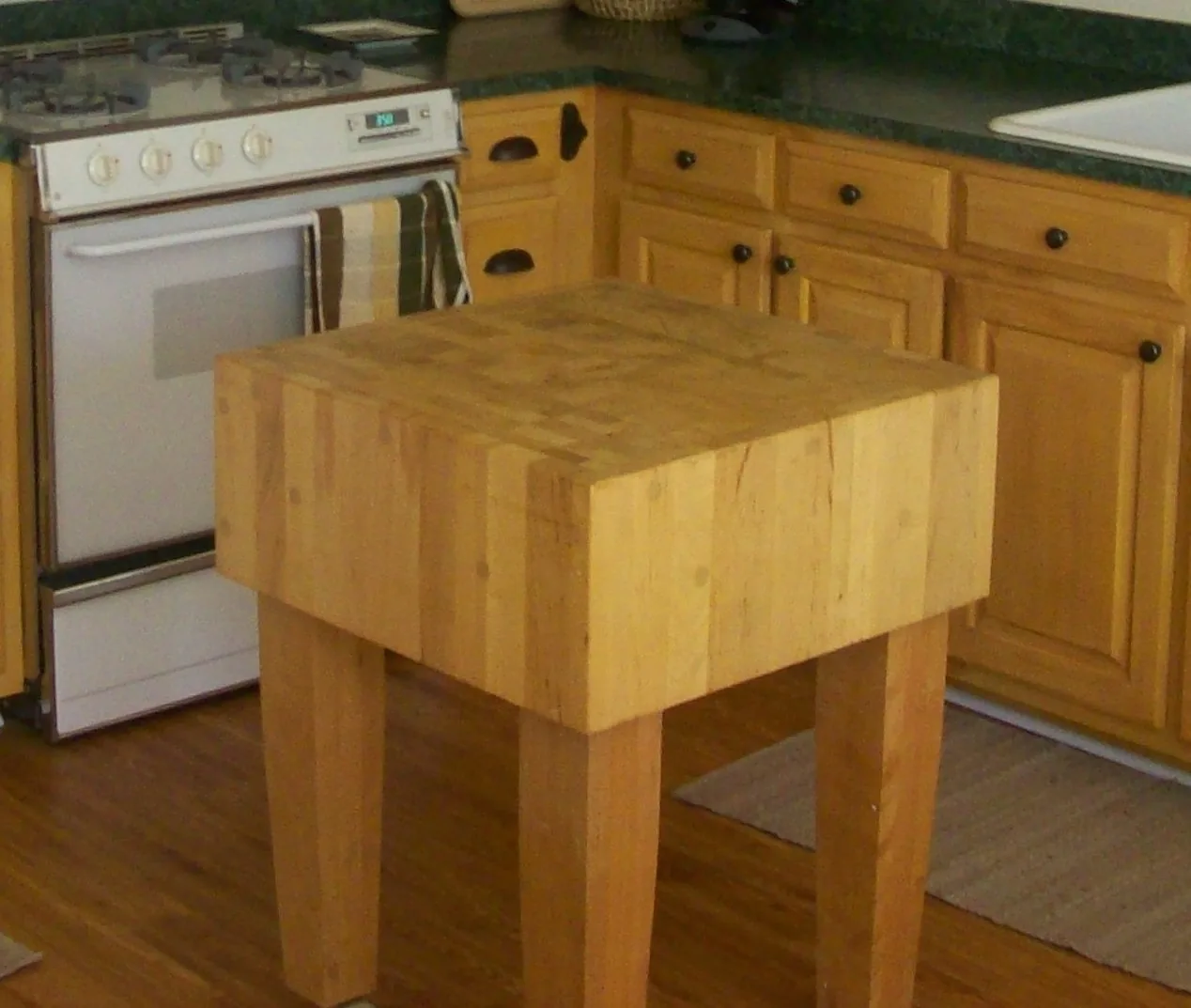
Dark, rich and highly decorative. American black walnut is softer, at 1,010 lbf (4,490 N), so it shows dents and knife marks more readily, but its heartwood is rated very durable against decay. It is often chosen for islands and serving areas rather than main prep zones.
White oak
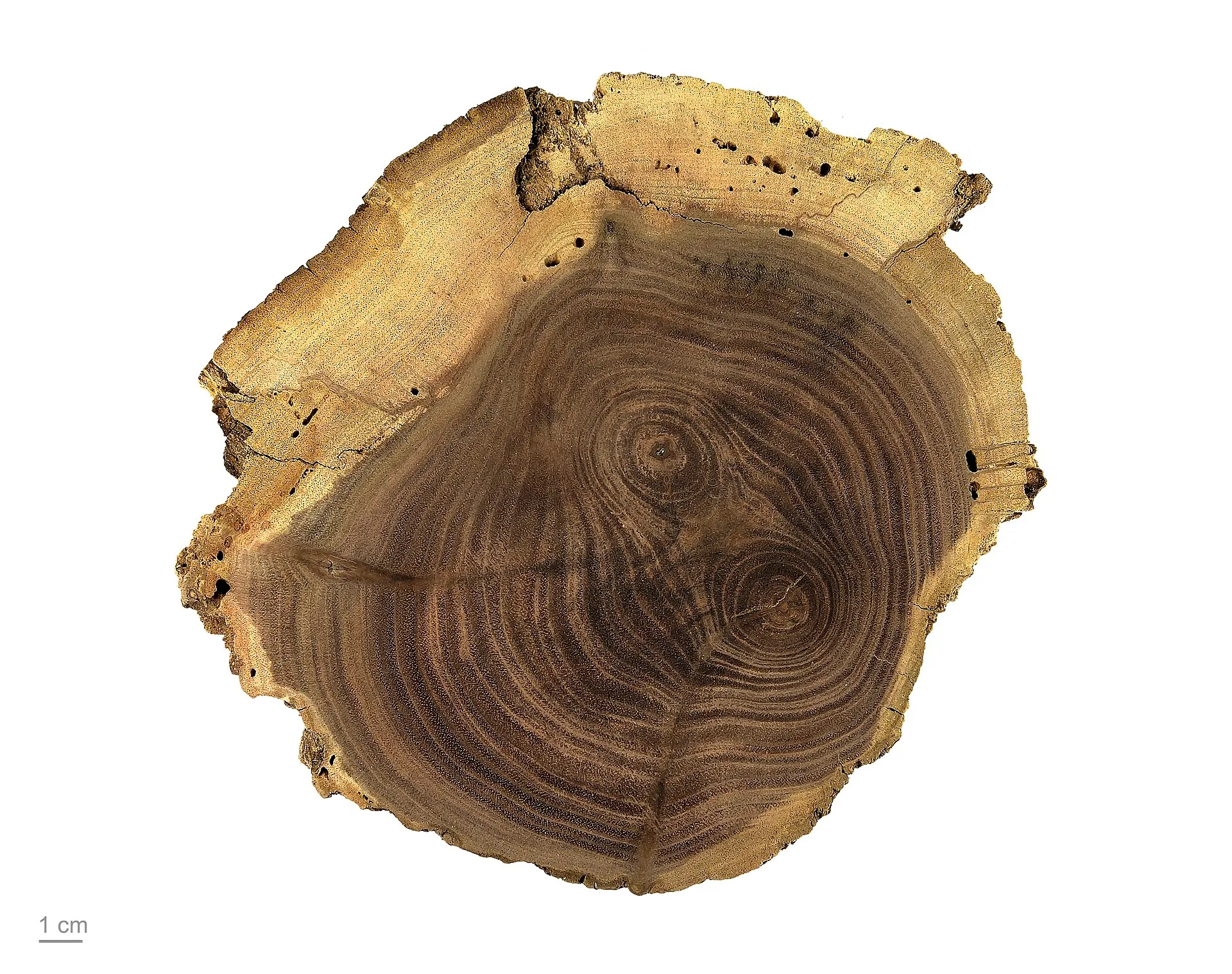
Hard and durable, at 1,350 lbf (5,990 N), with heartwood rated very durable. Its pores are blocked by tyloses, one reason it was traditionally used for barrels. Note that oak reacts with iron, especially when wet, causing dark stains, so avoid leaving steel pans and cans on it.
Cherry, teak and acacia
Cherry is softer and darkens with light exposure to a warm red-brown. Teak is oily and naturally water-resistant, suiting areas near sinks if sourced responsibly. Acacia, widely sold in budget worktops, varies in species and hardness, so check the supplier’s data. Whatever the species, ask for certified timber (FSC or PEFC) to avoid wood from illegal or unsustainable logging.
Finishes
The finish decides whether you can cut on the surface and how much maintenance it needs:
- Food-safe oils (mineral oil, oil and beeswax blends): soak into the wood without forming a film. Suitable for surfaces used directly for chopping, but they offer little water resistance and must be renewed often, at first every few weeks and then monthly or as the wood looks dry.
- Hardening oils (tung oil, linseed-based and hard-wax oils): cure inside and on the surface, giving better water and stain resistance while keeping a natural look. Check that the product is certified food-safe when cured if it will touch food.
- Film finishes (varnish, polyurethane, conversion varnish): form a durable, water-resistant coating, good around sinks and for surfaces not used for cutting. Knife cuts break the film, so do not chop directly on them, and damaged areas are harder to repair invisibly.
Whichever finish you choose, seal all faces of the slab, including the underside and the edges of sink and hob cut-outs, so that it absorbs and releases moisture evenly and does not cup or crack.
Care
- Wipe spills promptly, especially water around the sink and dishwasher; standing water causes dark stains and swelling.
- Clean with mild soap and water, then dry. Avoid soaking and harsh chemicals that strip oil.
- Re-oil regularly: when water stops beading and the surface looks pale or dry.
- Sand out damage: light scratches, burns and stains can be sanded and the area re-oiled, one of the main advantages of solid wood.
- Use trivets for hot pans and a separate board for raw meat if the countertop has a film finish.
- Protect from heat and steam: install a vapour barrier or heat shield above dishwashers, and allow for ventilation under the slab.
Butcher block countertops compared with stone and quartz
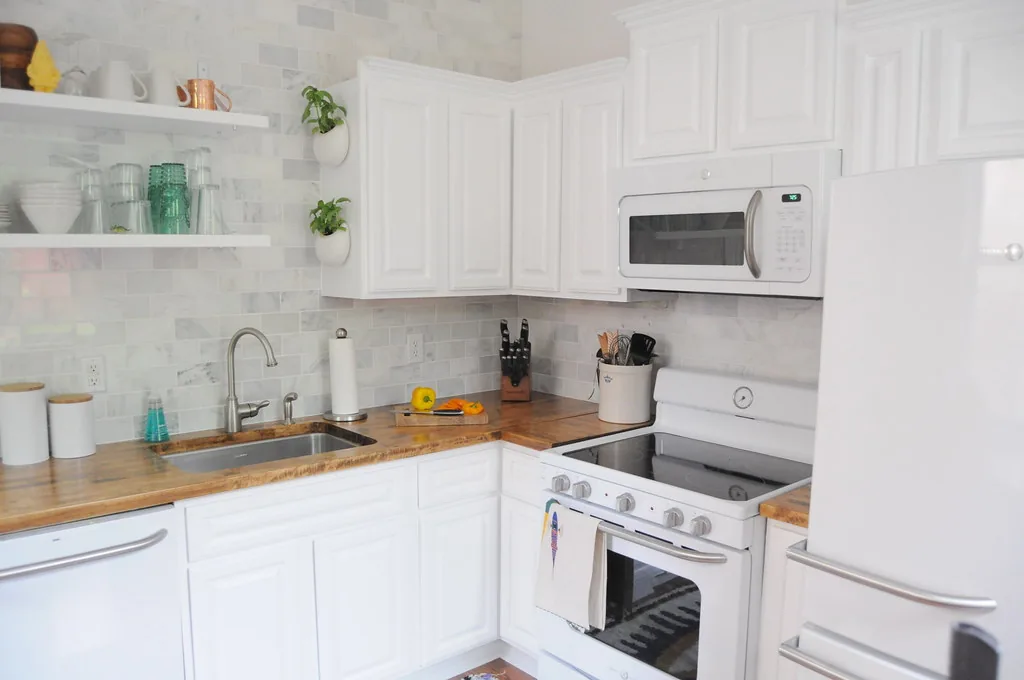
The choice between wood and stone or engineered quartz usually comes down to how a kitchen is used. Granite and quartz are harder, resist heat and scratching better, and need little routine care, which suits busy family kitchens and rental properties where nobody will oil the worktop. Butcher block countertops, by contrast, are warmer to the touch, quieter when you set down plates and pans, and kinder to knives and glassware. They can also be repaired: a scorched or stained patch on a wood worktop can be sanded out at home, while a chipped stone edge needs a specialist.
Many designers combine the two: stone or quartz around the sink and hob, where water and heat are concentrated, and a butcher block island or a section of end grain for food preparation and informal dining. This mix places each material where it performs best and reduces the maintenance demands of the wood.
Wood also has an environmental argument when it comes from certified forests: it is renewable, stores carbon while in use, and can be refinished rather than replaced. Its life depends entirely on care, however, so a neglected wood worktop that has to be replaced early loses that advantage.
Pros and cons of butcher block countertops
Pros: warm, natural look; quieter and softer than stone; kind to knives; renewable and repairable; can be fabricated with ordinary woodworking tools. Cons: needs regular maintenance; vulnerable to water, heat and stains; softer than stone and quartz, so it dents and scratches; sensitive to humidity changes.
Choosing a worktop is a similar exercise to choosing external finishes: balance appearance, durability, maintenance and life-cycle impact. Our guide on how to choose facade cladding materials applies the same method at building scale.
Distinguish a work surface from a cutting surface
Decide whether food will be cut directly on the timber or on a separate board. That choice affects the finish and cleaning approach; follow the finish and countertop manufacturers rather than assuming every oil or varnish is food-contact suitable. Detail end grain, sink openings and the underside so water cannot sit unnoticed. Allow the movement required for the specific timber construction. The repairability of a worktop is an advantage only if its fixing and finish allow that repair to happen.
For the wider specification process, our guide to selecting architectural building materials explains how to compare requirements before choosing a product.
Summary
Butcher block countertops suit kitchens where warmth, repairability and a natural material matter more than zero maintenance. Choose edge grain for most worktops and end grain for chopping areas; hard maple for prep zones, walnut or oak for character; an oil finish if you will cut on it, or a hard-wax or film finish near the sink. Fix it to allow movement, seal every face, and re-oil regularly, and it will last for decades.

Luca Moretti is a content strategist with a foundation in urban design and architecture. Based in Milan, he focuses on writing that bridges aesthetics, material culture, and everyday spatial experiences.