

Performing Arts Centre
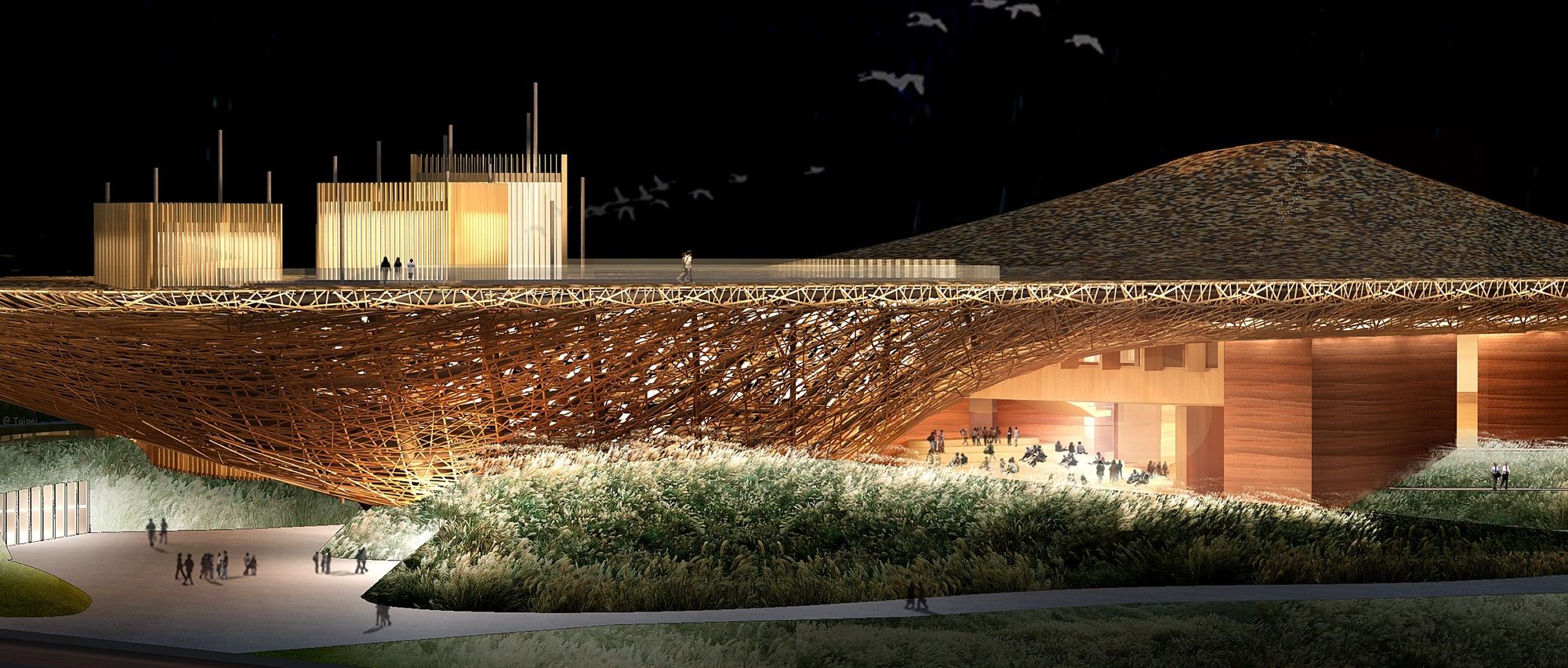
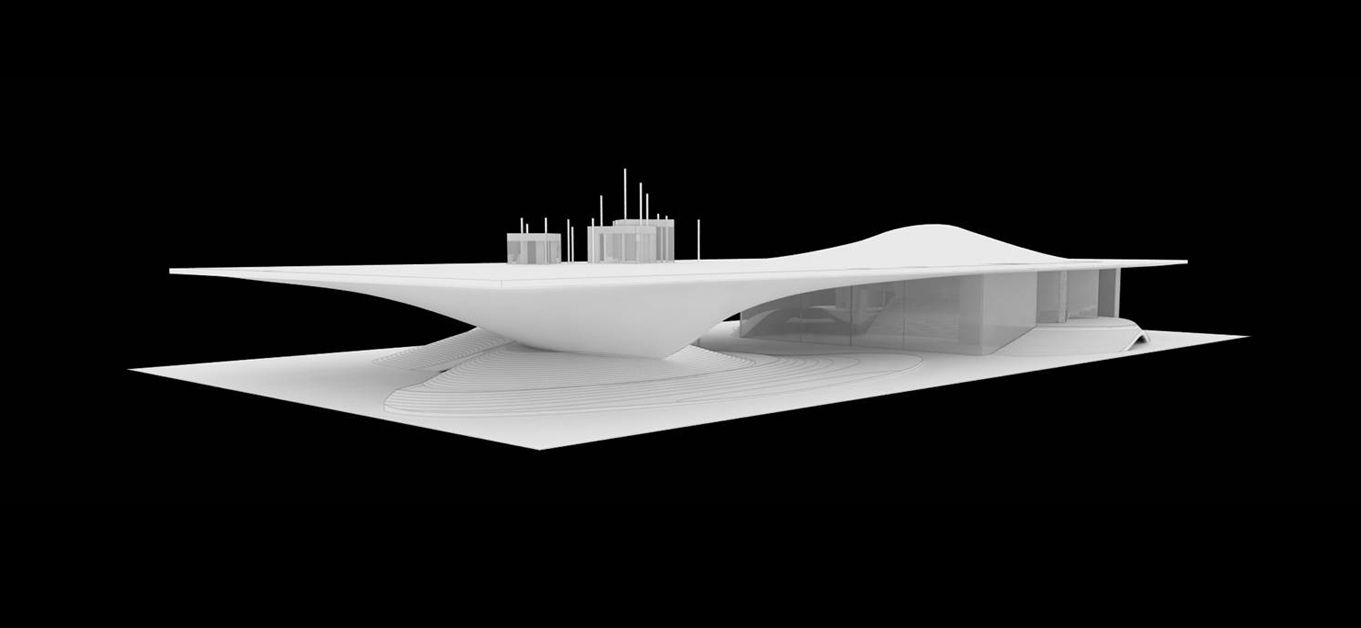
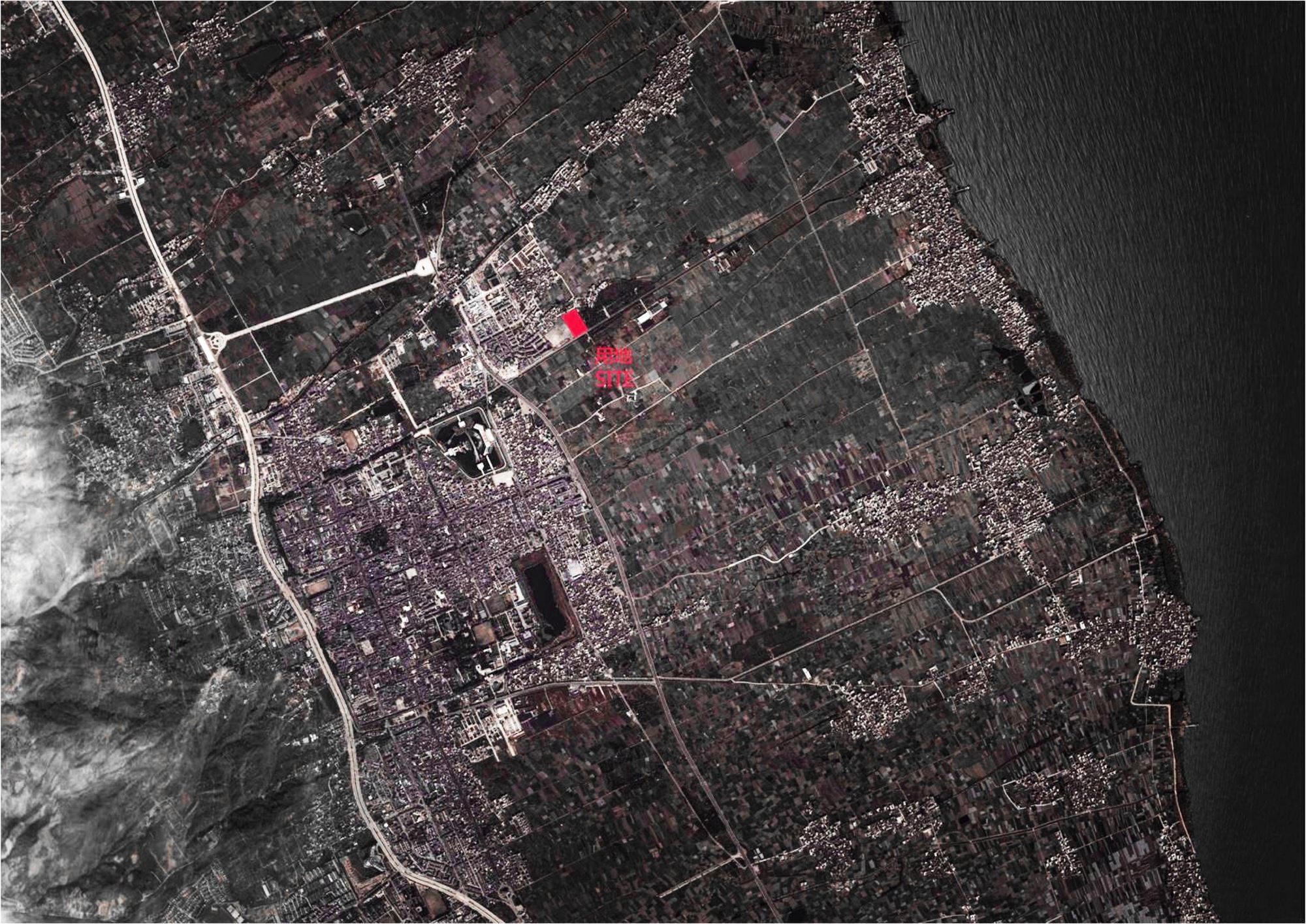
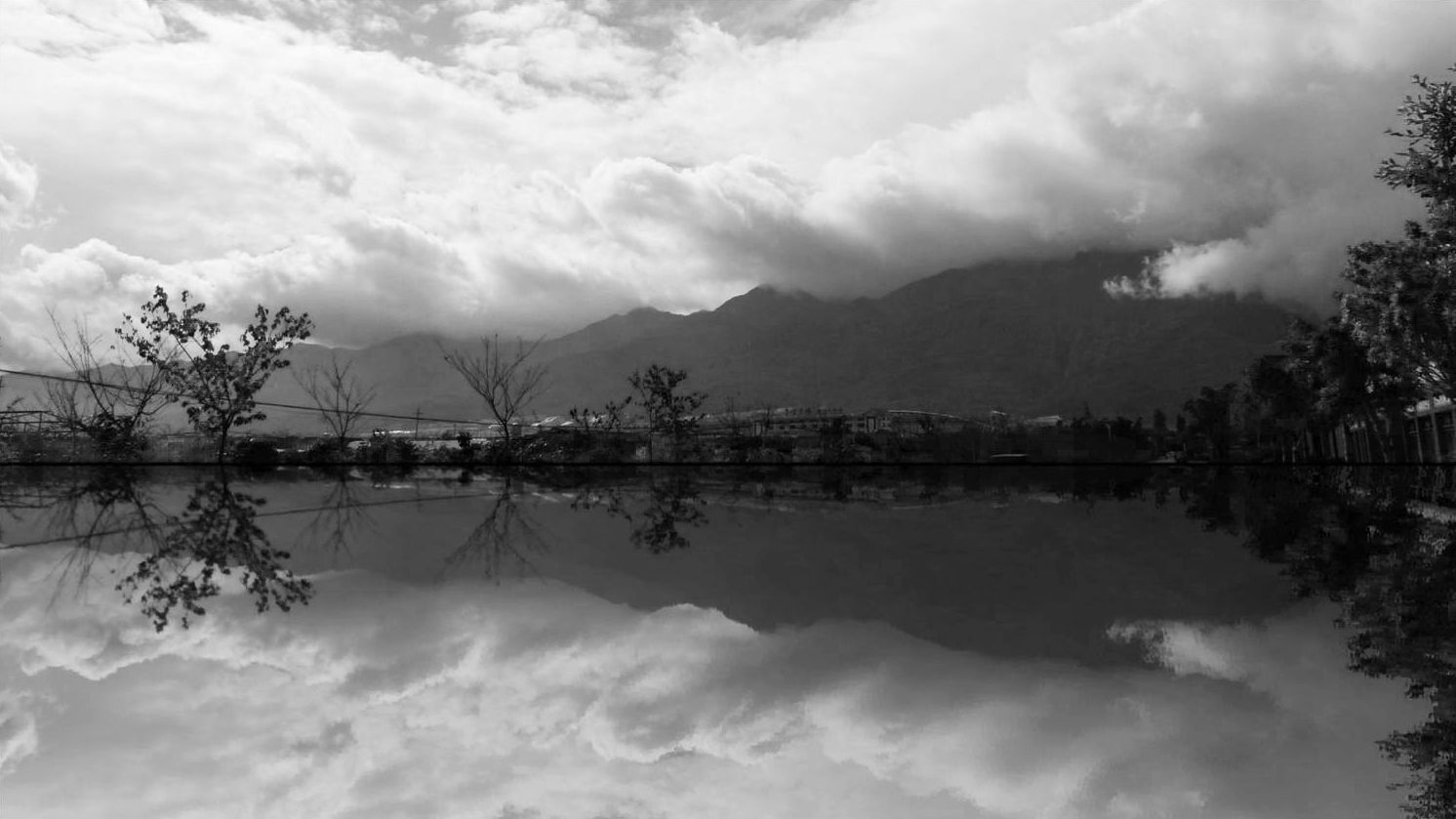
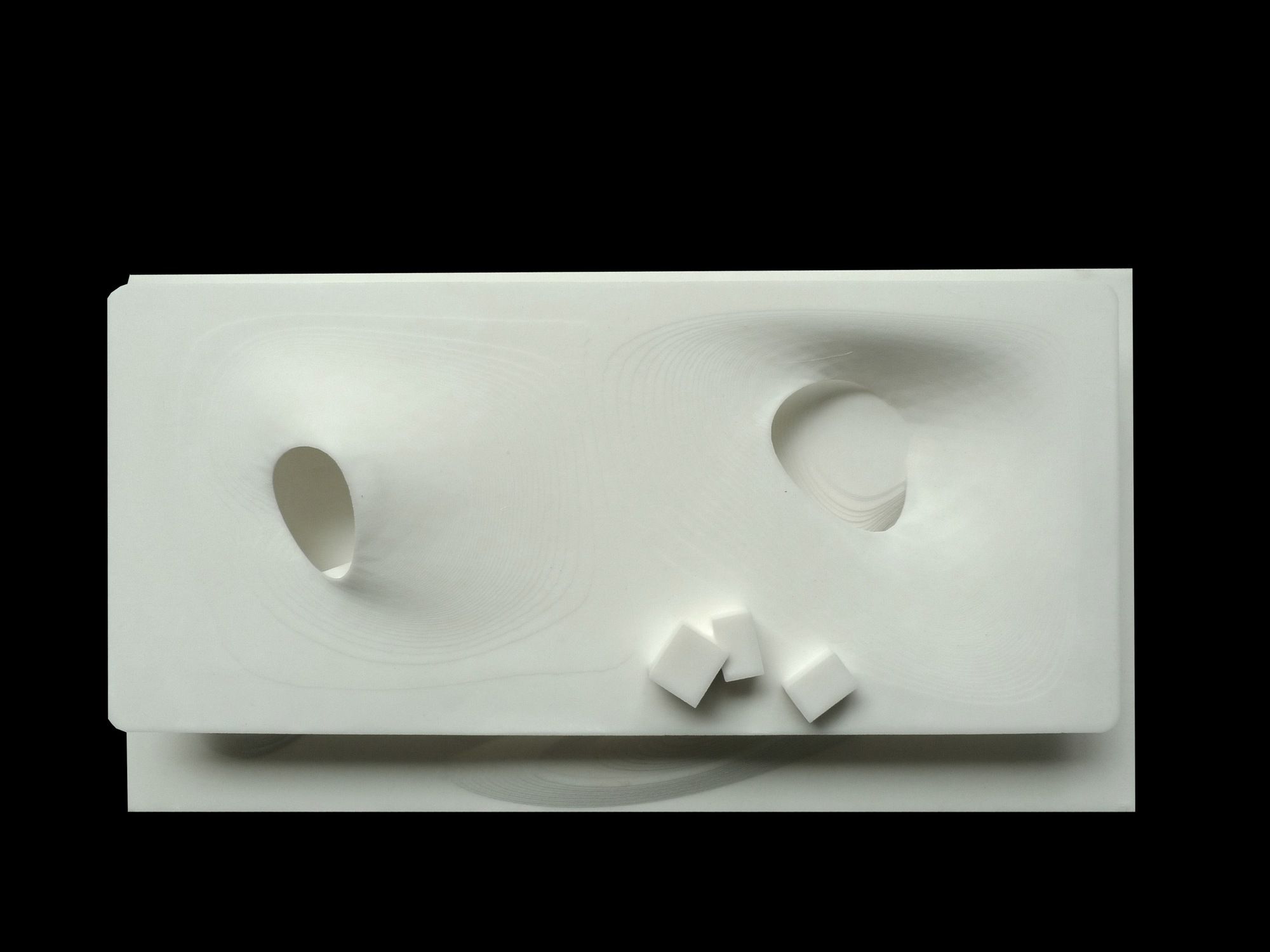
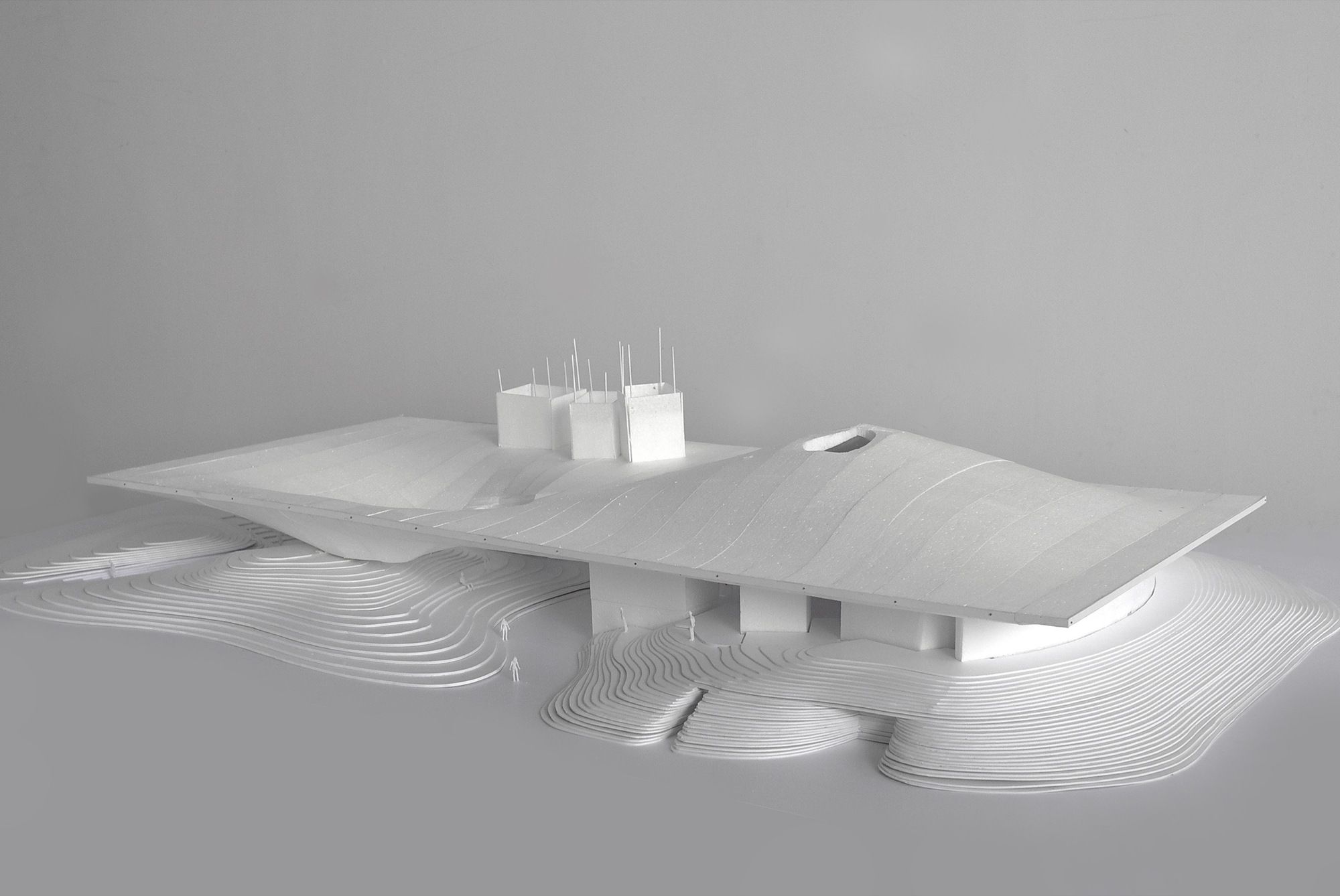
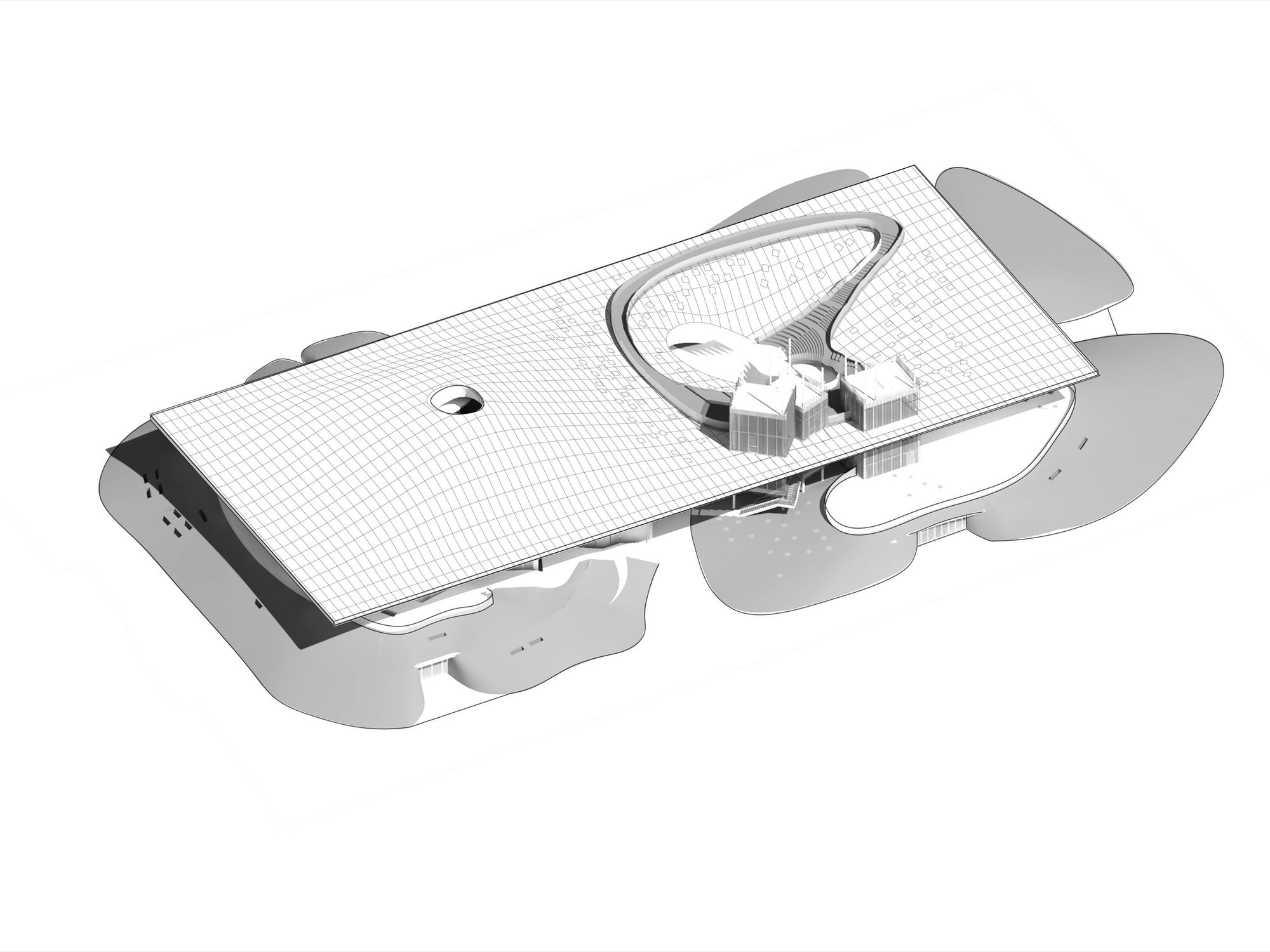
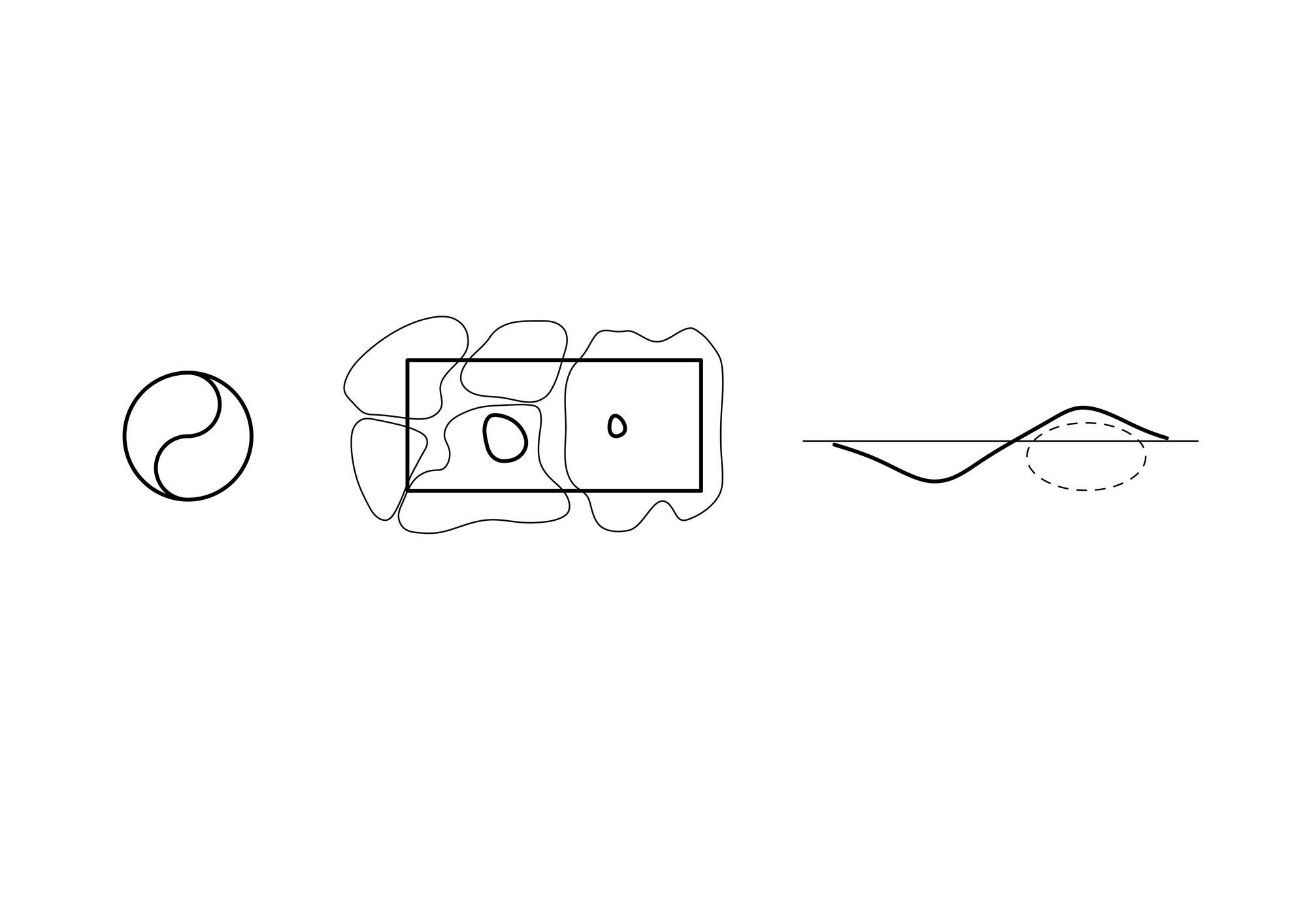
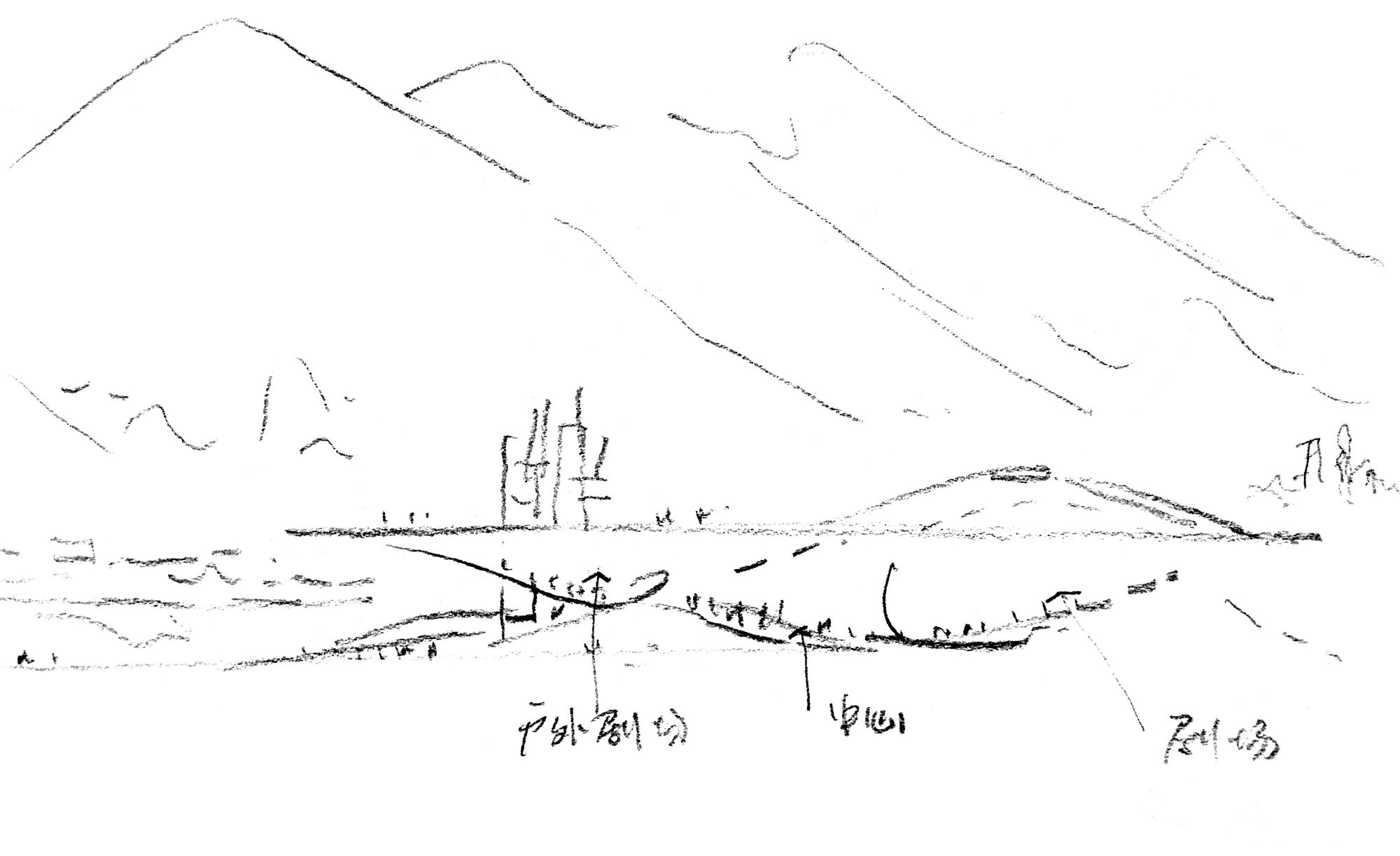
Currently being built in China, Studio Pei-Zhu’s arts centre derives its form from the changes in topography in the region, as well as the weather patterns on site, which happens to be located between the Erhai fault lake and the Cangshan mountain range in Dali, China.
Courtesy of Studio Pei-Zhu
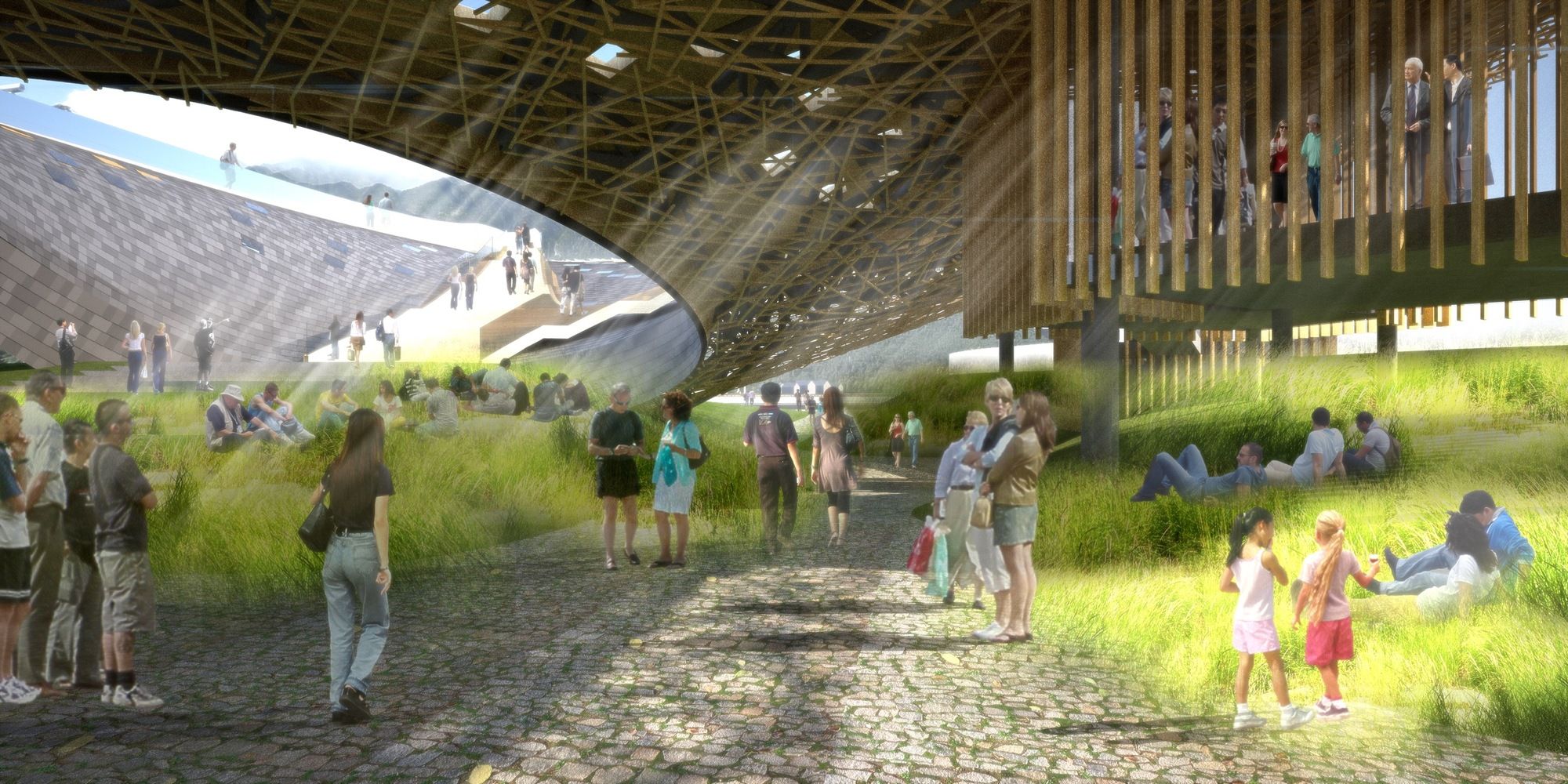
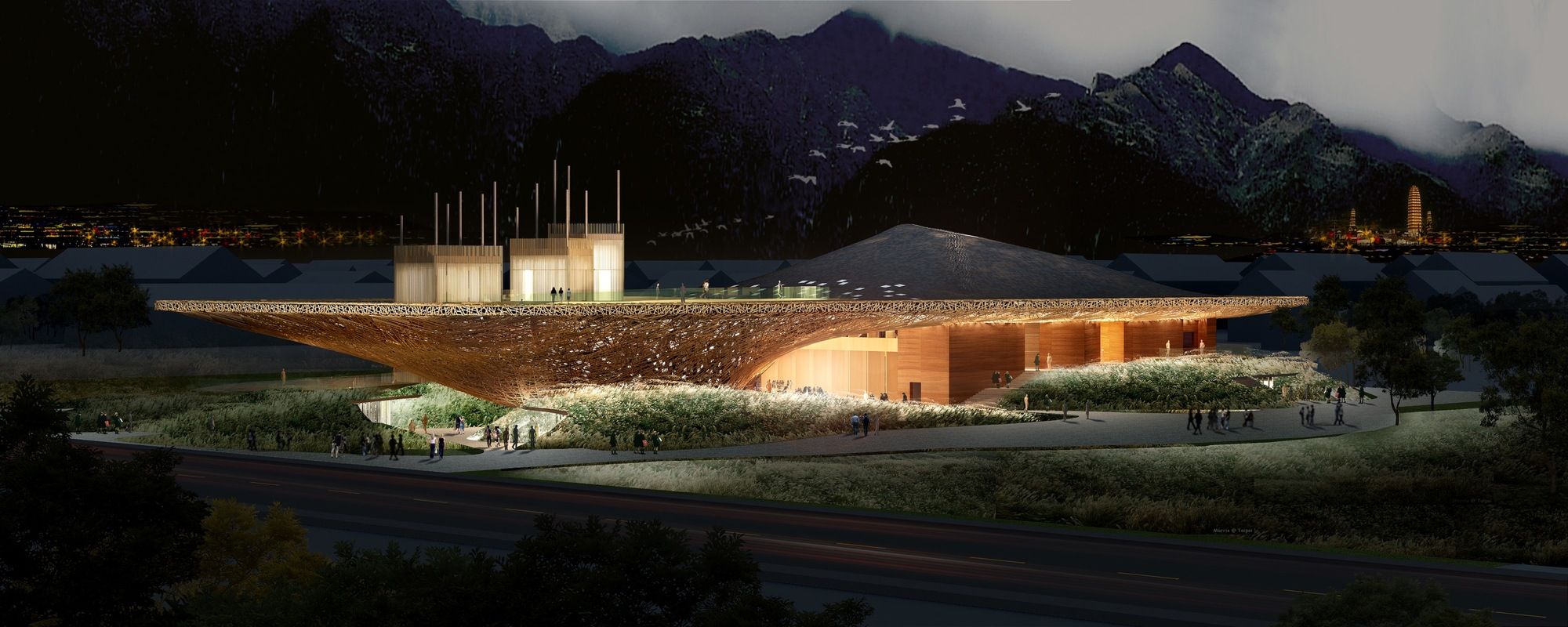
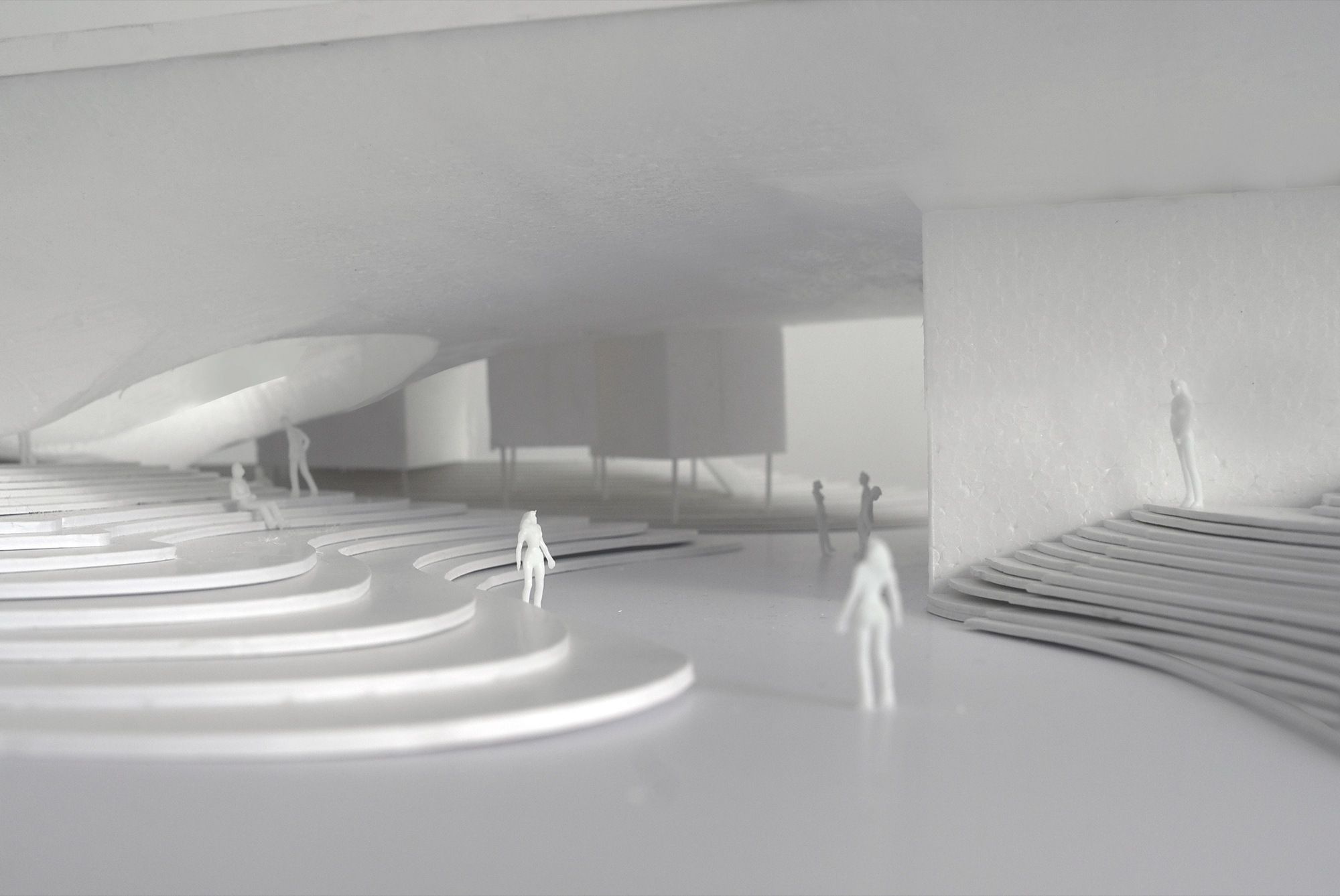
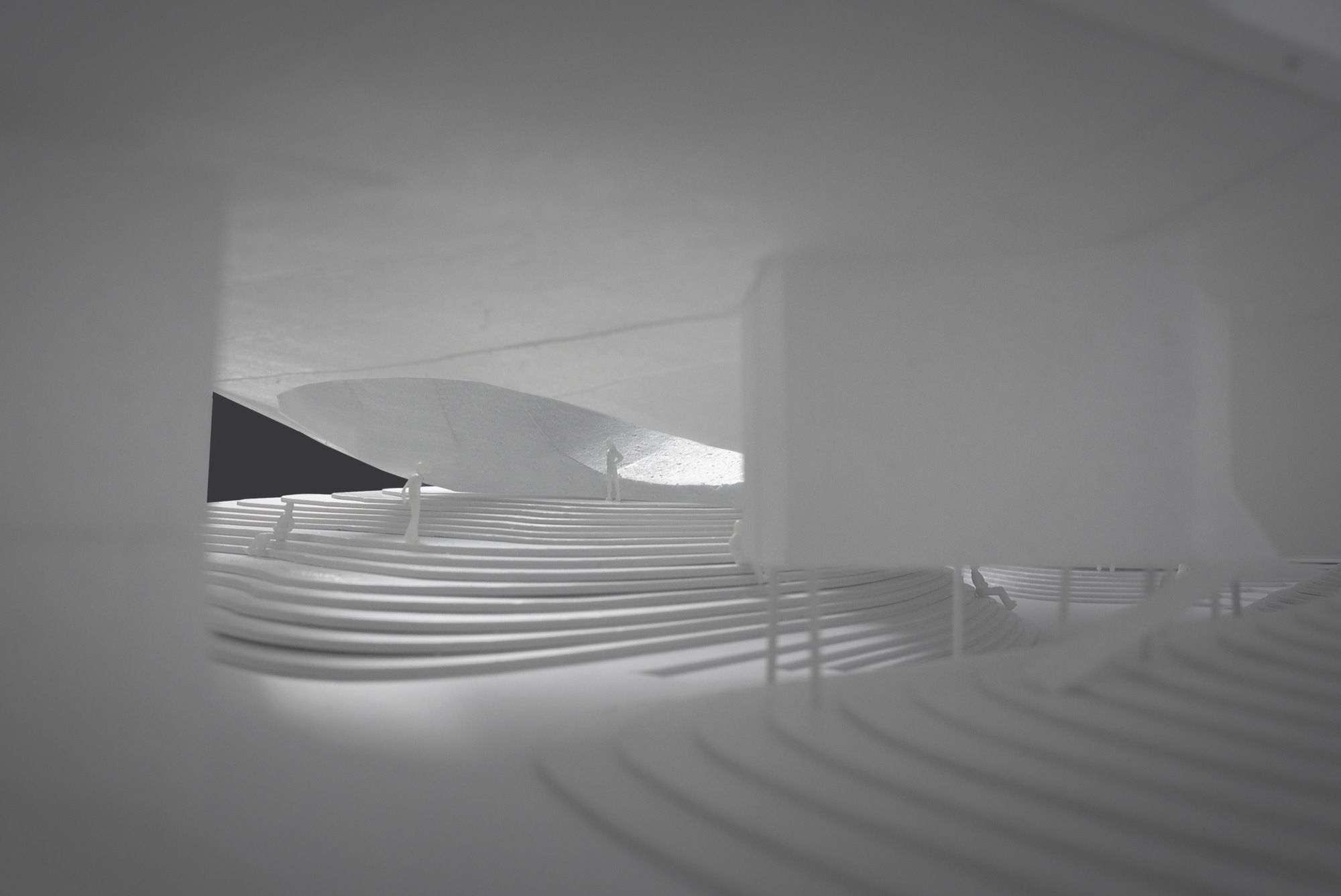
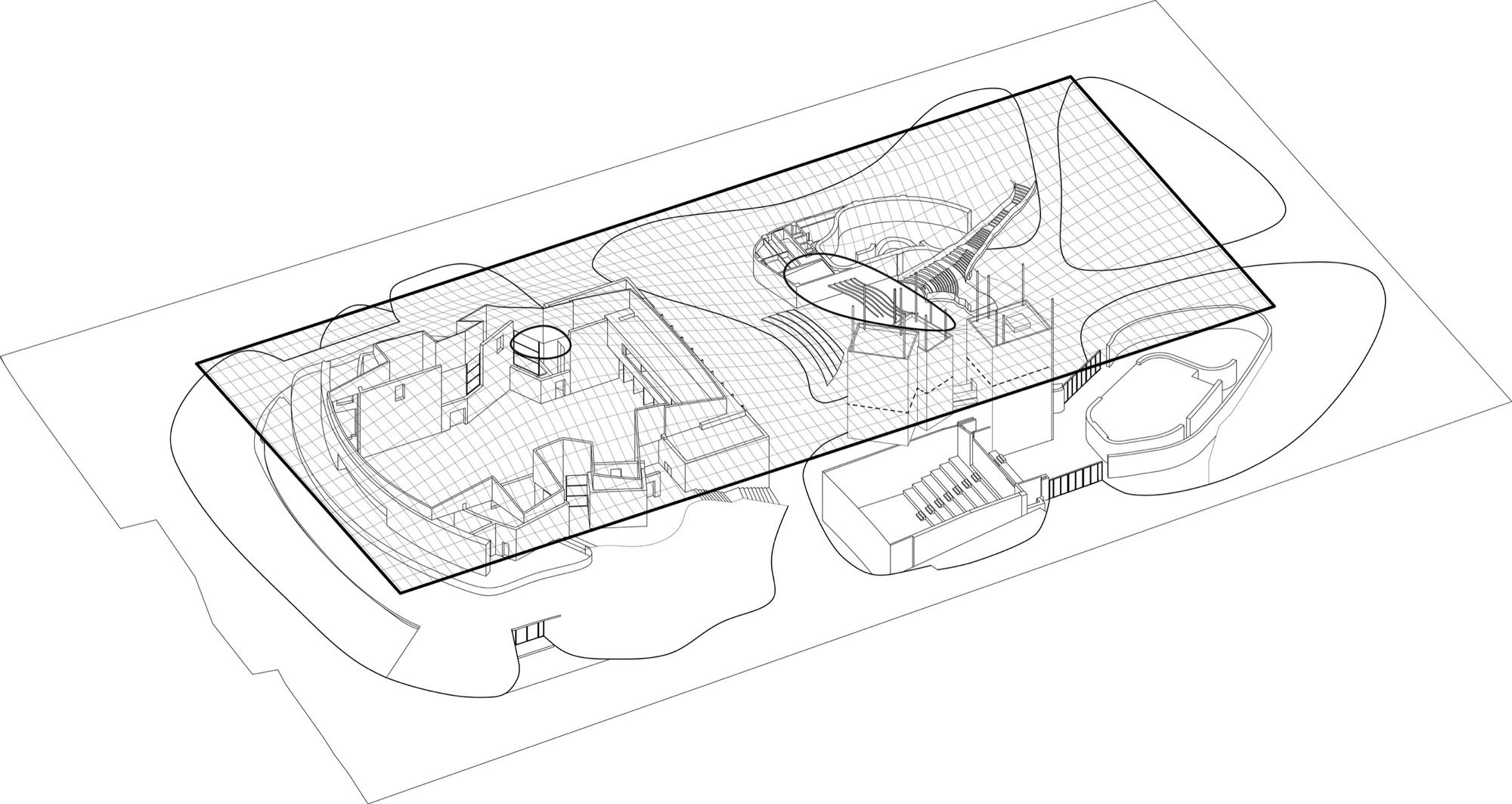
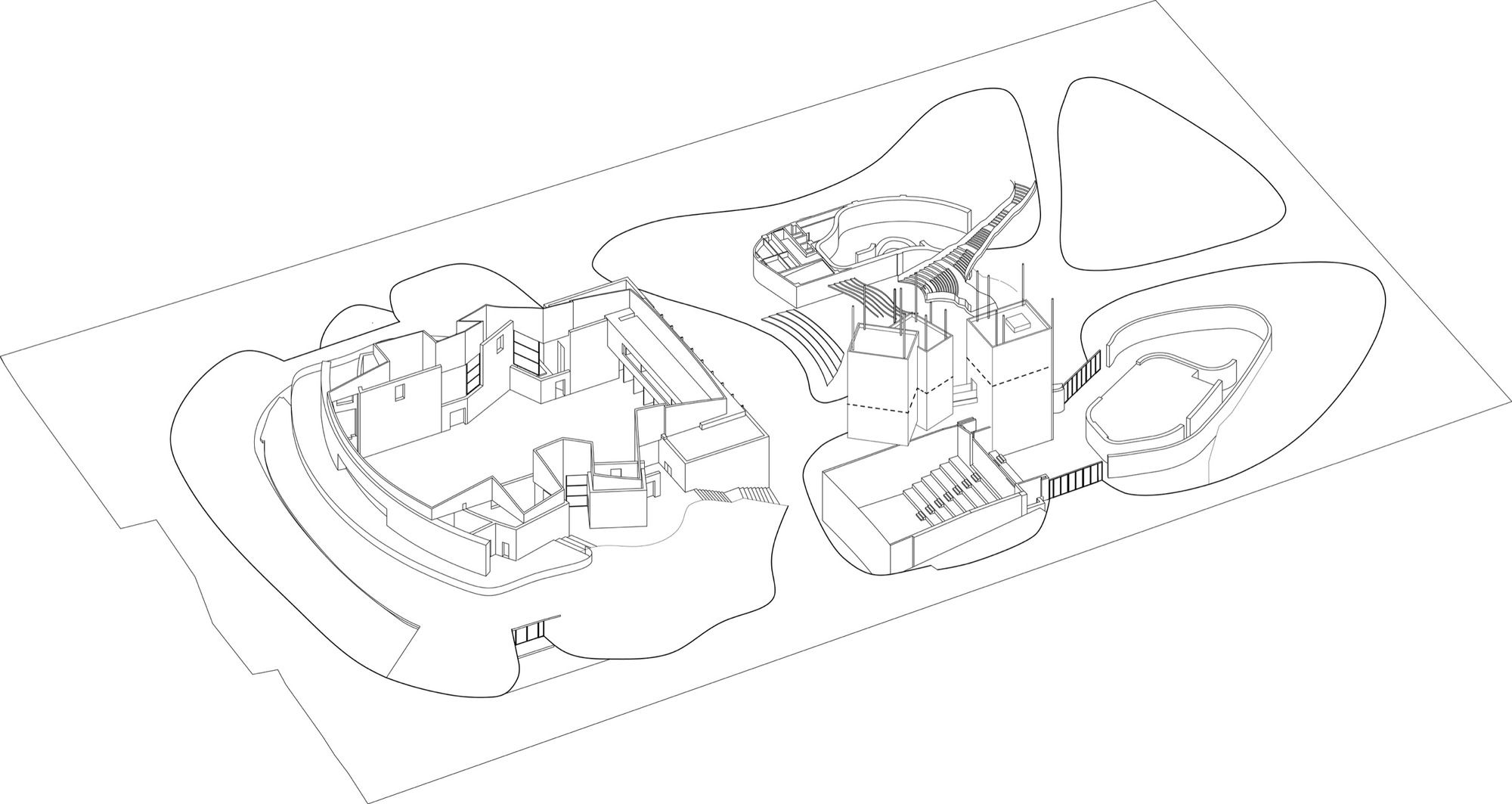
The structure houses a covered plaza, a theatre and performance arena, spaces decorated by shards of light puncturing through the intertwined wooden roof during the day. At night, the structure transforms into a beacon of light between the mountains and under the fog that forms over the site, illuminating its surroundings and itself which gives the area a romantic sort of energy.
Courtesy of Studio Pei-Zhu
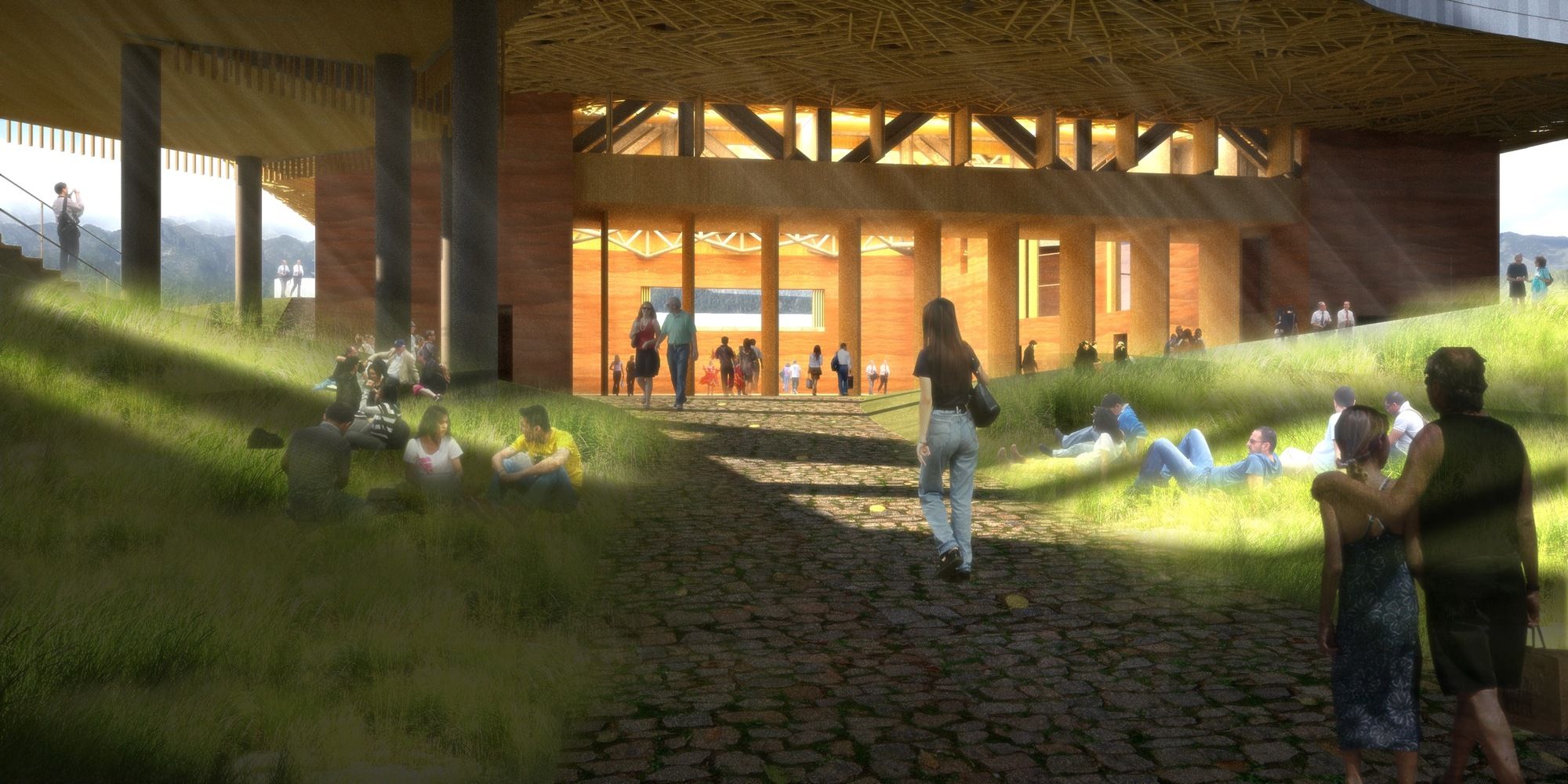
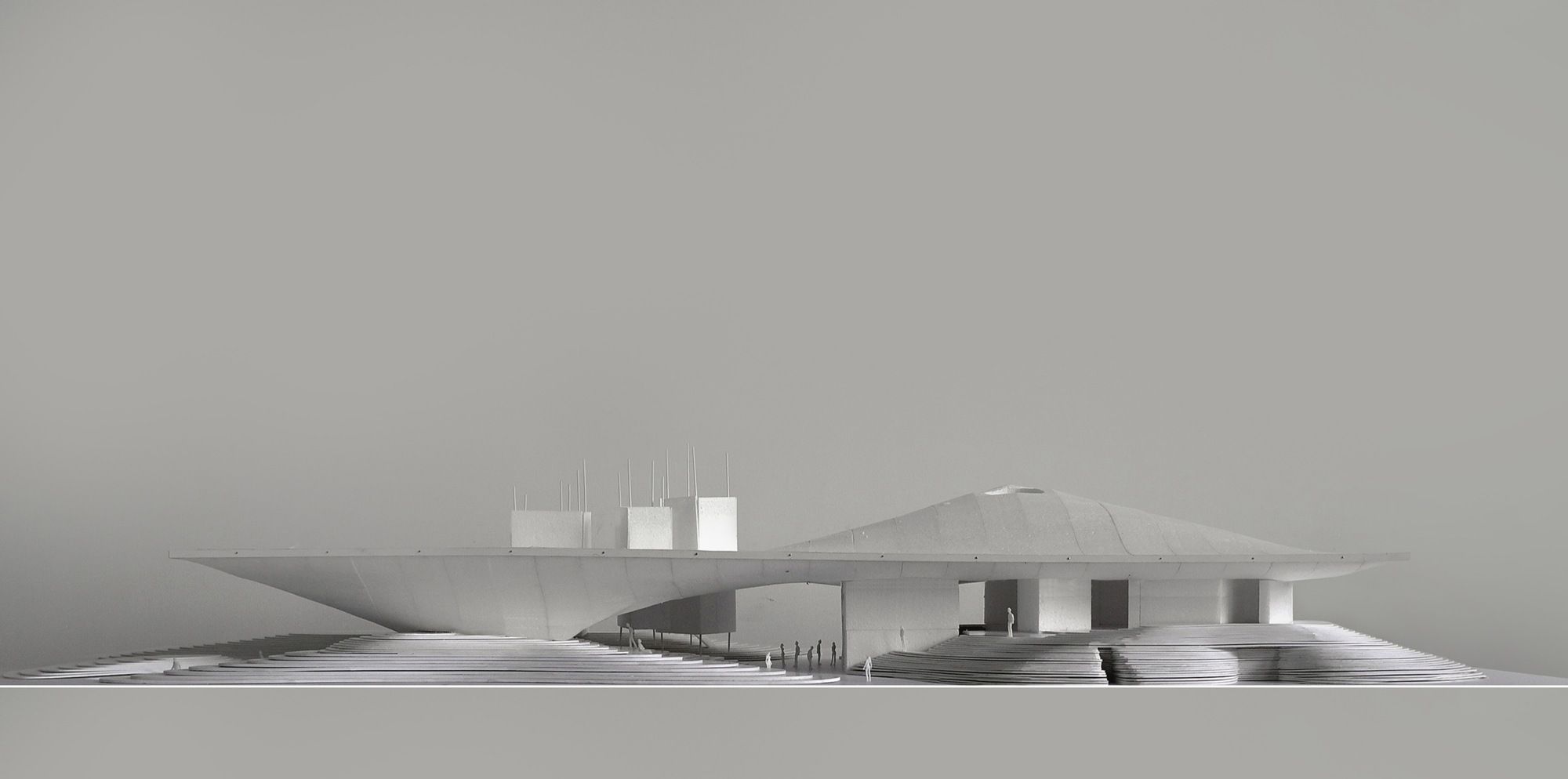
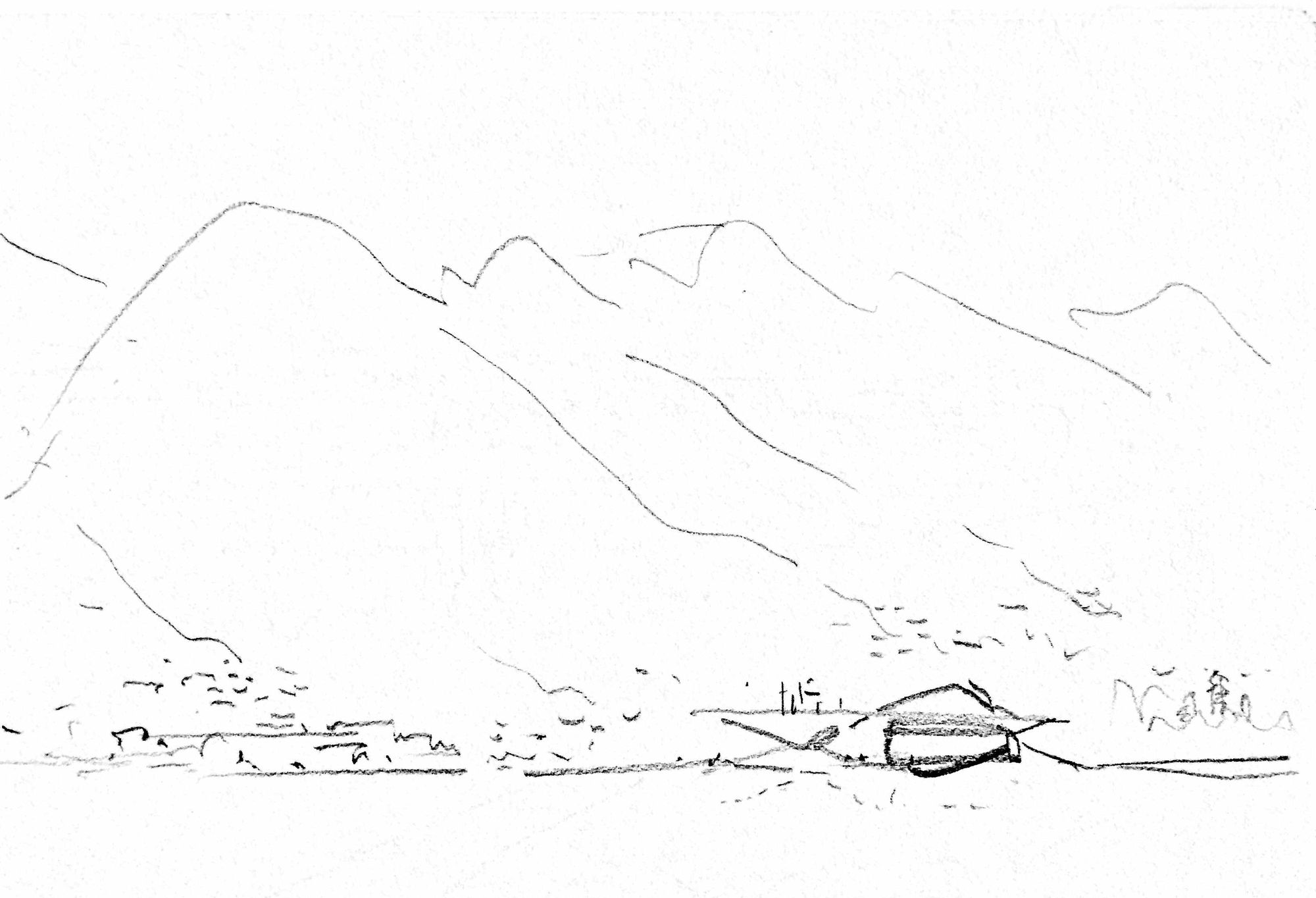
The marriage of geometry and organic form-giving is an attractive slight contrast with the backdrop of the new building. Even though the shape of the intervention itself appears to be at home amongst the setting of the mountains, the linear canopy adds emphasis on the horizontal plane, complementing the high range of each mountain summit.
Courtesy of Studio Pei-Zhu
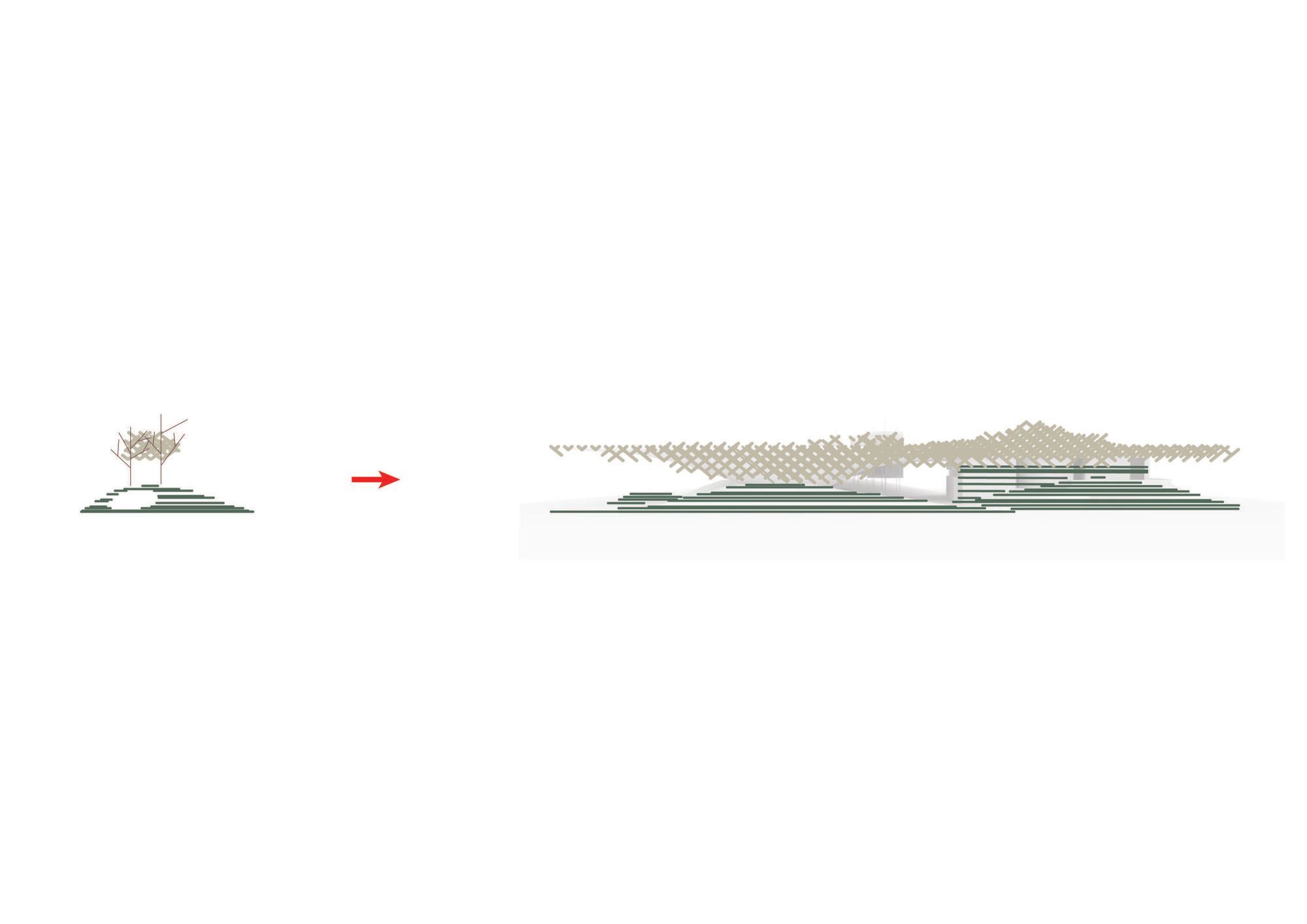
Materials used for this project include timber, and concrete, this being in accordance with Studio Pei-Zhu’s concept of marrying the cave with the nest, the formal and the informal. This adds to the aesthetic of the entire projects, as the different light sources play on both materials to provide the beautiful atmosphere in and around the building.
Courtesy of Studio Pei-Zhu
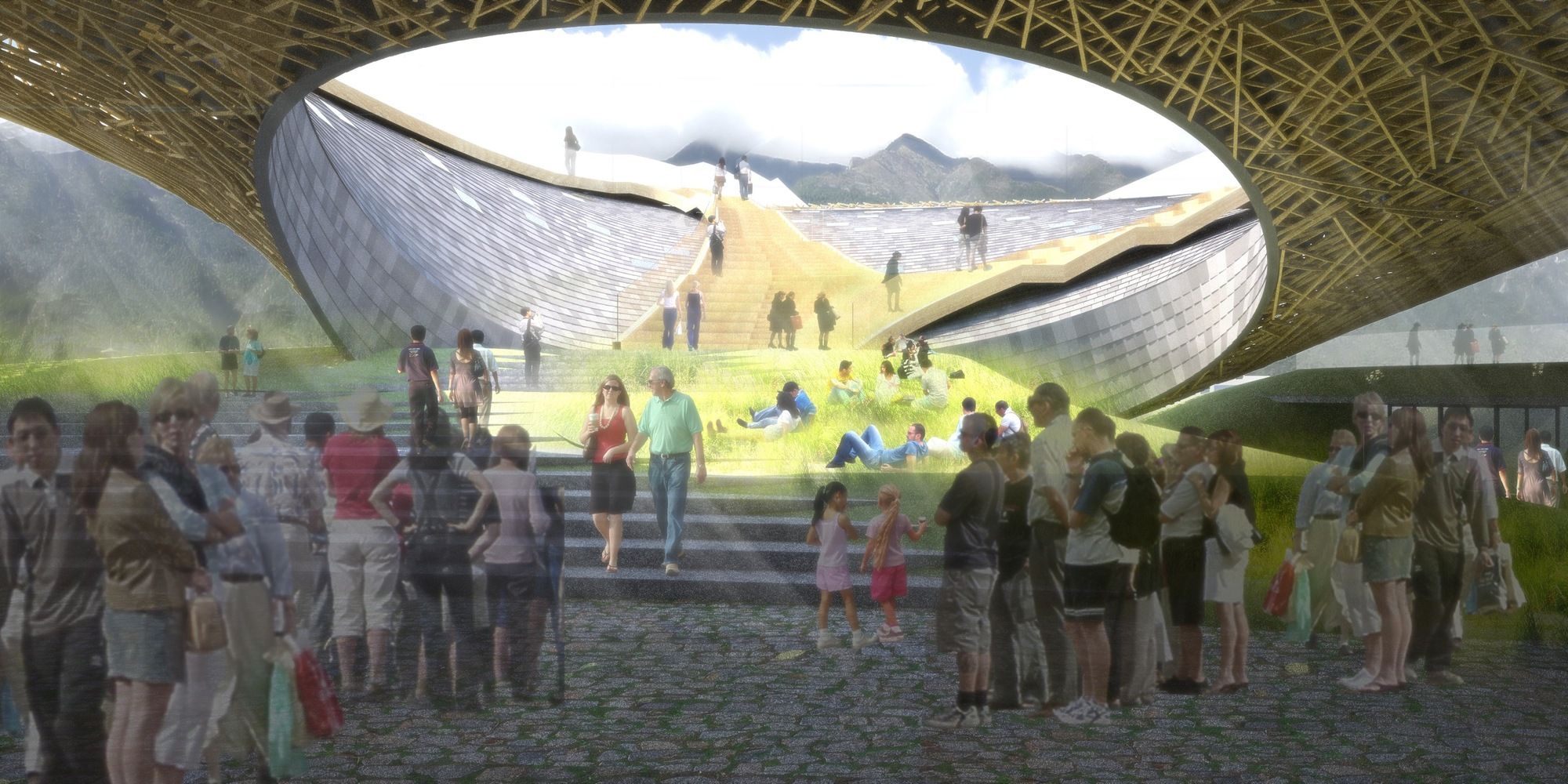
The scheme has an overall sense of balance, the canopy forming a reference point for the highest and lowest points of the structure to form a complete wave cycle. This visual symmetry in contrast to the uncalculated undulations of the natural context makes for a beautiful space to observe.
Courtesy of Studio Pei-Zhu
by Thelma Ndebele





Thelma Ndebele is an editor at Arch2O and a part-time lecturer at the University of Johannesburg. With a background in architecture and critical spatial research, Thelma’s academic work explores the intersections of urbanism, cultural identity, and public space. Their editorial contributions reflect a commitment to unpacking the socio-political dimensions of architecture, especially within African urban contexts. Through both teaching and writing, Thelma engages with emerging discourse on inclusive design, making them a thoughtful and vital voice in Arch2O’s academic and editorial landscape.