

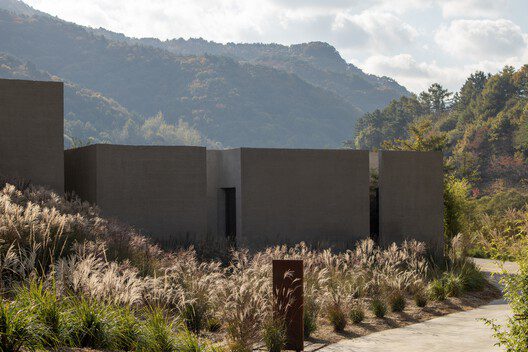
Mugok is not a place that invites escape frMugok is not a place that invites escape from everyday life through temporary retreat. Rather, it is an architecture that guides one to recover a renewed attitude within the everyday. Here, architecture does not dominate the subject—the user, the human—but instead settles quietly as a background for being. Space is constructed through a language of restraint rather than display, and it is precisely this restraint that gives rise to a profound inner resonance. Within this quietude, the user regains their center and re-establishes a relationship with the world.om everyday life through temporary retreat. Rather, it is an architecture that guides one to recover a renewed attitude within the everyday. Here, architecture does not dominate the subject—the user, the human—but instead settles quietly as a background for being. Space is constructed through a language of restraint rather than display, and it is precisely this restraint that gives rise to a profound inner resonance. Within this quietude, the user regains their center and re-establishes a relationship with the world.
© Jae-yoon Kim
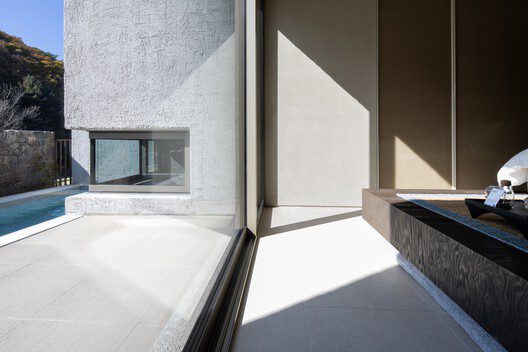
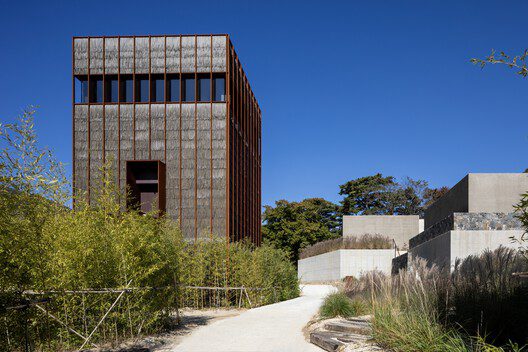
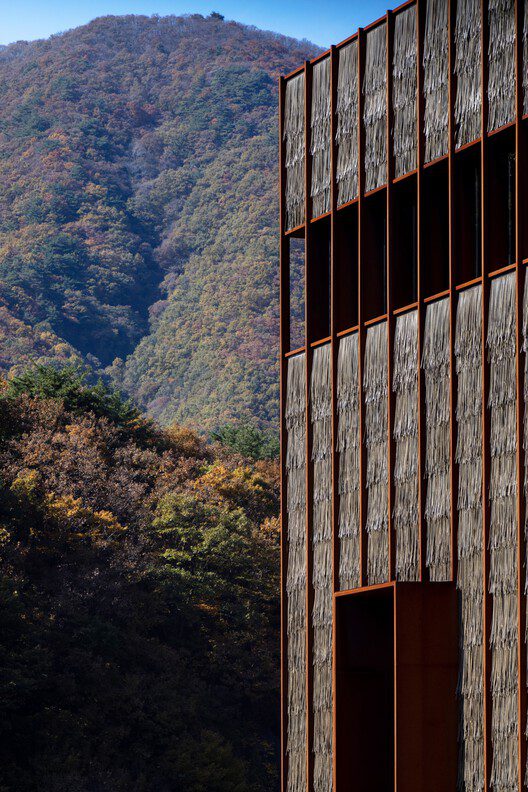
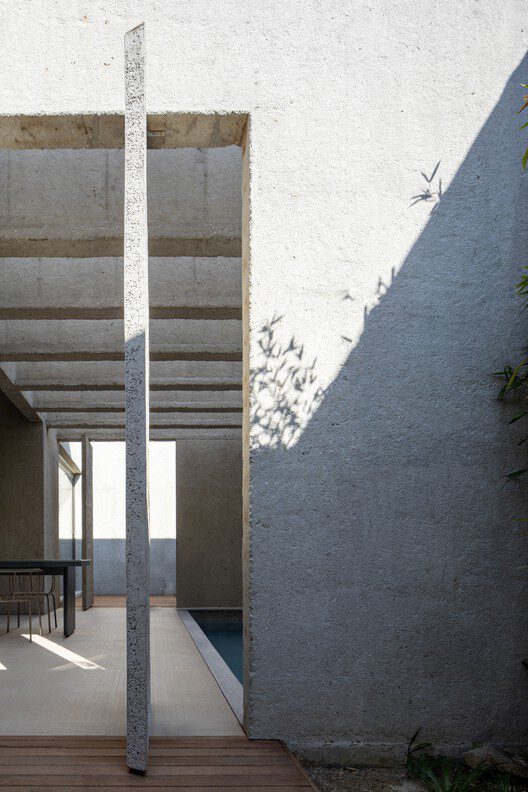
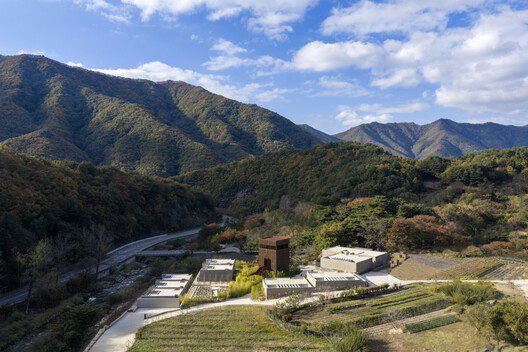
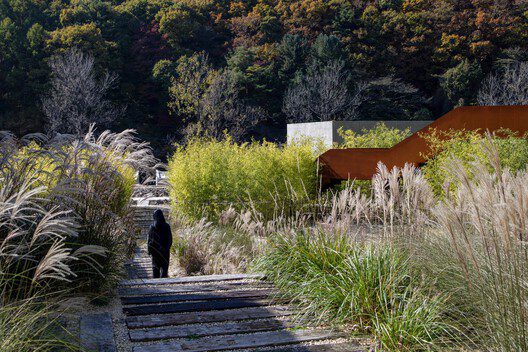
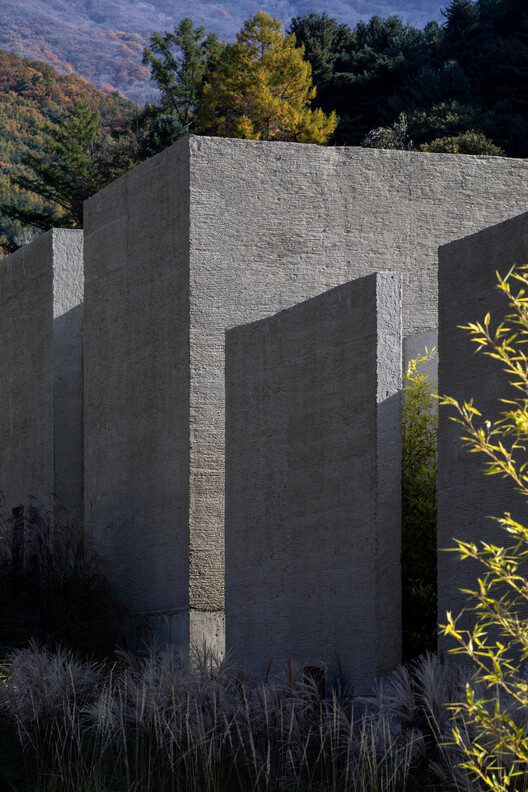
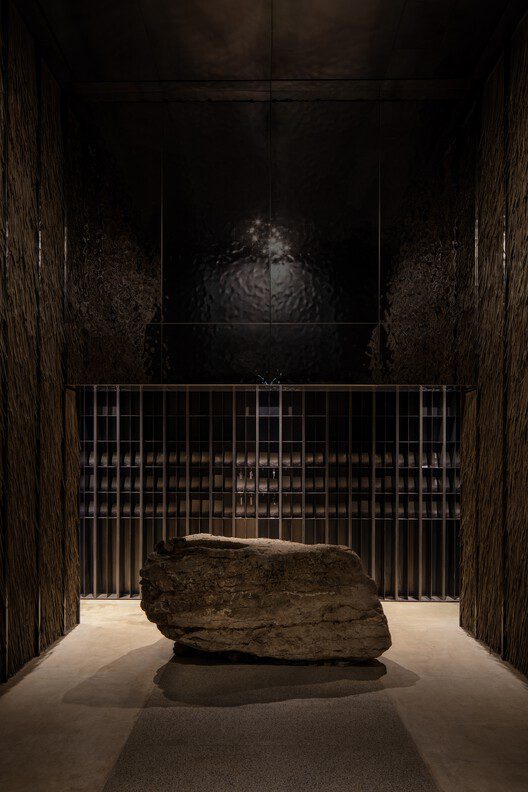
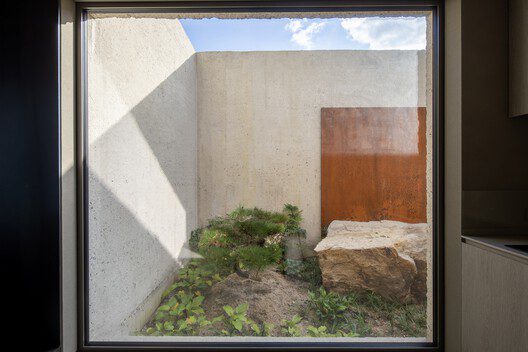
This architecture stands upon the terrain and memories of Simgok-ri, Seolcheon-myeon, Muju. The flow of the deep valley, the direction of the stream, and the trajectories of the wind define the structure and sequence of the building. The site operates not as material for form-making, but as a foundation for thought. The textures of raw concrete, stone, and bamboo complete the architecture as extensions of nature itself, allowing the inhabitant to recognize their own existence as part of the natural continuum. Mugok weaves together the site’s memory, materiality, and the grain of time into a single architectural narrative, proposing a journey toward the recovery of the “sense of being.”
© Jae-yoon Kim
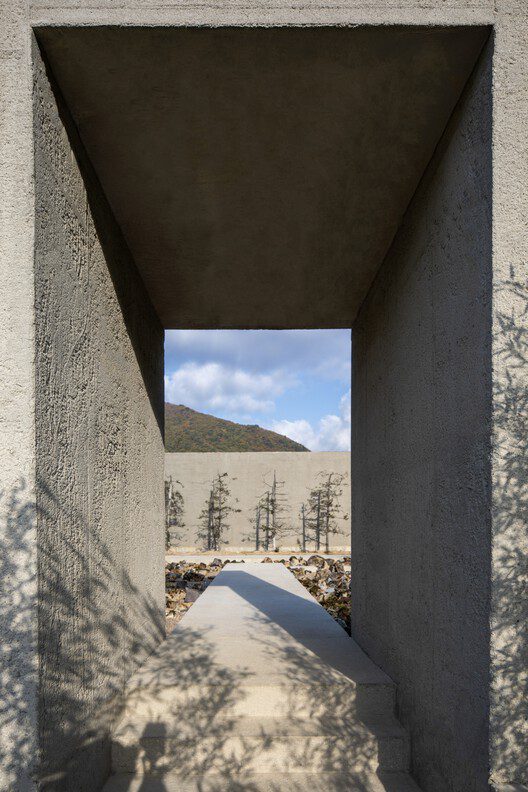
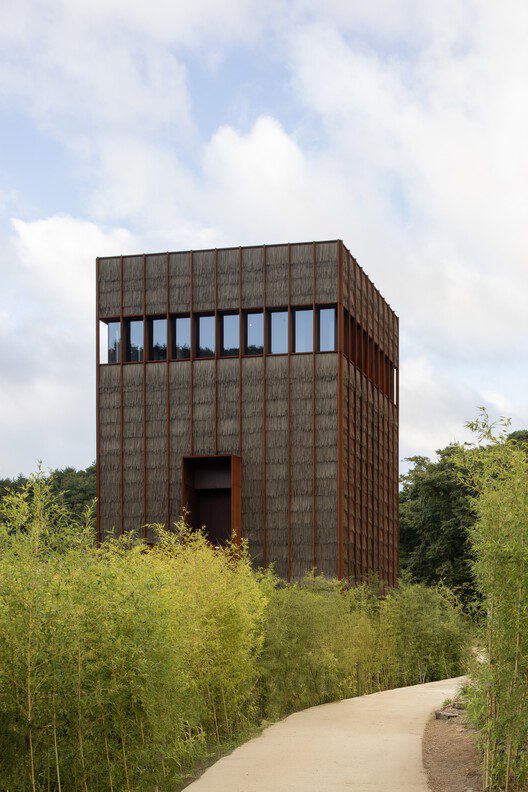
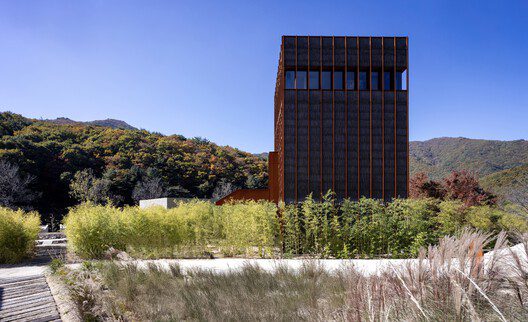
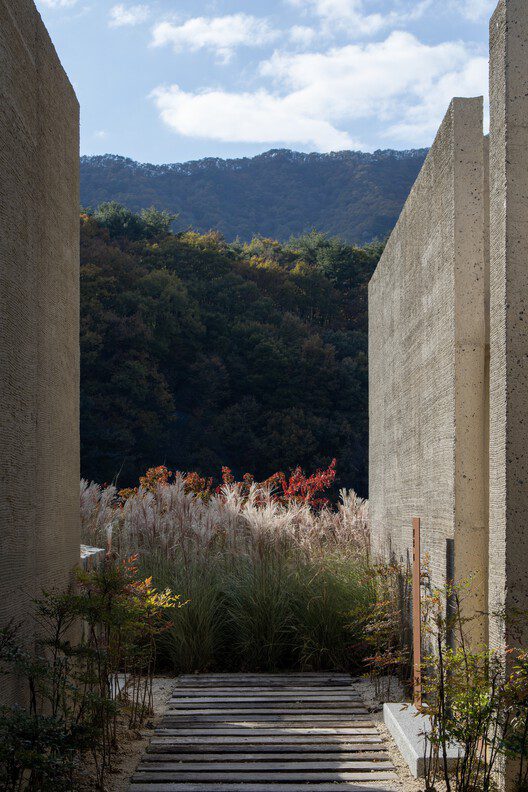
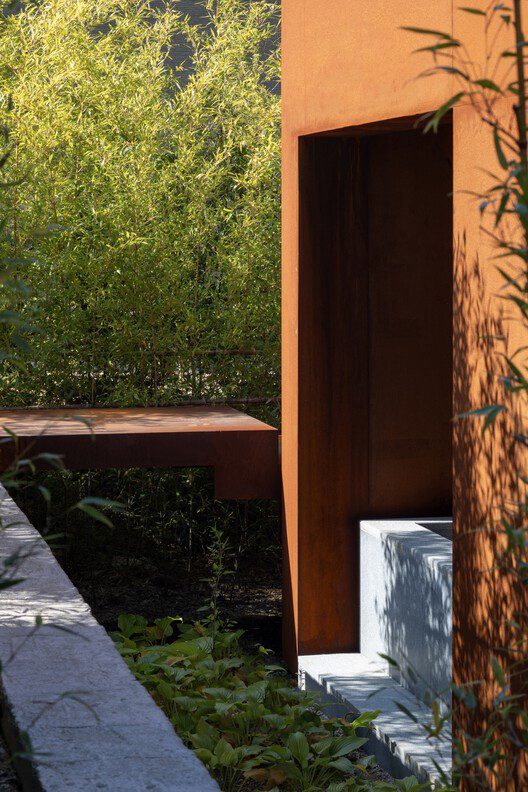
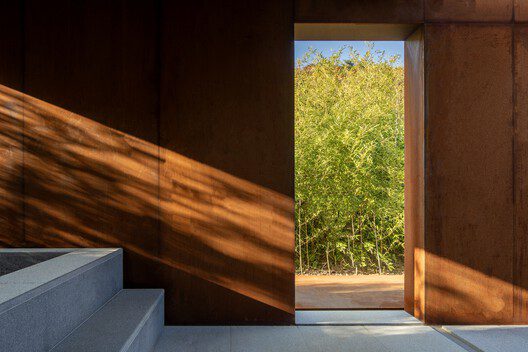
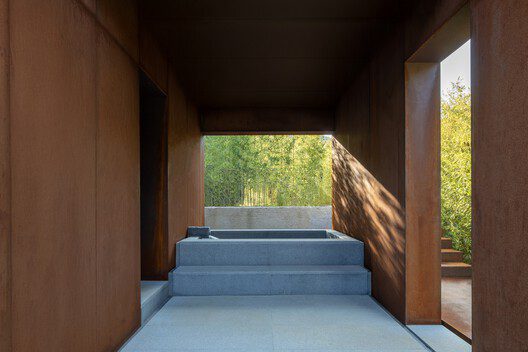
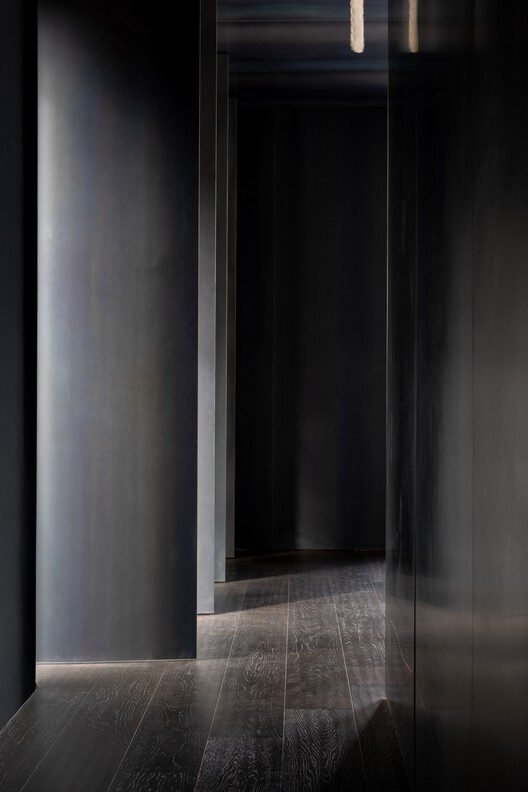
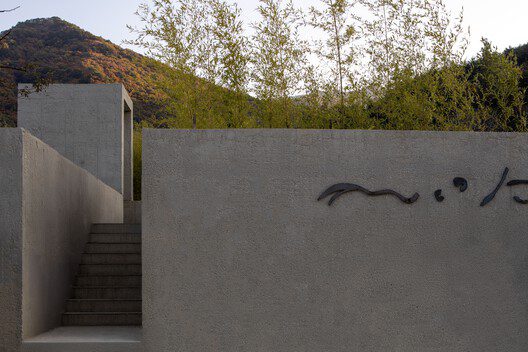
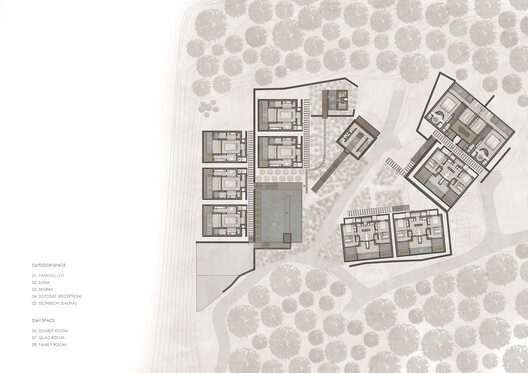
From the entrance, the journey initiates a shift in consciousness. Low, elongated walls and narrow paths foreshadow a separation from the external world. As one’s walking pace slows, the tempo of thought begins to change. The space called Susim (水心) is not a pond of actual water, but a reflective basin for the mind. The subtle vitality formed by stone, moss, light, and shadow blurs the boundary between reality and unreality, and within this ambiguity, the subject quietly gazes inward. Passing through the bamboo grove, Seorim (署箖), as external noise dissipates, the subject arrives at the threshold of Soyo-sae (逍遙塞). This is both a gateway toward the inner self and a point where consciousness becomes concentrated. Monumental yet never oppressive, the architecture welcomes the subject’s presence through silence.
© Jae-yoon Kim
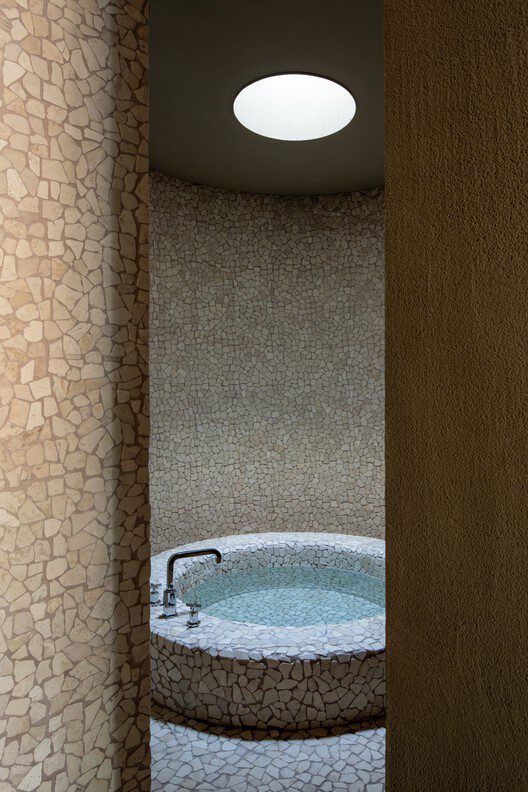
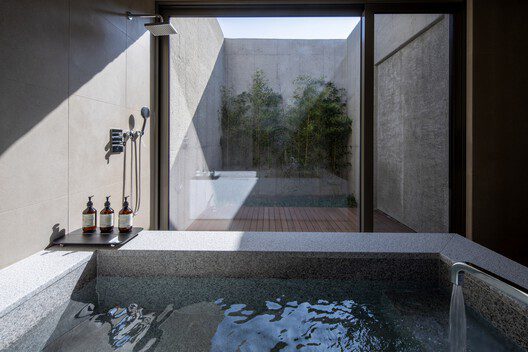
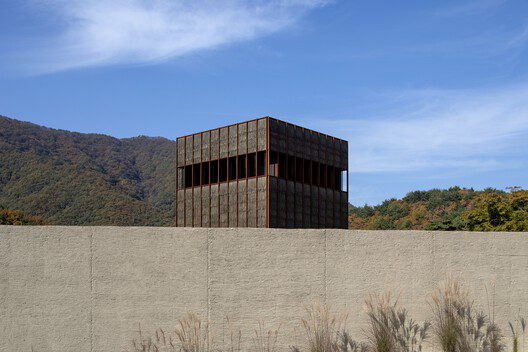
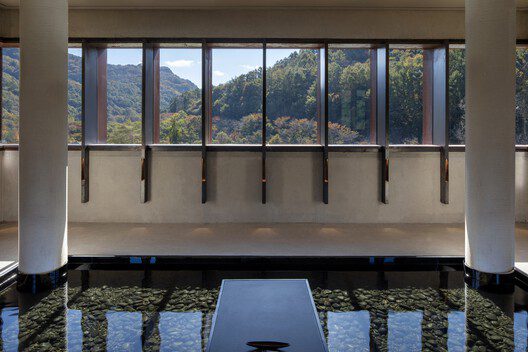
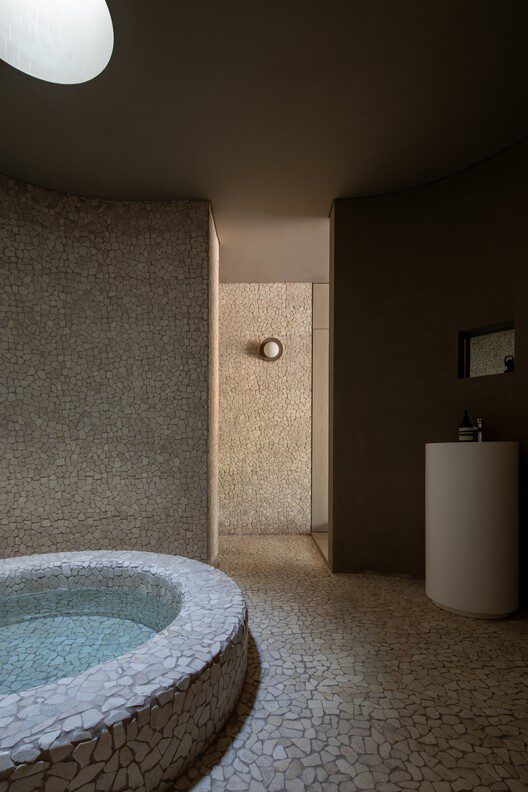
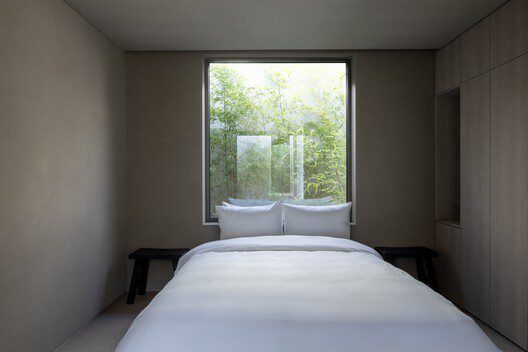
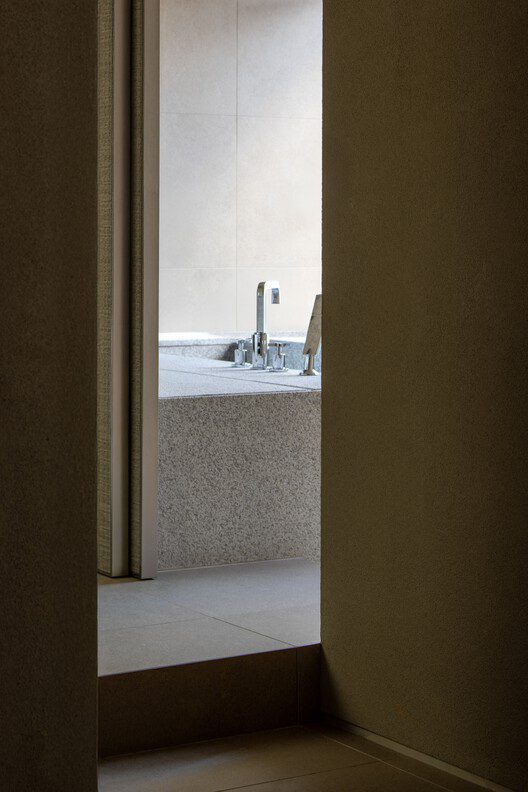
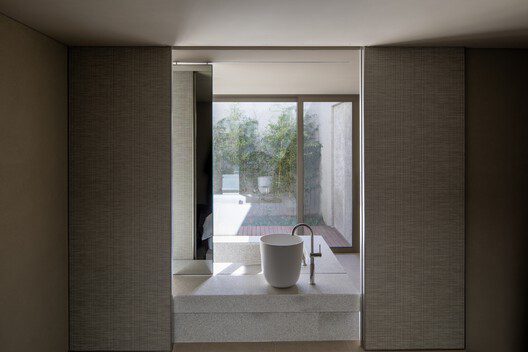
The interior journey unfolds as a gradual process of descent and immersion. Along Seonseon(禪澶), guided by the textures of water and air, the body is cleansed, while in the garden, variations of light reveal the depth of time. Here, light is not decorative; it acts as a medium that reveals existence and records time. The guest rooms delicately calibrate the boundaries between separation and connection, silence and exchange, allowing each individual a form of quiet suited to their inner state. The final destination, the meditation space, is designed with a dual structure where openness—embracing the external landscape horizontally—and inward withdrawal coexist. In this place, one experiences a transcendent stillness, simultaneously observing the outer world and one’s inner self.
© Jae-yoon Kim
Mugok’s architecture is closer to an attitude than a form. Its restrained exterior, deep inward orientation, and the orchestration of light that shifts over time transform architecture into a field for contemplation. Material textures function like a language within silence, and the shadows on surfaces inscribe the passage of time. Here, architecture embodies wu wei—non-action—not as a passive backdrop, but as a medium that reflects being.
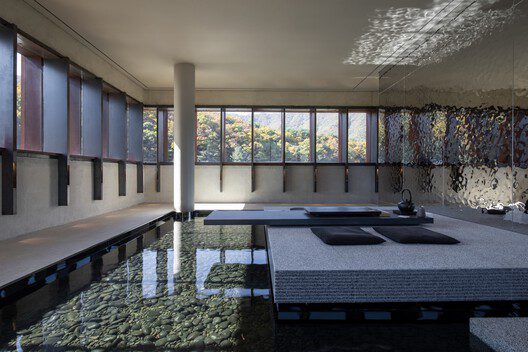
© Jae-yoon Kim
Ultimately, Mugok is completed only when architecture quietly recedes. Restraint in form gives rise to inner depth, and the density of silence allows thought to expand. Thus, staying here becomes not a simple act of rest, but a conscious process of reflecting on existence. Mugok aspires to be recorded as one point of arrival for “architecture of being,” where time, nature, and human perception are brought into quiet unity.
Project Info:
Architects: 100A associates
Country: Muju-gun , South Korea
Area: 842 m²
Year: 2024
Photographs: Jae-yoon Kim
Lead Architects: Sol-ha Park, Kwang-il An

Isabelle Laurent is a Built Projects Editor at Arch2O, recognized for her editorial insight and passion for contemporary architecture. She holds a Master’s in Architectural Theory from École Nationale Supérieure d’Architecture de Paris-Belleville. Before joining Arch2O in 2016, she worked in a Paris-based architectural office and taught as a faculty adjunct at the École Spéciale d’Architecture in Paris. Isabelle focuses on curating projects around sustainability, adaptive reuse, and urban resilience. With a background in design and communication, she brings clarity to complex ideas and plays a key role in shaping Arch2O’s editorial