

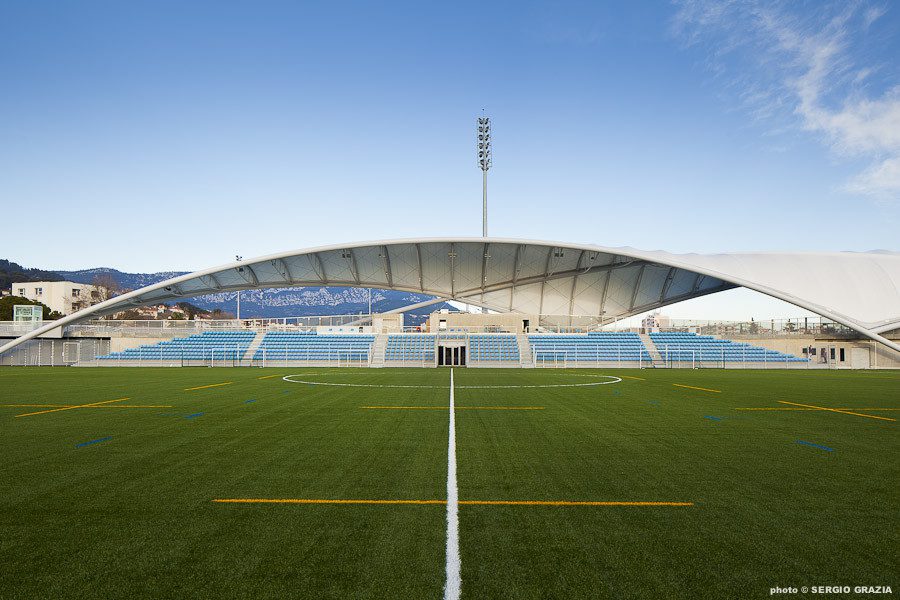
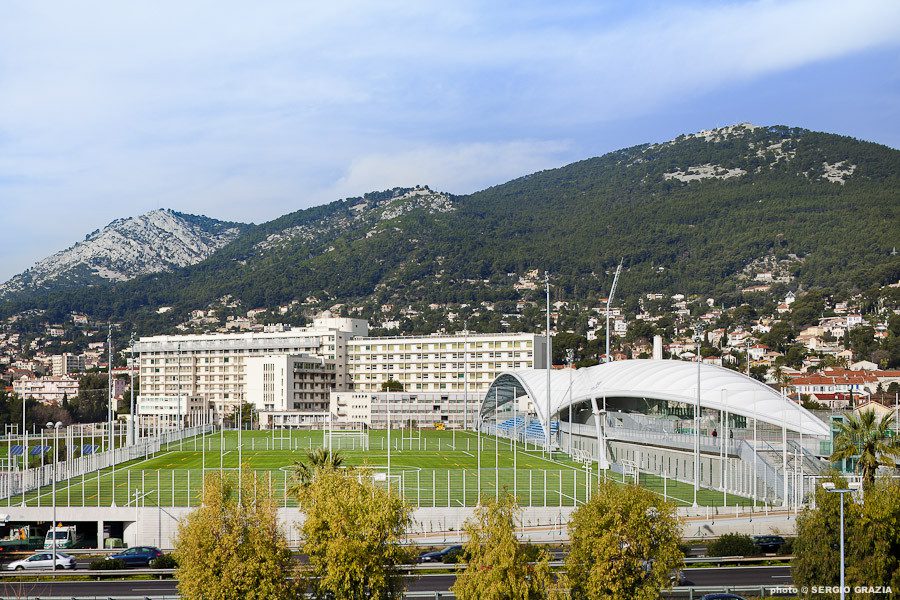
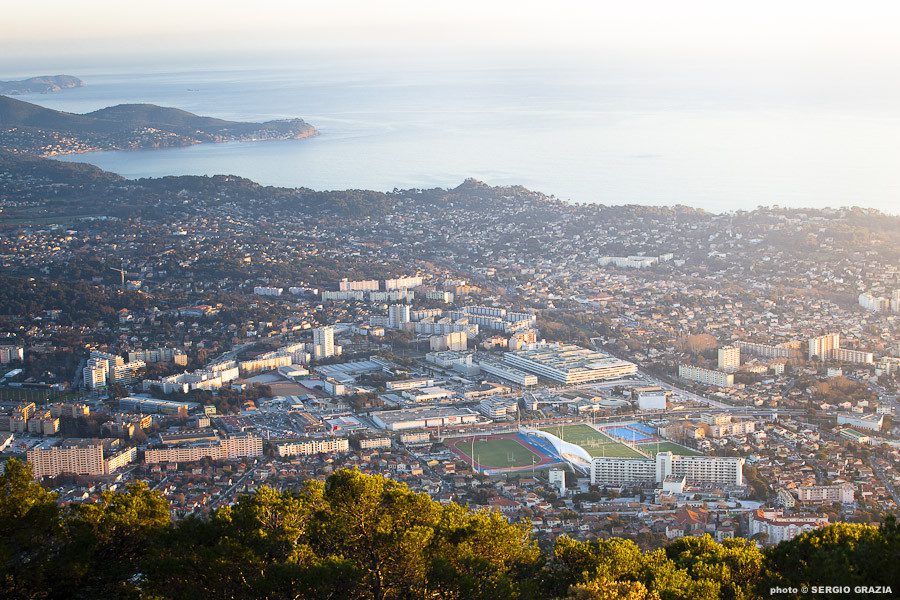
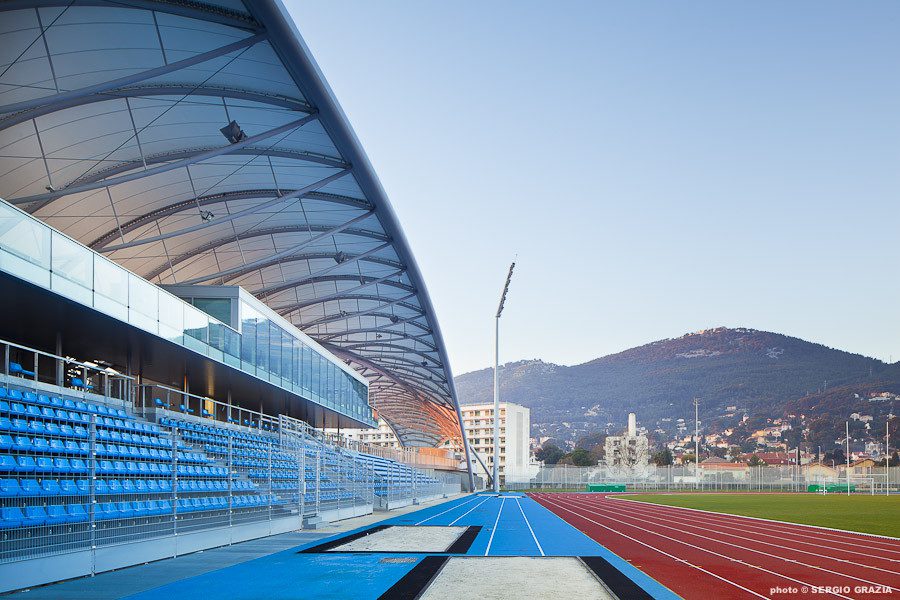
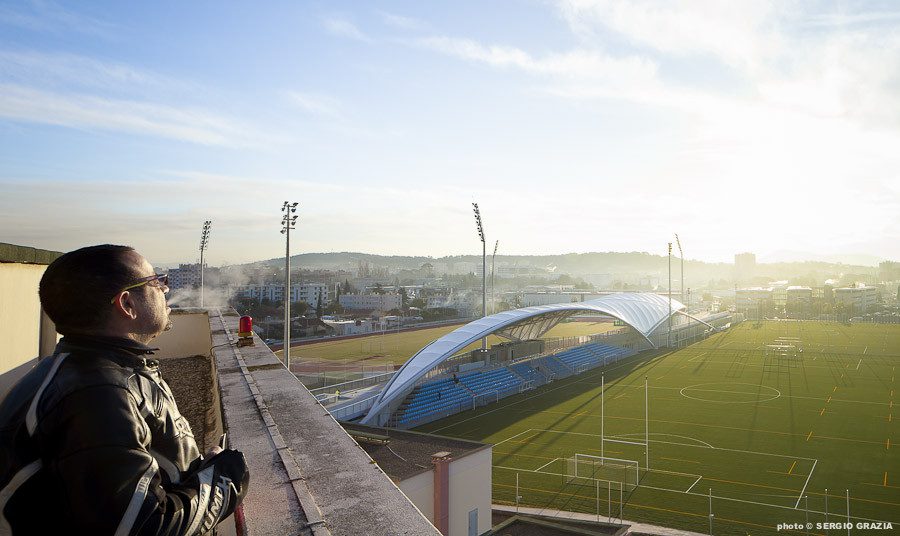
With the mountains on one side and the Mediterranean Sea on the other, Stade Leo Lagrange stands on a site that is limited in space but with limitless views out to sea, enhancing the remarkable landscape.
© Sergio Grazia
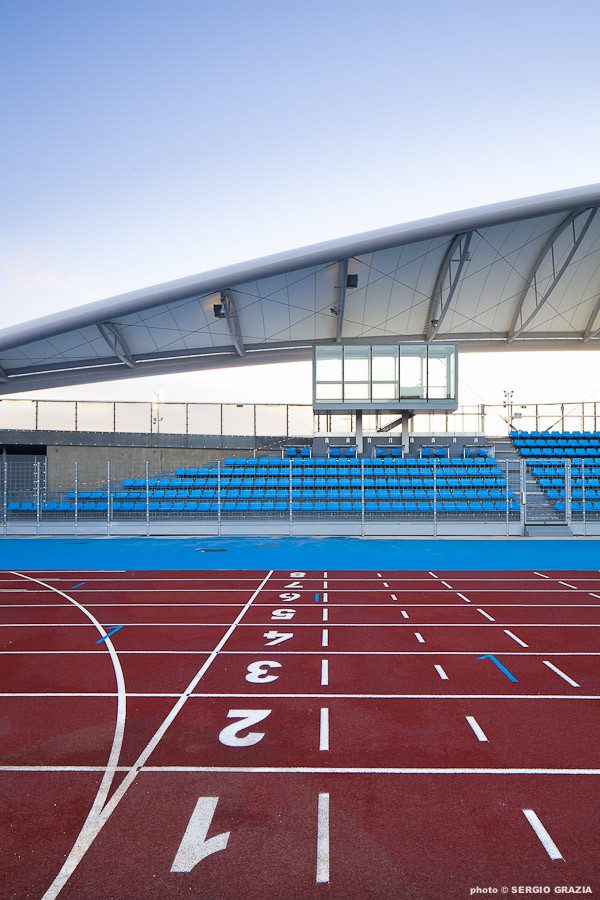
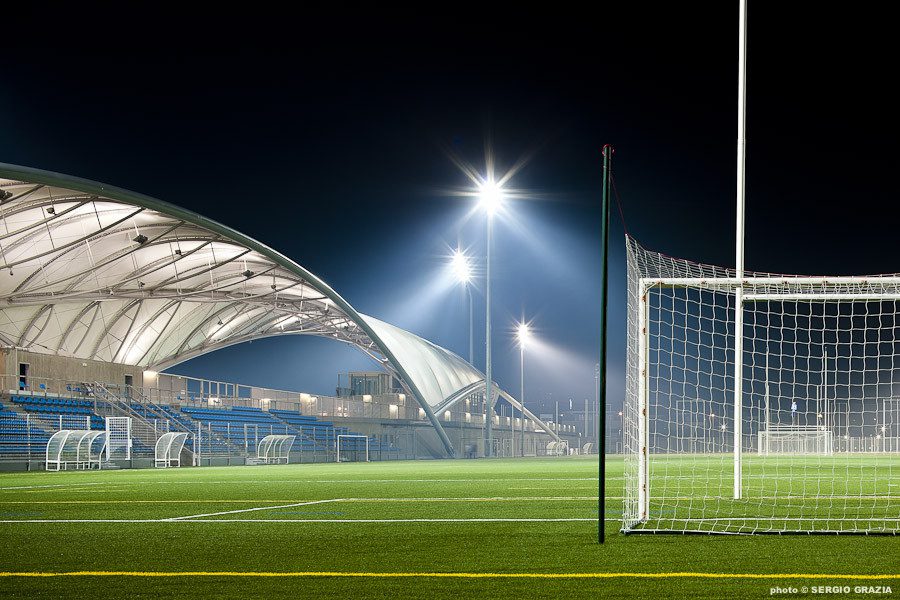
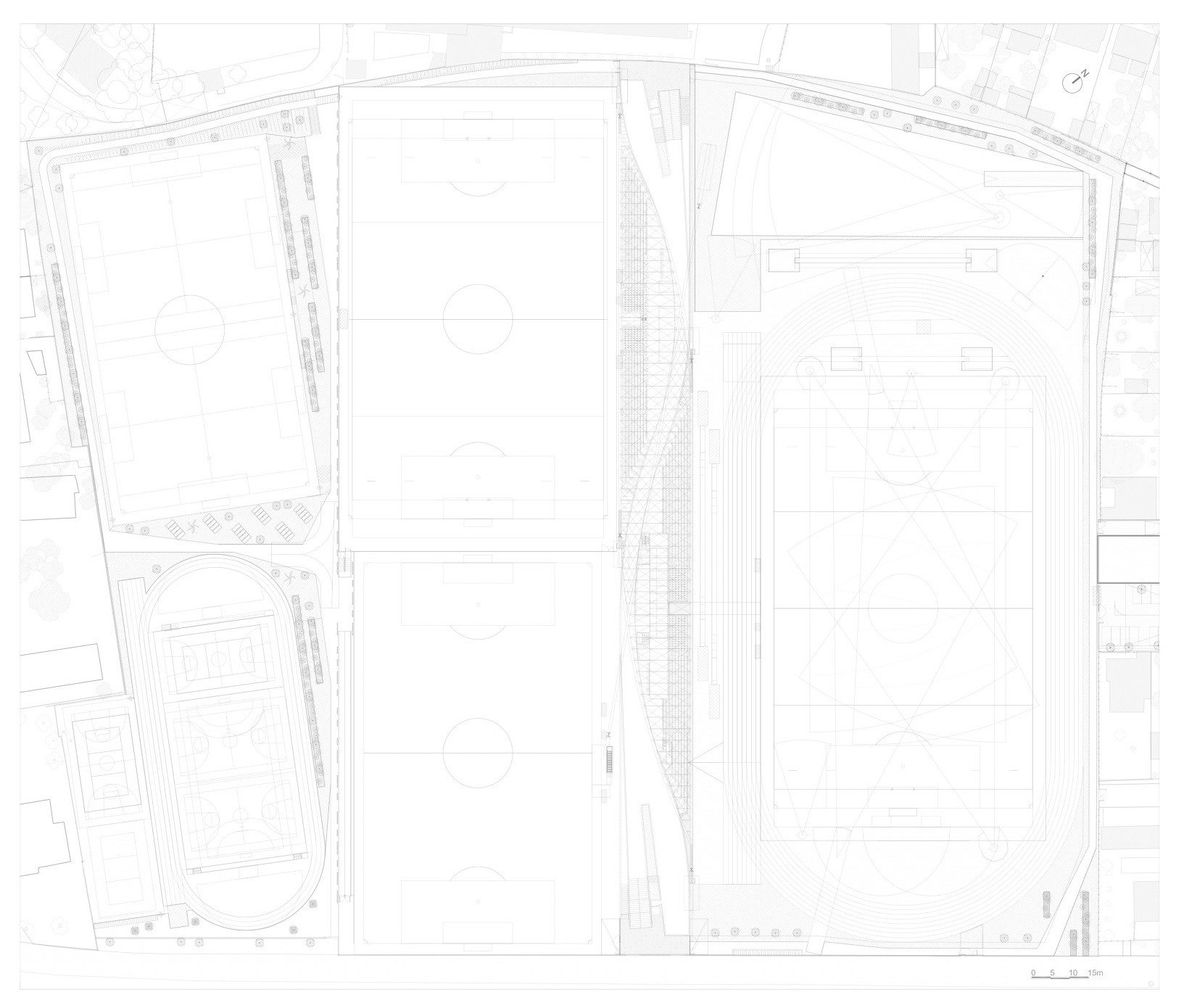
The sports complex is a vast urban park devoted to sporting and fun activities containing three regional rugby and football pitches, international athletics and six school playing fields.
© Sergio Grazia
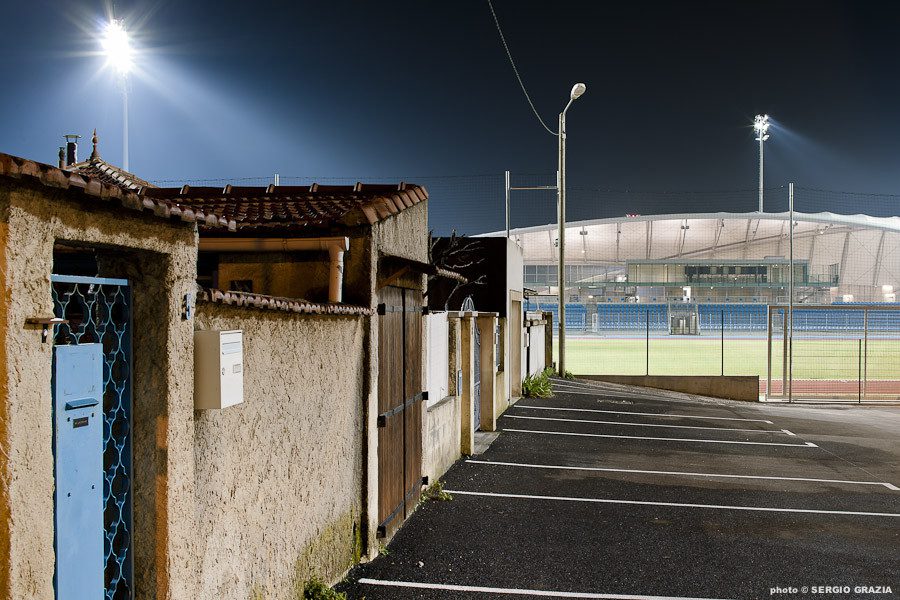
The architectural project fits seamlessly into the environment while accenting the highly visible quality of a public facility and its centrality as a gathering point and meeting place. It provides a breathing space in a relatively dense fabric, a public sphere in harmony with its location.
© Sergio Grazia
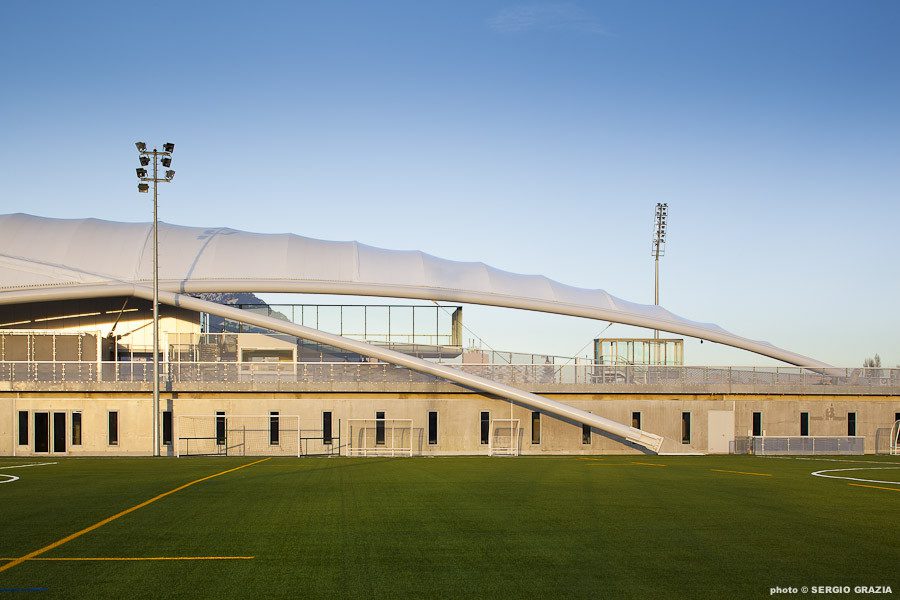
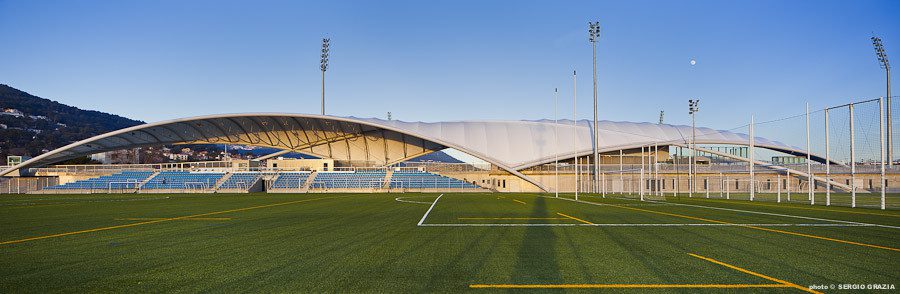
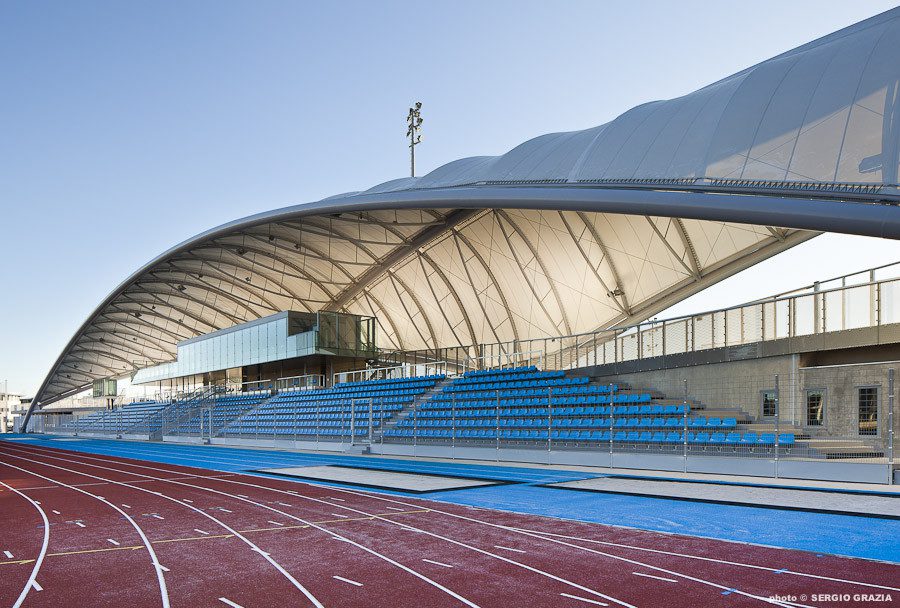
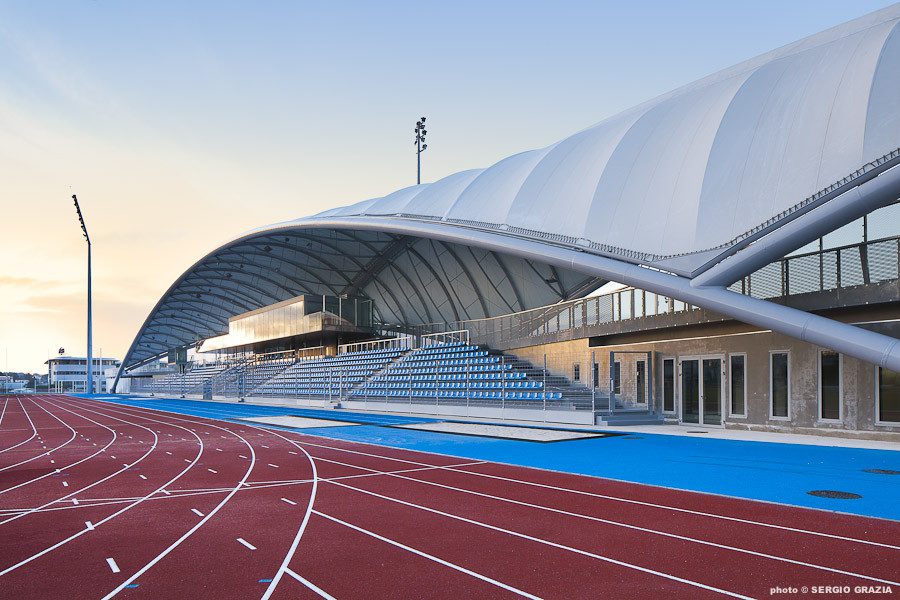
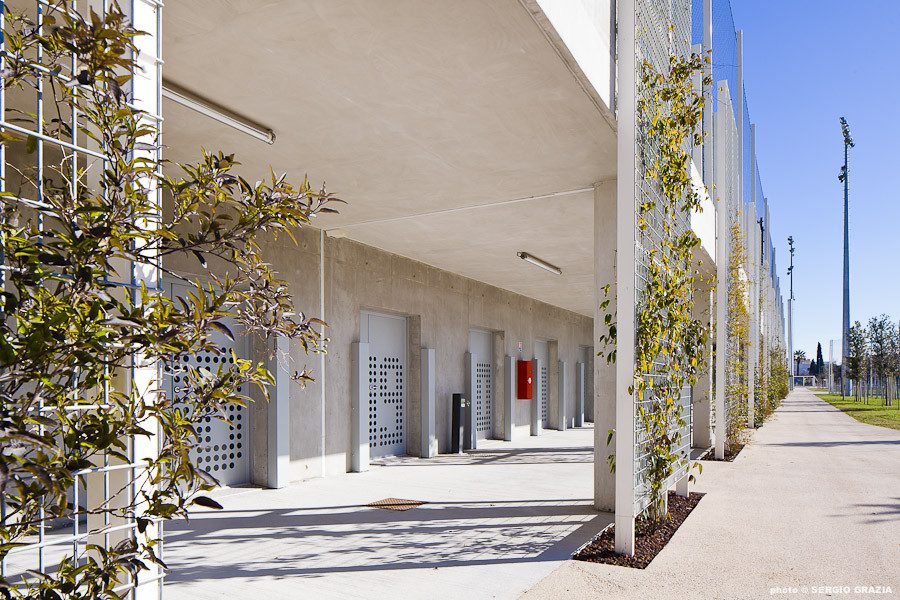
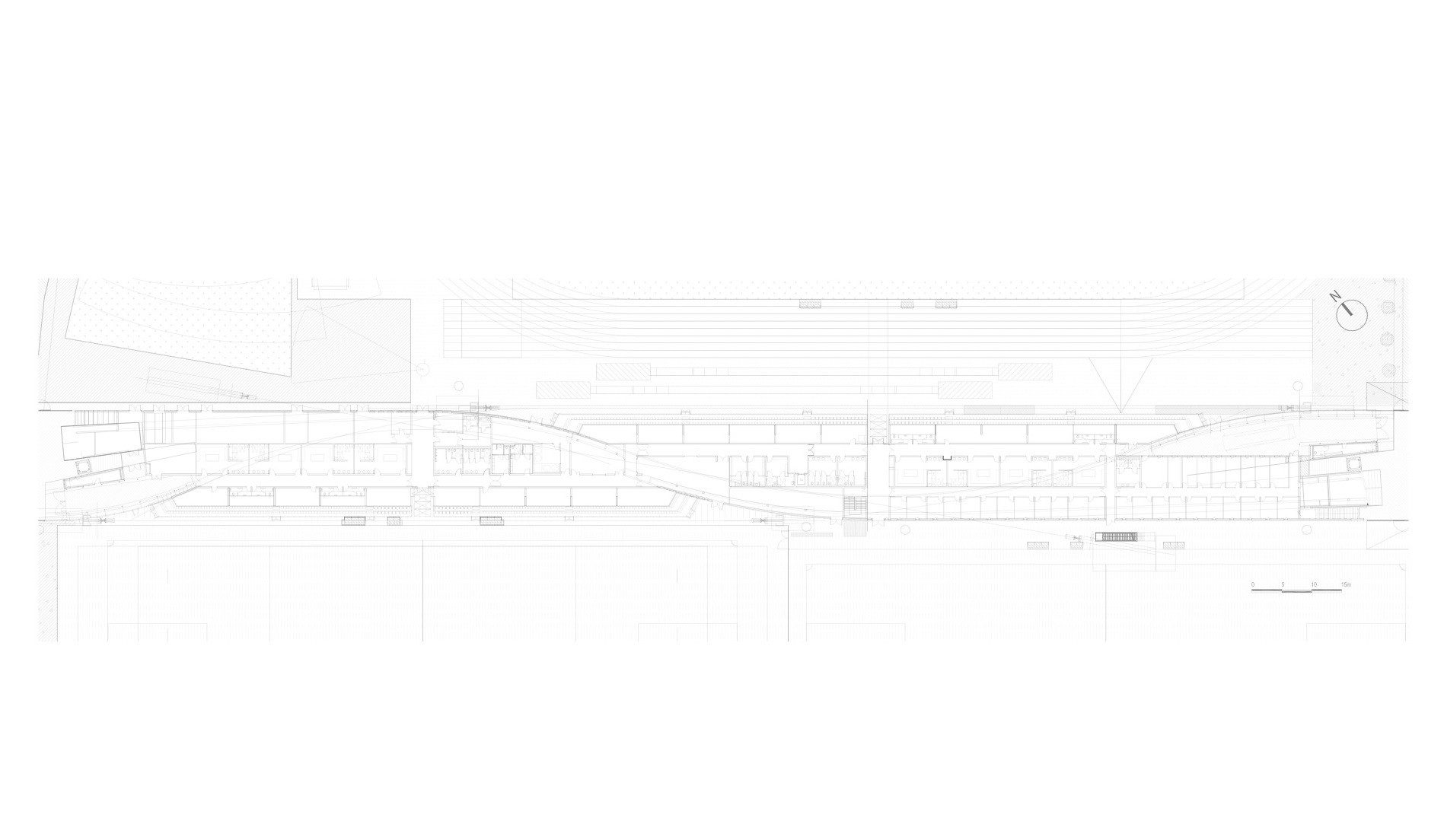
The architectural urban design is structured by its legibility, consistency and openness to the venue. All constructed volumes for competition and greeting the public are concentrated within a covered public footbridge designed like a jetty that recalls Toulon’s historic ties with the sea.
© Sergio Grazia
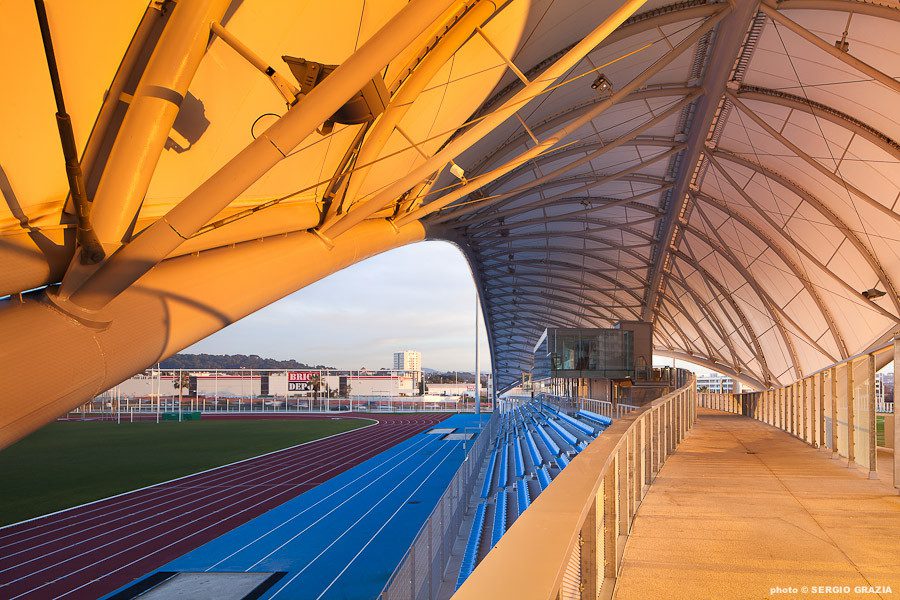
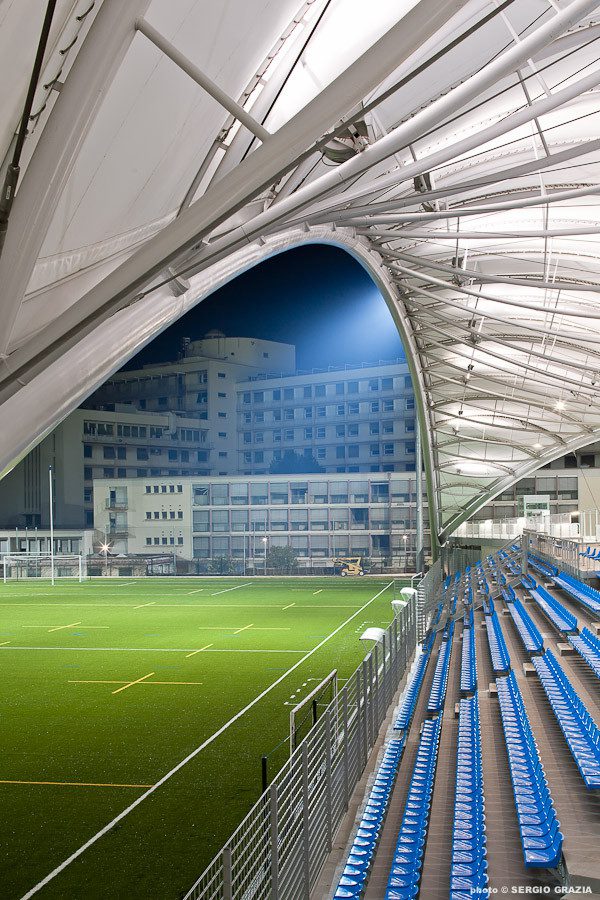
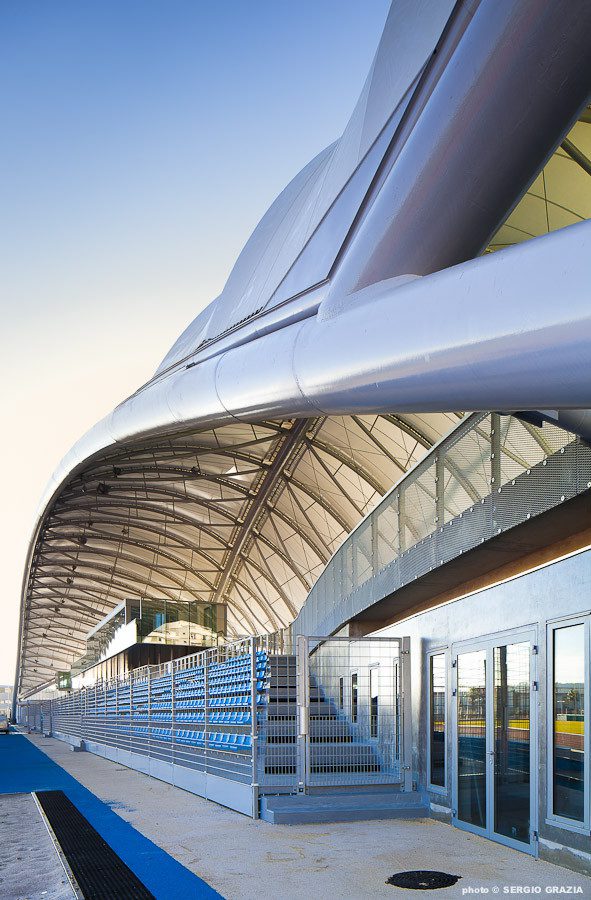
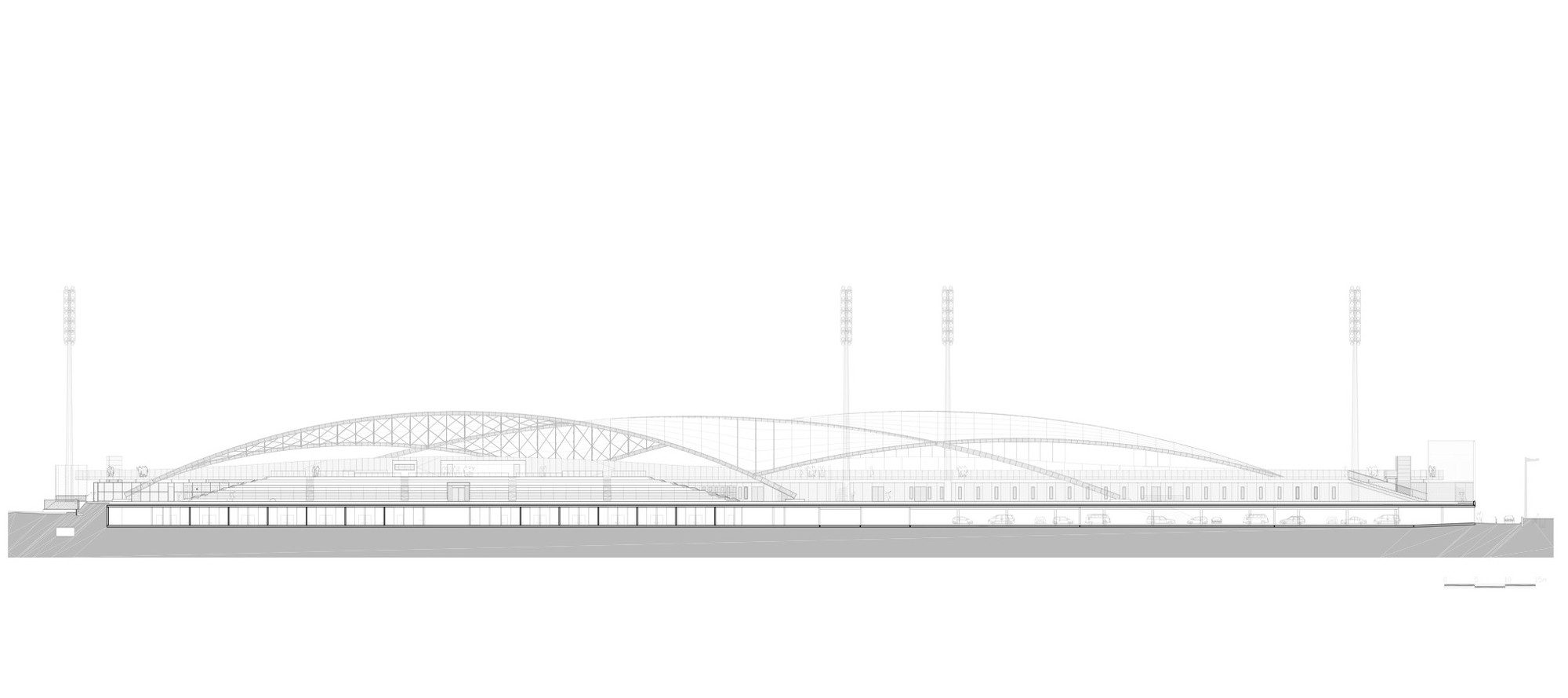
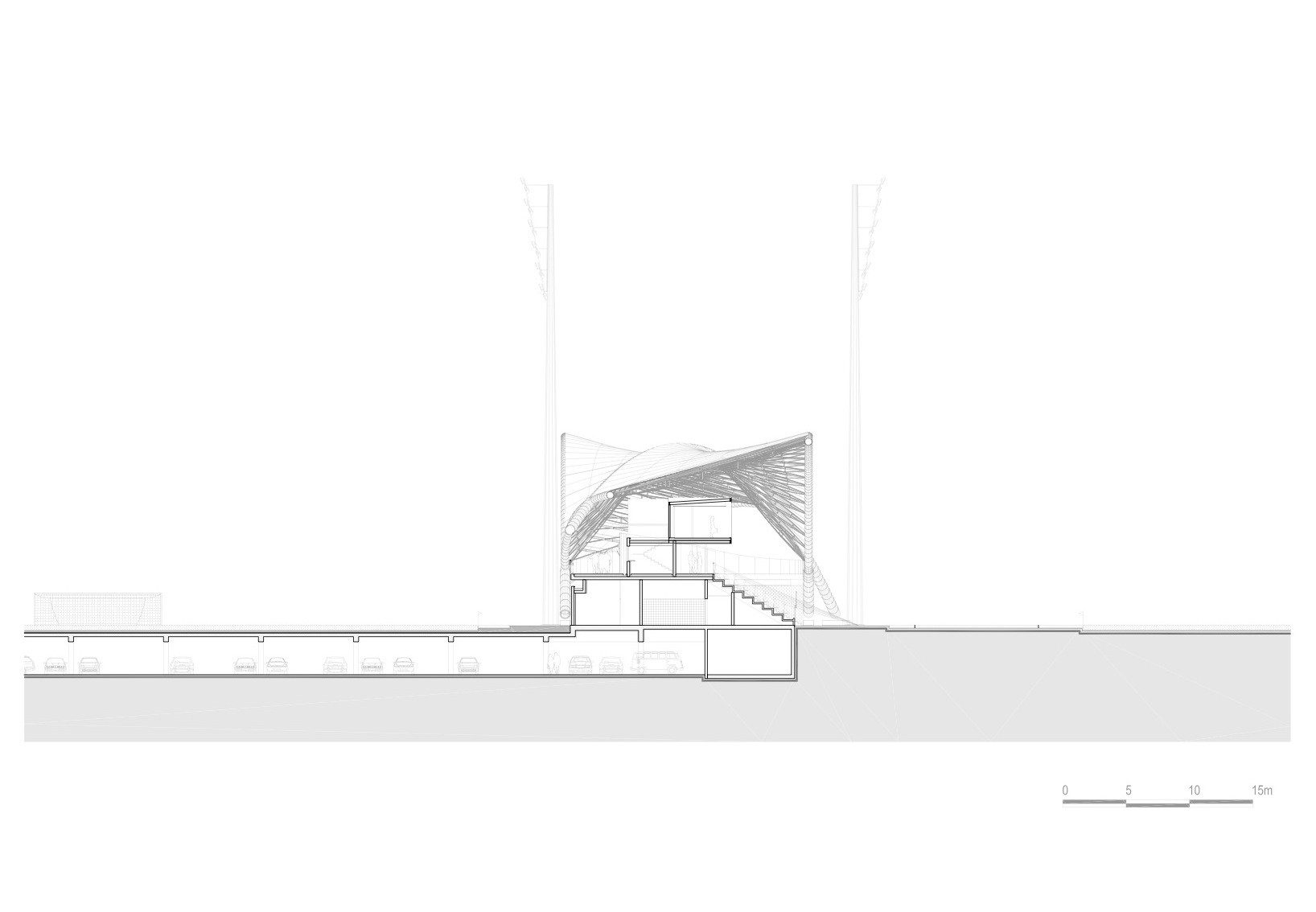
The jetty’s aerial architecture makes it seem detached from the ground, hovering above massed vegetation that structures the site and resembling a huge sailing ship at anchor. It offers a covered, belvedere-like walkway with close-up views of the sport fields and more distant ones of the horizon and Mount Faron.
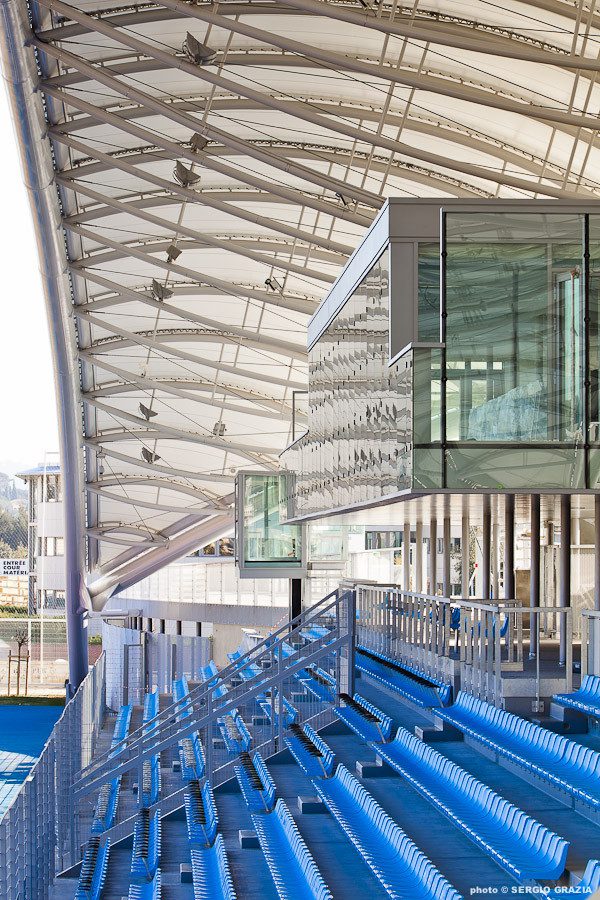
© Sergio Grazia
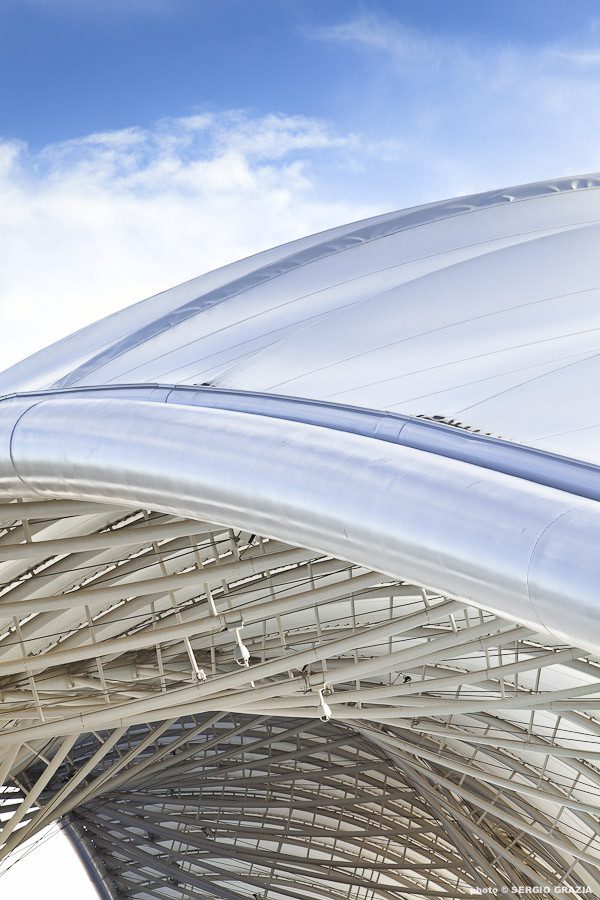
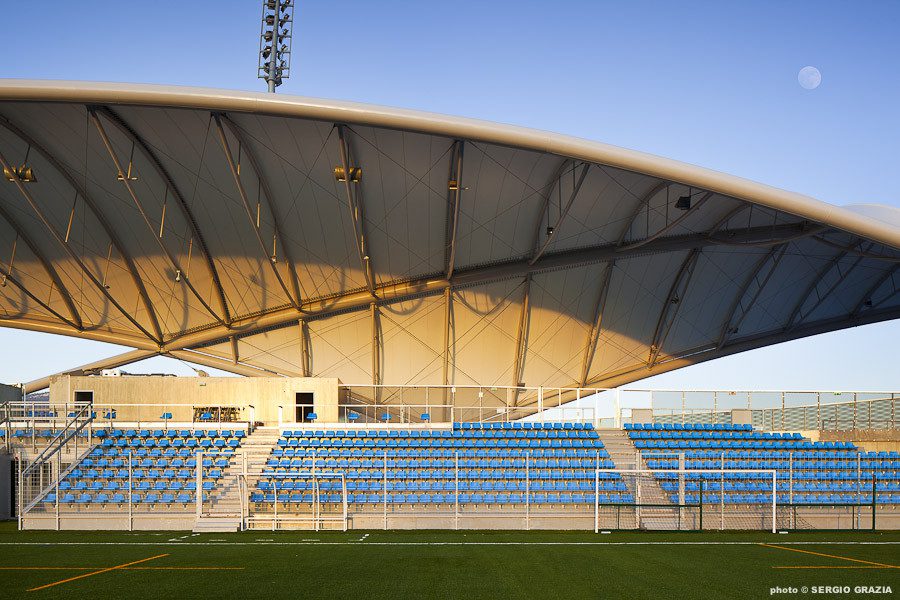
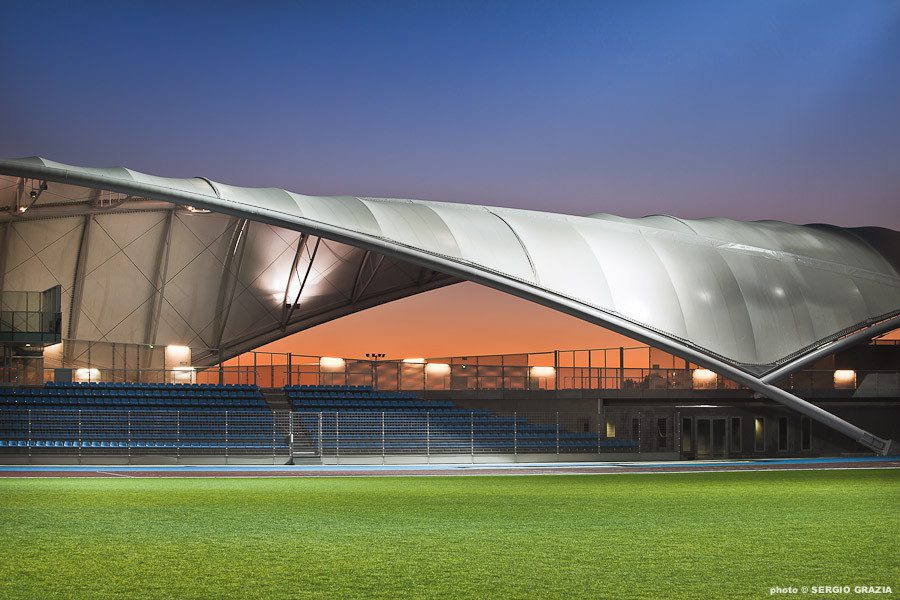
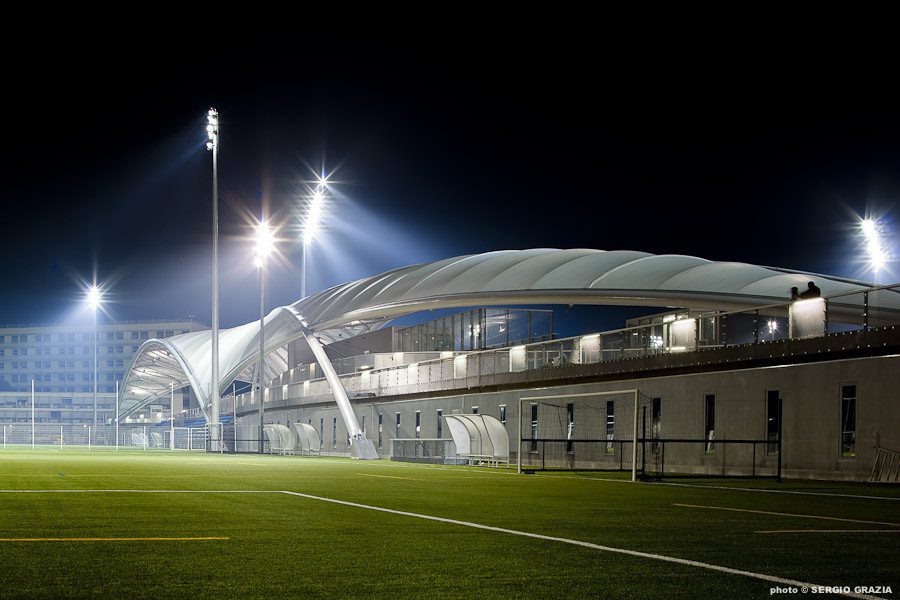
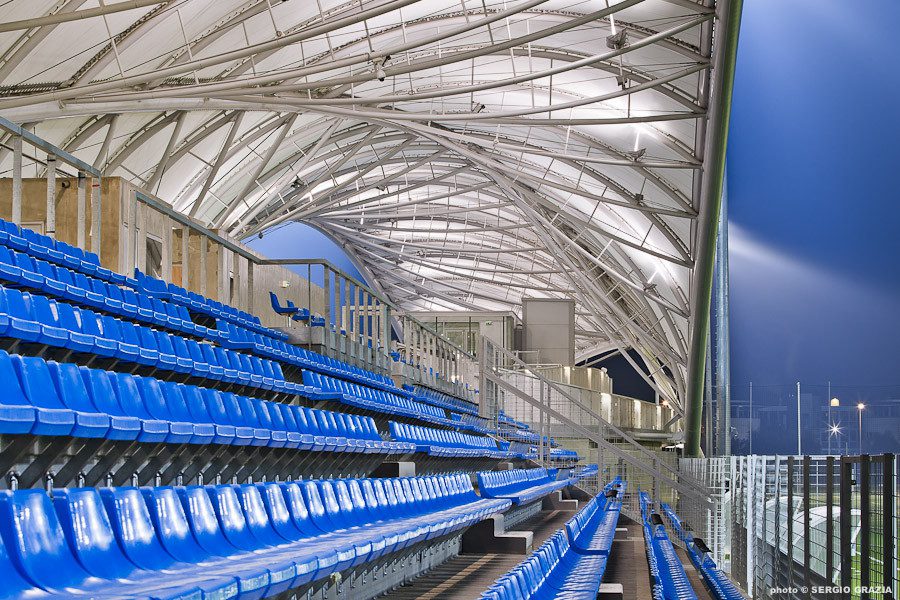
Drawing its inspiration from the flowing dynamics of sport, the jetty’s textile cover describes flexible, generous movement that matches the spectators’ “Mexican waves” and harmonizes with the surrounding landscape. Its form changes incessantly depending on where it is viewed from.
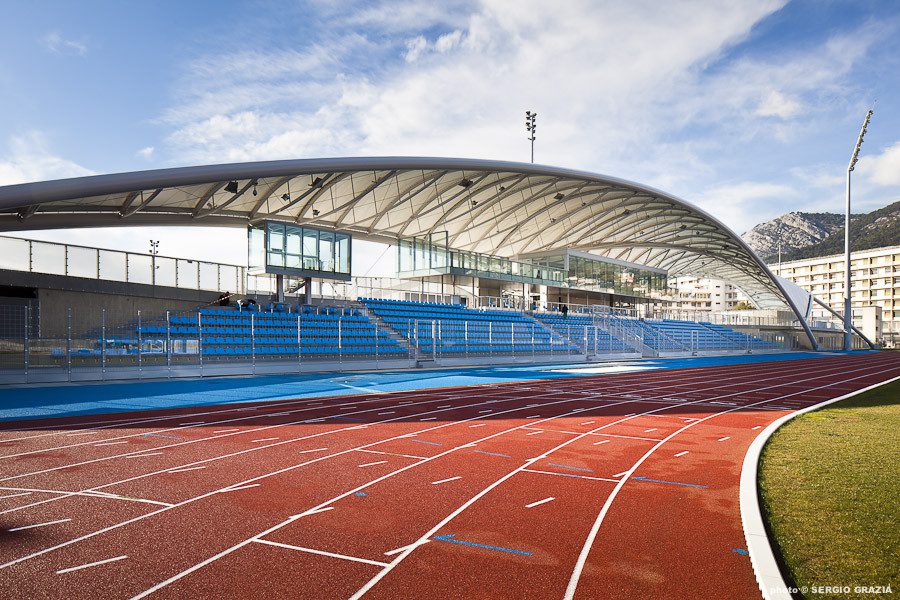
© Sergio Grazia
The cover’s fabric, the metal, wood and non-reflecting glass create a volume that captures the subtle colours of natural light with the covering fabric taking on the hues of the sky and land.
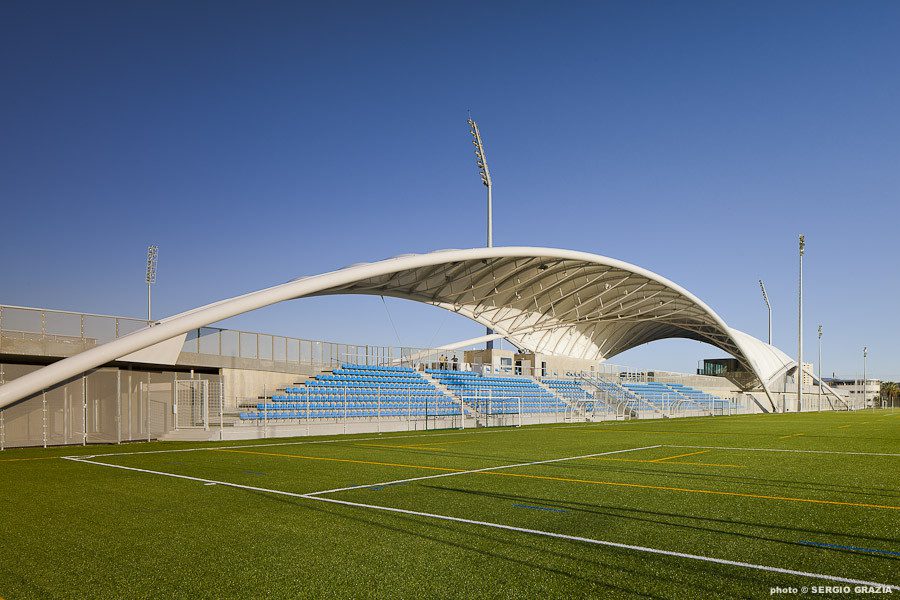
© Sergio Grazia
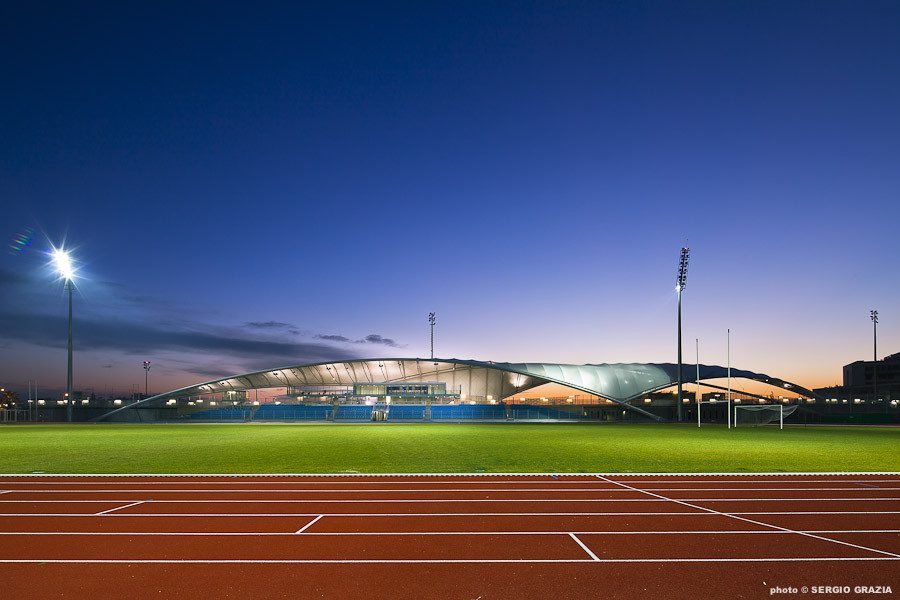
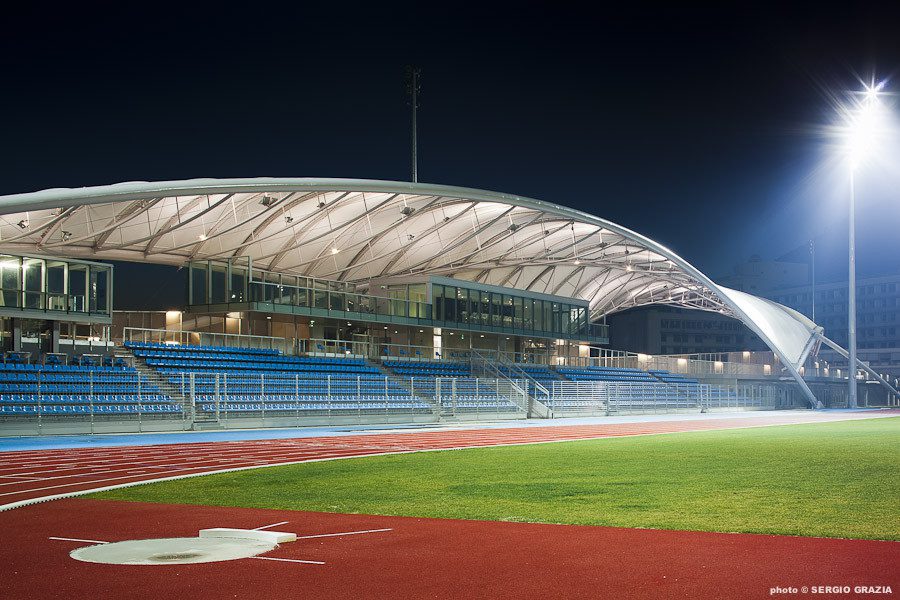
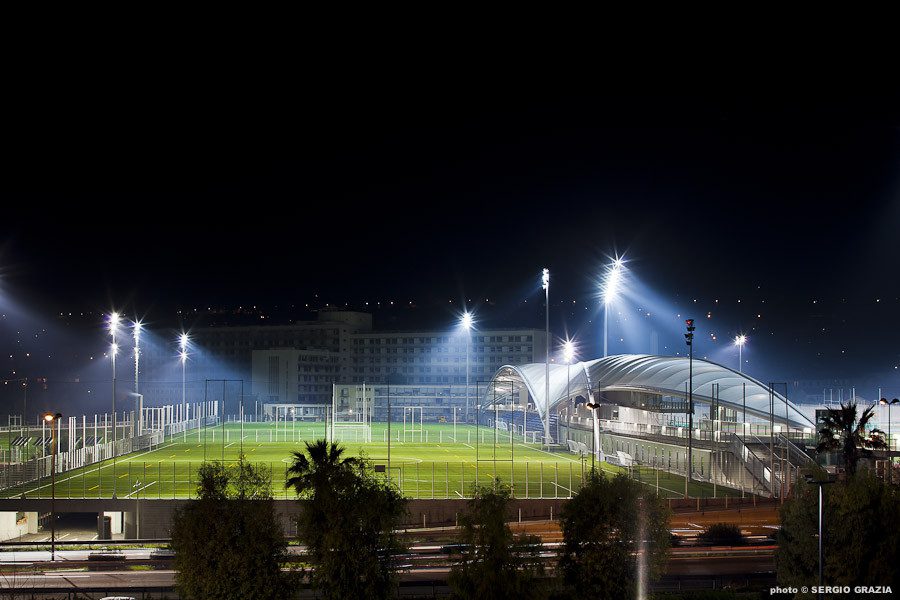
At night the inner-lit textile cover turns into a luminous ribbon like a wave of light and gives full expression to the place’s sporting and event functions. Visible from a distance, the jetty provides the region with a new landmark.
Project Info
Architects: Borja Huidobro, archi5
Country: France, Chalon-sur-Saône
Area: 4500 m²
Year: 2013
Photographs: Sergio Grazia
Manufacturers Daplast: Daplast
Landscape Architects: Michel Desvigne
Client: Toulon Provence Méditerranée

Sophie Tremblay is a Montreal-based architectural editor and designer with a focus on sustainable urban development. A McGill University architecture graduate, she began her career in adaptive reuse, blending modern design with historical structures. As a Project Editor at Arch2O, she curates stories that connect traditional practice with forward-thinking design. Her writing highlights architecture's role in community engagement and social impact. Sophie has contributed to Canadian Architect and continues to collaborate with local studios on community-driven projects throughout Quebec, maintaining a hands-on approach that informs both her design sensibility and editorial perspective.