

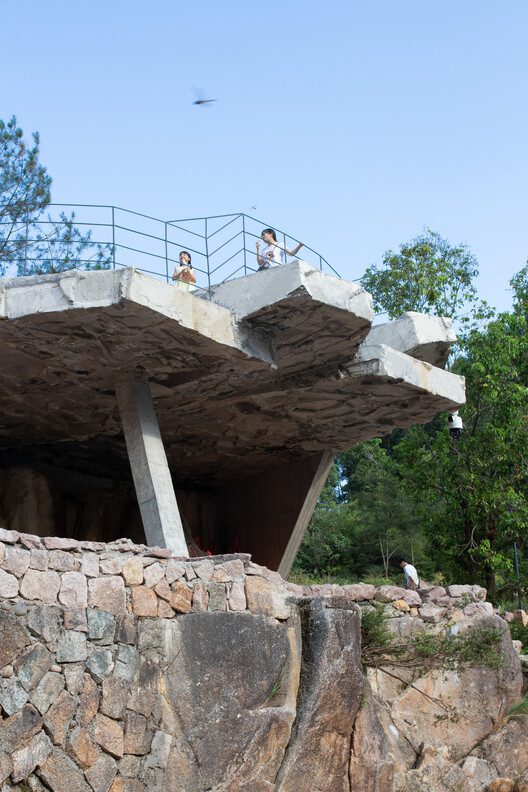
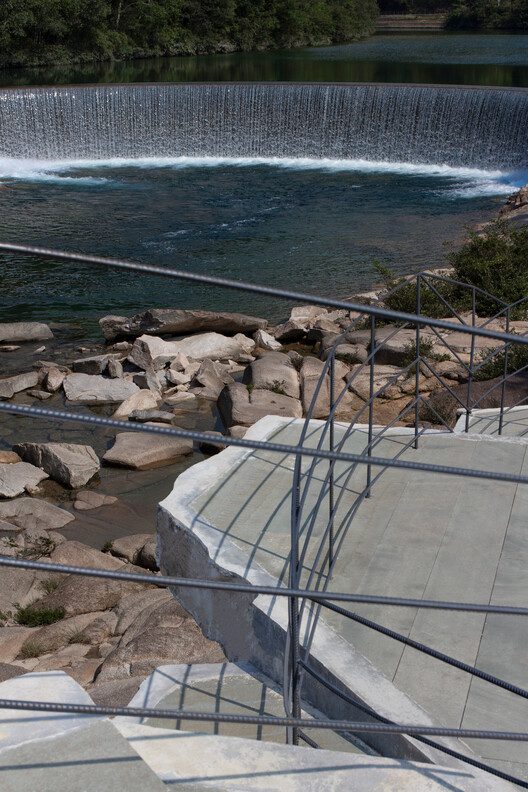
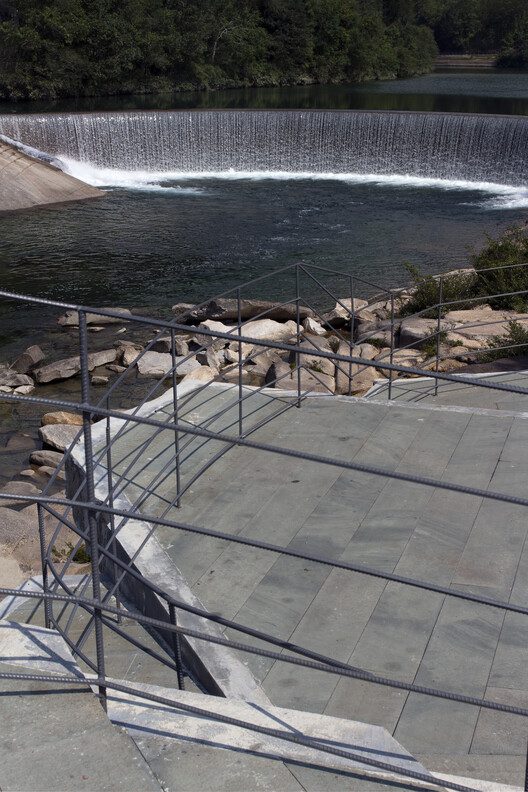
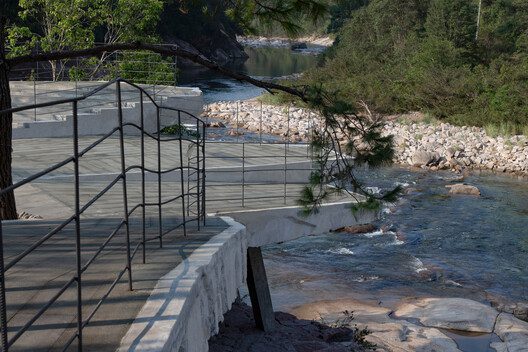
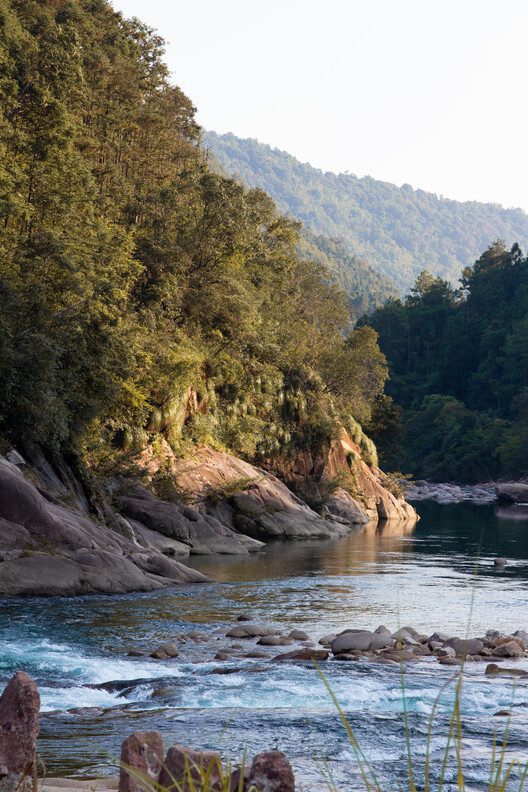
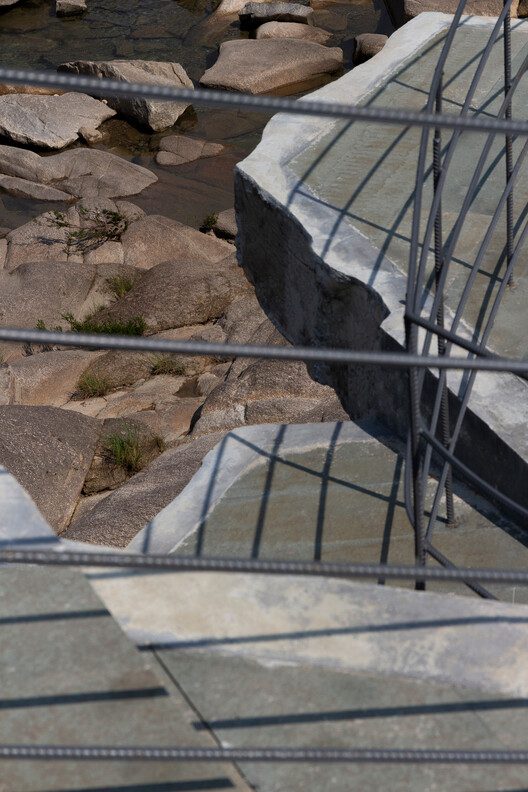
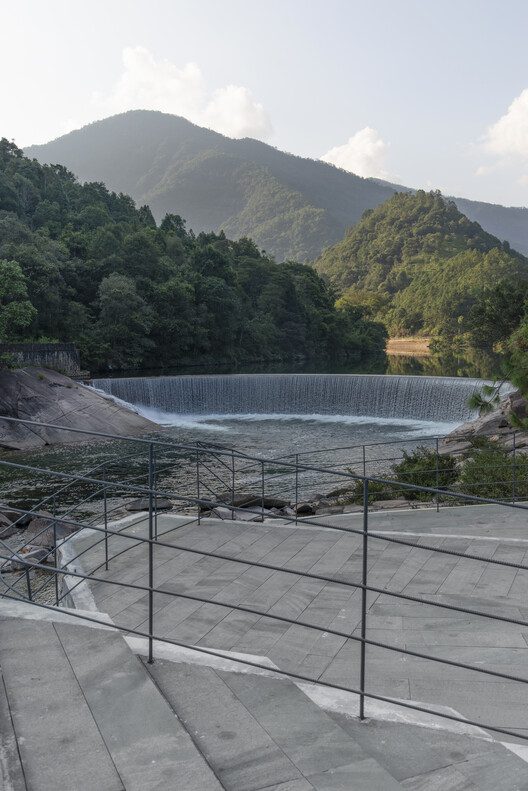
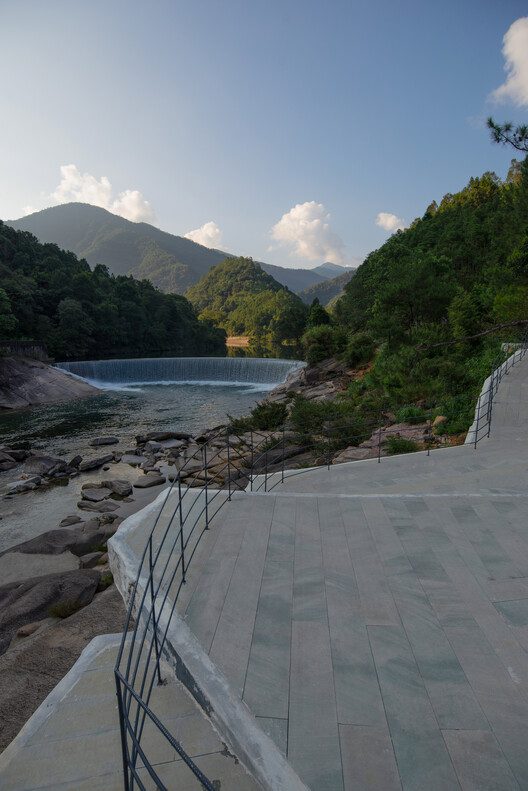
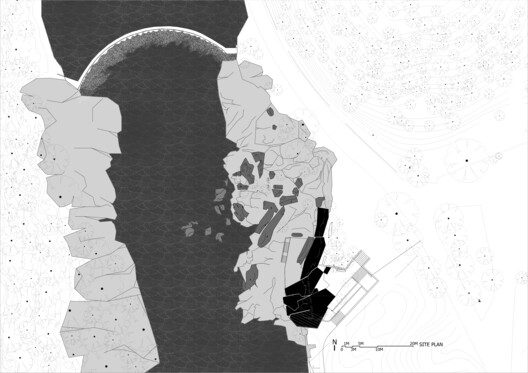
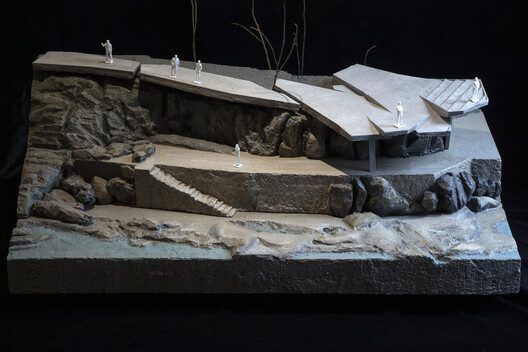
Fujian Wuyi Mountain National Park Moon Bay Observation Deck ,Moon Bay Waterfall marks the threshold of Mount Wuyi National Park and is the first landscape encountered upon entering the park. In 2023, CLAB Architects was commissioned to construct a viewing platform at this site. The waterfall originates from an artificial dam built in 1979 for hydrological regulation. Crescent-shaped in plan, it lends Moon Bay its name. Over decades of interaction between human intervention and natural processes, the dam has been fully absorbed into its environment. Upstream, the water settles into a calm surface; downstream, erosion exposes massive river stones. Together, these elements form a place in the phenomenological sense—close to the ground, yet acting as a center that brings sky, mountain, and water into relation.
Courtesy of CLAB Architects
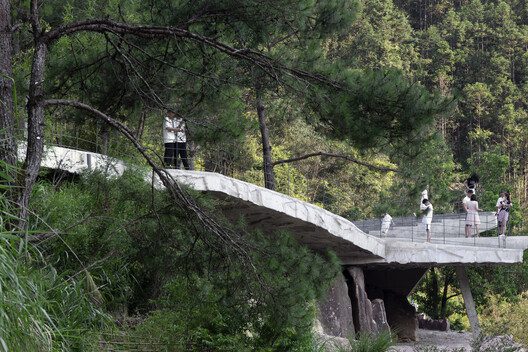
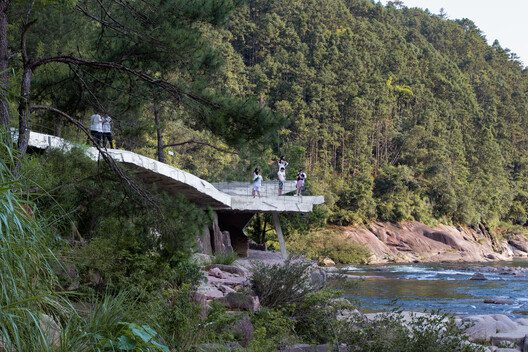
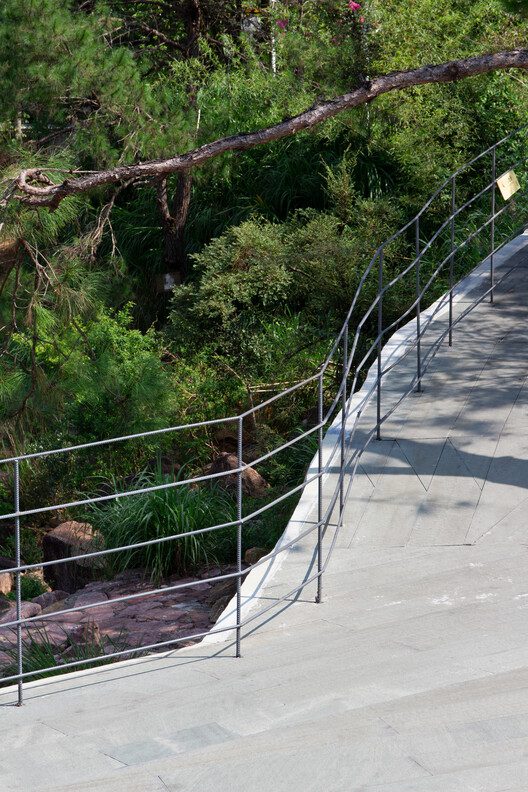
Here, architectural intervention does not appear as intrusion. It acts instead as a discreet underline drawn beneath nature—subtle and restrained, intended to sharpen perception rather than assert presence. The viewing platform extends this underline into space, responding to the river and its stones while deliberately blurring the boundary between the natural and the artificial.
Courtesy of CLAB Architects
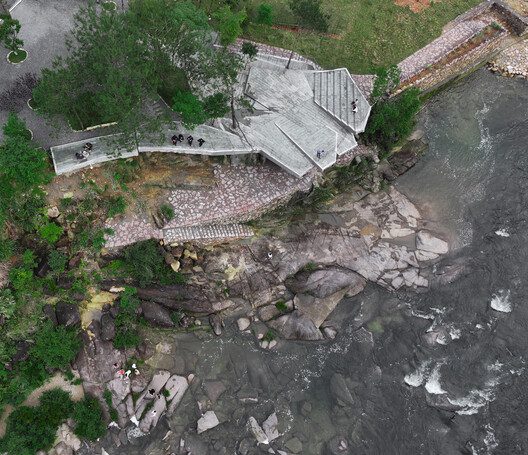
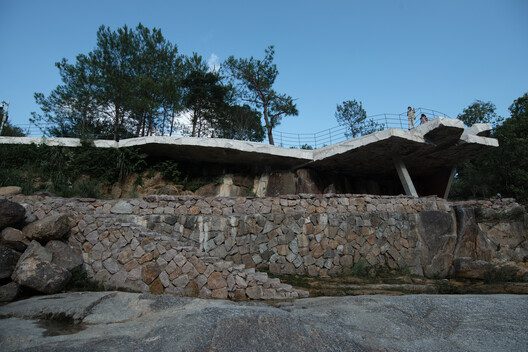
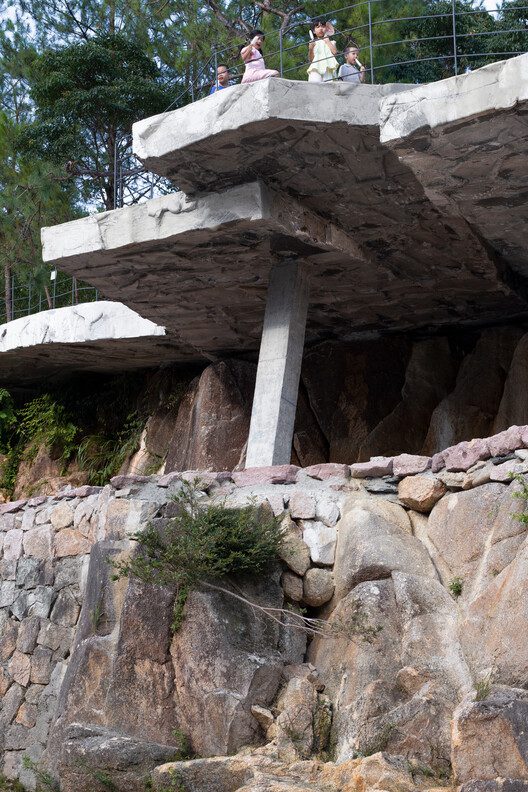
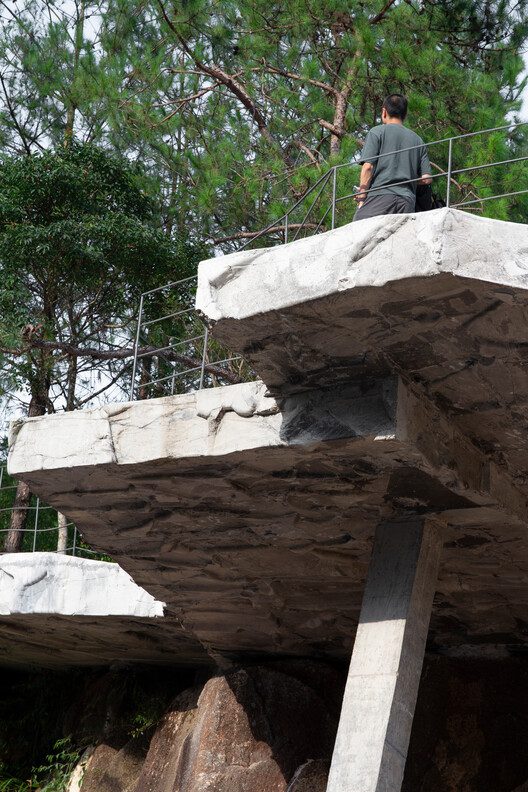
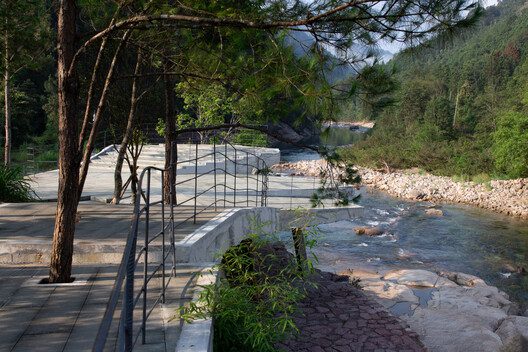
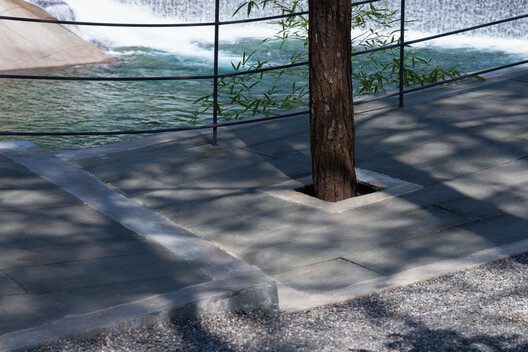
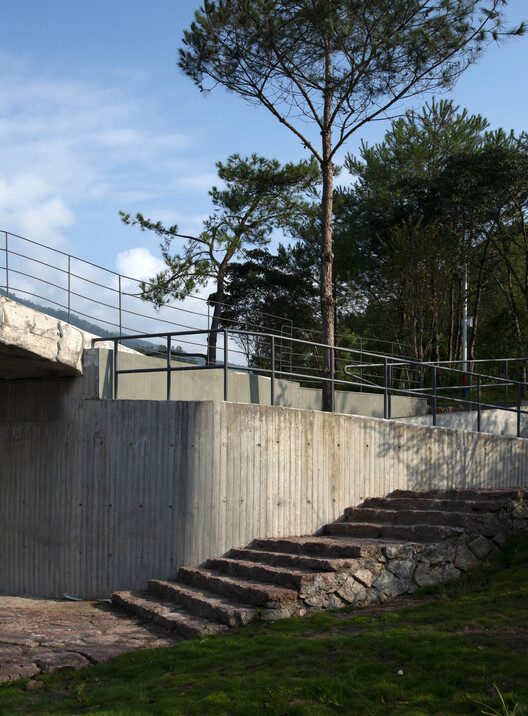
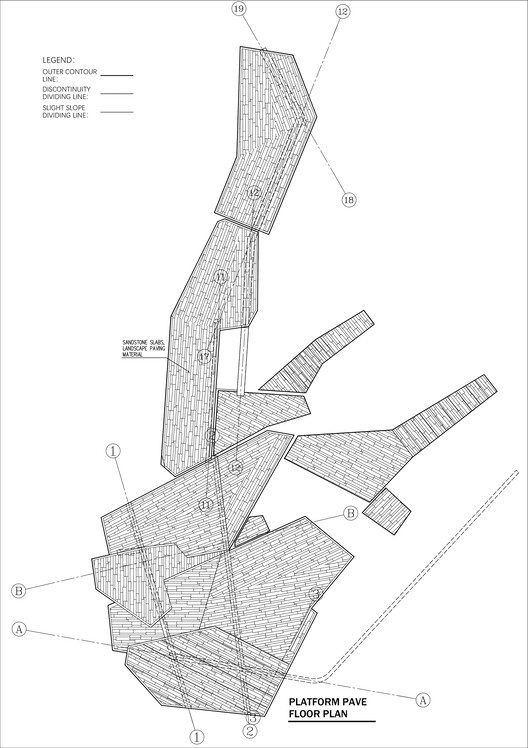
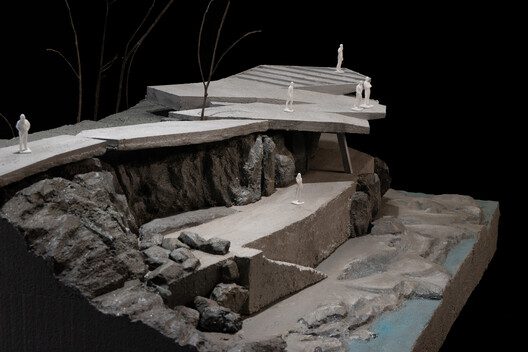
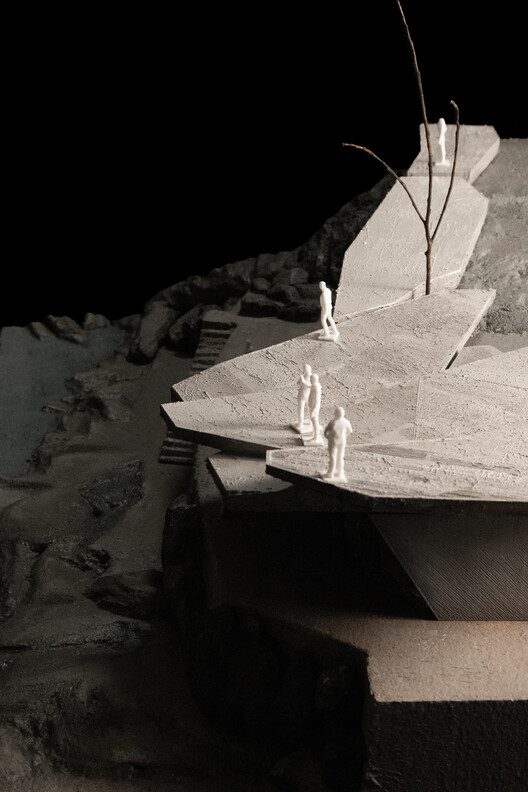
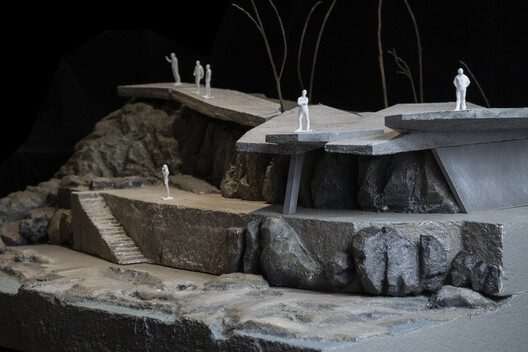
The platform occupies the only relatively flat terrace before the waterfall, naturally divided into two levels by native rock. The upper level aligns with the access road and contains sixteen existing trees, all of which were preserved. Concealed behind this grove, the structure projects toward the waterfall from within the rocky terrain. Four interlocking polygonal volumes, each slightly inclined, form a folded geometry reminiscent of riverbed boulders shaped by flowing water. At their intersections, space is left for trees to pass through the architecture, allowing built form and vegetation to coexist.
Courtesy of CLAB Architects
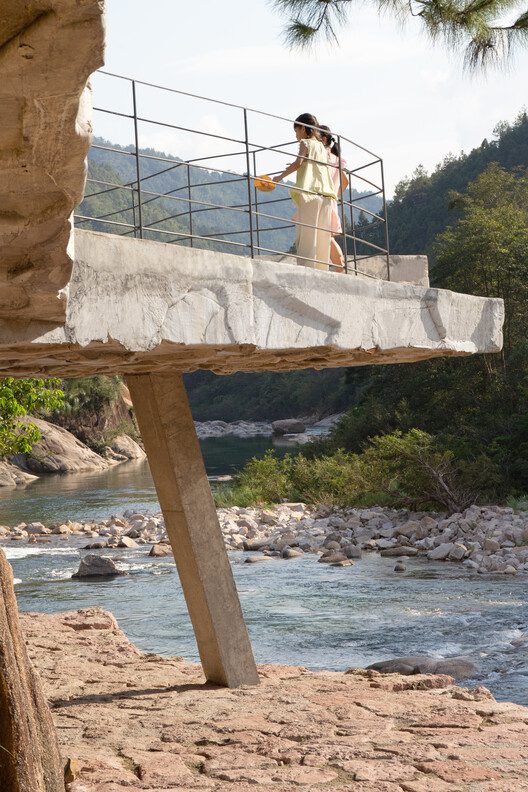
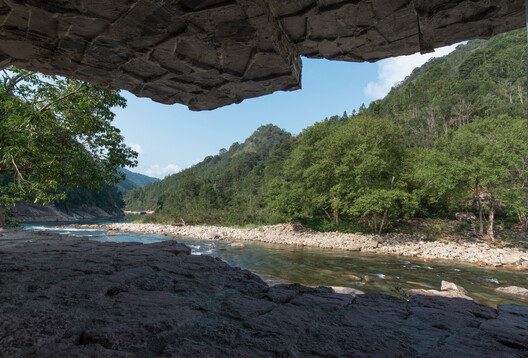
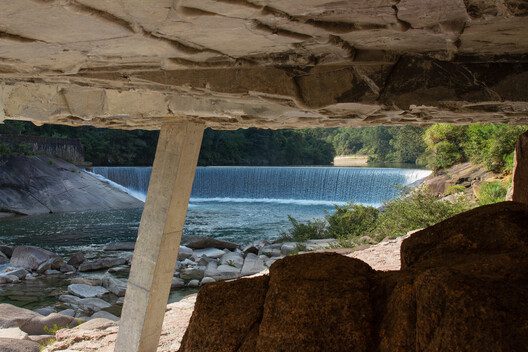
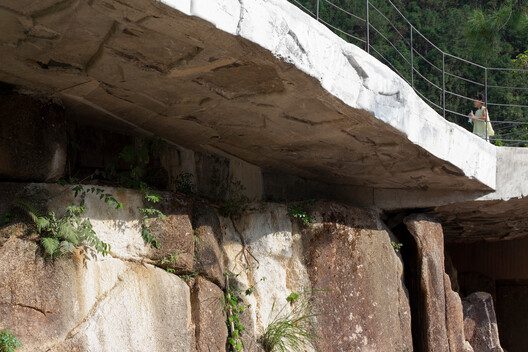
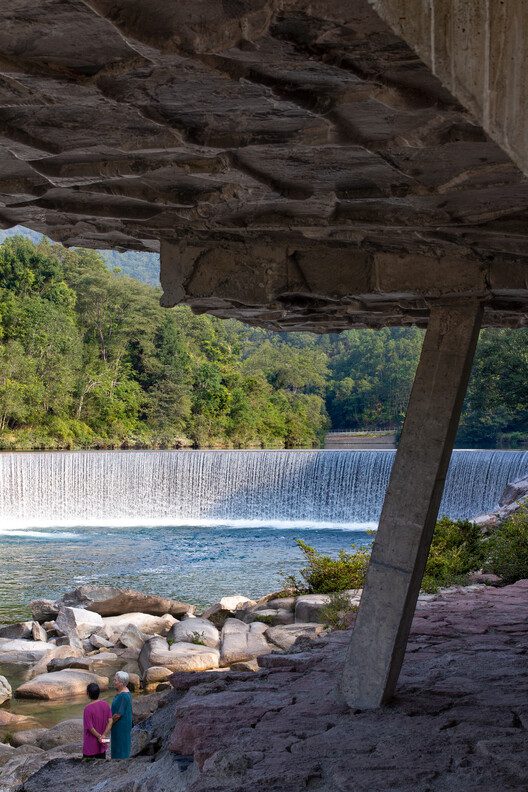
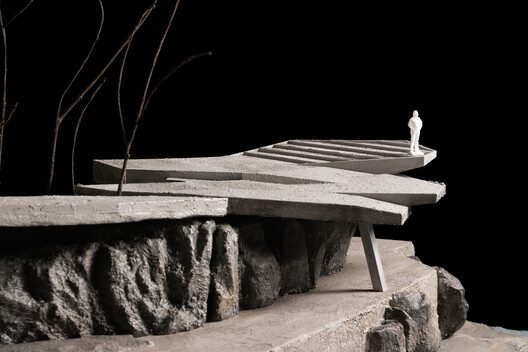
One volume is shaped as stepped seating, continuing the site’s long-standing use by local villagers as an informal gathering and dancing place during summer evenings. A secondary path descends to the lower terrace, designed primarily for canyoning groups and marking the experiential climax of the project. Here, proximity to the waterfall makes the eroded textures of stone tangible, while the cantilevered form creates a clear sense of enclosure (Norberg-Schulz), evoking a cave-like condition that recalls primordial spatial experience.
Courtesy of CLAB Architects
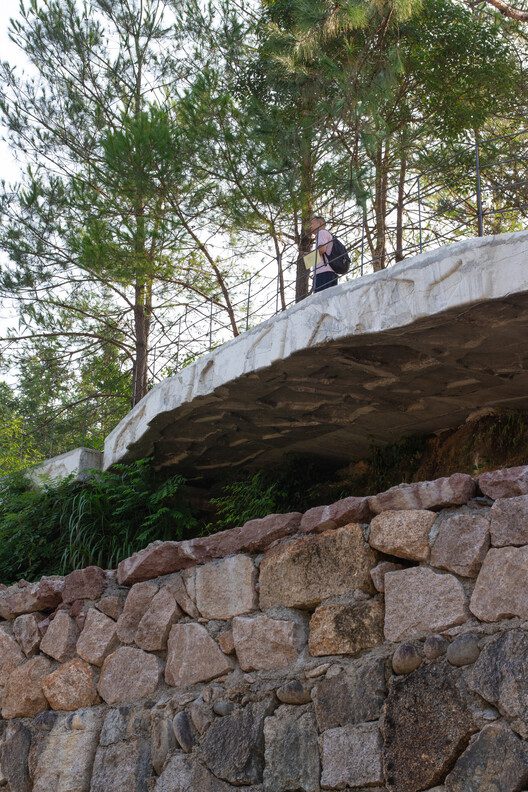
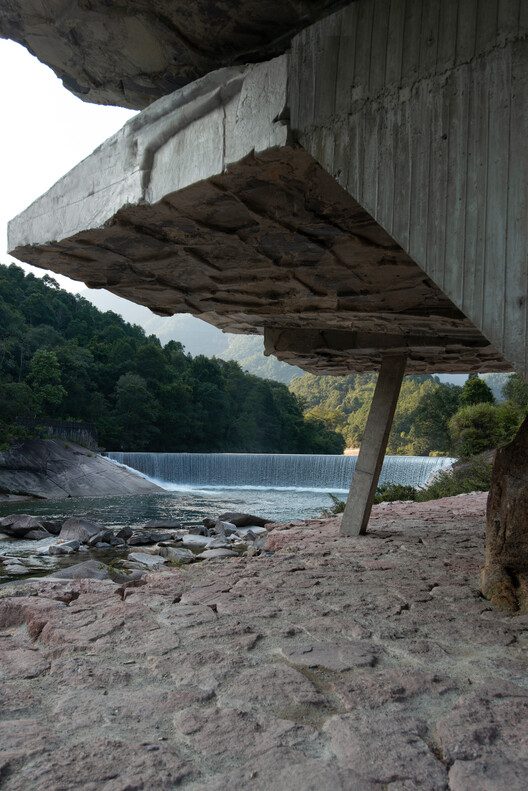
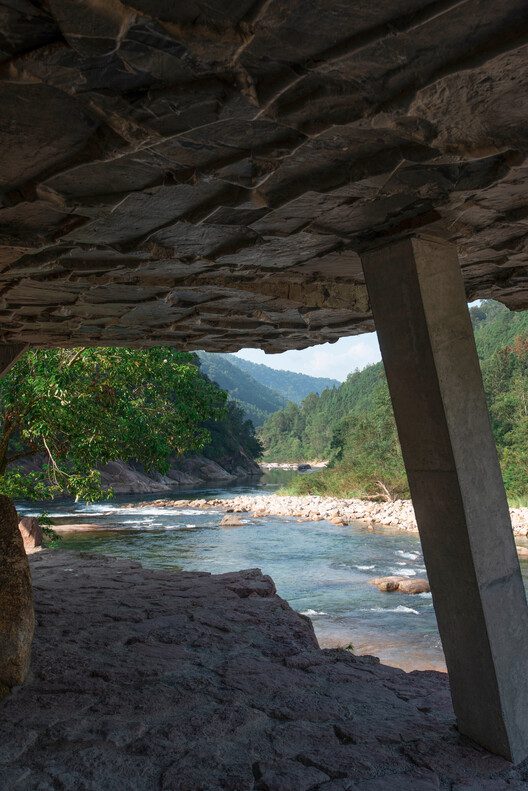
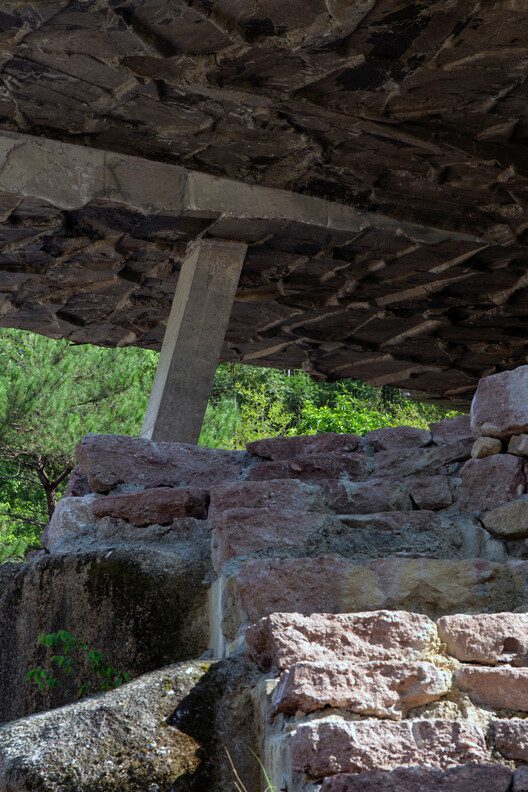
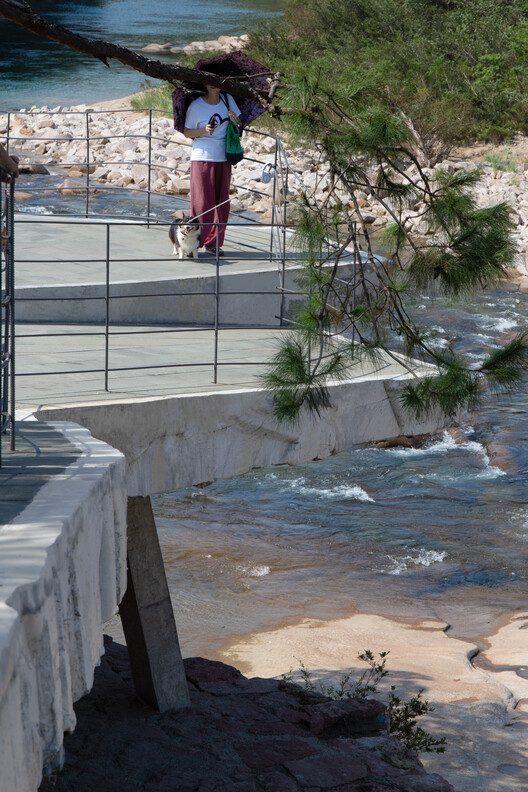
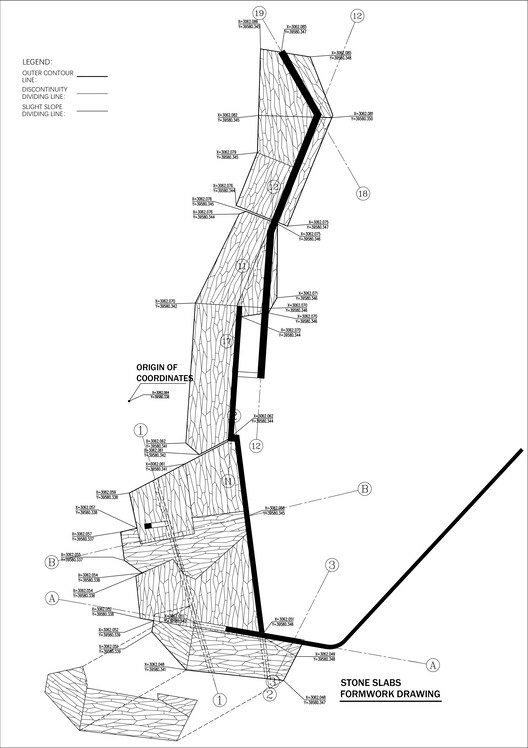
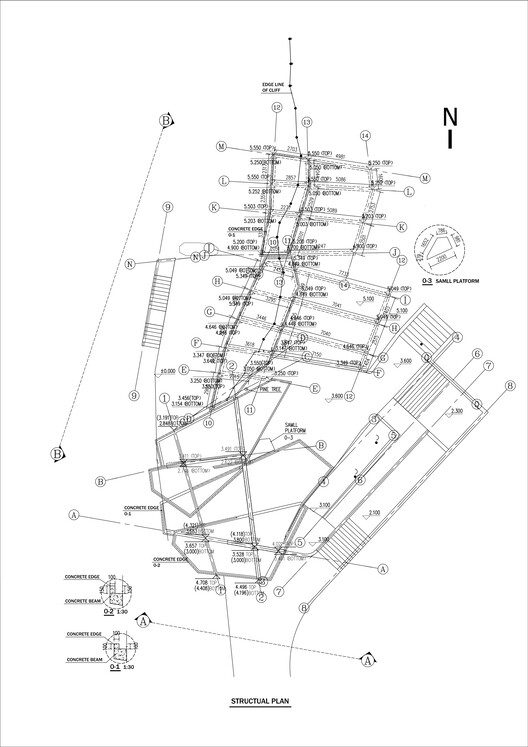
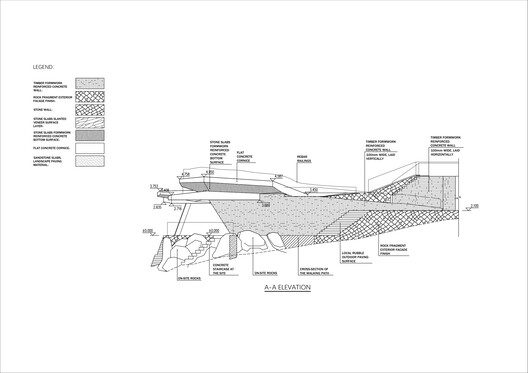
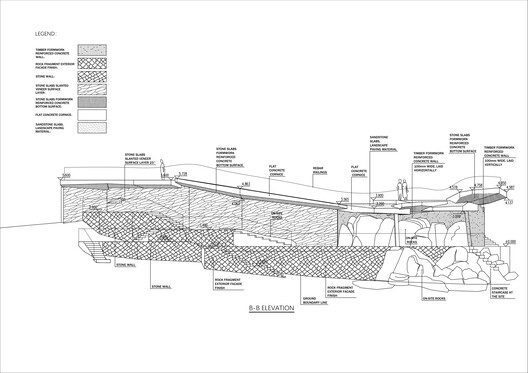
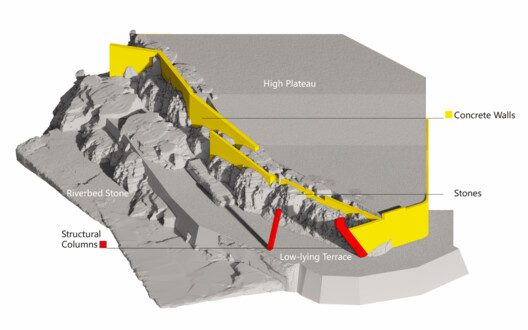
The structure is entirely cast in concrete, shaped through an unconventional construction process. Instead of standardized industrial formwork, natural stone was used to inscribe texture into the concrete surface. The underside of the platform thus appears as if carved by natural forces. The stones used as formwork were later reused to pave the ground beneath, reinforcing a cave-like spatial continuity. Architecture here does not stand as an object, but as a mirror of nature. Structurally, the platform presents a deliberate enigma. At the lower level, a single slender concrete column visibly supports the interlocking volumes above, concentrating forces and generating perceptual tension.
Courtesy of CLAB Architects
Technically, this is part of a carefully designed reinforced-concrete frame system: one side rests on a stone-founded wall, while an inclined column hidden within the wall completes the structural balance. The exposed column, left untreated, appears with unmistakable artificial clarity. It acts as a signature of construction itself—once again inscribing a quiet underline beneath nature, and inviting reflection on the relationship between human making and the natural world.
Courtesy of CLAB Architects
Project Info :
-
Architects: CLAB Architects
- Country: Nanping, China
- Area: 970 m²
- Year: 2024
- Photograghs :Courtesy of CLAB Architects
-
Lead Architect: Xu Lang
-
Engineering: Muke Structure (Chengdu) Construction Engineering Consulting Co., LTD
-
Consultants: Wuyi Yungu Construction and Development Co., LTD. L
-
Design Team: Xu Lang, Shi Jia Fu Yi, Qiao Qiao, Li Jian, Lei Yun
-
Clients: Wuyi Yungu Construction and Development Co., LTD. + Wuyishan National Park

Sophie Tremblay is a Montreal-based architectural editor and designer with a focus on sustainable urban development. A McGill University architecture graduate, she began her career in adaptive reuse, blending modern design with historical structures. As a Project Editor at Arch2O, she curates stories that connect traditional practice with forward-thinking design. Her writing highlights architecture's role in community engagement and social impact. Sophie has contributed to Canadian Architect and continues to collaborate with local studios on community-driven projects throughout Quebec, maintaining a hands-on approach that informs both her design sensibility and editorial perspective.