

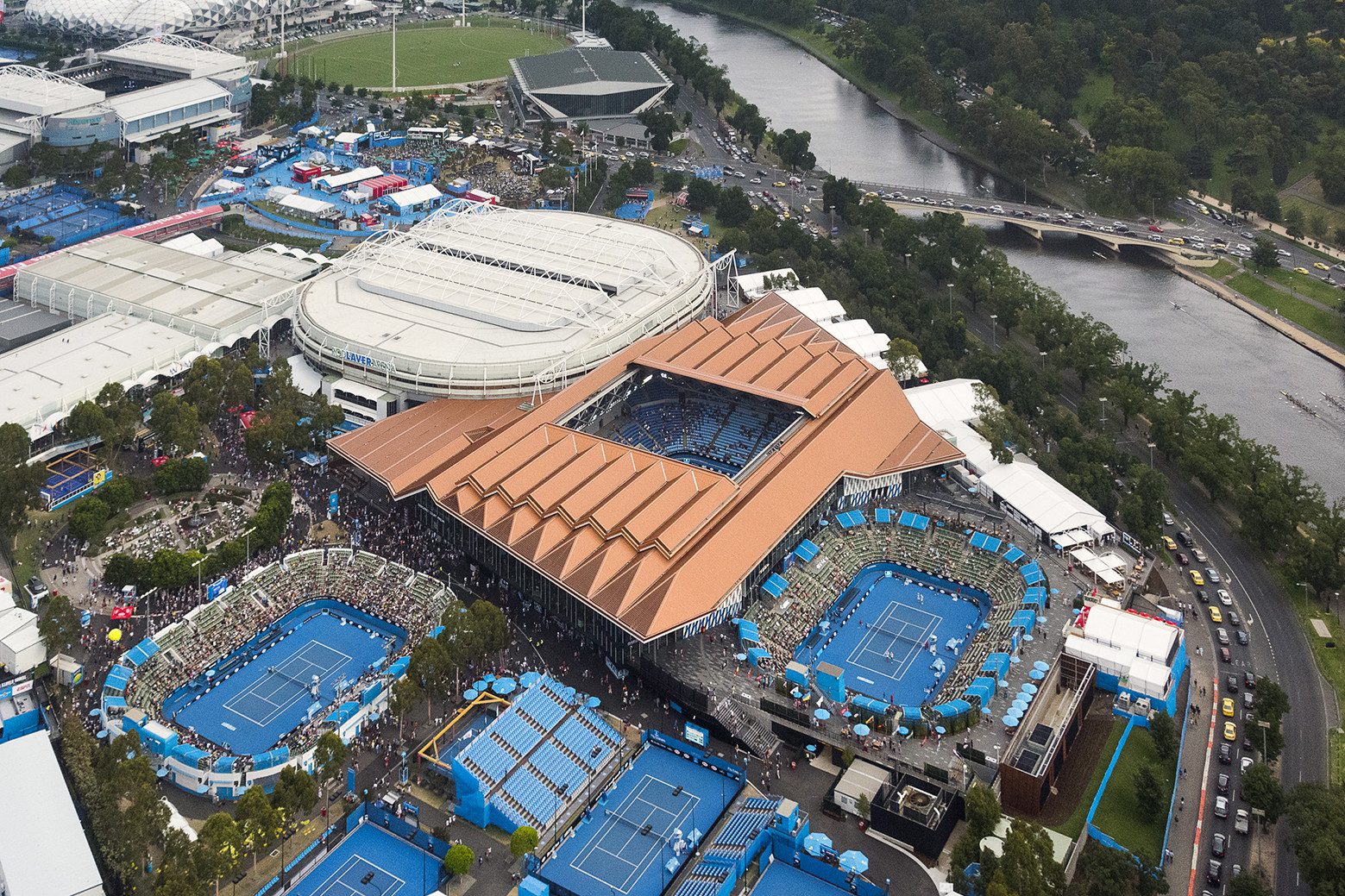
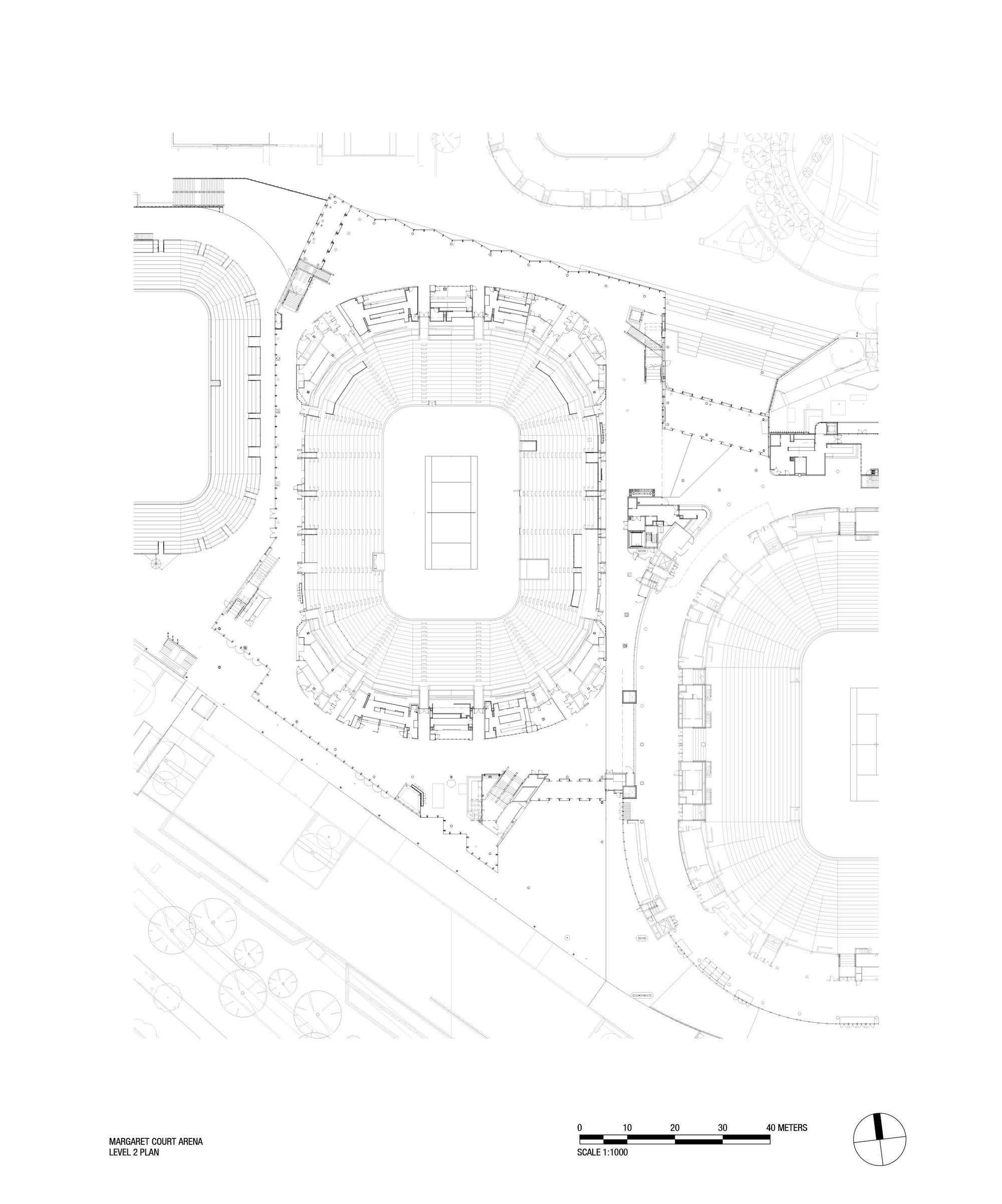
In the latest redevelopment phase at Melbourne and Olympic Parks, home to the Australian Open Tennis Tournament, Margaret Court Arena (MCA) has been given a complete transformation to create the precinct’s third all-weather arena.
© John Gollings
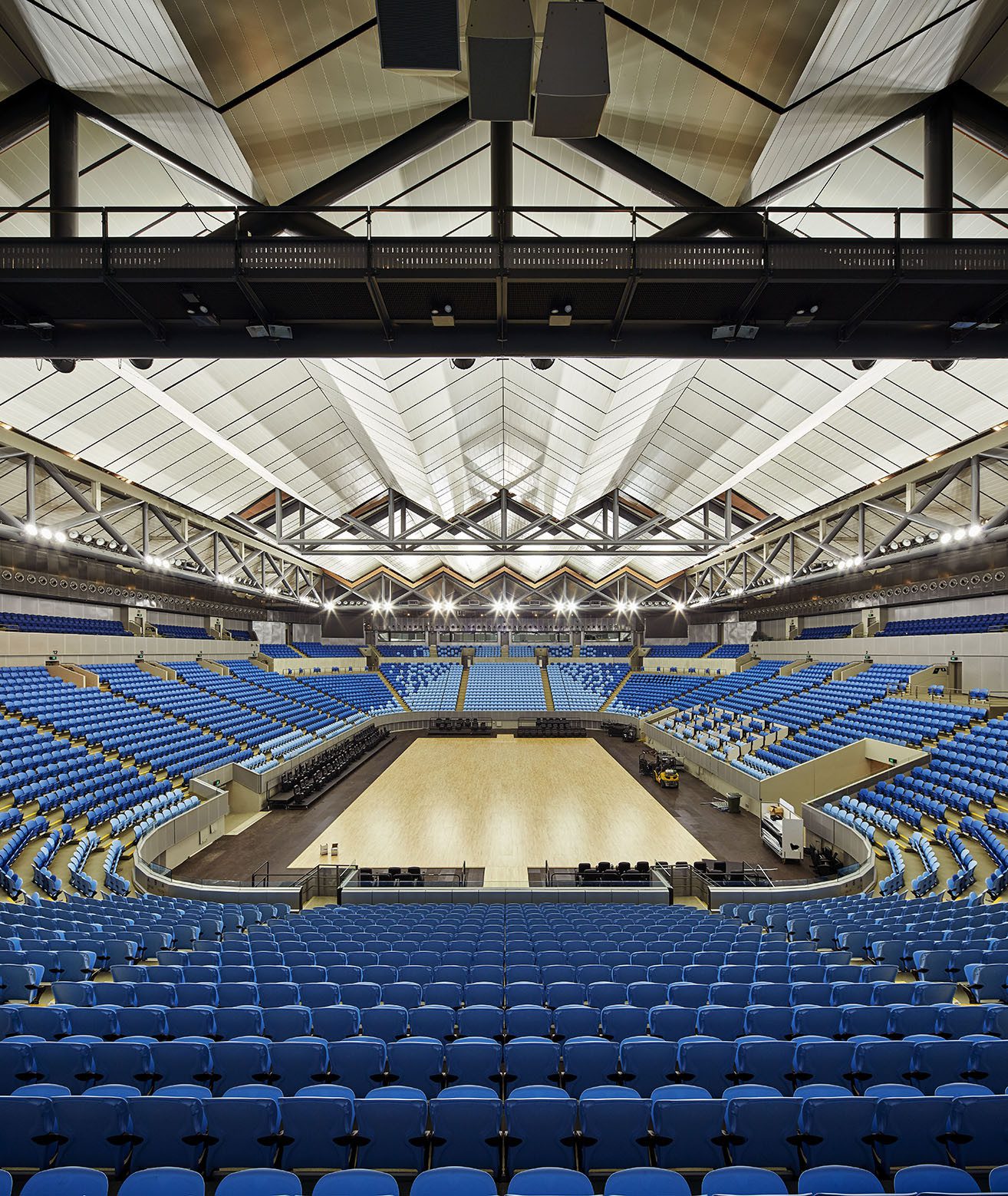
The design team, NH Architecture + Populous, was appointed by Major Projects Victoria on behalf of the Victorian Government to complete the $183M redevelopment. The project was completed late last year in time for the 2016 Australian Open. The new MCA includes an innovative retractable roof, seating for 7,500 spectators and concourse connectivity to the adjacent Rod Laver Arena.
© Peter Bennetts
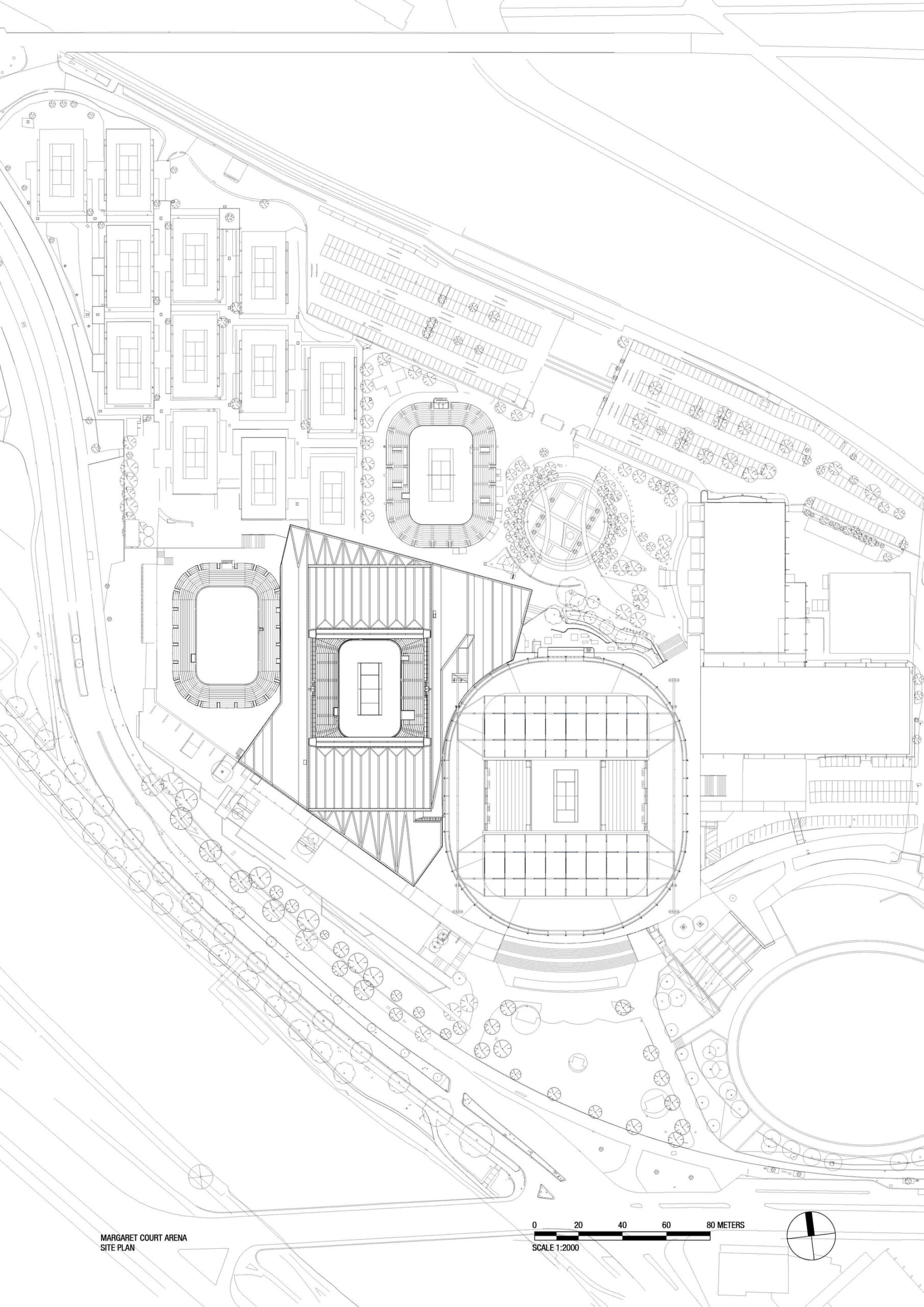
A significant part of the challenge was to manage the construction to enable Margaret Court Arena to be used during the Australian Open each January during the three year construction period. Furthermore the construction had to minimise disruption to the adjacent Rod Laver Arena and the 50+ events it hosts each year.
© Peter Bennetts
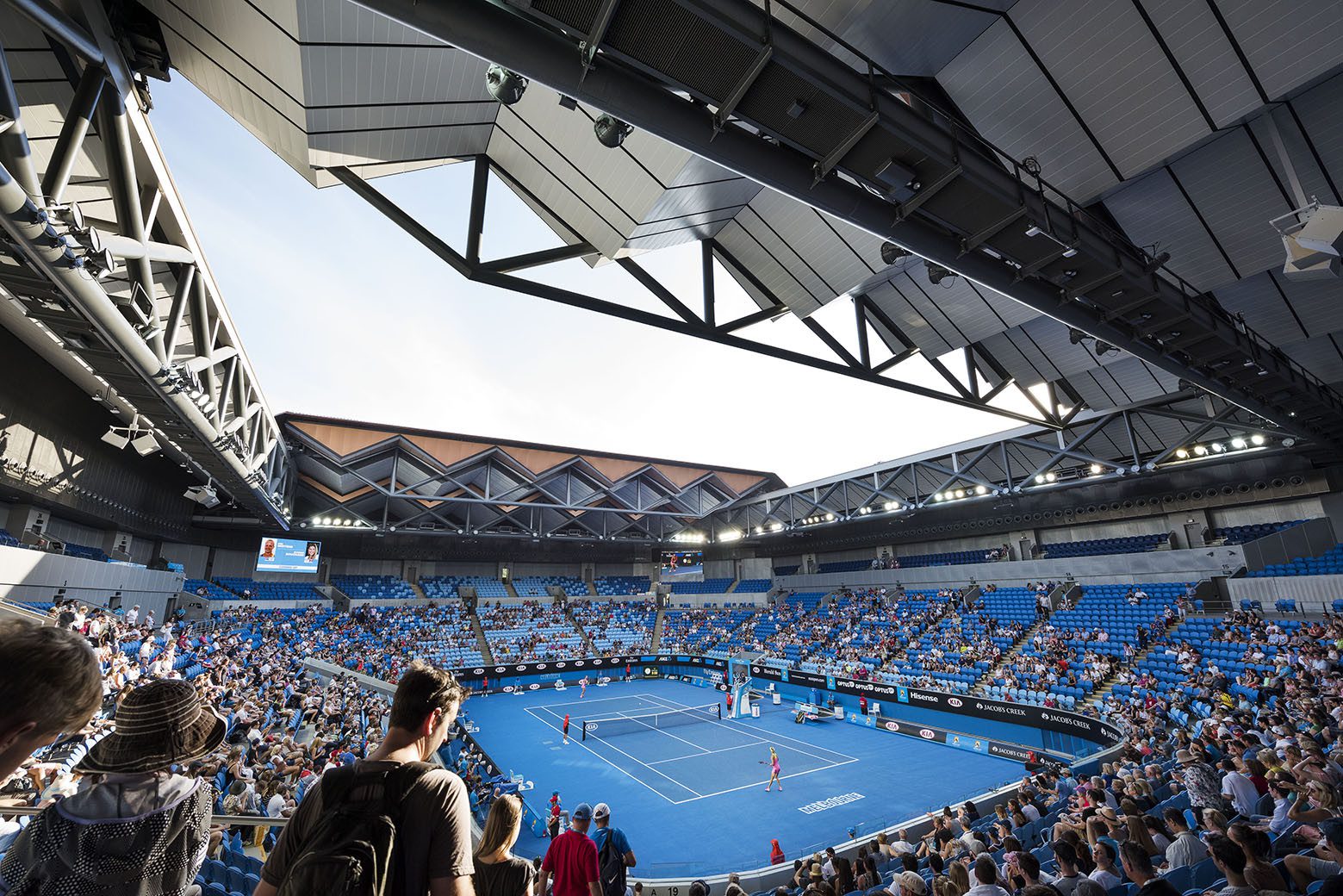
The primary function of the redeveloped Margaret Court Arena will be to stage major matches of the Grand Slam tournament, but the multi-purpose venue will also host netball, basketball, major concerts and entertainment events. Its operable roof is the fastest closing roof in Australia, able to shut completely in less than five minutes enabling Margaret Court to become a functional all-weather boutique venue for a busy all year round schedule.
© Peter Glenan
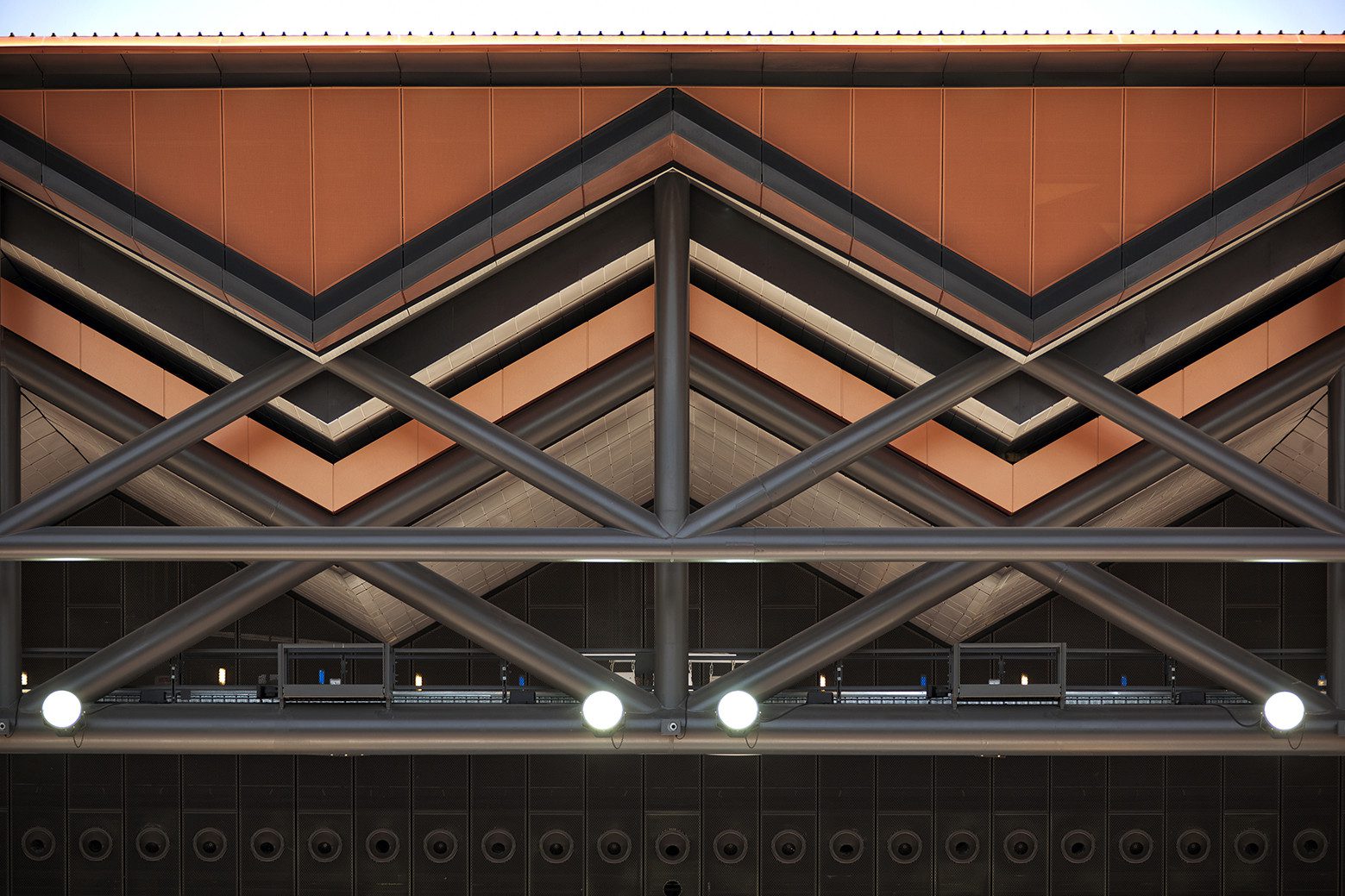
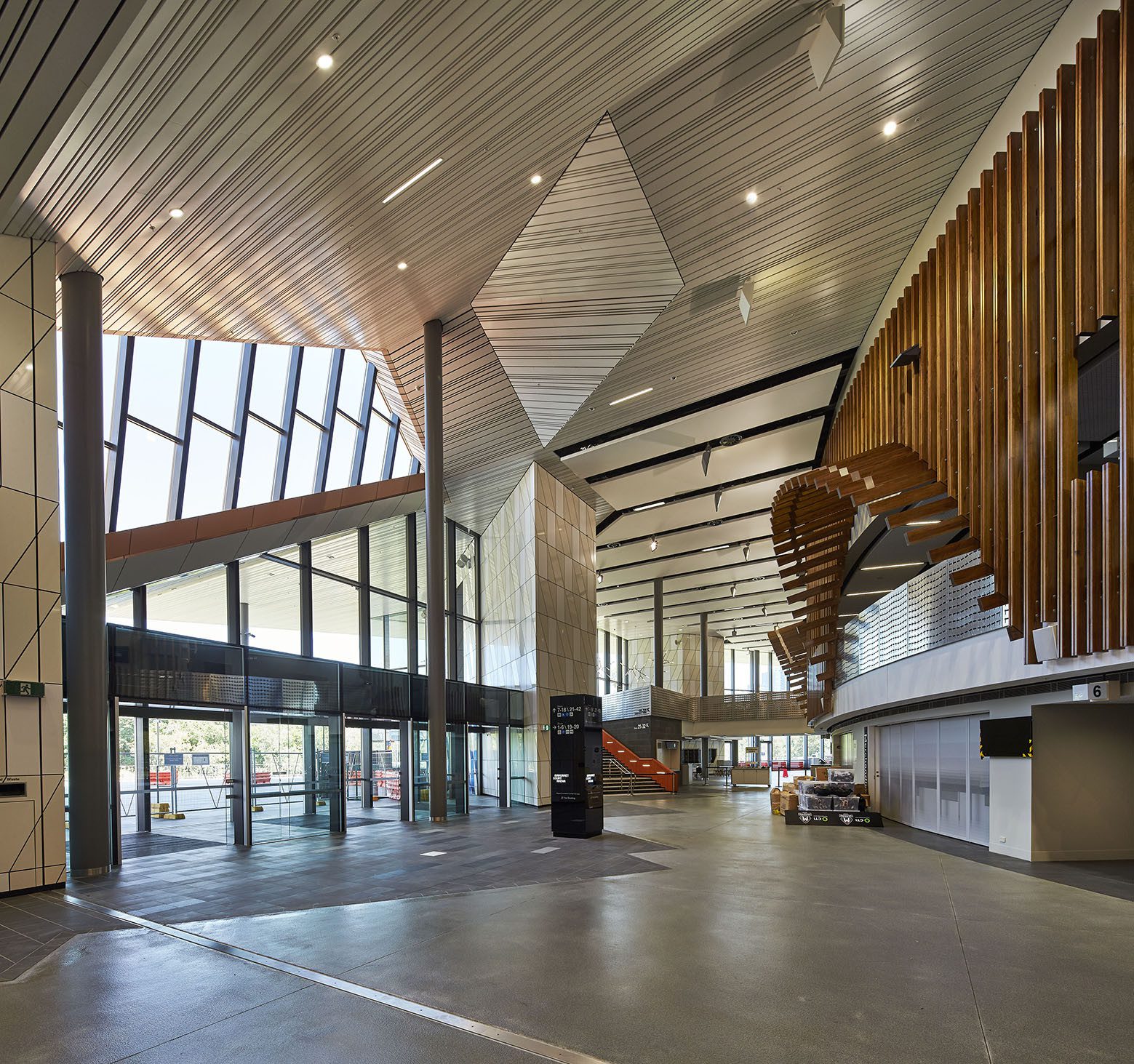
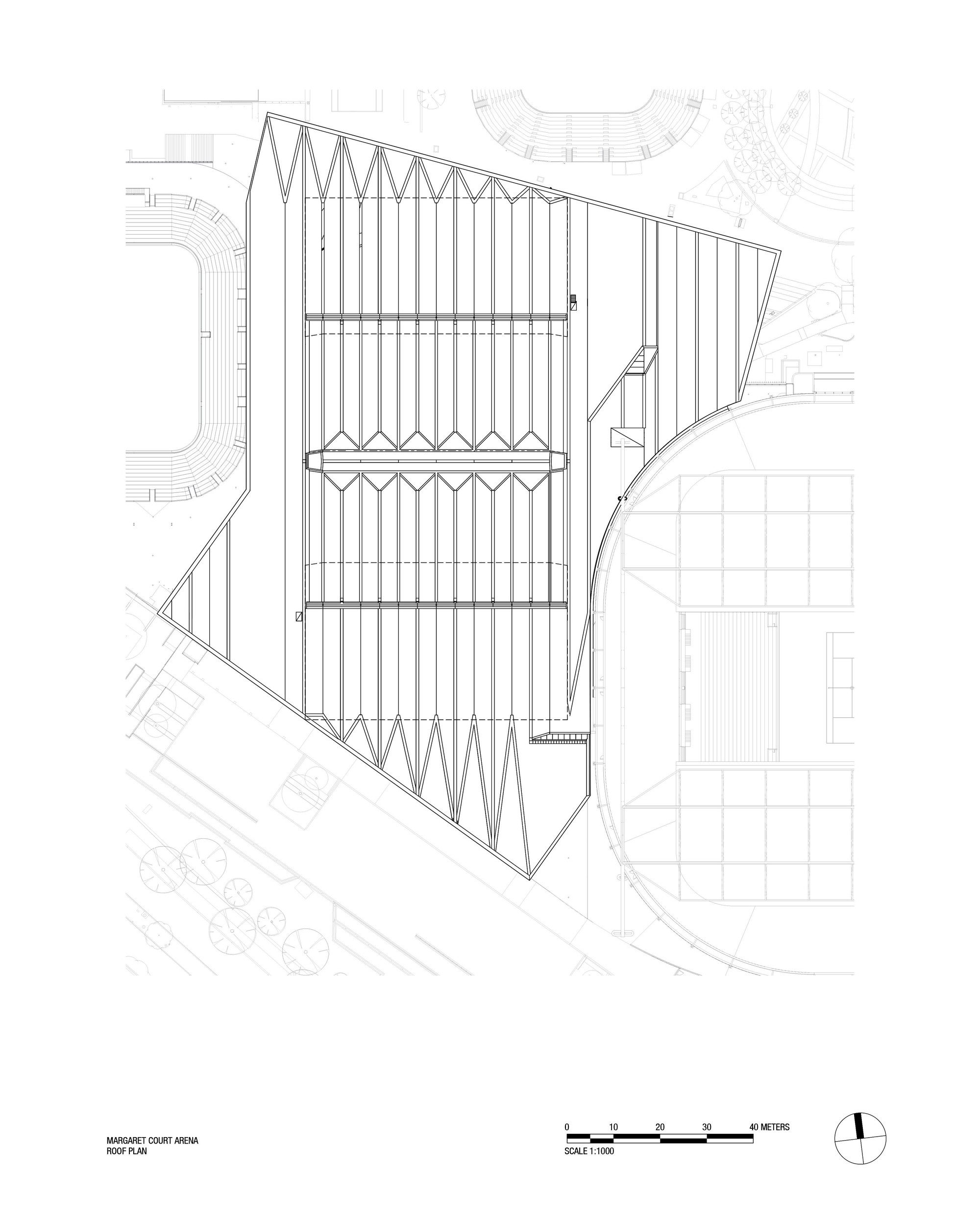
The bold roof design ensures the venue will create its own identity signalling the beginning of a new chapter in the development of the Melbourne and Olympic Parks precinct. The “copper penny” colour of the metal roof has been deliberately designed to complement the existing architecture, particularly big brother next door, Rod Laver Arena, but also to express Margaret Court Arena’s own individuality. The colour and shape of the roof reflects some of the traditional elements of Melbourne architecture, particularly the sandstone, zinc and copper of buildings along the Yarra River.
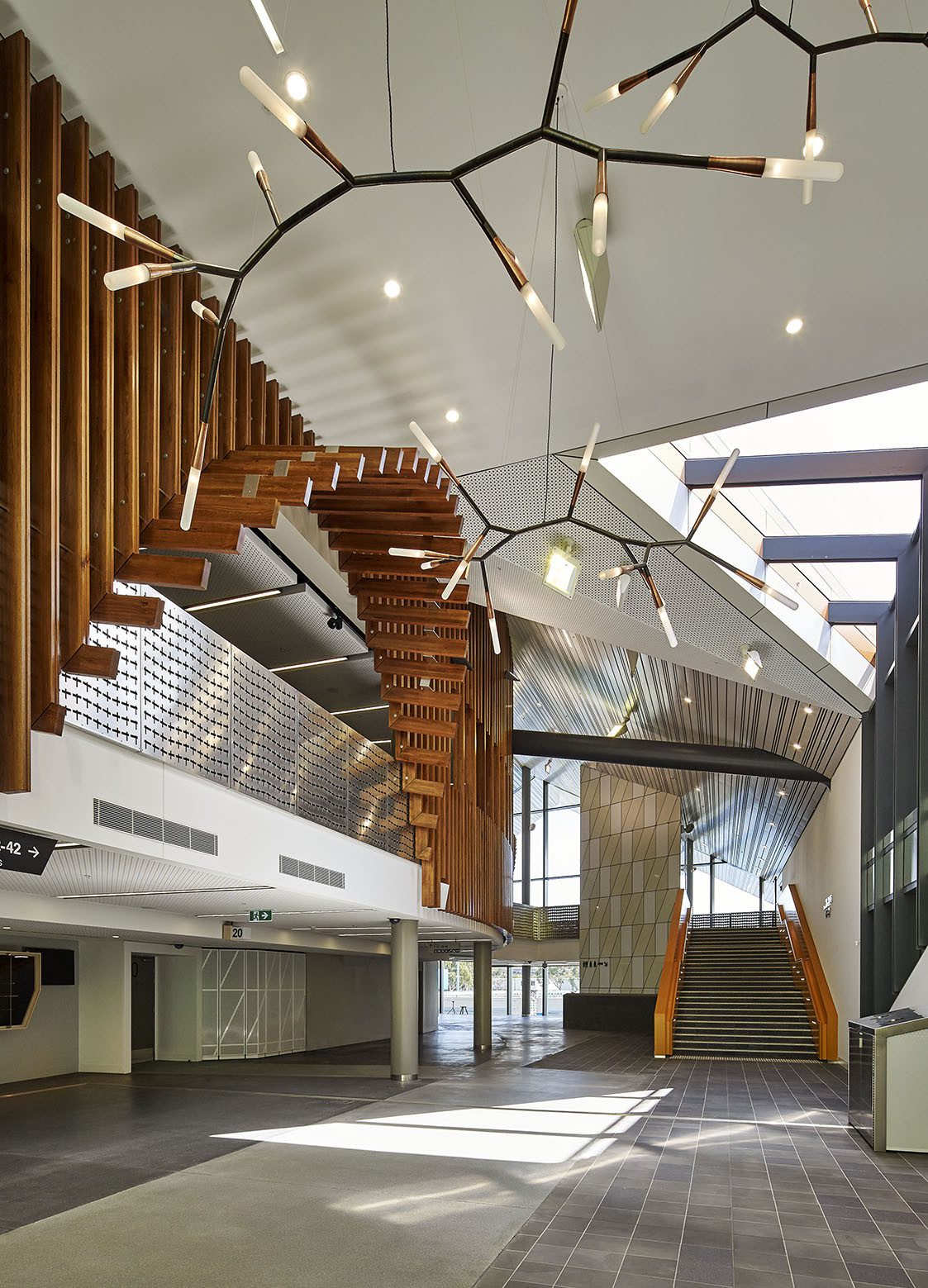
© Peter Bennetts
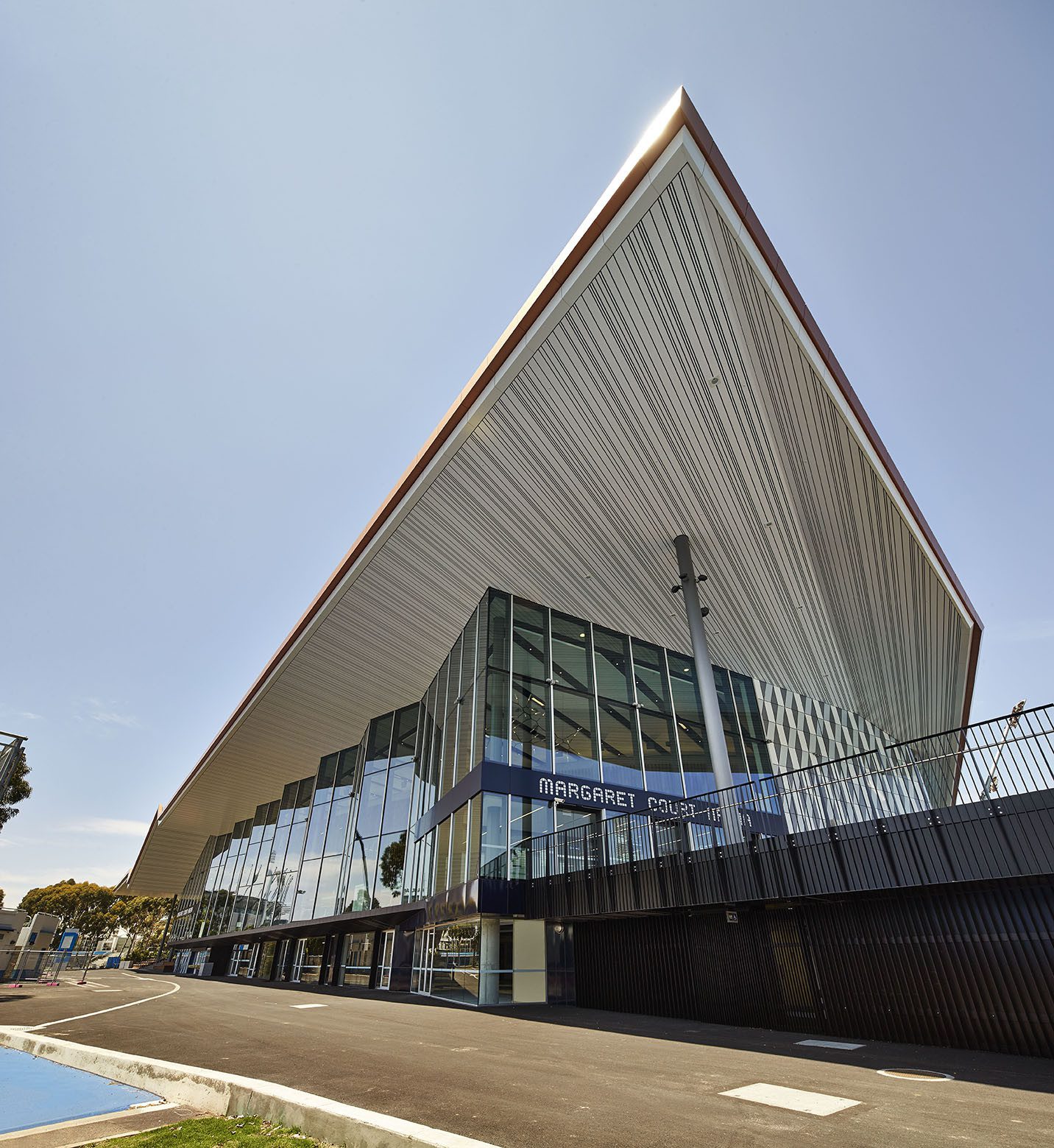
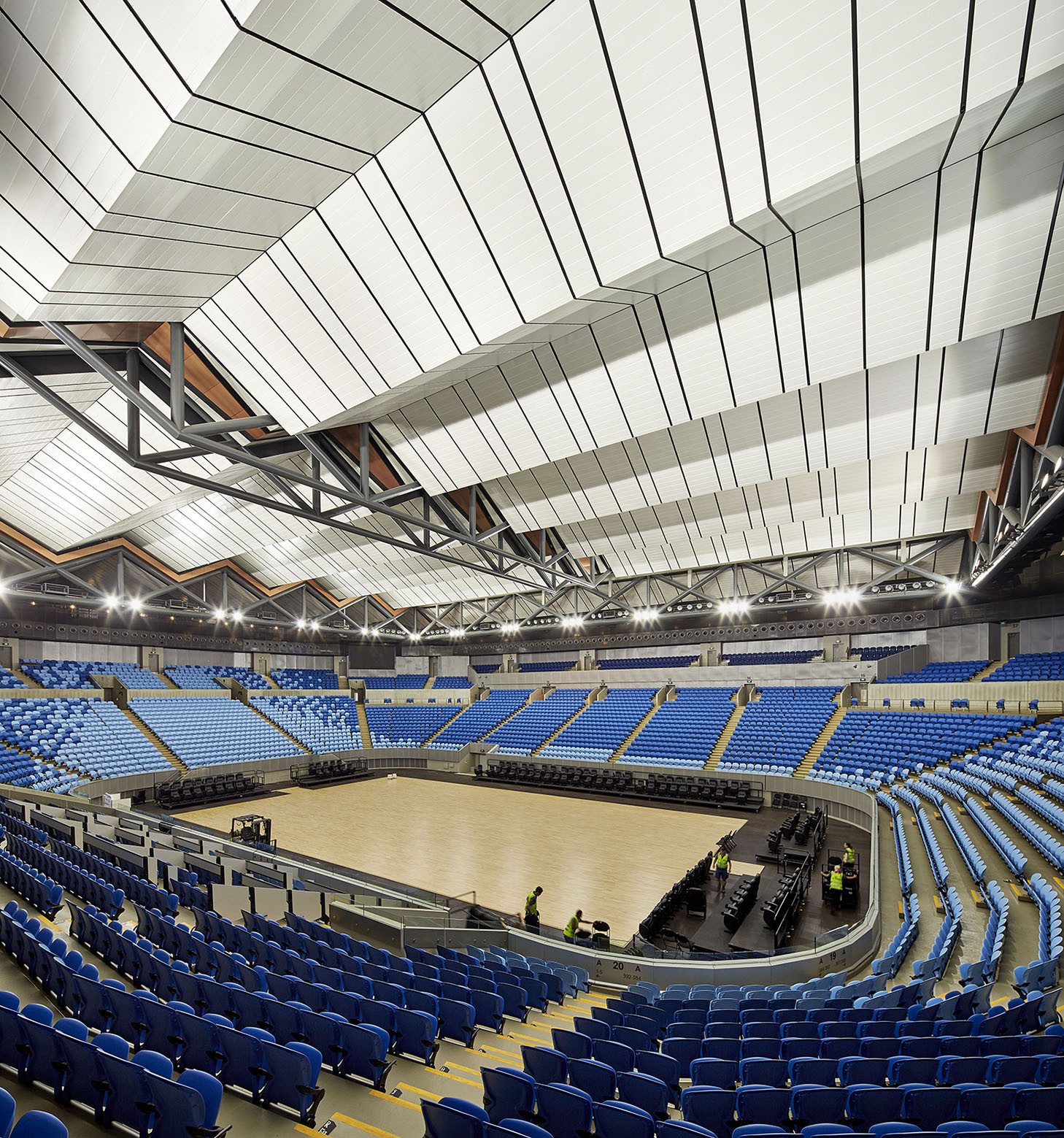
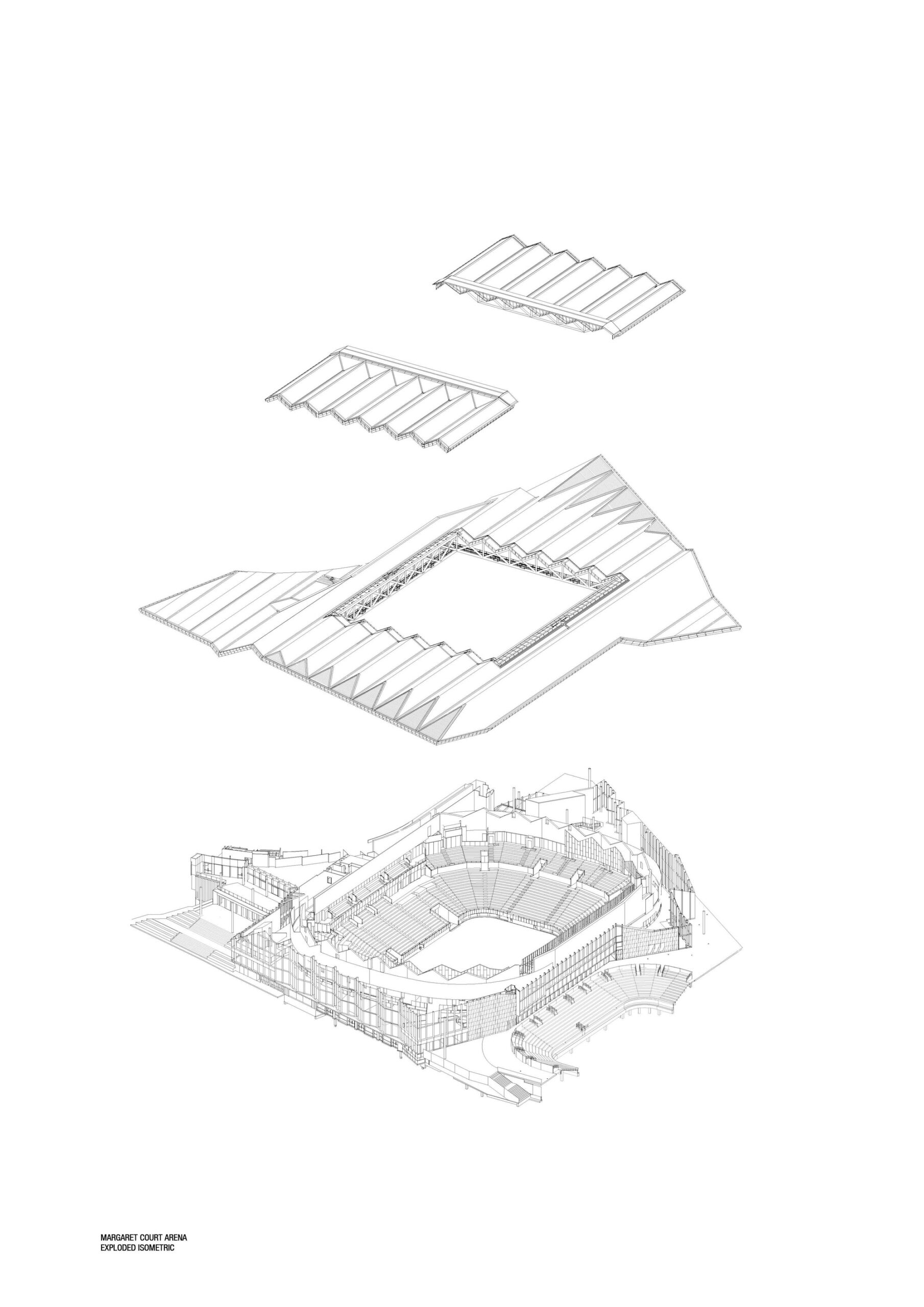
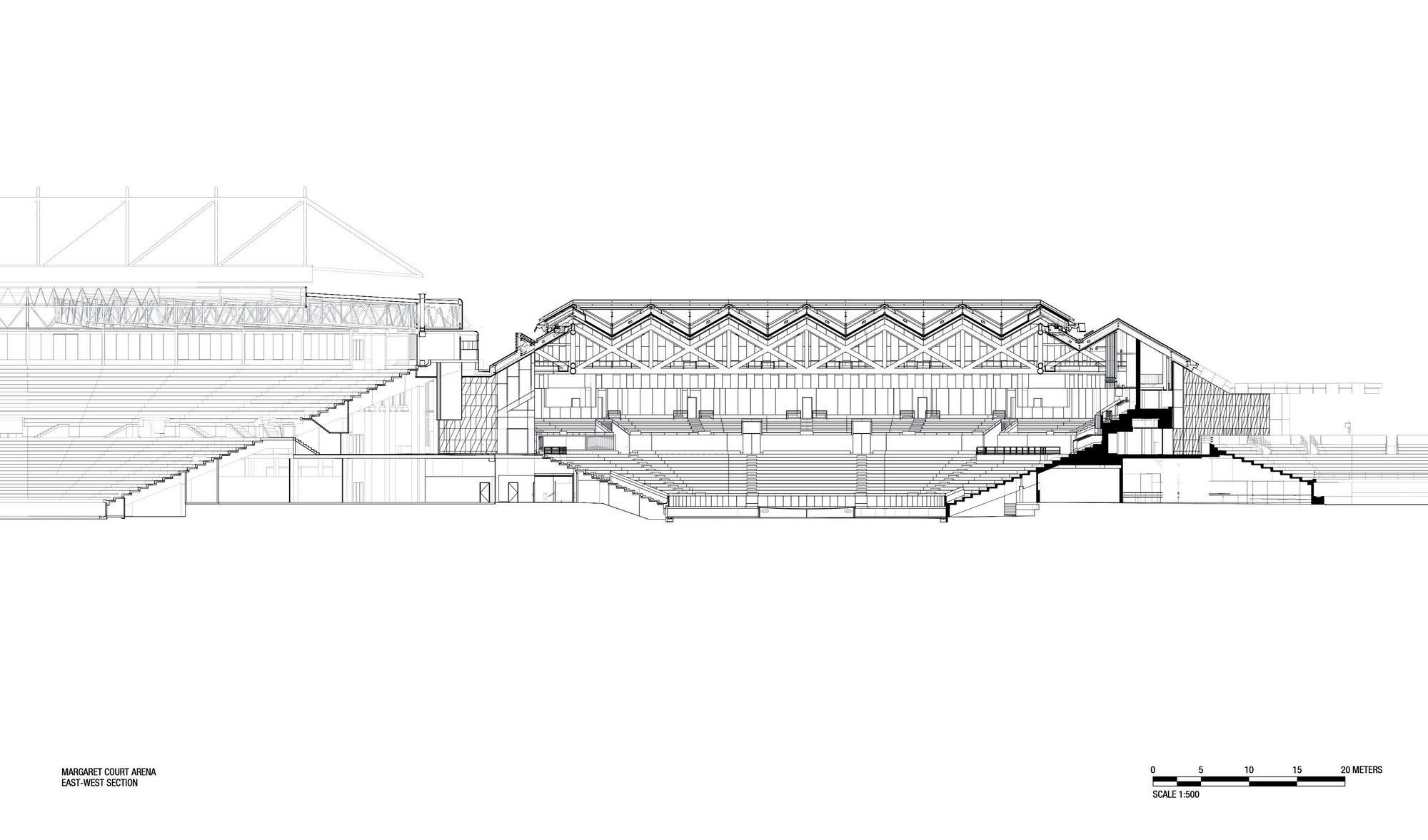
The roof’s innovative pleated profile reduces its structural depth and importantly reduces the visual bulk of the building. The pleated nature of the roof also provides the flexibility to fold down to pedestrian level to provide weather protection, particularly at venue entrances. Large roof overhangs on all sides of the building provide shade to the surrounding concourse and public realm, offering a respite for patrons facing the hot summer sun which is often a part of the Australian Open.
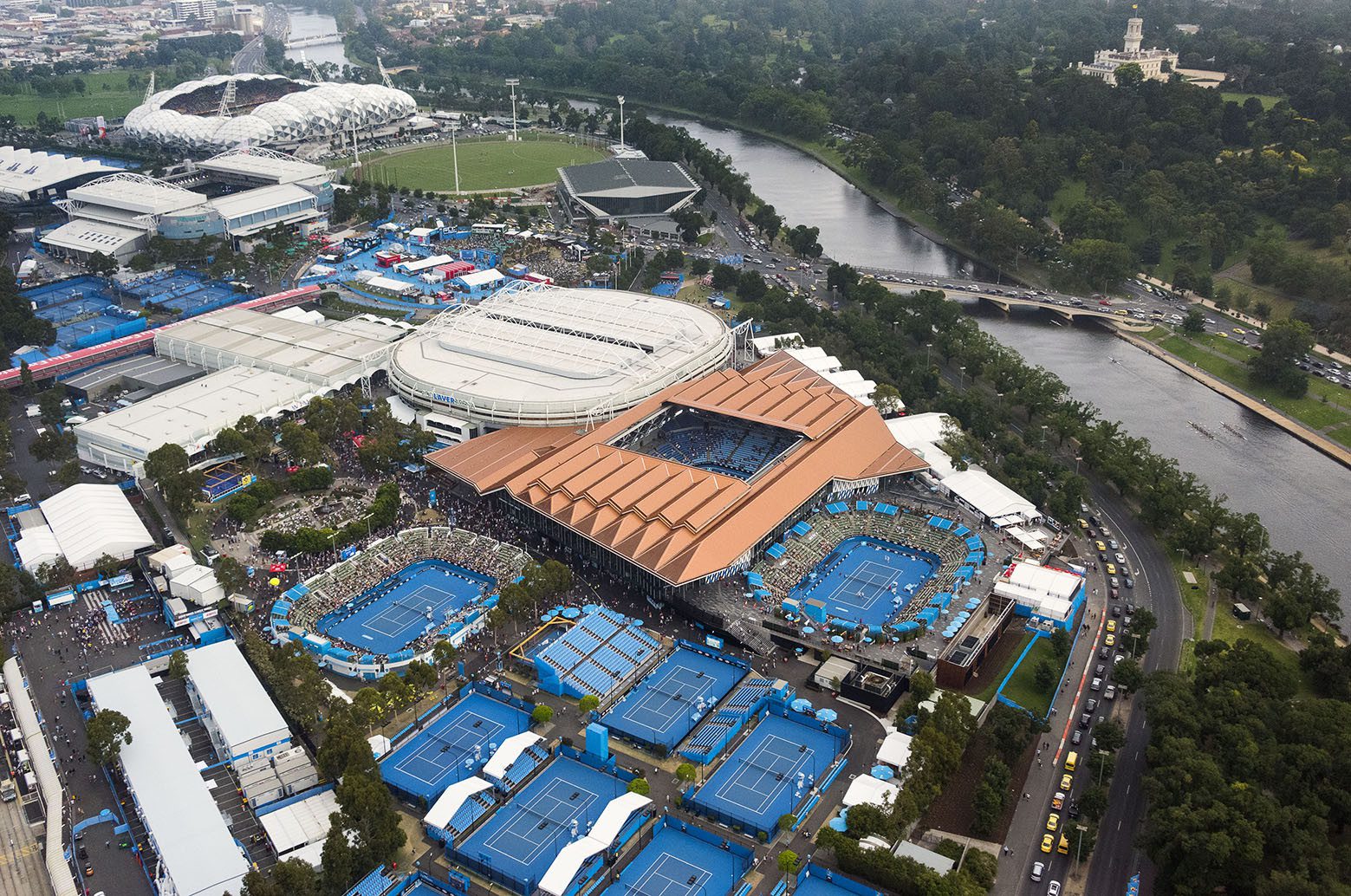
© John Gollings
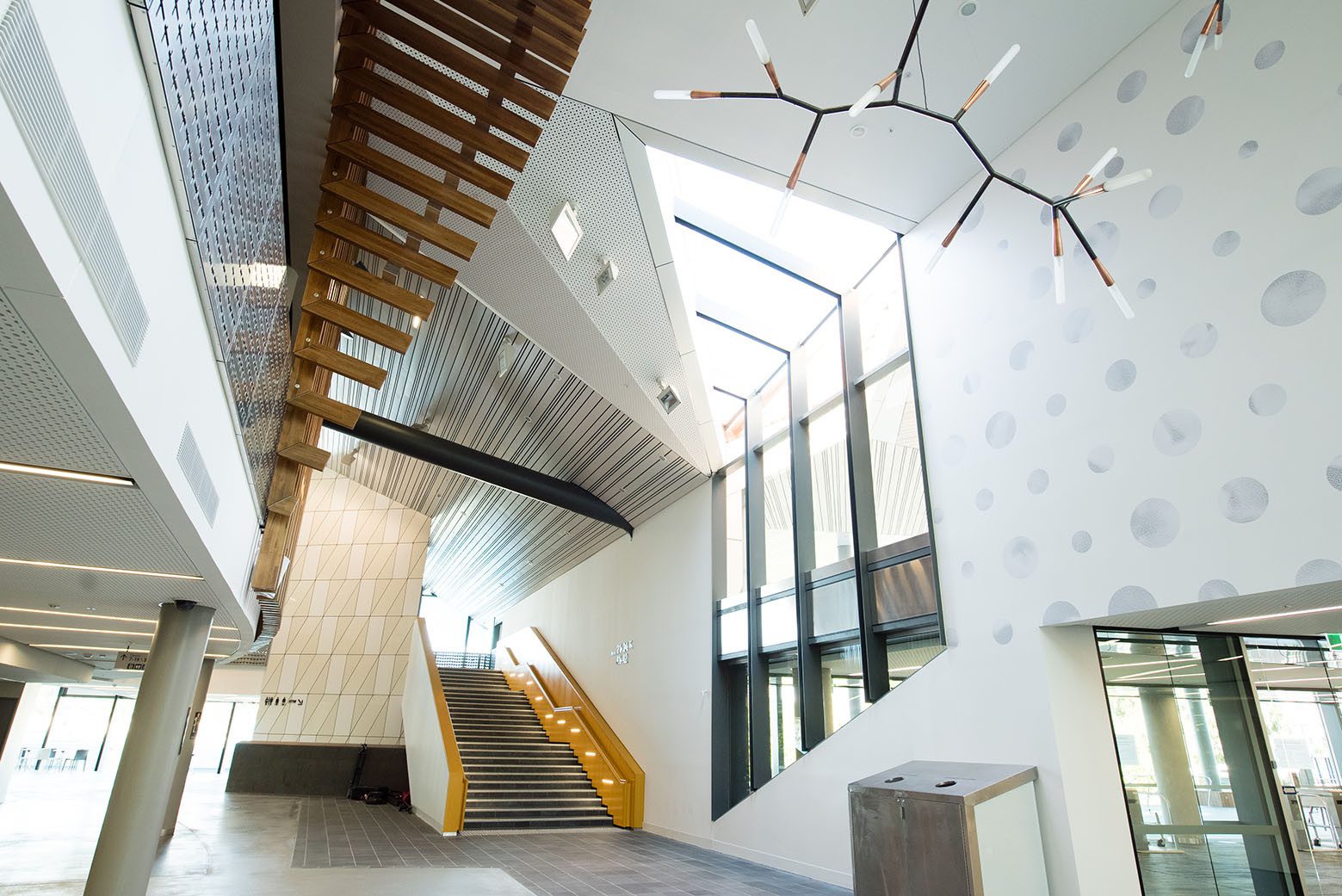
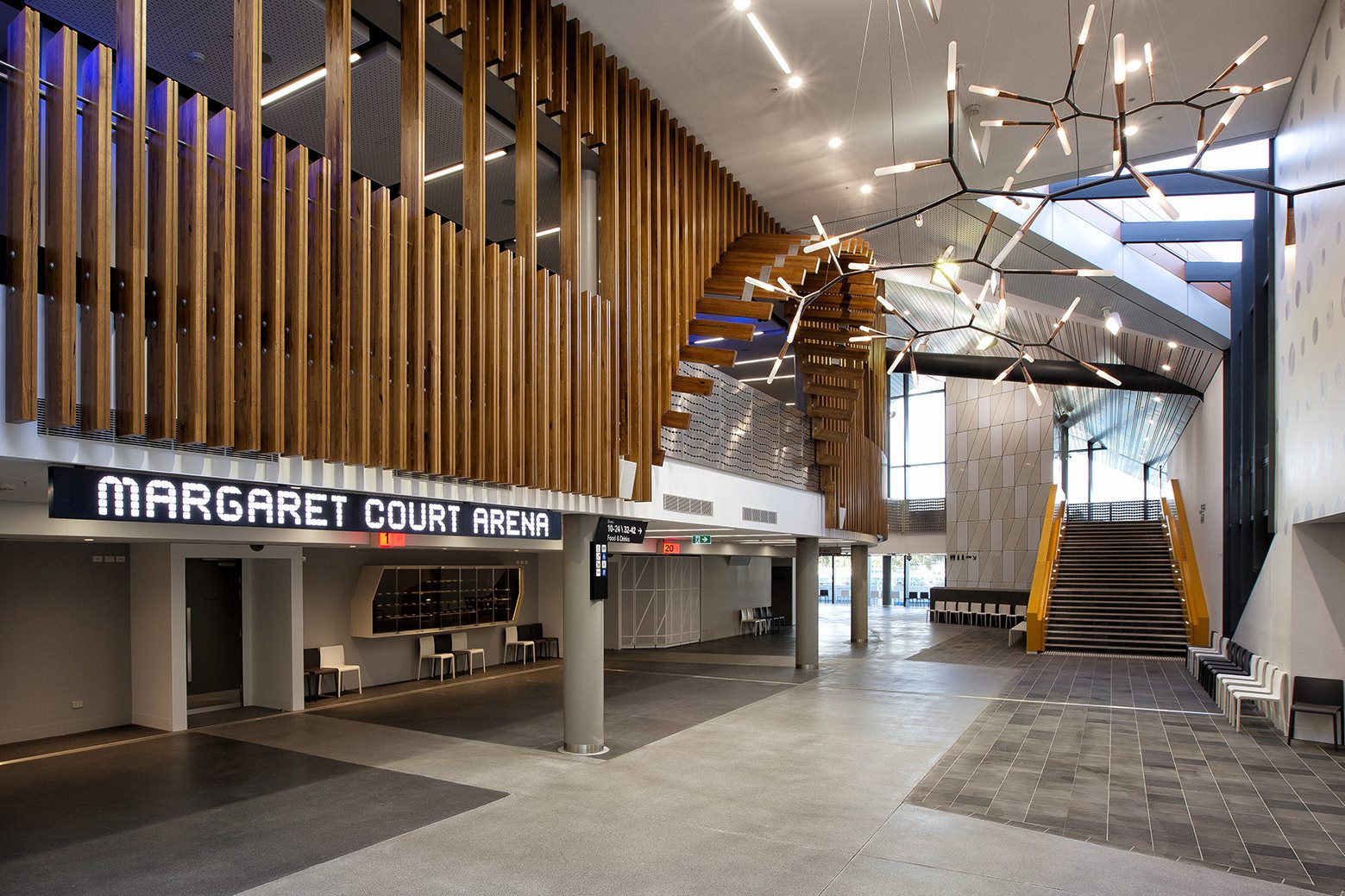
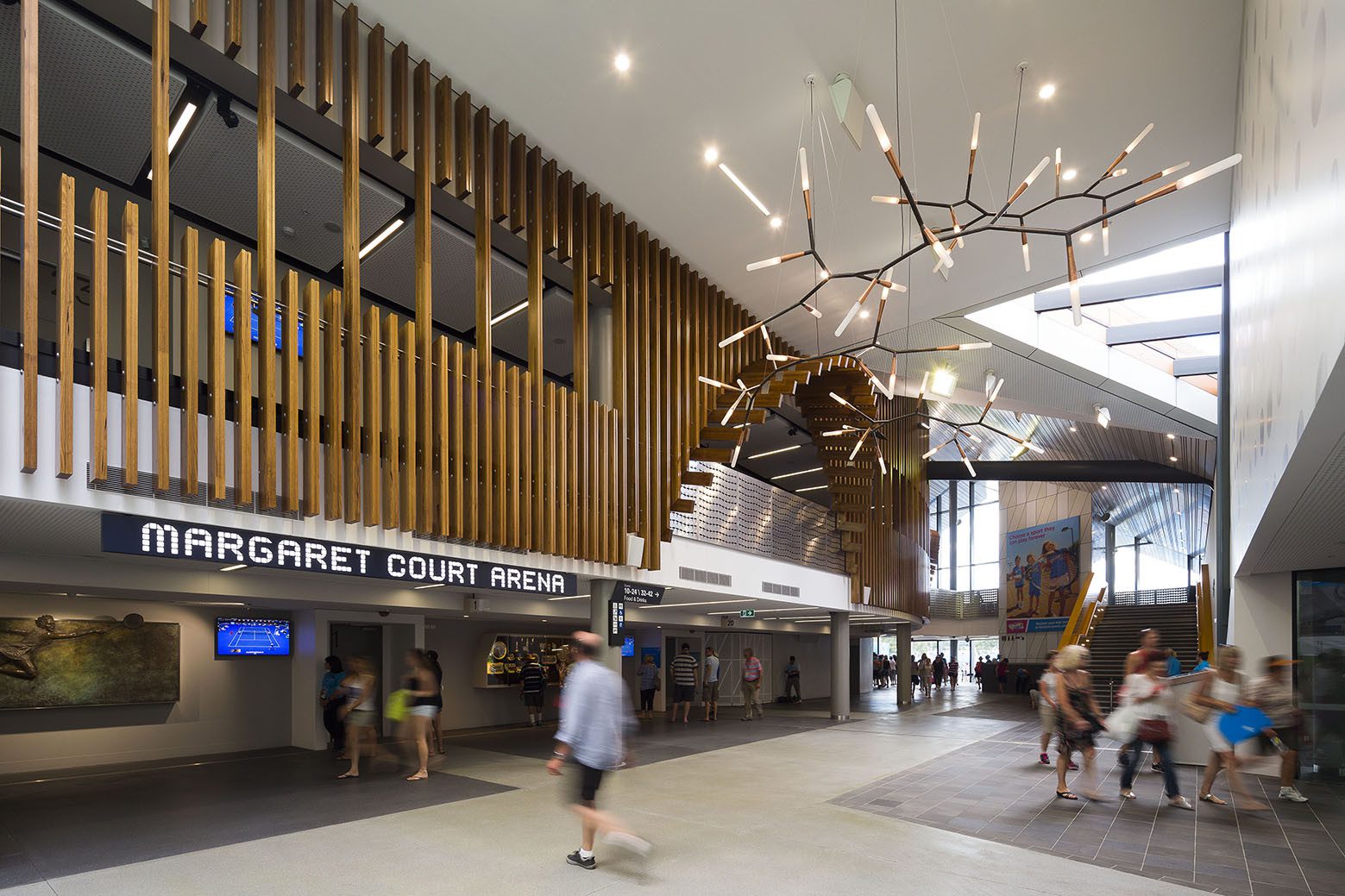
The roof is one of the four key individual design elements that have contributed to the overall architectural form; others are the bowl, concourse and the undercroft. The result is a cohesive architectural form conceived as a “container” where the seating bowl becomes the key architectural expression allowing concourse areas to be developed independently. Large areas of glazing maximise views and expose the internal architecture to passers-by.
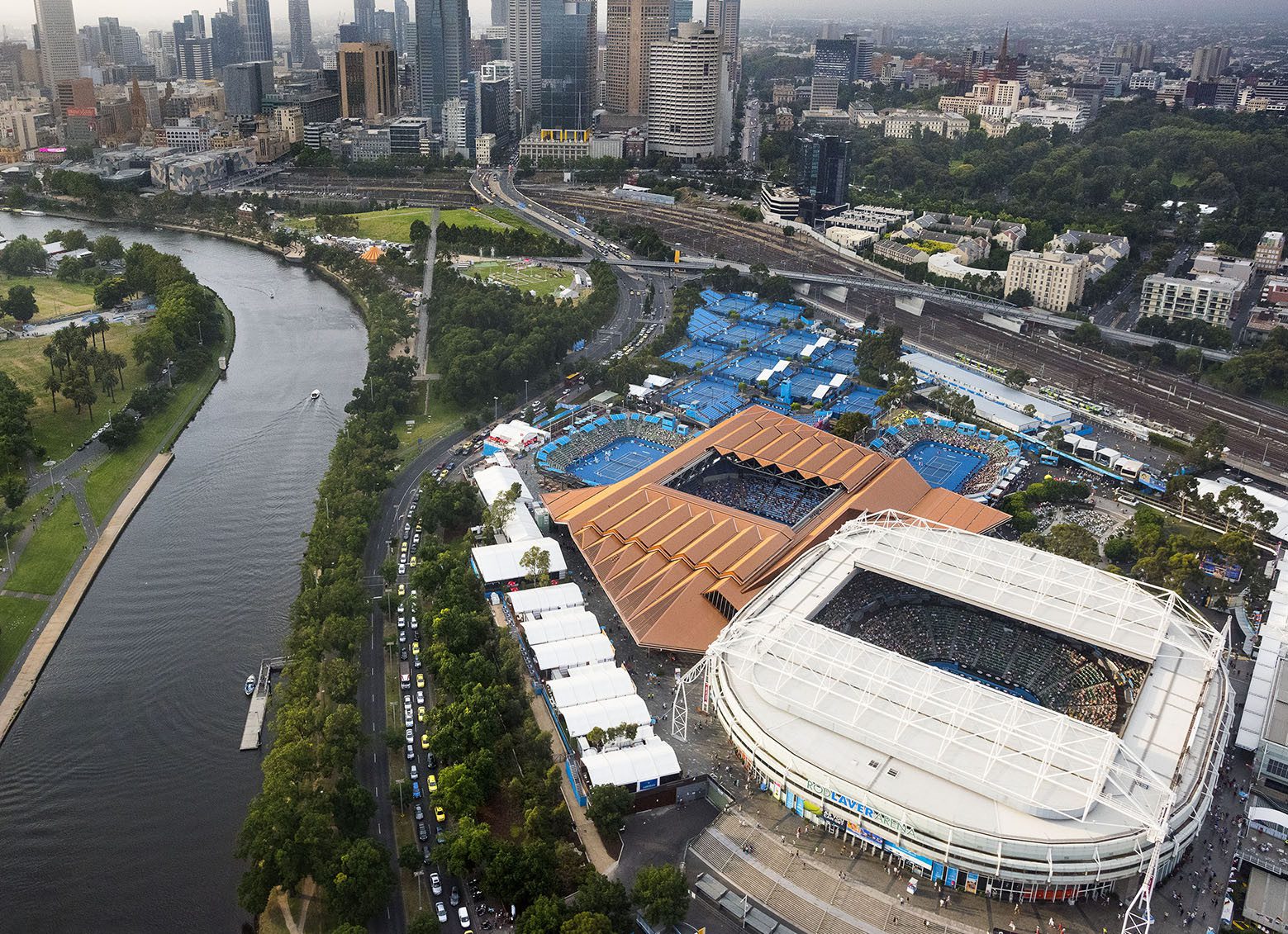
© John Gollings
The design and construction of Margaret Court Arena has been determined not only by the demands of its busy working precinct environment, but also by the physical constraints of having neighbours on all sides which has created additional challenges, particularly the phasing of construction.
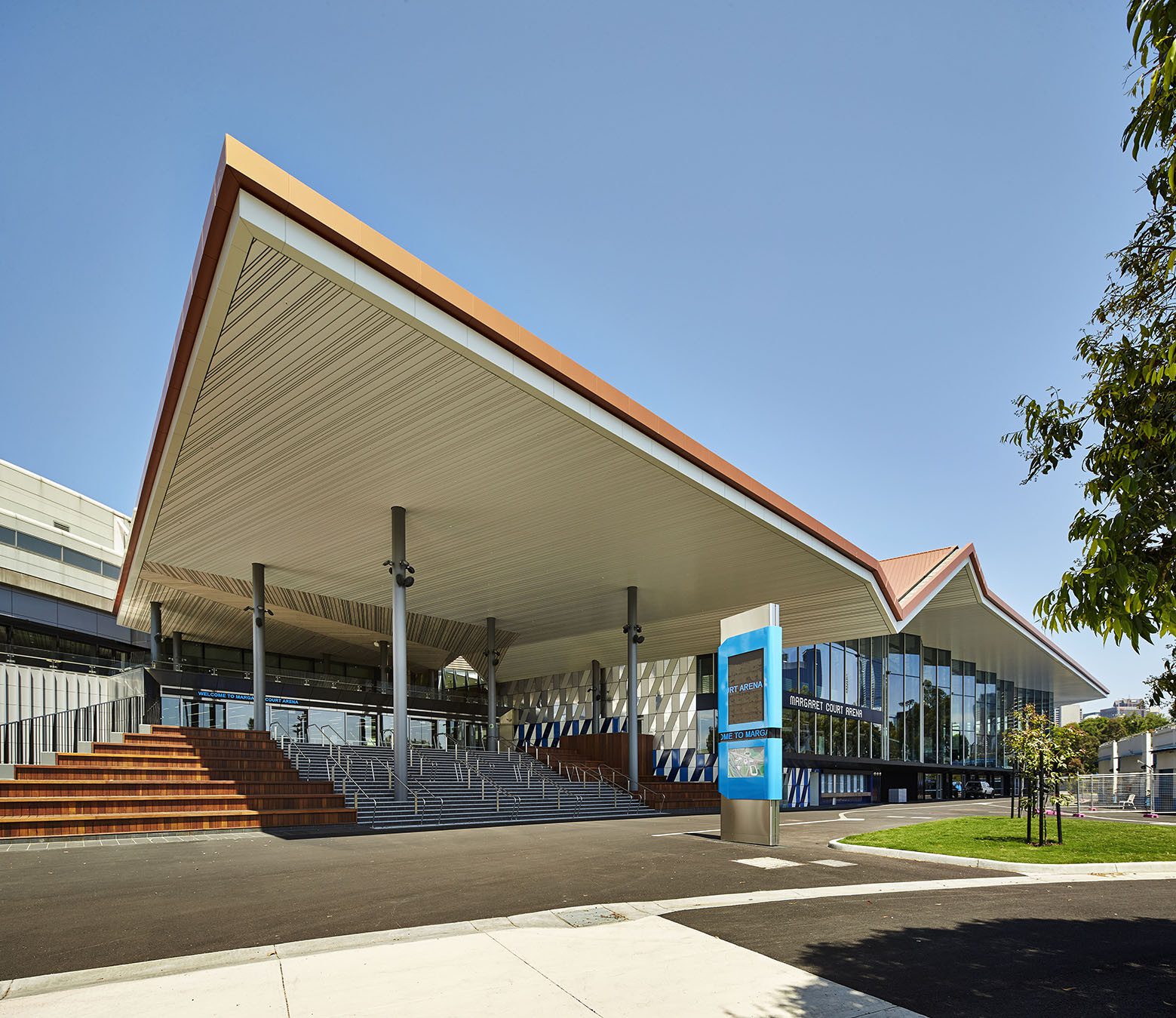
© Peter Bennetts
But the design team, NH Architecture + Populous, believes this has ultimately provided a positive influence, ensuring the team is both focused and exacting in the way it has planned and executed the project. The court position and seating bowl were already fixed, so a great deal of work was undertaken in planning the building, particularly the re-planning of circulation networks for spectators and back of house staff.
© Peter Bennetts
The project sets a new benchmark with its sustainability initiatives. It is aiming to be the first LEED accredited sports venue in Australia, so that it can be compared with other similar global venues for ESD measures. Water consumption has been carefully considered and sustainable strategies adopted to reduce potable water consumption. Enabling works have provided the infrastructure for rainwater harvesting and treatment facilities which include a 4.5mL storm water retention tank to capture rainwater from the new roof. Preliminary calculations demonstrate an overall reduction of 45% in water use against conventional arena design water efficiency measures. The Arena’s proximity to alternative public transportation minimizes the need for onsite parking and sets aside more space for natural areas thereby serving to reinforce the precinct’s unique park setting.
© Jen Dainer
Now complete and fully operational, Margaret Court Arena is a significant step in the realization of the Melbourne and Olympic Parks Masterplan putting the precinct back at the forefront of arena design.
Project Info
Architects: NH Architecture, Populous
Country: Melbourne, Australia
Year: 2015
Photographs: John Gollings, Peter Bennetts, Peter Glenan, Jen Dainer

Isabelle Laurent is a Built Projects Editor at Arch2O, recognized for her editorial insight and passion for contemporary architecture. She holds a Master’s in Architectural Theory from École Nationale Supérieure d’Architecture de Paris-Belleville. Before joining Arch2O in 2016, she worked in a Paris-based architectural office and taught as a faculty adjunct at the École Spéciale d’Architecture in Paris. Isabelle focuses on curating projects around sustainability, adaptive reuse, and urban resilience. With a background in design and communication, she brings clarity to complex ideas and plays a key role in shaping Arch2O’s editorial