

Sepand House of Culture and Art represents the revival of a valuable residence from the 1960s, originally designed by Dr. Paknia. Once the home and medical office of Dr. Esmaeilzadeh, a cardiologist, the house has now been transformed from a place dedicated to physical care into a platform for culture and community.
© Mohammad Hassan Ettefagh
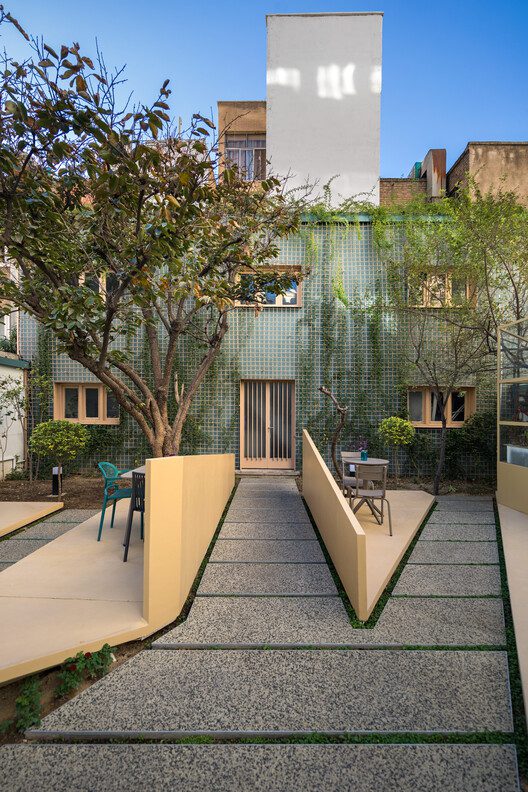
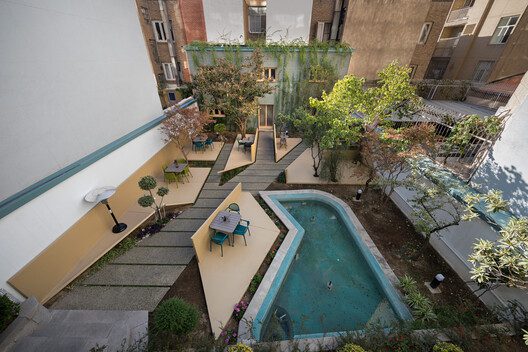
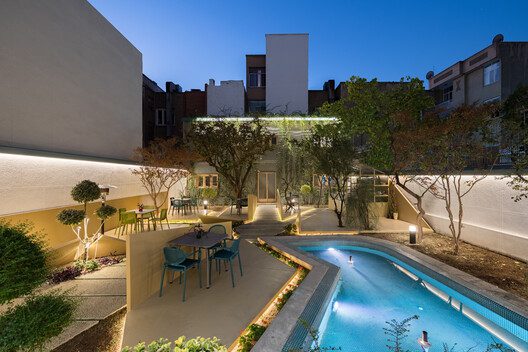
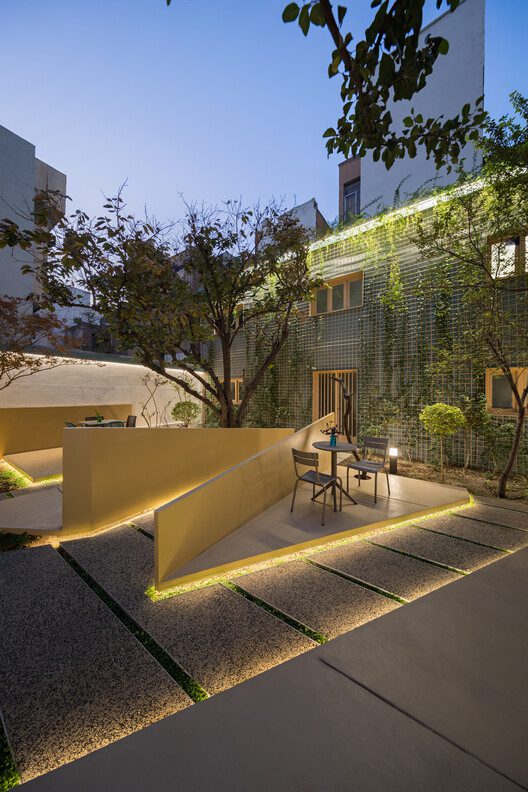
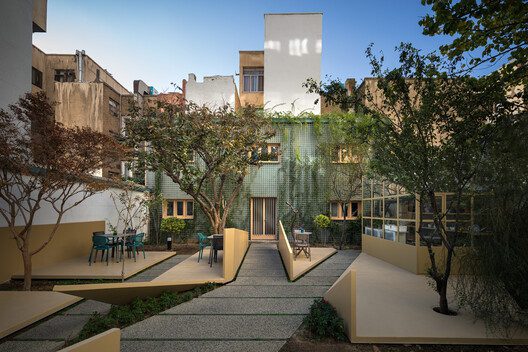
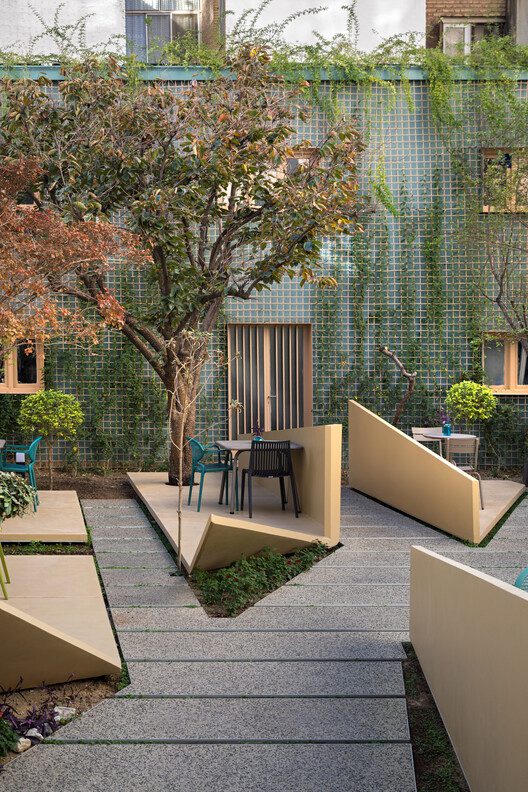
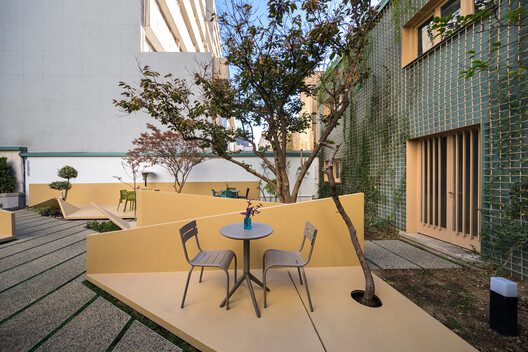
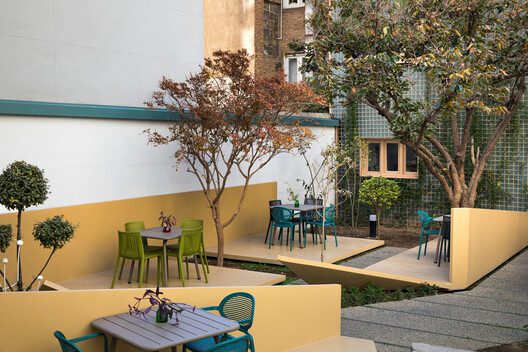
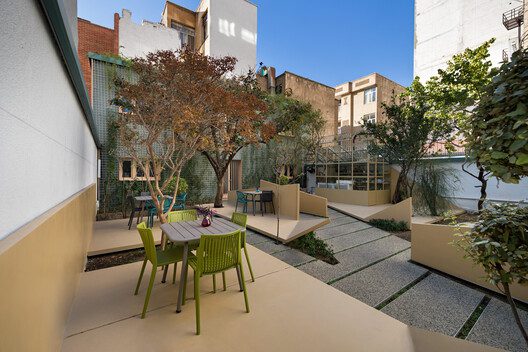
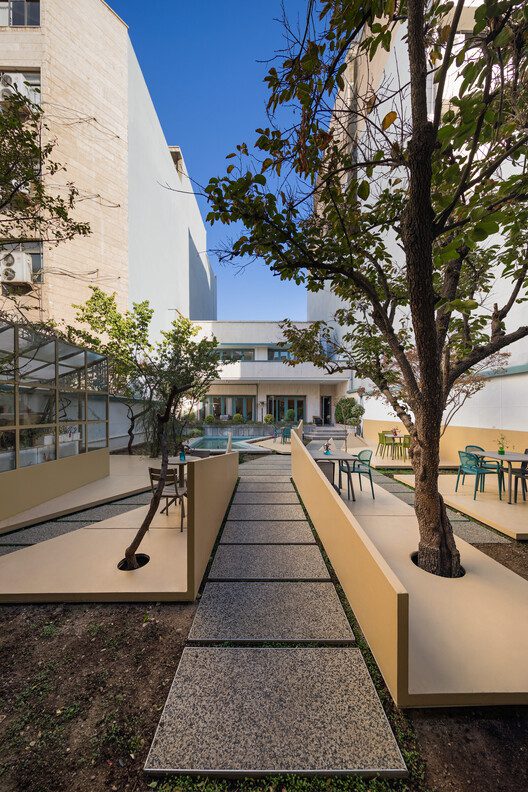
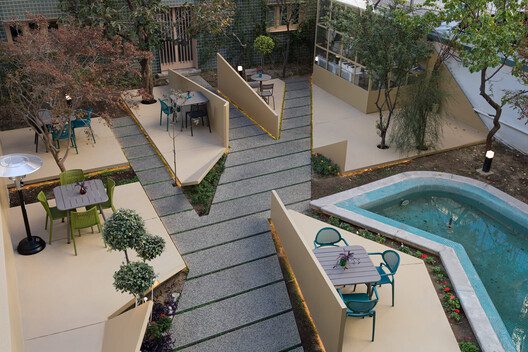
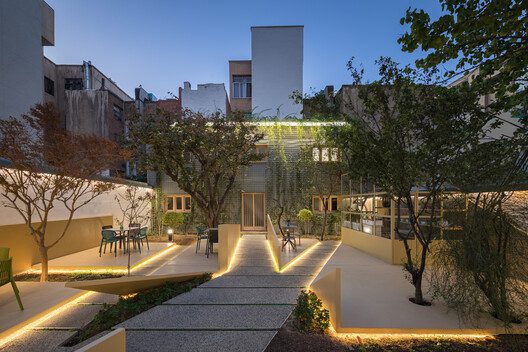
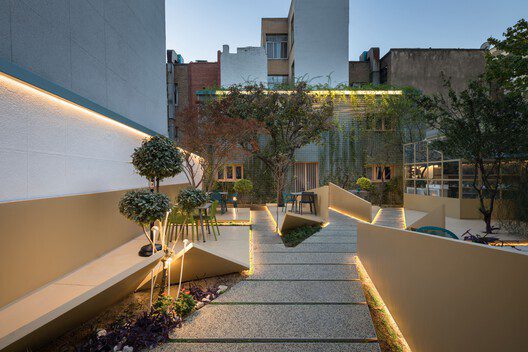
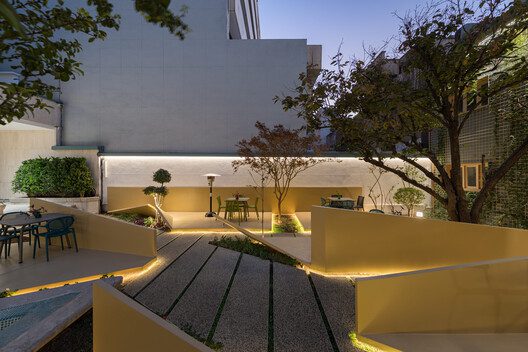
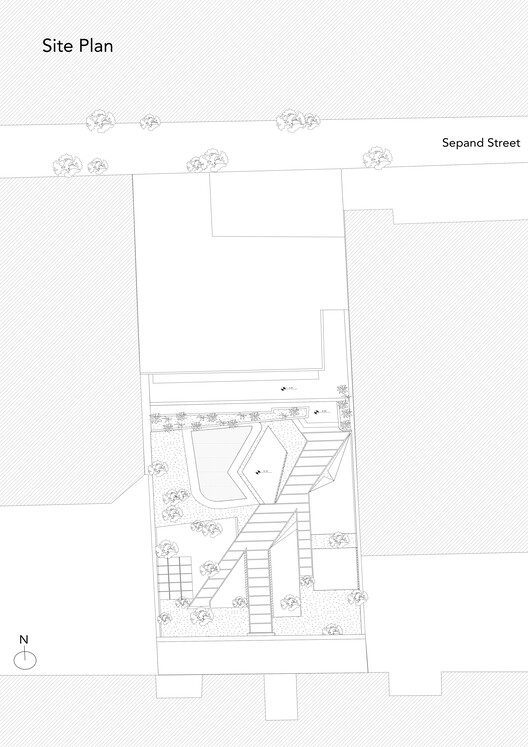
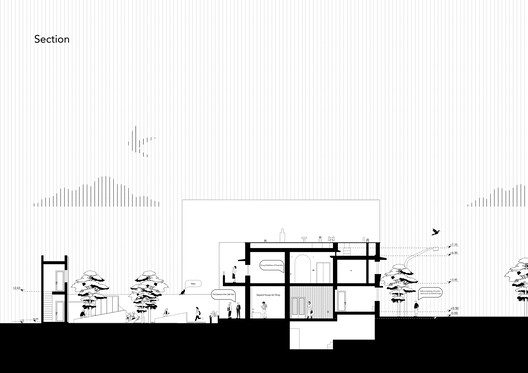
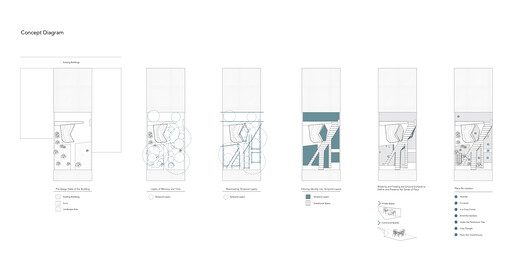
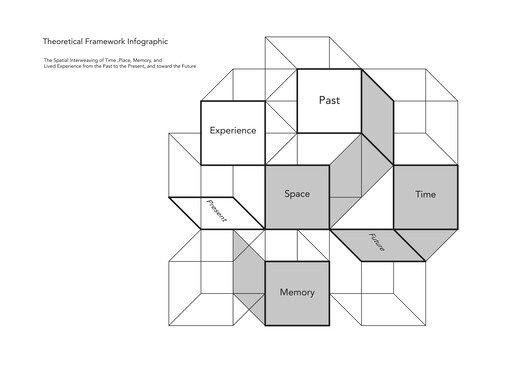
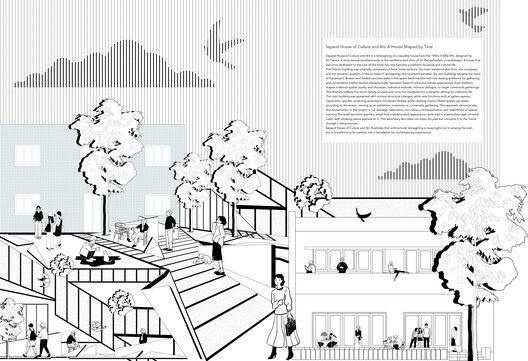
The original structure consisted of three linear parts: the main building, a courtyard, and the servants’ quarters. In the process of regeneration, the courtyard became the heart of the project. Folded and fractured concrete slabs were placed here as seating platforms, inviting gathering and dialogue. These levels, metaphors for the layers of time and human experience, create diverse spatial qualities—from solitude and intimate conversation to larger collective events—reflecting the social variety of the users.
© Mohammad Hassan Ettefagh
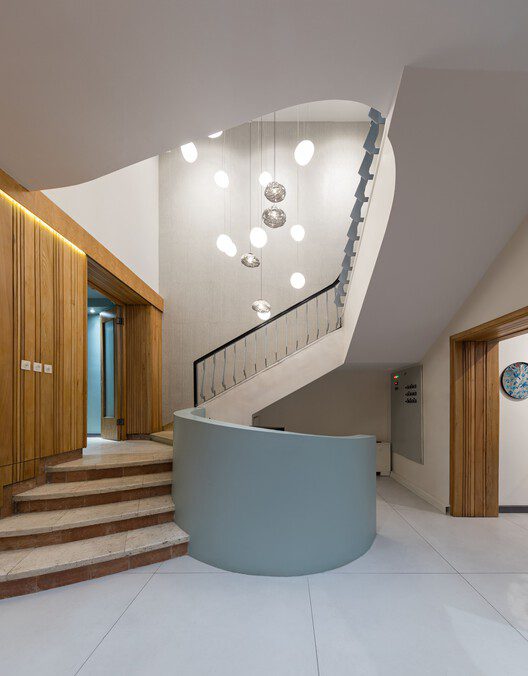
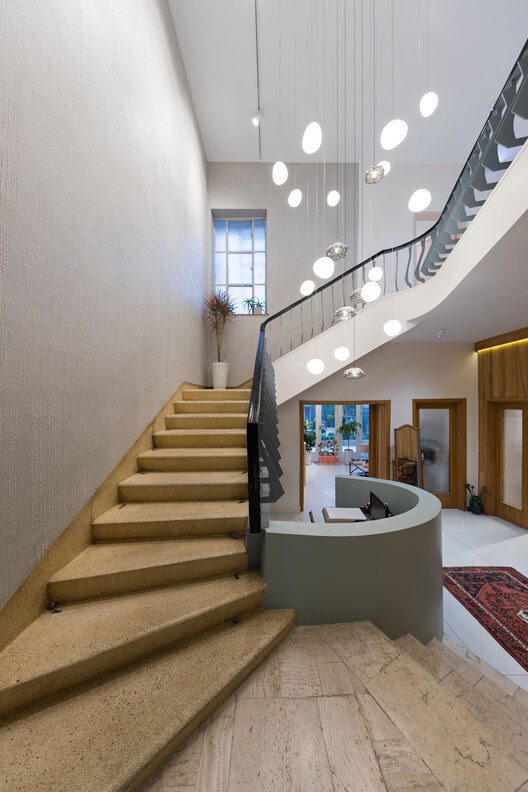
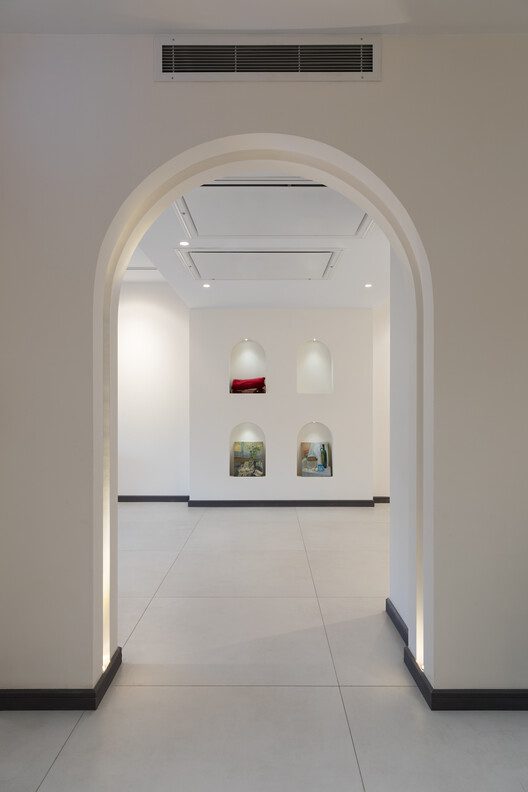
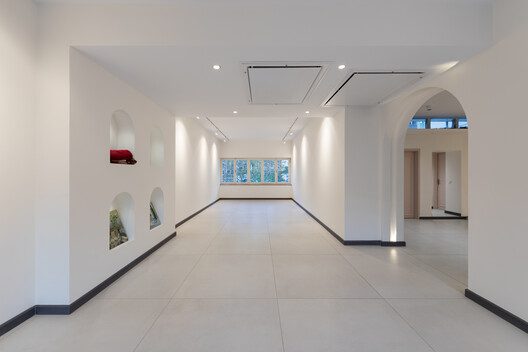
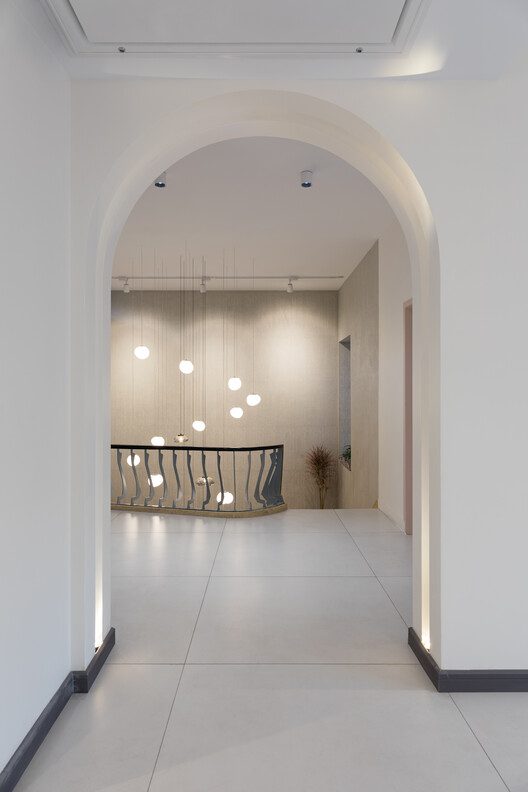
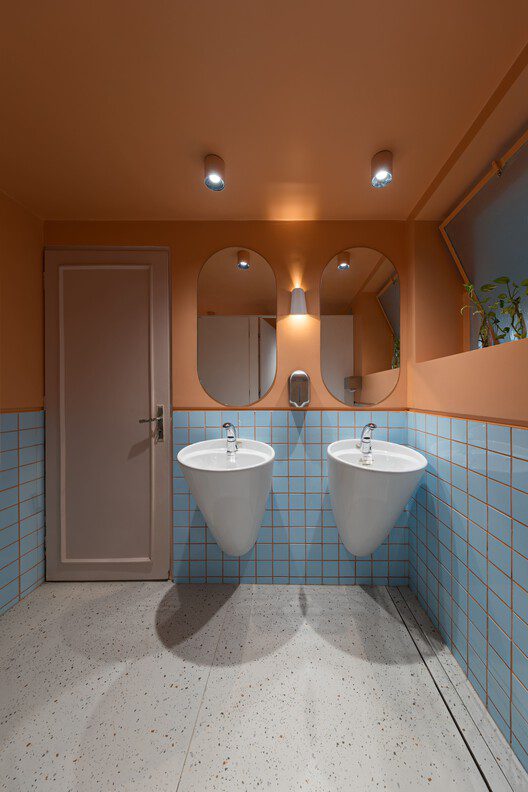
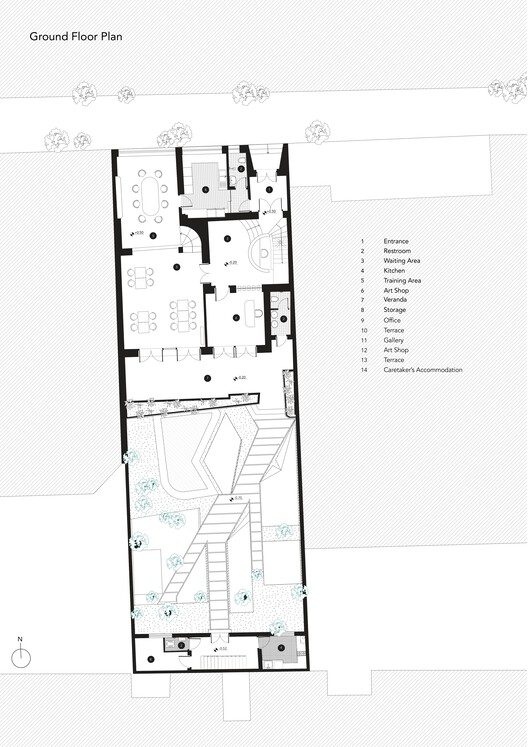
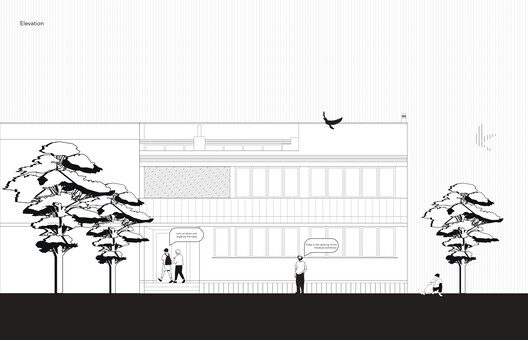
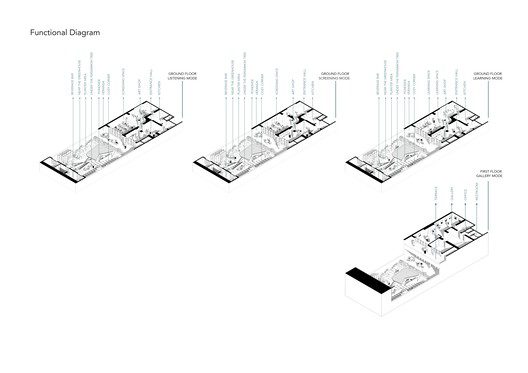
The main building was preserved with minimal fundamental changes. Its interior spaces were adapted flexibly to host new functions such as a gallery, classrooms, and a small cinema. This approach demonstrates that regeneration here is not nostalgic reconstruction but rather a reinterpretation of spatial memory.
© Mohammad Hassan Ettefagh
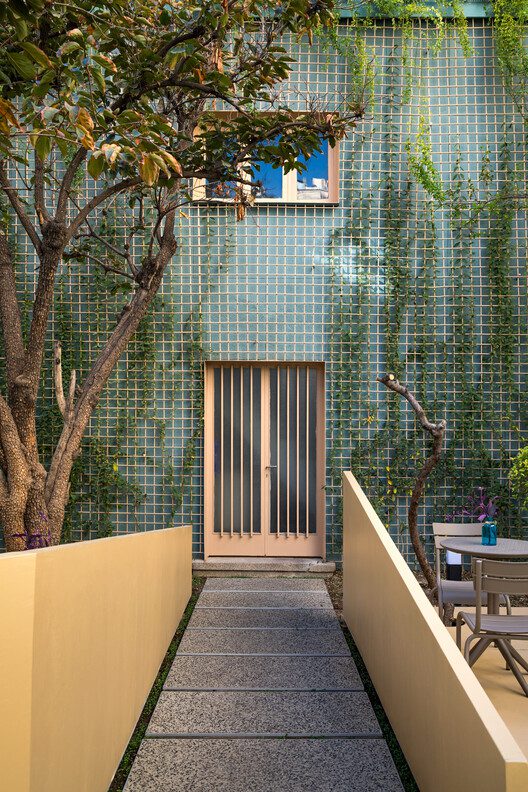
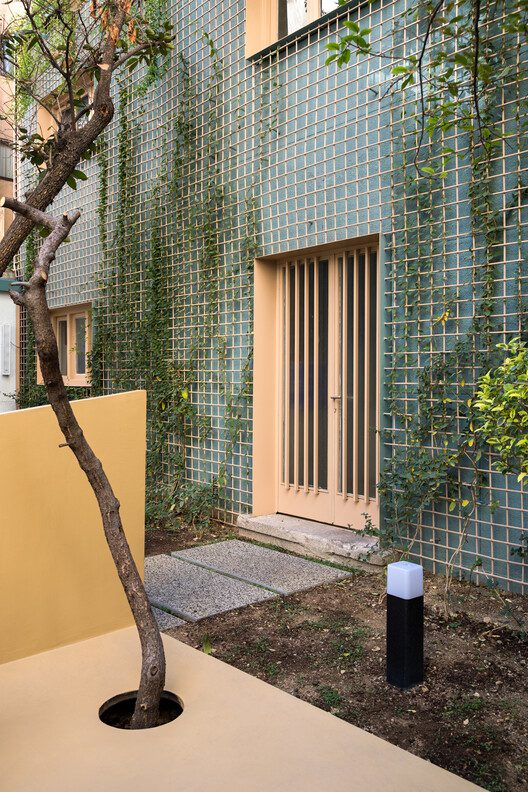
The smaller servants’ building, once worn and aged, was wrapped in a metal mesh that supports climbing plants. This secondary skin does not erase the past but connects it to the future through a living process.
© Mohammad Hassan Ettefagh
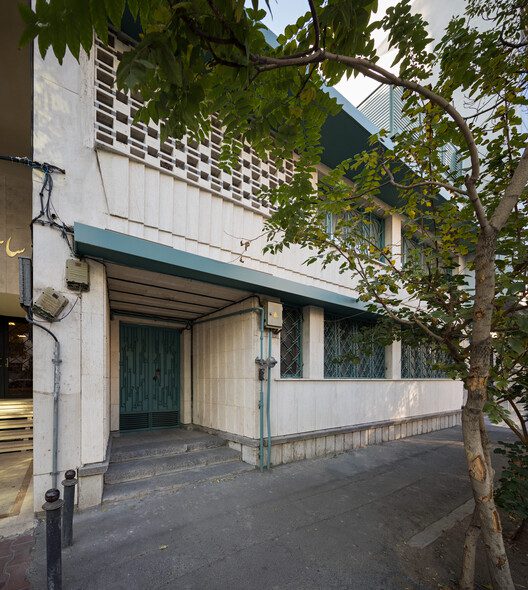
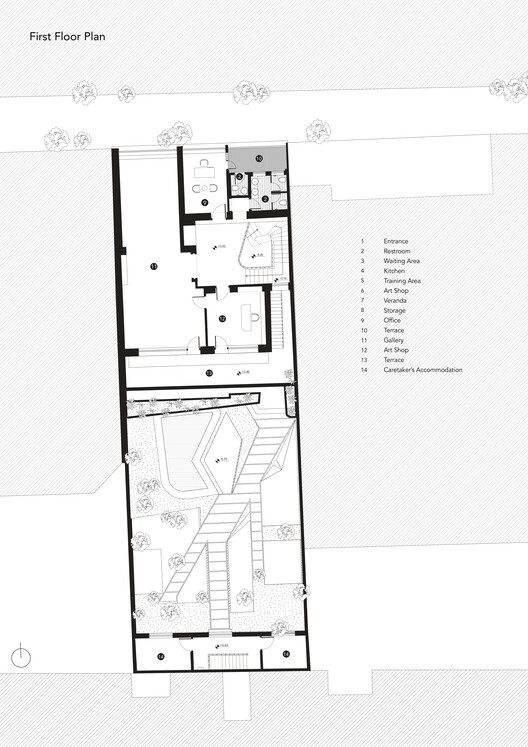
Within the complex, the gallery was relocated to the first floor to offer a more open and adaptable venue for audiences. Meanwhile, the ground-floor reception hall, with its existing level differences, was turned into an opportunity: a dynamic, multilayered stage for live performances, film screenings, and workshops. Thus, the spaces gained a new character—somewhere between past and present—where collective life is reimagined through contemporary cultural experiences.
© Mohammad Hassan Ettefagh
Originally a villa from the 1950s, the building has retained its architectural integrity despite decades of urban transformation. Villa Street was once lined with similar houses, from which only a few remain today. Among them, this house stands out as one of the most notable and influential. Its significance lies not only in age or survival but in evoking layers of architectural history and urban identity.
© Mohammad Hassan Ettefagh
The design approach, therefore, focused on preserving the structure, reinforcing its spatial integrity, and reinterpreting its essential values. In doing so, the project safeguards artistic details and historical authenticity while enabling the house to play an active role once again in the contemporary life of the city.
© Mohammad Hassan Ettefagh
Project Info:
-
Architects: Mohammadreza Samavati and Maryam Karimian
- Area: 425 m²
- Year: 2024
-
Photographs: Mohammad Hassan Ettefagh
-
Manufacturers: Hayka Group, KWC Iran, Setareh Shomal Lighting
-
Lead Architects: Mohammadreza Samavati, Maryam Karimian
-
Mechanical Design: FARNOOD AEENDAR
-
Lighting: Mohammad Fakhraei
-
Construction Company: Kiasaze Construction Group
-
Design Assistant: Yasaman Hesari
-
Client: Farshid Fariborzi
-
Supervisor: Kiasaze Construction Group
-
Graphic & Presentation: dotline_studio

Isabelle Laurent is a Built Projects Editor at Arch2O, recognized for her editorial insight and passion for contemporary architecture. She holds a Master’s in Architectural Theory from École Nationale Supérieure d’Architecture de Paris-Belleville. Before joining Arch2O in 2016, she worked in a Paris-based architectural office and taught as a faculty adjunct at the École Spéciale d’Architecture in Paris. Isabelle focuses on curating projects around sustainability, adaptive reuse, and urban resilience. With a background in design and communication, she brings clarity to complex ideas and plays a key role in shaping Arch2O’s editorial