

The Rubber.er Cafe is a modest yet characterful café located in Rayong, Thailand — a region deeply rooted in the rubber industry. Designed by SA-ARD architecture & construction, the project transforms the memory of the owner’s family-run rubber factory into a contemporary public space that blends hospitality, local heritage, and architectural clarity.
© Usssajaeree studio
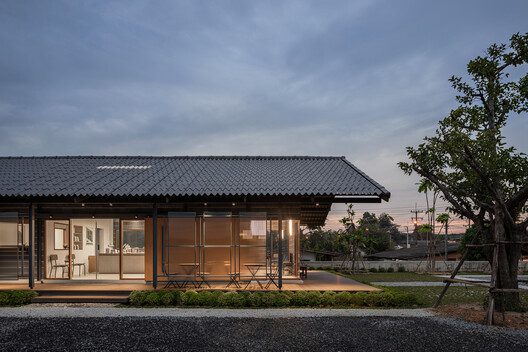
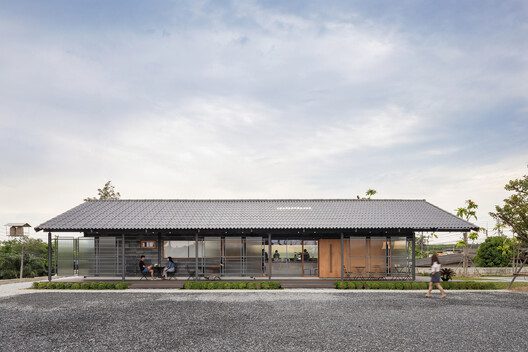
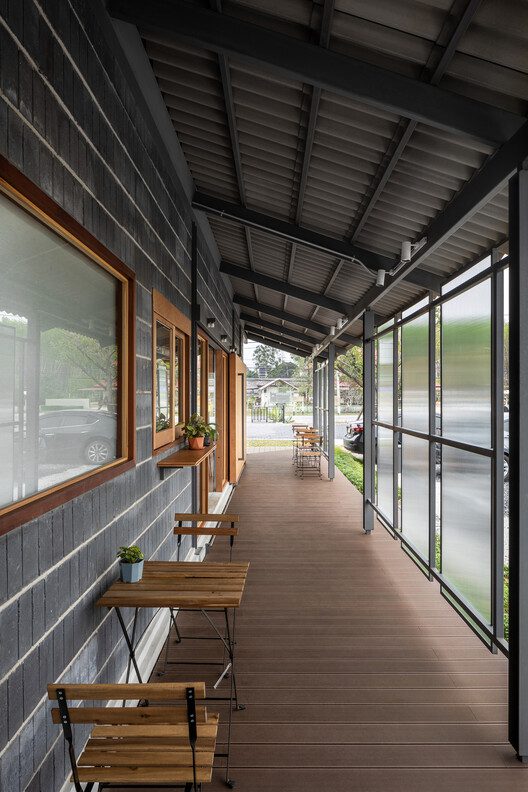
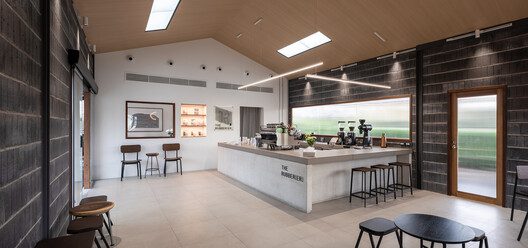
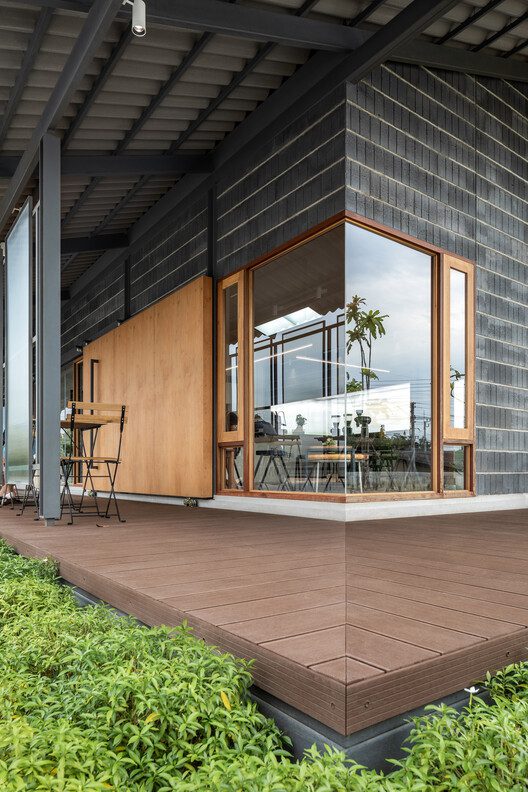
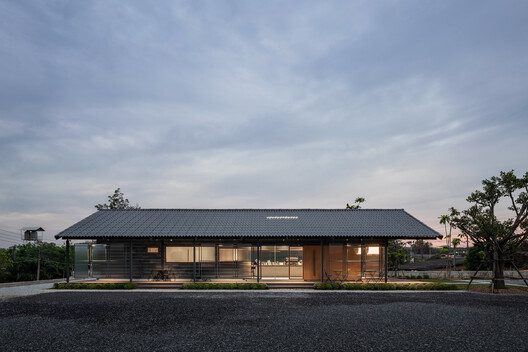
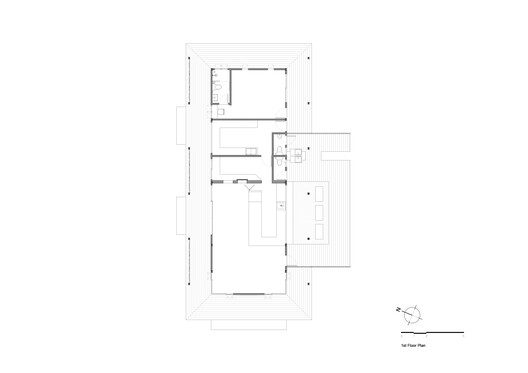
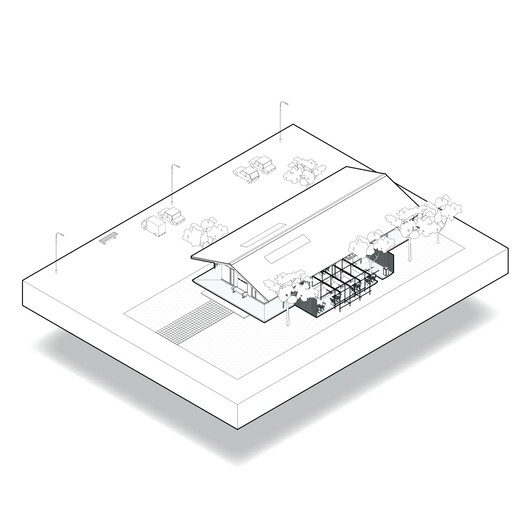
Rather than creating a café from a clean slate, the architects approached the project as an opportunity to preserve and reinterpret the site’s industrial past. The result is a single-storey, 20-meter-long structure that subtly echoes the form and atmosphere of the former rubber-processing buildings, while introducing a softer and more refined spatial language suited to today’s café culture.
© Usssajaeree studio
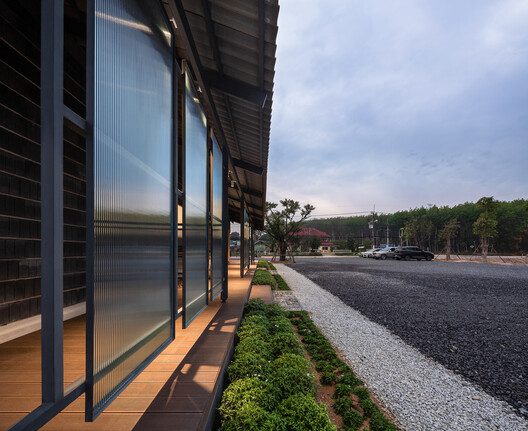
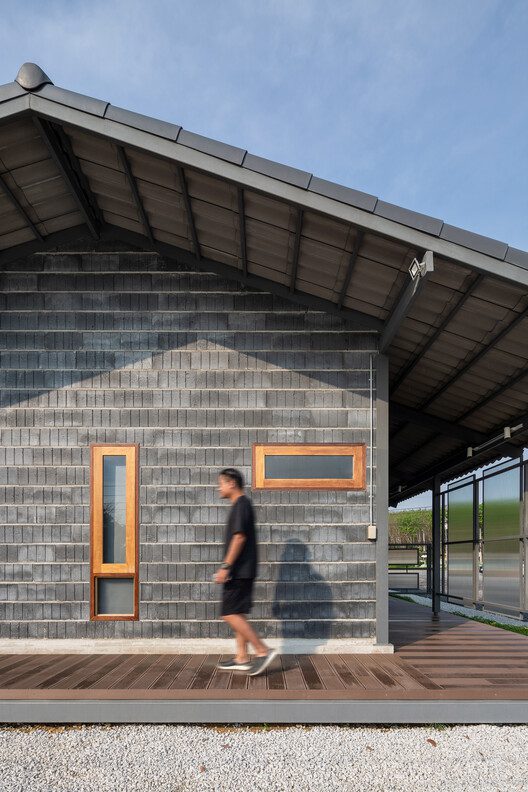
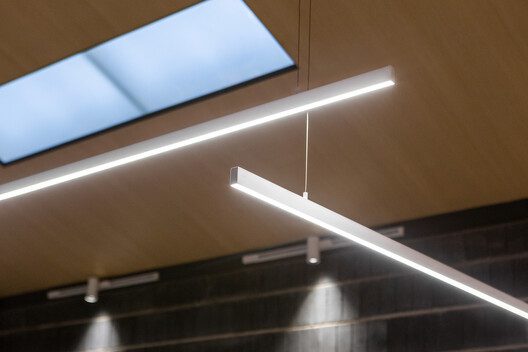
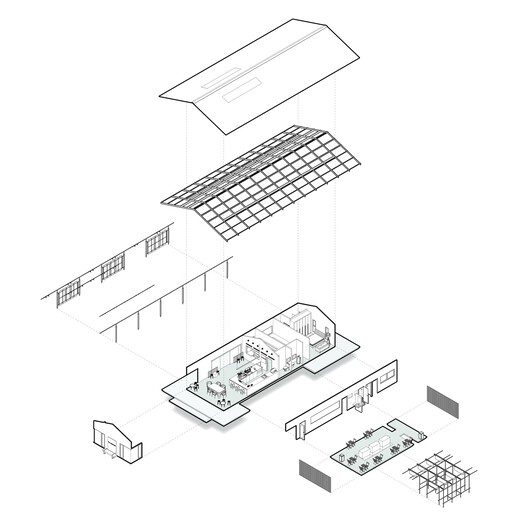
Concept and Architectural Approach – The design takes inspiration from the owner’s background — a family who has operated a complete rubber production line for generations, including plantations, sheet-rolling, and drying houses. For SA-ARD, the new café becomes a small architectural museum, showcasing the heritage of rubber-making while serving as a communal space. Over 80% of materials from the original factory were reused and reconfigured into a cleaner, contemporary composition. The low, elongated roof, deep overhangs, and exposed steel structure create a calm silhouette, anchoring the building within the wide industrial landscape.
© Usssajaeree studio
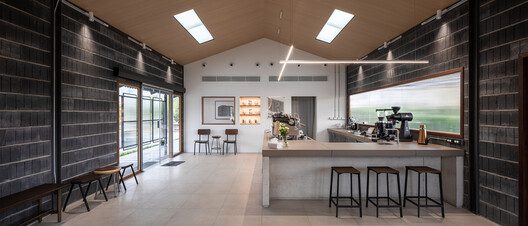
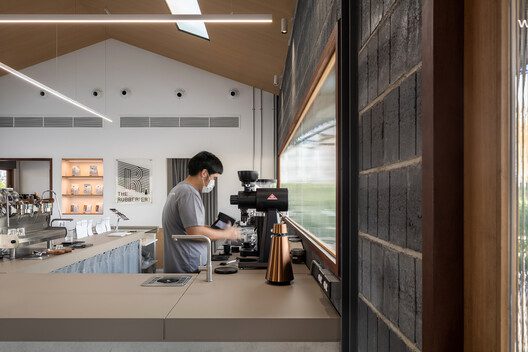
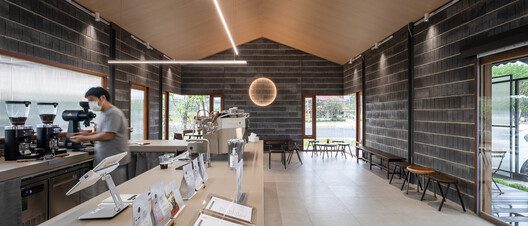
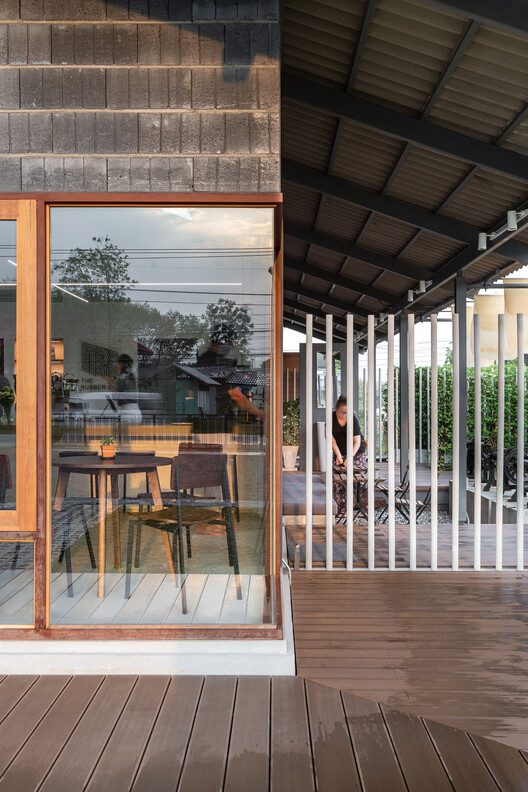
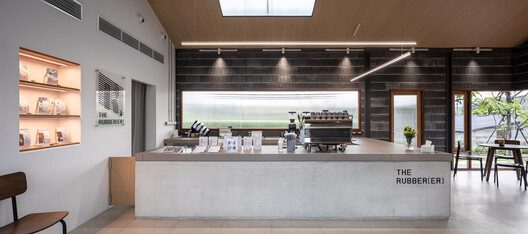
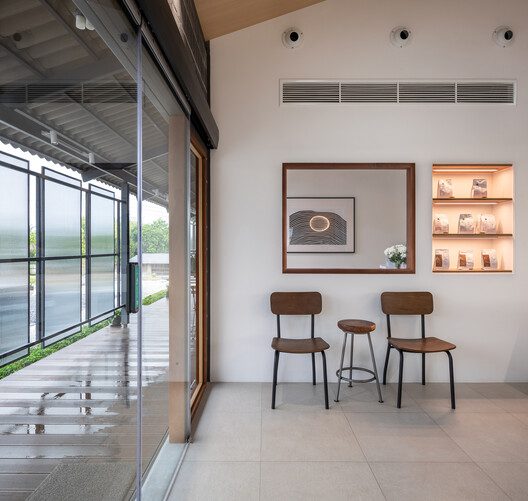
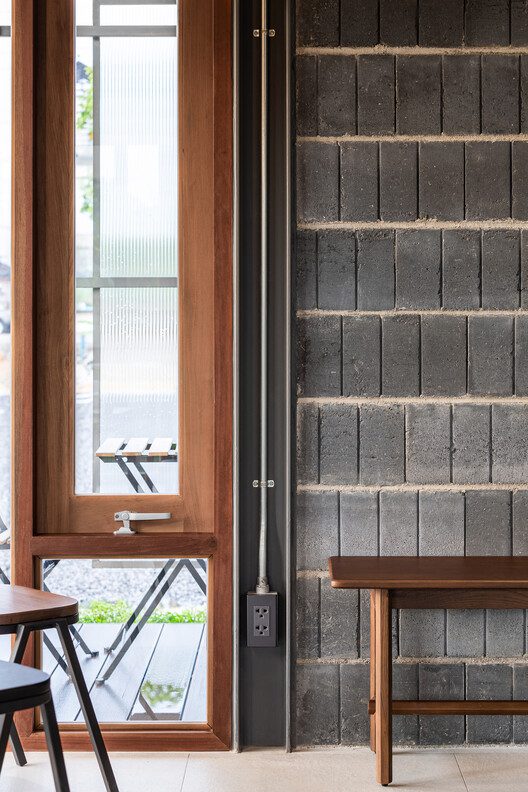
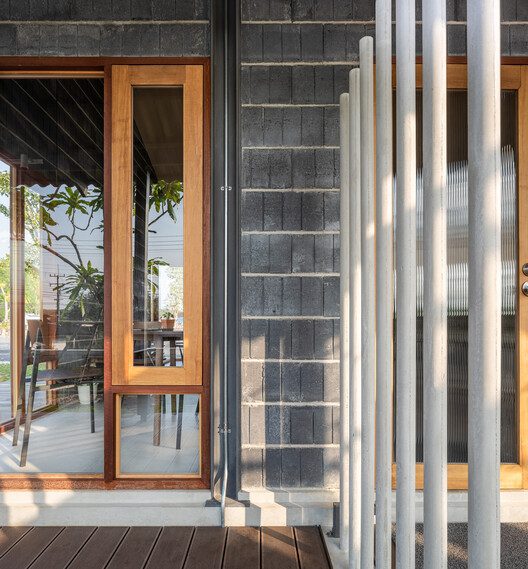
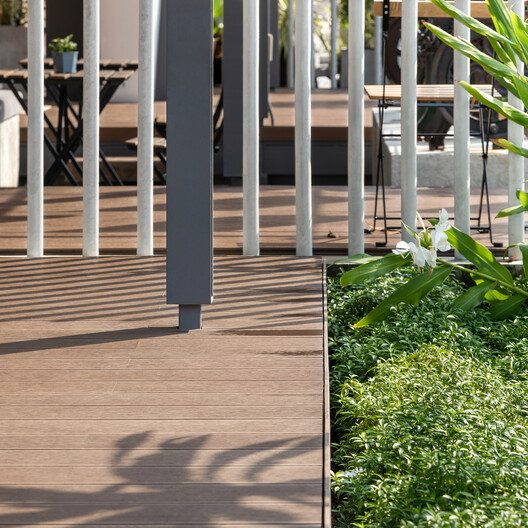
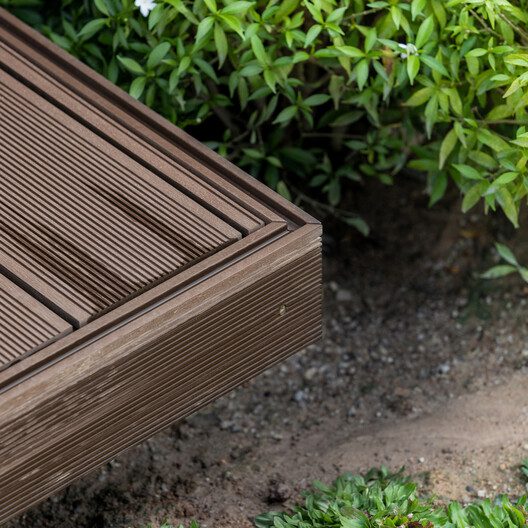
Material Strategy: Memory Embedded in Construction – Materiality plays a critical role in expressing the project’s narrative. The entire envelope is built using Eco Blocks, made from recycled materials and featuring natural horizontal lines. By aligning these lines carefully, the architects created a subtle yet distinctive pattern that animates both the interior and exterior surfaces. The blocks also serve as thermal insulation, reducing energy use and simplifying construction. A large concrete counter forms the centerpiece of the café interior, complemented by warm timber door frames, windows, and custom furniture. The combination of concrete, recycled blocks, and wood reflects the studio’s ethos of structural honesty and material simplicity.
© Usssajaeree studio
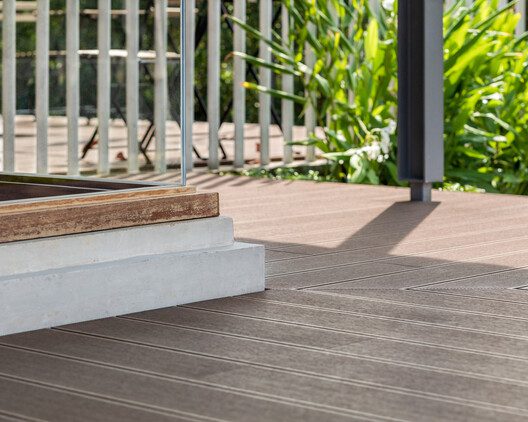
An interesting detail is the wall construction. Instead of traditional reinforced concrete tie beams, the team used Eco Blocks combined with steel angles, allowing the structure to express its raw connections without added bulk. This technique not only reduces material use but also highlights the building’s straightforward assembly.
© Usssajaeree studio
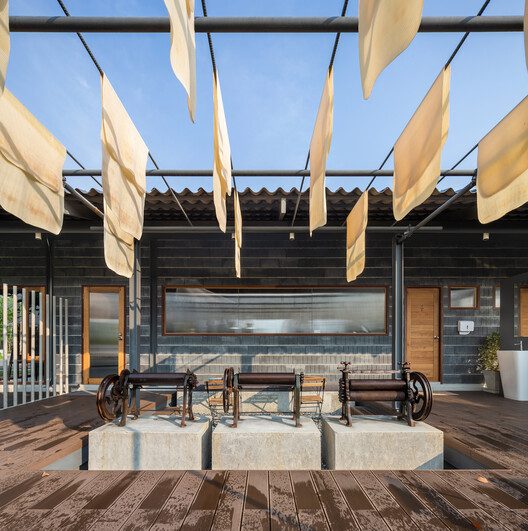
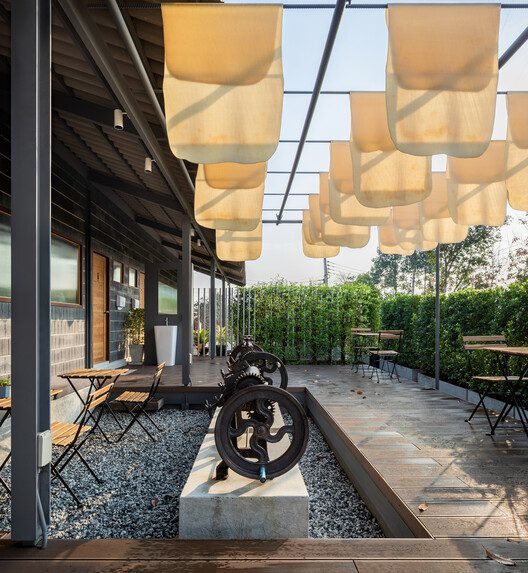
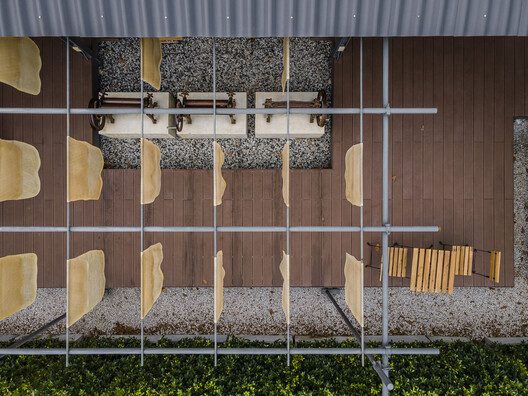
A Café That Archives Local Heritage – Behind the café is a semi-outdoor exhibition zone displaying three manual rubber-rolling machines, once used in daily production. Above them, sheets of raw rubber hang from a steel frame, swaying gently in the breeze — creating a poetic installation that is both educational and visually striking. This space invites visitors to sit, observe, and learn about the rubber-making process. Through simple gestures, the design transforms everyday industrial artifacts into living cultural exhibits.
© Usssajaeree studio
A New Layer of Life on an Old Industrial Site – The Rubber(er) is more than a commercial venue. It is an architectural effort to collect, preserve, and share the memory of a local industry, while offering a warm and contemporary atmosphere for its community. Through modest means, thoughtful detailing, and an honest expression of materials, the café reconnects the past with the present — demonstrating how small-scale architecture can meaningfully reflect local identity.
Project Info:
-
Architects: SA-ARD studio
- Country: Rayong ,Thailand
- Area: 180 m²
- Year: 2023
-
Photographs: Usssajaeree studio
-
Lead Architects: Sithanon Cha-aim
-
Design Team: Sithanon cha-aim

Sophie Tremblay is a Montreal-based architectural editor and designer with a focus on sustainable urban development. A McGill University architecture graduate, she began her career in adaptive reuse, blending modern design with historical structures. As a Project Editor at Arch2O, she curates stories that connect traditional practice with forward-thinking design. Her writing highlights architecture's role in community engagement and social impact. Sophie has contributed to Canadian Architect and continues to collaborate with local studios on community-driven projects throughout Quebec, maintaining a hands-on approach that informs both her design sensibility and editorial perspective.