

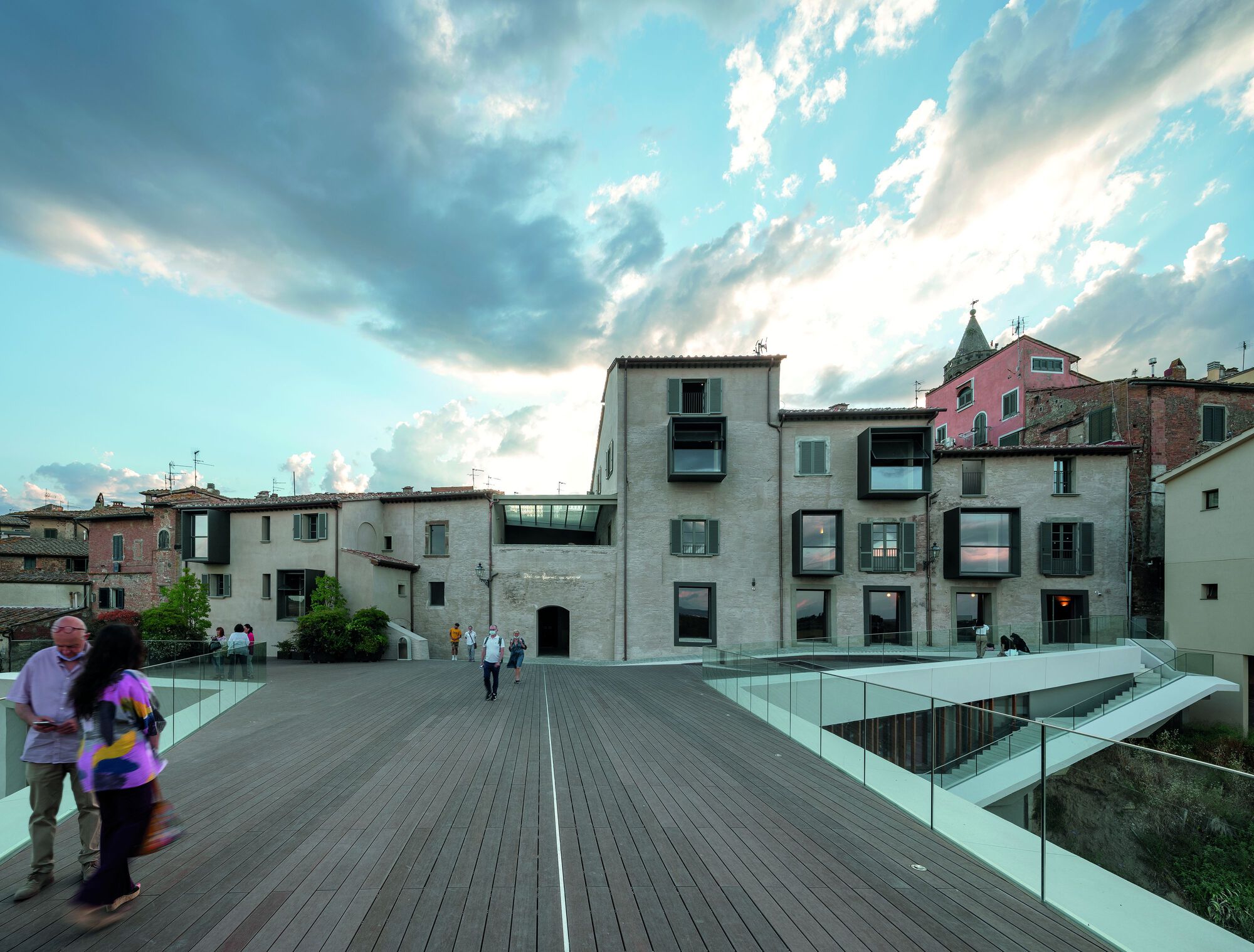
Revival of an Italian Hilltown. Designed by Mario Cucinella Architects for the historic centre of Peccioli, Palazzo Senza Tempo is a response to the municipal administration’s desire to encourage new cultural programmes and commercial activity while enhancing the built heritage of this Medieval Tuscan hilltown.
© Duccio Malagamba
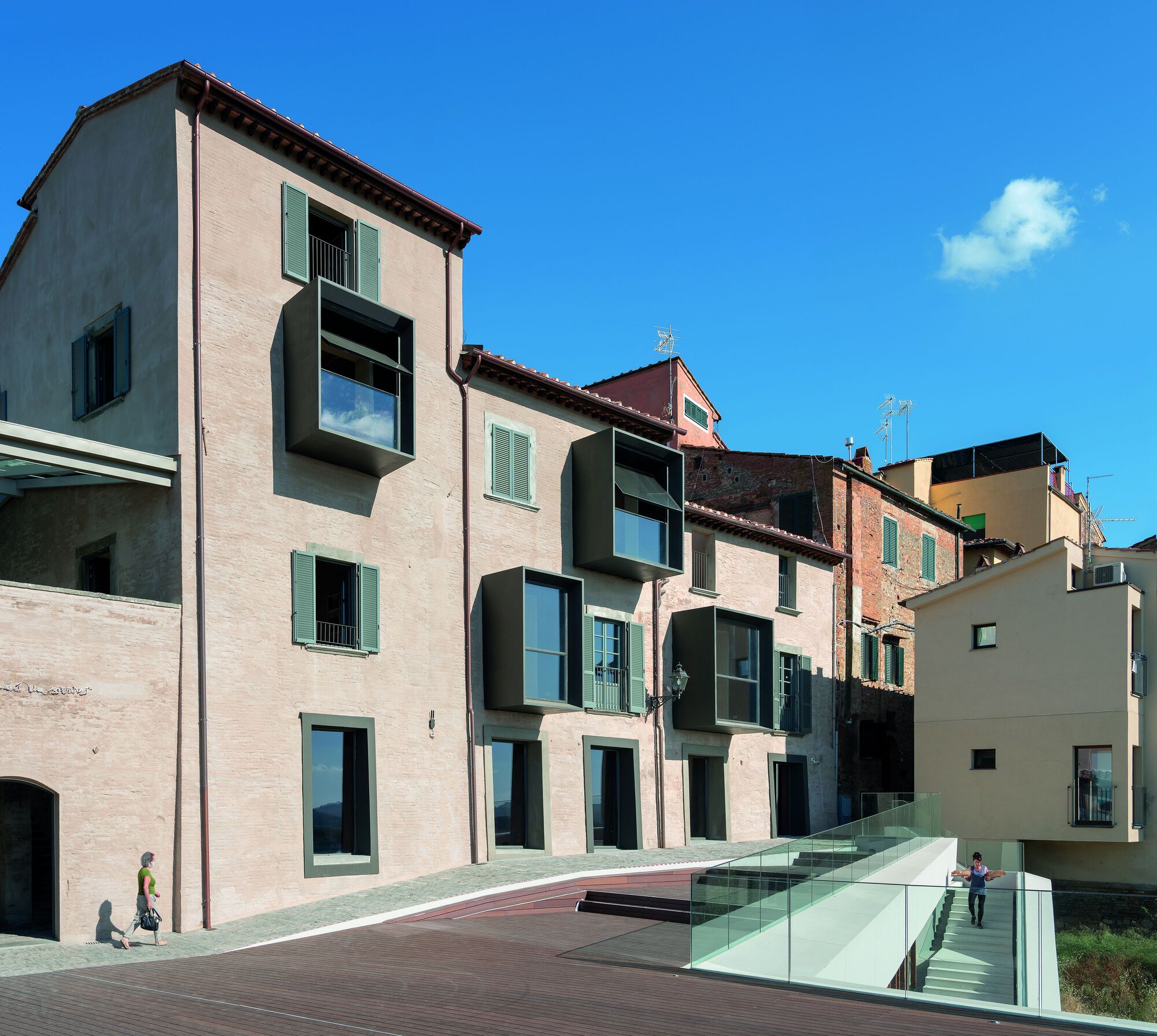
“Peccioli is a real laboratory,” says Mario Cucinella. “In the project we wanted to carry on the idea that historical centres can give themselves a new life with contemporary elements, rather than living only in the past.”
© Duccio Malagamba
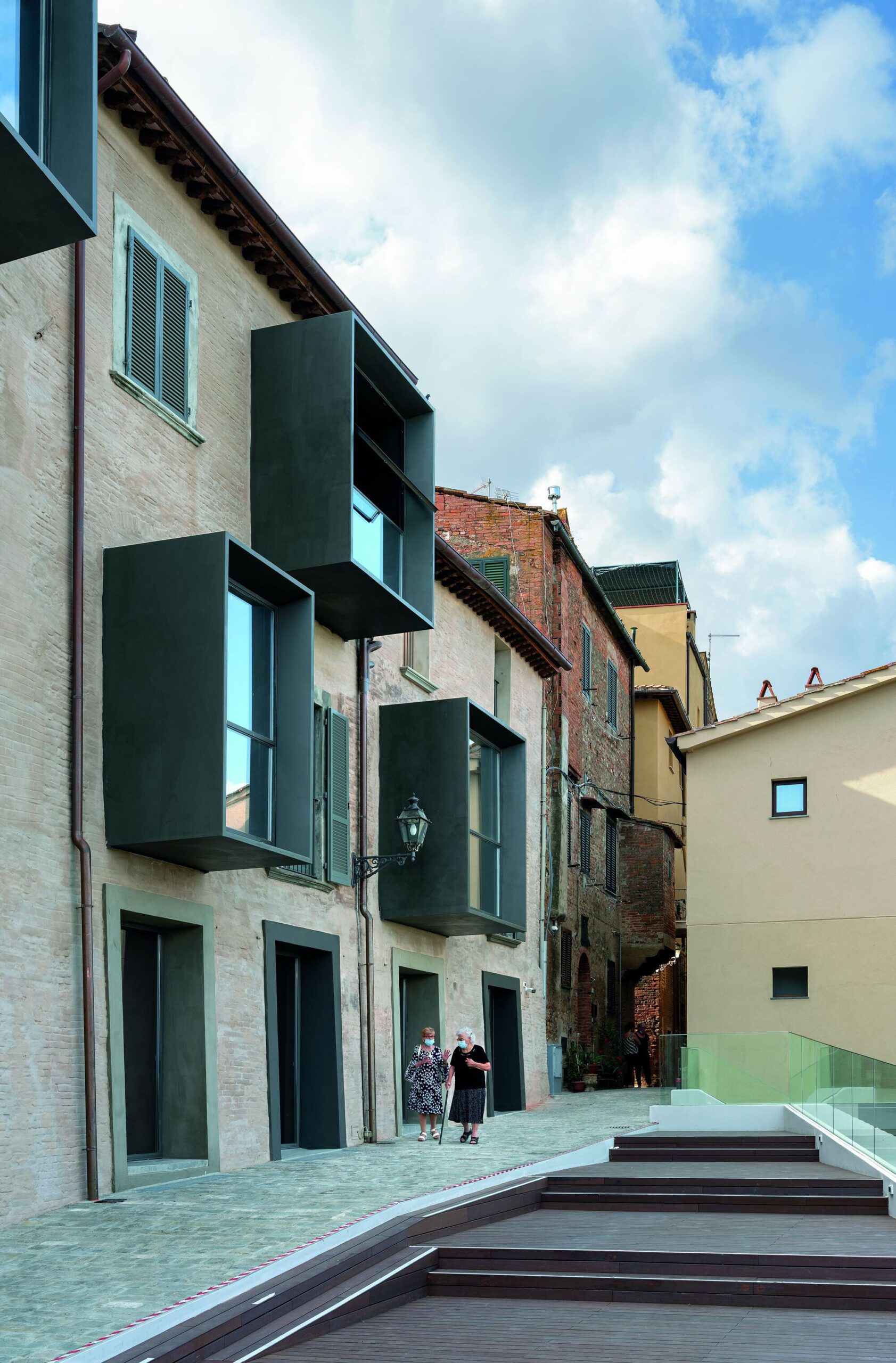
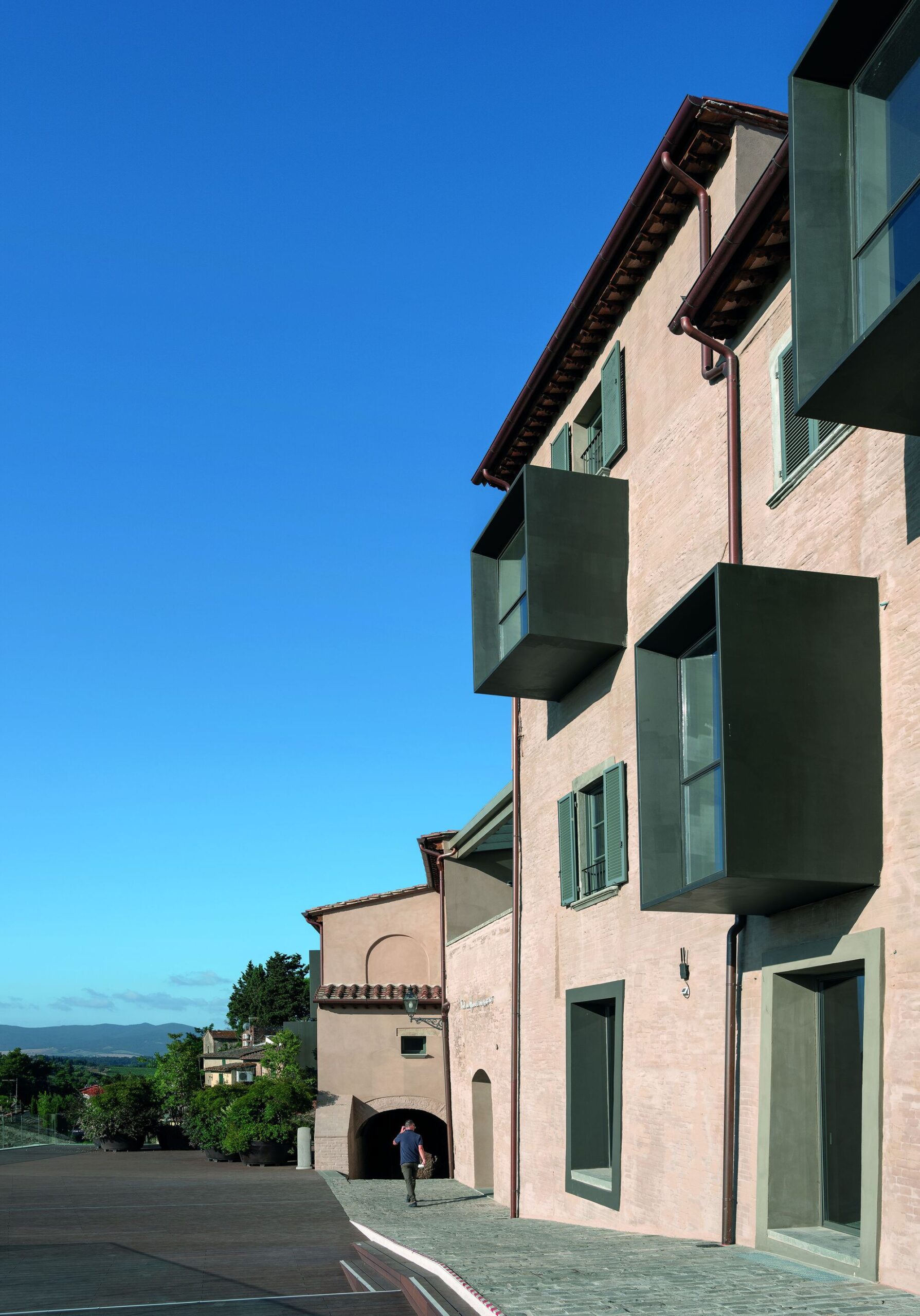
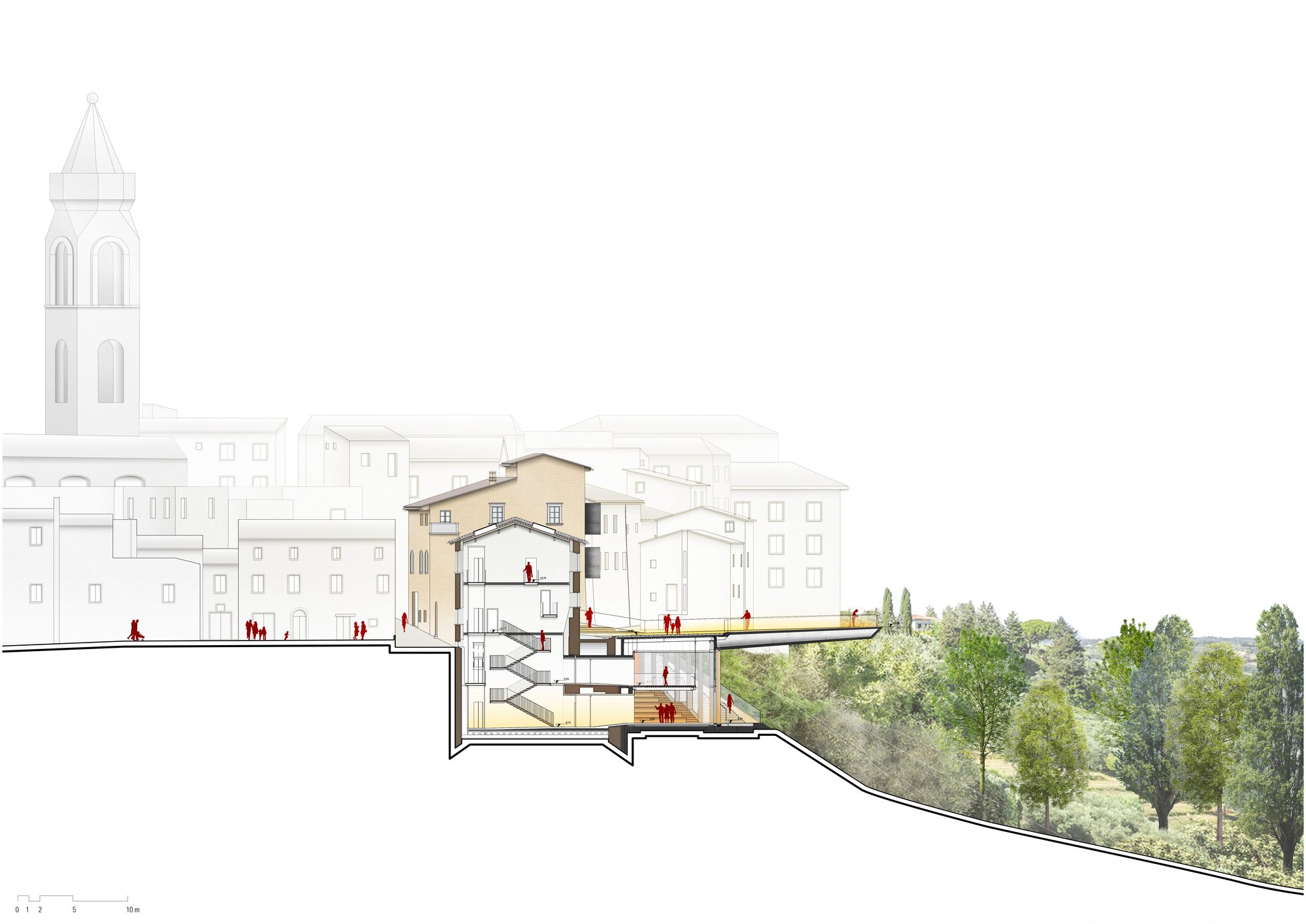
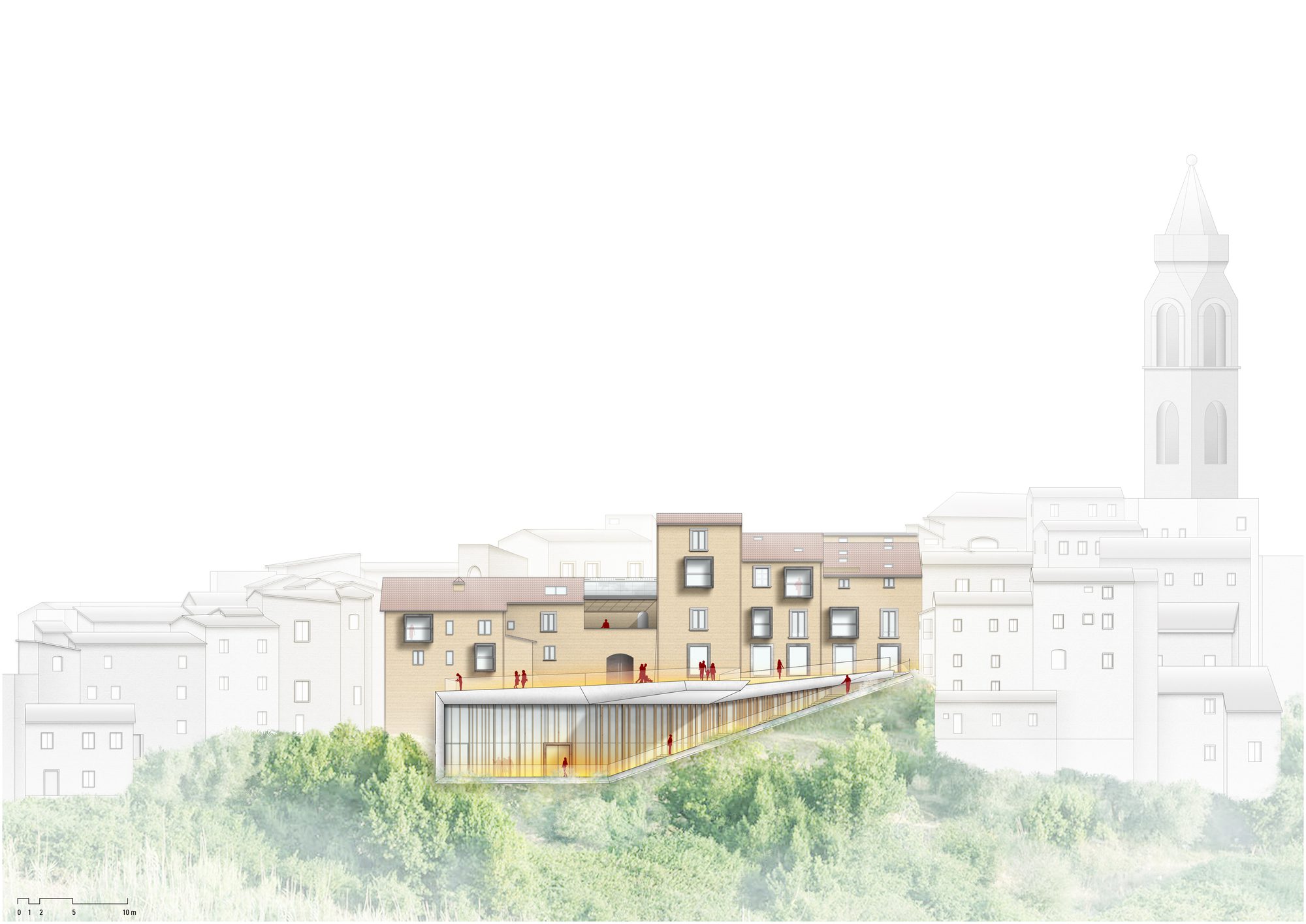
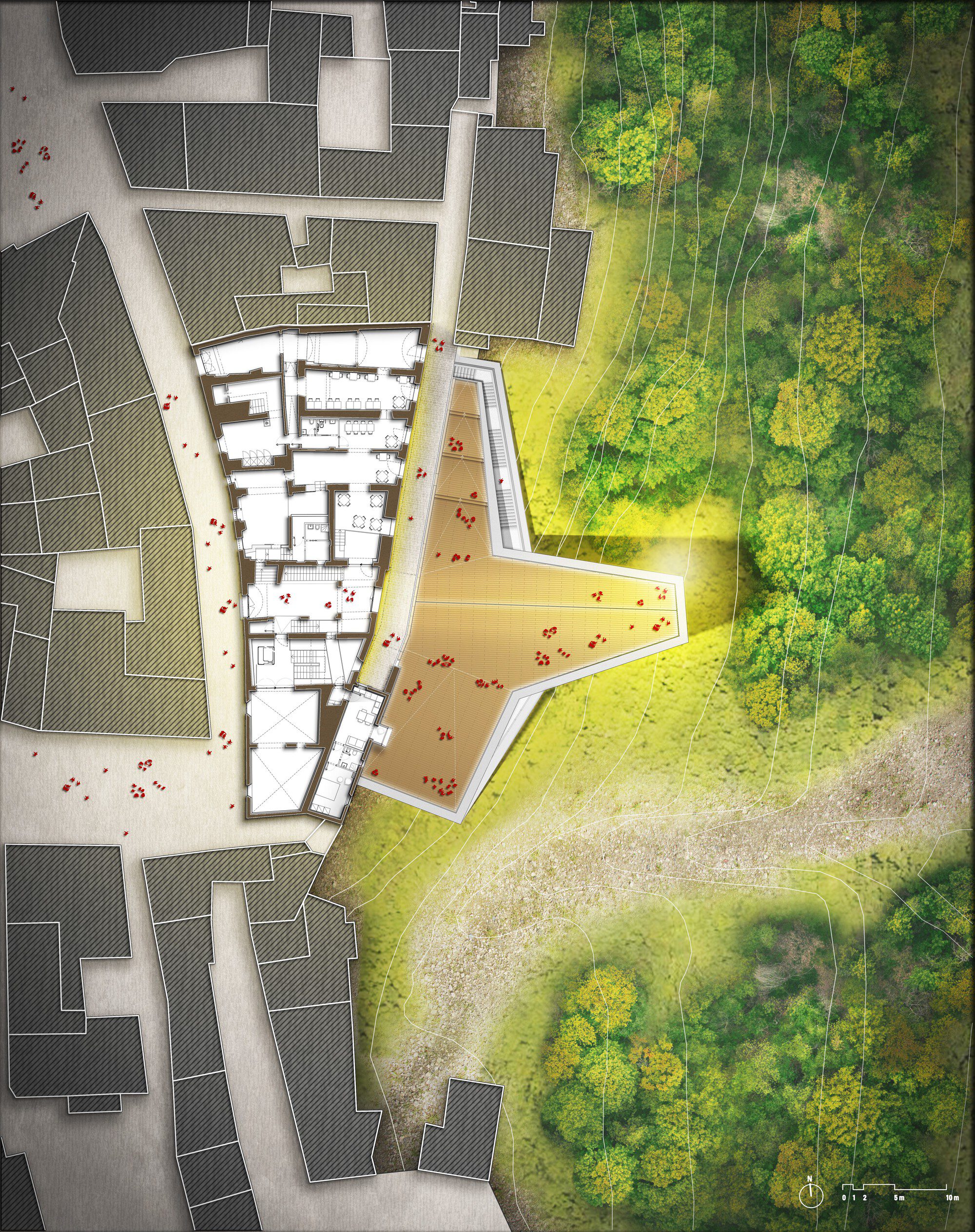
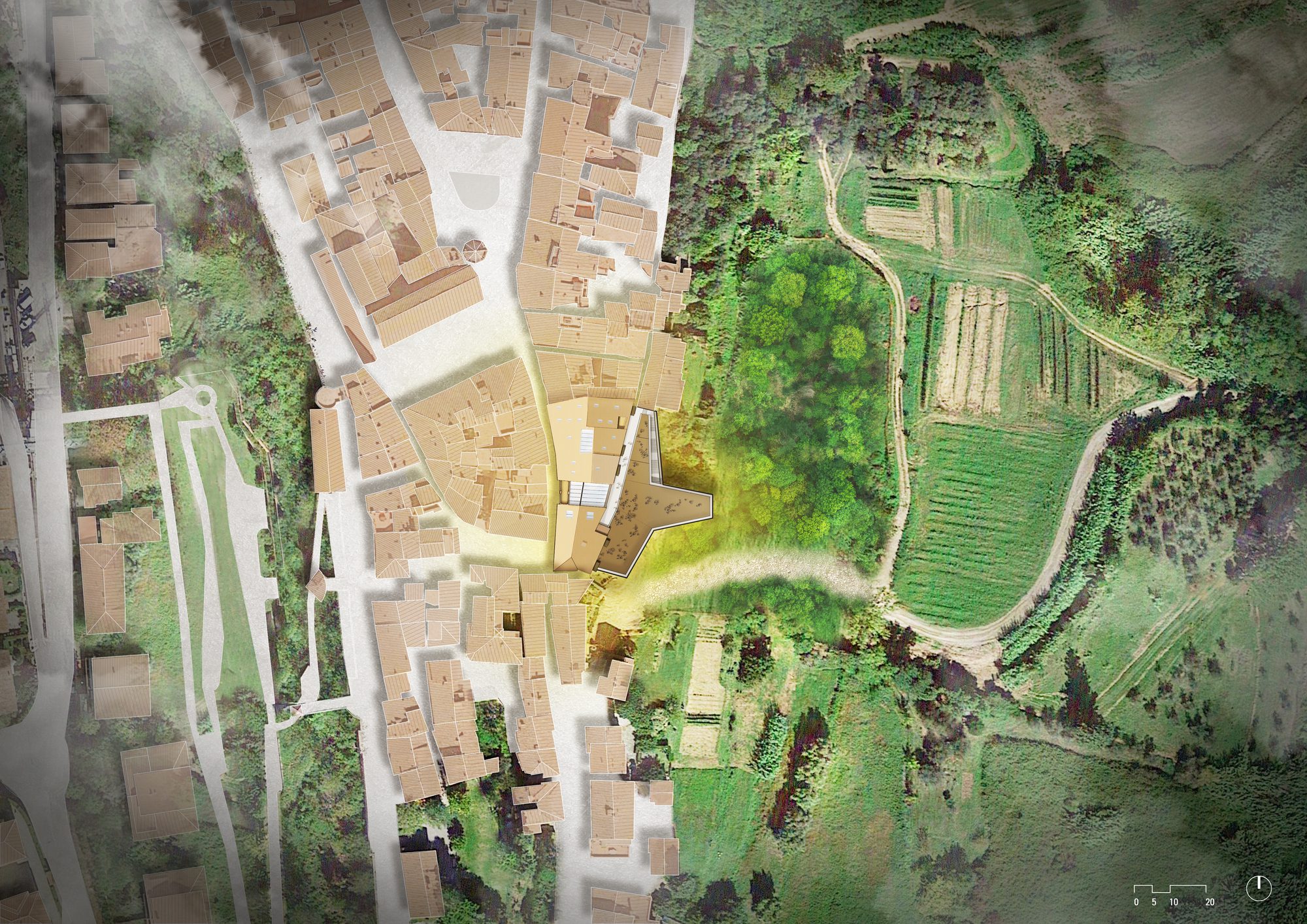
Centred on a piazza overlooked by the Pisan Romanesque church of San Verano, the town of Peccioli is set high above vineyards and olive groves. A public building, Palazzo Senza Tempo comprises a range of renovated and repurposed townhouses dating as far back as the 14th century. Set on the very edge of town, these enjoy direct views east across the unspoilt Era Valley and are now connected internally and externally to a wholly new two-storey building.
© Duccio Malagamba
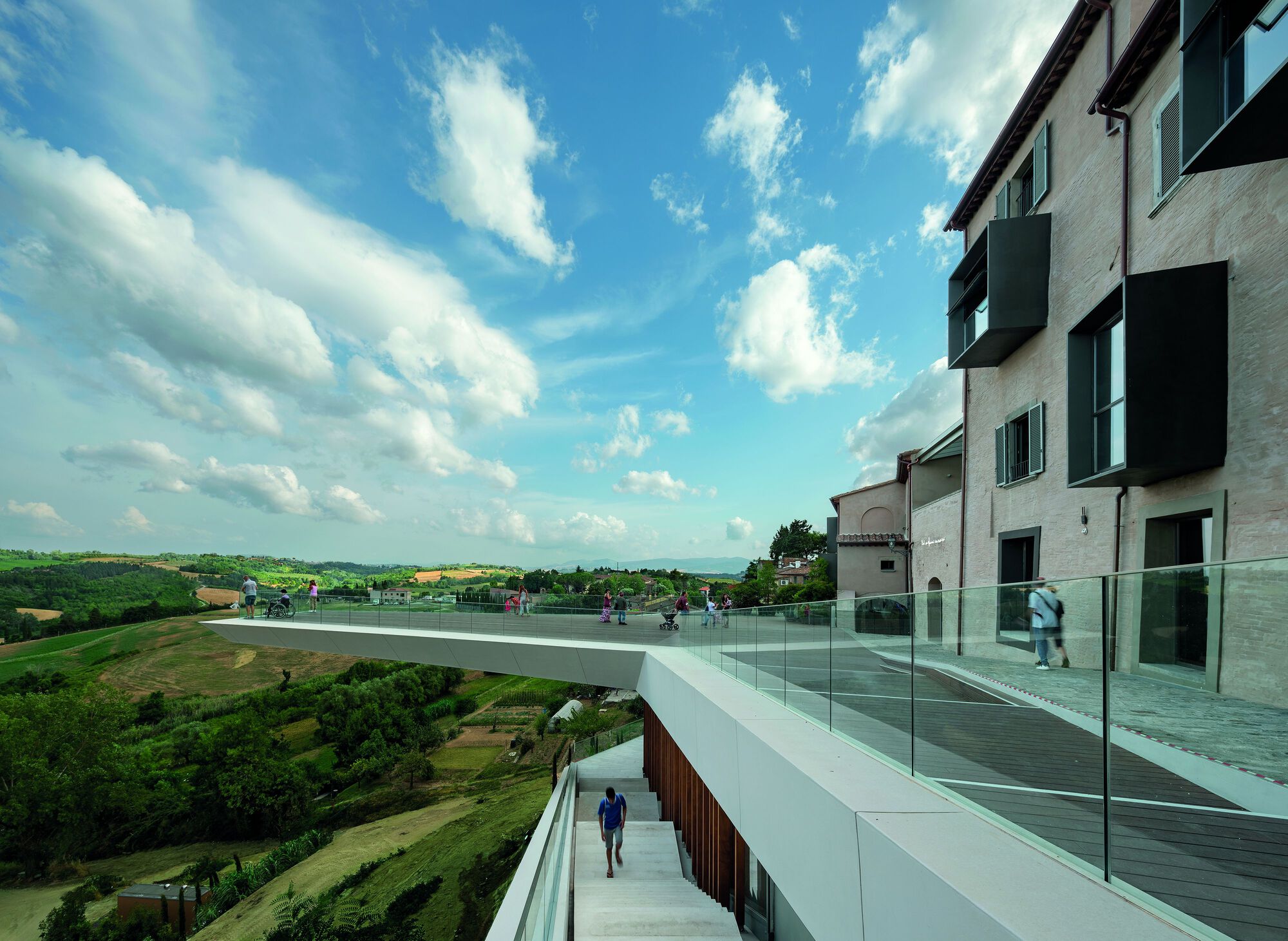
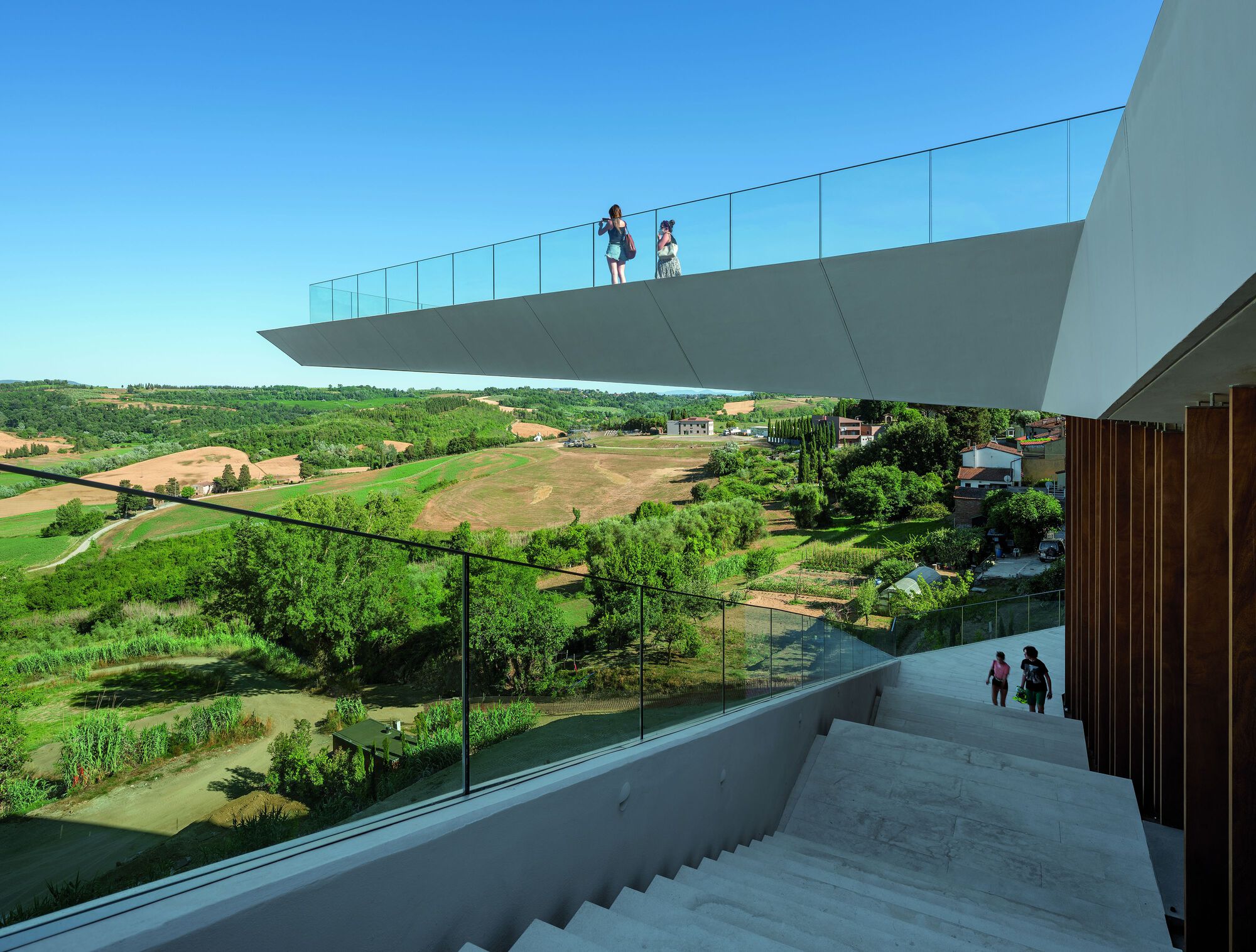
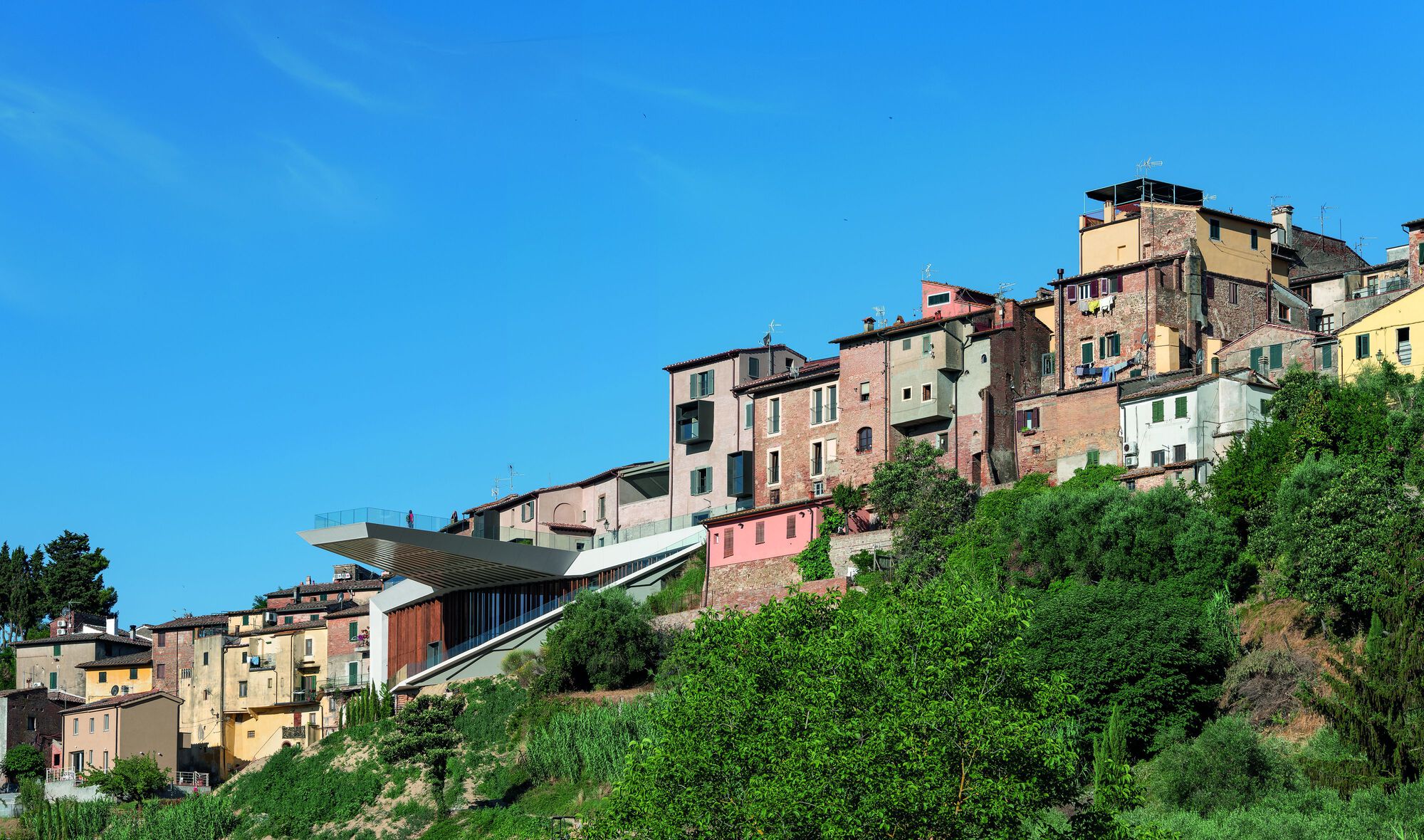
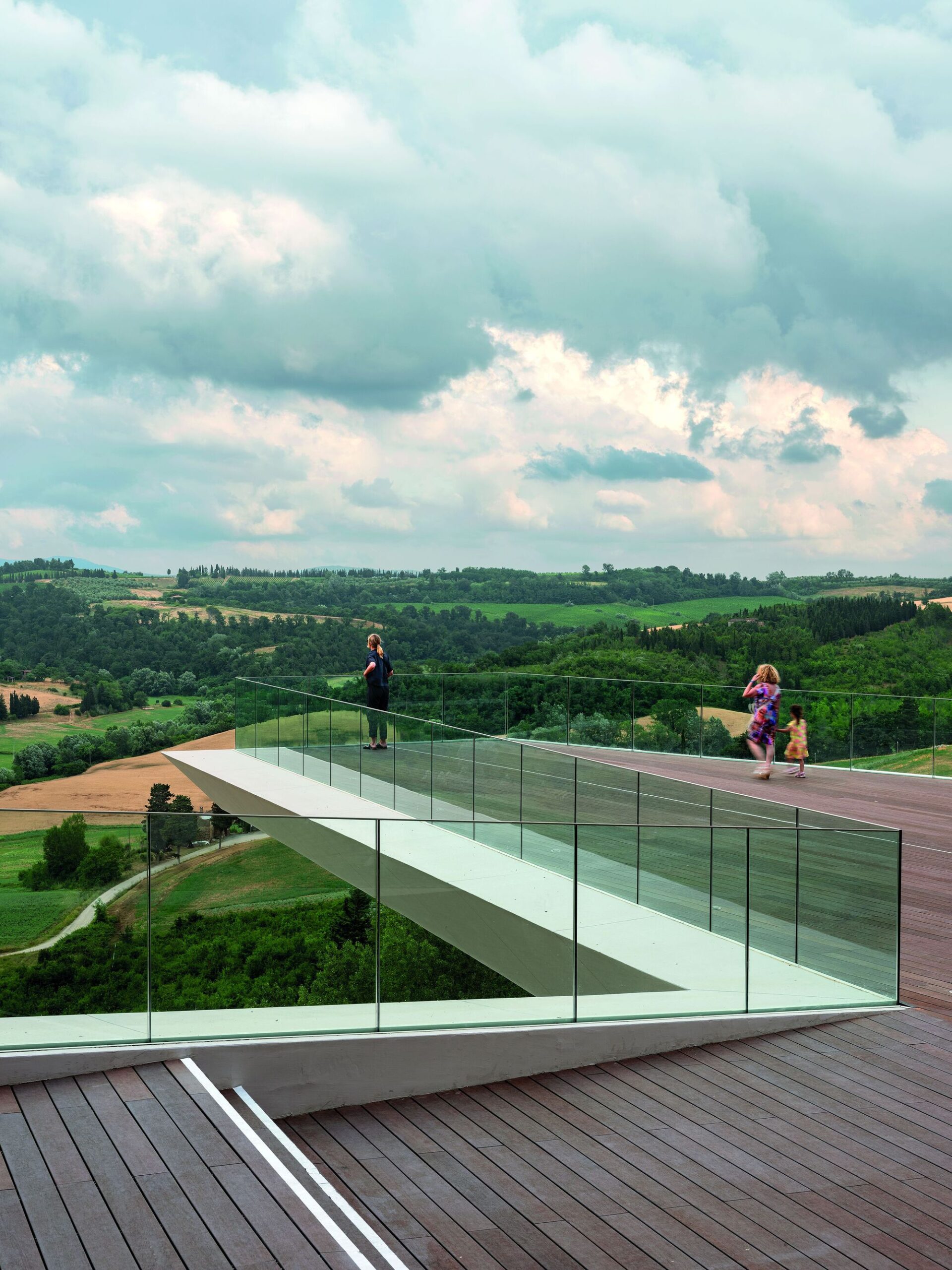
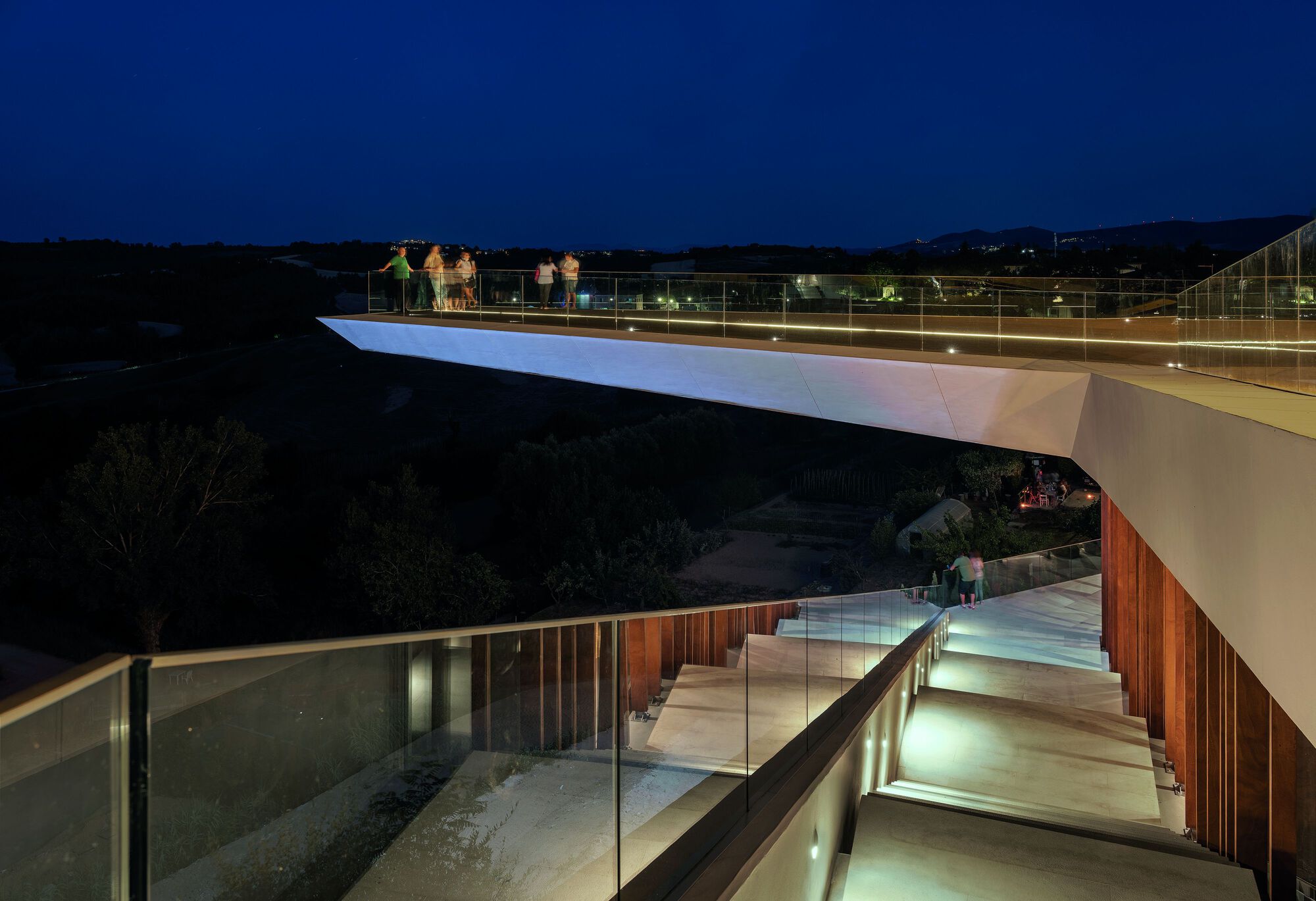
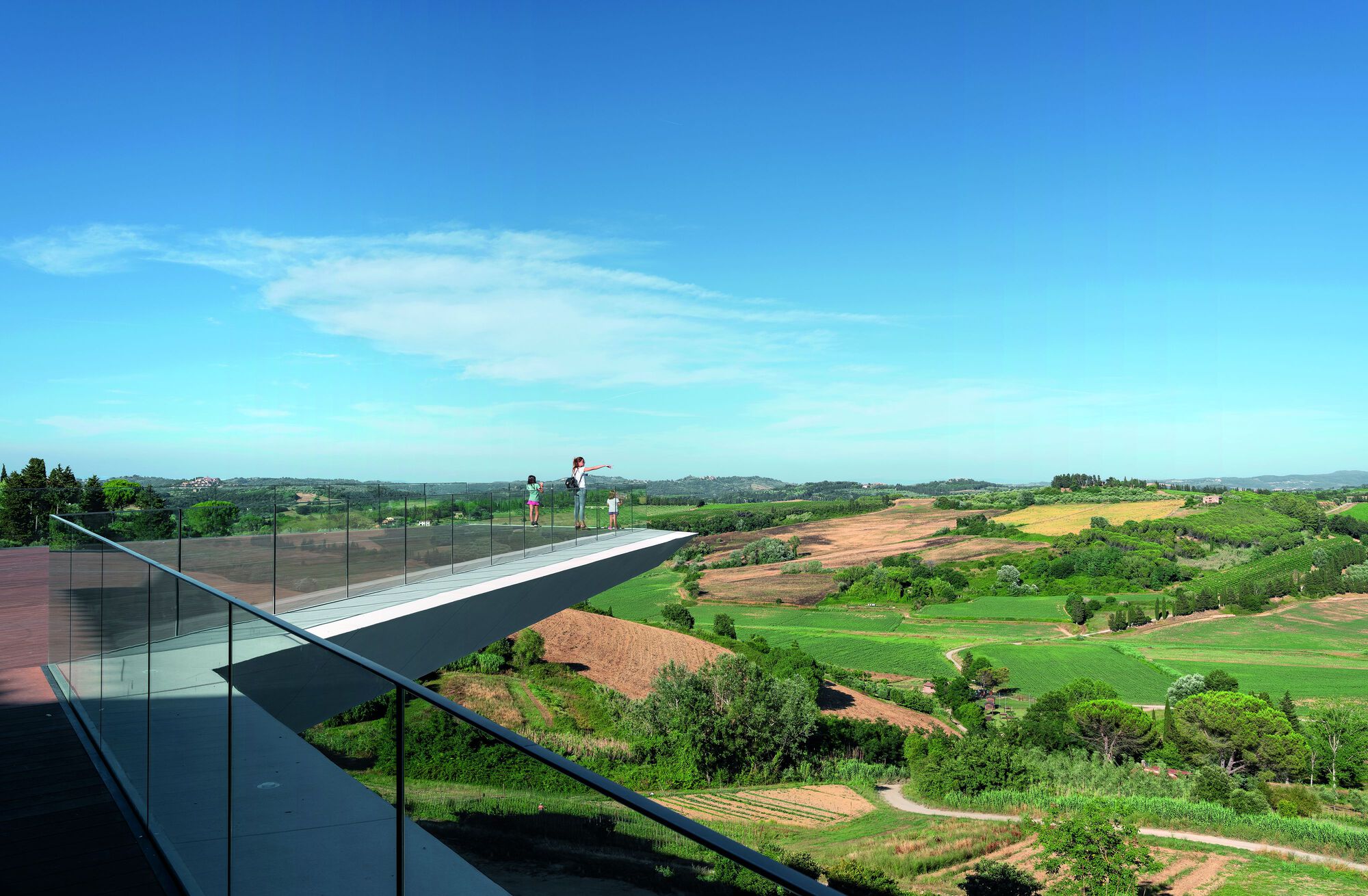
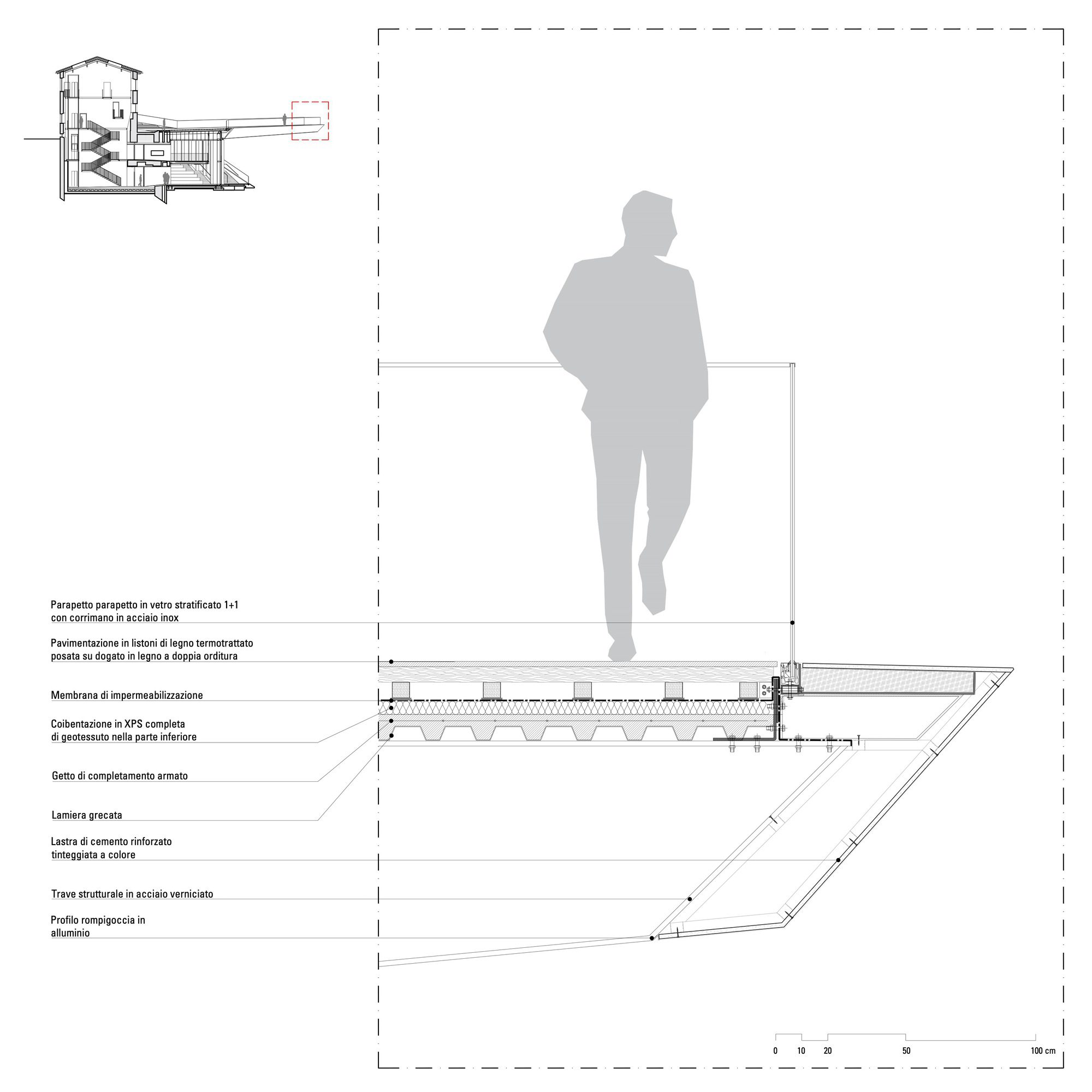
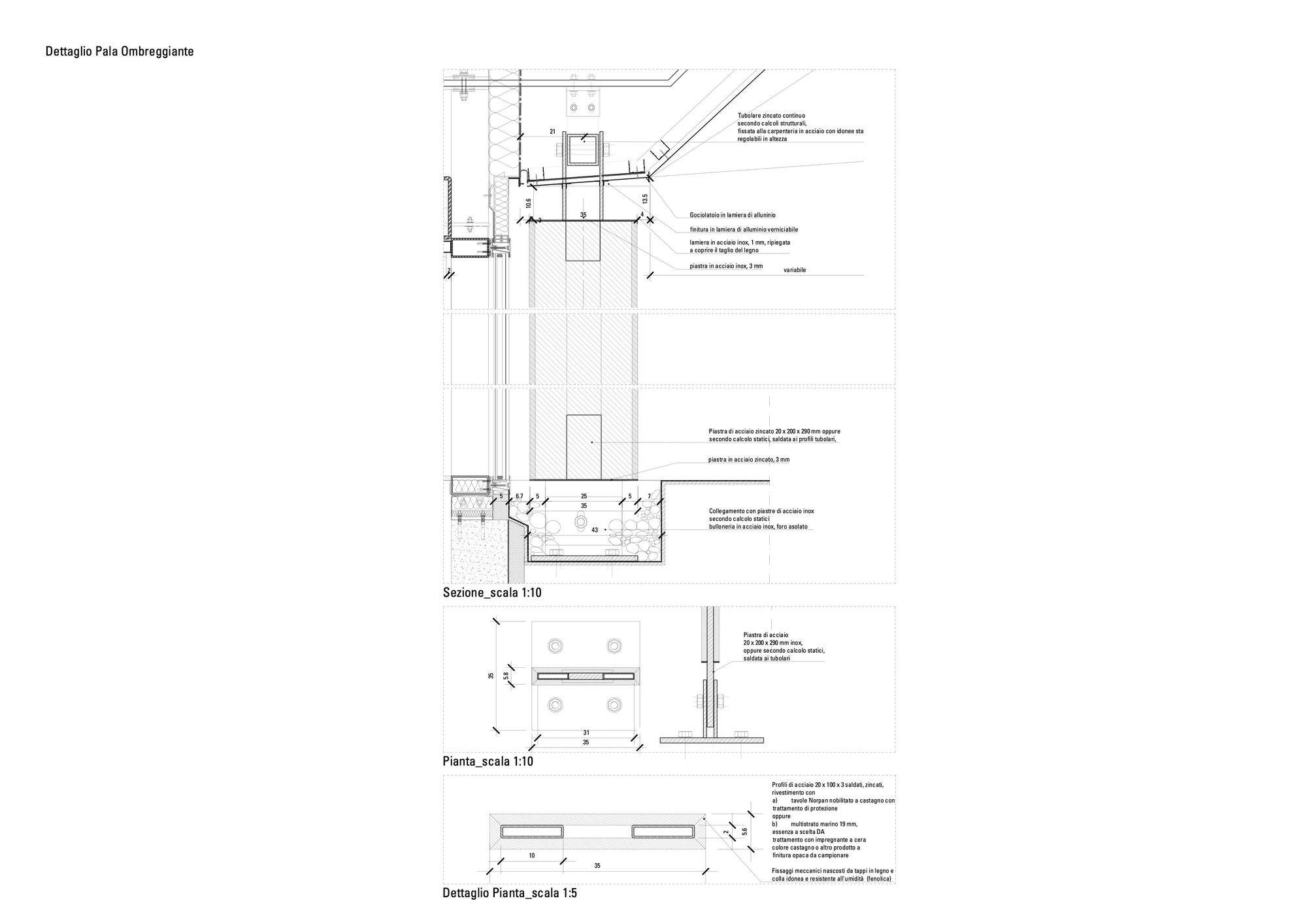
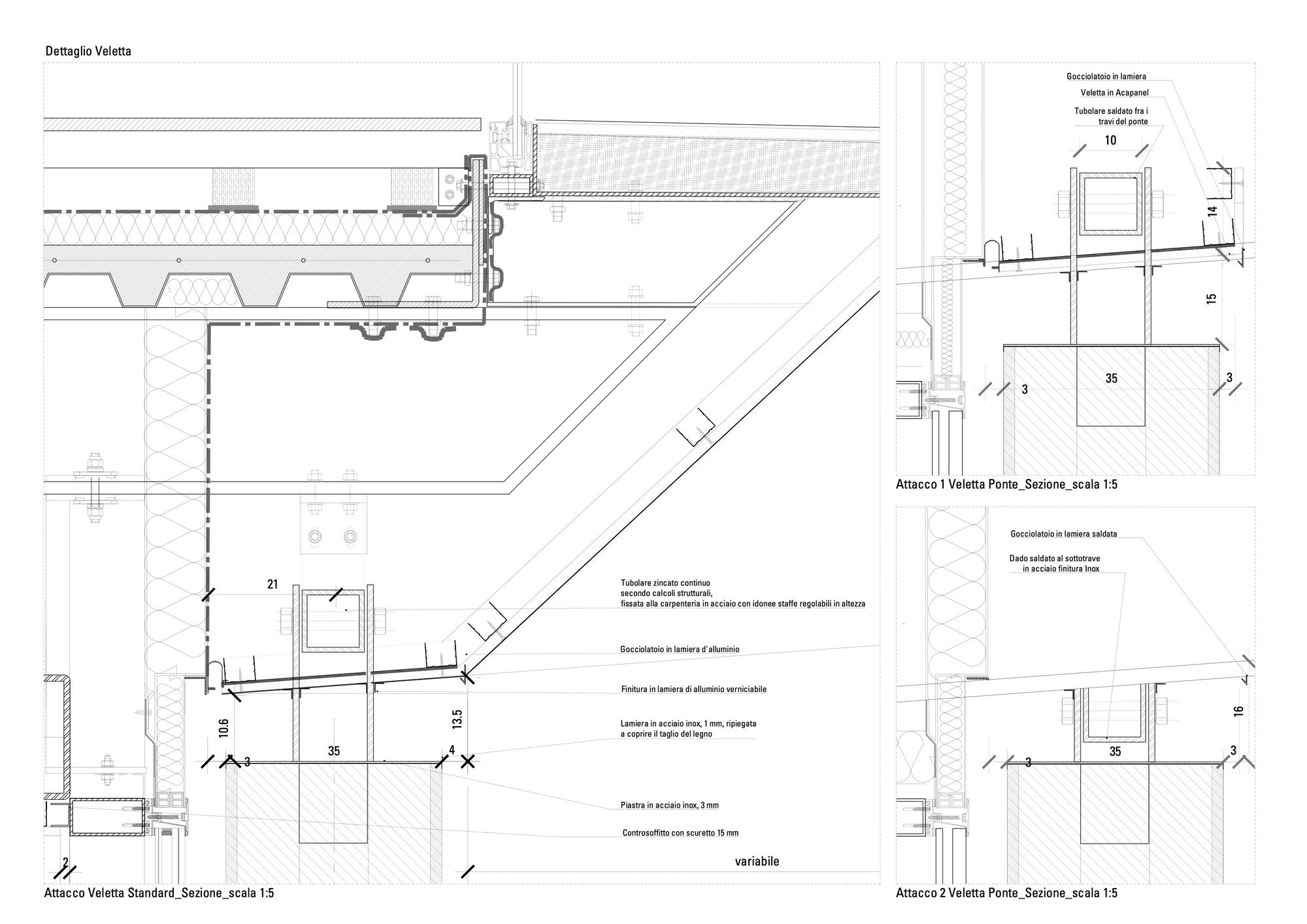
New Cantilevered Piazza Adds 21st-century Layer. Spread over several levels, the old and new elements of the palazzo complex comprise apartments, exhibition galleries, study and co-working spaces, a multimedia library, café and restaurant, public meeting rooms, and a spectacular cantilevered 600 m2 terrace, or piazza, projecting over the landscape beyond.
© Duccio Malagamba
“The new terrace is like a bridge connecting a landscape that looks like a painting from the 1500s with the modern world,” says Mario Cucinella. “With the opening of Palazzo Senza Tempo, Peccioli launches an important theme: that of communities and their public places. It shows the courage of doing something ambitious while respecting history.”
© Duccio Malagamba
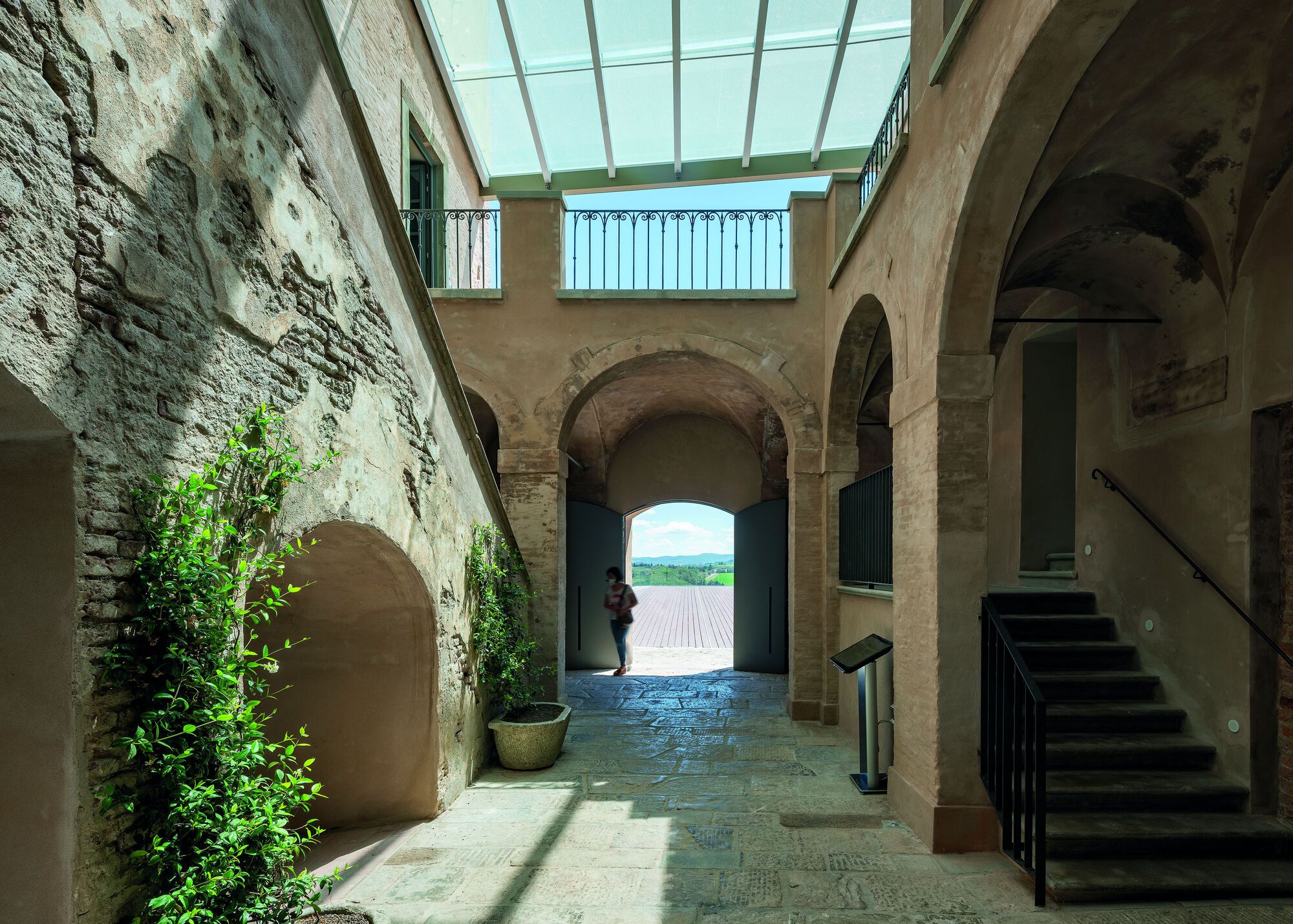
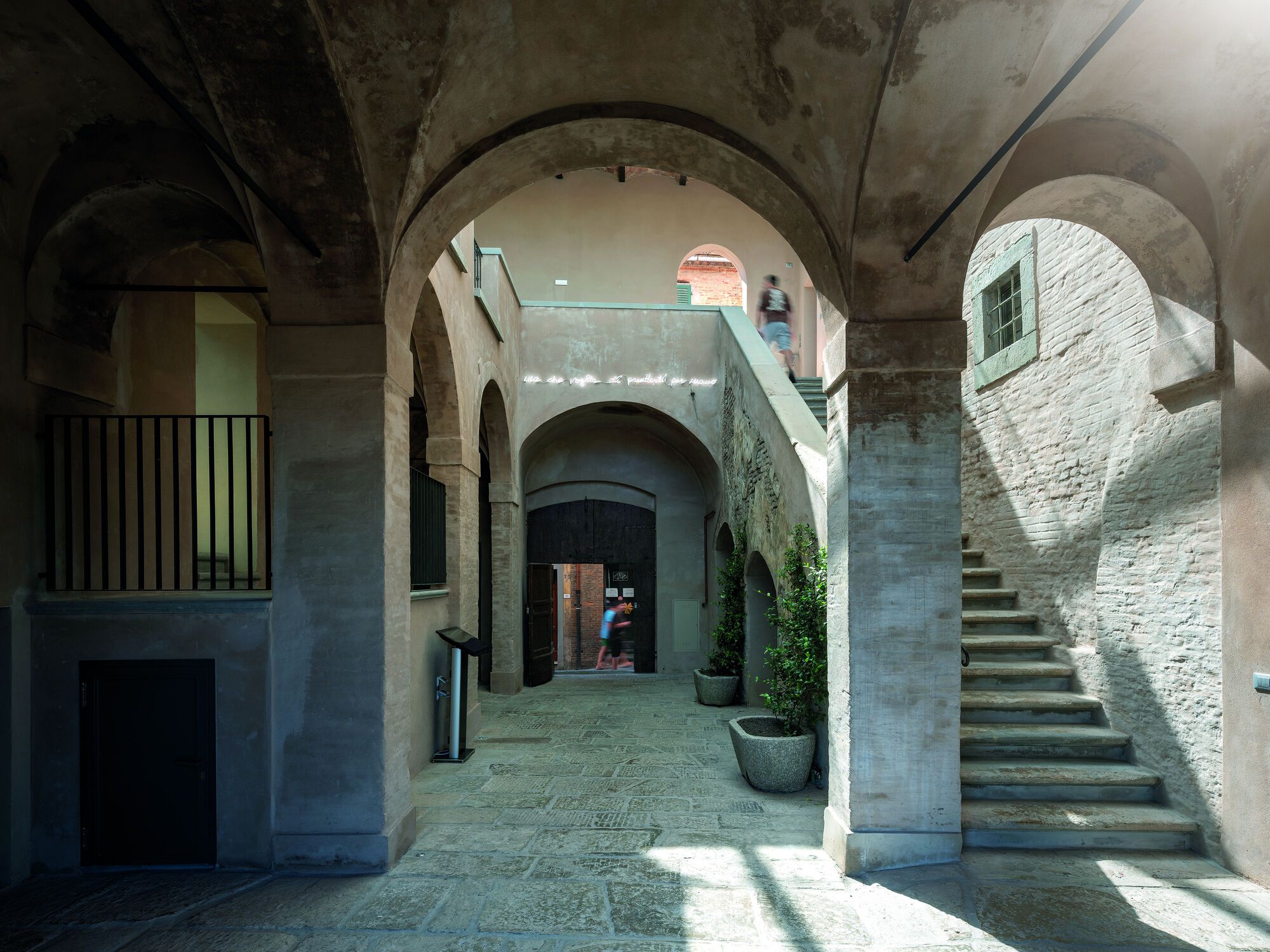
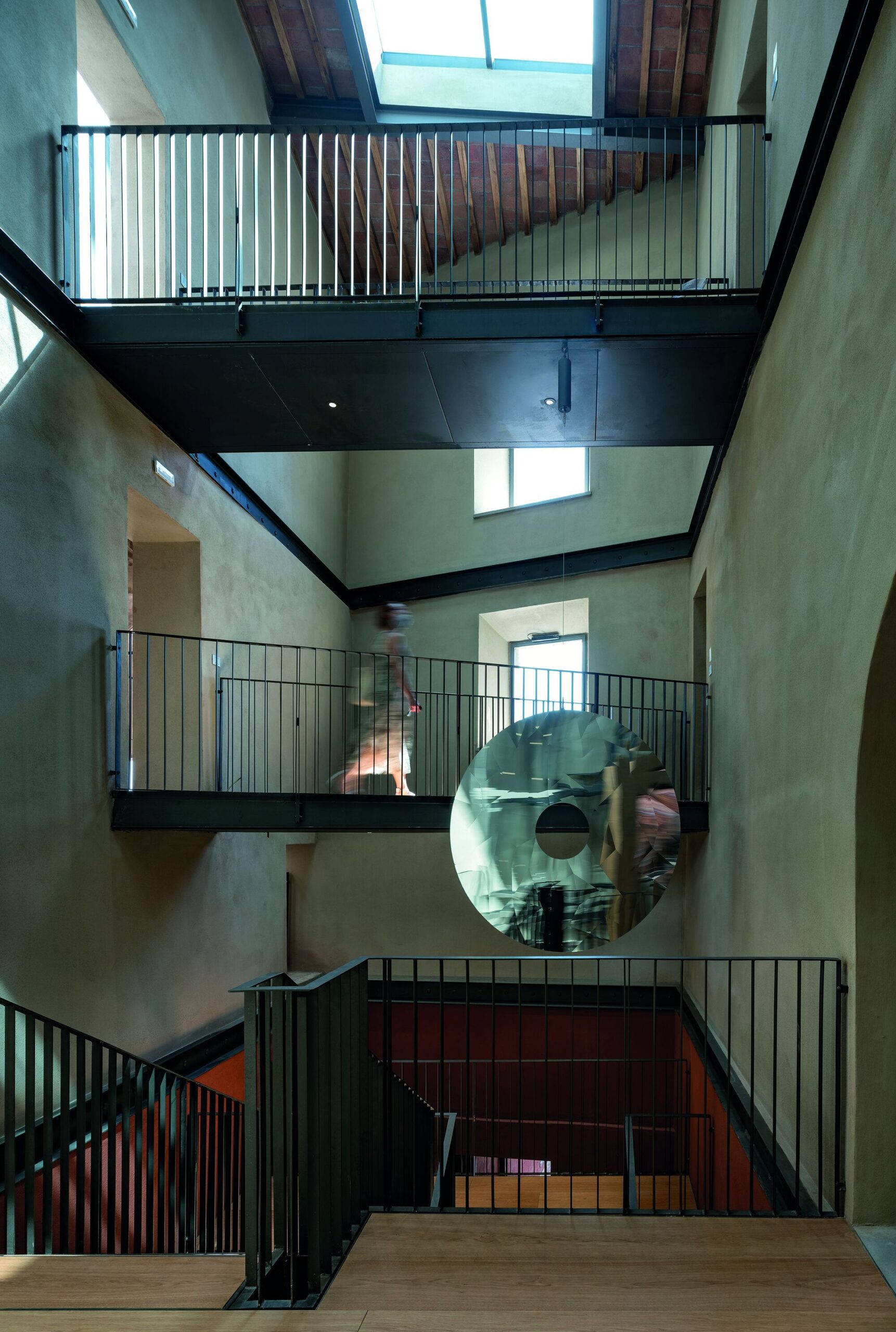
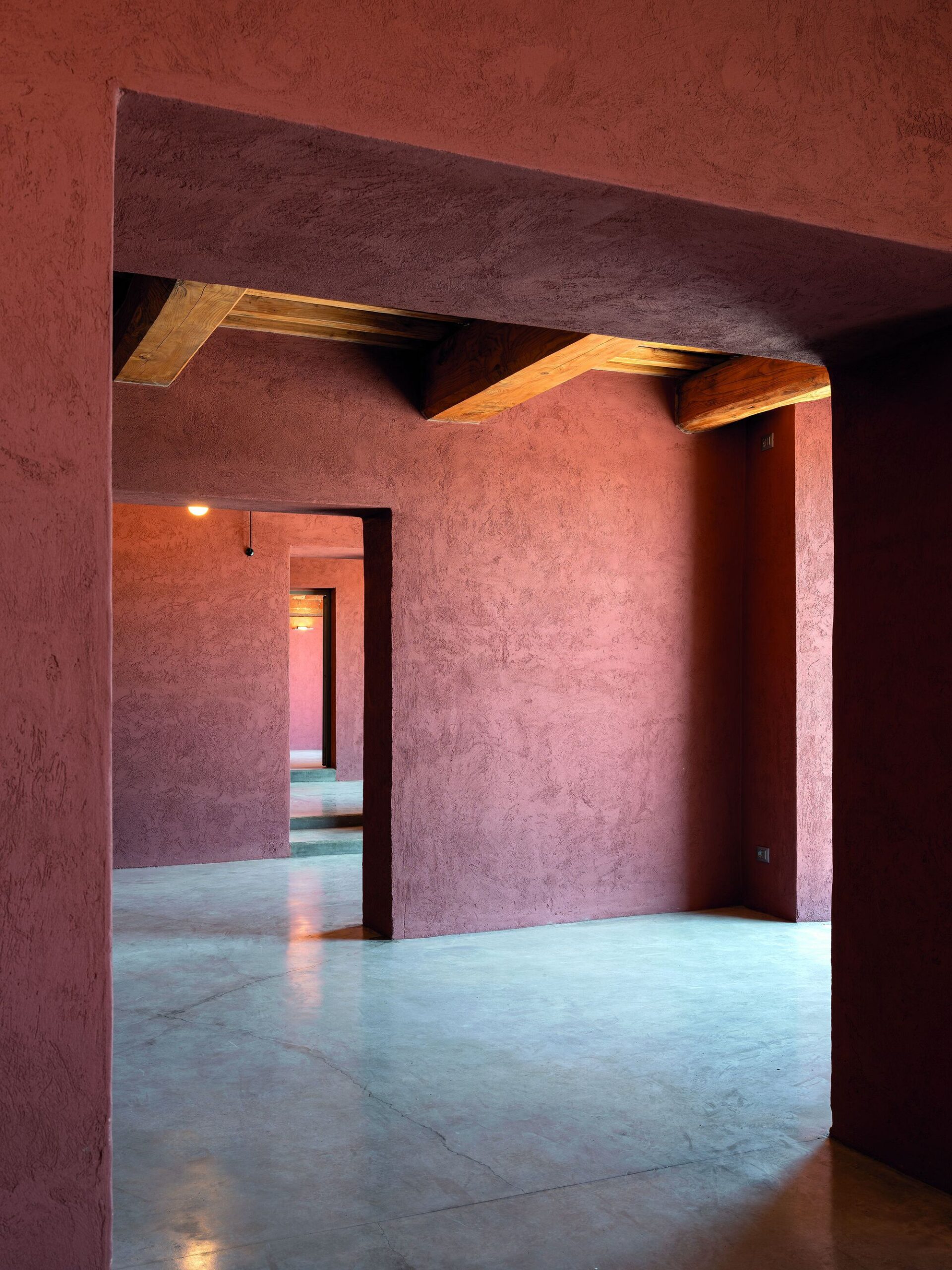
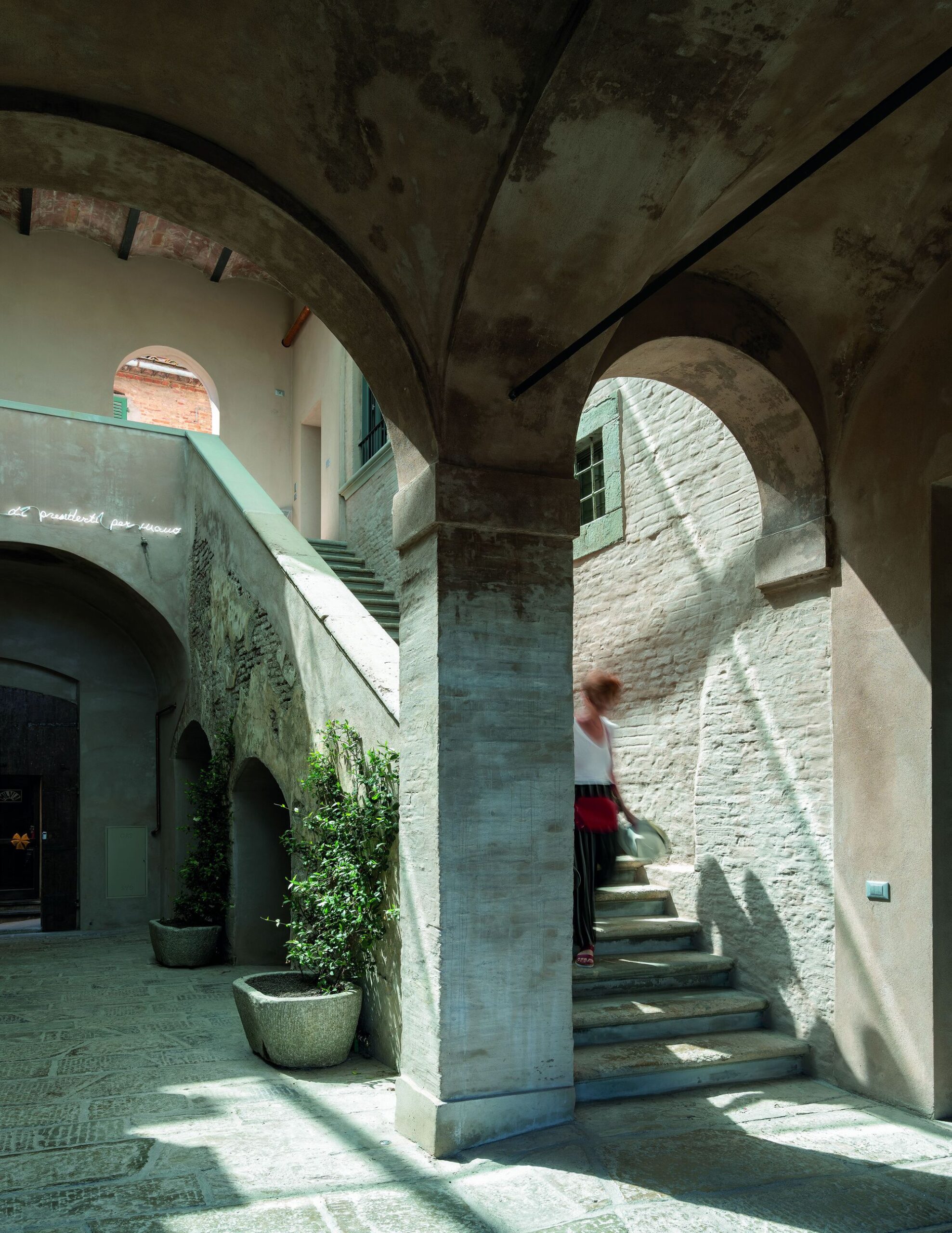
Inside the Revisited Palazzo. Voids, skylights, and bay windows bring welcome daylight inside, and a new glass roof over the passage of a historic courtyard adds visual permeability. The renovated buildings form an interconnected whole, featuring venerable wood-beamed ceilings and, unexpectedly, a dramatic open-stone stair. The architects’ response to the building reflects the nature of Italian hilltowns, with their successions of narrow alleys leading to wide and open civic spaces. Palazzo Senza Tempo creates the same sense of visual surprise.
© Duccio Malagamba
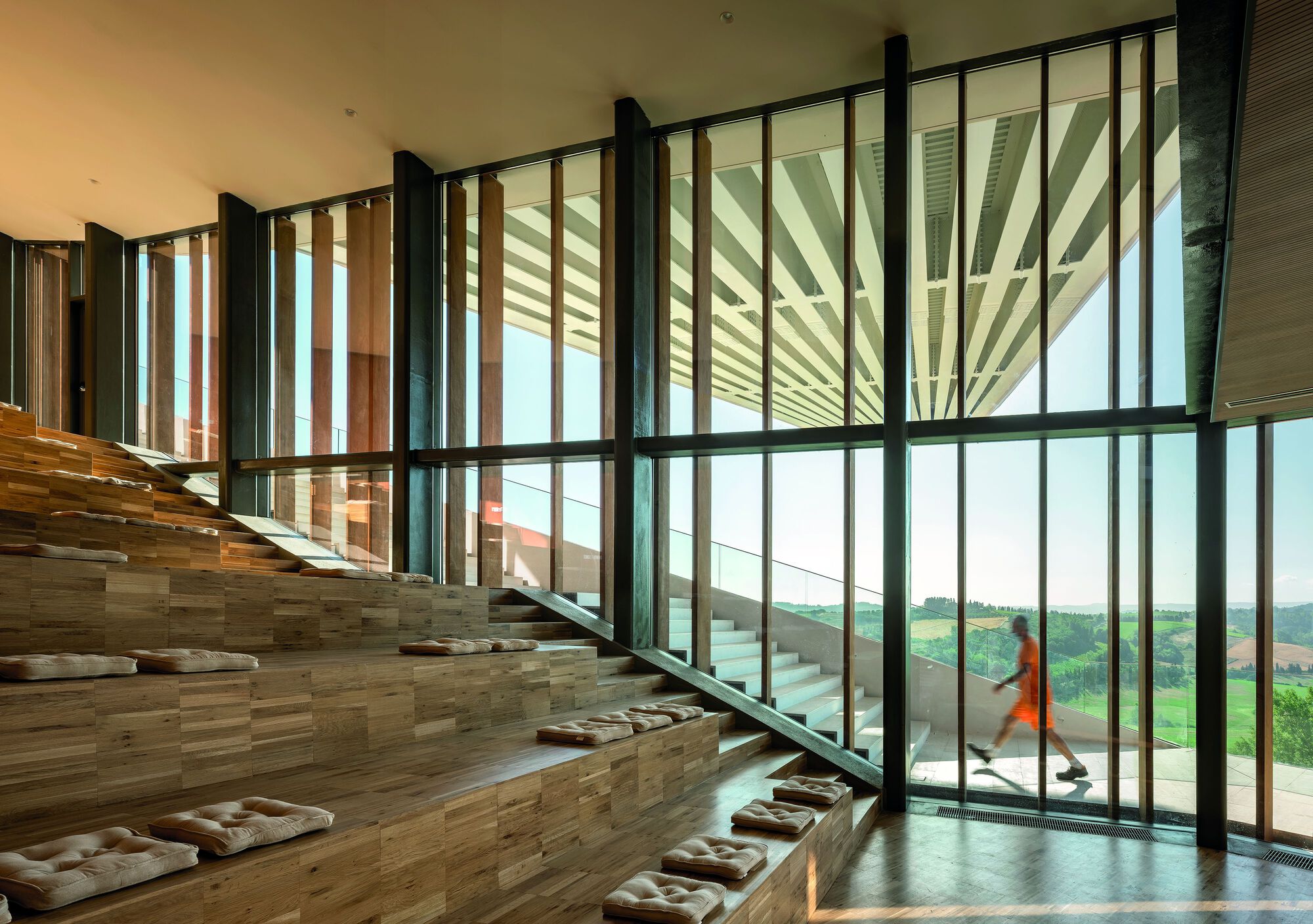
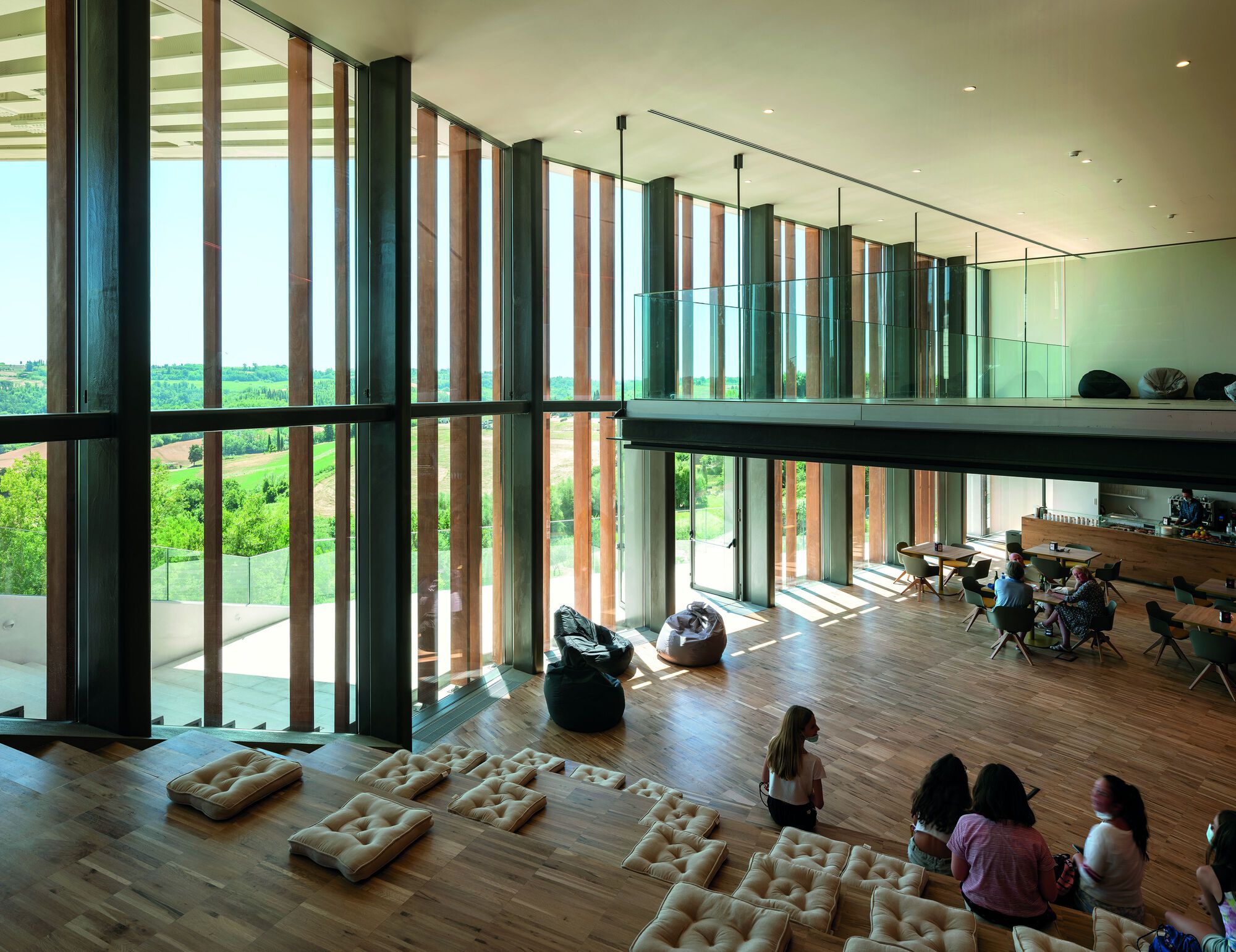
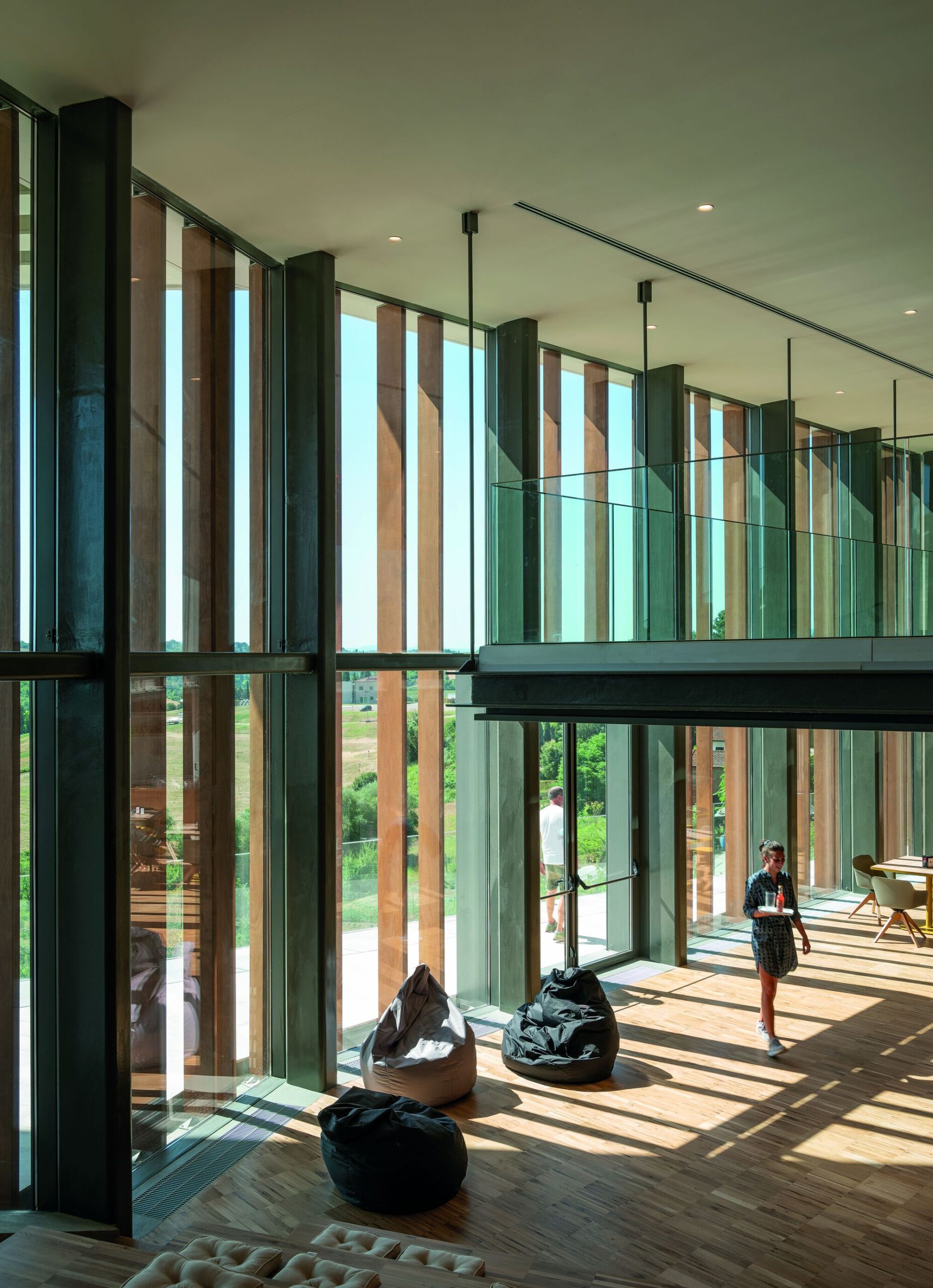
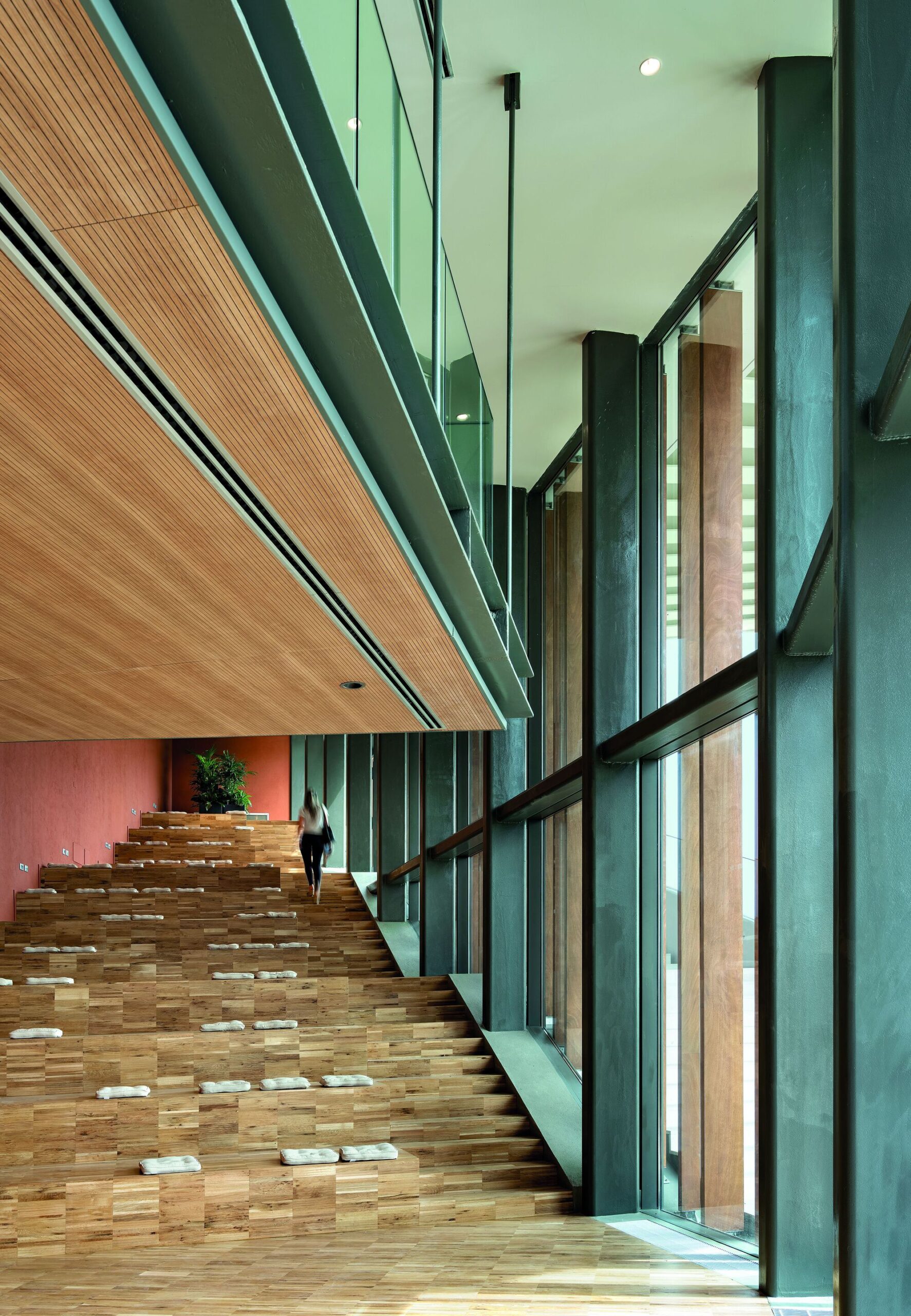
The surprise continues when the palazzo reveals its new two-storey building. Glazed on three sides, it provides framed views of the landscape. Stepping up and down several levels, lined in wood and with a detailed level of craftsmanship, this is a contemporary building that pays full respect to Peccioli’s historic fabric and setting. It demonstrates how truly modern structures can be a natural part of Italian hilltowns wishing to be far more than living museums.
© Duccio Malagamba
From Medieval to Modern. Palazzo Senza Tempo demonstrates how new architecture in dialogue with the public life of a town and its historic fabric can create fresh life and activity. It exemplifies the potential for new vitality outside the big cities and the way in which the adaptive reuse of historic buildings is a wholly viable part of this development. Palazzo Senza Tempo is a landmark project in demonstrating a bold yet befitting remodelling approach to Italy’s Medieval hilltowns.
Project Info
Architects: Mario Cucinella Architects
Country: Italy, Peccioli
Area: 2500 m²
Year: 2021
Photographs: Duccio Malagamba
Manufacturers Rak ceramics, Biancone di Trani, Déco Decking, Euroforest, Fp Arredi, Secco, Sofica: Rak ceramics
Founder And Creative Director: Mario Cucinella
Project Director: Marco Dell’Agli
Project Managers: Tommaso Bettini, Emanuele Dionigi
Project Team: Biagio Amodio, Stefano Bastia, Paolo Greco, Alberto Menozzi,Marta Torsello, Augusta Zanzillo
Works Director: Geom. Andrea Falchi
General Contractor: Cemes SpA Bottai Group

Anastasia Andreieva is an accomplished Architectural Projects Editor at Arch2O, bringing a unique blend of linguistic expertise and design enthusiasm to the team. Born and raised in Ukraine, she holds a Master’s degree in Languages from Taras Shevchenko National University of Kyiv. Her deep passion for architecture and visual storytelling led her to transition from translation and editorial roles into the world of design media. With a keen eye for conceptual clarity and narrative structure, Anastasia curates and presents global architectural projects with precision and flair. She is particularly drawn to parametric and digital design, cultural context, and emerging voices in architecture. When I’m not analyzing the latest architectural trends, you’ll probably find me searching for hidden gems in cityscapes or appreciating the beauty of well-crafted spaces. After all, great design—like great connections—can be found in the most unexpected places. Speaking of connections, because architecture isn’t the only thing that brings people together.