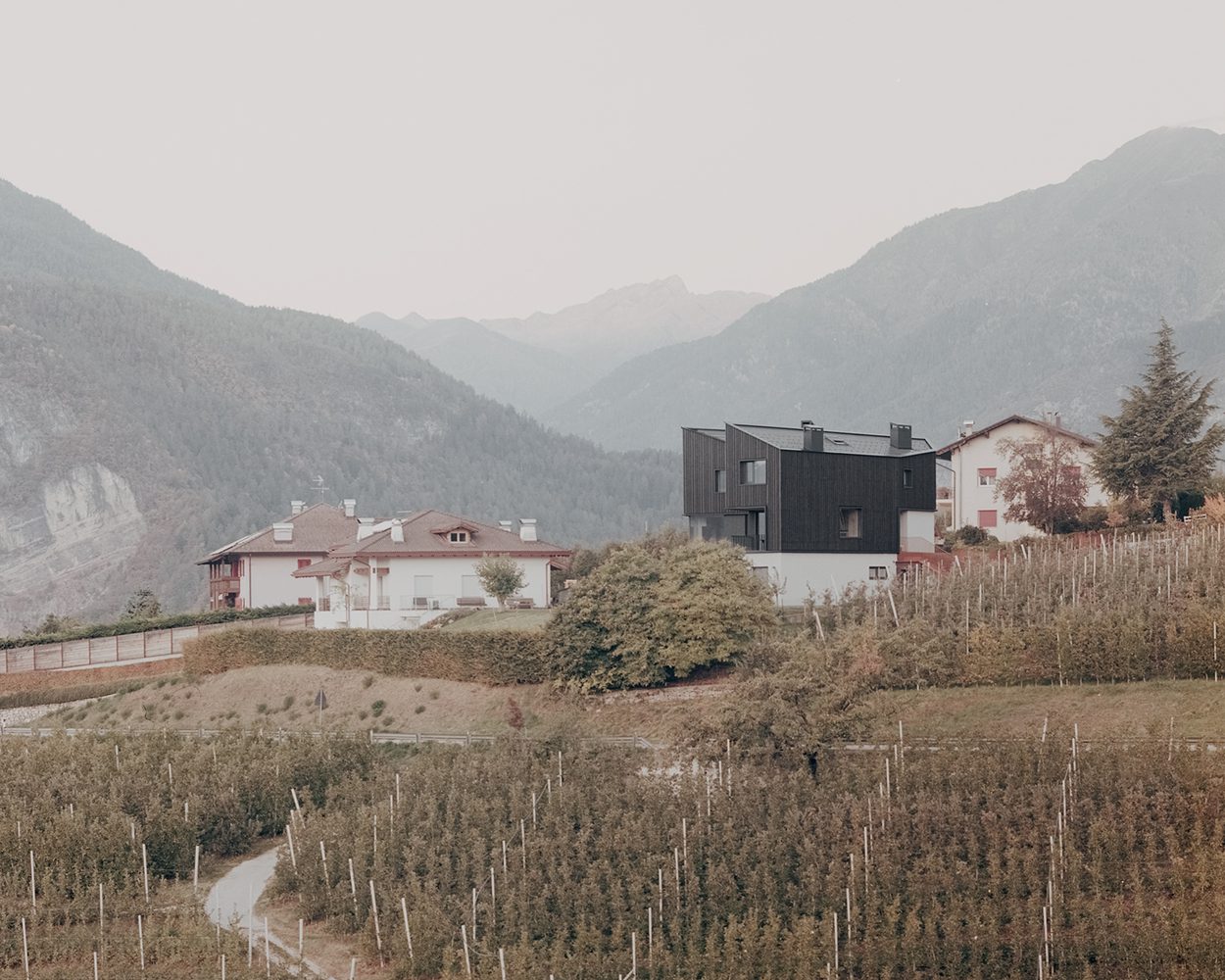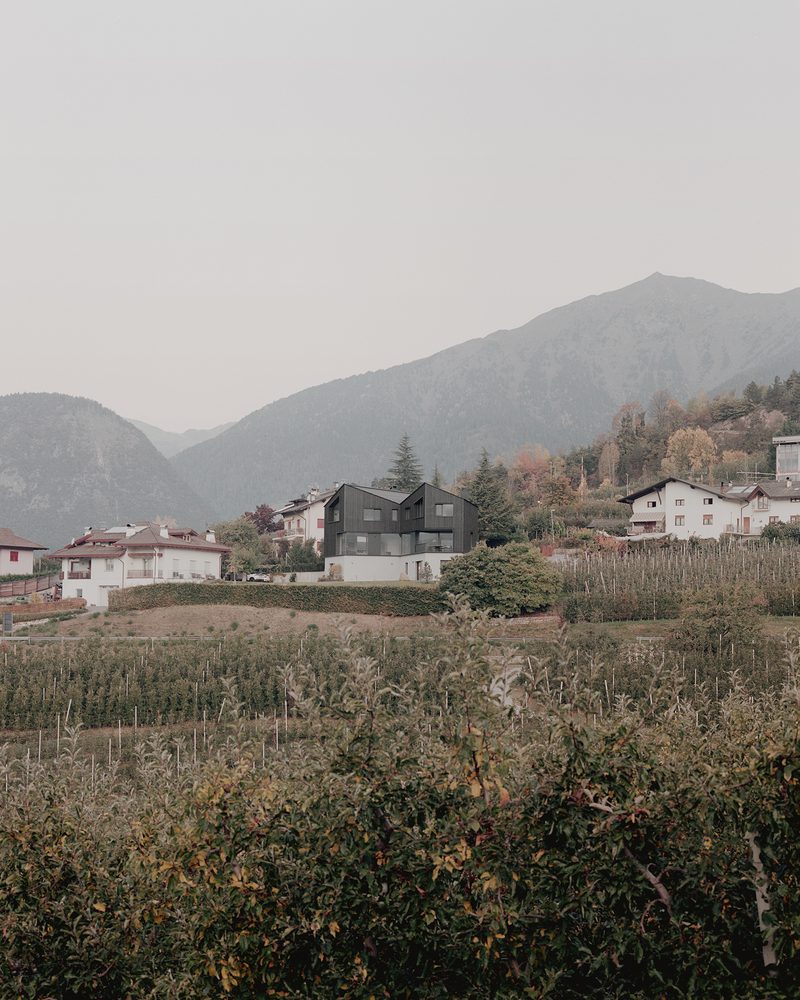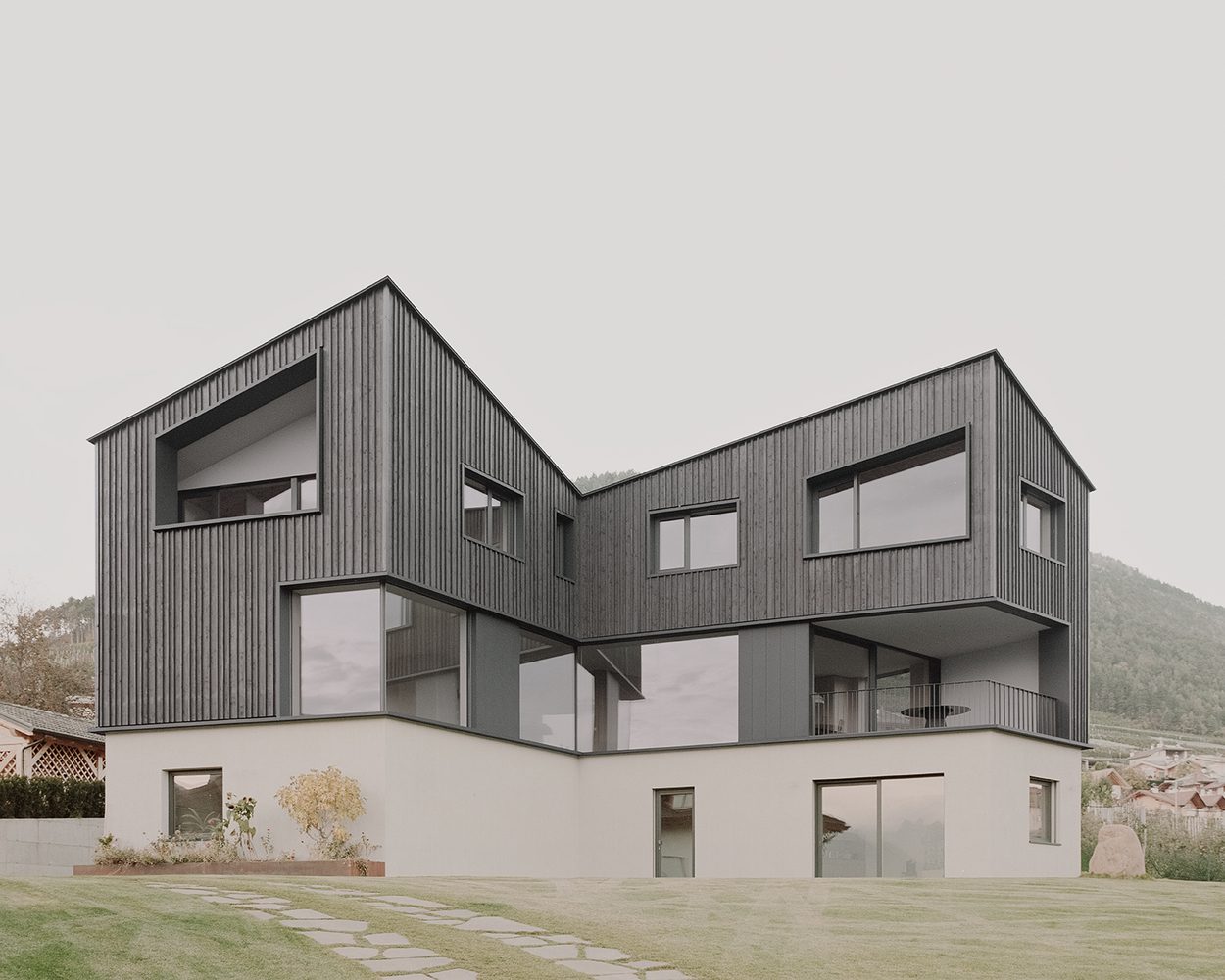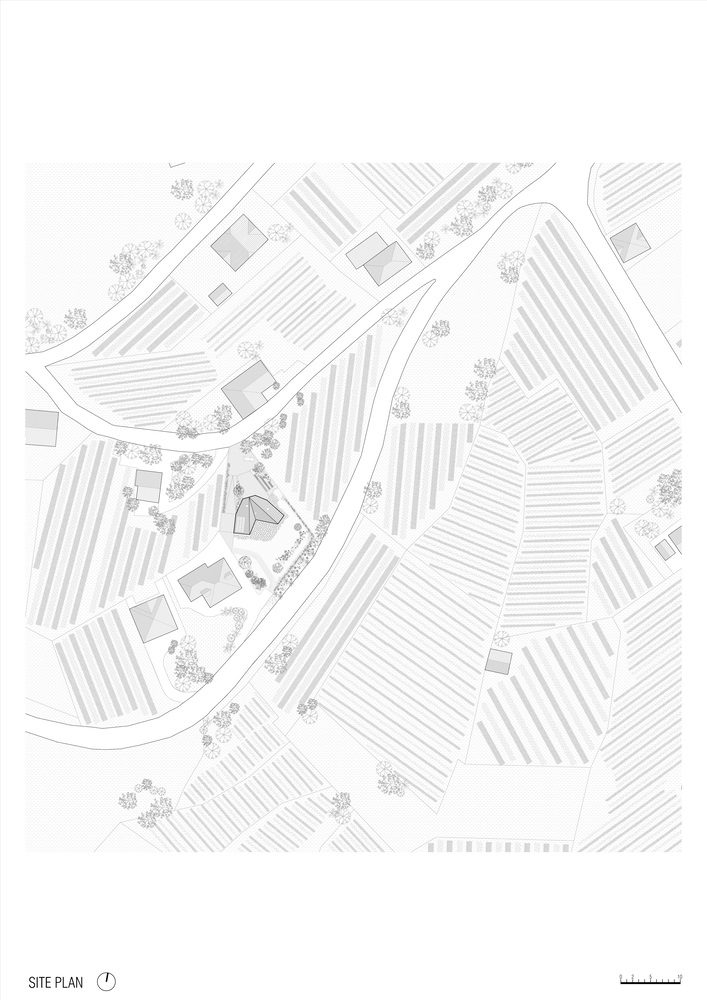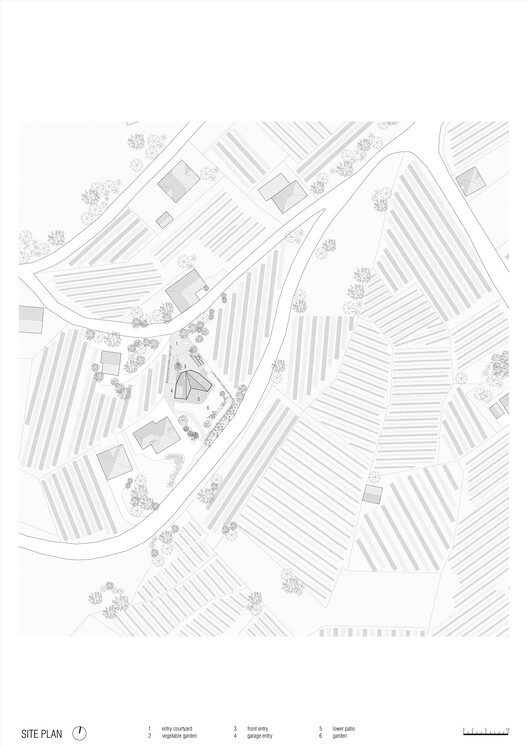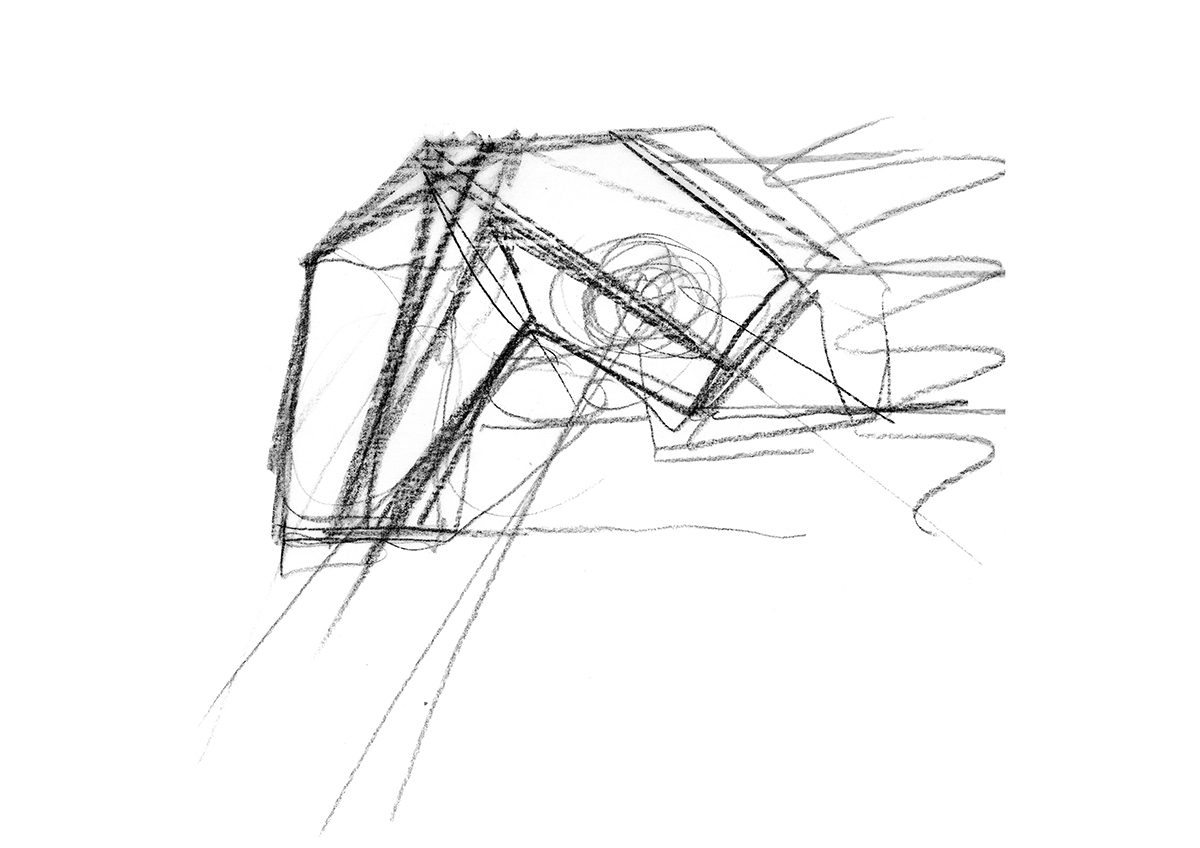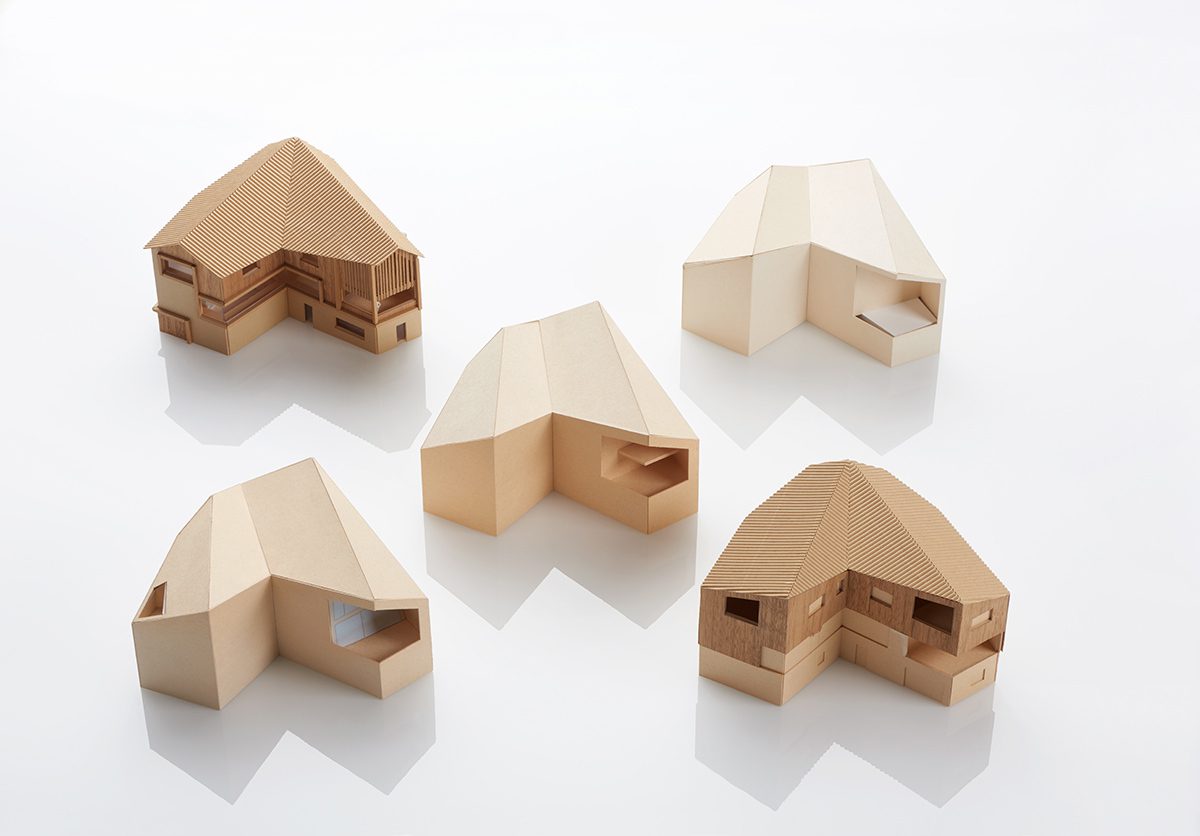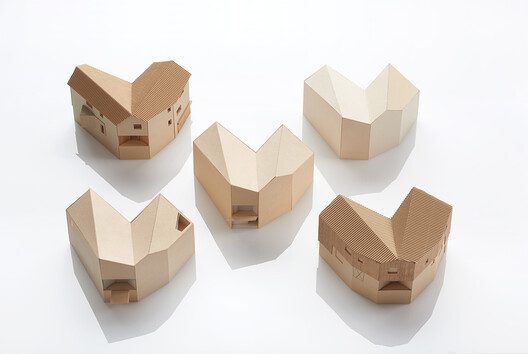


Hometown House, In Val di Non, in the northwestern region of the Autonomous Province of Trento, MoDusArchitects completes Hometown House – a private residence consisting of two single-pitched volumes which converge to the north to form an individual dwelling.
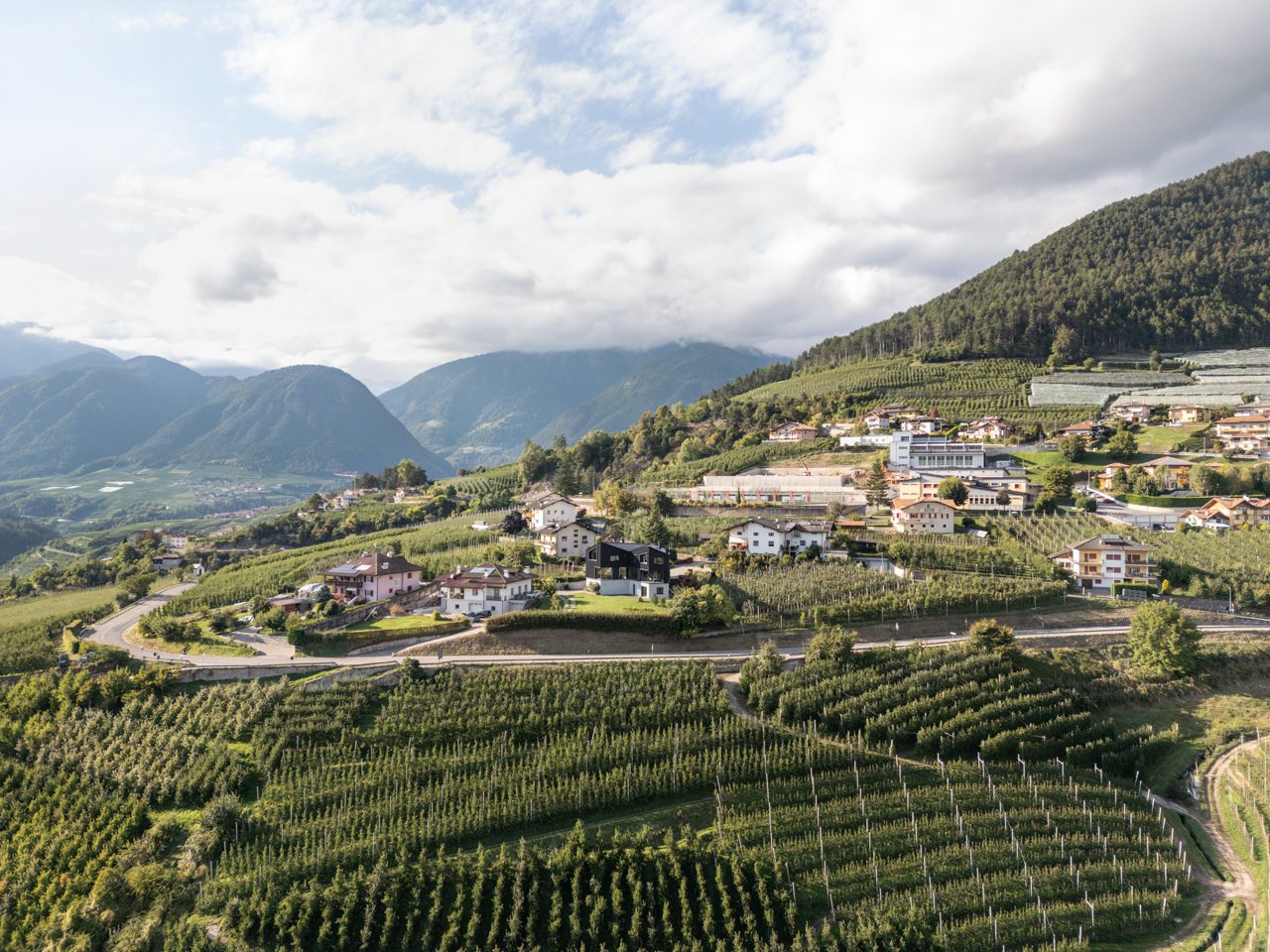
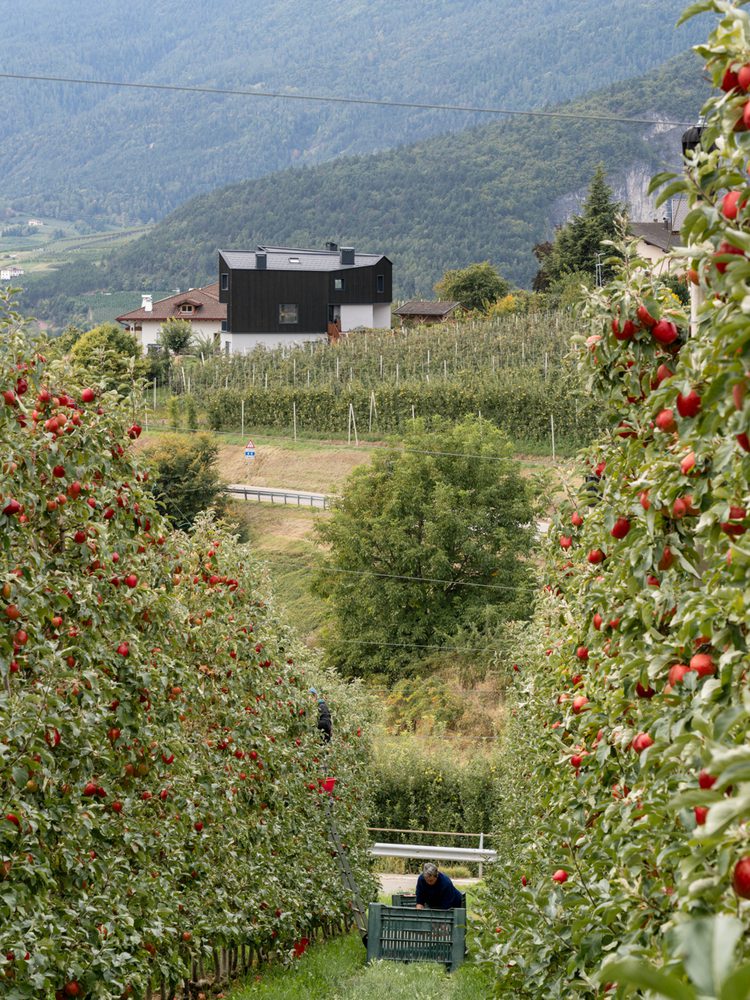
Famous for its apples, the valley is characterised by wide, rolling hills of orchards, dotted with small settlements around Lake Santa Giustina and against the backdrop of the majestic Brenta Dolomites – a renowned UNESCO site. After decades abroad, between Europe, Africa and the United States, far from his birthplace, the client decided to reconnect with his native landscape and roots, to build his second home on the site of what was once his parents’ home.
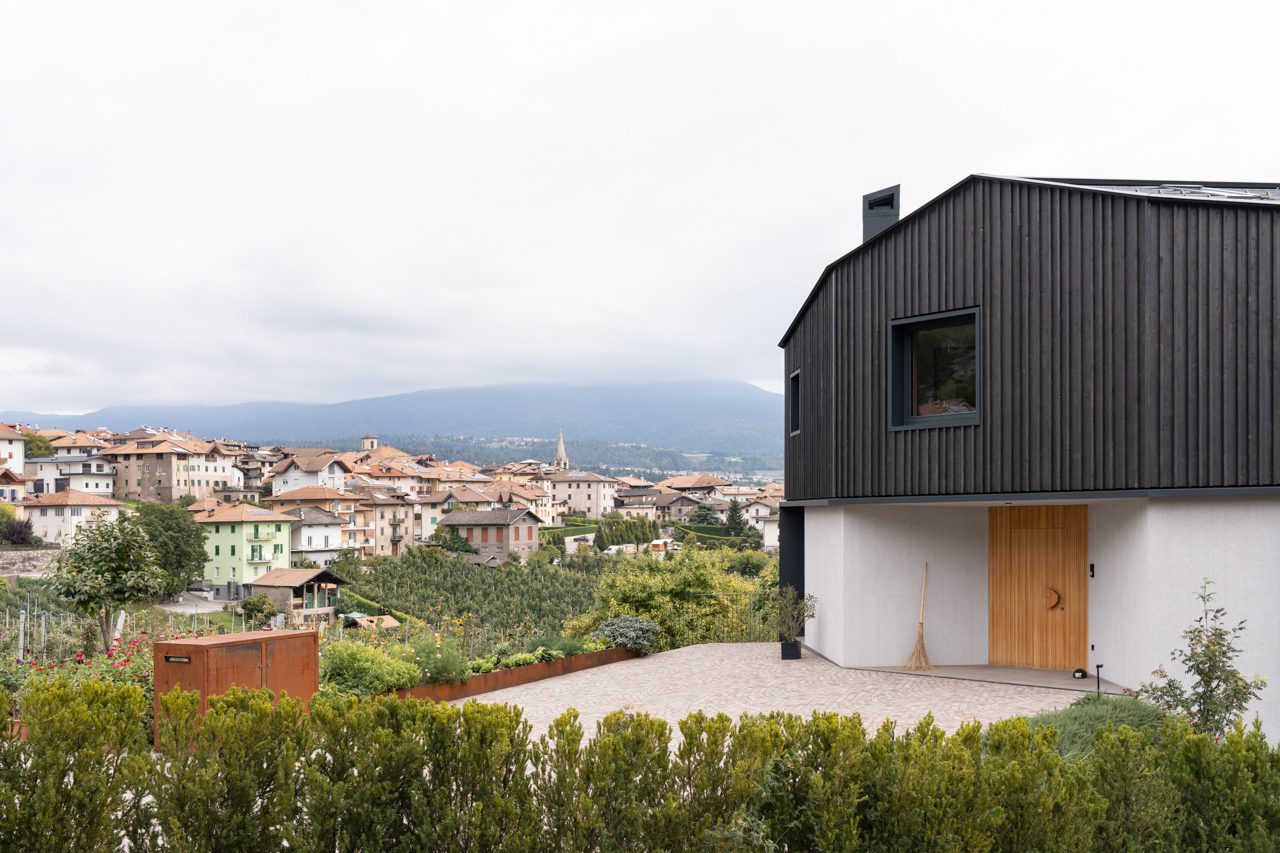
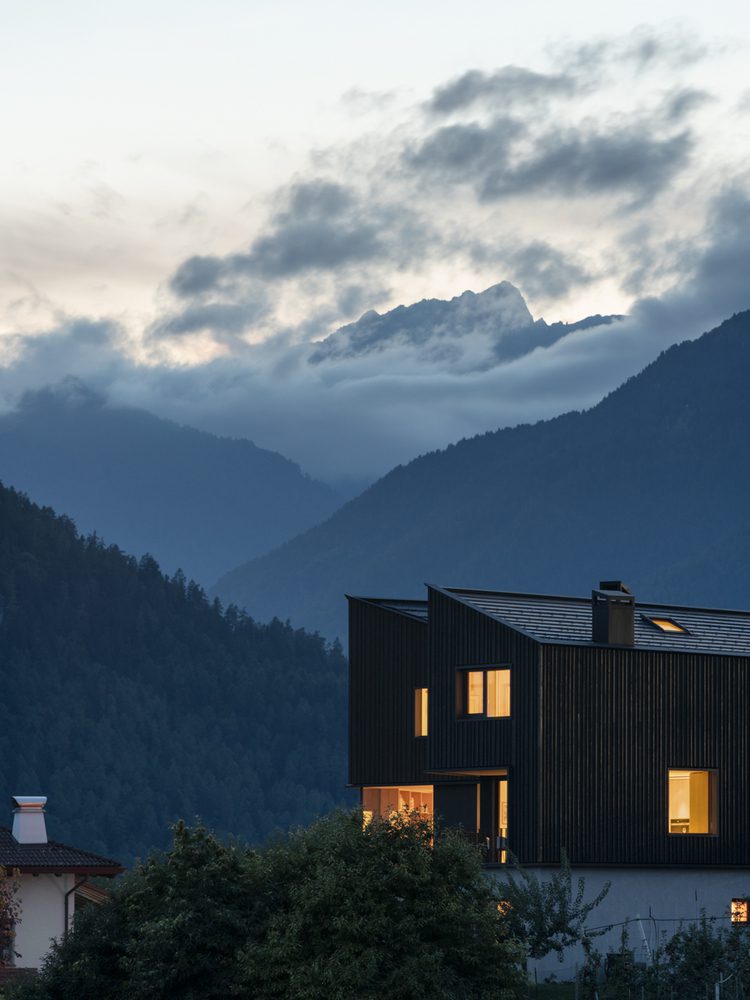
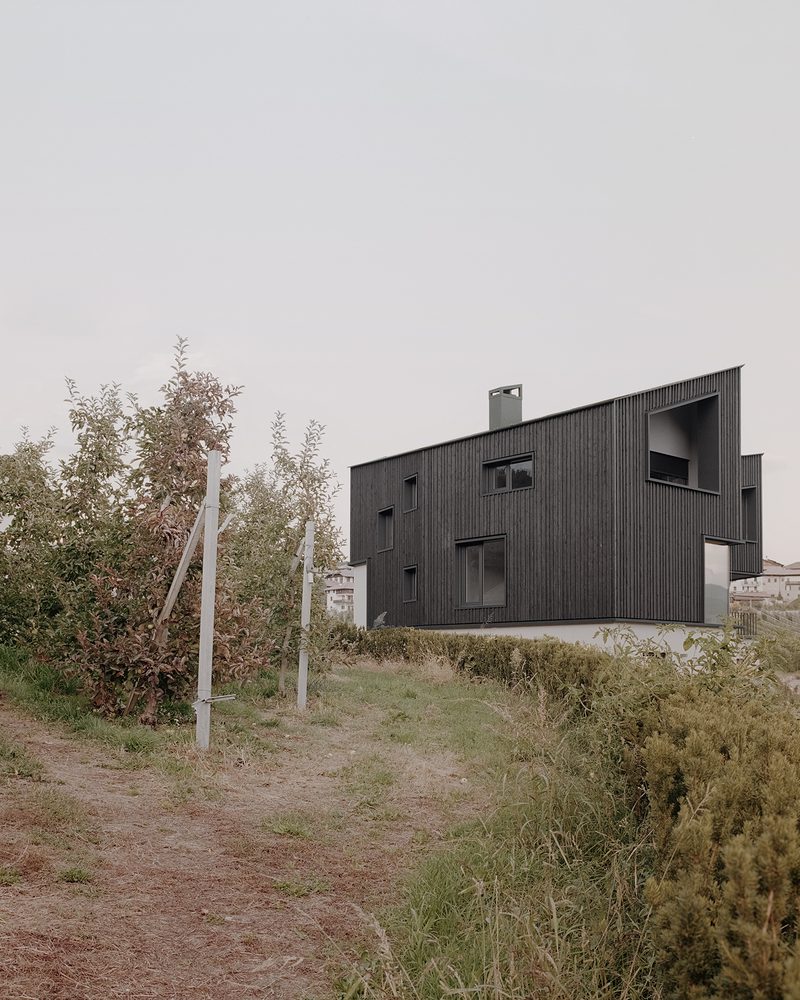
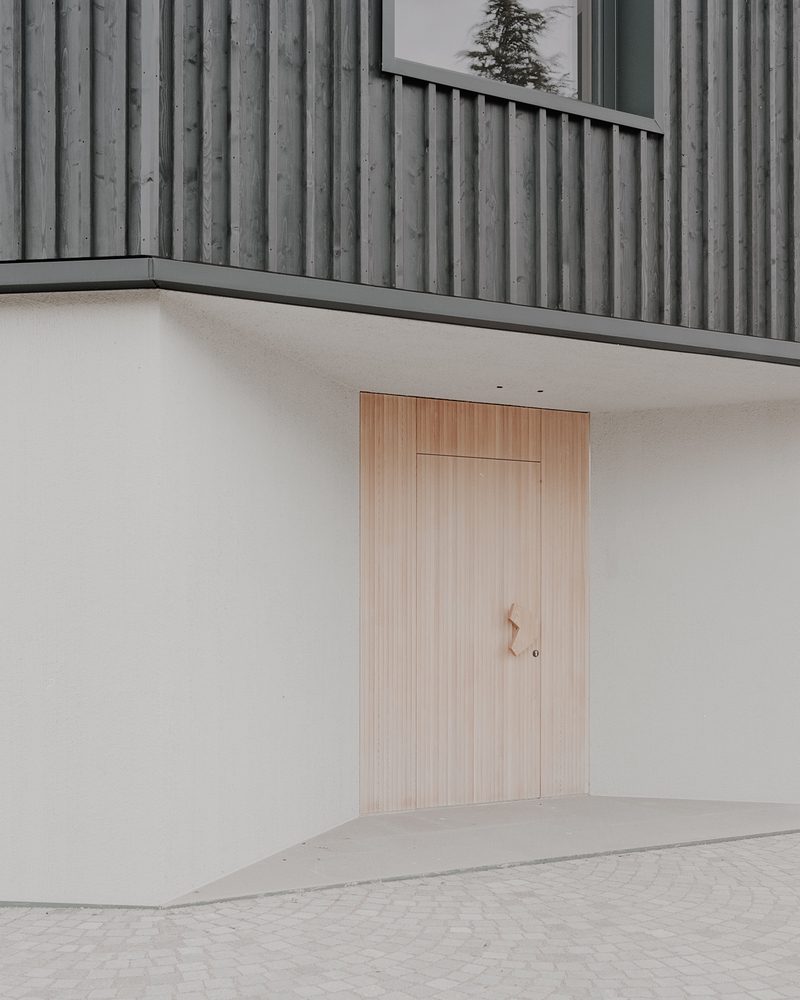
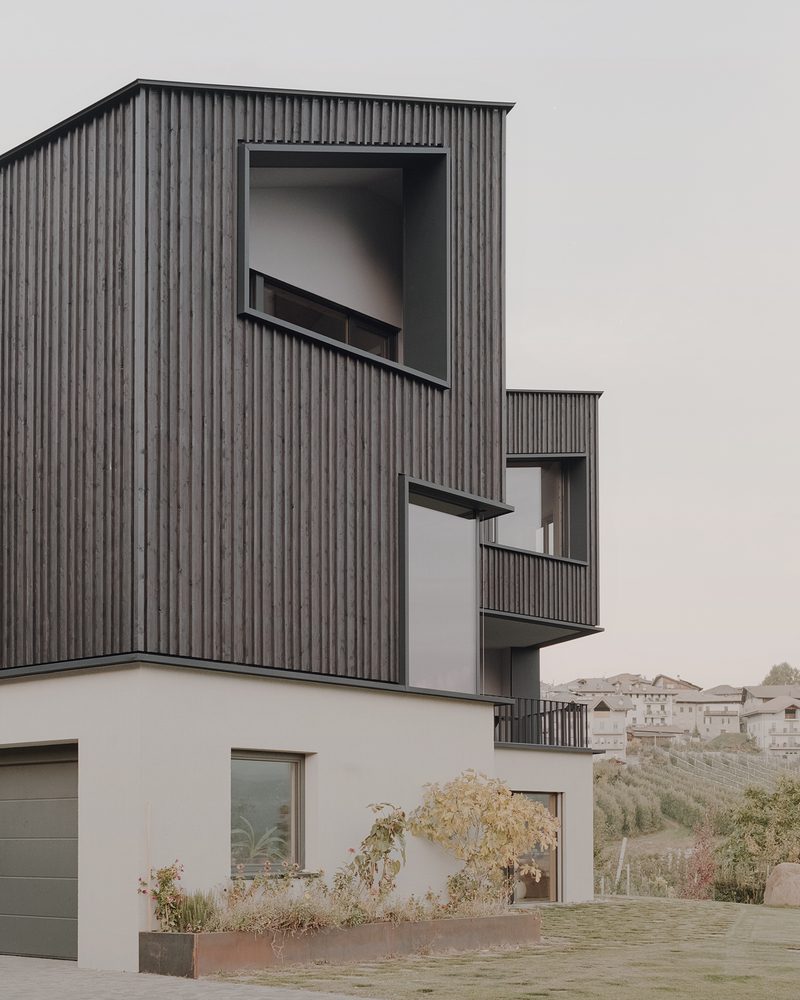
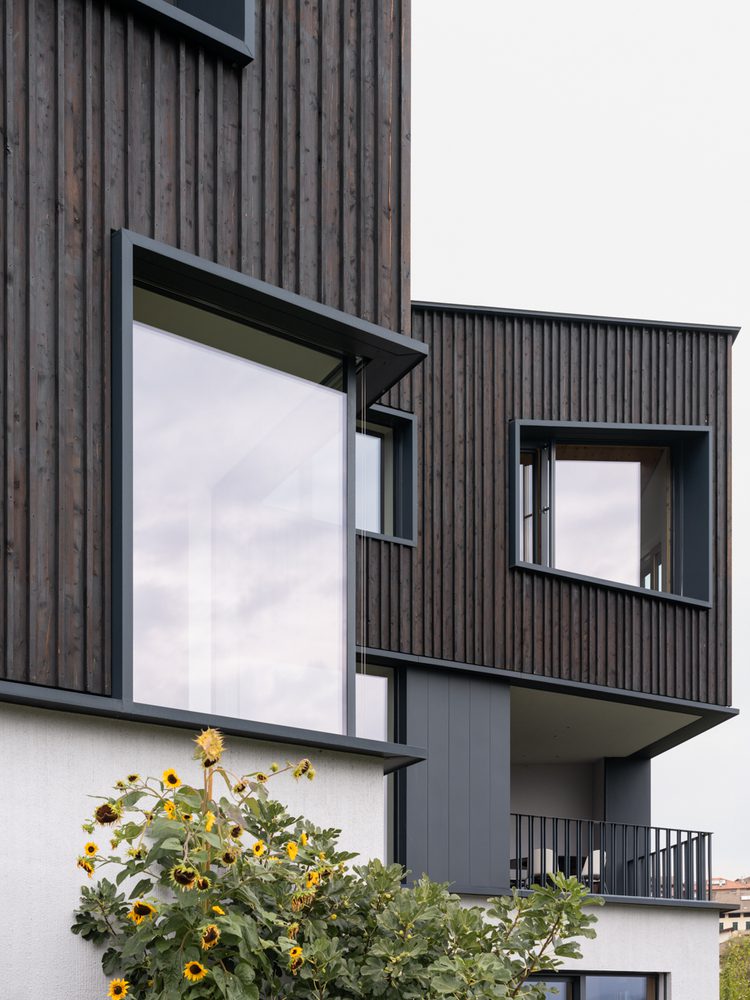
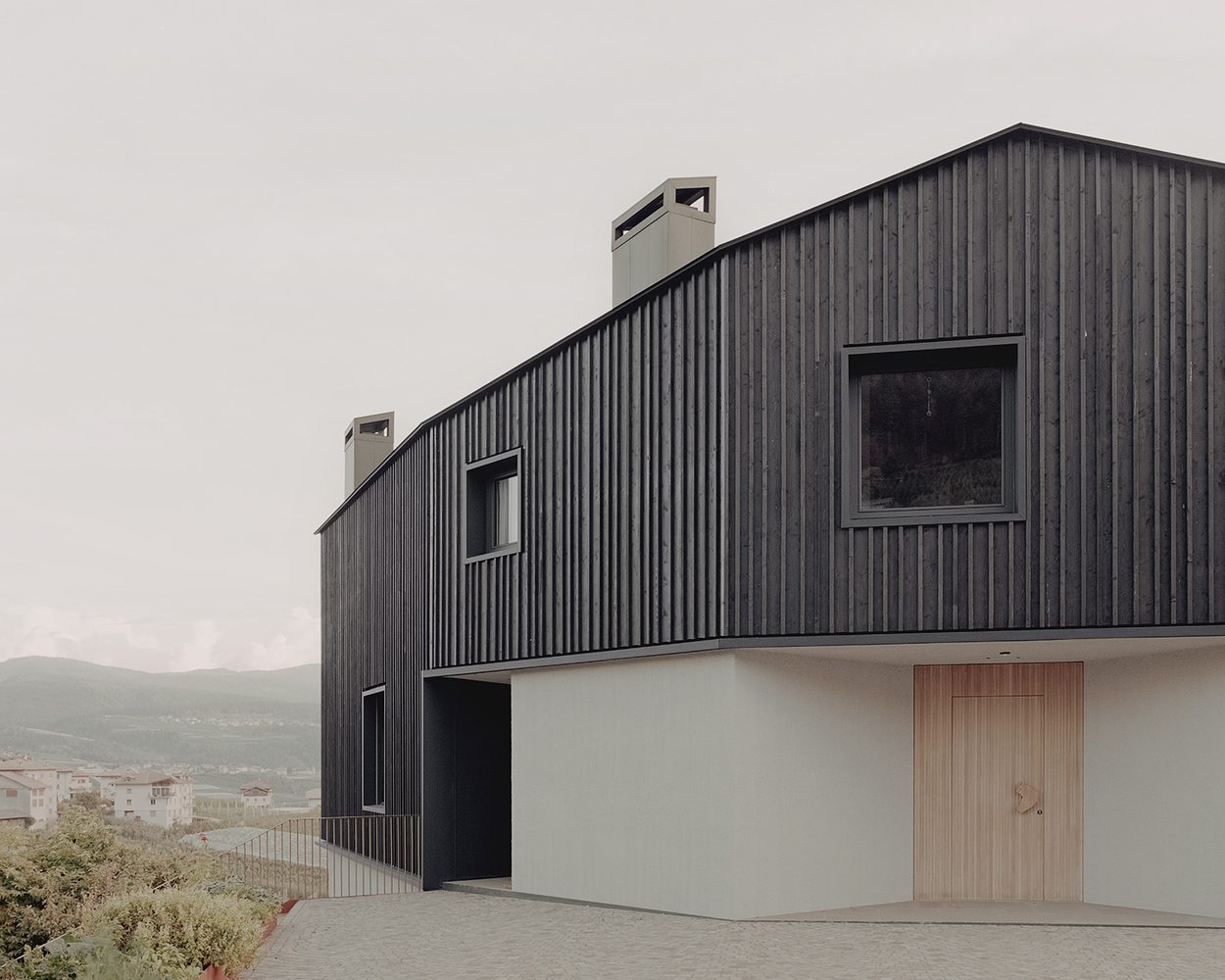
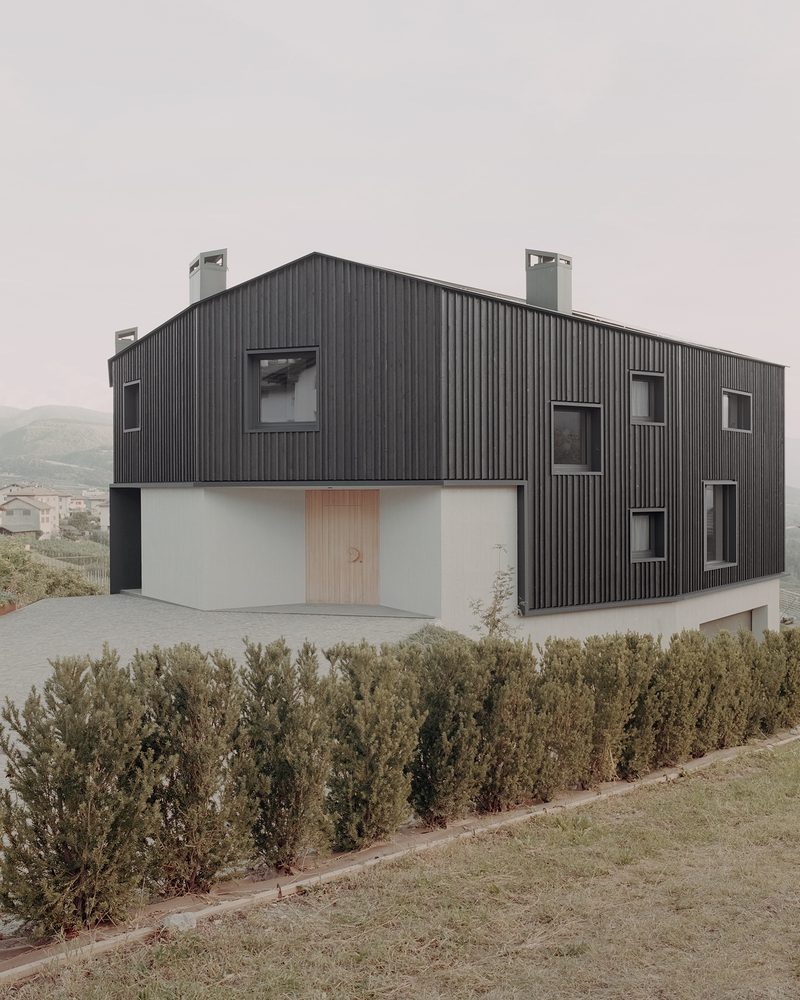
Nestled in a rural setting, the villa emerges from the gently sloping site, surrounded by typical houses with wooden roofs and white plaster walls. The volume is distinguished from its surroundings by a water-treated, black larch wood facade comprised of vertical panels and 4x4cm profiles, interrupted only by the large openings and by its oblique, irregular lines with their striking dynamism. Architecture, landscape, and a limited palette of simple, natural materials come together to exude a sort of convivial spontaneity.
The heart of the project honours the house as a place of hospitality, one where family and friends can convene to celebrate the holidays, cook together, and enjoy meals in each other’s company at the end of a day of apple picking, hiking, skiing or biking. — recount the founders of the studio Sandy Attia and Matteo Scagnol.
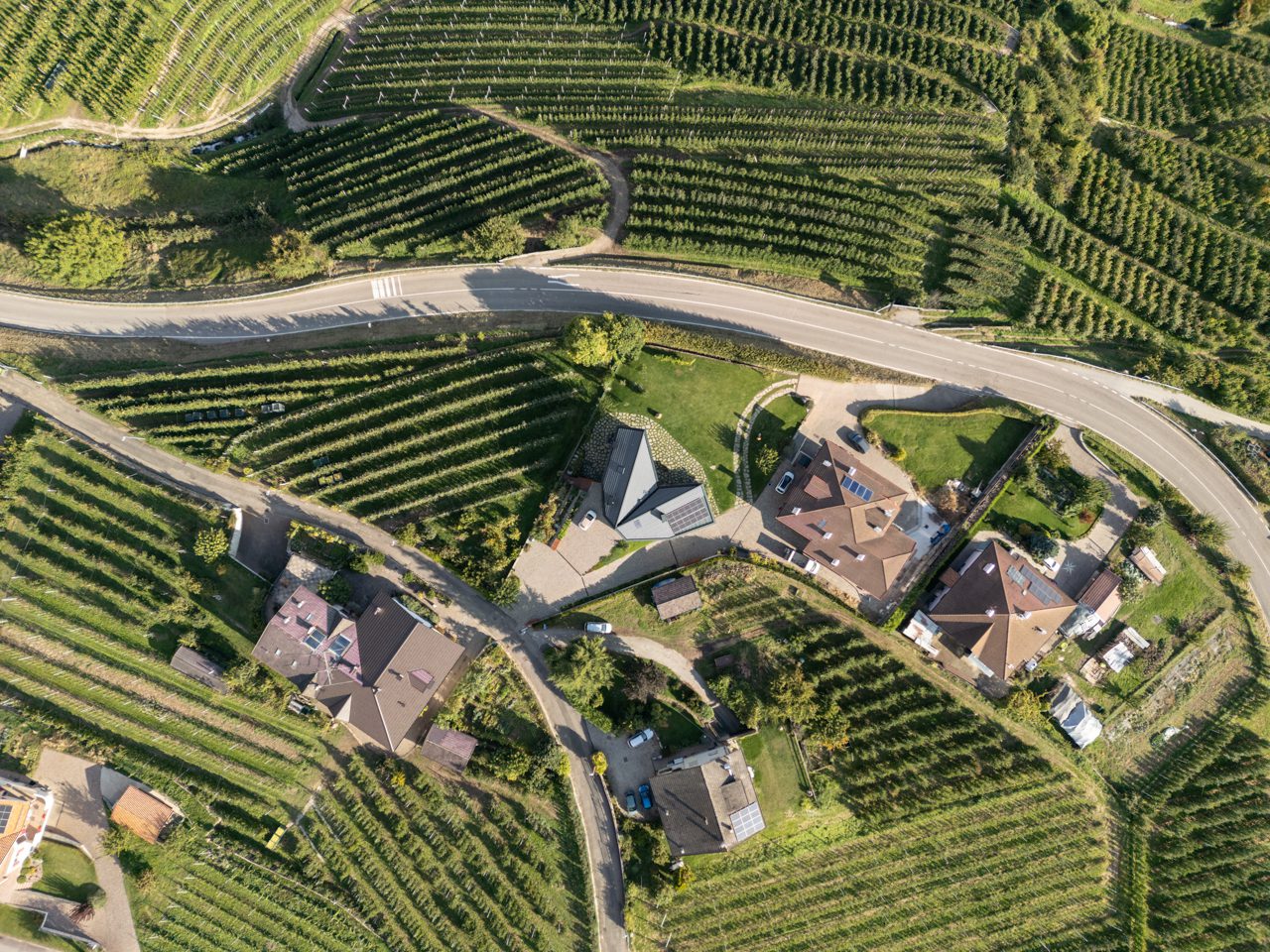
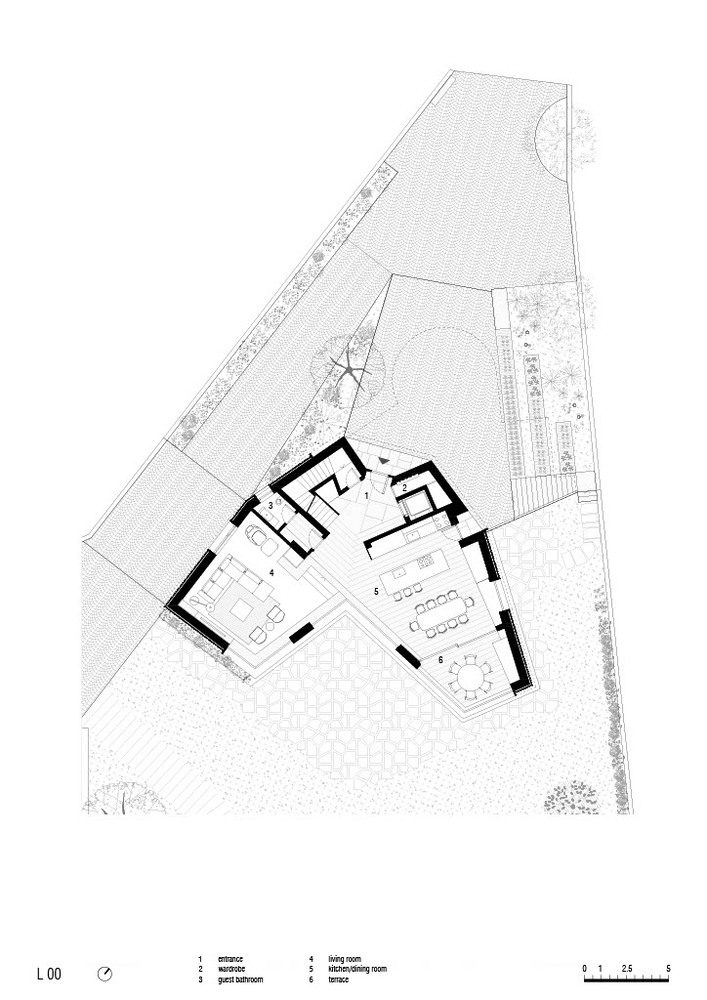
The site is accessed from a narrow road just beyond the town’s edge and gives out onto a driveway paved in porphyry cobblestones made from natural stone from the nearby Cembra Valley. The driveway unfolds into a panoramic forecourt that takes in not only the surroundings but also the seasonal vegetable and herb garden. A change in paving marks the threshold between forecourt and house, a covered alcove with the front door at its center.
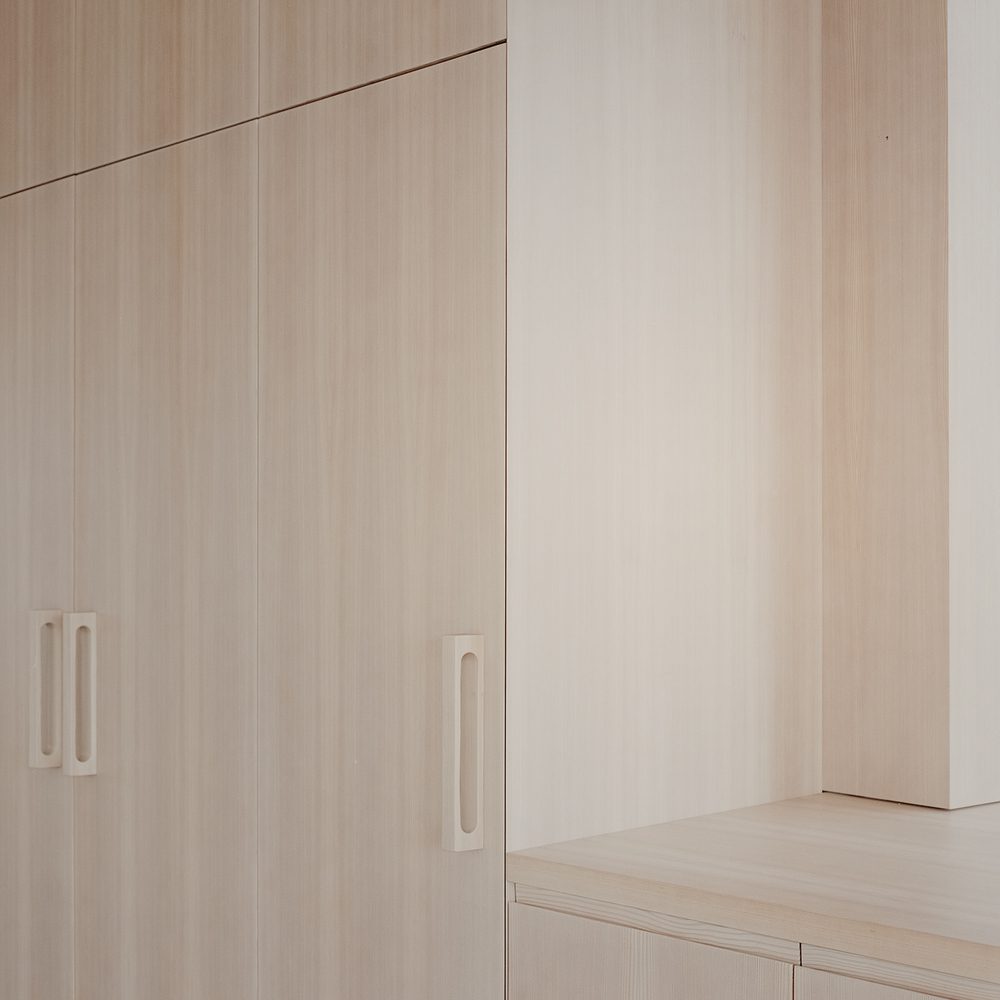
For Hometown House, MoDusArchitects also designed the solid larch wood door knob, a detail featured in all of their residential projects, whereby the shape replicates the building’s footprint.
© Simone Bossi
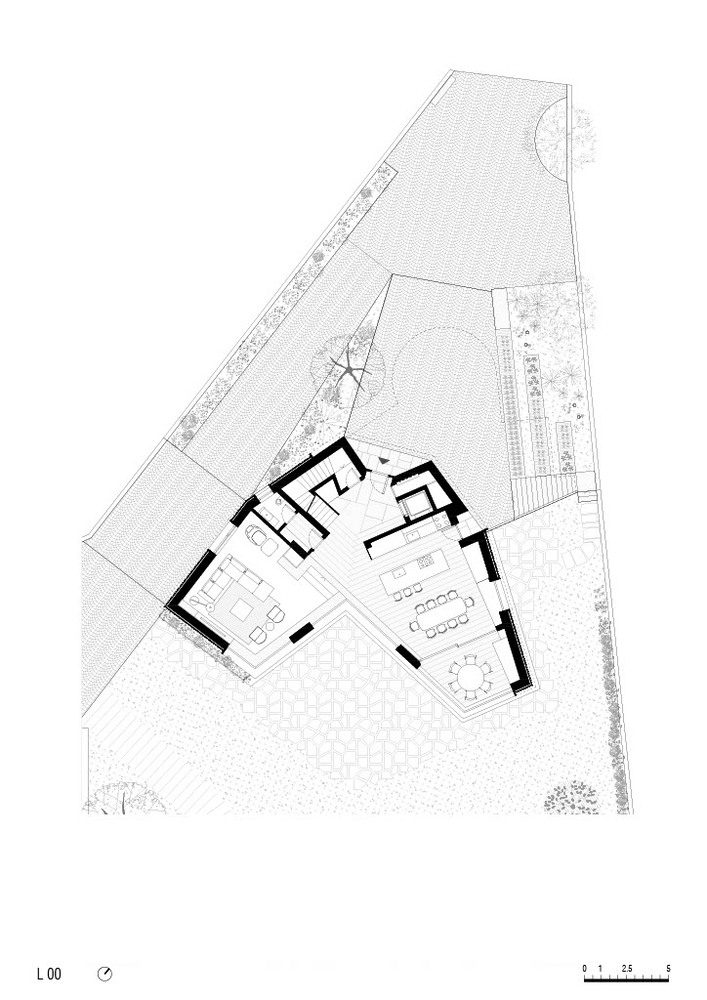
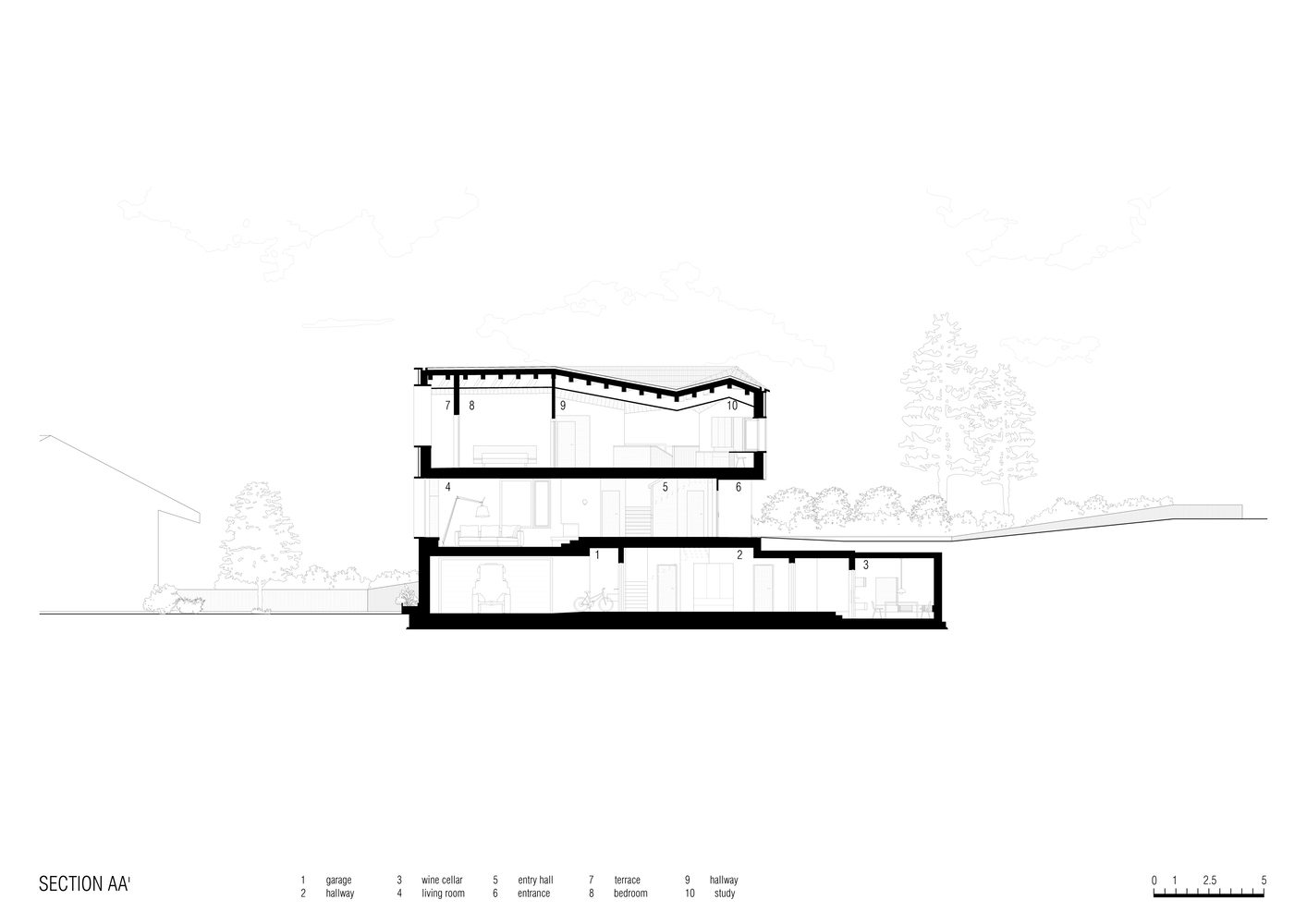
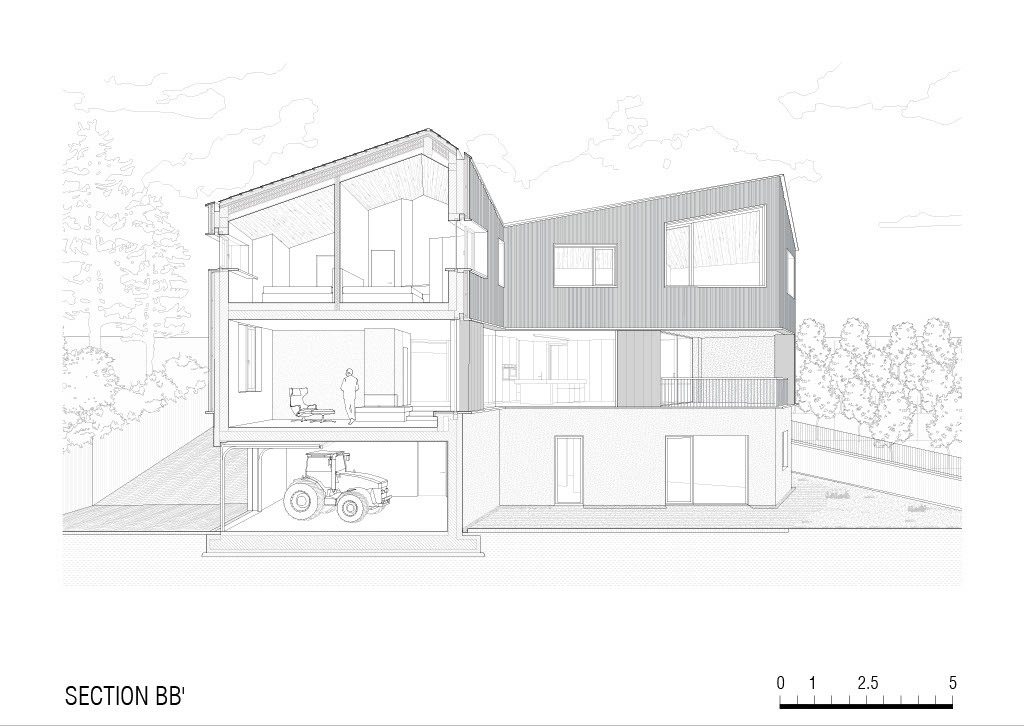
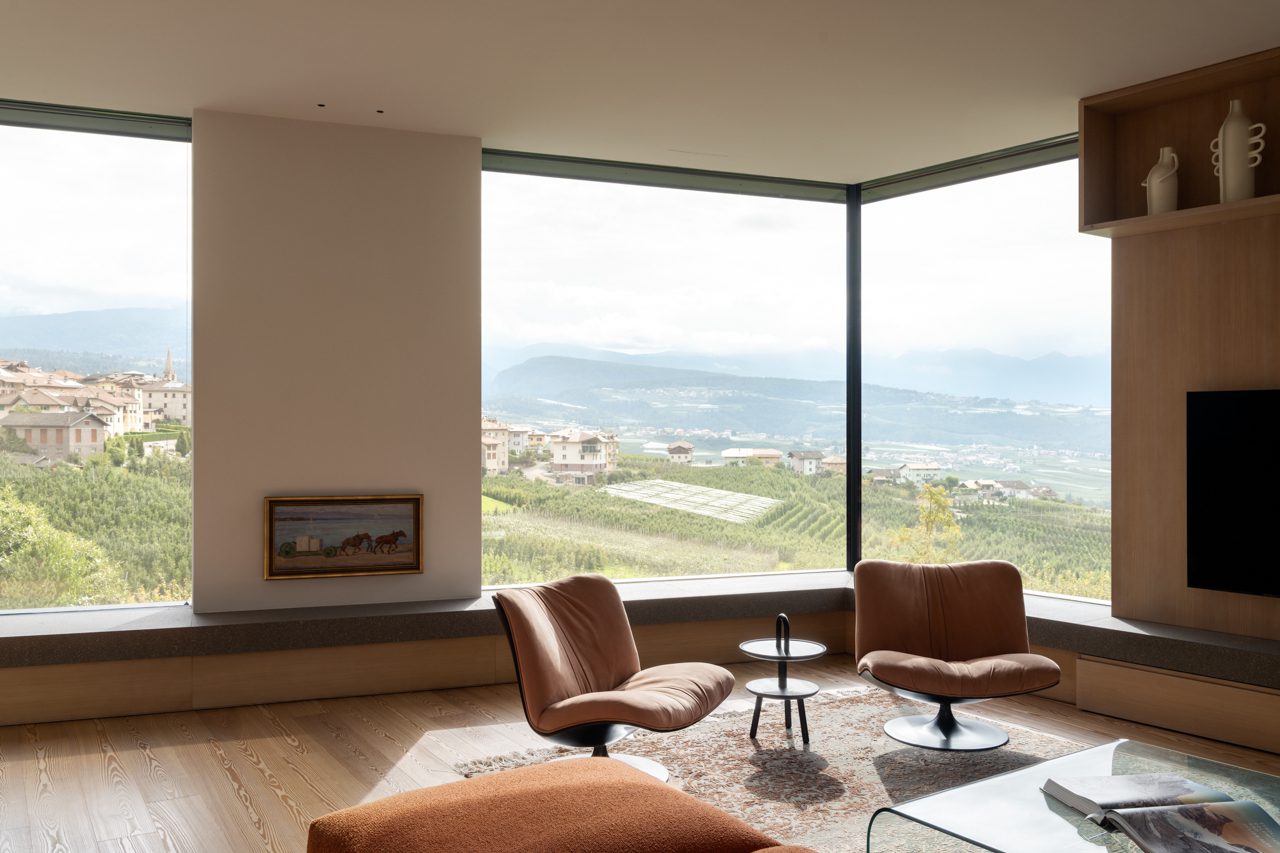
The villa is characterized by a V-shape facing south towards the valley and the lake. On the same side, at the ground fl oor, a large window brings natural light to the open and generous spaces of the living area.
© Simone Bossi
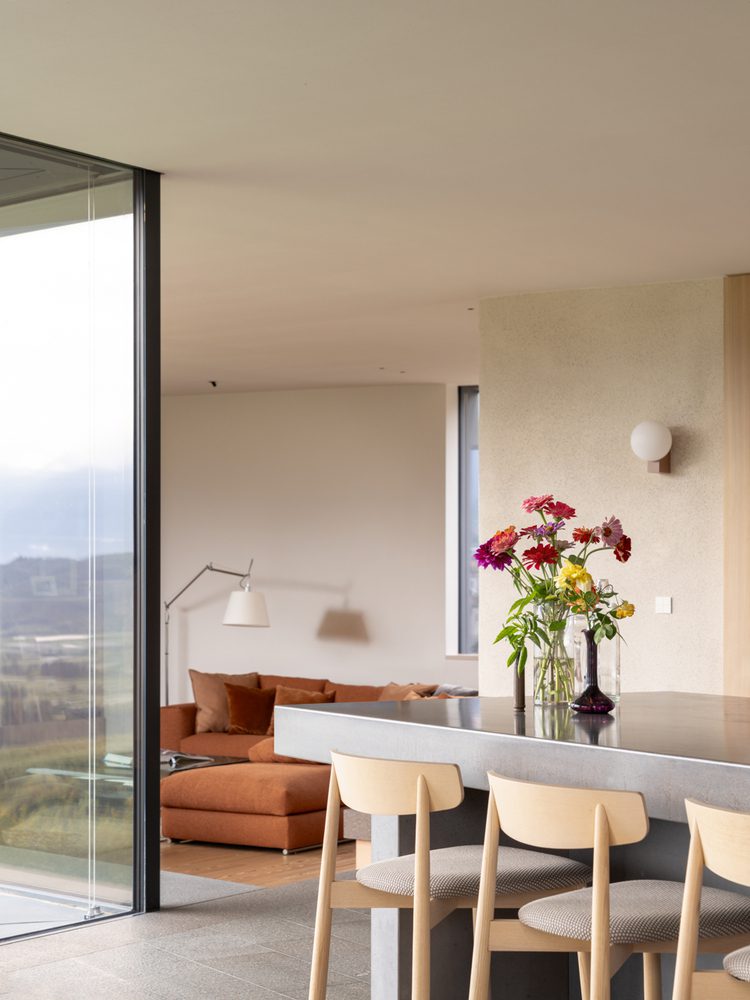
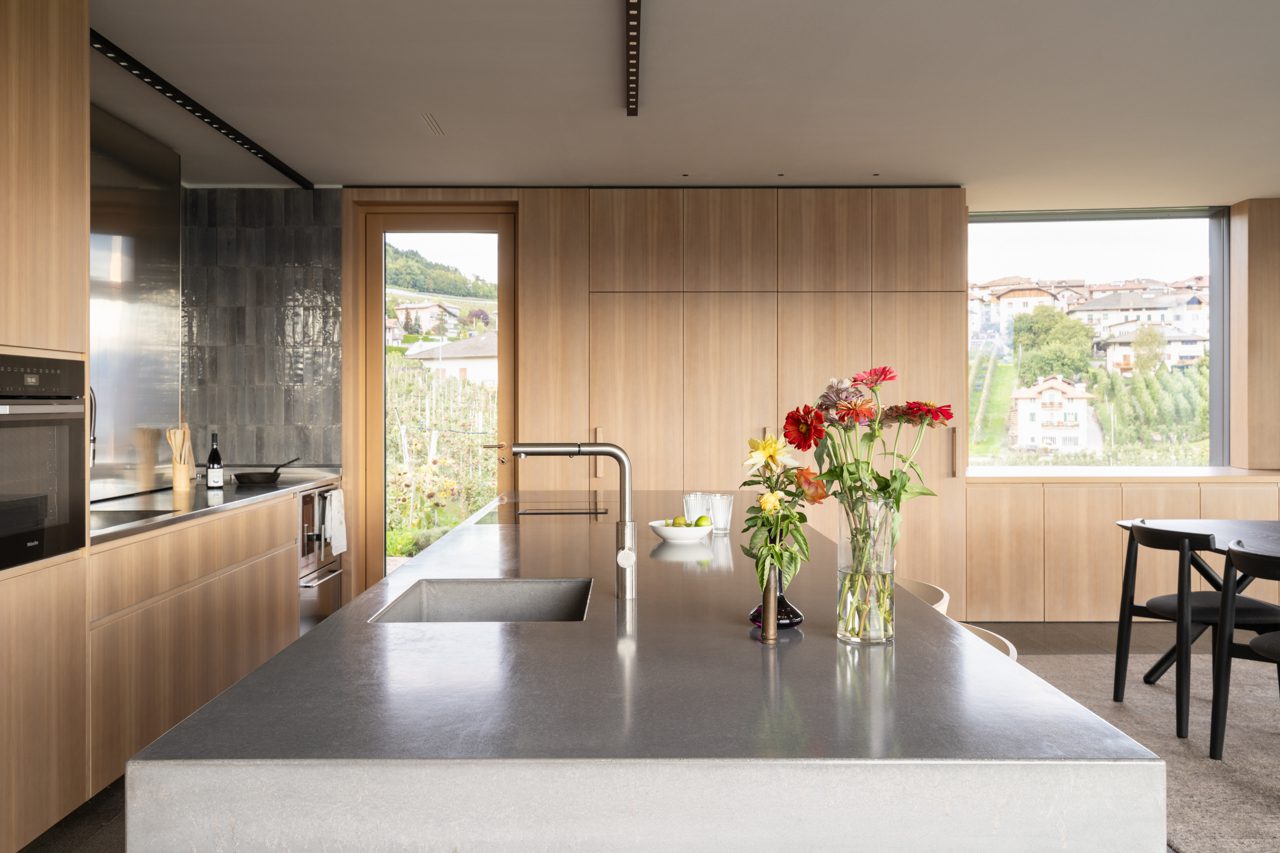
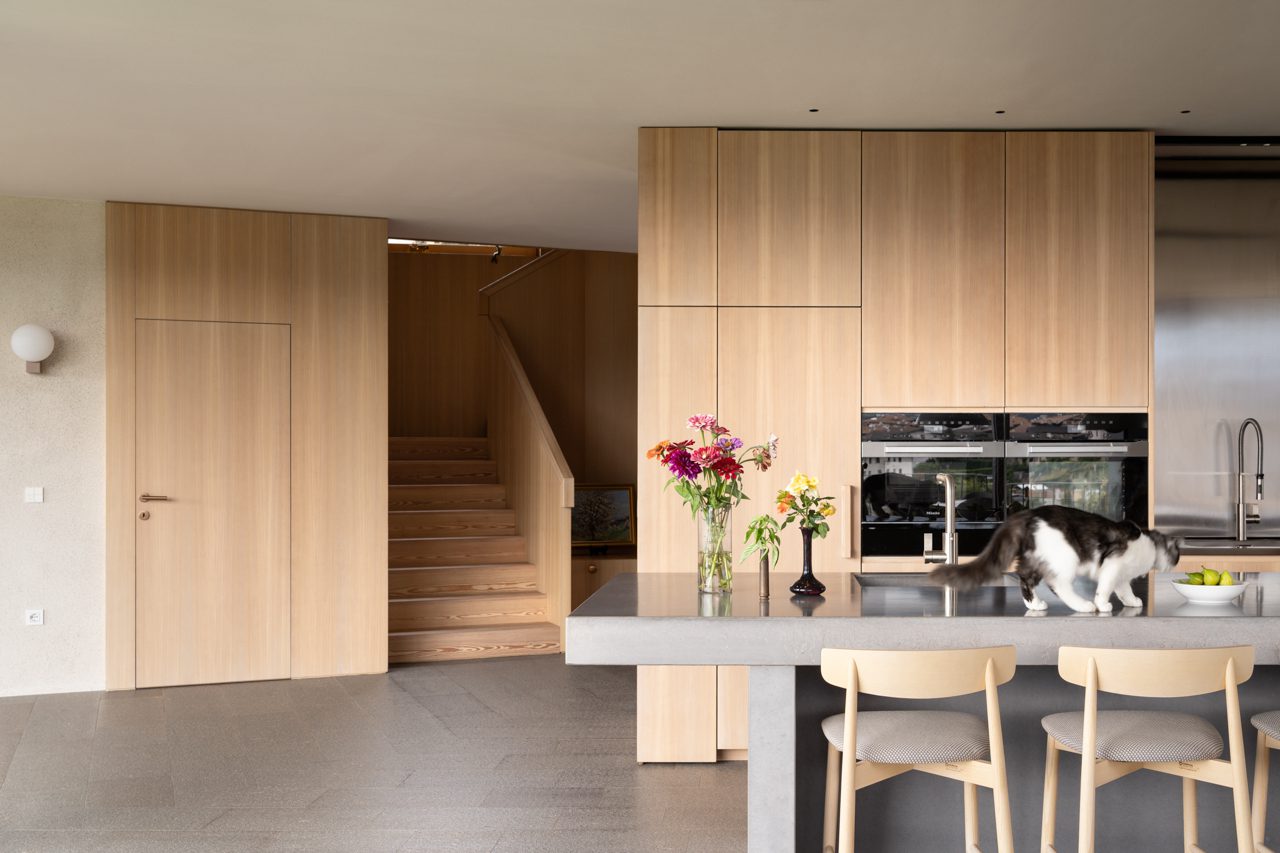
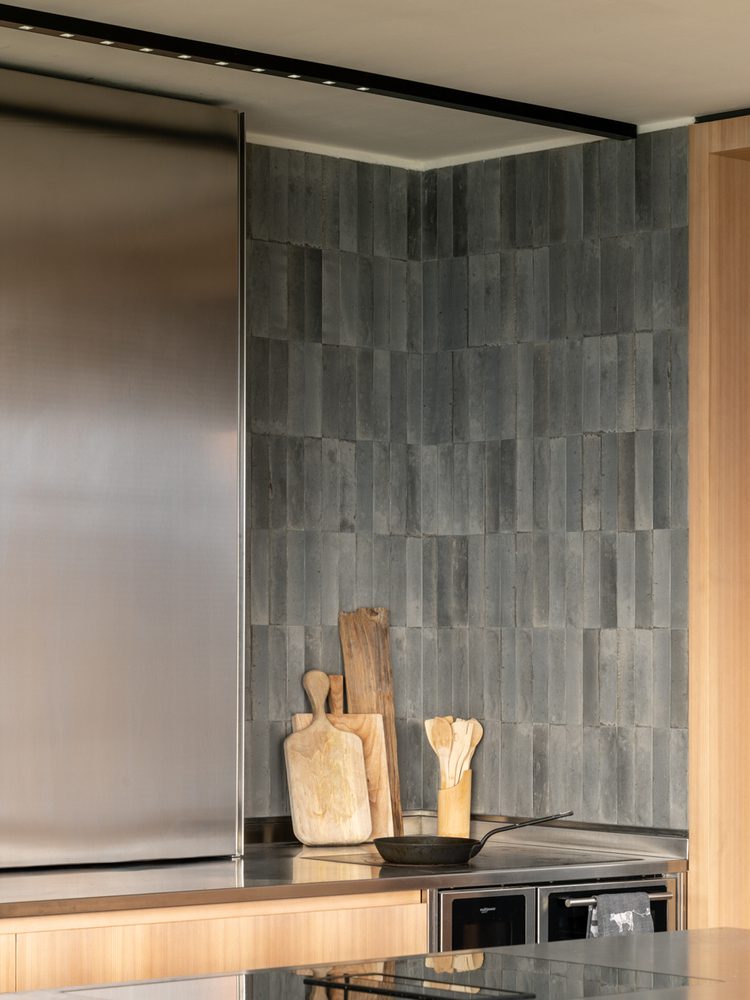
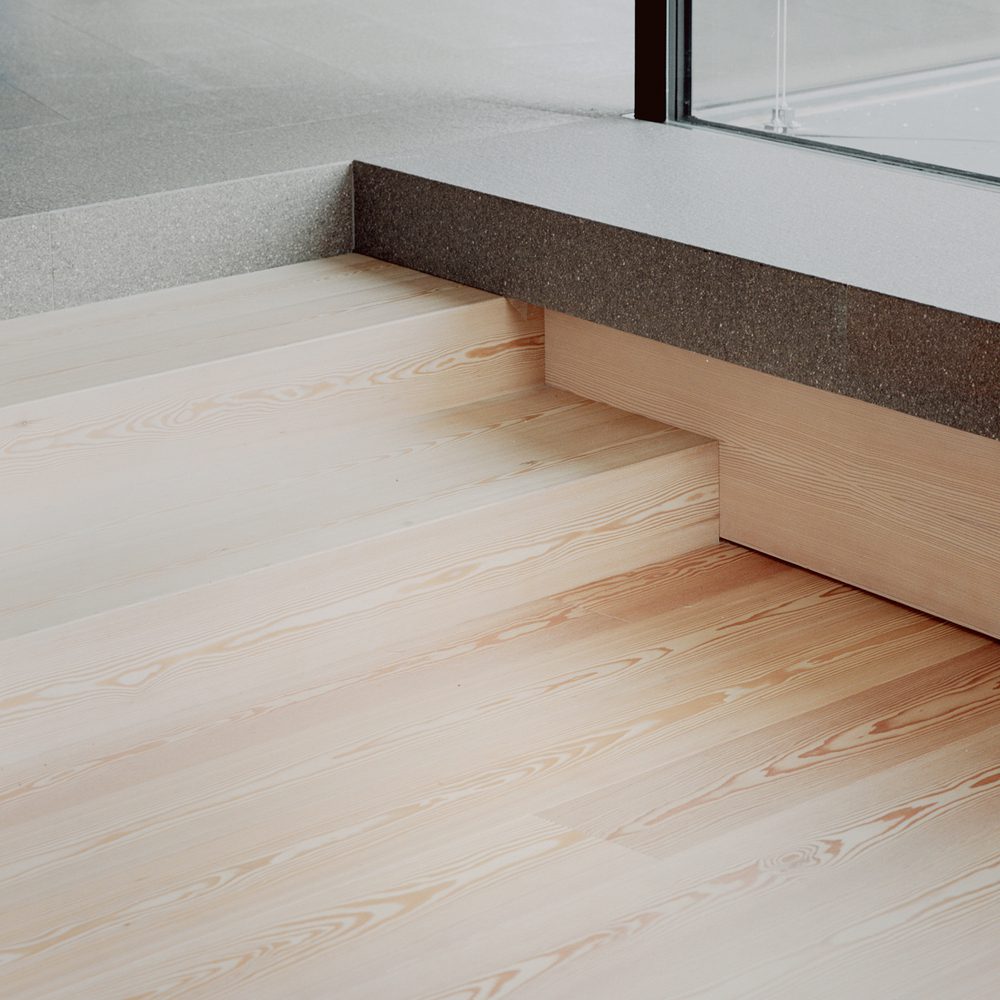
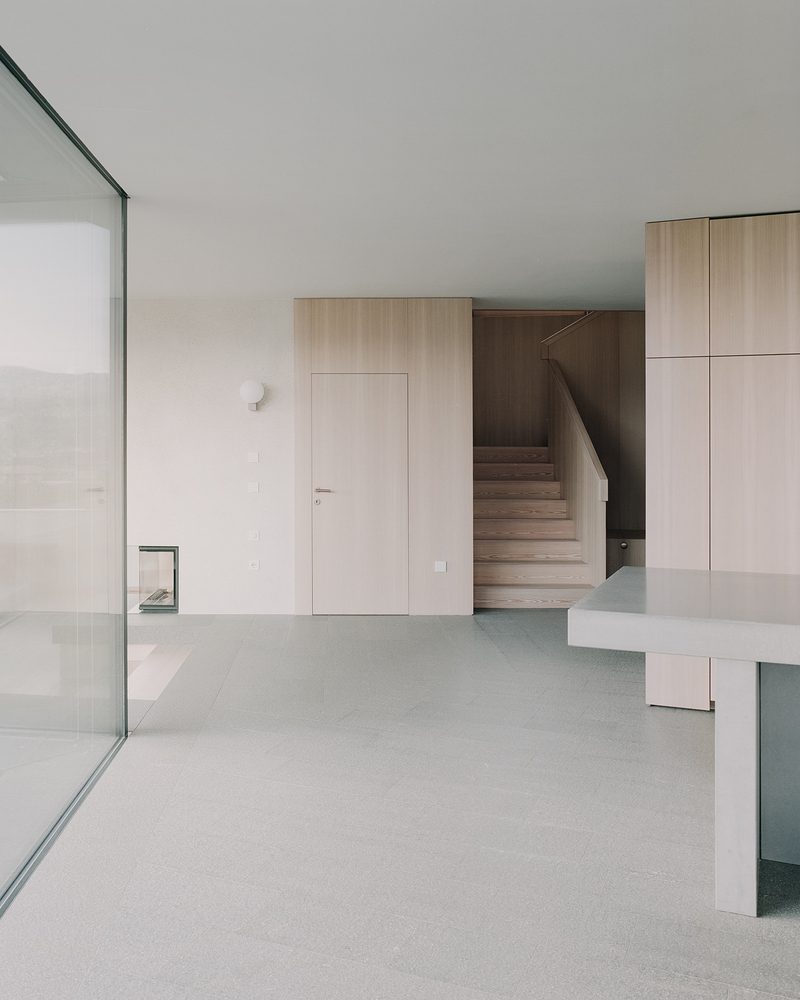
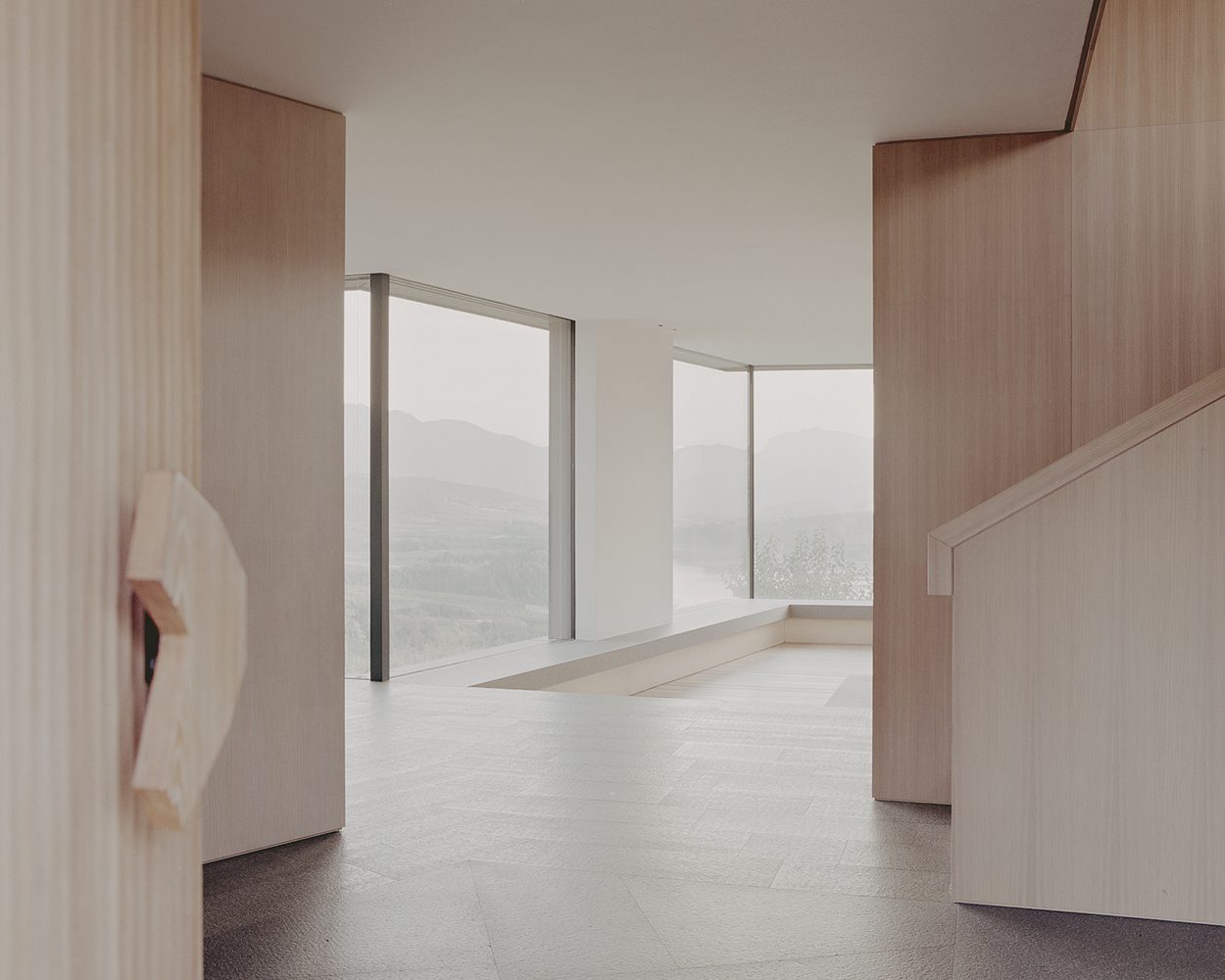
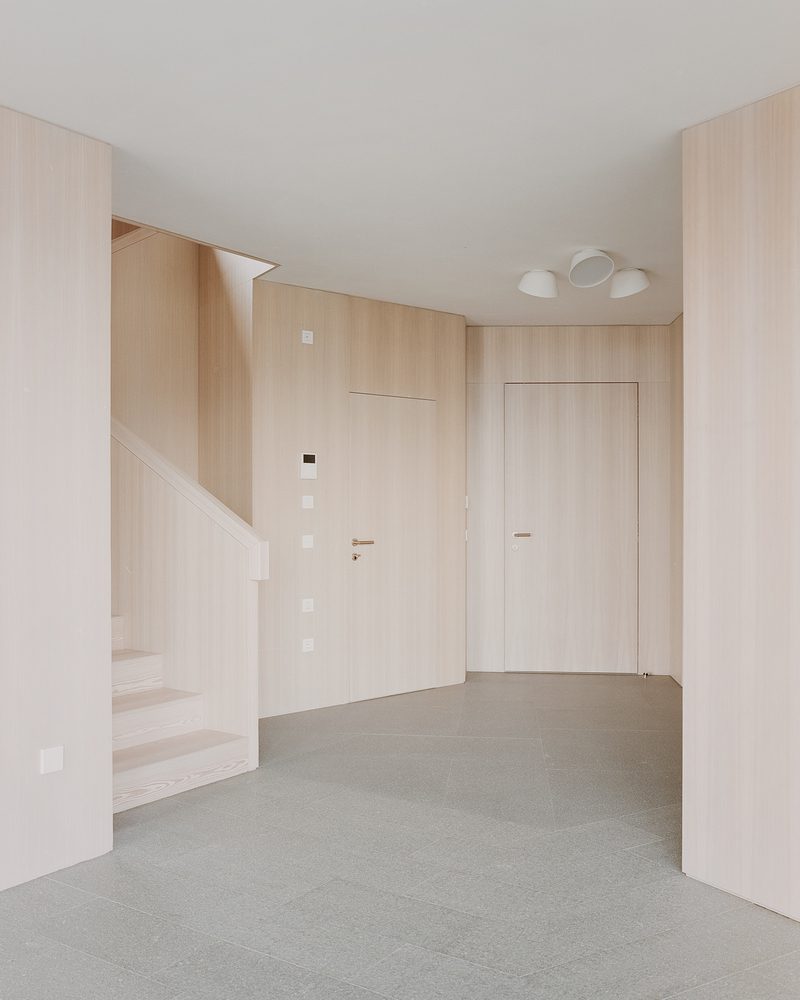
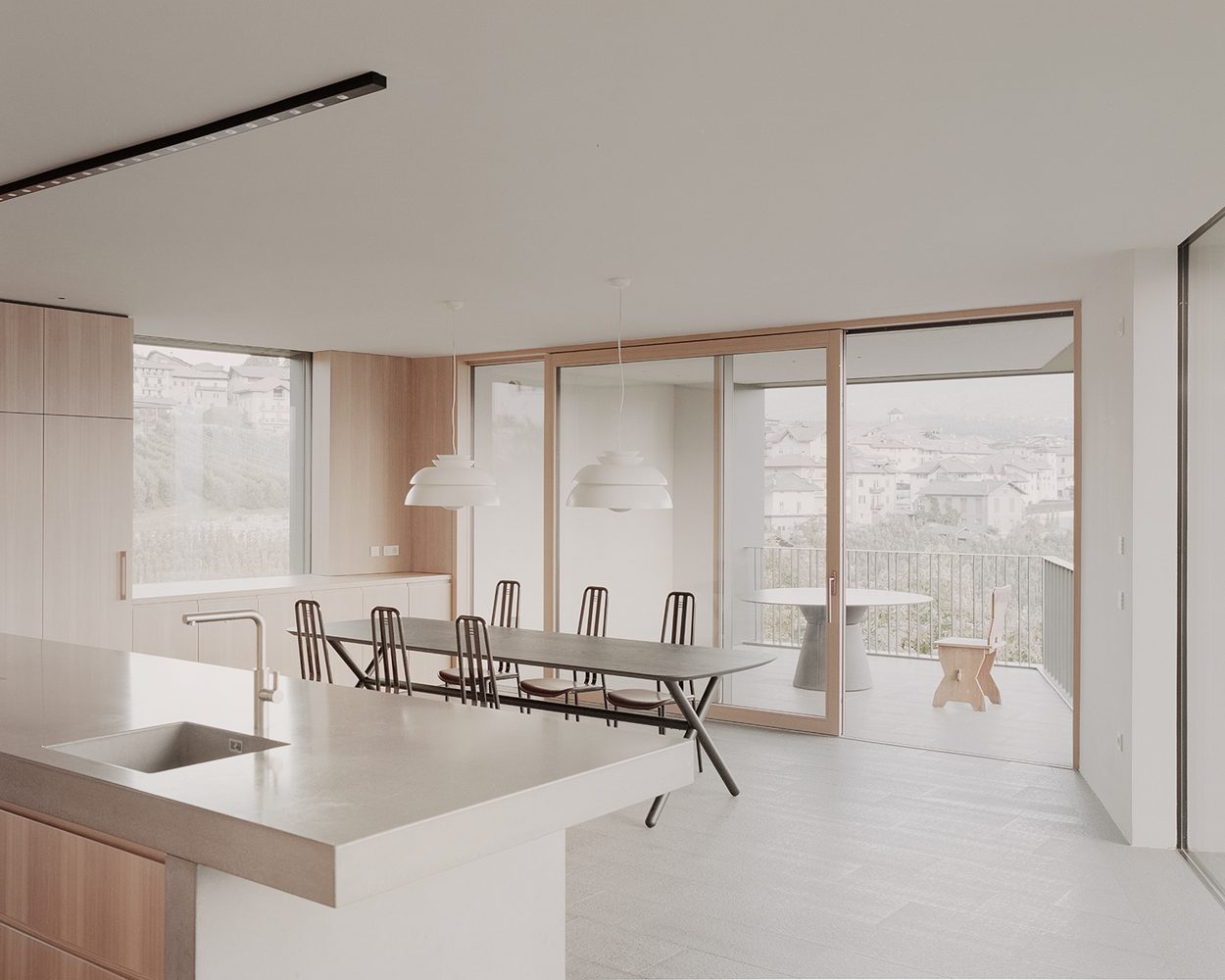
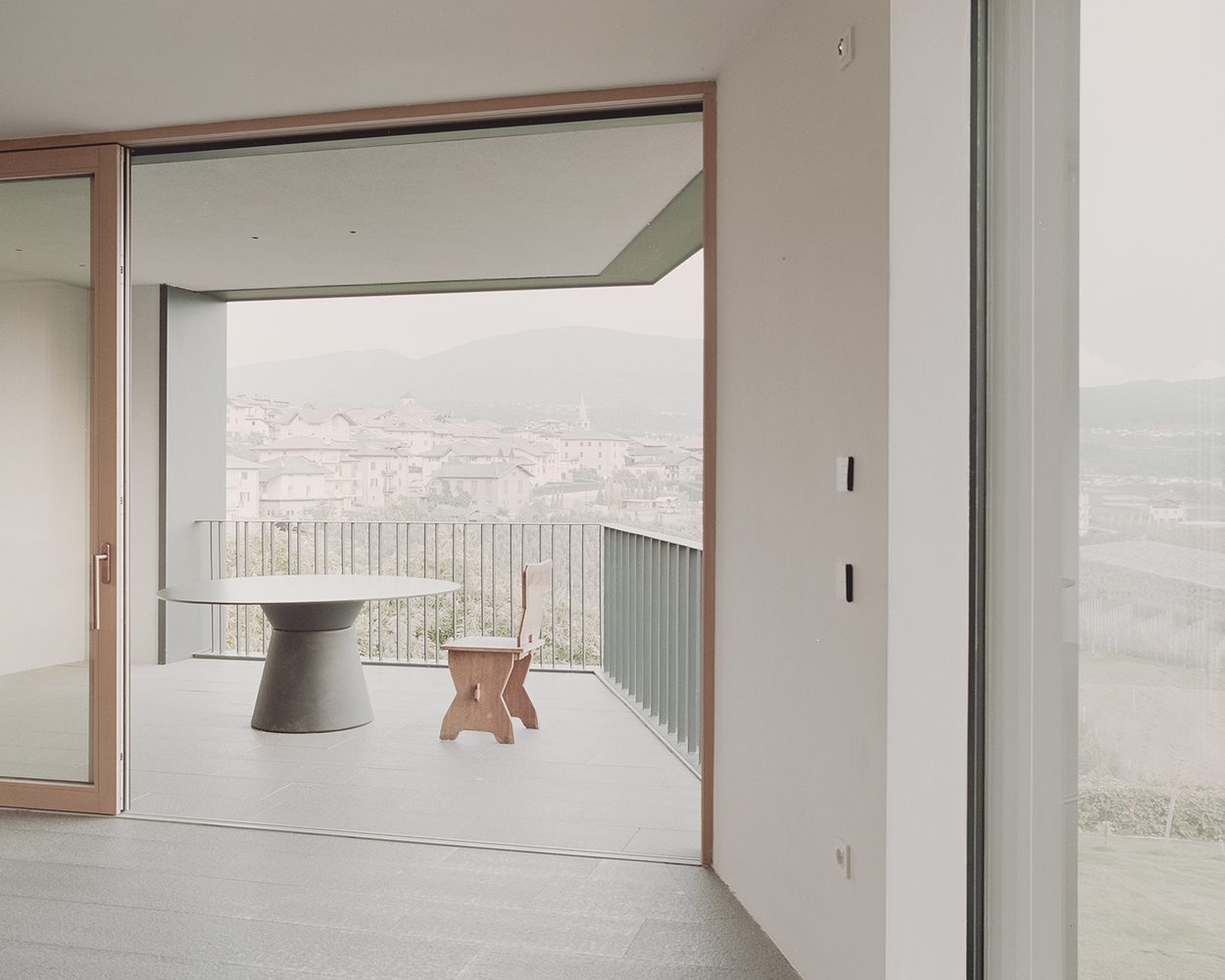
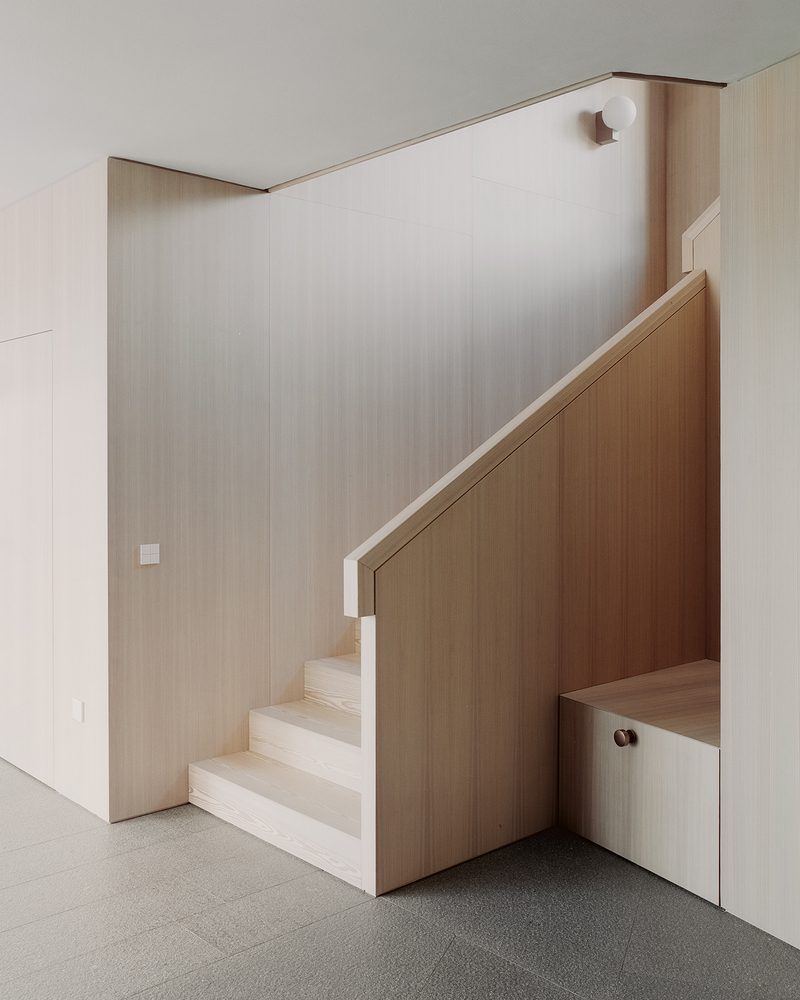
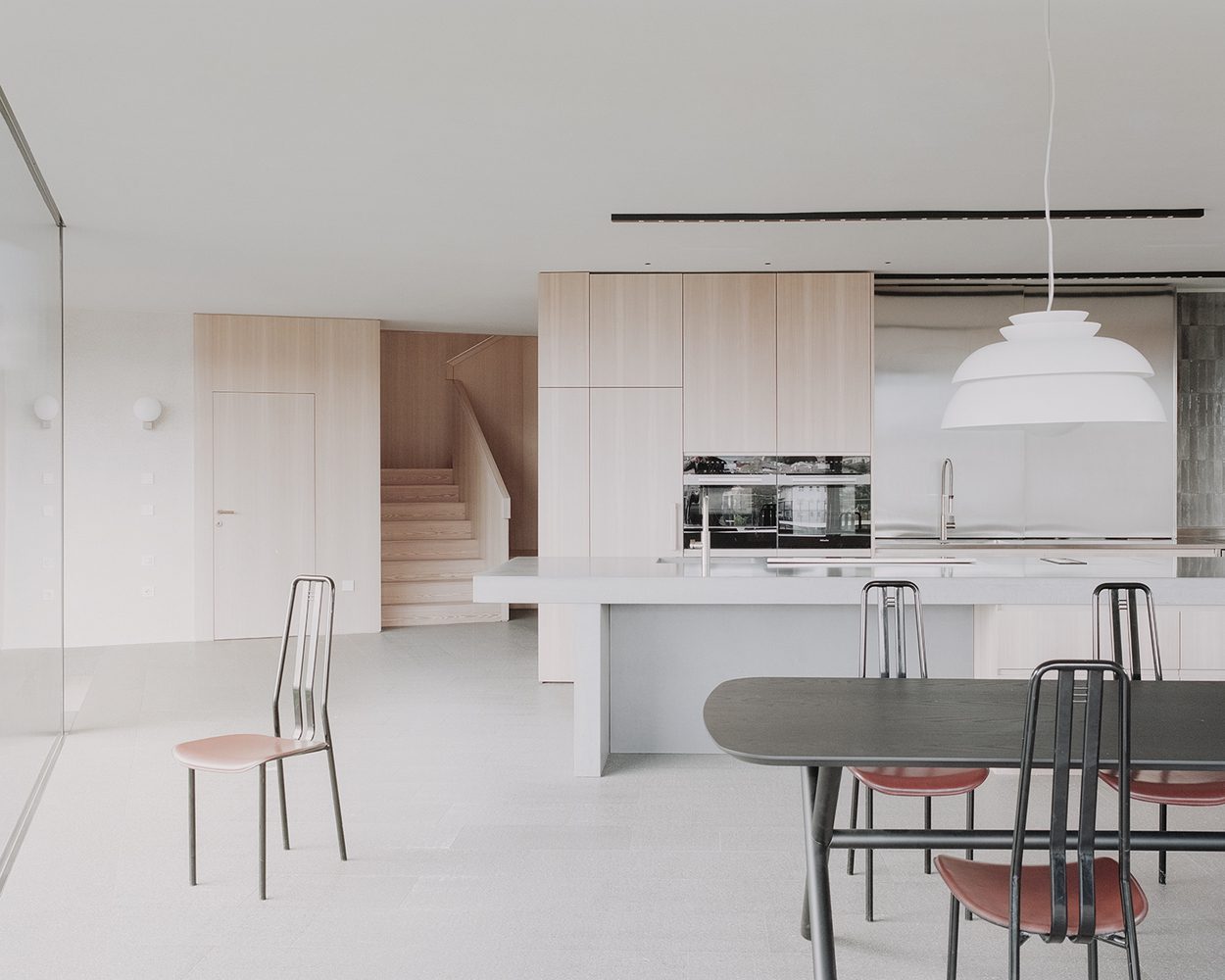
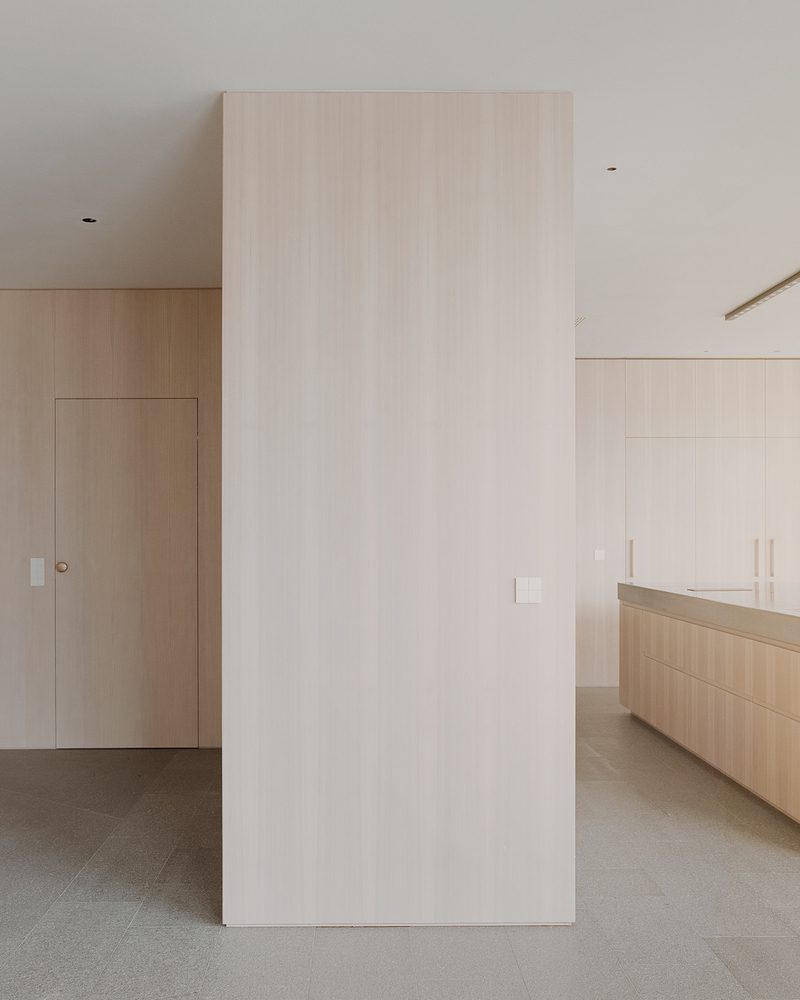
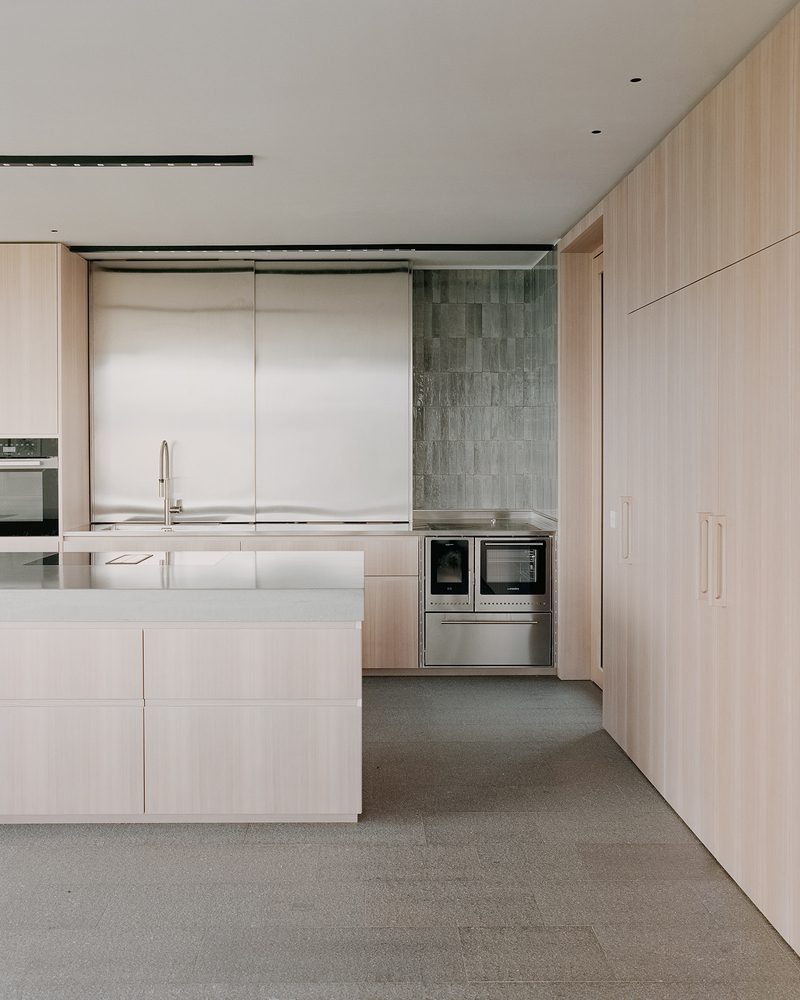
Passing through the front door, an entry vestibule welcomes guests into the house, acting not only as a landing for the staircase and elevator, but also as the material introduction of the large format, grey porphyry stone slabs that lead to the dining room, the open-kitchen, and the outdoor loggia with its breathtaking views. Nestled within the wood-clad interiors of the kitchen–knotless, vertical-grain larch wood panels—lies the monolithic, concrete kitchen island in dialogue with the back wall kitchen of grey tiles and stainless steel countertop and sliding cabinetry doors.
© Simone Bossi
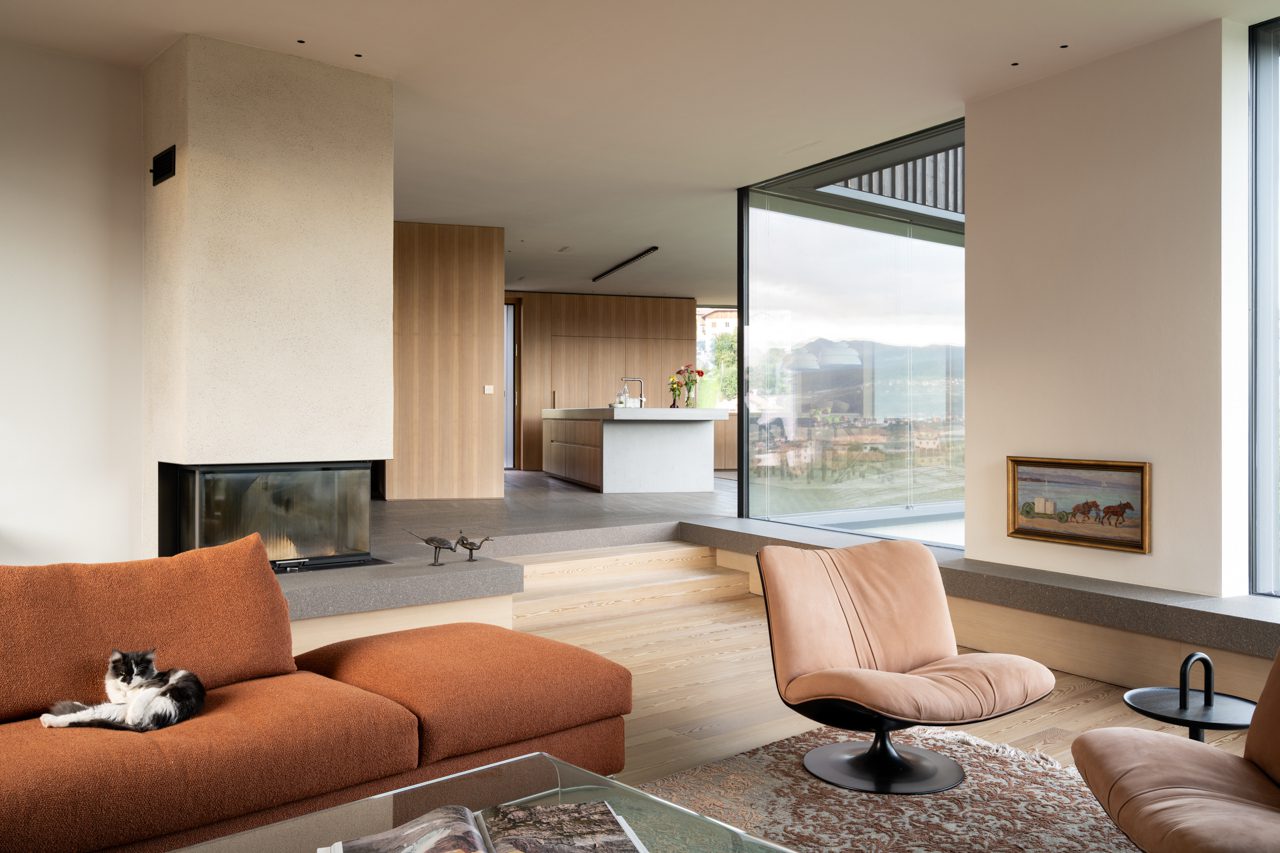
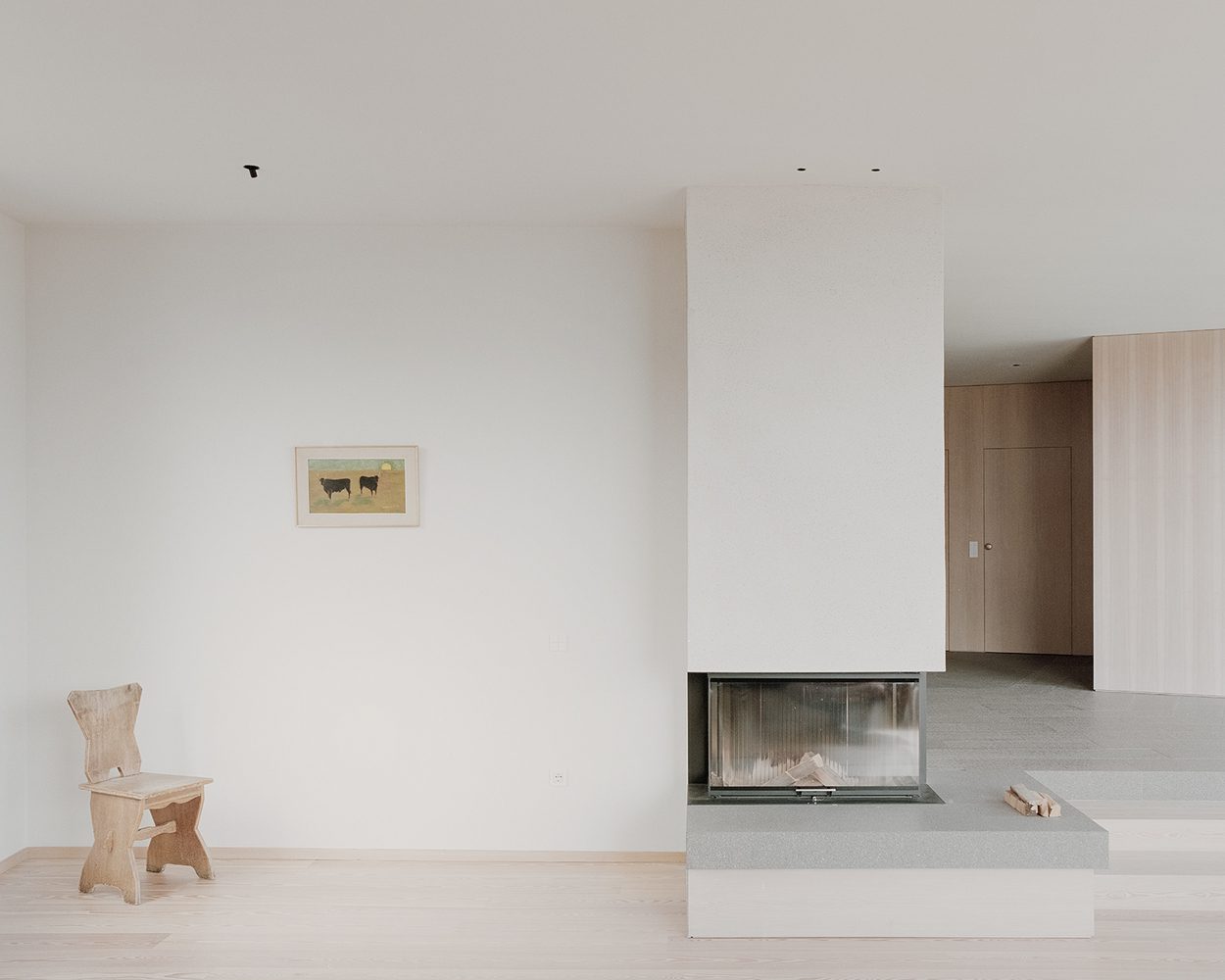
Walls, doors, cupboards and open-plan kitchen cabinetry together with the generous windows create a visual continuum that is only interjected by the living room walls fi nished with a rough, lime-based plaster mixed with local stone aggregates (basalt, porphyry, white marble). Two low-rise steps gently descend alongside the fi replace from the vestibule to form the sunken living room lined by the porphyry grey windowsill that is also a place to sit along the entire length of the glass walls.
© Simone Bossi
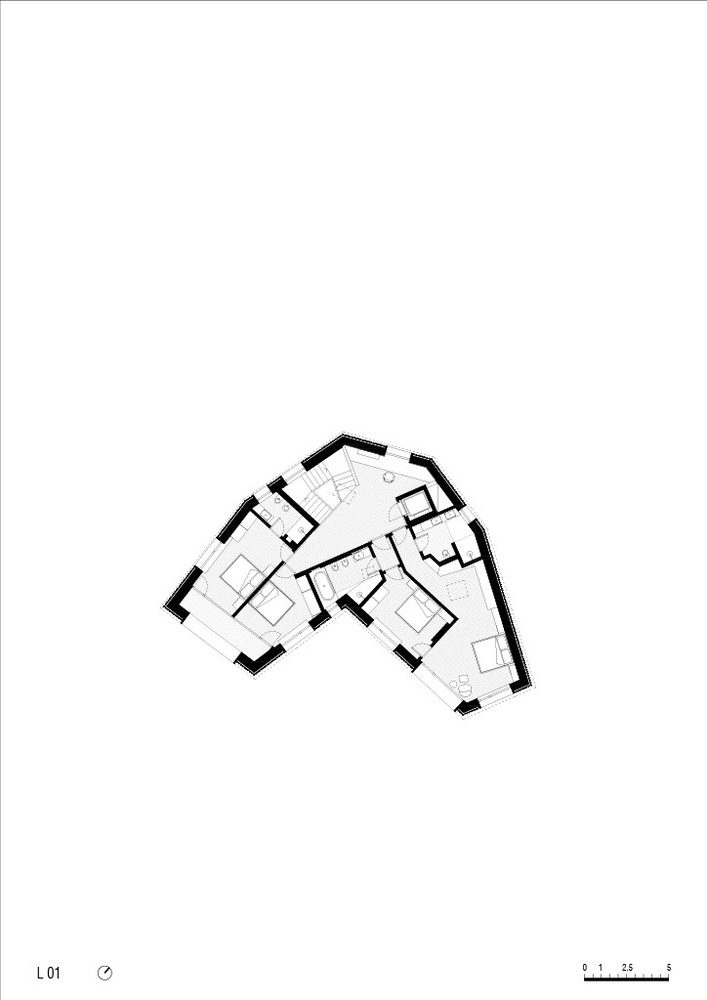
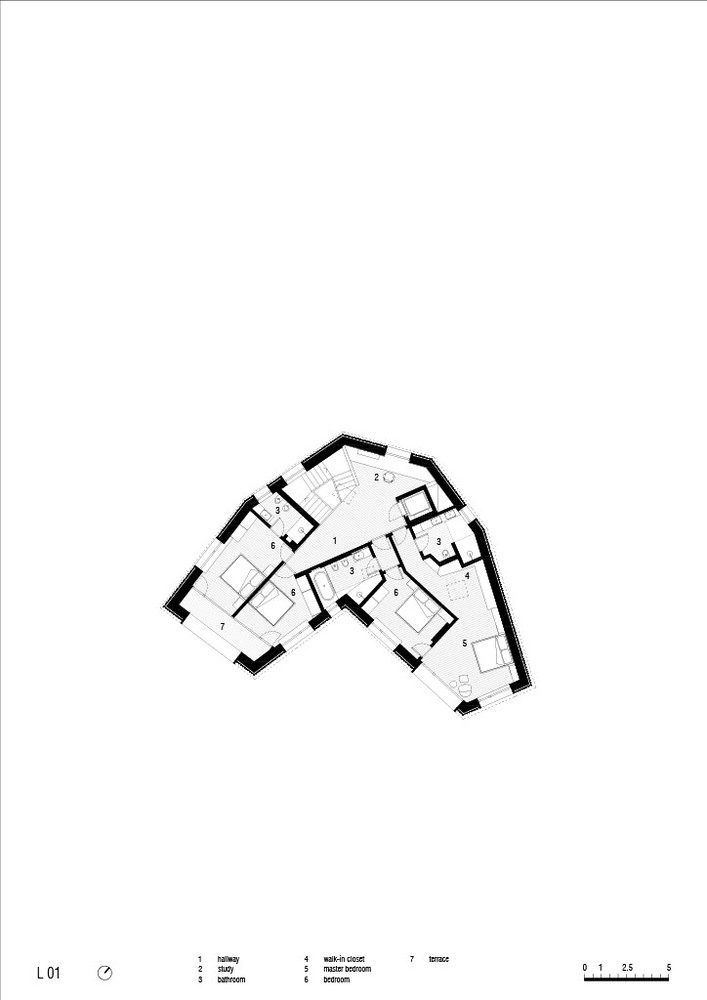
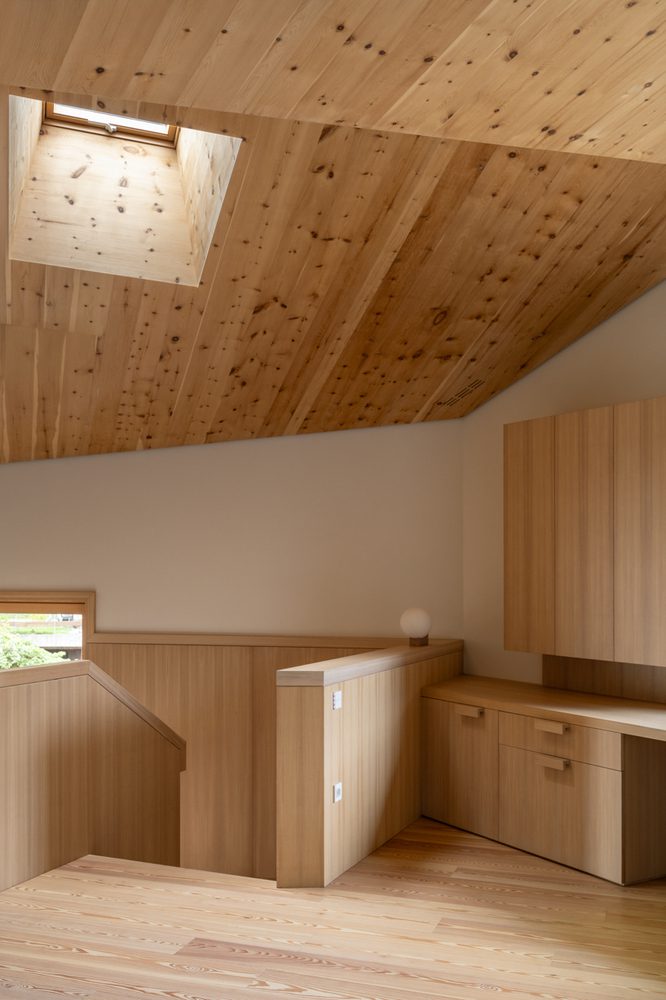
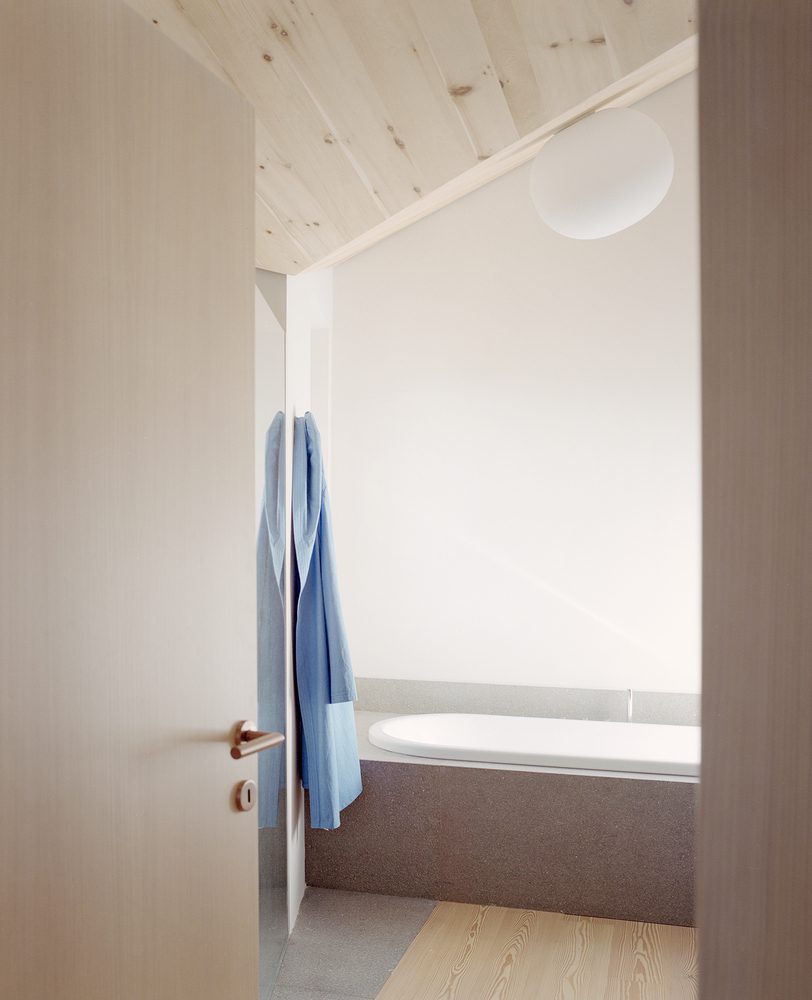
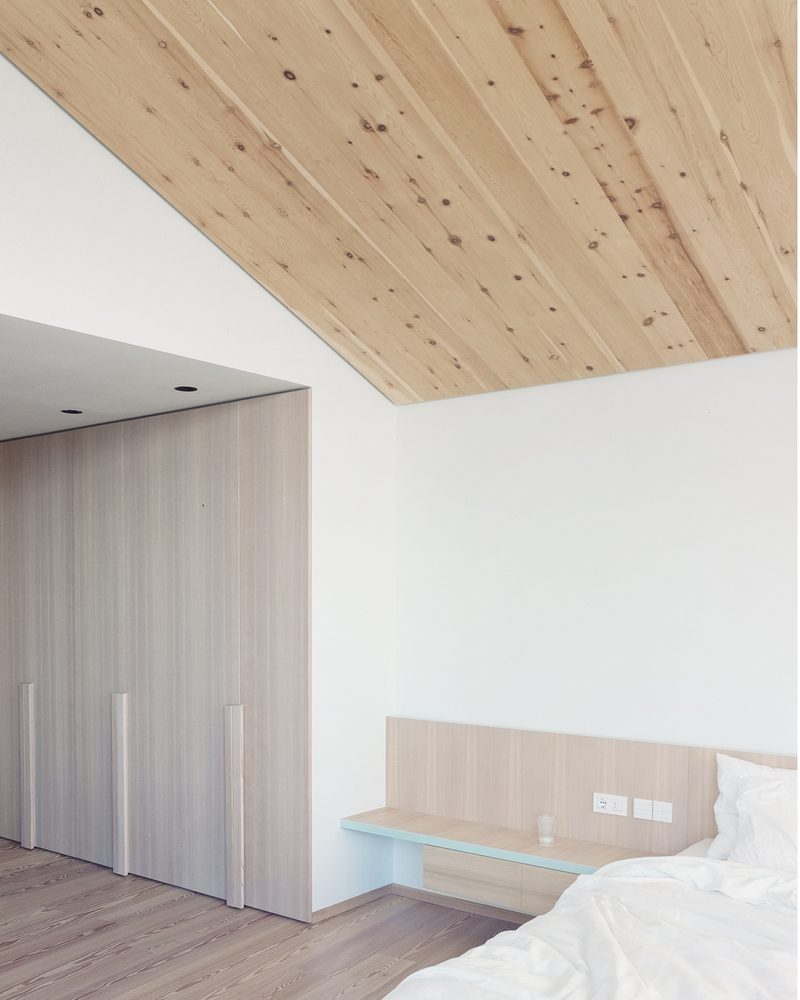
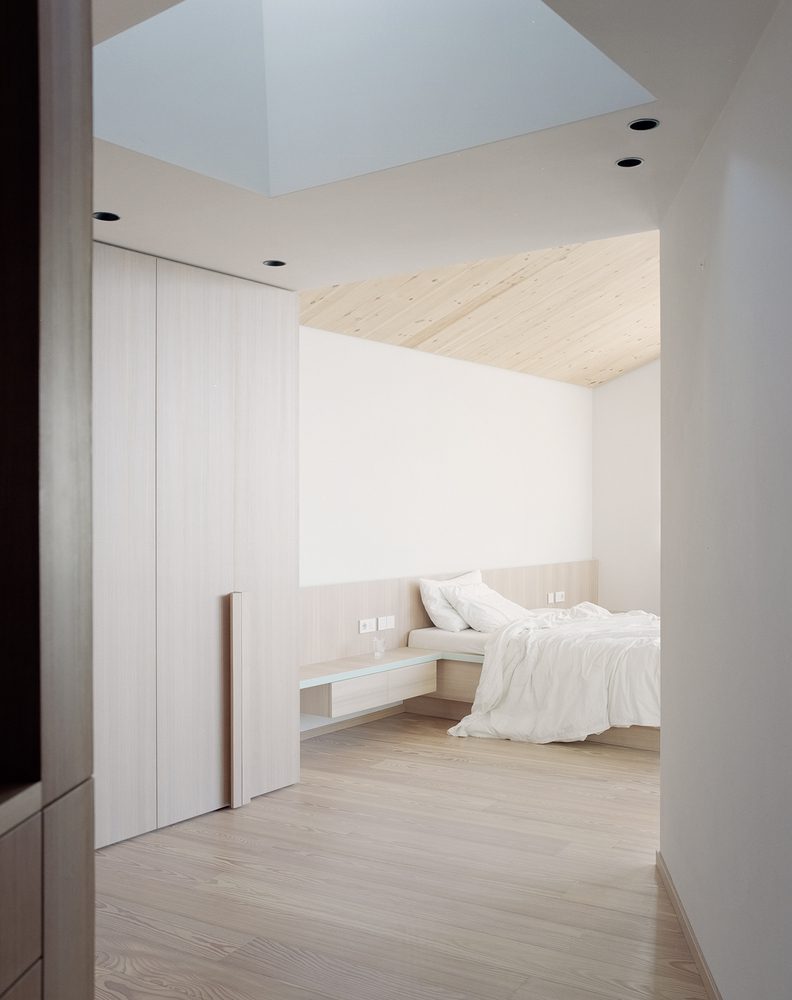
On the upper level are located four double bedrooms, one of which is the master bedroom, with an ensuite master bathroom and a wardrobe area, toplit by a large skylight; a smaller bedroom with a connecting door to the master bedroom is designed with a separate bathroom whose porphyry grey fl oor becomes the cladding for the inset bathtub positioned below another skylight; and two adjacent rooms, one with a private bathroom share a covered terrace.
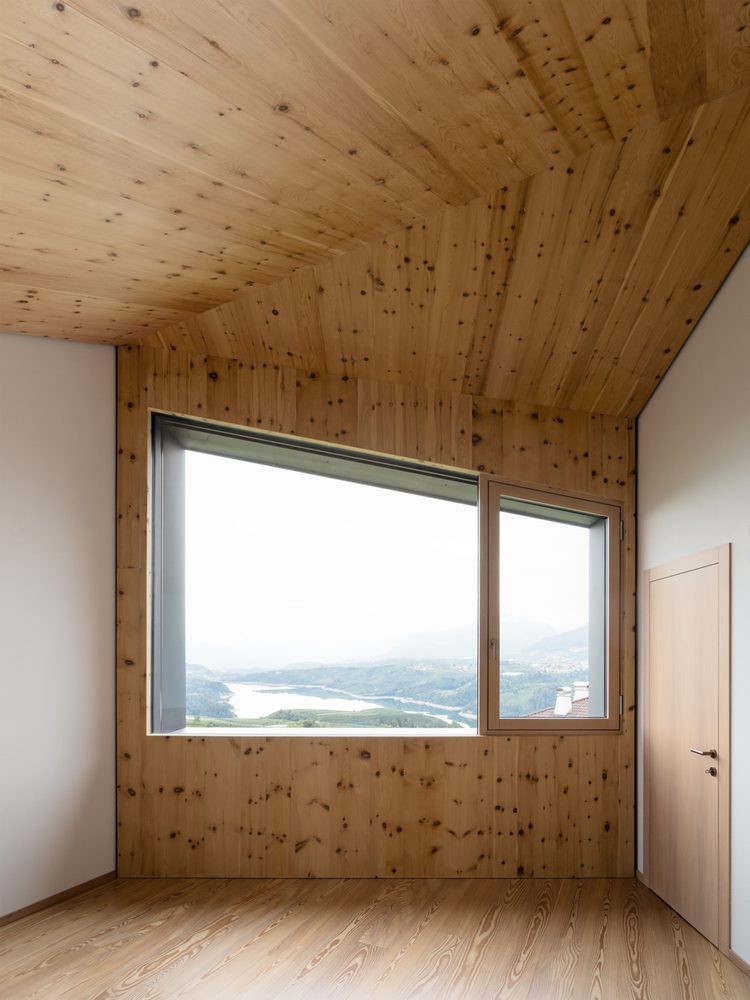
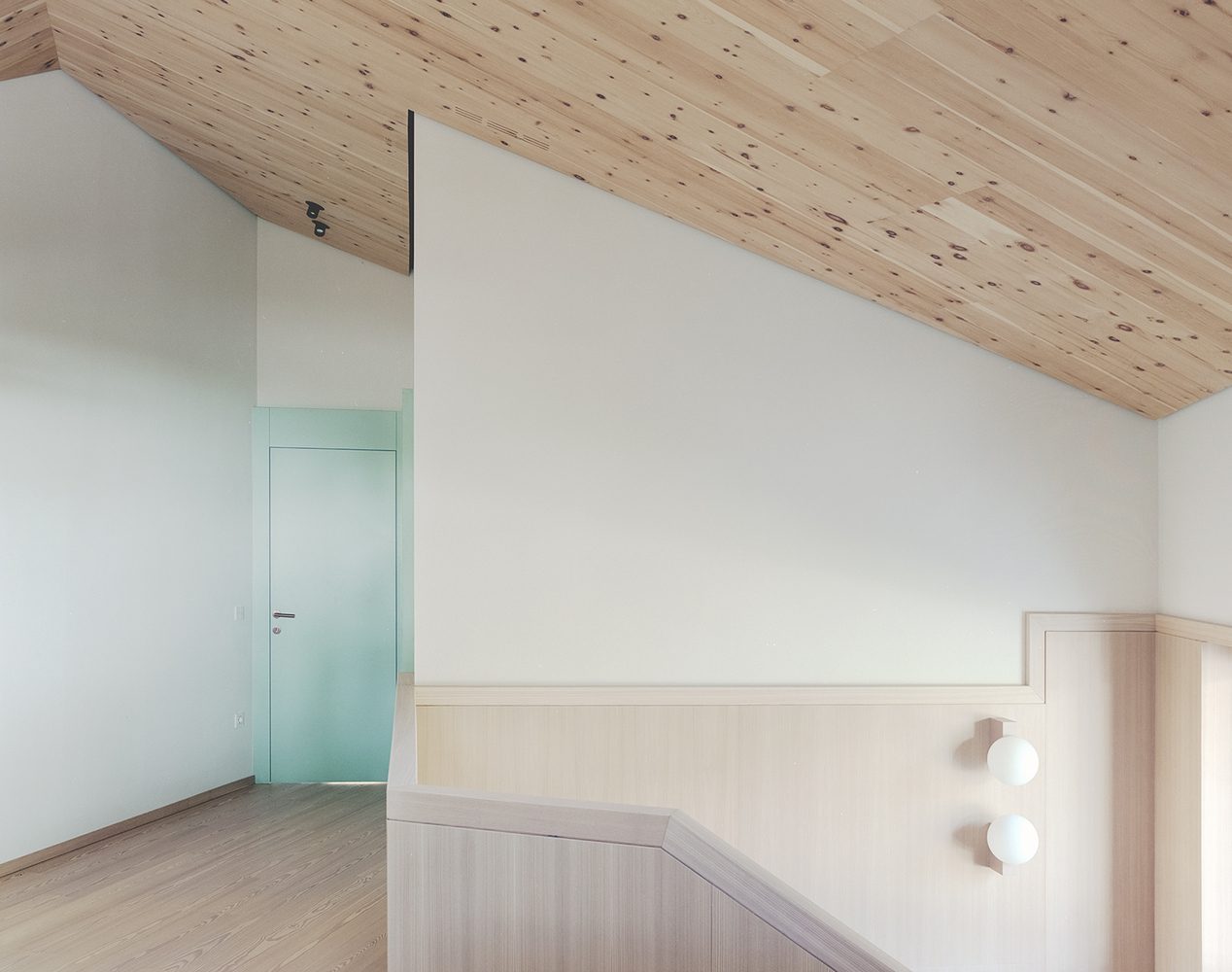
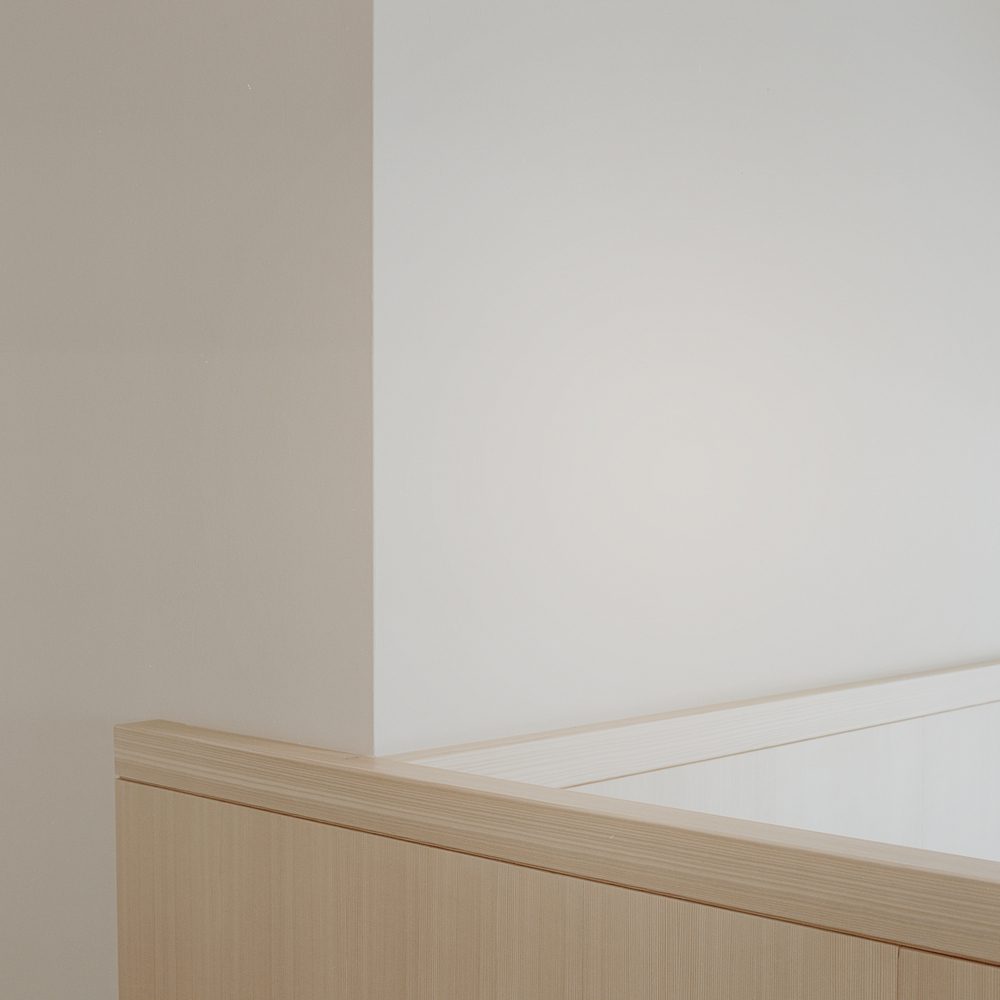
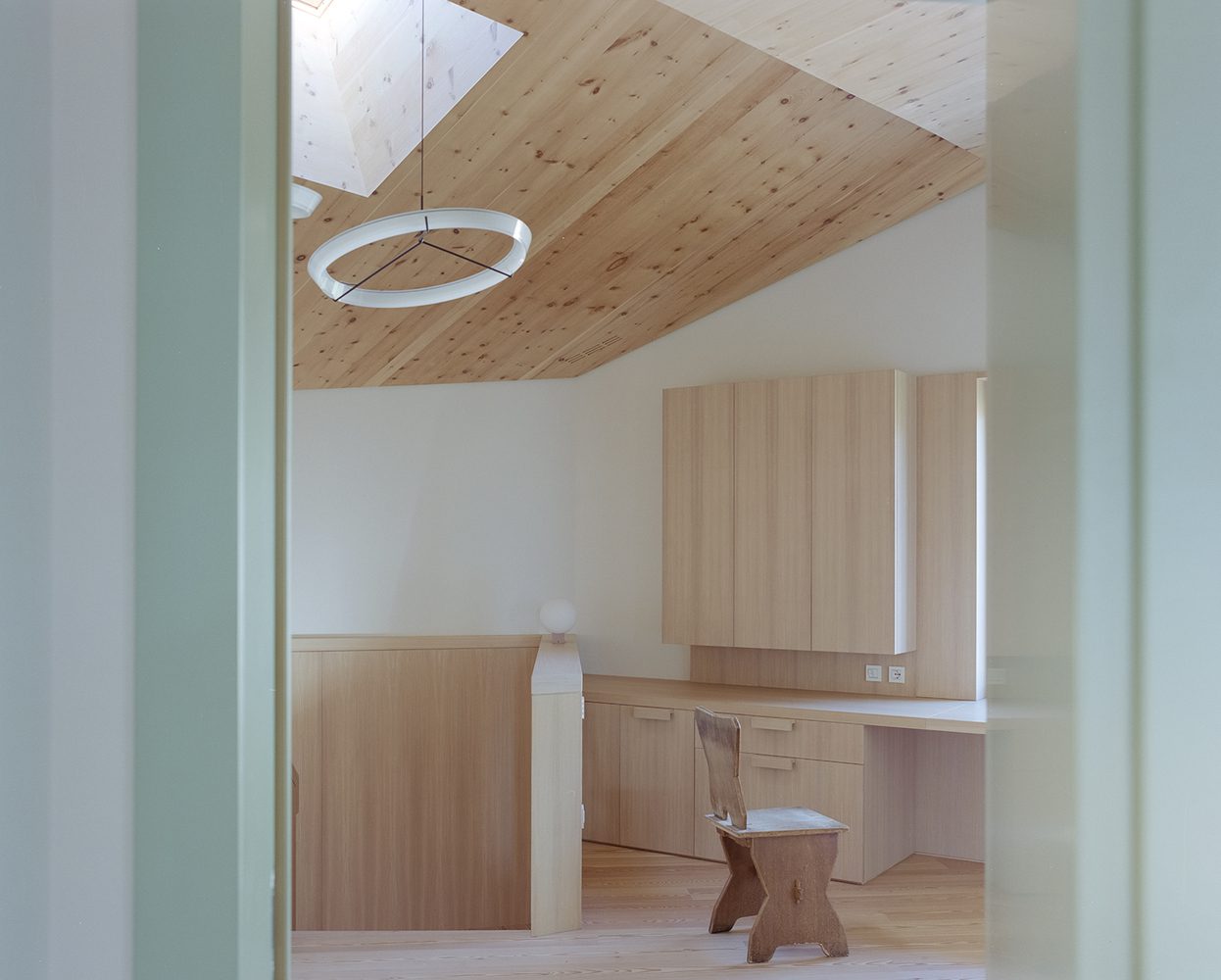
The different sleeping rooms are connected by an airy vestibule that is also a study whose built-in desk continues the wood cladding of the open stair and is connotated by a red-brown, knotted cedarwood ceiling that extends through all of the sleeping areas, infusing the upper level with the typical Alpine aroma, a sensorial presence of the owner’s childhood memories.
© Simone Bossi
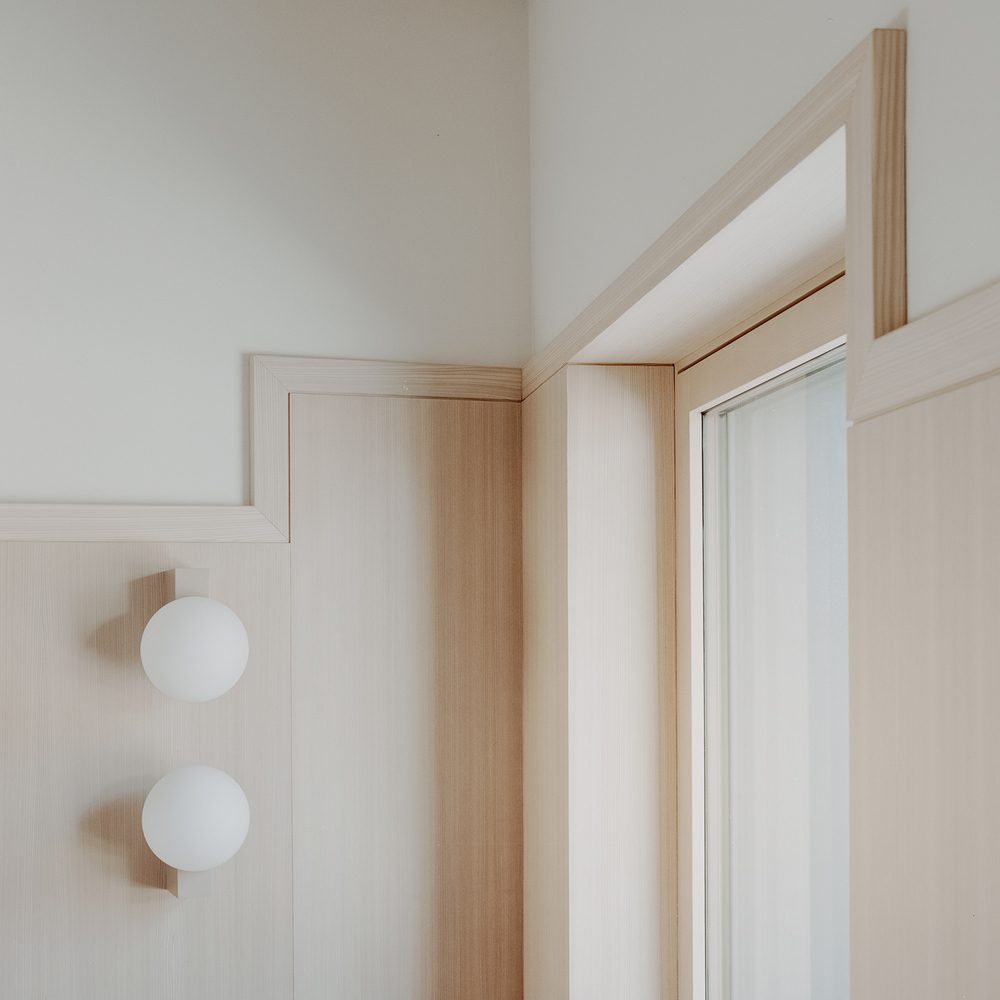
Porphyry stone, larch and pinewood form the reduced palette of materials from which the architects pull together the features of the project; the simple details and surface treatments were developed using techniques typical of the construction industry in the Val di Non. Local builders and craftsmen gathered a cohesive team, employed not only in the construction of the house, but above all in the tribute to and transmission of the local culture through the art of building.
© Simone Bossi
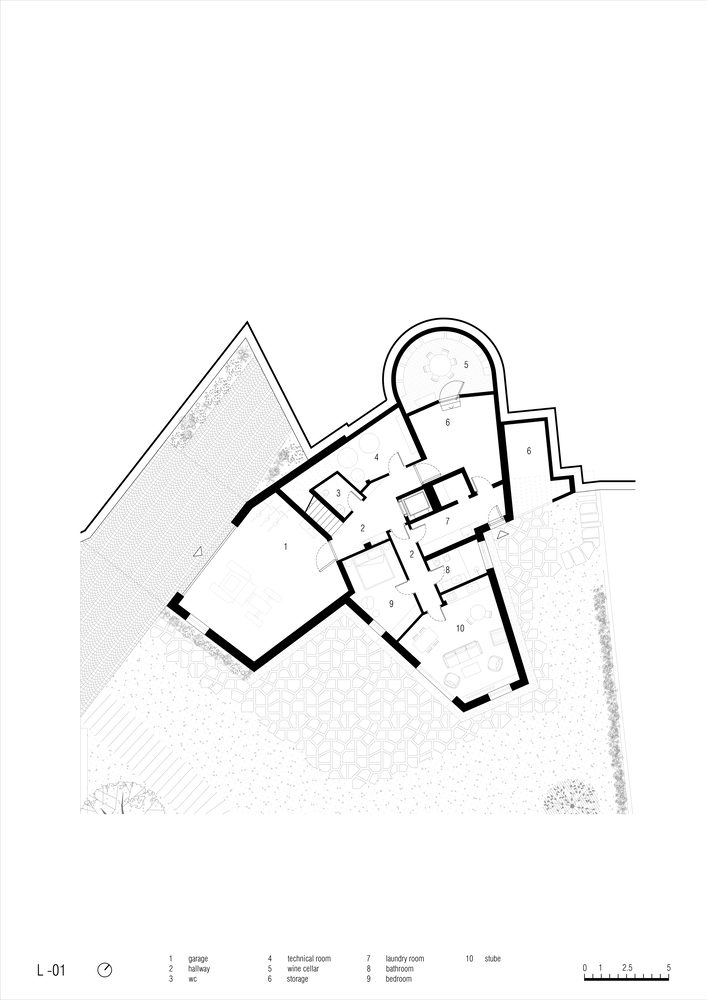
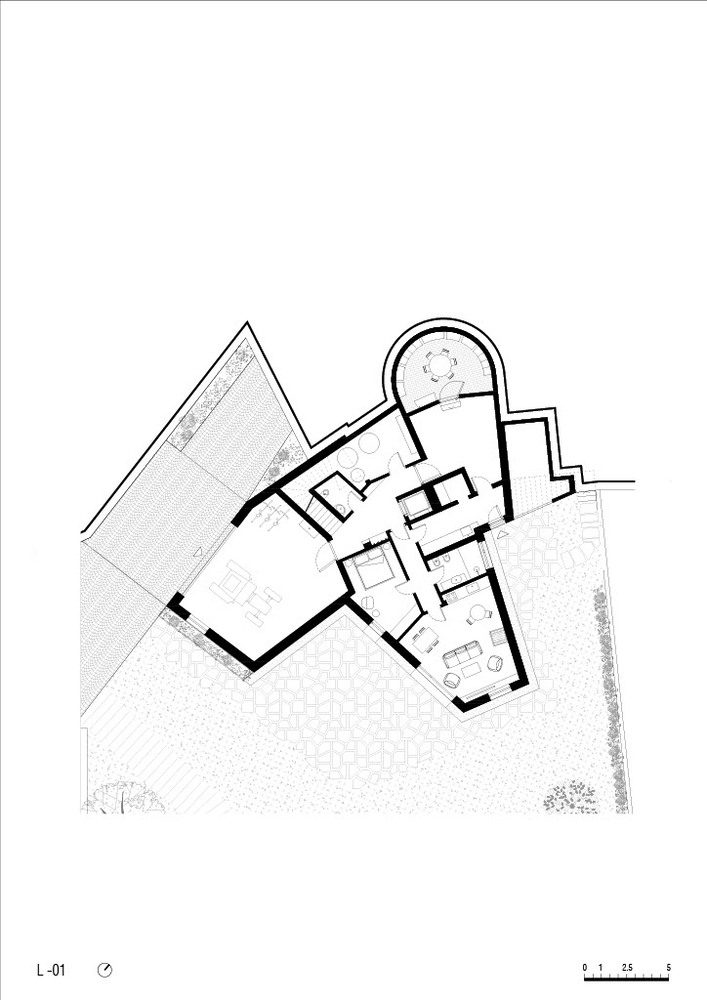
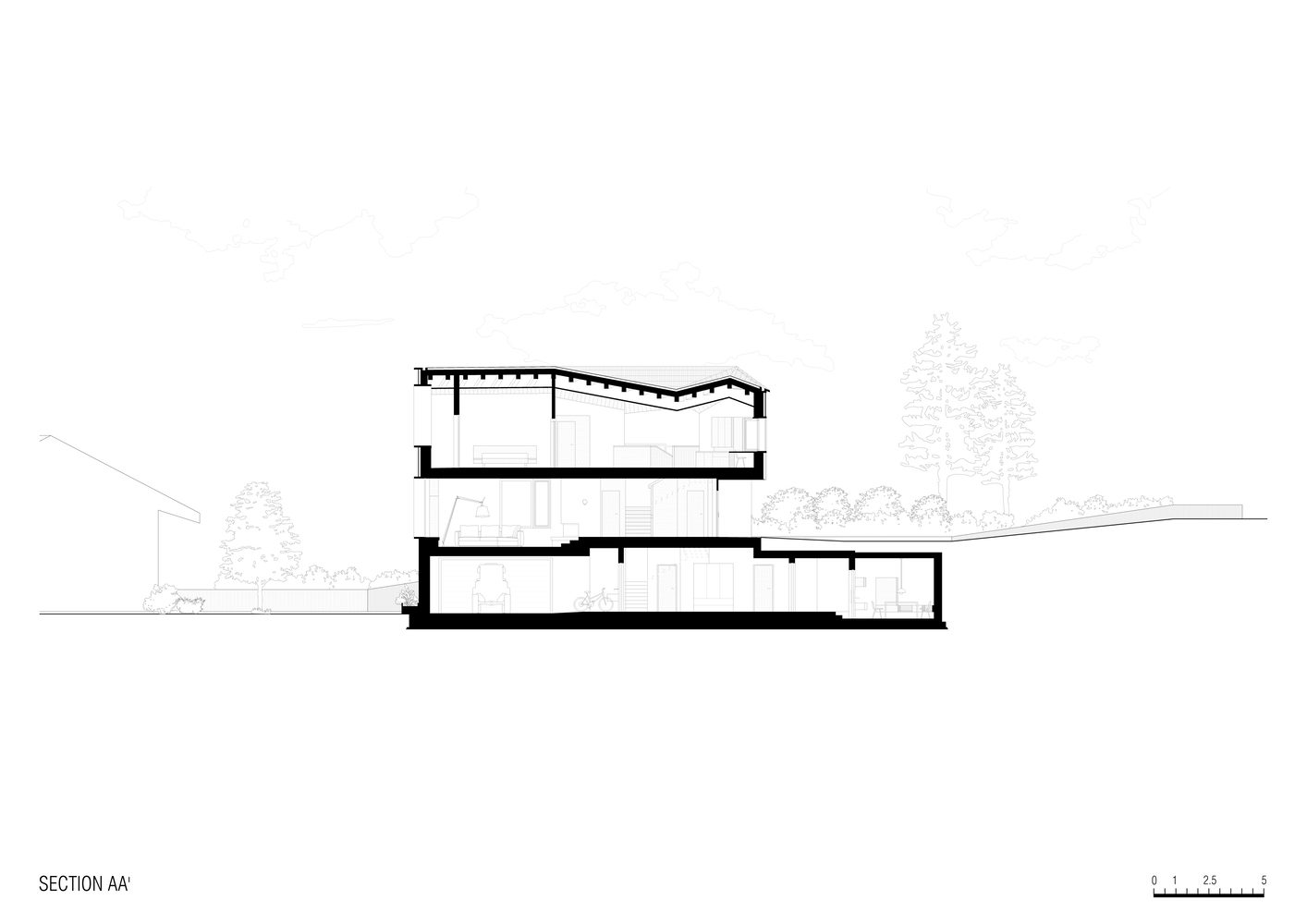
Traditional furniture is distributed throughout the house: like collector’s items that evoke memories of other eras and folklore. These include, on the lower floor, the stube – a typical Alpine wood-paneled family room with kitchen – that opens onto the property’s garden.
© Simone Bossi
Next to the stube there is a guest room, a guest bathroom, a laundry area with utility rooms and a garage with access from the ramp on the west side of the lot.
© Simone Bossi
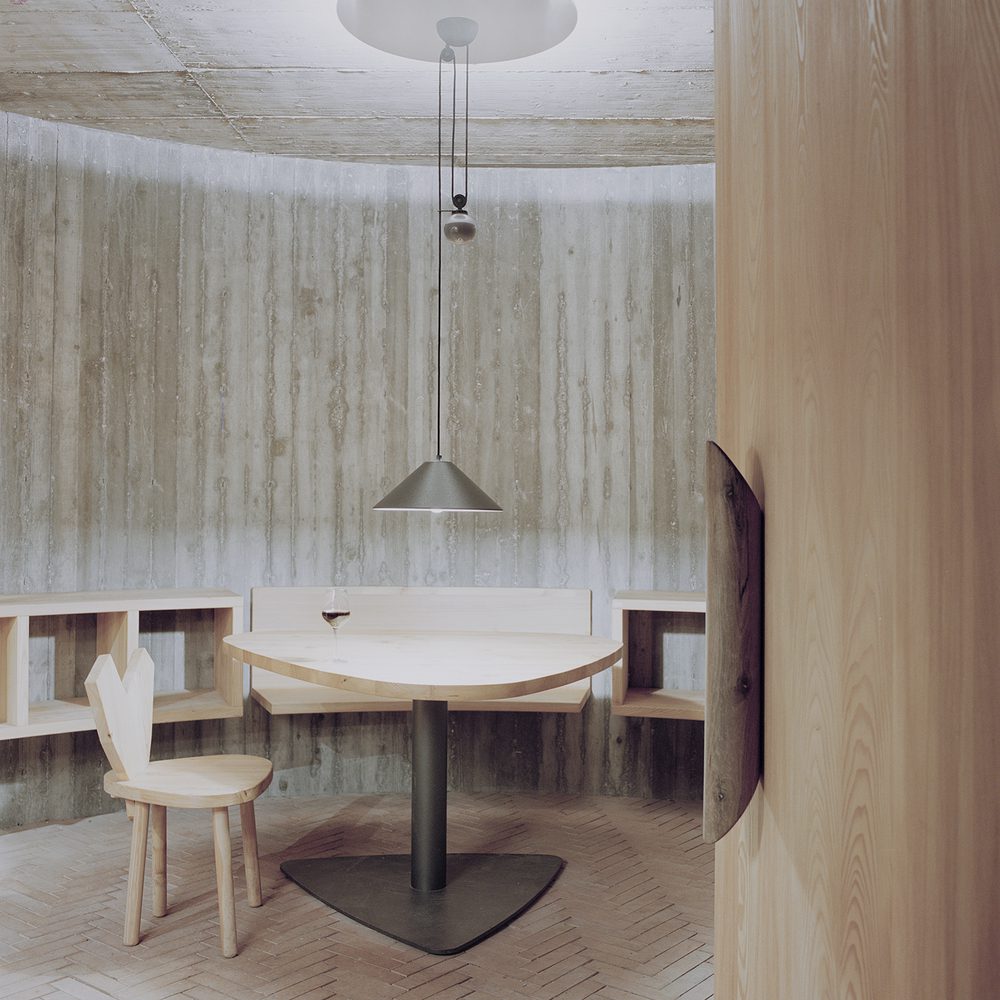
Lastly, on the lower floor, completely underground, is the wine cellar with tasting room, which, with its curved concrete wall, solid larch wood and red brick floor, anchors the residence to the land and the owner’s Val di Non roots.
© Simone Bossi
-
Architects: MoDusArchitects
- country: Italy
- Area: 563 m²
- Year: 2023
-
Photography: Simone Bossi, Juergen Eheim
-
Manufacturers: Abitare Design srl, Antonioni Carlo, Centerlift, Christian Zuech, Corazzolla, Corazzolla, Decor Srl, Decor Srl, Decor Srl, Elektro Graber, Falegnameria Albertini Rinaldo, Falegnameria Stefano Gentilini, Falegnameria Stefano Gentilini, Falegnameria Tolotti, Filippi Pitture, Gamper Holzbau, Hella Italia srl, Il fabbro di Fedrigoni Stefano , LGC lattoneria, LGC lattoneria.
-
Lead Architect: Sandy Attia, Matteo Scagnol
-
structural Engineer: Unitec Group s.r.l.
-
Mechanical Engineer: Unitec Group s.r.l., Ing. Roberto Svaldi
-
Electrical Engineer Consultant: Unitec Group s.r.l.
-
Energy Consultants: Unitec Group s.r.l.
-
Construction: Edilflaim srl
-
Excavation: Edilflaim srl
-
Electrical Installation: Rigatti impianti elettrici e domotica Revò