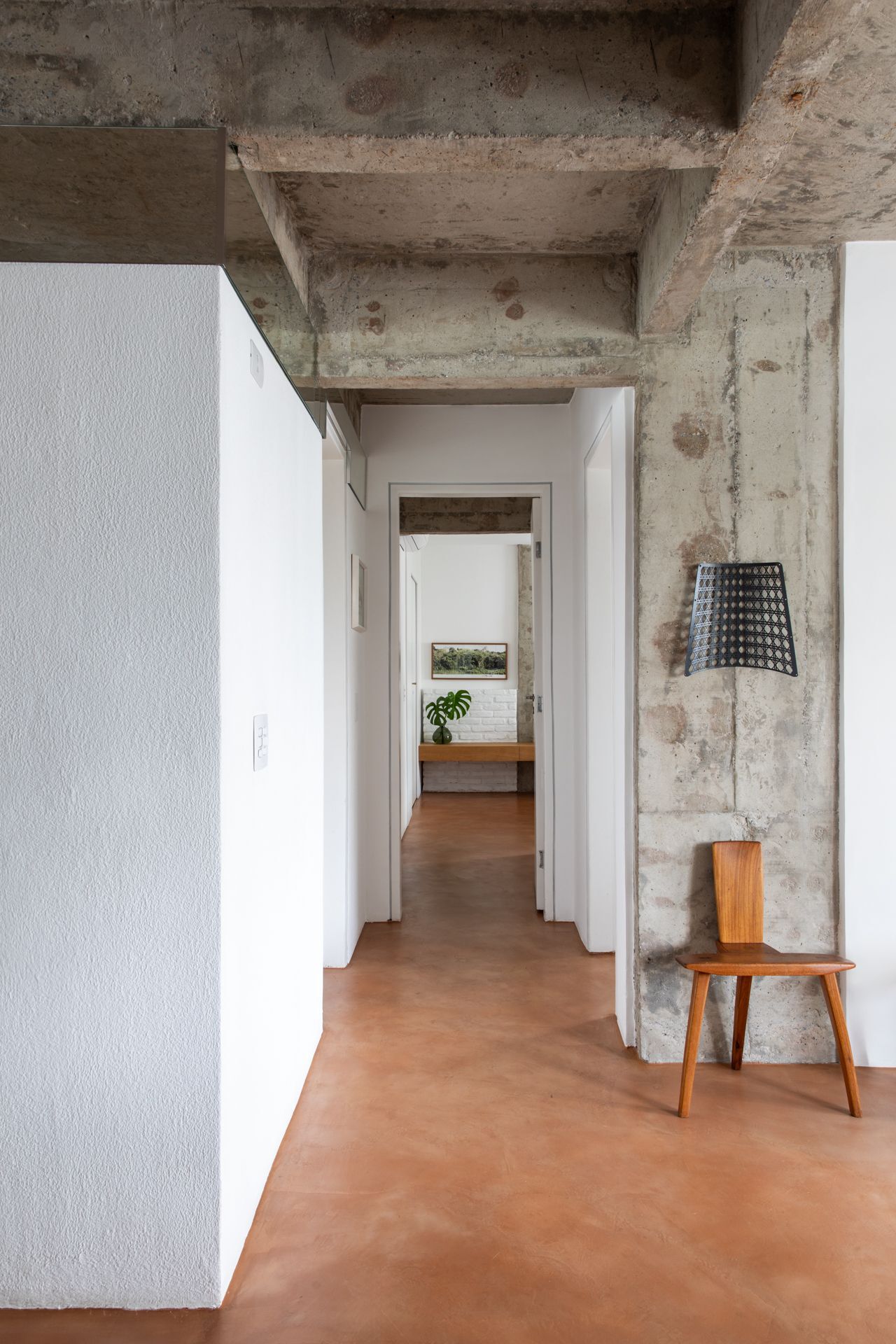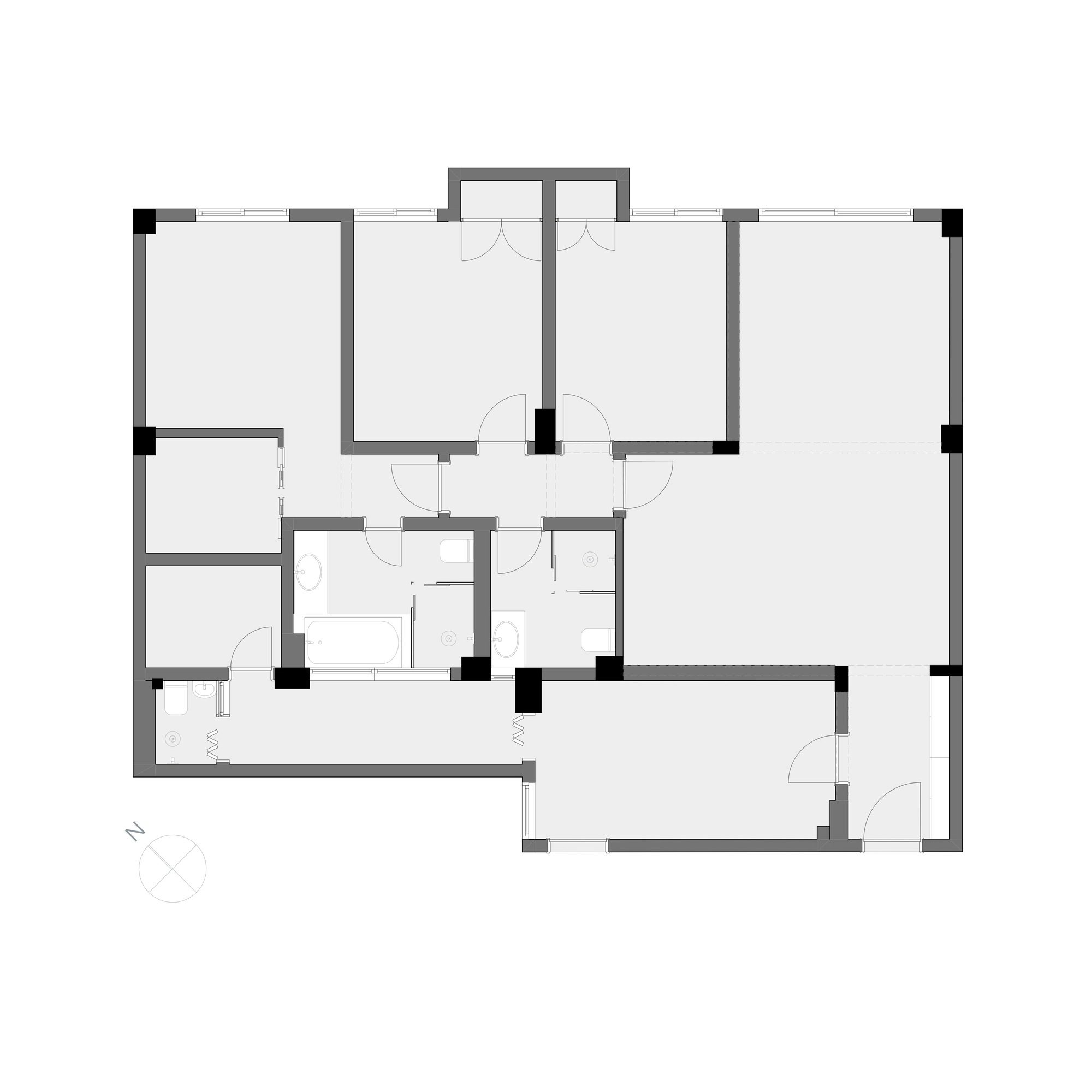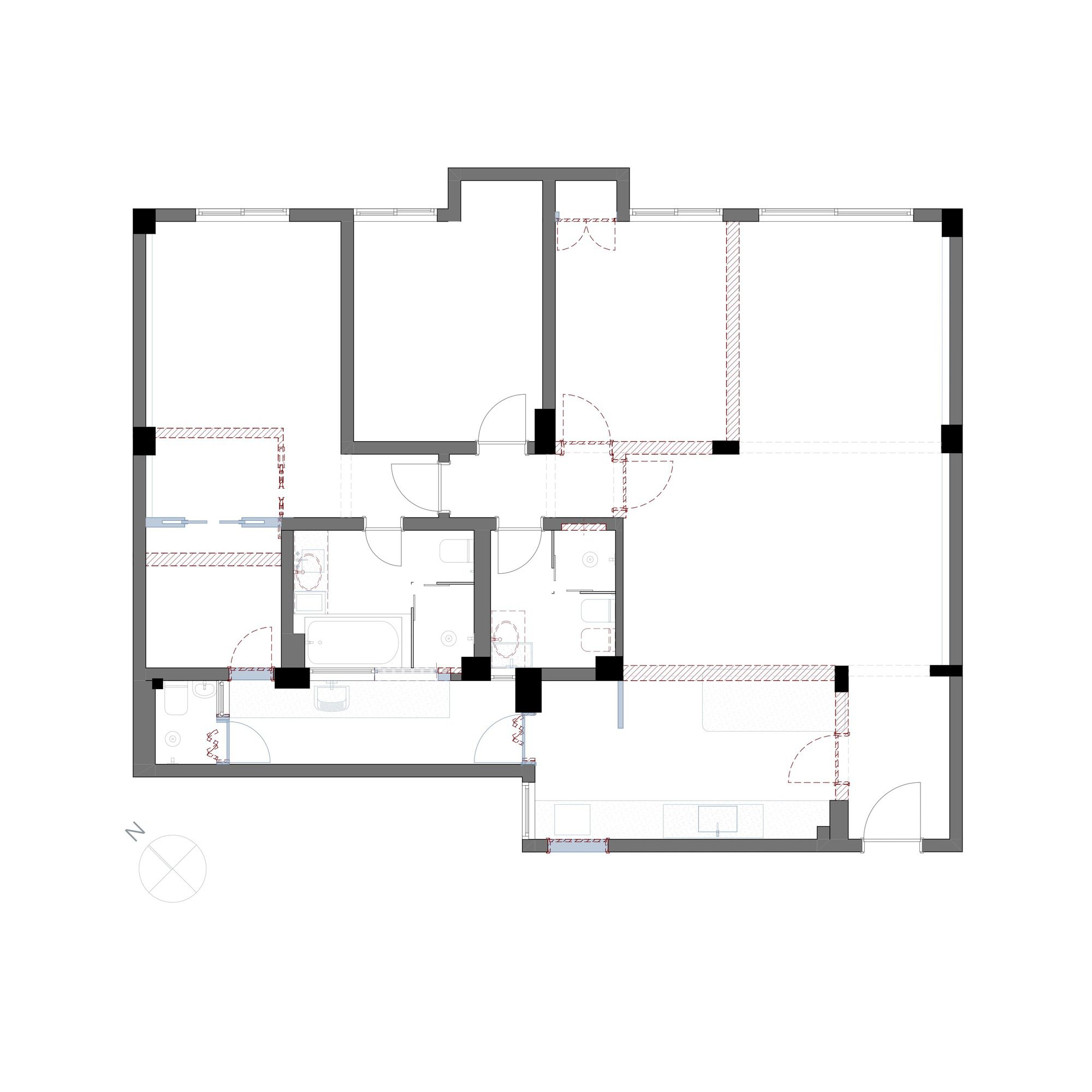


Bananeira Apartment, Located in an old building from the 1970s, the apartment had an outdated layout that didn’t make sense for the residents: a closed kitchen, a maid’s room, and three bedrooms. Furthermore, the apartment’s more classic style, with dark wood floors and plaster ceiling, did not reflect their personalities.
© Maíra Acayaba
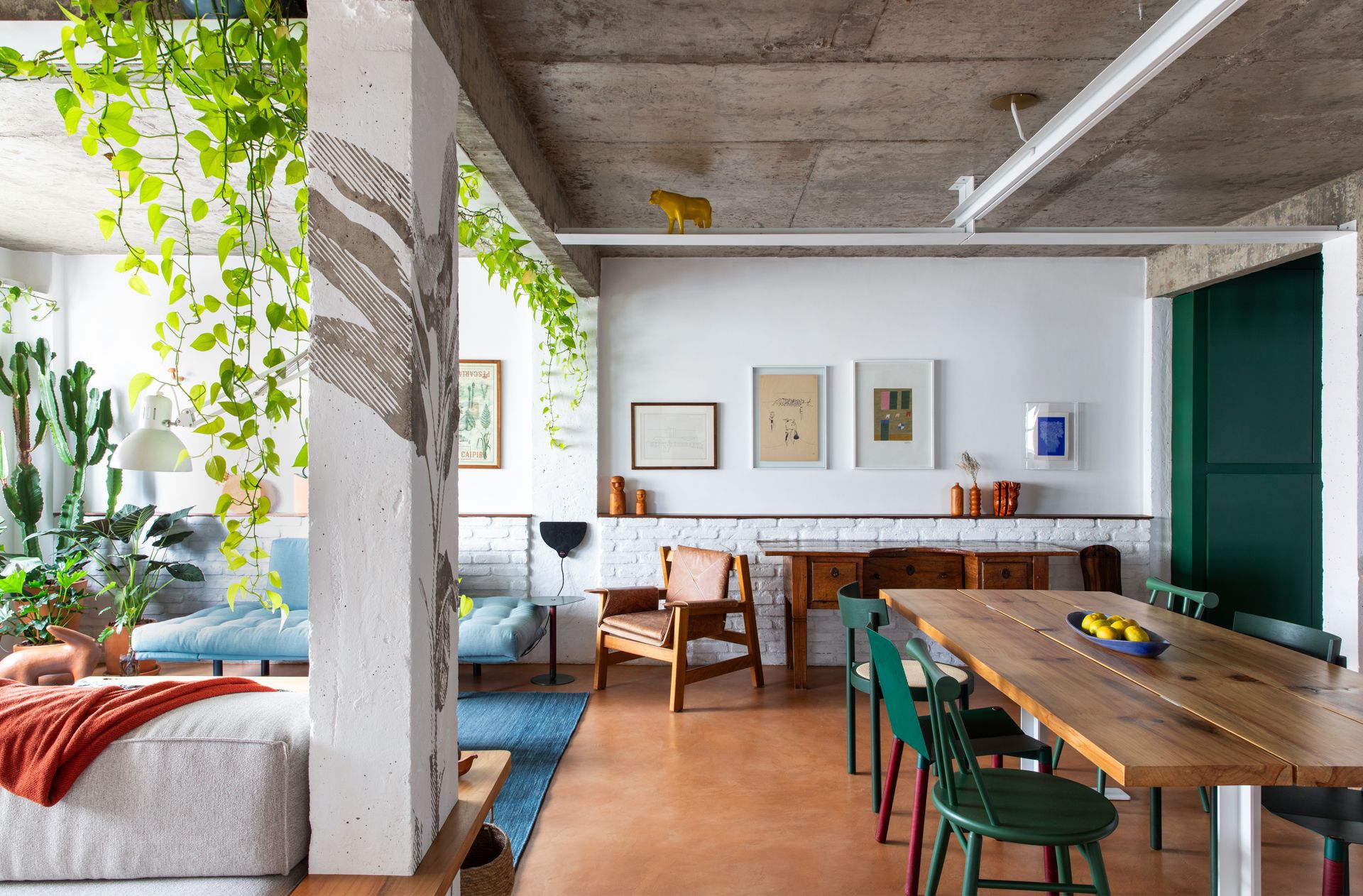
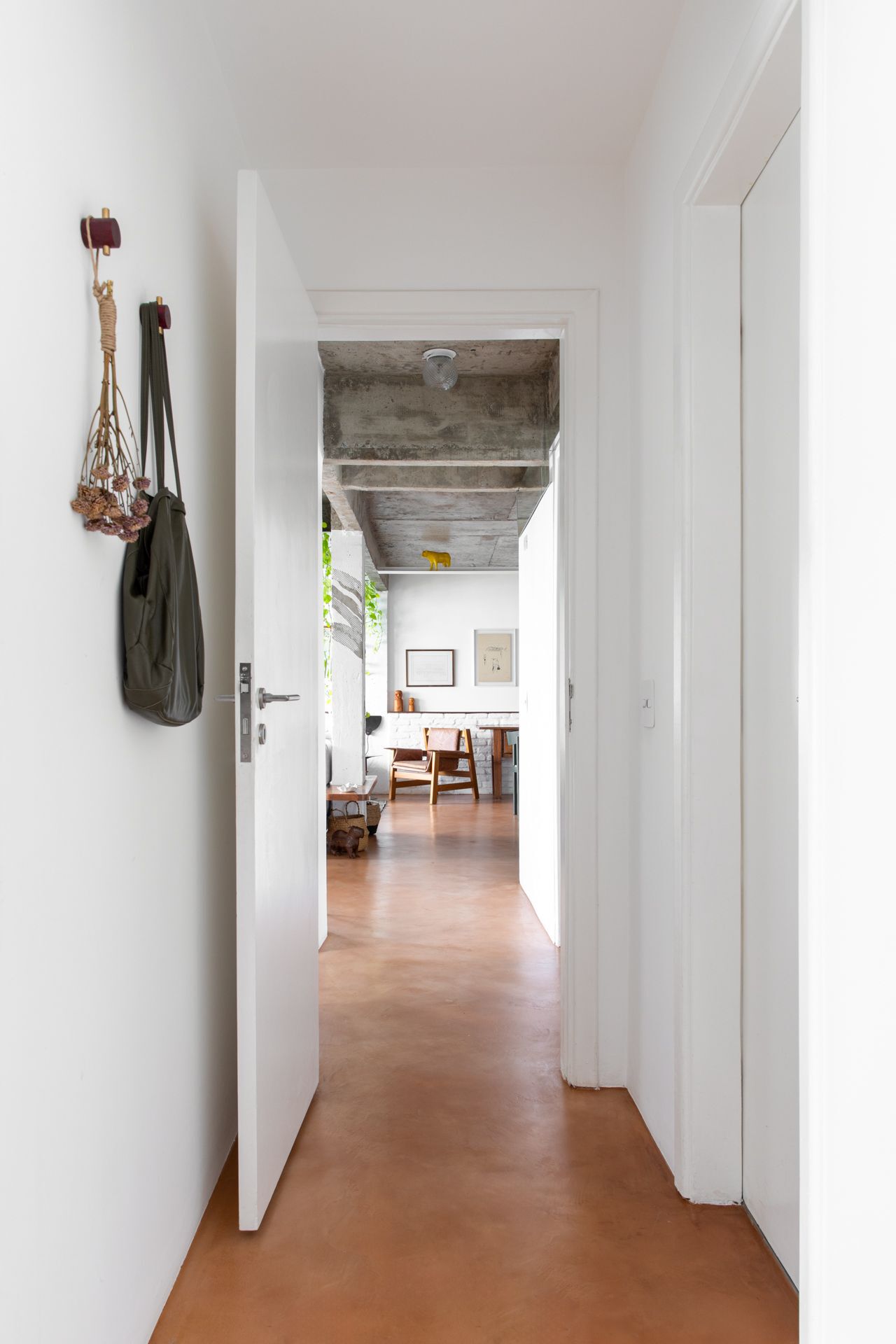
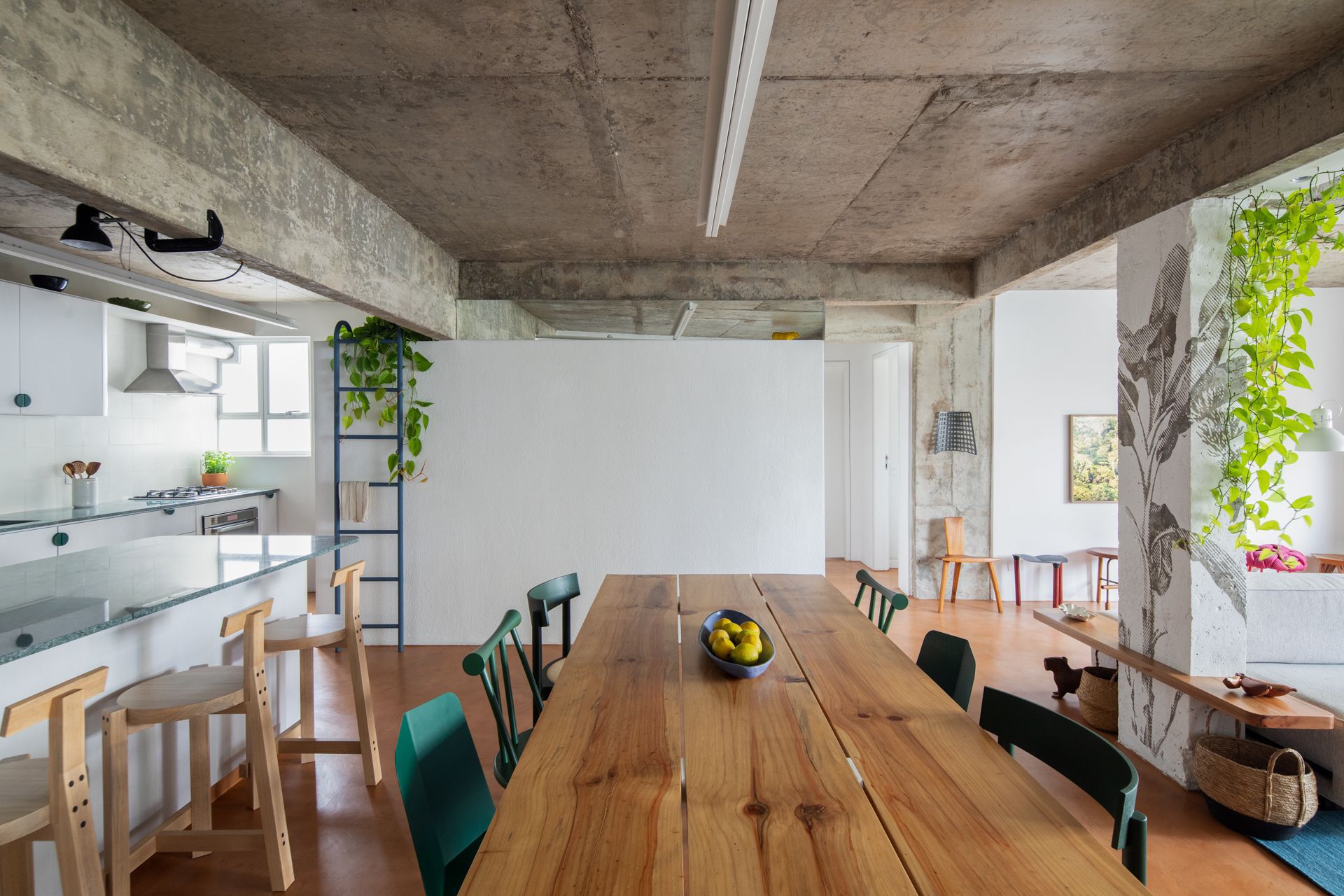
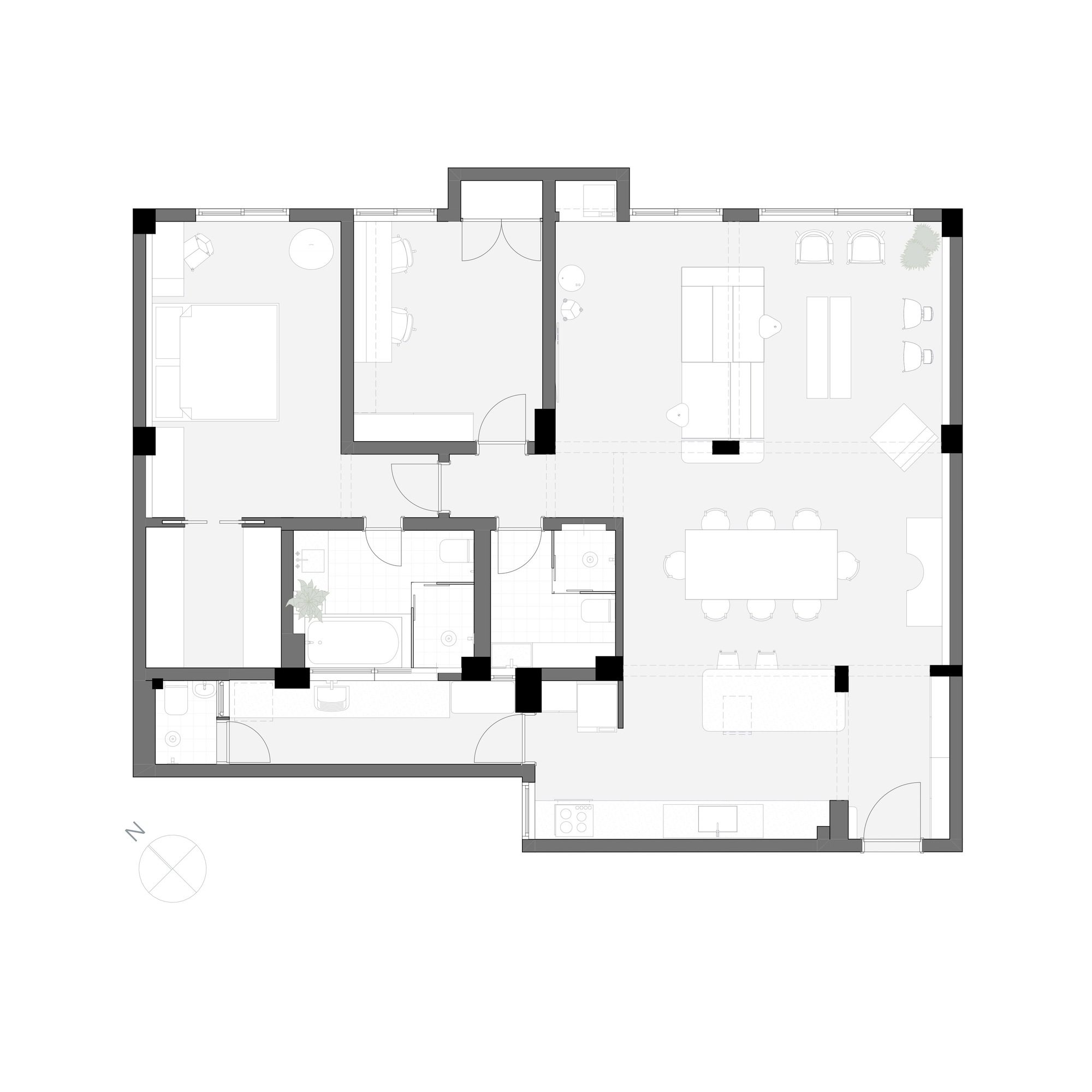
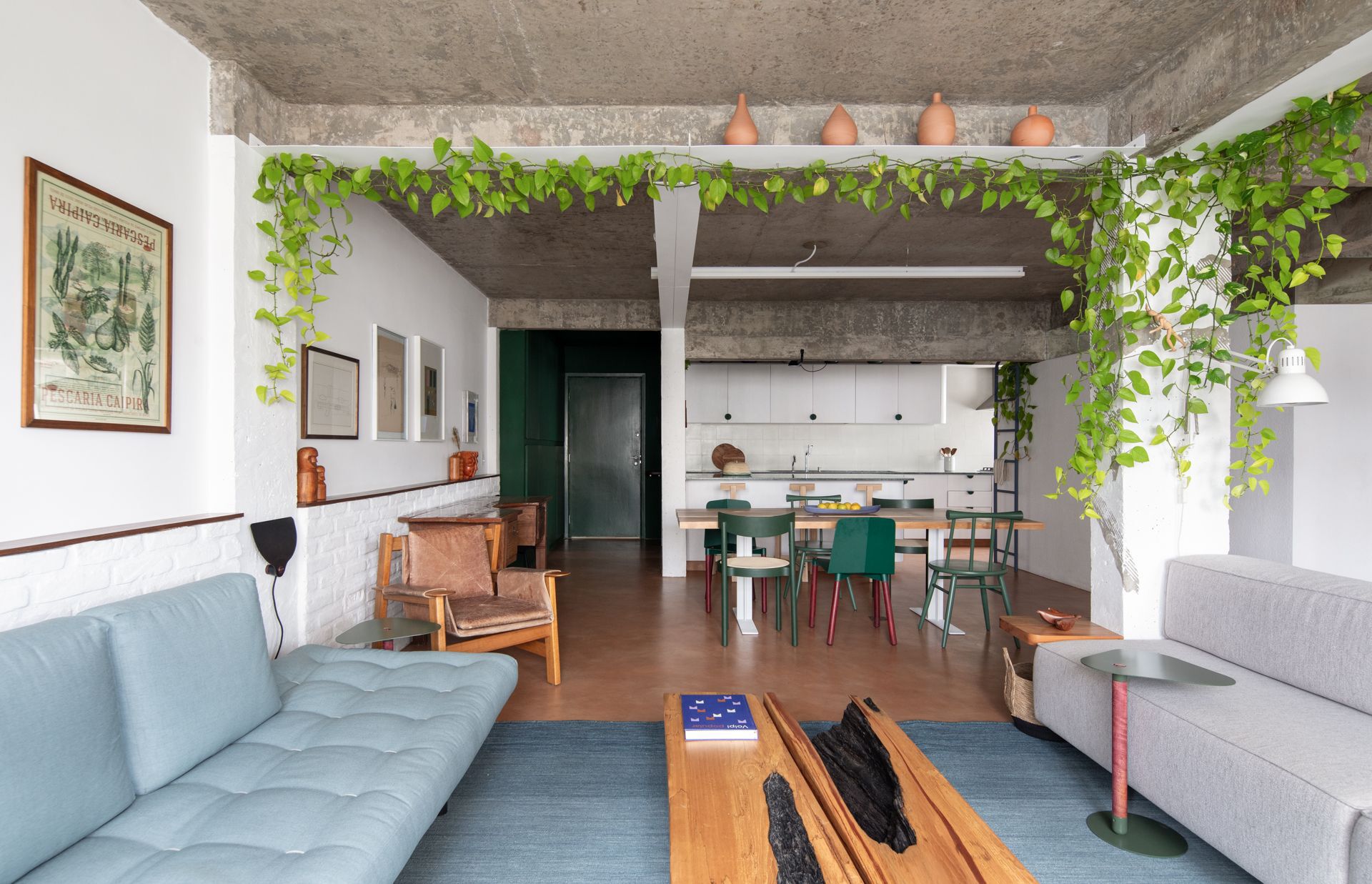
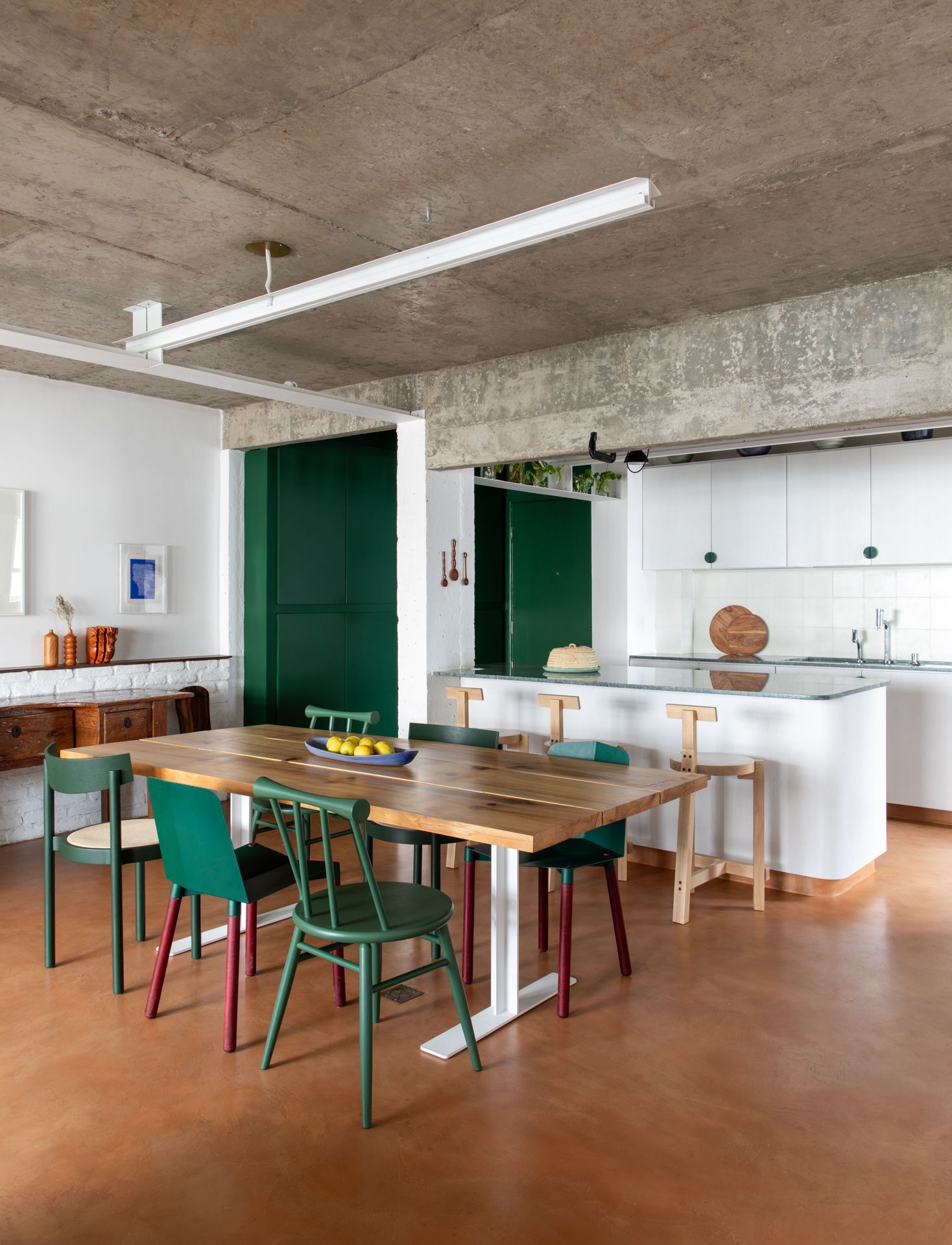
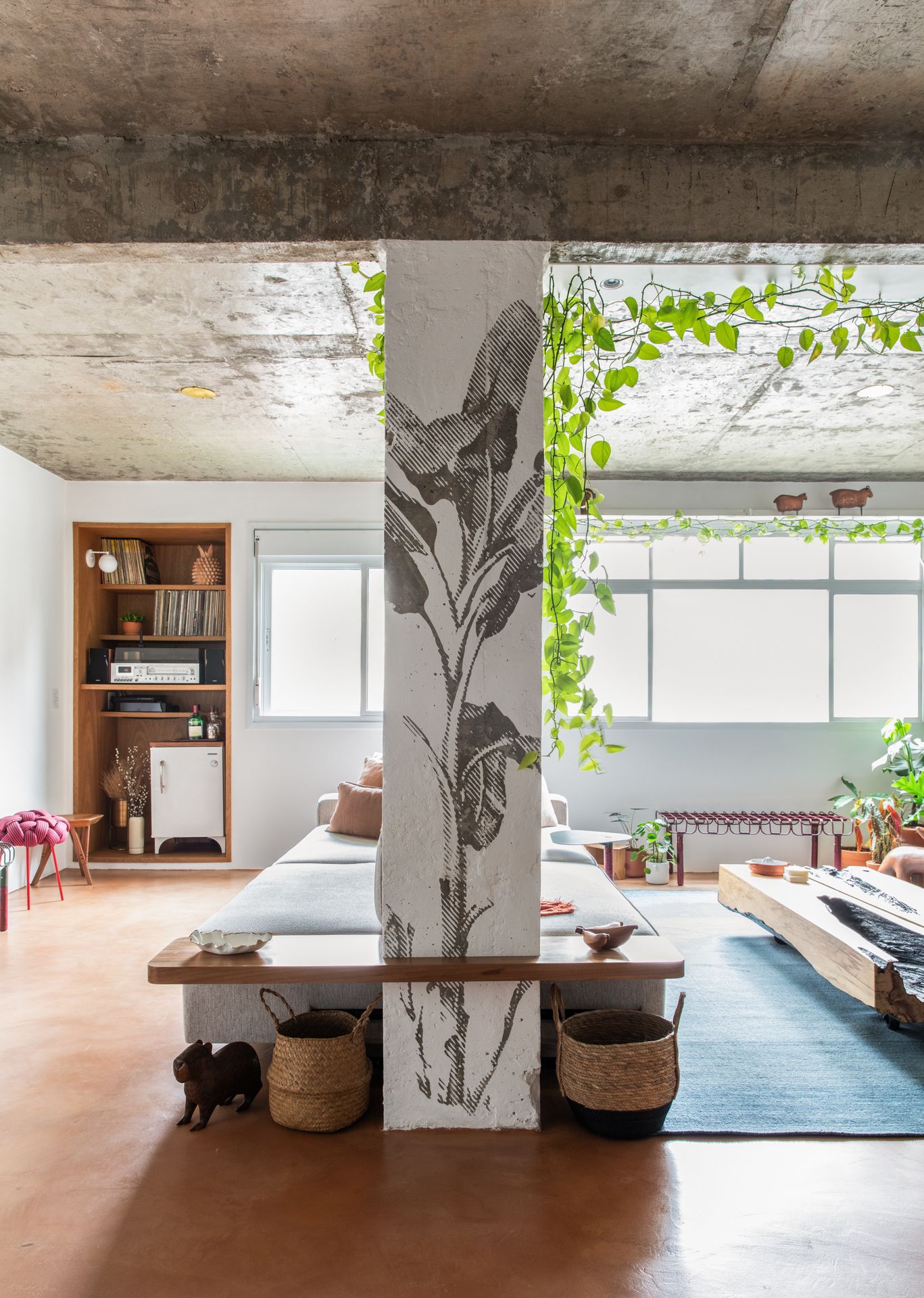
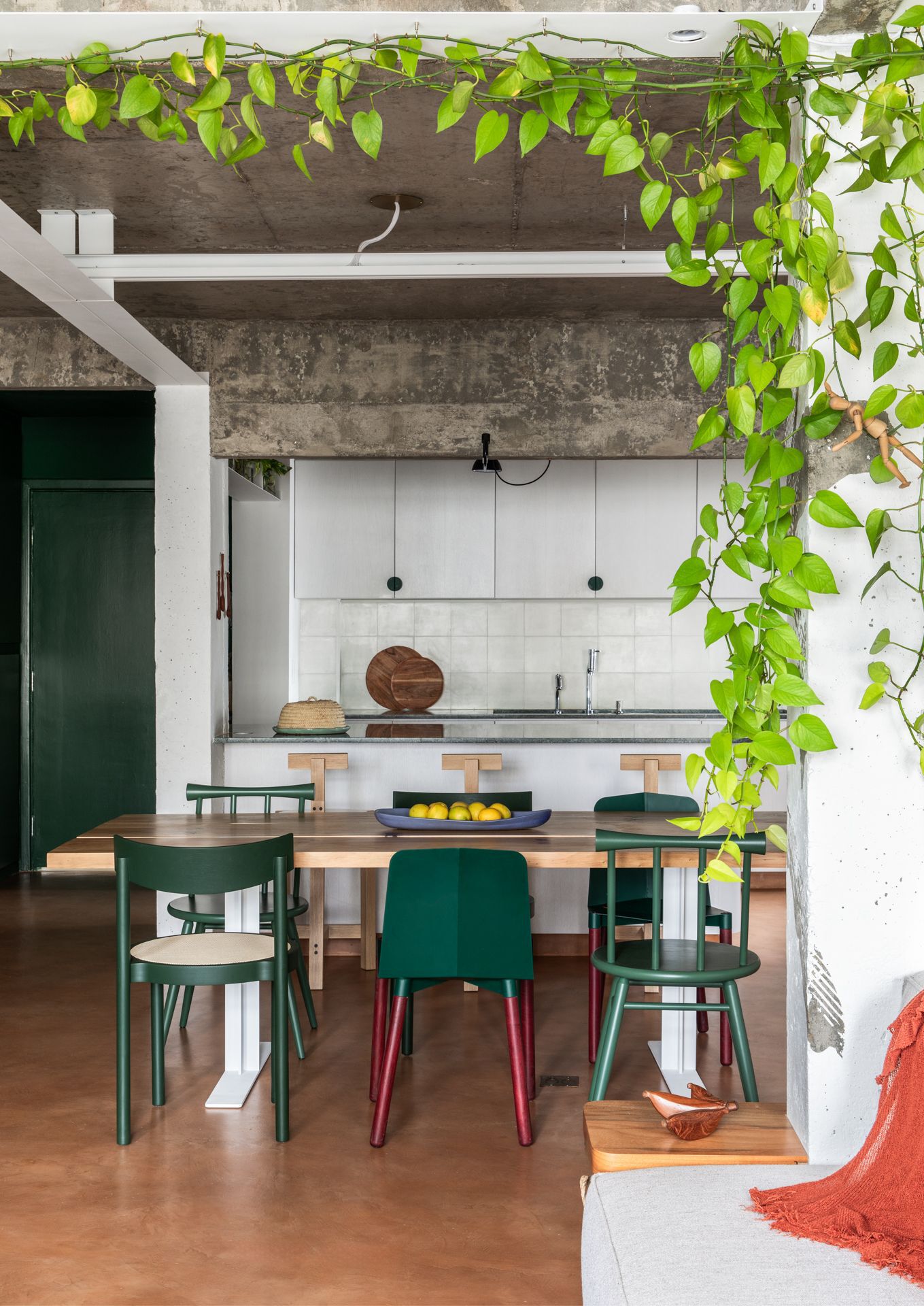
The biggest challenge was to create a layout that met our needs and made the most of the existing structures. Gas and water points were preserved to reduce construction costs. Additionally, since the slab was stripped, the distribution of ceiling lighting points was also made difficult. The hall, kitchen, and one bedroom were opened up to the living room, creating a spacious and integrated space. A green tunnel marks the hall and the zoning of uses is done through the furniture. An island sofa delimits the living room and TV area, and the dining table divides the kitchen from the living room.
© Maíra Acayaba
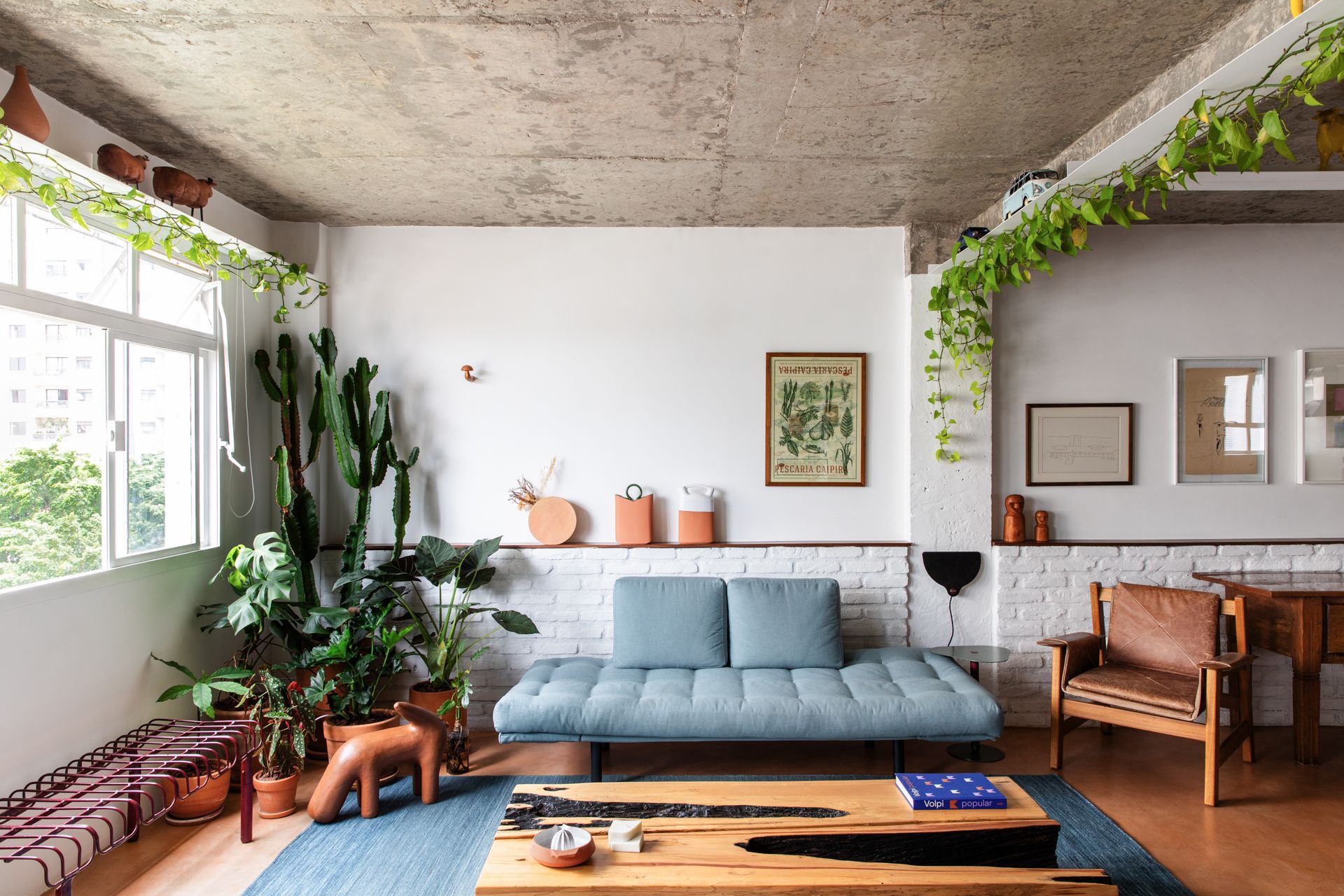
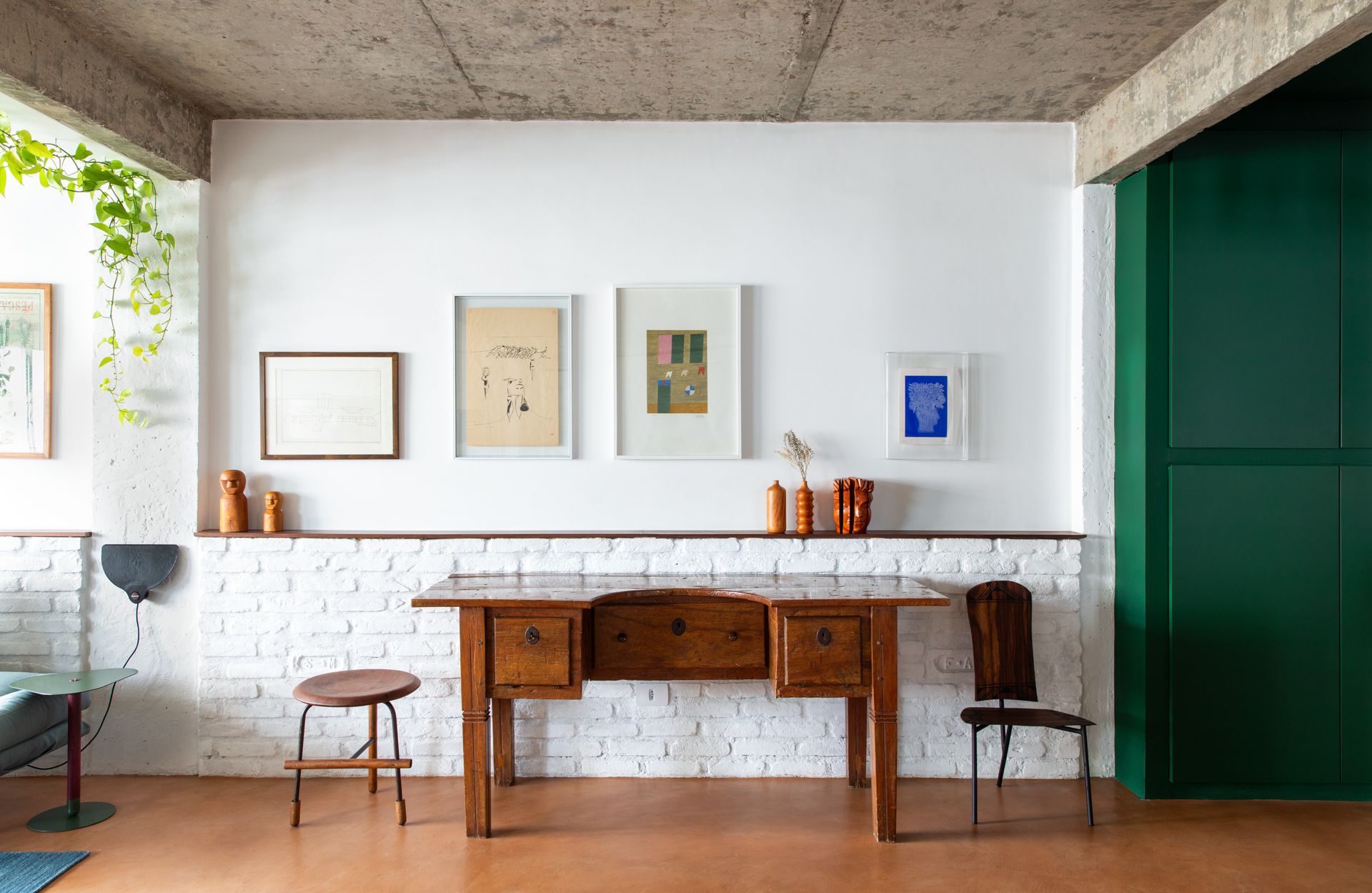
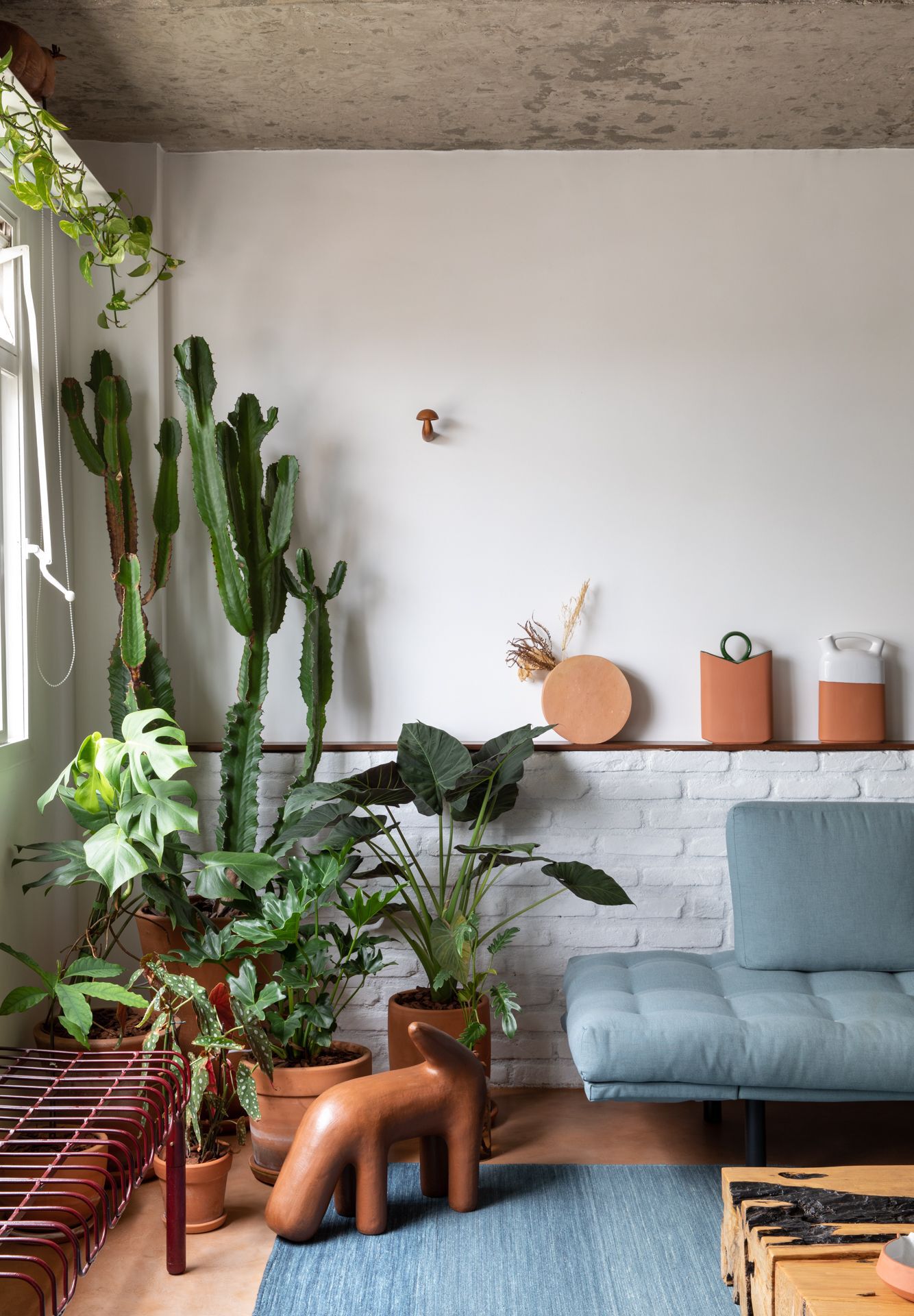
A brick wall extends through the dining room and living room, serving as a support for decorative objects. The bricks came from the demolition of a wall in Carolina’s brother’s apartment (a project that was happening simultaneously with hers). Since they came out intact, we put them in the car and used them in this project. And to give it a finishing touch, a wooden shelf made from the old apartment floor was placed on top of the wall.
© Maíra Acayaba
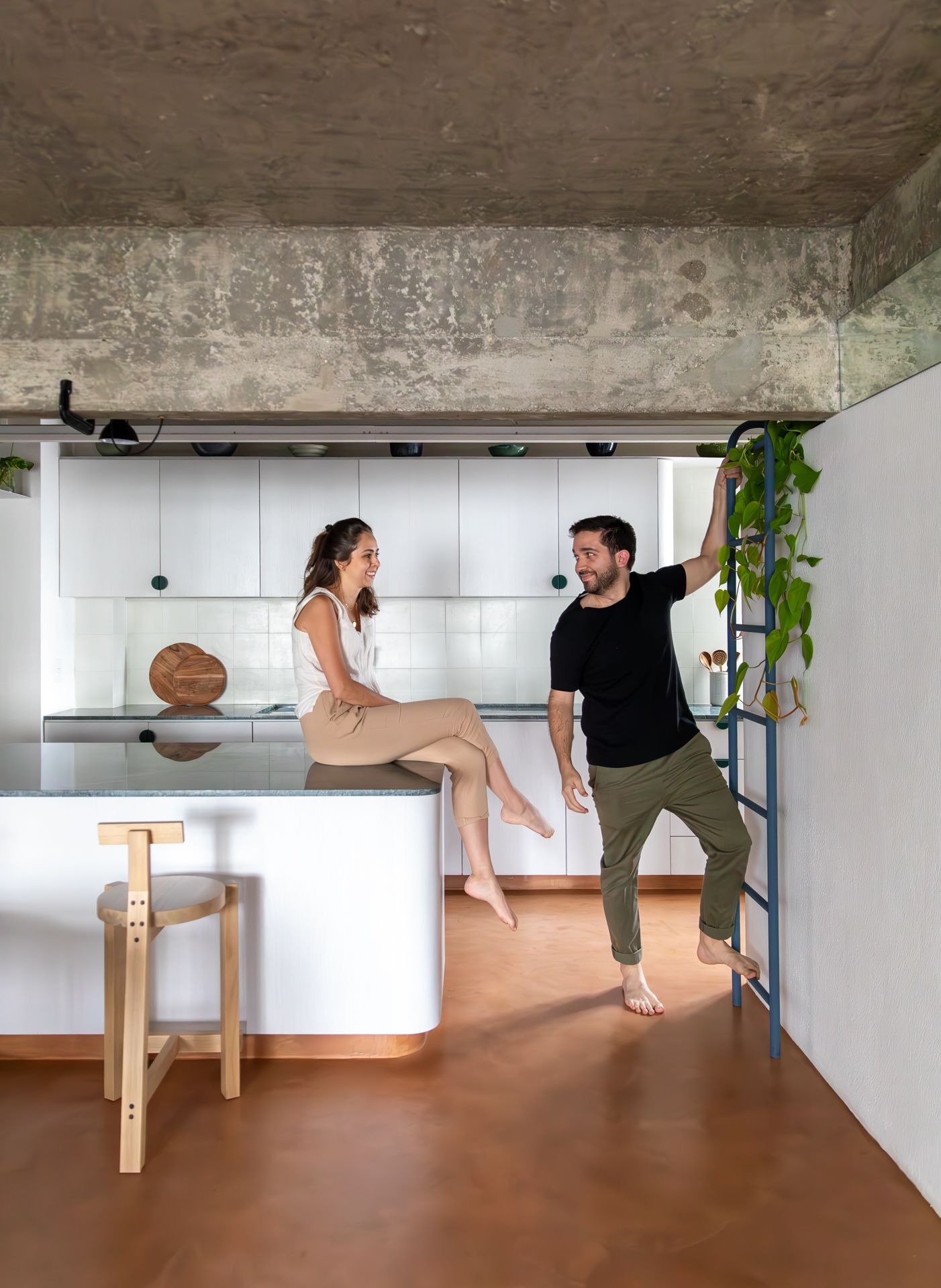
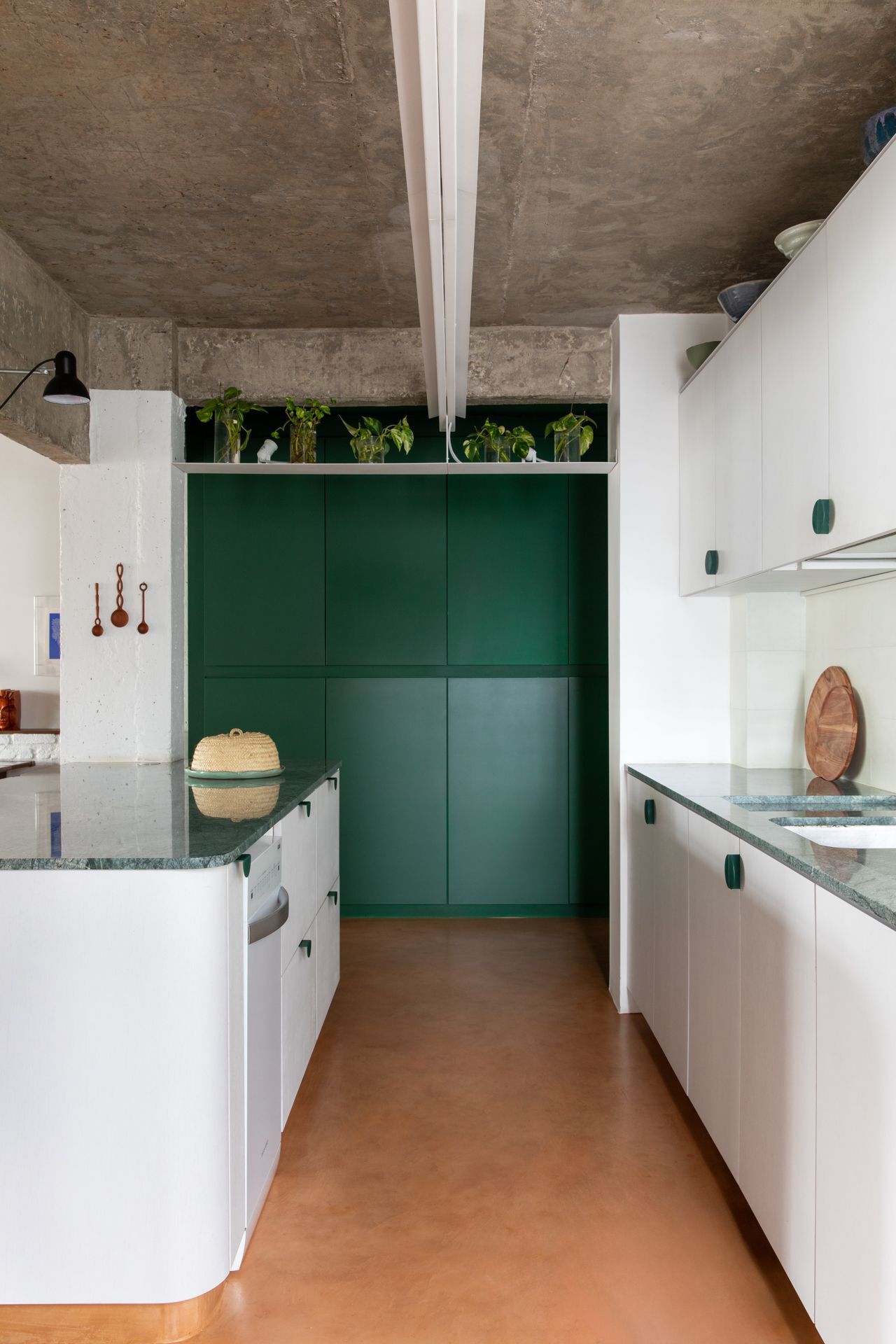
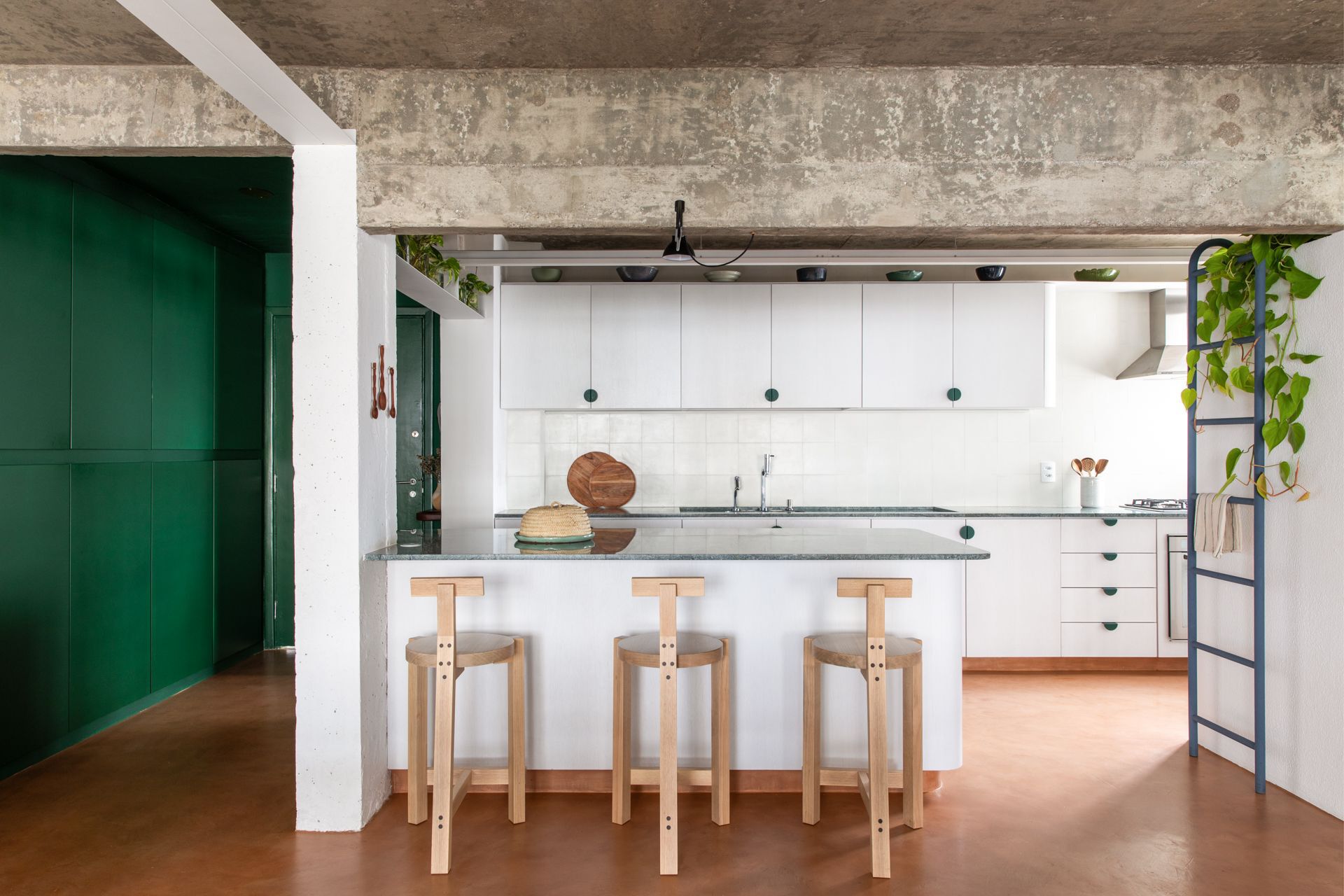
The kitchen has a functional layout, with a large island for cooking and stools for quick meals. Appliances such as a refrigerator, stove, hood, electric oven, and microwave are hidden on the right side. The idea was for the kitchen to have a clean view from the living room, with only the cabinets visible. The kitchen gained color with the green quartzite del mare countertop, and white unfolds in various textures: natural wood veneer stained white on the cabinets and the back of the countertop covered in hydraulic tile. The cabinet handles were designed by us and made of laser-cut metal sheets with green electrostatic paint.
© Maíra Acayaba
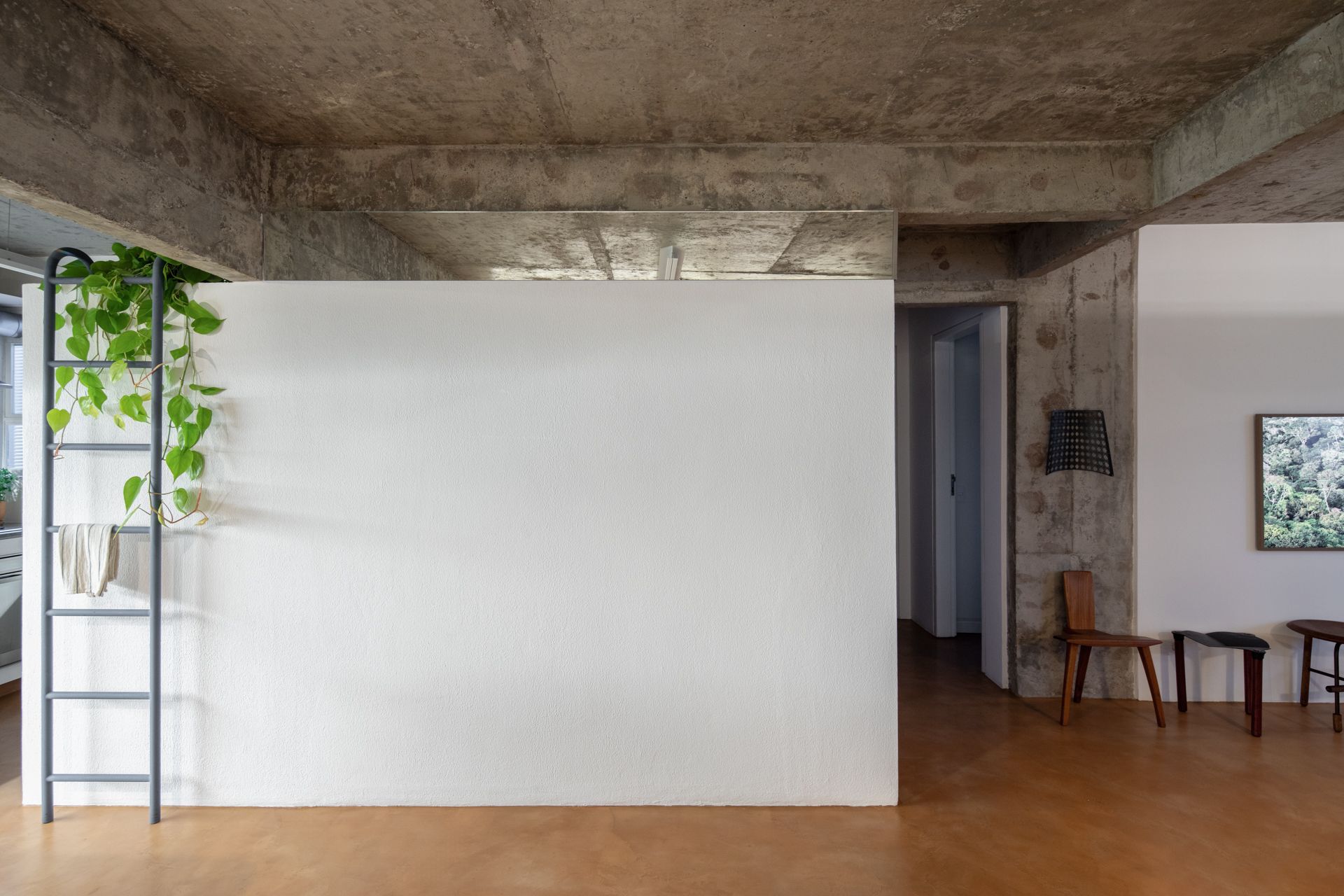
The refrigerator volume does not reach the ceiling, and a planter was created on top of it. Playful access to water the plants is done through a metal sailor ladder. To create alignment with the bathroom volume, we used mirrors that reflect the stripped slab, giving the feeling that this volume is also detached from the ceiling.
© Maíra Acayaba
Lighting was resolved through metal shelves. Sometimes with directional spots, sometimes with LED strips that illuminate the slab. We sought to create a more intimate atmosphere, but with different scene possibilities. For the dining and kitchen areas, which required a stronger solution, a folded metal luminaire connected to the shelves was designed. The long cantilevered volume seems to be floating. The central lighting points on the slab that were not used were given a round brass mirror.
© Maíra Acayaba
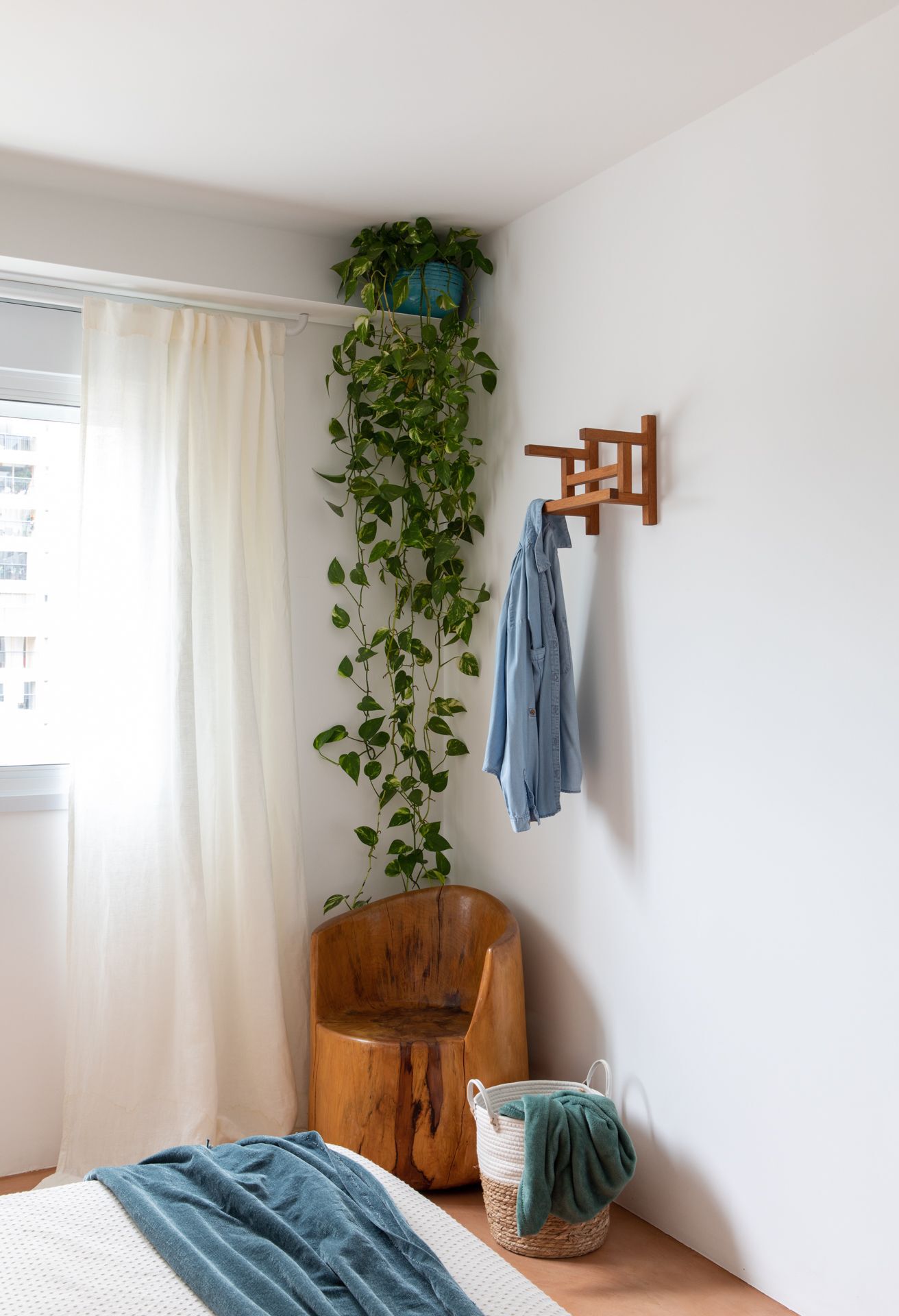
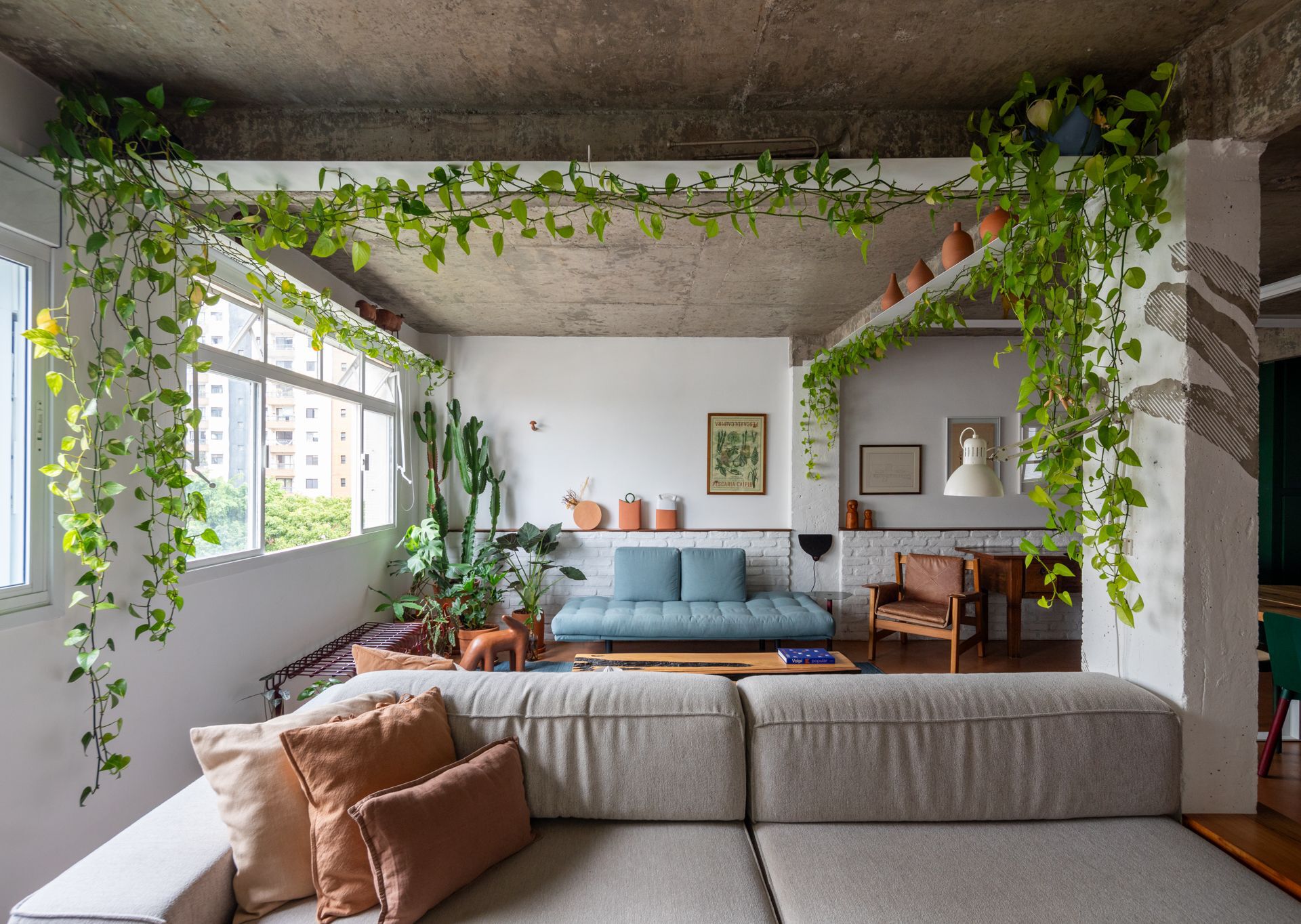
The shelves, in addition to solving the lighting, serve as support for production and plant support. As we wanted to leave the floor free while also liking plants very much, we chose to hang them: metal hooks with magnets support the jibóias and yellow philodendrons, making it easy to change their positions as they grow. Finally, the folds of the shelves also function as curtain rods for the living room’s roll-ons.
© Maíra Acayaba
The apartment furniture alternates between new pieces and family items, Studio Pedro Luna’s line items, and unique pieces that Pedro made with fallen tree wood, such as the coffee table and dining table. The living room has a square layout composed of two sofas, an armchair, a bench, and a coffee table, seeking a pleasant conversation circle. A rectangular table, with a wooden top and metal legs, completes the dining area with 6 green chairs, alternating between three different models: enxada, gravatá, and pedrita chairs.
© Maíra Acayaba
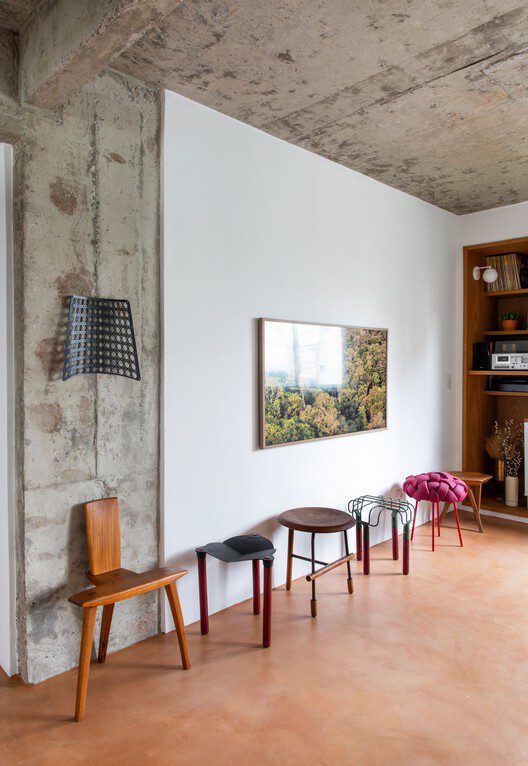
The first bedroom, which was opened to the living room, became the TV room. A deep built-in wardrobe was replaced by a wooden veneer niche that serves as both a bar and space for the record player and vinyl collection. Additionally, all the TV infrastructure is located in this niche, eliminating the need for a TV stand. The Frame TV, when turned off, functions as a painting, and below it, the couple’s stool collection is displayed. As mentioned above, the Move island sofa from Líder Interiores divides the living room and TV area. With foldable backs, it functions as a chaise for watching movies.
© Maíra Acayaba
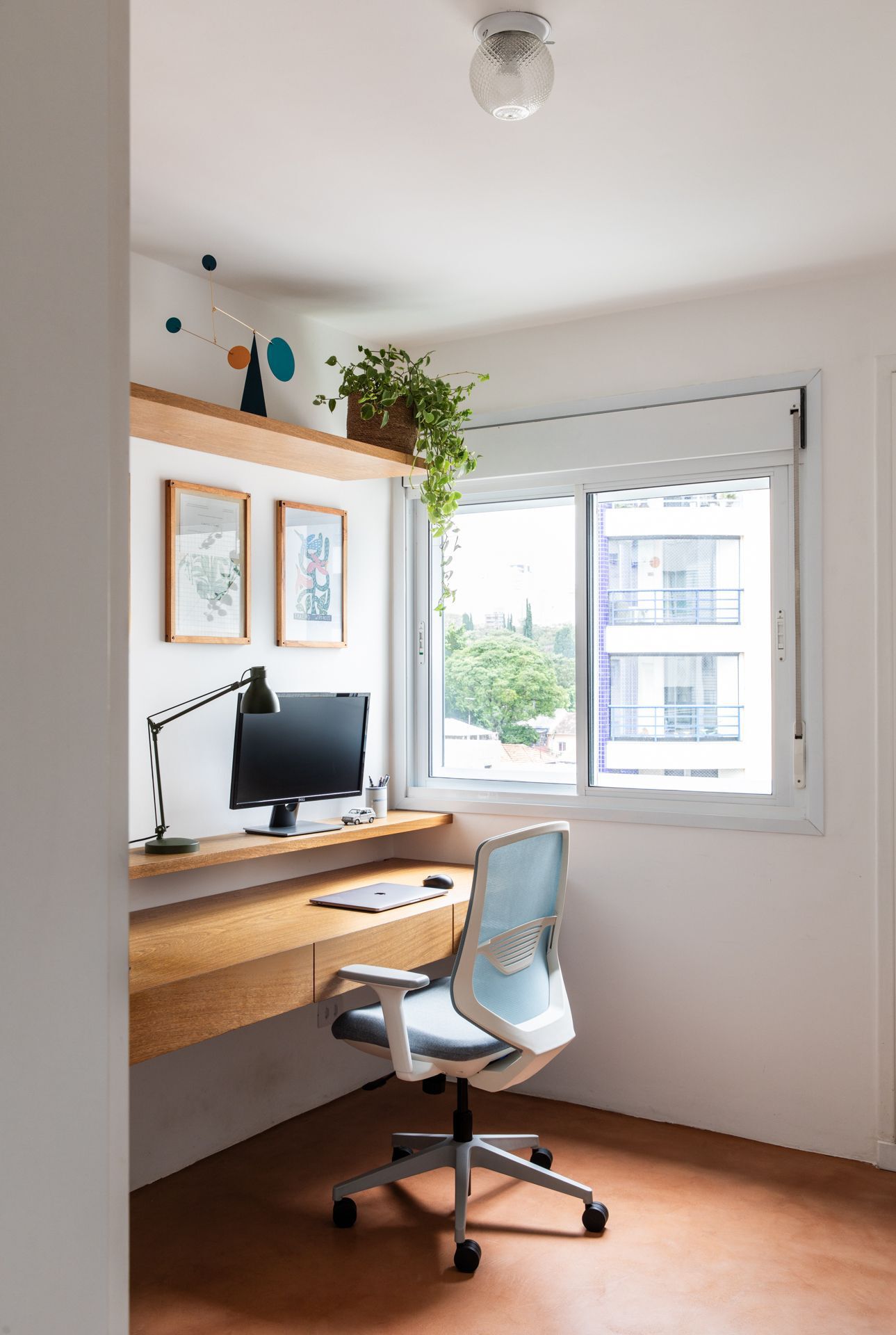
The second bedroom was turned into an office. We used the existing cabinets and created a desk that would serve the couple, as both work from home. We veneered the shelves of the existing niche to give a touch of grace to the all-white cabinet and complement the new desk. A green futon sofa brings color to the environment and serves as a guest bed.
© Maíra Acayaba
The powder room also serves as the guest room bathroom. We changed the position of the sink so that it would be seen frontally upon entering. We used the same stone as the kitchen, quartzite del mare, which complements the green hydraulic tile floor. The other existing fixtures were maximized, only changing ceramics and metals.
© Maíra Acayaba
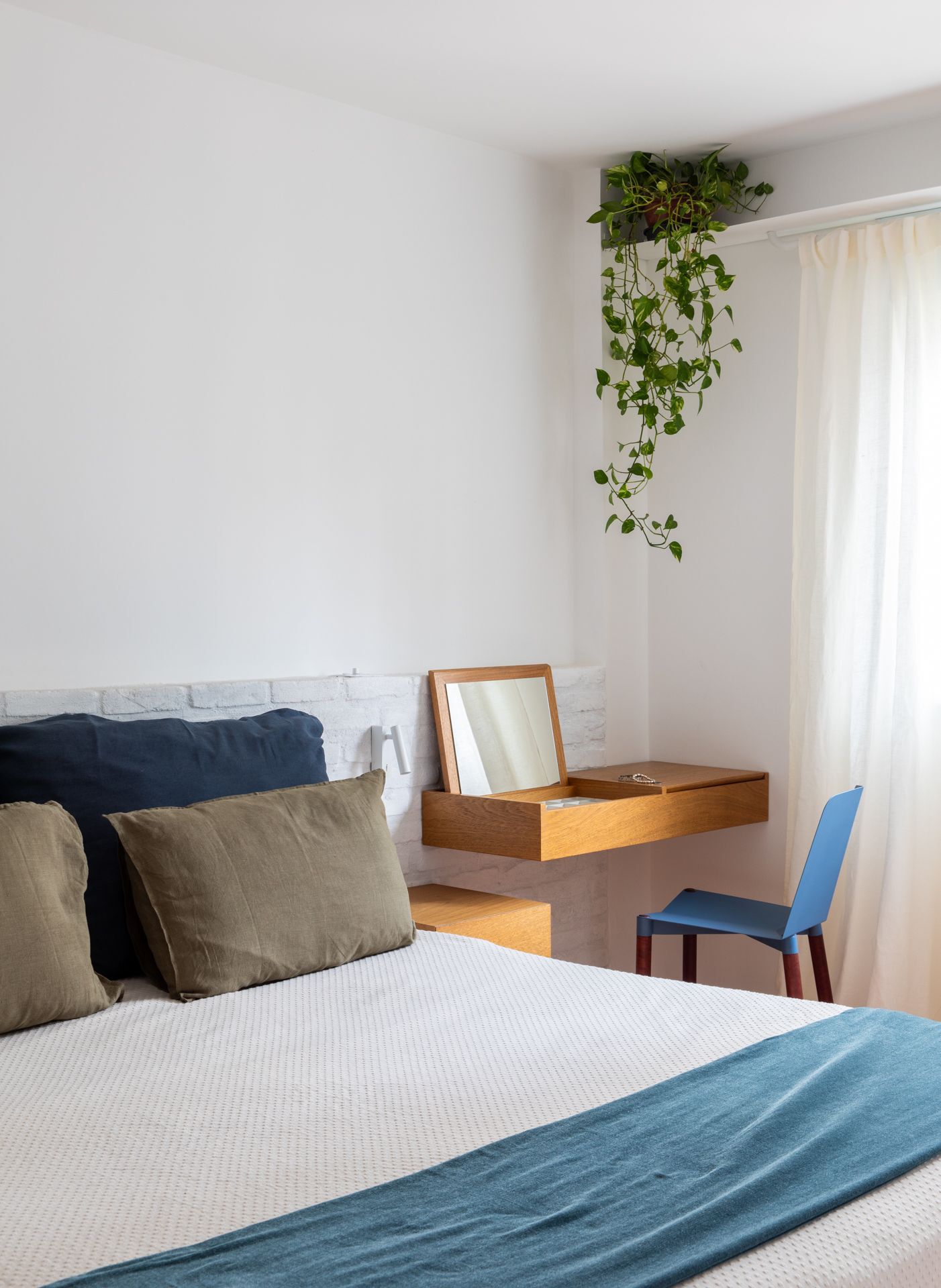
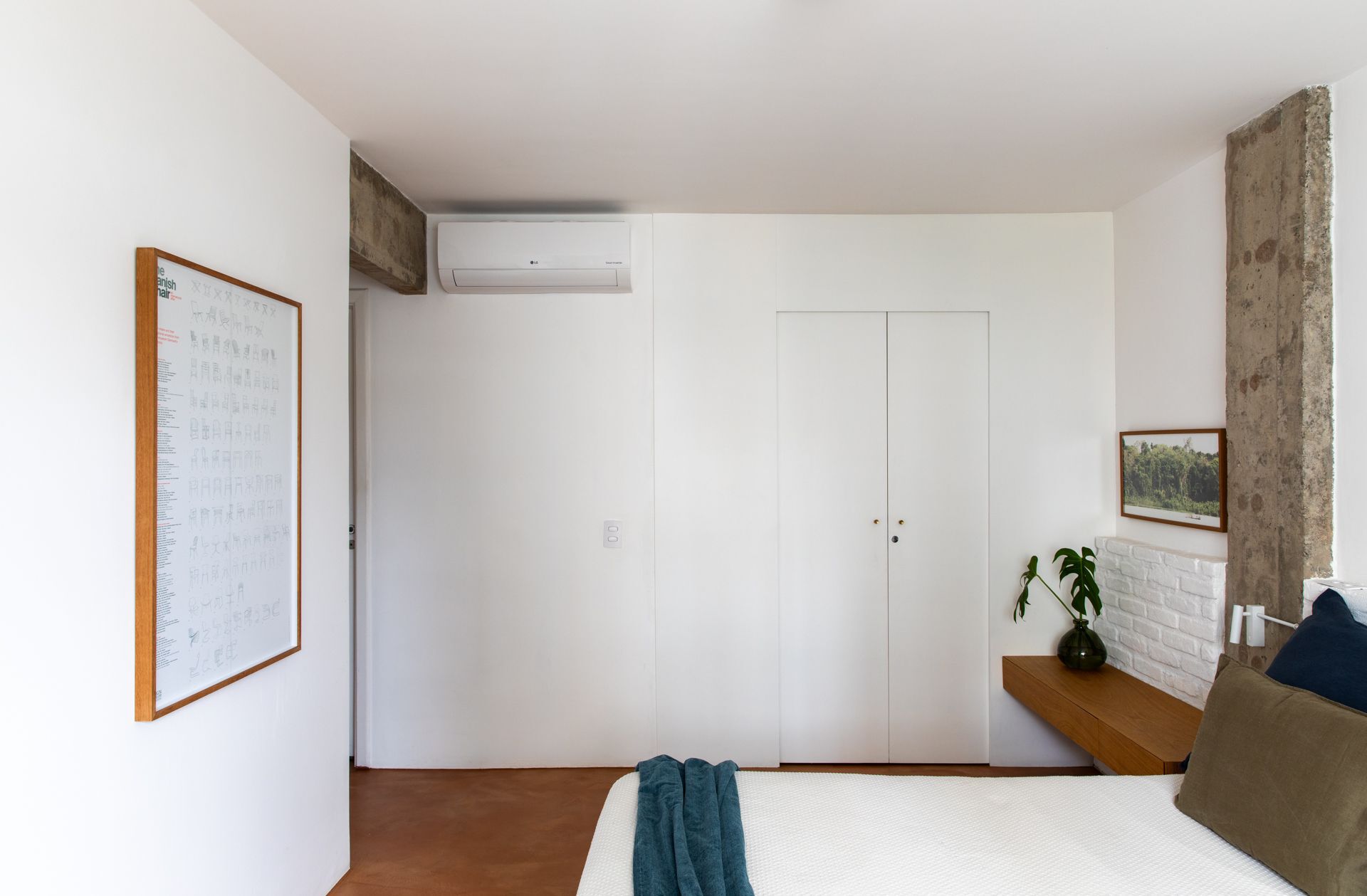
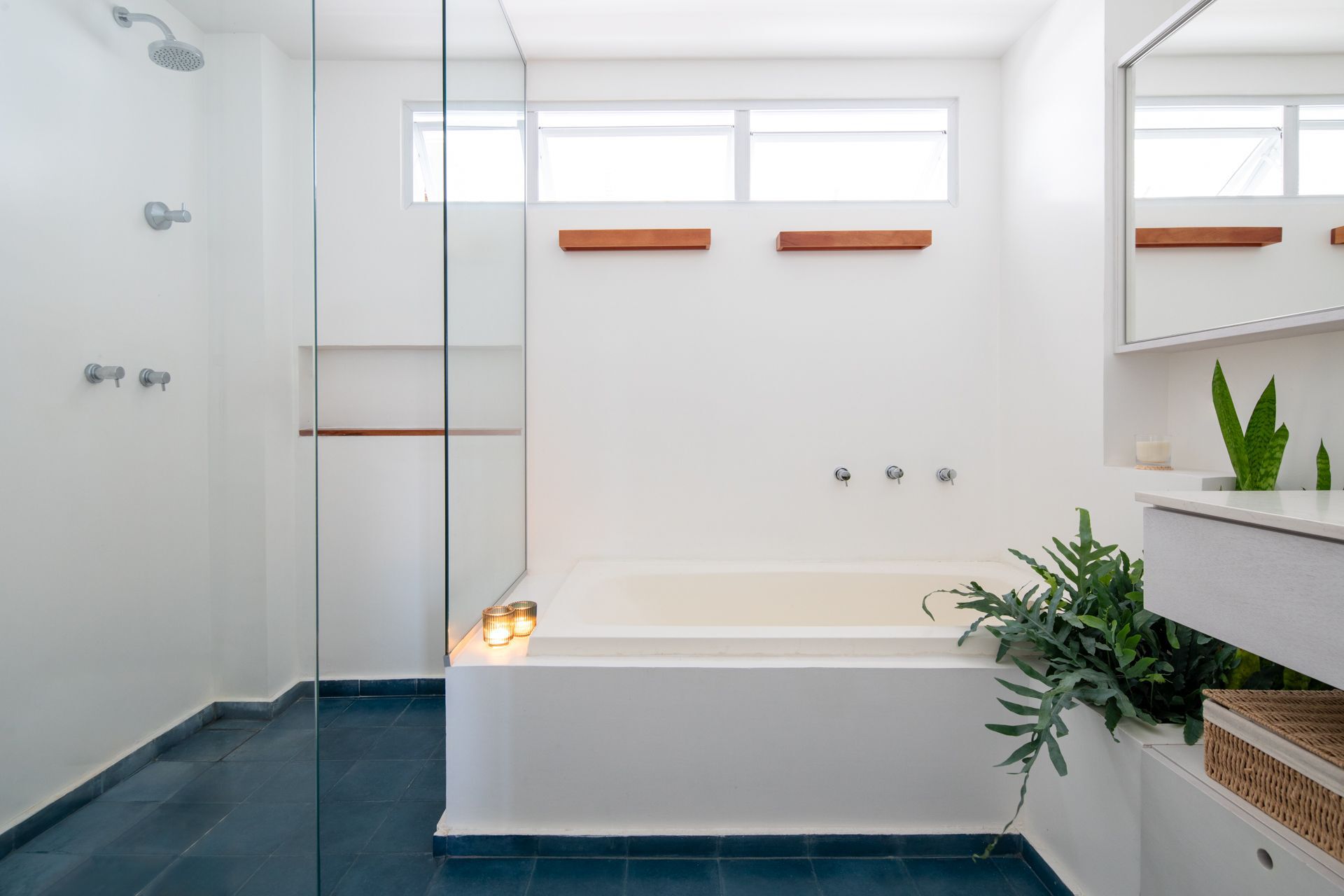
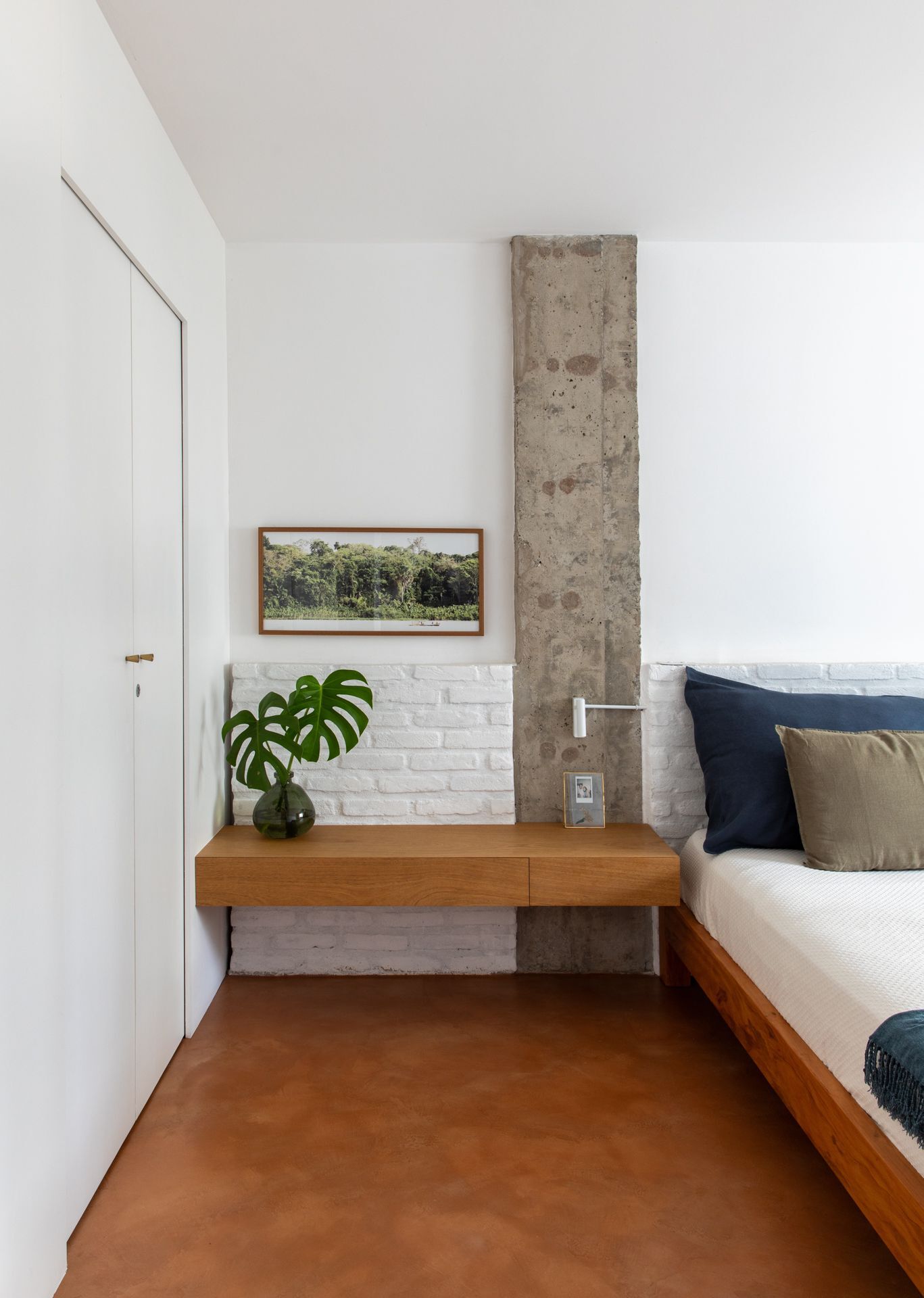
Large and minimalist was our desire for the master suite. To achieve this, we demolished the old closet and, to create the new one, we turned the access from the maid’s room to the suite. We designed bedside tables following the same clean language as the office, and on one side, they become a dressing table. The headboard was also made with demolition bricks that extend along the entire wall of the room. The bathroom received a blue hydraulic tile floor and a smaller countertop than before, making room for a planter.
© Maíra Acayaba
Finally, the laundry area, in addition to housing the usual (sink, washing machine, etc.), has a workshop, useful for small adjustments to designer pieces. The low cabinet serves as storage for tools and cleaning products, and to make the space more spacious, we chose not to have overhead cabinets: brooms and dustpans are stored in a drawer under the cabinet.
Project Info
Architects: Angá Arquitetura, Estúdio Pedro Luna
Country: Brazil, São Paulo
Area: 133 m²
Year: 2022
Photographs: Maíra Acayaba
Project Team: Camila Caiuby, Gabriela Panico e Carolina Gurgel + Pedro Luna
Engineering: HML Construção
Woodwork: MTS Móveis