

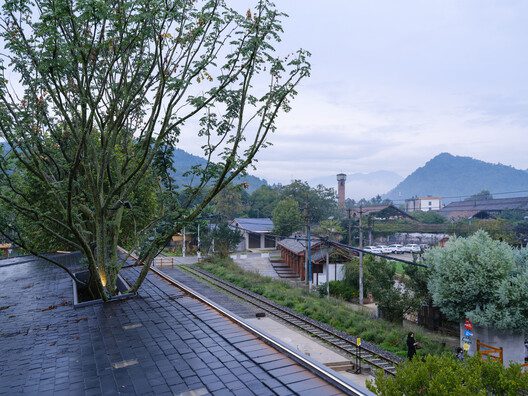
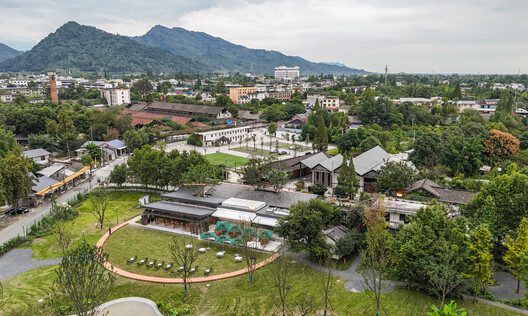
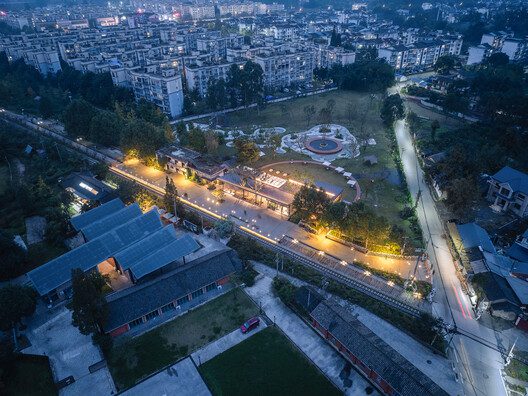
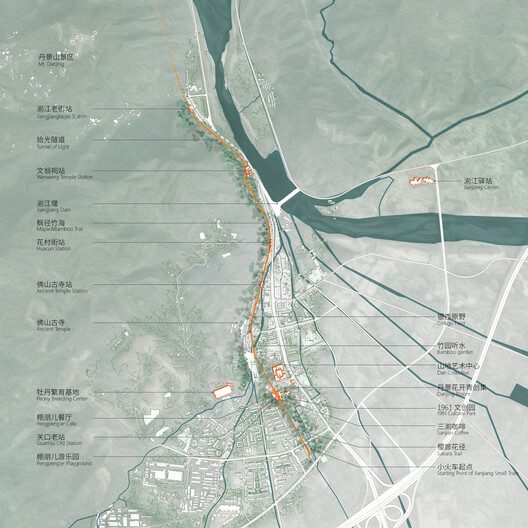
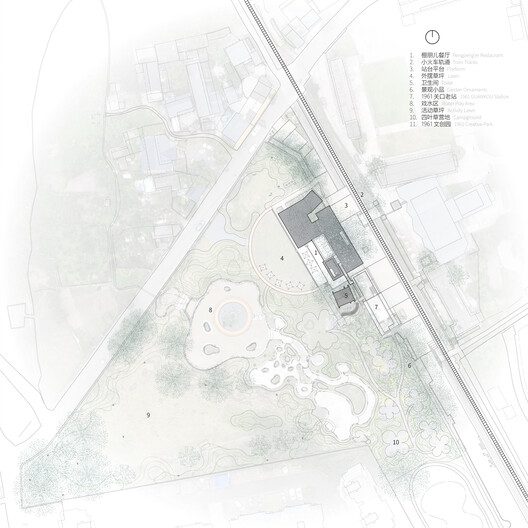
Pengpeng’er Bistro,Located in Danjingshan Town, Pengzhou, Sichuan, the Jianjiang Small Train Linear Park is a comprehensive tourism route centered on railway stations, organically connecting dining, exhibitions, arts, and heritage revitalization. Its predecessor, the Peng-Bai Railway, was a narrow-gauge line opened in 1961. Although operations ceased in 2004, it remains an irreplaceable emotional bond for the people of Pengzhou. In 2024, driven by the “Operations-Led” philosophy, Jiulong Xinchuang and UN-GROUP launched a revival plan. They proposed the concept of “Time Fold · Rebirth on Tracks,” linking over ten project nodes via 3.5 kilometers of rail, with full completion expected by 2026.

© Songkai Liu
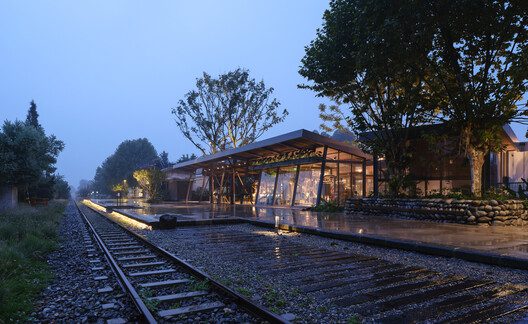
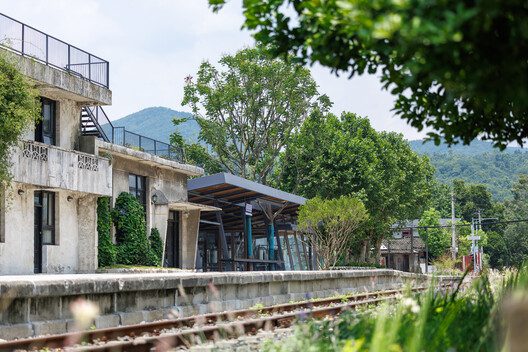
As the first stop of the park, Pengpeng’er Bistro sits adjacent to the historic Guankou Old Station built in 1961. Guided by the philosophy of “Old Station Rebirth,” the restaurant integrates tea, coffee, craft beer, and Sichuan-style Western cuisine. It recreates the leisurely lifestyle of “drinking tea under a shack,” injecting new vitality into this historic site.

© Songkai Liu
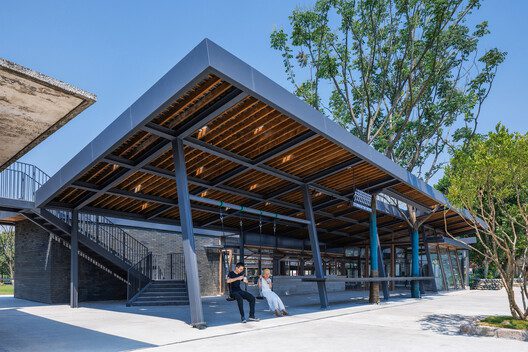
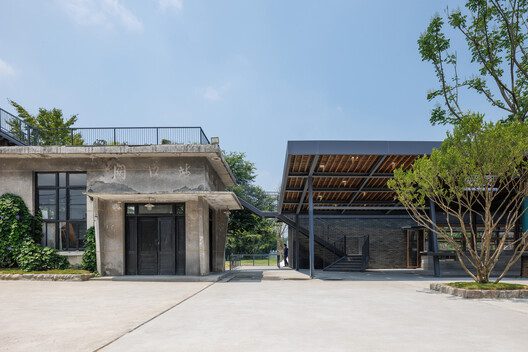
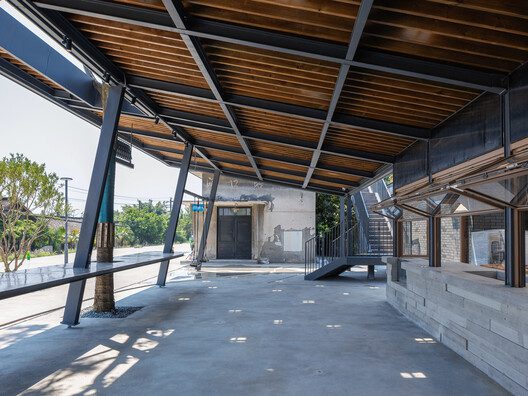
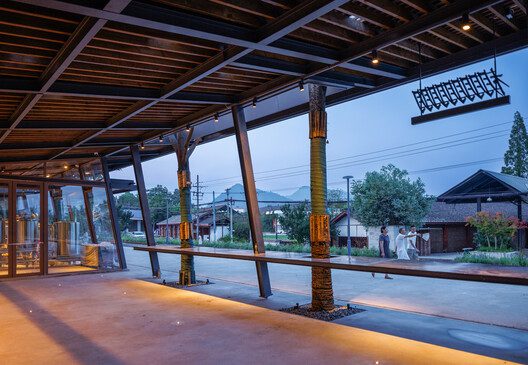
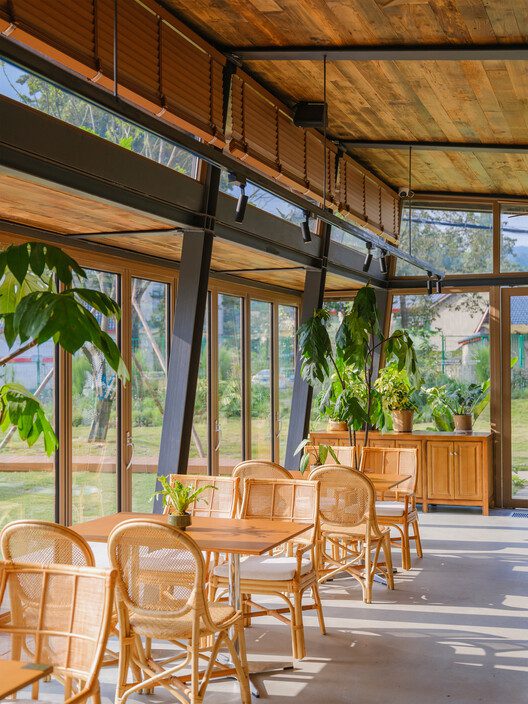
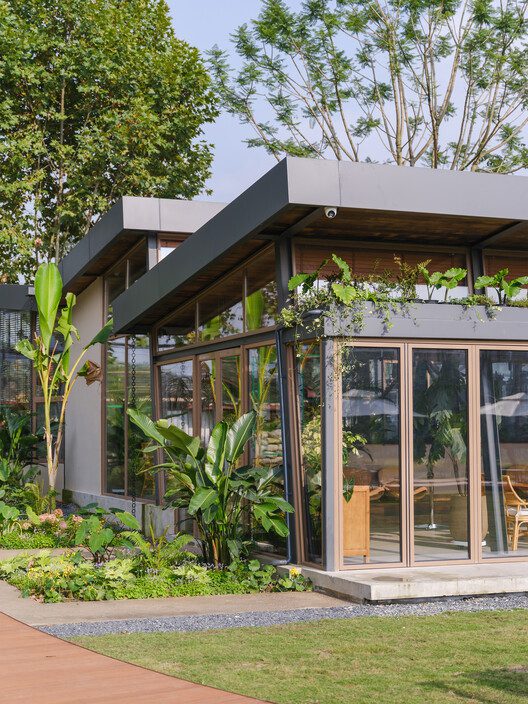
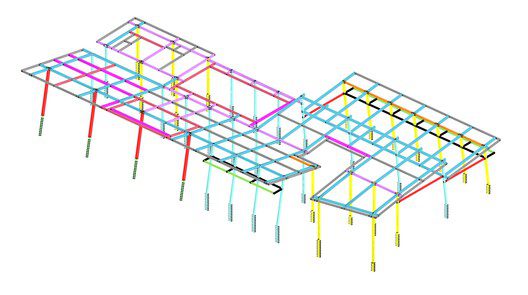
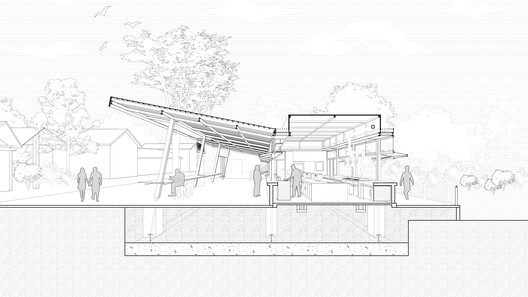
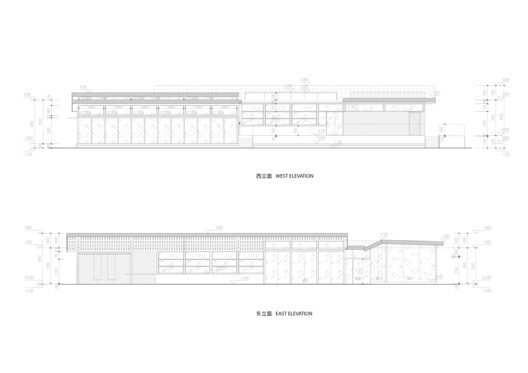
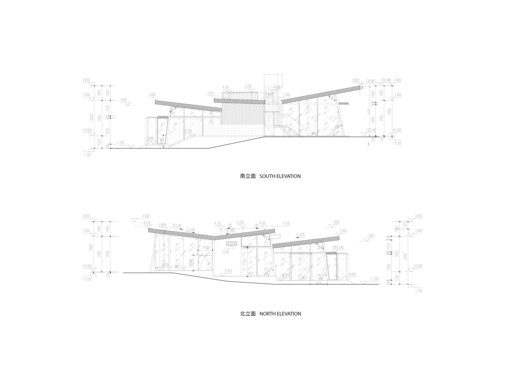
The design closely follows the Western Sichuan tradition of “building shacks” (Dapengpeng’er). A slanting, semi-outdoor canopy, equal in height to the old station, extends alongside the heritage building to serve as both a waiting area and the restaurant’s core. A lightweight steel staircase connects the canopy to the old station’s roof terrace without disturbing the original structure, achieving an organic extension of the historic space. The main structure uses steel, with tilted columns meeting soaring beams at 90-degree angles to “root” firmly yet lightly onto the platform, demonstrating a balance of strength and aesthetics.

© Songkai Liu
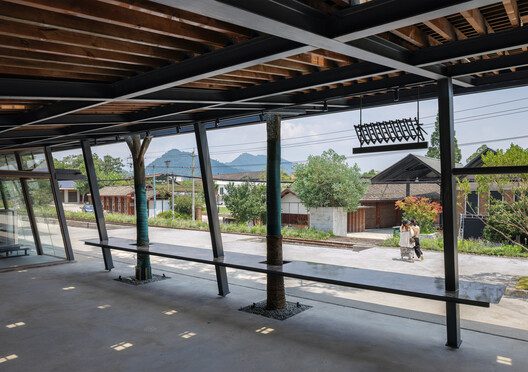
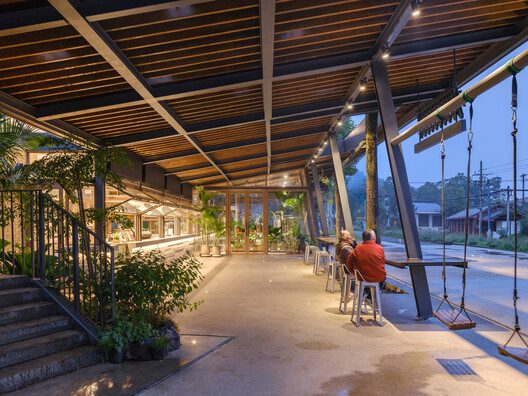
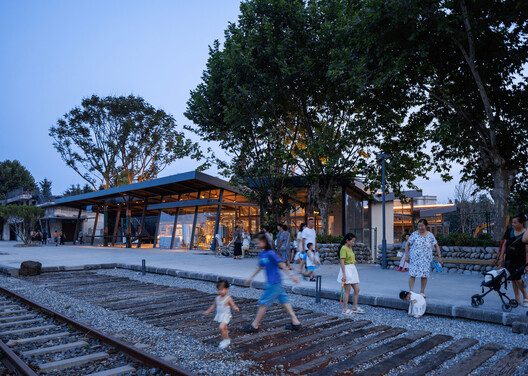
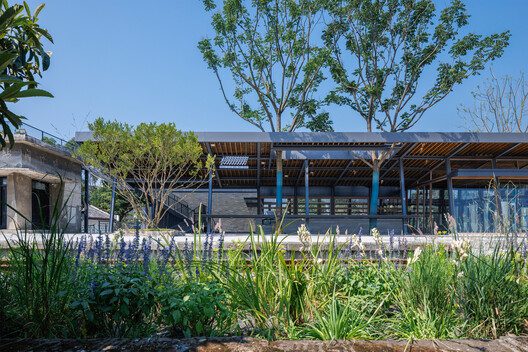
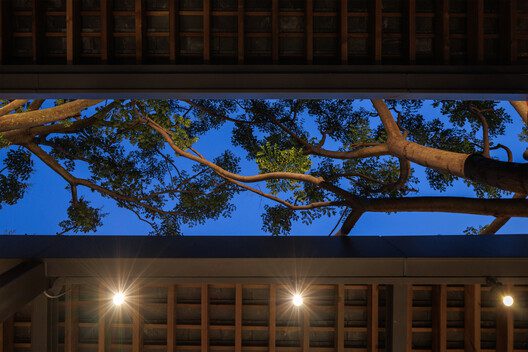
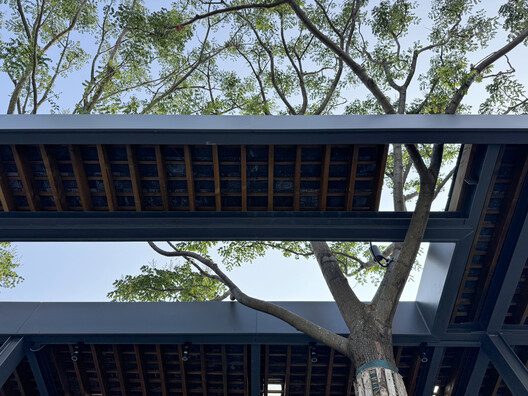
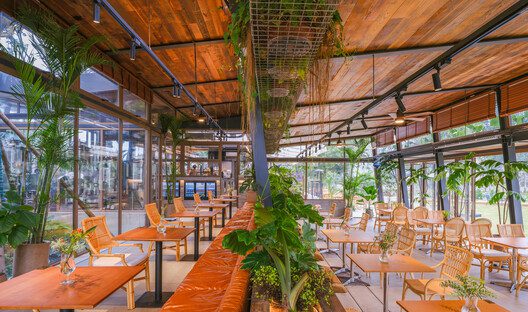
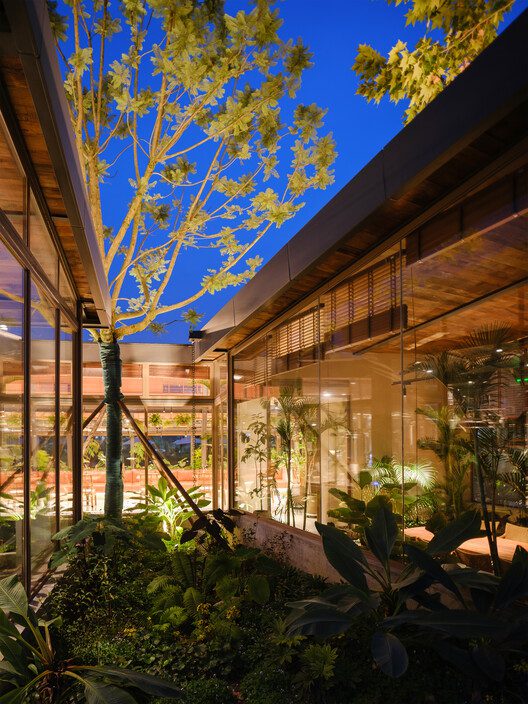
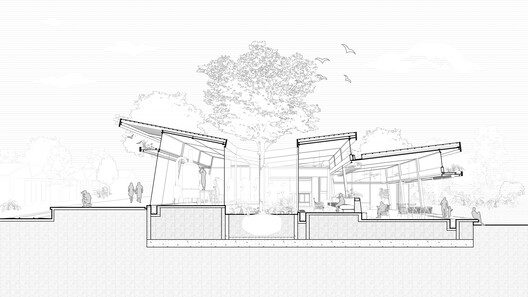
In the semi-outdoor area, the purlin system for the tiles is left exposed. Transparent and slate tiles are interspersed randomly, allowing sunlight to diffuse by day while buried lights twinkle like stars by night. The original London plane trees were transplanted due to irreversible health decline; in their place, mature Goldenrain trees (Koelreuteria paniculata) were planted. Their branches break through the roof to gaze at the distant Longmen Mountains, becoming a living, growing part of the architecture.

© Songkai Liu
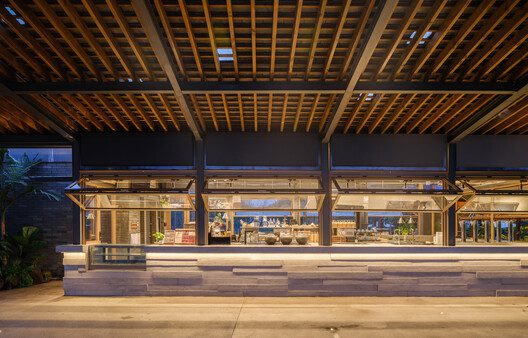
The space under the canopy is flexible and multi-functional. A cast-in-place wood-textured fair-faced concrete bar softens the coldness of the material, while a suspended long table and swings by the old station provide cozy relaxation corners for residents. The 10-meter-long central bar features a semi-translucent polycarbonate roof that glows like a lantern at night, serving the platform, the park, and the indoor dining area simultaneously.

© Songkai Liu
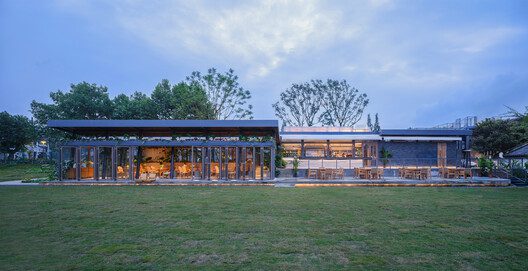
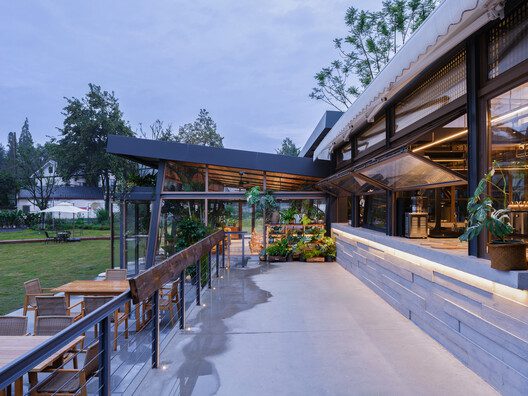
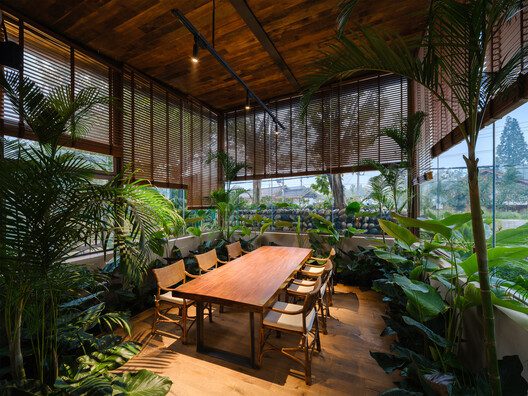
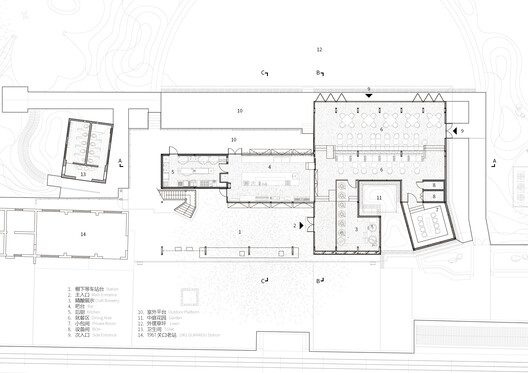
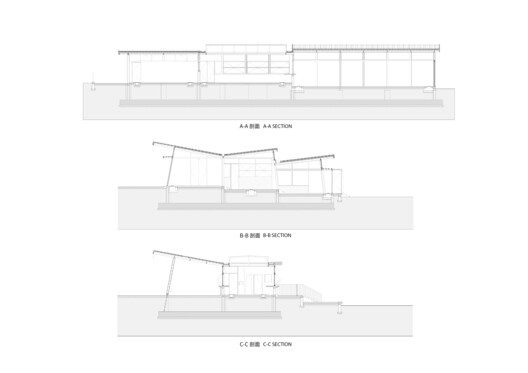
The site’s 1.2-meter elevation gain is managed through three tiers of terraces. The V-shaped pitched roofs direct spatial “energy” toward the central bar. The facade is dominated by large-scale glass, with all HVAC equipment buried underground to maintain the roof’s ultra-thin appearance. Interiors utilize reclaimed wood and rattan furniture to awaken local memories of leisure.

© Songkai Liu
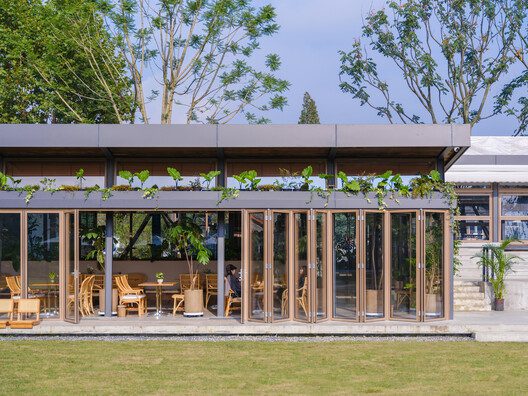
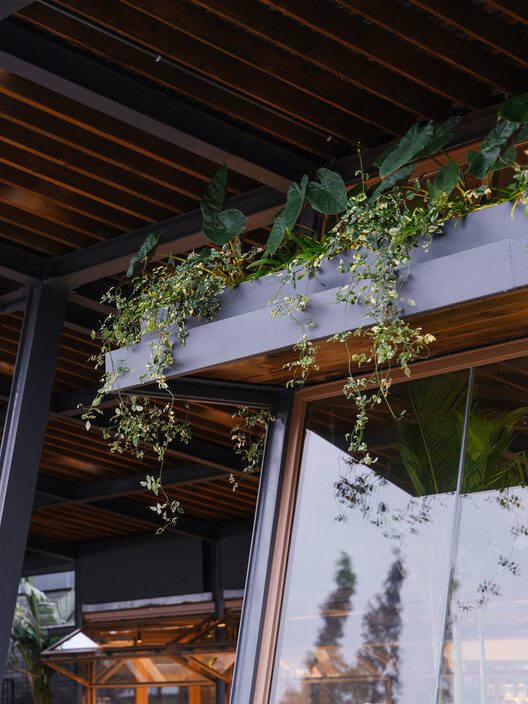
The rear of the restaurant features a children’s play area and multi-level platforms, with folding doors that open to merge the interior and exterior. Greenery is systematically integrated—from continuous planters above the tilted columns to an indoor “vertical green window”—blurring spatial boundaries. Details such as door handles crafted from small-gauge rails, steps made from old railway sleepers, and embedded seat tracks all pay homage to the industrial heritage. As the small train enters trial operation, Pengpeng’er Bistro has evolved beyond a mere station into a “community living room” cherished by locals. It stands as a vital link between past and present, nature and architecture, marking a vivid prologue to the comprehensive revival of the Jianjiang Small Train Linear Park.
Project Info :
-
Architects: UN-GROUP
- Country: Chengdu ,China
- Area: 410 m²
- Year: 2025
-
Photographs: Songkai Liu
-
Manufacturers: Aluminum panel (Removed), Unknown (Removed), Unknown (Removed), Unknown (Removed), Unknown (Removed), Unknown (Removed)
-
Lead Architects: Wang Xiaoyu, Yang Lie
-
Design Team: Wei Ran, Xie Yutong, Li Xuerong
-
Onsite Architect: Xie Yutong, Yu Guangli, Liu Yangcheng
-
Lighting Consultant: Chen Yingying
-
Brand Design: Gao Dong, Hezuo (Shanghai) Cultural Creativity Co., Ltd.
-
Engineering: iStructure
-
Landscape Designer: Chengdu Manshidi Horticulture Co., Ltd.
-
Construction: Pengzhou Jiulong Xinchuang Cultural Tourism Development Co., Ltd.
-
Clients: Sichuan Longmenshan Cultural Tourism Development Co., Ltd.
-
Operator: China United North West Institute for Engineering Design & Research.

Anastasia Andreieva is an accomplished Architectural Projects Editor at Arch2O, bringing a unique blend of linguistic expertise and design enthusiasm to the team. Born and raised in Ukraine, she holds a Master’s degree in Languages from Taras Shevchenko National University of Kyiv. Her deep passion for architecture and visual storytelling led her to transition from translation and editorial roles into the world of design media. With a keen eye for conceptual clarity and narrative structure, Anastasia curates and presents global architectural projects with precision and flair. She is particularly drawn to parametric and digital design, cultural context, and emerging voices in architecture. When I’m not analyzing the latest architectural trends, you’ll probably find me searching for hidden gems in cityscapes or appreciating the beauty of well-crafted spaces. After all, great design—like great connections—can be found in the most unexpected places. Speaking of connections, because architecture isn’t the only thing that brings people together.