

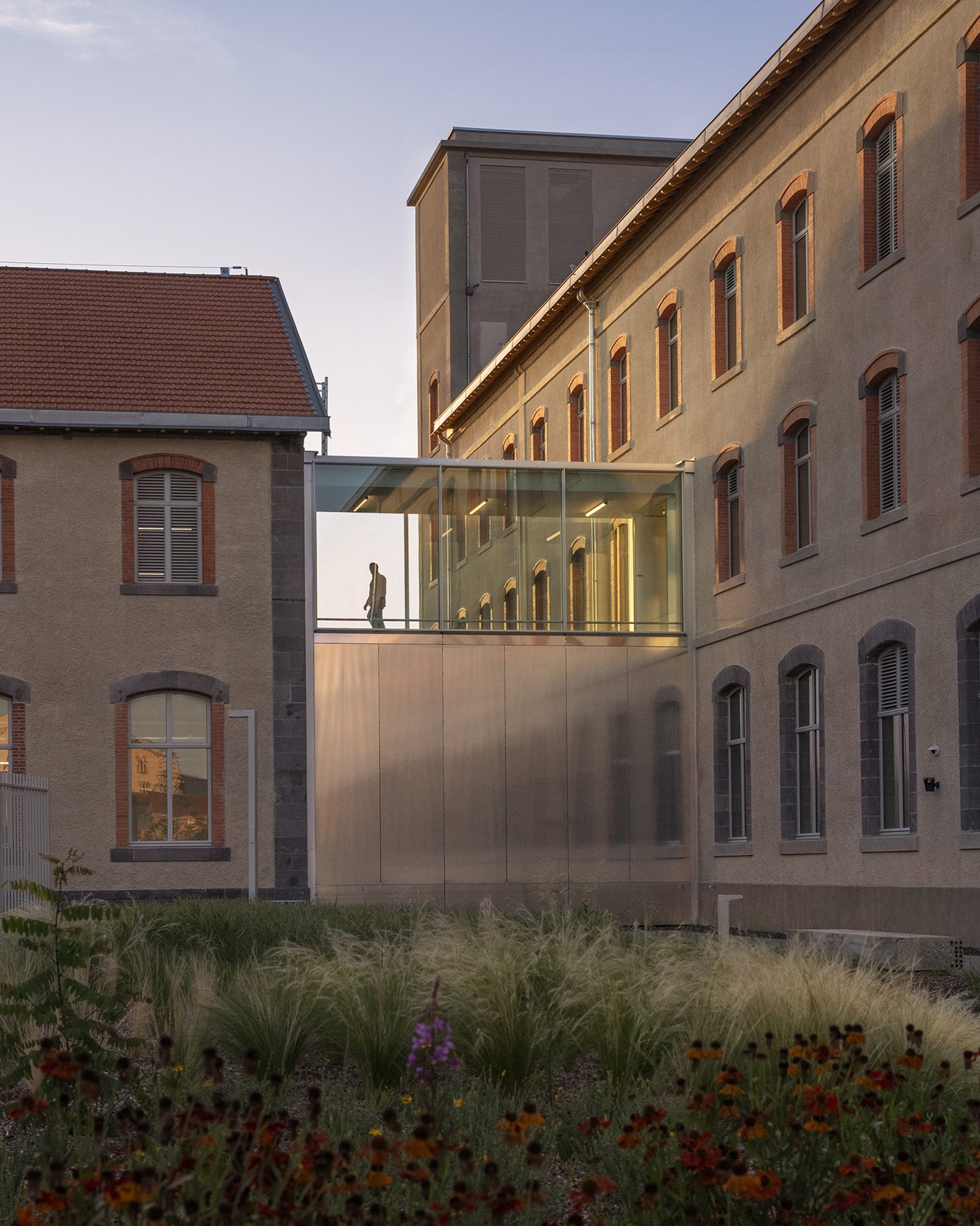
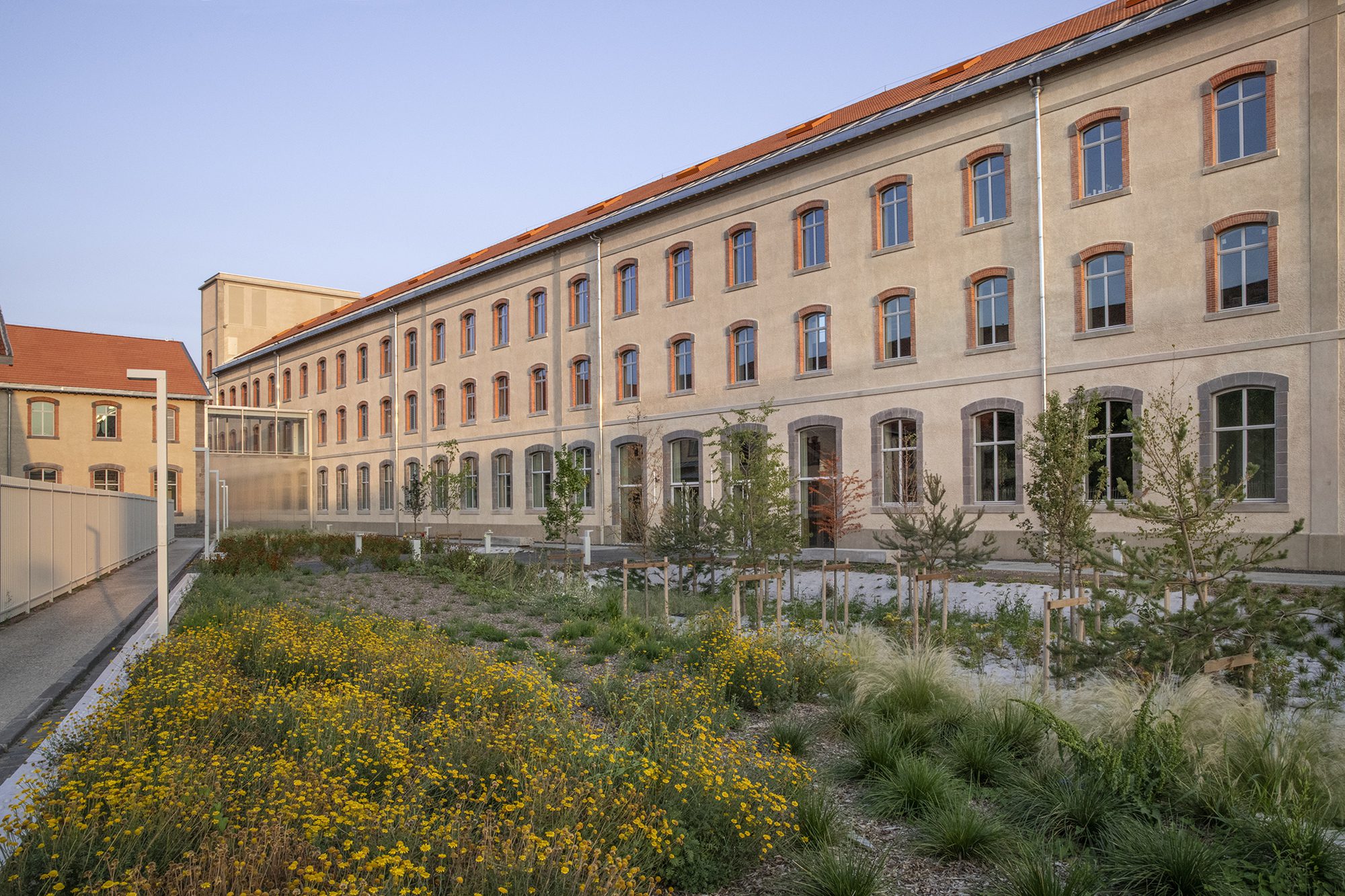
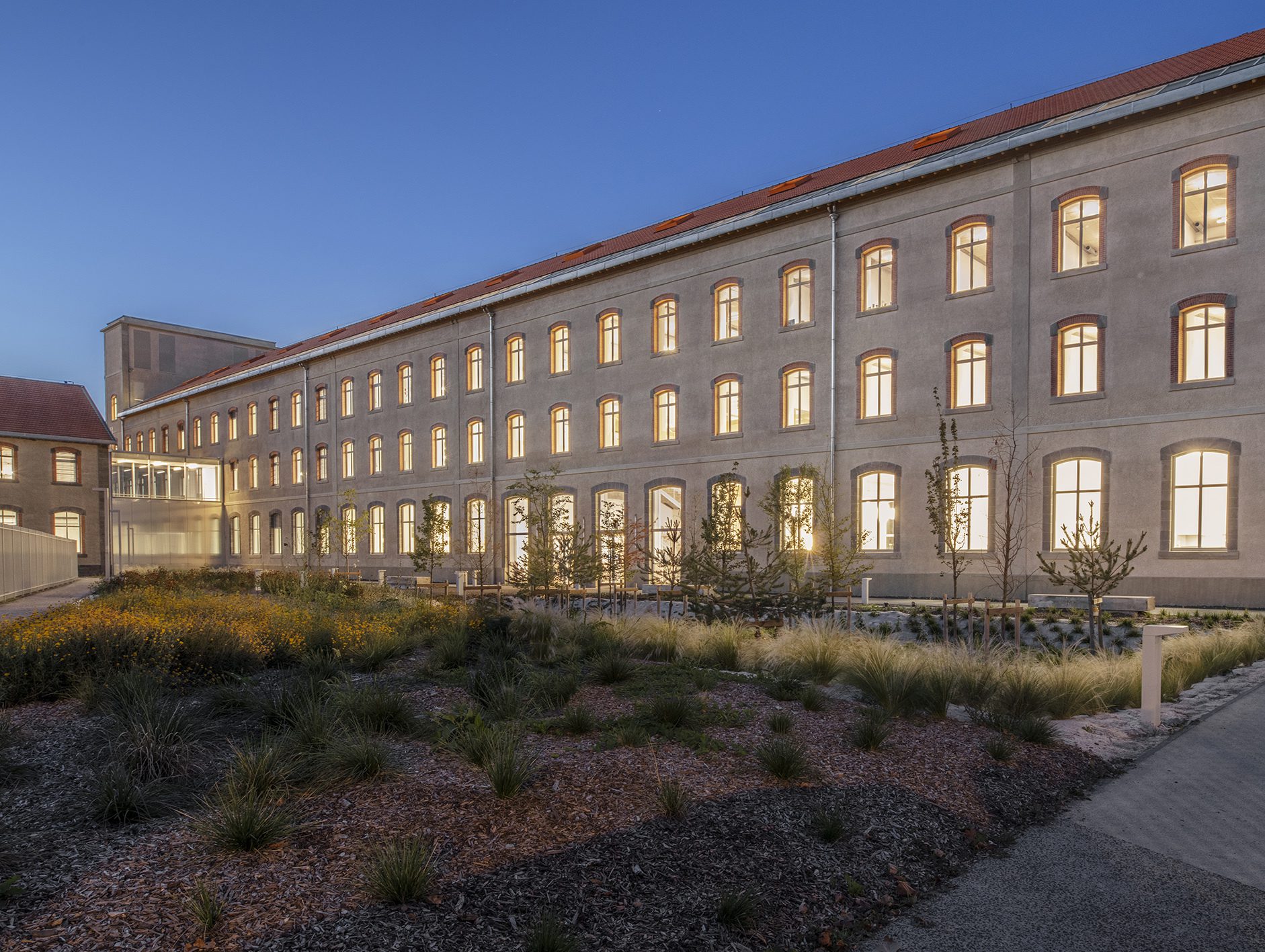
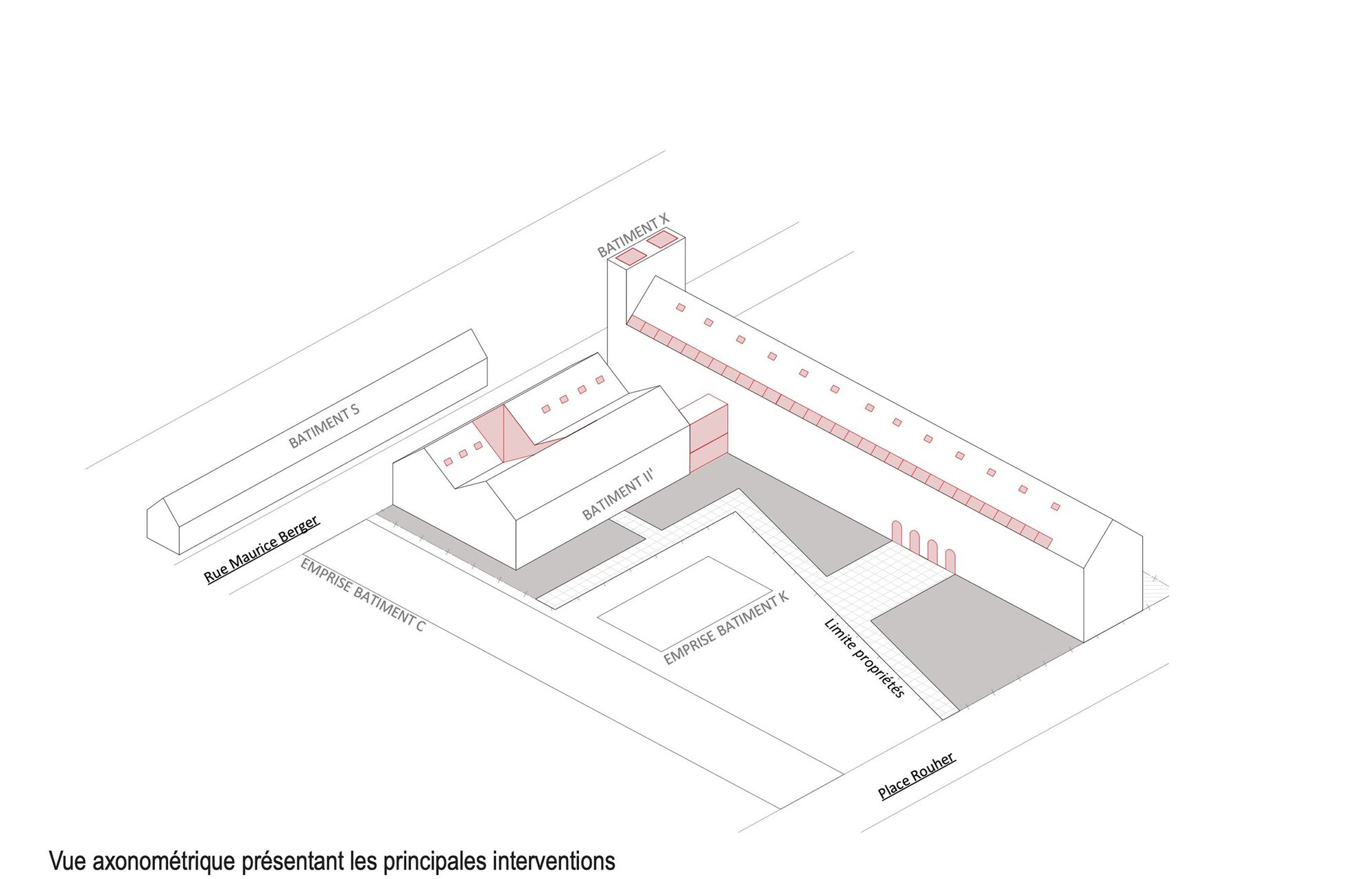
HER Rehabilitation of Tobacco Factory into Leather Manufacture for the new leather’s manufacture in Riom is being established within a section of the town’s former Tobacco Factory, built in 1877. Located near the city center, just 400 meters from the train station, the twenty or so buildings are bordered to the east by railway tracks, and to the north, south, and west by residential areas and intermediate housing.
© Guillaume Amat
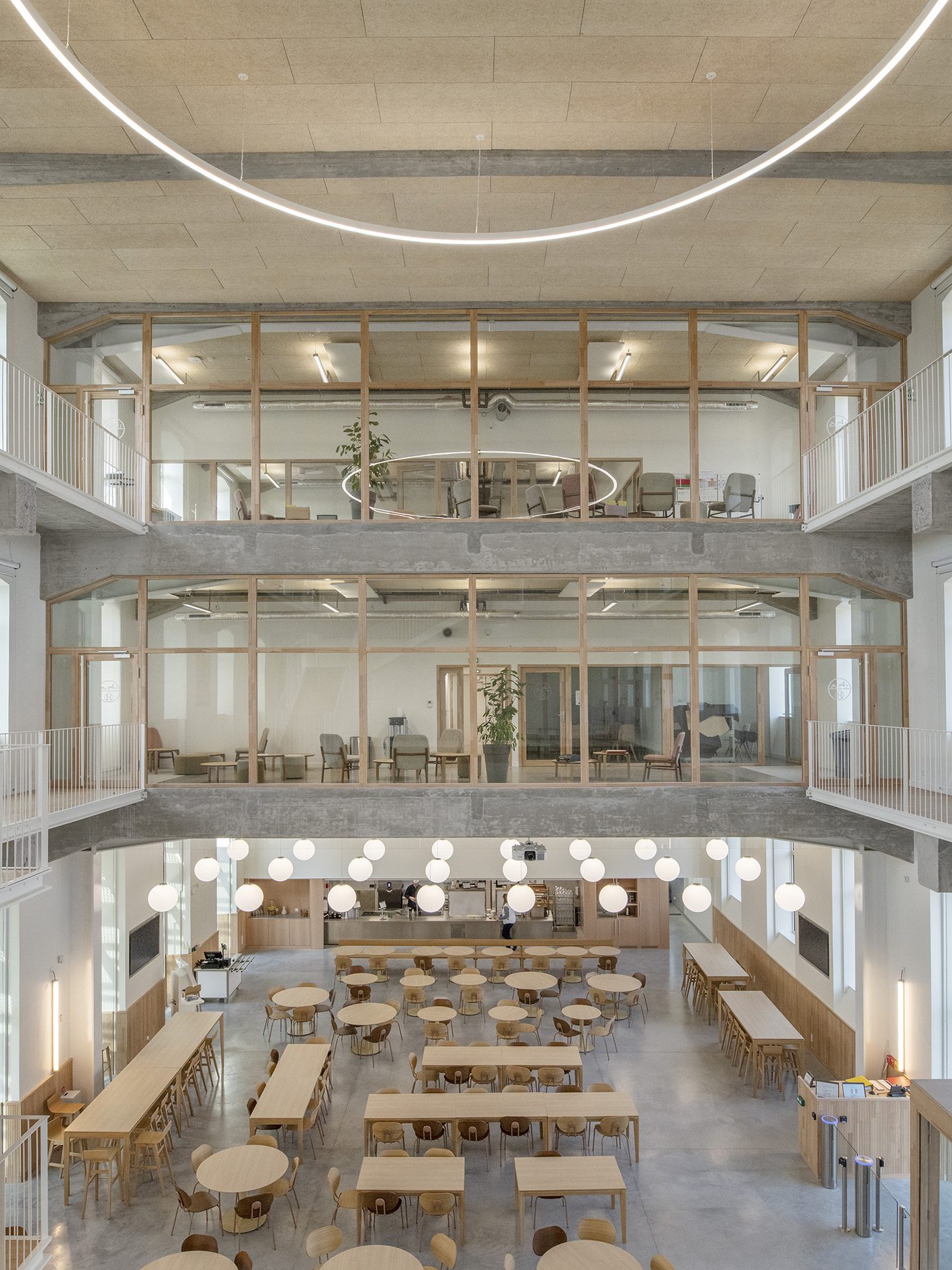
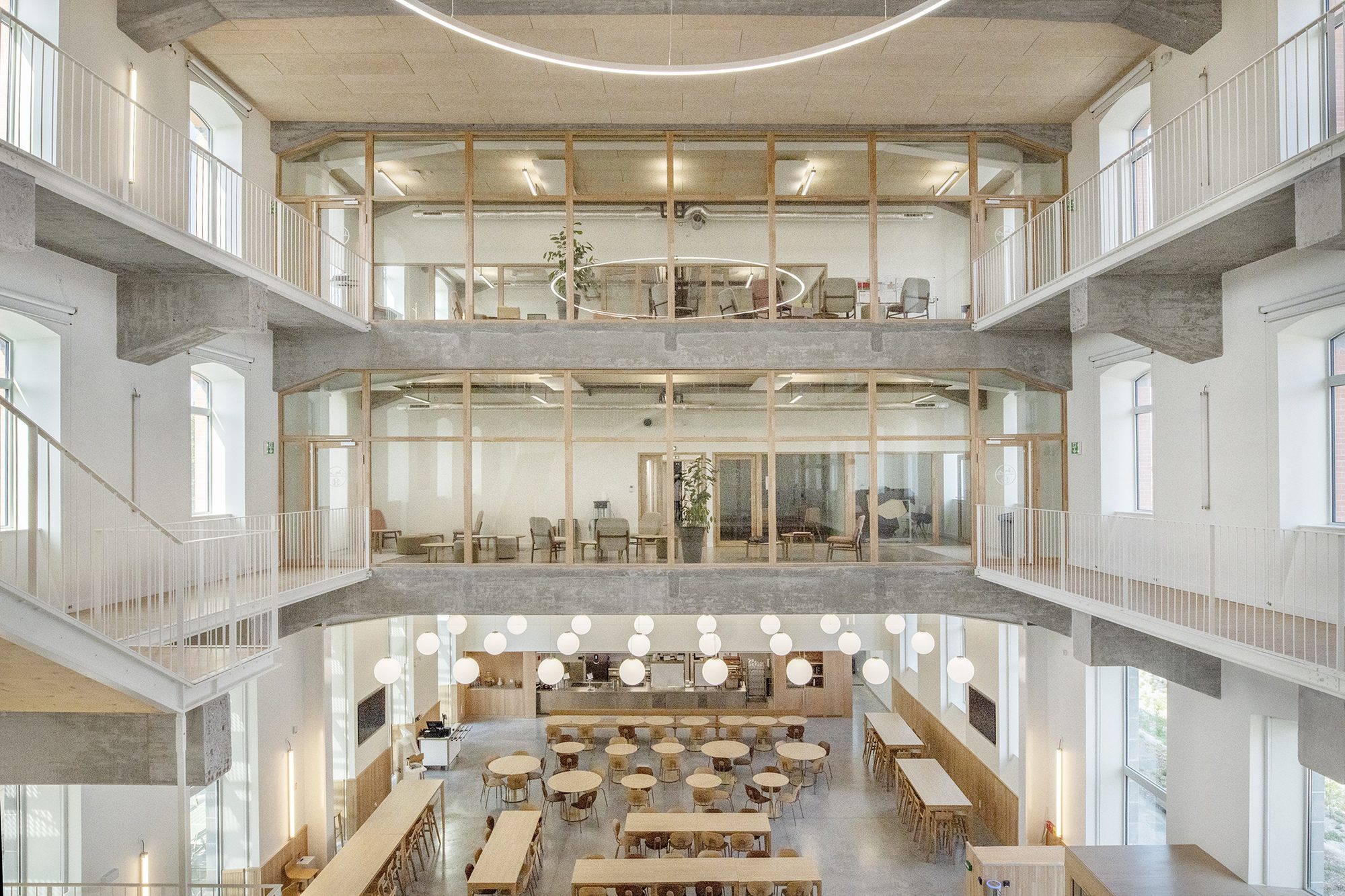
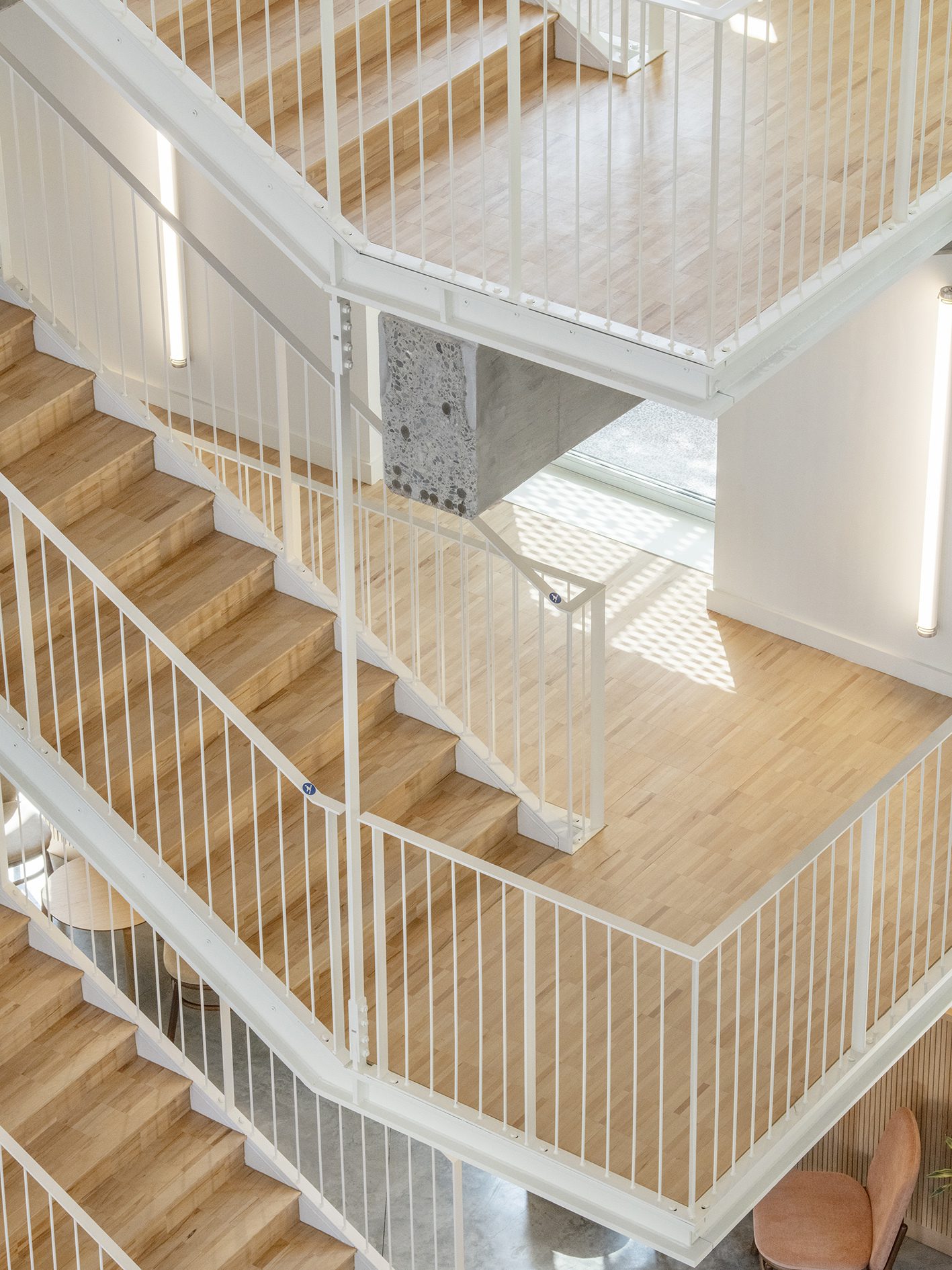
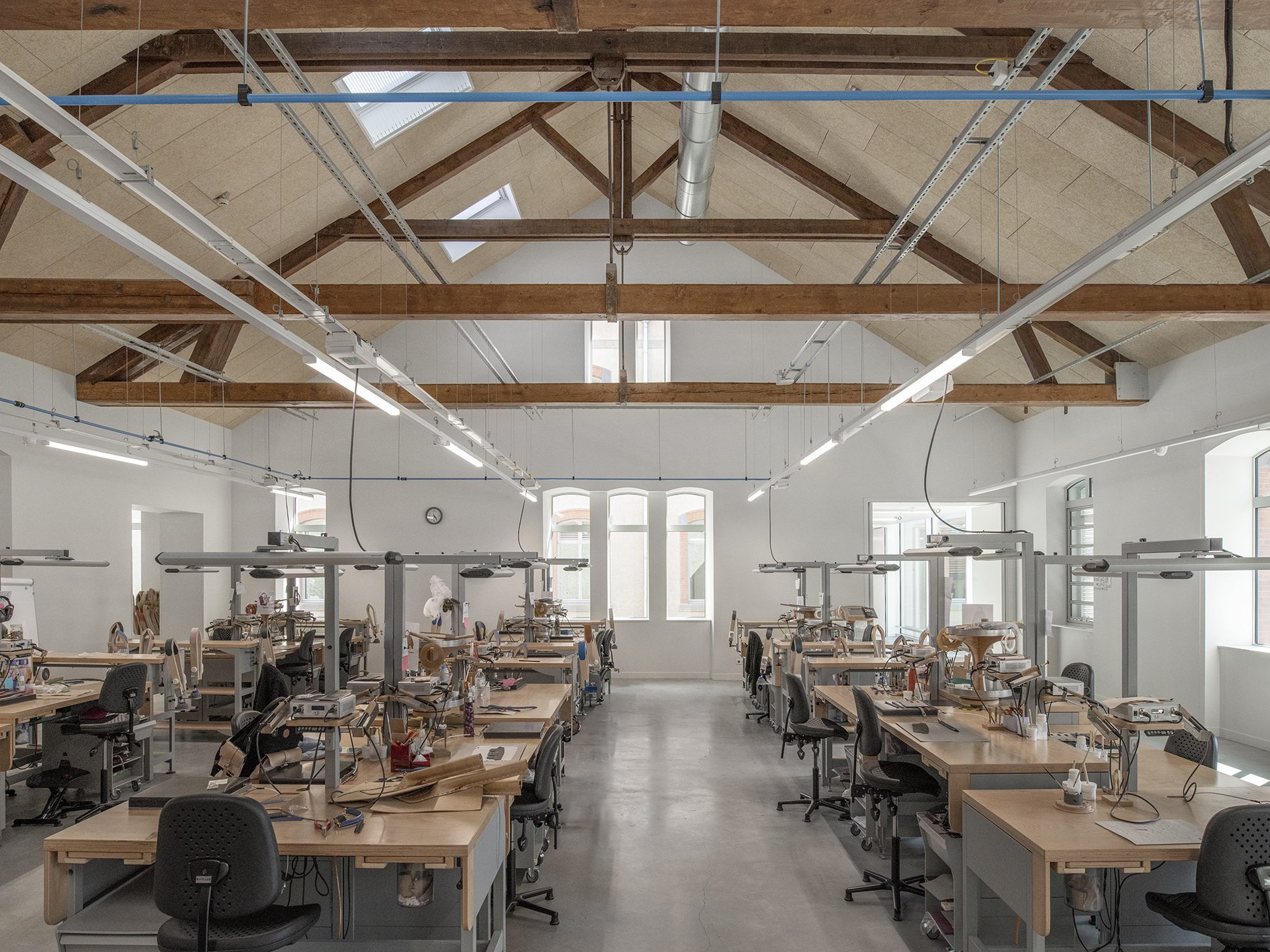
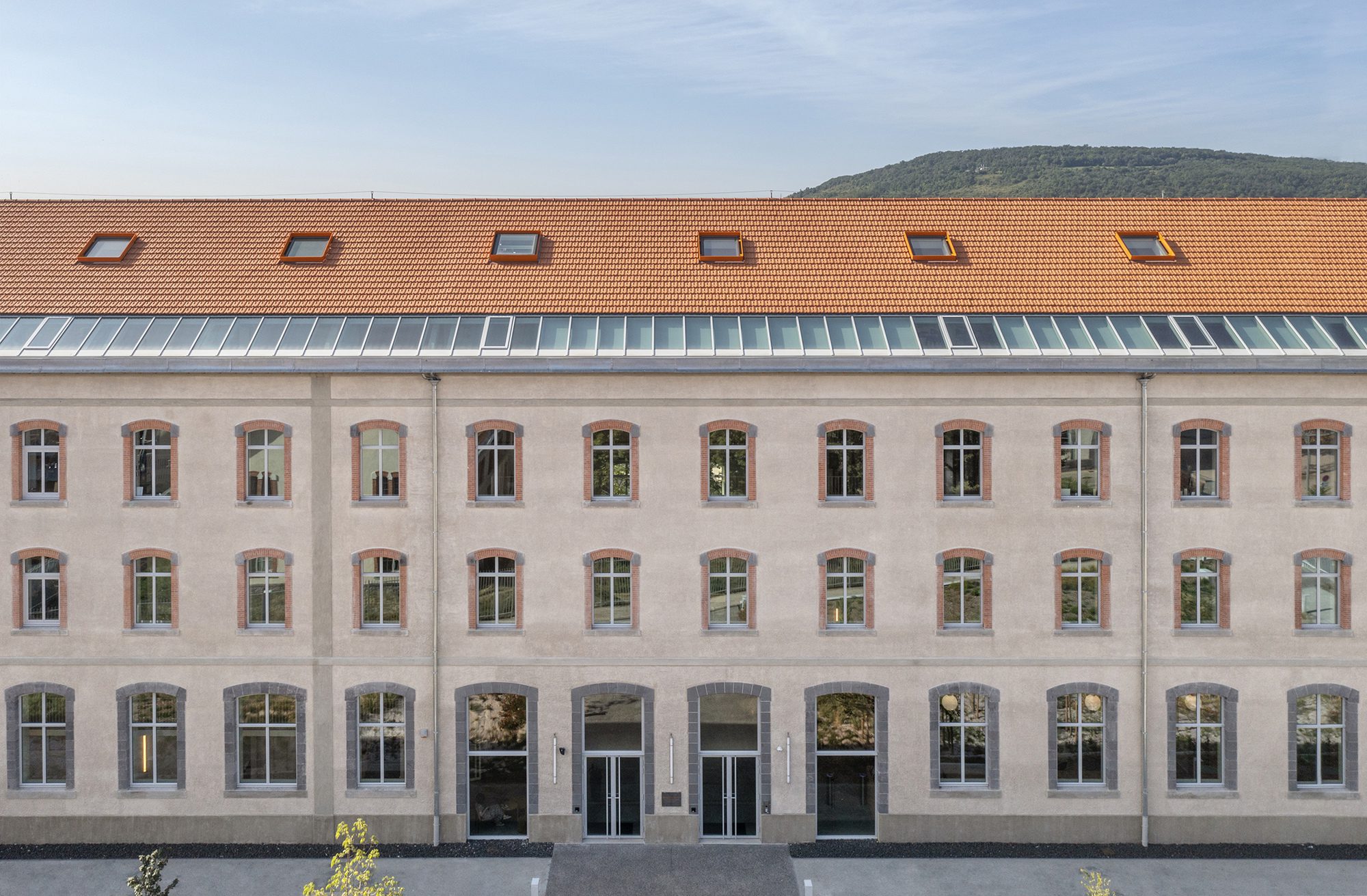
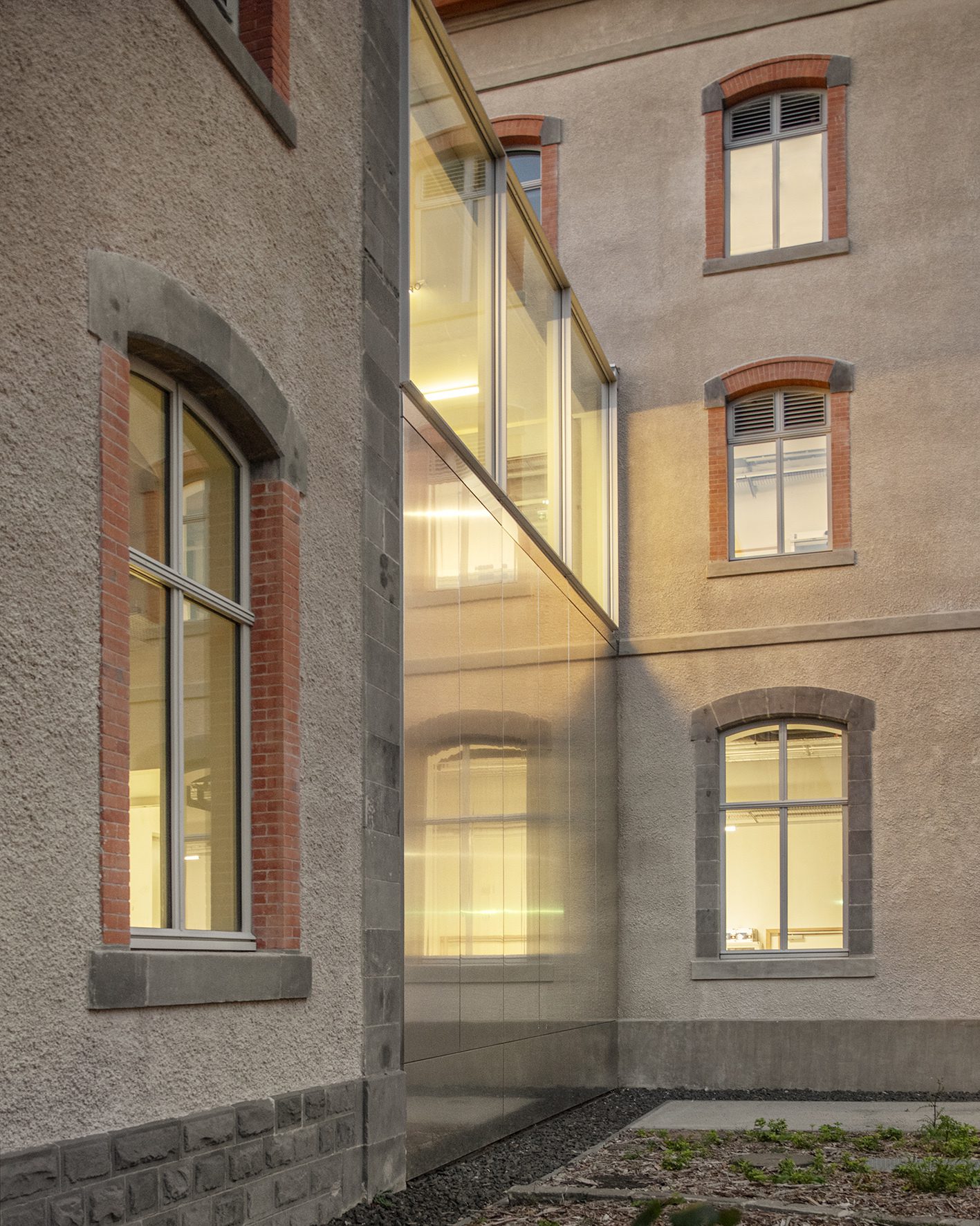
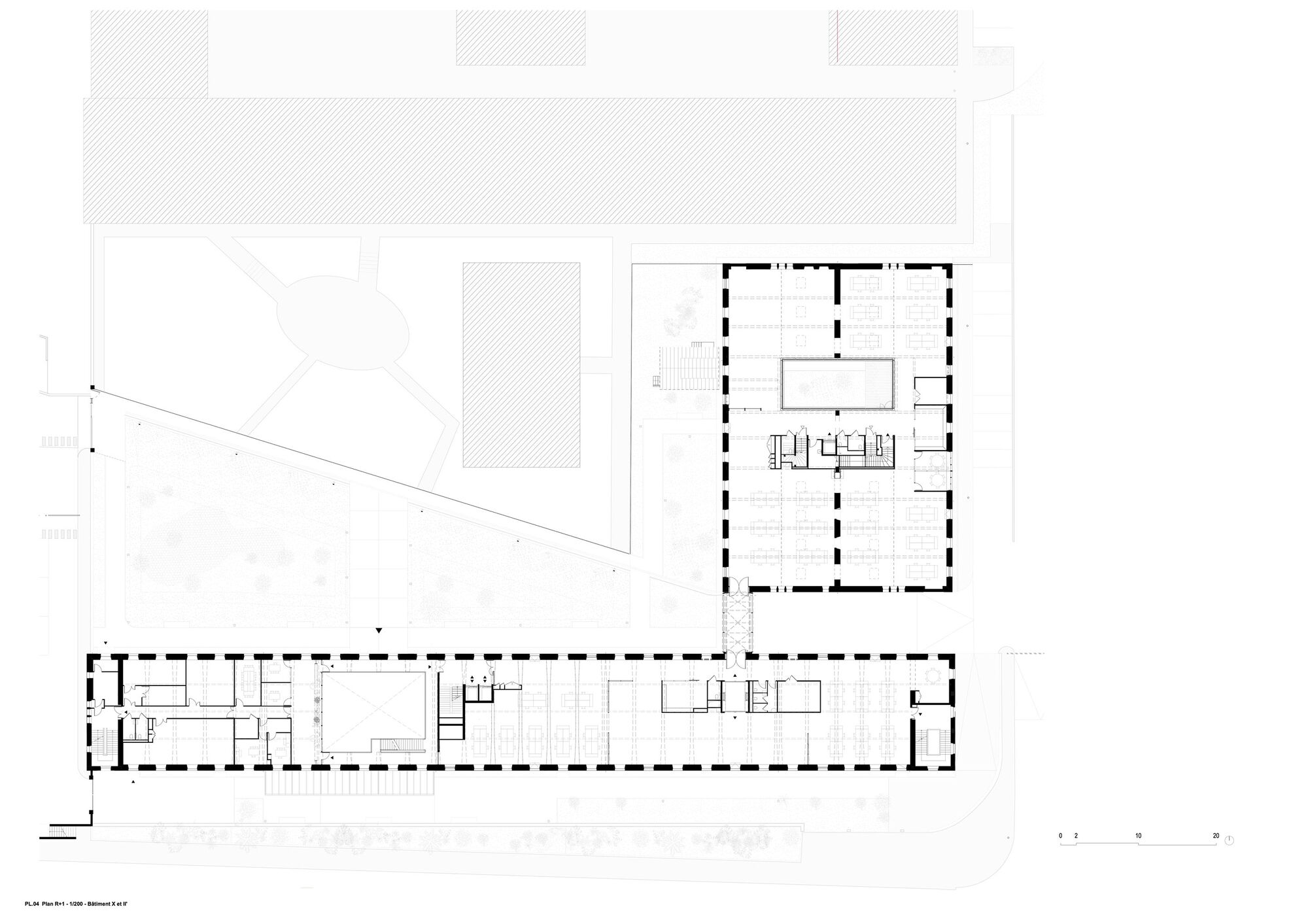
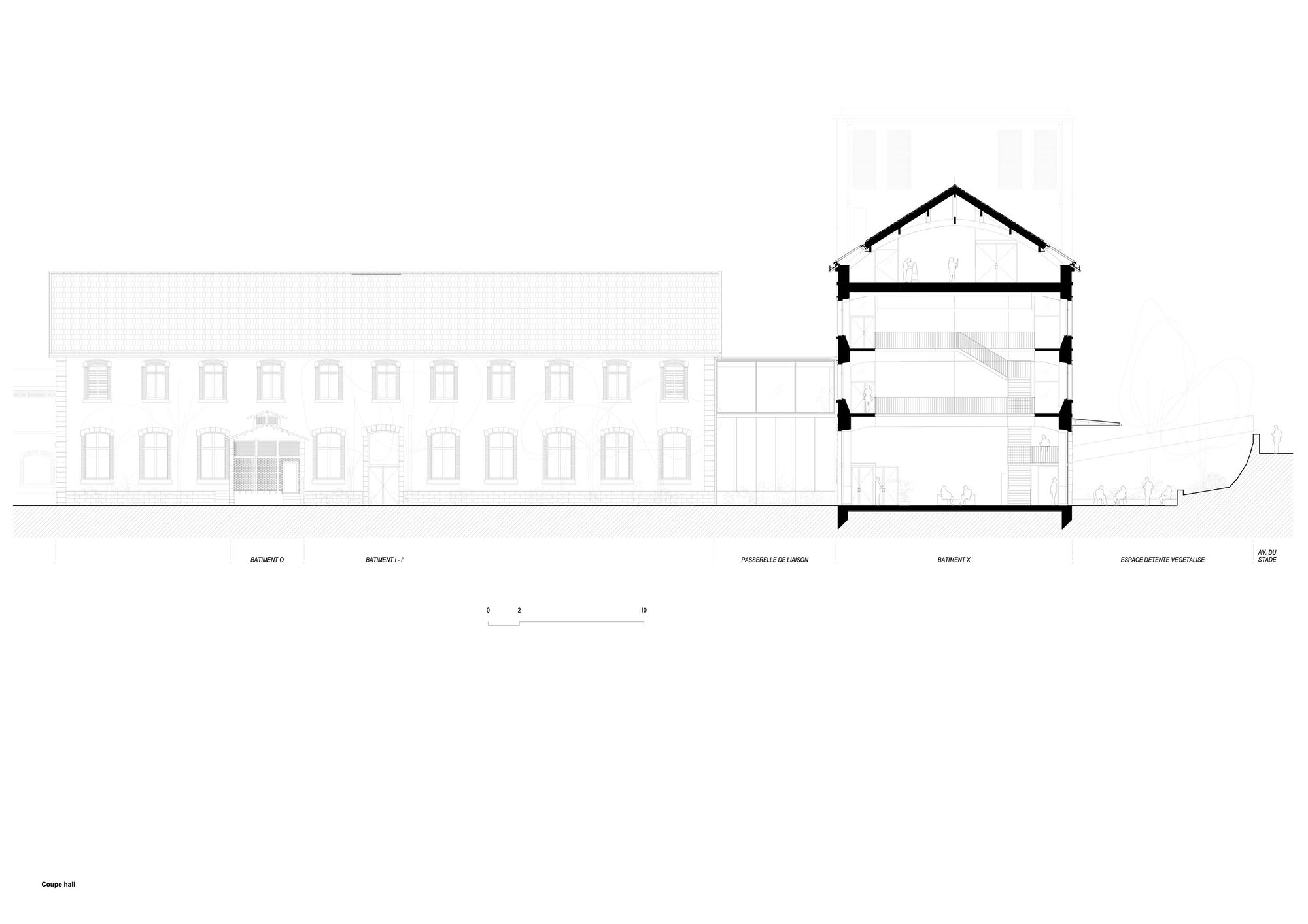
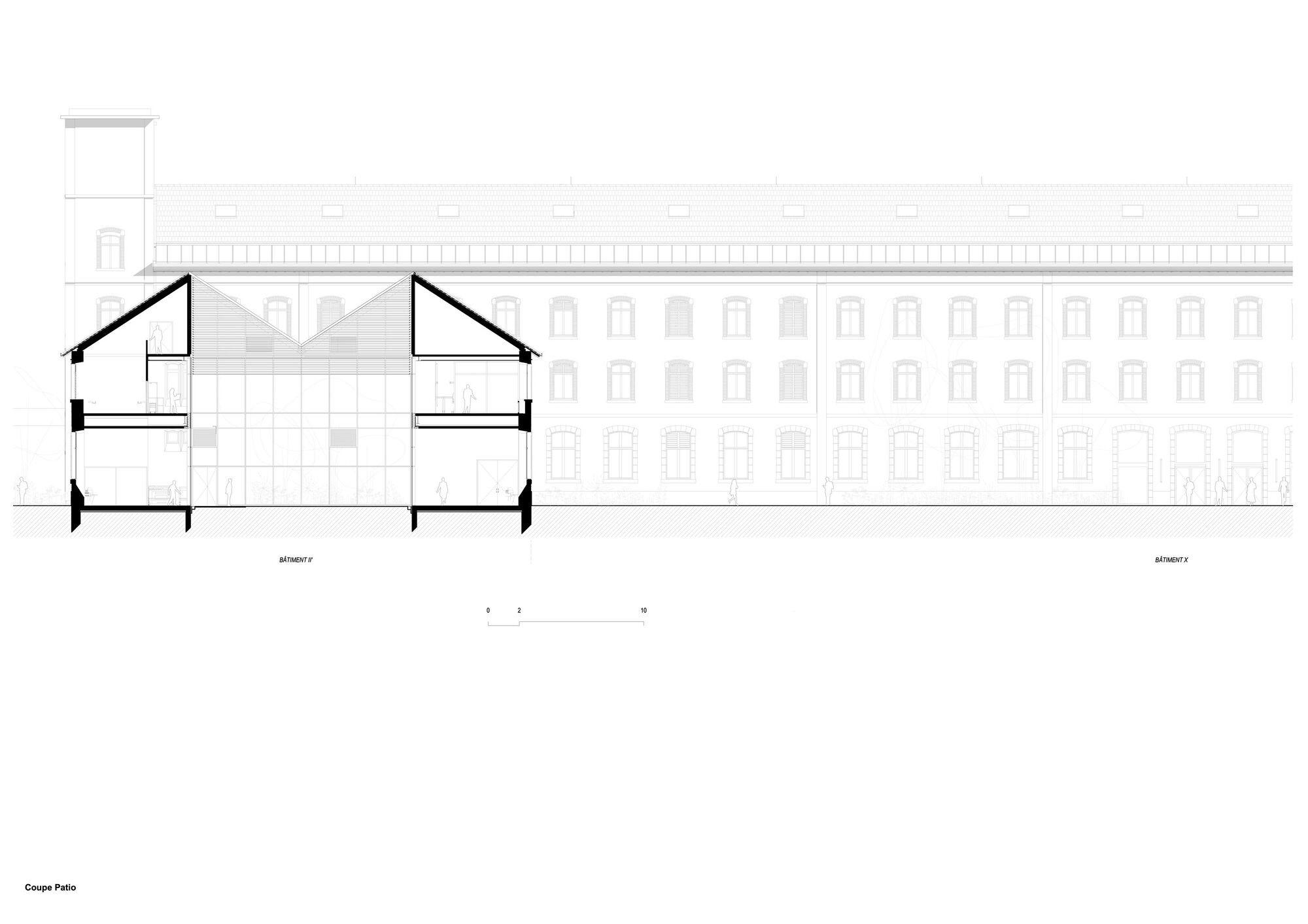
The rehabilitation of the Tobacco Factory preserves and enhances the building’s envelope and roof, which have been listed in the Inventory of Historic Monuments since 2004. The project integrates itself humbly and discreetly within the existing structure. Unlike the group’s usual single-story workshops, this building necessitates a multi-story leather’s manufacture facility. A vertical design approach was therefore adopted to ensure an efficient and effective workflow and connectivity across all spaces. The intervention aims to maintain the site’s manufacturing vocation, preserve exceptional craftsmanship, and revitalize this industrial heritage by adapting it to contemporary production practices: “destroy as little as possible and build as little as possible.”
© Guillaume Amat
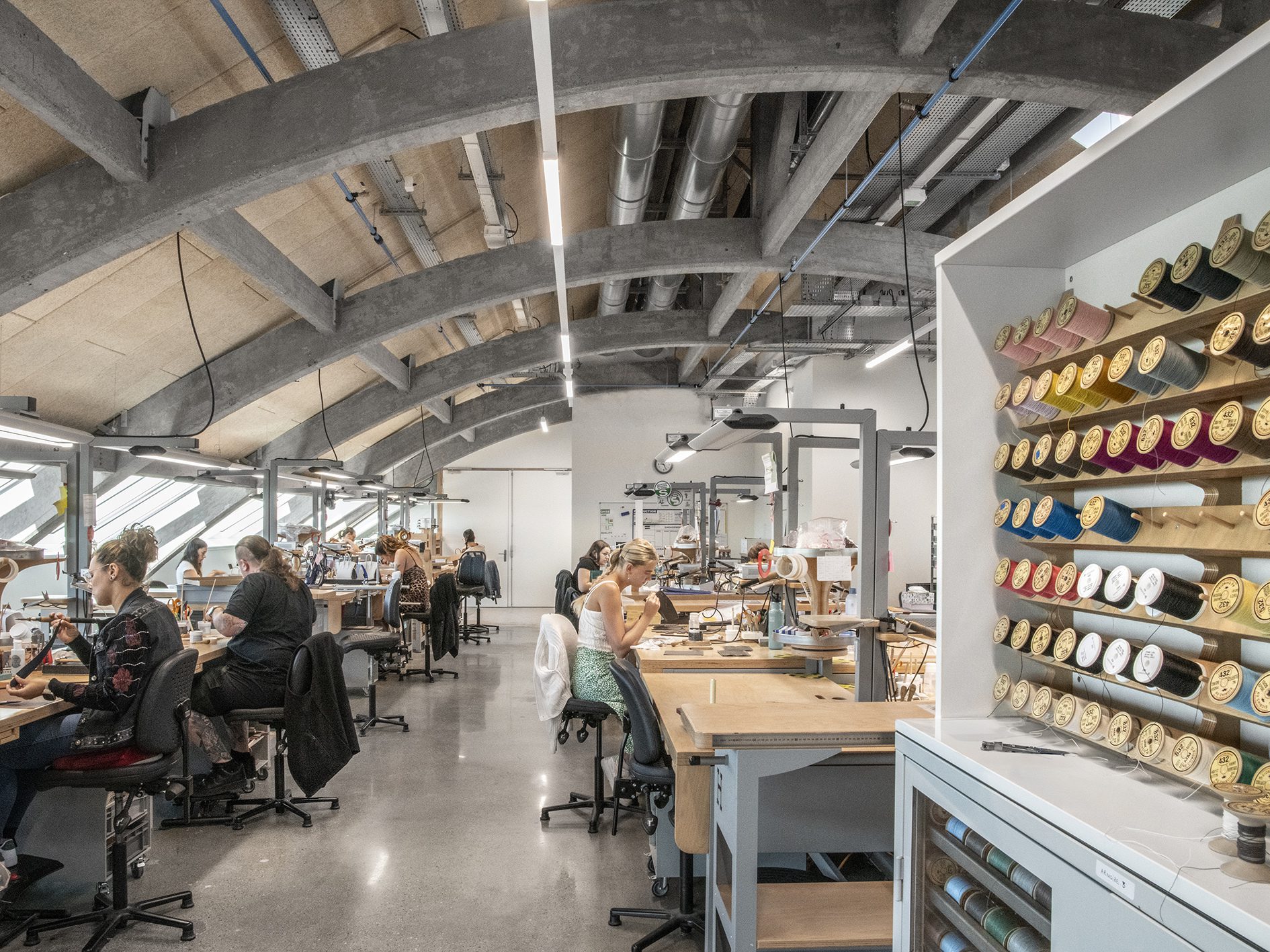
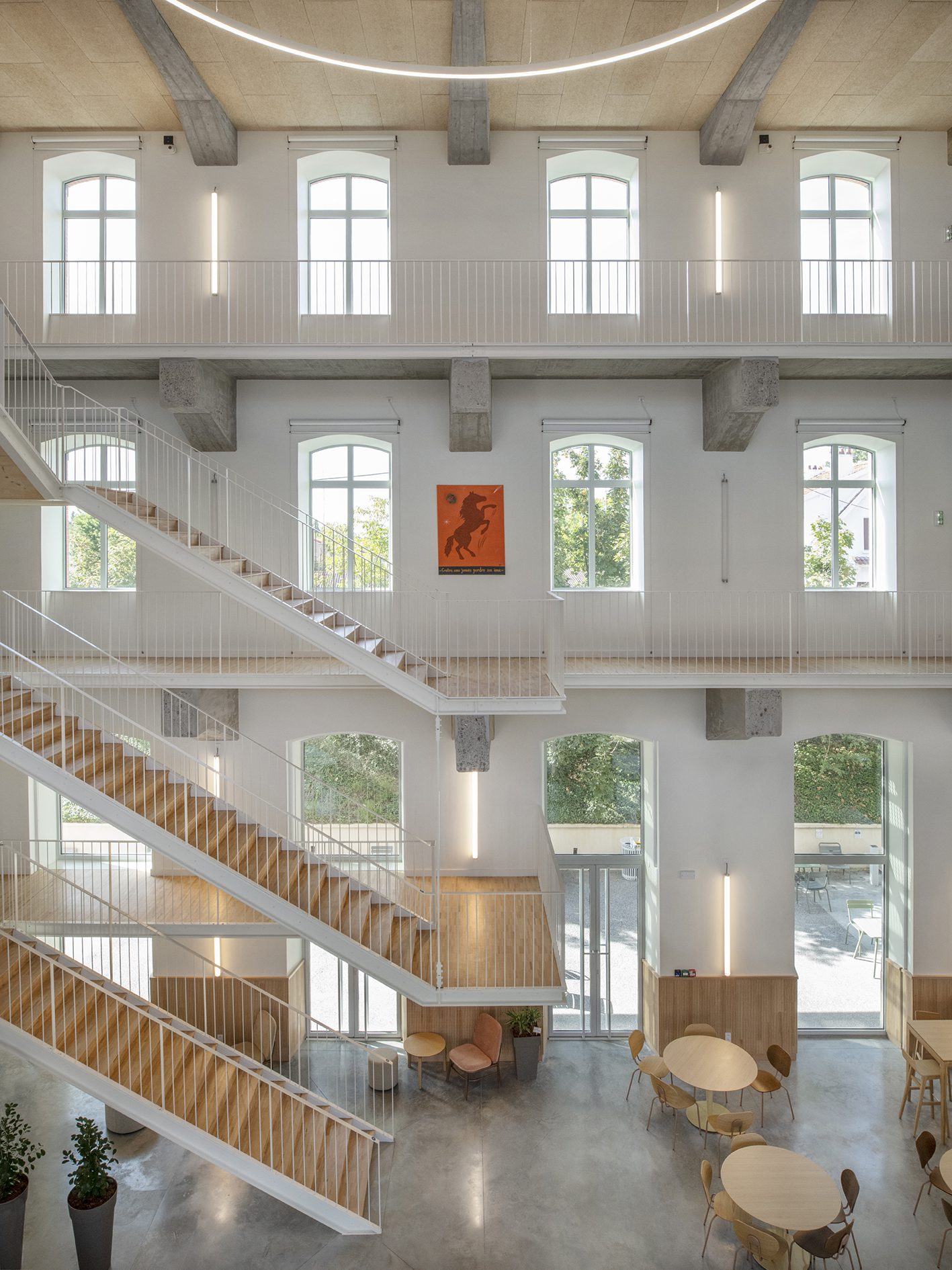
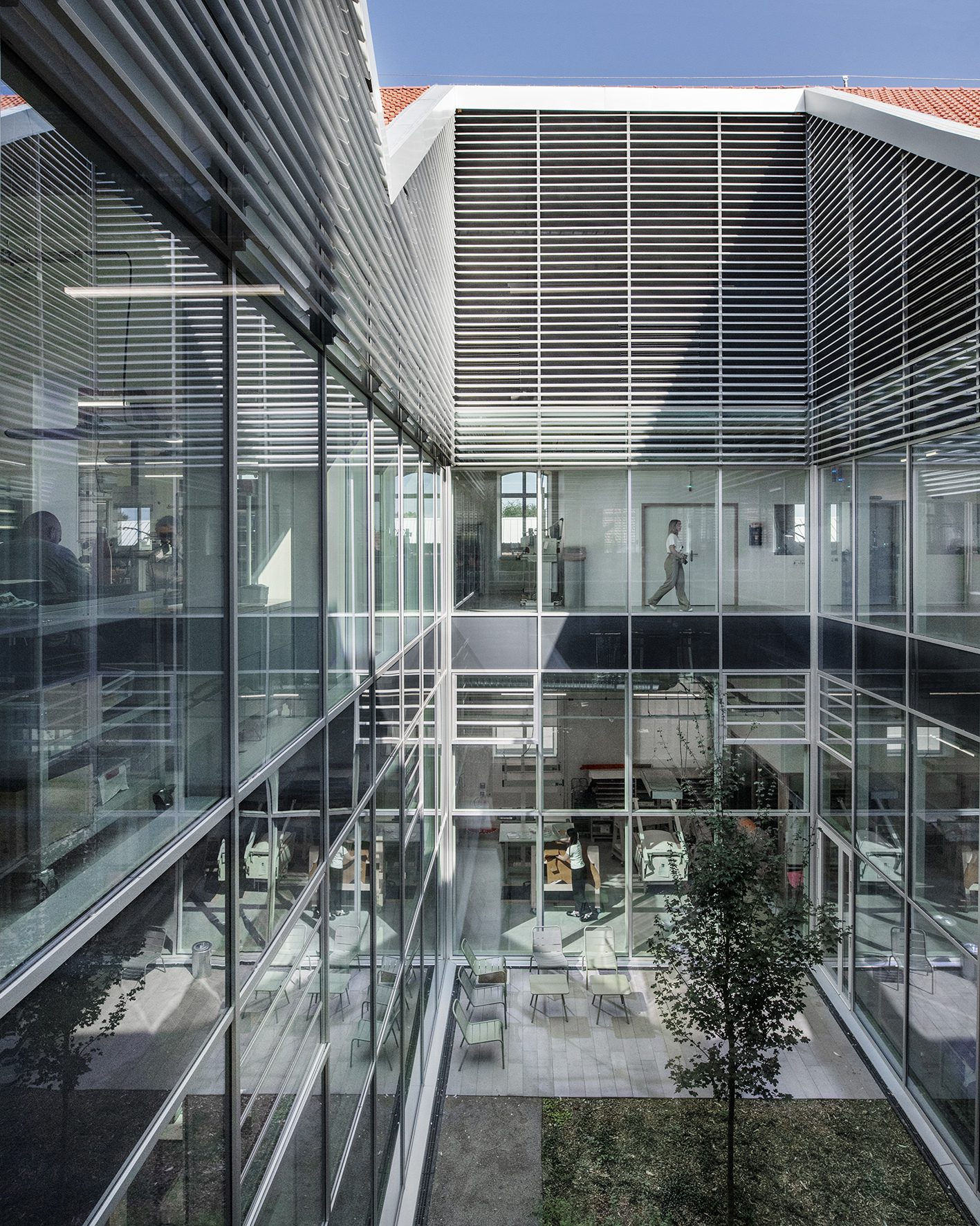
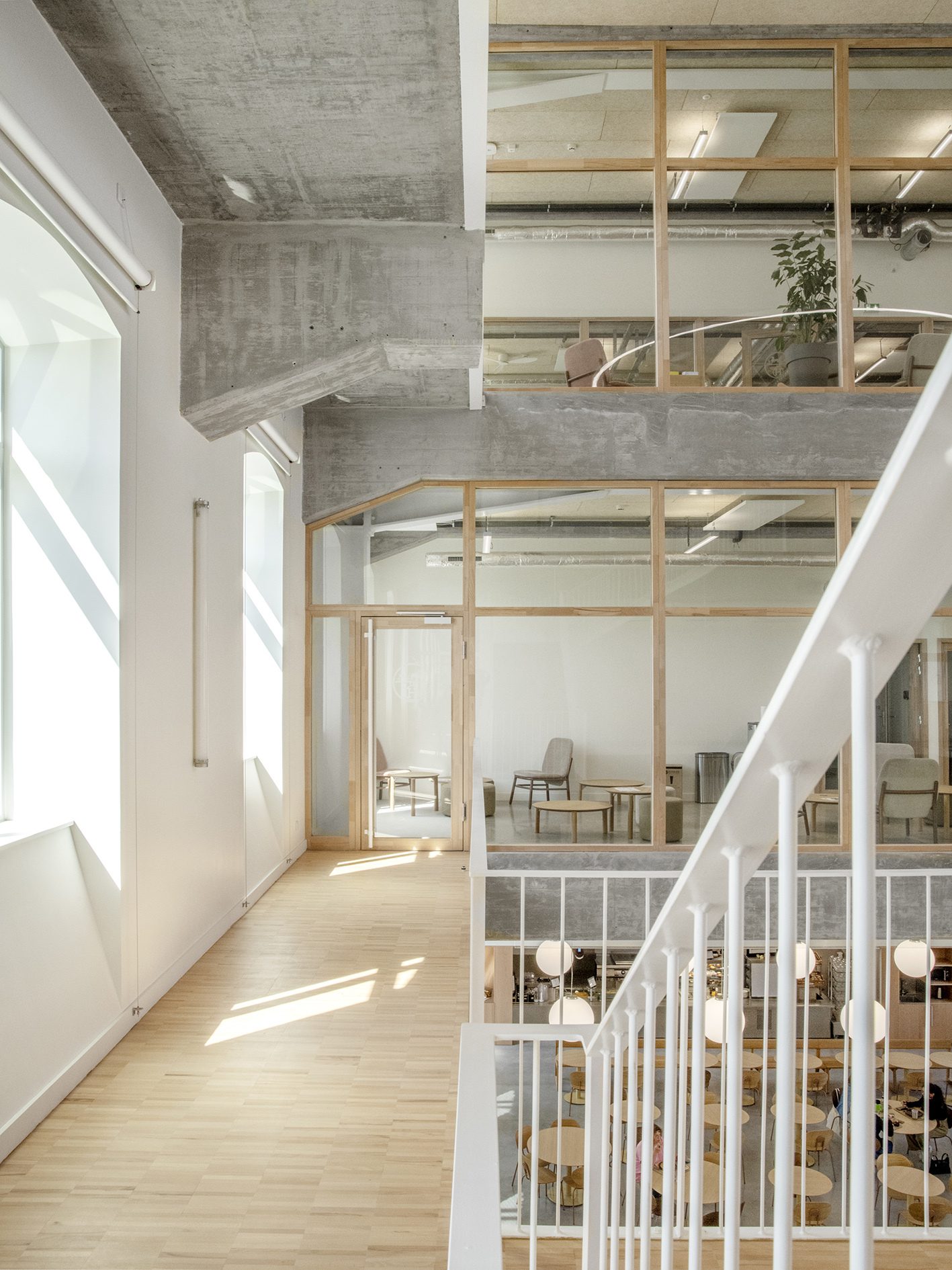
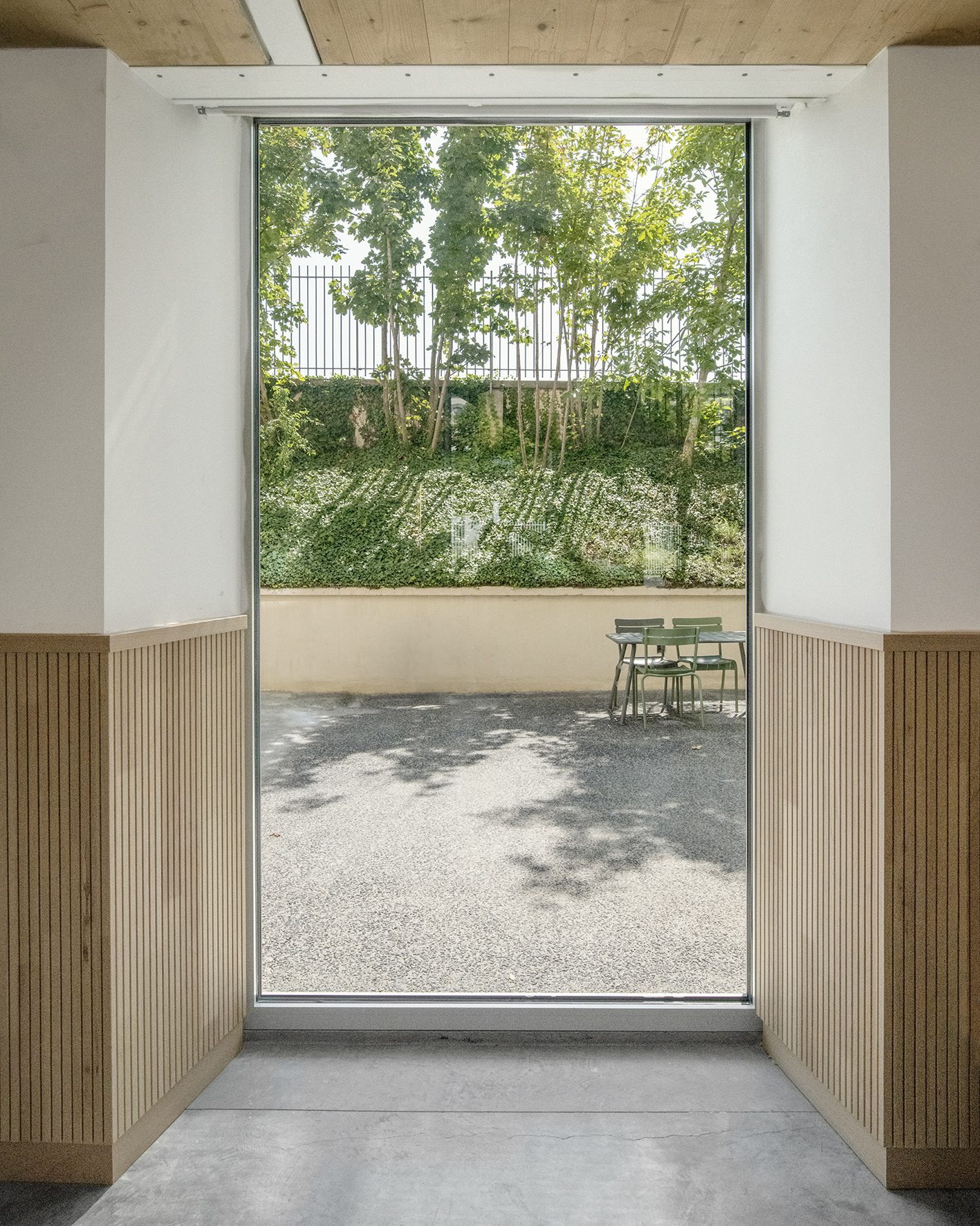
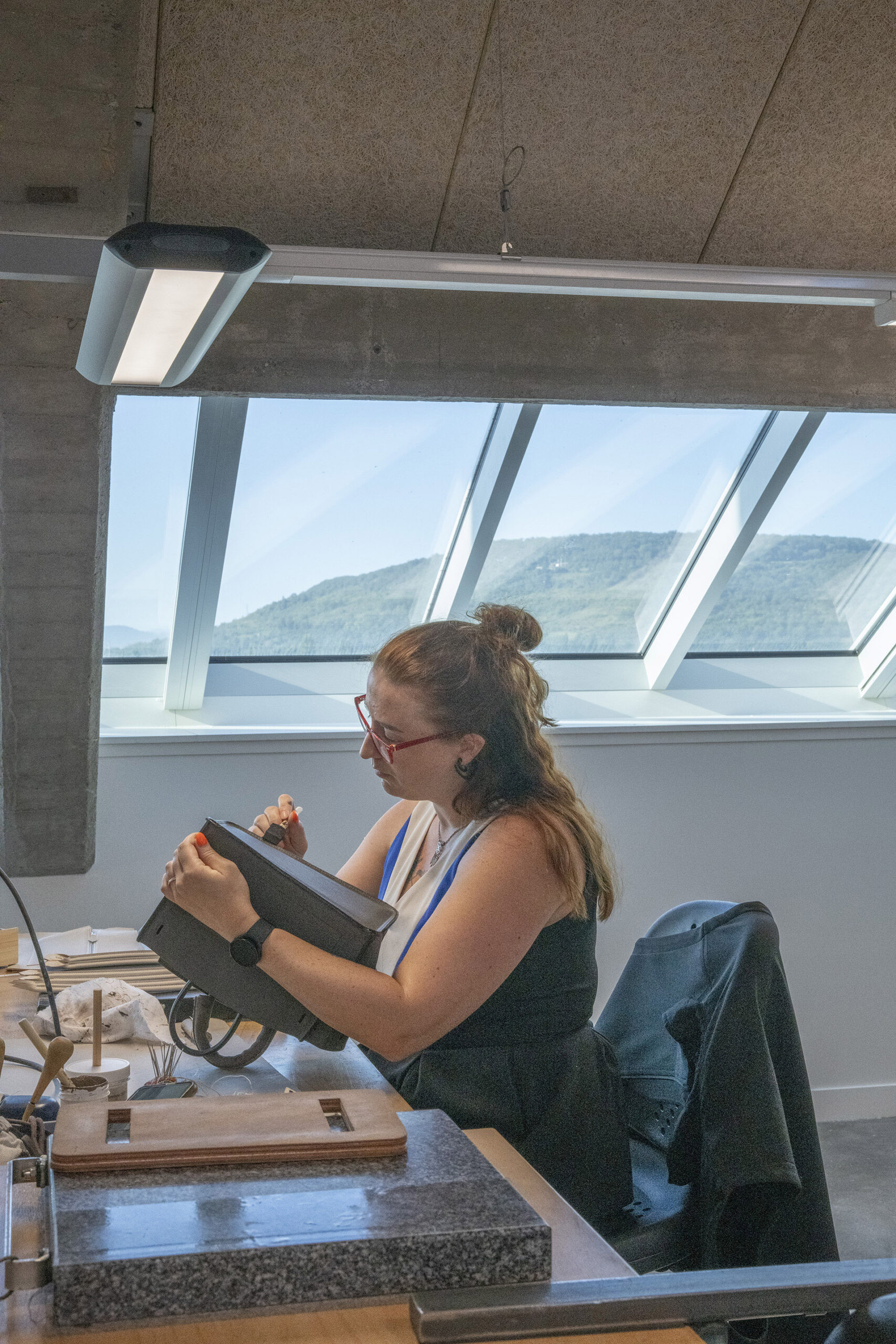
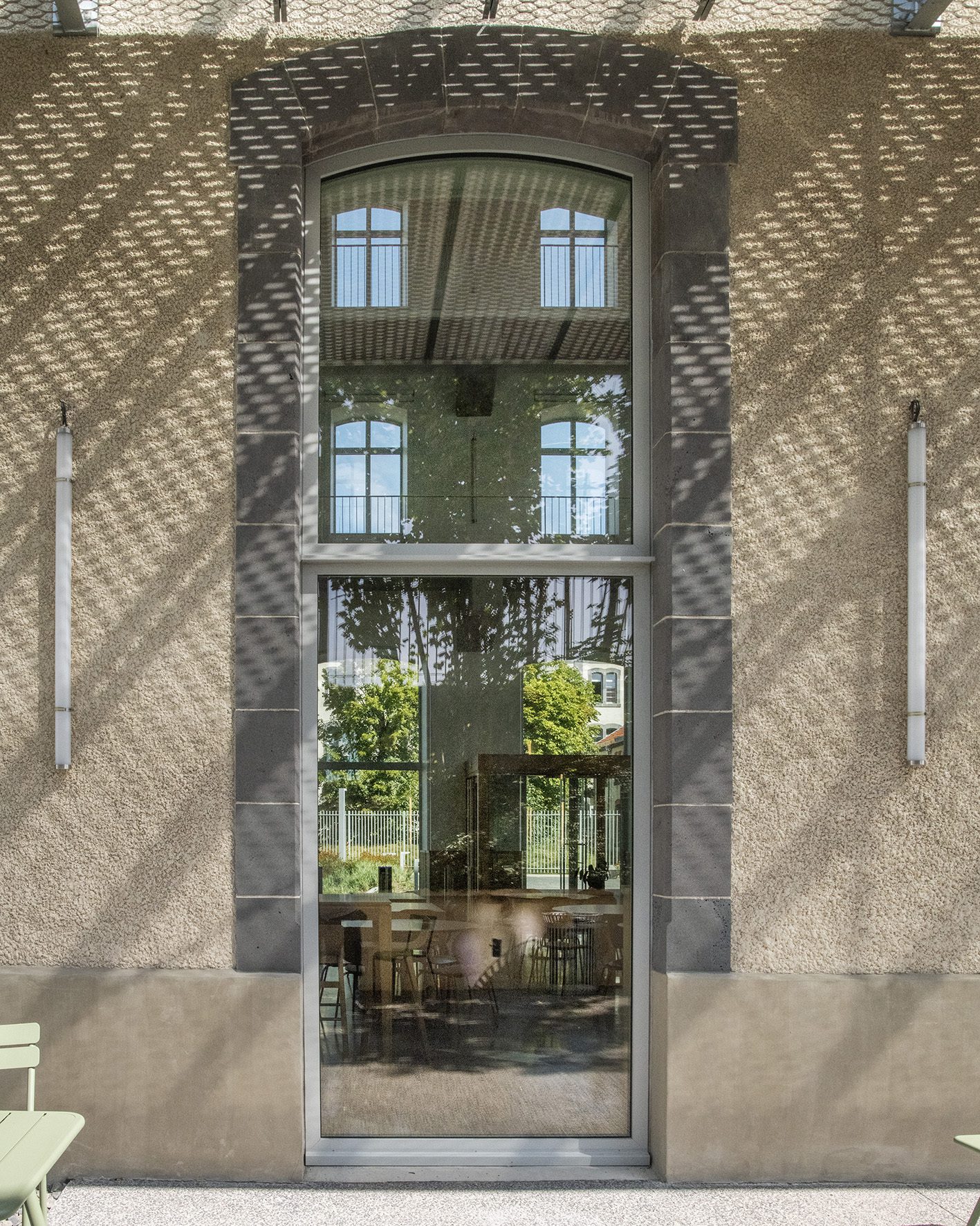
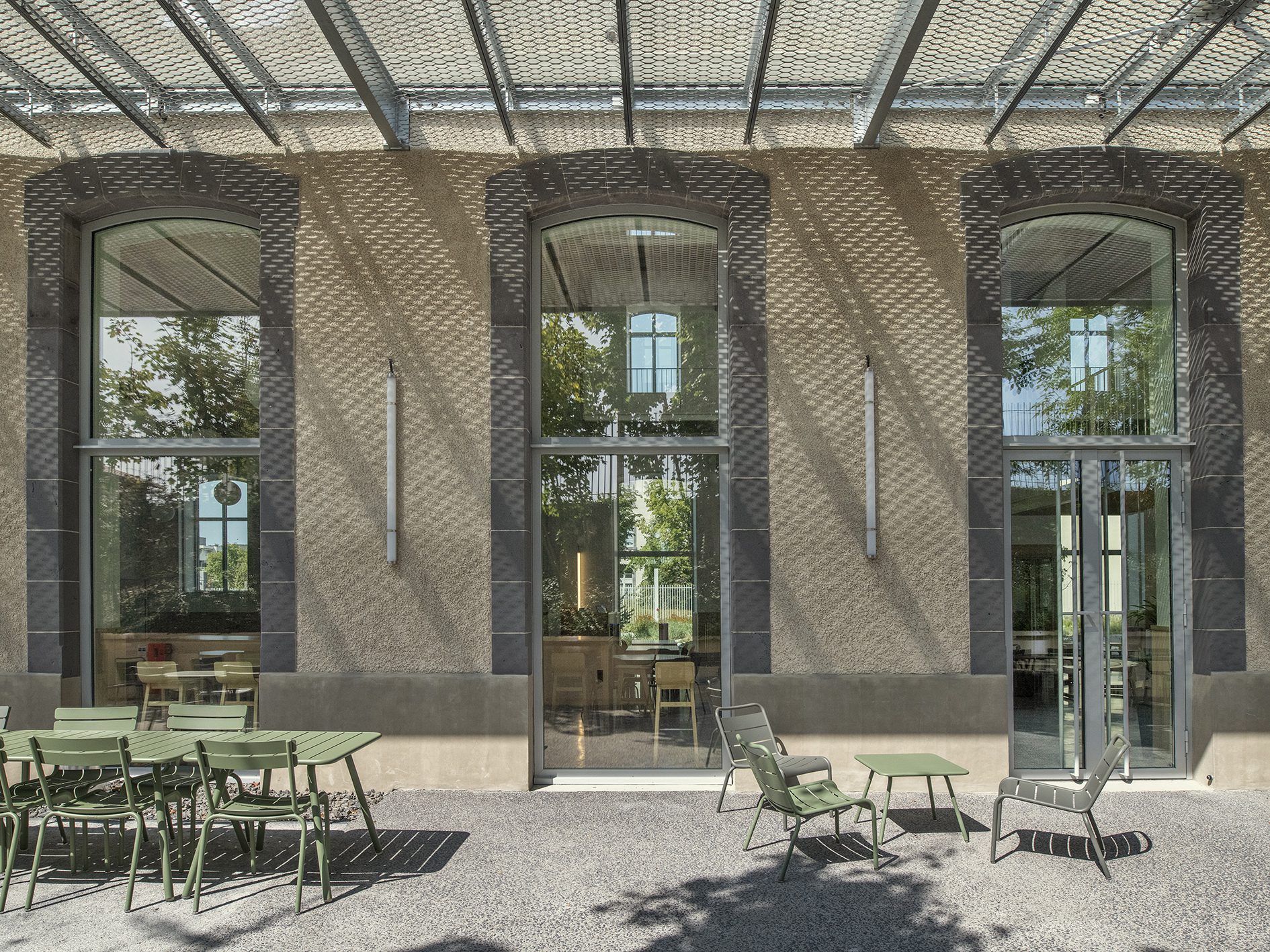
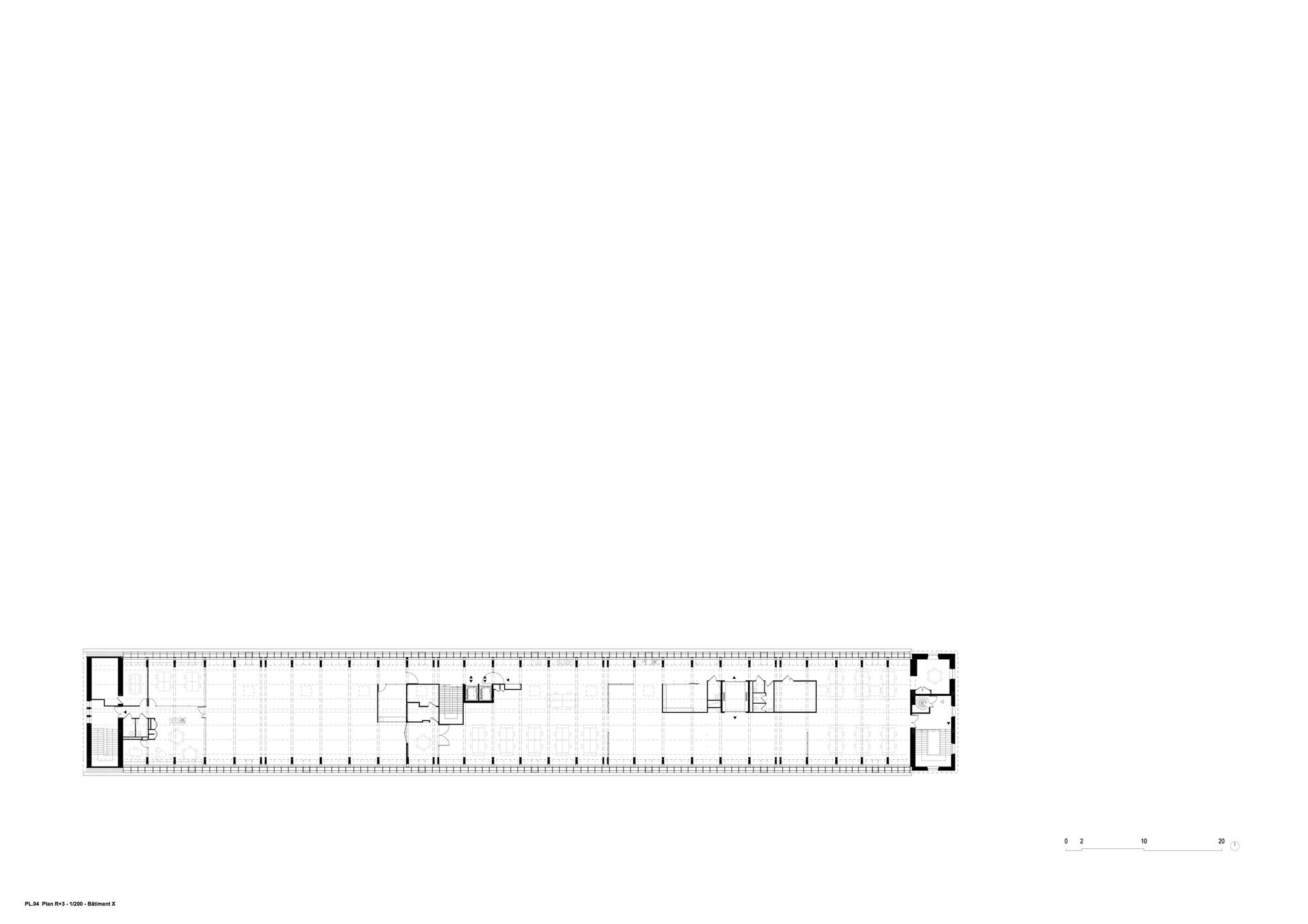
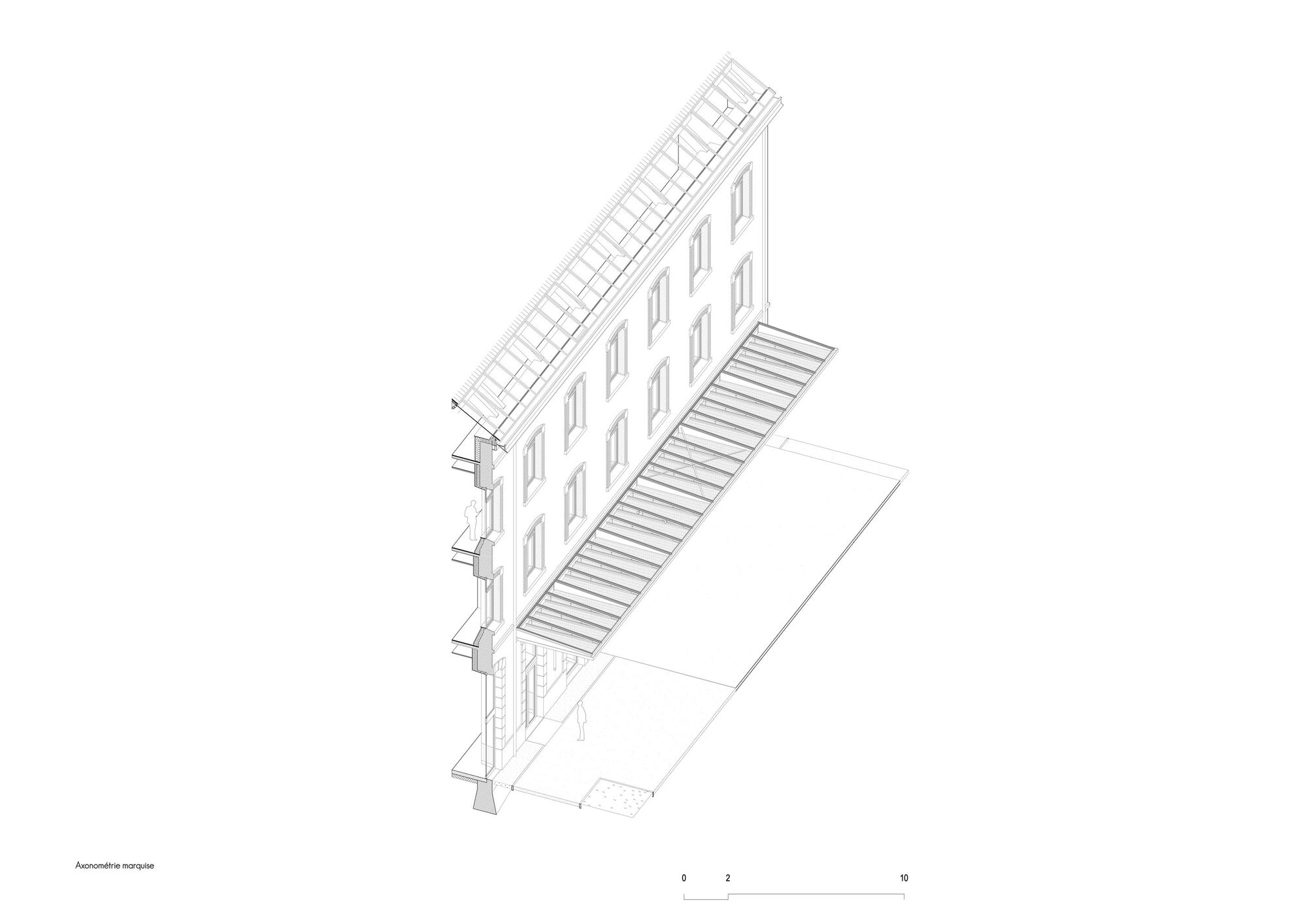
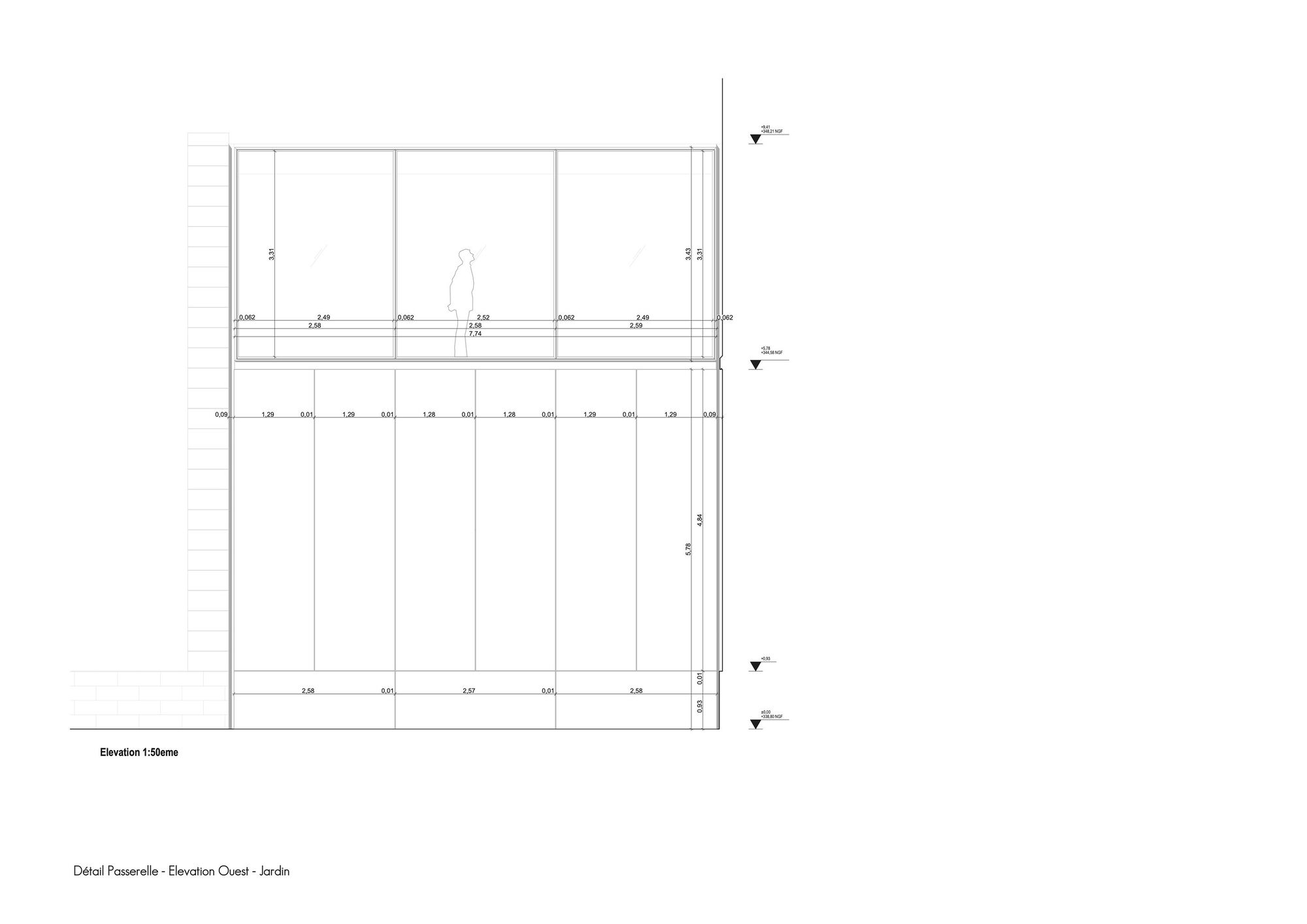
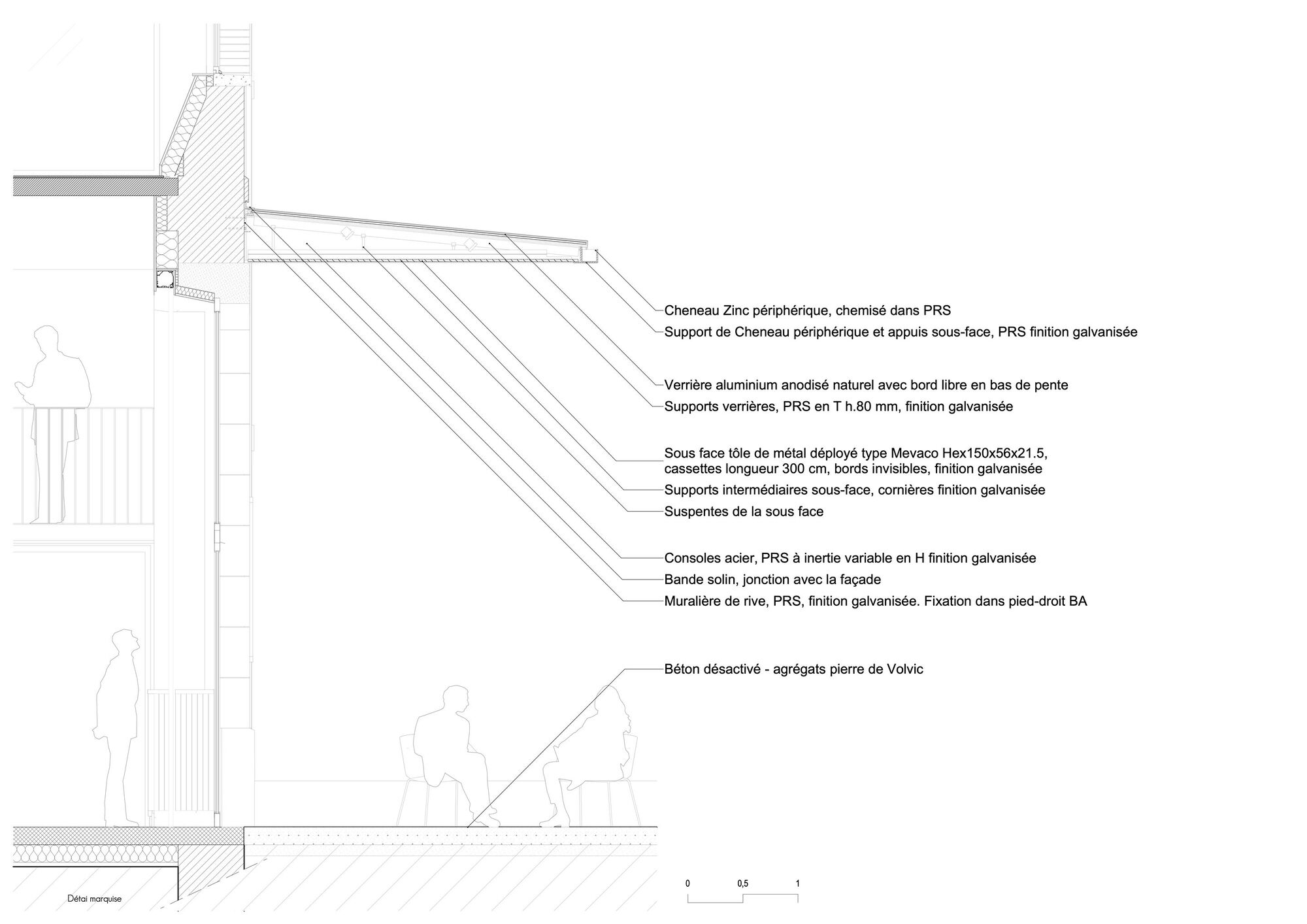
Unsightly additions (such as freight elevators and rooftop exhausts) have been removed, and in keeping with the original roof trusses, some roof sections have been replaced with skylights or an open patio, bringing natural light into the heart of the workshops. The new entrance is marked by grand openings that extend the existing ones. Additionally, a fully glazed footbridge now connects the first floors of the two buildings. Finally, to make use of the attic space with its magnificent curved concrete framework, skylights integrated into the sloping roof provide illumination for the workspaces.
© Guillaume Amat
By repurposing an existing building, the project significantly reduces its carbon footprint. The use of bio-based materials (wooden structures, hemp insulation) aligns with traditional construction methods while minimizing ecological impact (natural ventilation). Furthermore, the landscaping project creates a green setting for the site, incorporating rainwater retention strategies and highlighting a selection of local plant species.
Project Info
Architects: TRACKS
Country: France
Area: 7950 m²
Year: 2024
Photographs: Guillaume Amat
Client: Les Manifectures d’Auvergne: Hermès Immobilier
Heritage Architect: ABDPA
Kitchen Designer: BEGC
Fluid Engineer: Barbanel
Economist: BMF
High Environmental Quality: Tribu

Madeline Brooks is a Projects Editor at Arch2O, where she has been shaping and refining architectural content since March 2024. With over a decade of experience in editorial work, she has curated, revised, and published an array of projects covering architecture, urbanism, and public space design. A graduate of the Harvard University Graduate School of Design, Madeline brings a strong academic foundation and a discerning editorial eye to each piece she oversees. Since joining Arch2O, she has played a pivotal role in shaping the platform’s editorial direction, with a focus on sustainability, social relevance, and cutting-edge design. Madeline excels at translating complex architectural ideas into clear, engaging stories that resonate with both industry professionals and general readers. She works closely with architects, designers, and global contributors to ensure every project is presented with clarity, depth, and compelling visual narrative. Her editorial leadership continues to elevate Arch2O’s role in global architectural dialogue.