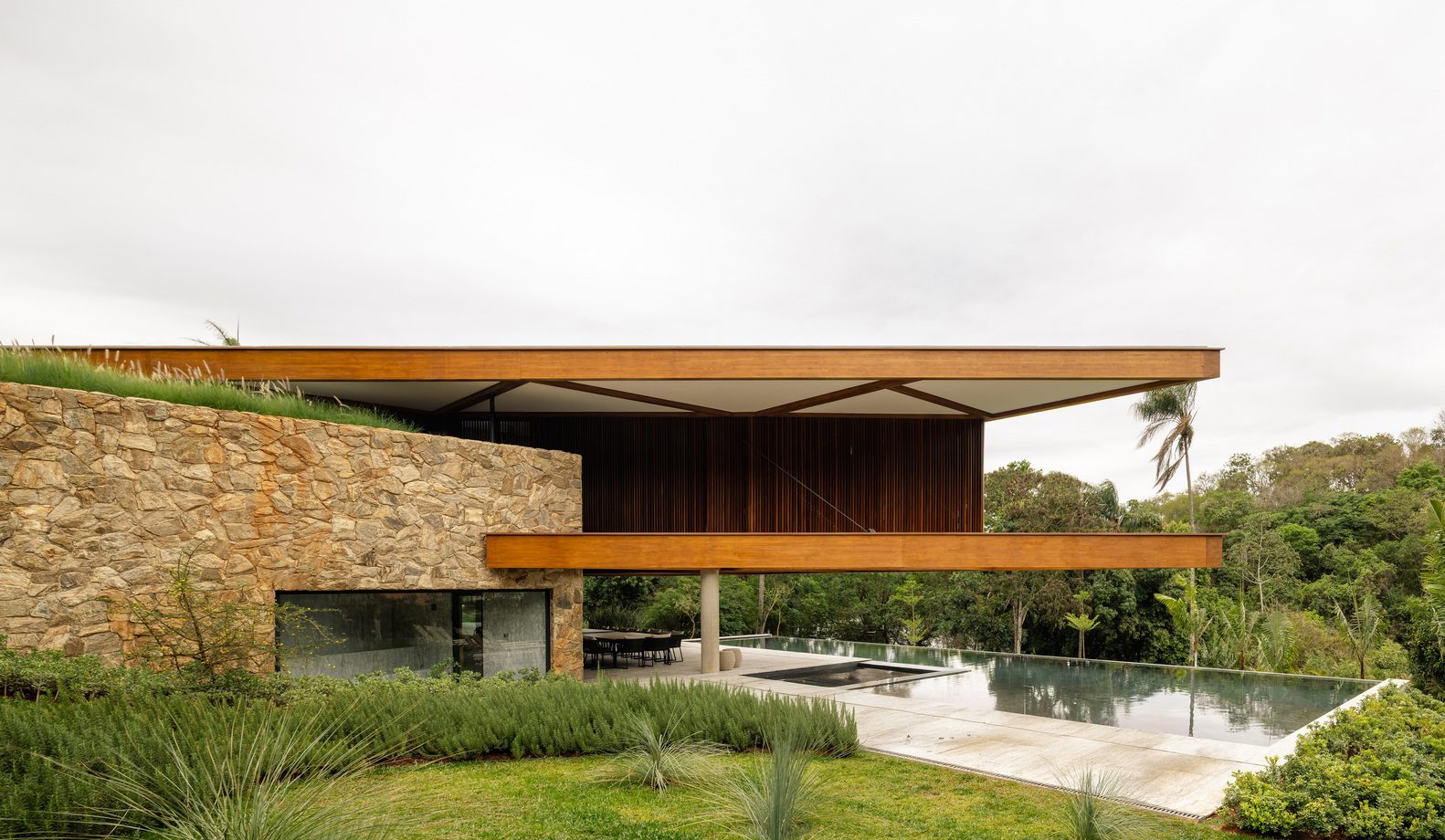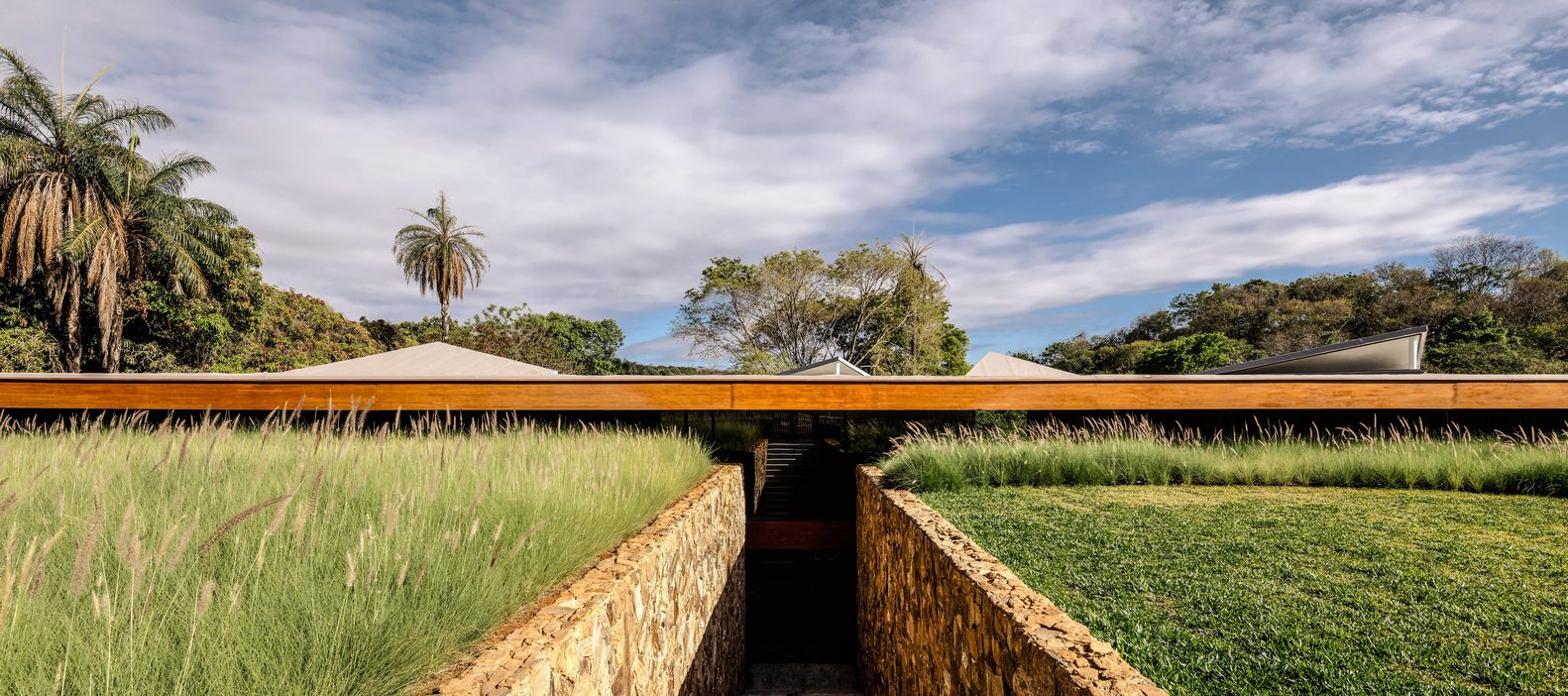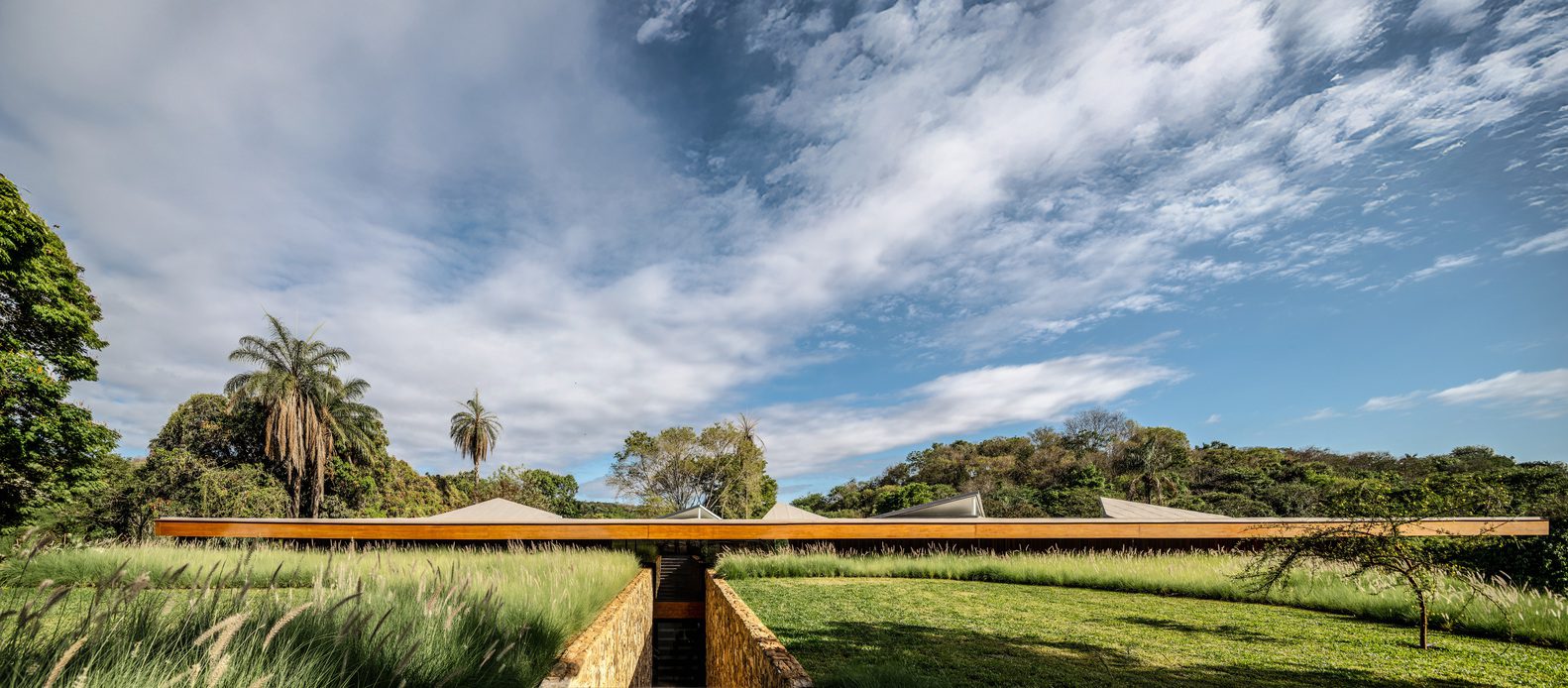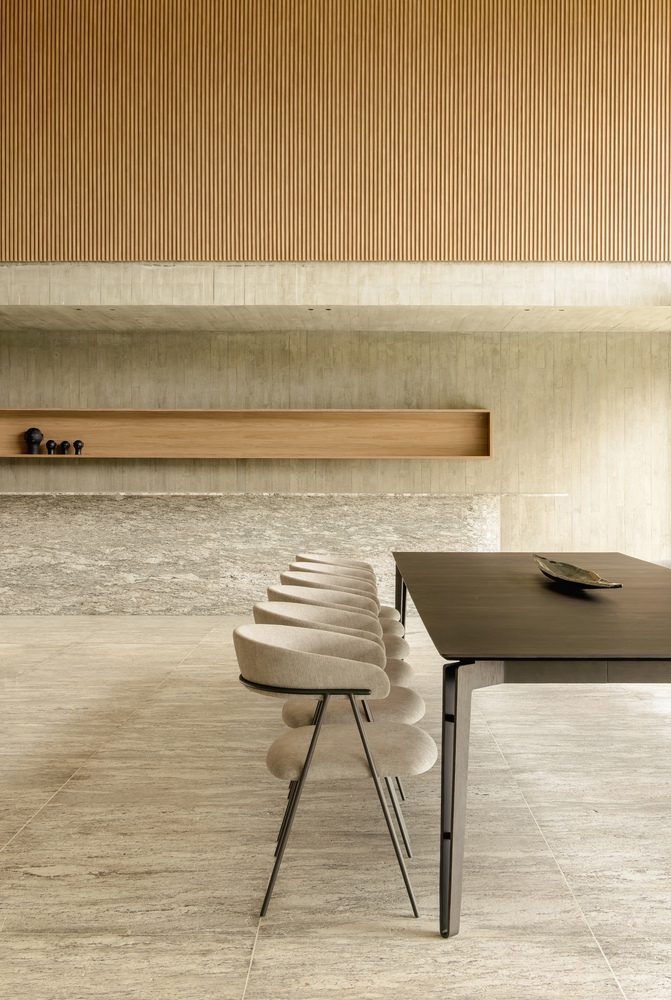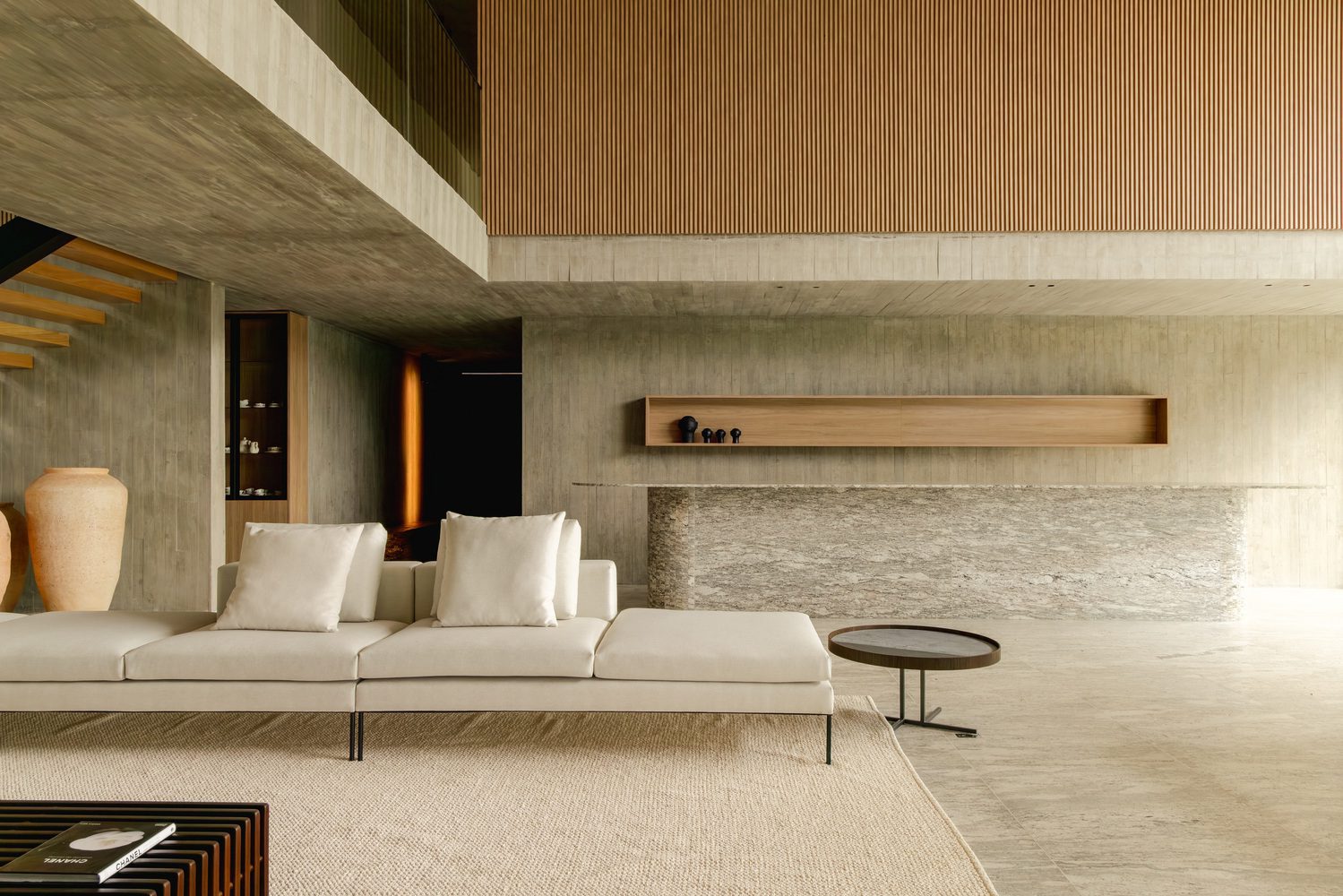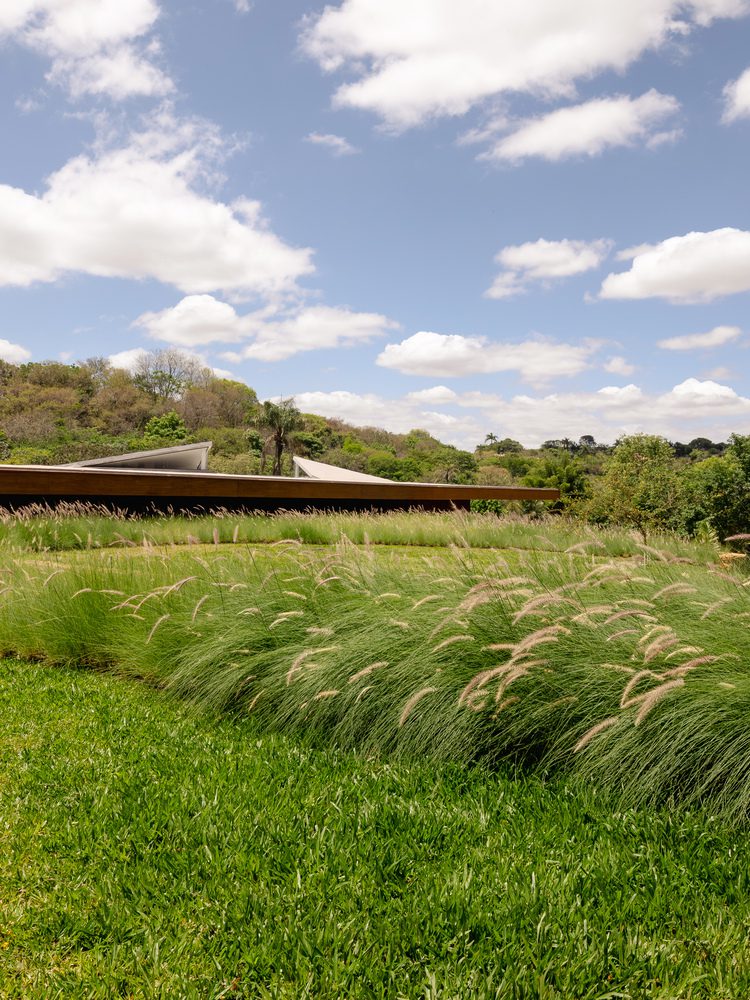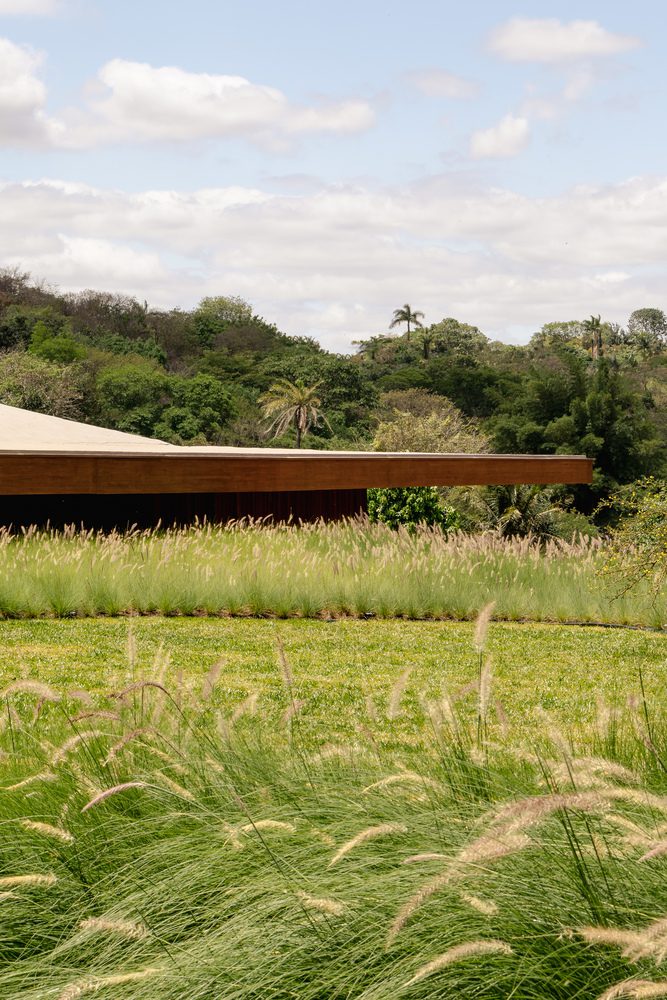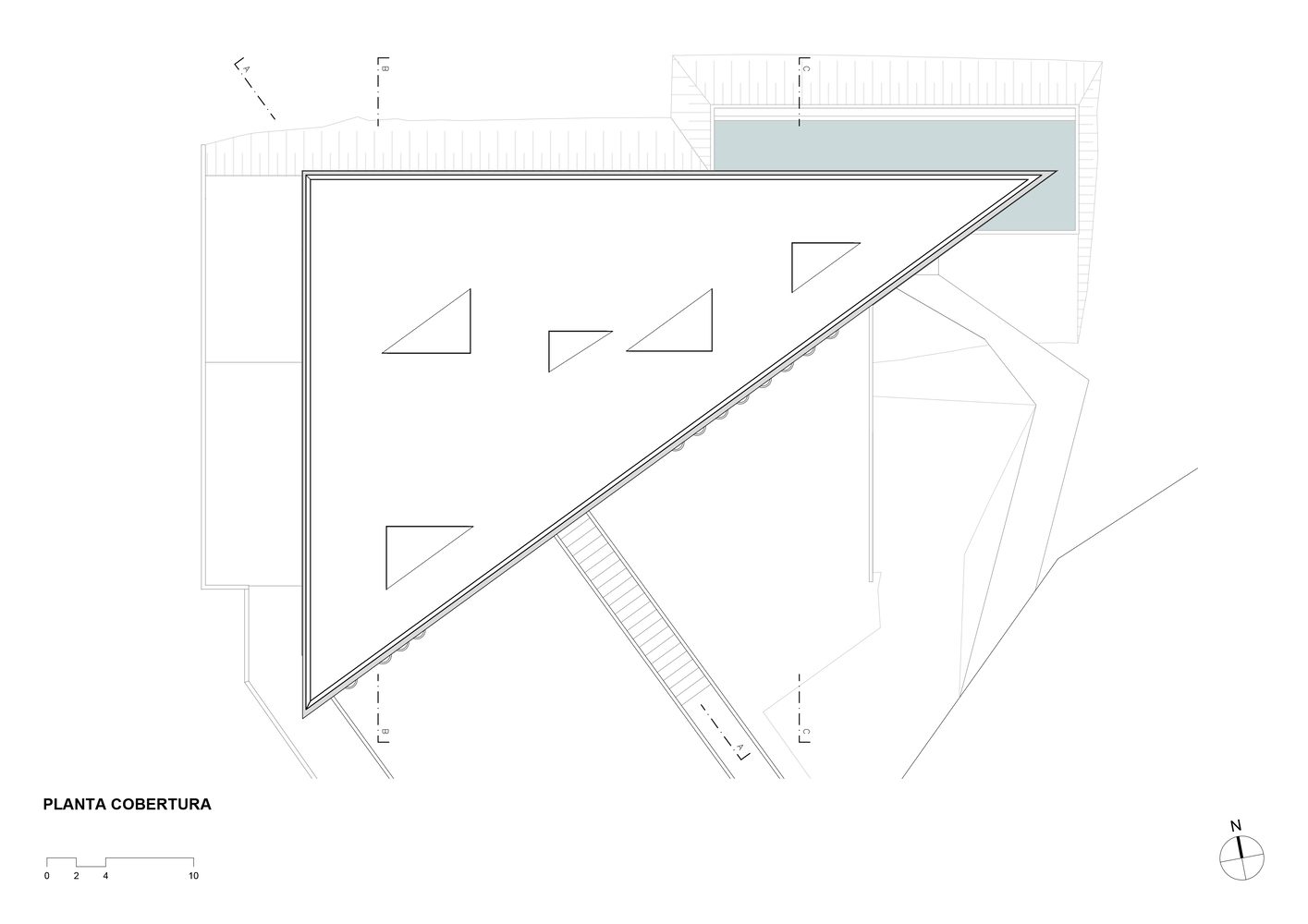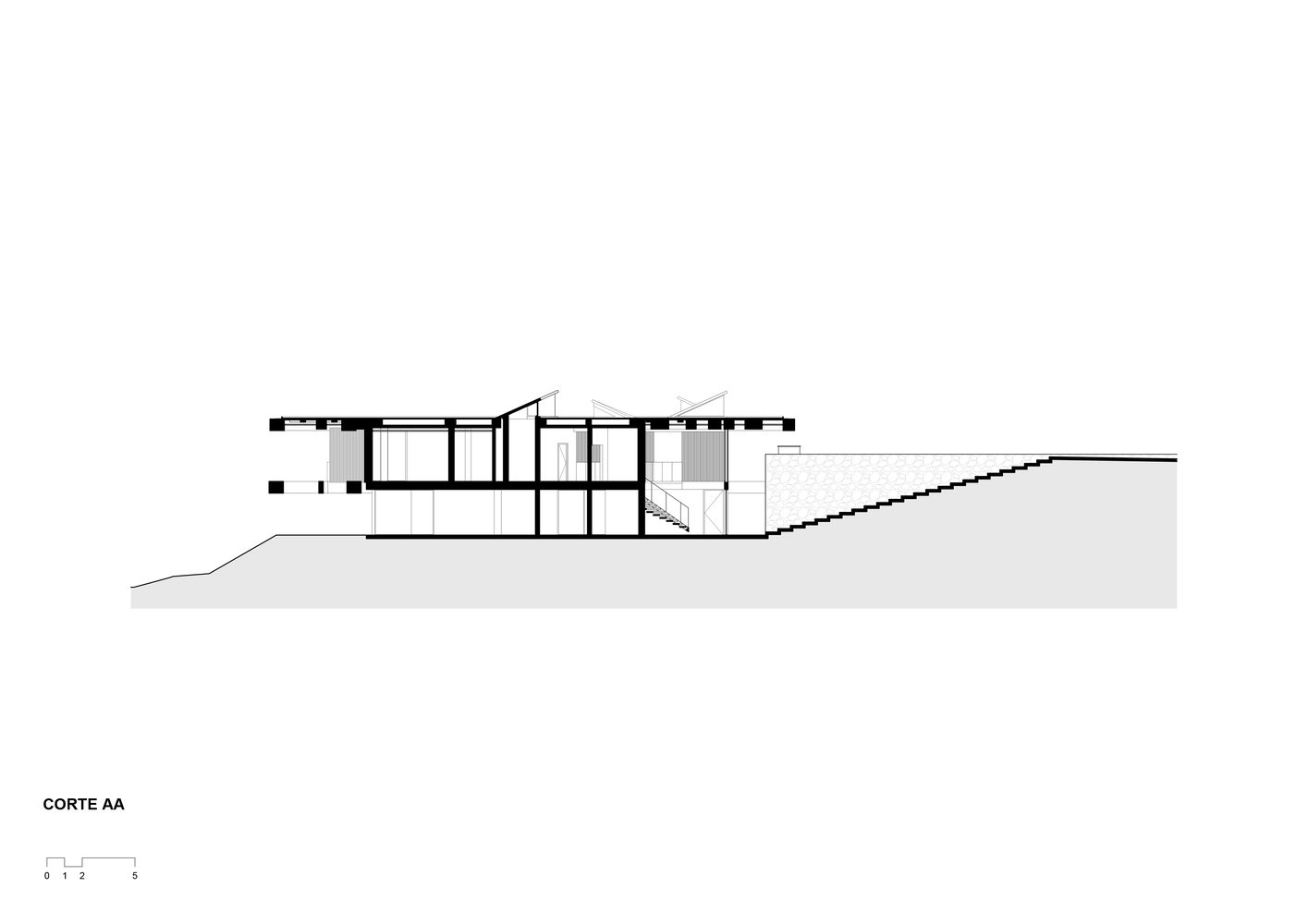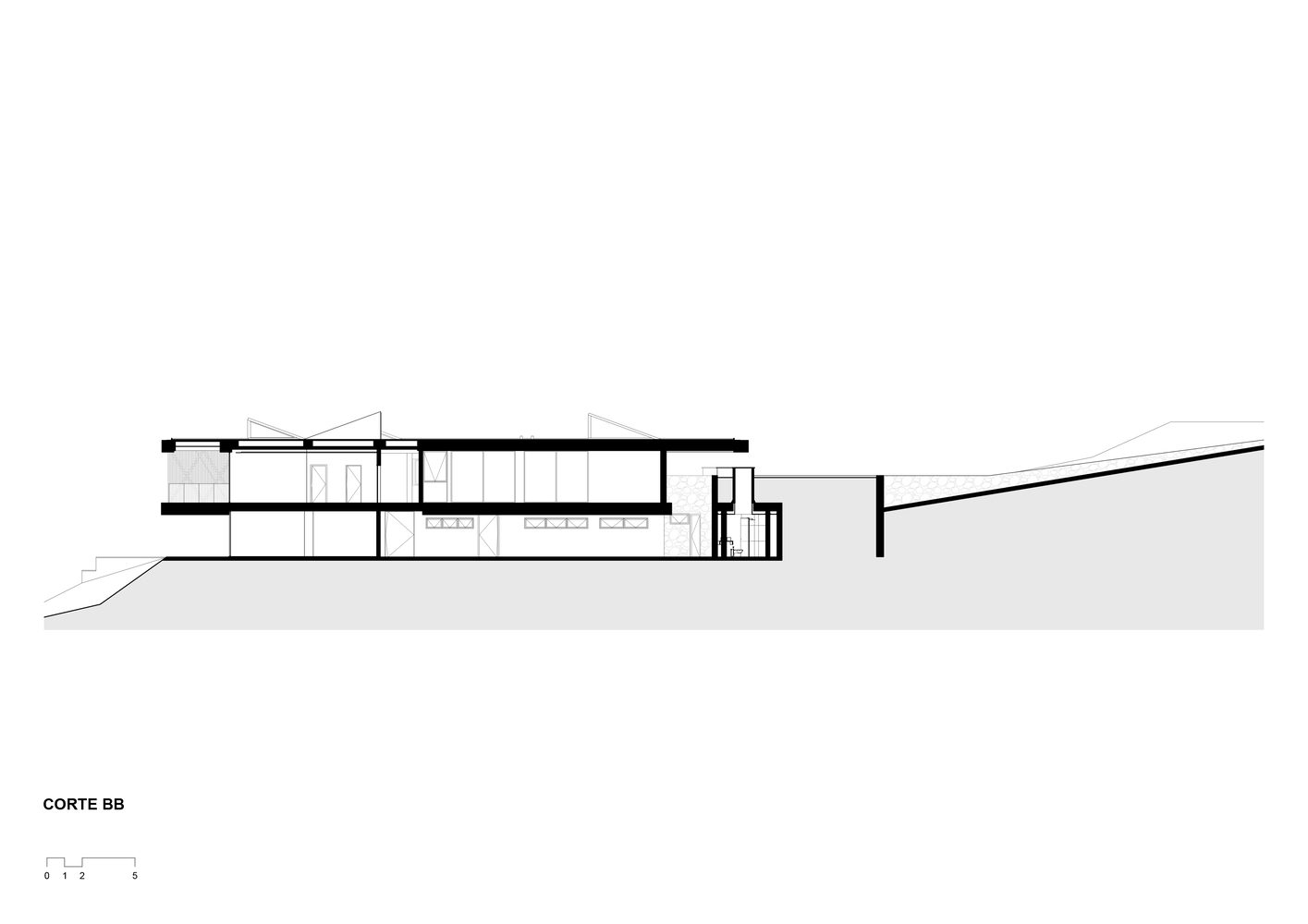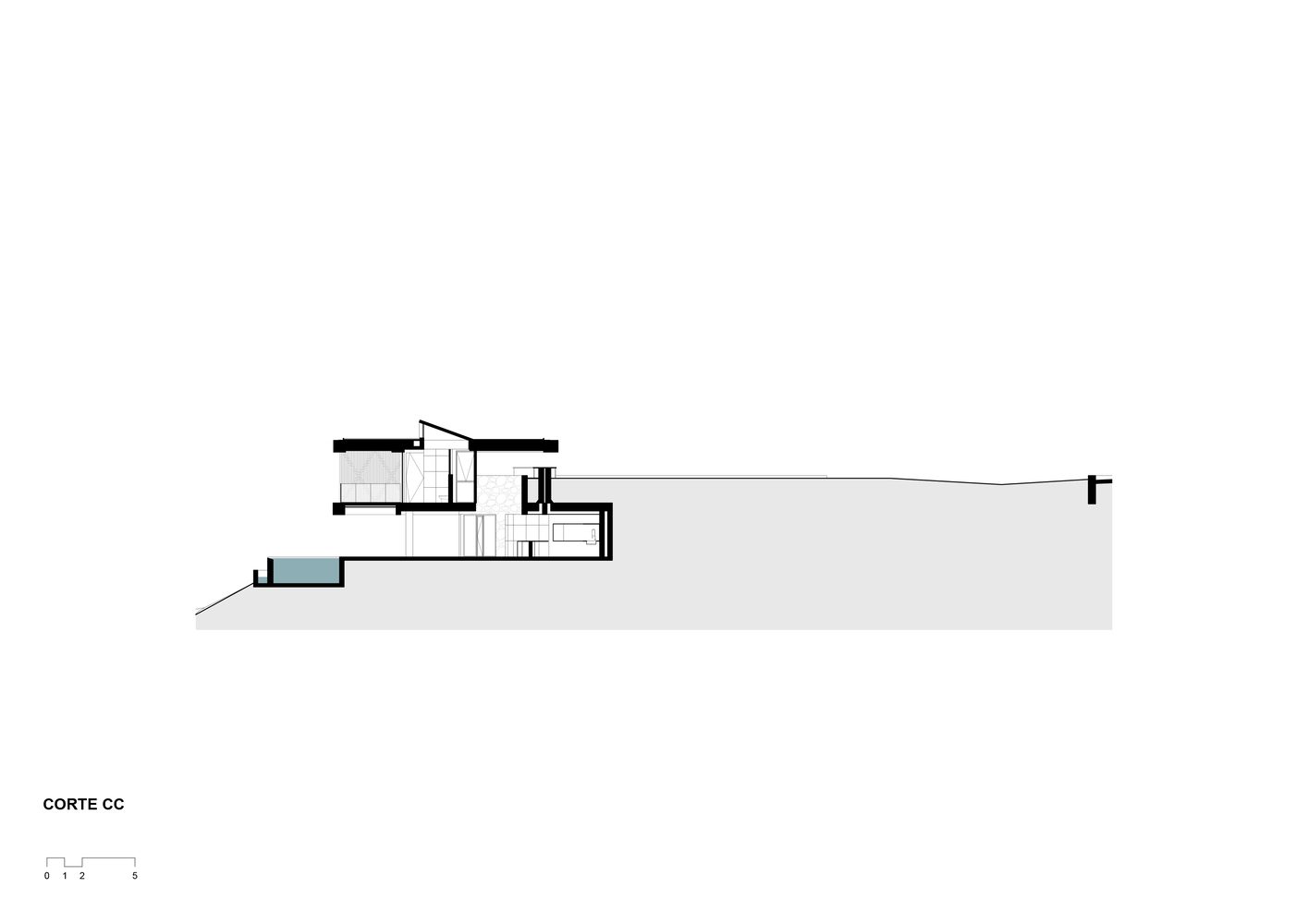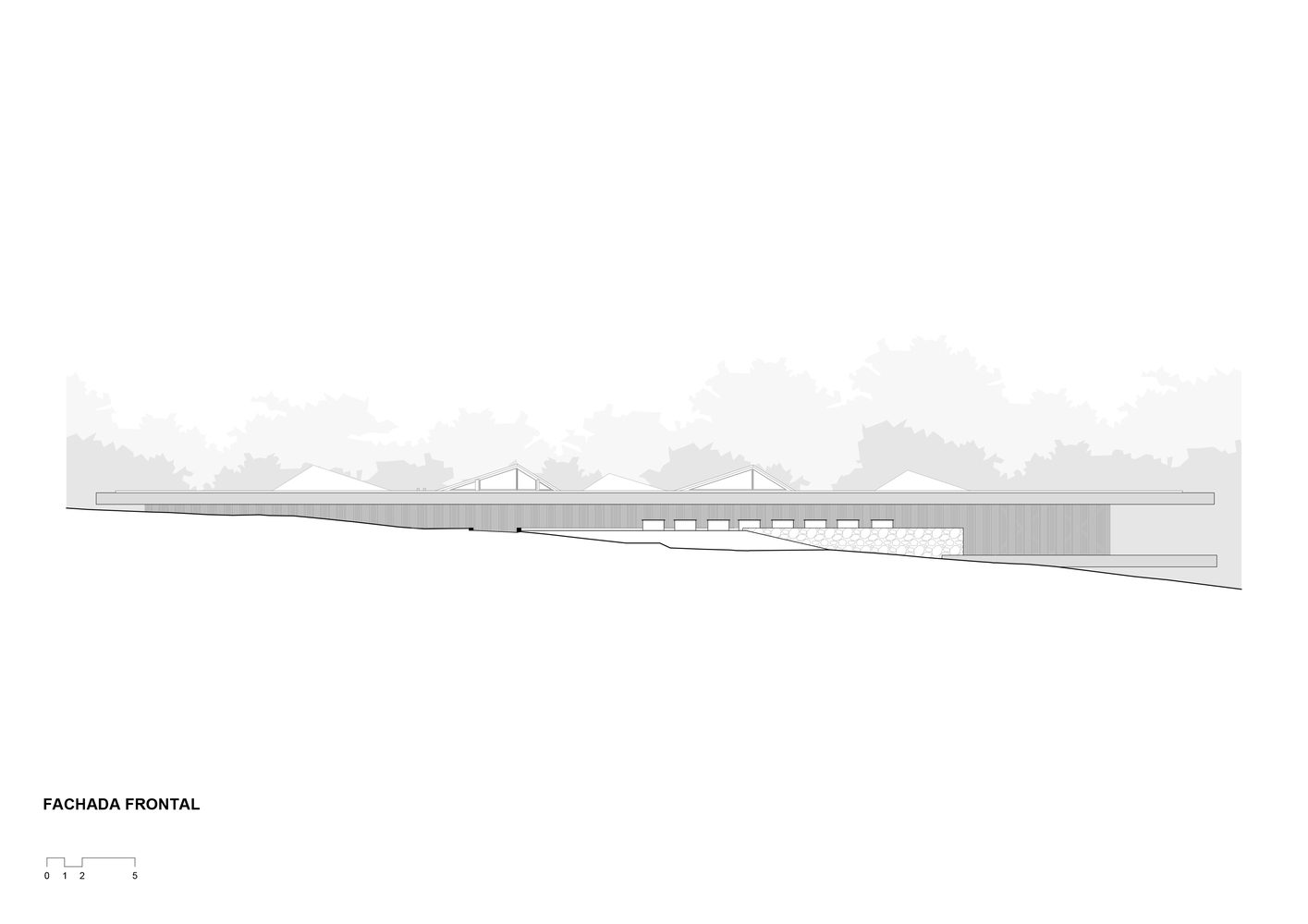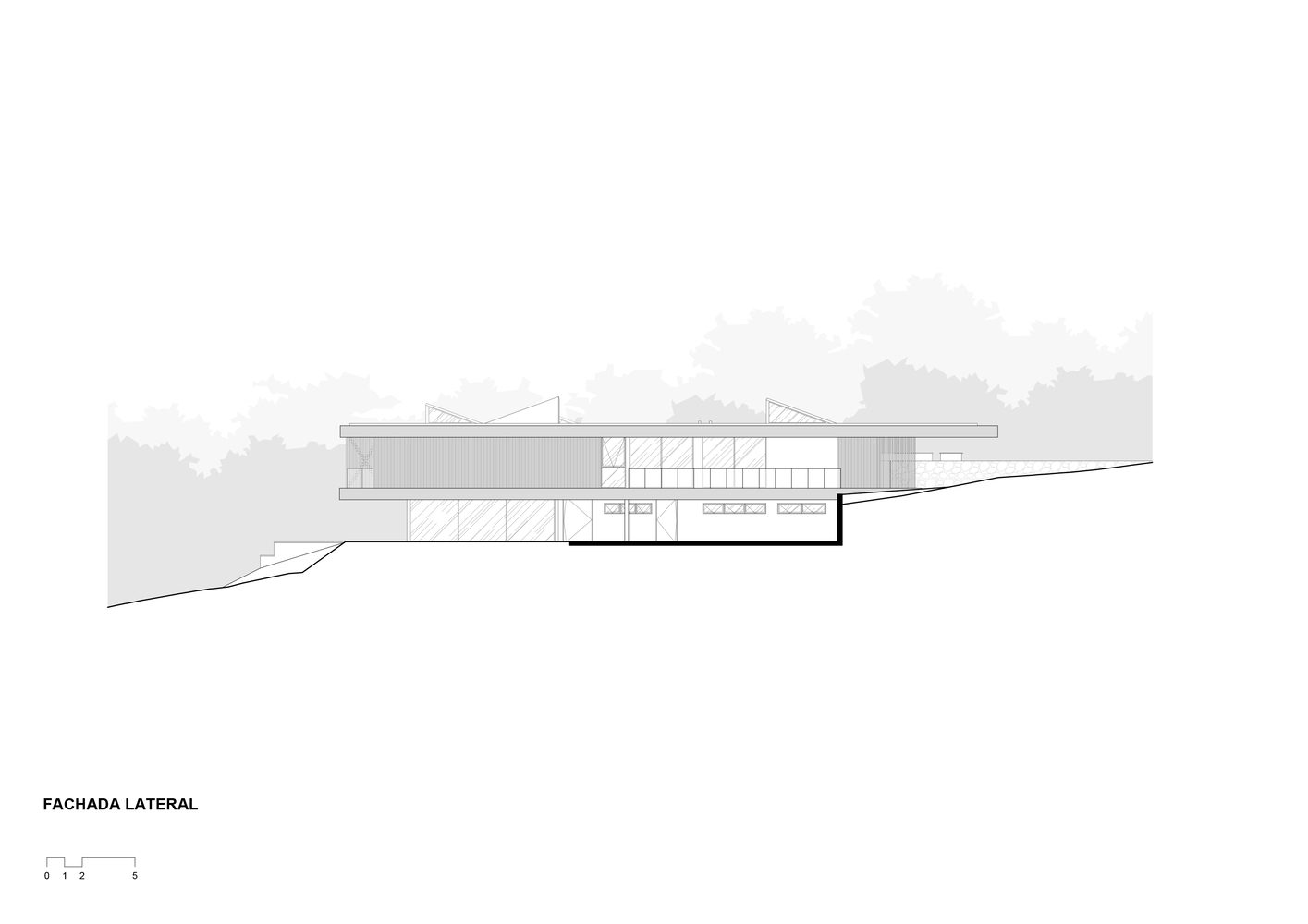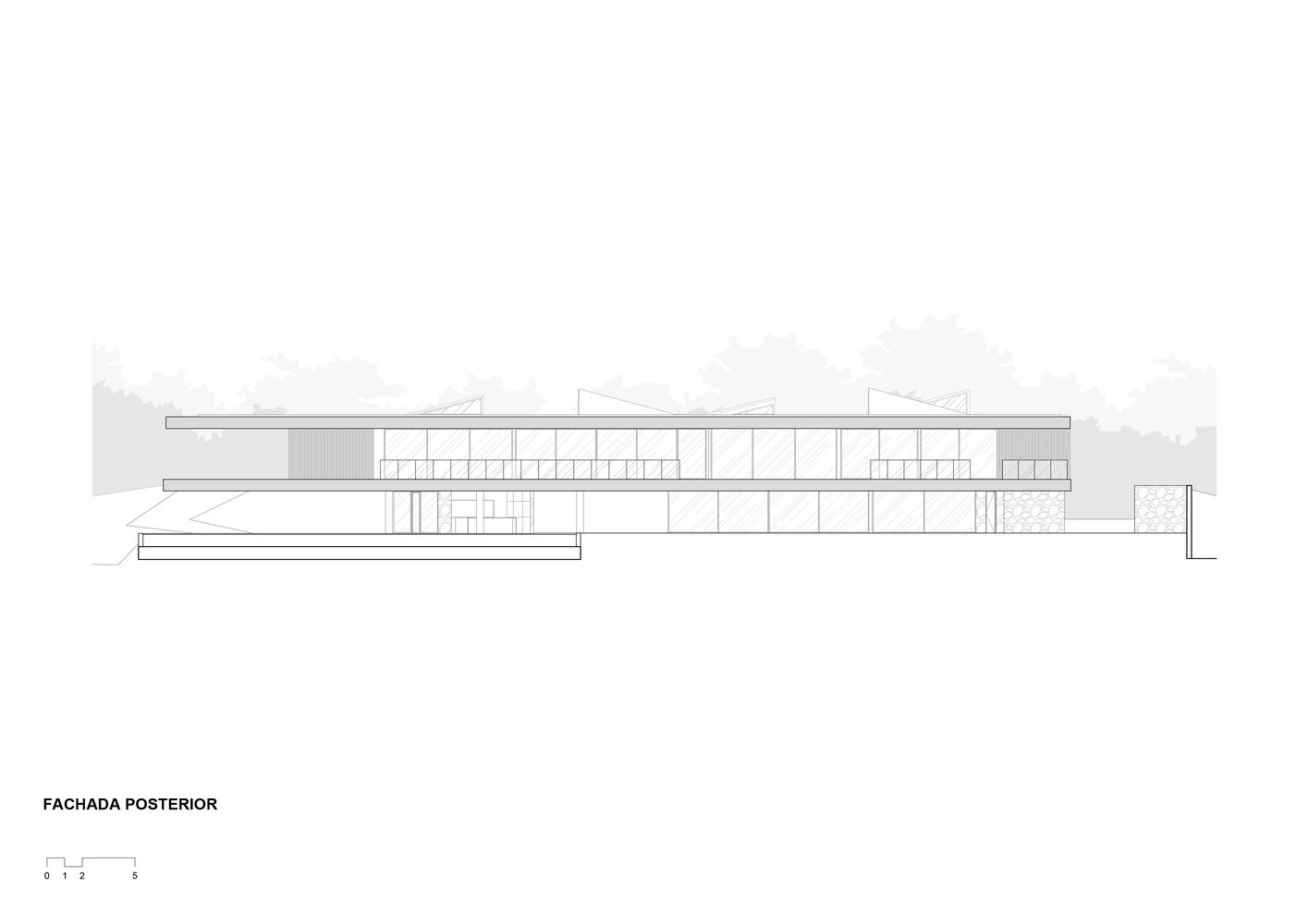


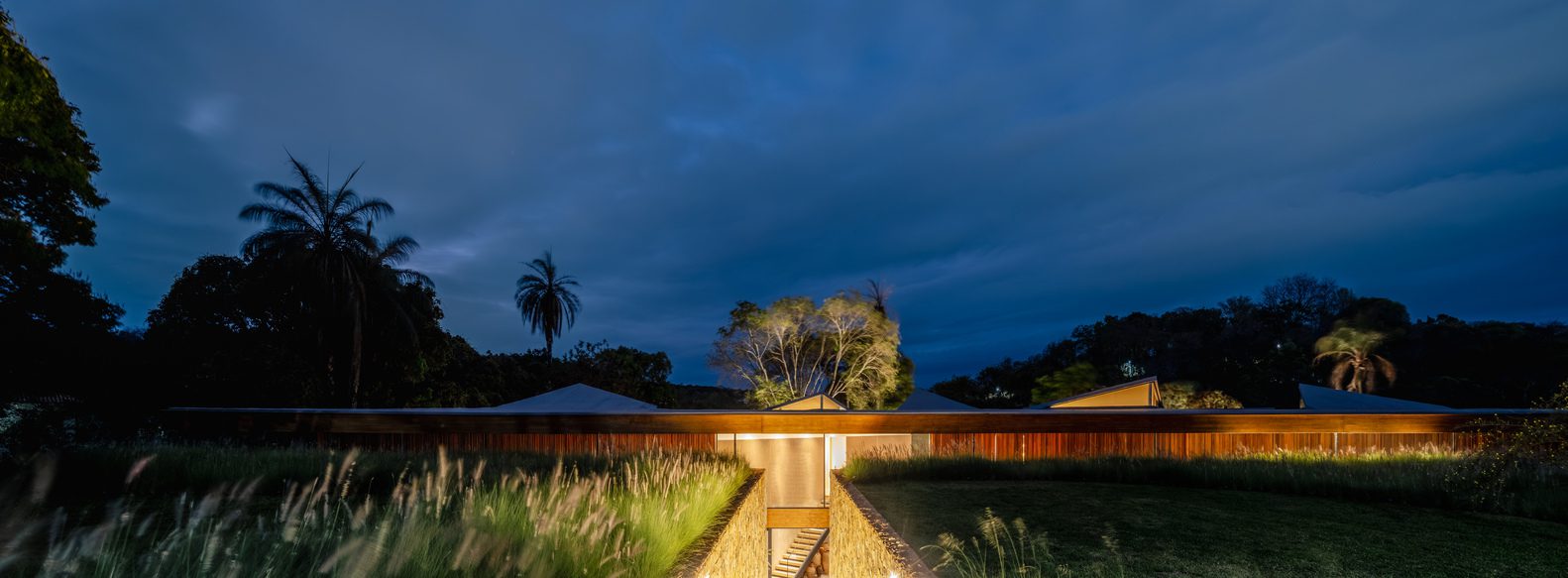
Tangram House, Located in Lagoa Santa, in the metropolitan region of Belo Horizonte, Casa Tangram sits on a gently sloping plot by the edge of a lake. The house is positioned at the highest point of the lot, so from the street, it appears as a discreet horizontal line, almost blending with the horizon. Walls, slopes, and the built volume itself form a visual barrier to the outside. Upon entering, one quickly realizes that the street disappears: from inside the house, only trees, the lawn, and water are visible.
© Manuel Sá
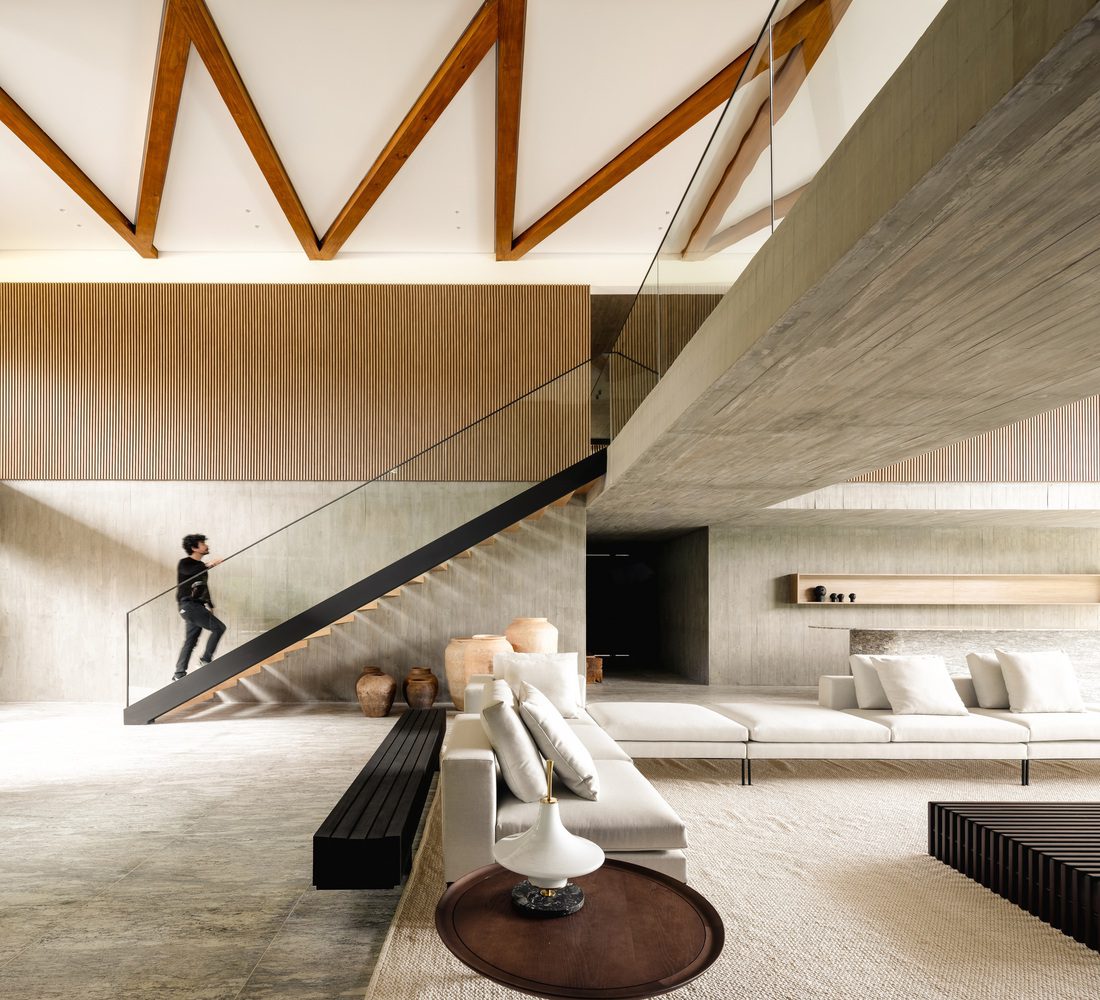
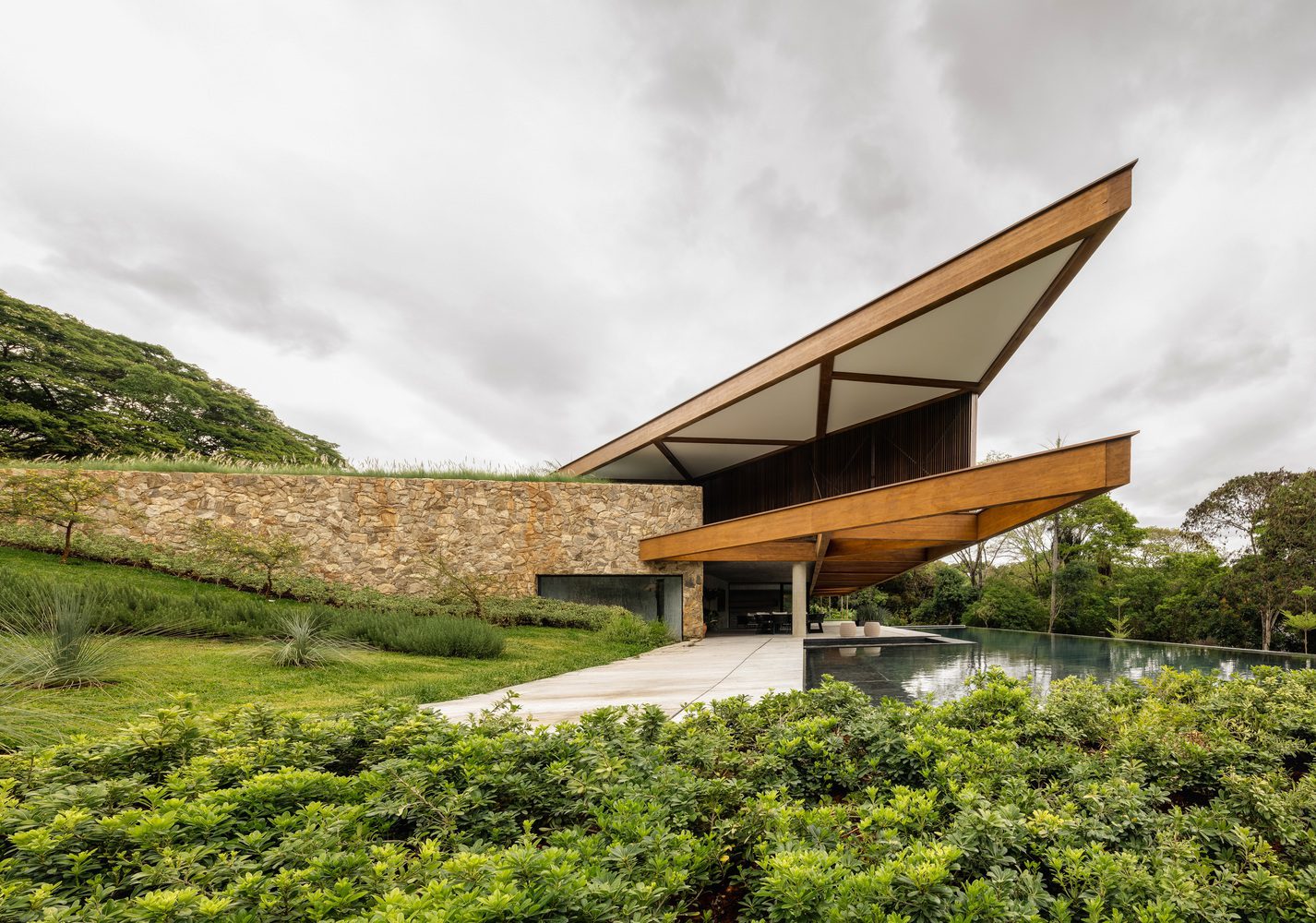
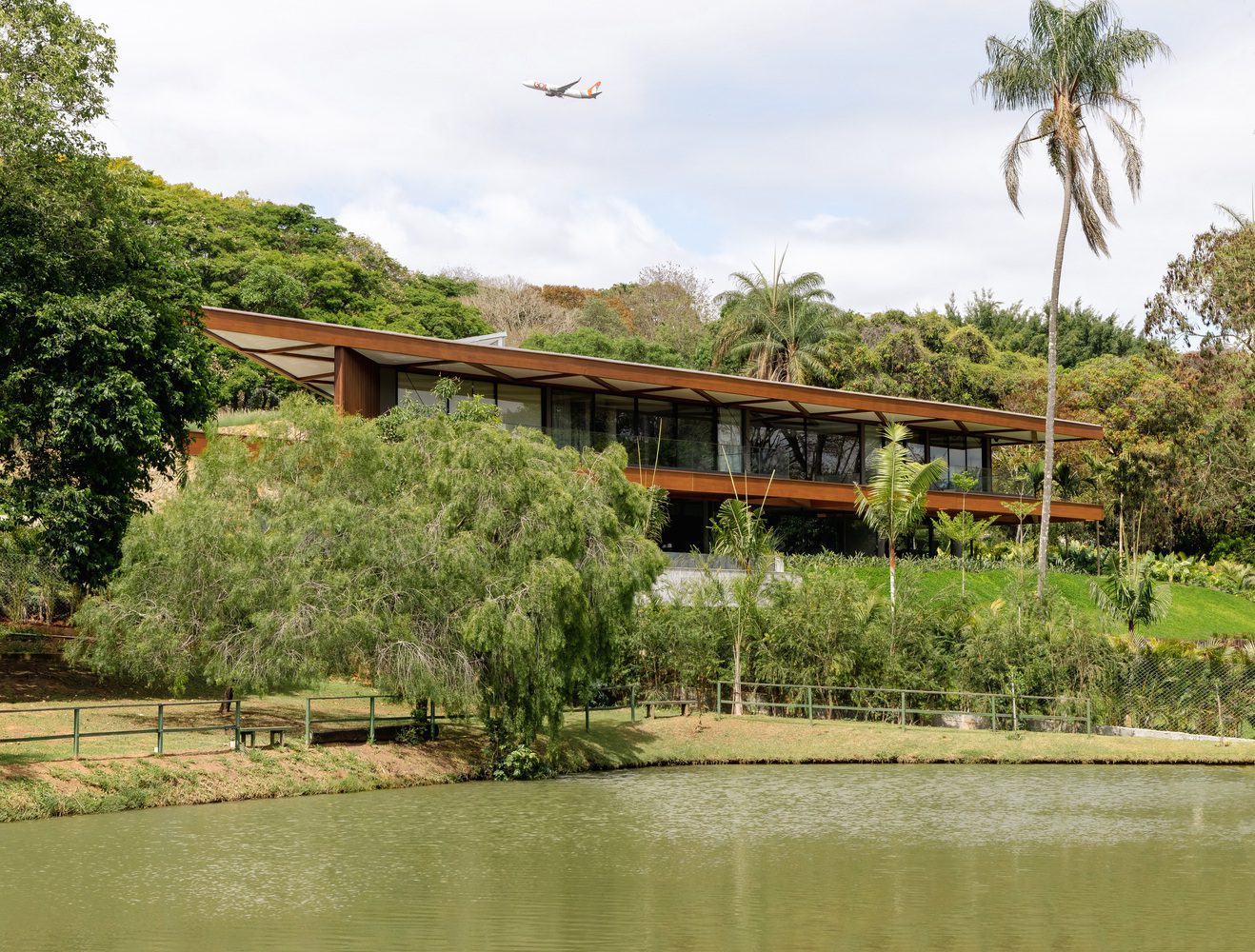
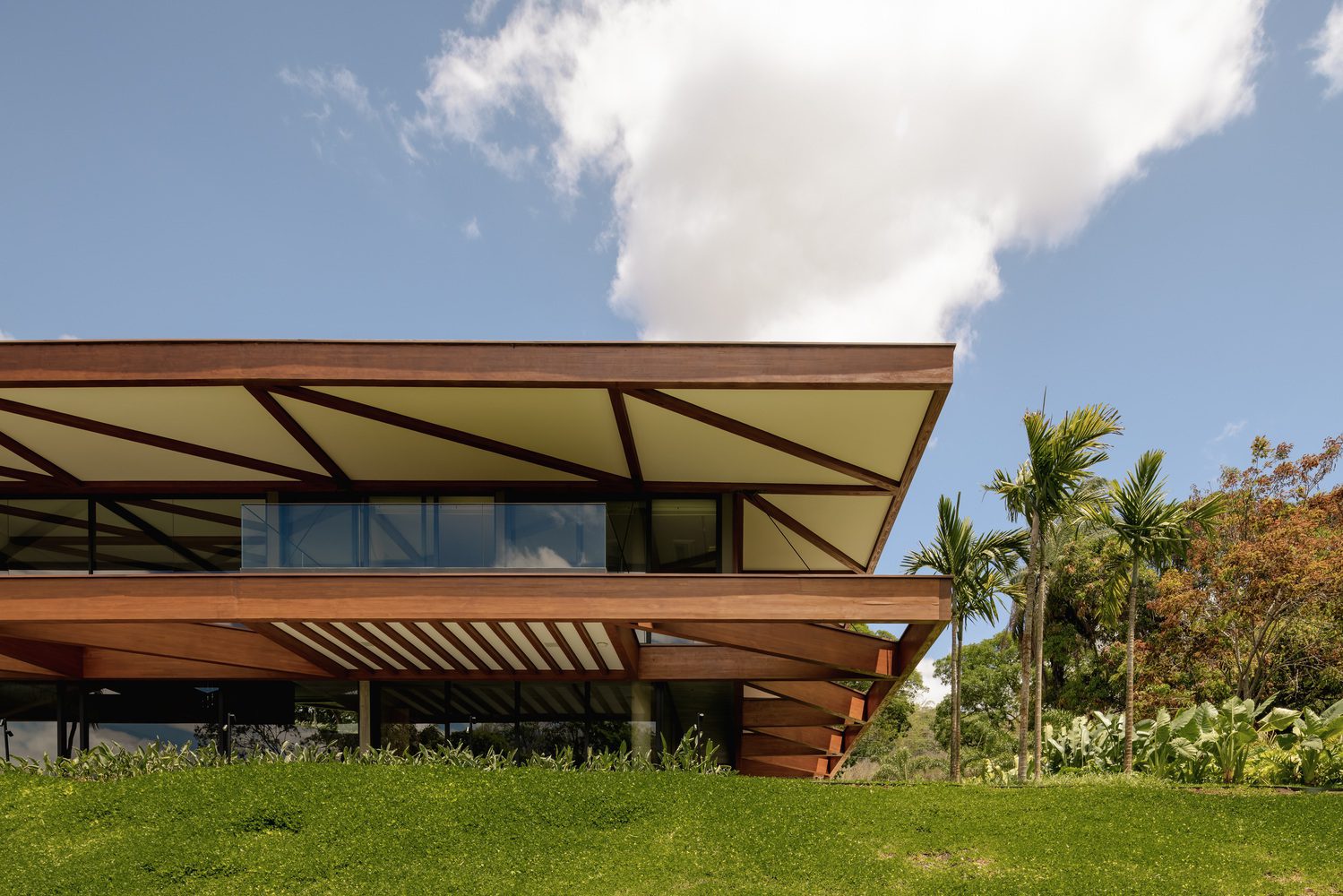
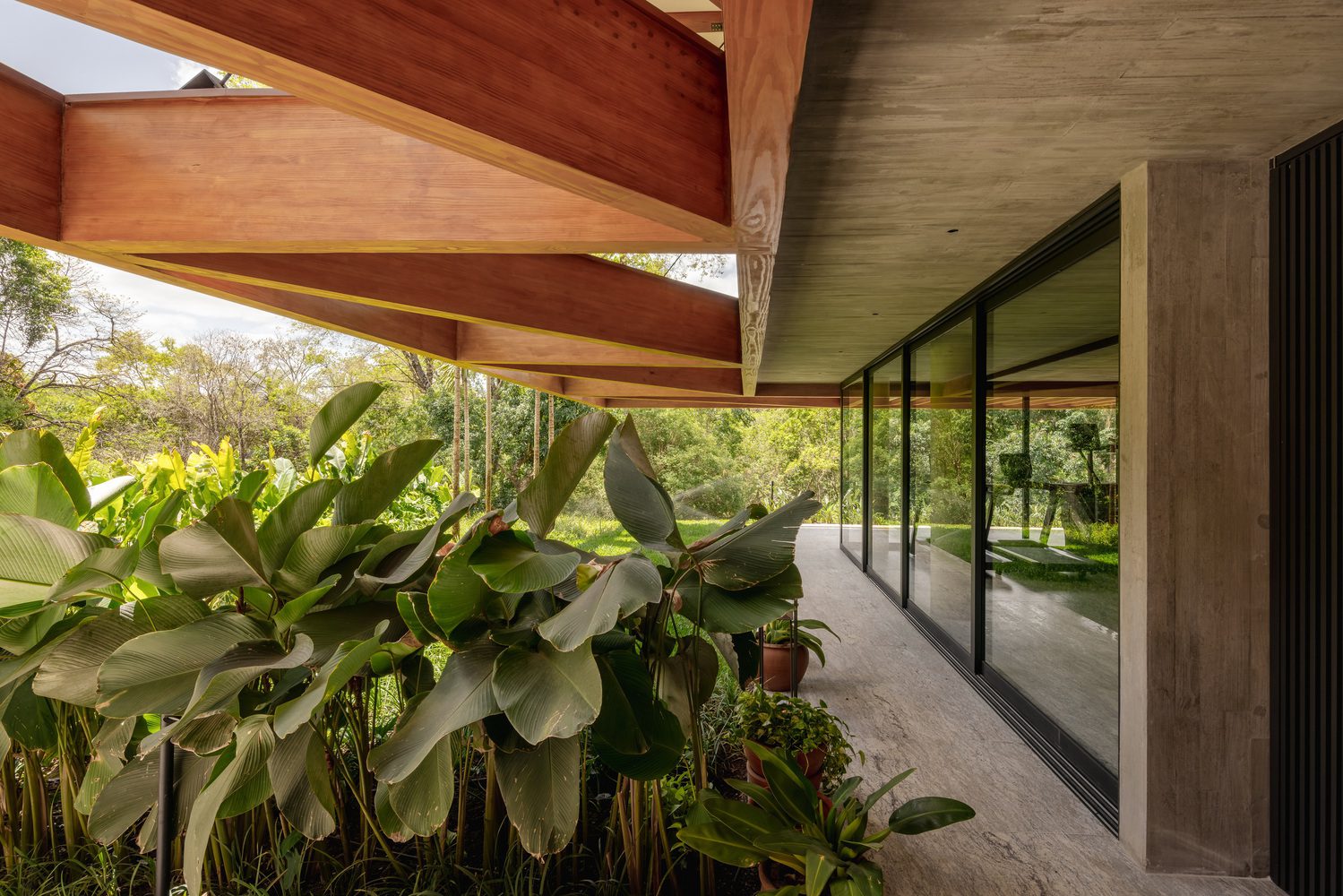
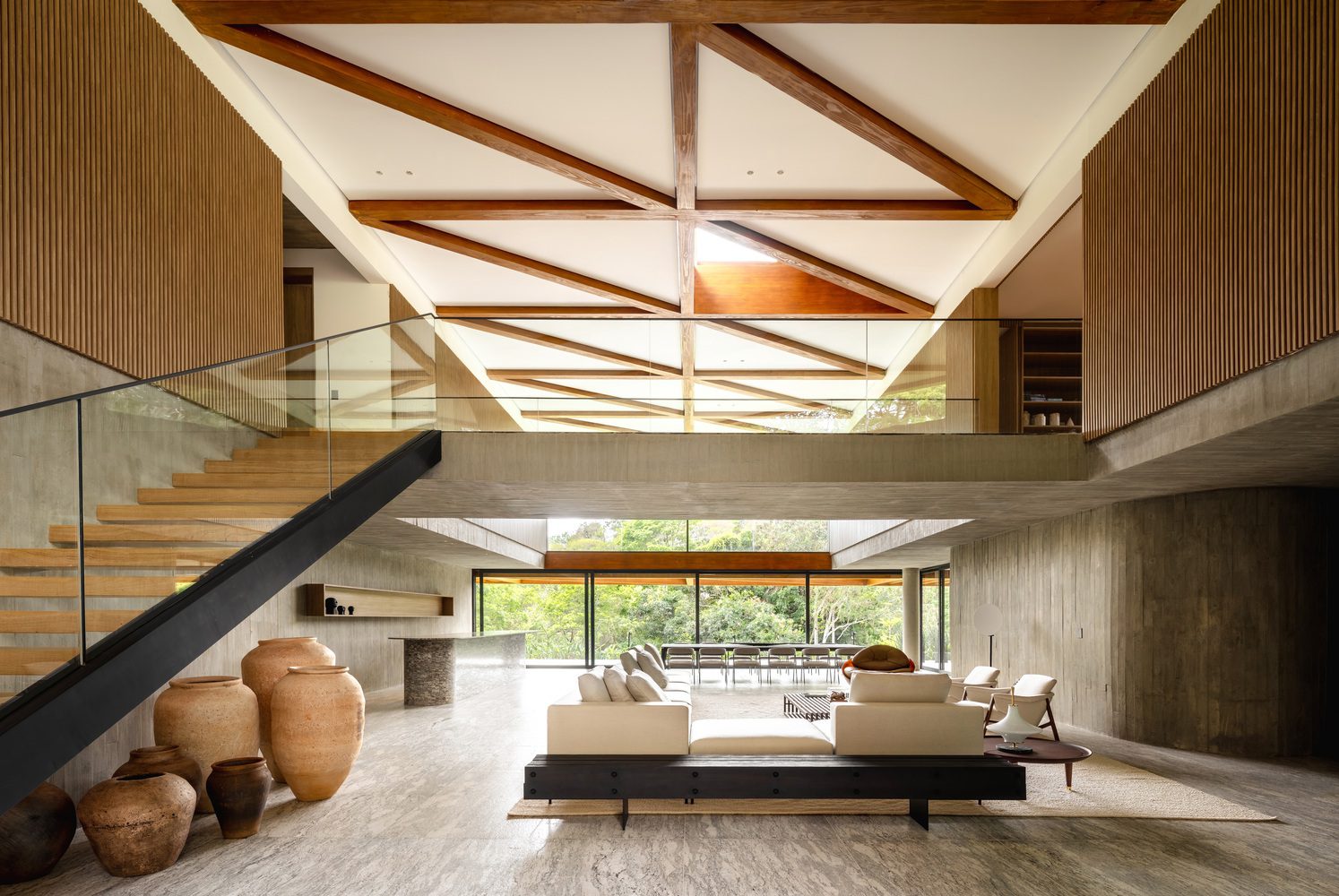
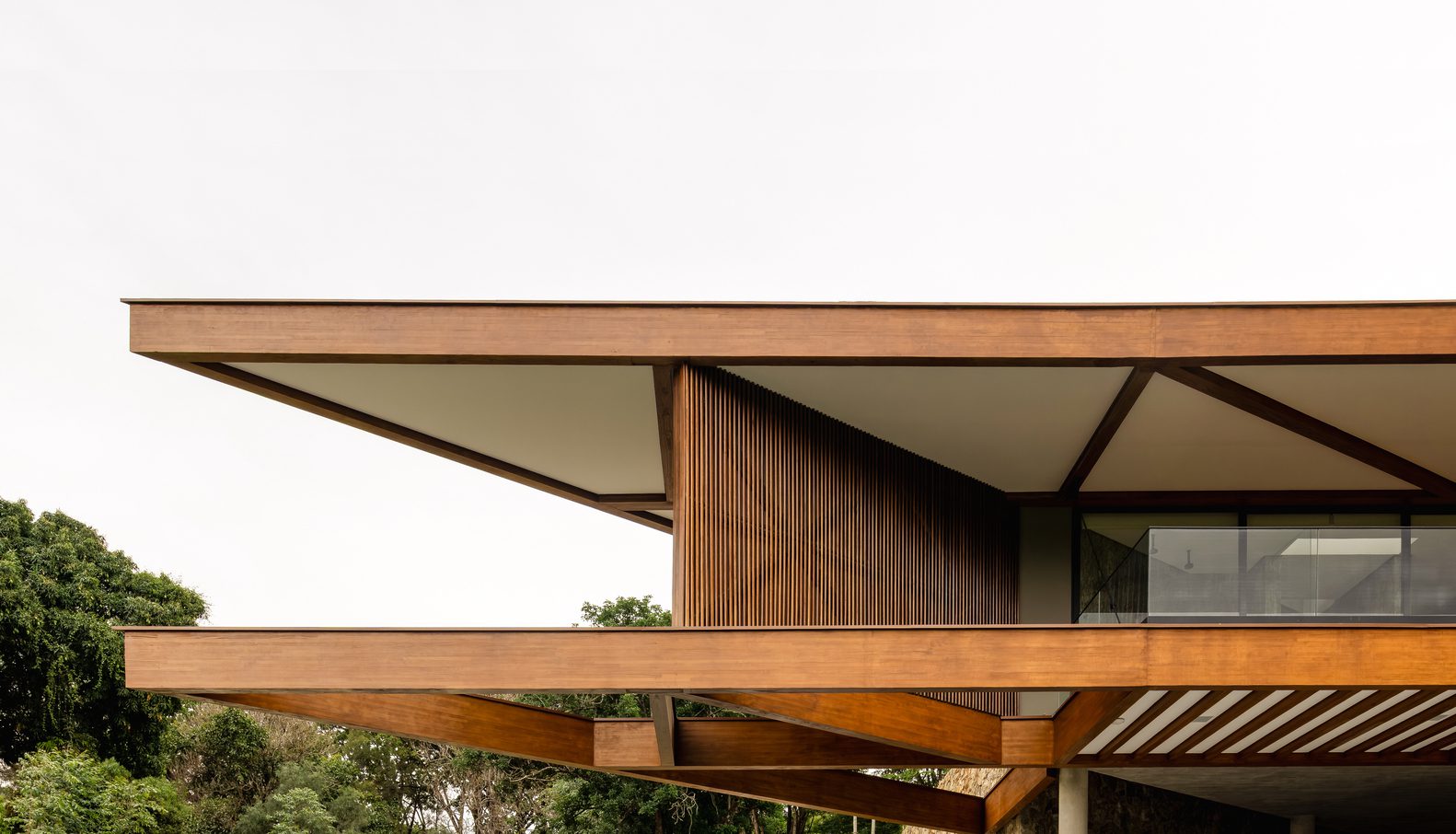
The design is organized around a triangular shape, which inspires the name Tangram and unfolds in the laminated wooden roof. This roof, composed of a sequence of triangular planes, functions as a large shelter: it protects the home’s intimacy from the street and opens completely towards the lake. Light enters through skylights that cut through the sky and illuminate the living areas and circulation of the upper floor. The structure is mixed, combining the lightness of the wooden roofs and balconies with the solidity of concrete slabs and walls, dialoguing with the stone walls that contain the slope of the land.
© Manuel Sá
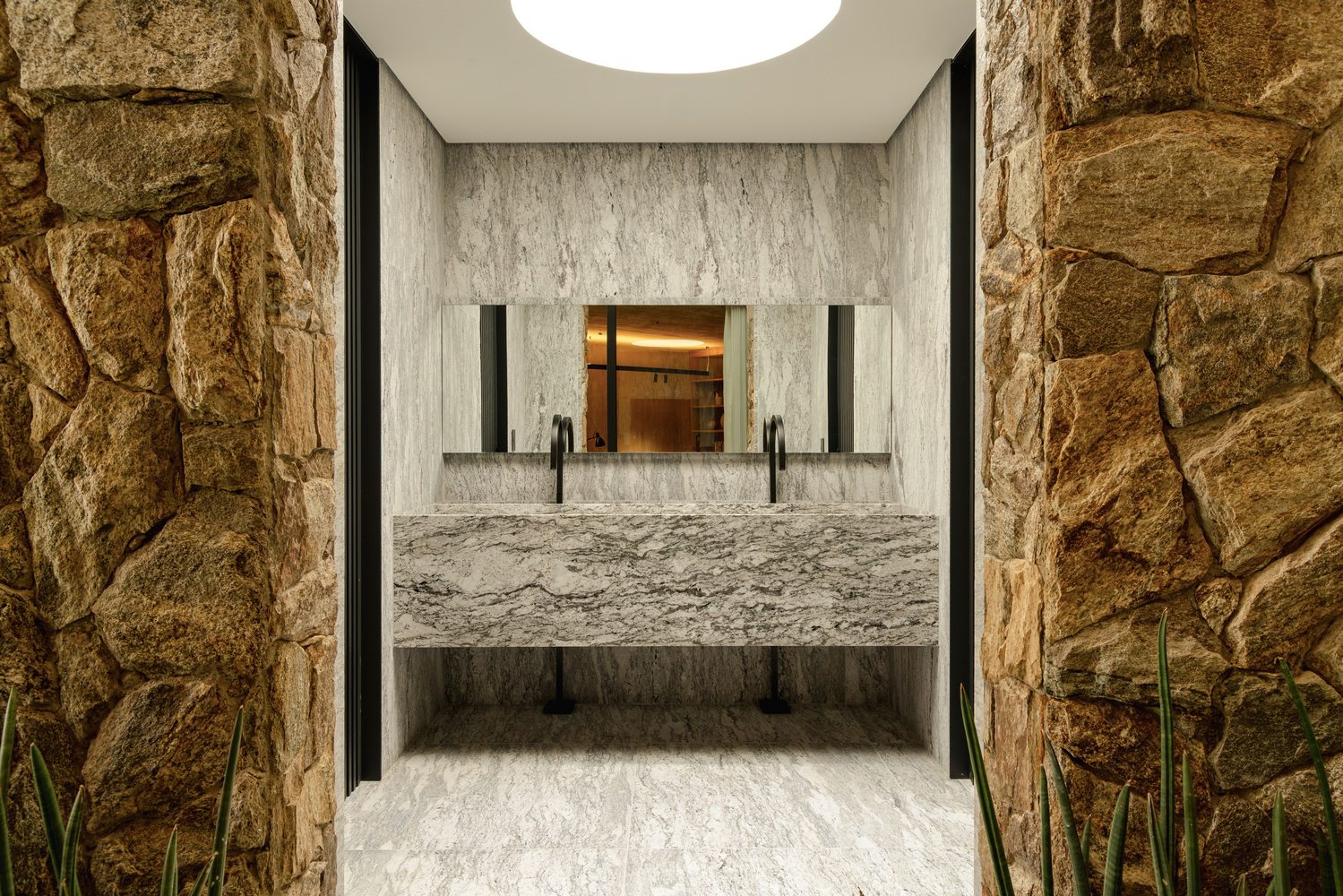
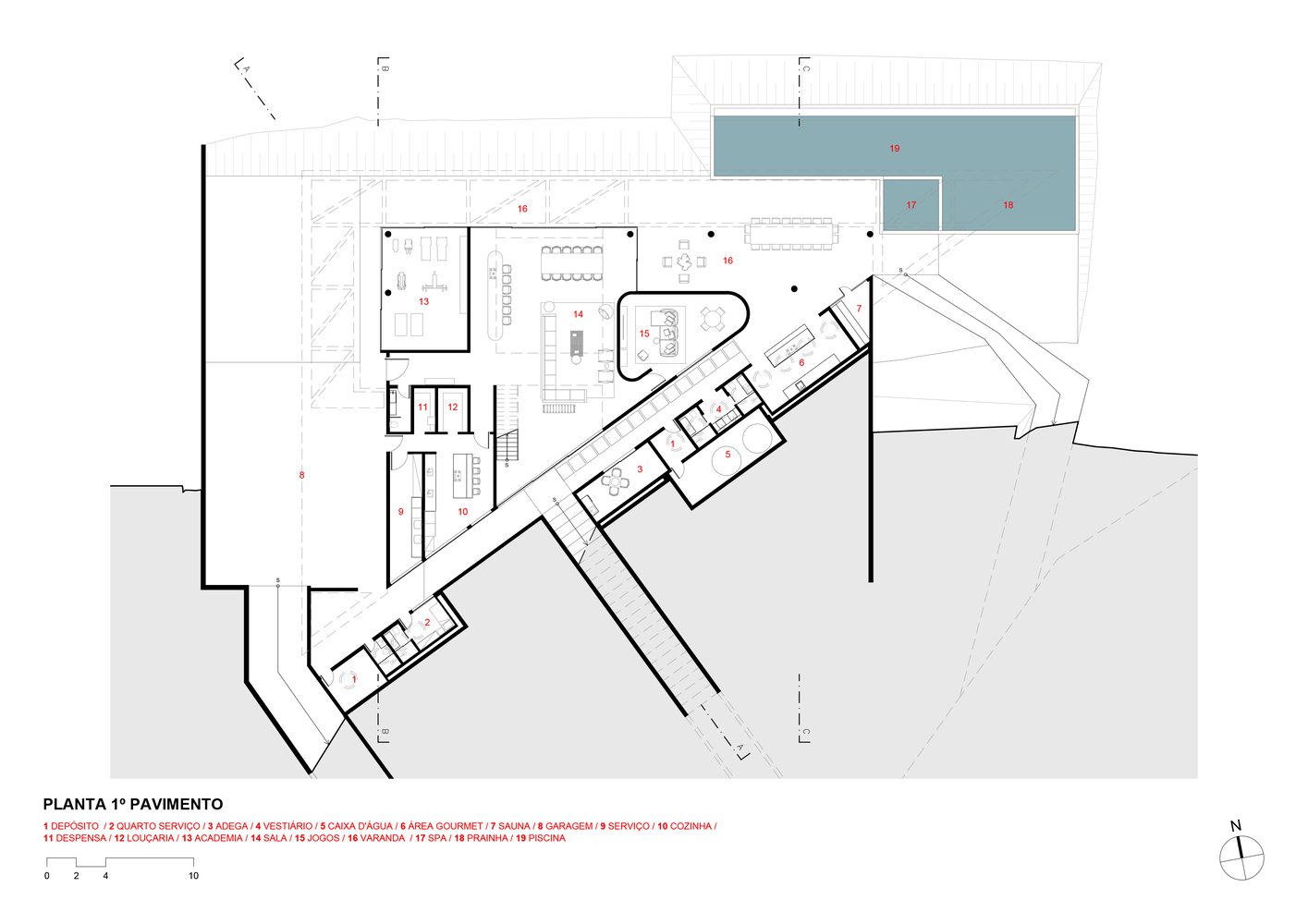
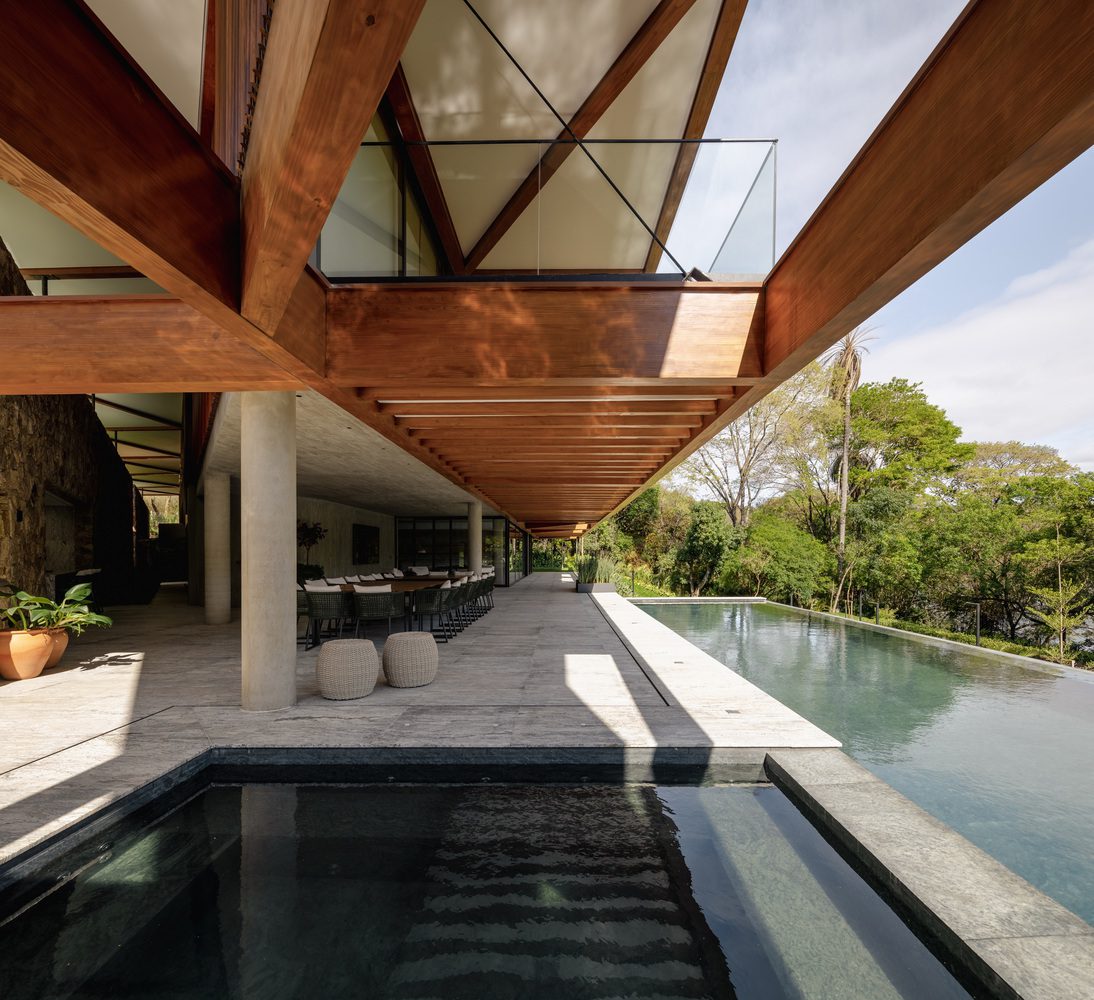
On the lower level, the social spaces concentrate: living room, kitchen, gourmet area, wine cellar, and swimming pool, all facing the lake through large glass panels and generous balconies. Part of this program fits into the retaining wall itself, where there are a support kitchen, bathroom, and wine cellar, creating a habitable thickness between the house and the earth. On this floor, the contact with the landscape is direct: the water of the pool seems to extend the mirror of the lake, and the interior extends to the exterior without clear boundaries.
© Manuel Sá
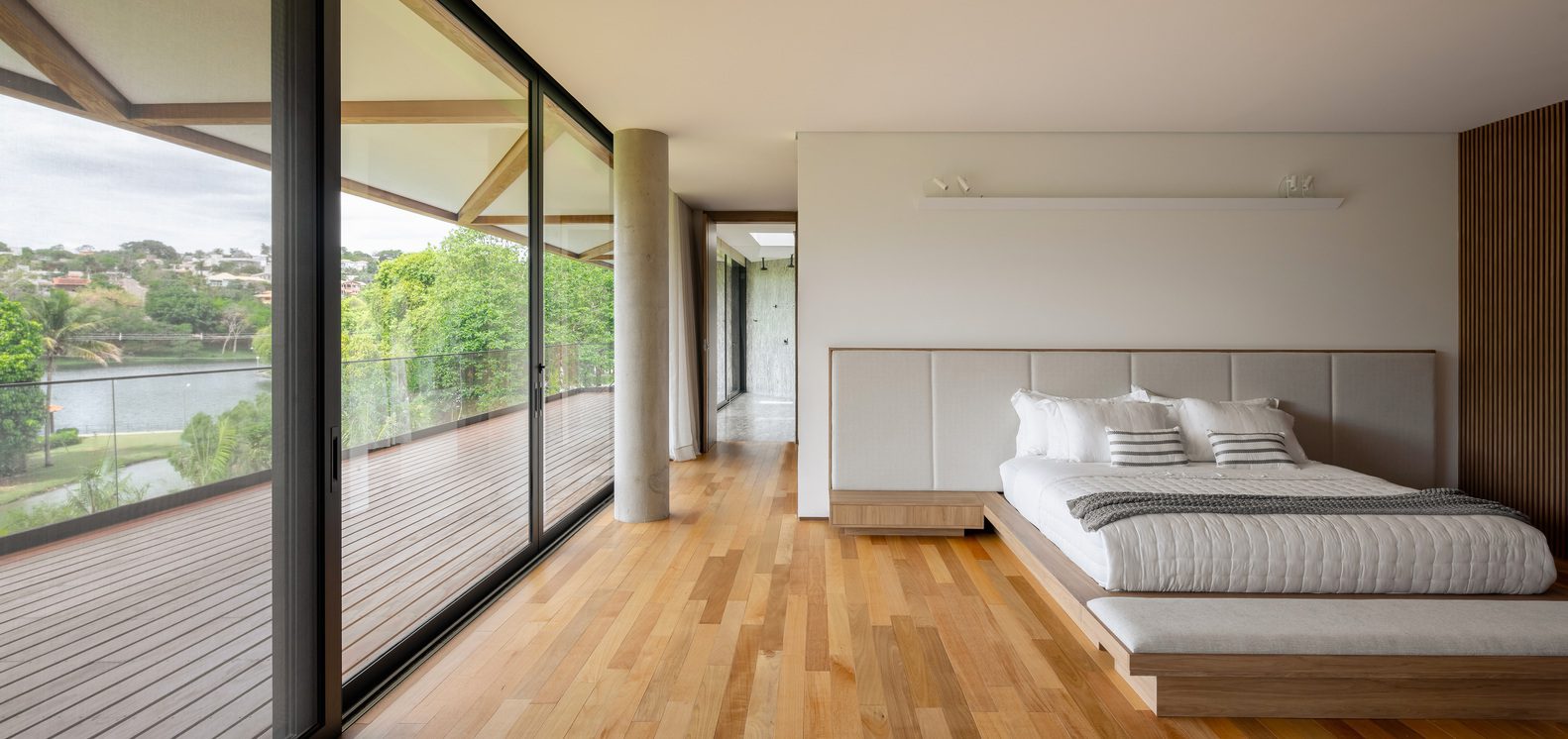
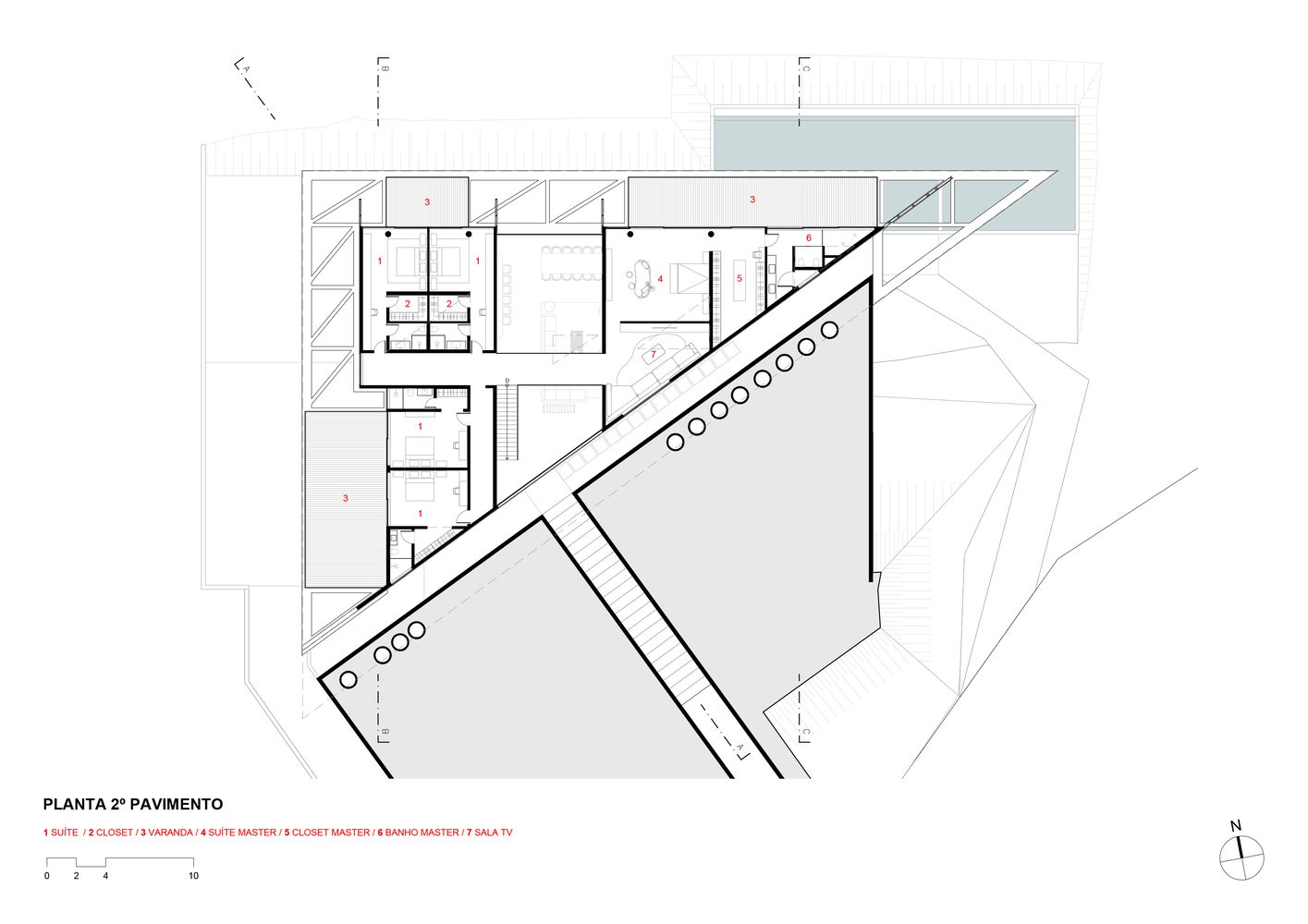
On the upper level, the intimate wing gathers a living area and five bedrooms: the master suite, two children’s rooms, and two guest rooms. All open to the view, protected by the large eaves of the roof and the distance from the street. Everyday life always occurs framed by nature, never by urban traffic.
© Manuel Sá
Between the precise design of the structure and the softness of the landscape, Casa Tangram seeks to be less of an object and more of a passage: a house that protects itself from the movement of the street to fully open up to the lake and vegetation, where the line of the construction extends the line of the horizon and the triangle of the roof unfolds as a gesture of welcome to nature.
Project Info:
- Architects: TETRO Arquitetura
- Country: Brazil, Lagoa Santa
- Area: 1450 m²
- Year: 2025
-
Photography: Manuel Sá
-
Manufacturers: GMZ Mármores e Granitos, Jader Almeida, Júnior Mesquita Esquadrias, São Romão
-
Lead Architects: Carlos Maia, Débora Mendes e Igor Macedo
- Project Team: Bianca Carvalho, Bruno Bontempo, Bruna Maciel, Saulo Saraiva, Carolina Amaral, Ana Flávia Corrêa, Sabrina Freitas, Márcia Aline, Matheus Rosendo, Luisa Lage
- Construction Company: TSV Engenharia
- Wooden Structure: Timbau Estruturas
- Facilities: Rafael Cardoso
- Lighting Design Project: Iluminar
- Carpentry: Júnior (Casttini)
- Air Conditioning: TSV Engenharia
- Pool Installation: SolViver
- Automation: Control Automação
- Landscape Design: Flávia D’urso