

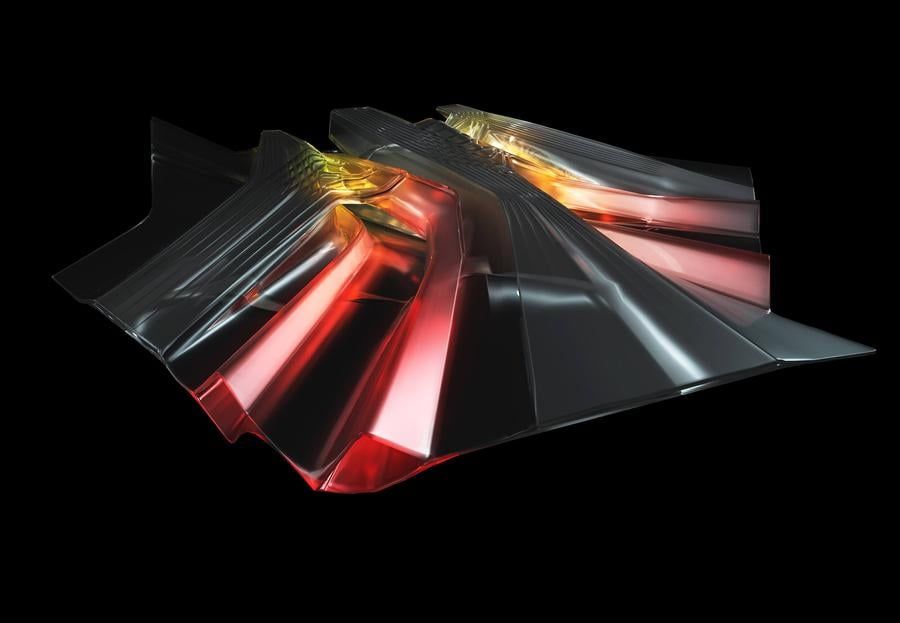
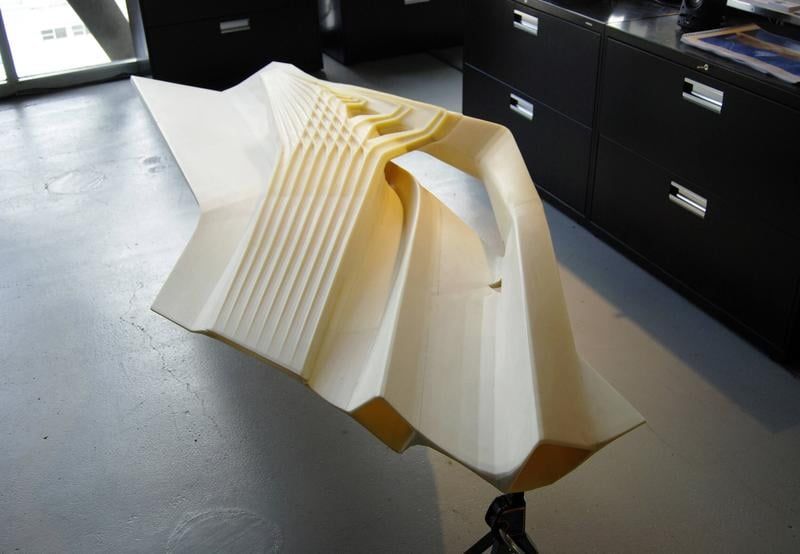
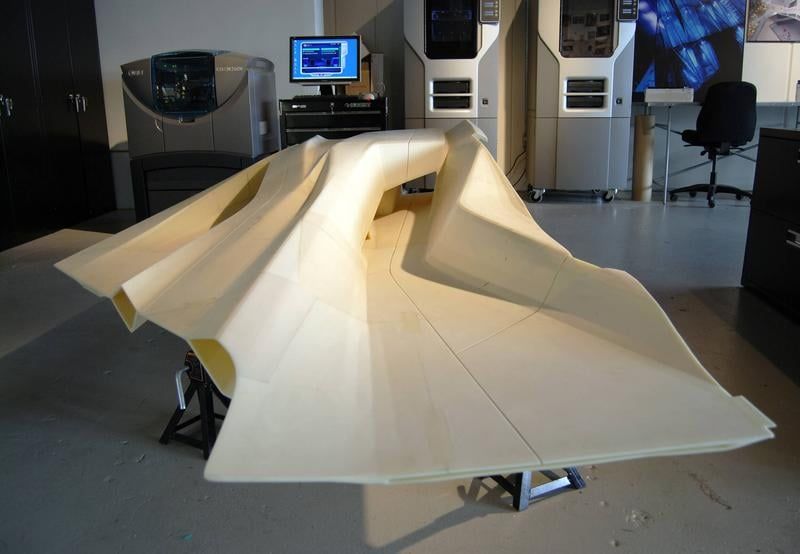
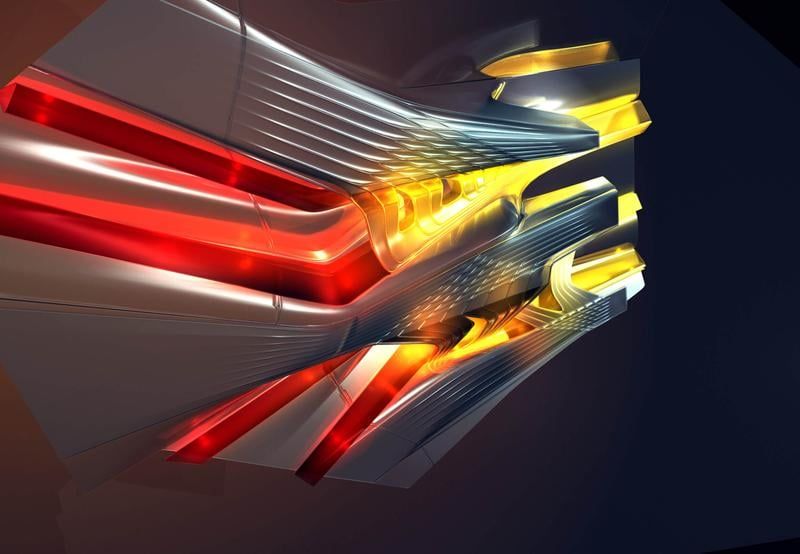
Batwing, an architectural prototype designed by Tom Wiscombe Design, ‘examines the threshold between architectural surface and infrastructural tracery’. The project looks to a future in architecture where structure and infrastructure are not merely expressed or made legible. Instead of the building giving way or making room at certain determined points for these systems, the building itself becomes these systems. The architect clarifies that Batwing is not just another Centre Pompidou, with the systems pulled to the exterior without transformation. The system are pulled to the exterior skins of the prototype, but that is because they have become one with the skin.
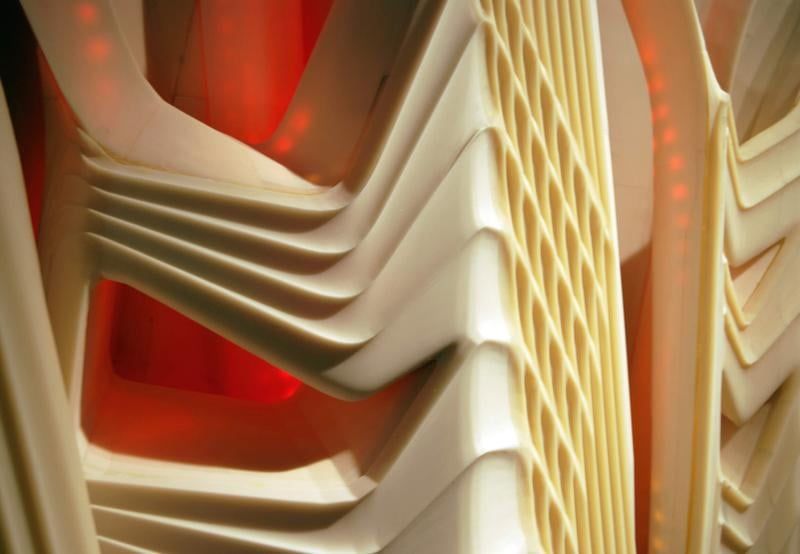
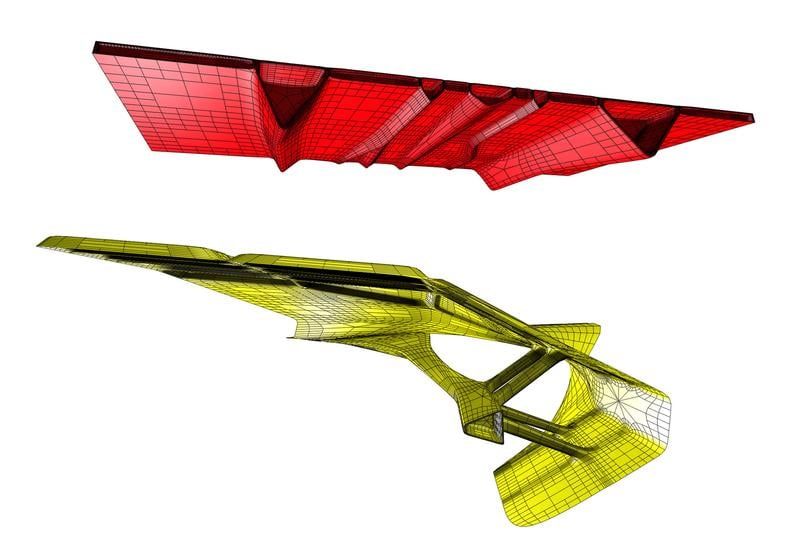
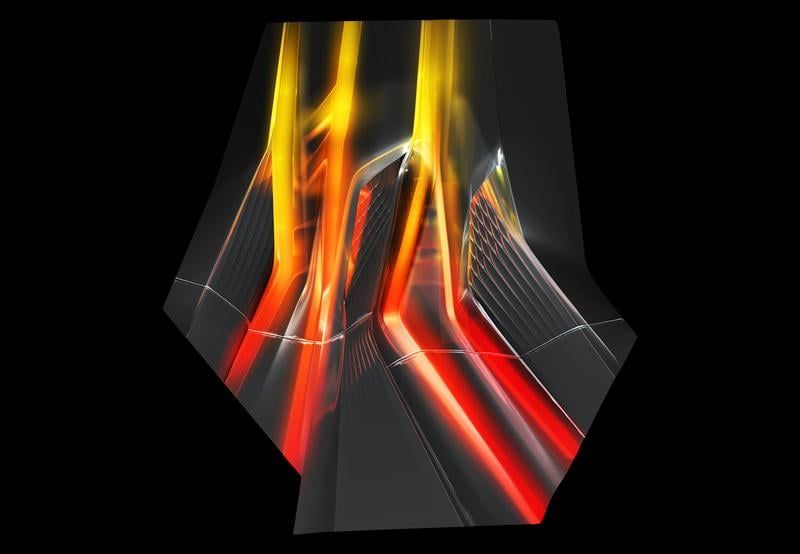
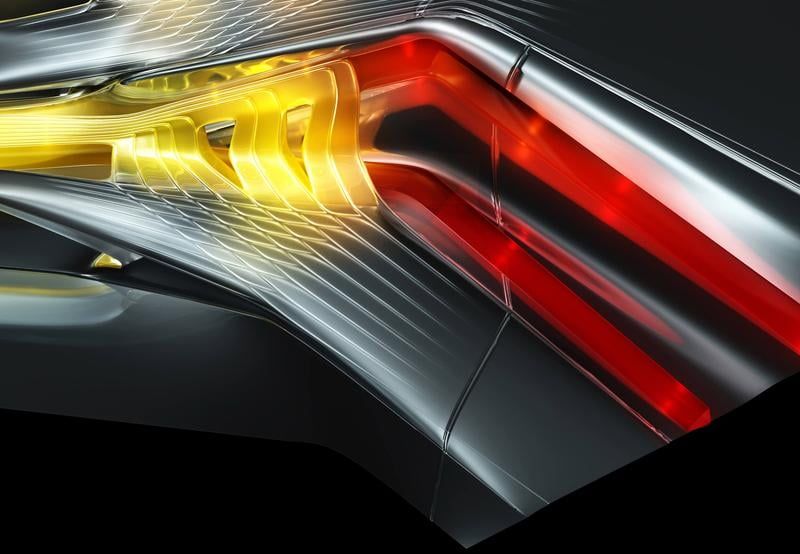
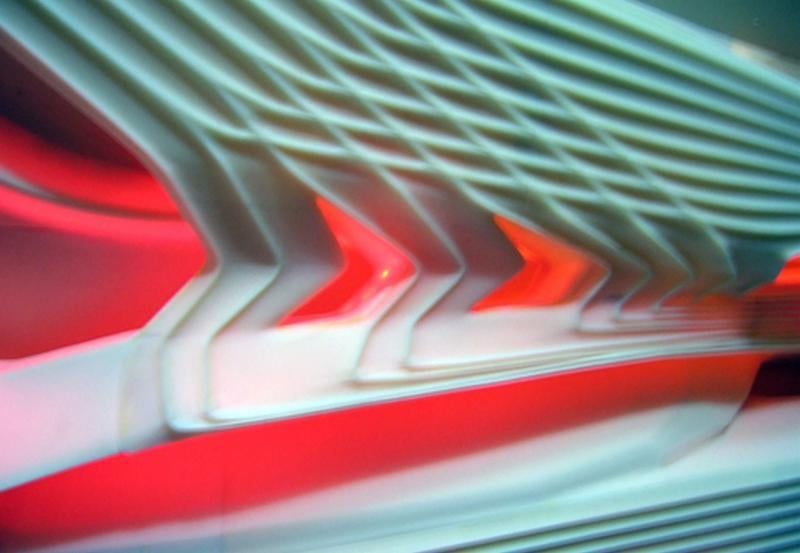
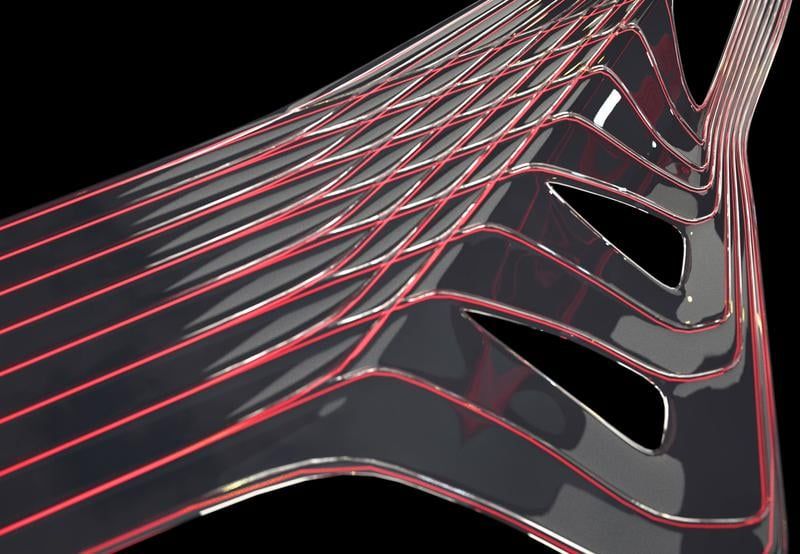
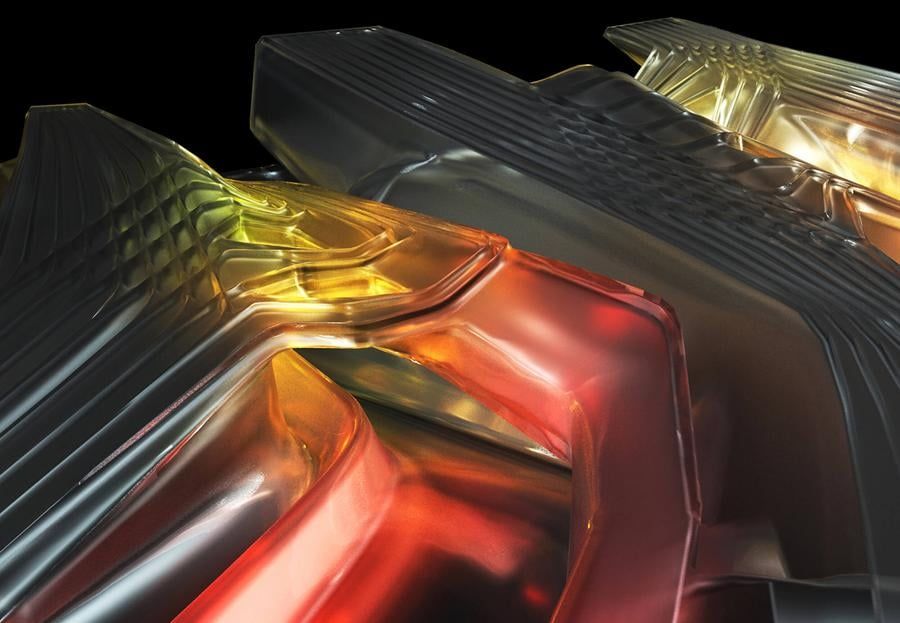
This translation of system is achieved through two types of transformation: the pleat and the ‘becoming-armature’. The pleats direct airflow over the surfaces, enabling efficient radiative liquid-to-air heating/cooling transfer, as well as providing structural rigidity to the skin. They also double in function as abstracted surface ornamentation.
Courtesy of Tom Wiscombe Design
The ‘becoming-armature’ transformation is perhaps self-explanatory. The skin divides itself into a double facade of sorts, creating internal ducts, negating the need for these to be merely ‘tacked on’. Pleats and ‘becoming-armature’ cooperate from this point, with deep pleats featuring micro-capillaries for heat transfer, acting as air diffusers.
In this way the whole skin acts as a radiative surface, negating the need for central air. The system is a building skin analogue to the current technology of fabric air ducts, where conditioned air diffuses continually rather than at specific points.
Courtesy of Tom Wiscombe Design
Courtesy of Tom Wiscombe Design

Matt Davis is a Virginia Tech graduate and one of the founding editors behind Arch2O. Launching the platform in mid‑2012 alongside fellow Hokies, he helped shape its identity as an international hub for design innovation and critical dialogue . With a foundation in architectural education and a passion for uncovering unconventional design approaches, Matt has contributed significantly—both editorially and strategically—to Arch2O’s growth, ensuring that emerging architects, academics, and creatives have a space to question, explore, and elevate the built environment.