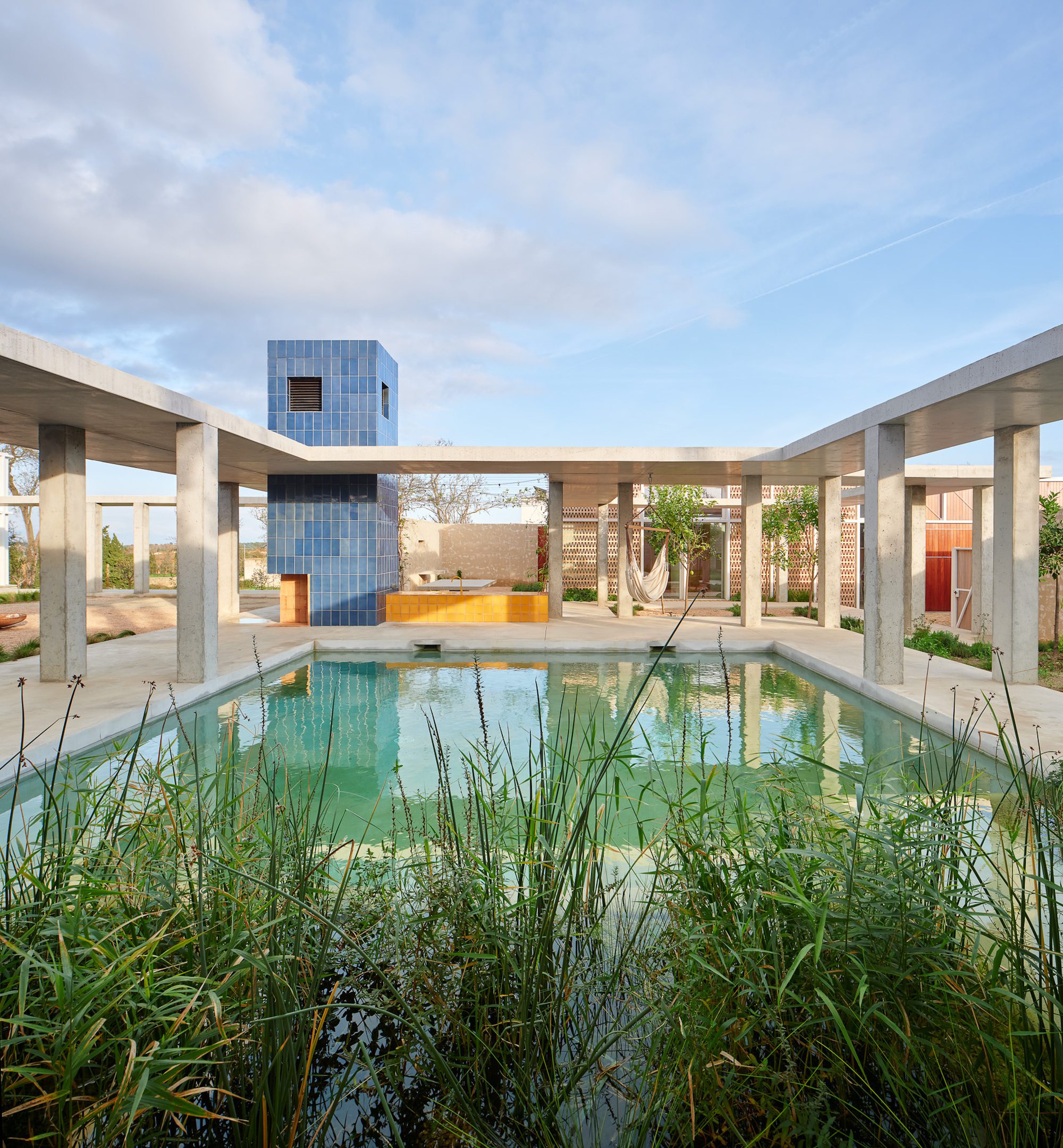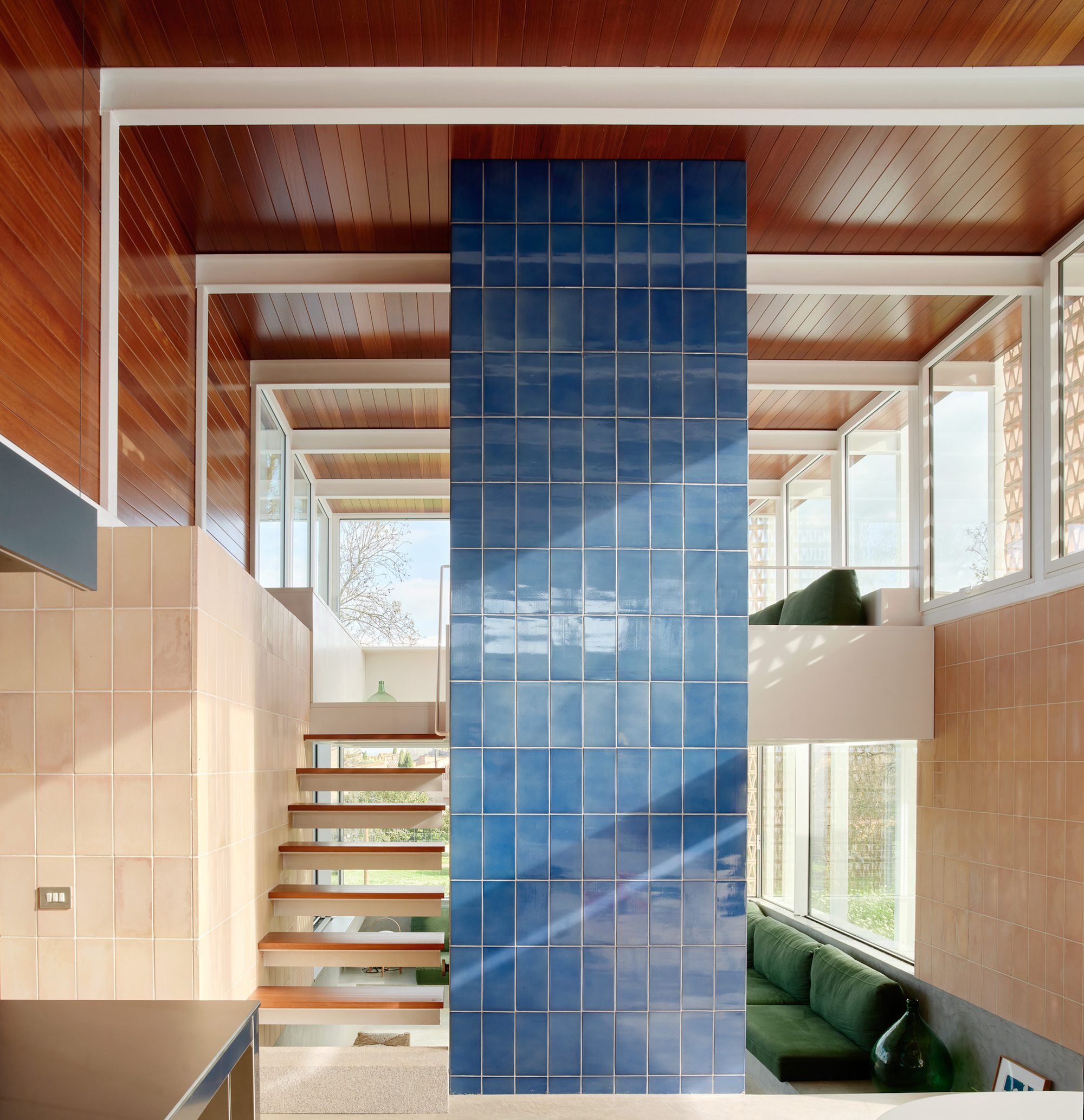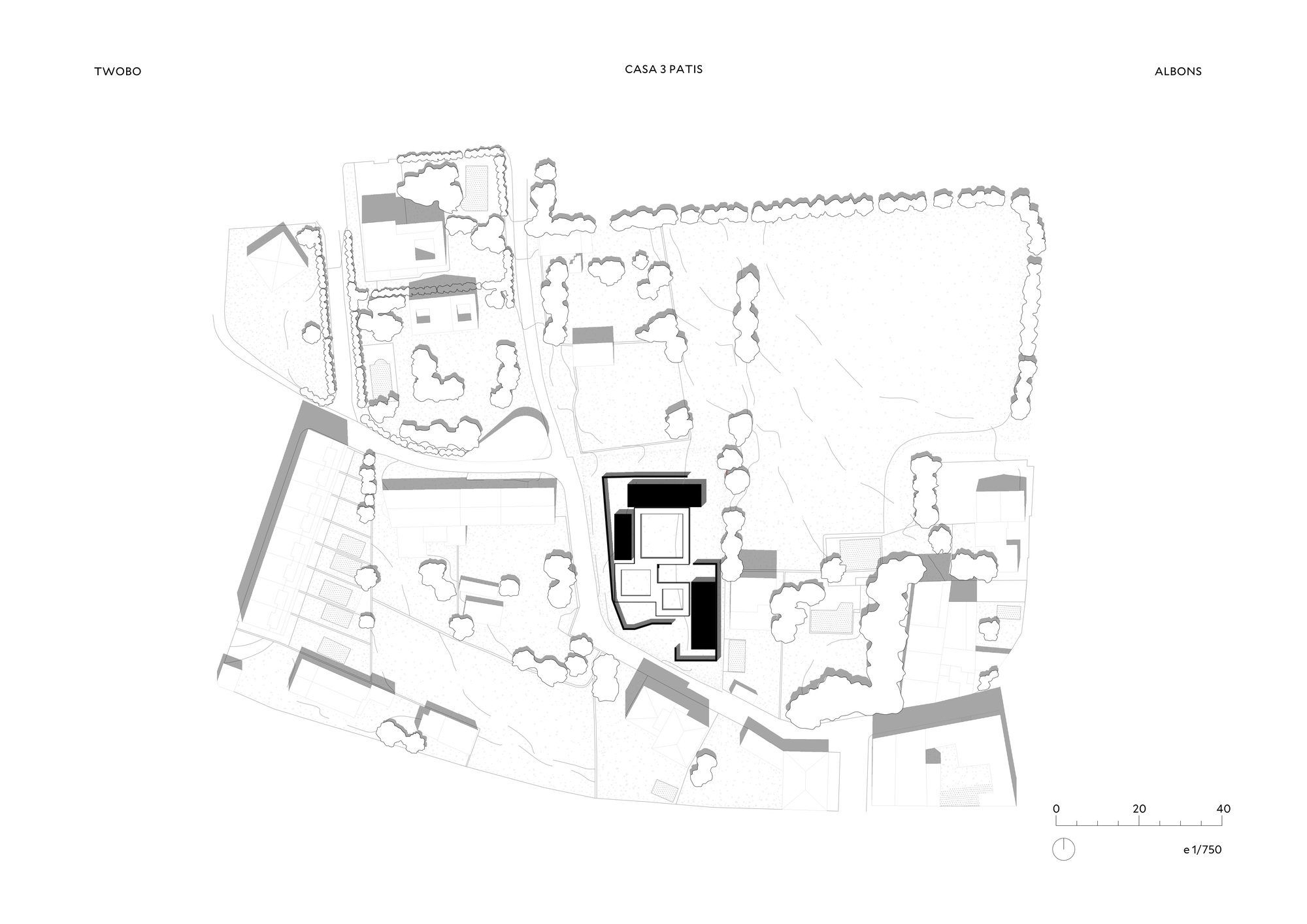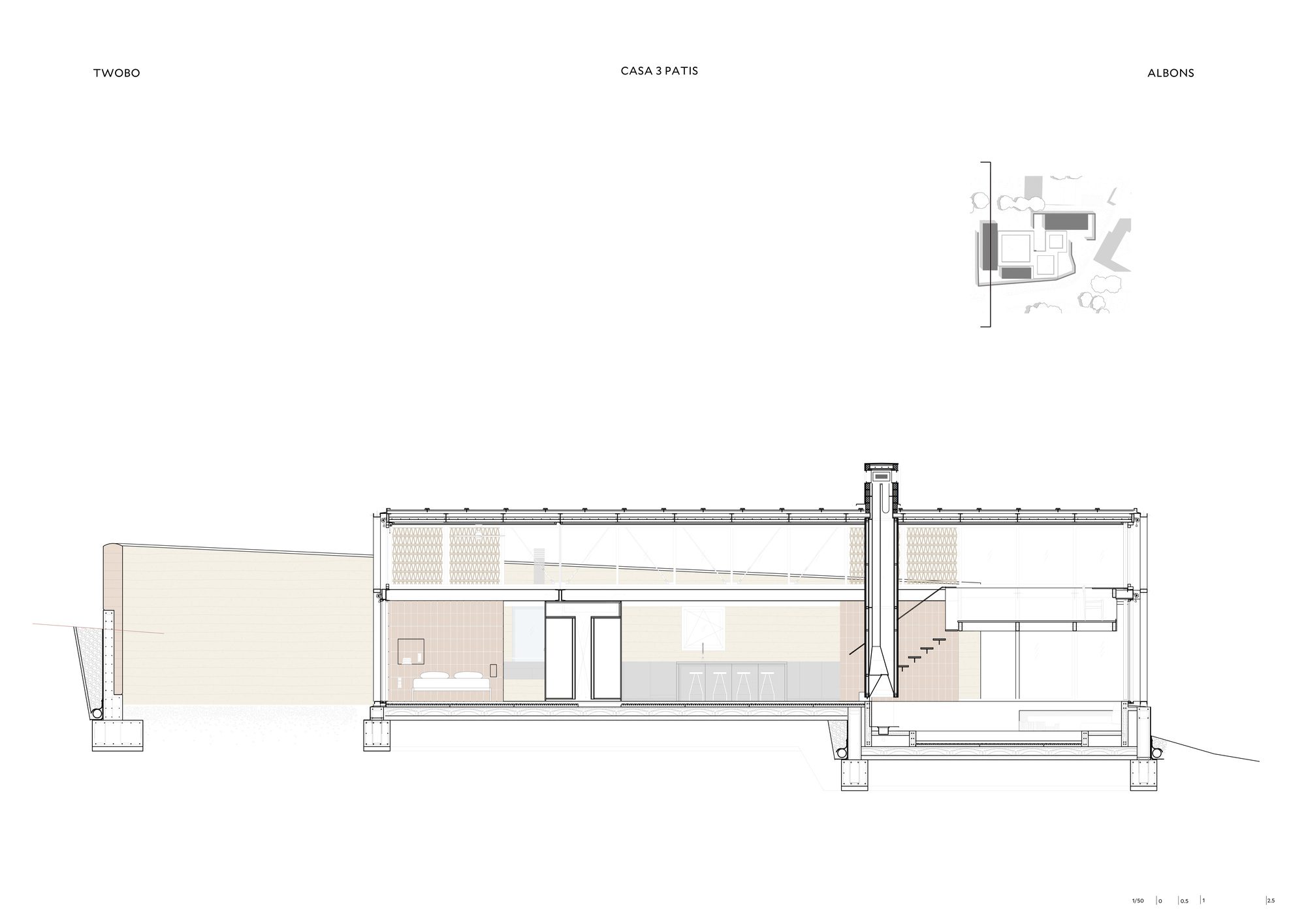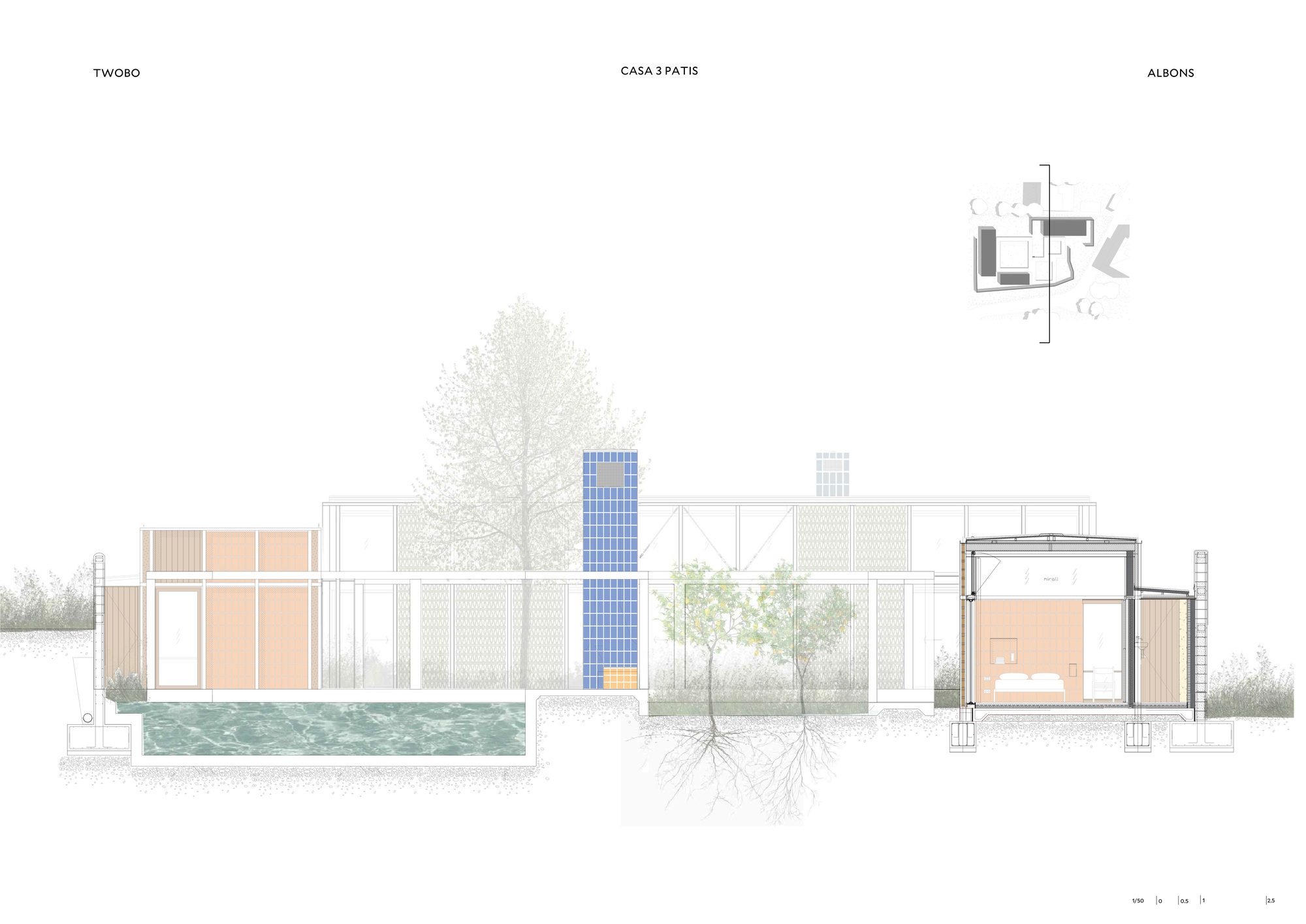


Tres Patis House, In the plains of Empordà, a few kilometers from the Greco-Roman ruins of Empúries, stands Casa Tres Patis, a single-family home of 300 m² that interprets the classic archetypes of the Mediterranean villa in a contemporary language. Designed by Twobo architecture, the project is based on a central idea: to create a livable space where architecture interacts with light, wind, water, and the body.
© Jose Hevia
“We didn’t want it to be a house in the landscape; we wanted the entire house to be the landscape,” affirm María Pancorbo, Alberto Twose, and Pablo Twose from Twobo architecture.
© Jose Hevia
A couple consisting of an art historian and a cinematographer who worked in California entrusted the architects with the development of the project. To define the design approach, they shared several key references with the studio: on one hand, the California Case Study Houses, with their experimental vision of modern housing; on the other hand, the Greek and Roman ruins of Empúries, where architecture presents itself as a vestige and void in relation to the place.
© Jose Hevia
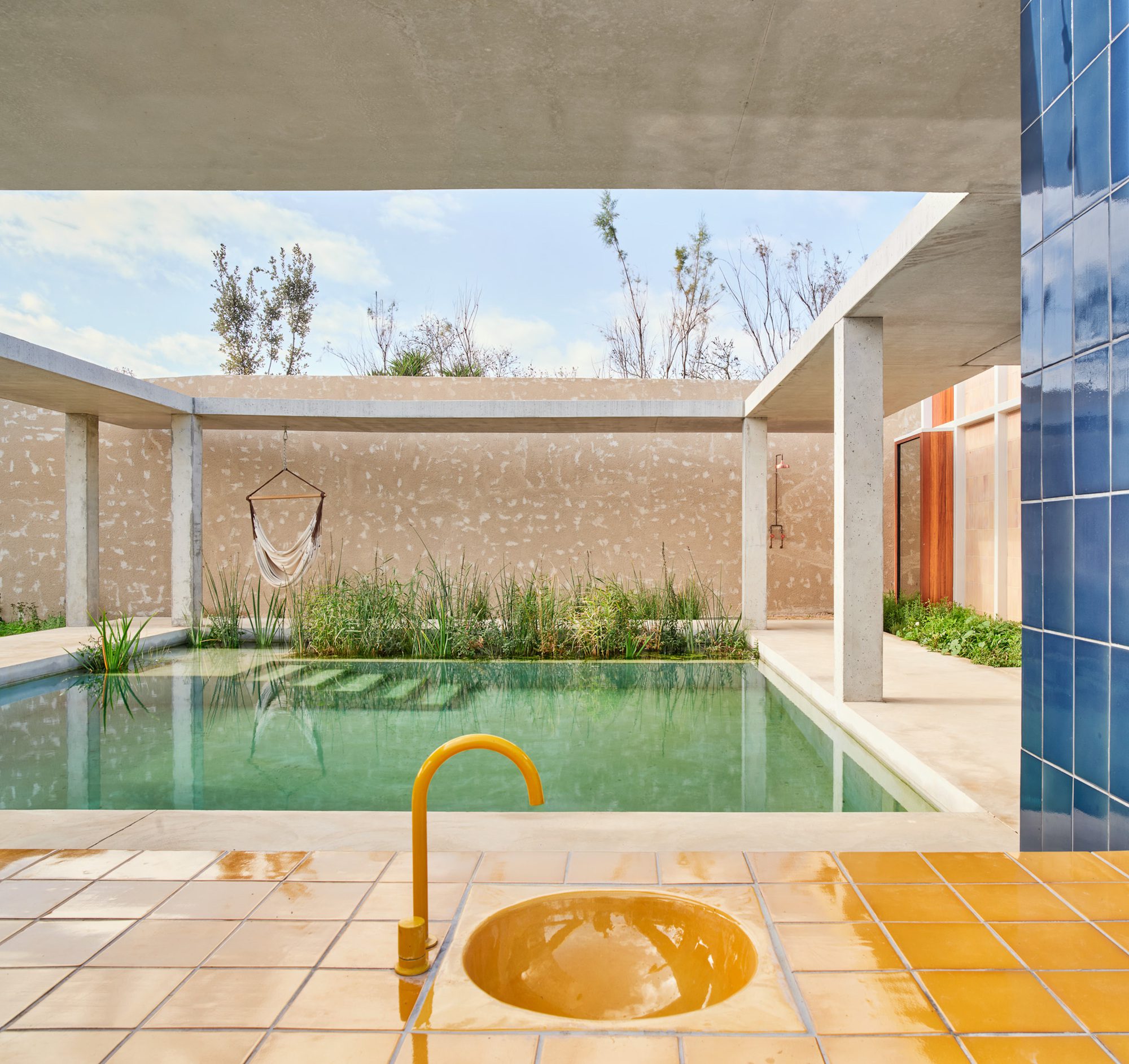
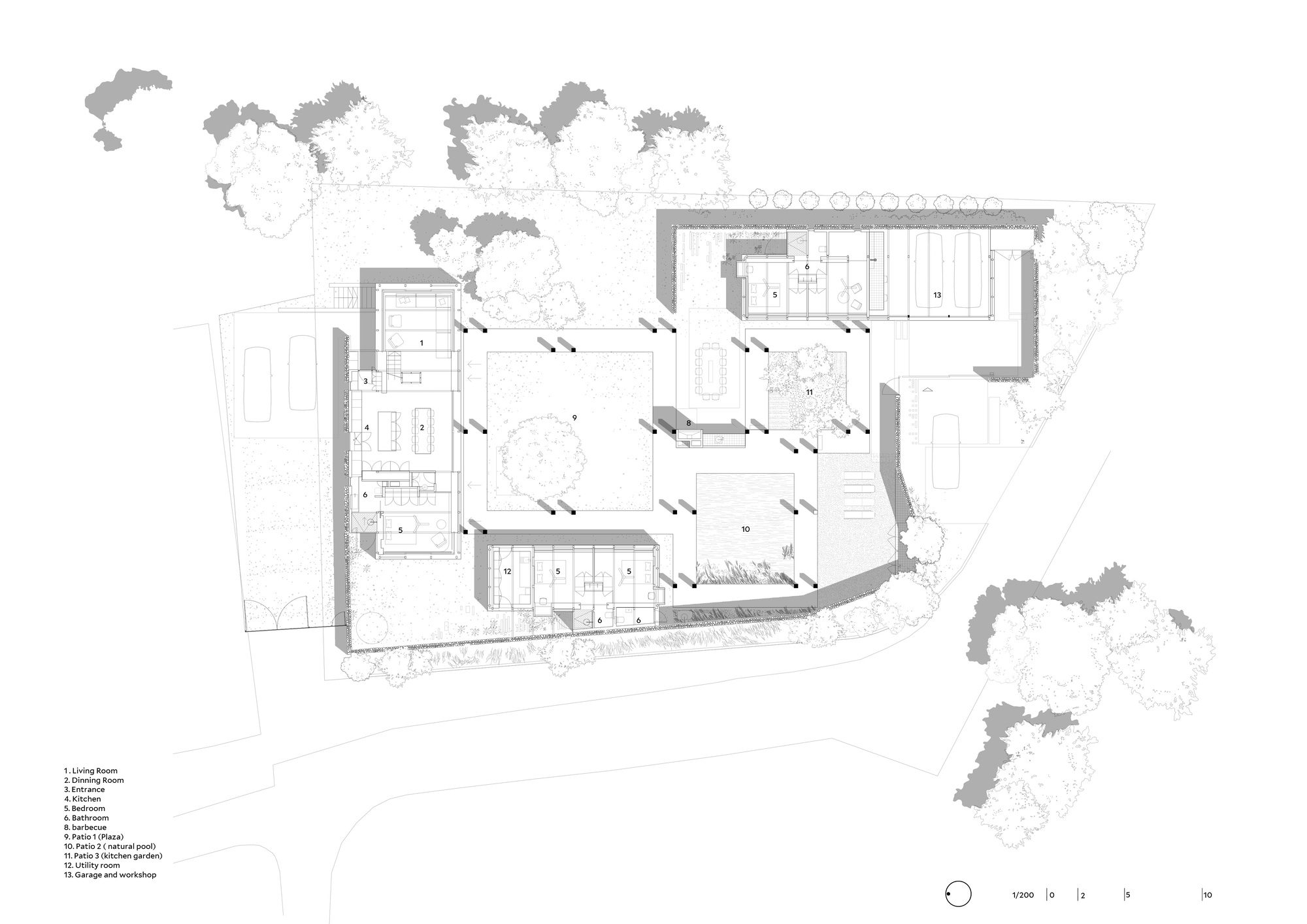
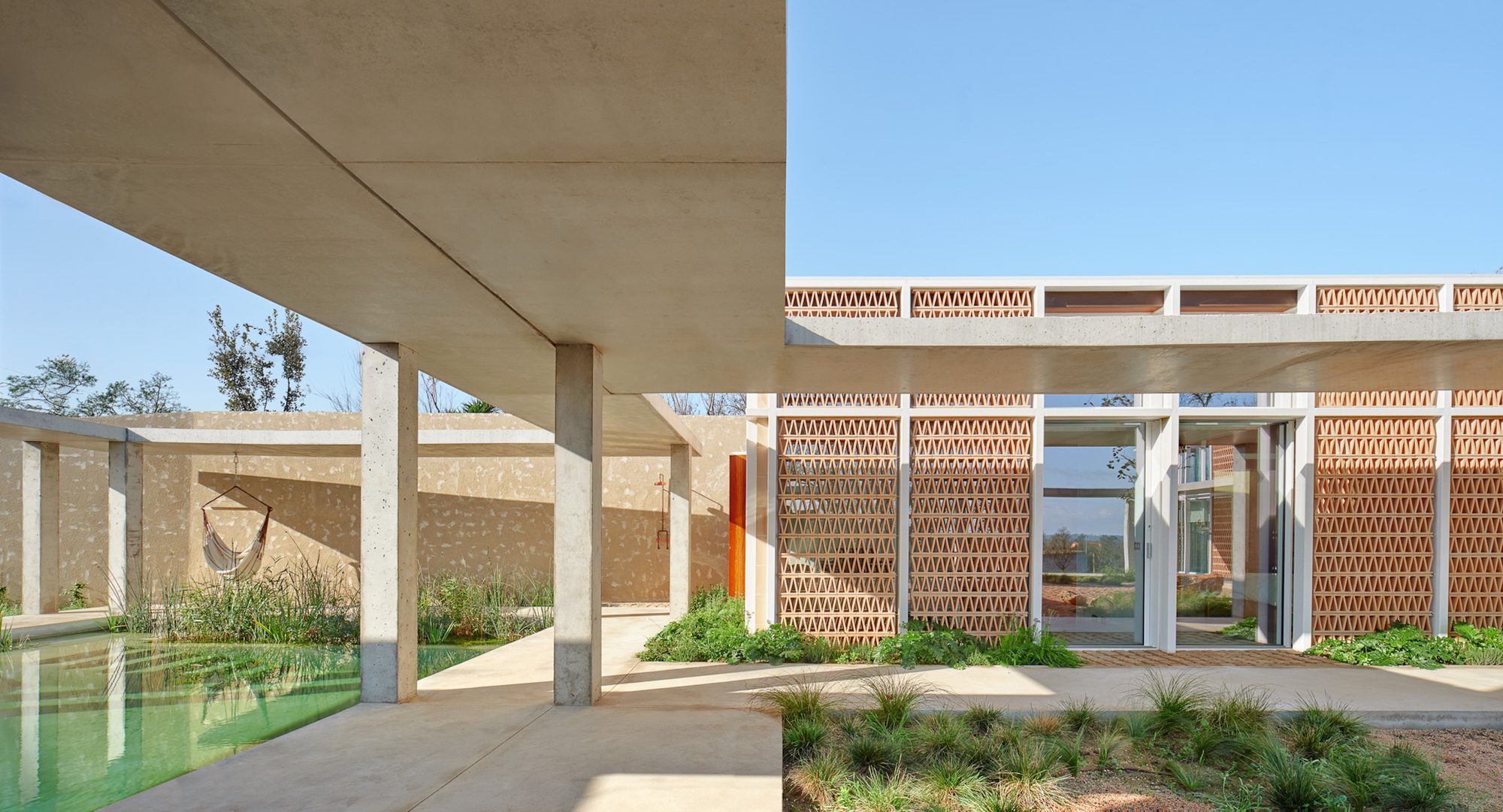
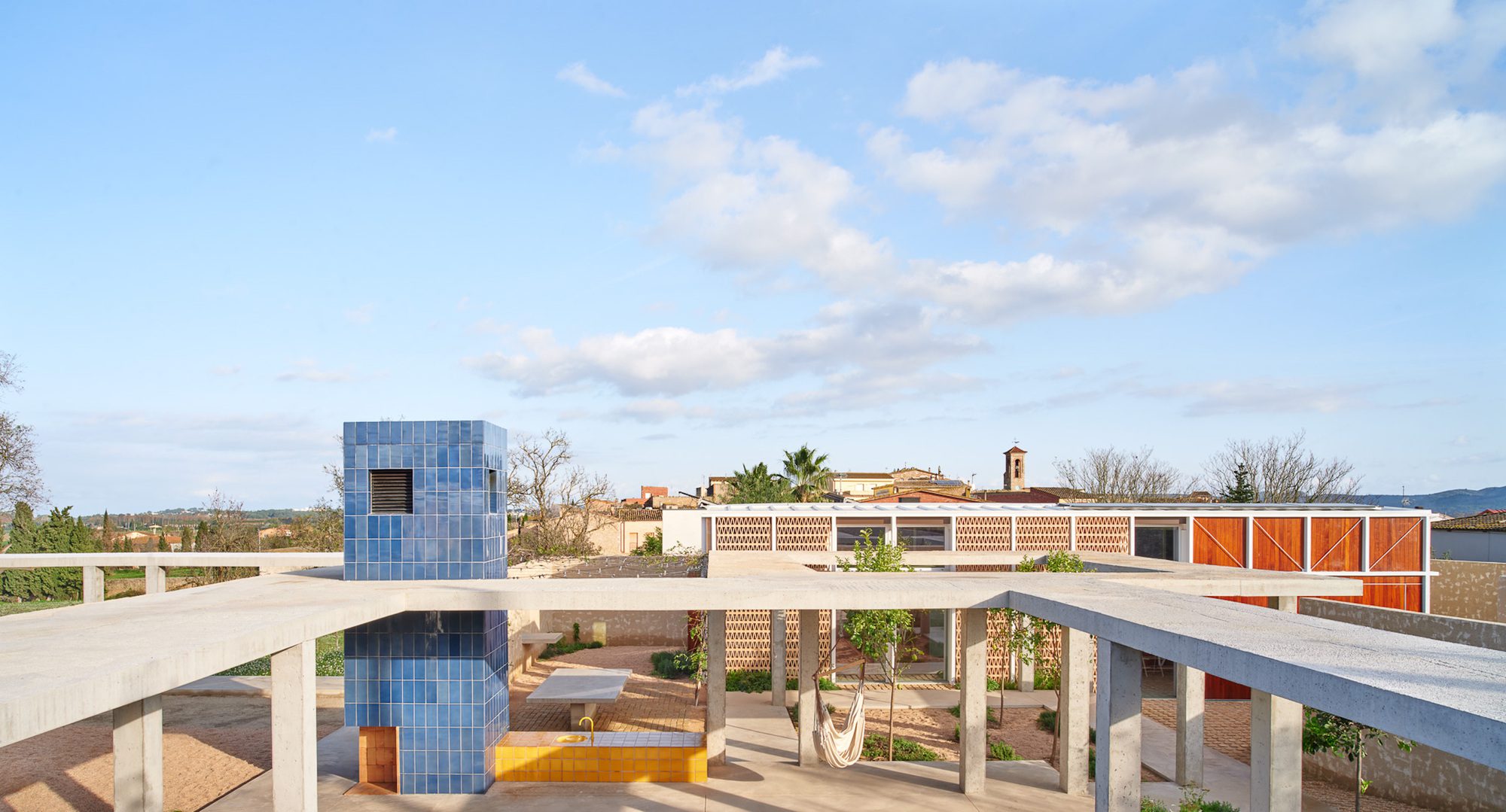
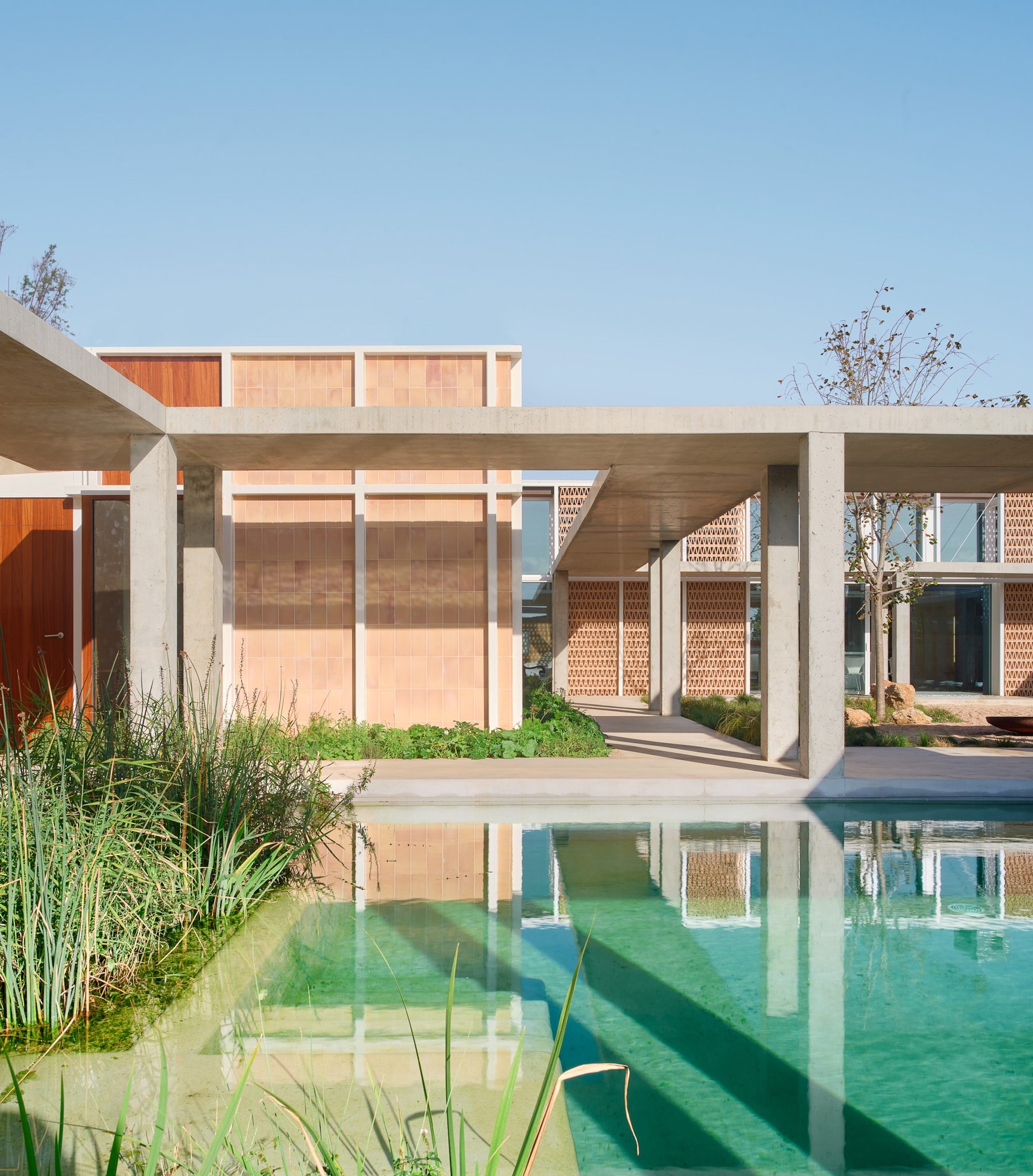
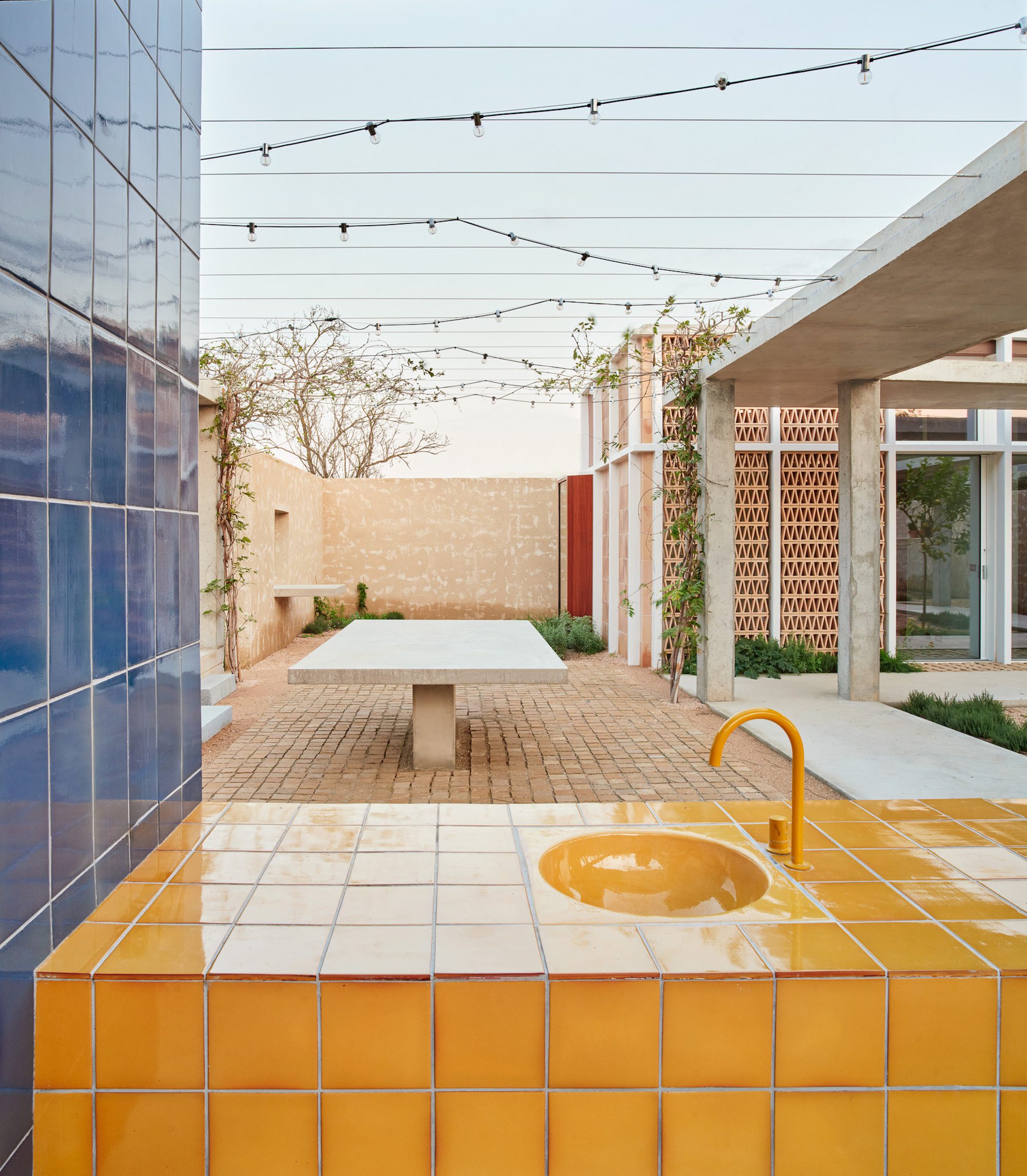
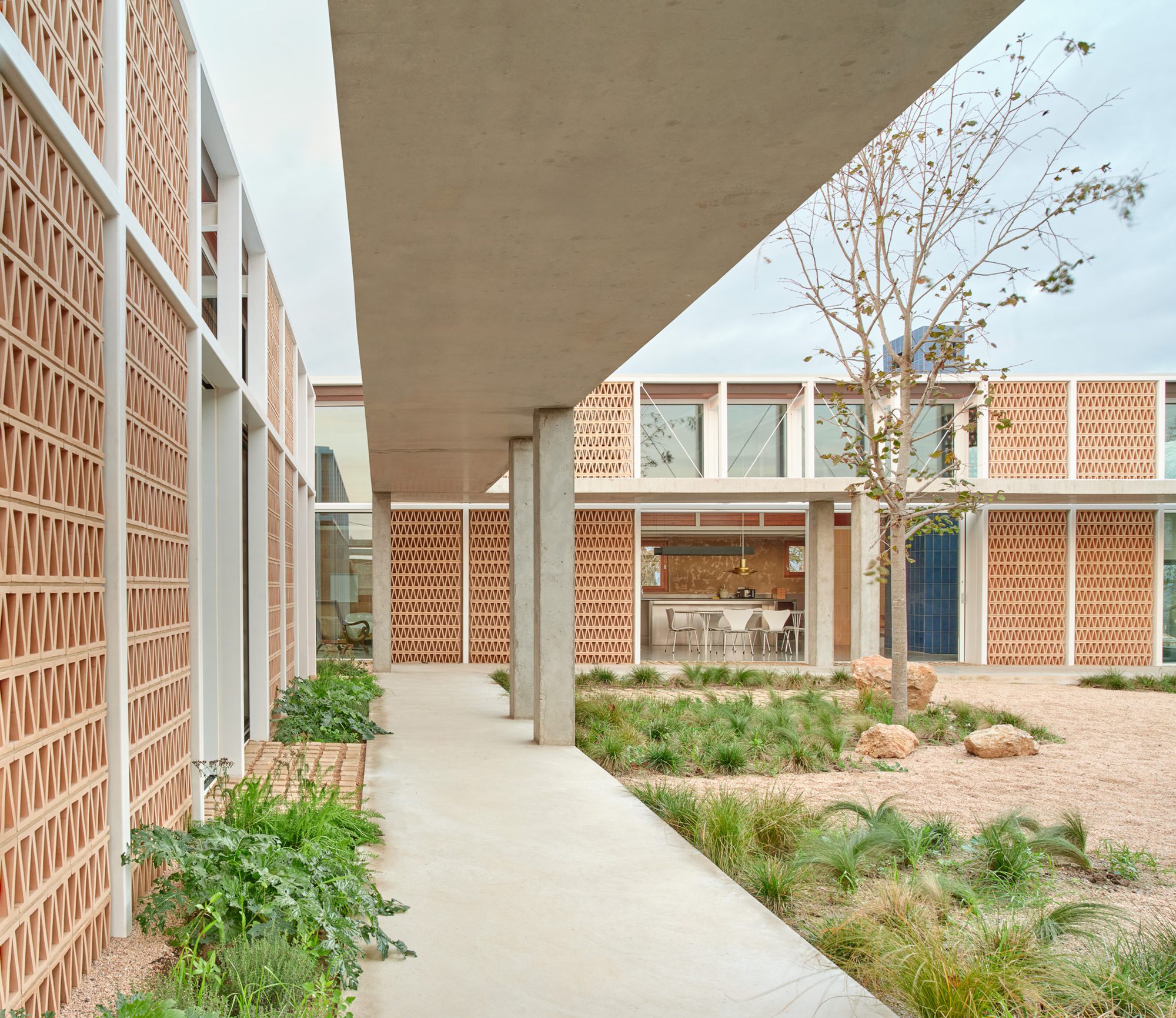
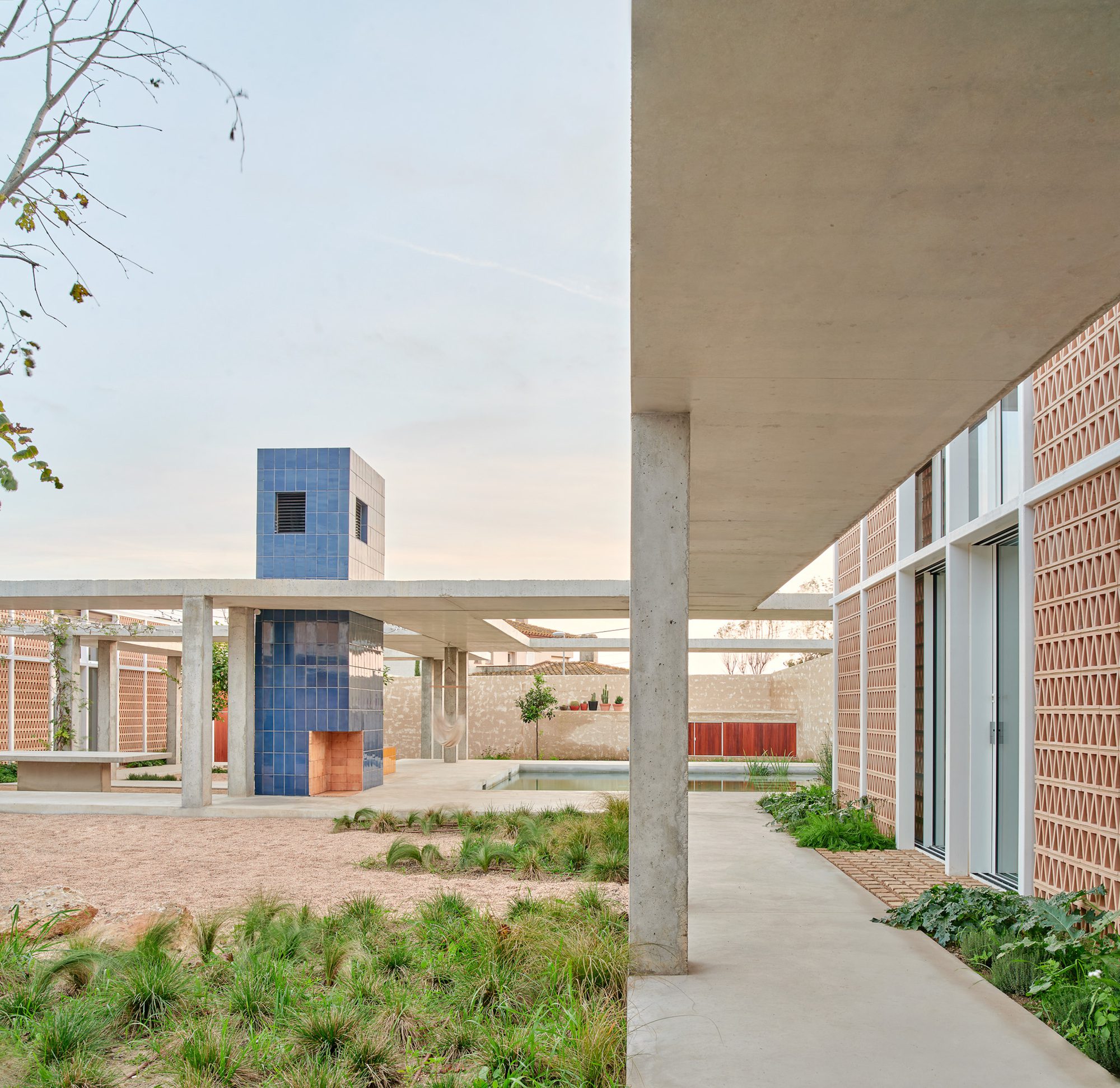
Twobo conceived Casa Tres Patis as a set of independent pavilions arranged around three courtyards, transformed into pillars of domestic life. Each courtyard is a lived space, a place for gathering and contemplation, an active element of the architecture. The first, open and shaded by a tree, evokes social life in a large square, with a stone table, a barbecue, a climbing wisteria, and an area for playing petanque. The second reinterprets the Roman impluvium as a place of contemplation and respite. The third, intimate and serene, houses an aromatic garden reminiscent of monastic gardens.
© Jose Hevia
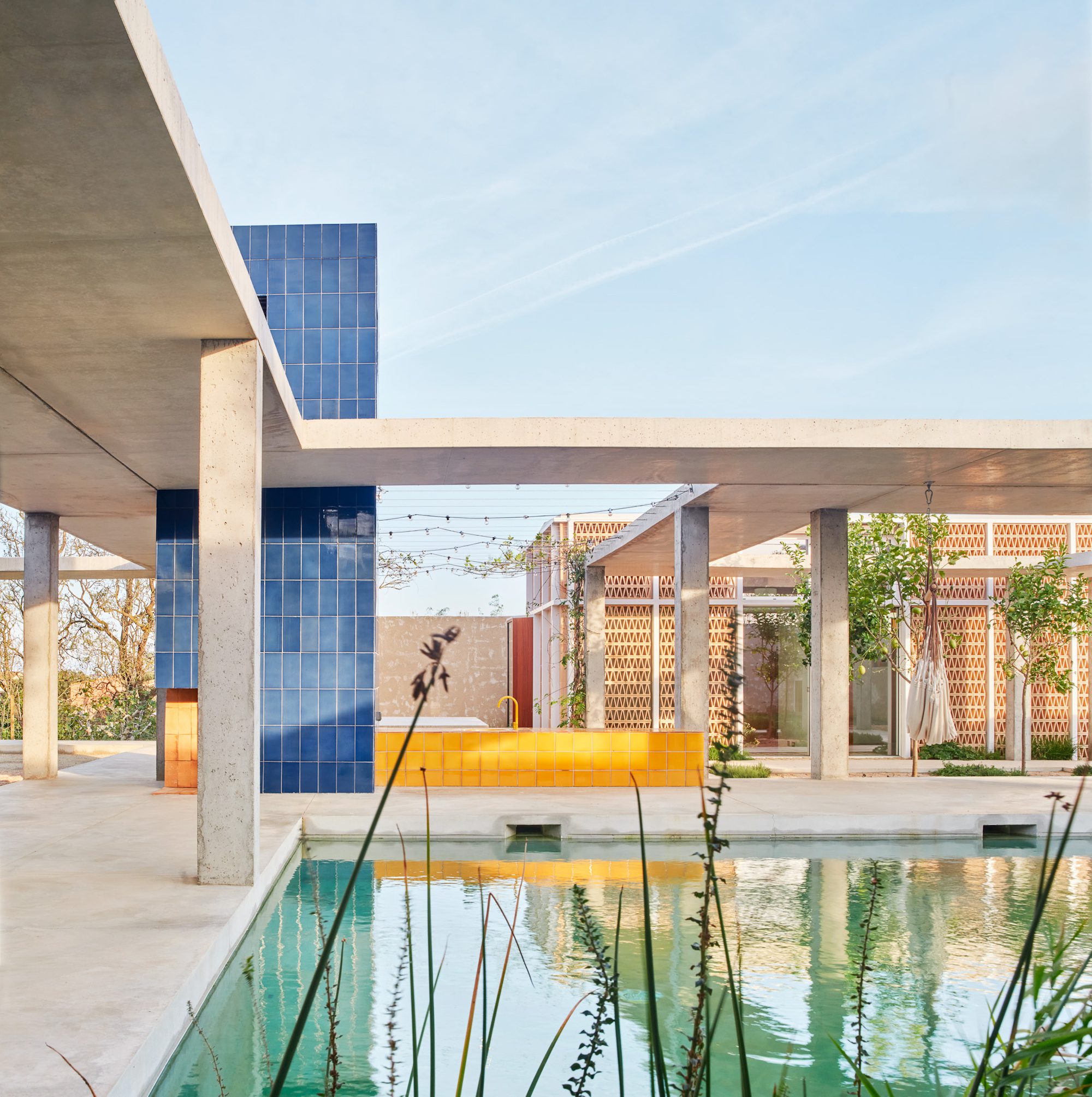
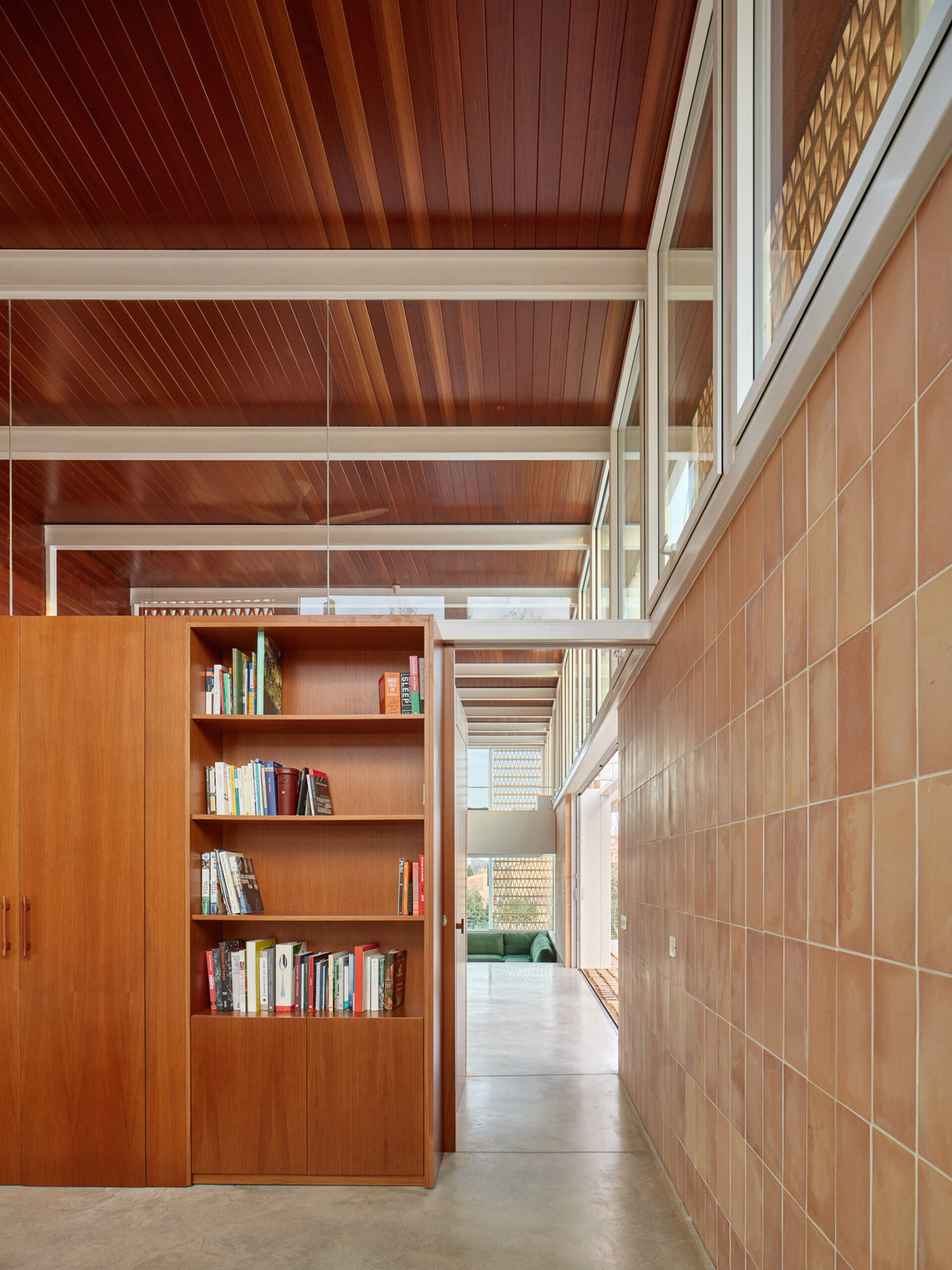
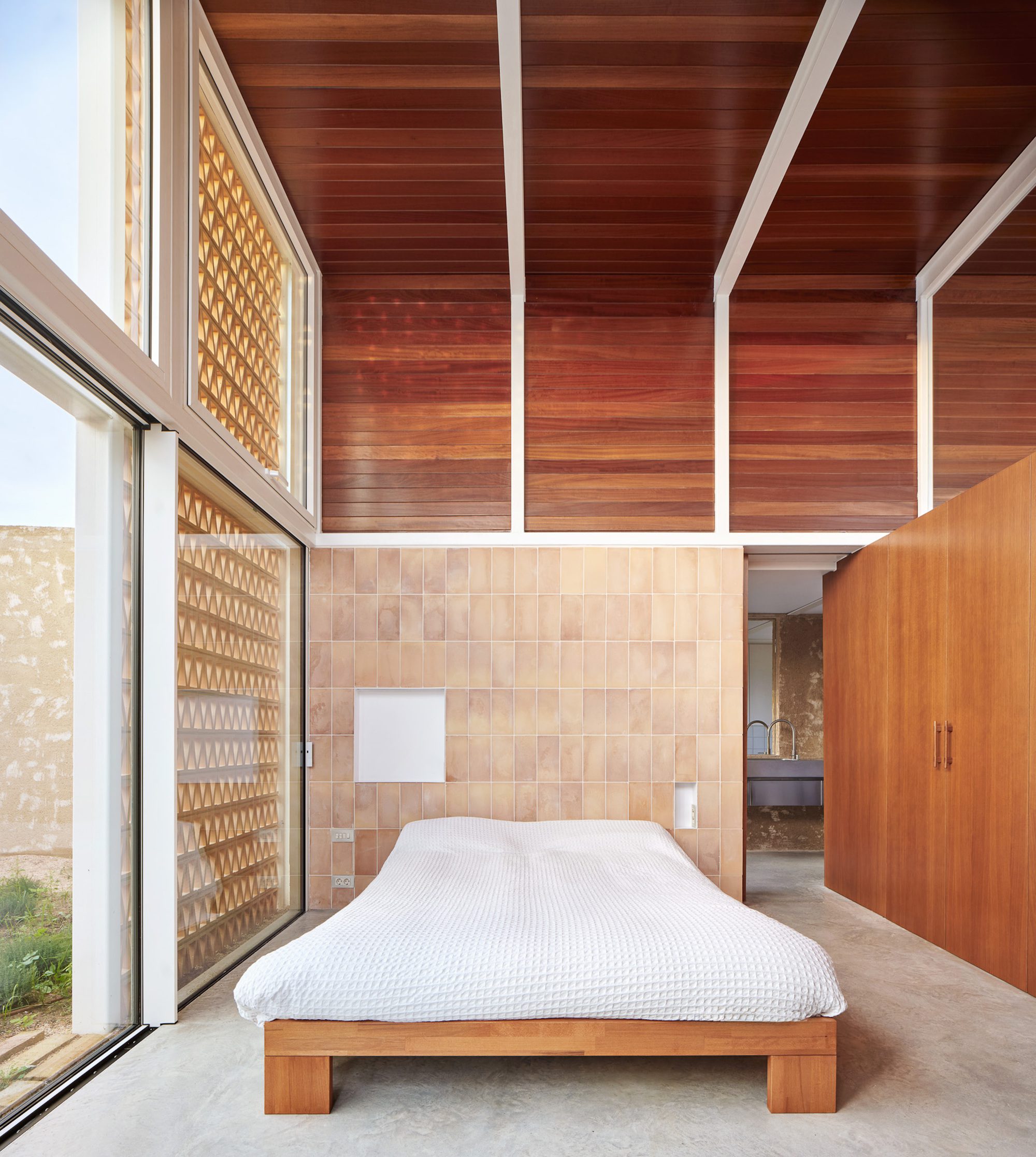
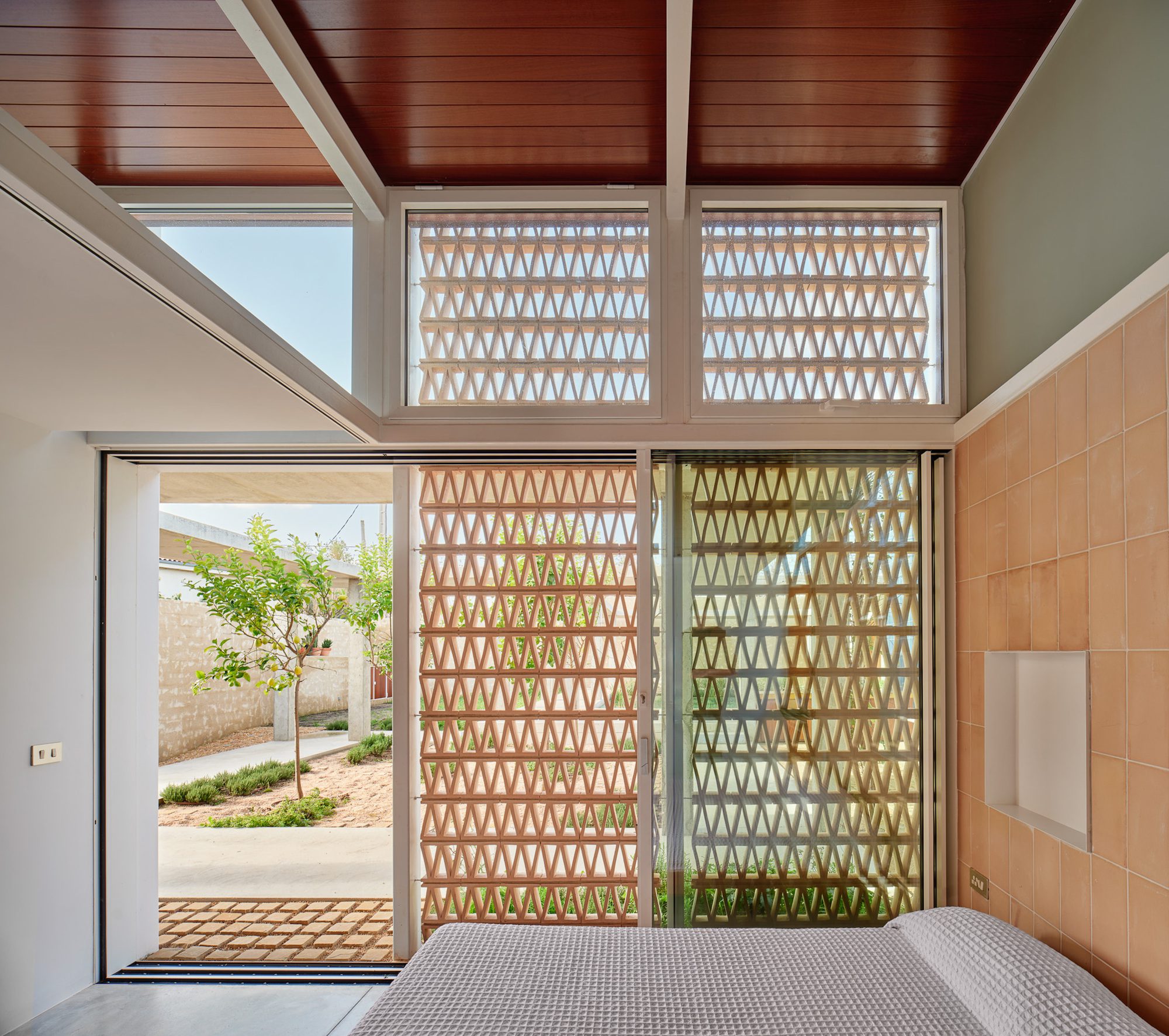
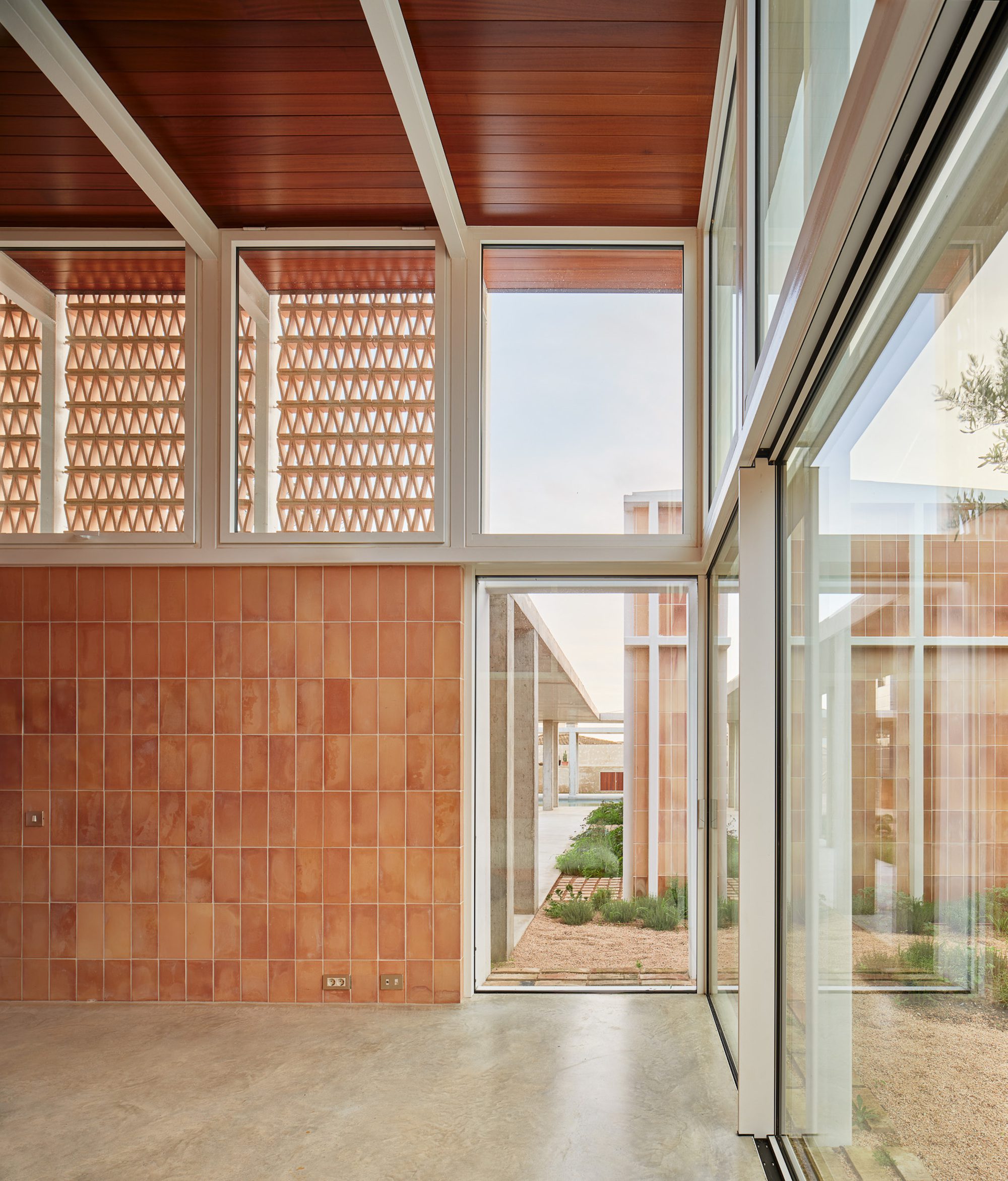
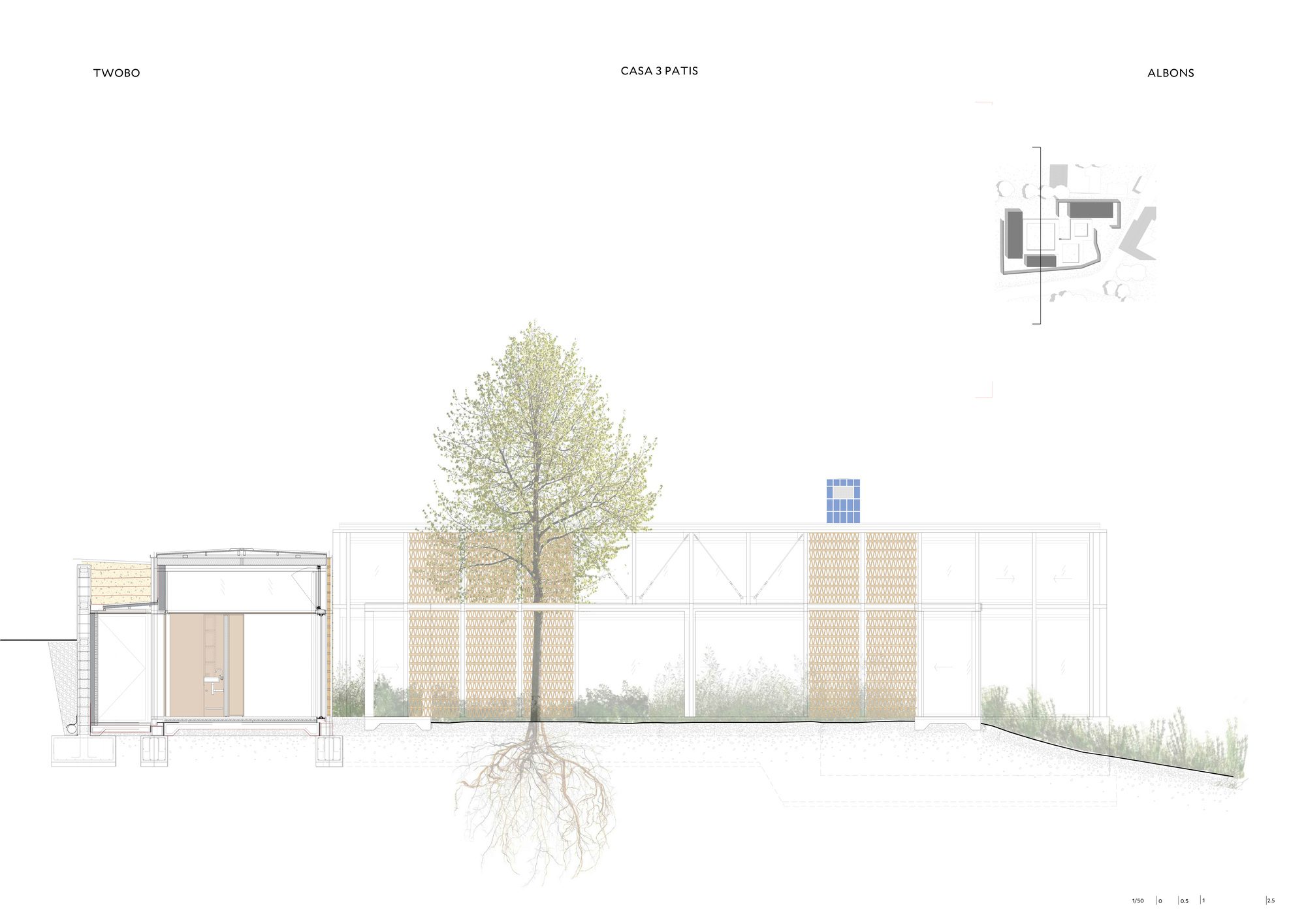
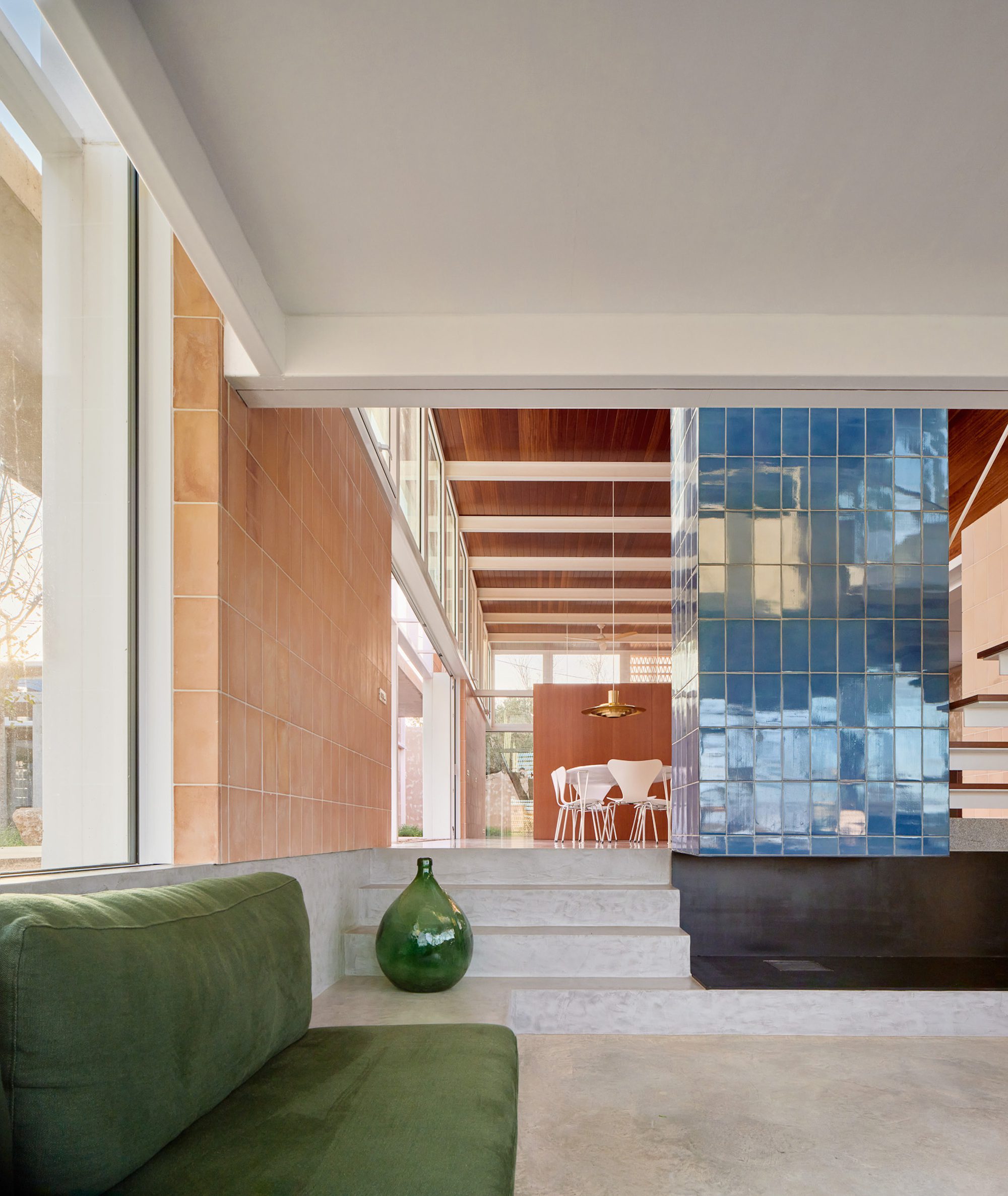
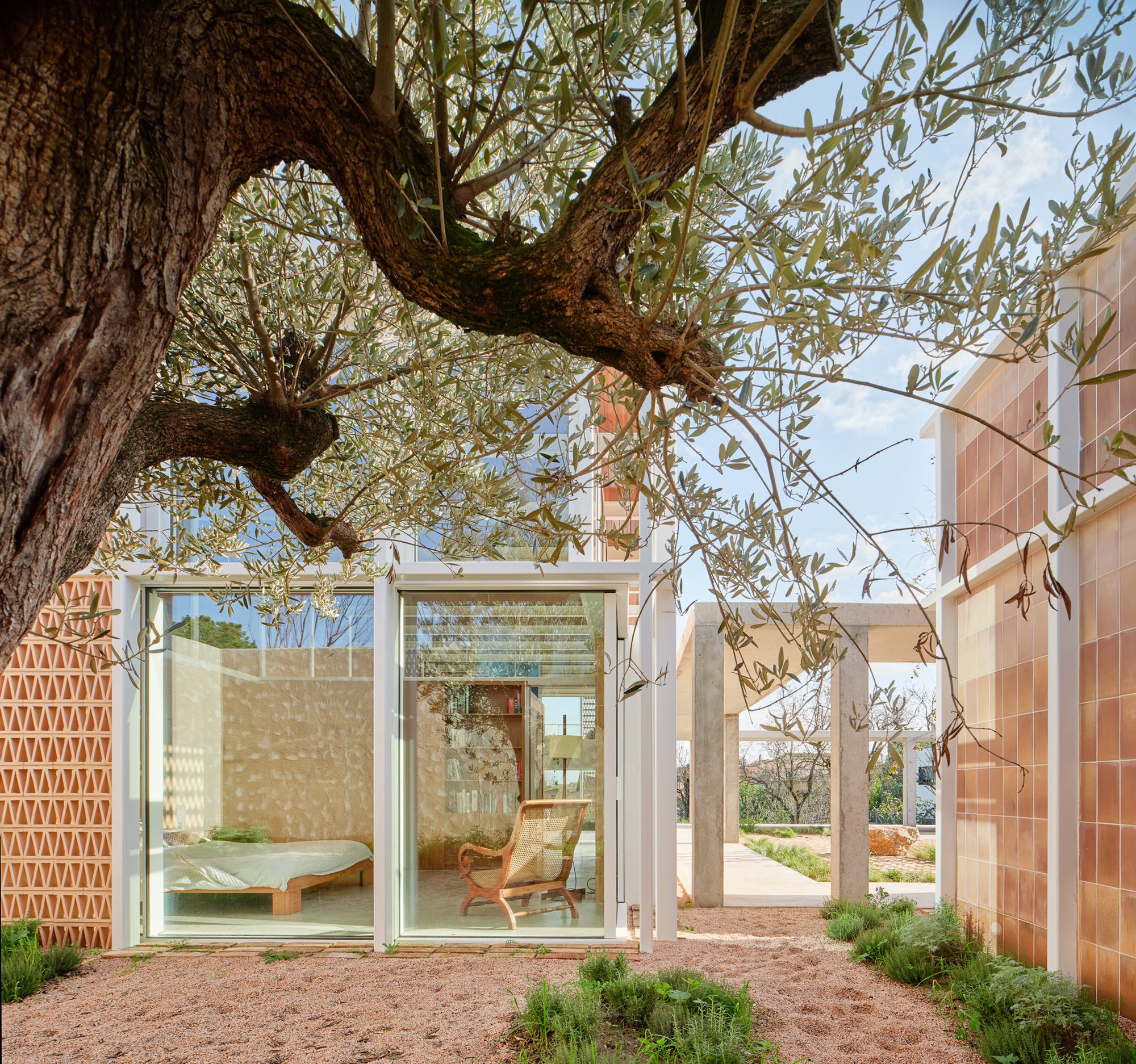
The pavilions, for their part, are conceived as lightweight, almost mobile structures, and each responds to a specific aspect of life: one main structure with a kitchen, living room, bathroom, and bedroom; another with children’s rooms and laundry; and a third that serves as a guest house and workshop. All were built with materials in harmony with the climate and surroundings: ceramic screens, wooden panels, metal structures, and large glass enclosures.
© Jose Hevia
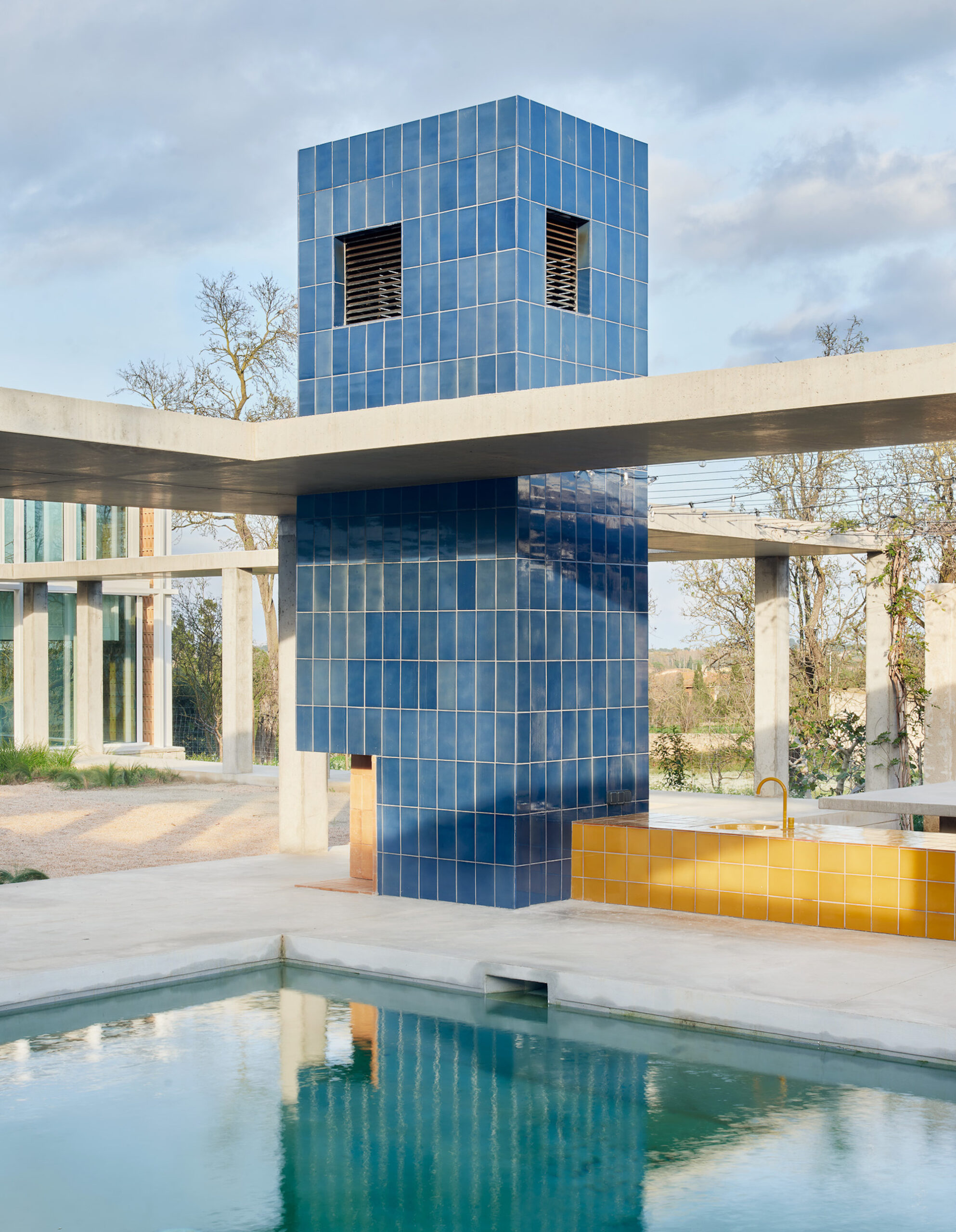
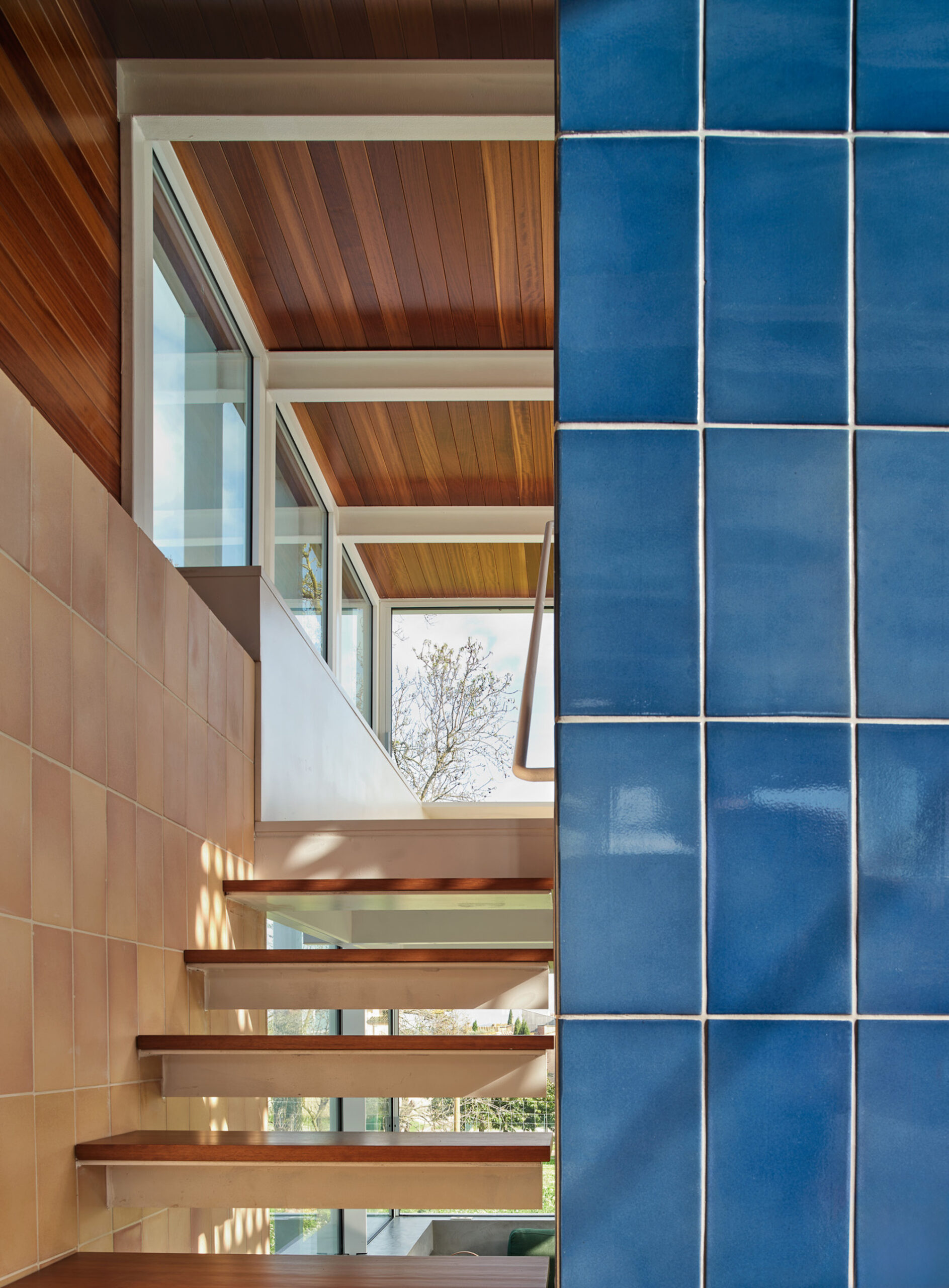
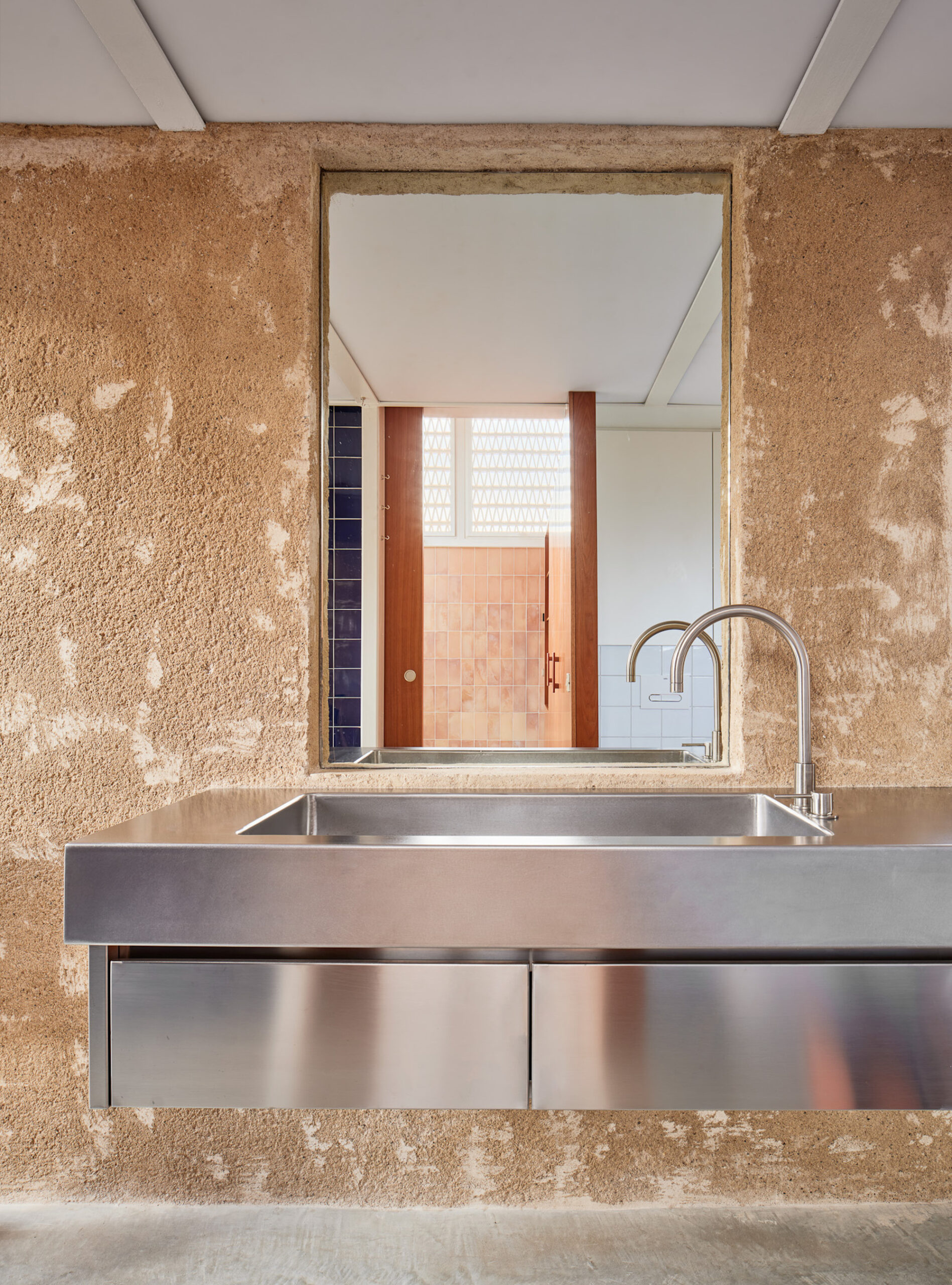
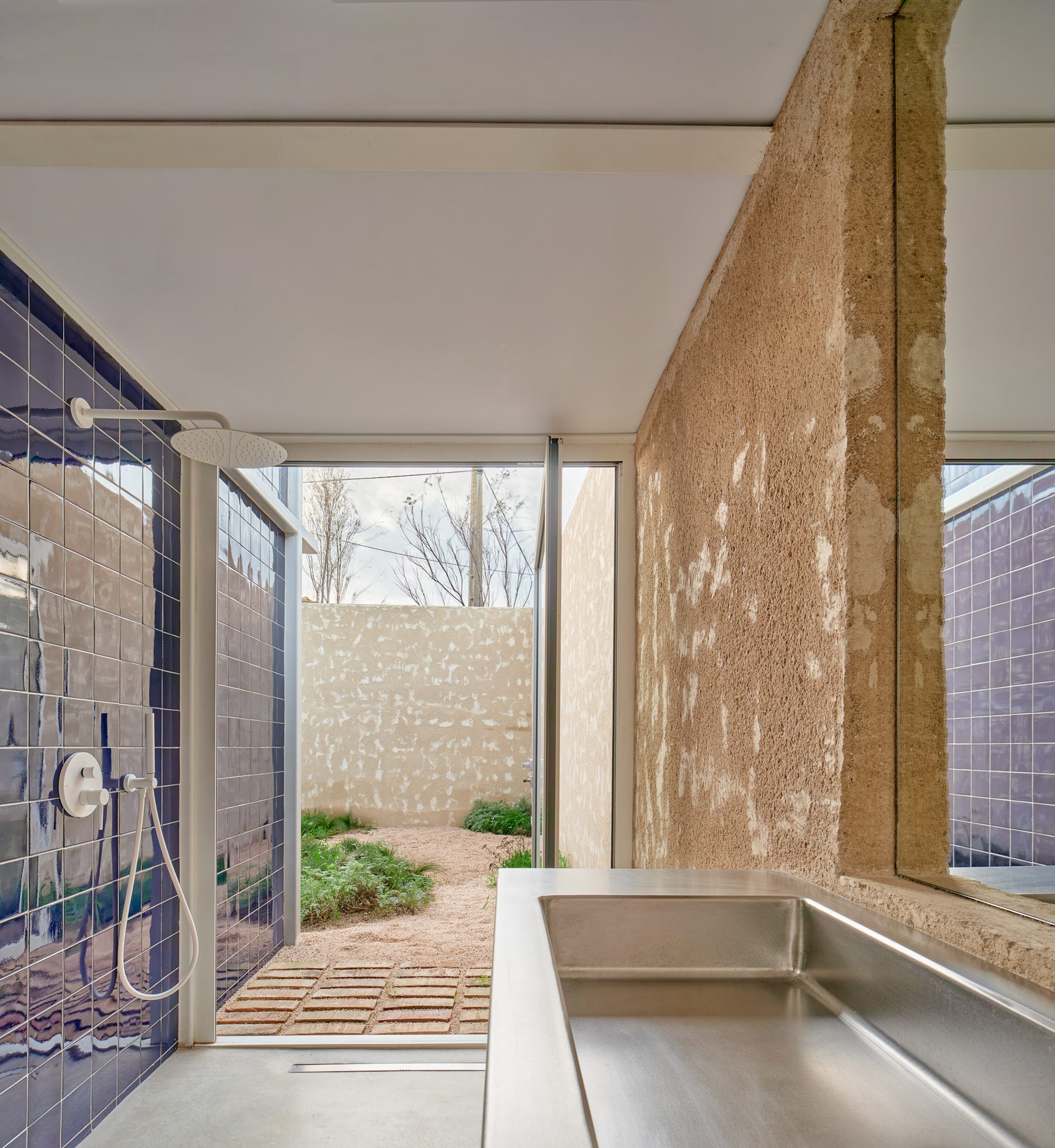
Local handcrafted materials are integrated into various corners of the home, adding a new layer of tradition. In this case, the screens and blue tiles made by Cerámica Ferrés stand out, whose workshop is located just a few kilometers from the site.
© Jose Hevia
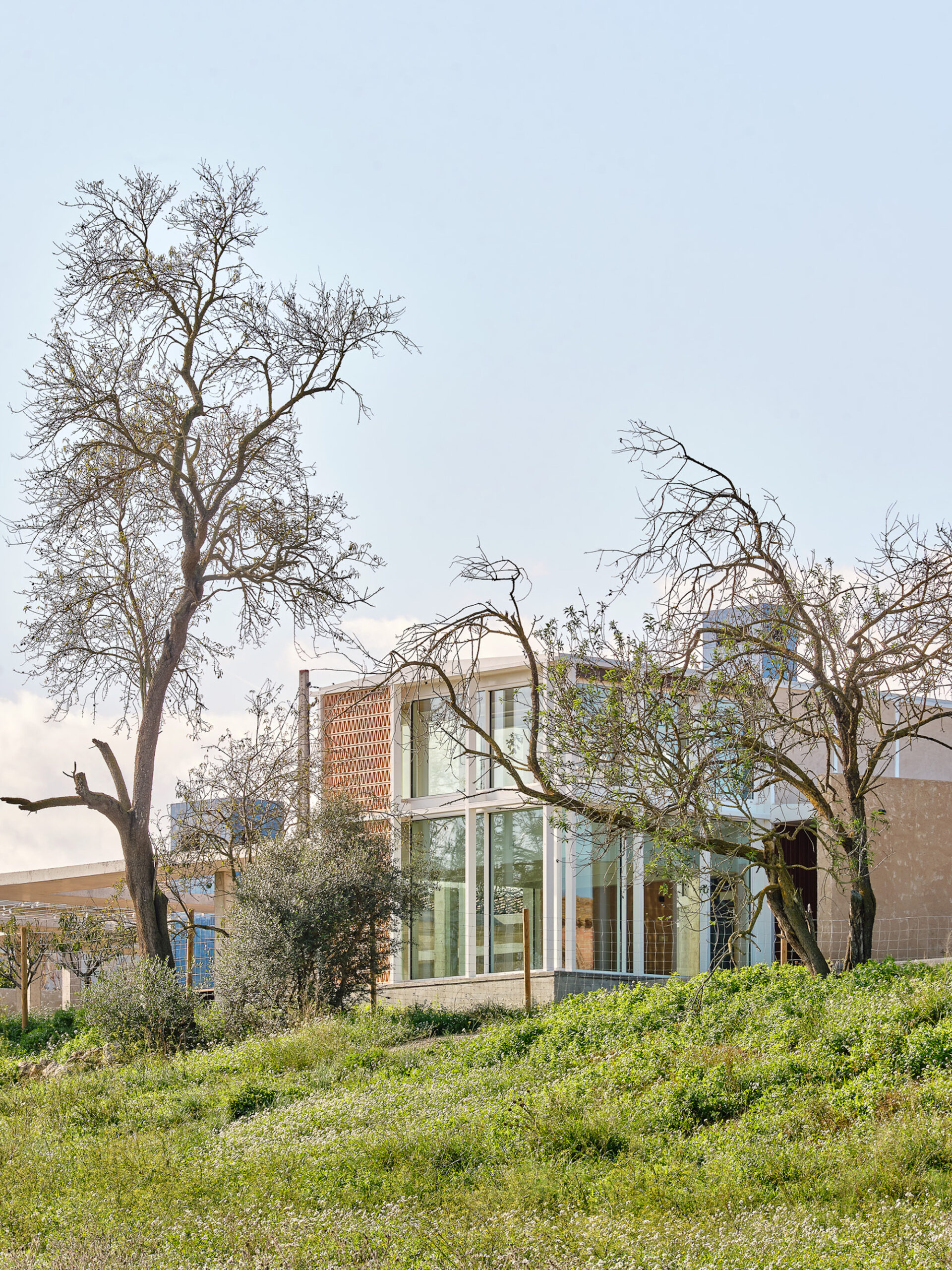
Taking Richard Neutra as a reference, a key figure of the Modern Movement in California and architect of the Case Study House #20, the volumes feature repetitive metal structures and large windows protected by natural shades or triangular screens that mitigate the intense summer sun.
© Jose Hevia
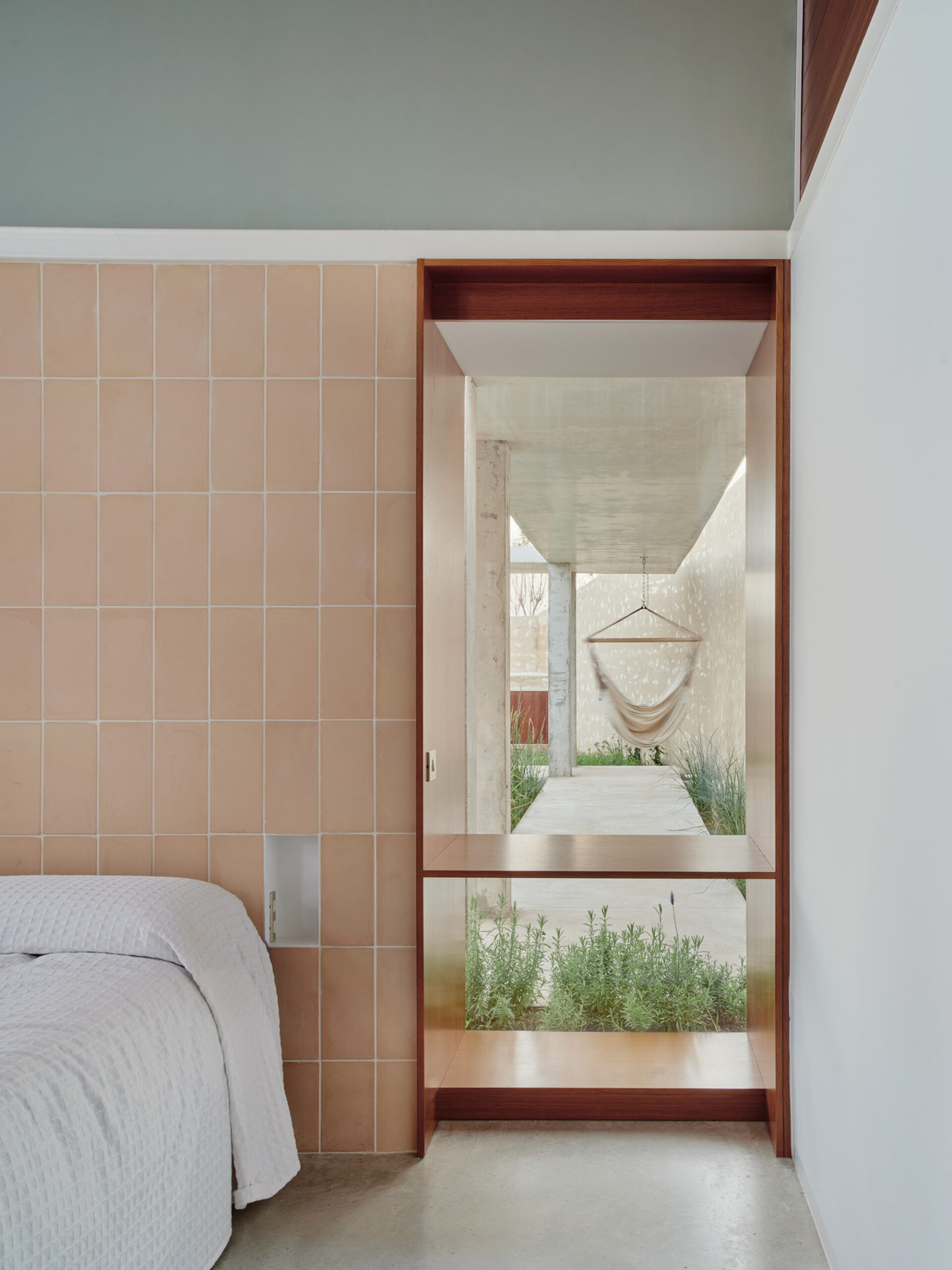
The house seeks to blur the boundaries between interior and exterior through continuous pathways, concrete trails, large windows, and showers that open to the courtyards. A rustic stucco wall embraces the terrain, protecting the home from the tramontane wind while framing fragments of the rural landscape for those who inhabit its interior.
© Jose Hevia
In terms of comfort, Casa Tres Patis incorporates passive and active energy efficiency solutions: natural cross ventilation, optimal solar orientation, insulating walls, gray water recycling systems, and solar panels. All of this reinforces the studio’s commitment to sustainable architecture, without sacrificing expressiveness or beauty.
© Jose Hevia
Casa Tres Patis does not aim to impose a way of living, but simply to suggest one, encouraging slow rhythms, connection with nature, and a life centered around the courtyard. Twobo offers a poetic reinterpretation of Mediterranean tradition, where well-being arises from the harmonious relationship between architecture, landscape, and body. A house to inhabit with all the senses.
Project Info
Architects: TwoBo arquitectura
Country: Spain
Area: 300 m²
Year: 2023
Photographs: Jose Hevia