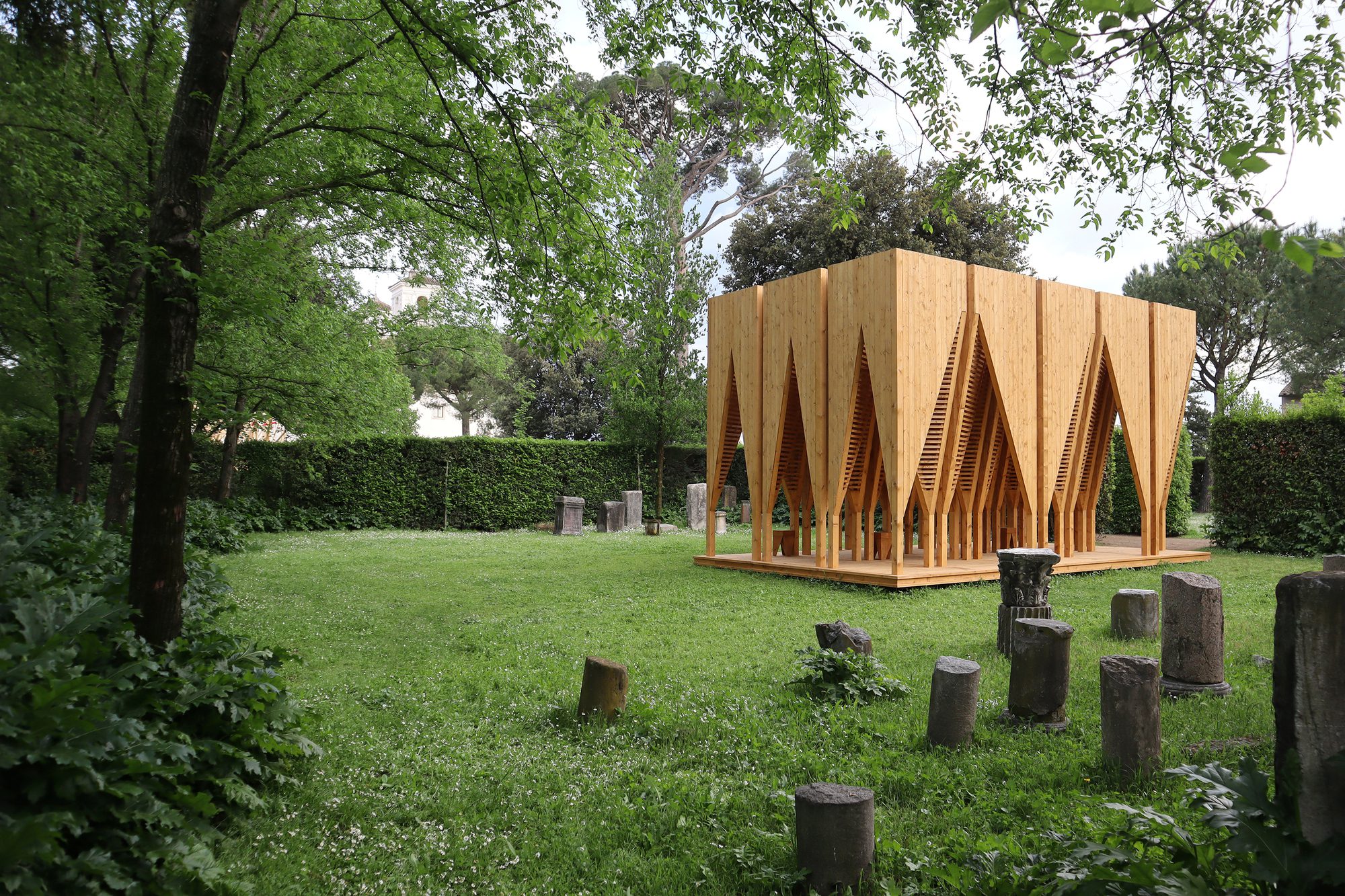


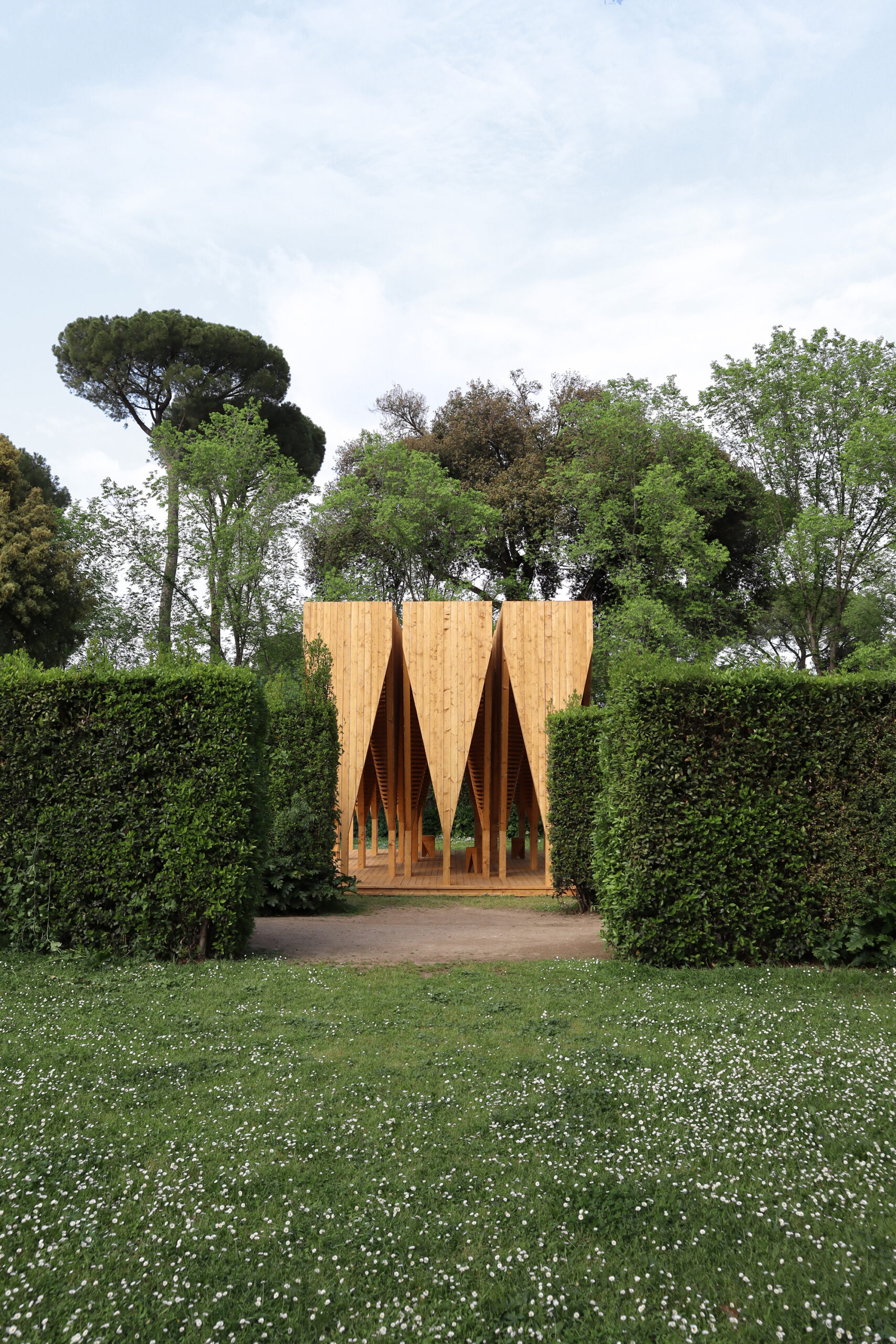
La timidité des cimes Installation, A small wooden temple emerges from the gardens of the Villa Medici in Rome. Designed by Atelier Poem, the work reinvents the concept of the « cabane » through a symbolic experience, a space for imagining other ways of being together.
© Atelier poem
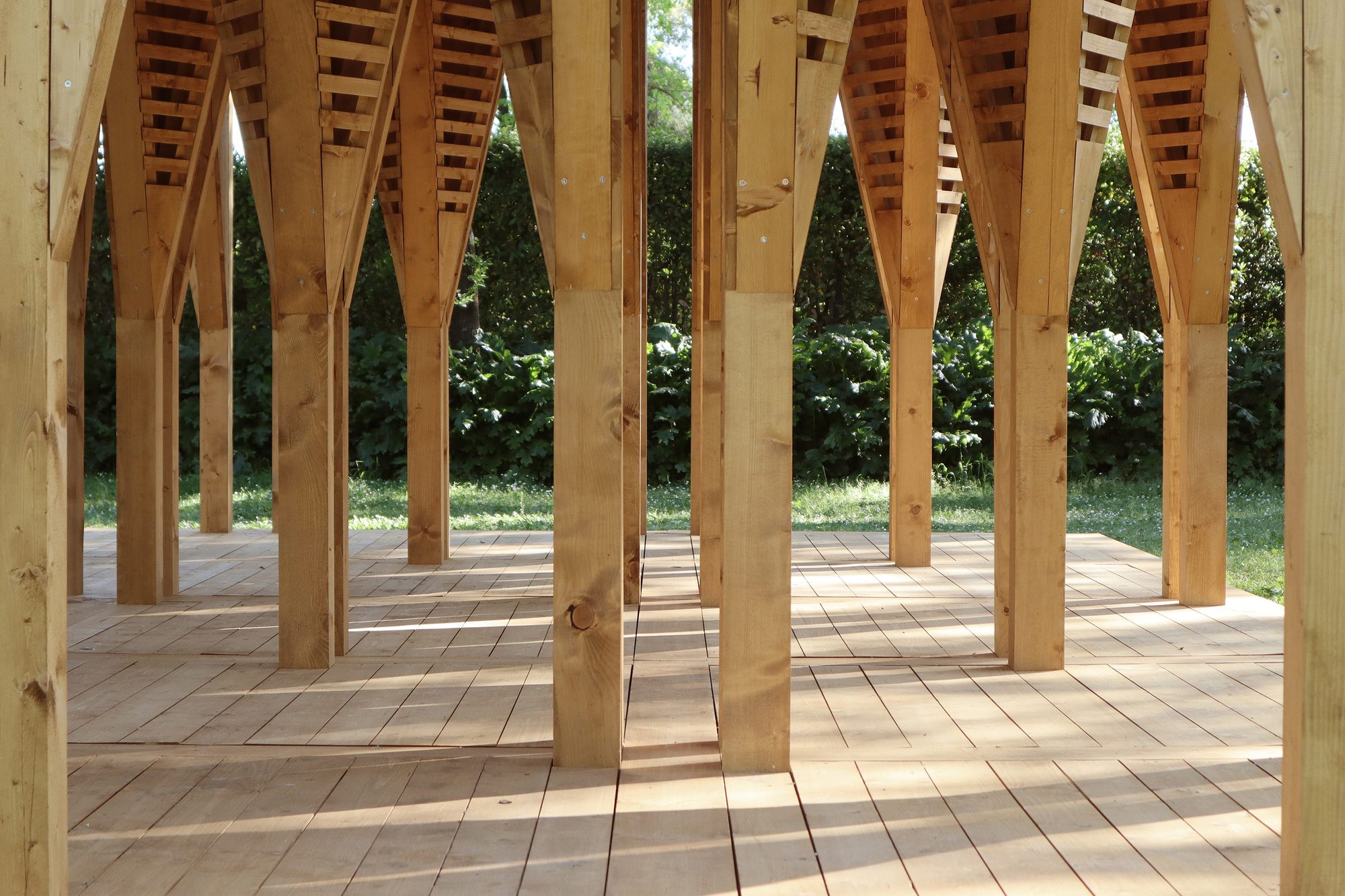
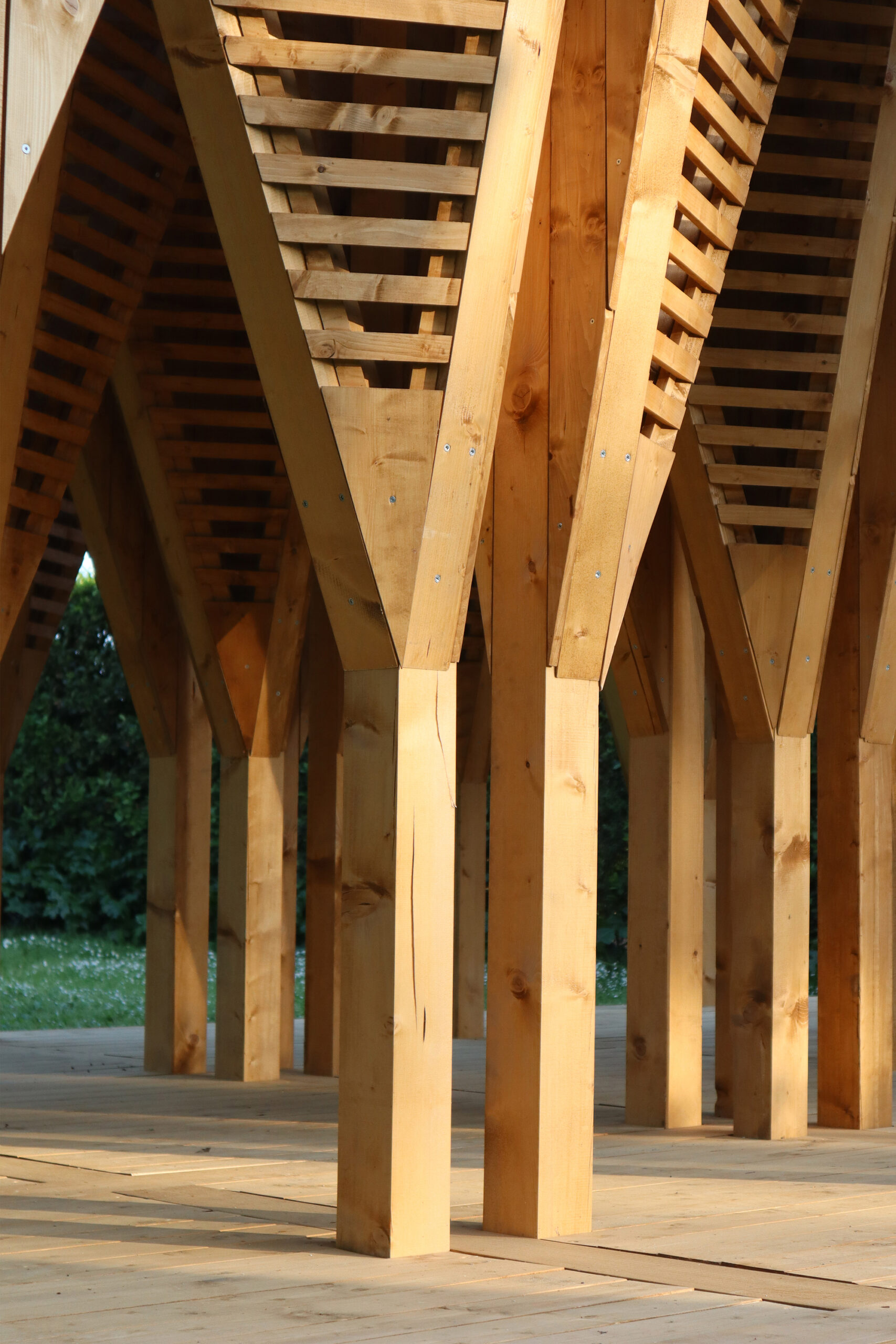
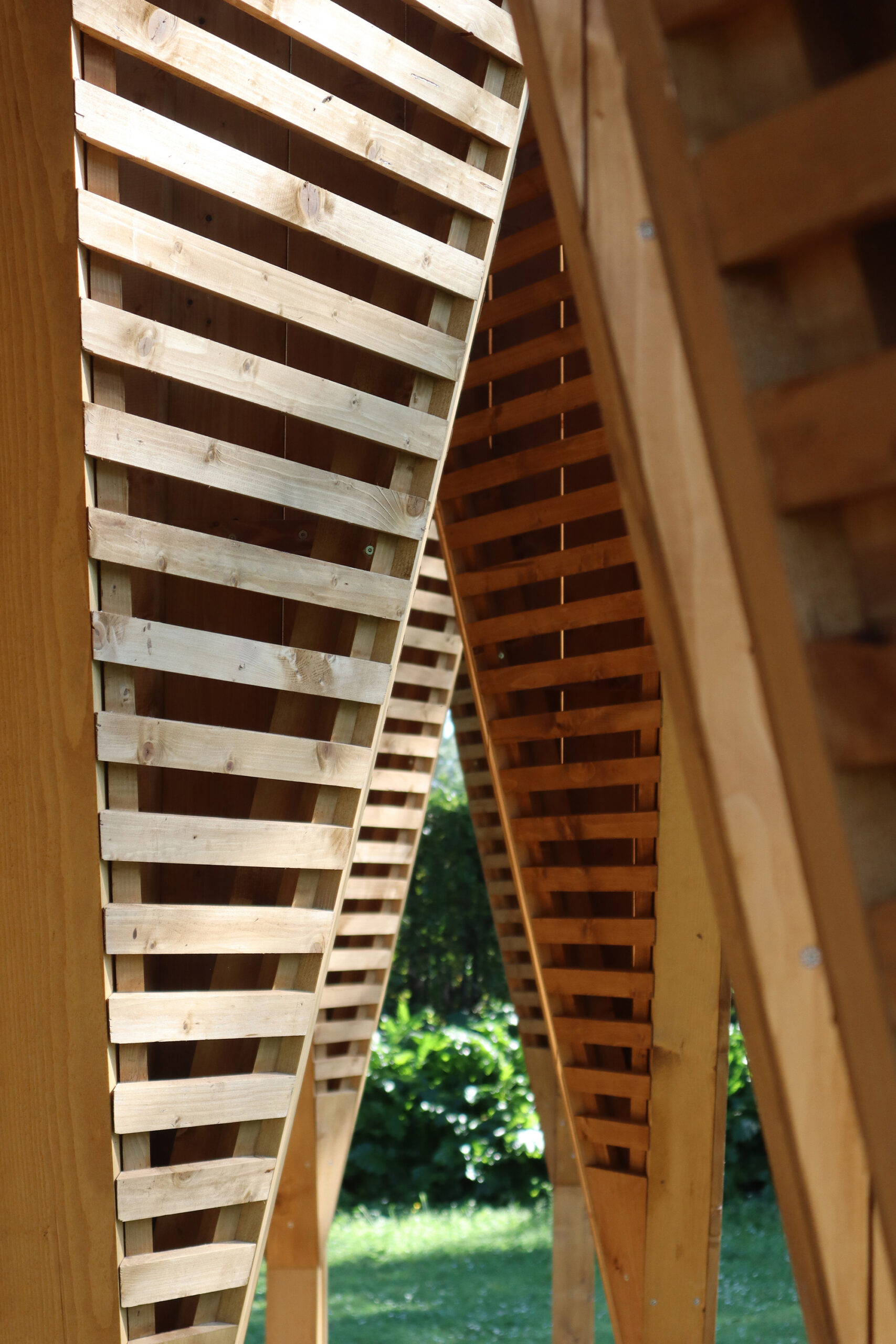
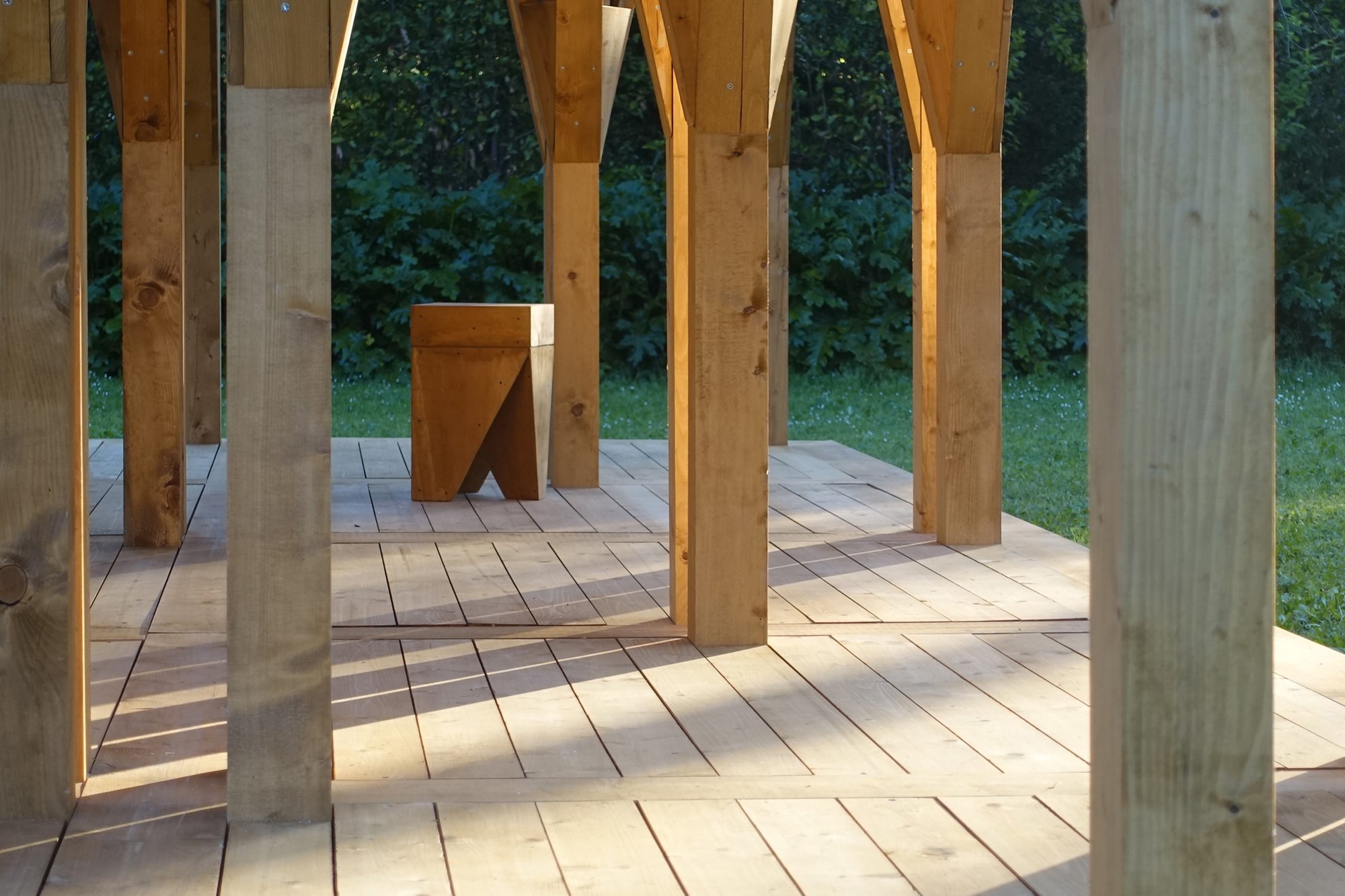
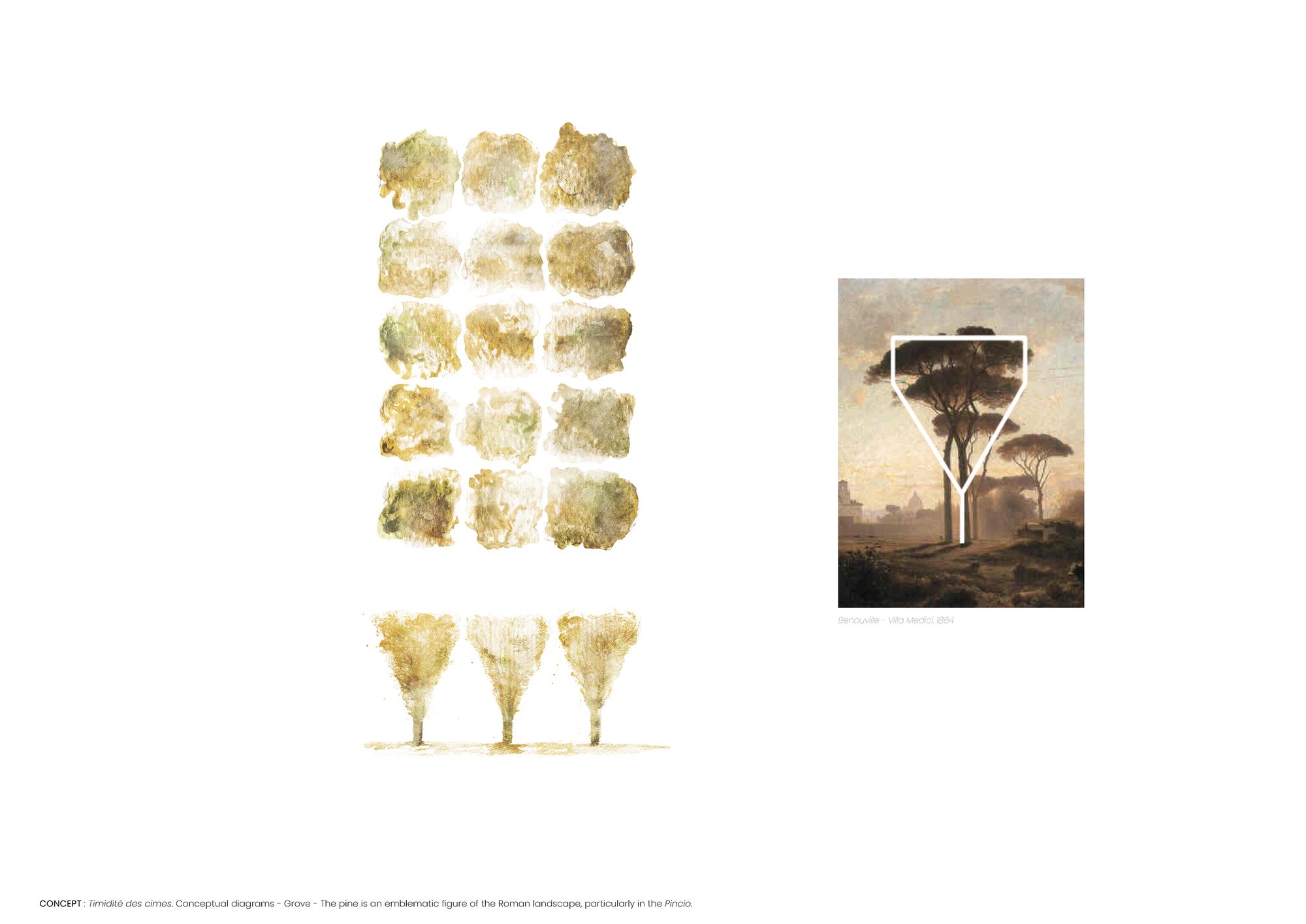
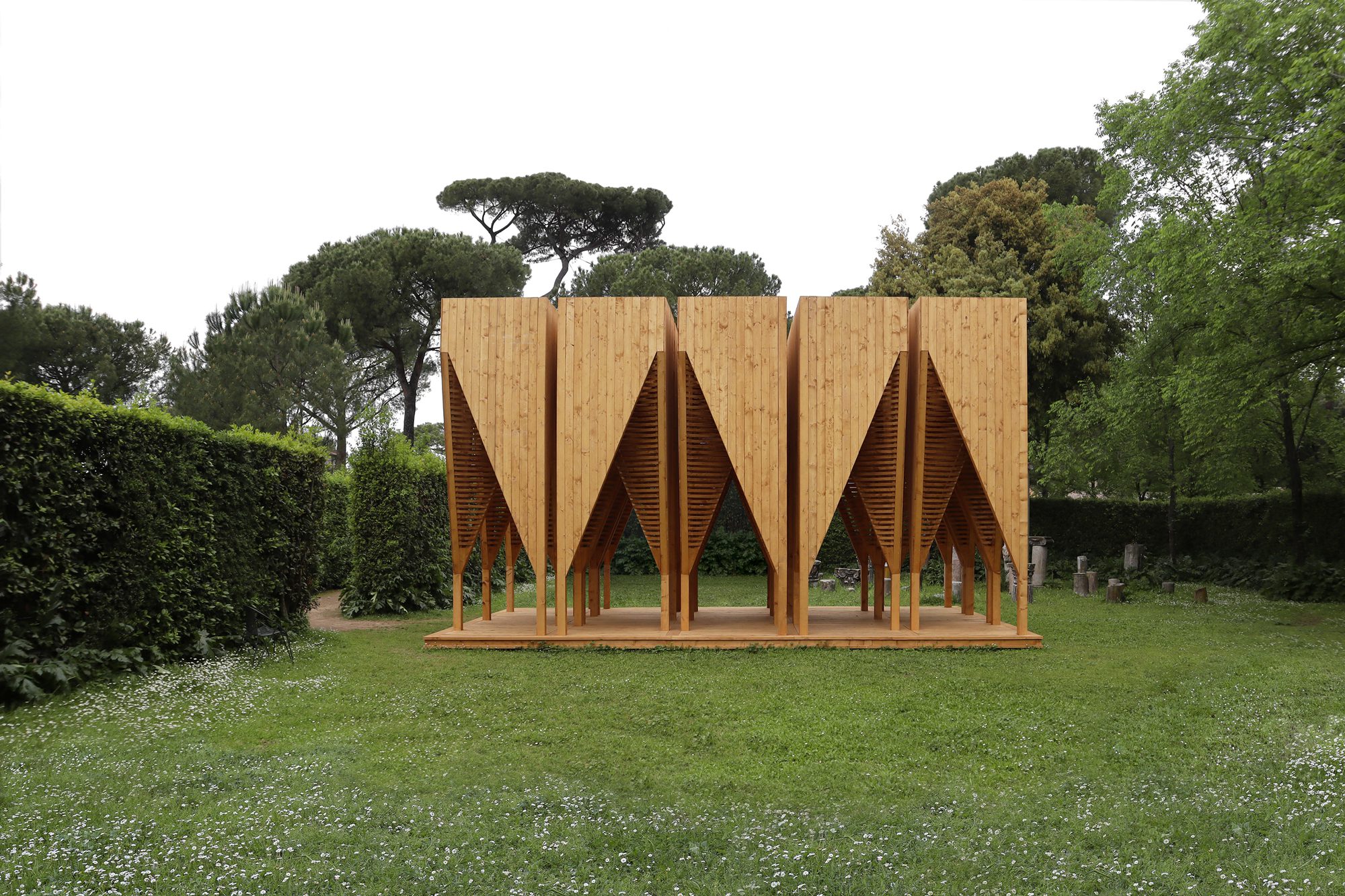
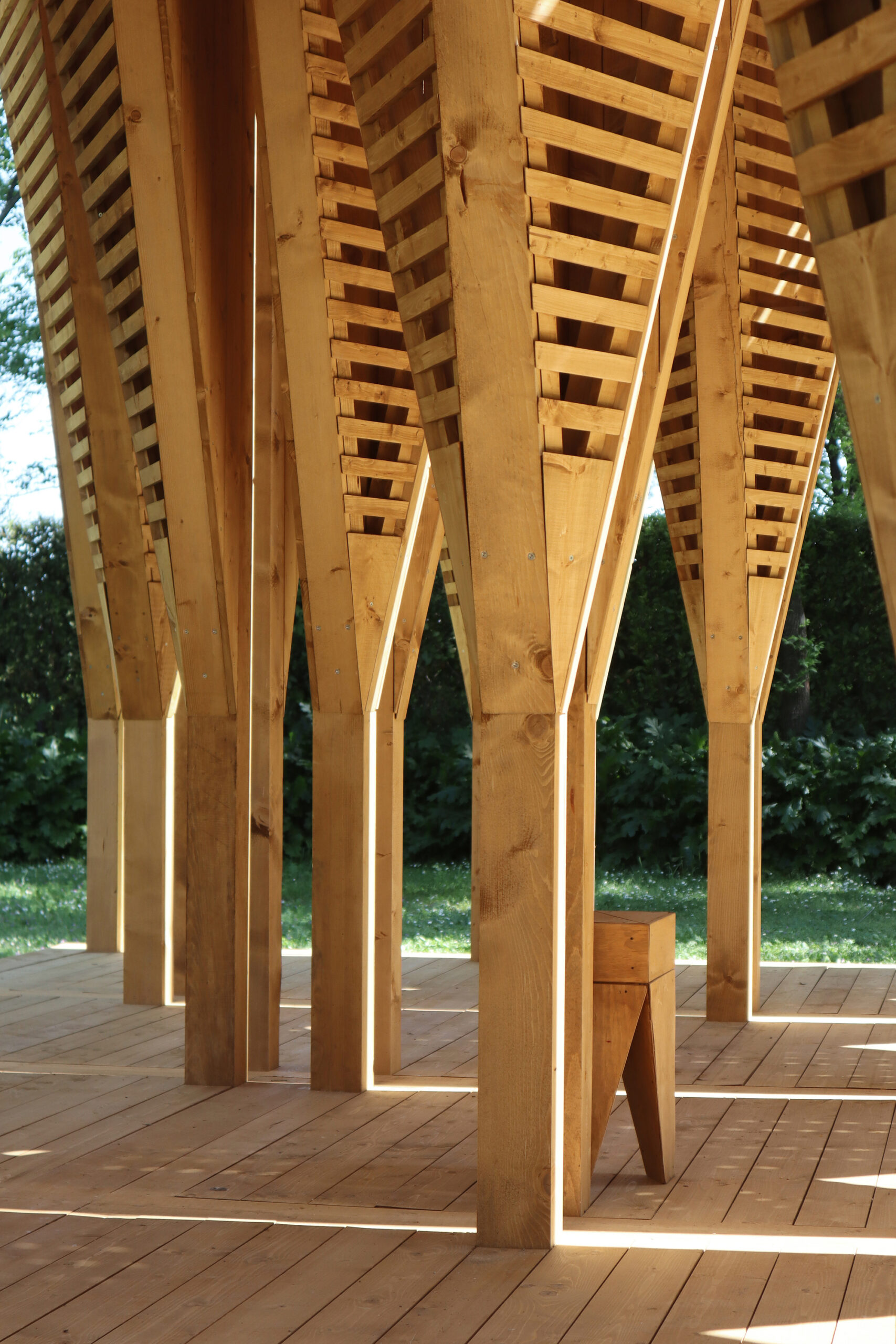
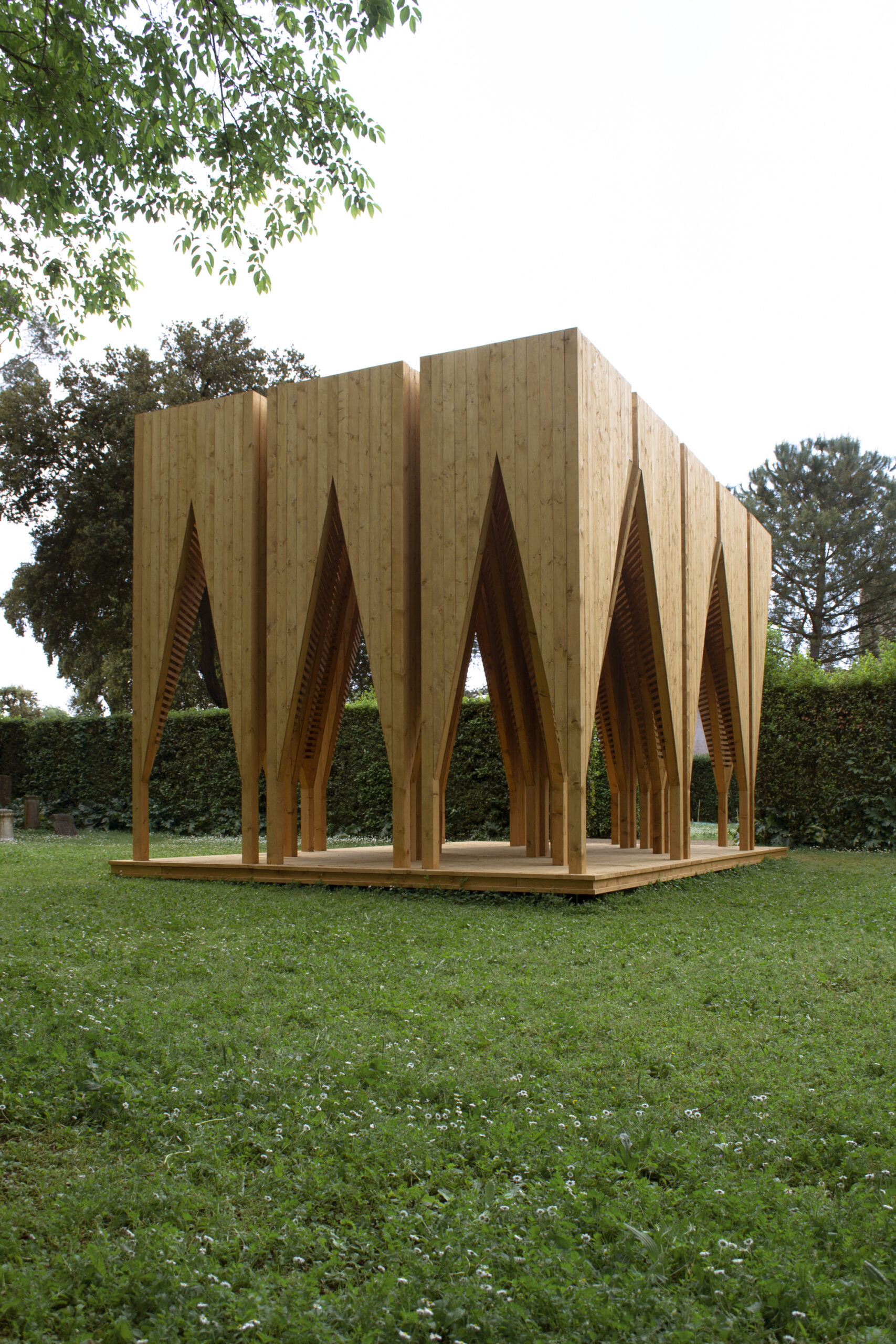
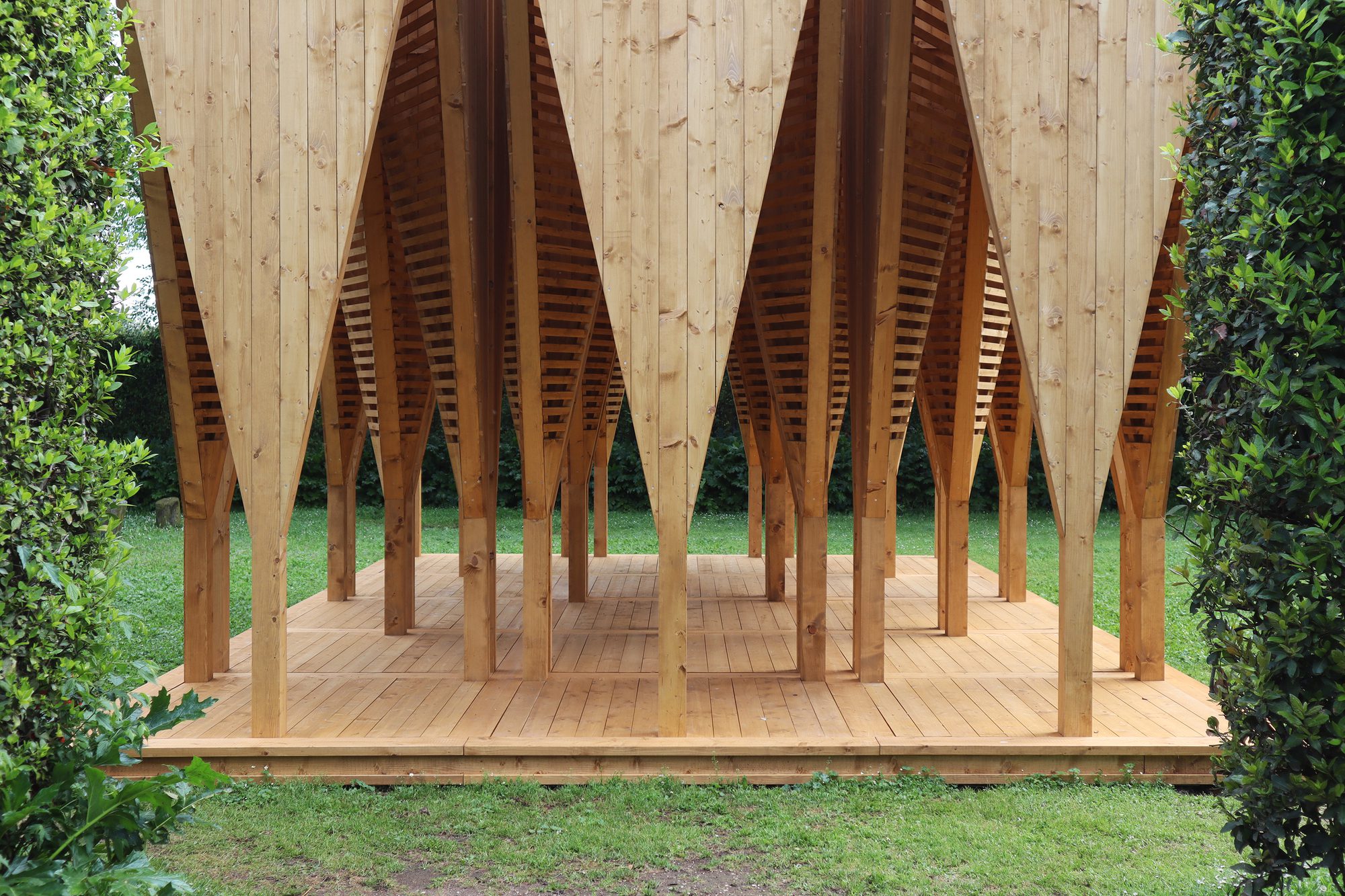
Named La timidité des cimes (crown shyness), the work formally and socially reinterprets the natural phenomenon whereby trees maintain a certain distance from one another. It represents a canopy housing a forest of columns around which visitors gather, meditate, and play to the rhythm of the gardens.
© Atelier poem
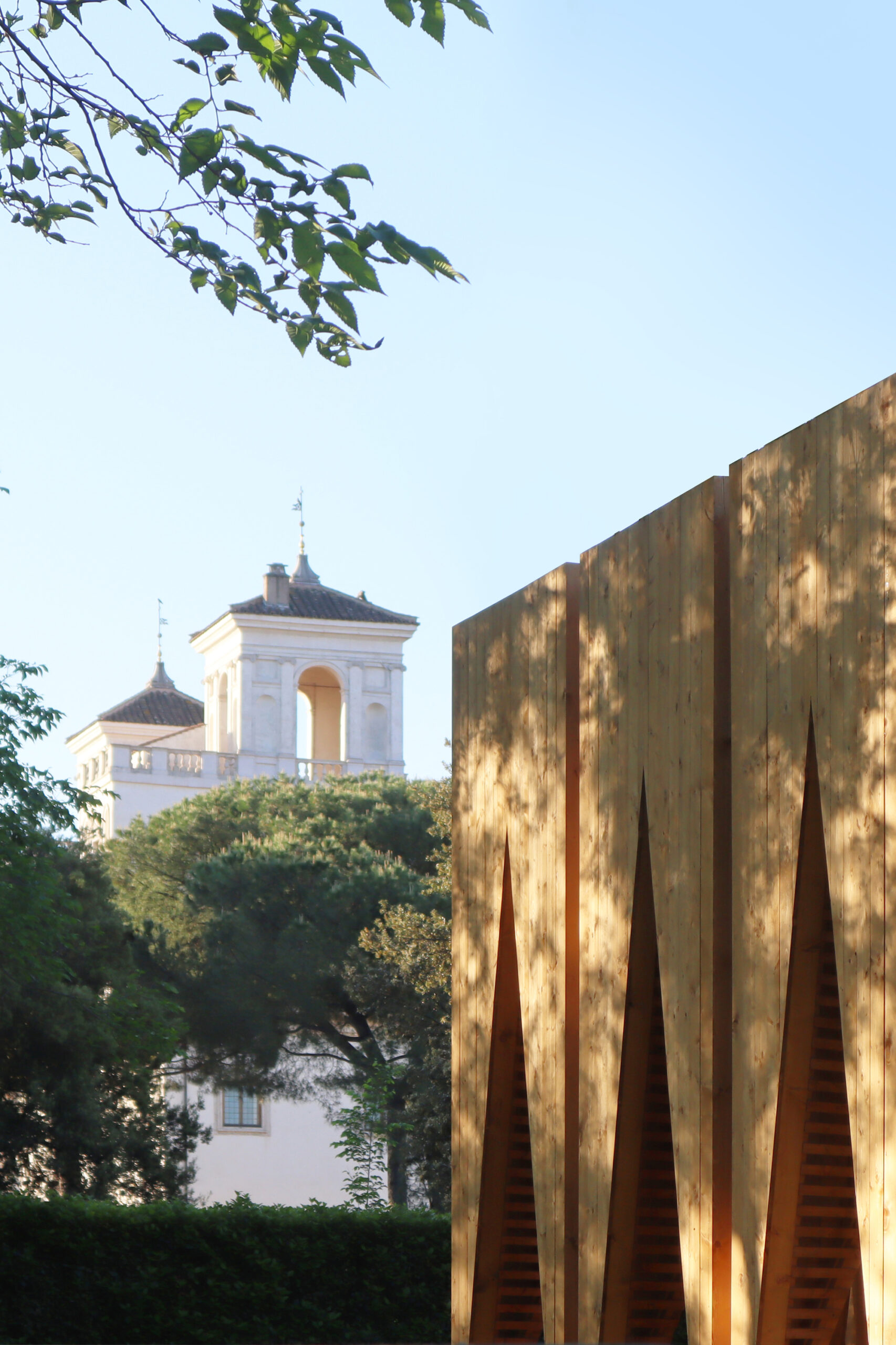
The work was born in line with the philosophy of the Festival, as a means of social connection and rediscovery of the historic gardens, whose project was developed by Ferdinando de Medici at the end of the 16th century.
© Atelier poem
The installation is identified as a place of transition and contamination between the surrounding environment (flora, fauna, and historical remains) and the housed life inside; a space that lends itself to hosting artistic and cultural events, suitable for rest, reading, and play.
© Atelier poem
La timidité des cimes is, therefore, a small cultural center, which through the varied activities housed inside, animates the gardens spreading and preserving the historical and natural heritage.
© Lorenza pensa
The project develops from a reflection on the relationship between architecture, man, and nature. By exploring the essence of architecture itself, it seeks to synthesize through the form those theoretical, aesthetic, and practical values valid in the past and nowadays. It is the result of a study that traces the origins of the anthropological relationship between architecture and the environment, condensed by Laugier in the concept of «cabane rustique». A compromise between the Vitruvian point of view of the «primitive hut» and what Le Corbusier called «temple primitif».
© Atelier poem
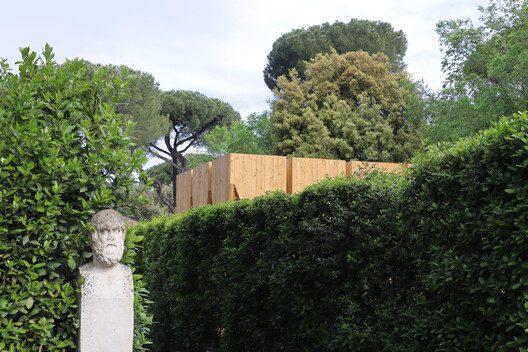
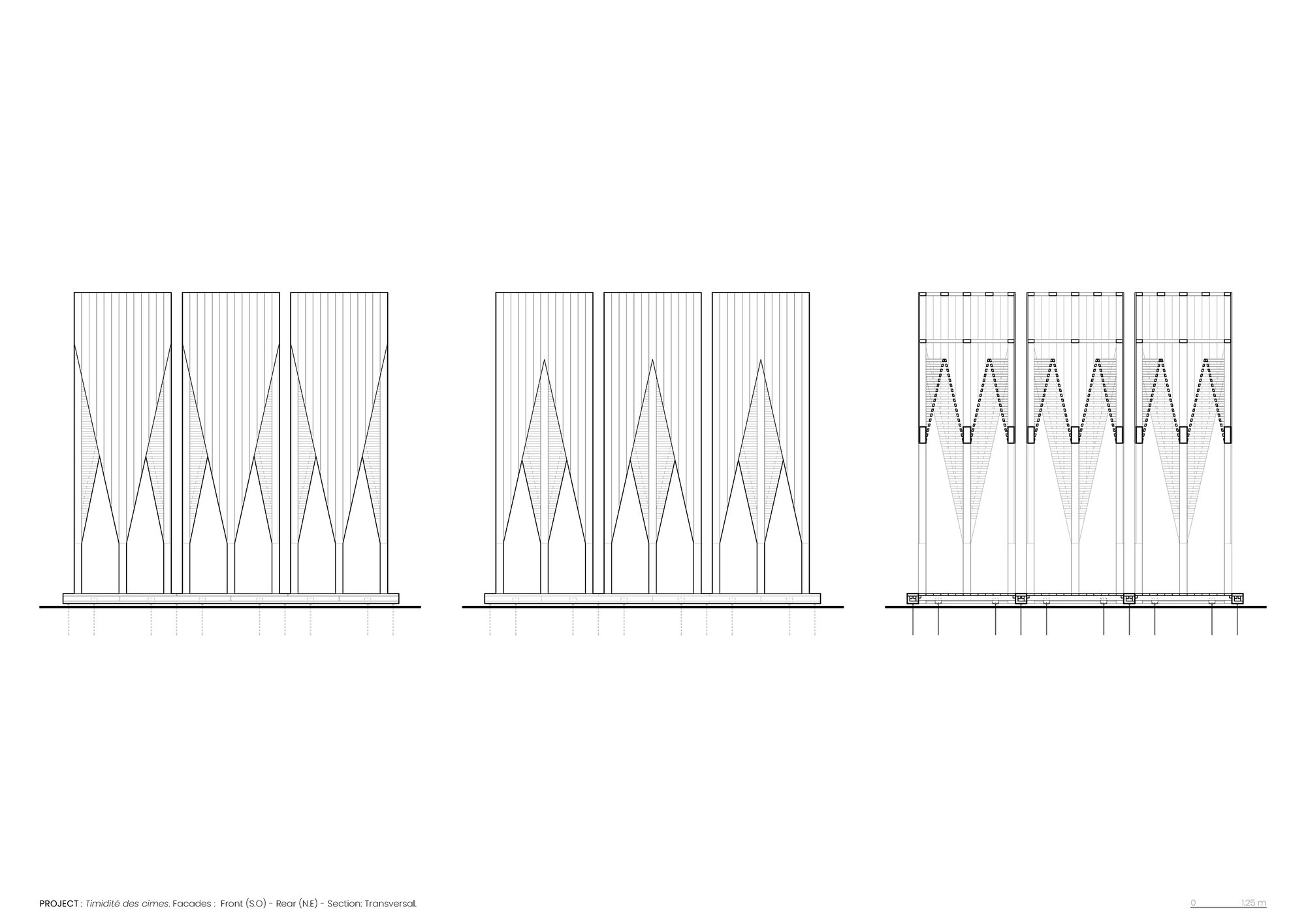
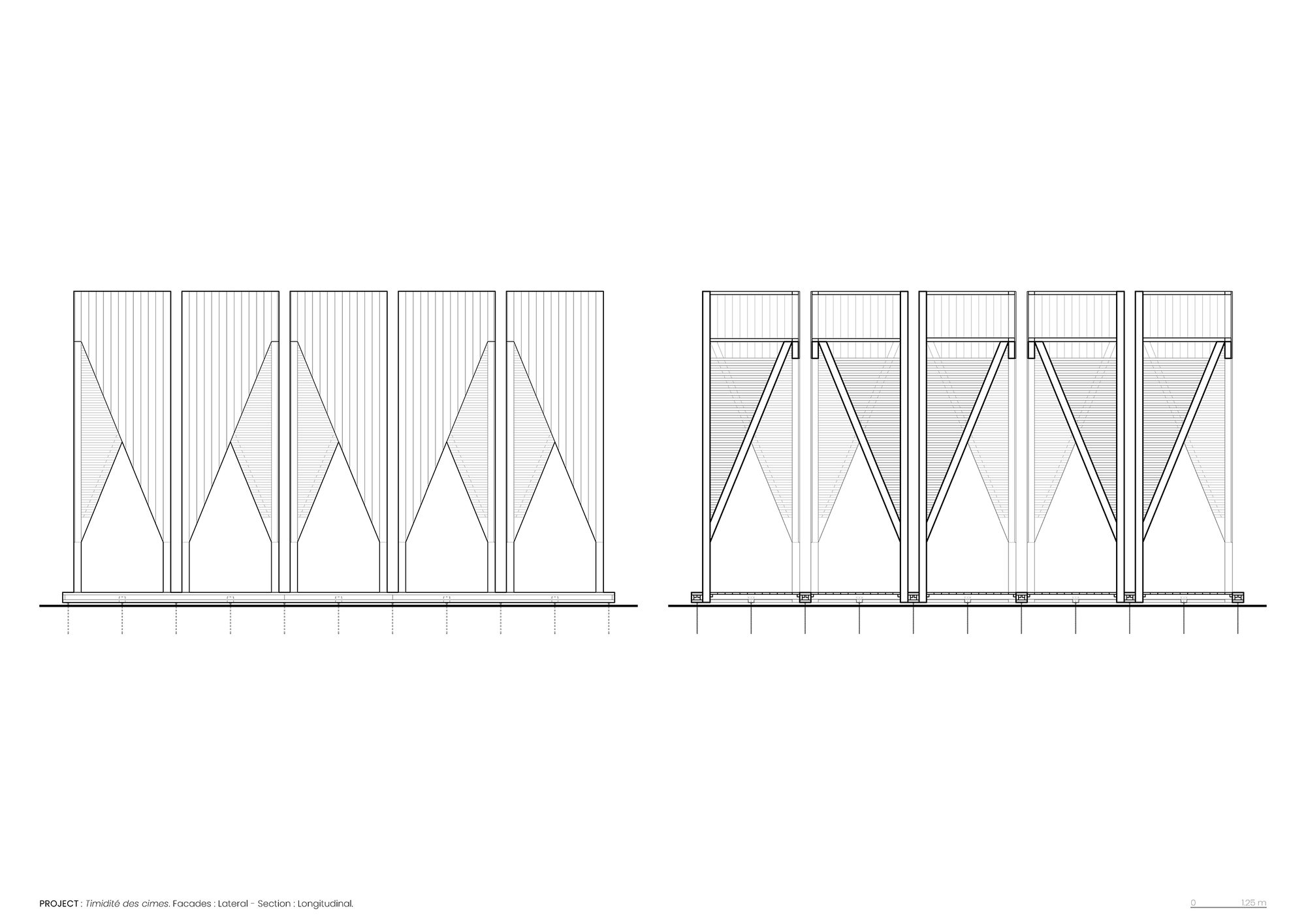
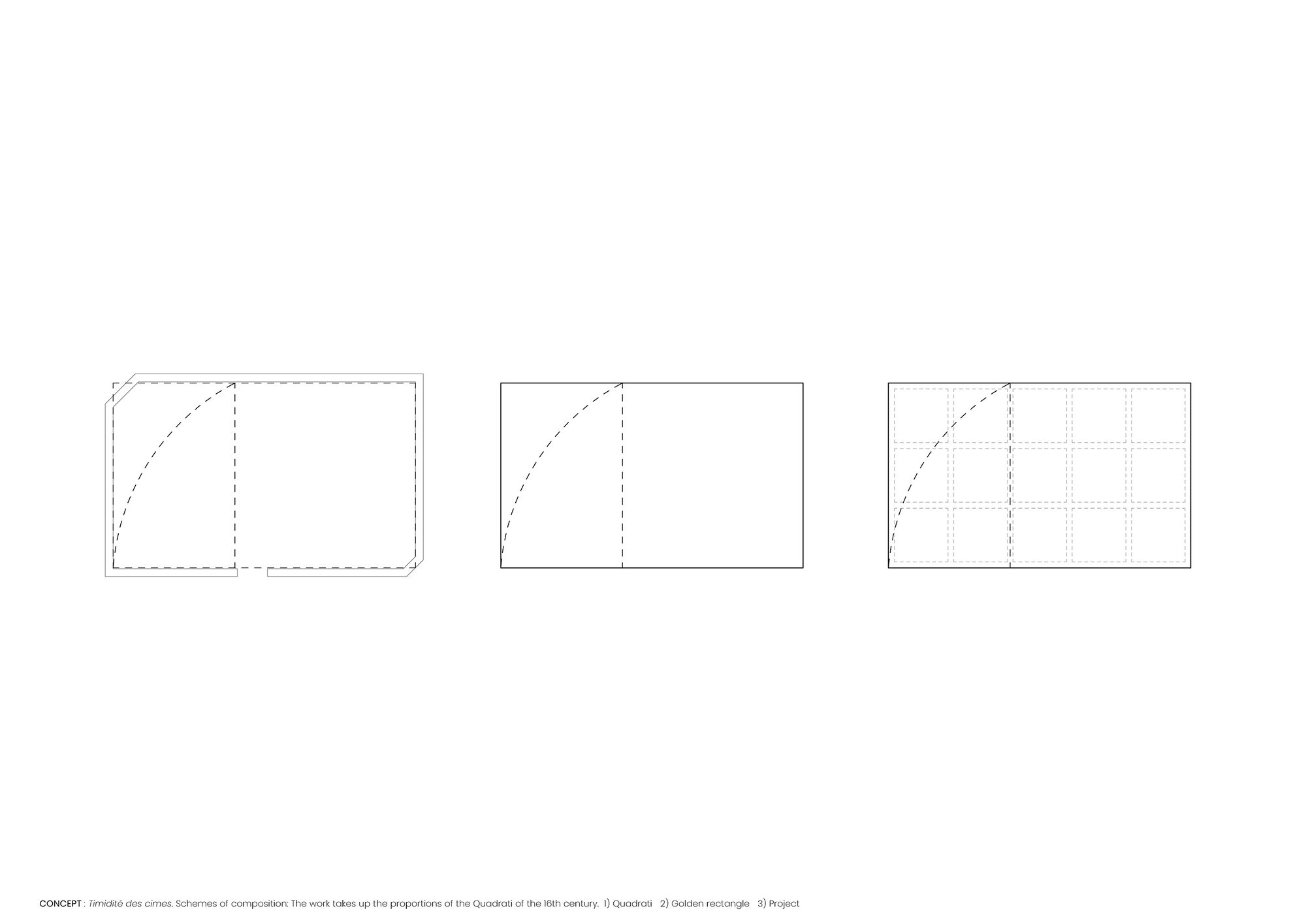
La timidité des cimes is inserted inside the Carré des vestiges, one of the sixteen gardens of Villa Medici; it is configured, by size and structure, as a basic element of fabric reading and a temporary extension of the Villa itself. The cabane, located at the entrance of the garden, takes its proportions through a simple and harmonious geometry based on the golden ratio and is proposed as a threshold. A changing place that can adapt to different uses, where you can experiment with new relational and spatial configurations.
© Atelier poem
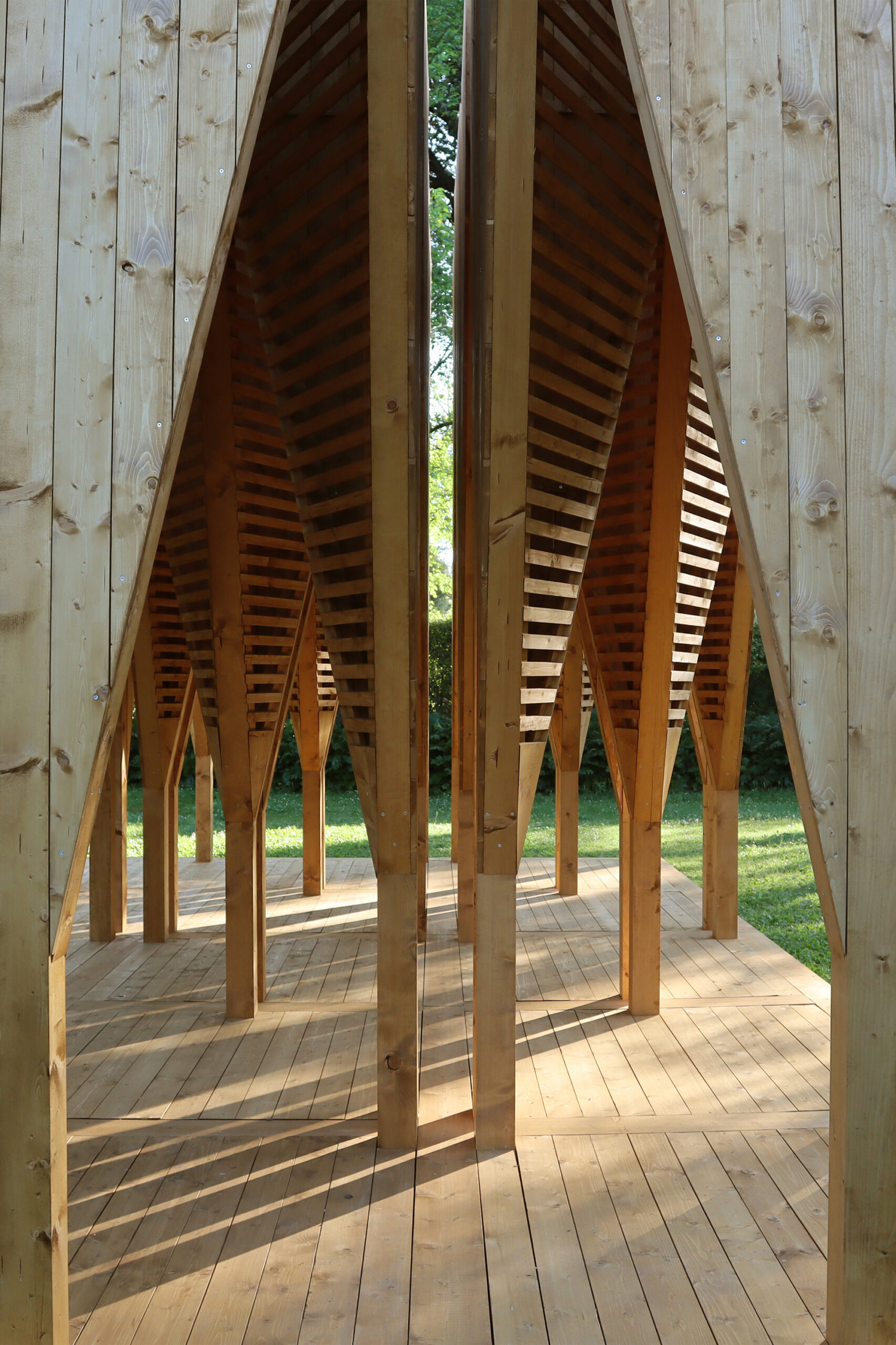
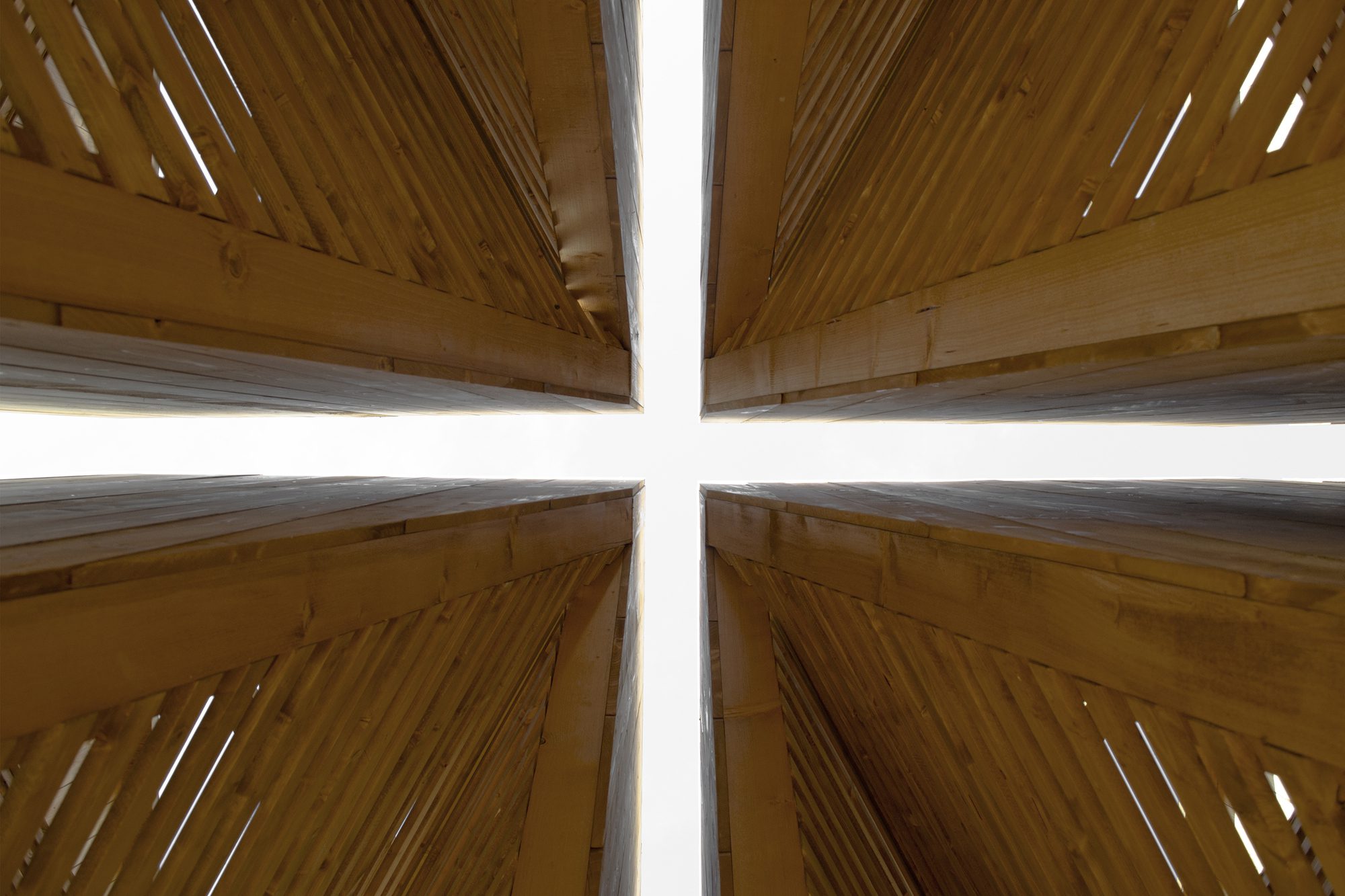
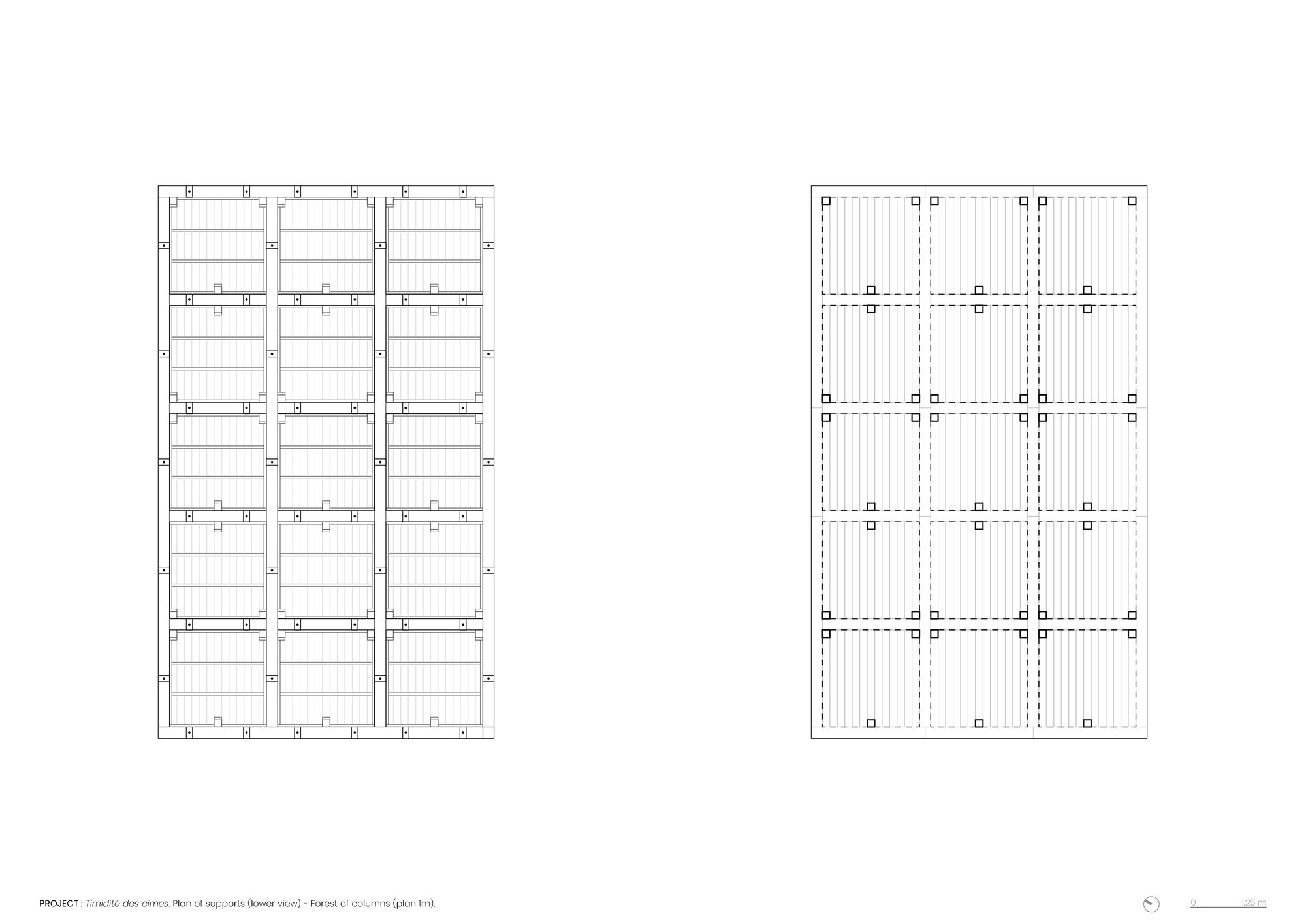
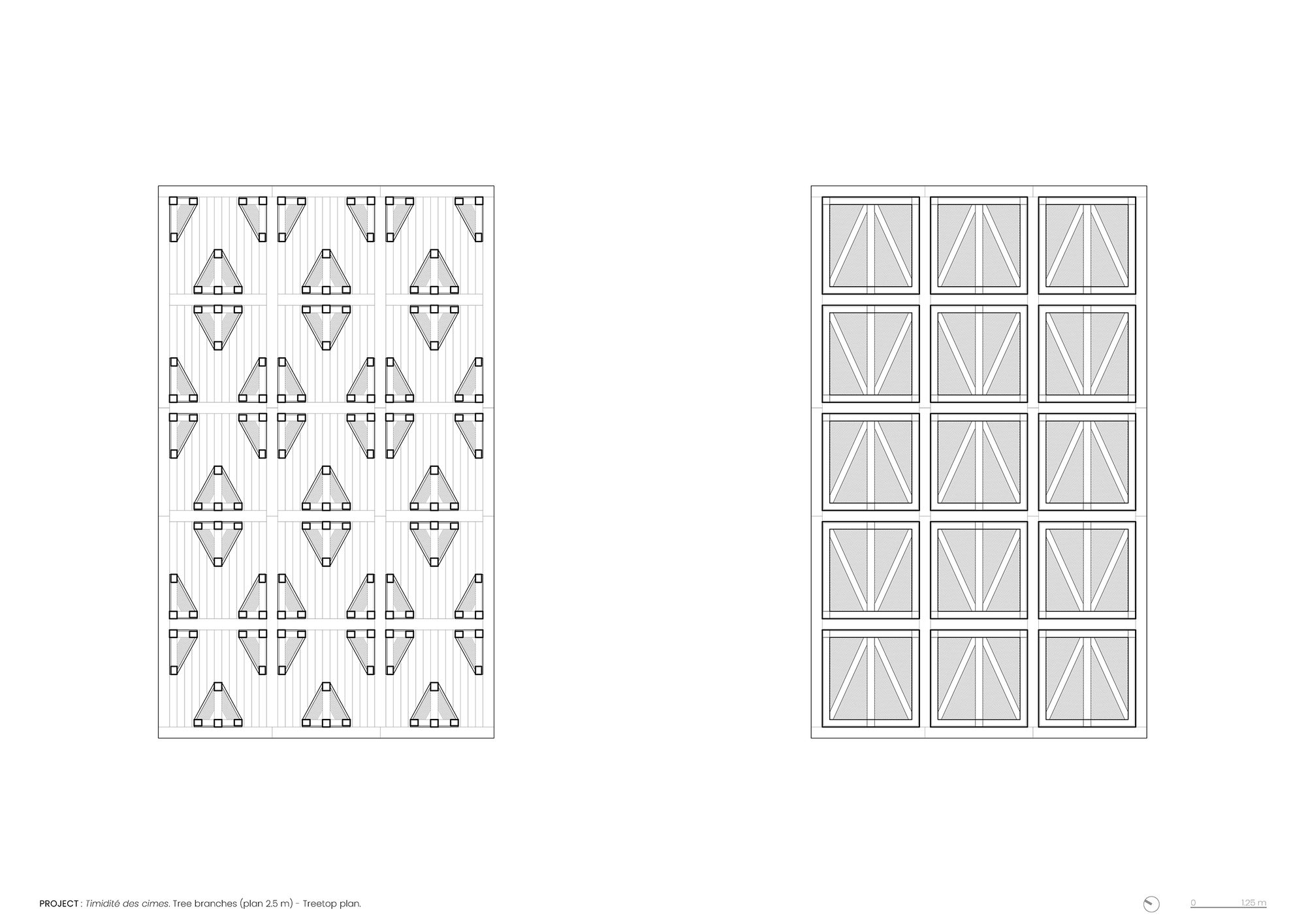
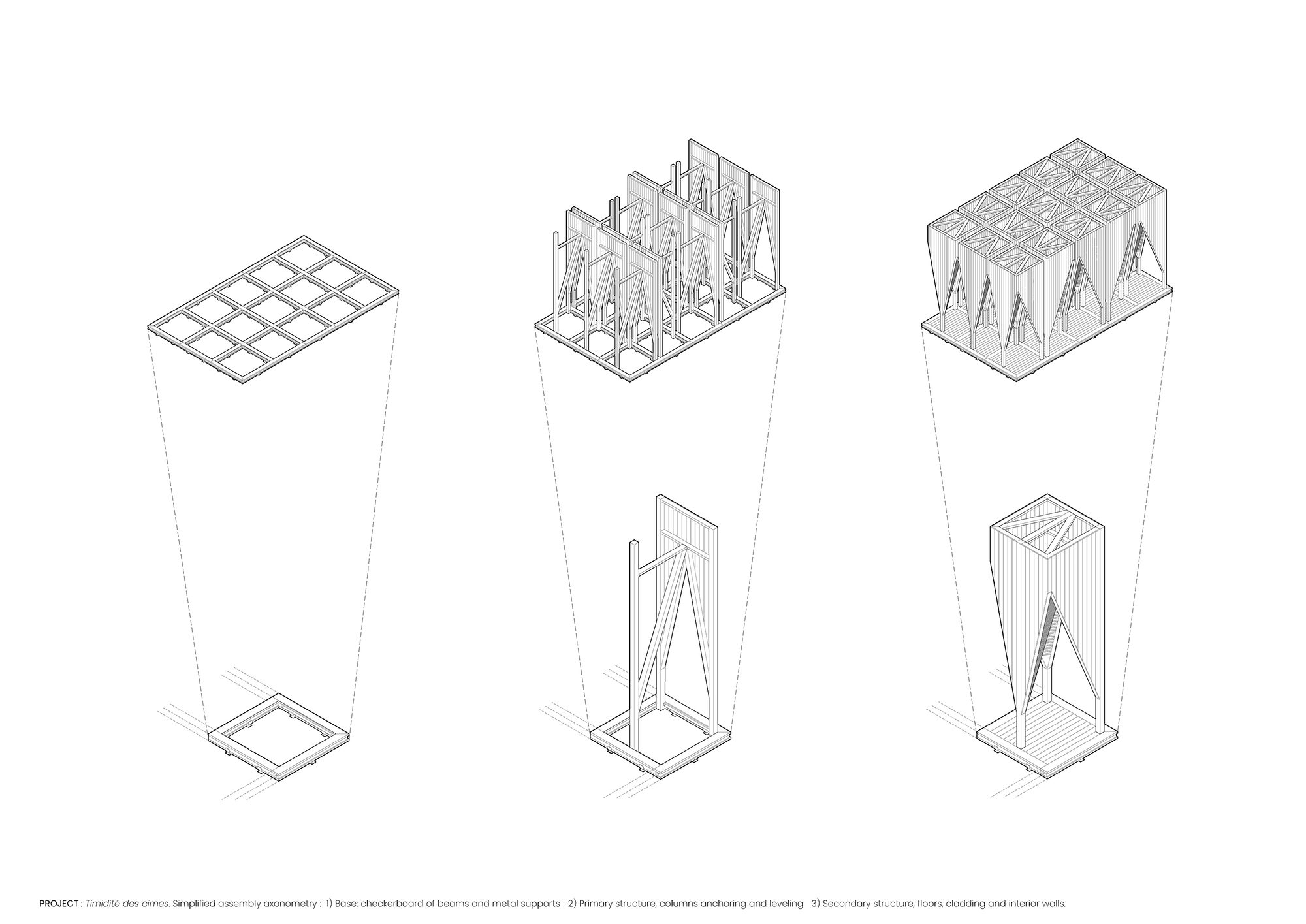
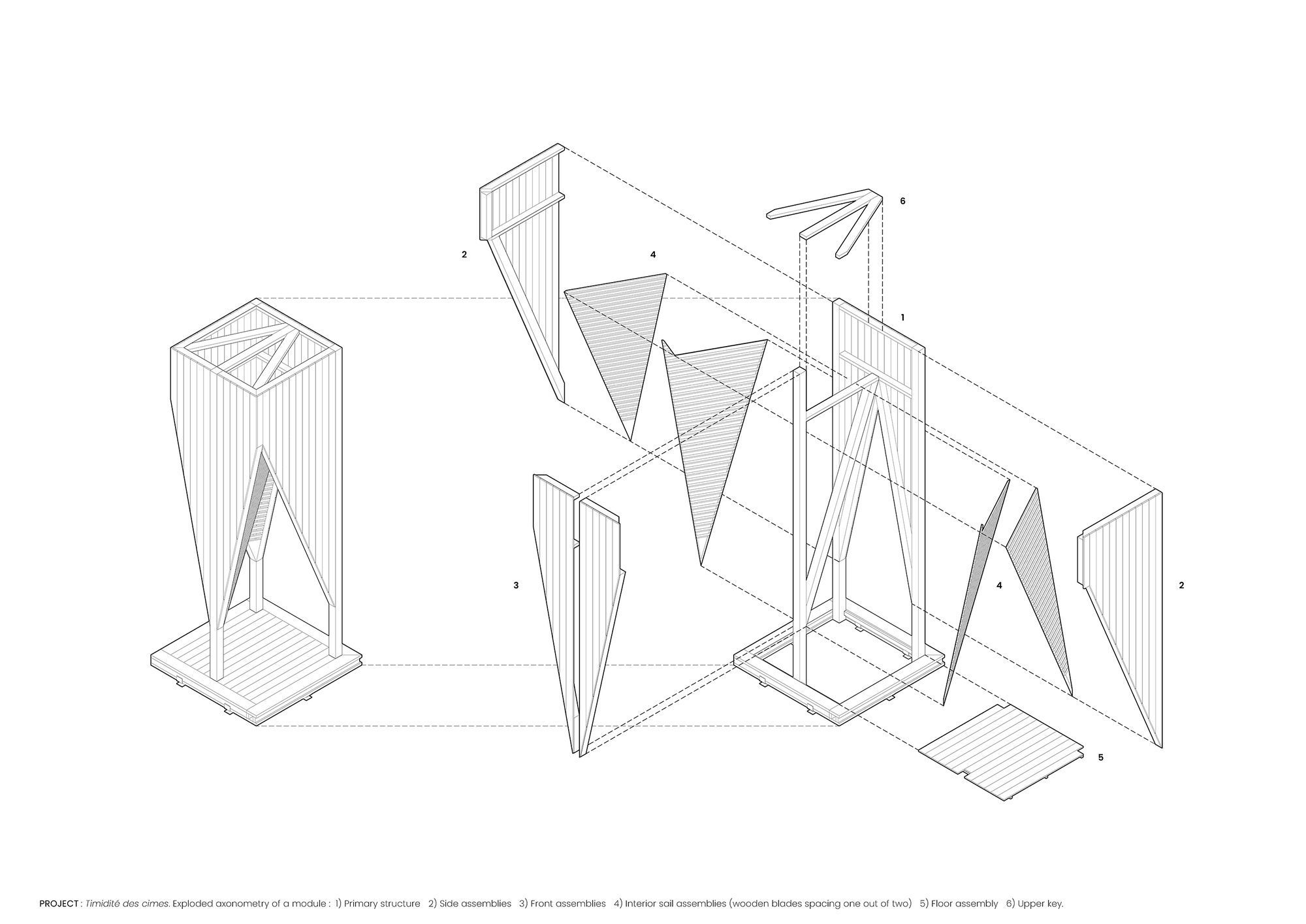
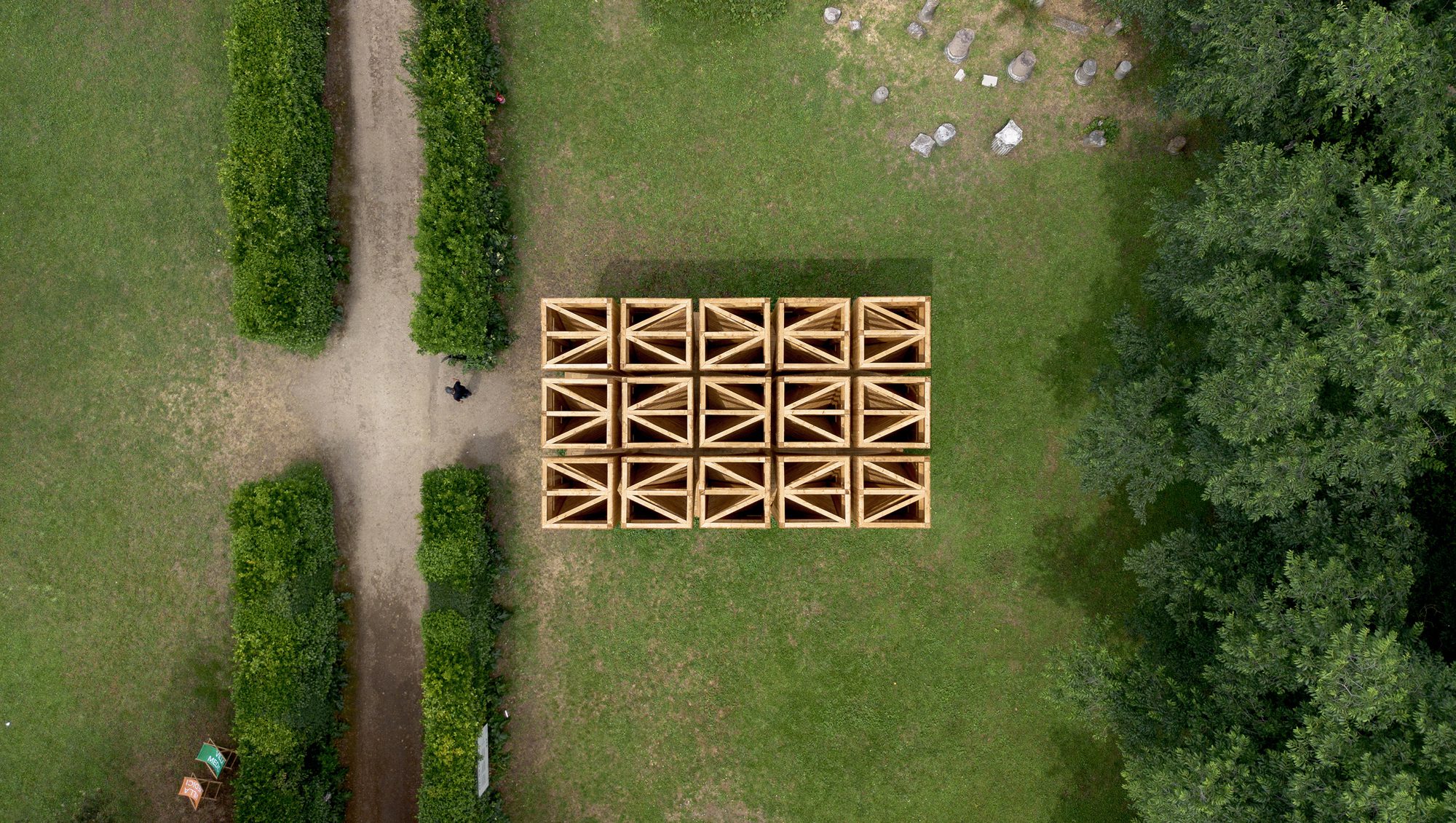
The fifteen modules that compose it follow each other regularly without touching, composing what from above and below is described as a mosaic. The gaps between one module and another establish essential pauses to understanding the work (concept of Ma in Japanese culture).
© Atelier poem
The key to the work is the wooded metaphor of the clearing used by Heidegger. The work and the garden are seen as a single space, alternating between concealment and unveiling: the clearing. A sensory journey that can be likened to a walk in the forest. The shyness of the treetops reveals itself to the visitor as a chiaroscuro born of the subtle interplay between light and darkness.
Project Info
Architects: Atelier Poem
Country: Italy, Roma
Area: 50 m²
Year: 2023
Photographs: Atelier poem, Lorenza pensa
Program / Use / Building Function: Pavilion, cabane, temple