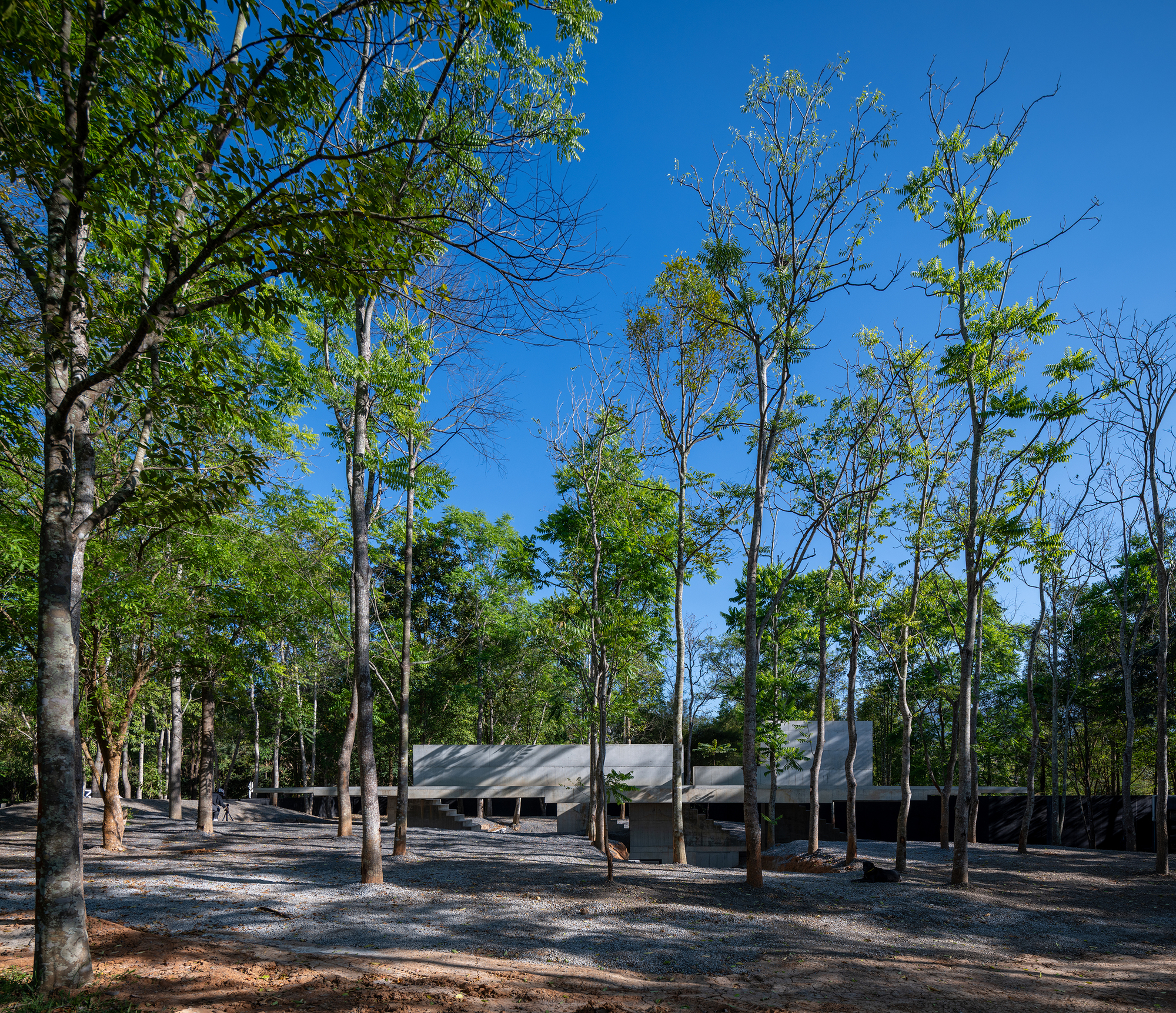
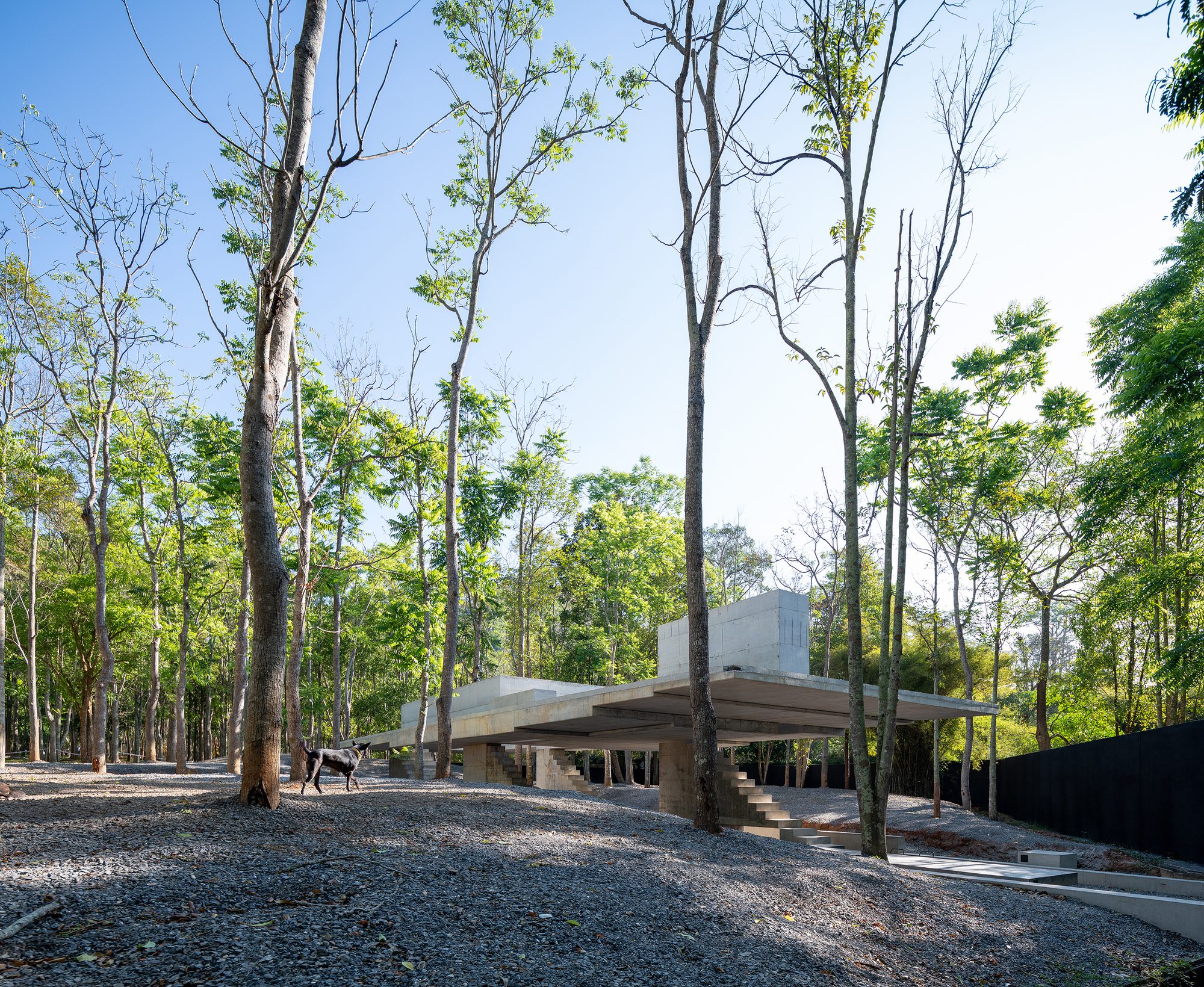
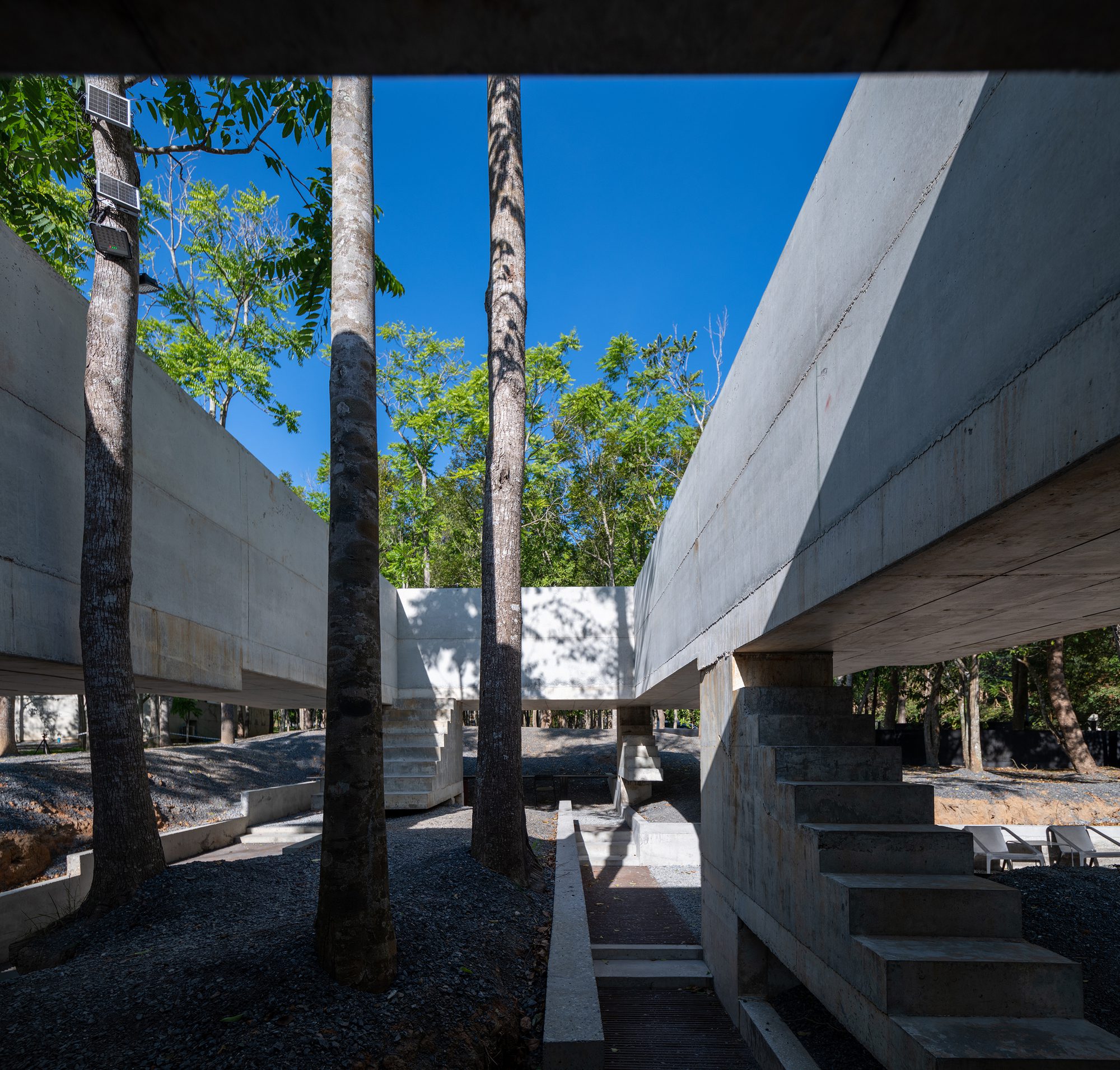
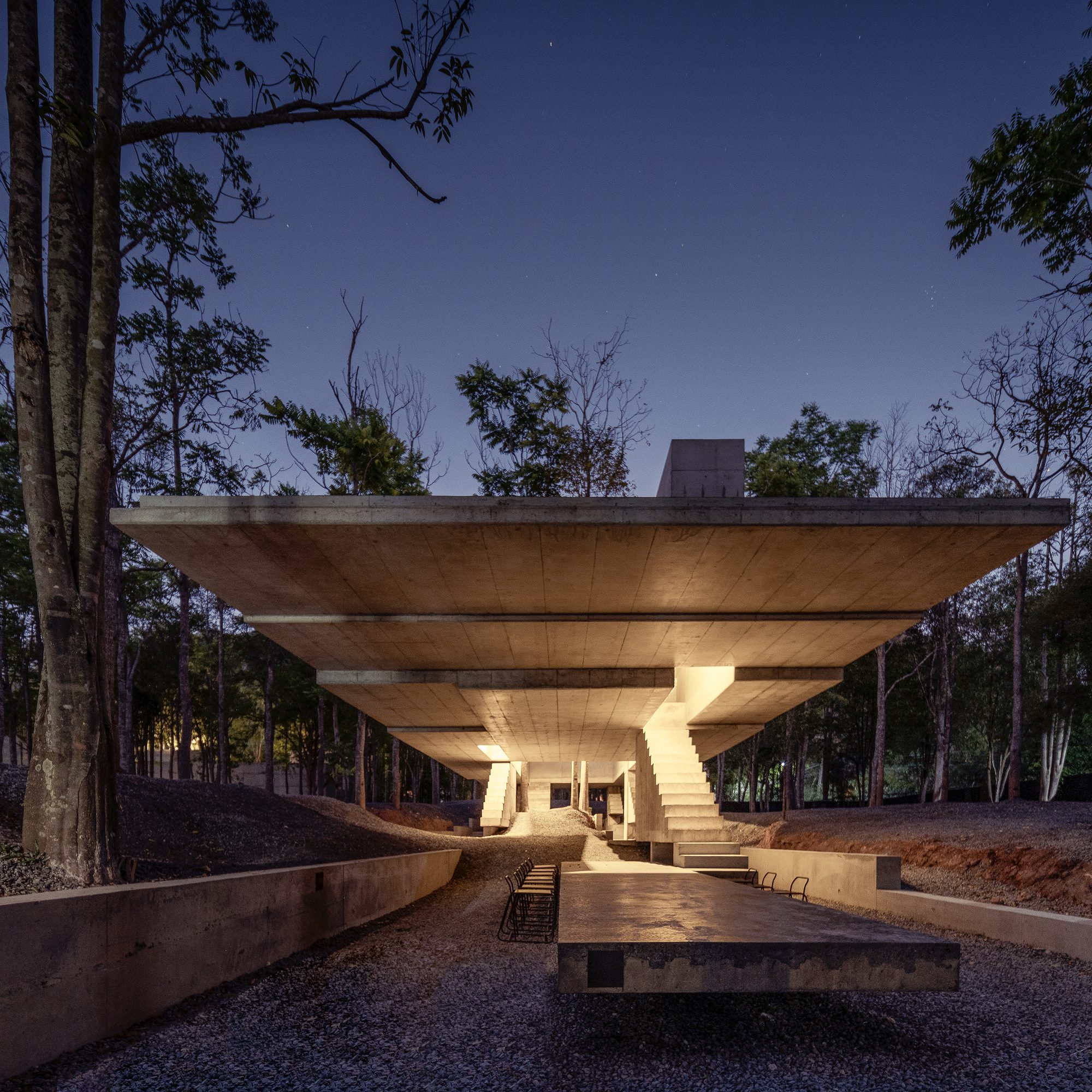
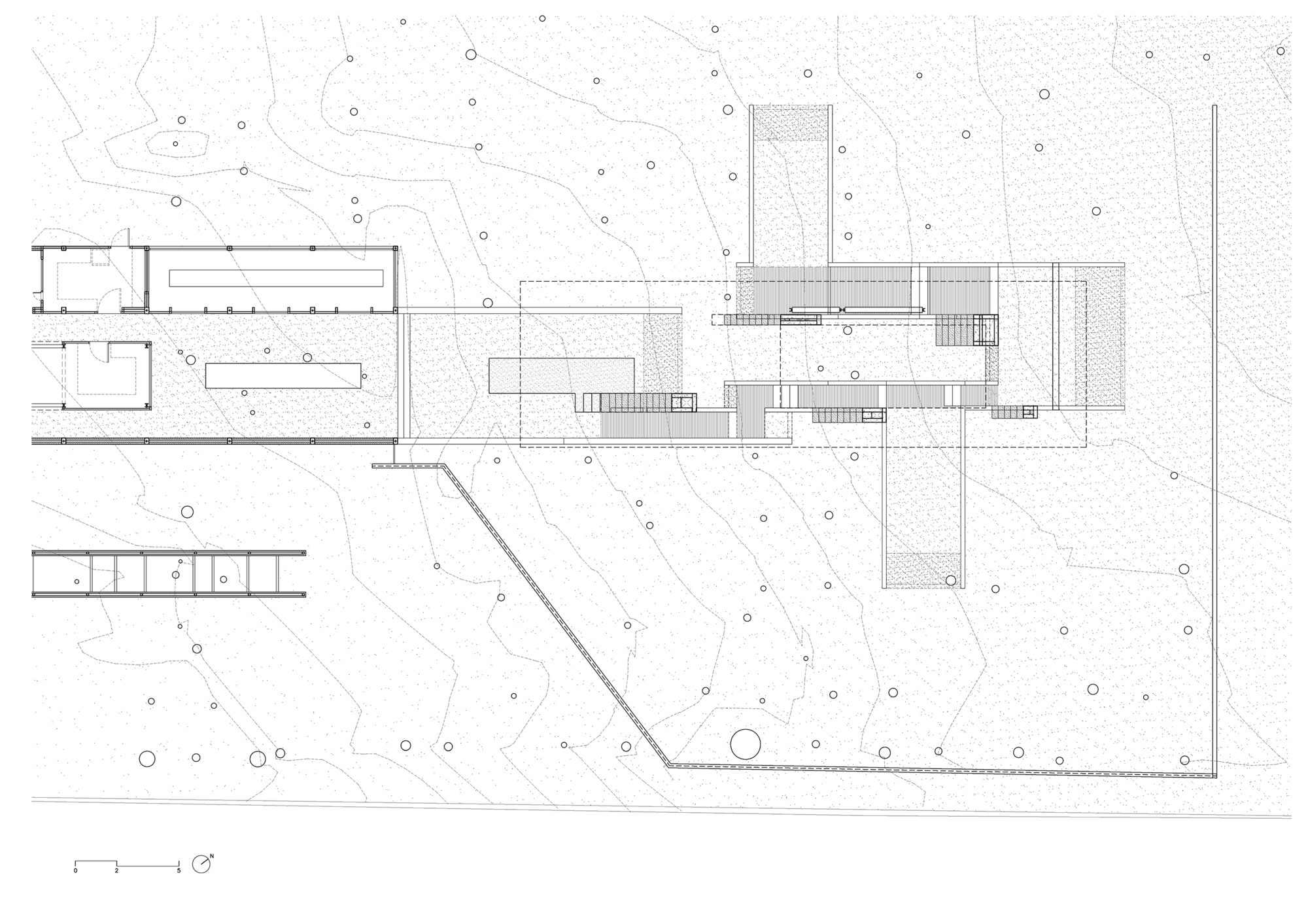
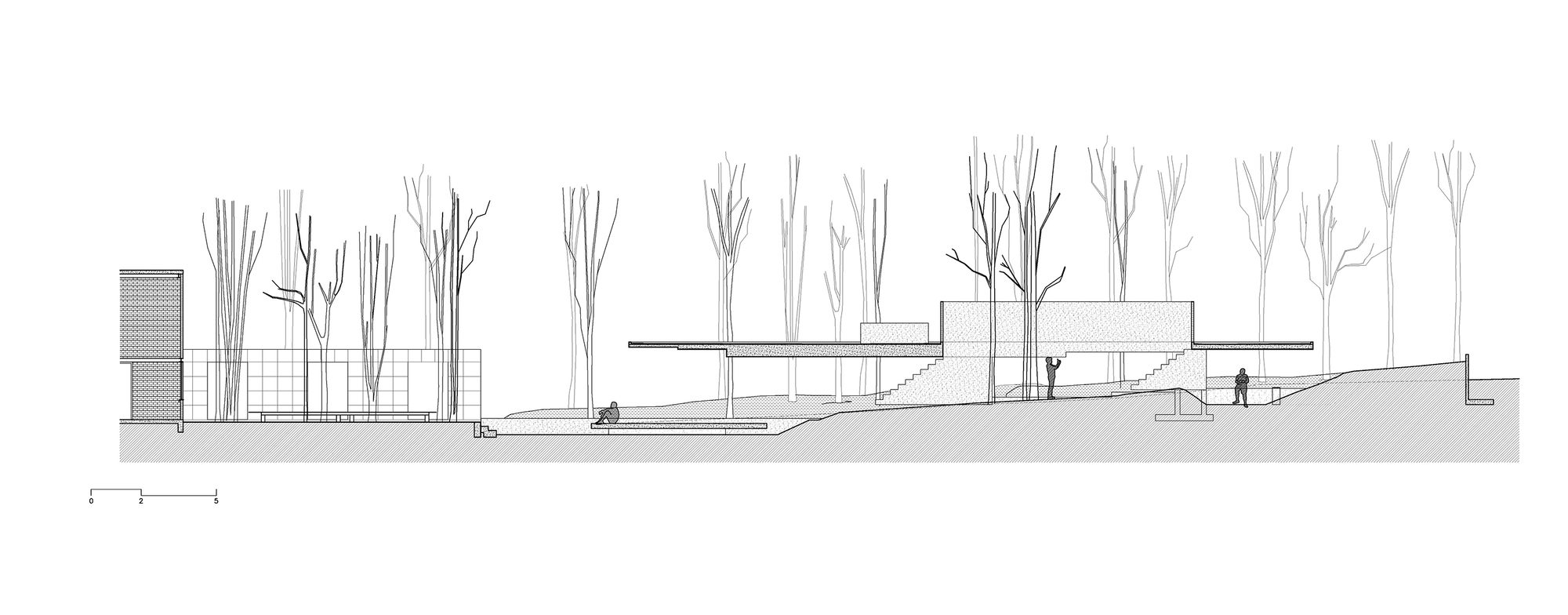
Yellow-Mini Café, The Site and the Roof – The location of the project has a hidden feature that cannot be clearly perceived if one does not enter the site. The hidden features of the location are the slight slope of the land and the tall vertical trees. The purpose is to elevate this feature of the site’s clear perception.
© Beersingnoi
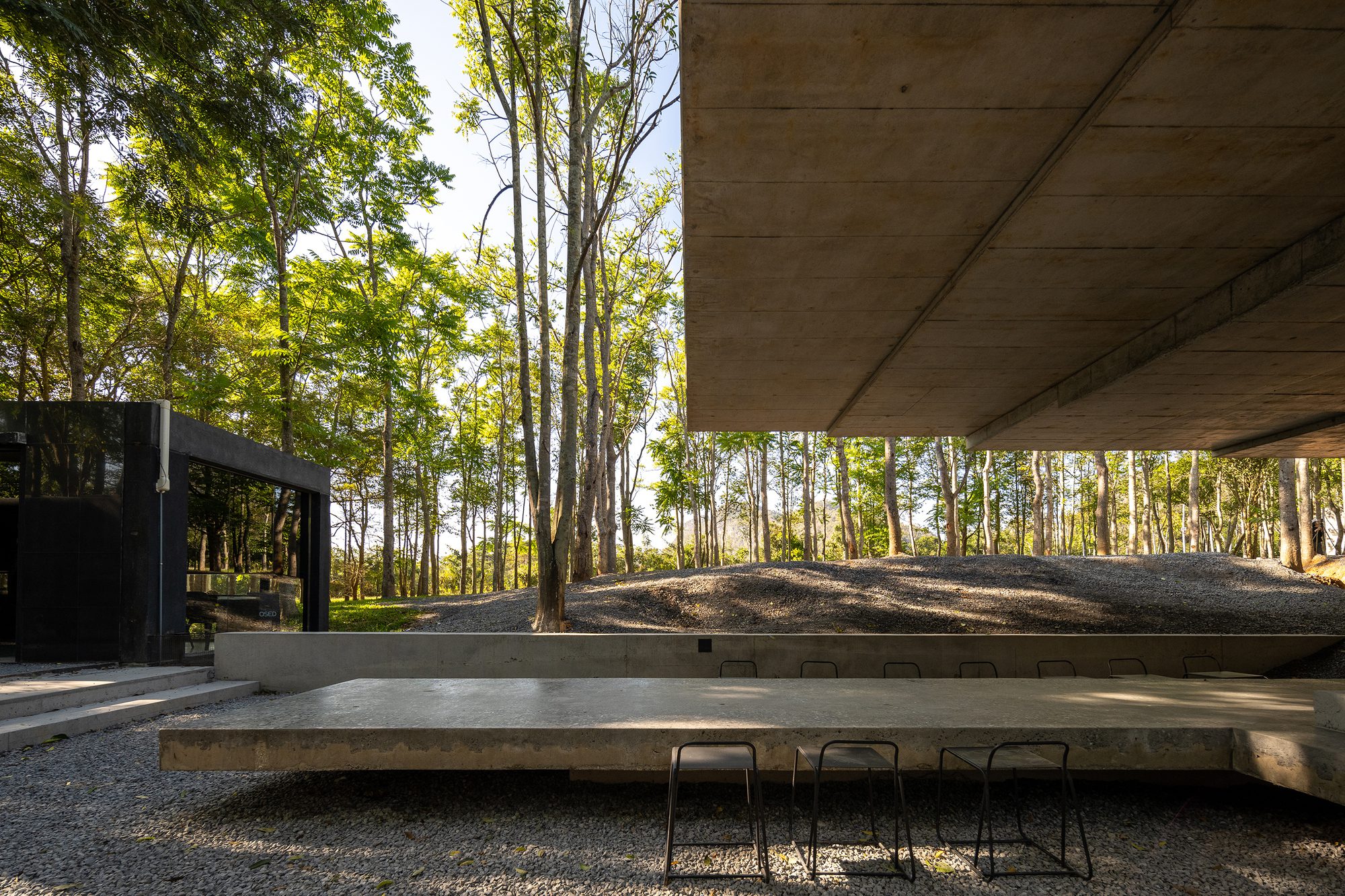
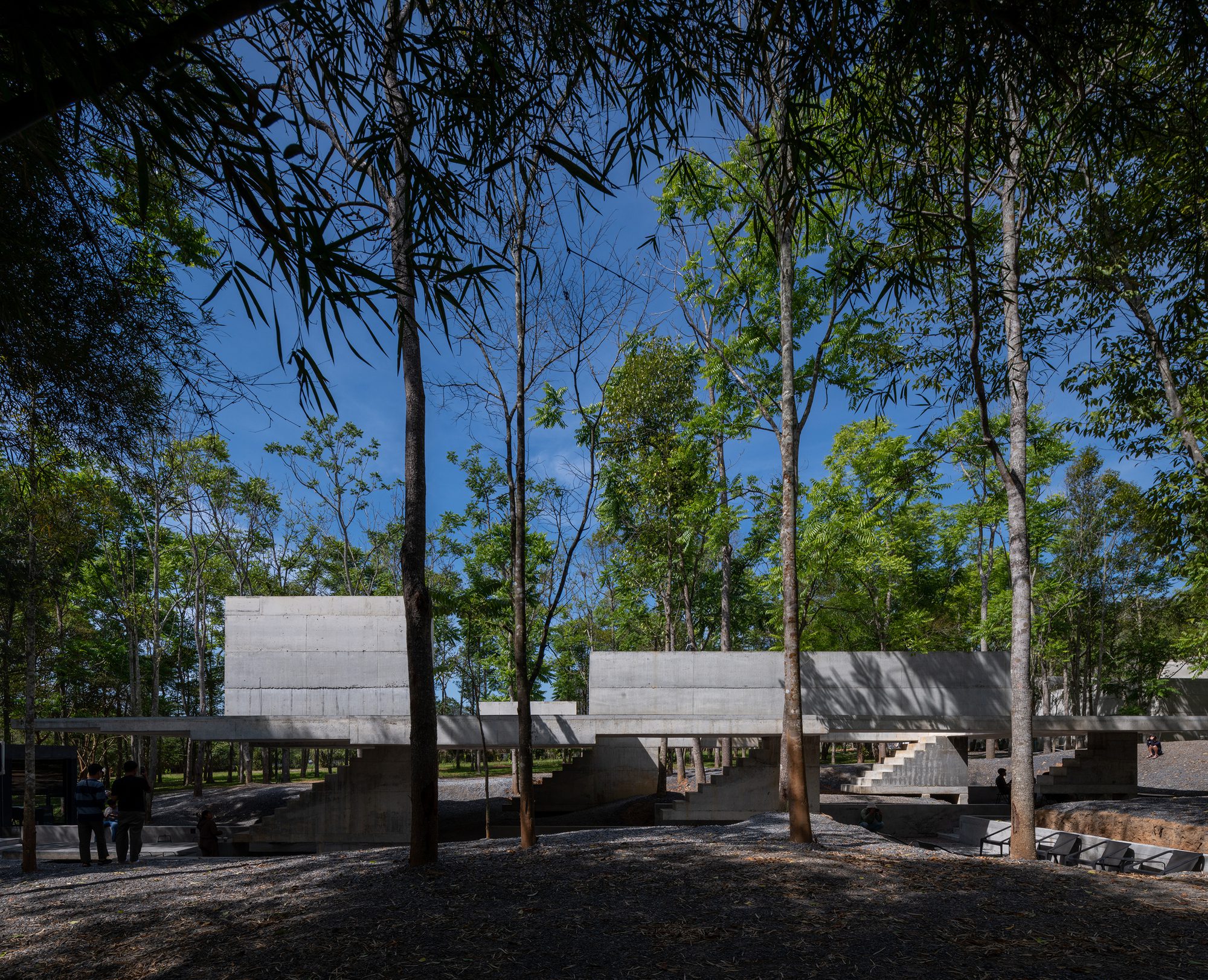
The design of the building therefore uses a flat plane placed on the site to compare the slope of the site and to recognize the condition of the location, at the same time, it’s also a functional space under this plane.
© Beersingnoi
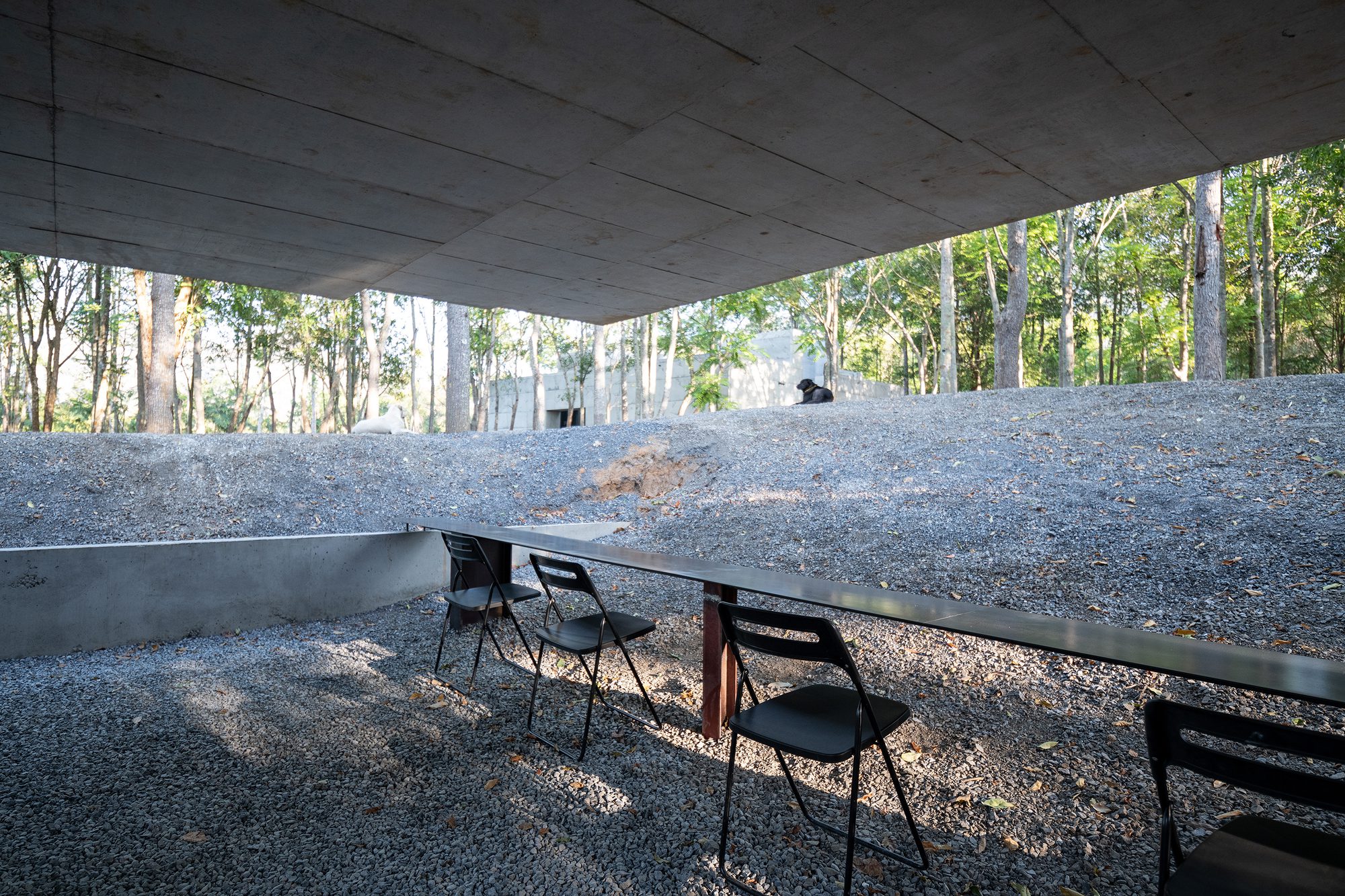
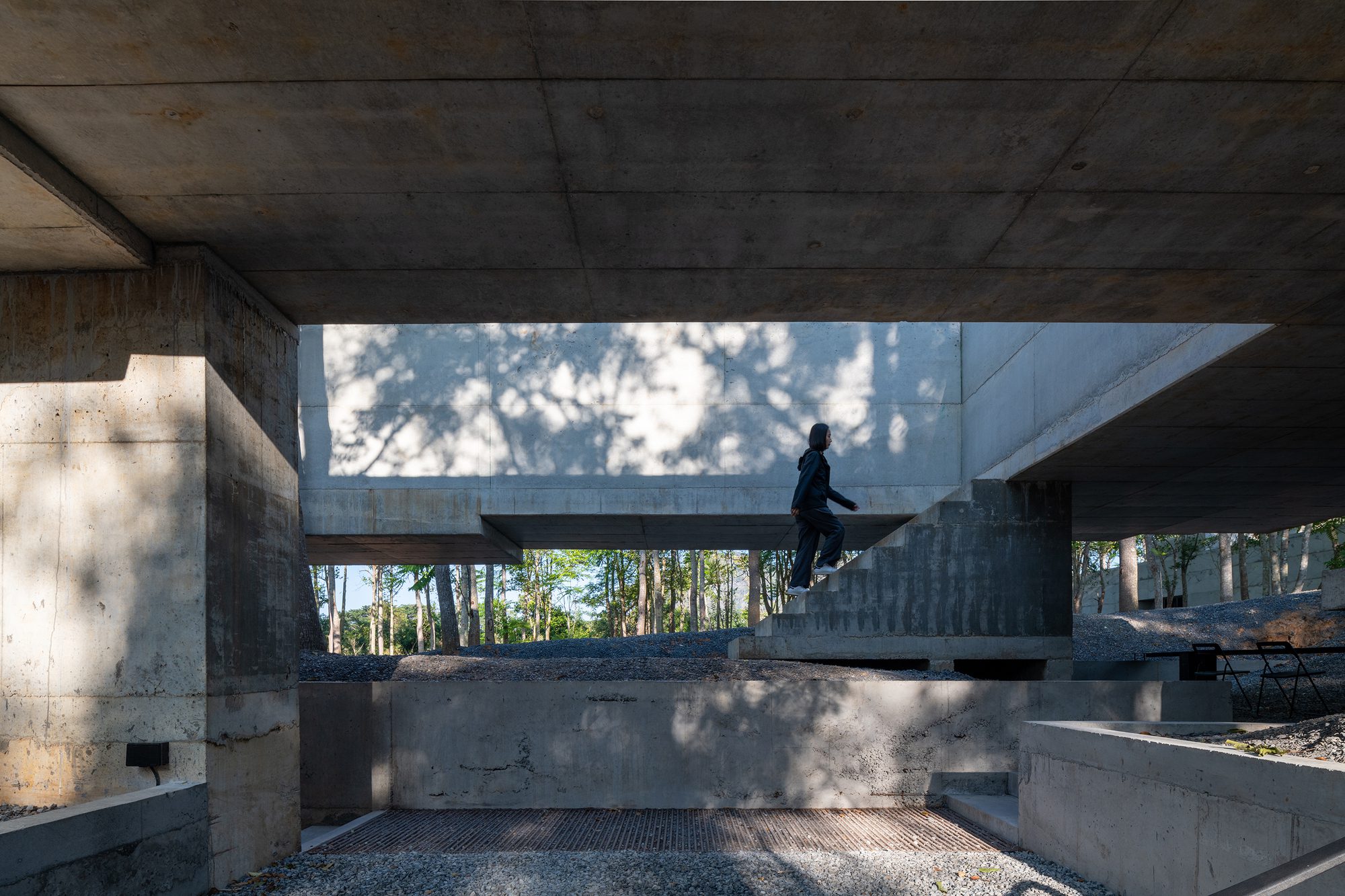
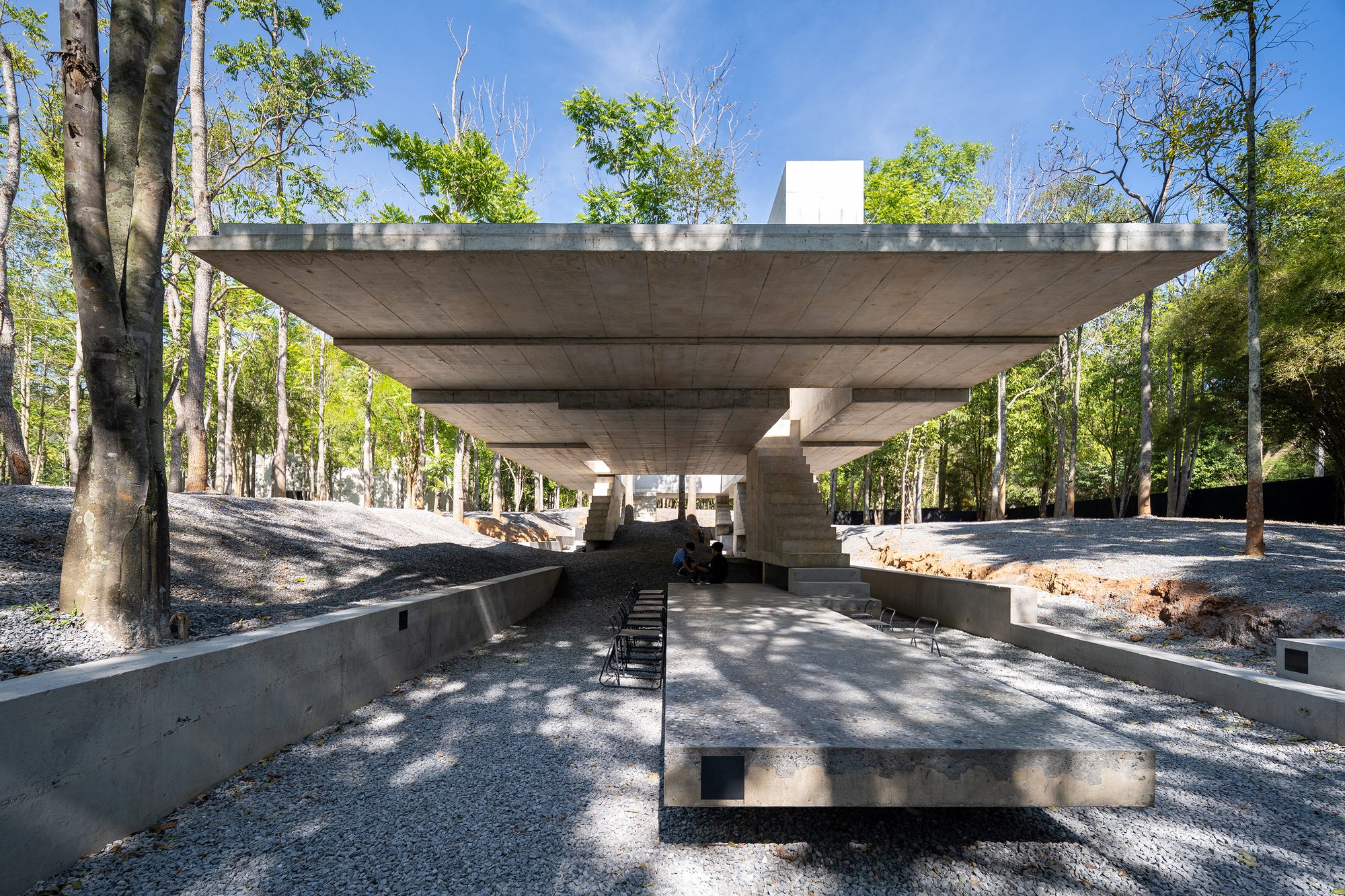
The plane becomes the roof that can be said to be the fundamental and original element of architecture. Activities under the roof then take place and allow the occupants to manage the space to sit, lie, and walk while perceiving nature’s movement.
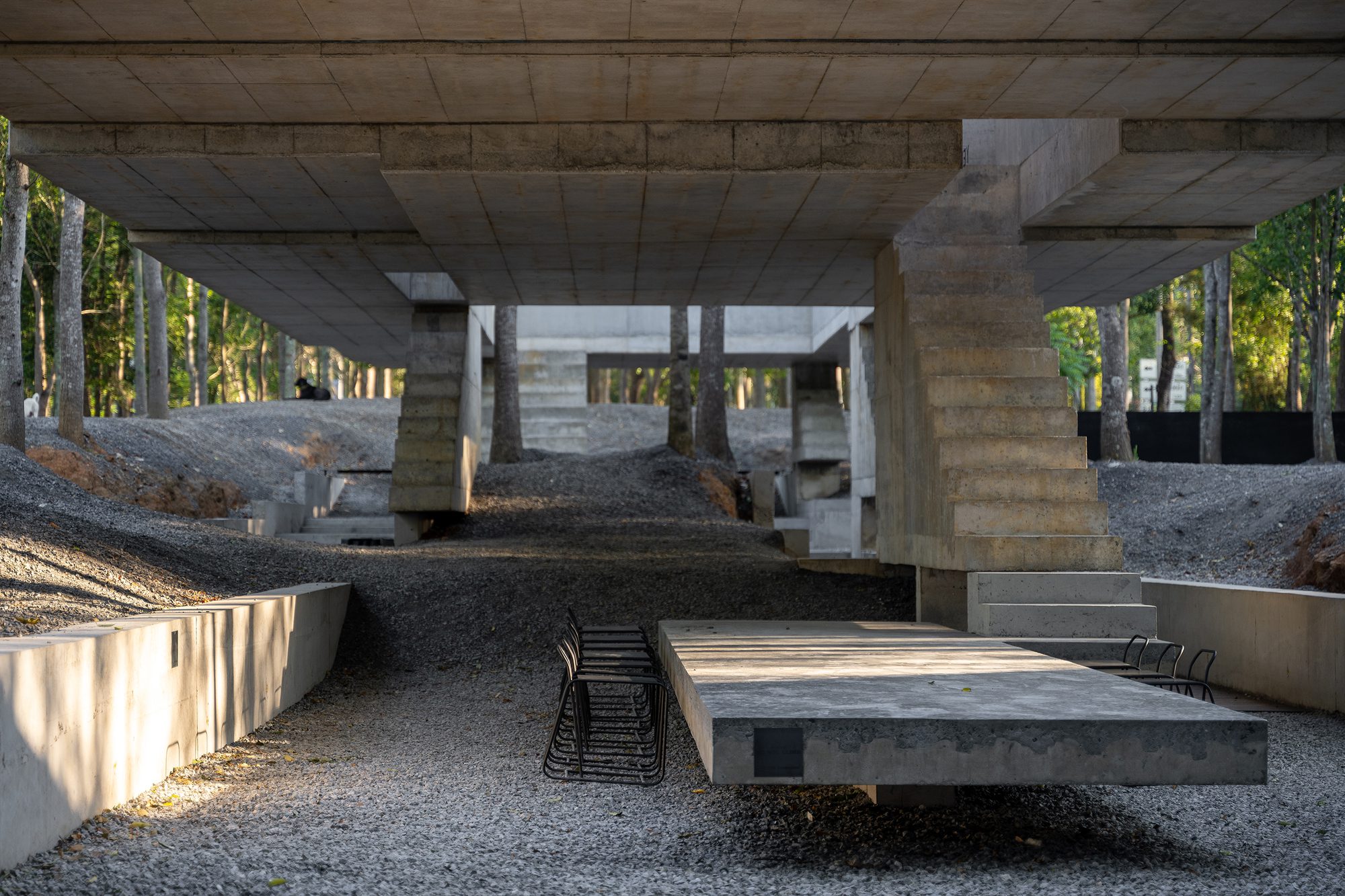
© Beersingnoi
Truth, Geography, and Room – What is respect for nature? To keep the original ground in place or not? Could it be said that the truth of nature is only changing, moving, and not stabilizing? Nature, such as the ground surface, is always changing, whether by the hands of man or nature. Could it be said that there is no truth in nature? These questions raise issues during construction in progress and during the design of the attic space, which is an area for sitting and doing various activities.
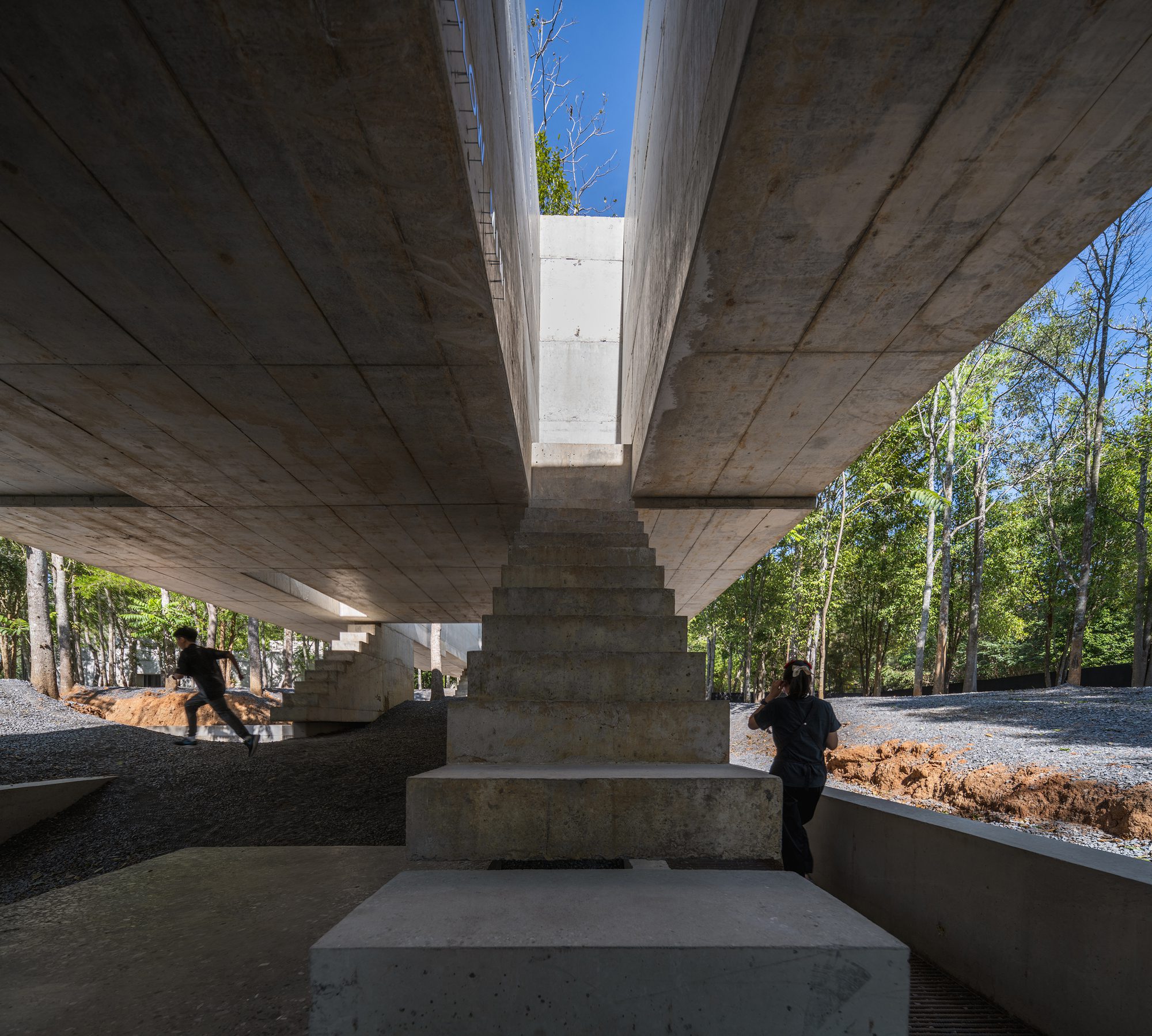
© Beersingnoi
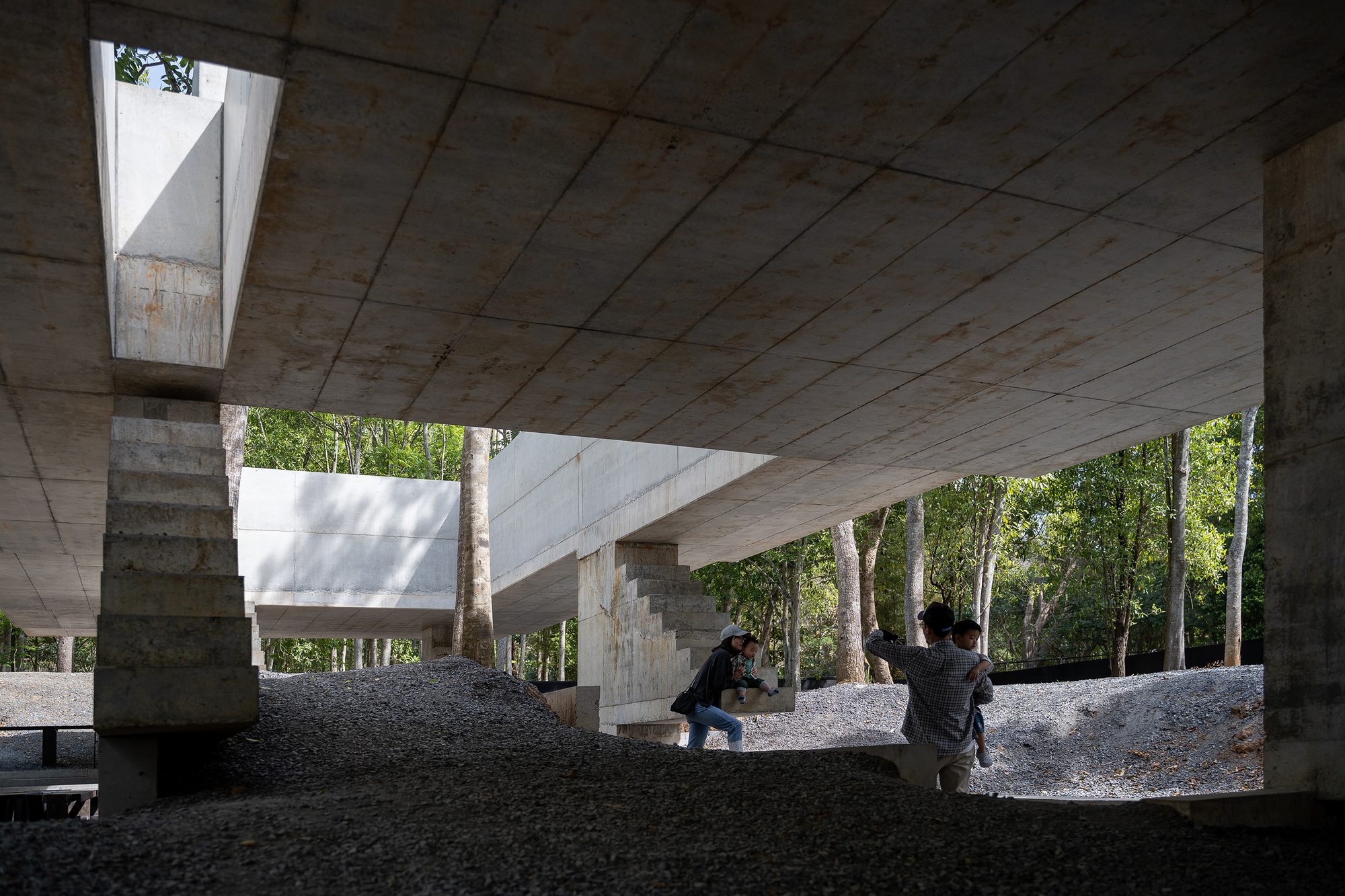
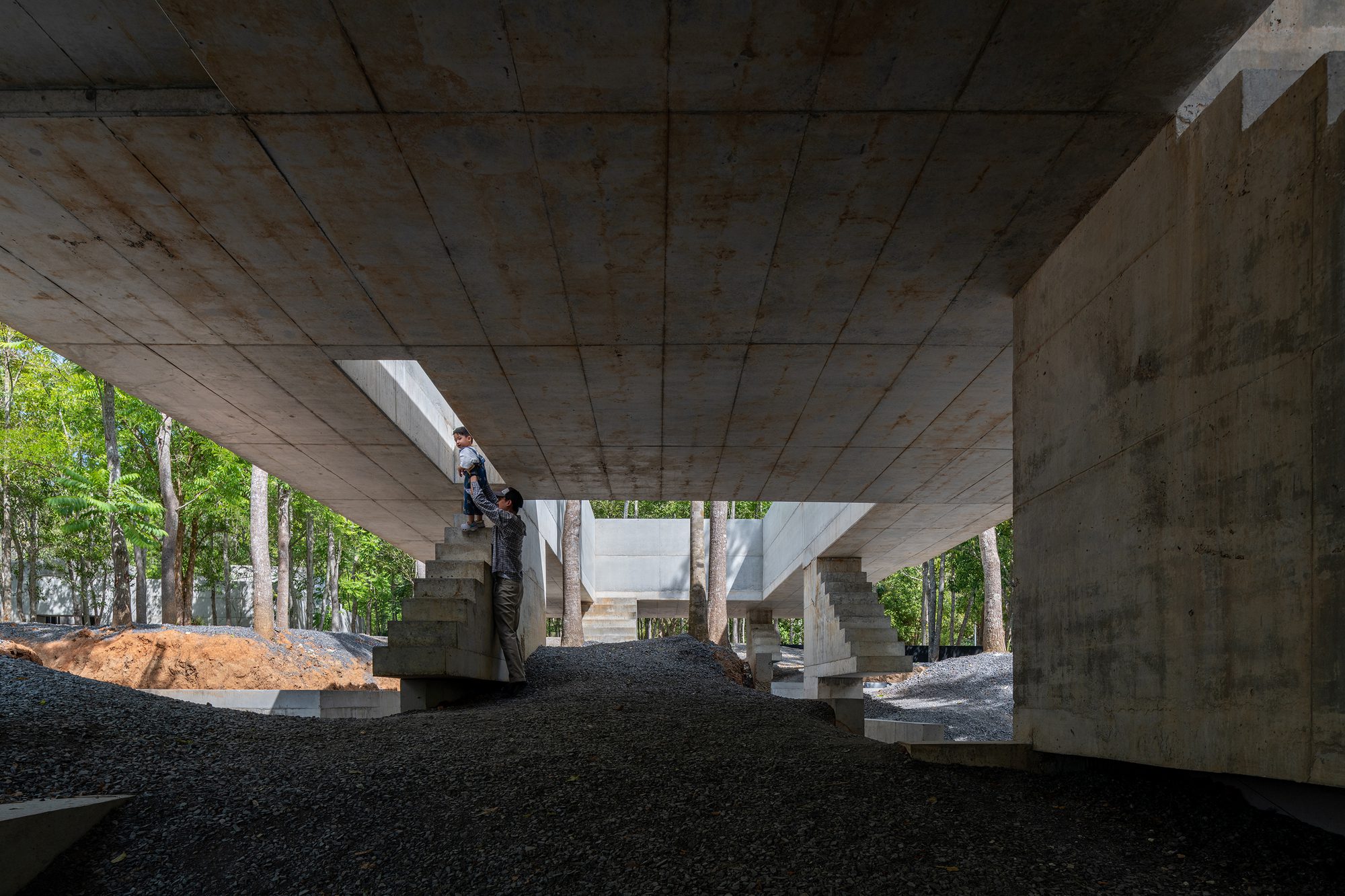
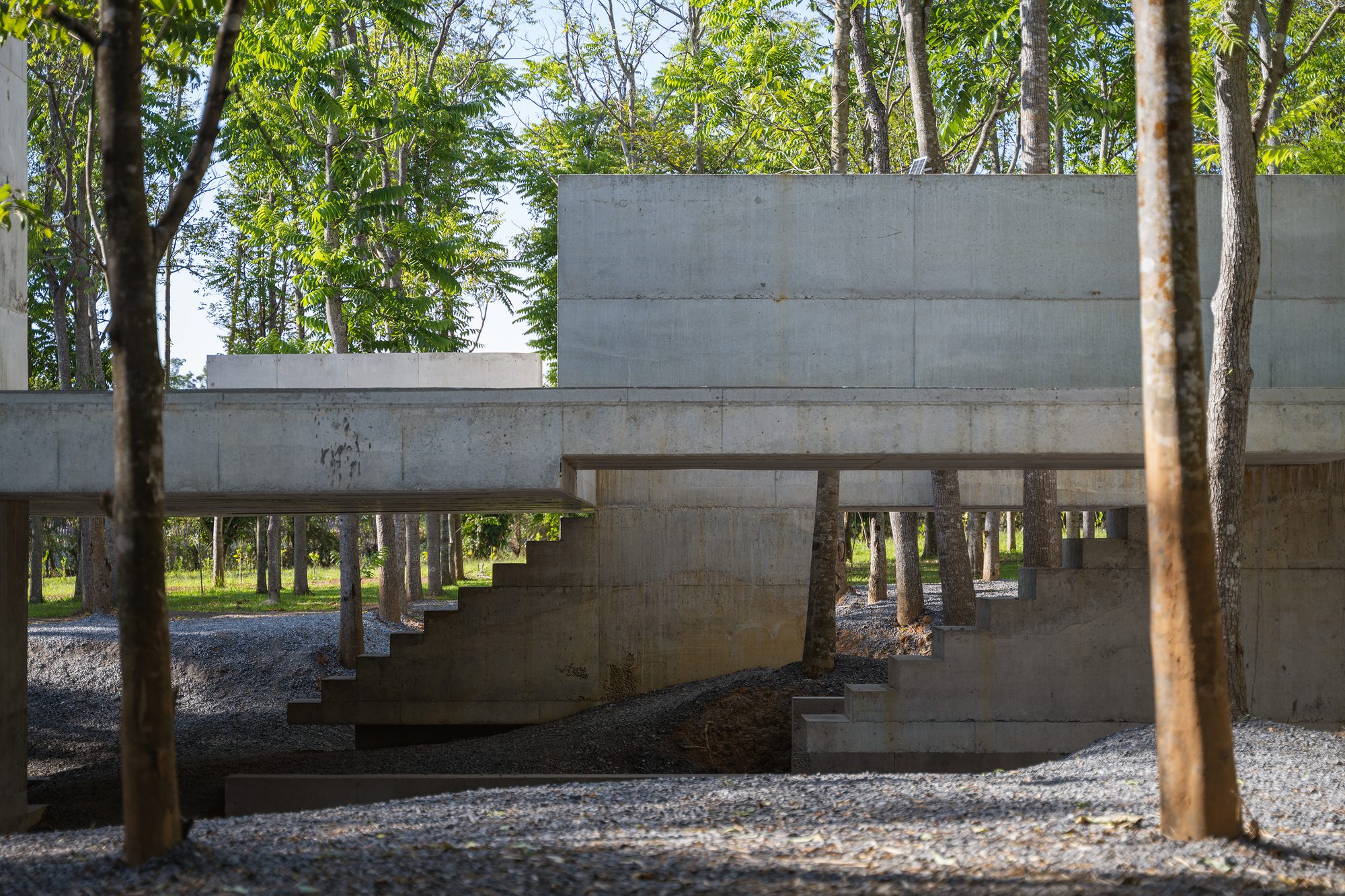
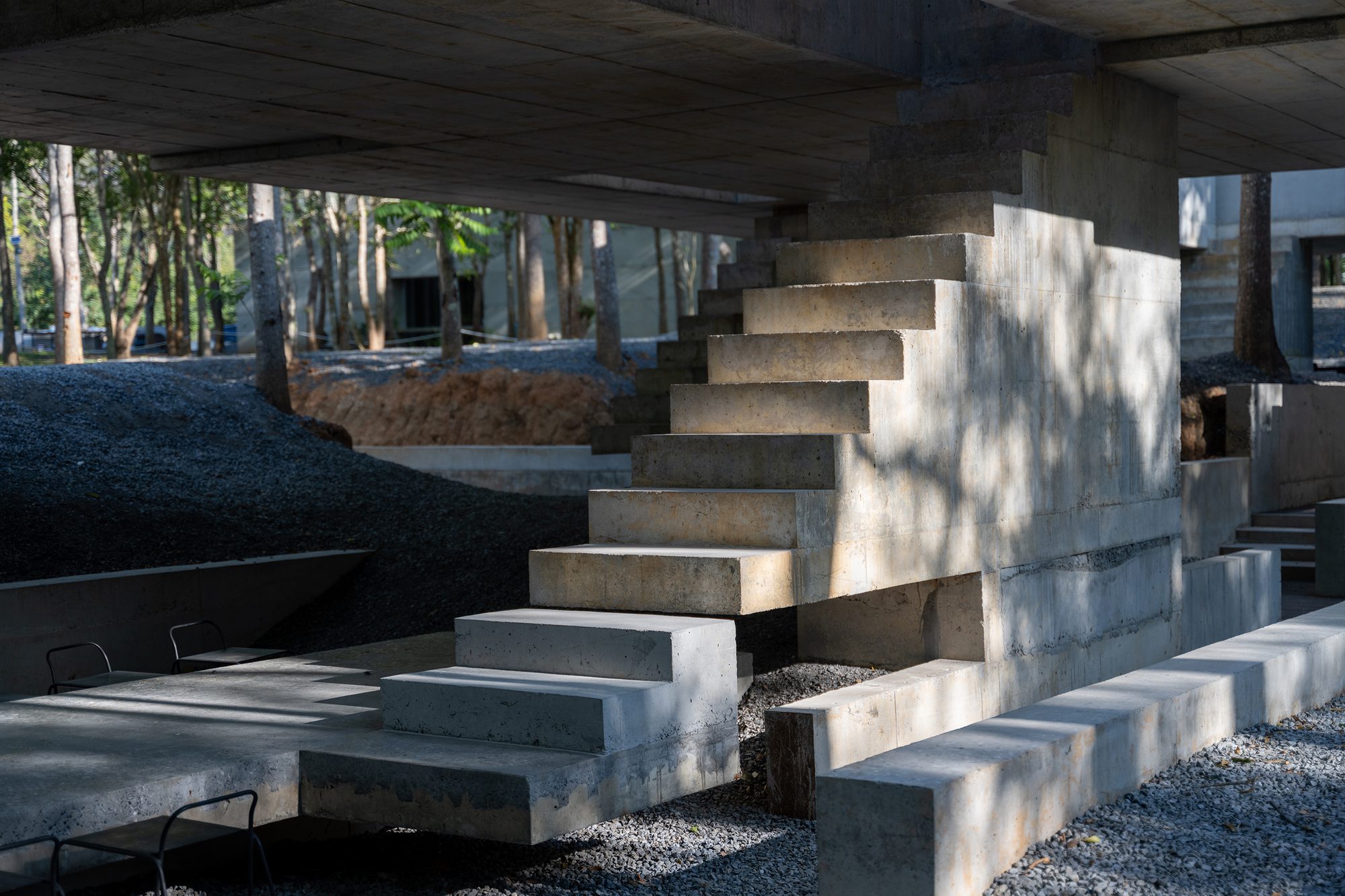
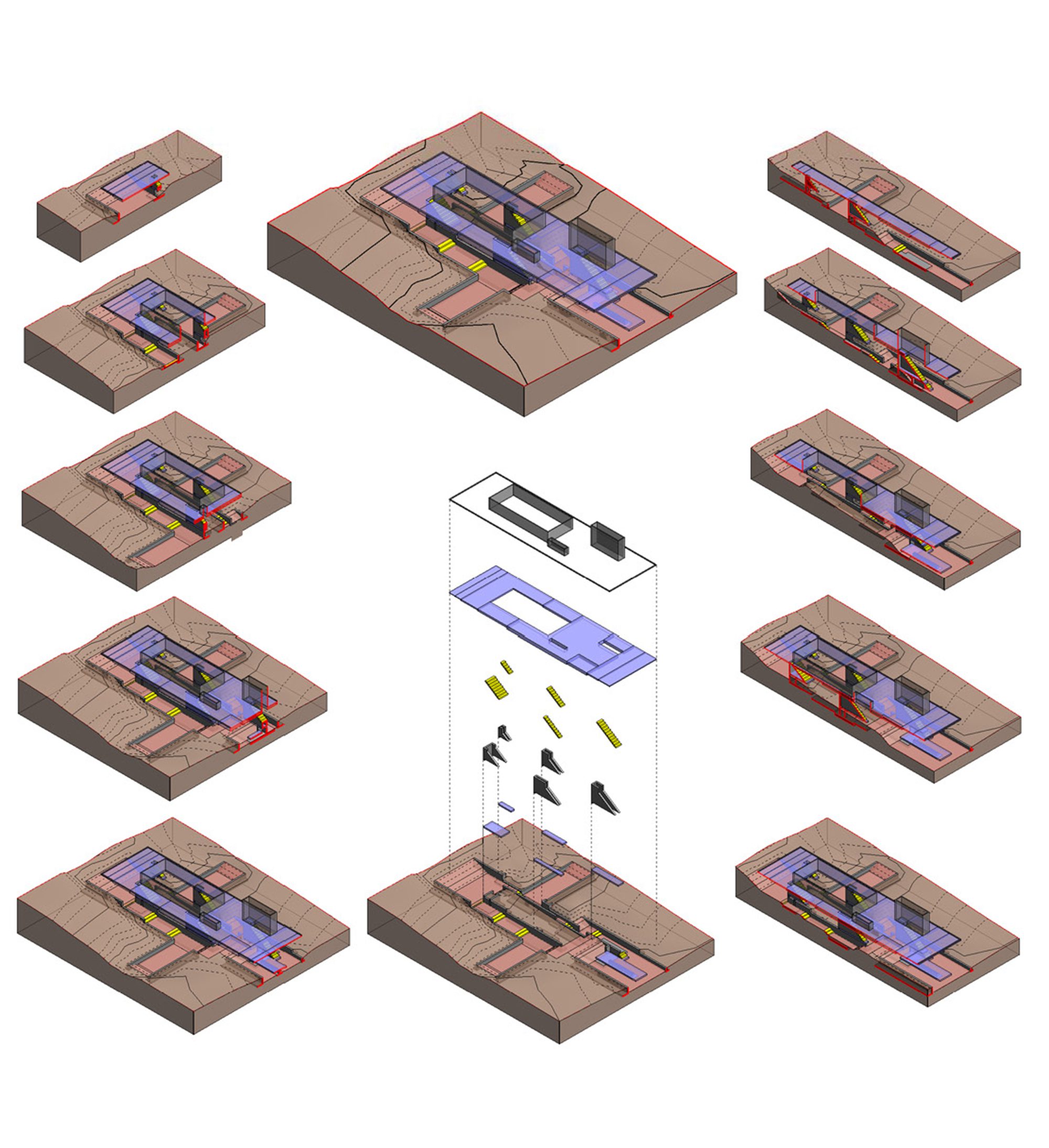
The ground was changed due to building construction behavior. The excavation of the structural footing was preserved as a representative manifestation of the man-made variations in the site during the construction process. These excavated spaces became rooms for drinking and eating. Each of the rooms is referenced to the level and overlaps the position of the building foundation.
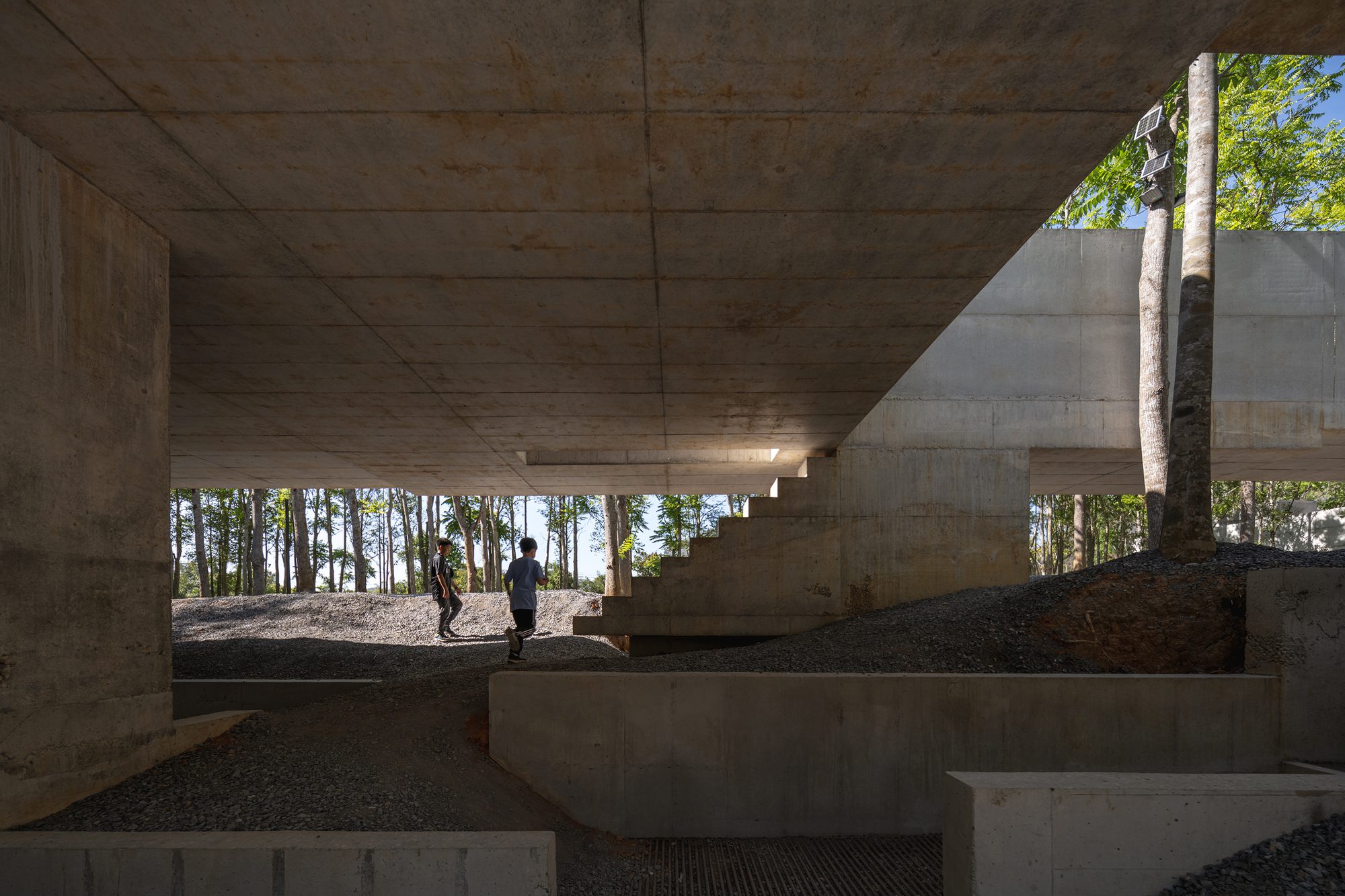
© Beersingnoi
Structure, Construction, and Architectural Space – Structure, Construction, and Architectural Space were integrated into the design that could be understood. Firstly, Structural traces such as the different thicknesses of the roof, and height of supporting elements. Secondly, Construction traces such as root foundations relative to different room areas – concrete with different colors and textures. Finally, Architectural spaces, such as rooms, in relation to the level of foundations beneath, and the height in each room in relation to the stair-shaped supporting elements.
Project Info
Architects: JOYS Architects
Country: Thailand, Pak Chong
Area: 170 m²
Year: 2022
Photographs: Beersingnoi