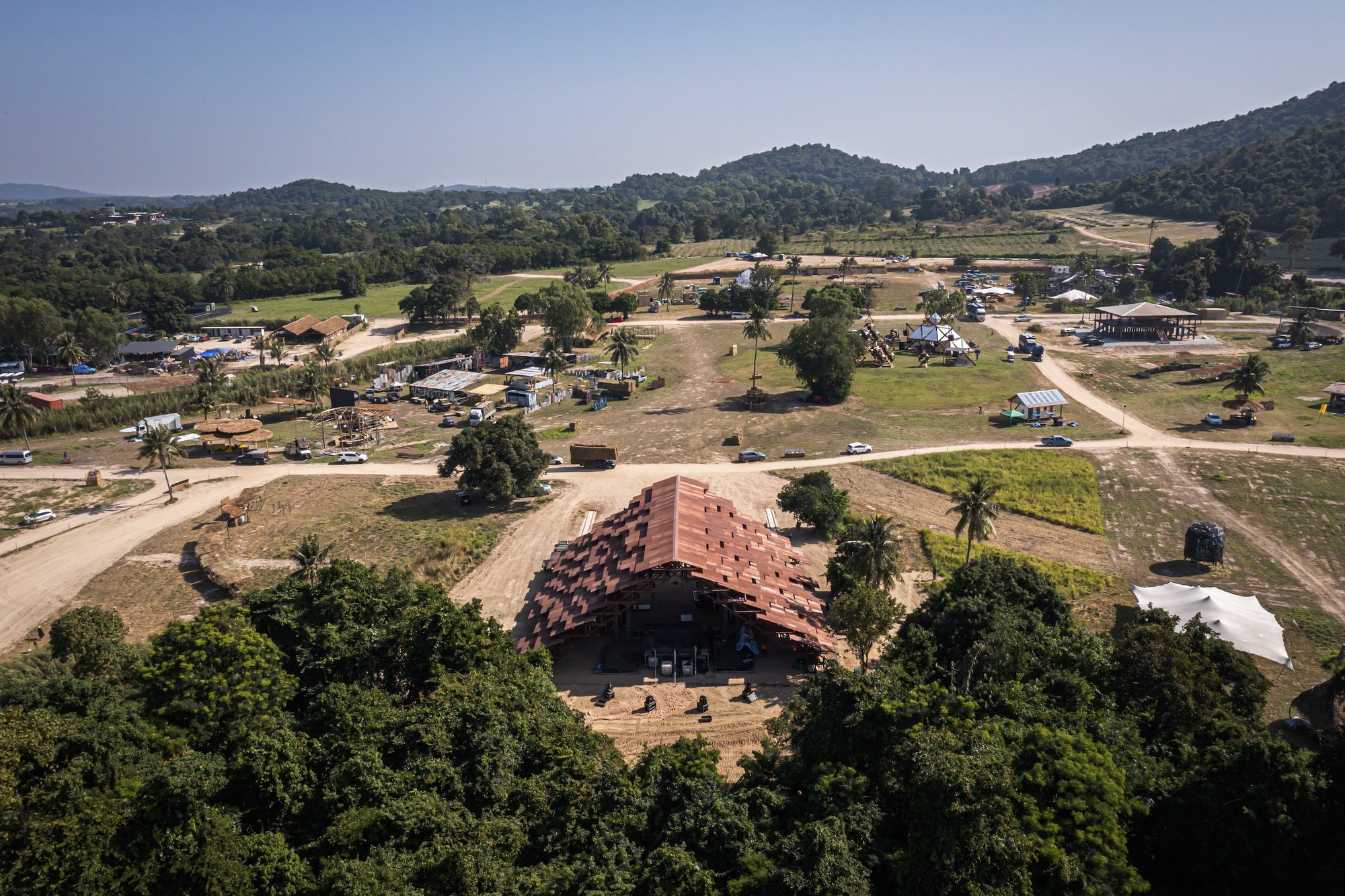
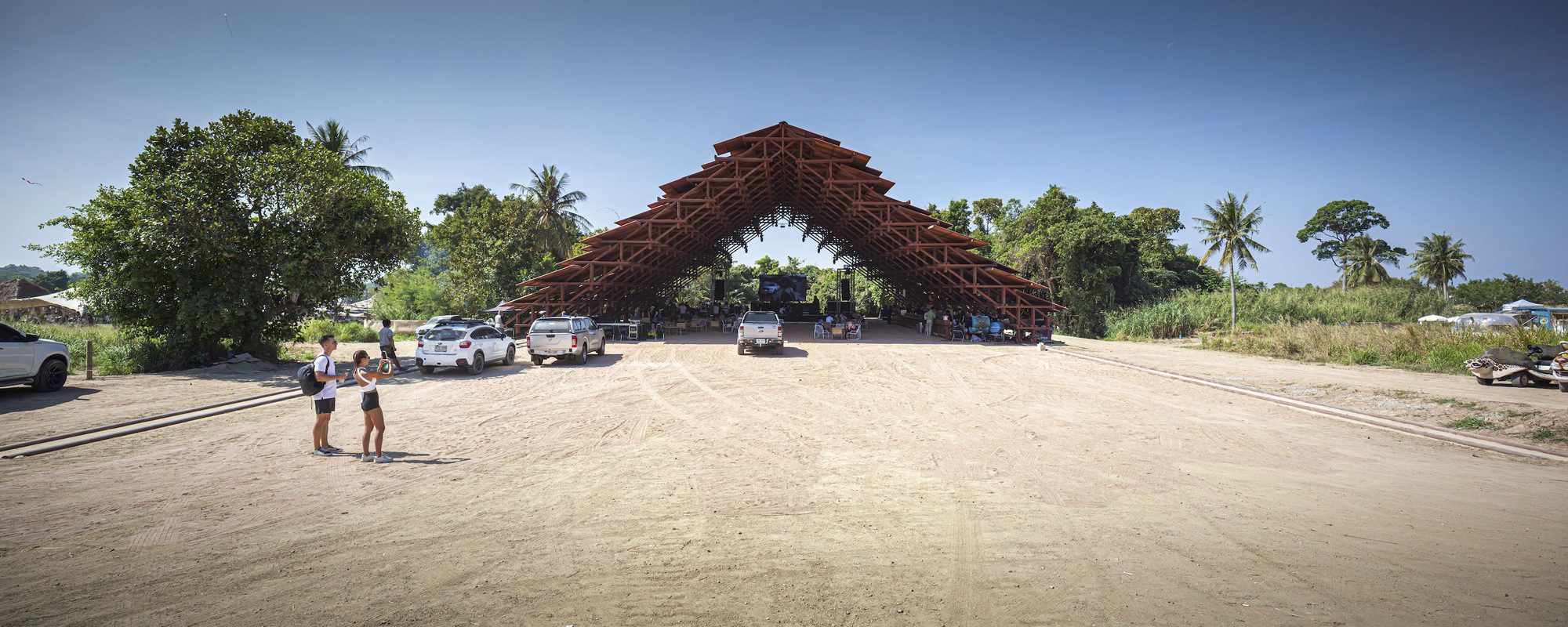
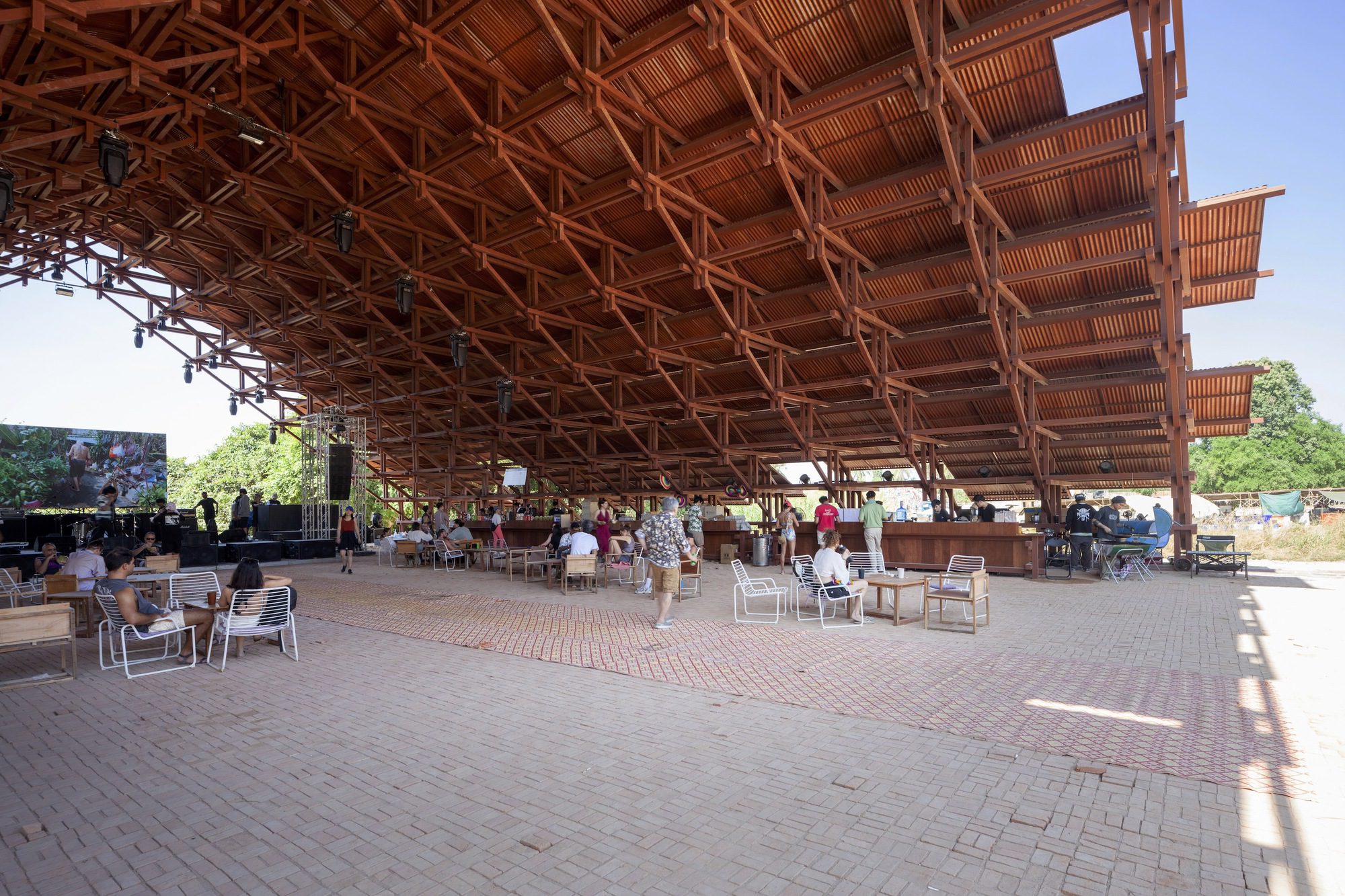
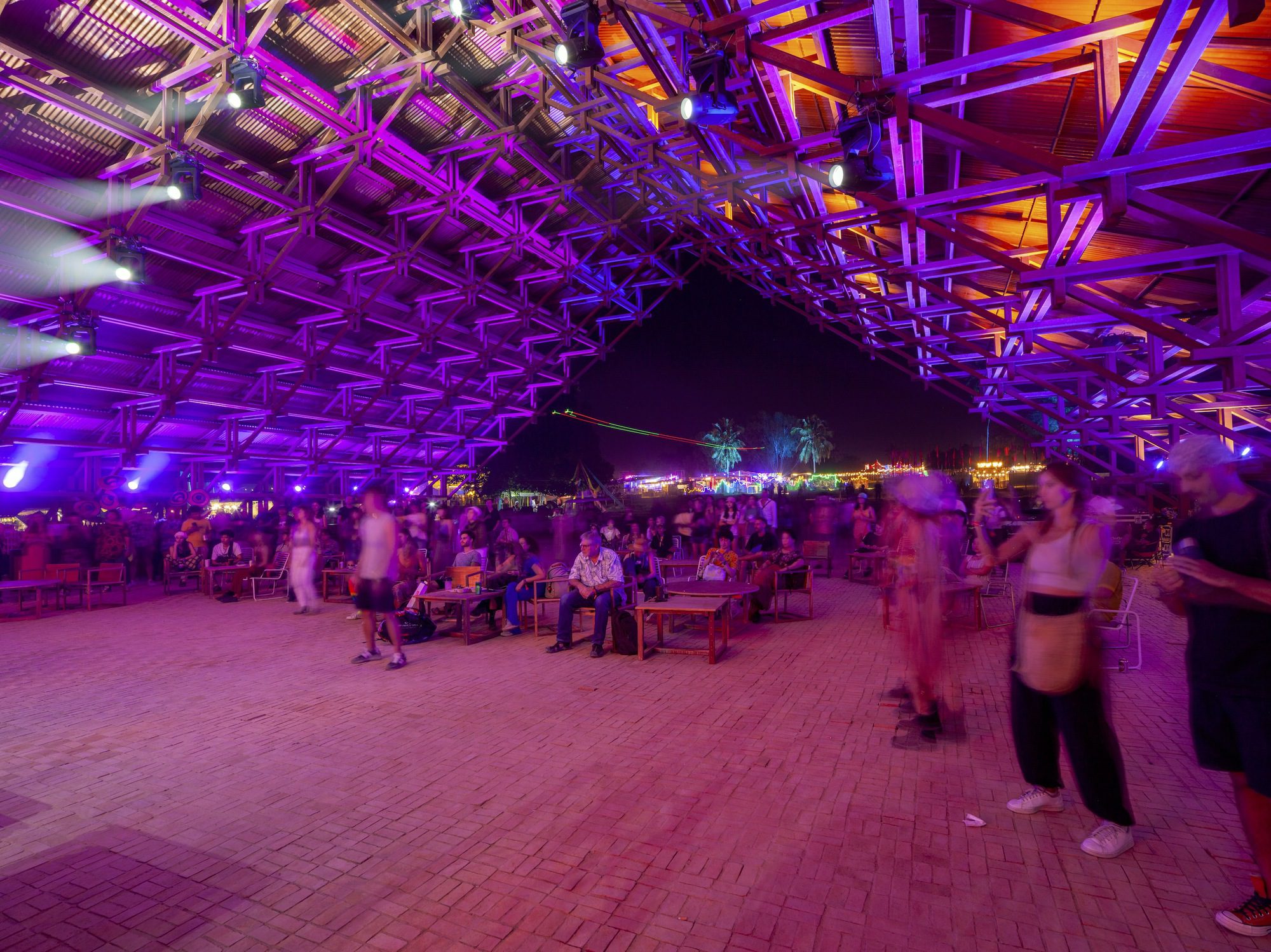
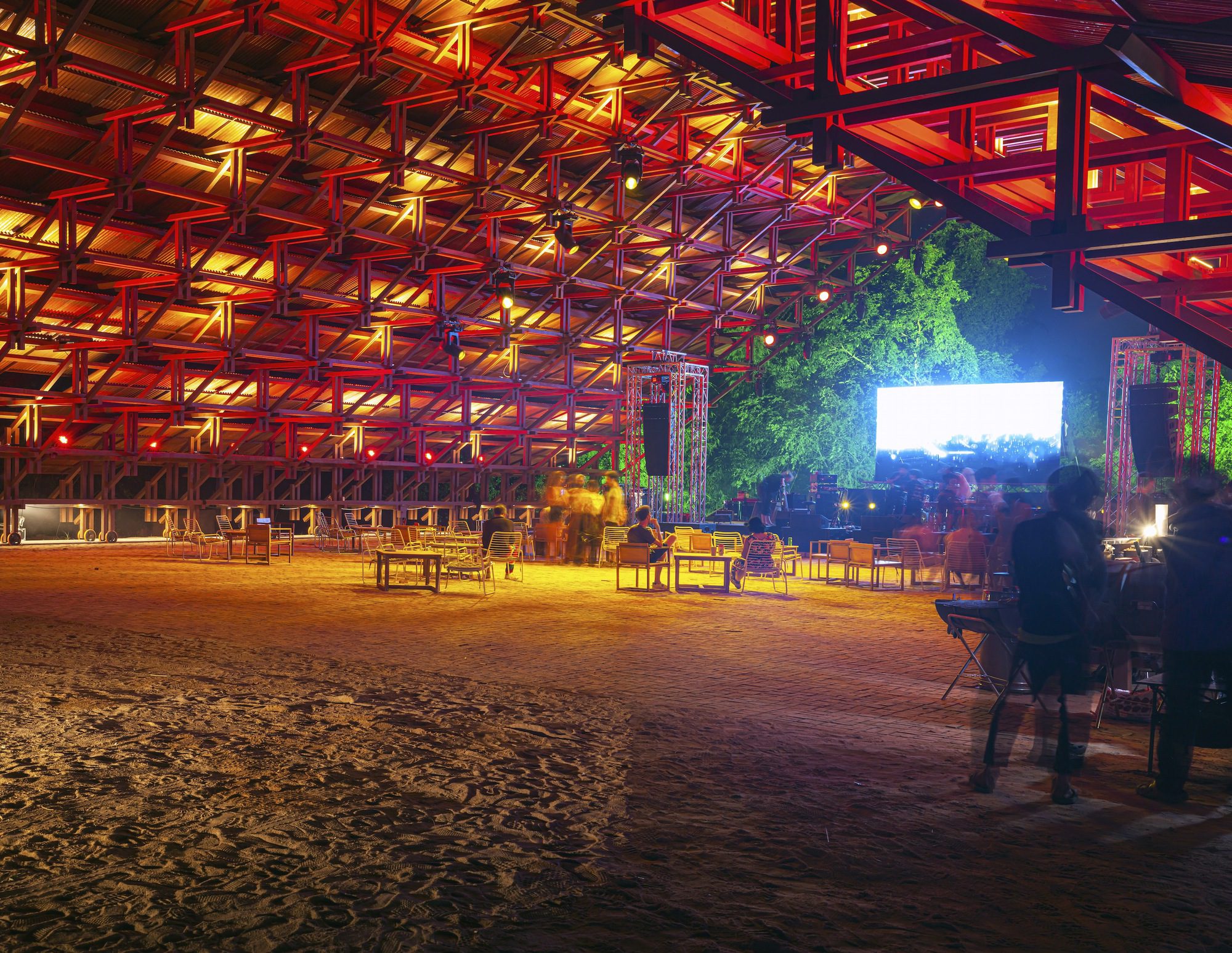
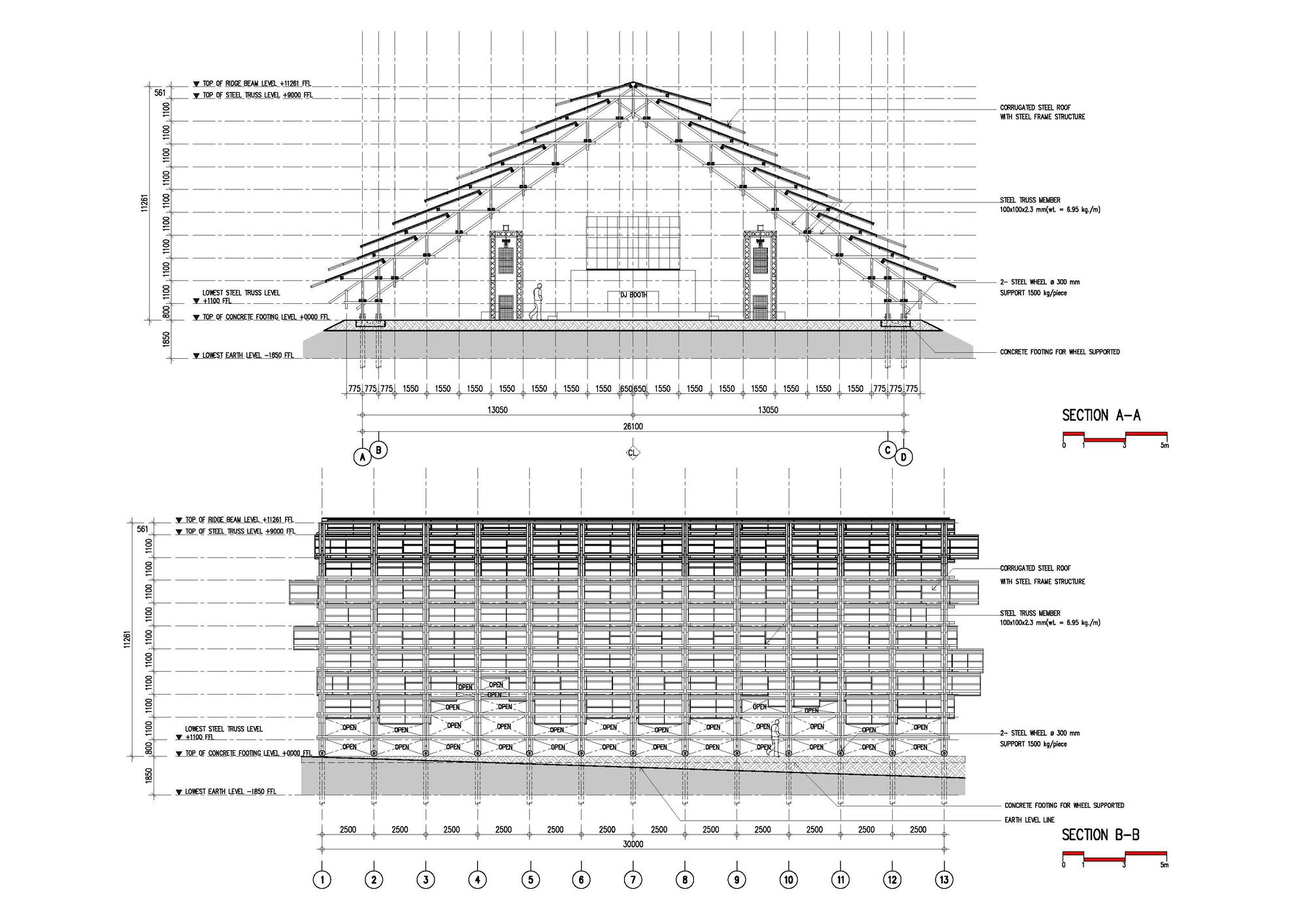
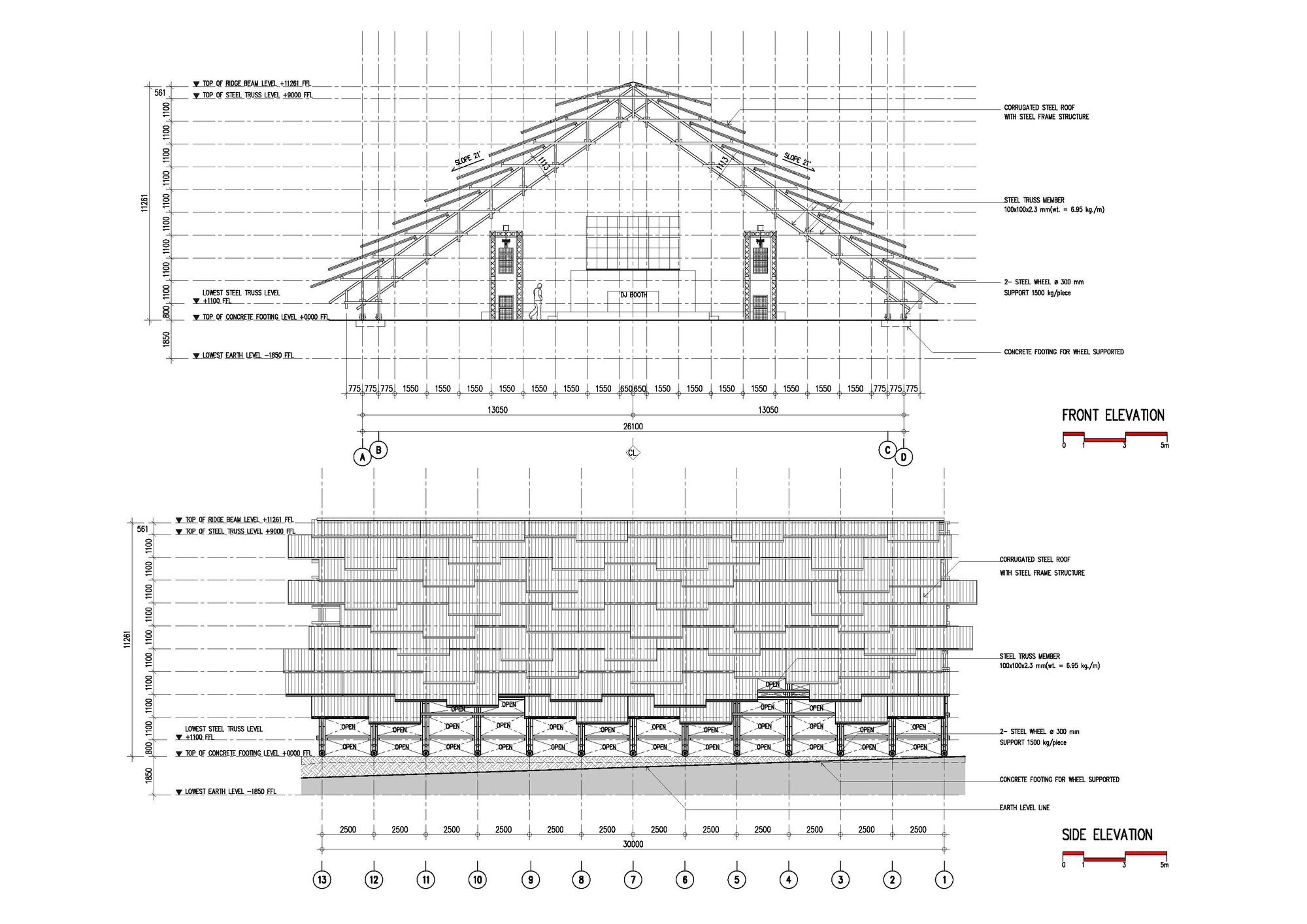
Neramit Town-Hall Pavilion, “Wonderfruit” is a year-end festival of music, arts, performance, and sustainability. As the Neramit is a town hall pavilion that is run at the festival 24/7.
© Spaceshift Studio
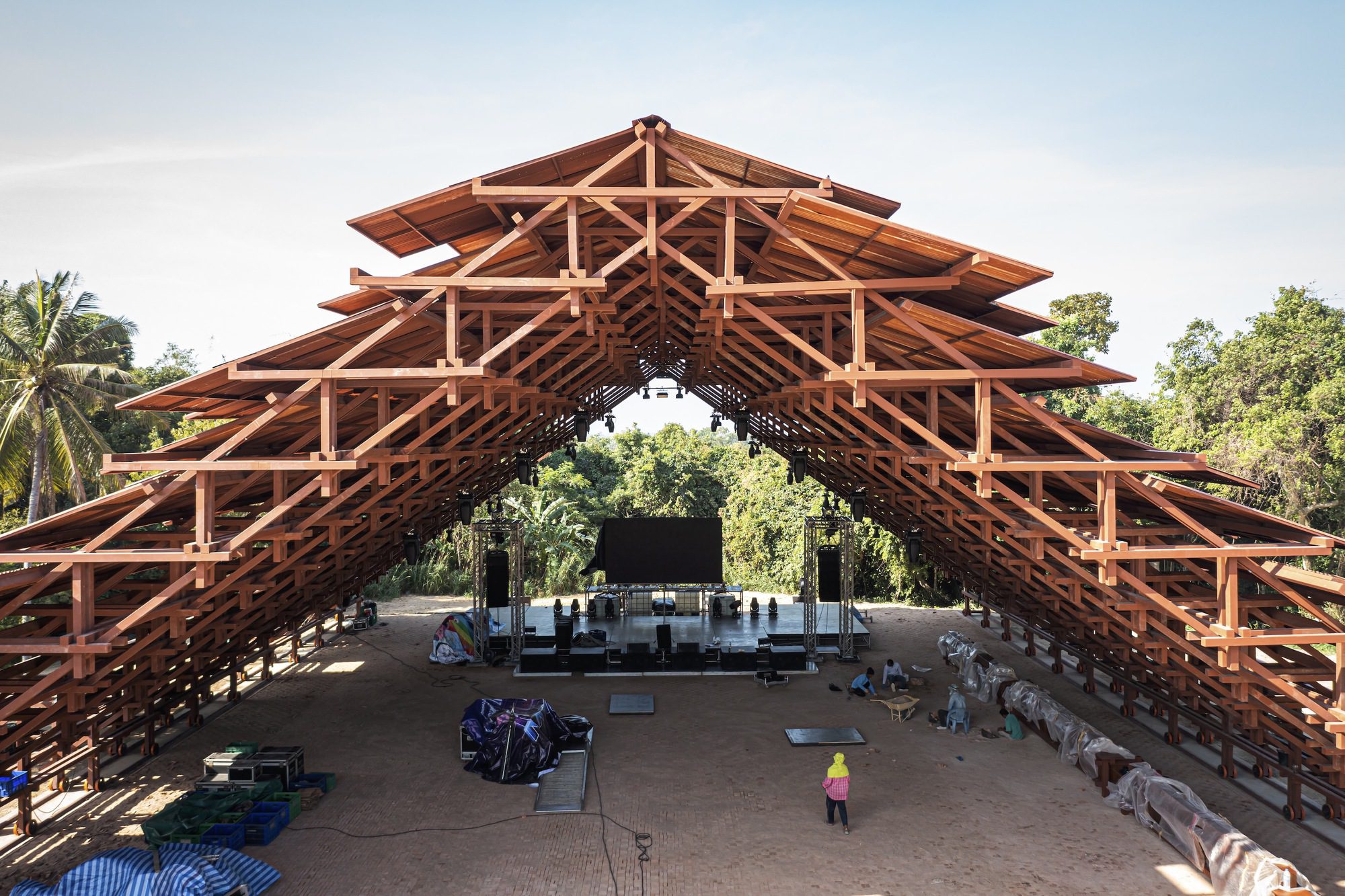
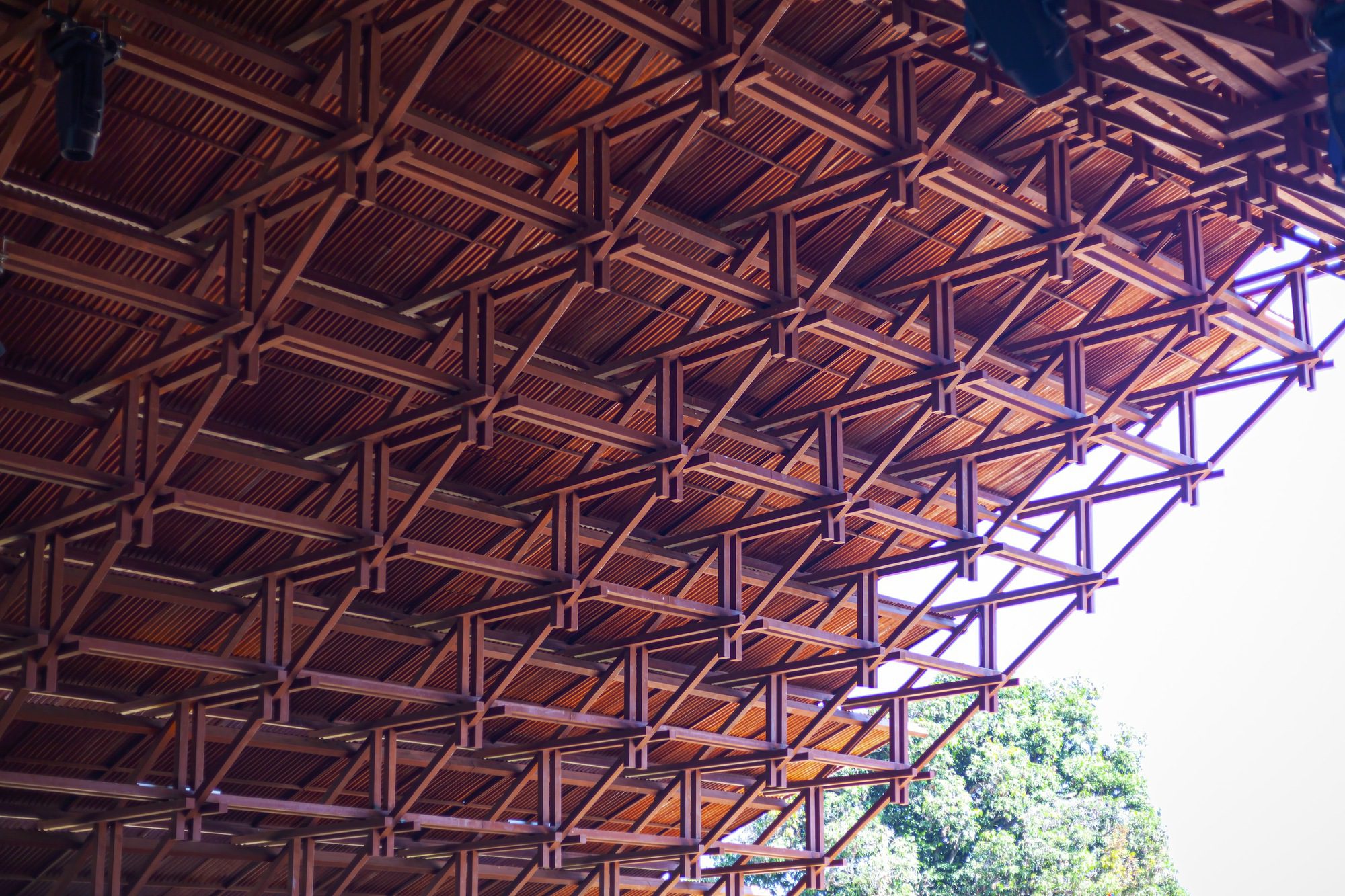
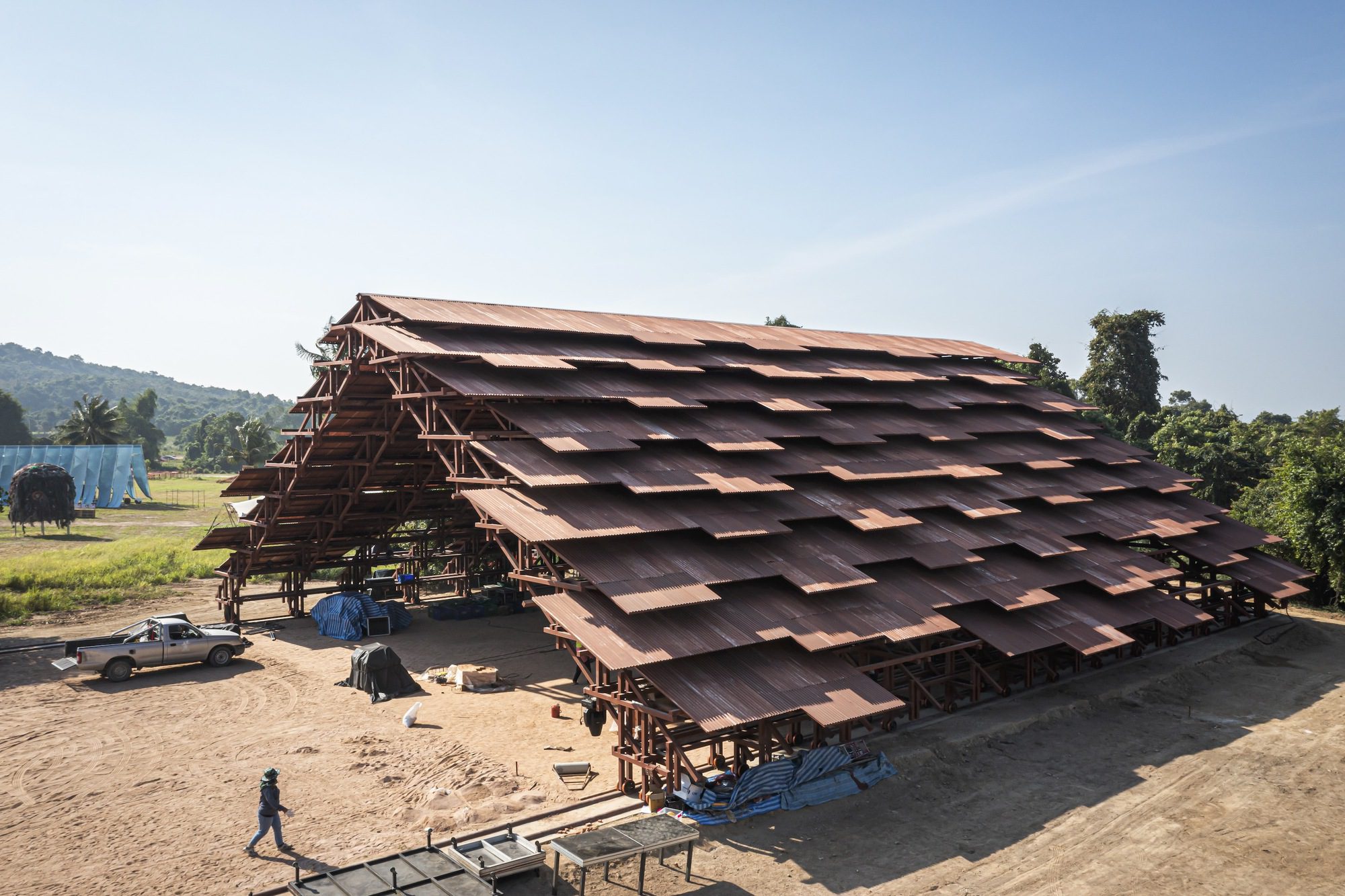
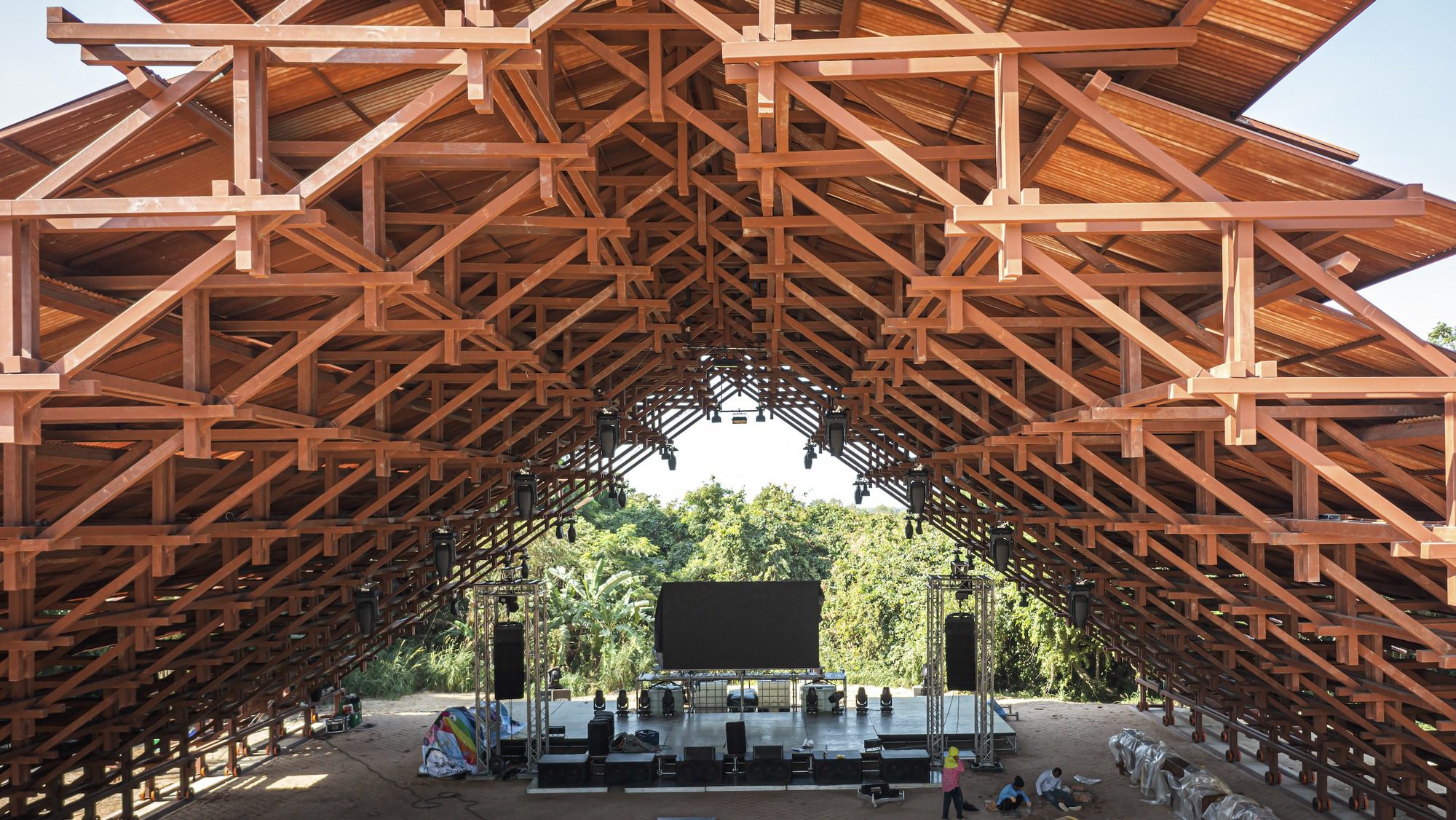
This building and interior space are created out of a single large triangular roof structure. We based our roof design on standard square tubes, or tube steel, sized 100 mm x 100 mm x 6 meters, integrating the entire length of the tubes so as not to be left with any construction waste.
© Spaceshift Studio
Non-architecture: I am interested in non-architecture, defined as a structure that is simple to create, affordable, locally made, serves the needs of users, is compatible with climate and terrain, and is common. A building with a gable roof is an example of a commonplace non-architecture, particularly in rural areas. Each element of the structure makes sense and supports one another. Each piece is intertwined and connected to optimize load-bearing capacity with gravity and joints.
© Spaceshift Studio
There are many questions, such as what kind of architecture contributes to good weather? What kind of architecture represents a healthy environment? What kind of architecture represents rural life? What kind of architecture expresses an agricultural way of life? But the central question is, what kind of architecture conveys the sense of non-architecture?
© Spaceshift Studio
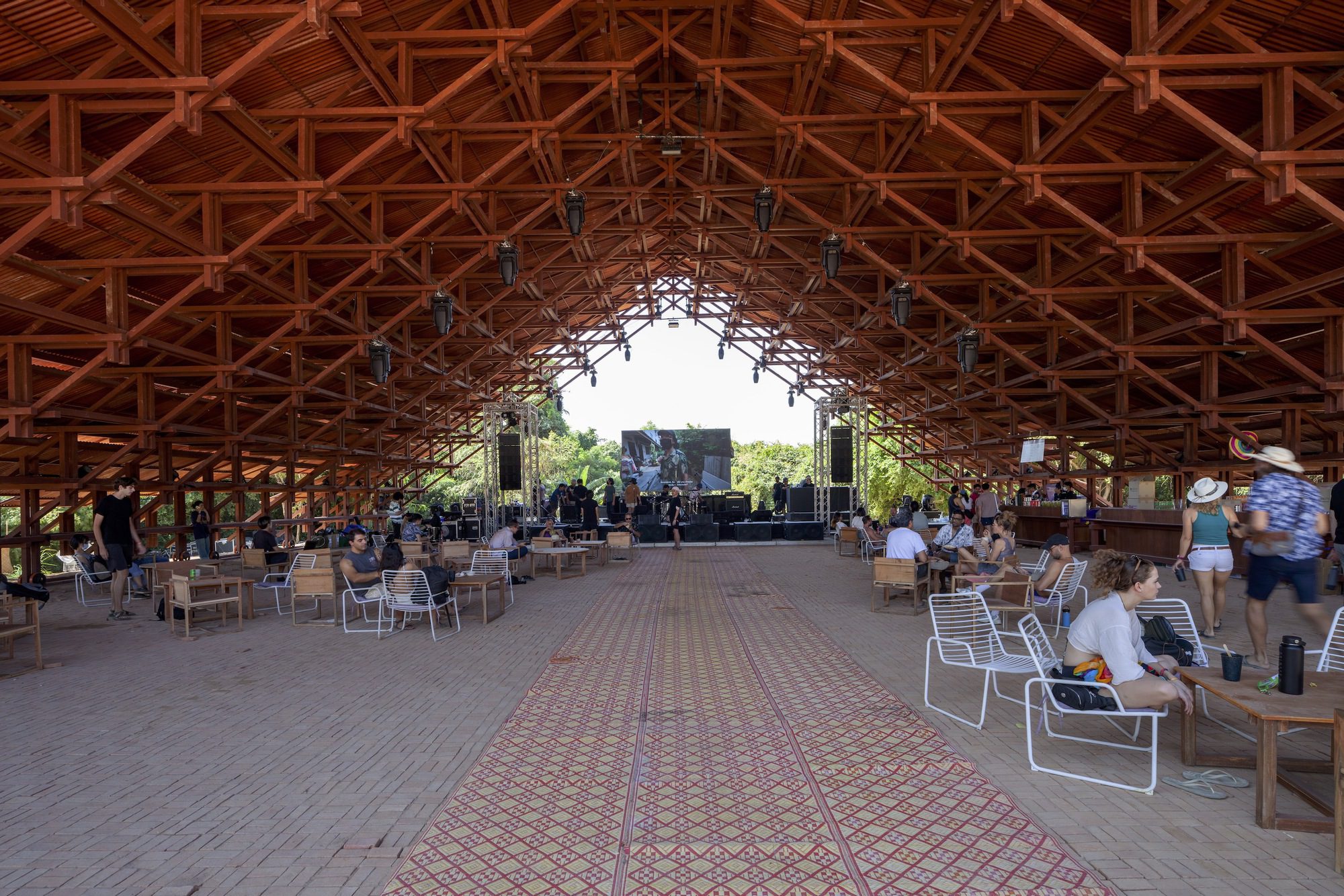
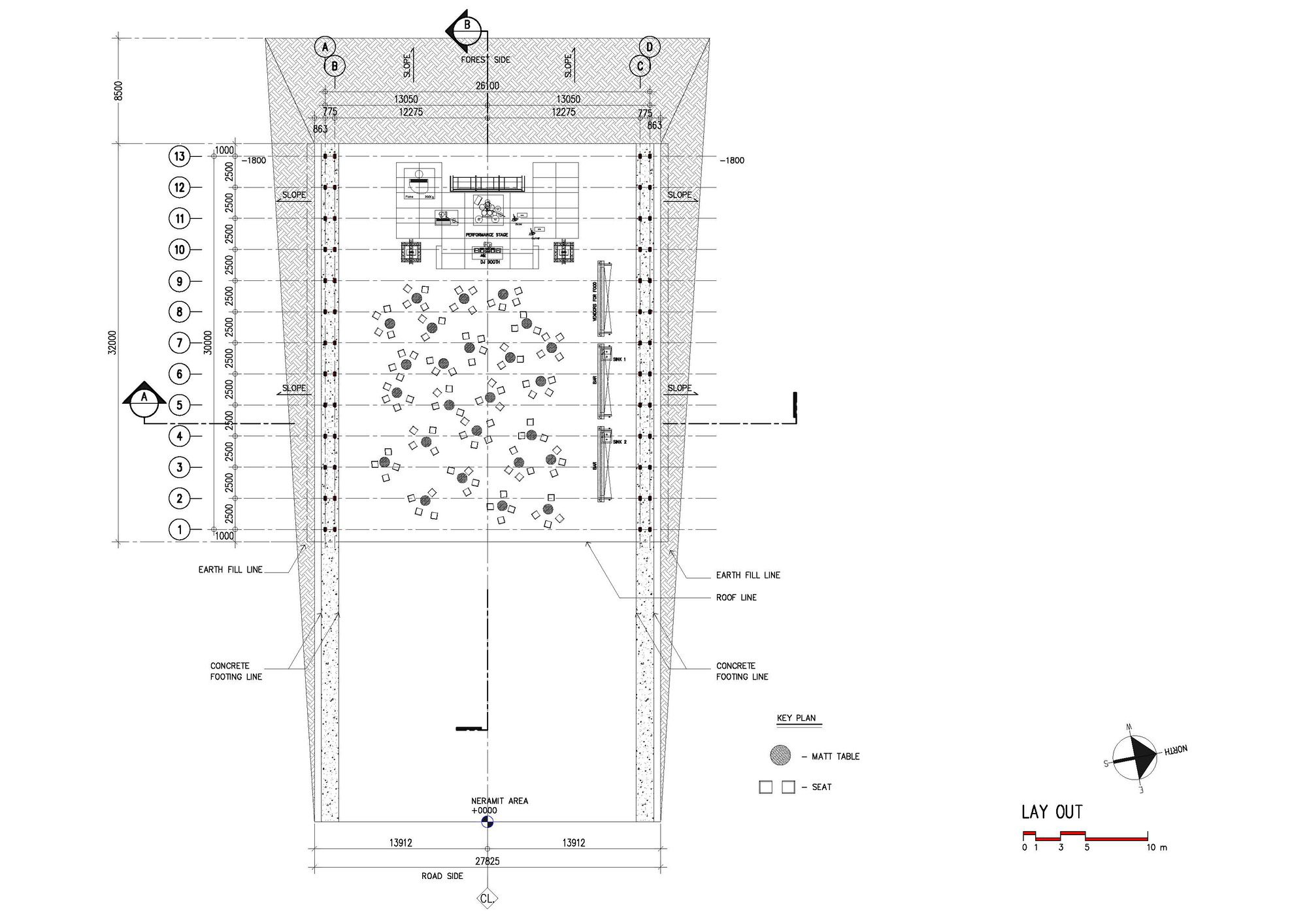
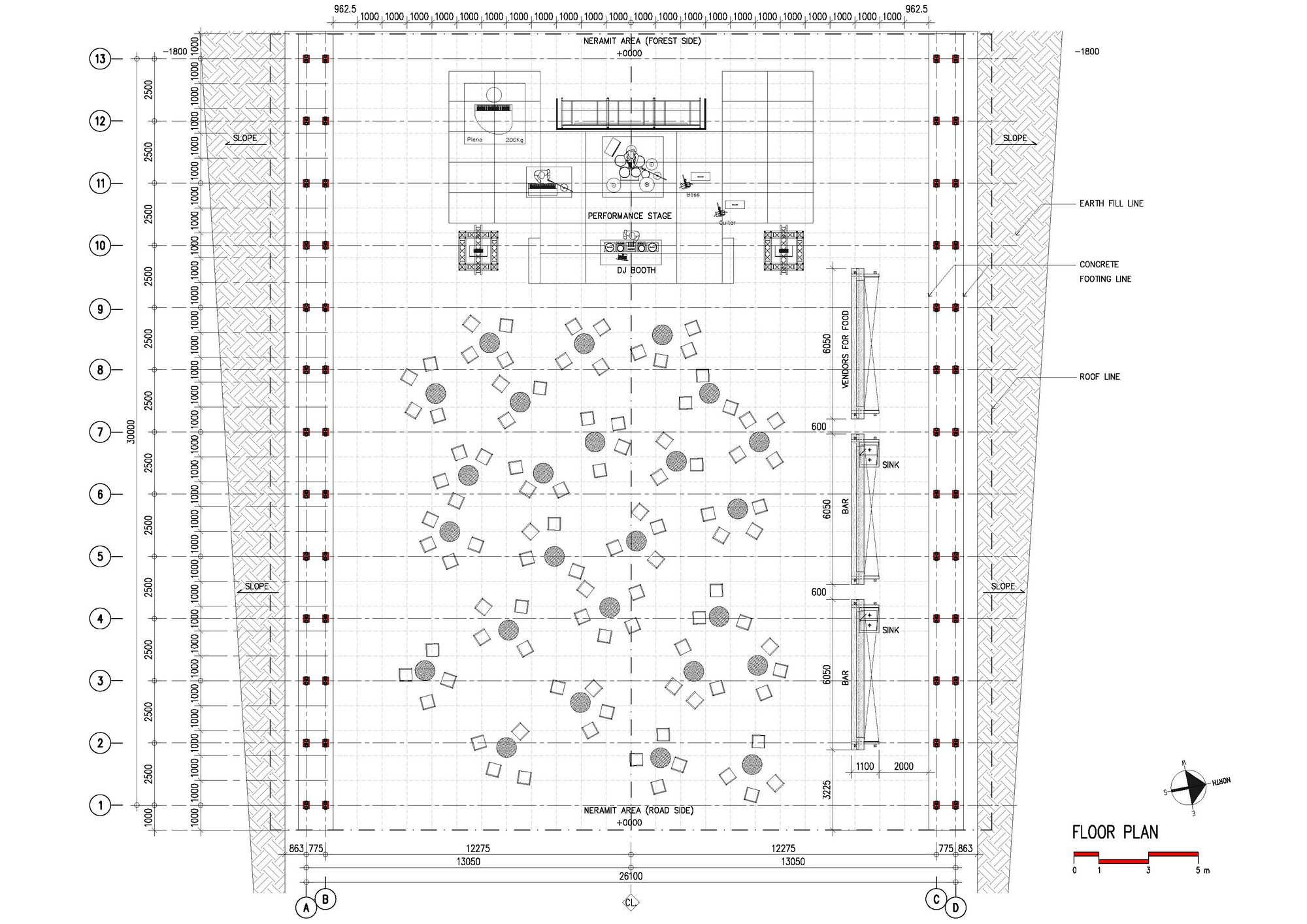
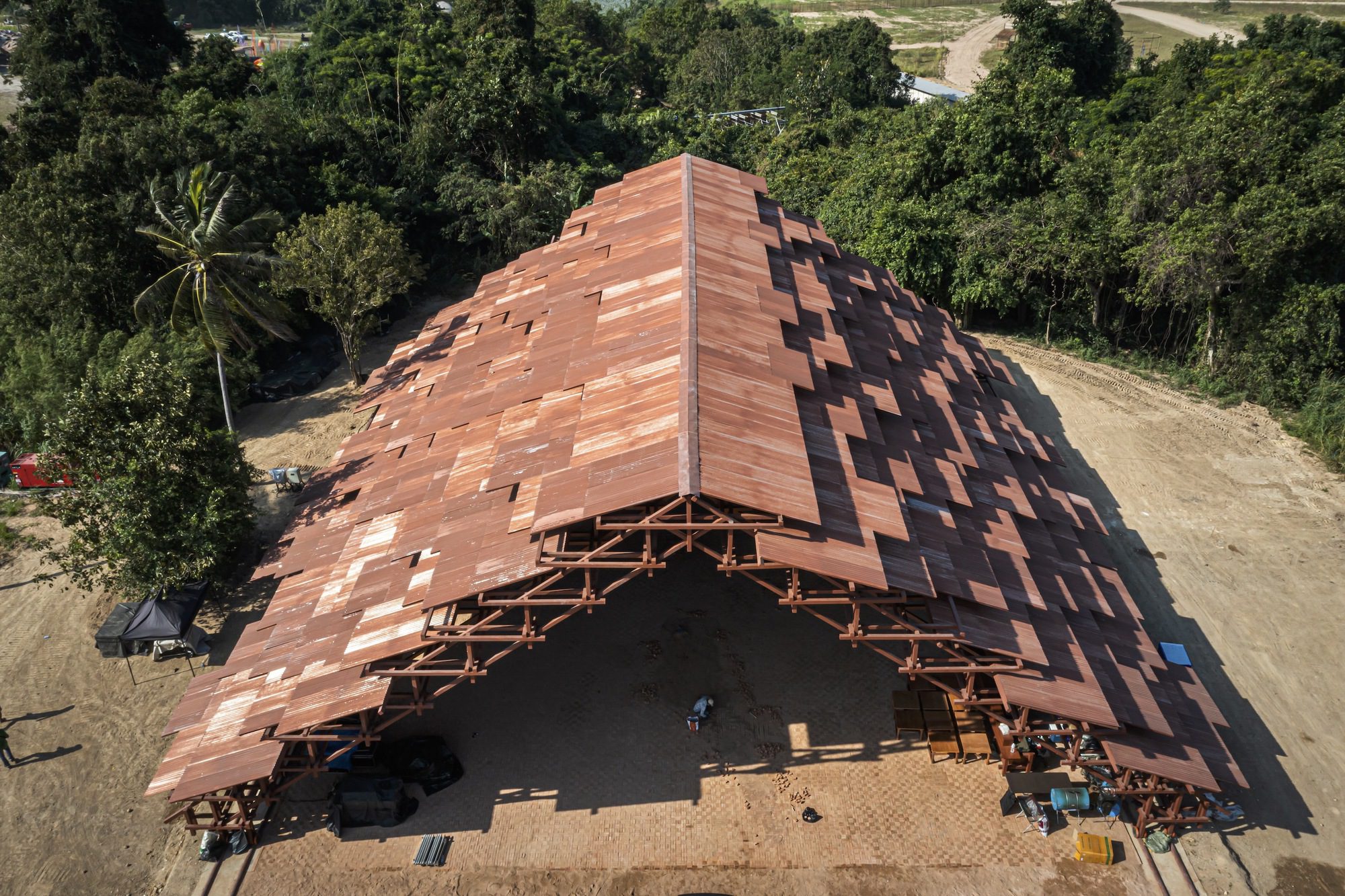
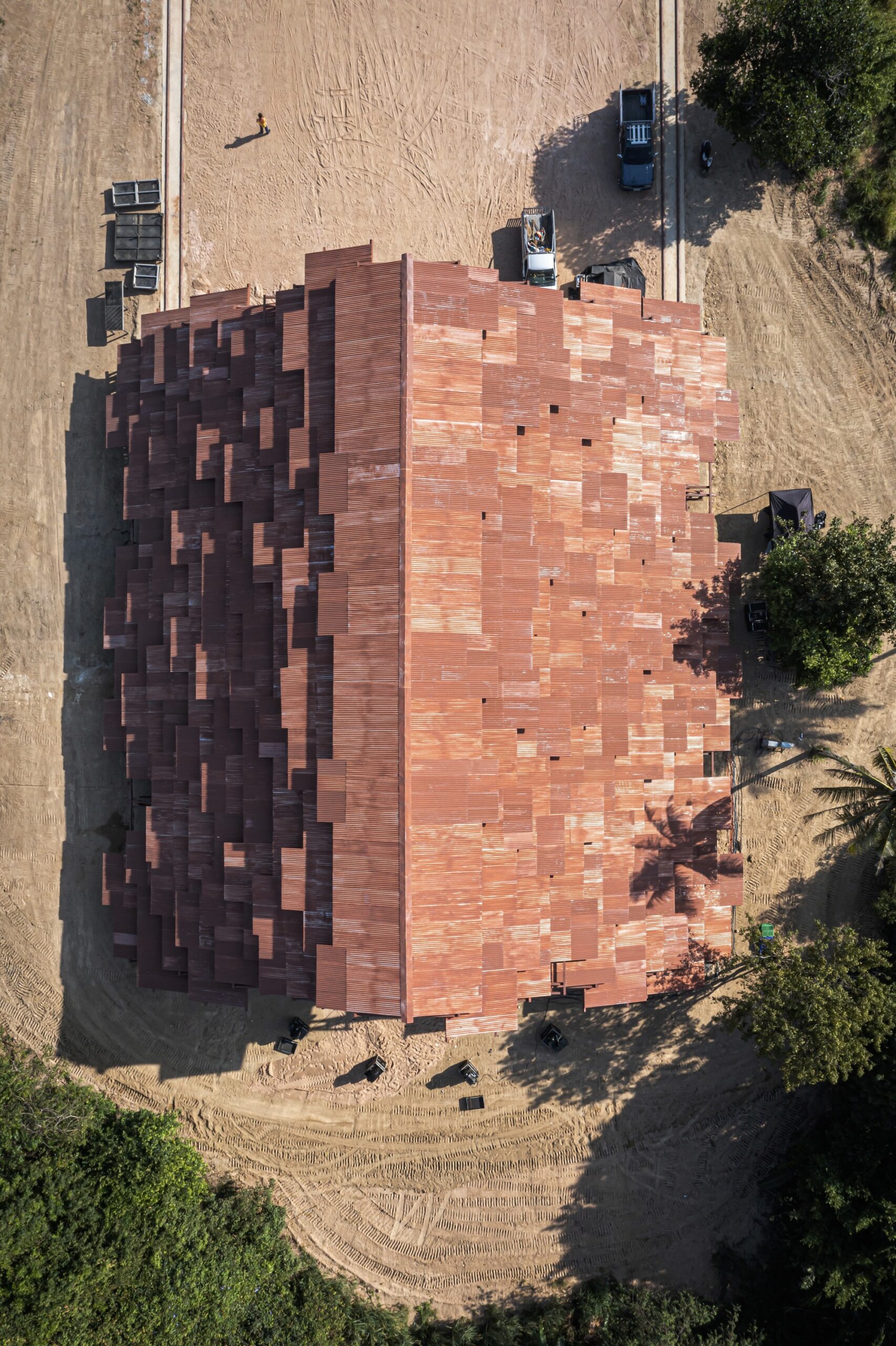
Neramit is literally a roofing building. The entire existence of it is based on one large 30×30 meter roof that provides space for various activities over the four days of the festival. It’s like the festival’s town hall, where everyone can come to relax, socialize, and give talks and performances.
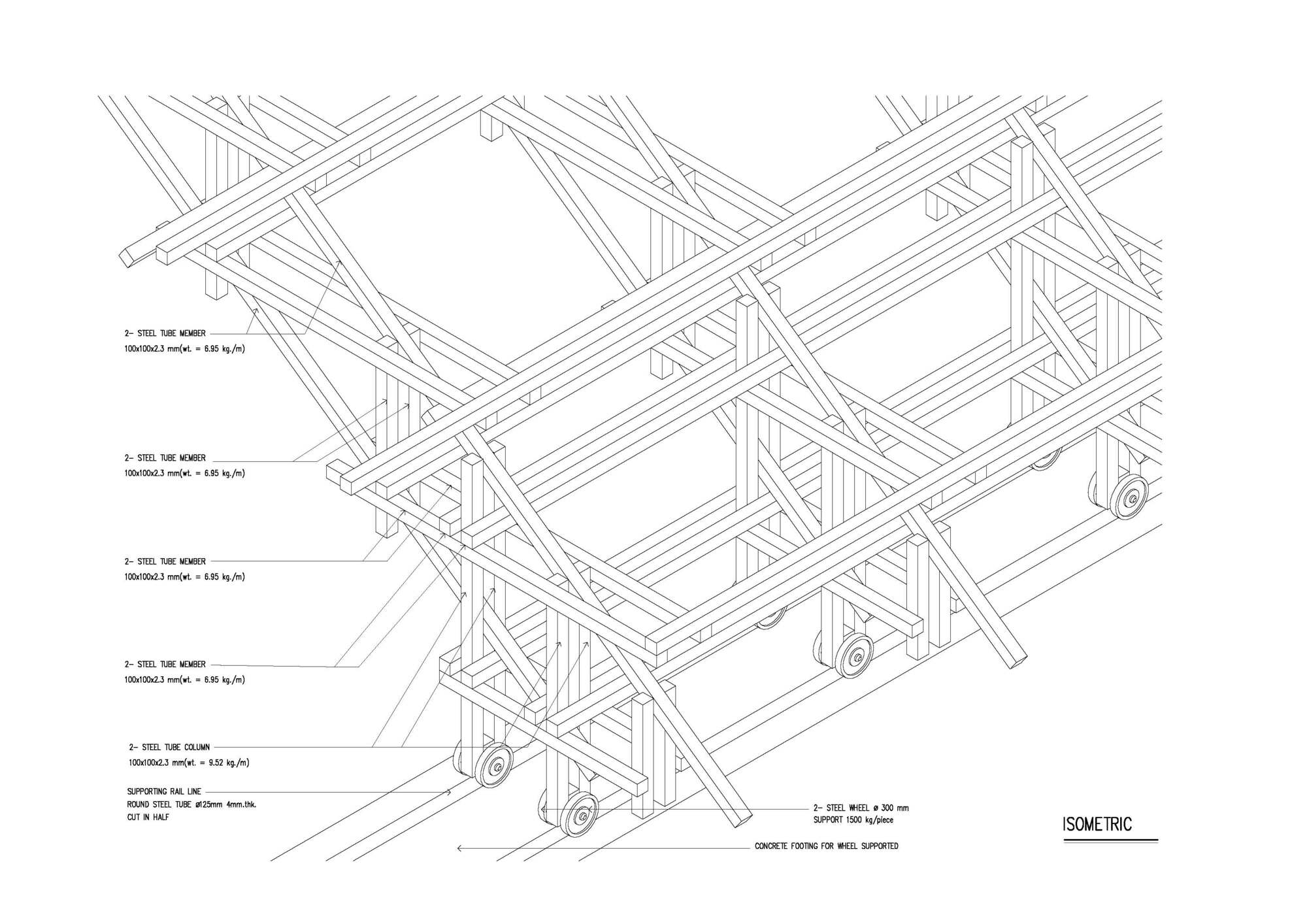
Isometric
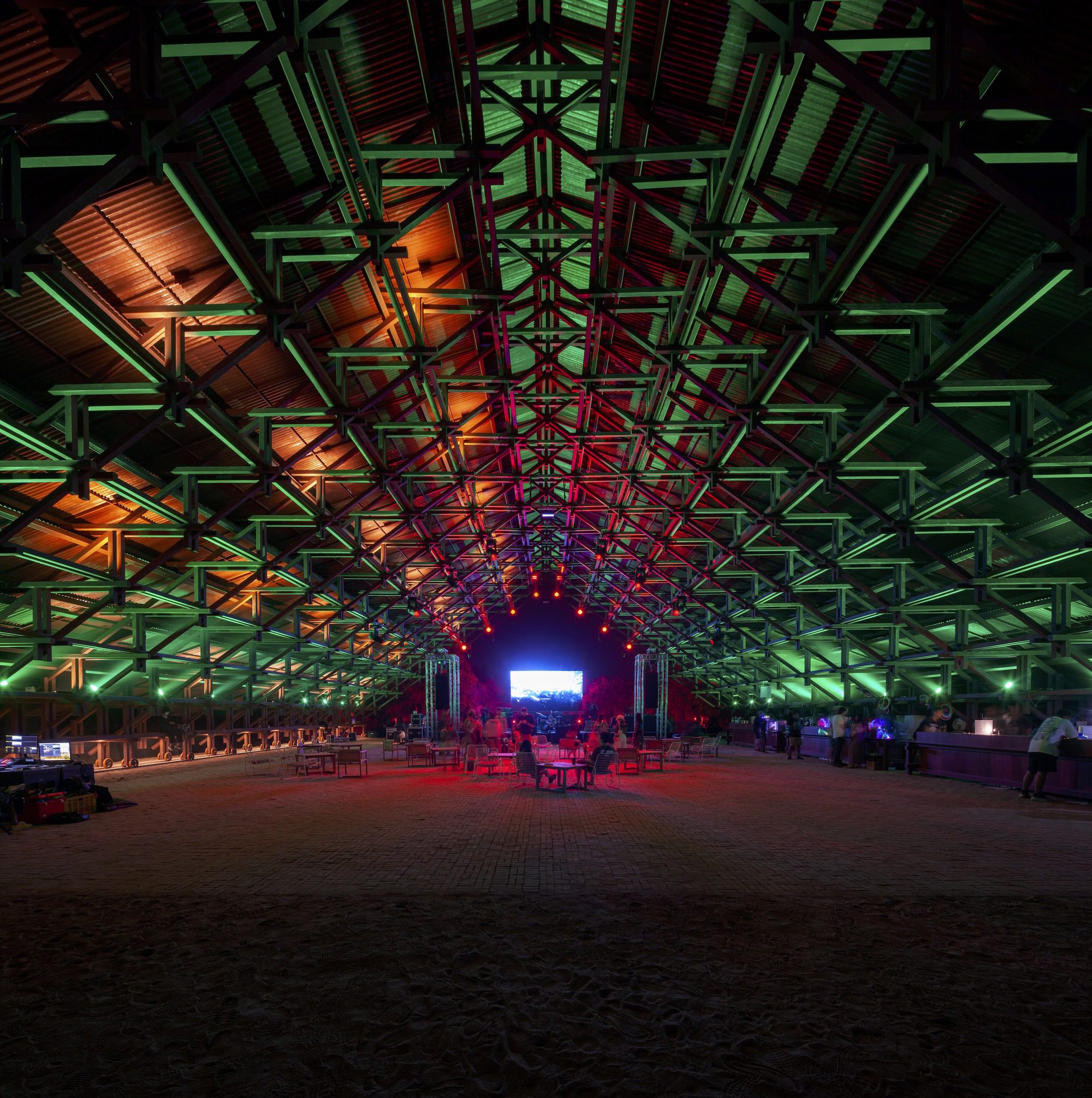
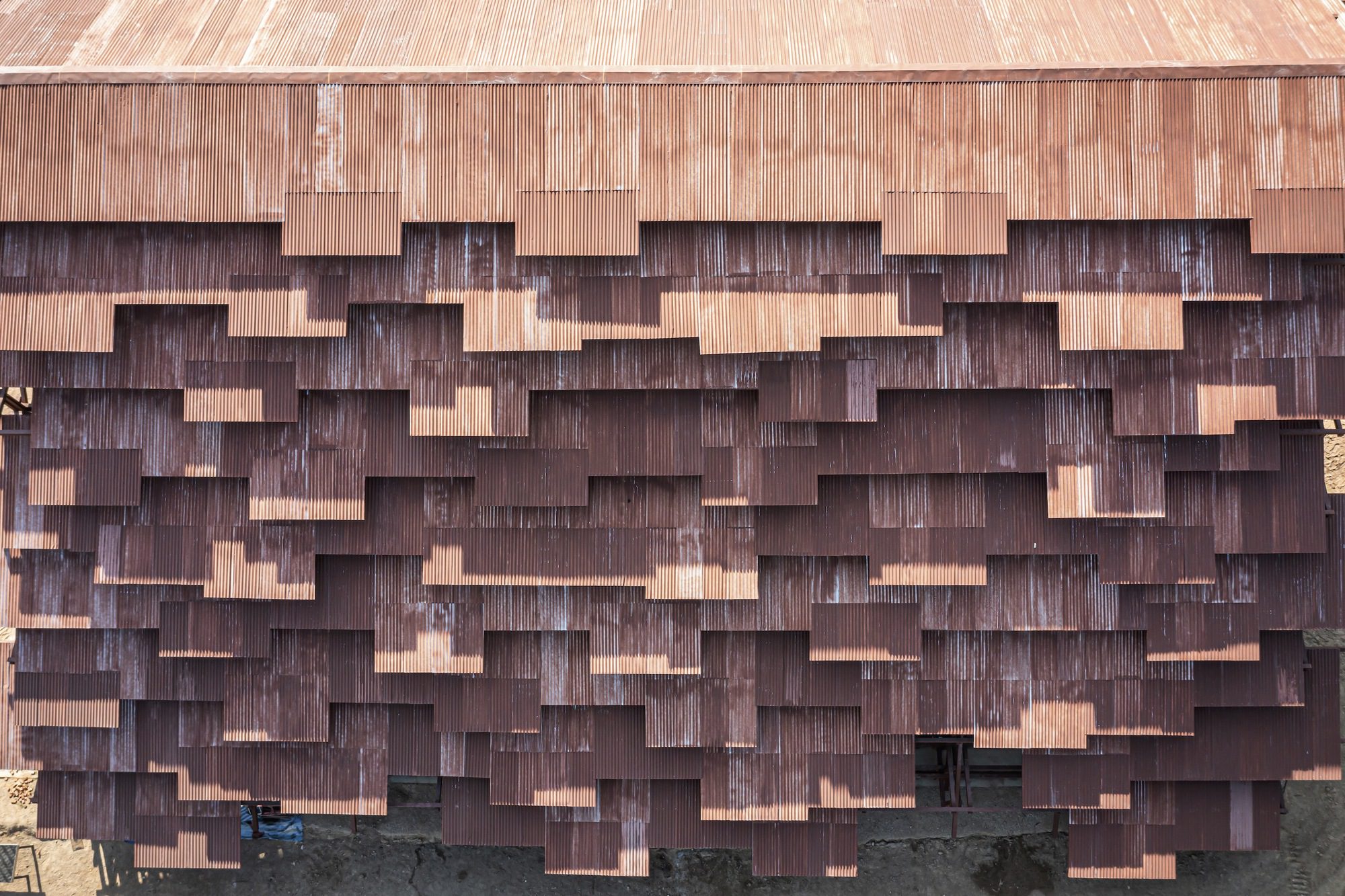
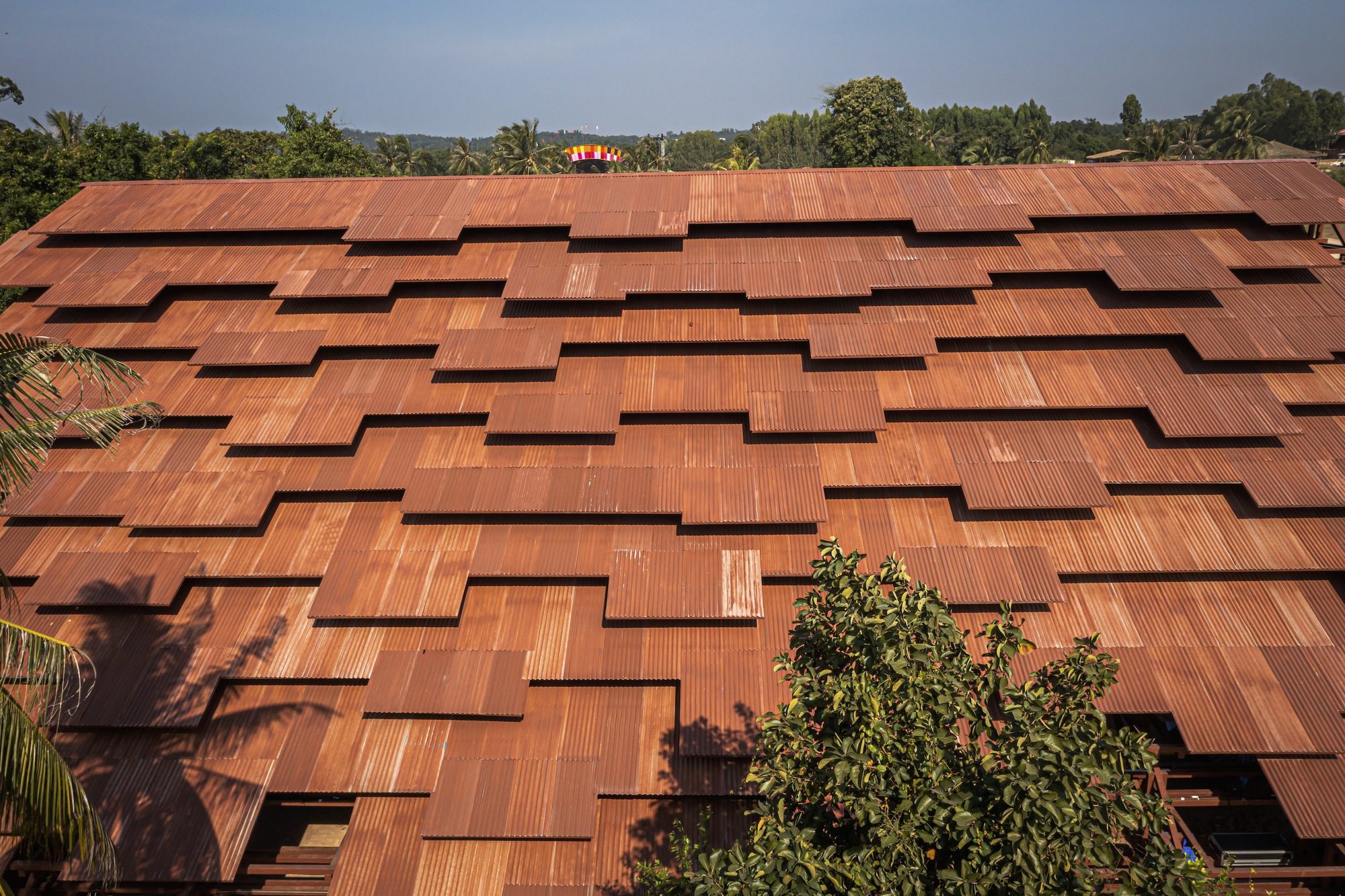
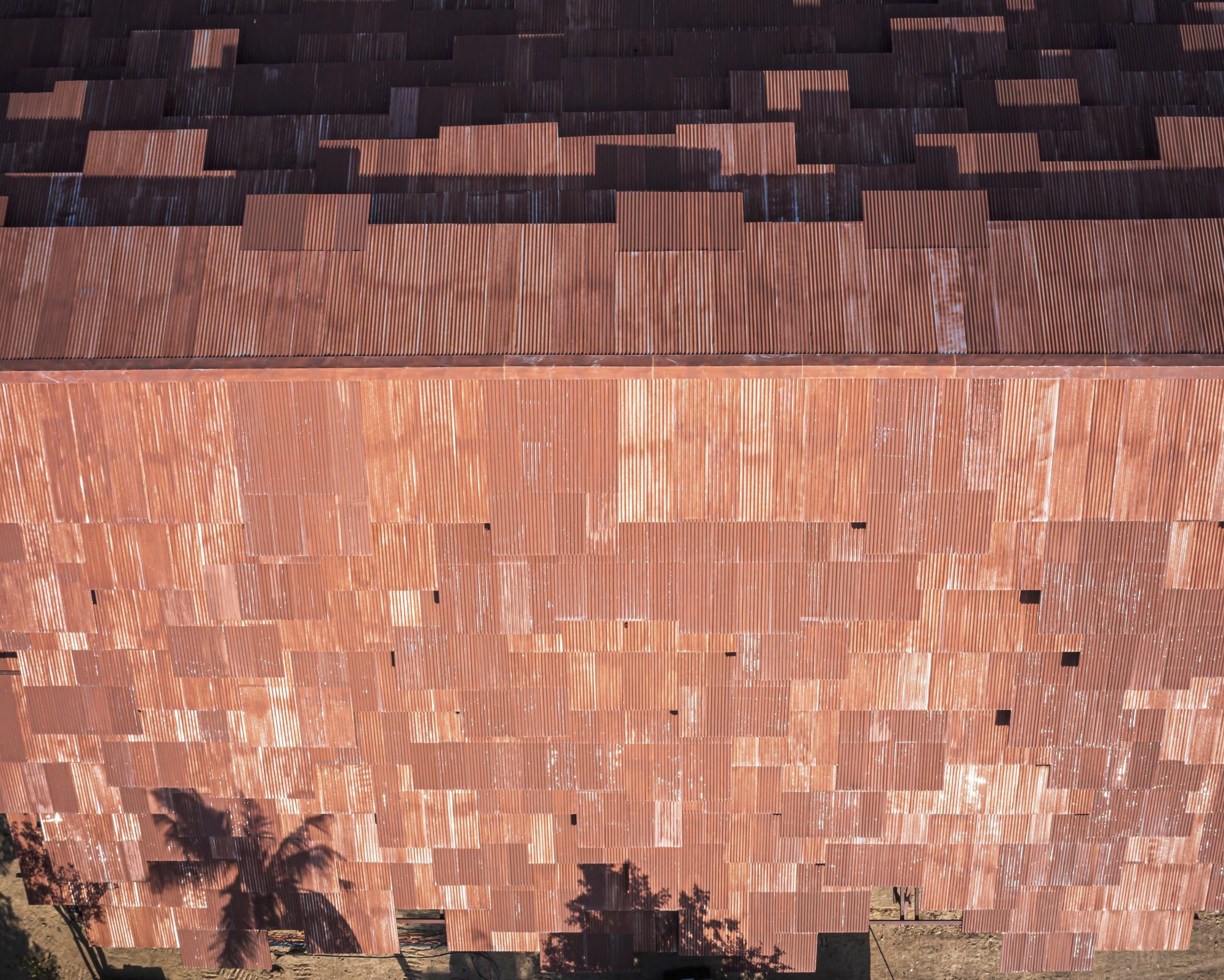
The triangular pavilion, made of square tubes, serves as a supporting structure for the roof of corrugated zinc sheets. The end of each sheet protrudes unevenly, preventing rainwater from splashing into the users’ area. This method of roofing allows the roof to serve as a roof and a wall at the same time. It also offers good ventilation. The sunlight appears in layers as it goes through the gaps in the ceiling. At night, the light from the shows inside Neramit will shine through these gaps, making the whole structure look like a giant lantern illuminating the surrounding area.
© Spaceshift Studio
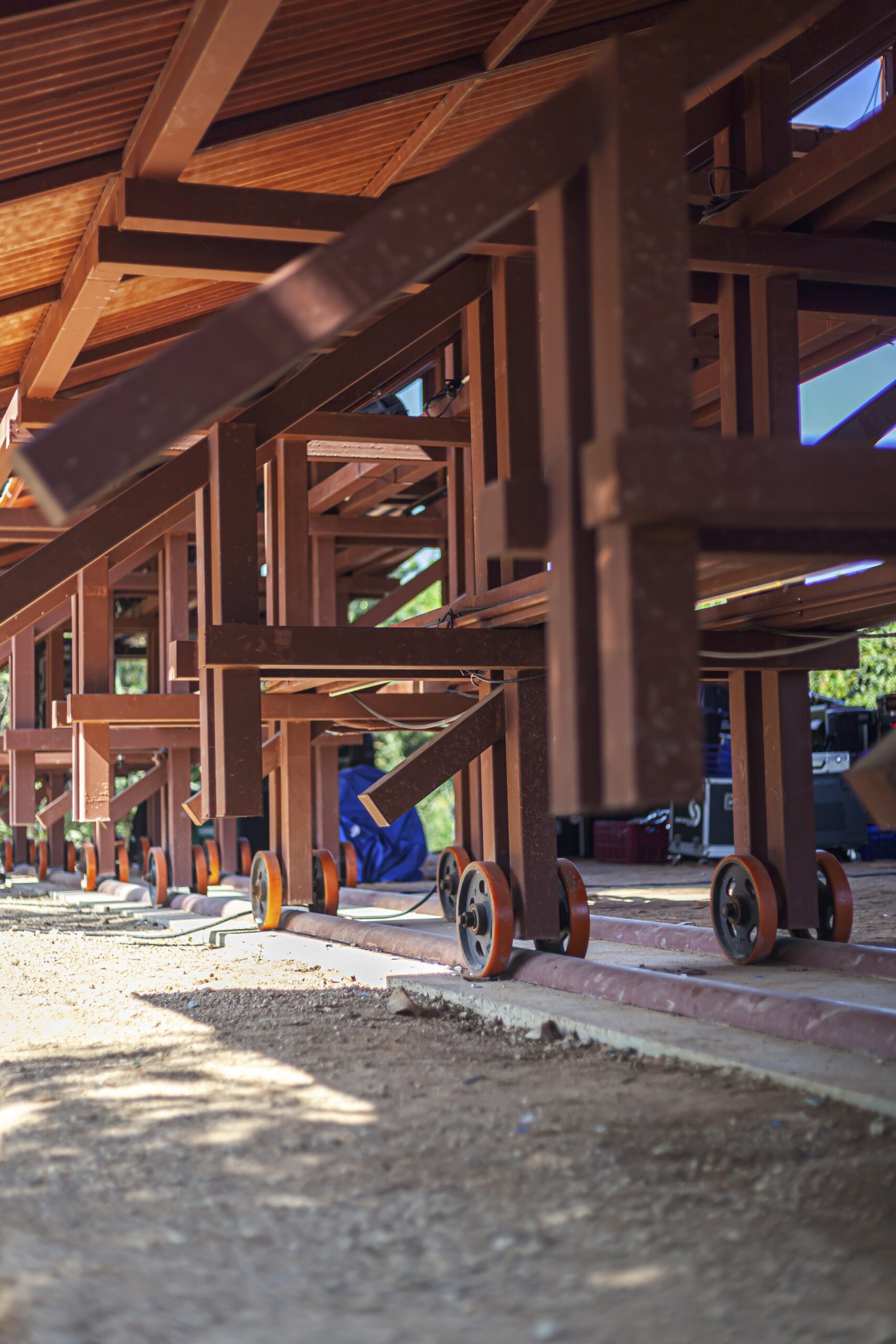
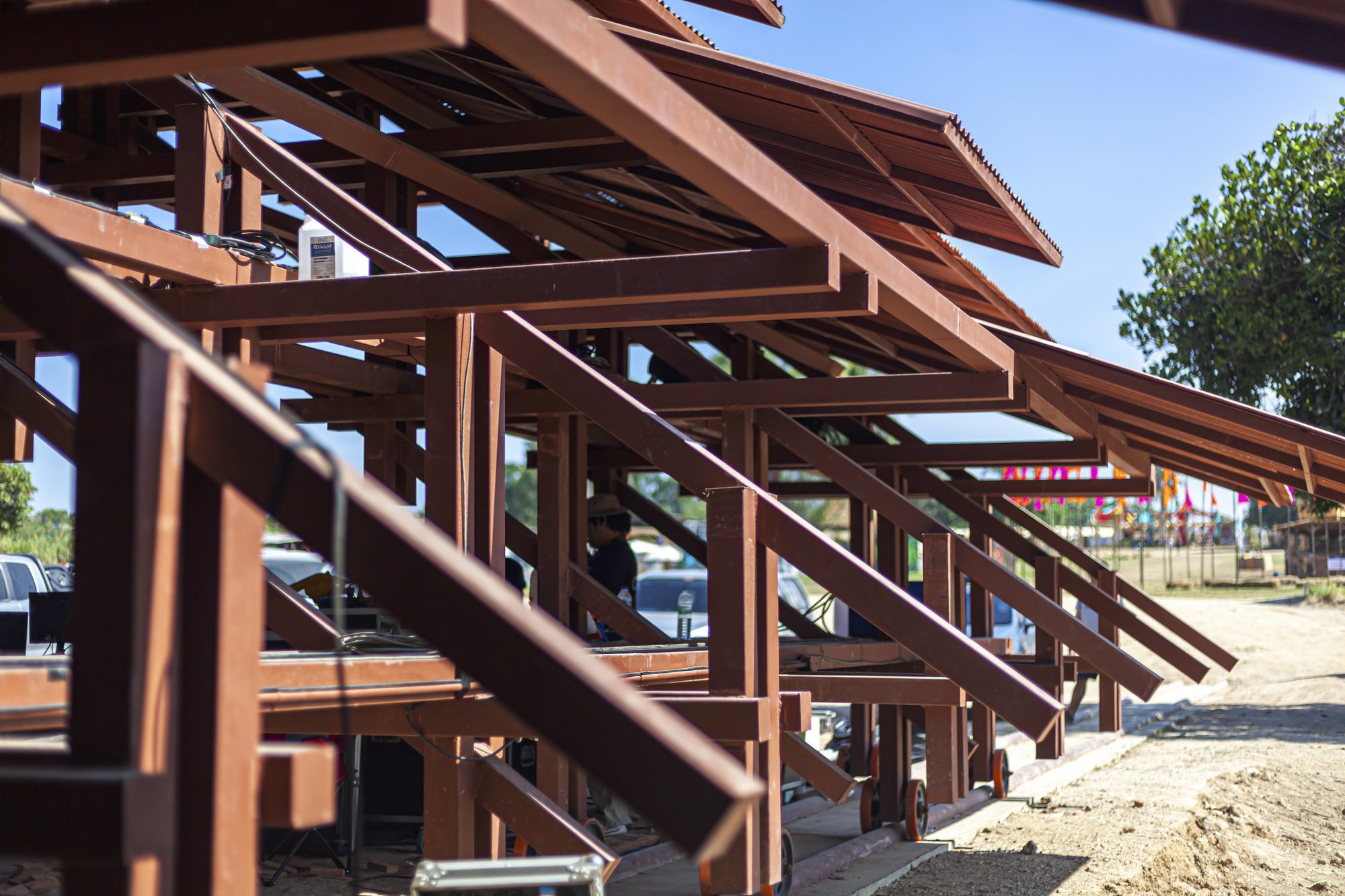
The roof structure of Neramit is moveable so that it can create interior and exterior spaces as desired to accommodate different activities.
© Spaceshift Studio
I have three reasons for choosing steel in the form of square tubes as the main construction material.
© Spaceshift Studio
This building offers me several insights into the subject of non-architecture, such as the application of the shape of local wood and the shape of steel, merging the similarities and differences. We learned to convey emotion through the roof system made of overlapping, overhanging, and untidy pieces. We calculated the precise quantity and size of materials required for the building. We learned to add value to ordinary materials such as corrugated zinc sheets, a common roofing material, by turning them into a movable building with new shapes and flexible spaces.
Project Info
Architects: Bangkok Project Studio
Country: Thailand, Tambon Bang Lamung
Area: 900 m²
Year: 2022
Photographs: Spaceshift Studio
Design Team: Bangkok Project Studio