

Bacalar Eco-Park, Observatory of the mangrove, the lagoon, and the stars. The Bacalar Lagoon is the largest freshwater bacterial reef in the world. It is one of the few places where living stromatolites exist, an invaluable evolutionary treasure.
© Rafael Gamo
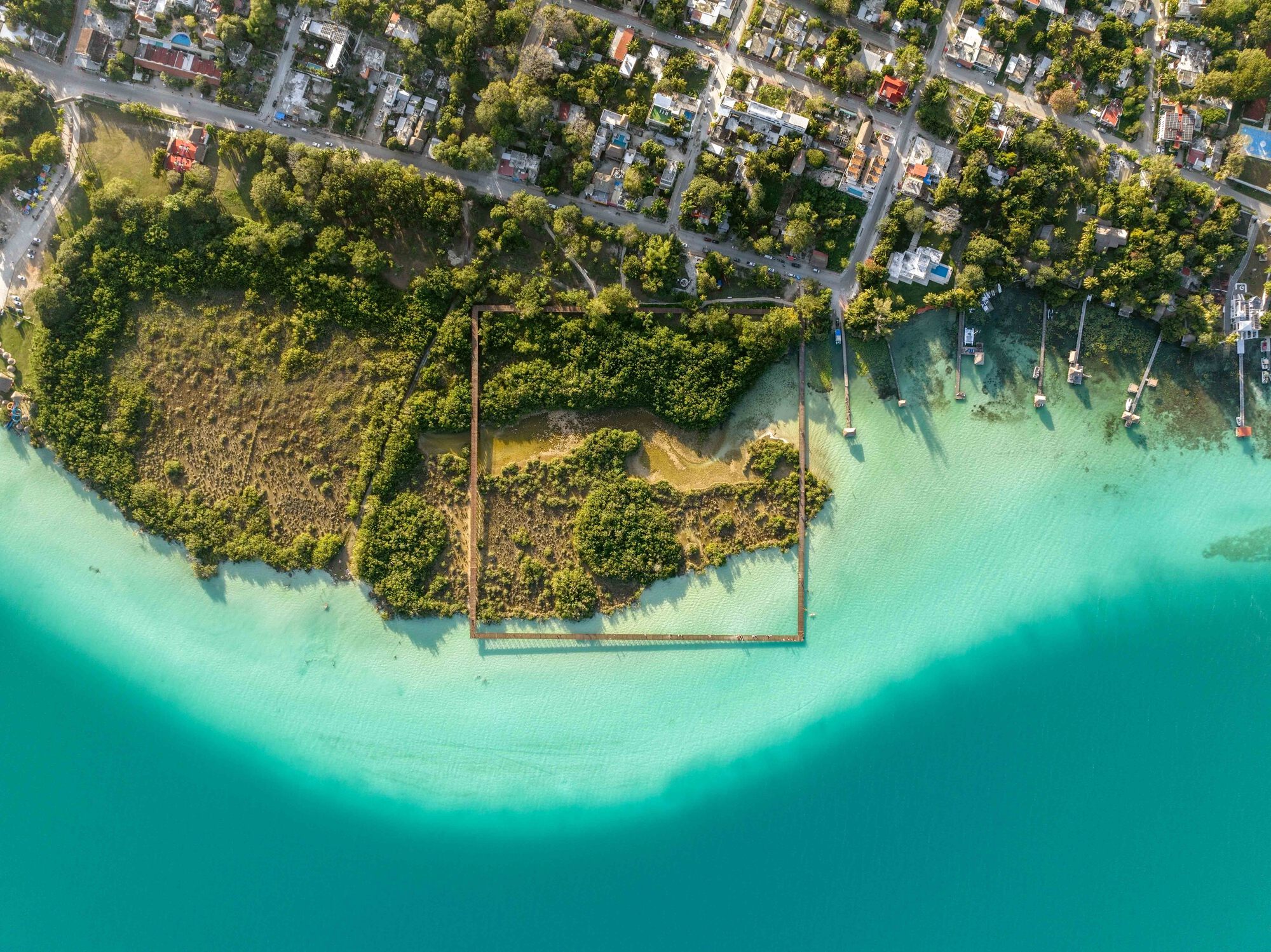
It is also the only remaining mangrove on the edge of the Bacalar village lagoon, and it is exposed to enormous fragility due to urban growth.
© Rafael Gamo
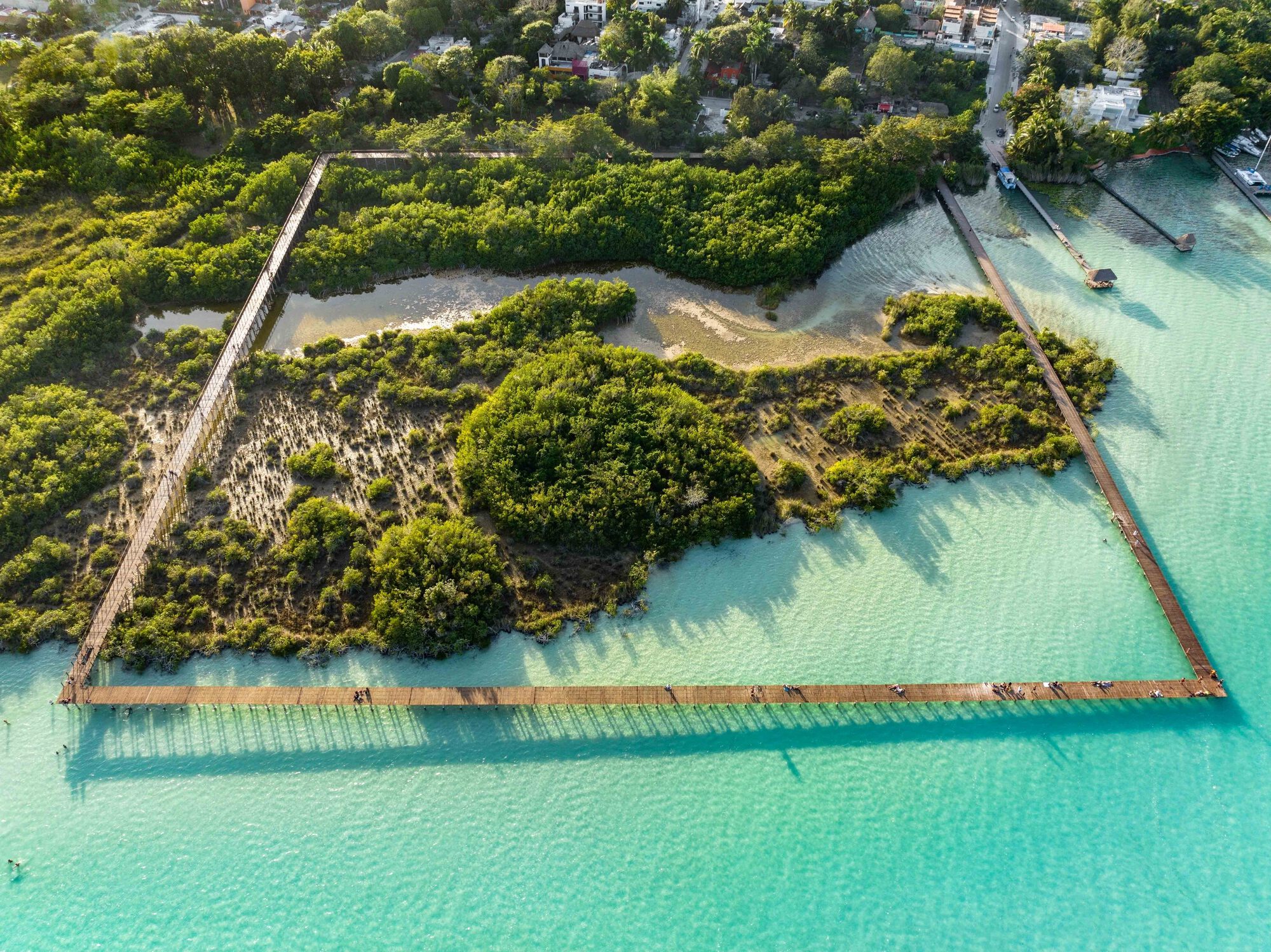
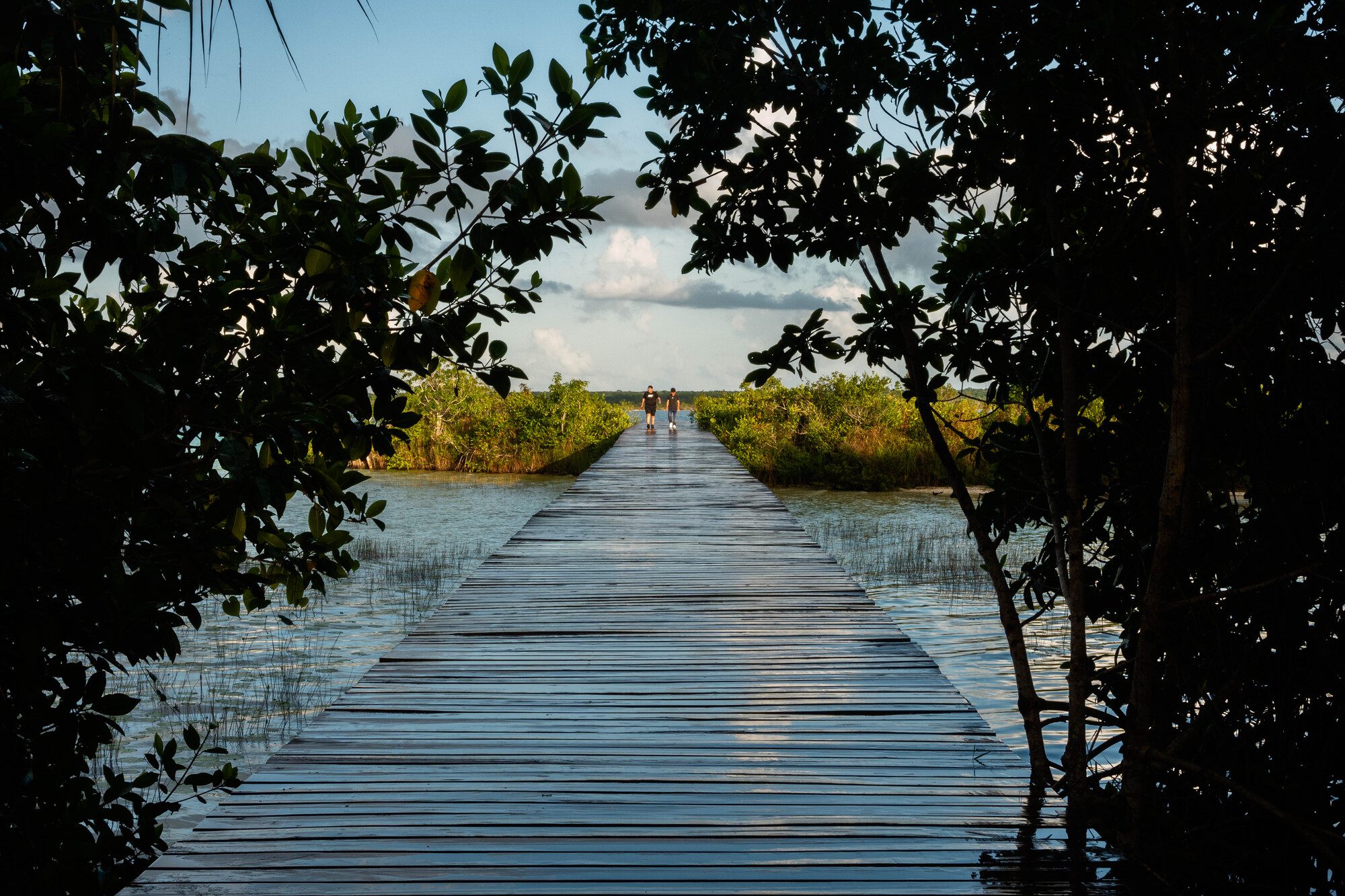
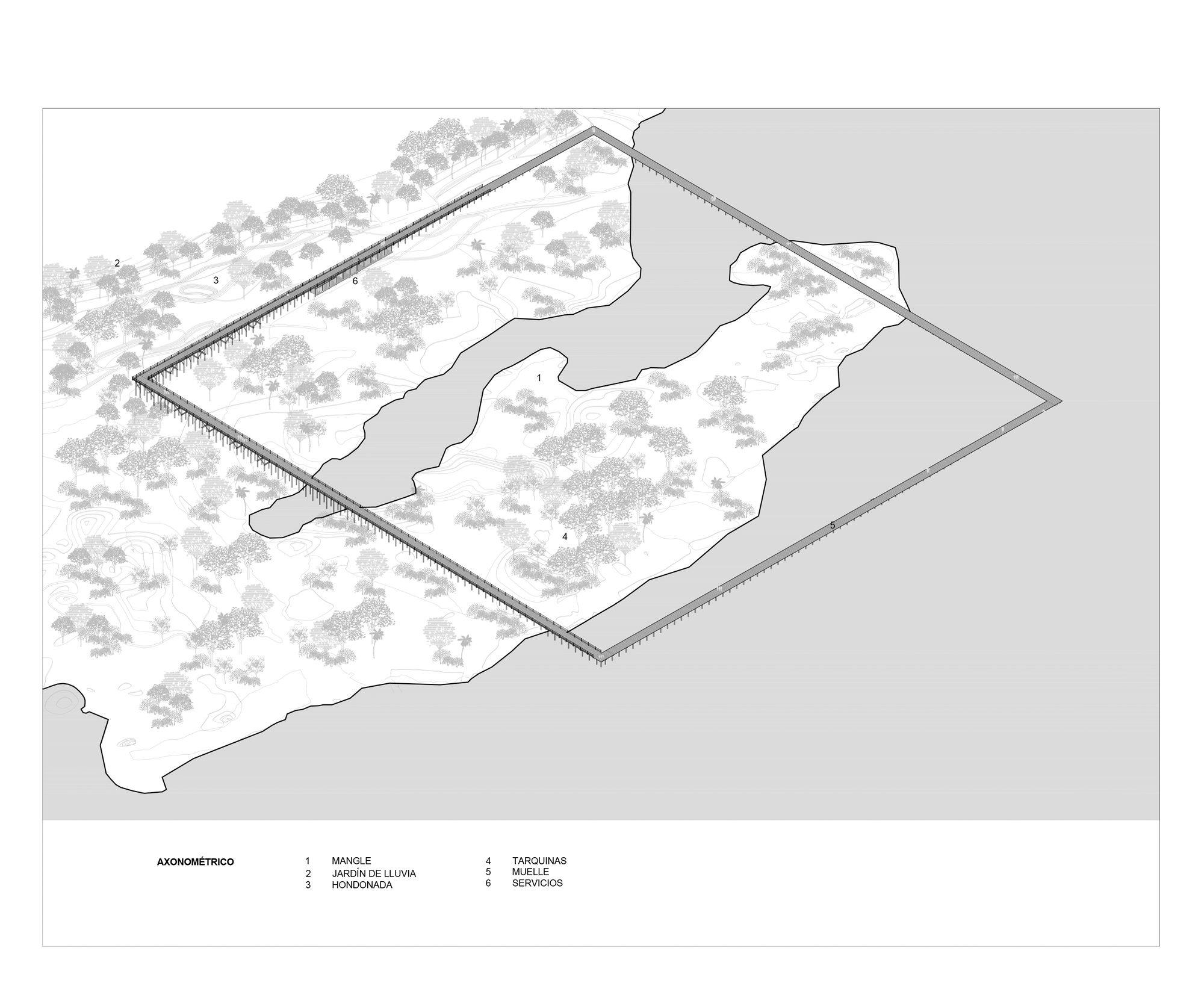
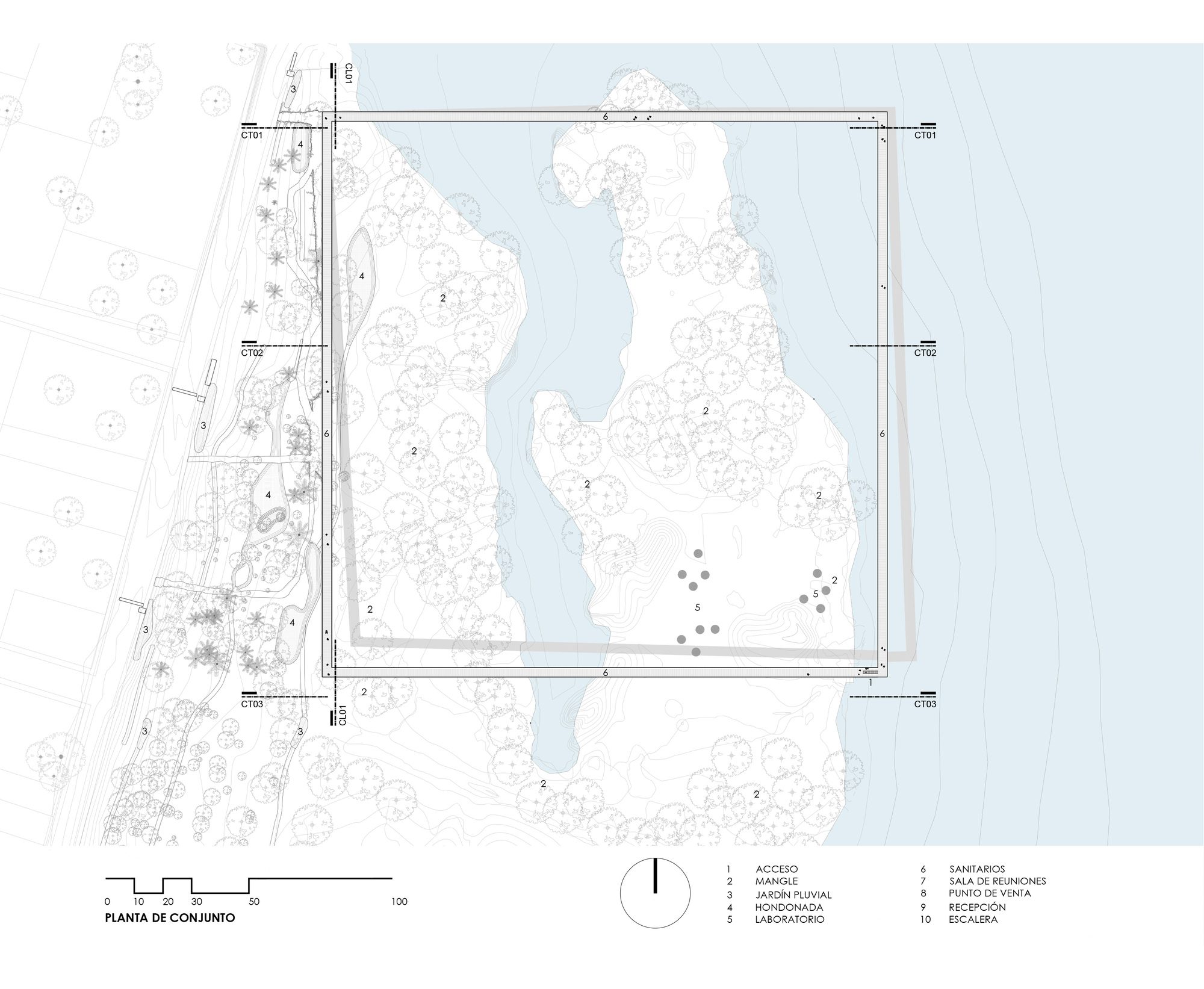
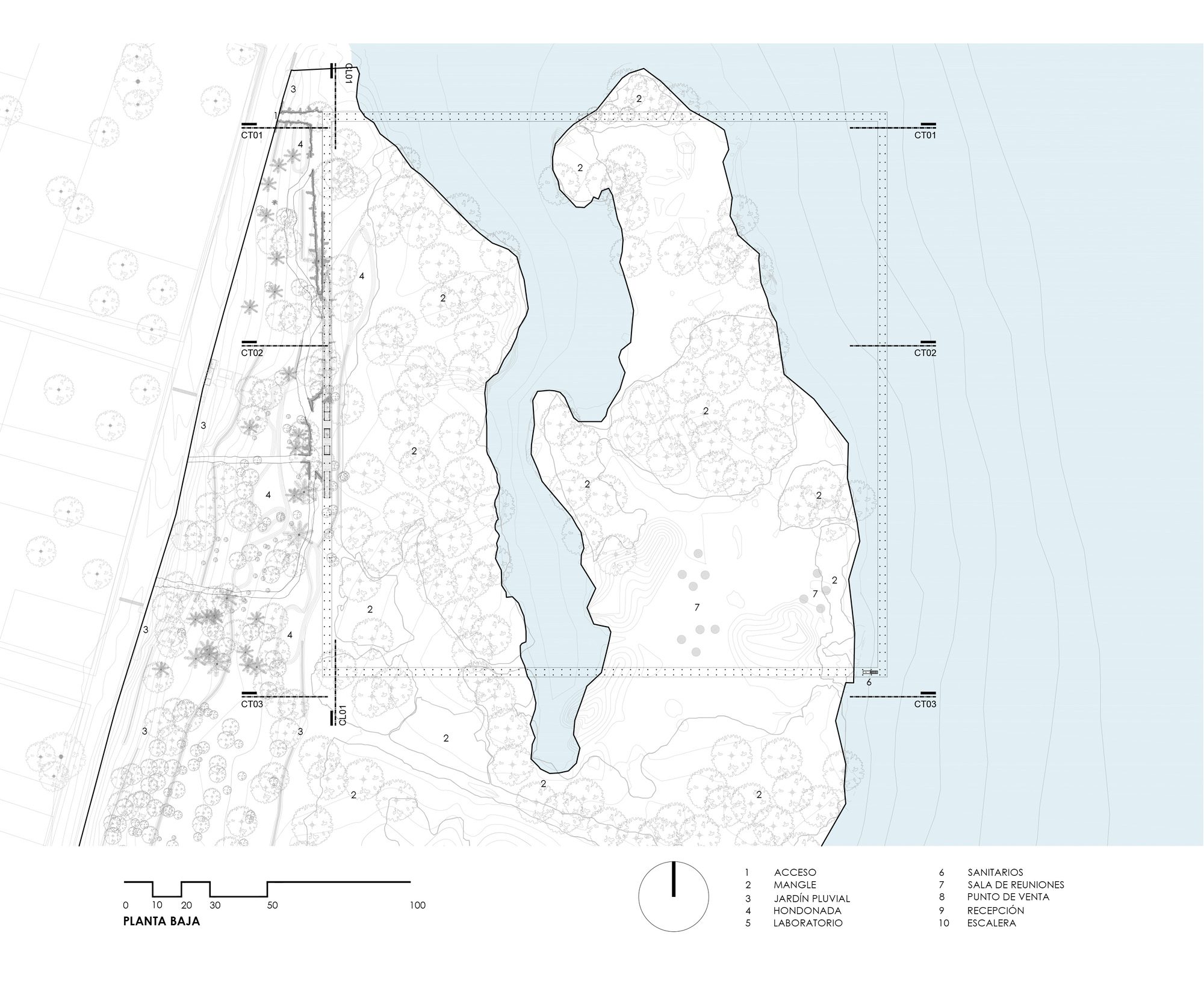
The main strategy of the project was to minimize the requested program and act with sharpness in order to wander through the natural richness of the flora and fauna of the site, affecting it as little as possible.
© Rafael Gamo
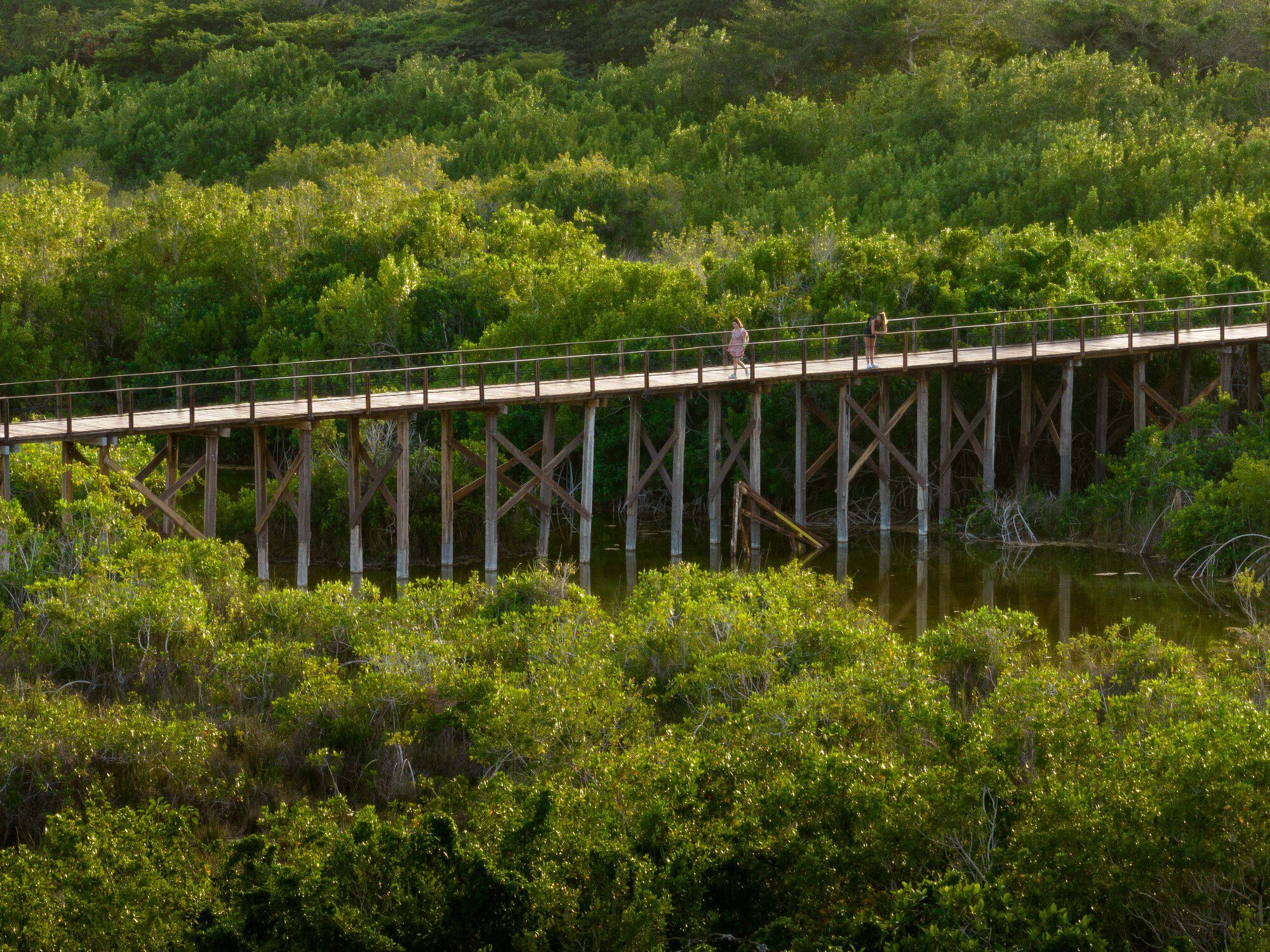
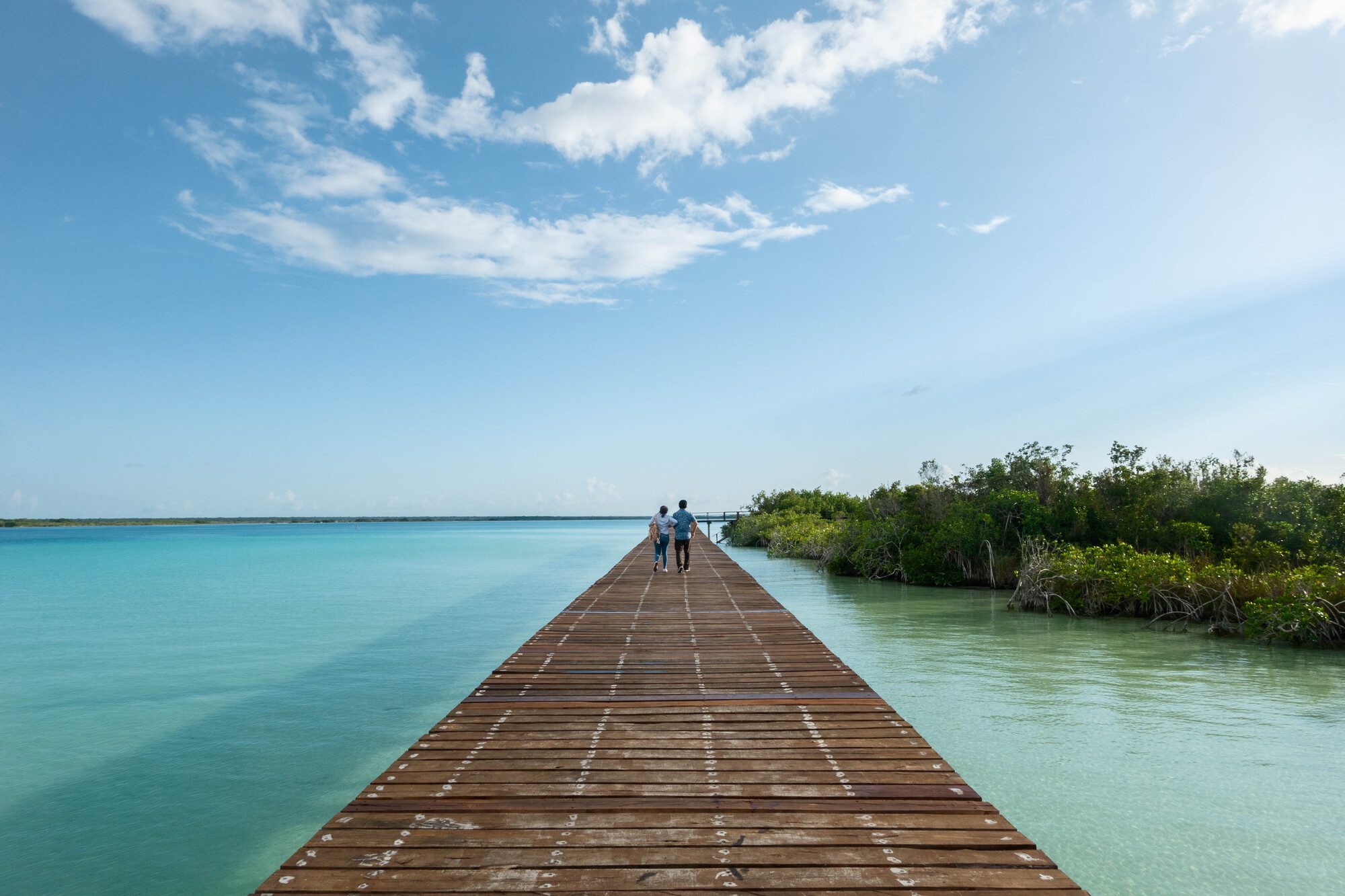
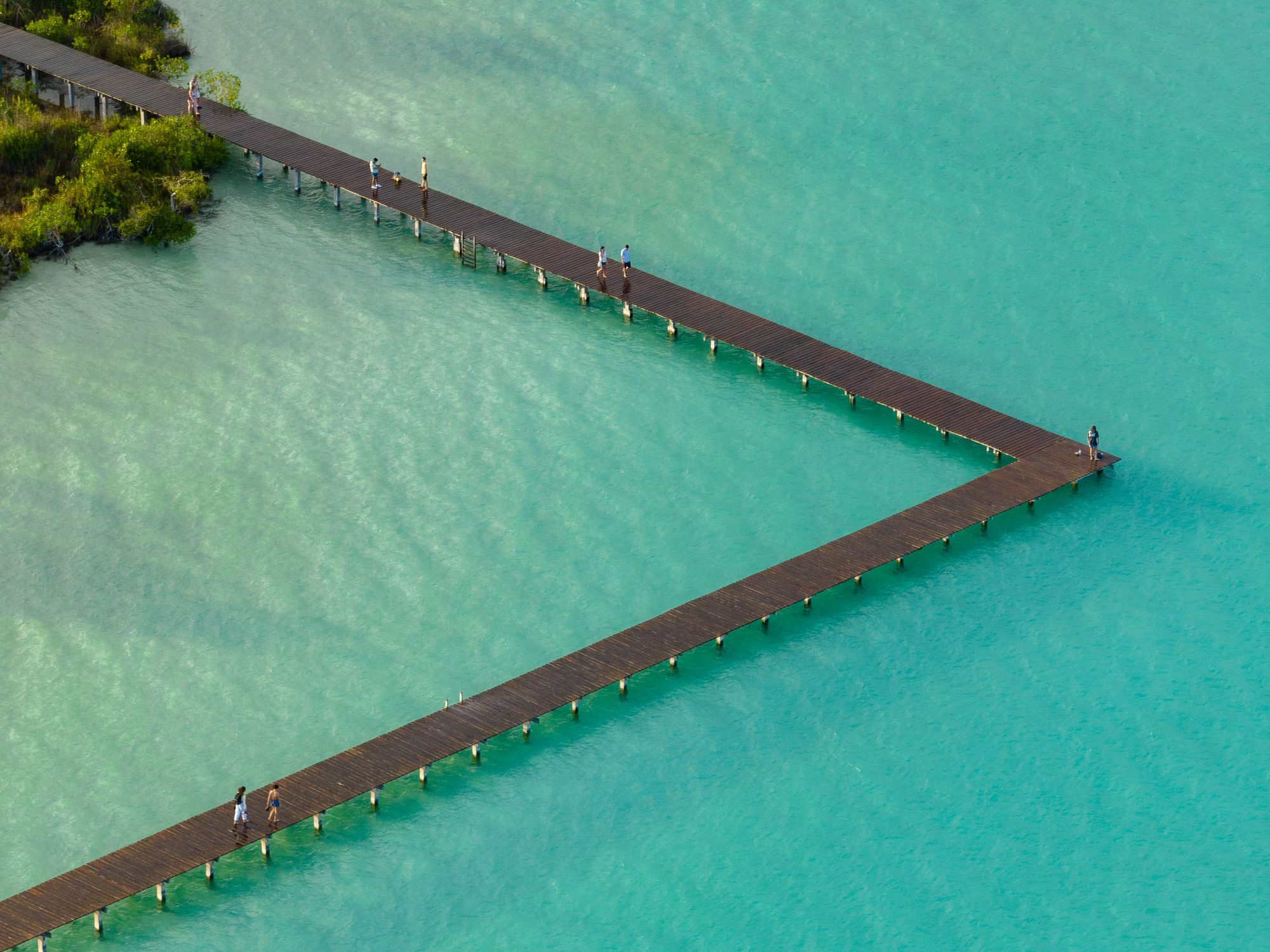
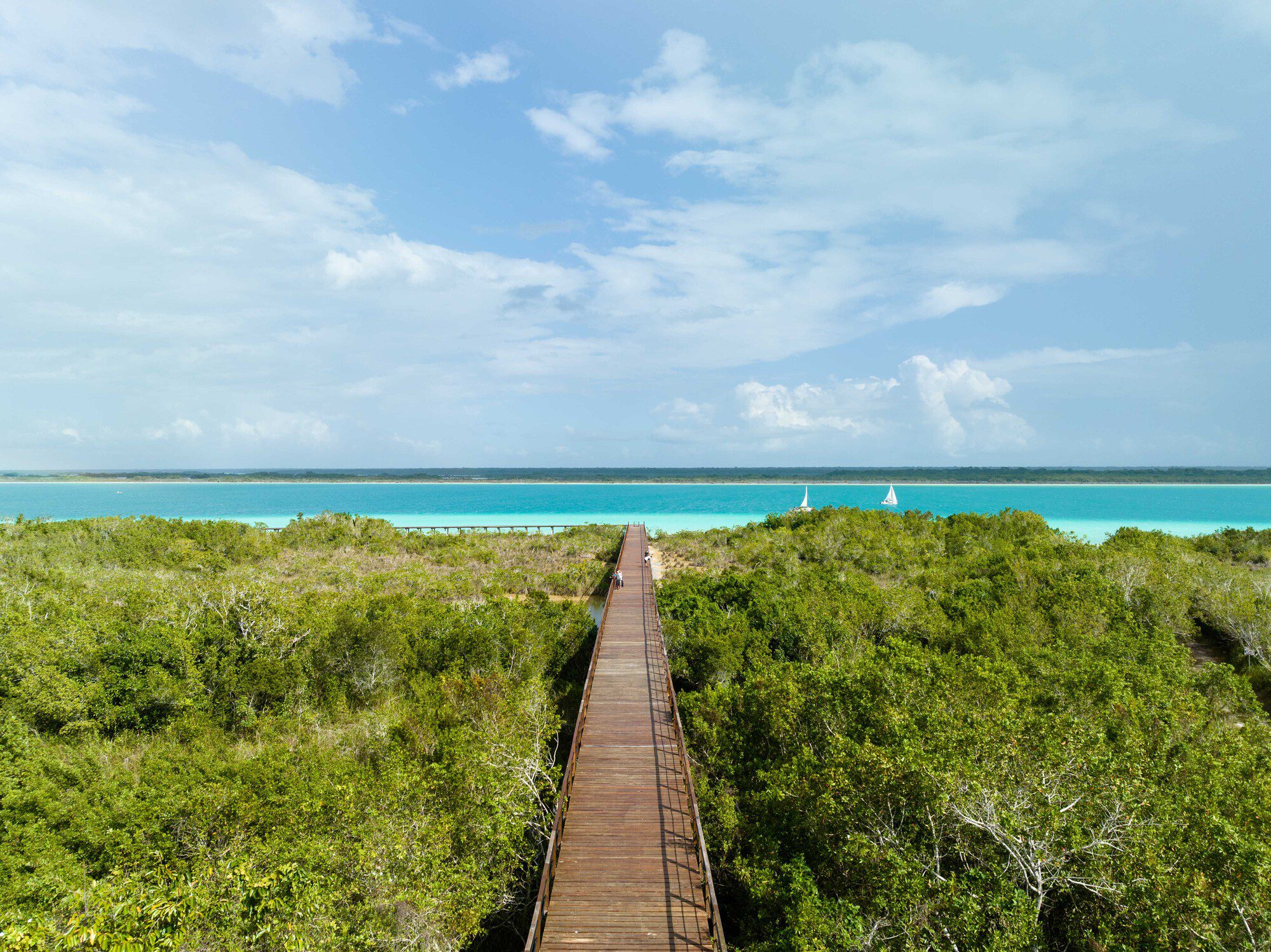
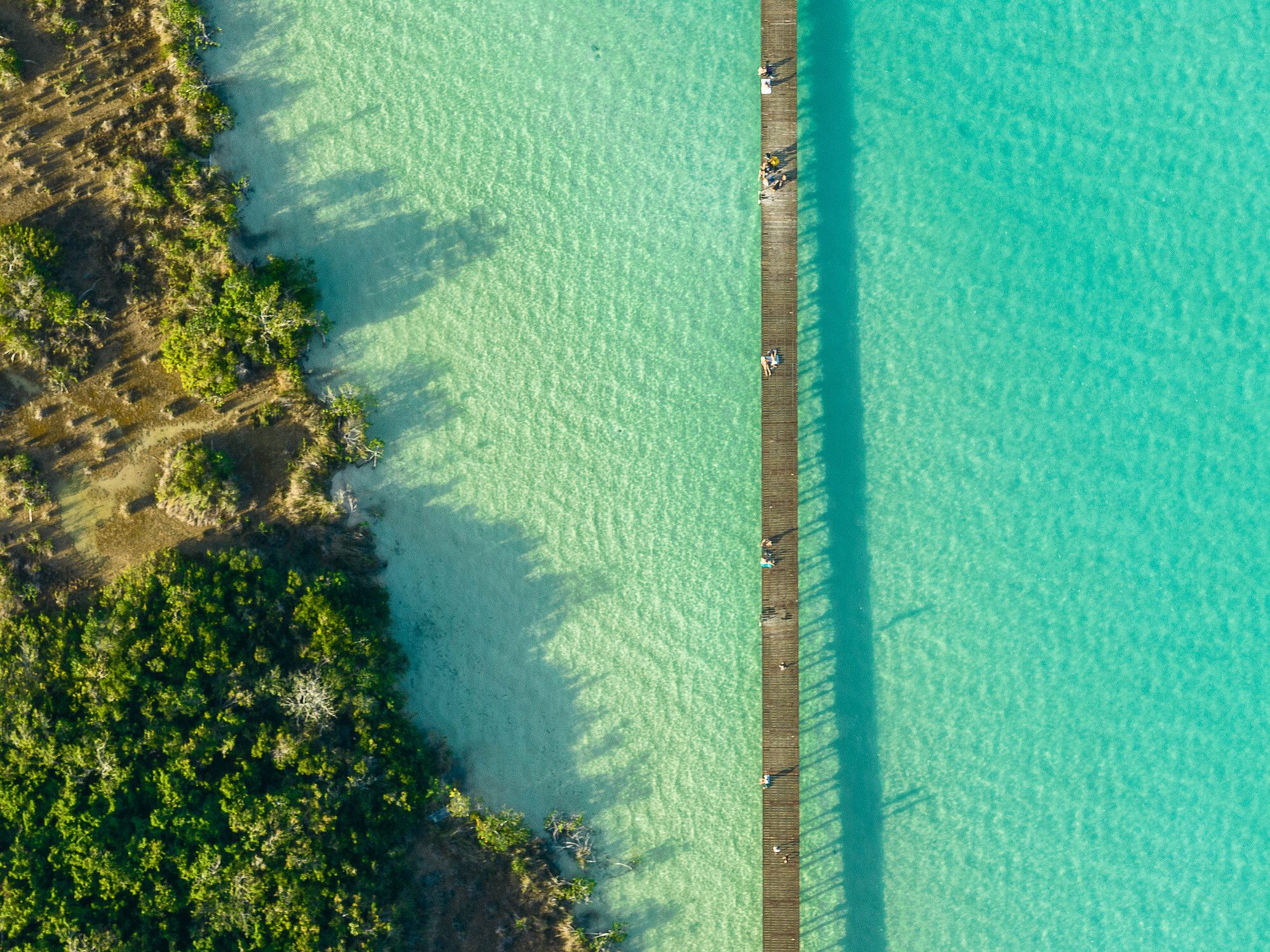
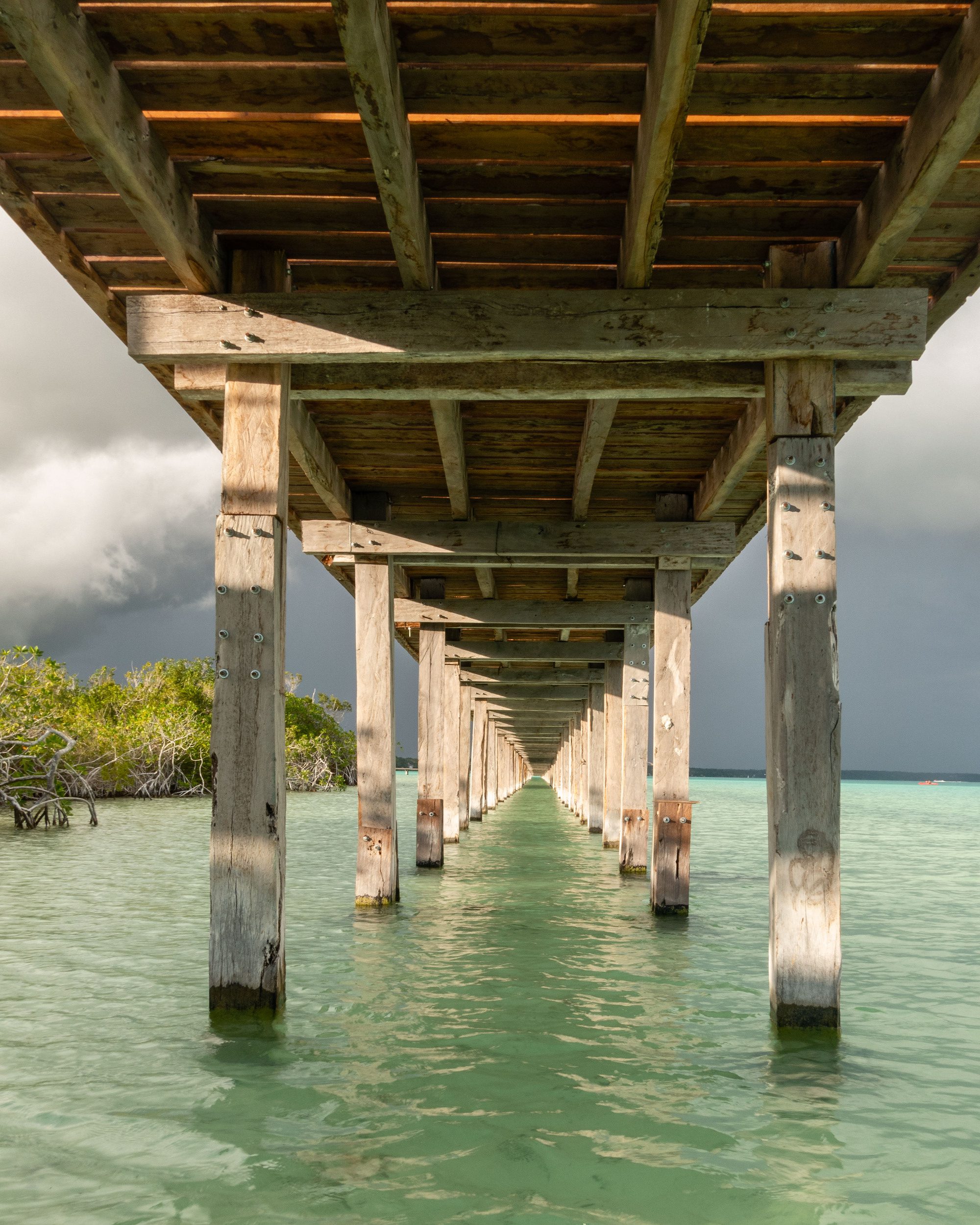
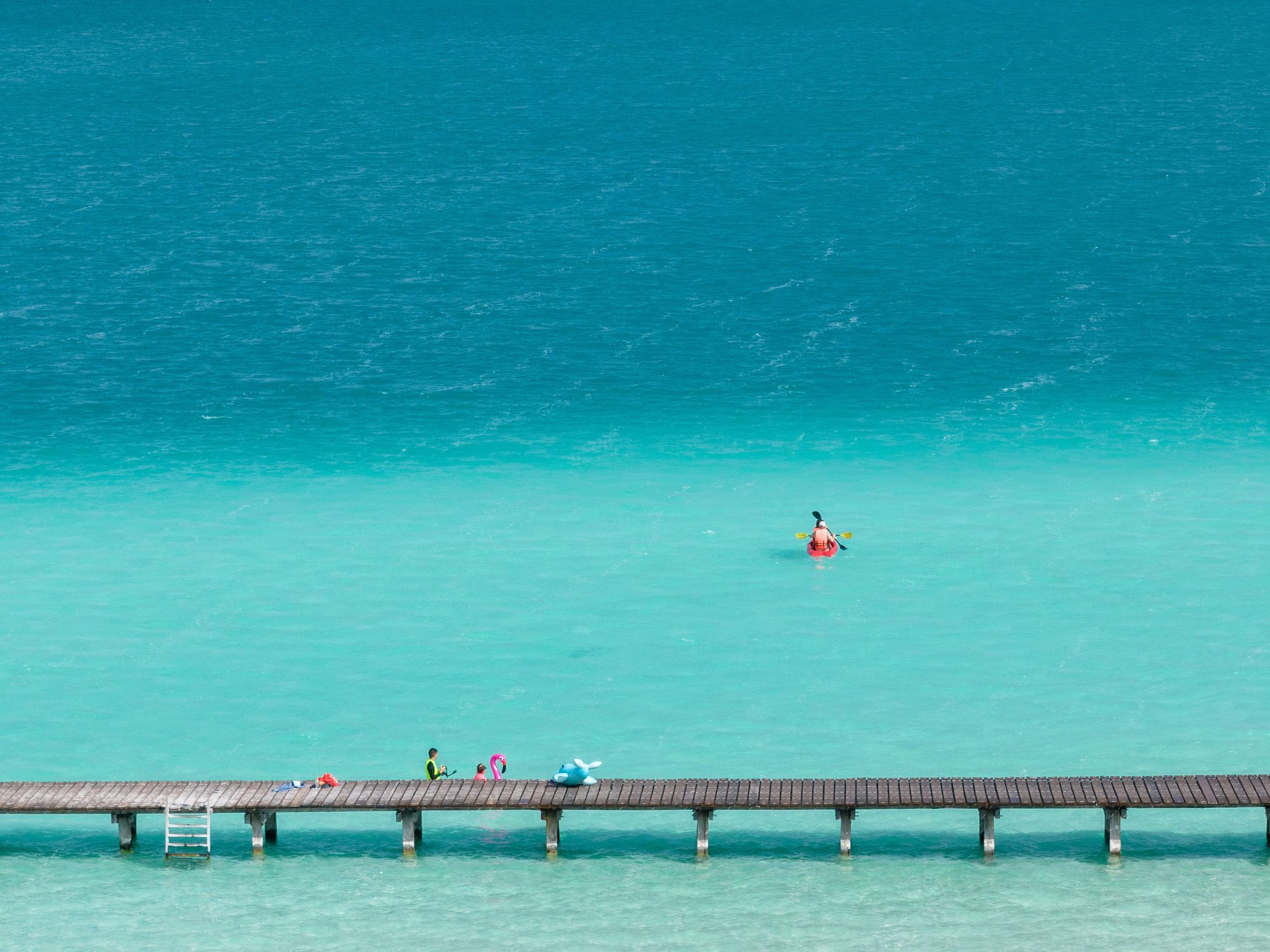
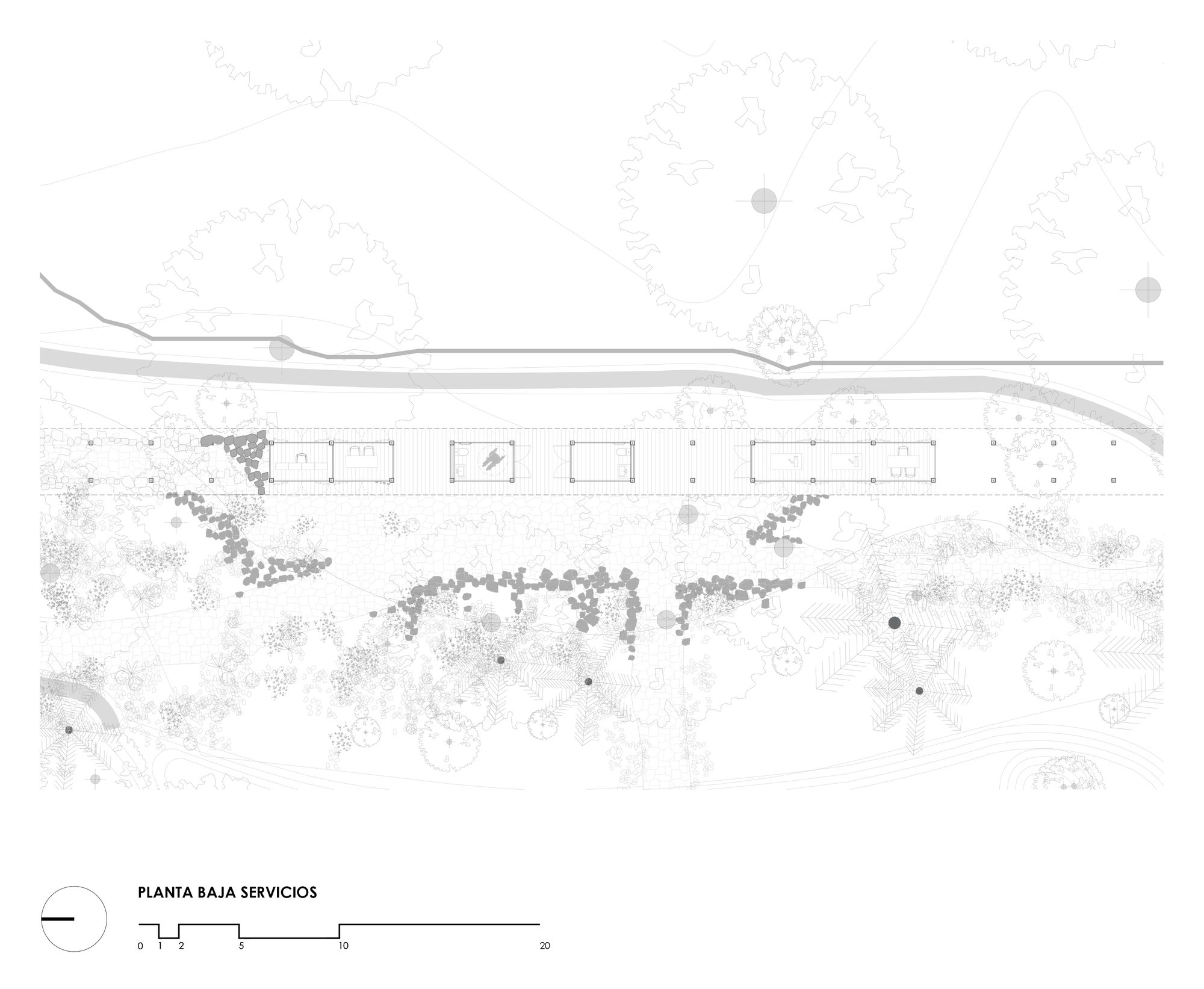
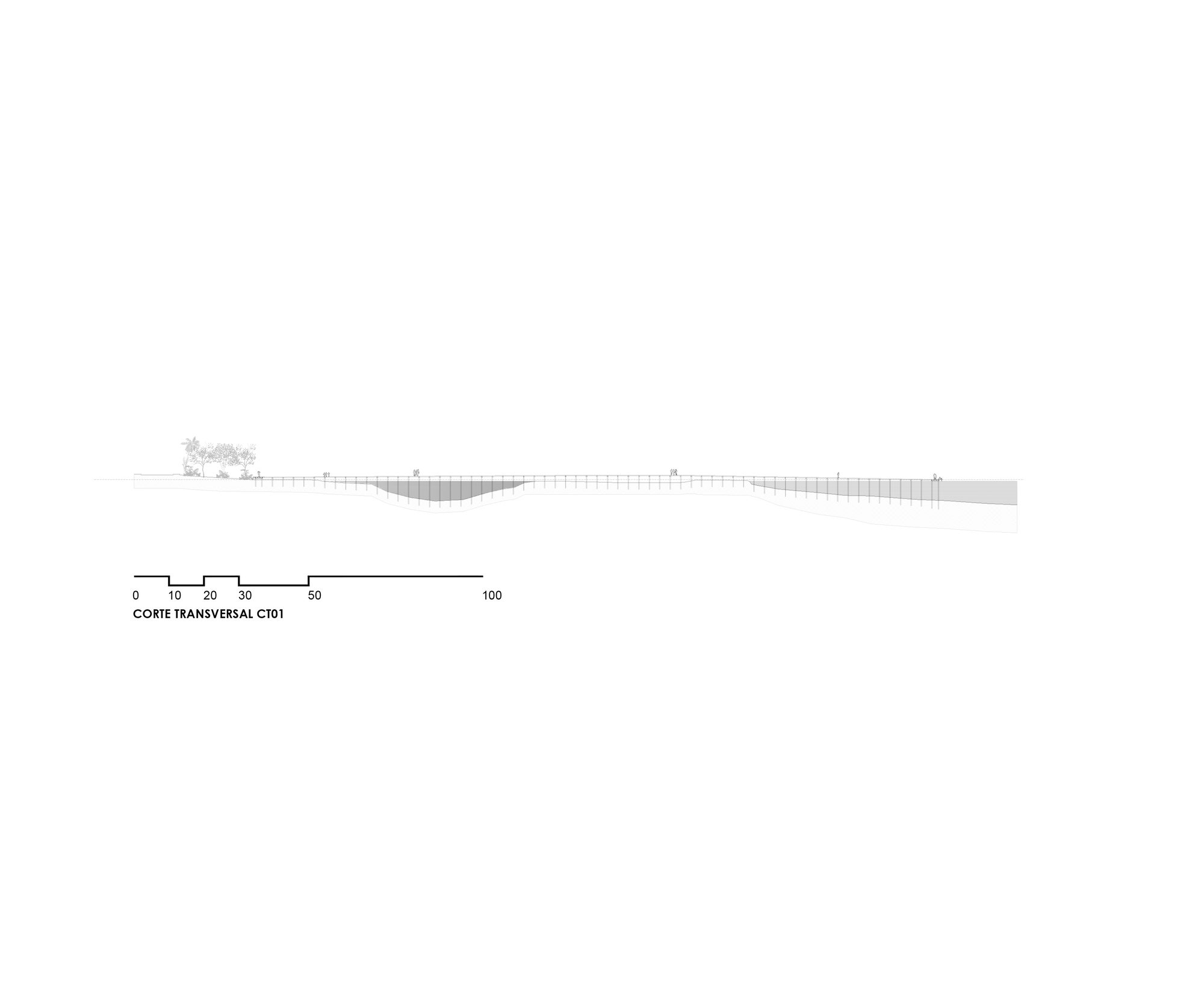
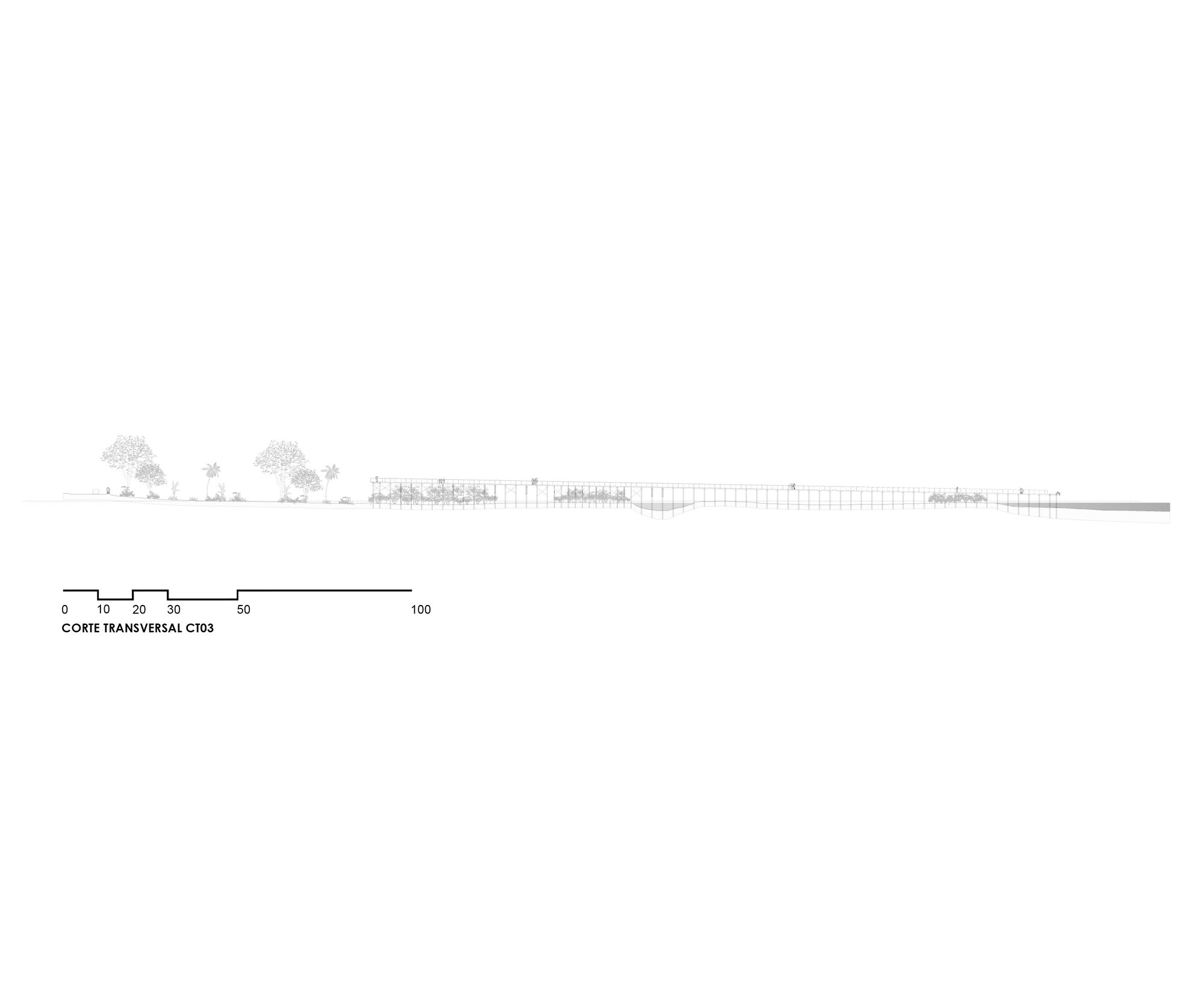
A square dock of 200m per side was built, facing north and with variable height to avoid touching the mangroves and trees, and to slide smoothly along the lagoon. Solid spaces house a research laboratory and services, which can be extended to a shaded plain through tall trees.
© Rafael Gamo
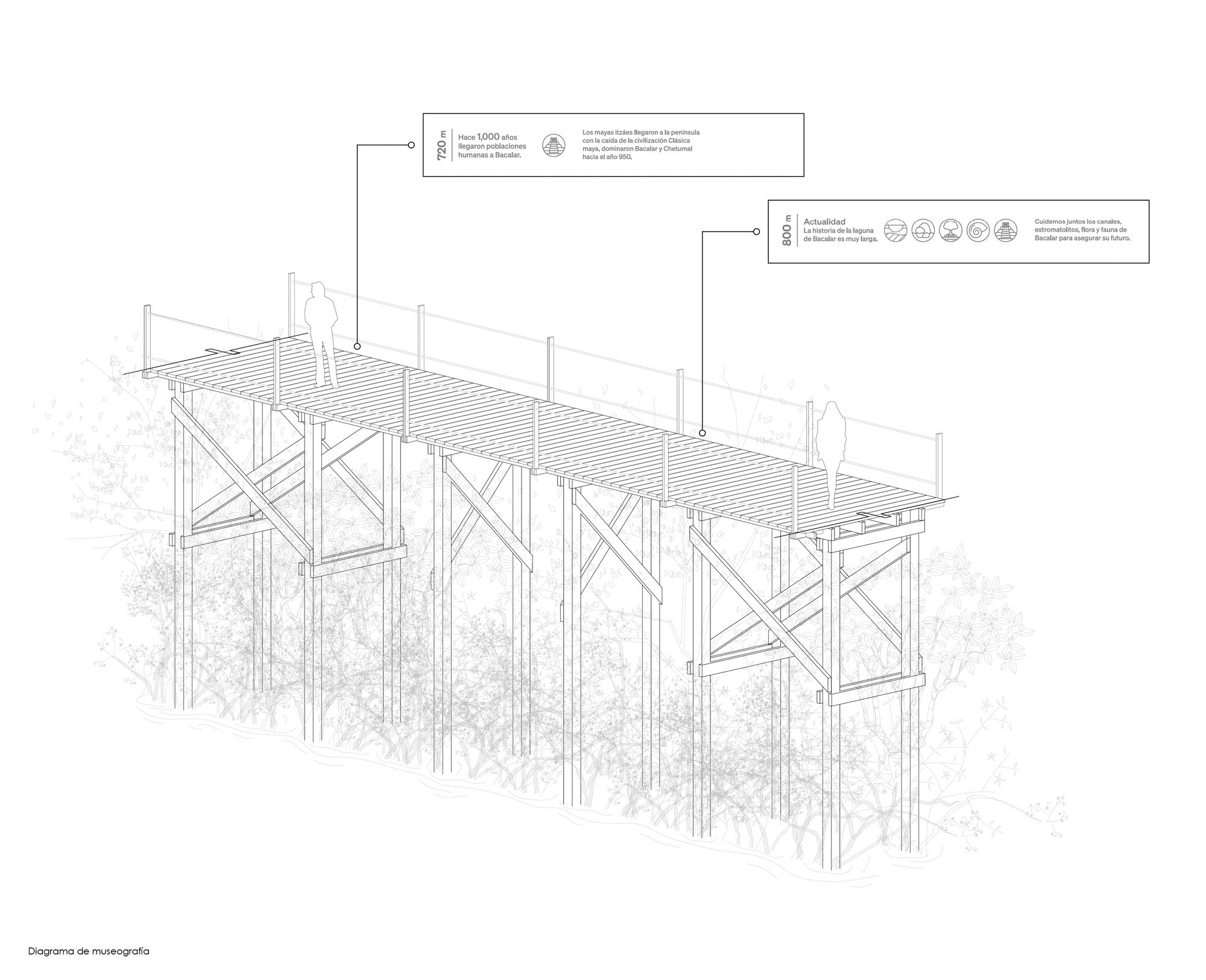
An efficient structural system was generated, built with local and certified chicozapote wood, finding the right measure to be a column, beam, and foundation at the same time.
© Rafael Gamo
In addition, the landscape strategy was strengthened with the reduction of construction, designed to mitigate the pollution of the water runoff from the village, through natural filters, depressions, and rain gardens, as well as the rehabilitation of degraded mangroves.
© Rafael Gamo
Finally, scaled museography was incorporated into the tour, as a timeline of 10,000 years, engraving the unique biodiversity history on wood. Visitors are invited to become aware of and conserve the place, as well as to engage in the social management of a public and free space for the residents of Bacalar.
Project Info
Architects: Colectivo C733
Country: Mexico, Bacalar
Area: 1900 m²
Year: 2023
Photographs: Rafael Gamo
Design Team: Fernando Rodríguez, Montserrat Loyola, Dino del Cueto, Santiago Blanco, Carolina Andrade, Karim Gómez
Structural Engineering: Óscar Trejo
Mechanical Engineering: Spl, Riparia
Bio Regeneration Strategies: Taller Nuevos Territorios
Restoration Strategies: Claudia Teutli, Jorge Herrera
Consultants: Luisa Falcón, Juan Ansberto, Luz en arquitectura, Pedro Lechuga, TEMAS MX
Museography: Luisa Falcón, Laguna
Contractor: Zenith
Client: Secretaría de Desarrollo Agrario, Territorial y Urbano, Gobierno de México, Municipio de Bacalar

Sophie Tremblay is a Montreal-based architectural editor and designer with a focus on sustainable urban development. A McGill University architecture graduate, she began her career in adaptive reuse, blending modern design with historical structures. As a Project Editor at Arch2O, she curates stories that connect traditional practice with forward-thinking design. Her writing highlights architecture's role in community engagement and social impact. Sophie has contributed to Canadian Architect and continues to collaborate with local studios on community-driven projects throughout Quebec, maintaining a hands-on approach that informs both her design sensibility and editorial perspective.