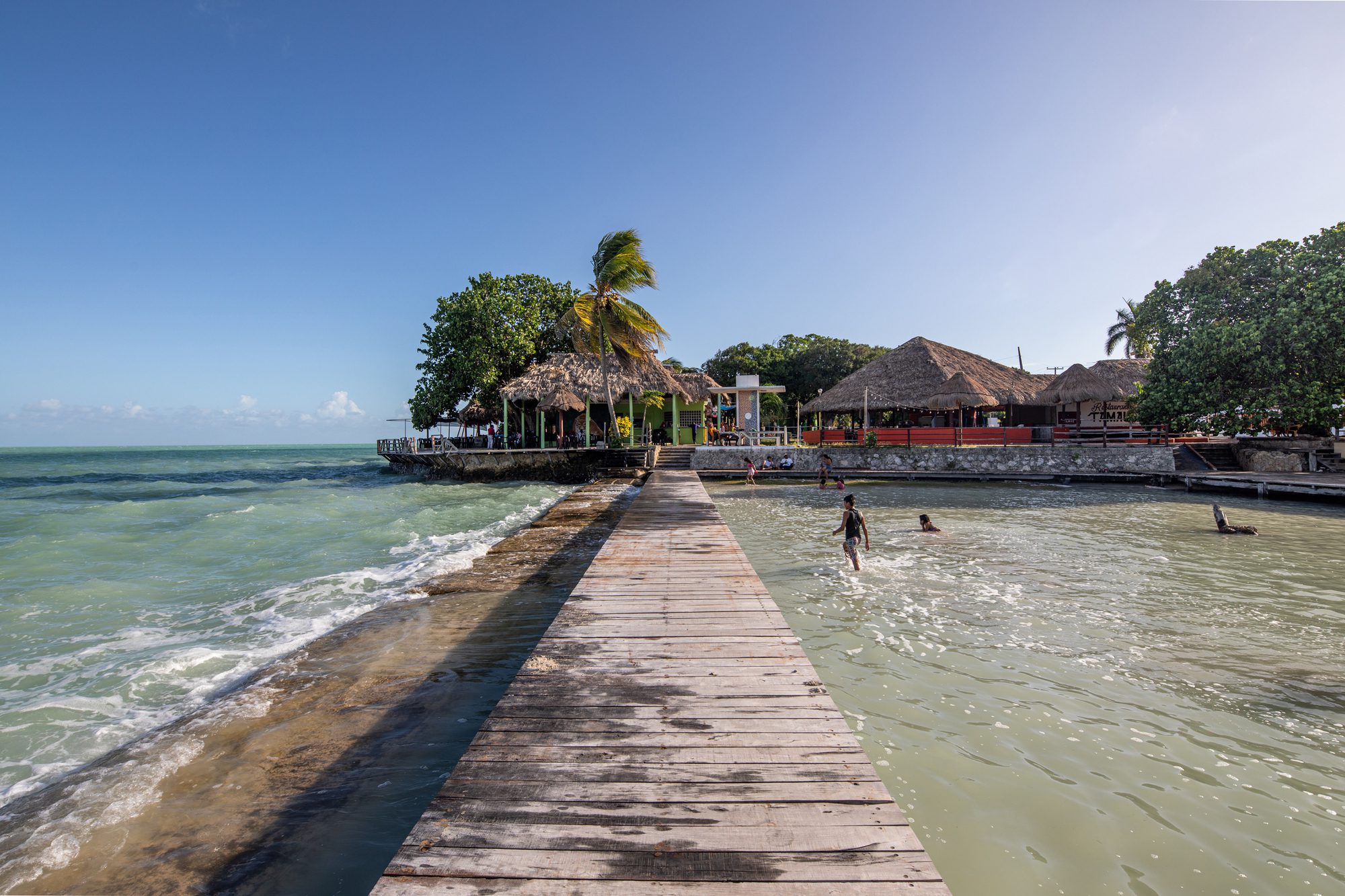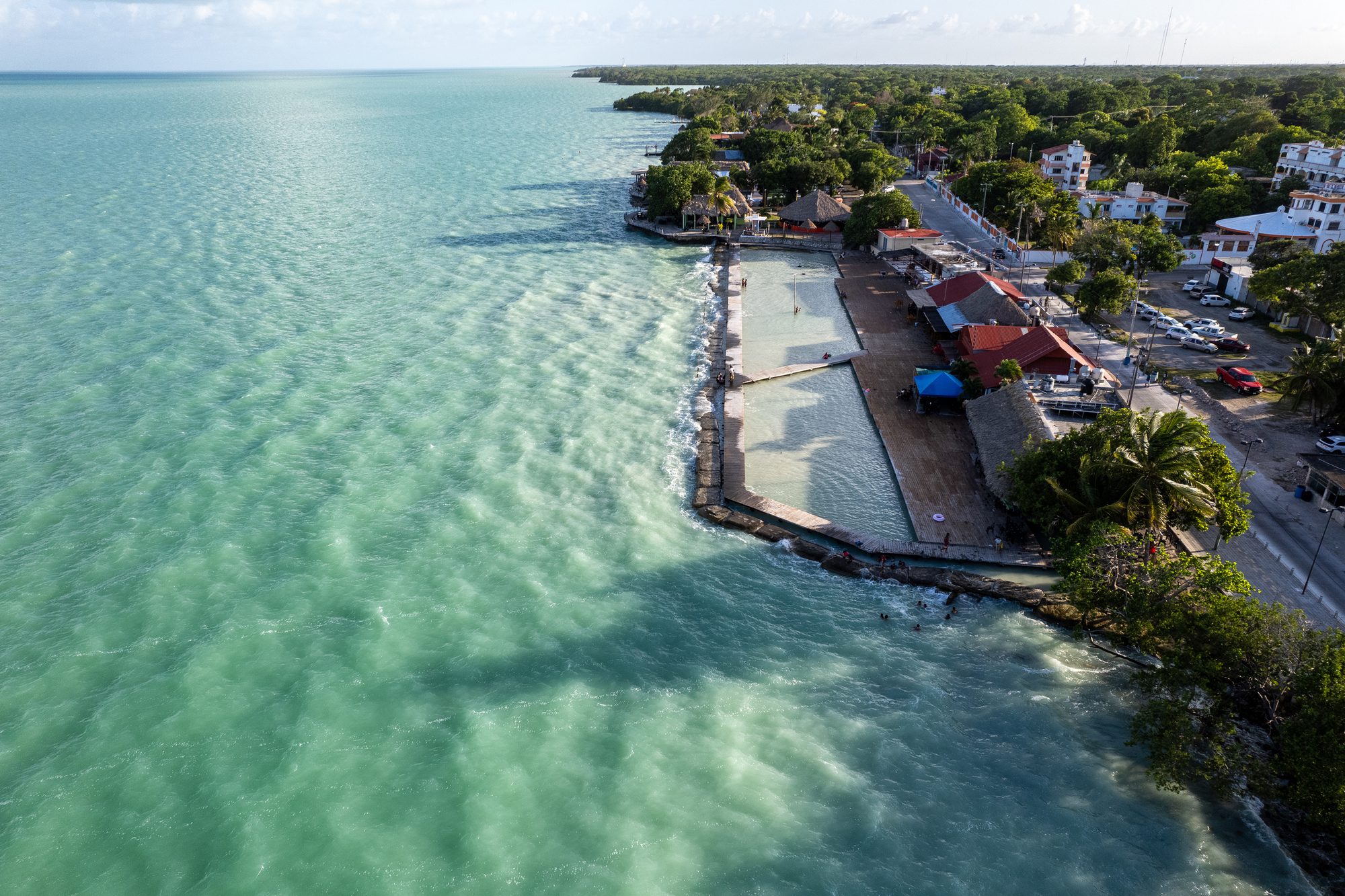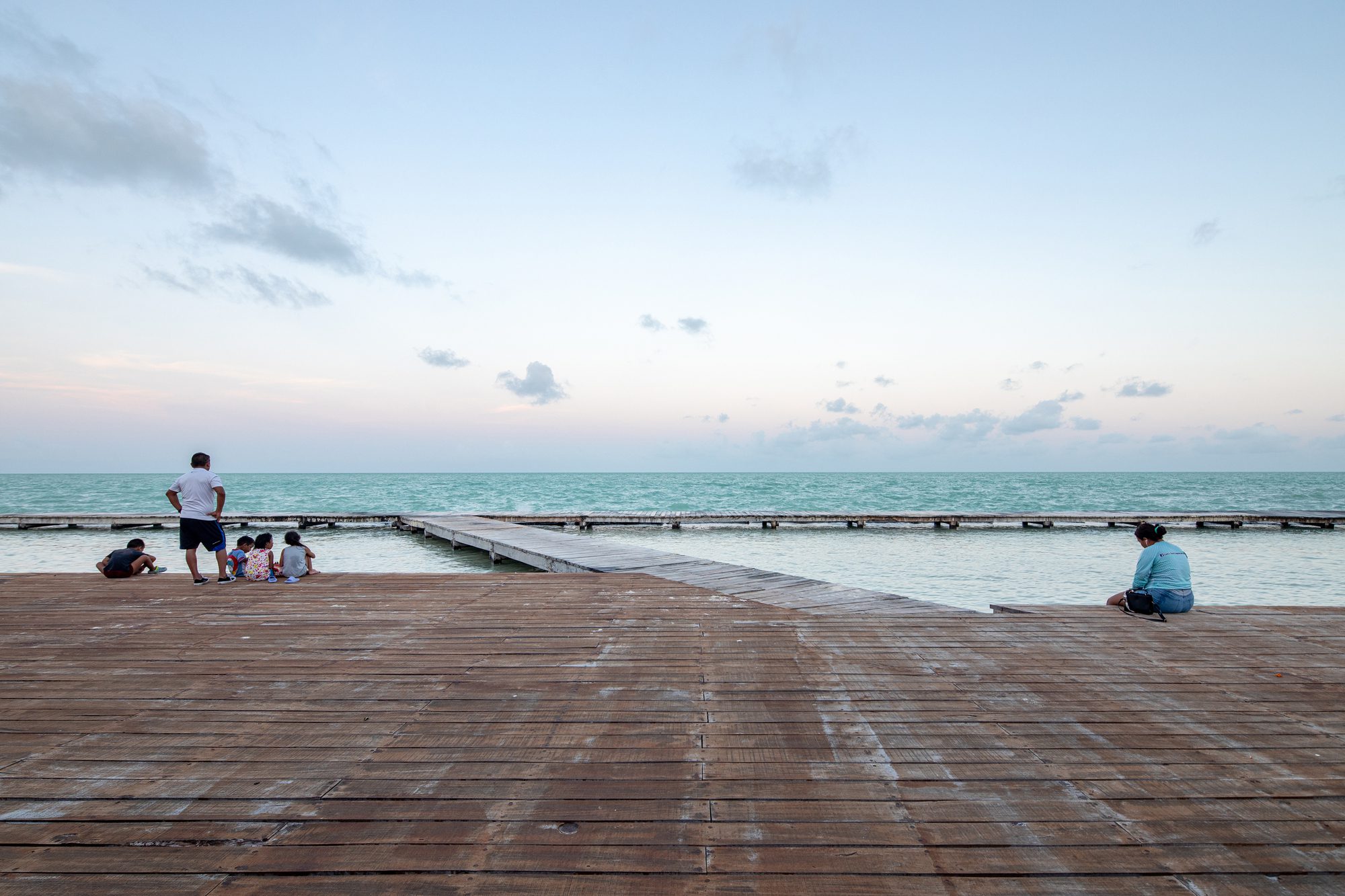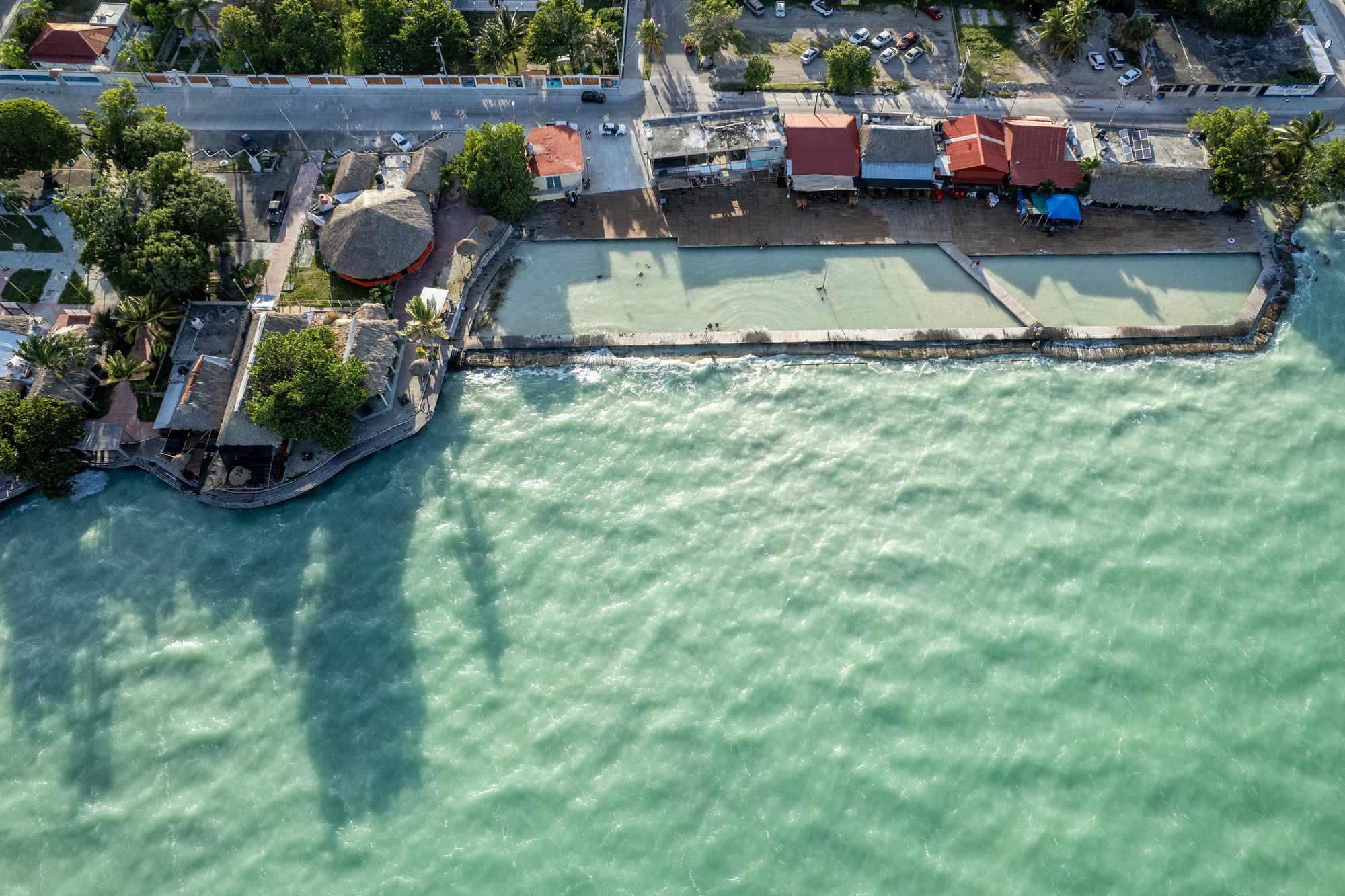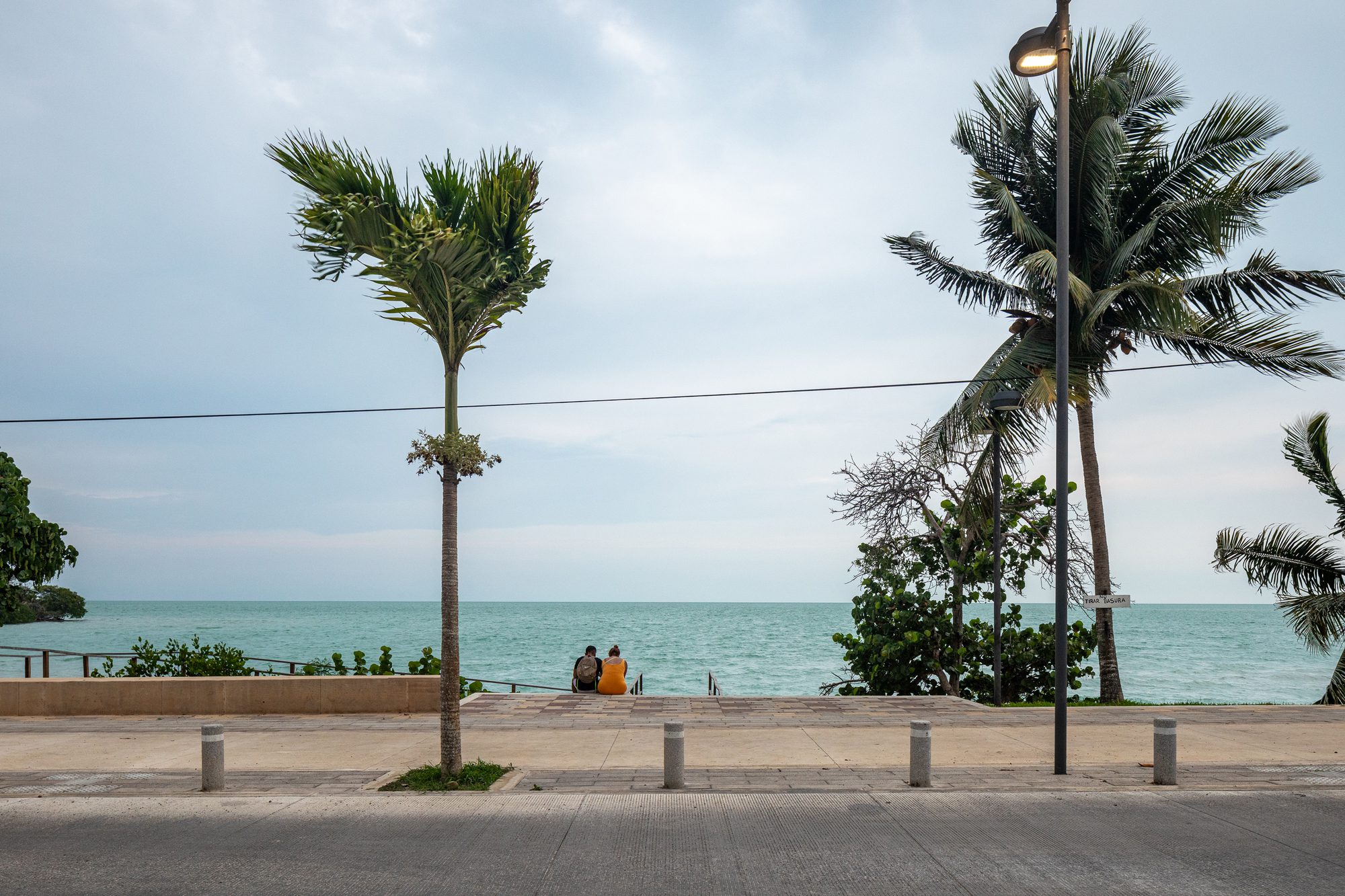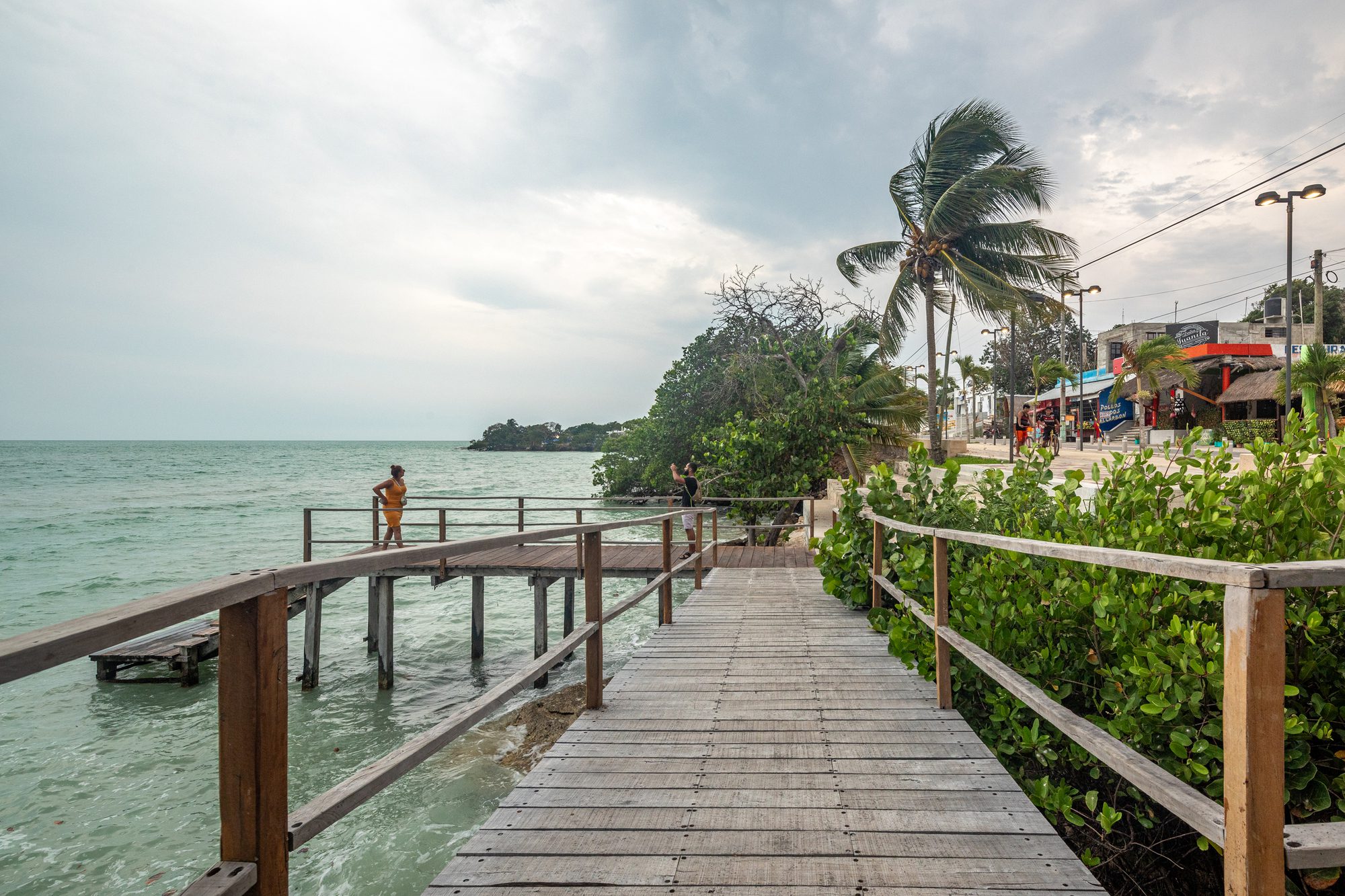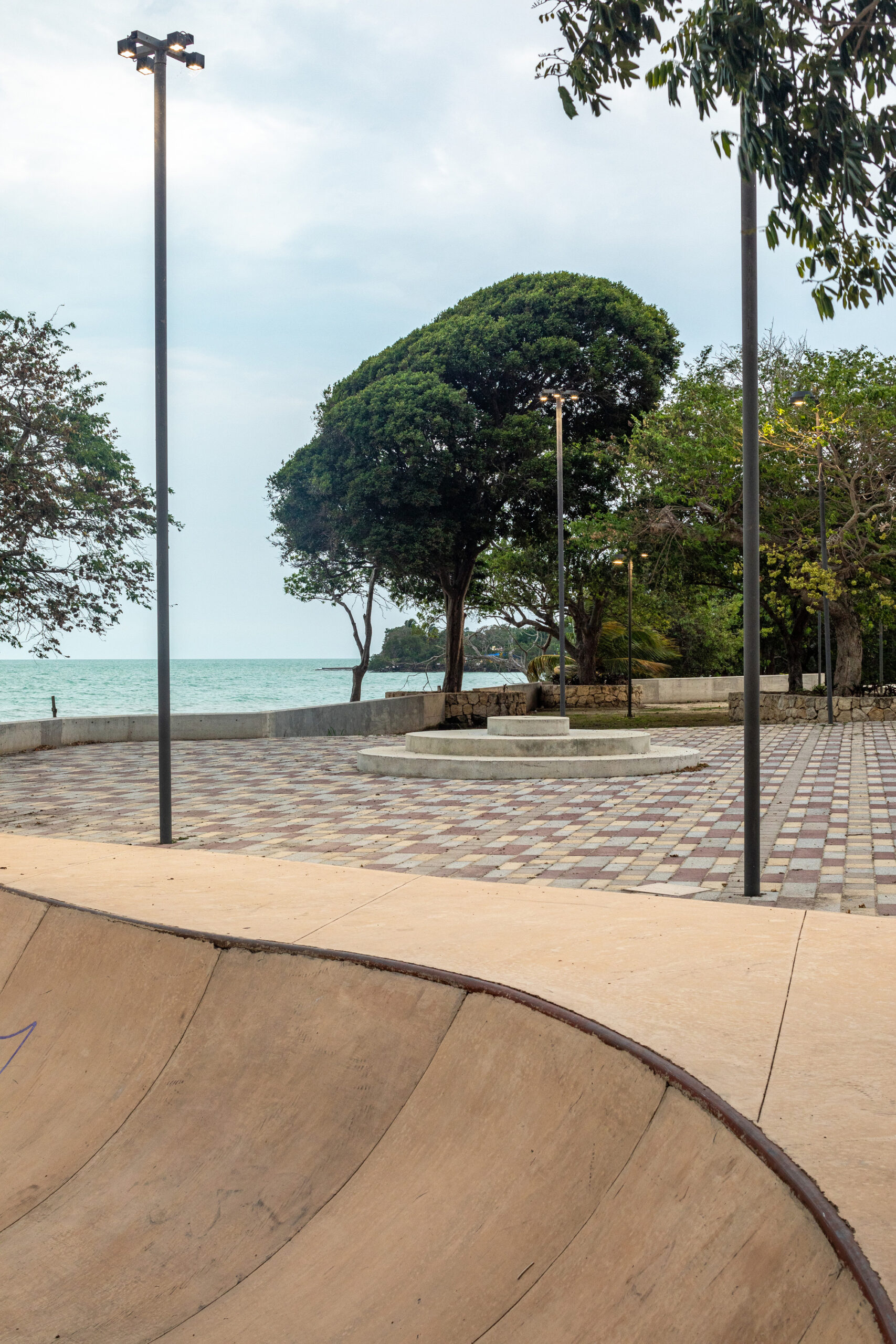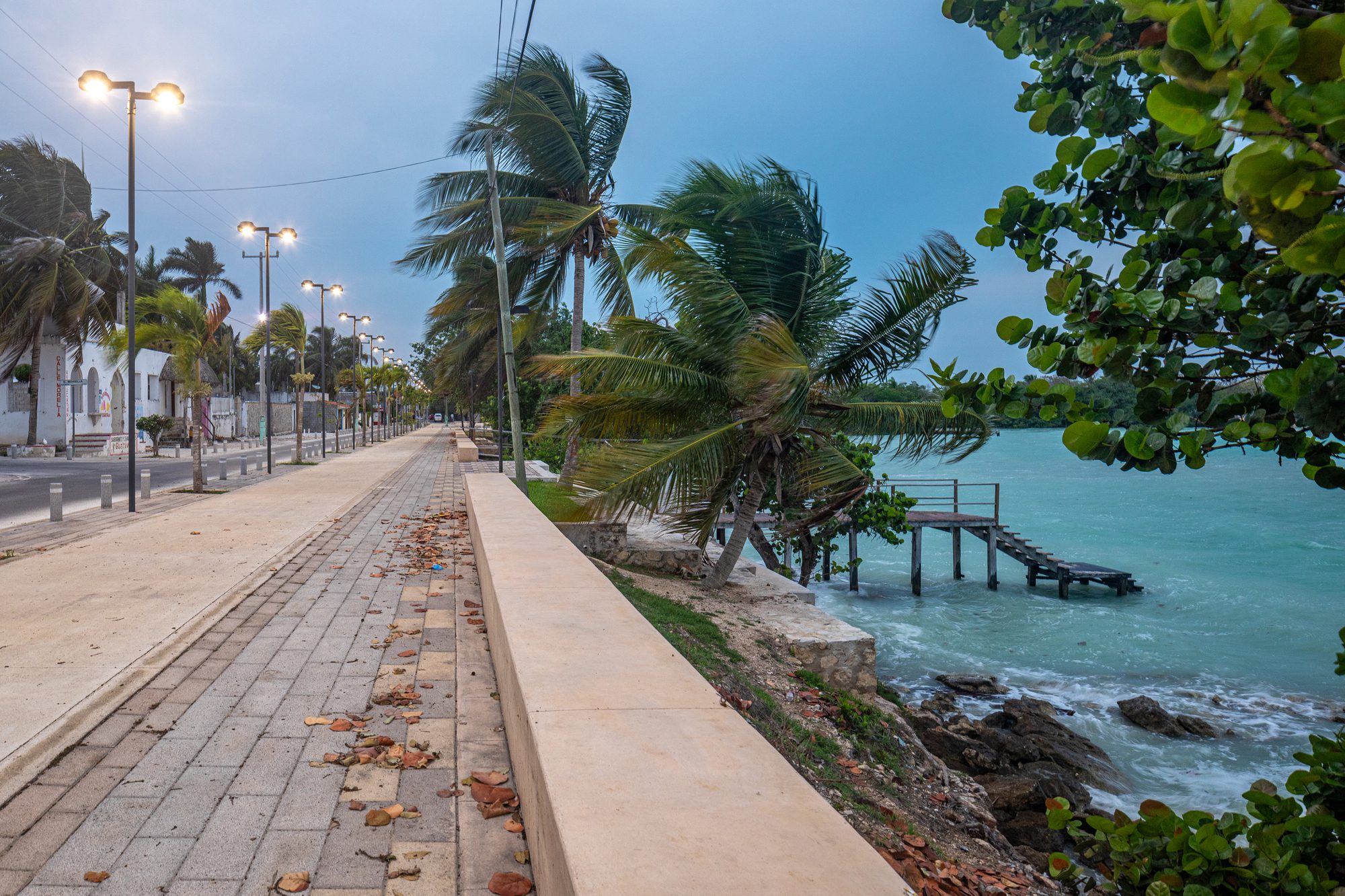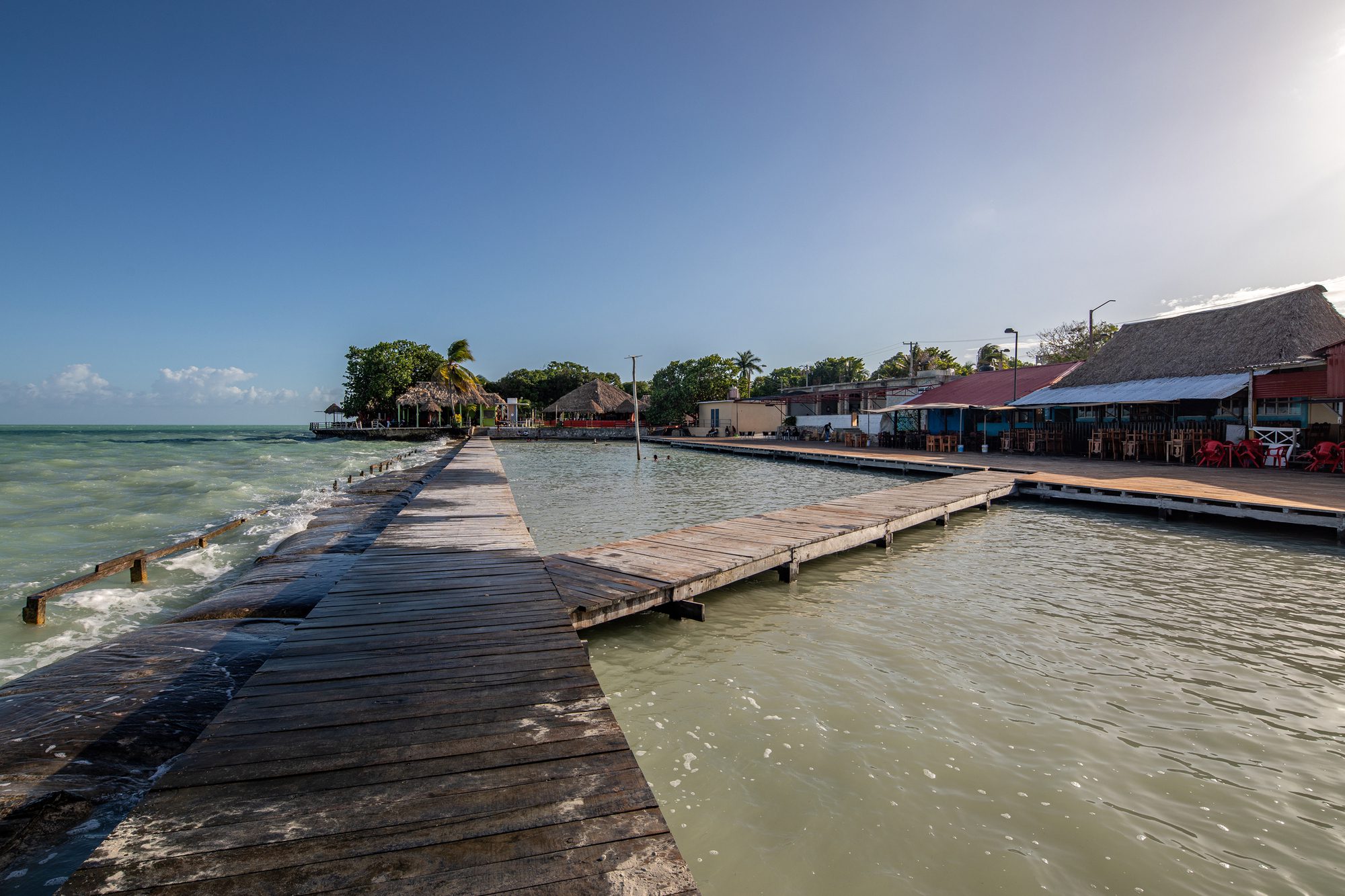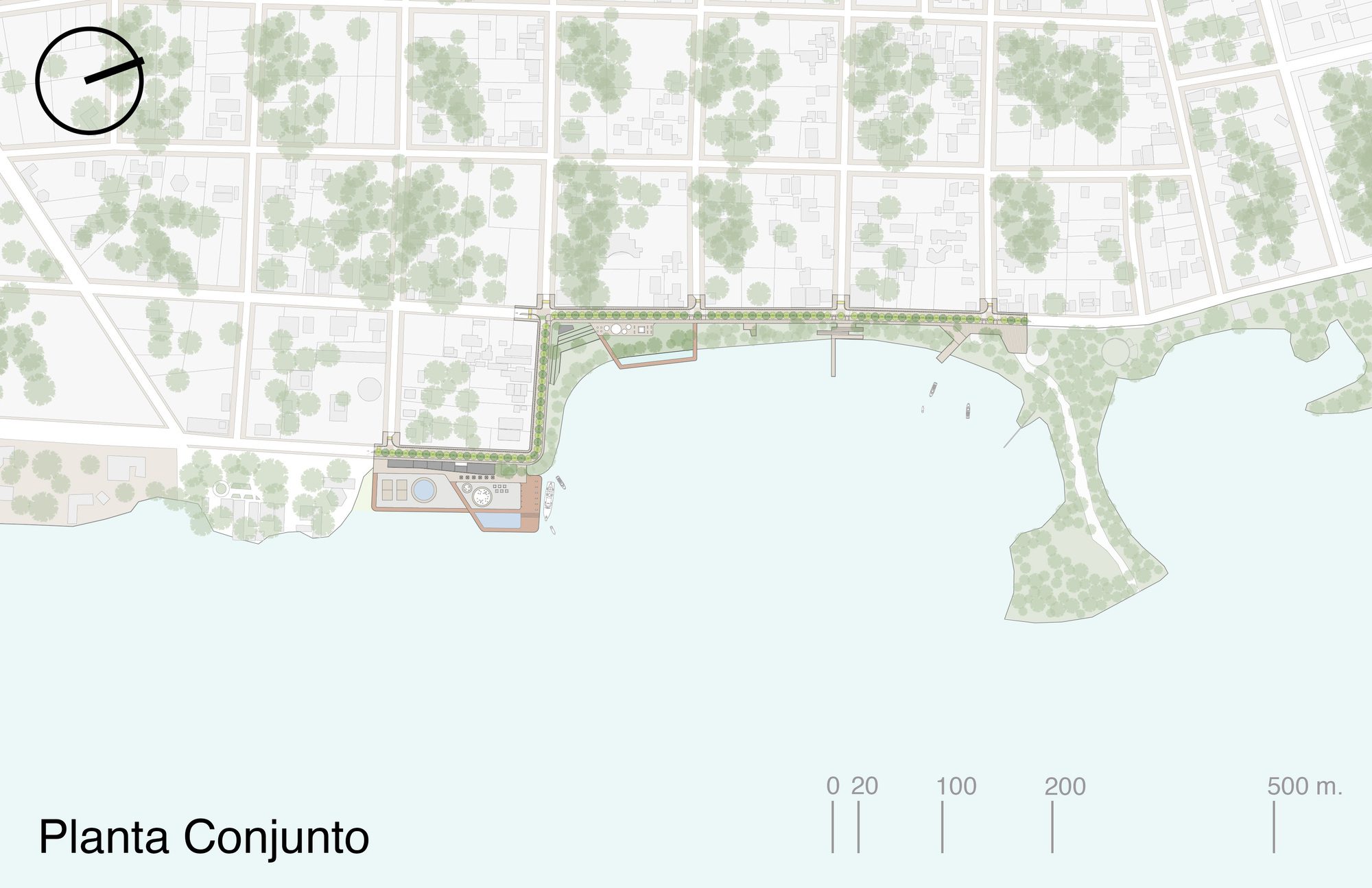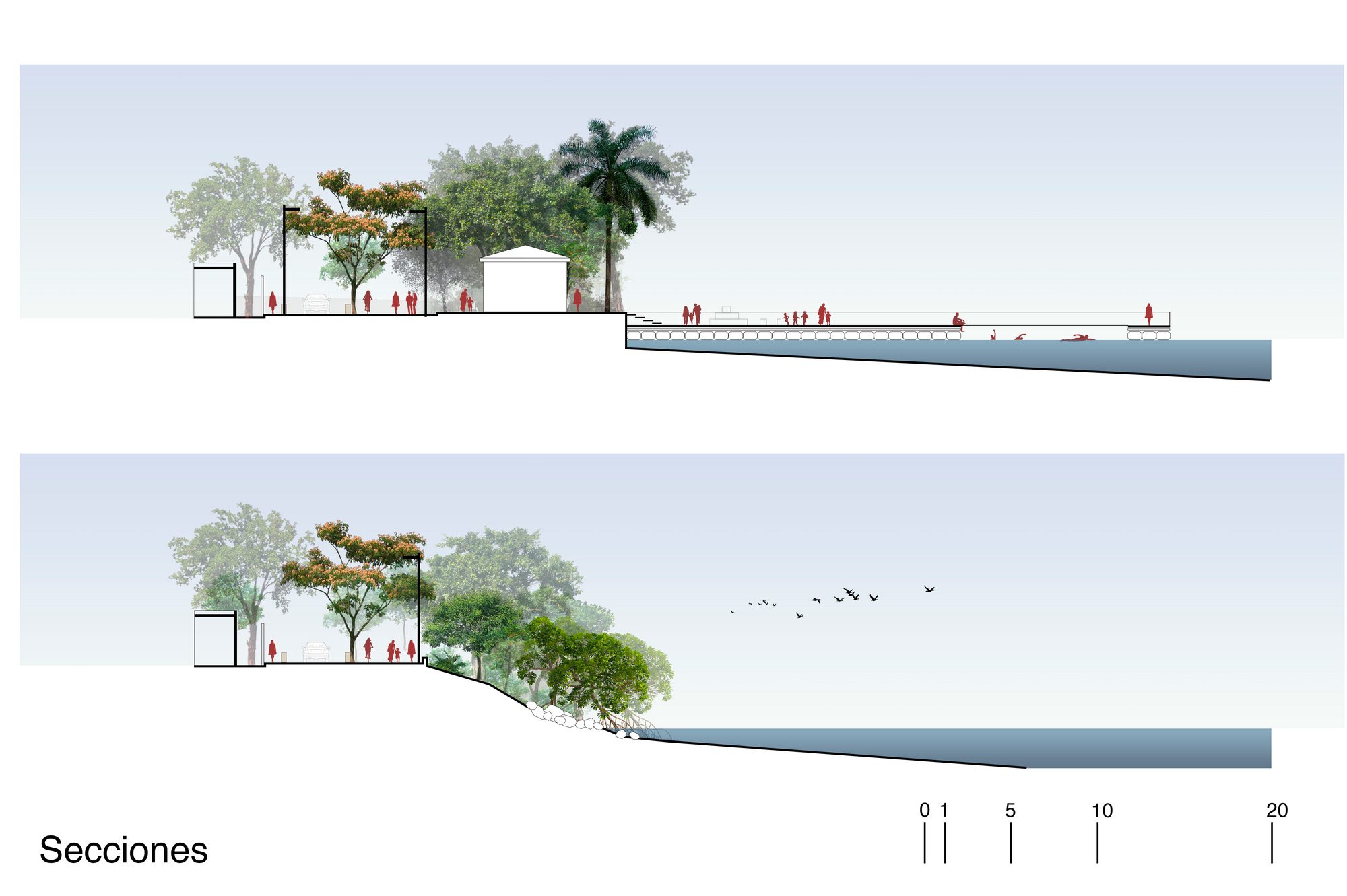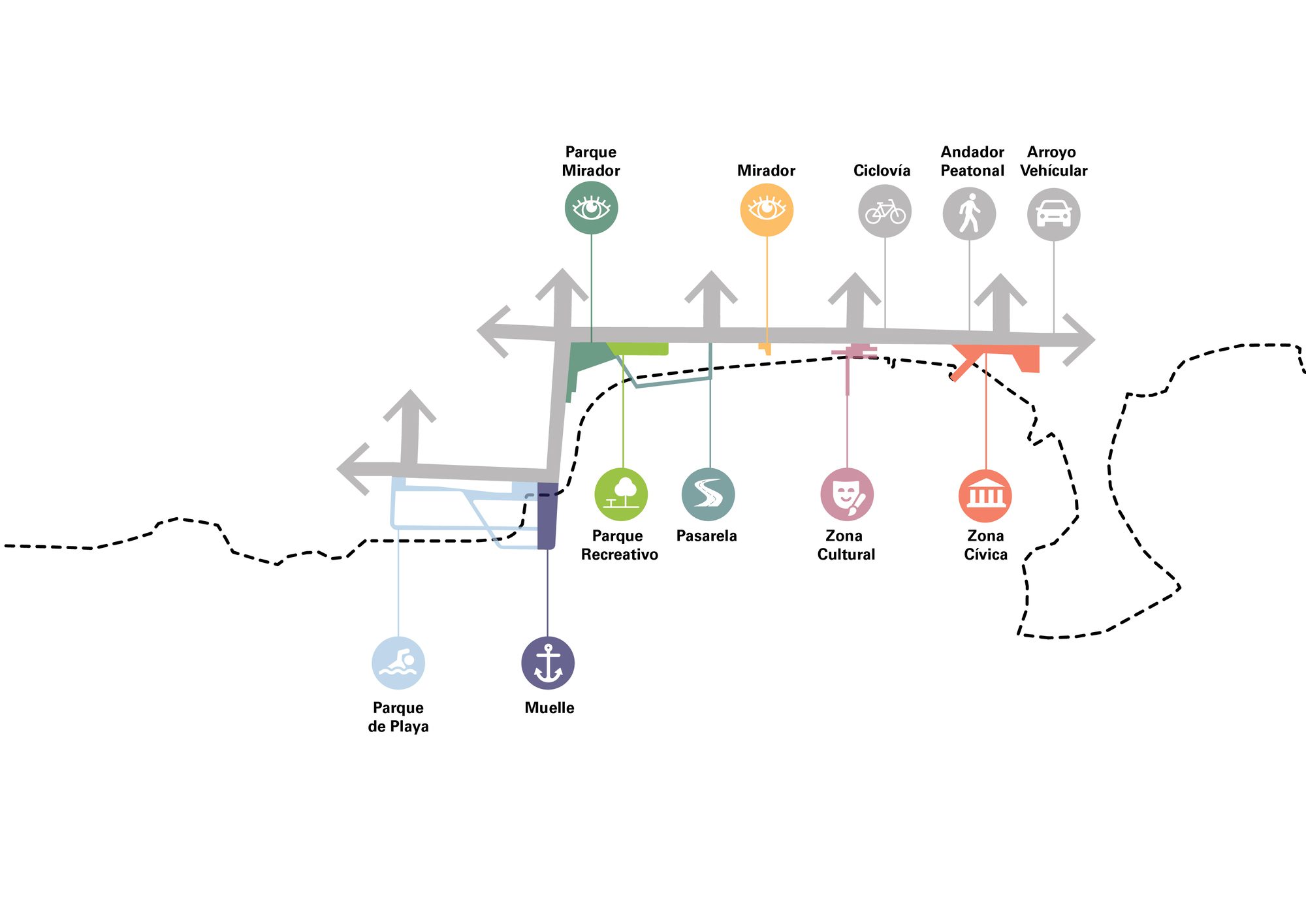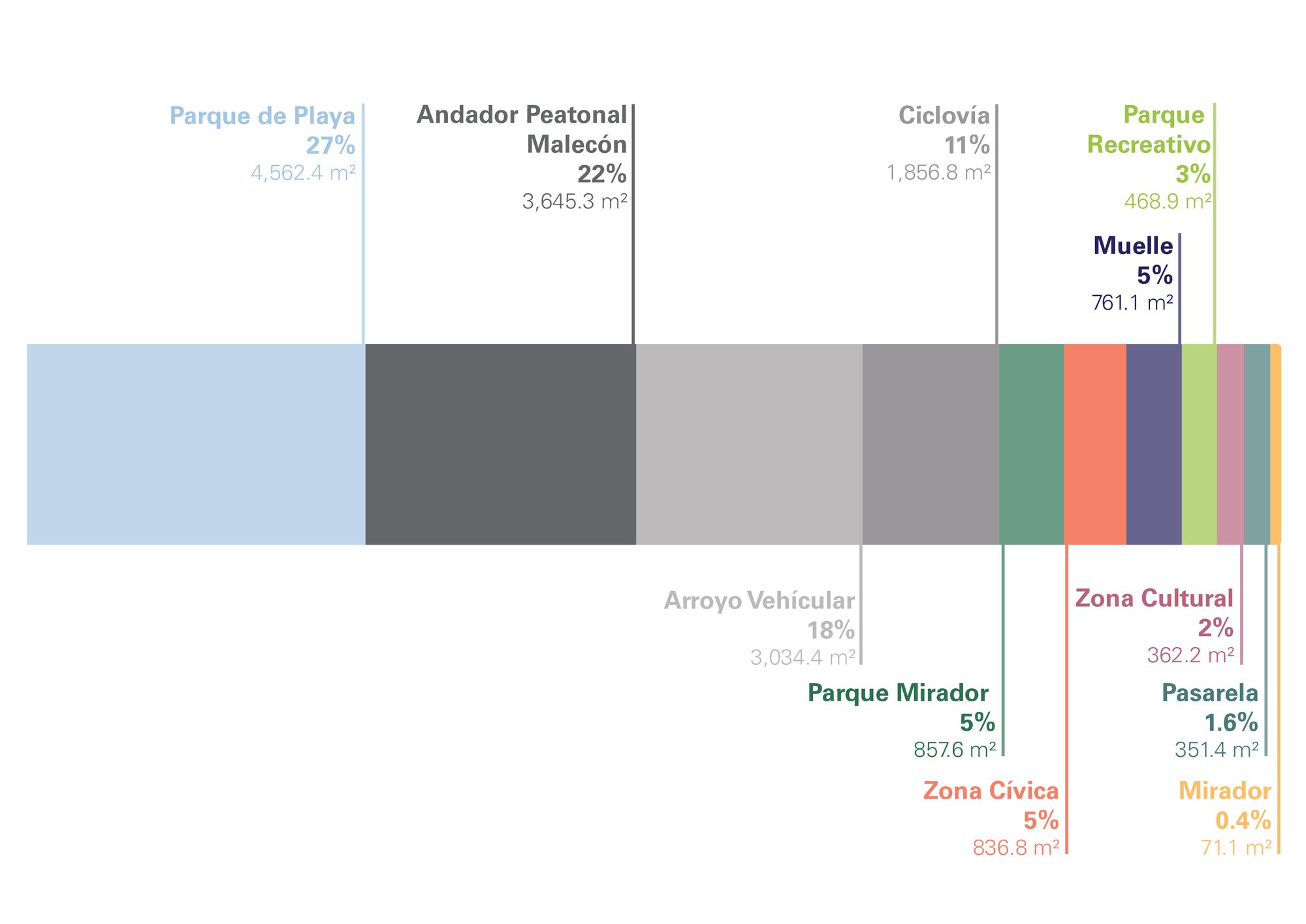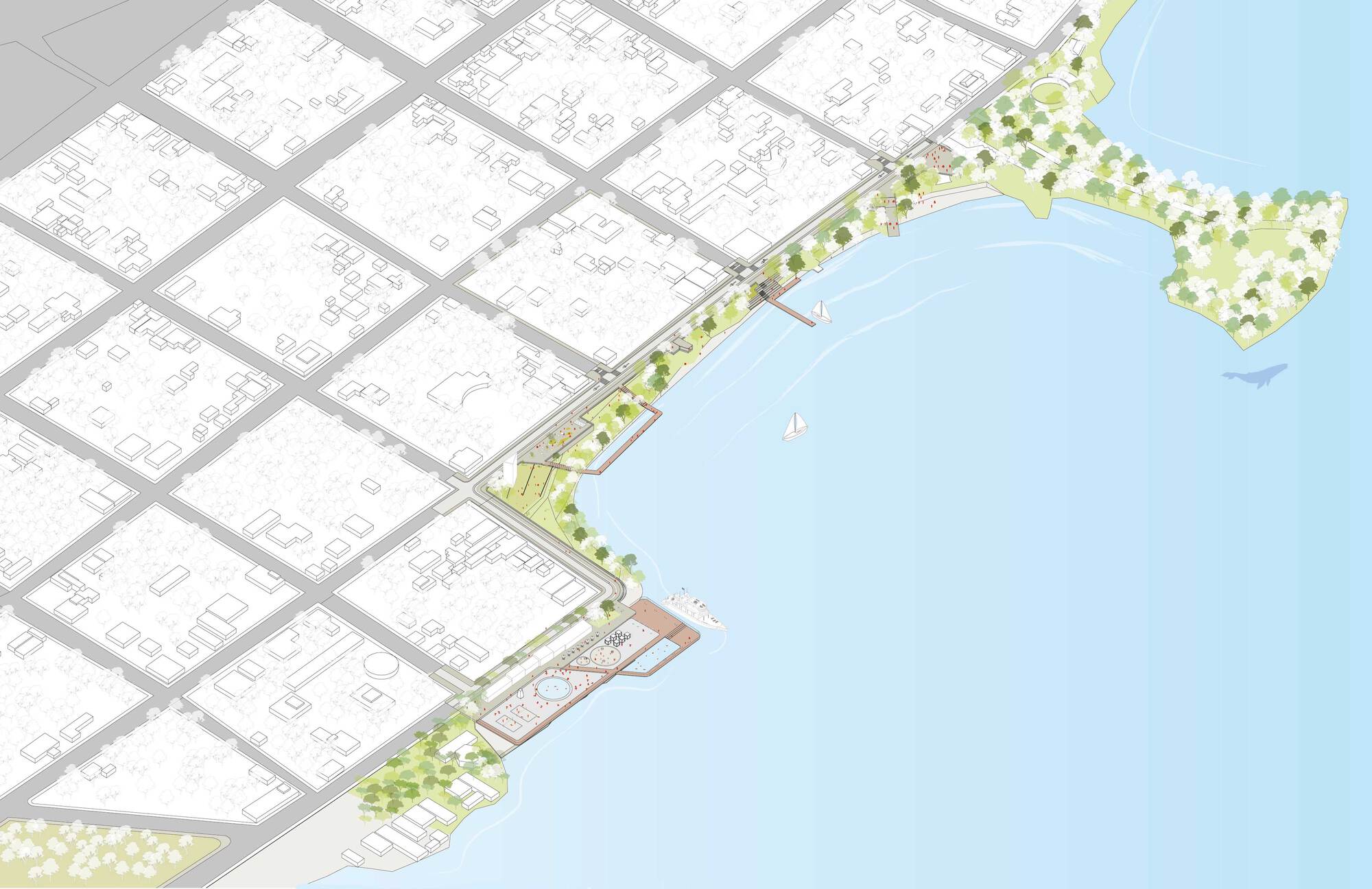


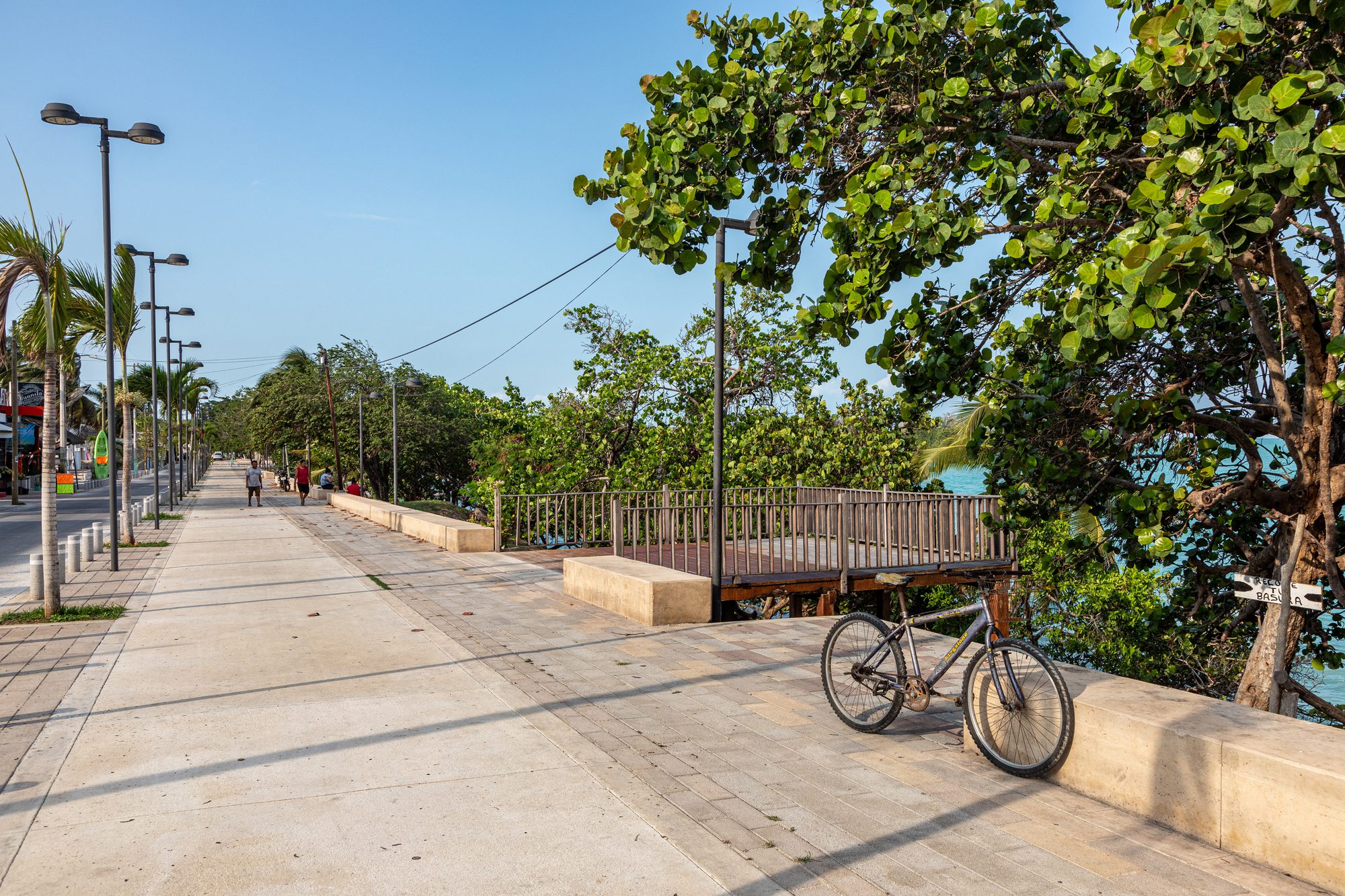
As part of the national territorial planning strategy led by SEDATU (Secretariat of Agrarian, Territorial, and Urban Development), a comprehensive renovation of the Calderitas Boardwalk was proposed, located about nine kilometers from the center of Chetumal city in the state of Quintana Roo. Calderitas Pier’s concept aims to weave different activities together through a guiding thread that serves as the central axis of the entire project. The gastronomic area of the site, identified as the section with the highest pedestrian, vehicular, and tourist traffic on the boardwalk, is integrated with the natural and artificial sea, utilizing the existing beach area with a structured walkway system that allows pedestrians to safely pass over the water. Mobility and accessibility were crucial aspects of the project. Before intervening in the roadways, priority was given to pedestrians and cyclists. This was achieved by adjusting the traffic flow to a single direction, narrowing the street to a single lane, expanding the sidewalk and bike lane, and placing both vehicular and pedestrian traffic at the same level, separated by bollards. These actions improved site accessibility, incorporating new intersections with the renovated space.
© Onnis Luque
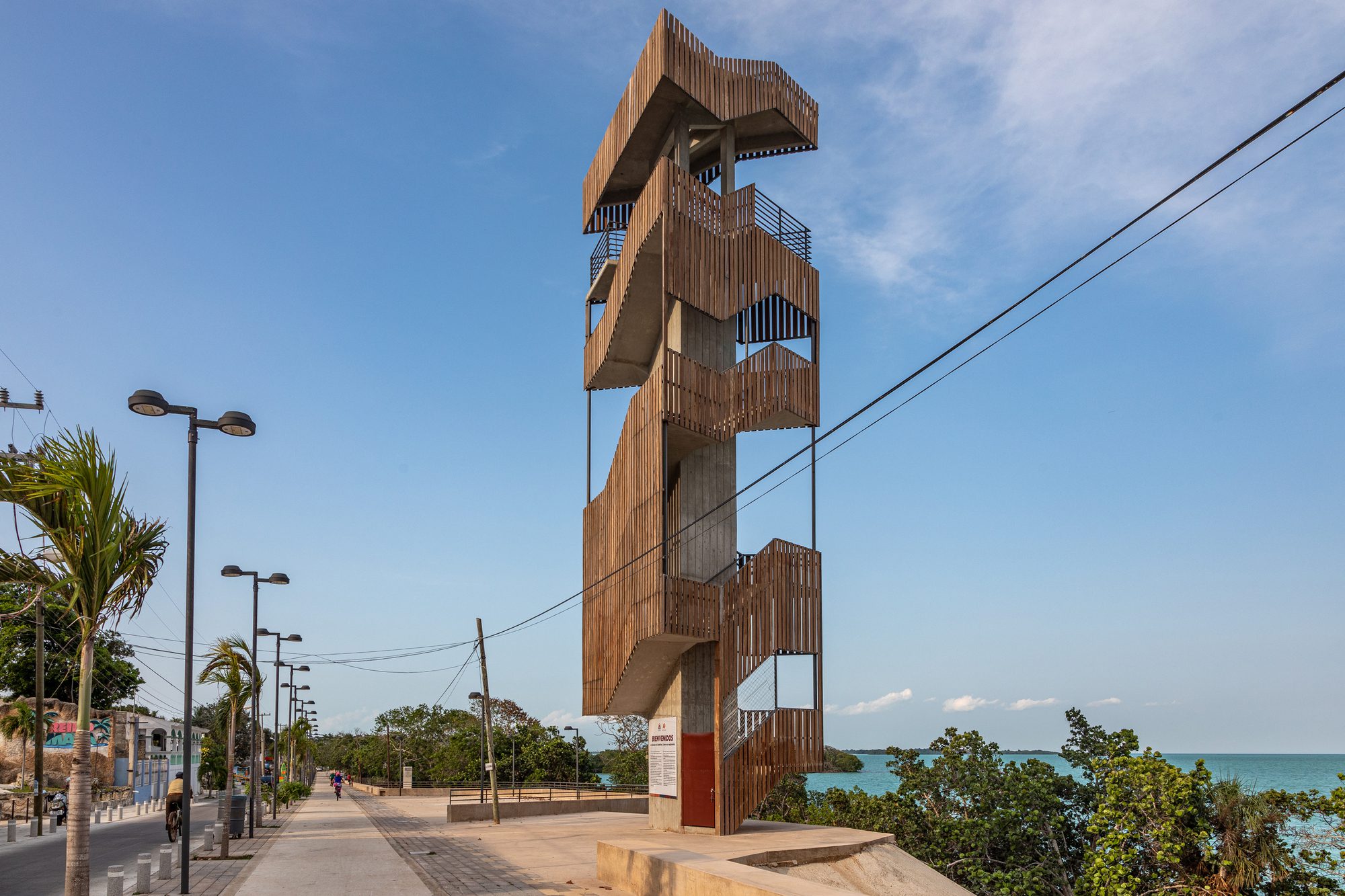
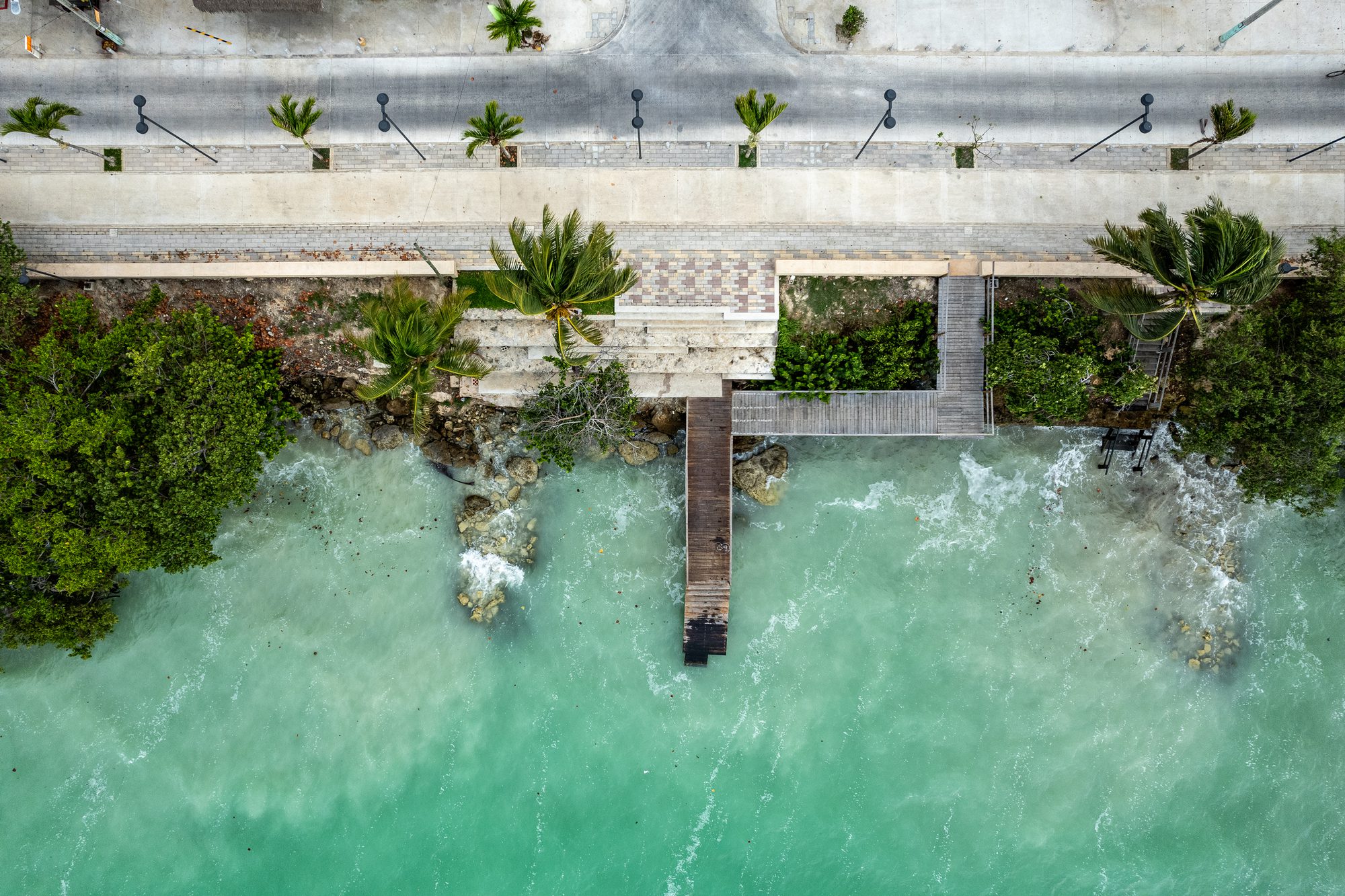
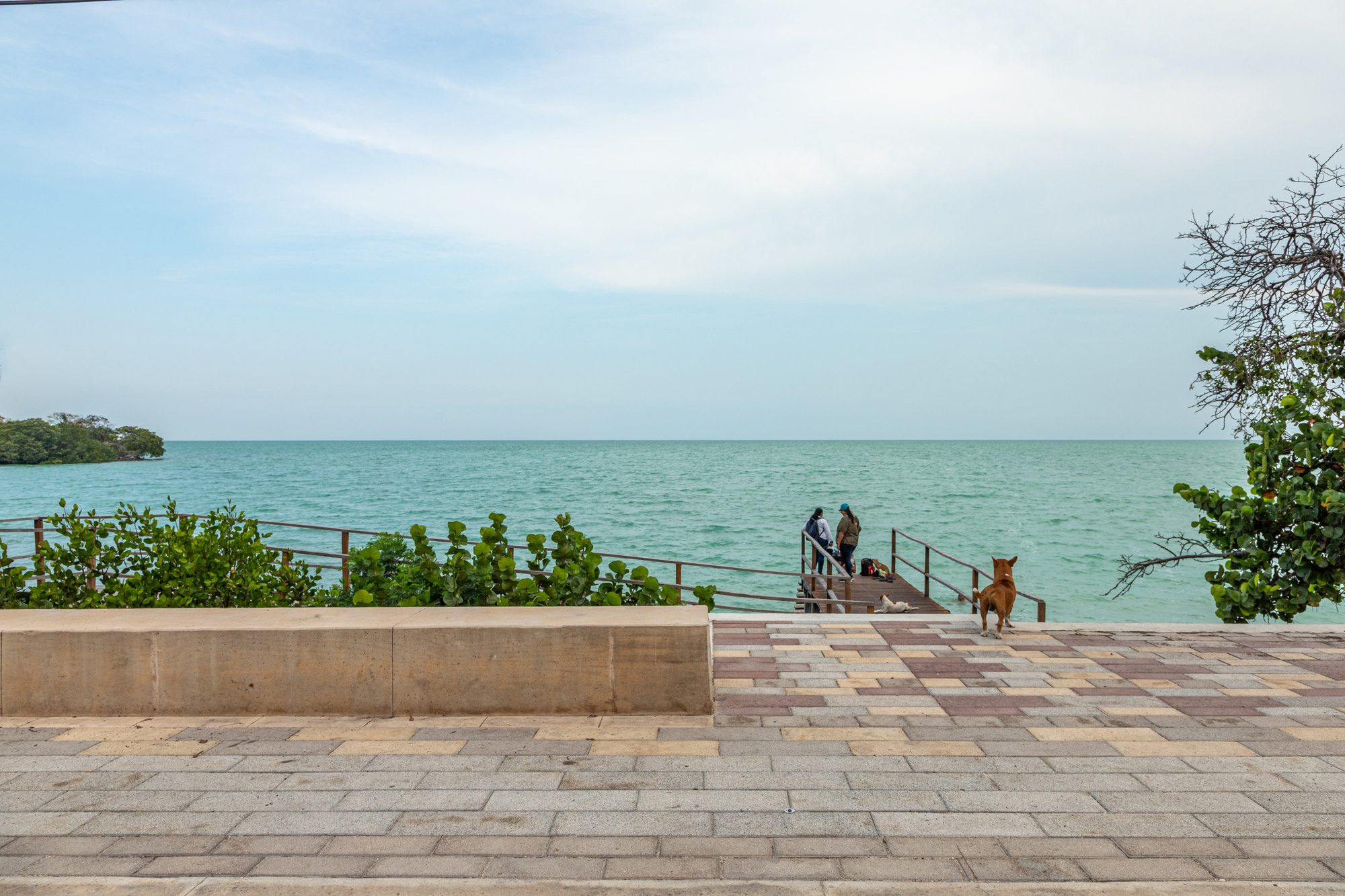
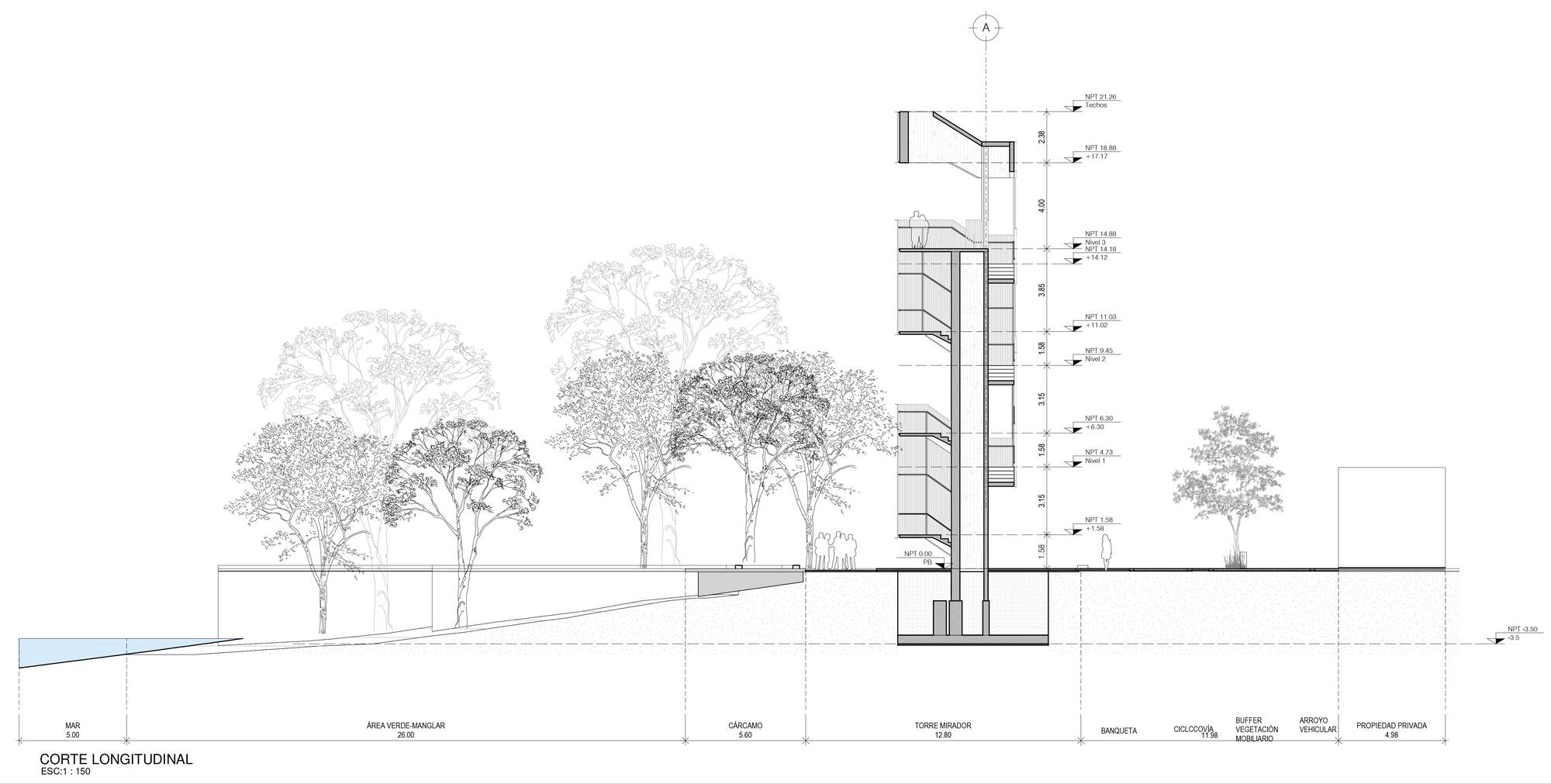
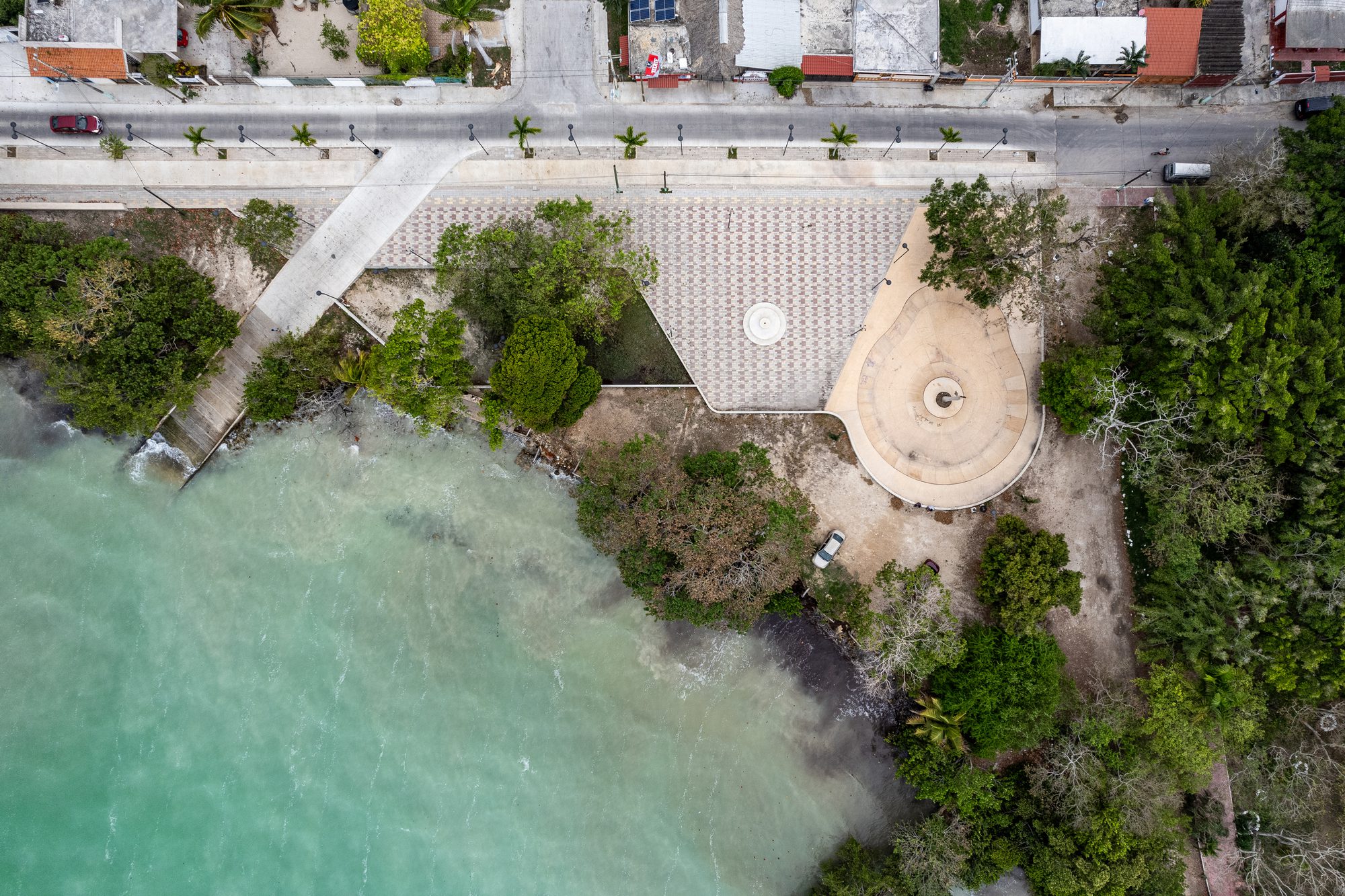
The program encompasses the revitalization of the gastronomic spaces located along the natural beachfront, forming a new walkway border by the natural pool area with a platform that integrates restaurants, transforming the site into a grand gastronomic square along the boardwalk. Contemplative spaces facing the sea were placed in areas where the existing mangrove barrier had been affected, preserving the vegetation. One of these spaces is the ‘Plaza del Agua,’ designed as a stone staircase allowing users to approach the water’s edge. An iconic feature of the project is the 15-meter-high observation tower, designed to enjoy sunsets against the backdrop of the turquoise sea. The tower consists of a central concrete triangular column pointing towards the sea and opening to the adjacent sides. The staircase is covered by a porous wooden skin, allowing all levels to serve as viewpoints at different heights while ensuring user safety.
© Onnis Luque
The urban image of the project is composed of local materials in terms of both color and texture, utilizing elements like treated zapote wood for low-traffic areas such as docks, walkways, and platforms. Site-specific stone was used for retaining walls, and concrete mixed with local minerals achieved tones like the natural stone of the area. The pavement design incorporates three different colors in ochre and sand shades. The selection of the plant palette was driven by the preservation and enhancement of the site’s identity, creating accents and transition zones with perennial and deciduous species of medium and tall stature, tailored to their respective locations.
Project Info
Architects: a|911
Area: 32500 m²
Year: 2023
Country: Chetumal, Mexico
Photographs: Onnis Luque
Manufacturers: Cemex, Zeraus Iluminación
Design Team: Ernesto Lomelí, Luis Castro, Brian Luna, Judith Valerio, Oscár Ruiz, Rebeca Paulin, Janisse Cruz, Elisa Jiménez
Structural Design: Oscar Trejo
MEP: Gilberto Jocirin
Lighting Design: Pablo Gadsden