

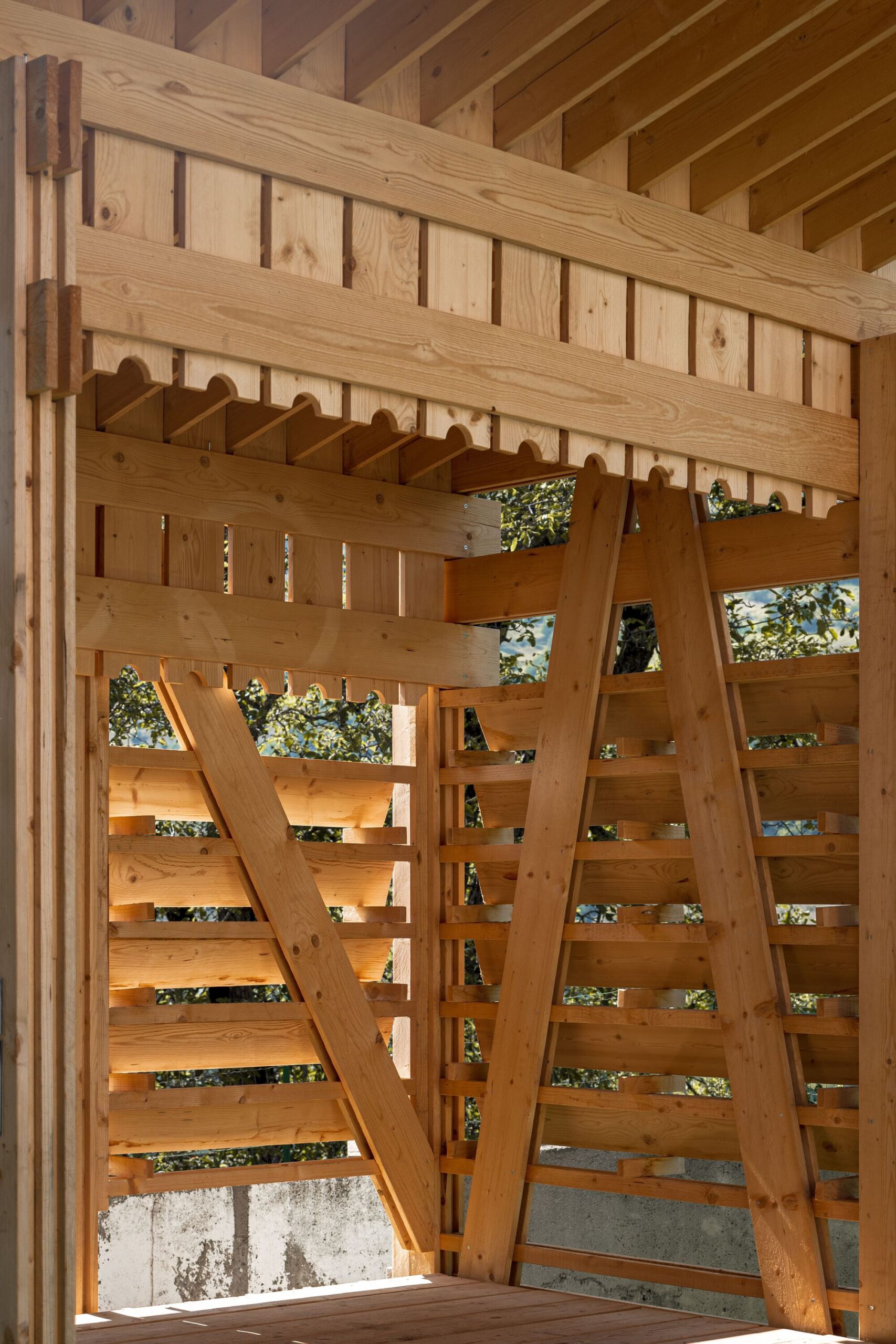
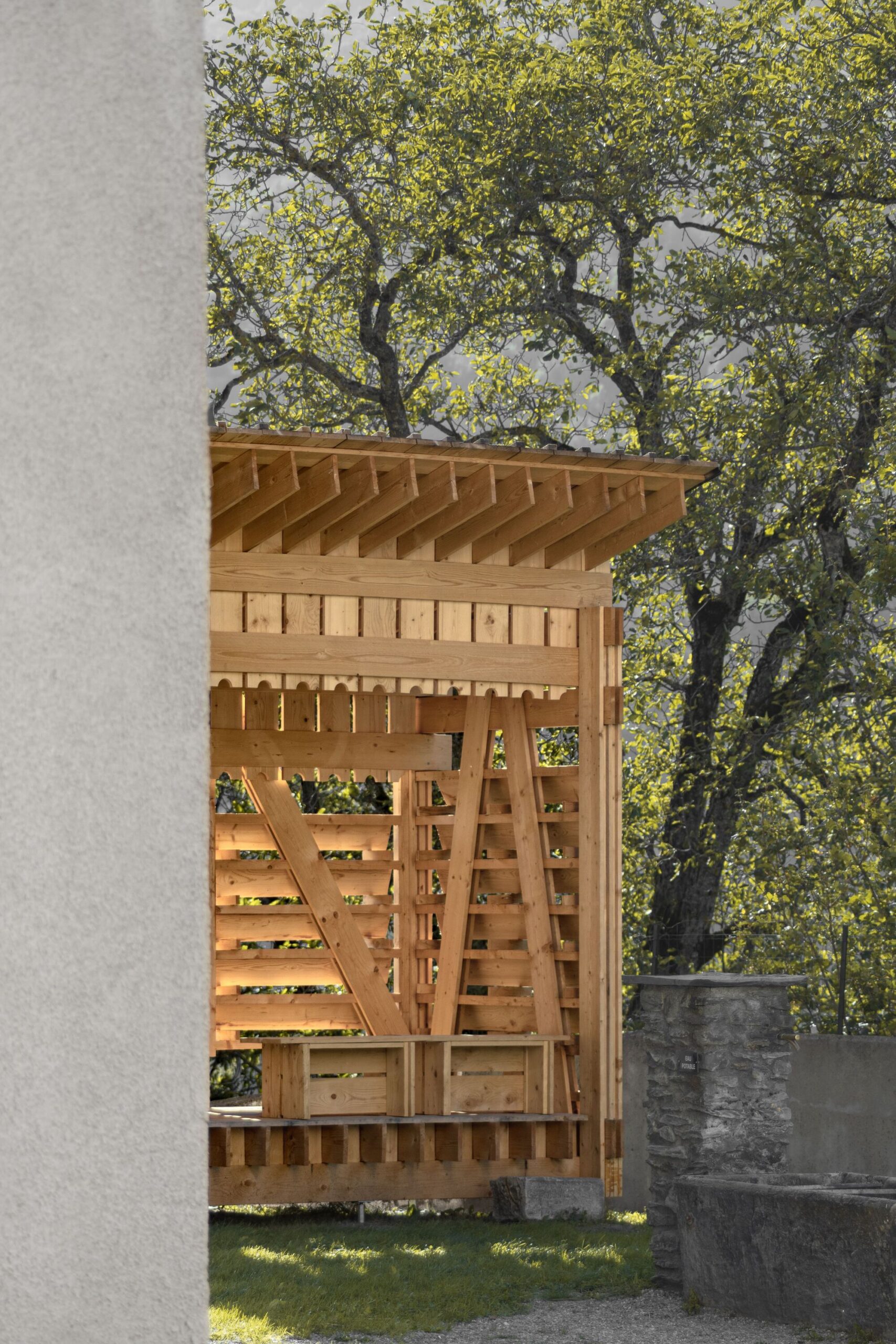
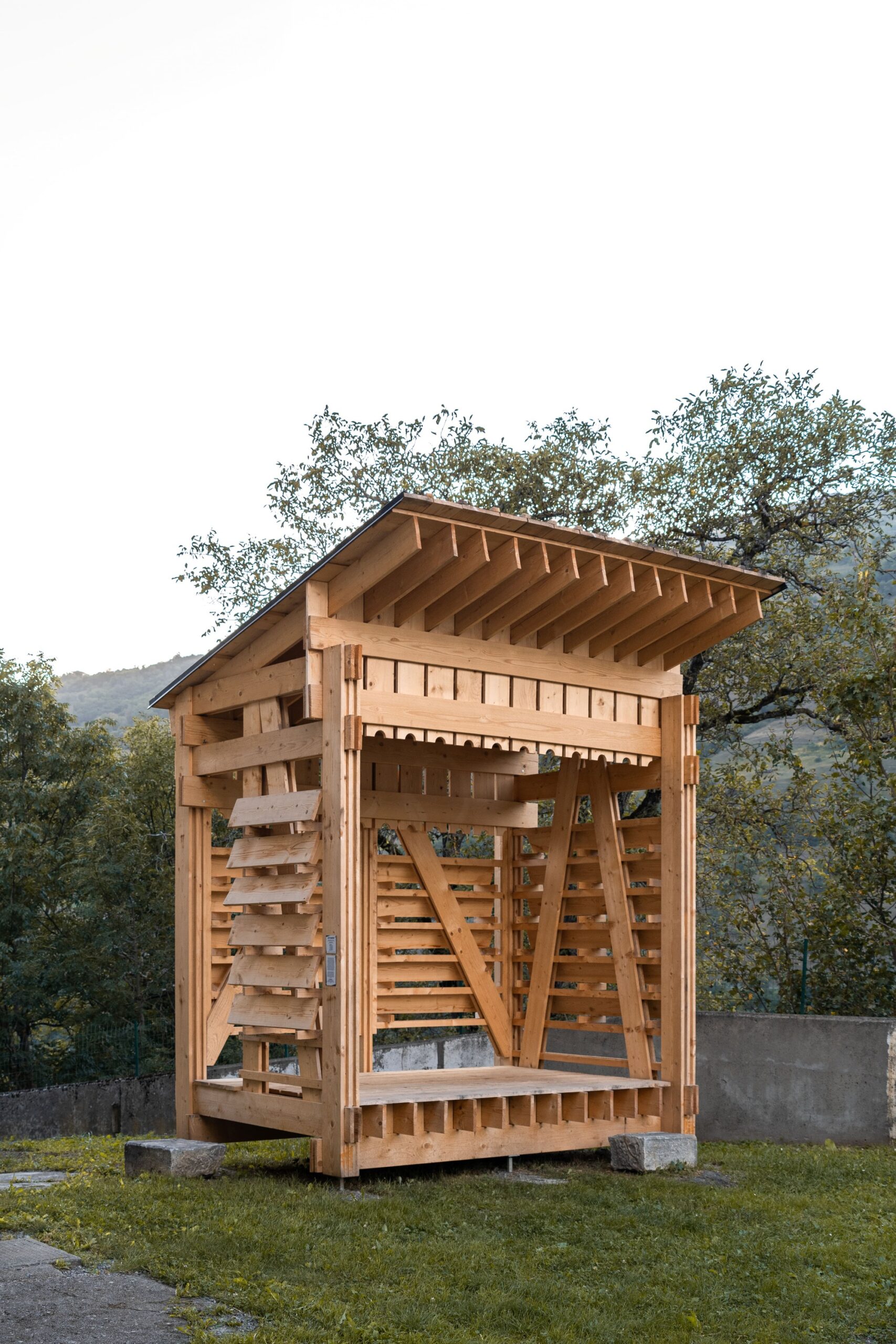
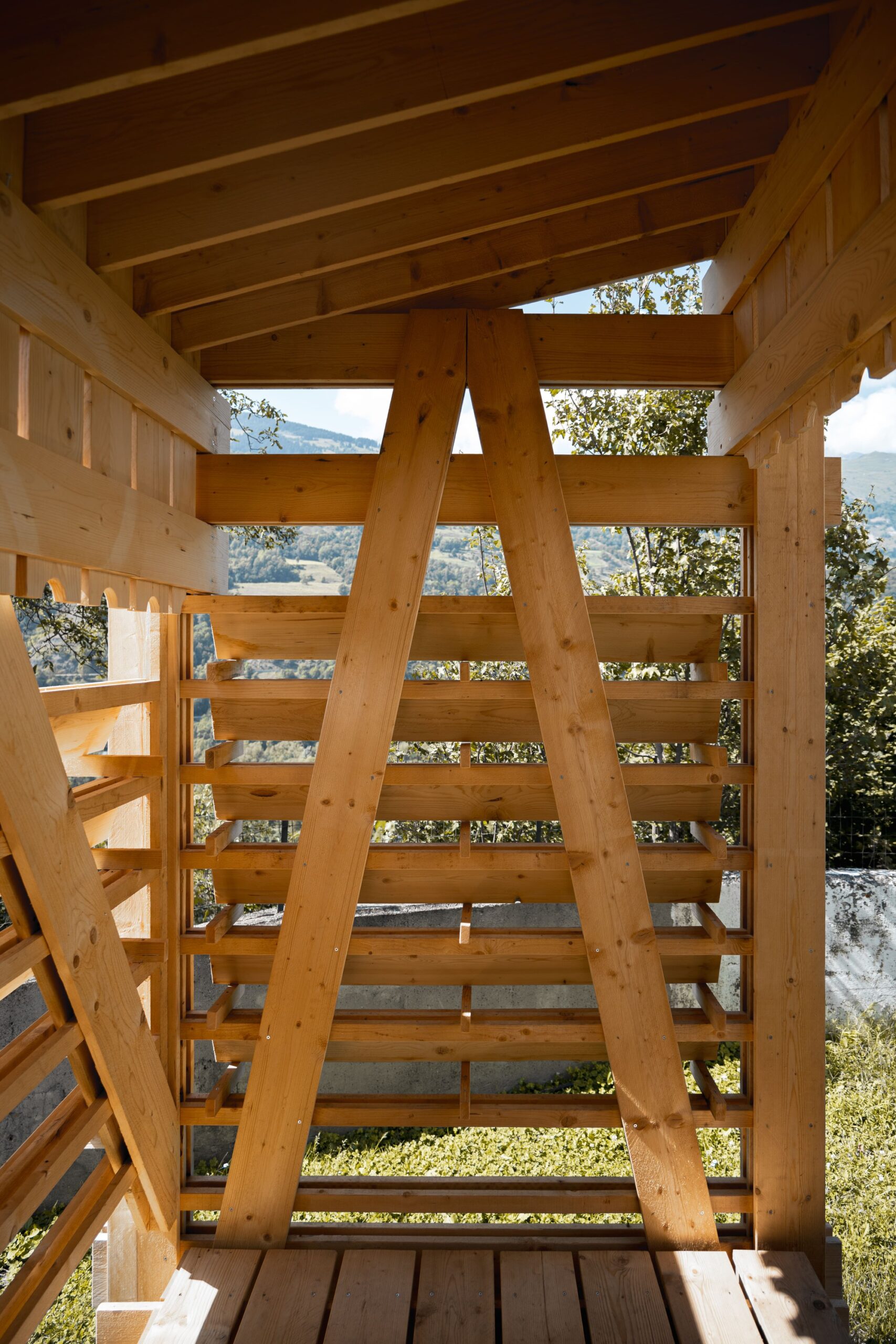
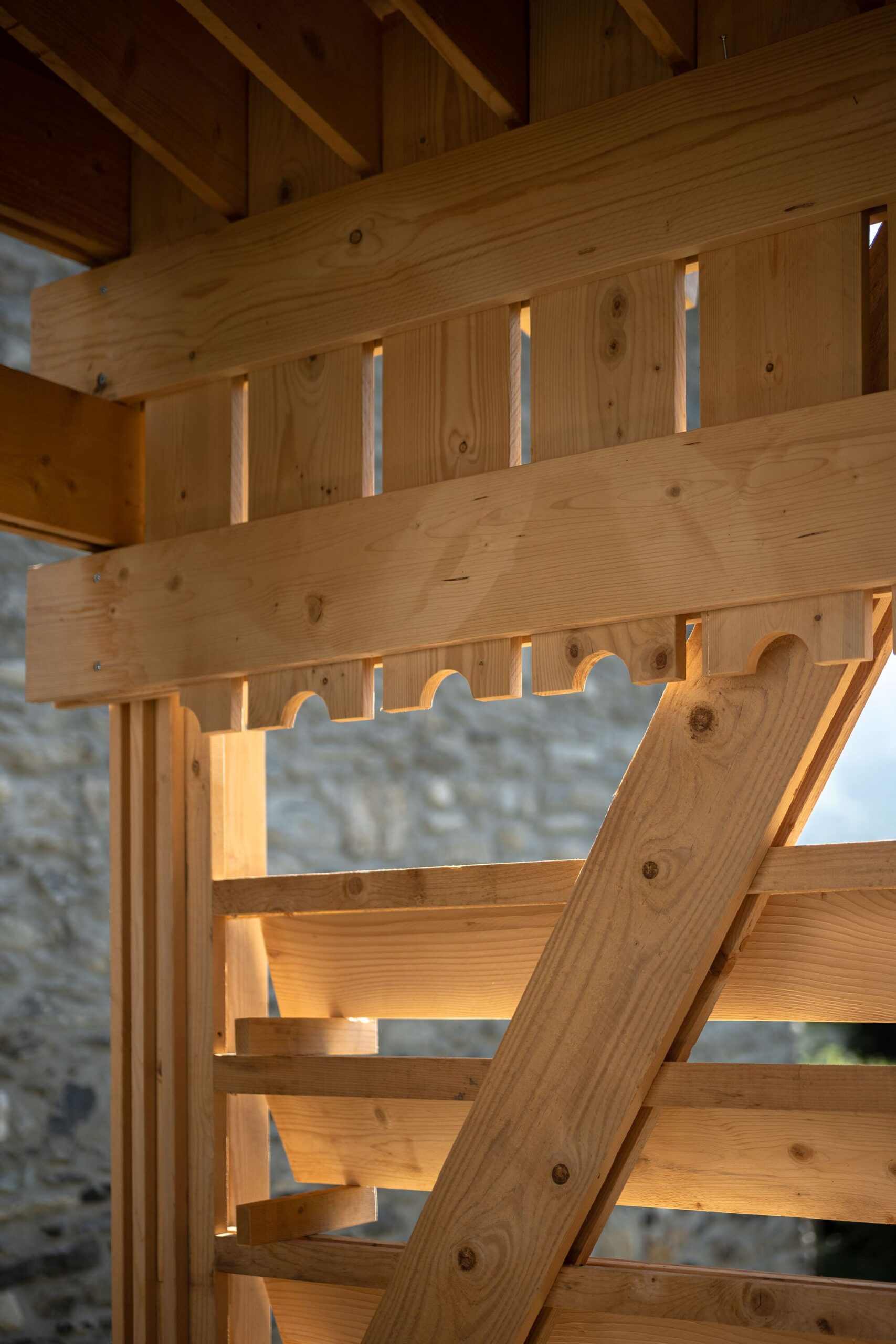
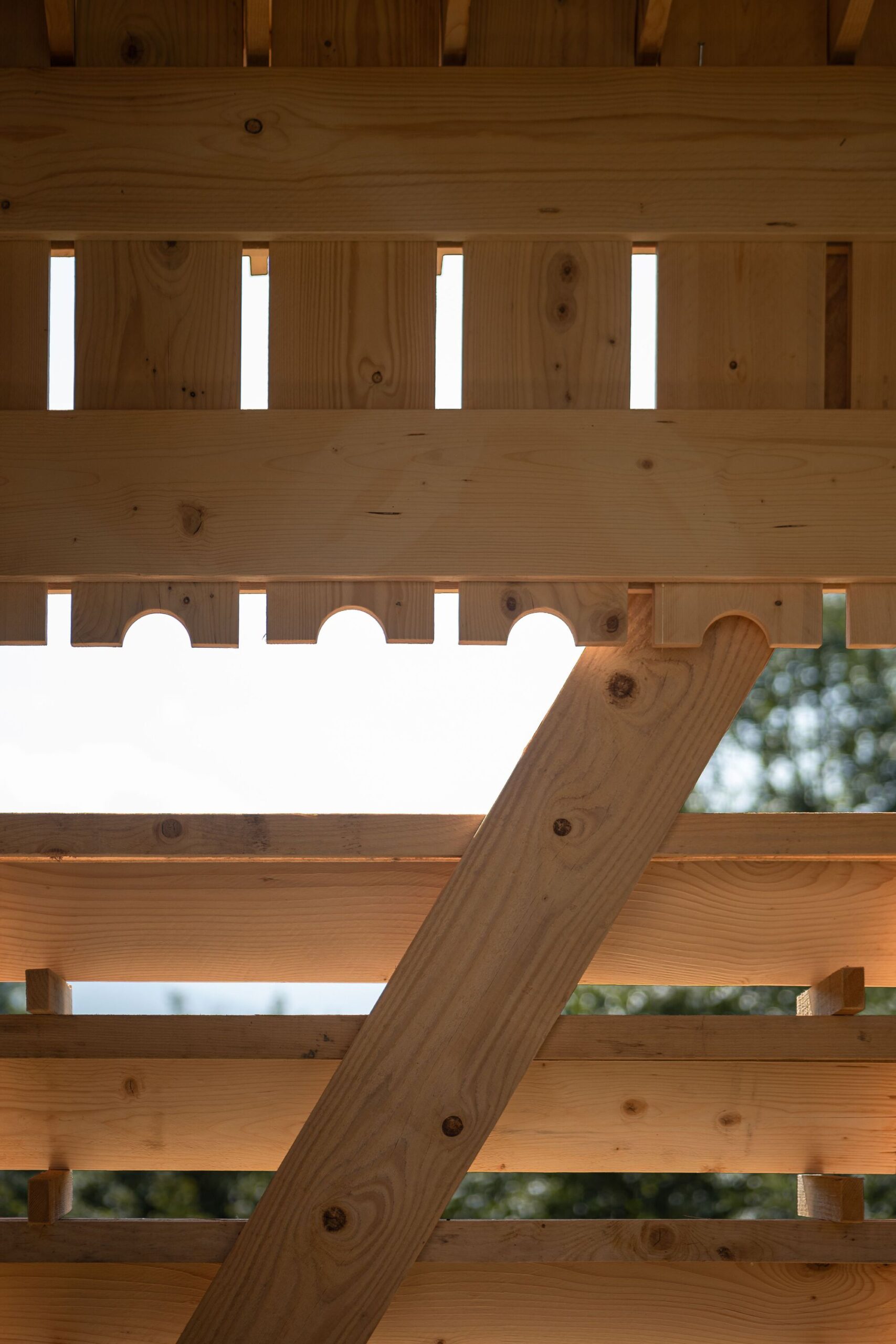
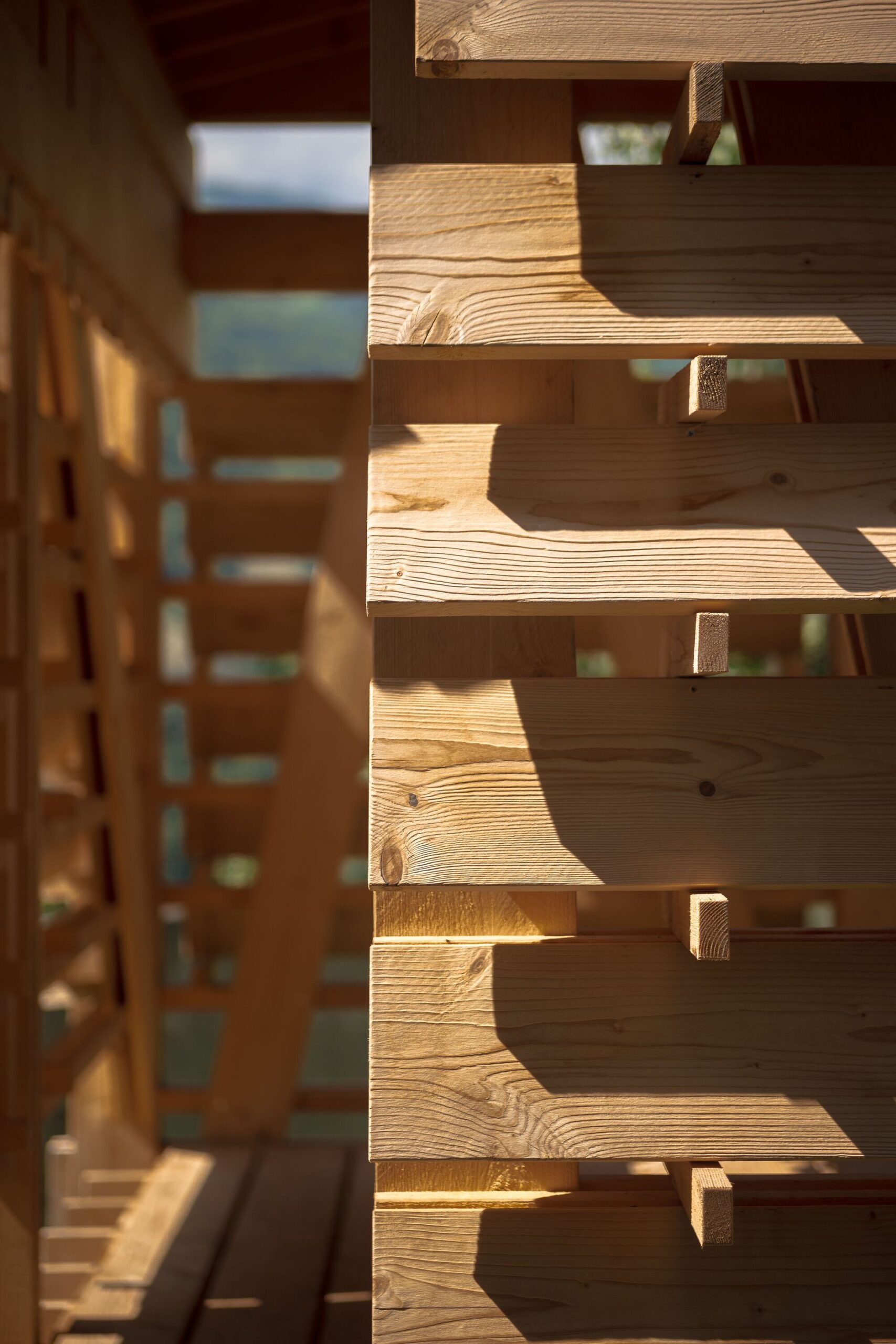
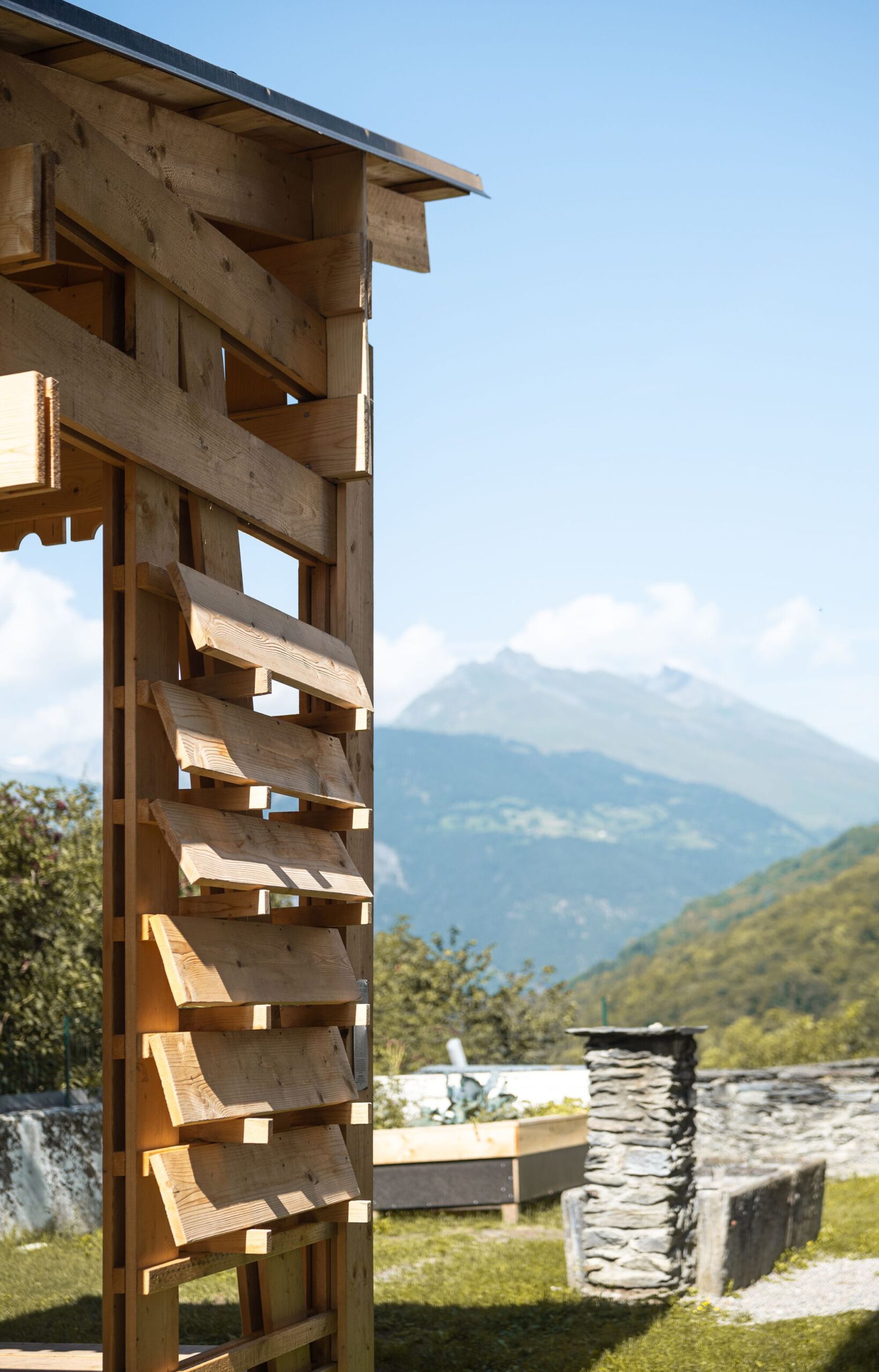
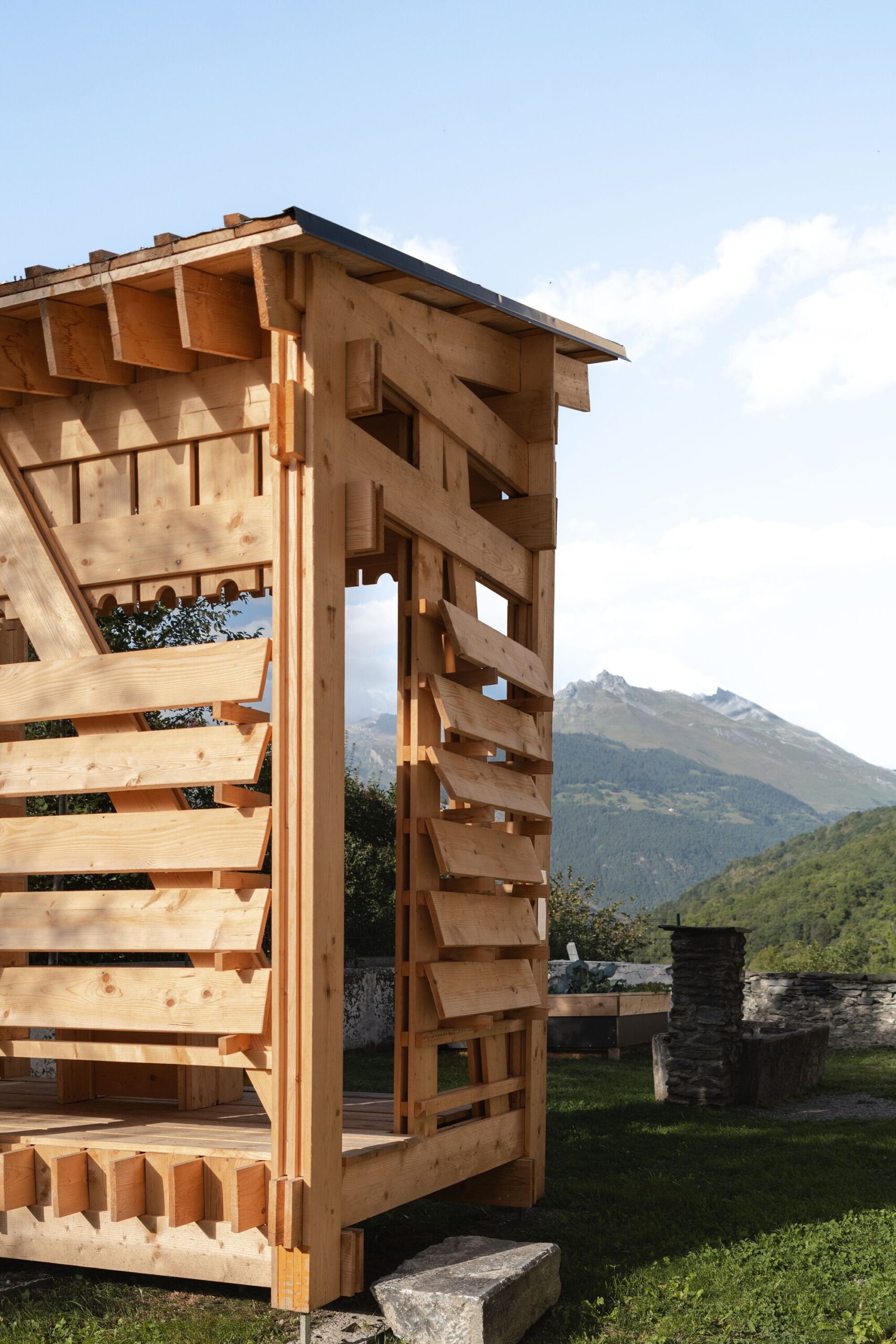
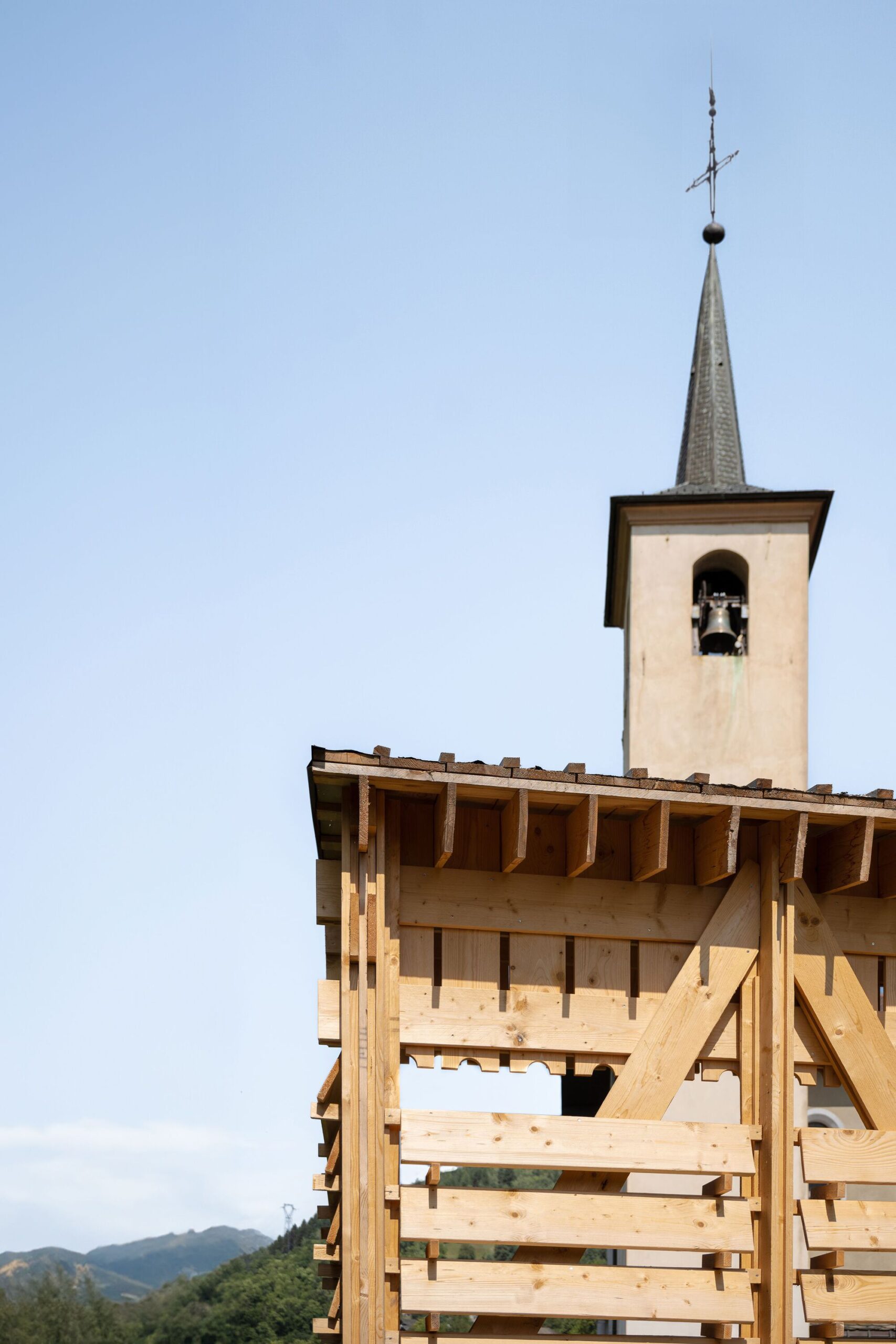
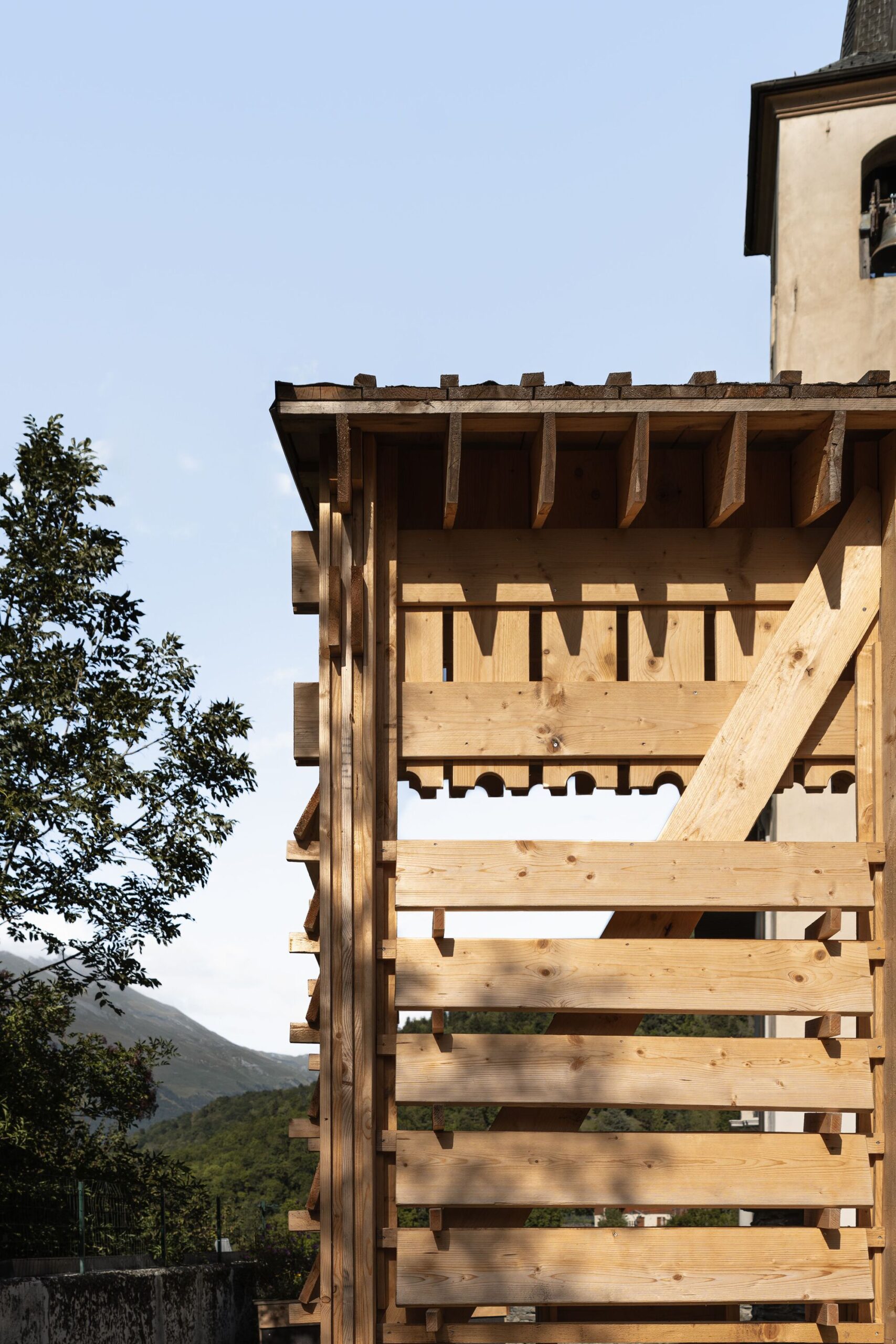
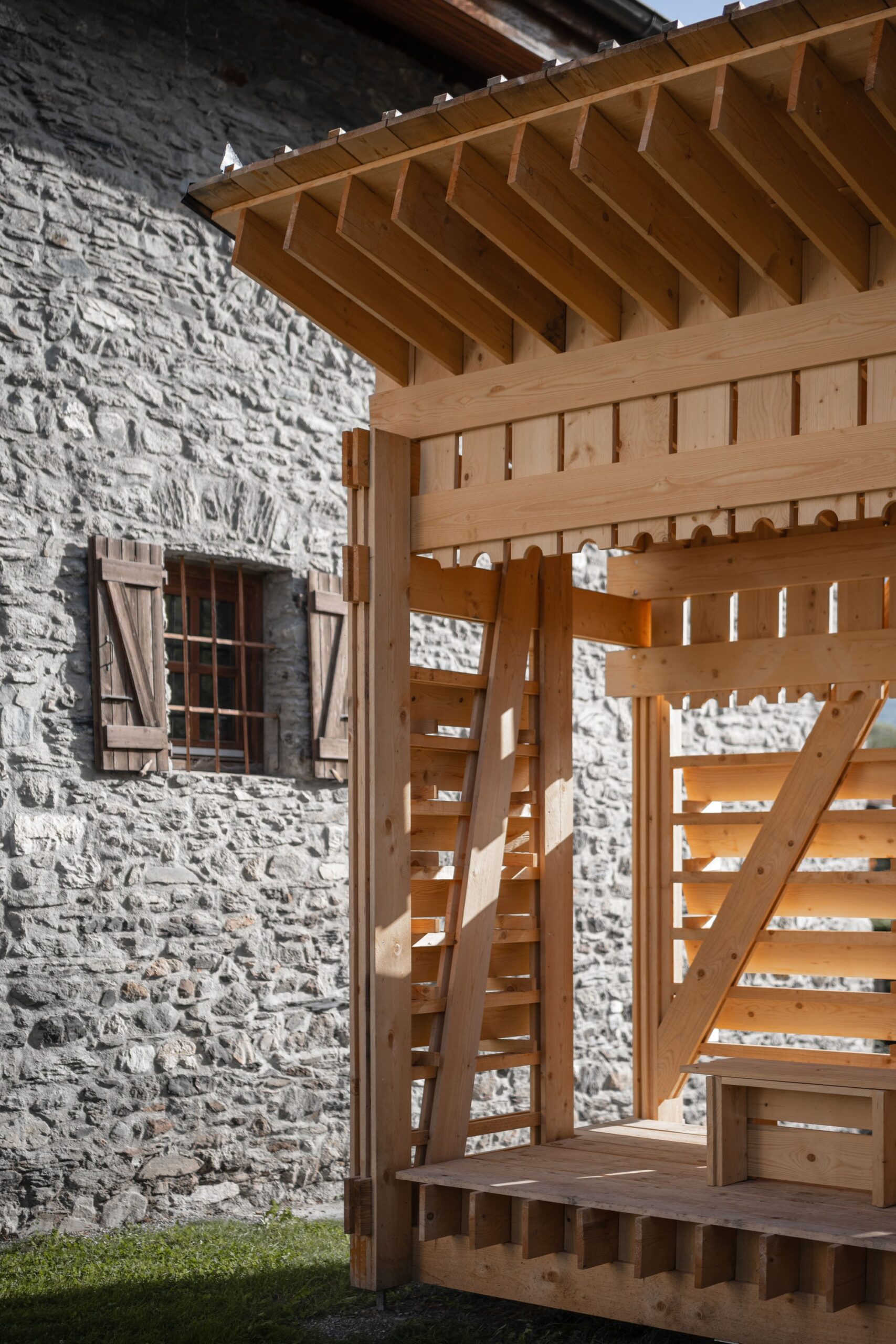
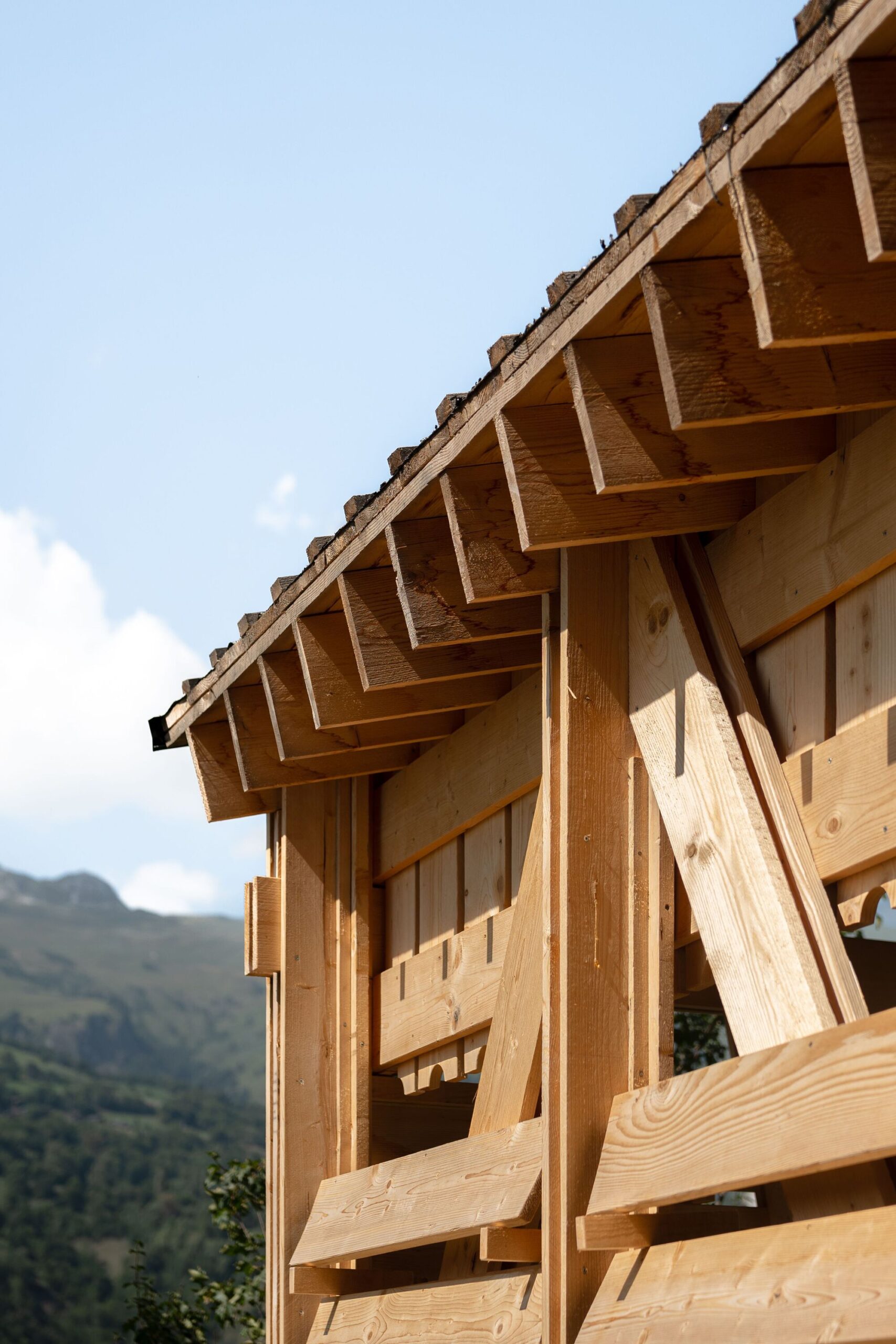
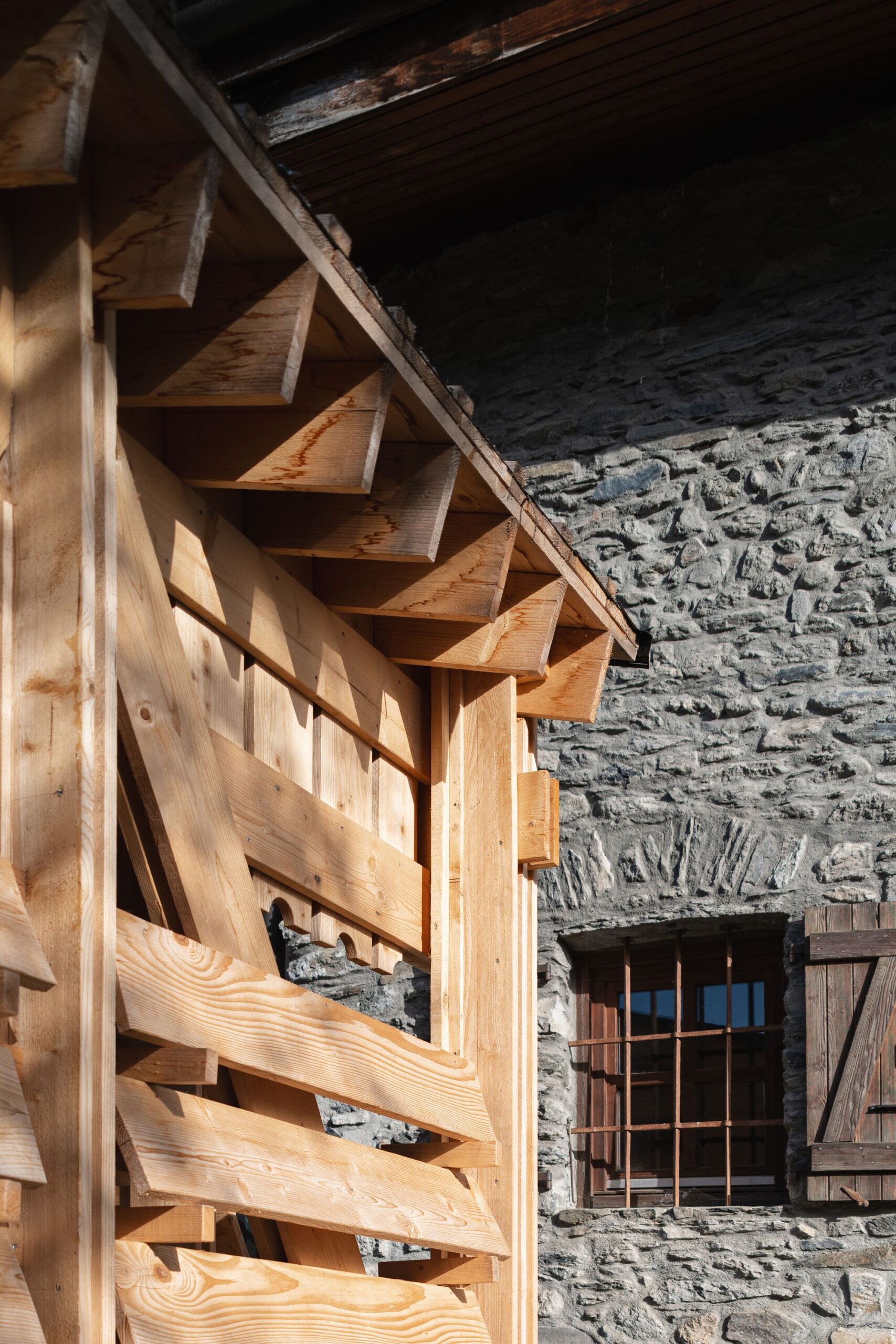
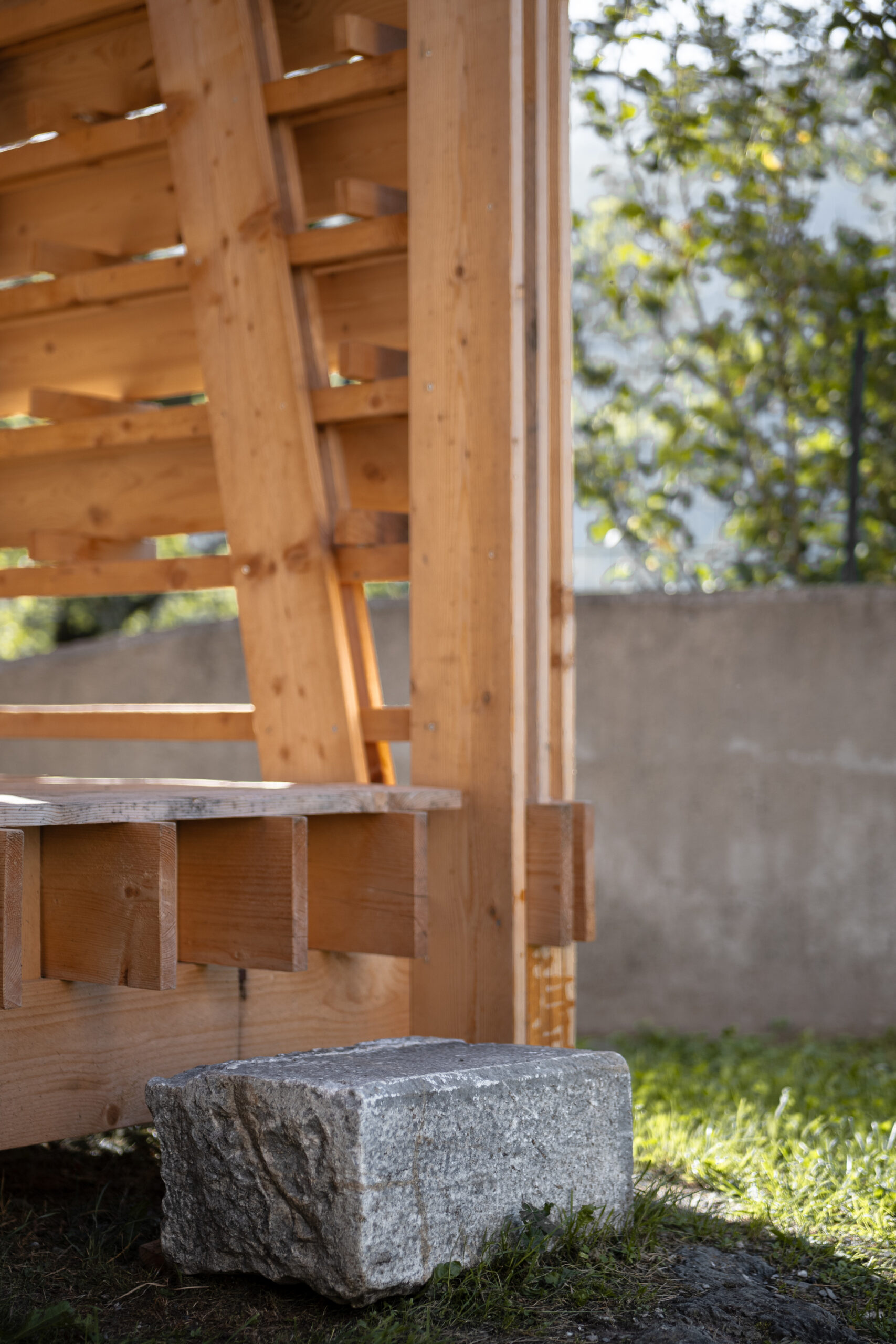
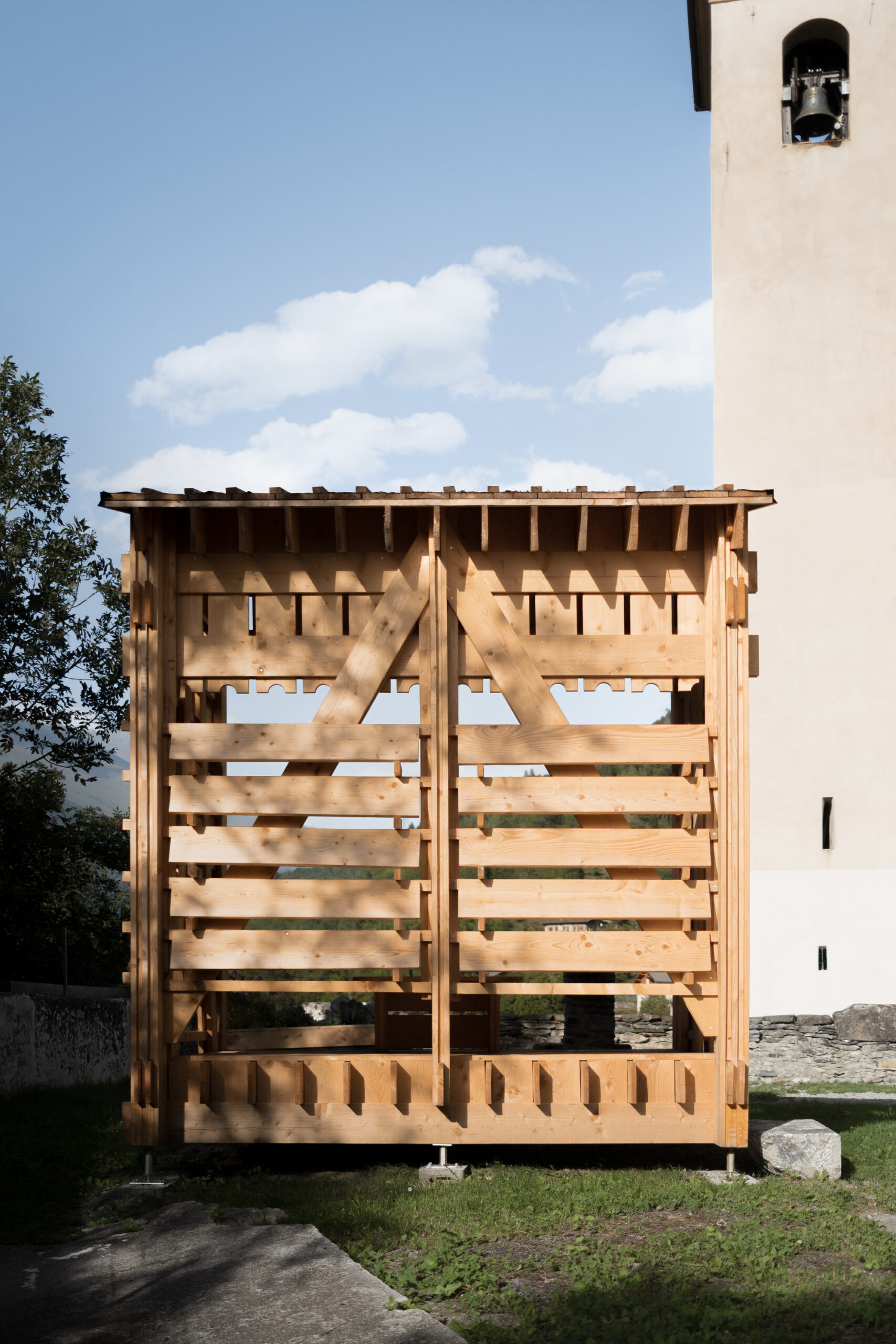
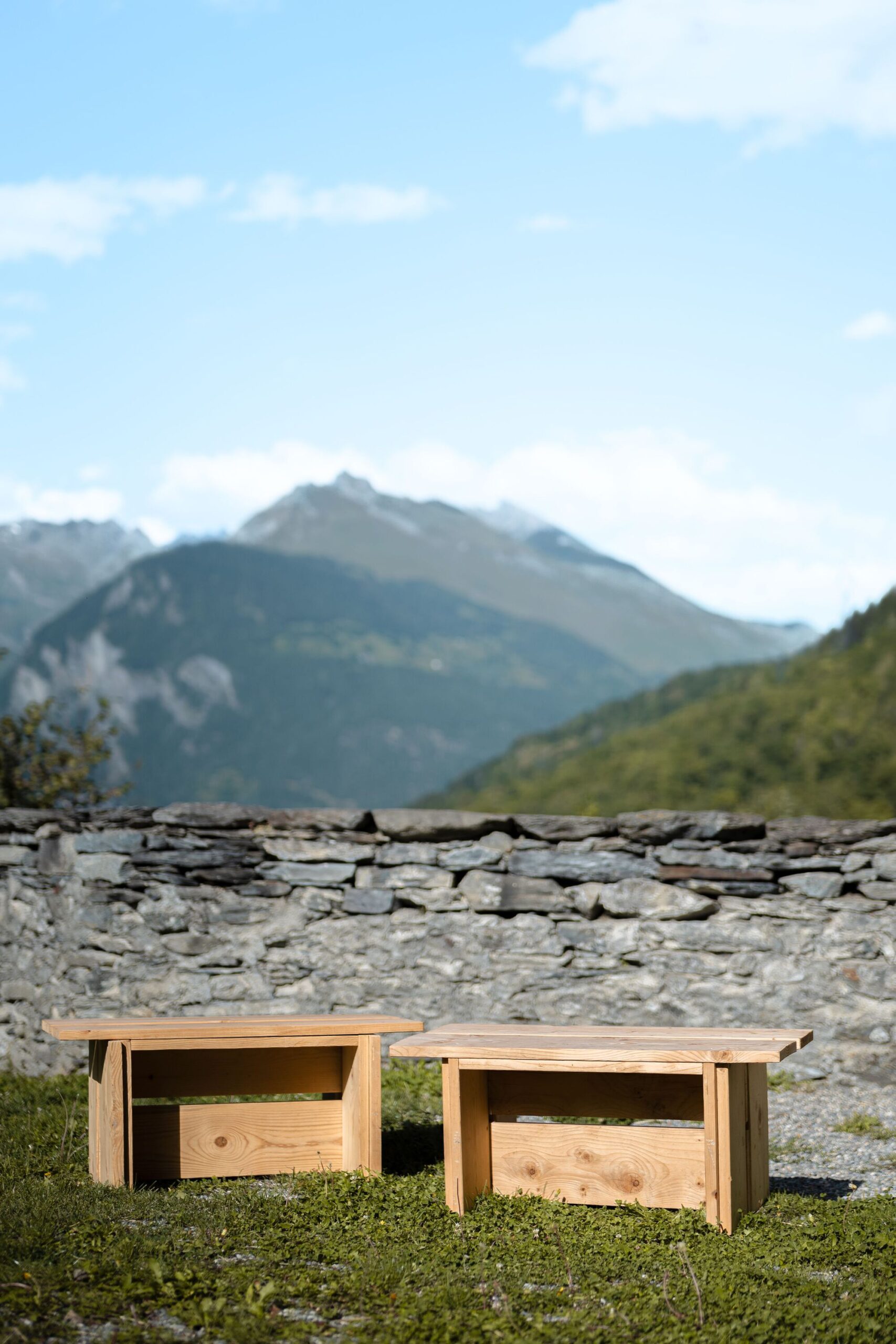
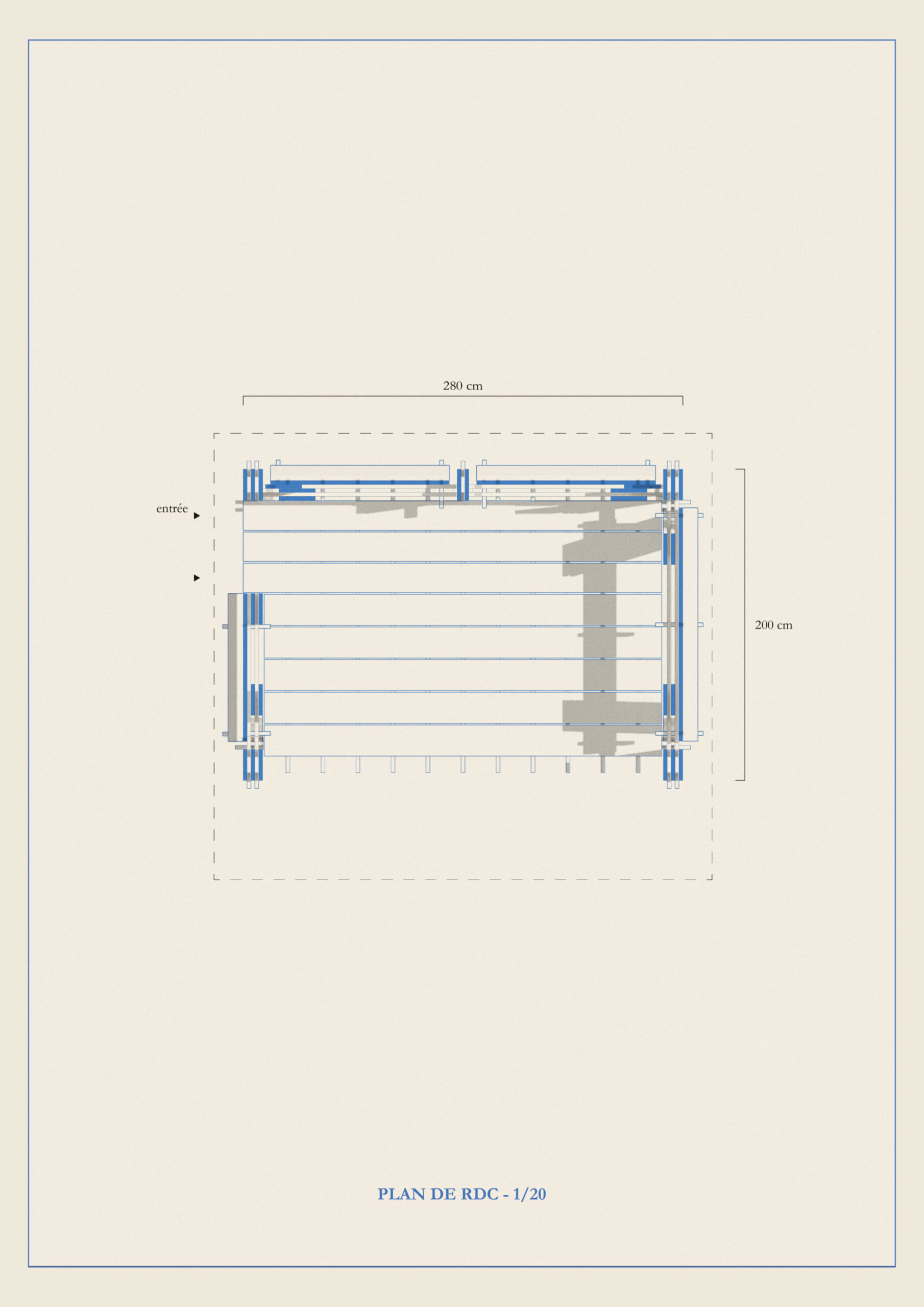
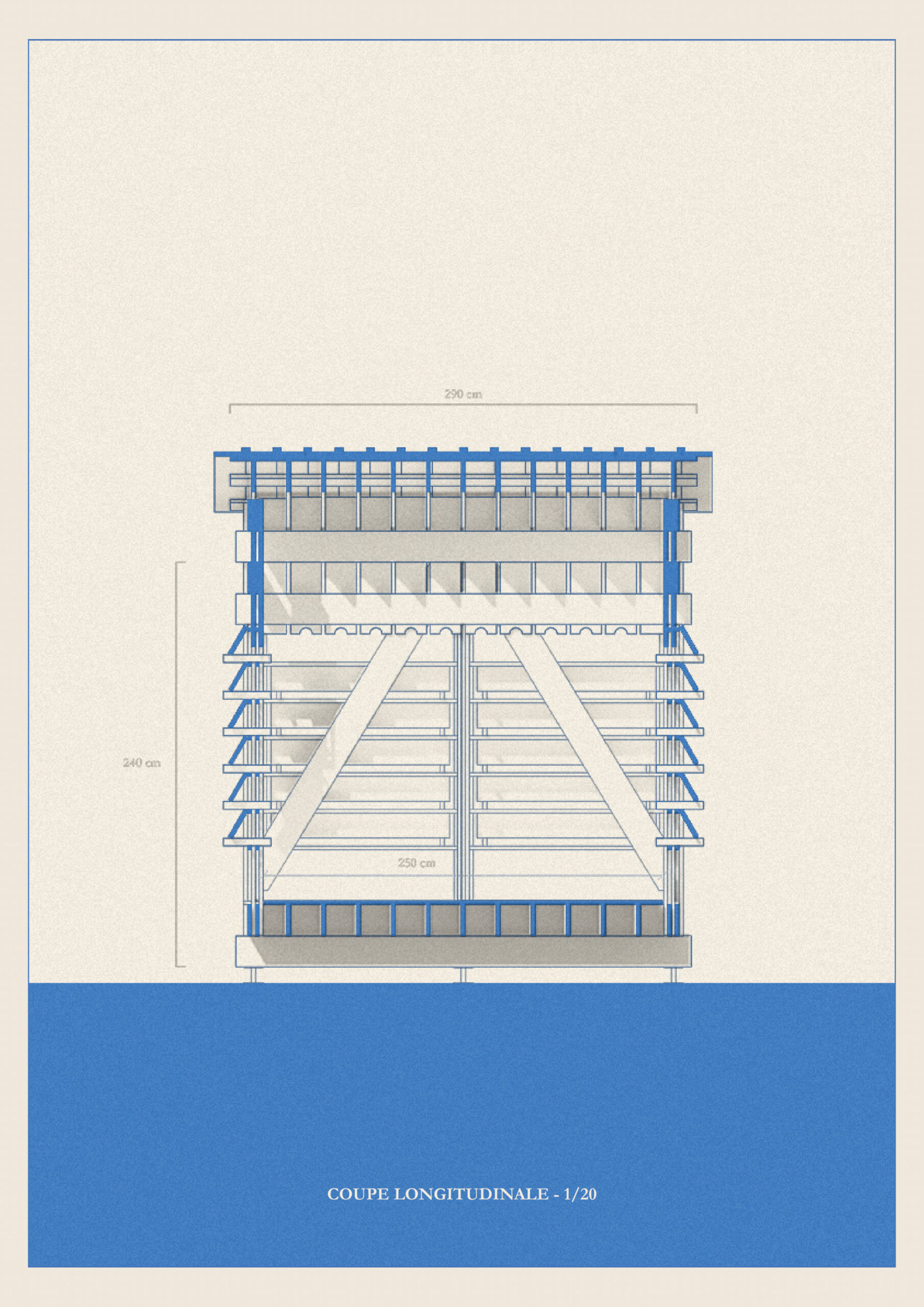
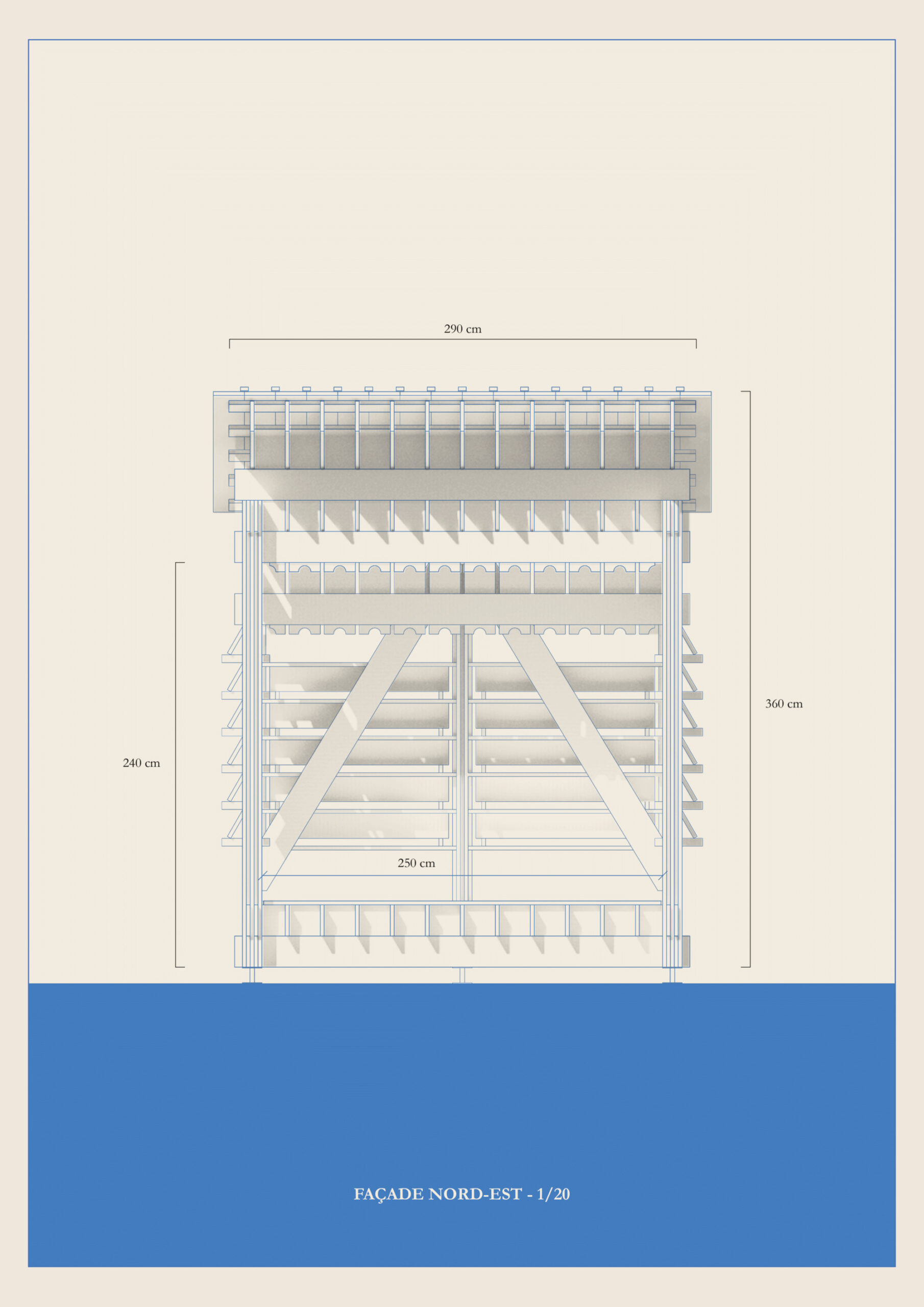
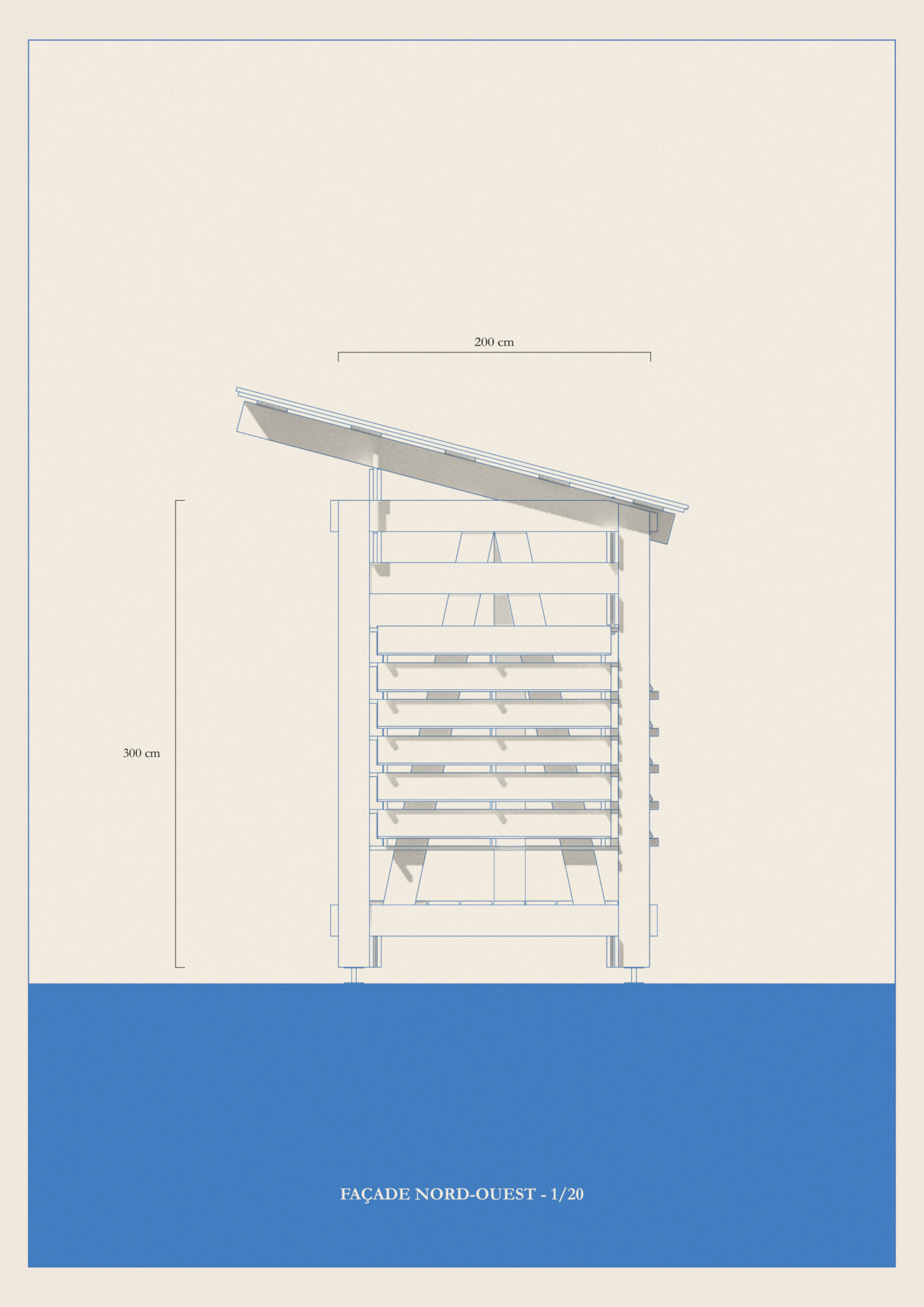
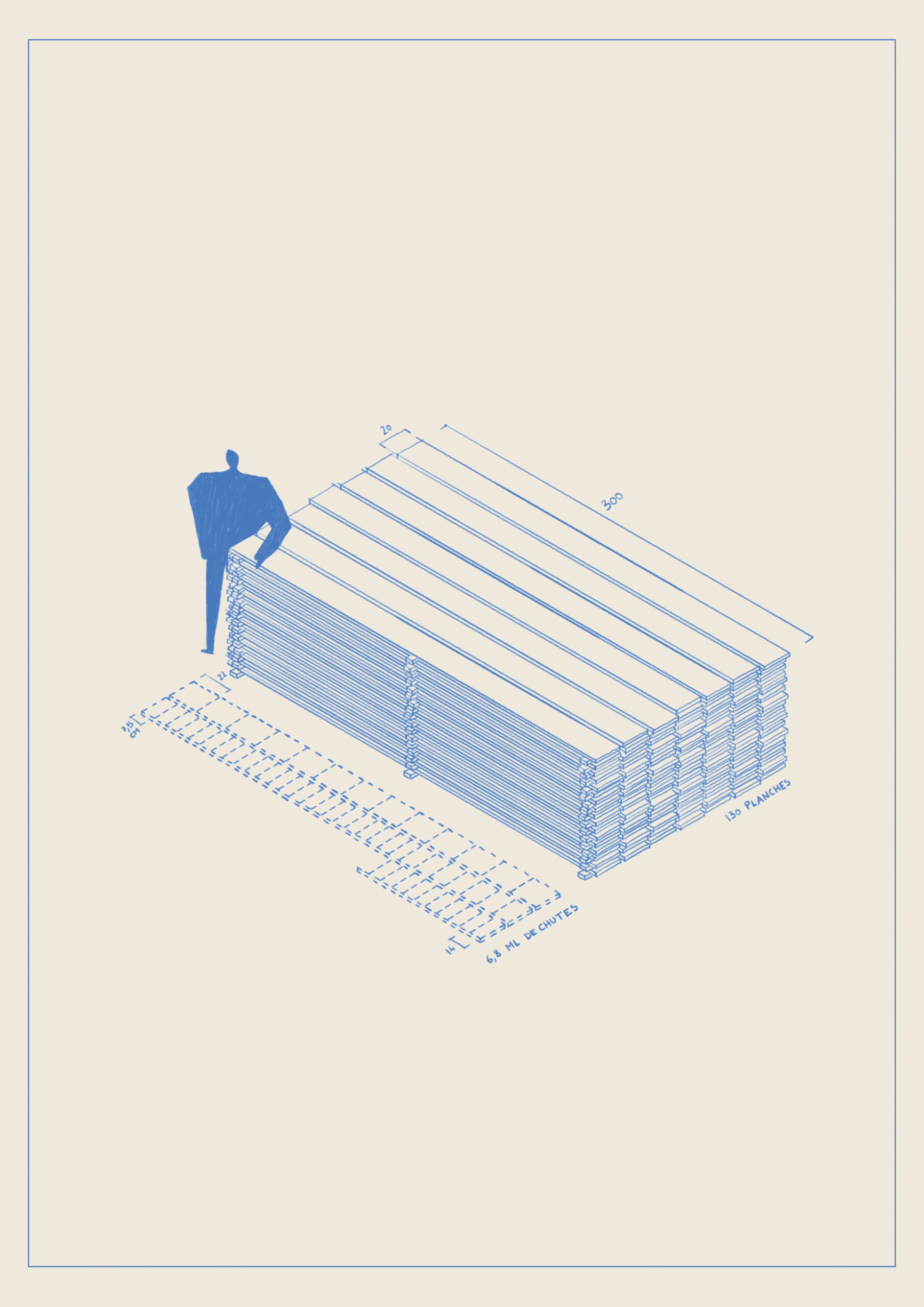
Les Planches Installation Building Element, One of the keys to this process is the use of a single building element: a single plank of wood, with the same thickness and width, and a maximum length of 300 cm. Following this principle, each plank becomes a part of a whole, but with a precision adapted to the needs. The plank functions as a post, beam, frieze, or seat. This conscious choice of a single section promotes construction efficiency and an economical approach. It offers a functional aesthetic, where horizontality and verticality intersect.
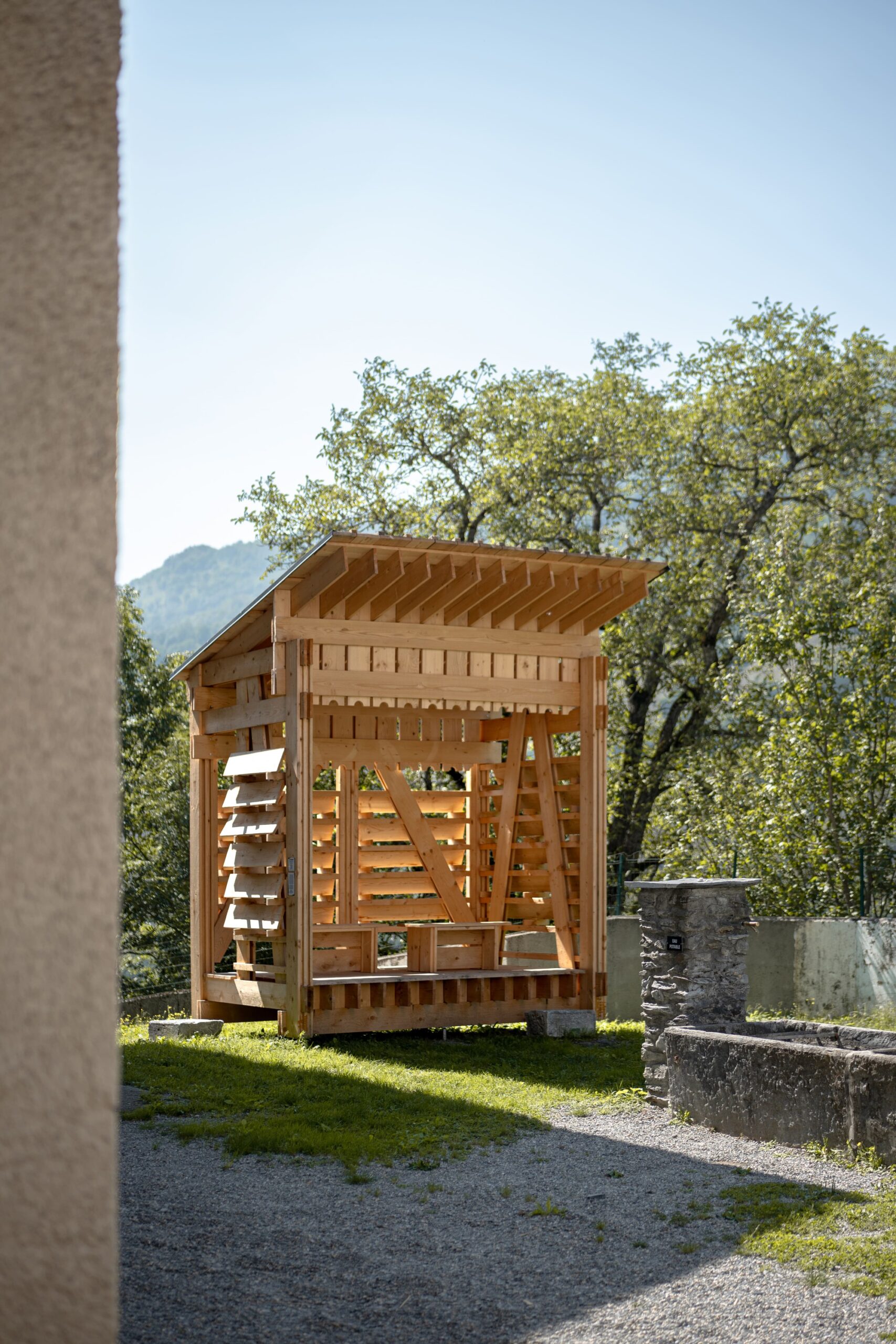
© Clément Molinier
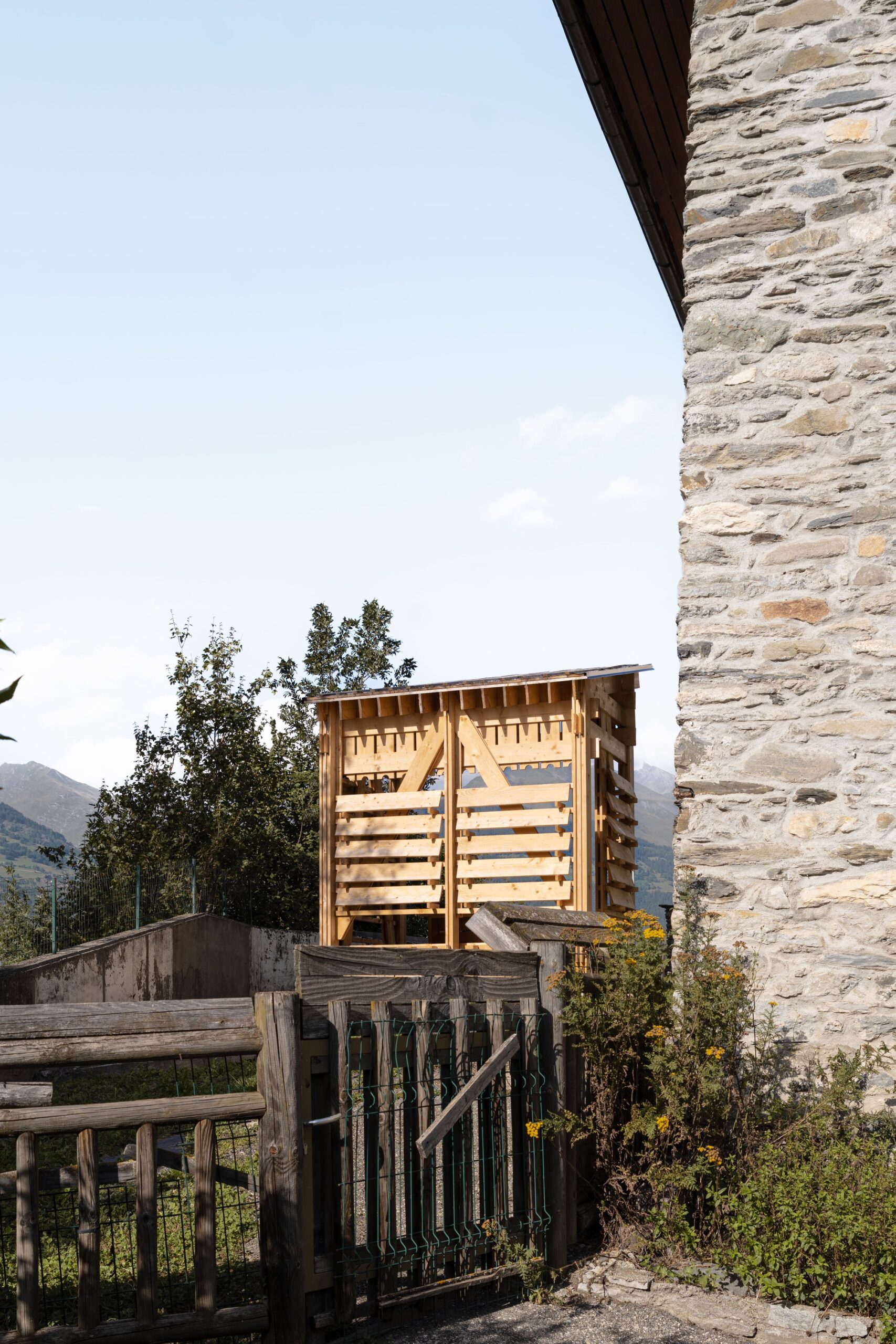
Working with a single plank presents an opportunity for us to engage in an exercise of didactic design. Like Kapla’s pieces and the idea that constraint brings freedom, what emerges when we bring together the mind, hands, pencil, and model, with the directive of creating a welcoming space while evoking a vernacular spirit? We hope this will offer users the chance to engage with their eyes and hands, a way of deconstructing the design process for them as well. And perhaps, we hope, this will allow a dialogue with the architecture and those who conceive and construct it.
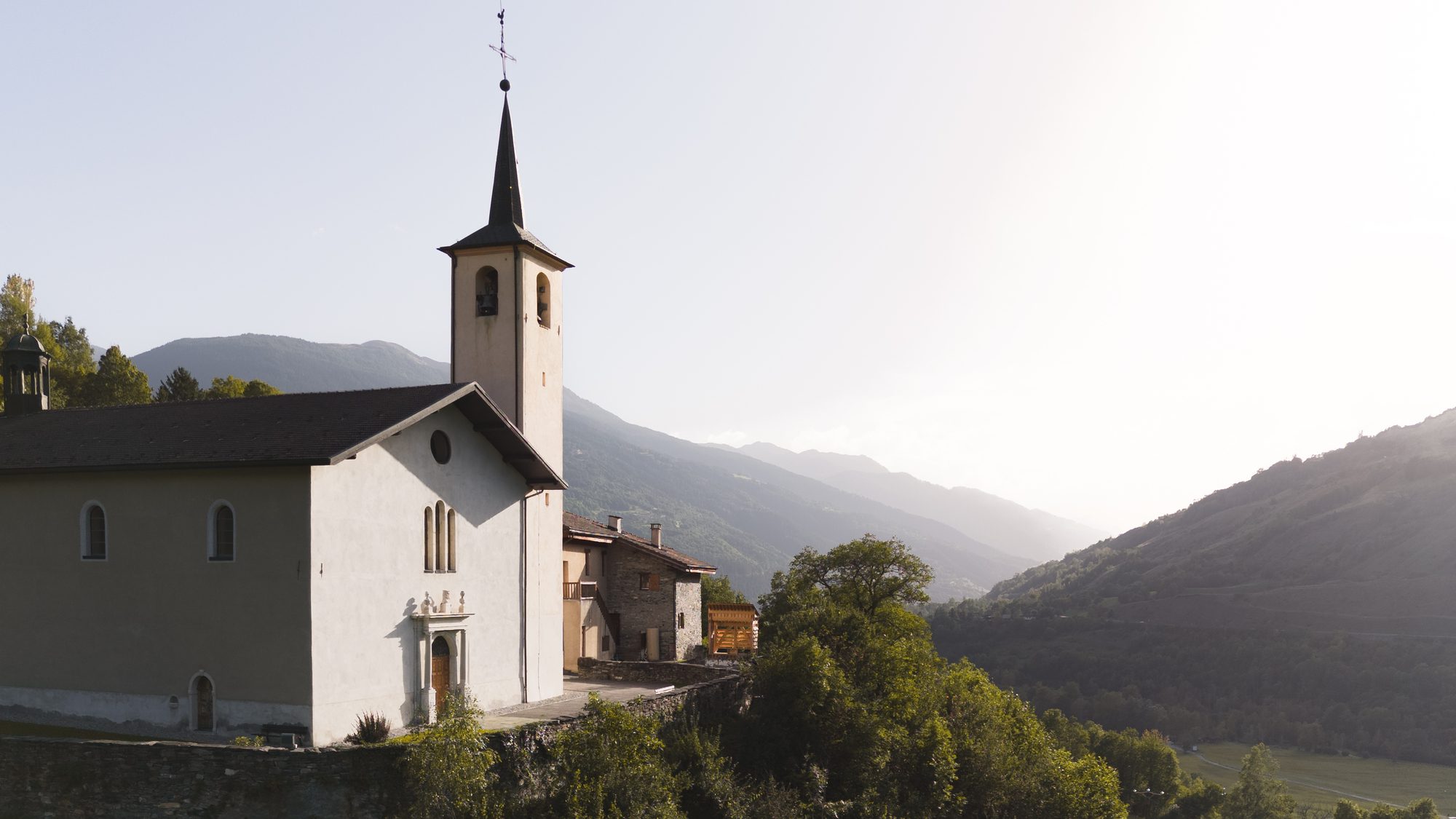
© Clément Molinier
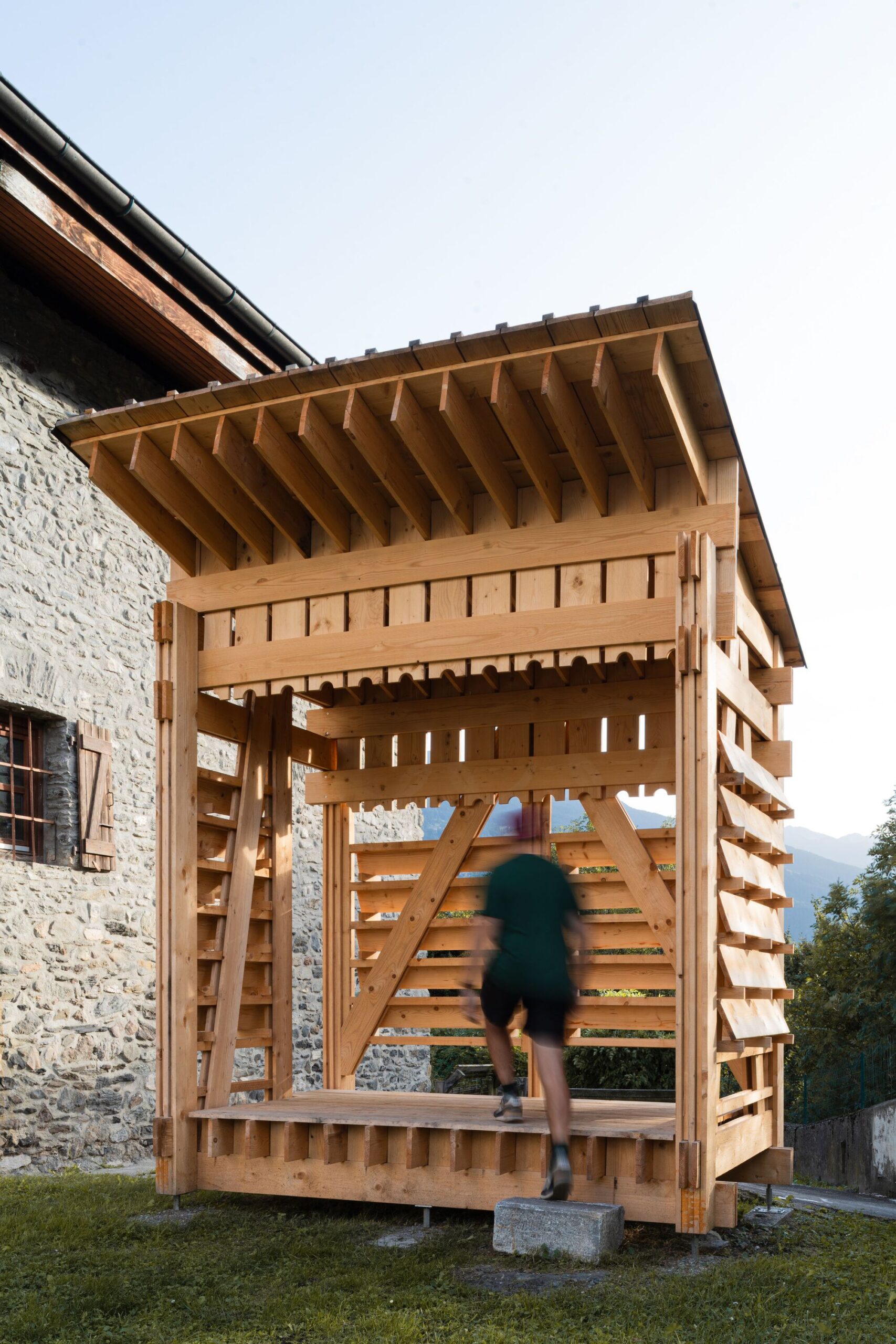
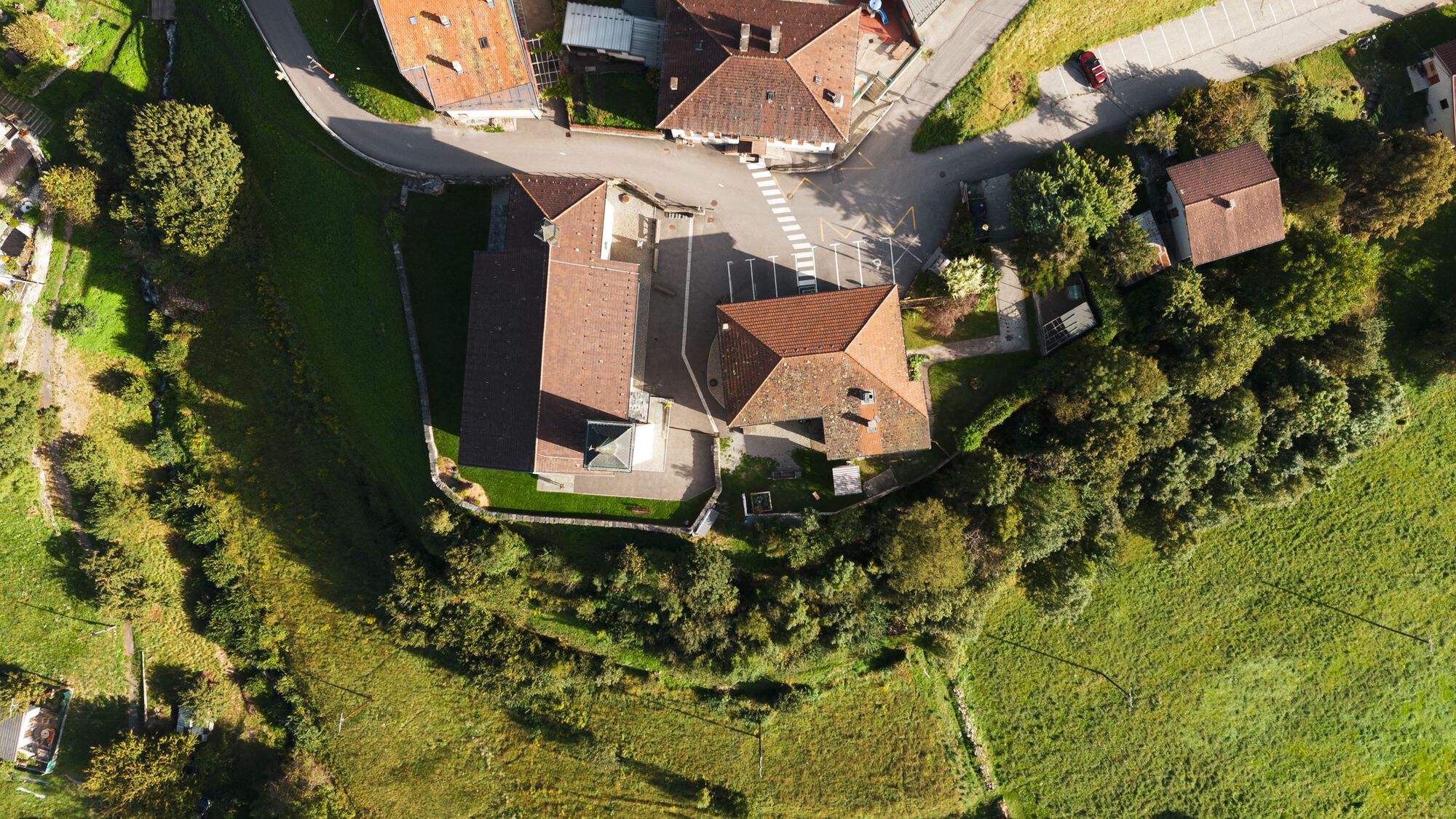
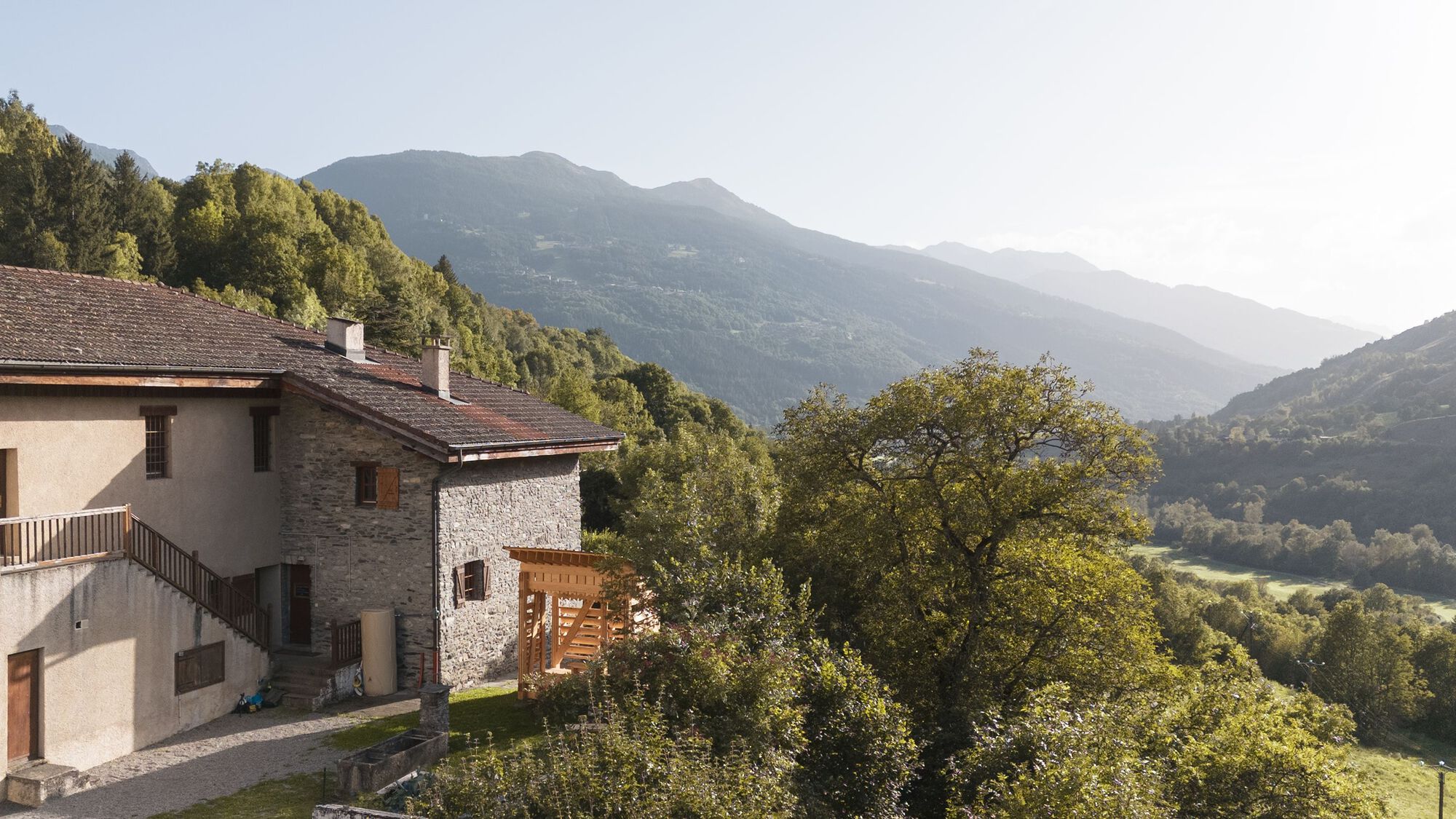
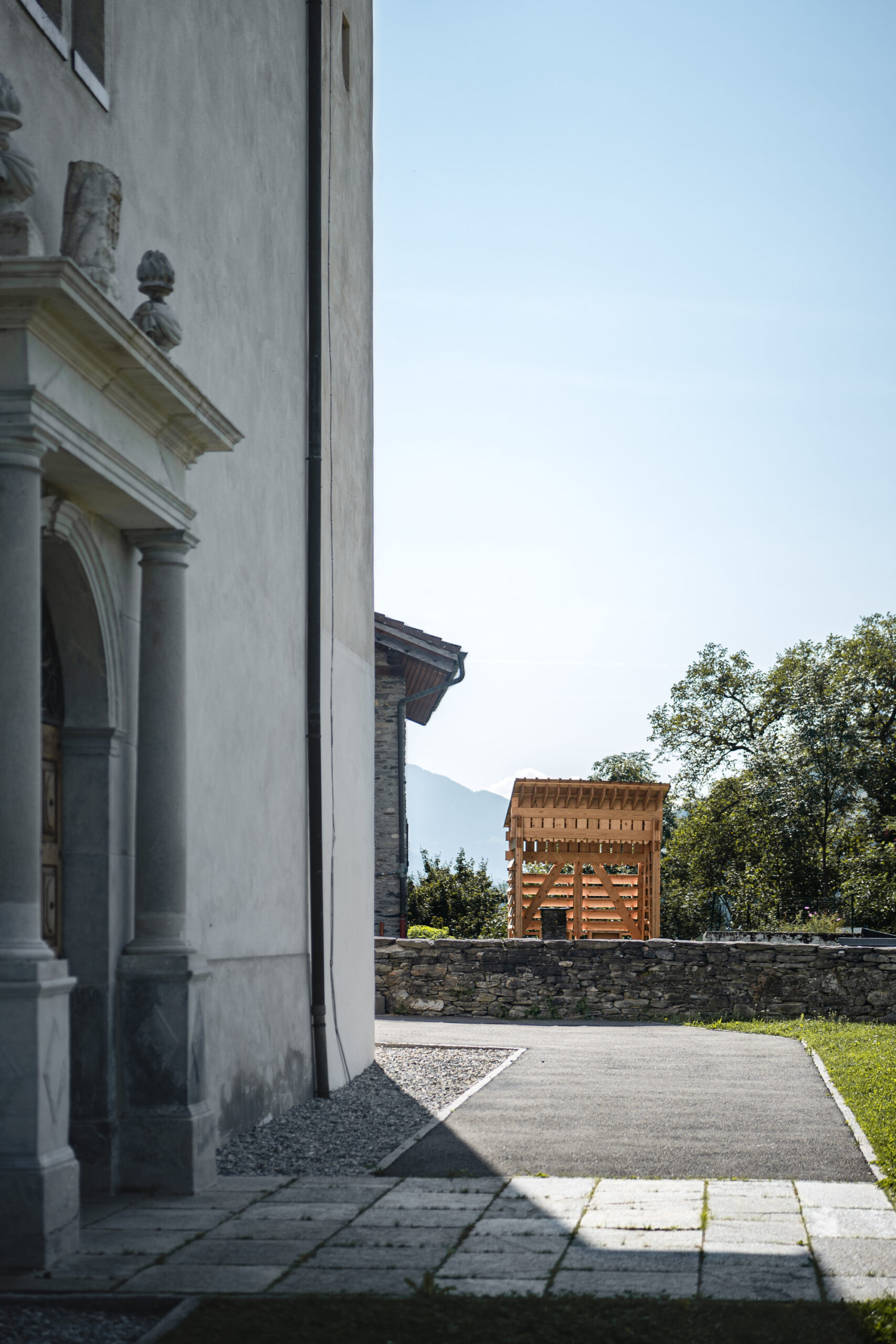
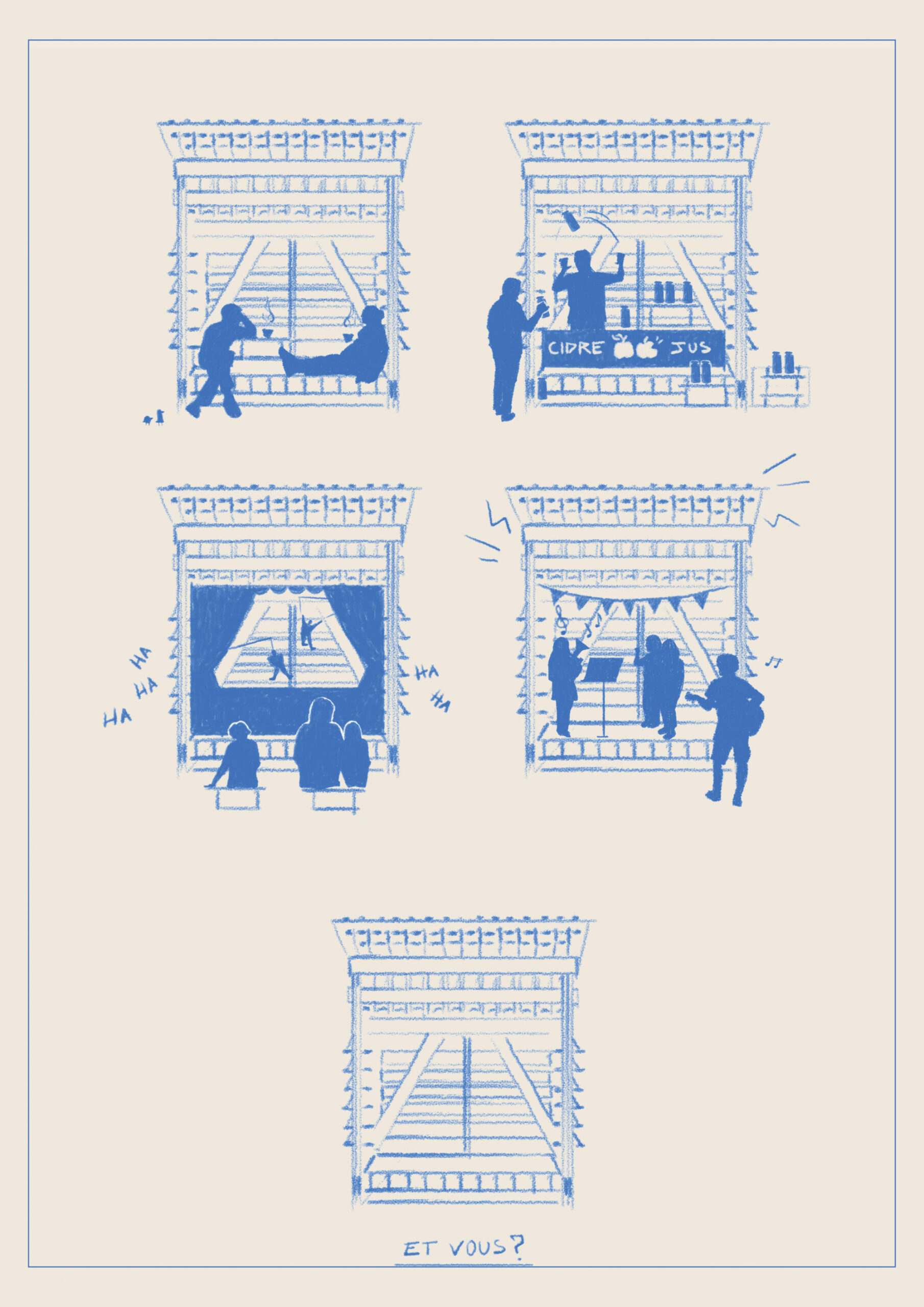
The plank suggests the idea of a stage where collective life unfolds, a space where people walk together, a word that carries images both dreamed and tangible. It is here, on this stage, that inhabitants meet, to chat over coffee, to dance, to sing — a place where the freedom to gather is expressed, where human relationships take root, in the simplicity of Hauteville-Gondon’s planks.
Project Info
Architects: Marina Poli + Philippe Paumelle
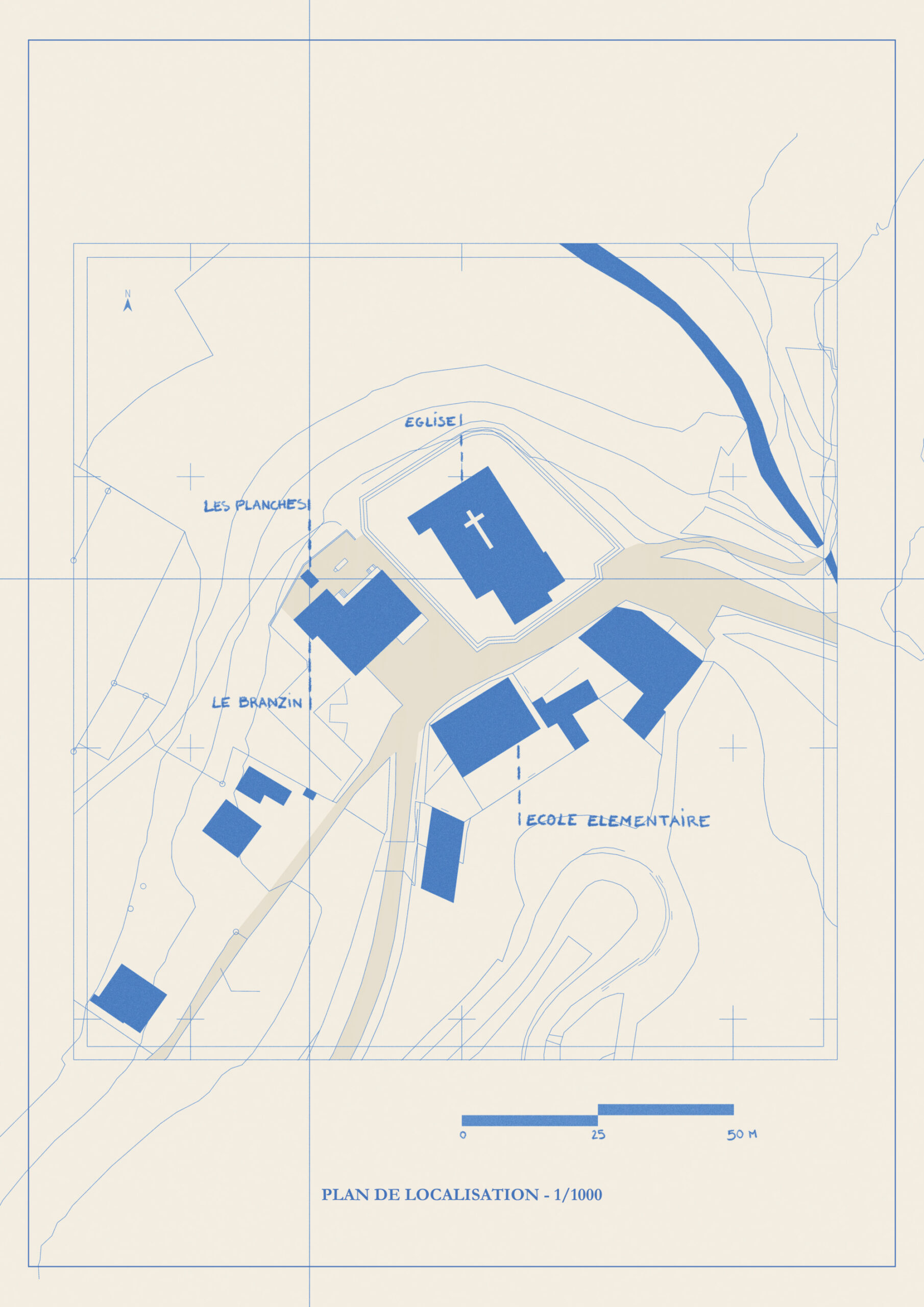
Country: France, Bourg-Saint-Maurice
Area: 10 m²
Year: 2024
Photographs: Clément Molinier
Lead Team: Marina Poli, Philippe Paumelle

Isabelle Laurent is a Built Projects Editor at Arch2O, recognized for her editorial insight and passion for contemporary architecture. She holds a Master’s in Architectural Theory from École Nationale Supérieure d’Architecture de Paris-Belleville. Before joining Arch2O in 2016, she worked in a Paris-based architectural office and taught as a faculty adjunct at the École Spéciale d’Architecture in Paris. Isabelle focuses on curating projects around sustainability, adaptive reuse, and urban resilience. With a background in design and communication, she brings clarity to complex ideas and plays a key role in shaping Arch2O’s editorial