

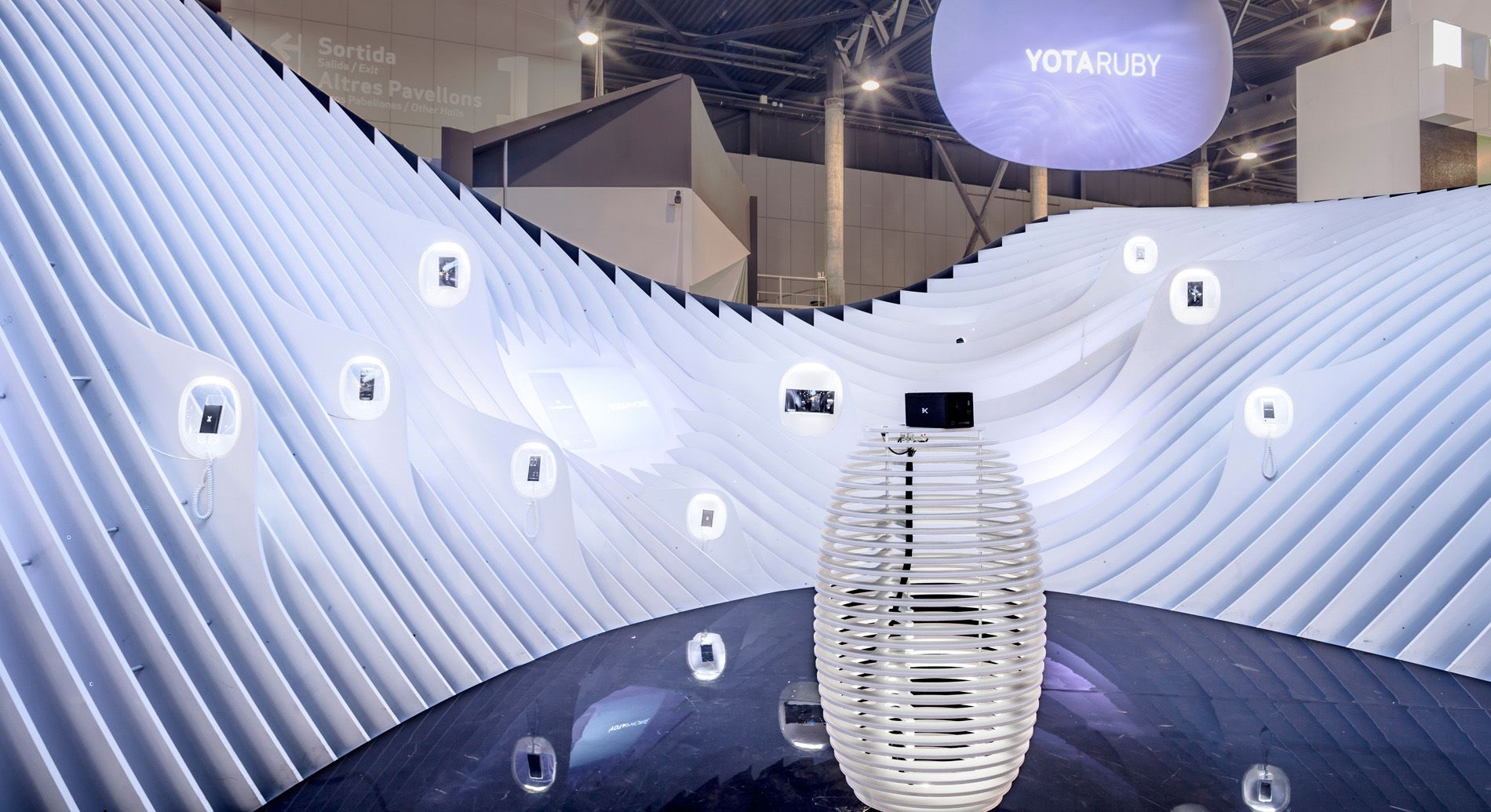
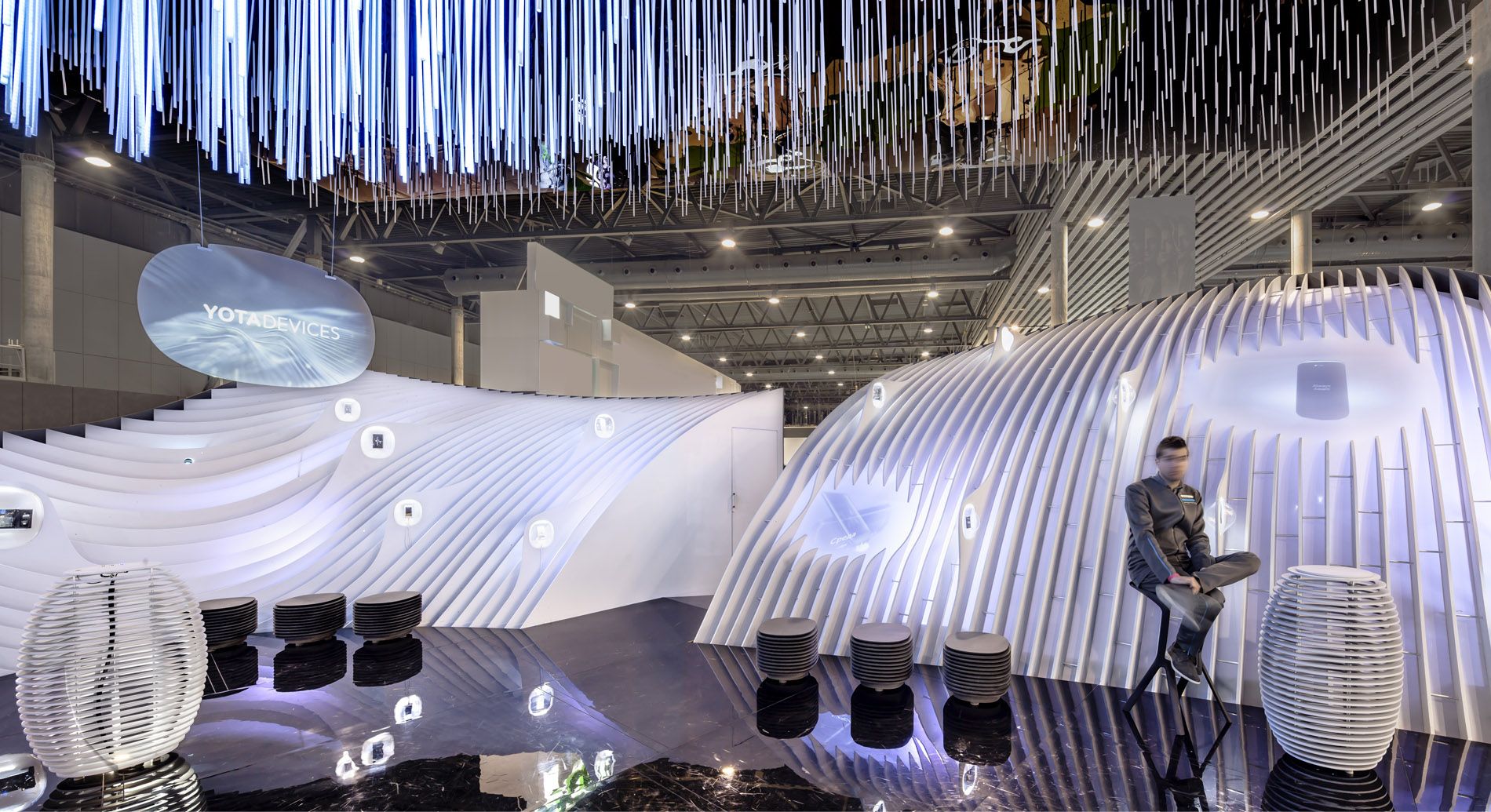
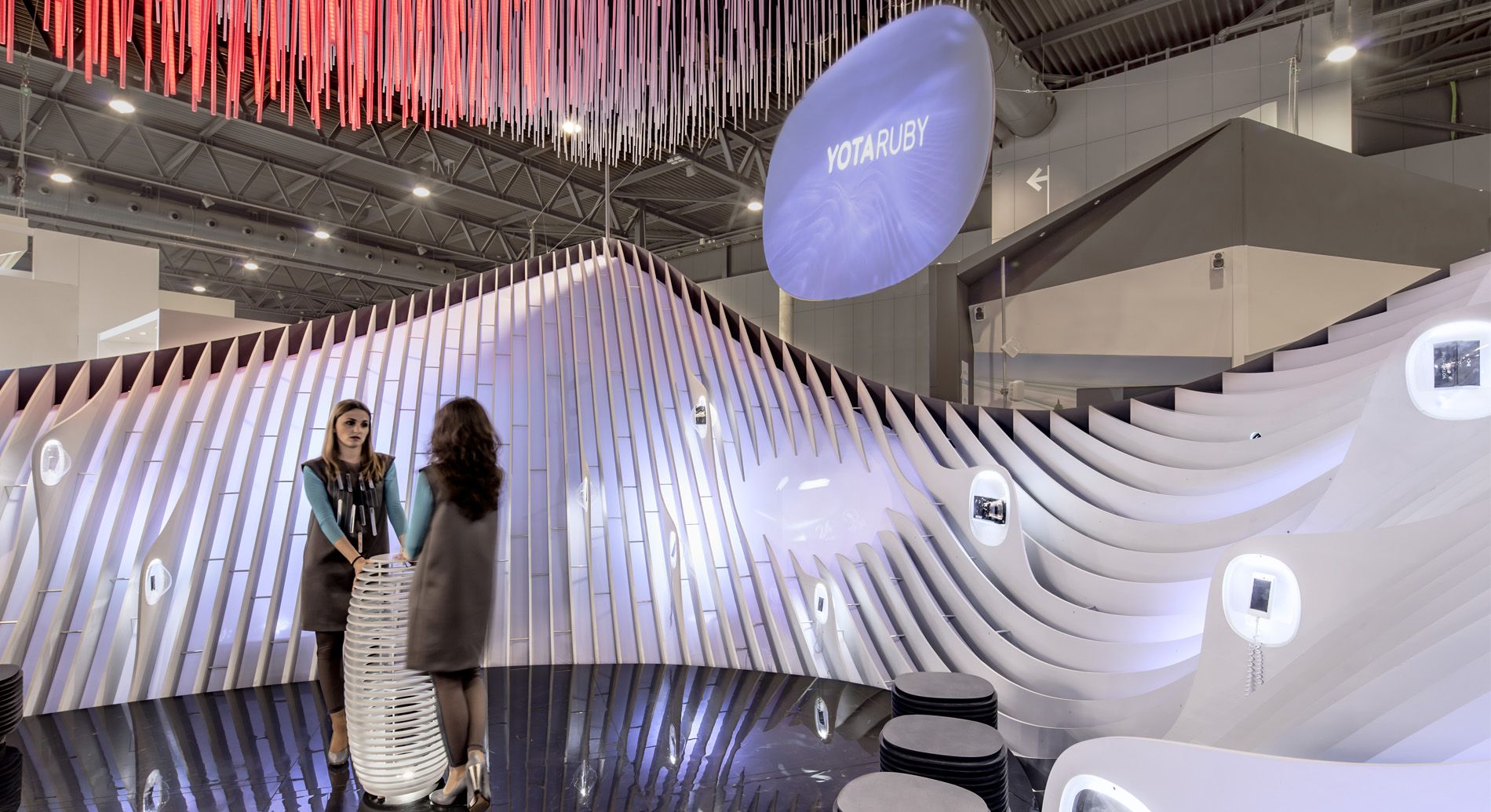
The Yota Devices Pavilion designed by External Reference Architects successfully creates an atmosphere that immediately engages visitors with intriguing technical application of the Yota Devices.
Courtesy of © External Reference Architects
The annual Mobile World Congress event located in the city of Barcelona, Spain expects about 85,000 visitors from 200 countries; presenting them with a plethora of networking connection as well as showcasing products in an innovative and educational environment. The idea behind the design of the Pavilion was to create an intense space that involved sensory applications through innovative lighting and sound projections.

Courtesy of © External Reference Architects
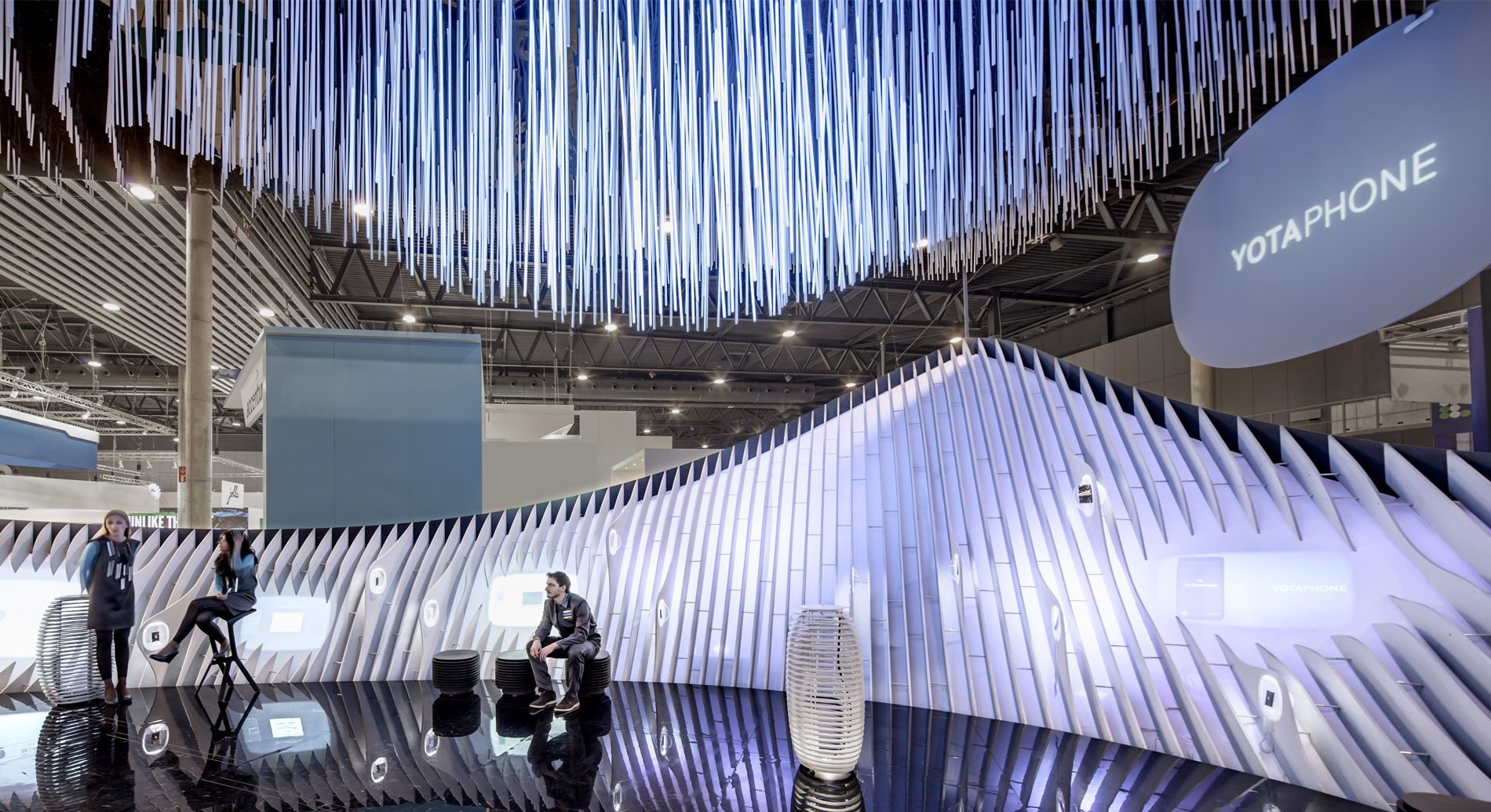
As soon as one enters the space they are presented with a topographic, curvilinear ceiling composed of a multiple array of linear pieces. The aesthetic effects of the ceiling in addition to the soothing and balanced music presents an interesting discourse that propagates throughout the space.
Courtesy of © External Reference Architects
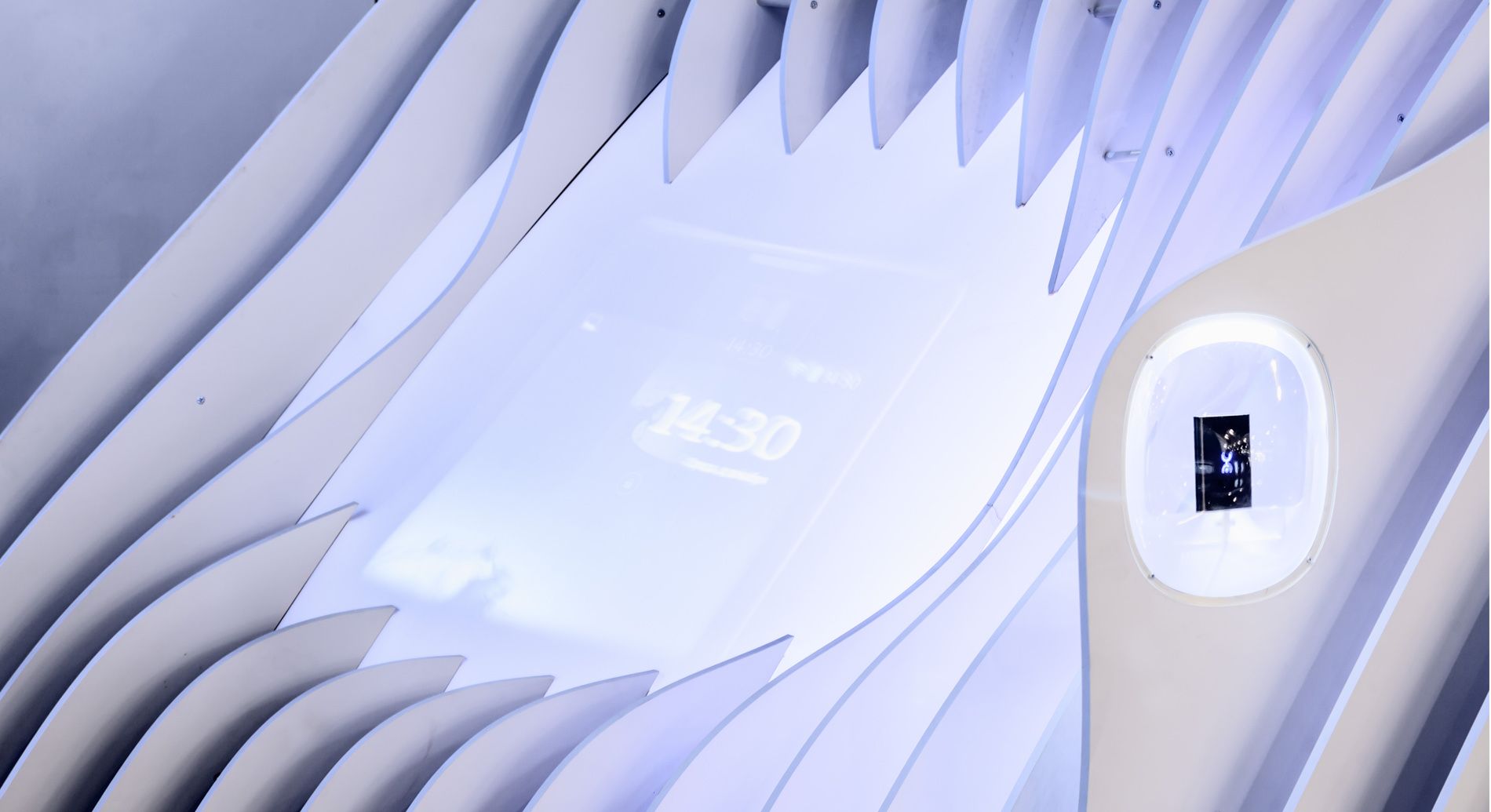
The technological landscape consists of two contrasting natures; the first being a sequence of transparent, sleek, tactile ribbons that encompass the general functionality of the Pavilion. The ribbons also transform the space, altering in size, increasing and enclosing on specific devices or either decreasing in size to combine with projected spaces.
Courtesy of © External Reference Architects
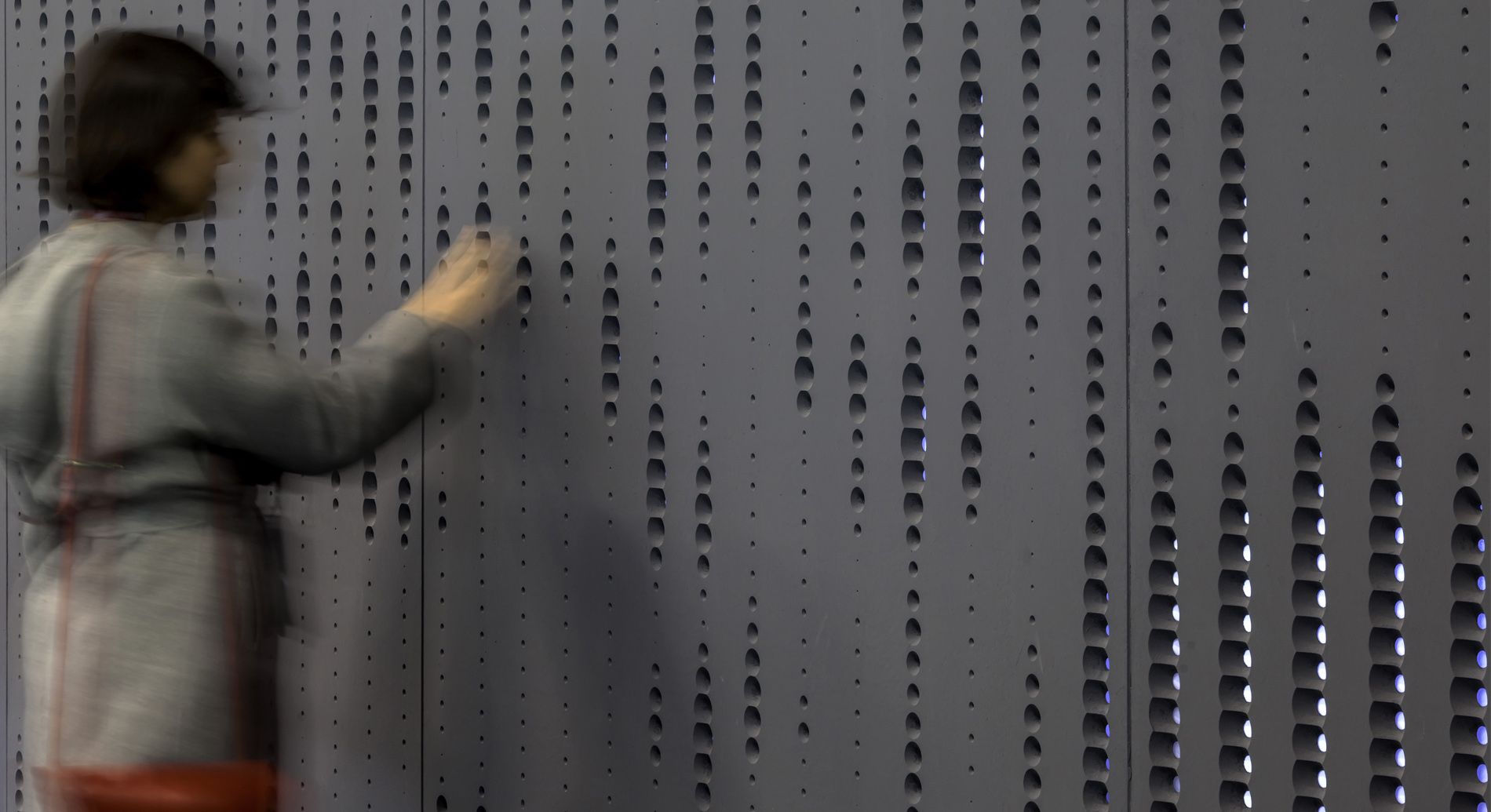
The second nature portrays the exterior element that consists of a darkened punctured surface that allows light to seep through forming a pattern that creates a fascinating experience. The project basically intends to build an engaging and interesting relationship between the visitors and a sensory spaces, to help them discover new products, as well as admire the overall atmosphere along the way.
Courtesy of © External Reference Architects

Anastasia Andreieva is an accomplished Architectural Projects Editor at Arch2O, bringing a unique blend of linguistic expertise and design enthusiasm to the team. Born and raised in Ukraine, she holds a Master’s degree in Languages from Taras Shevchenko National University of Kyiv. Her deep passion for architecture and visual storytelling led her to transition from translation and editorial roles into the world of design media. With a keen eye for conceptual clarity and narrative structure, Anastasia curates and presents global architectural projects with precision and flair. She is particularly drawn to parametric and digital design, cultural context, and emerging voices in architecture. When I’m not analyzing the latest architectural trends, you’ll probably find me searching for hidden gems in cityscapes or appreciating the beauty of well-crafted spaces. After all, great design—like great connections—can be found in the most unexpected places. Speaking of connections, because architecture isn’t the only thing that brings people together.