

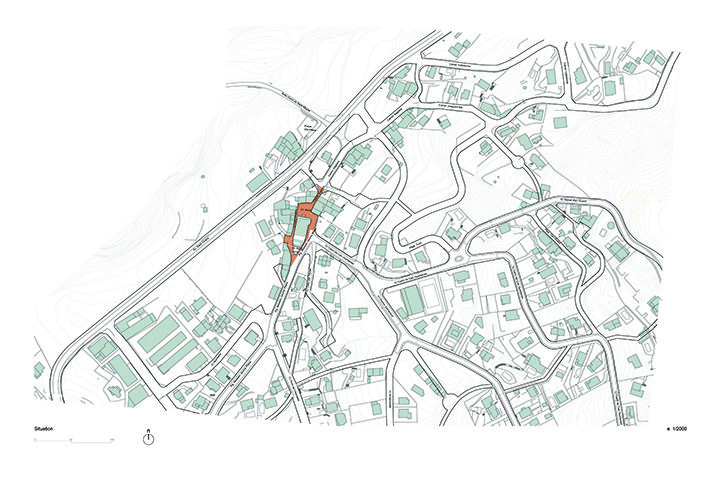
Riells Square, The surrounding area of the village of Riells is formed by the Gallifa Cliffs and the d’en Bertí Cliffs, a rugged limestone terrain with reddish soils. The proposal aims to reclaim the old town for the citizens in dialogue with the surrounding landscape.
© Adrià Goula
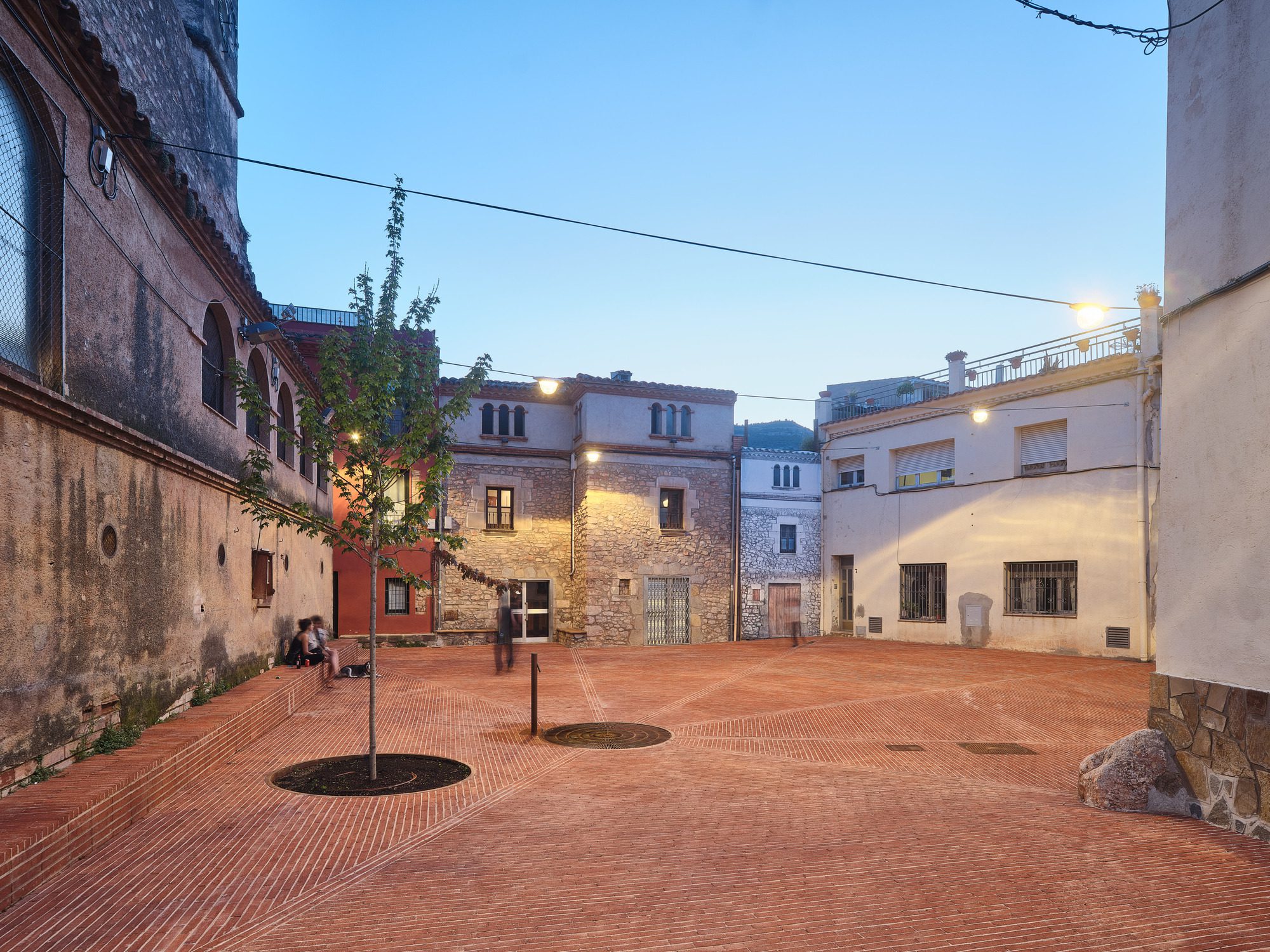
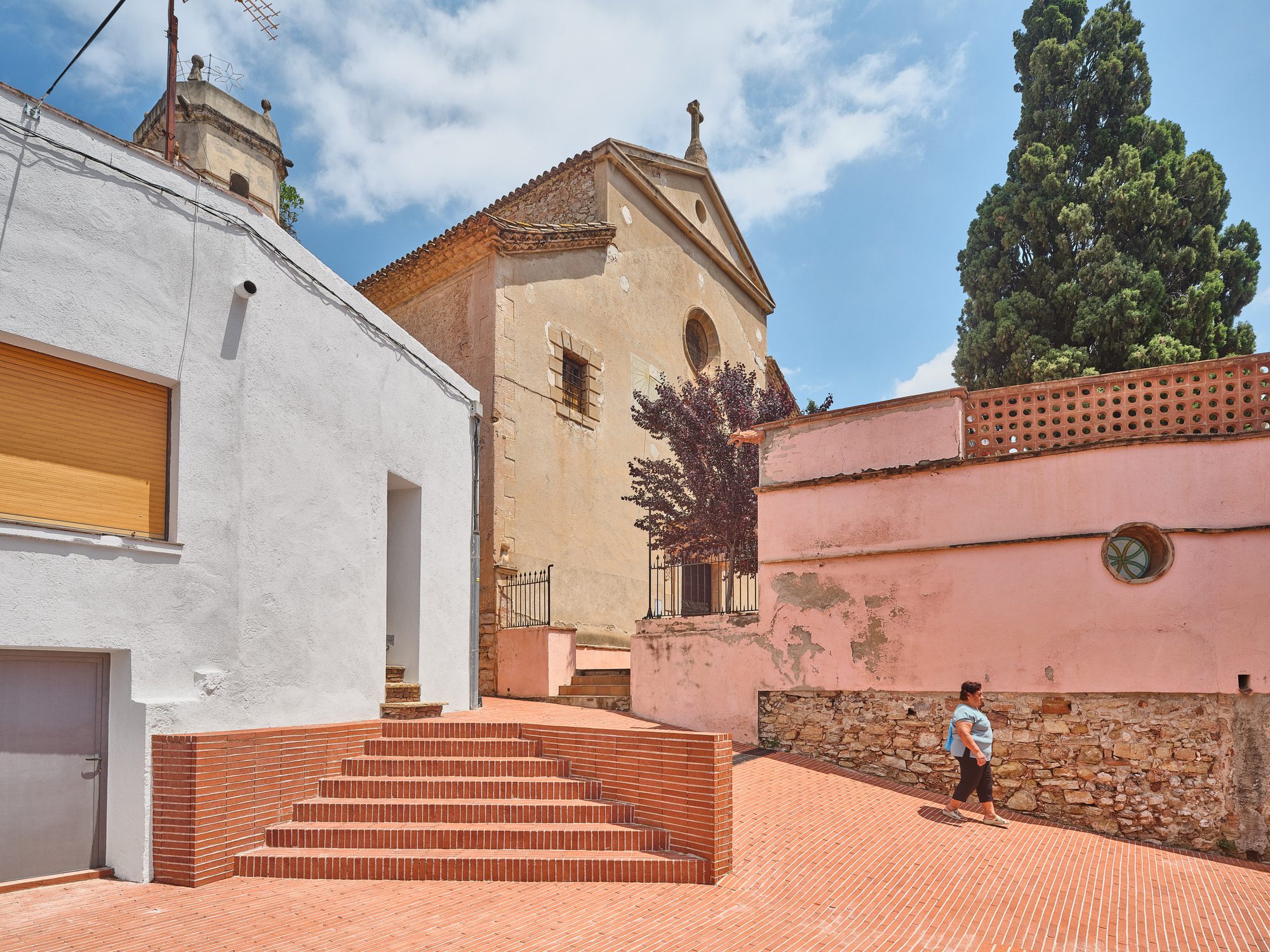
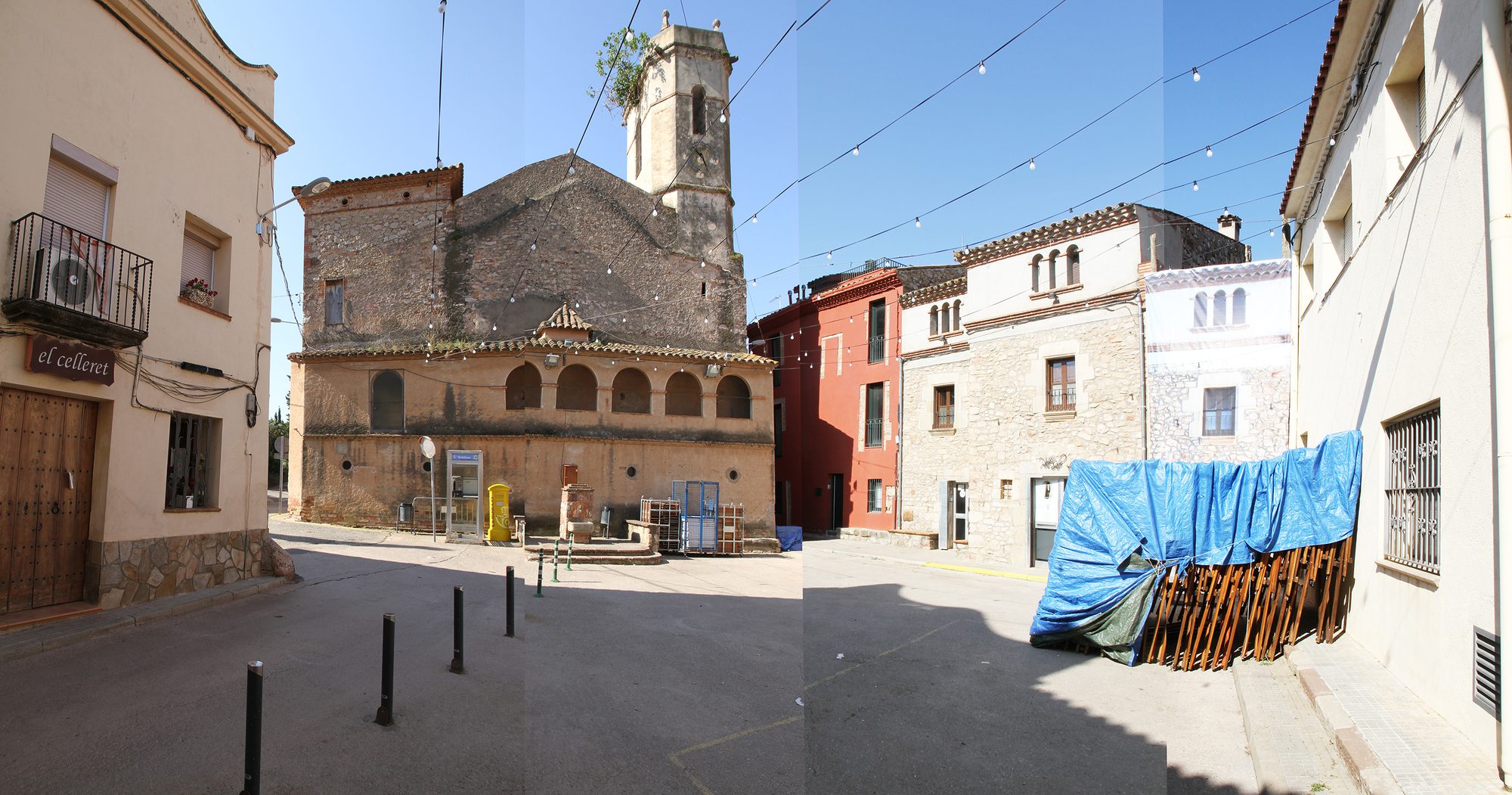
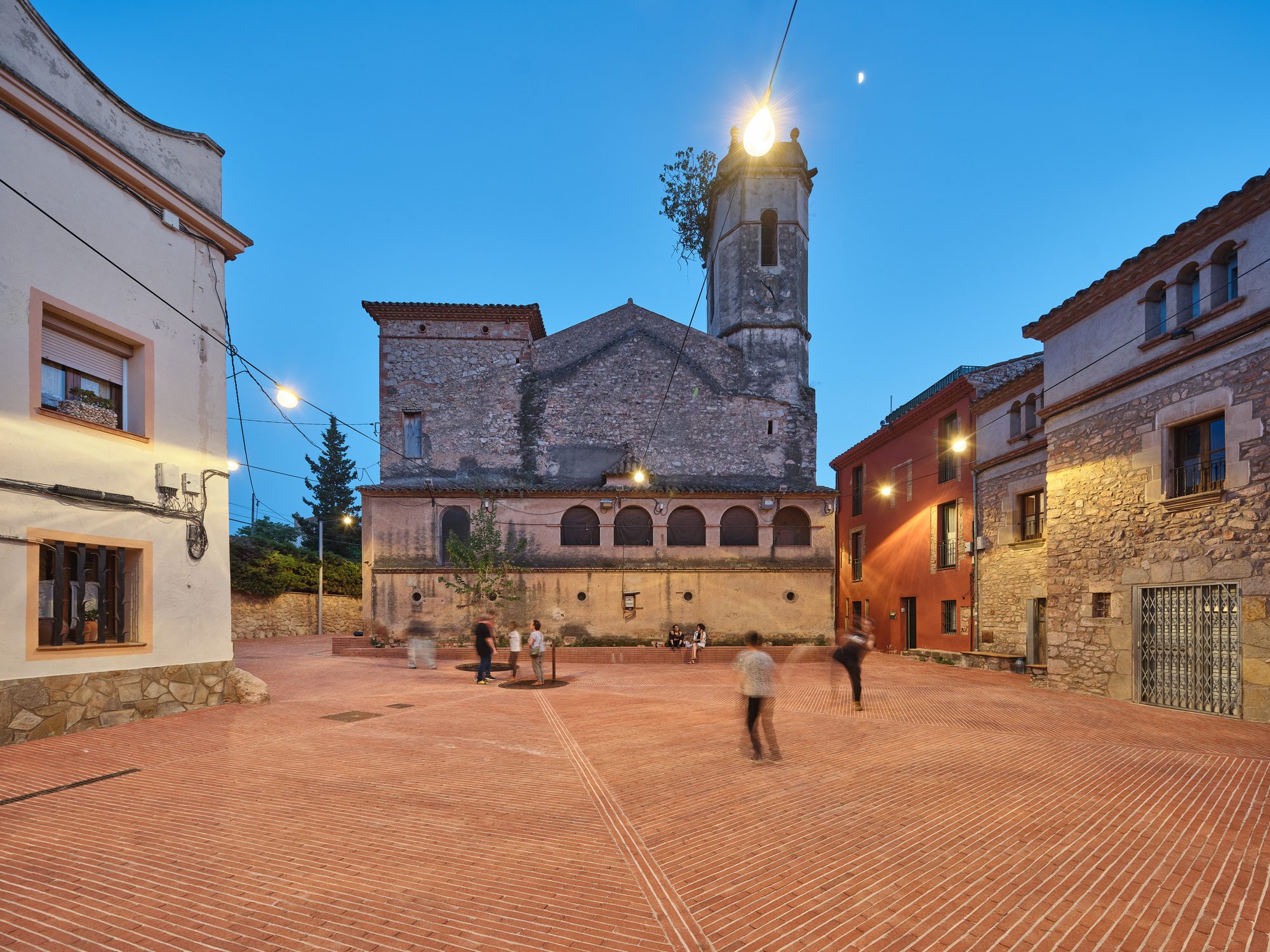
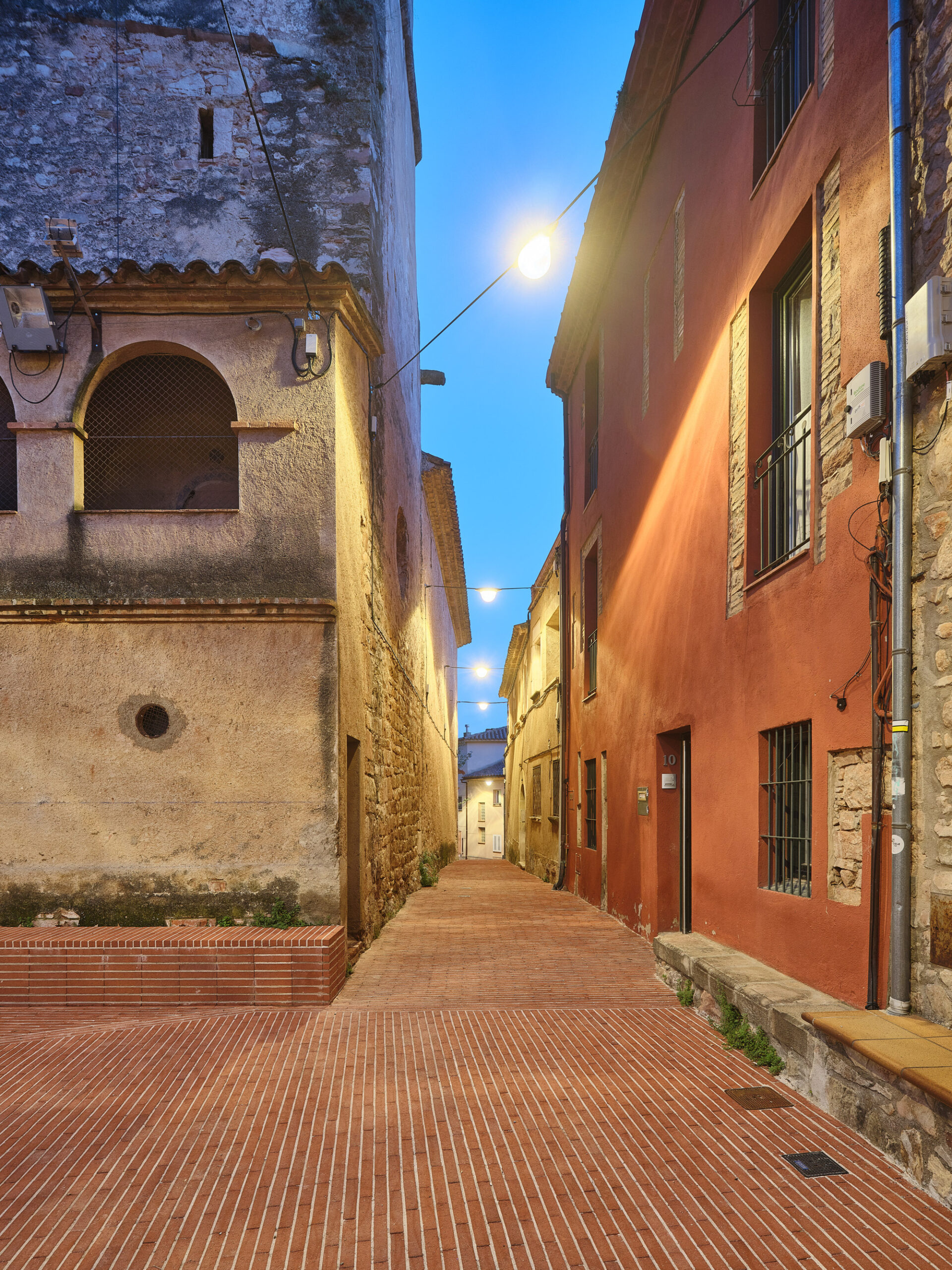
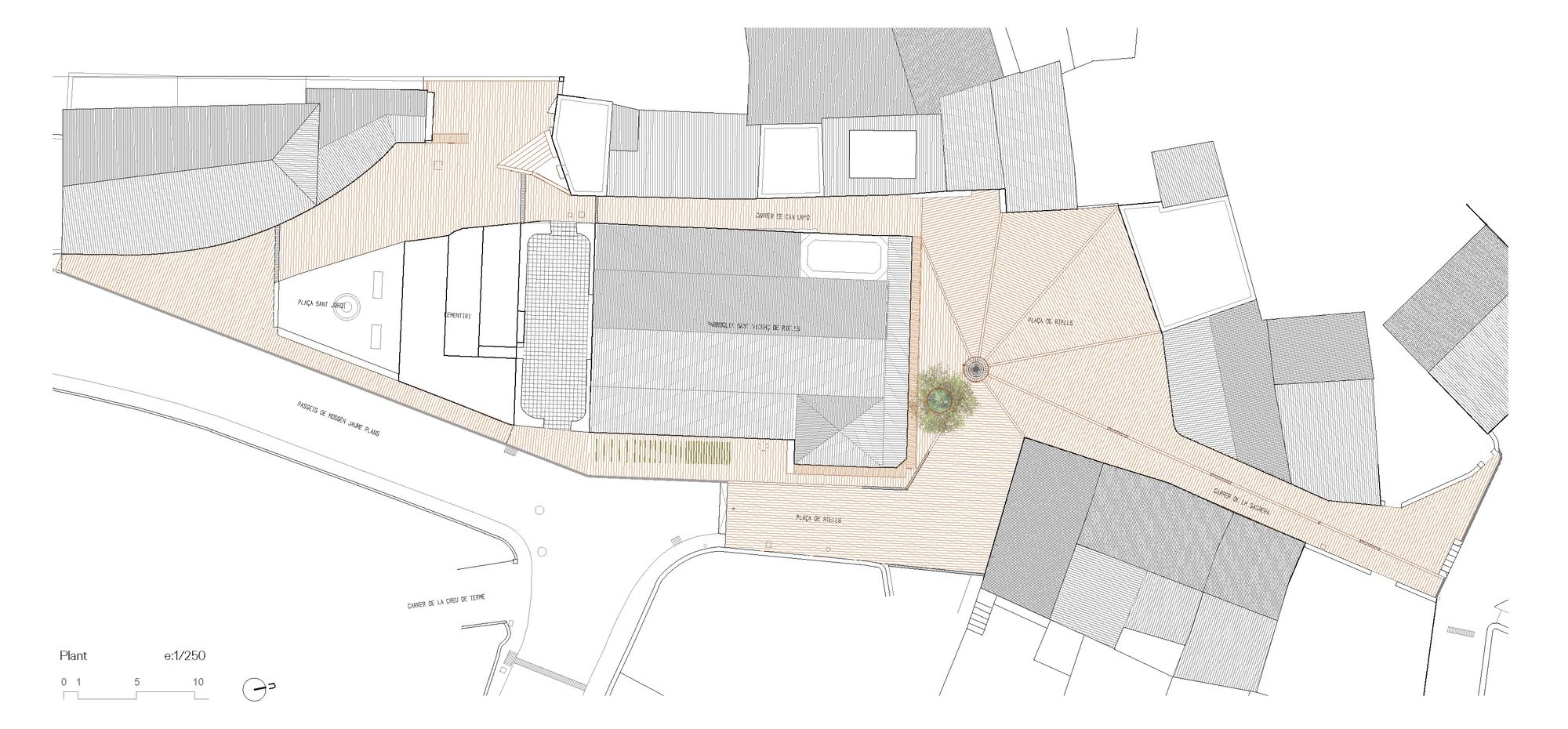
Its historic core, around the church of Sant Vicenç and the cemetery, both from the 11th century, is paved with reddish solid bricks, reminiscent of the tones of the soils of the cliffs that surround the village, successfully integrating the final image into the natural landscape and creating a cohesive whole around the church. A unique platform is proposed to enhance accessibility and return the space to the citizens, along with hanging lighting that recalls popular festivals and the village’s past as a summer retreat.
© Adrià Goula
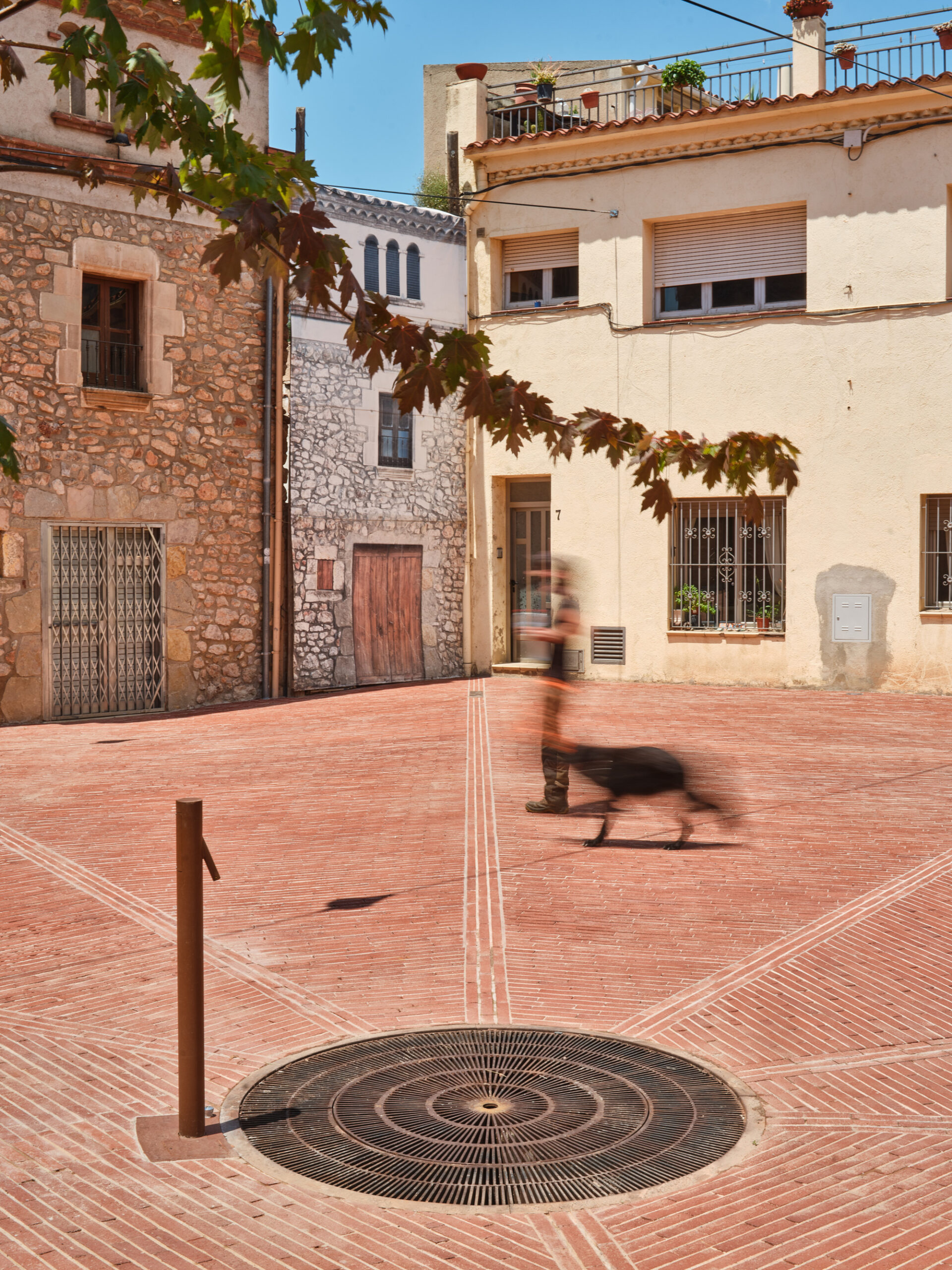
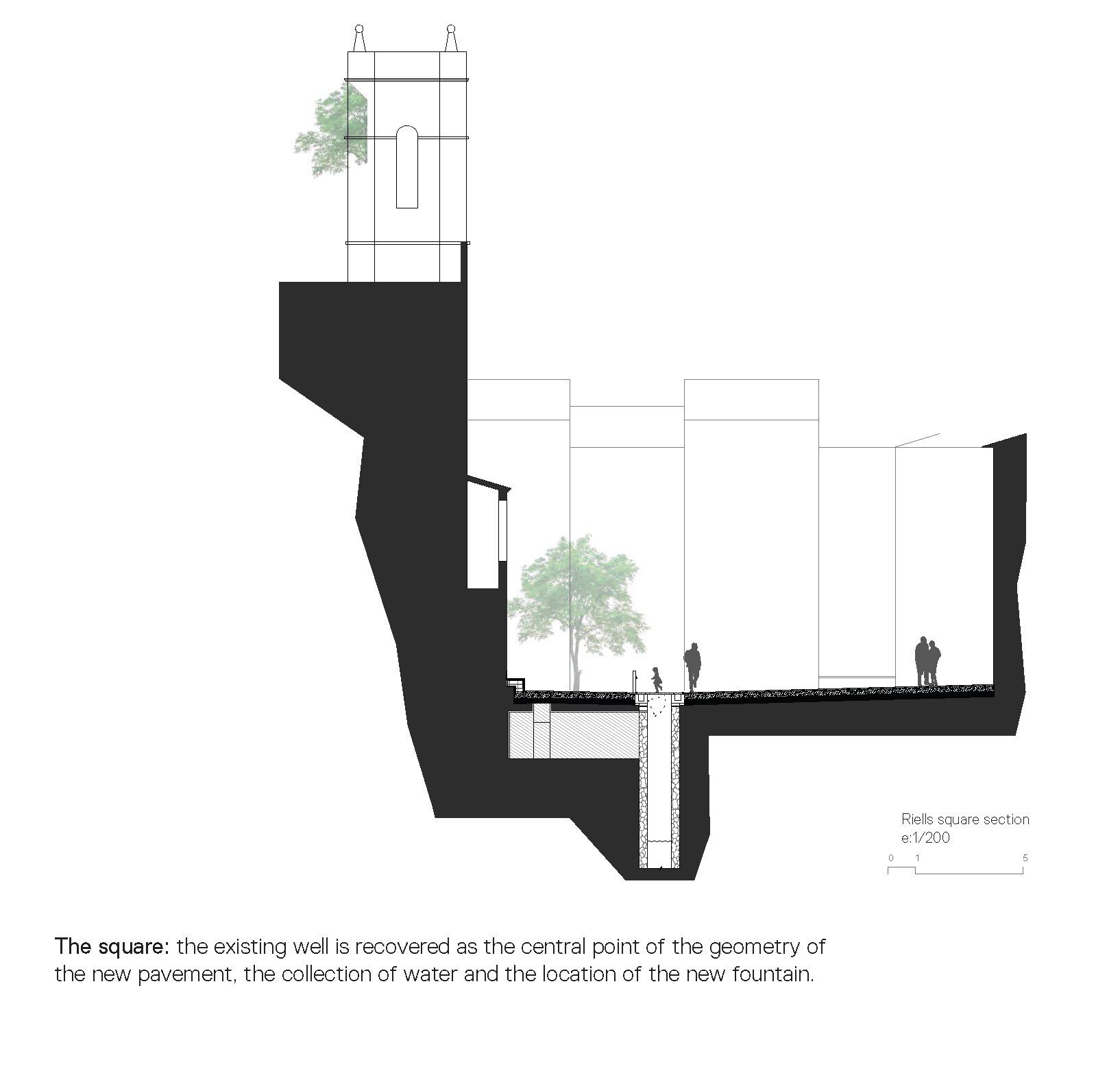
The square. The existing well in the square is restored as the central point of the geometry of the new pavement, the water collection, and the location of the new fountain (the cooling). A linear bench (the resting place) follows the church, creating sitting areas without losing the versatility of the square, while also addressing the humidity problems that the interior nave suffered. A tree (the shade), which dialogues with the existing fig tree at the top of the bell tower, provides shade in the sitting area.
© Adrià Goula
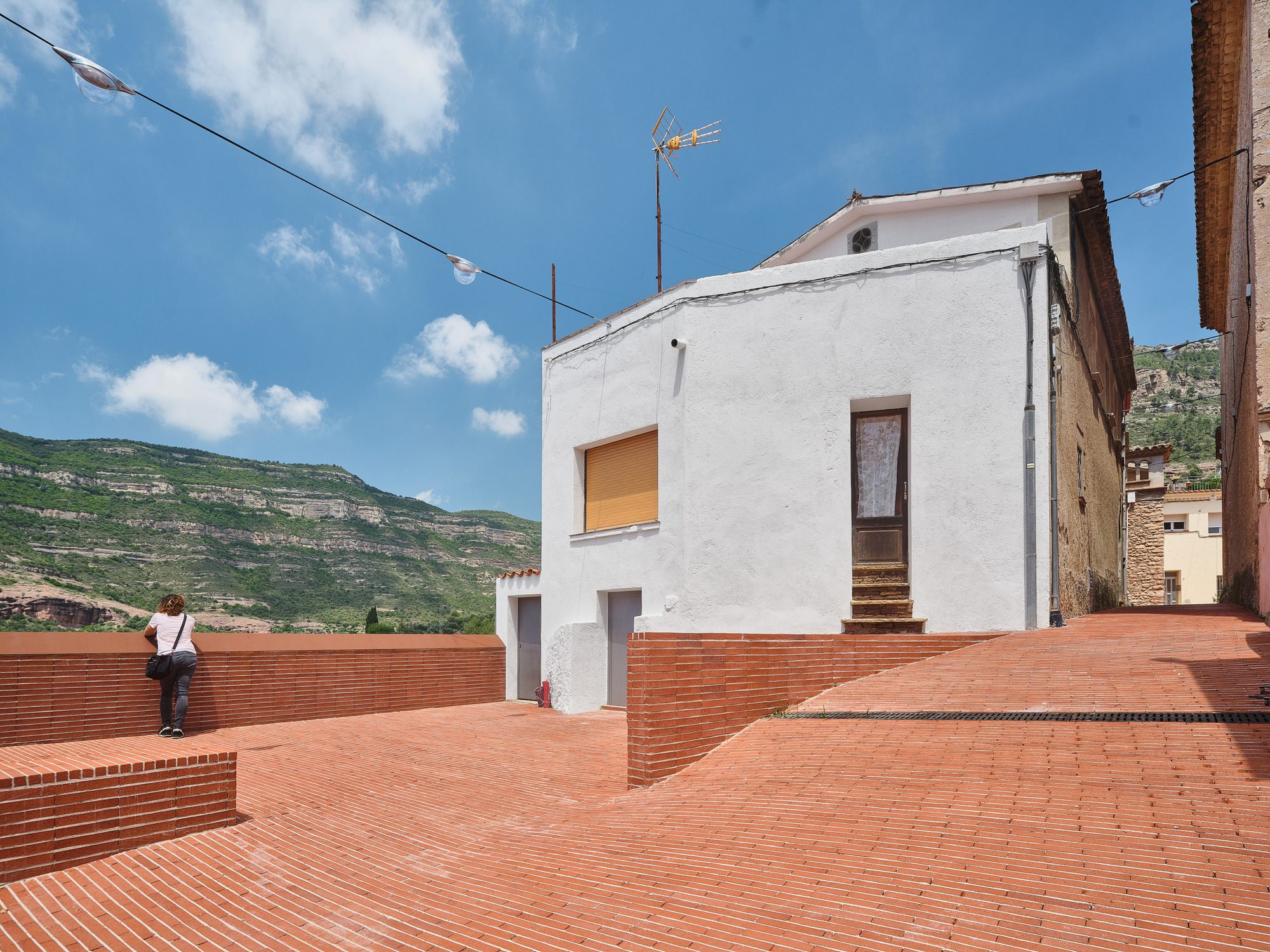
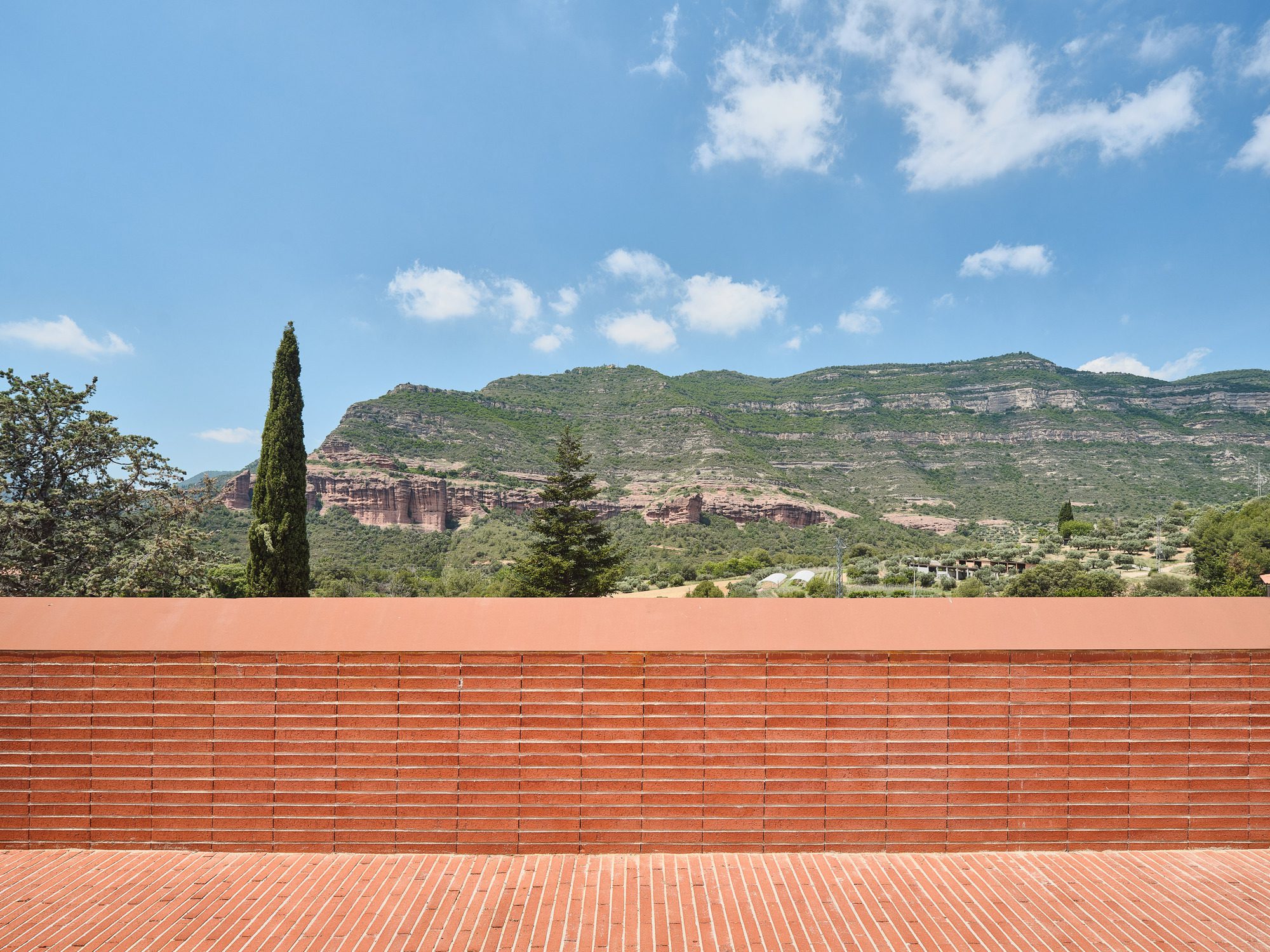
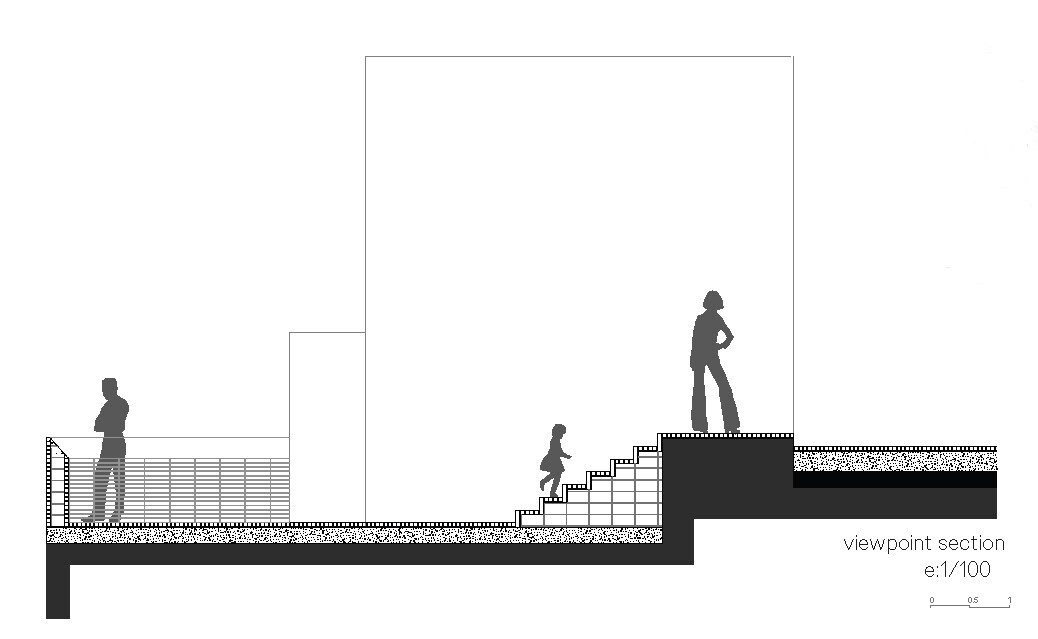
The viewpoint. In the viewpoint area, the existing slope is addressed by introducing a stepped staircase, and a solid railing is proposed that conceals the buildings of the lower terrace, enhancing the views of the d’en Bertí Cliffs.
© Adrià Goula
Collective spaces. The project recovers a space previously occupied by vehicles into a friendly, relaxed area for citizens, restoring the quiet life of the village where children can play while parents socialize and elderly people can rest on the bench, promoting good neighborliness. A democratic architecture, to be experienced by all on equal terms.
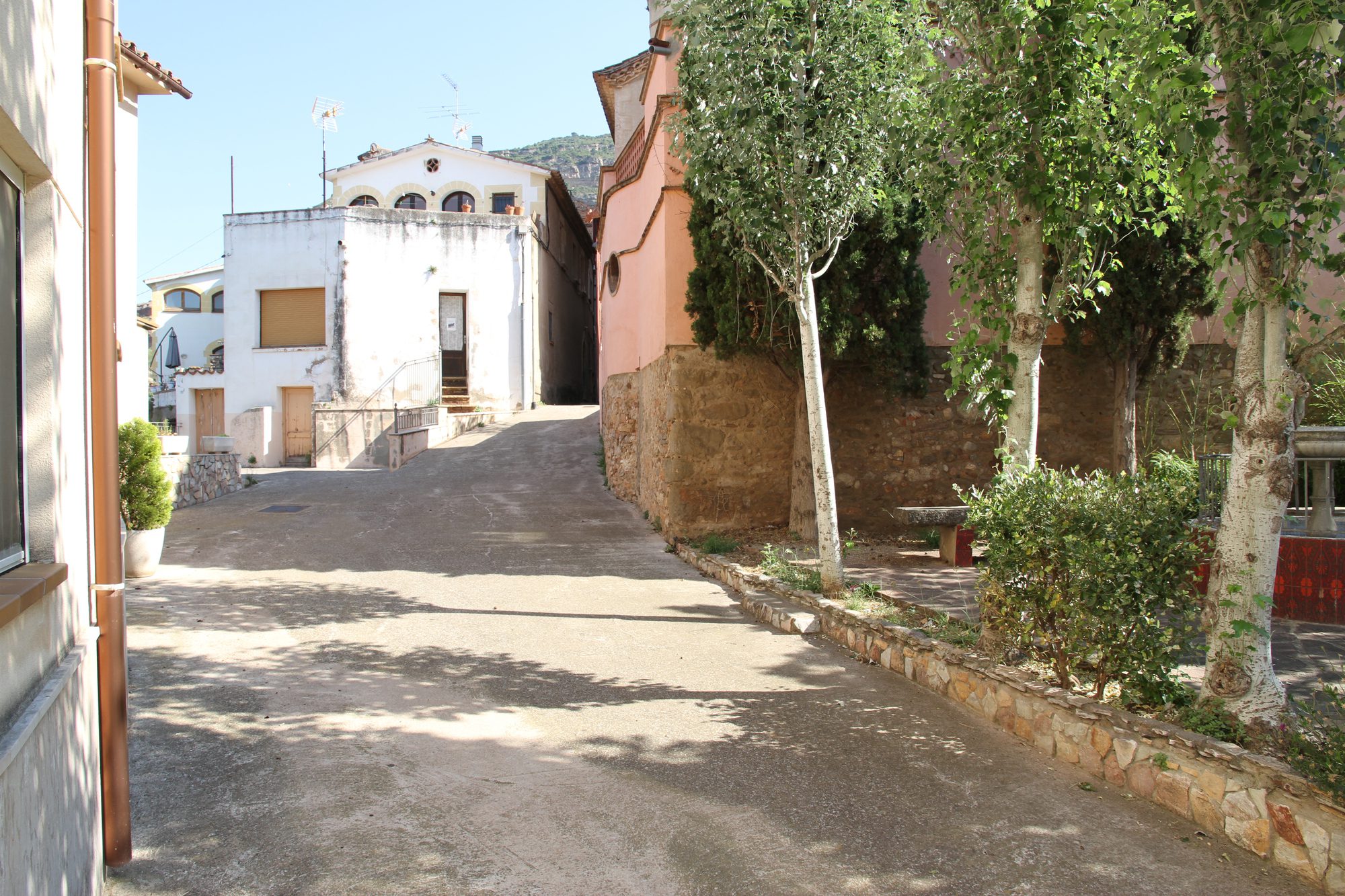
© Adrià Goula
Natural elements are emphasized:
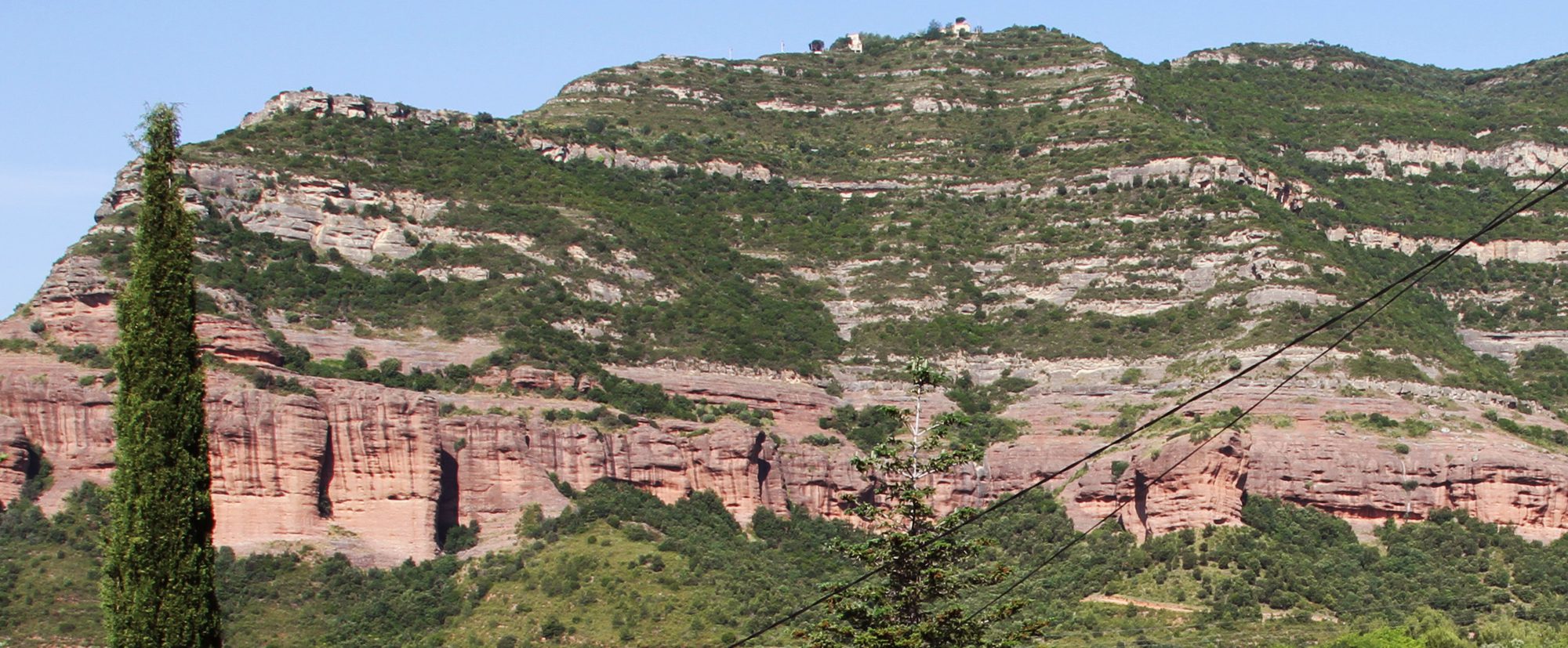
© Adrià Goula
The water. The intervention recovers the memory of the place, uncovering the bricked-up historic well and turning it into a focal point. All the radial geometry of the square converges at the midpoint of the well, while expanding the protective grate integrates the collection of rainwater and the fountain, without contaminating the well.
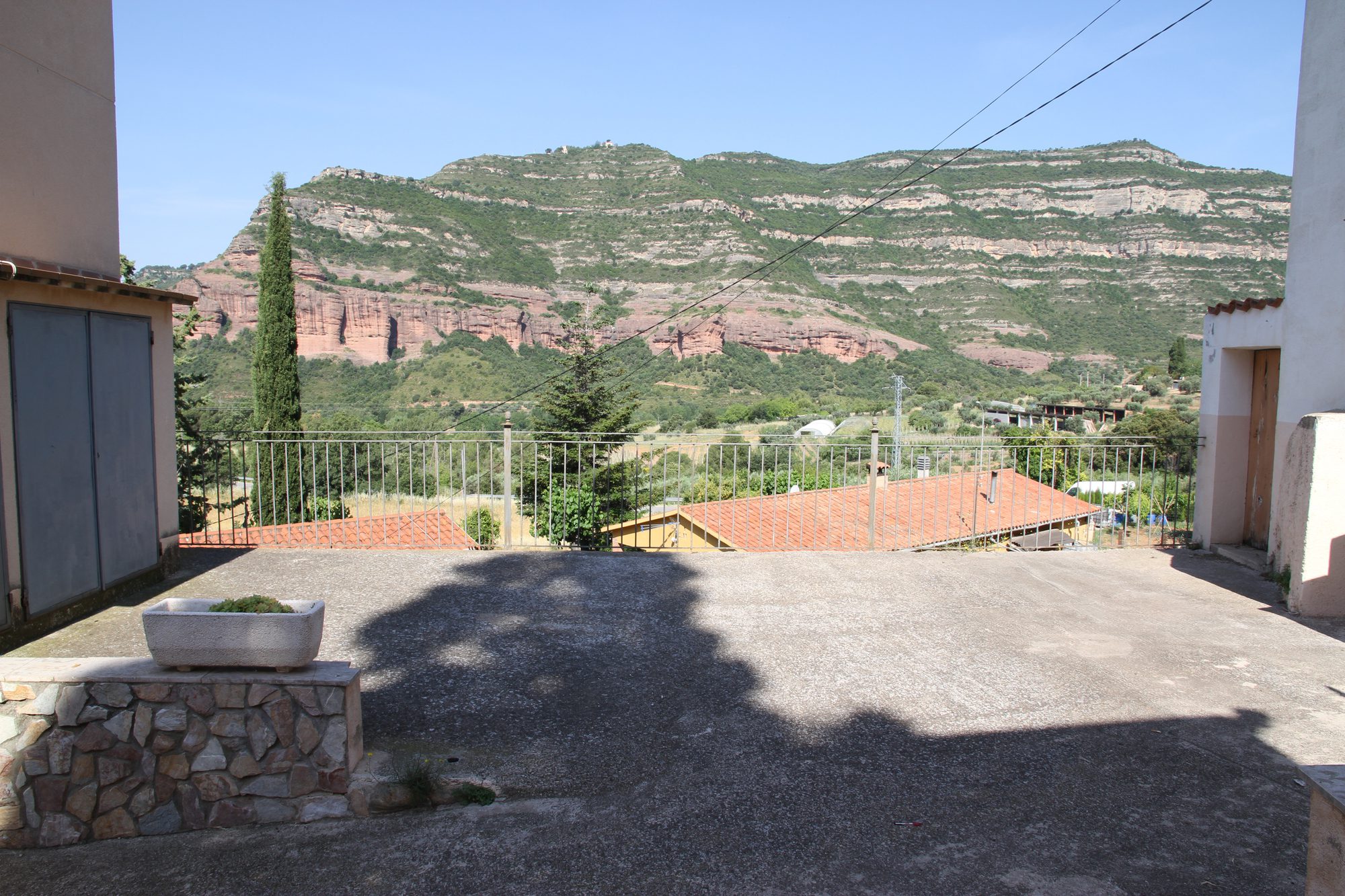
© Adrià Goula
The earth. The reddish soils of the surroundings are solidified into a solid brick (Roman strip of 30x5x5 cm) that serves as pavement, benches, and steps, introducing the landscape and its tones into the old core of the village. This poetic space creates a sense of belonging to the place, with its landscape, its slow rhythm, and the sounds of nature.
Project Info
Architects: Comas-Pont arquitectes
Country: Spain, Barcelona
Area: 900 m²
Year: 2024
Photographs: Adrià Goula
A Lead Architects: Jordi Comas, Anna Pont
Engineering: Prodop

Sophie Tremblay is a Montreal-based architectural editor and designer with a focus on sustainable urban development. A McGill University architecture graduate, she began her career in adaptive reuse, blending modern design with historical structures. As a Project Editor at Arch2O, she curates stories that connect traditional practice with forward-thinking design. Her writing highlights architecture's role in community engagement and social impact. Sophie has contributed to Canadian Architect and continues to collaborate with local studios on community-driven projects throughout Quebec, maintaining a hands-on approach that informs both her design sensibility and editorial perspective.