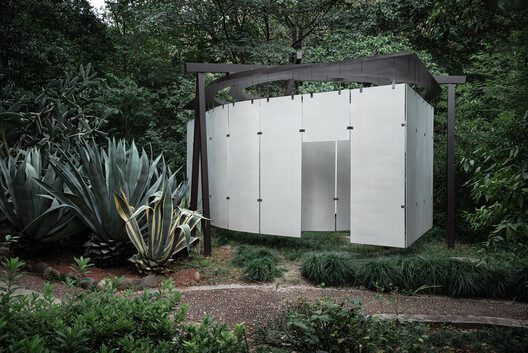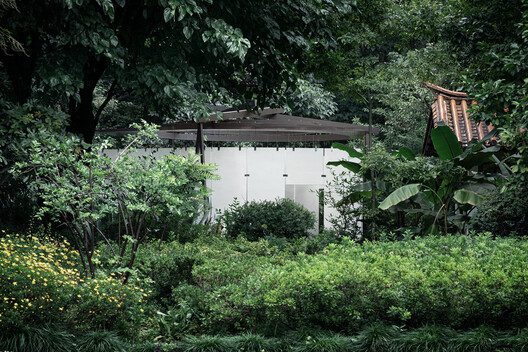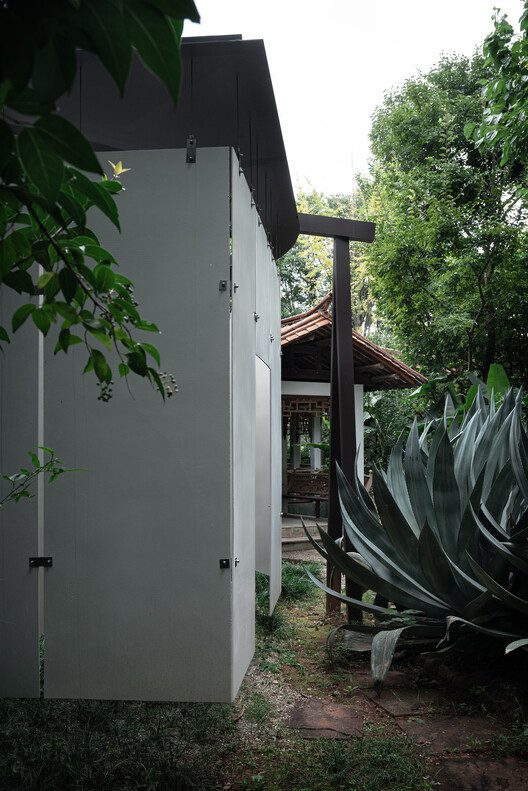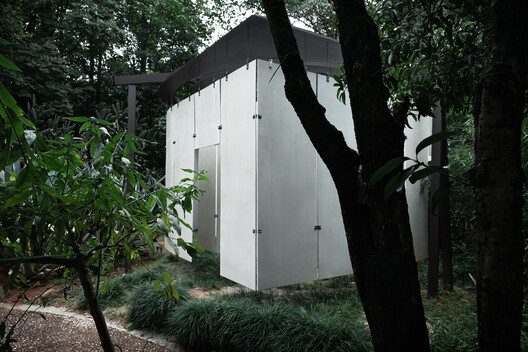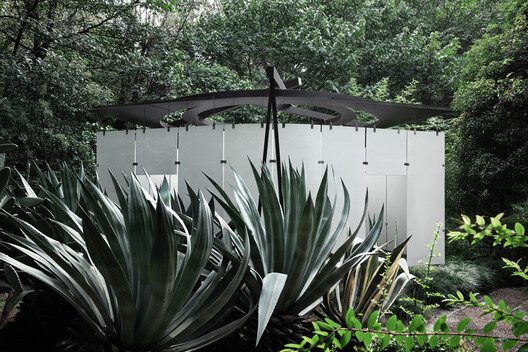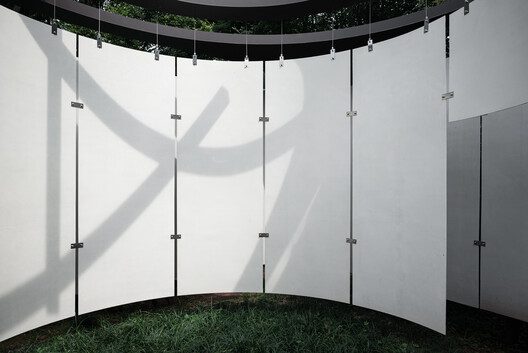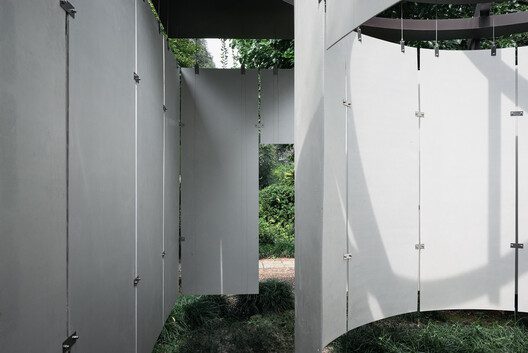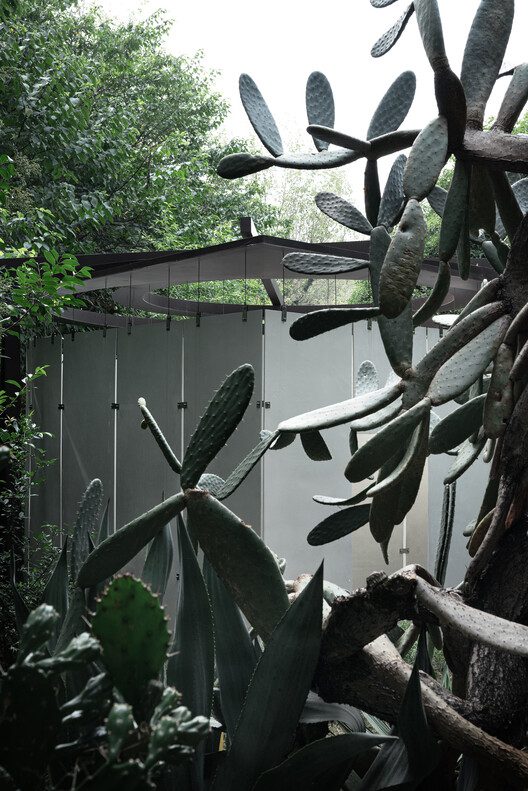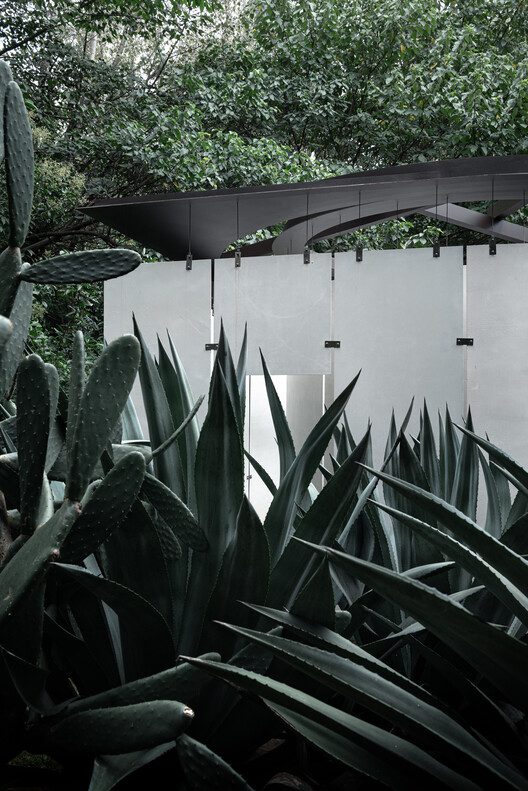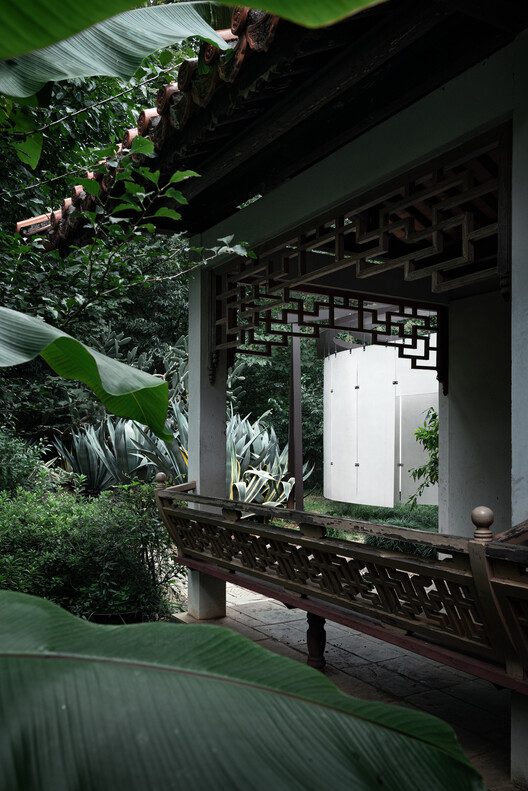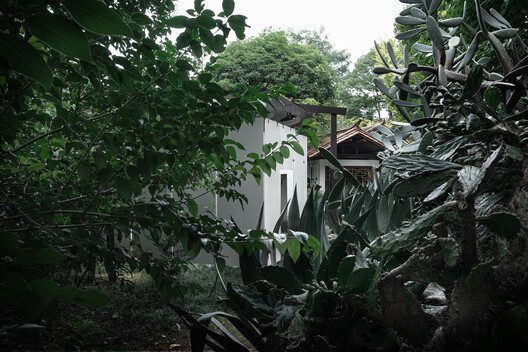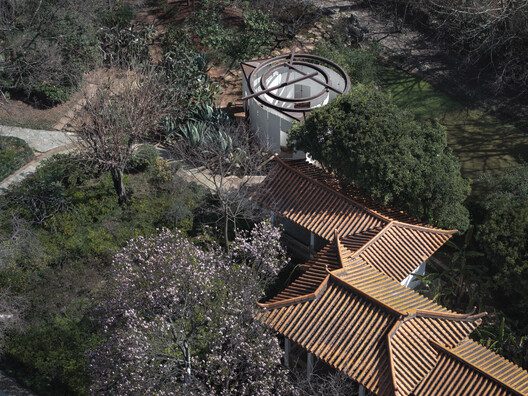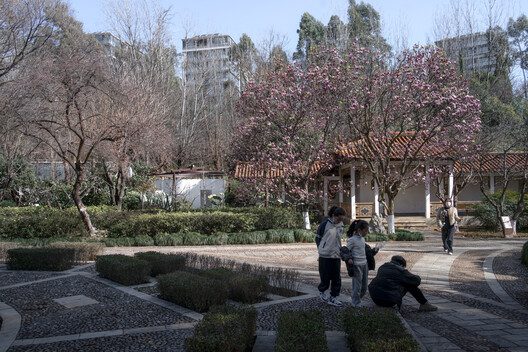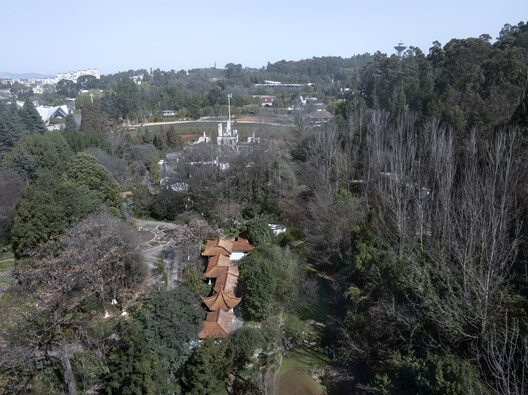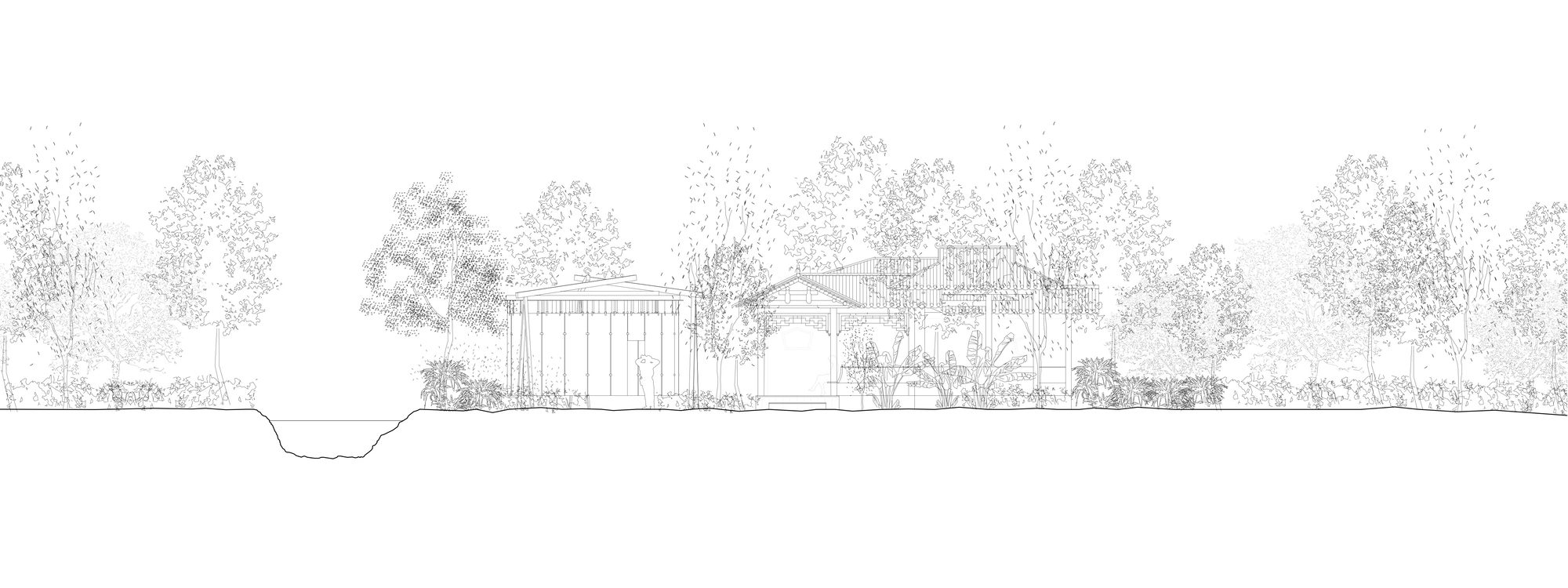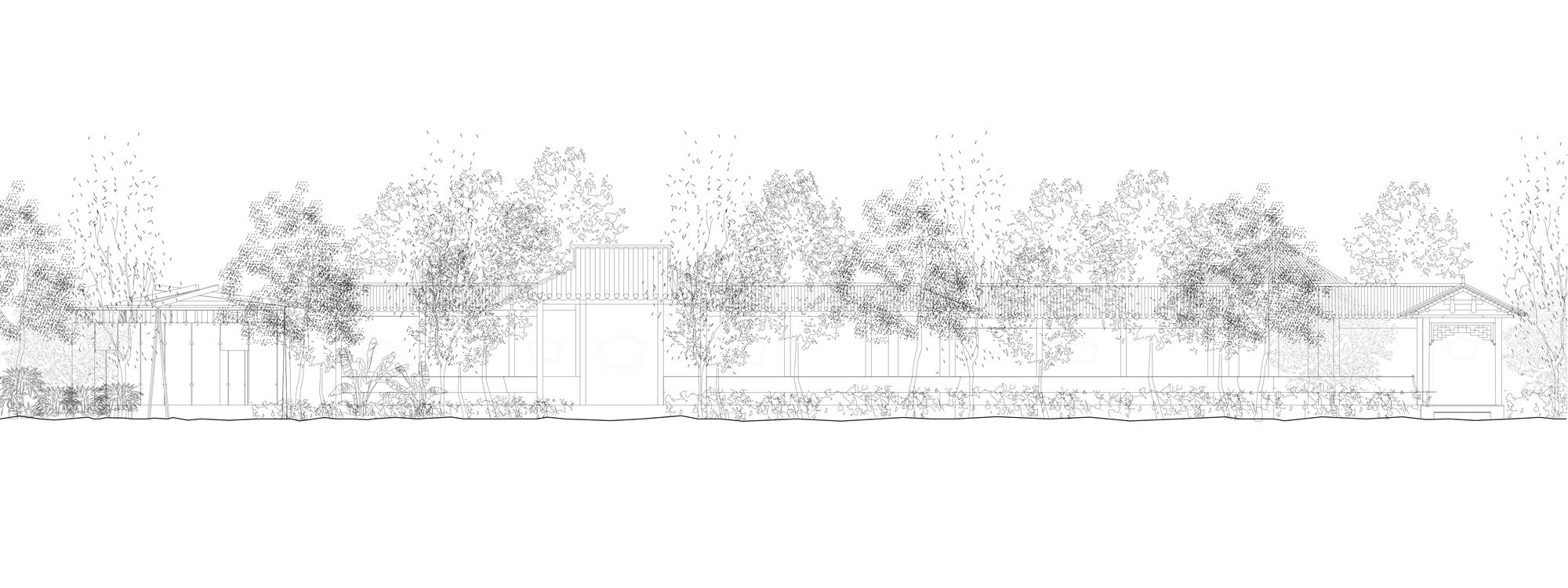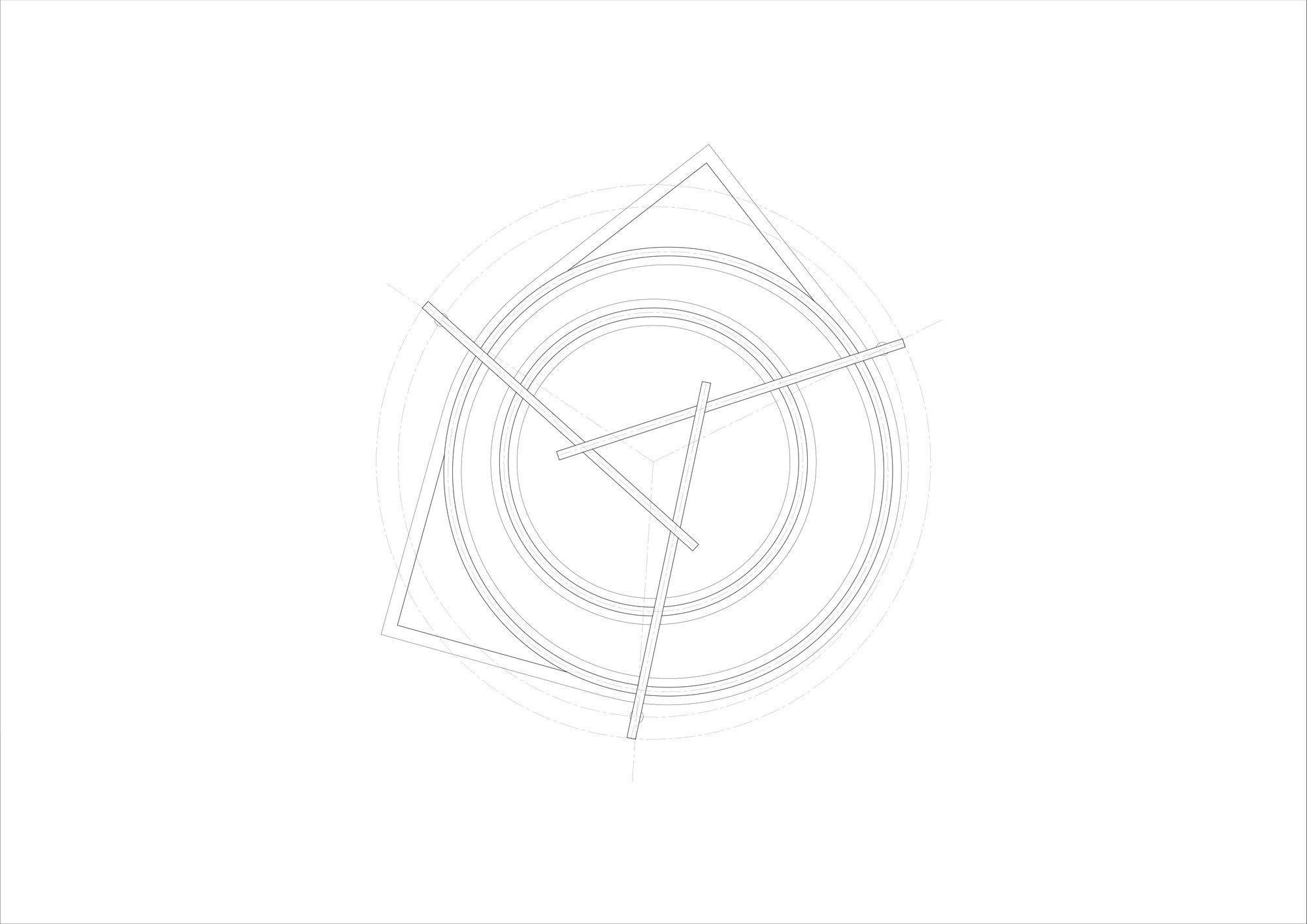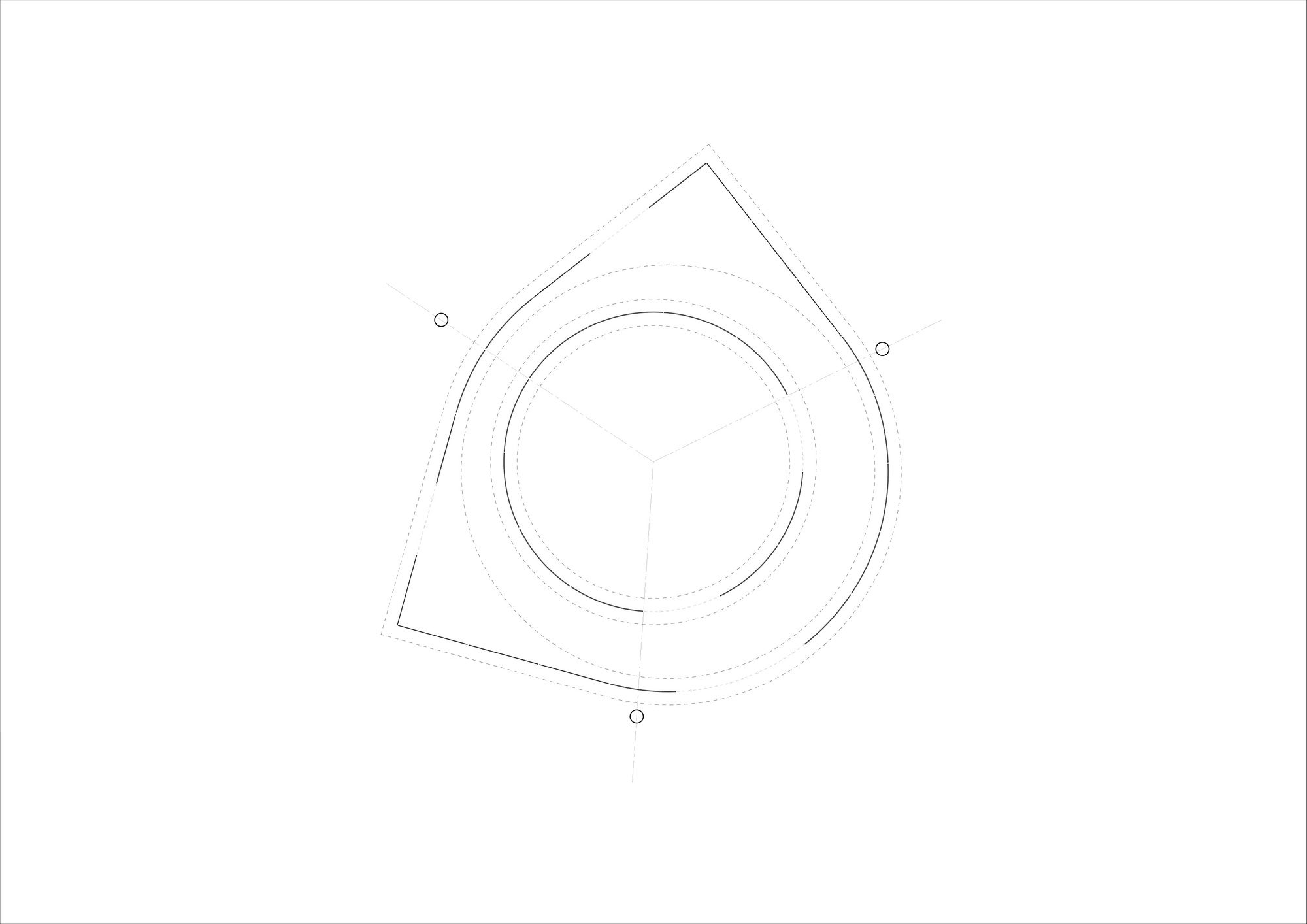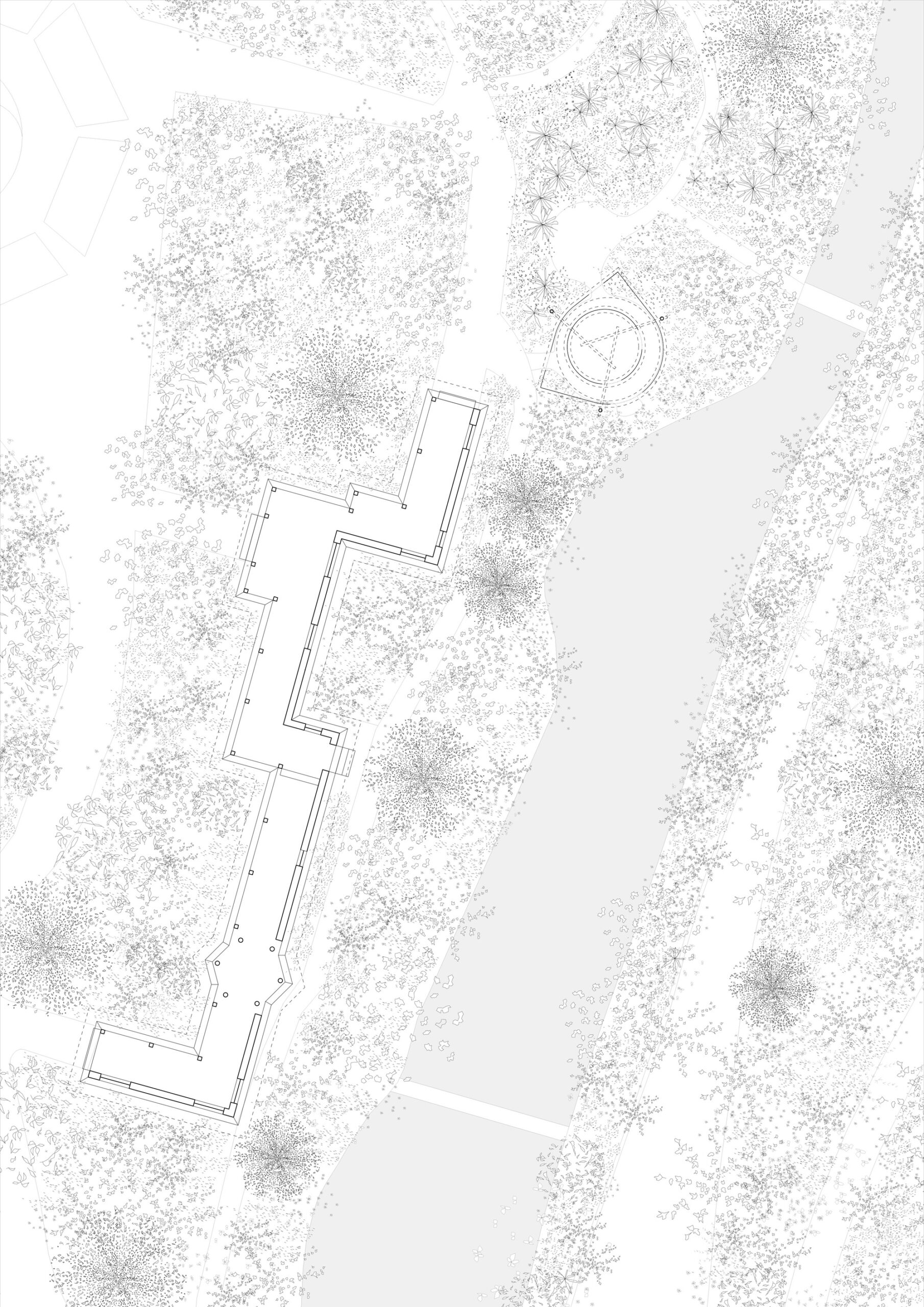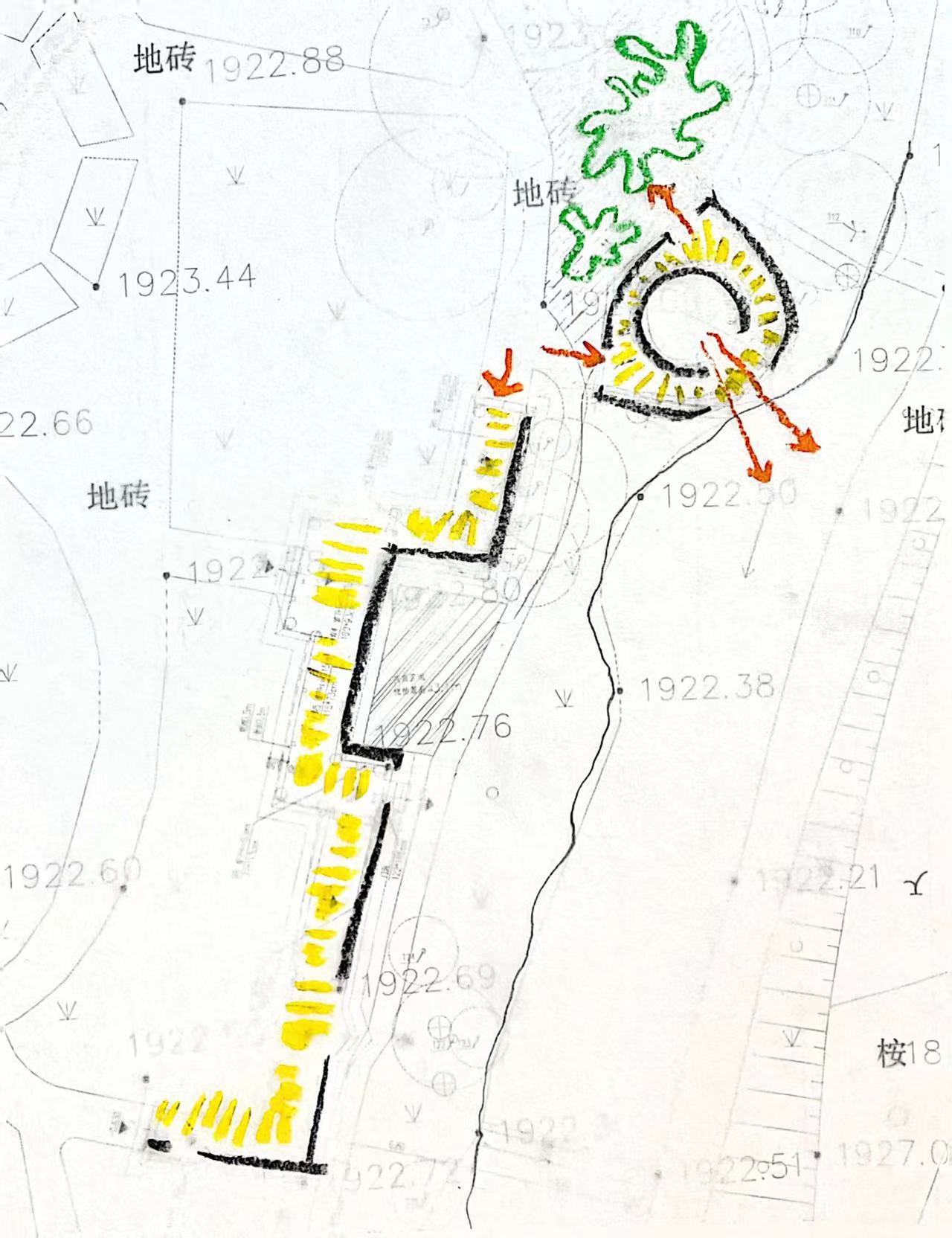


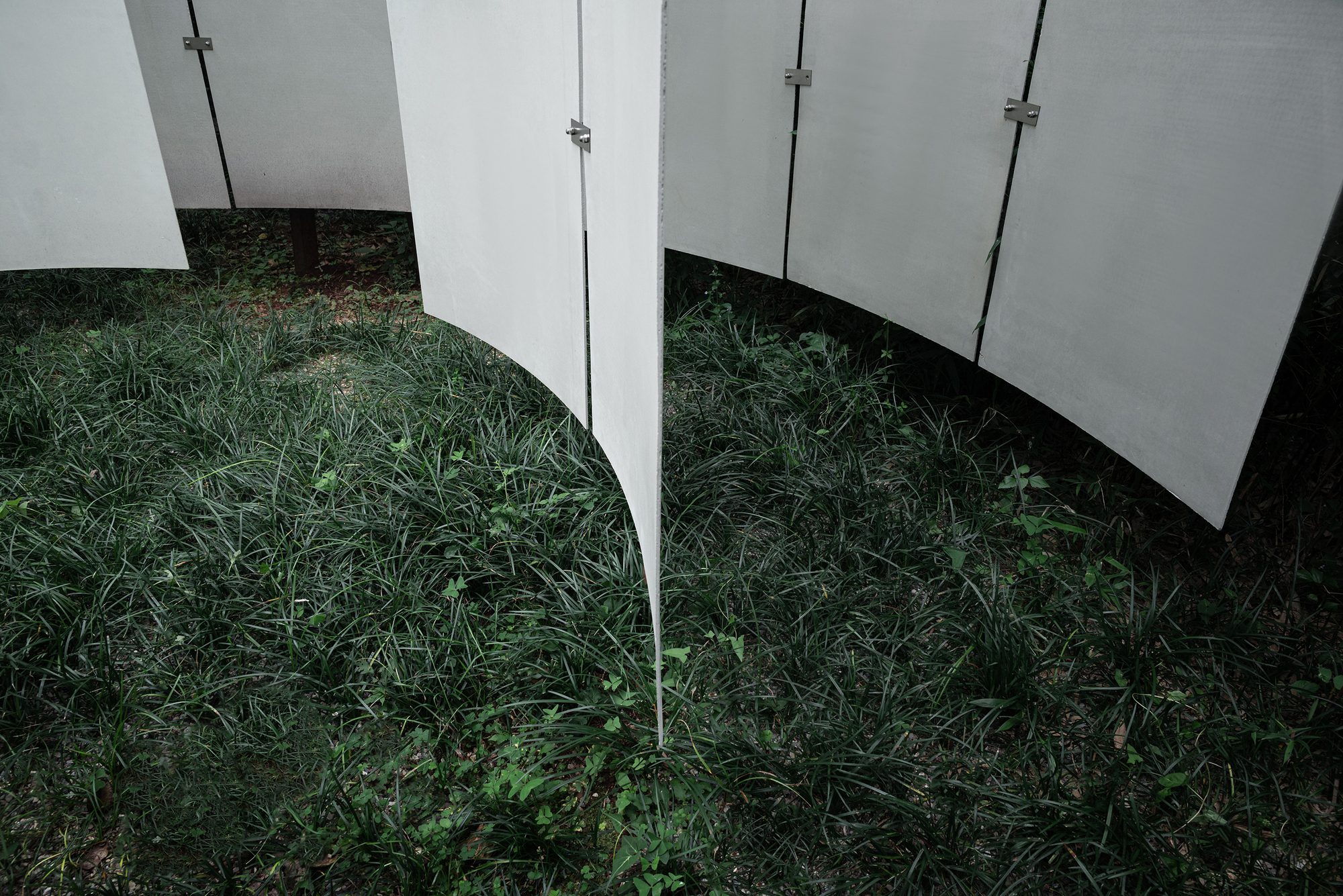
Round Pavilion, An Expo, a park, or a garden? The project is located in the Herbal Garden of Expo Park, far from the main pavilions, in a corner that resembles more of a civic park. Compared to the more dominant landscape designs and lingering thematic elements, this small garden, enveloped by exotic vegetation, exudes a sense of tranquility and intimacy. In its unassuming presence, it radiates a profound public vitality—the laughter and conversations of people of all ages under the pavilions have already diluted the once-ambitious narratives and grand visions that once defined this land.
© Ziqian Wang
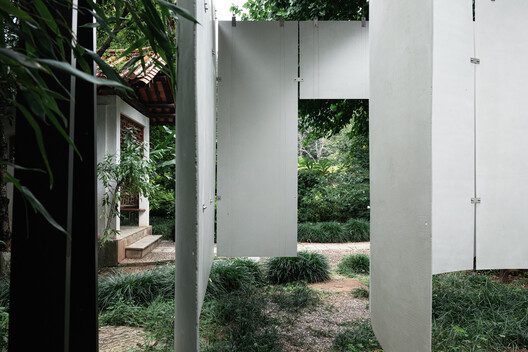
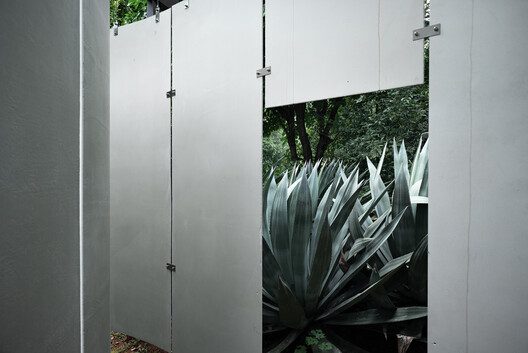
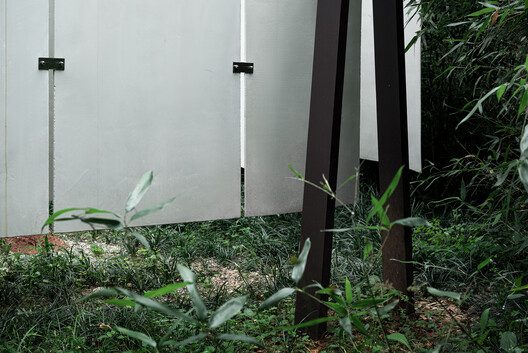
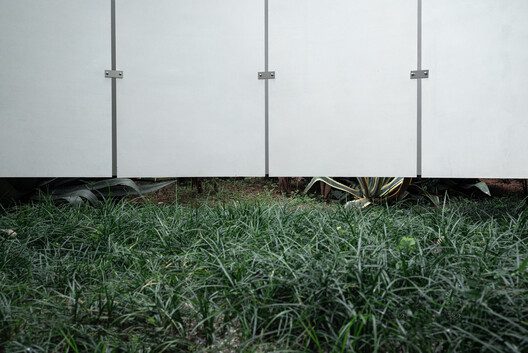
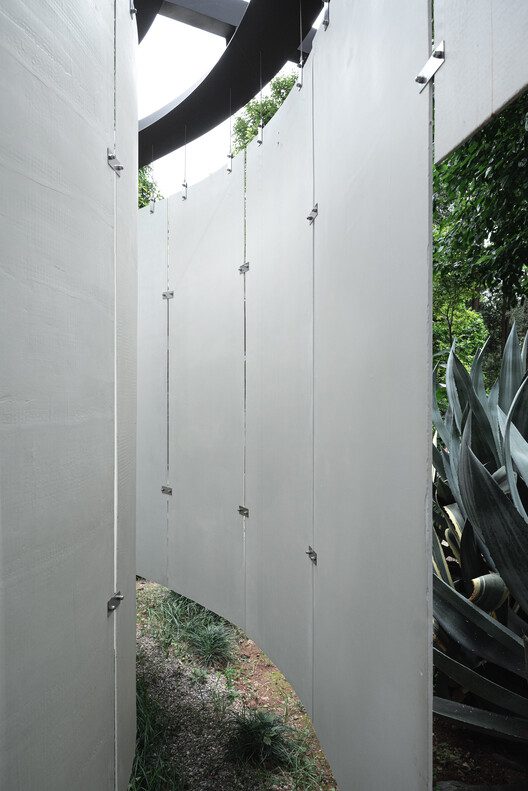
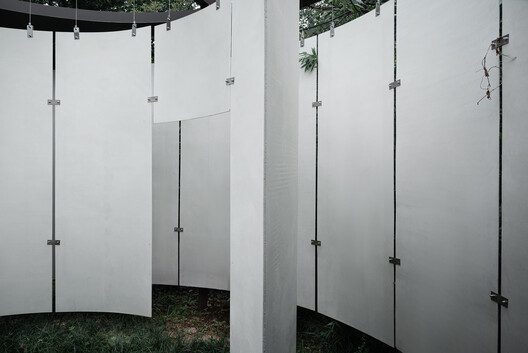
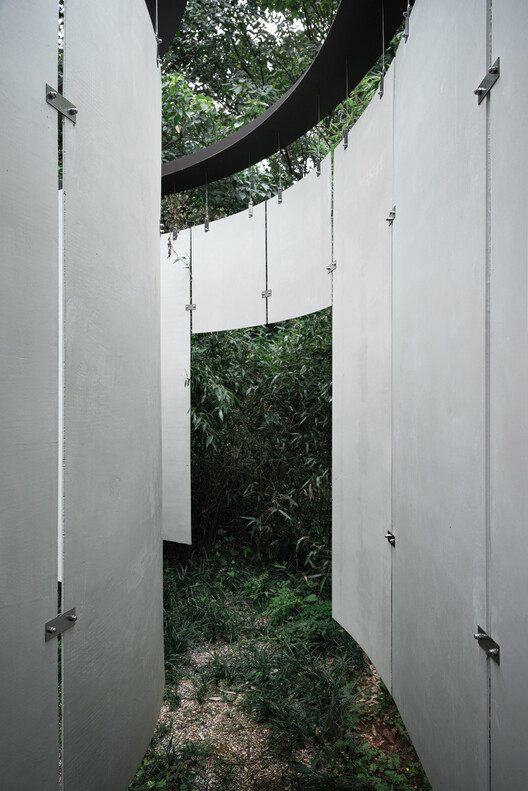
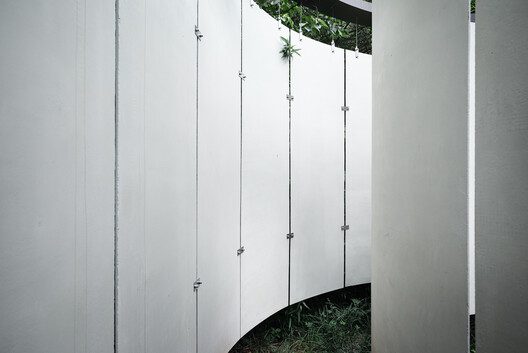
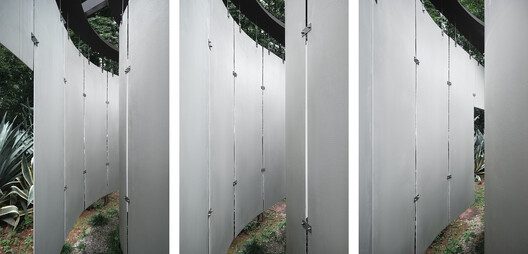
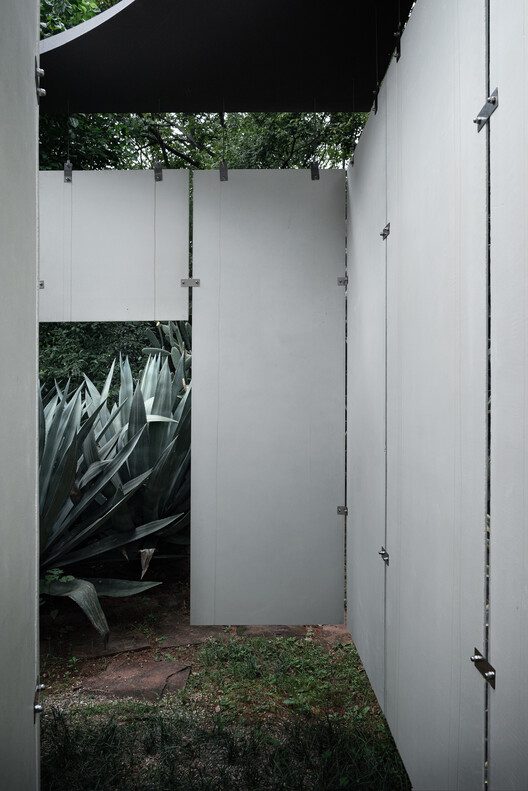
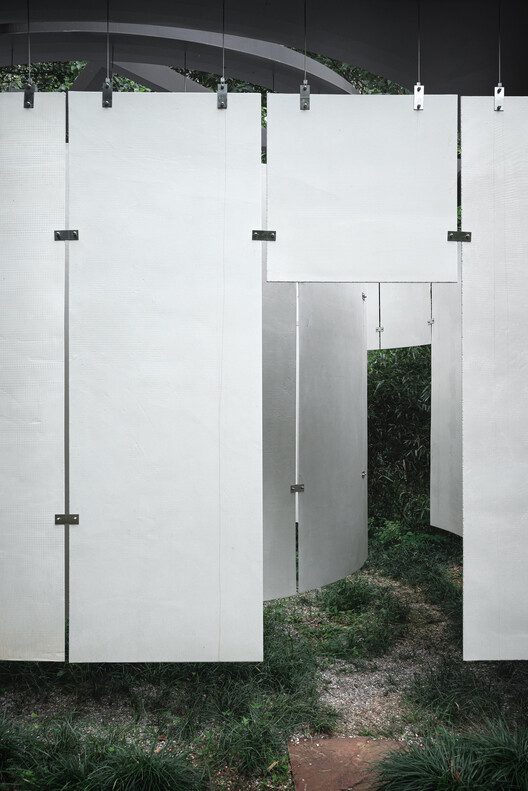
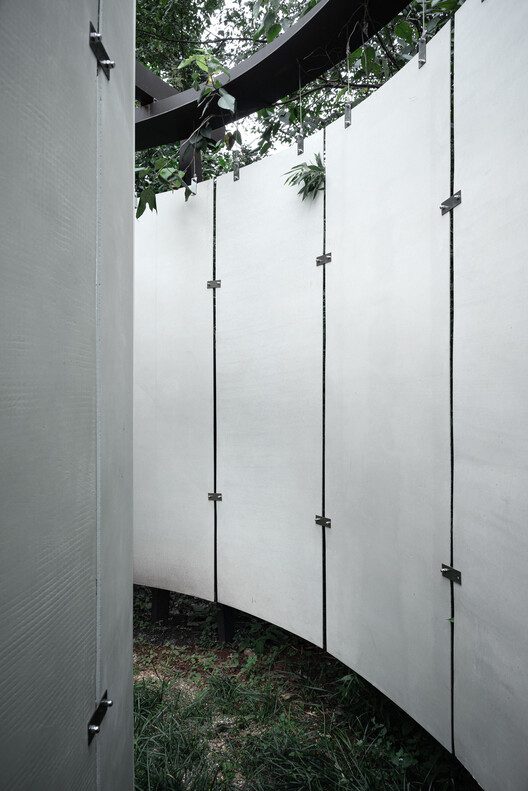
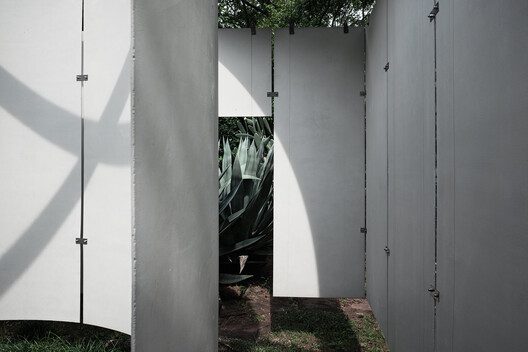
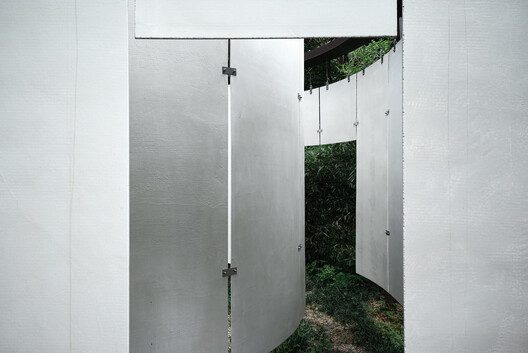
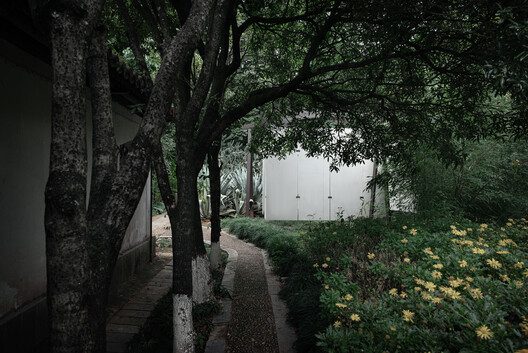
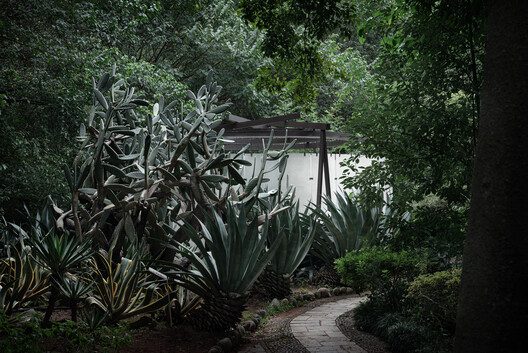
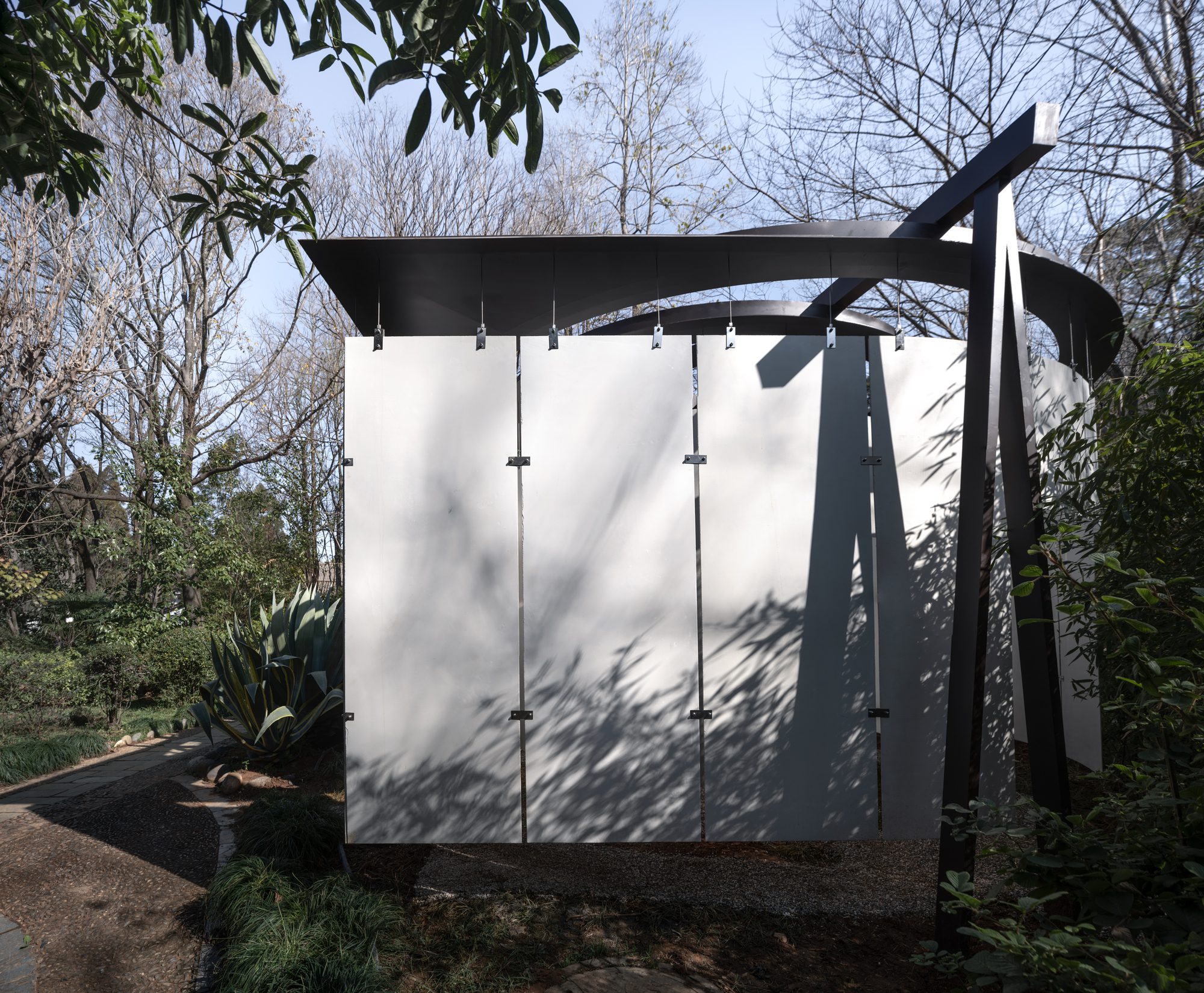
Not entirely visible, yet entirely accessible? The design intent was clear from the outset: to harness the site’s existing potential by extending the linear space of the existing corridor and resolving its terminus with a gesture of convergence and spatial reconciliation. We adopted the corridor’s white wall language to articulate scale, sightlines, and orientation. The gently curving path unfolds in a continuous gradient, blurring directional clarity alongside ambiguous geometric forms. Within this compact space, the linear corridor amplifies bodily perception. Here, intuitive discovery in movement replaces explicit guidance and rational judgment, while fragmented visual impressions coalesce into a cohesive spatial experience.
© Ziqian Wang
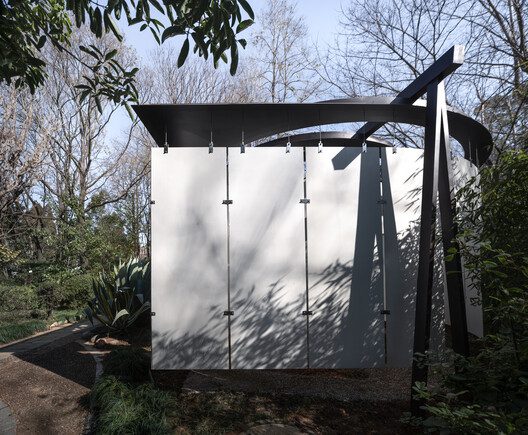
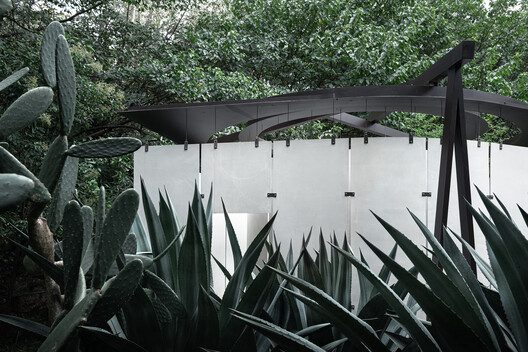
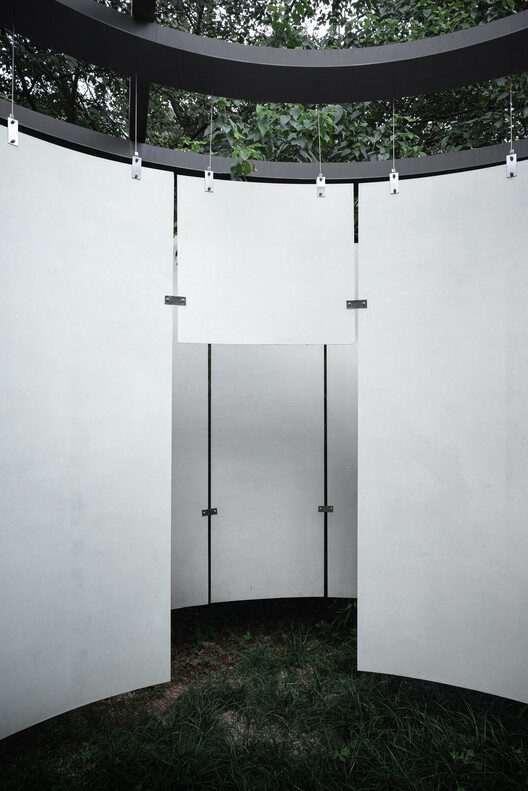
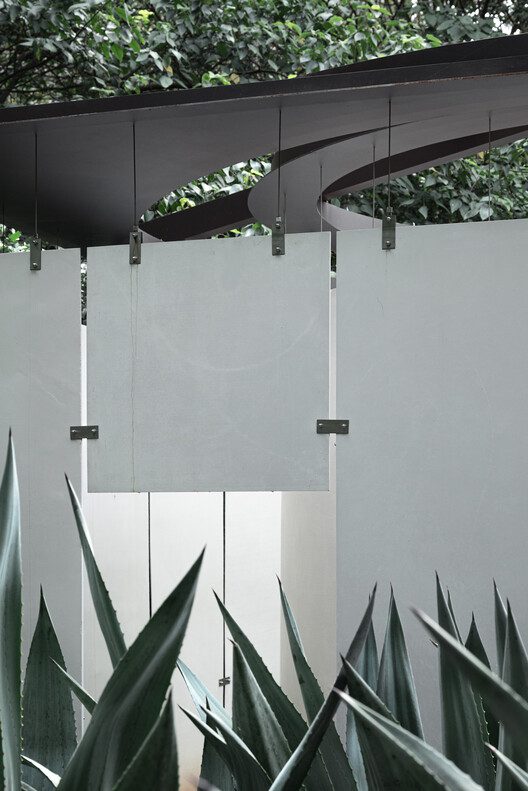
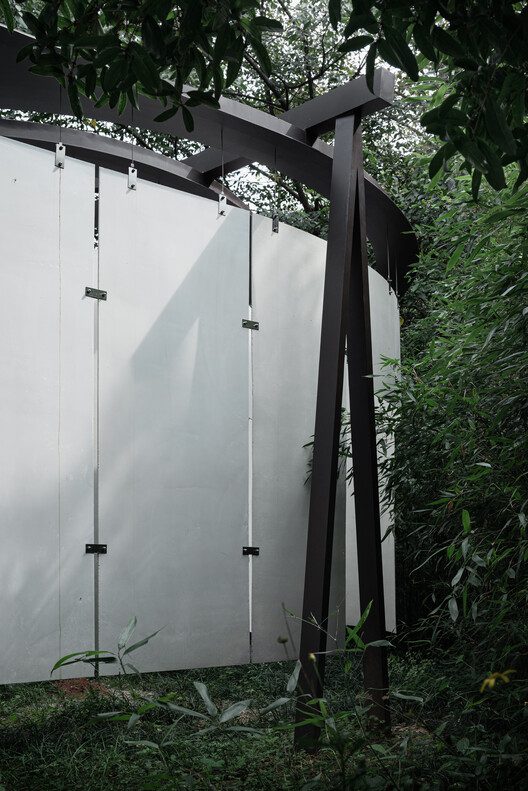
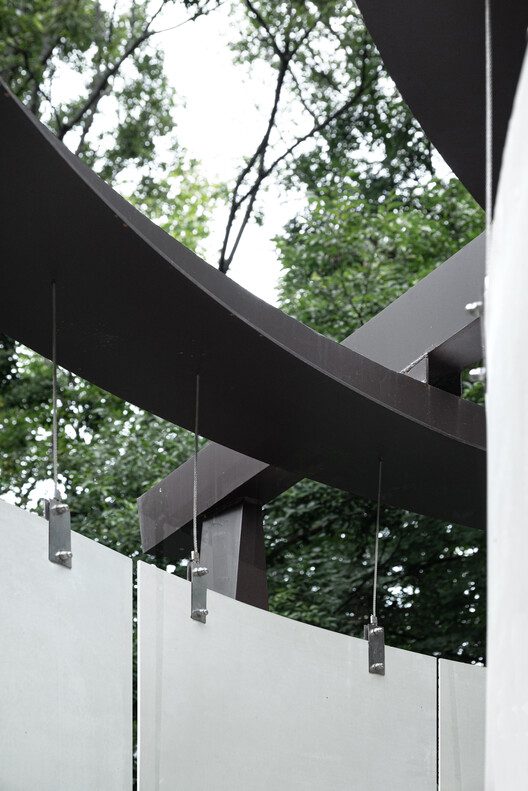
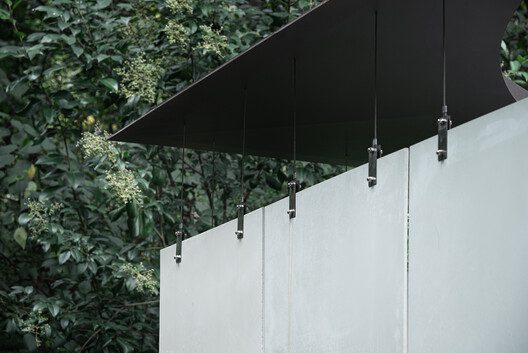
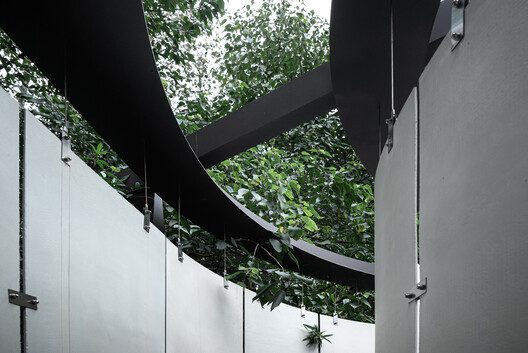
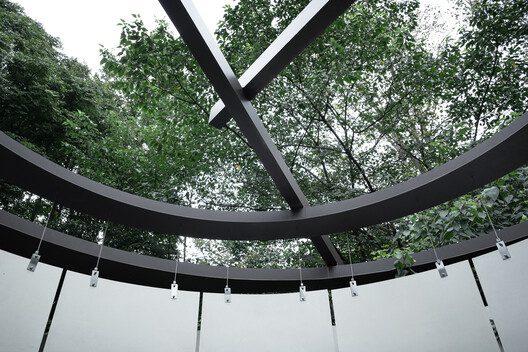
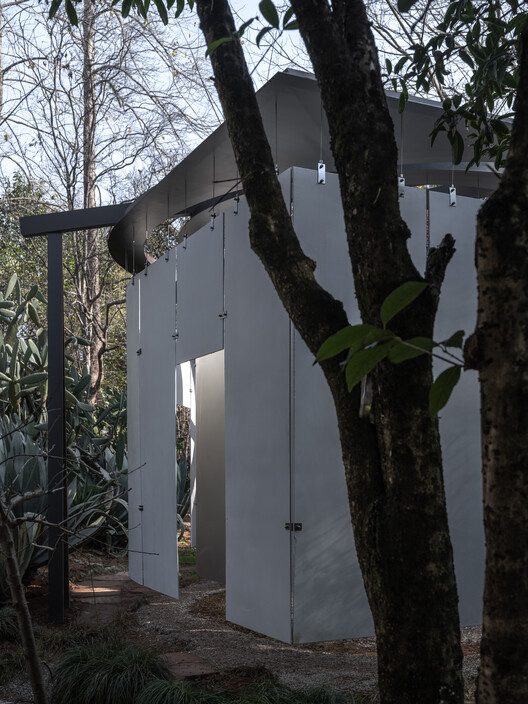
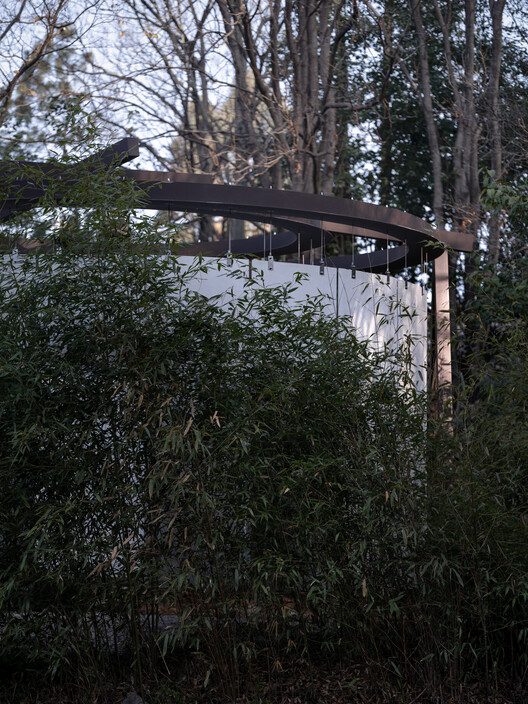
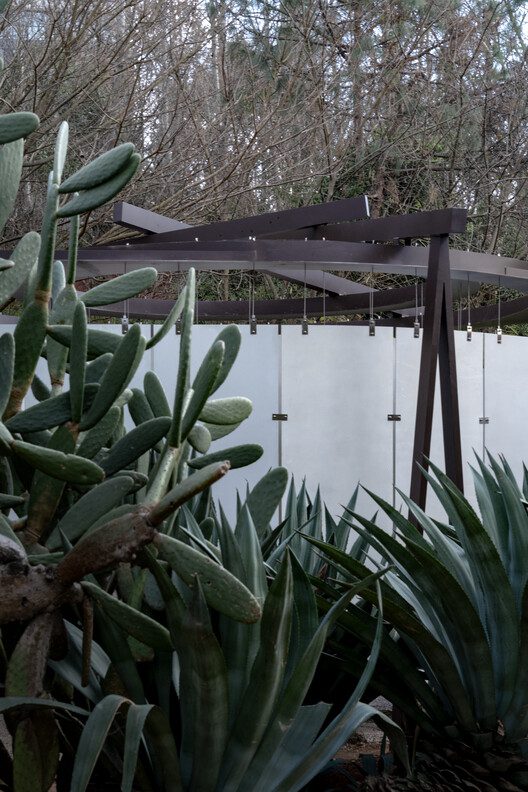
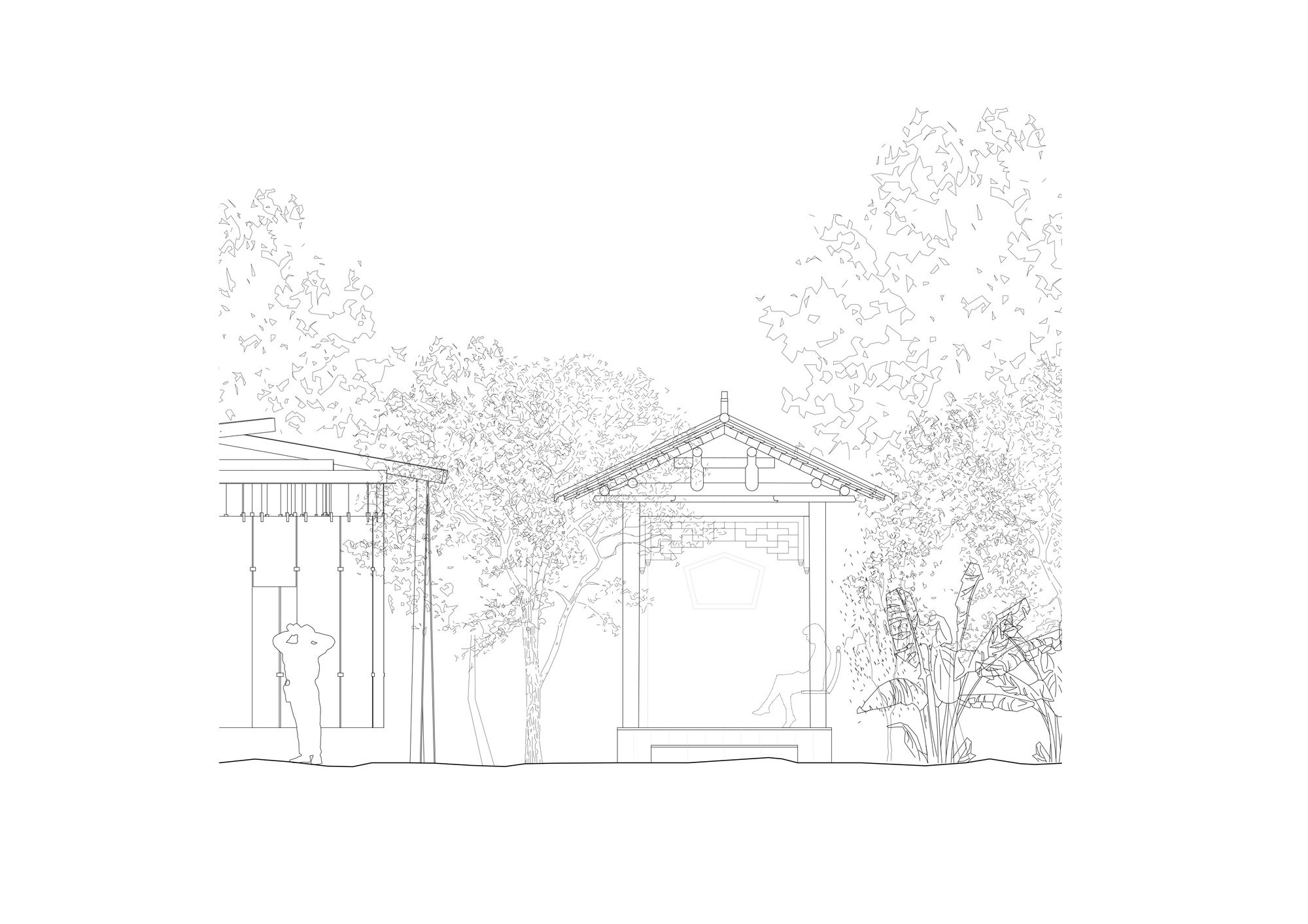
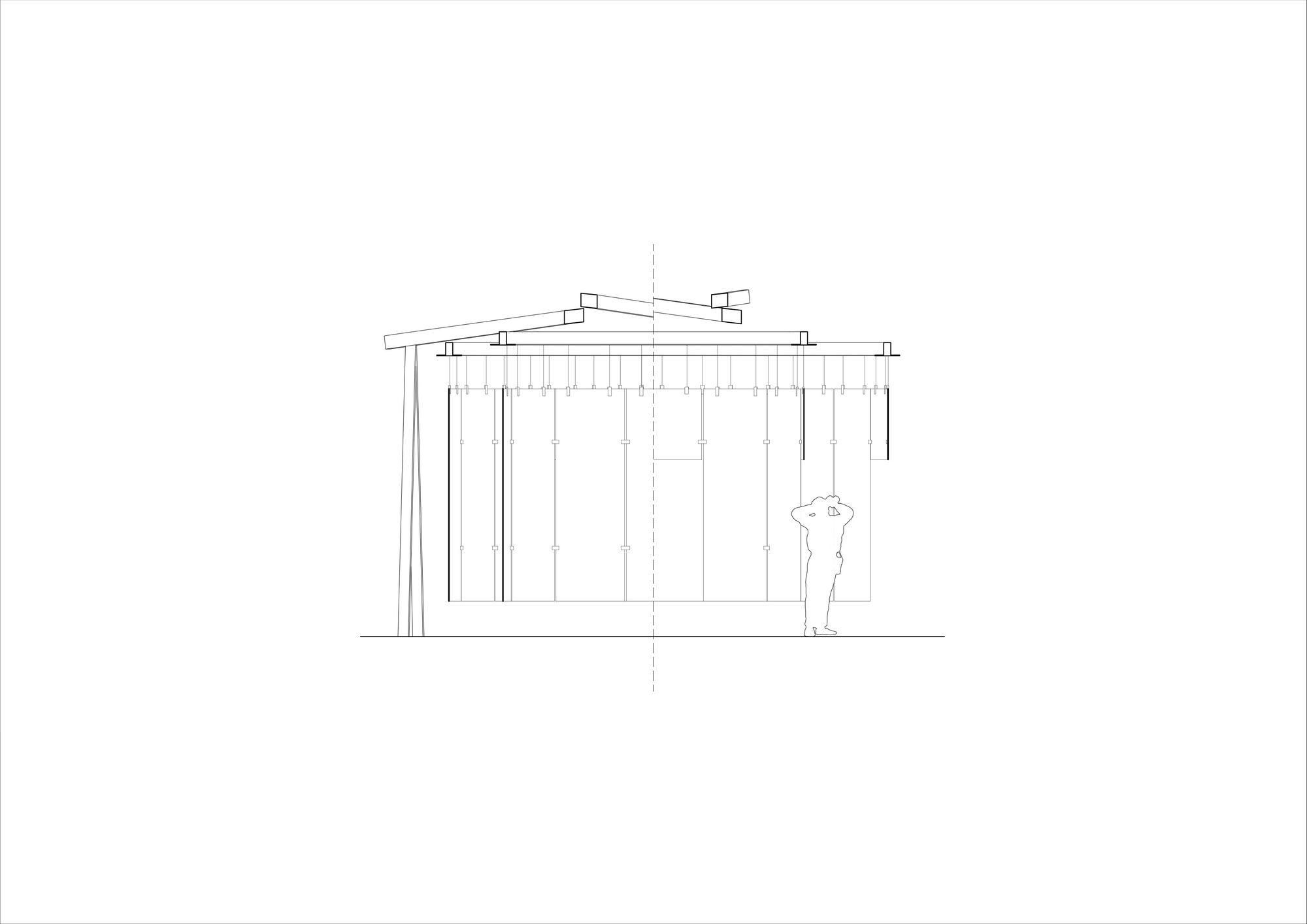
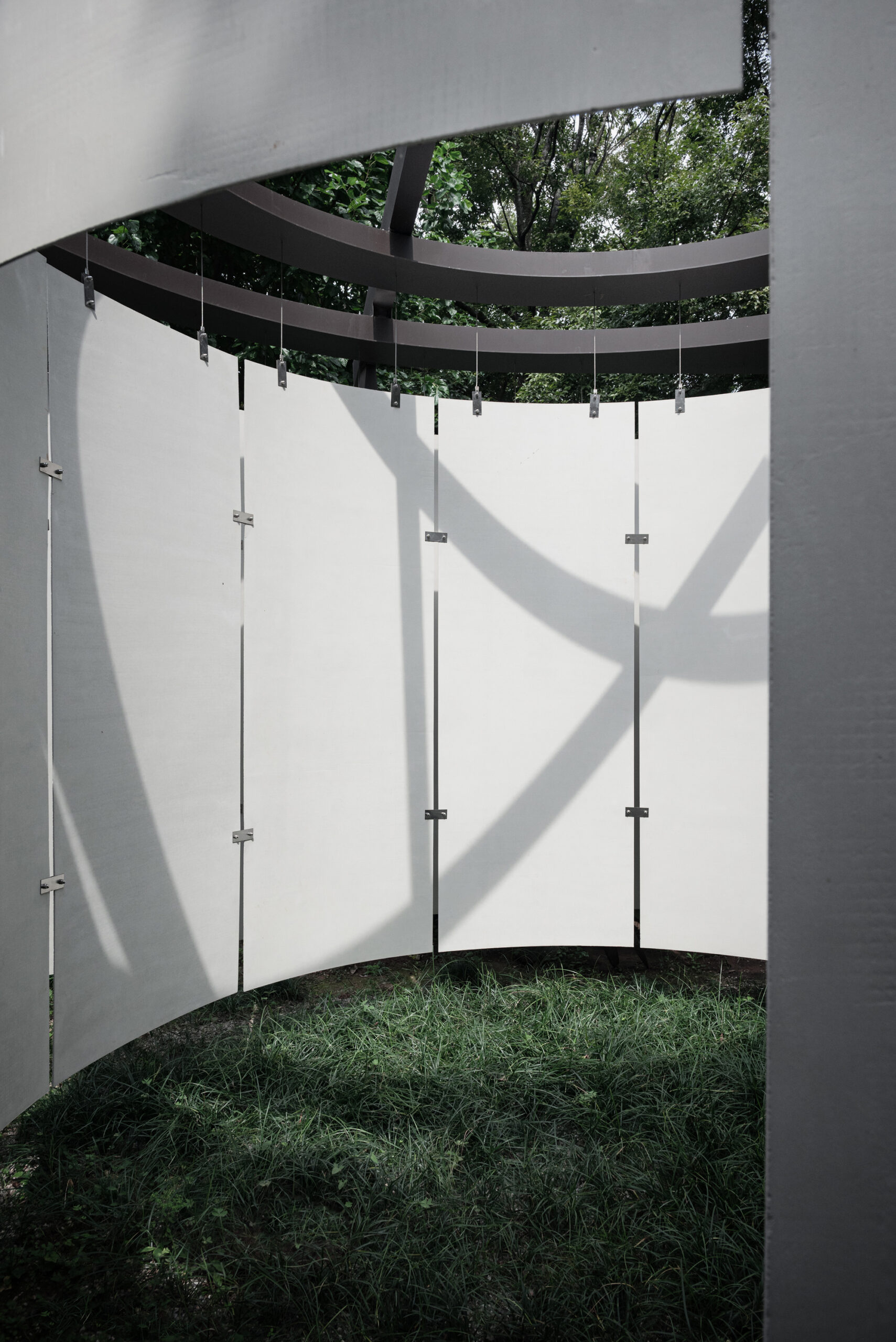
An extended wall or a roofed structure? Driven by a light-touch, minimal-foundation approach, the project follows a top-down structural logic. Beyond maintaining the tripartite layering of the existing pavilions, the design places greater emphasis on the wall as a primary element, while the wall, roof, and ground remain distinct from each other. The roof, rather than being a solid surface, materializes as a structural framework. The shallow eaves soften the intersection of the roof components, outlining crisp and upright corners—manifesting a posture that oscillates between an installation and a built structure.
© Ziqian Wang
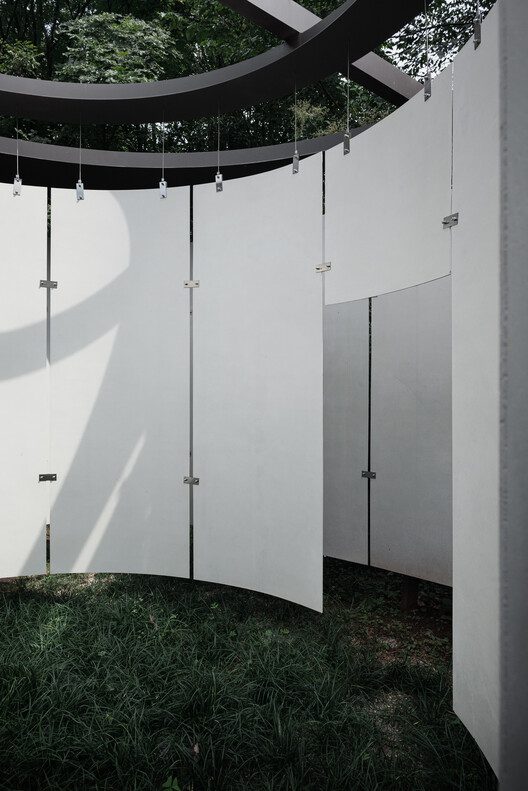
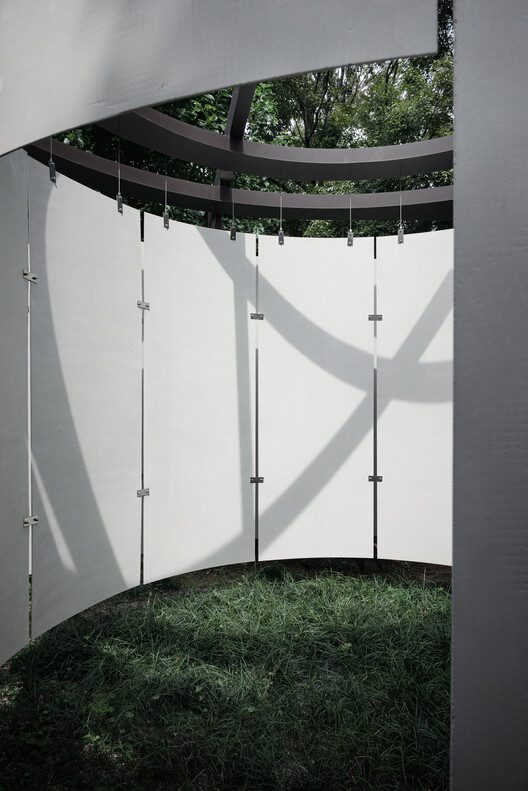
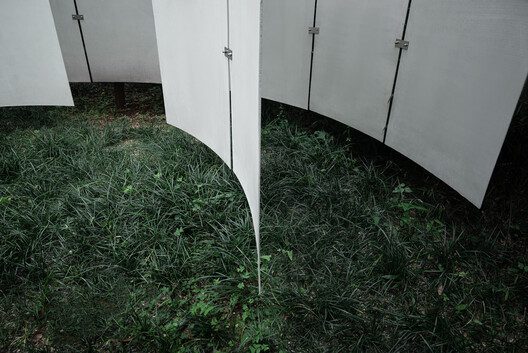
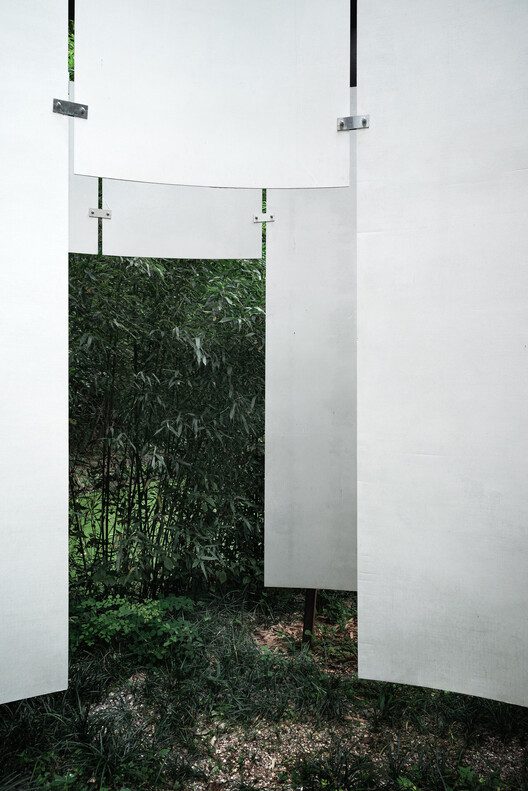
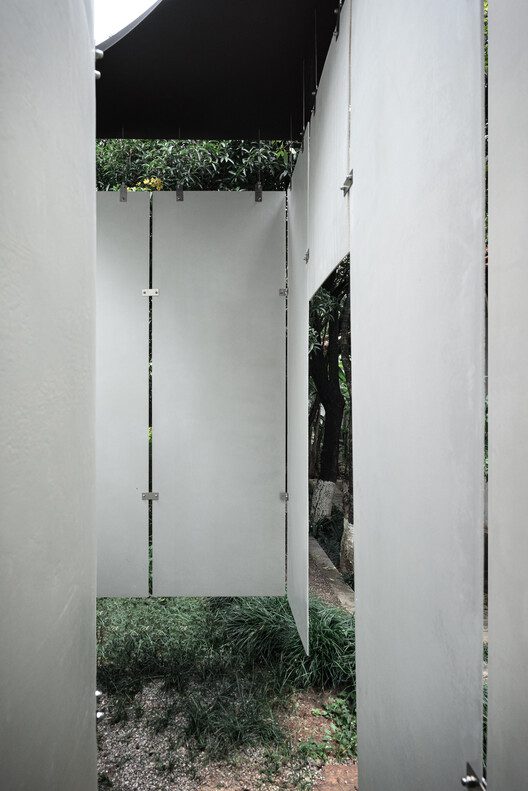
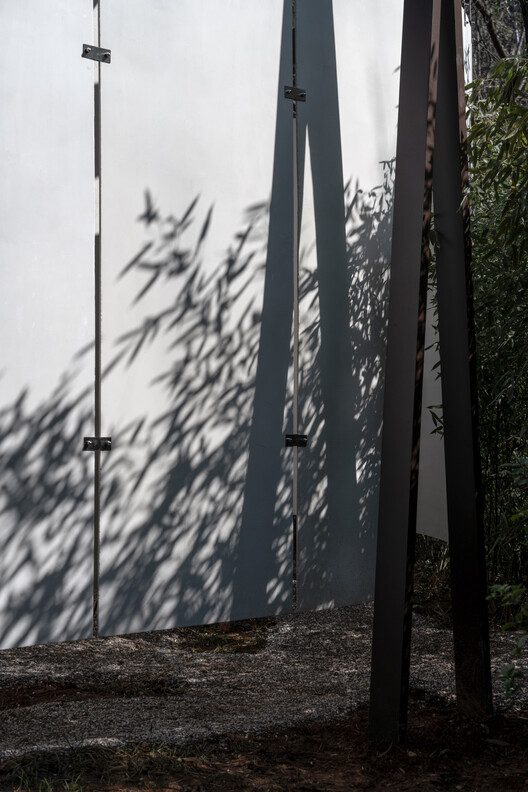
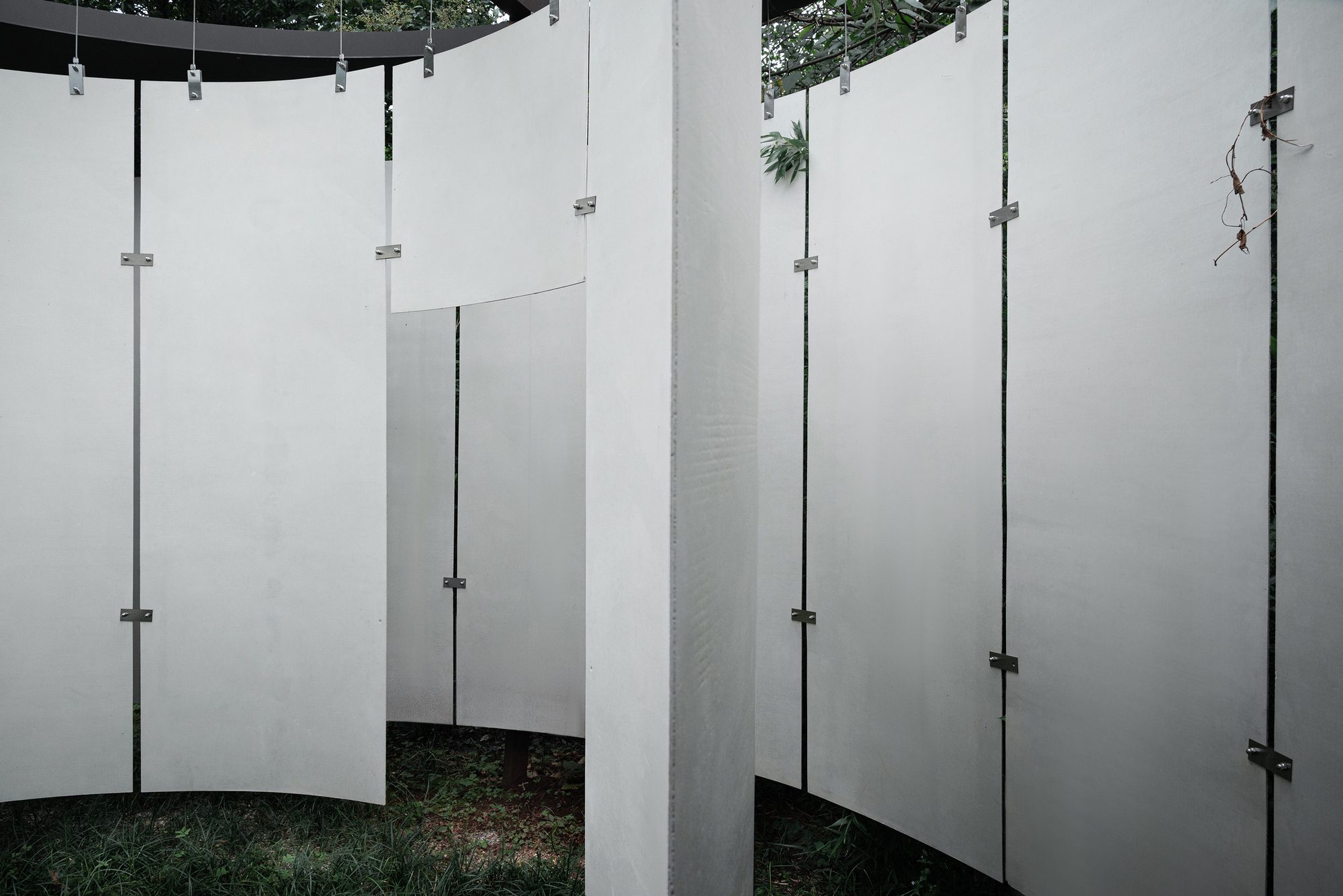
A hanging curtain or a suspended wall? The moment one steps into the central space marks a dramatic shift in mass, where thickness suddenly transitions into thinness. We experimented with ultra-thin precast white concrete panels, balancing visual weight with the structural demands of suspended lightness, ensuring both geometric clarity and stability. The material’s subtle reflectivity and soft shadows, coupled with its barely perceptible curvature, lend the form a gentle resilience. Amid the surrounding vegetation, these surfaces become screens upon which the landscape is projected, evoking imagery reminiscent of ink-washed silk.
© Ziqian Wang
Wandering along, passing by glimpses of scenery beyond the frames—fragmented yet seamlessly connected in motion. Only then does it become apparent that perhaps the unrealized ‘golden roof’ has, in fact, extended this landscape of white walls.
Project Info
Architects: Atelier Guo
Country: China, Kunming
Area: 22 m²
Year: 2024
Photographs: Ziqian Wang, Qingshan Wu
Design Team: Atelier Guo
Principle Architect: Liaohui Guo
Project Architects: Nuo Chen
Site Architects: Nuo Chen
Engineering: Chang Ge
Construction: Team of Rui Li
Clients: Dianchi Art Season