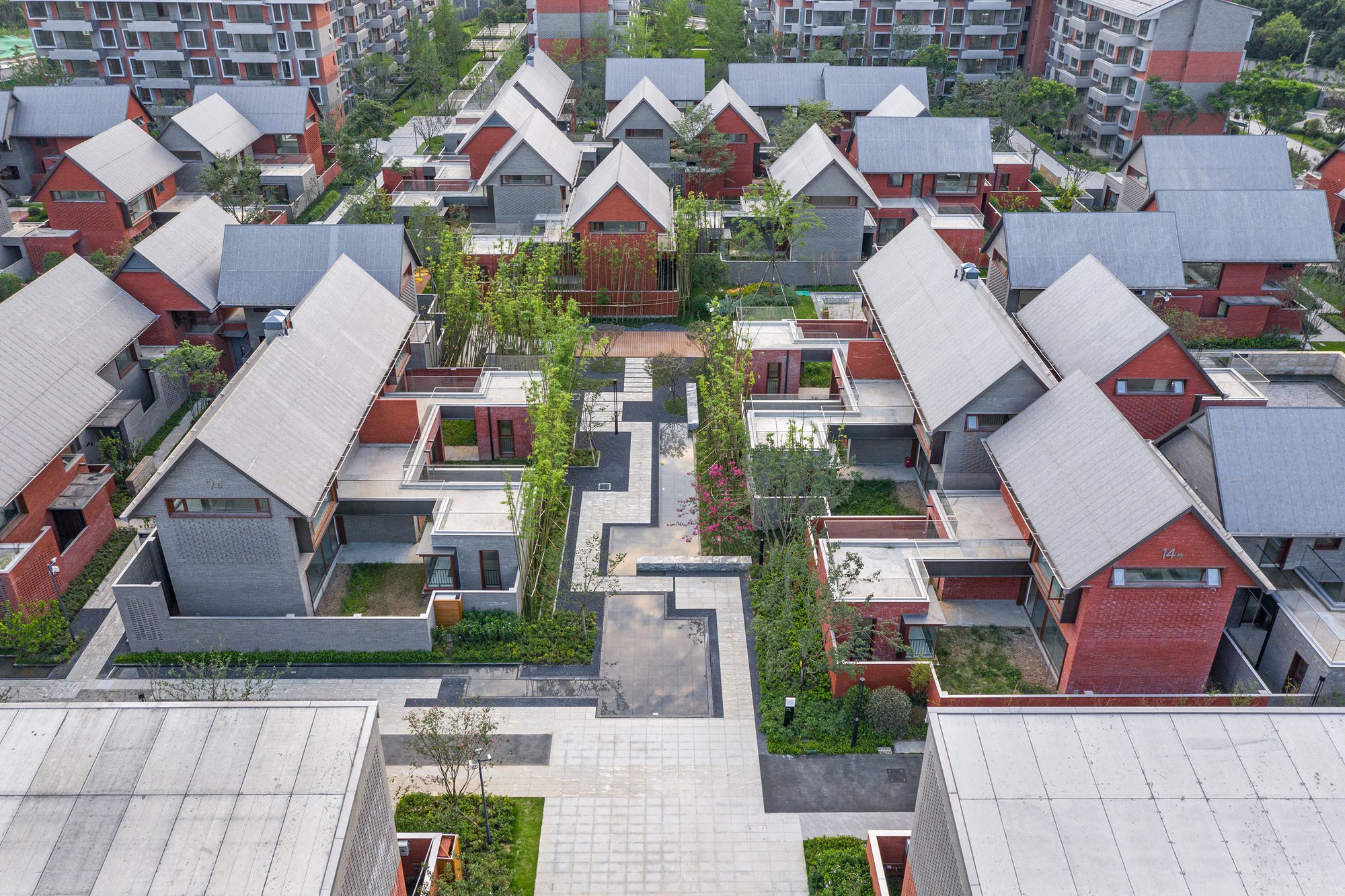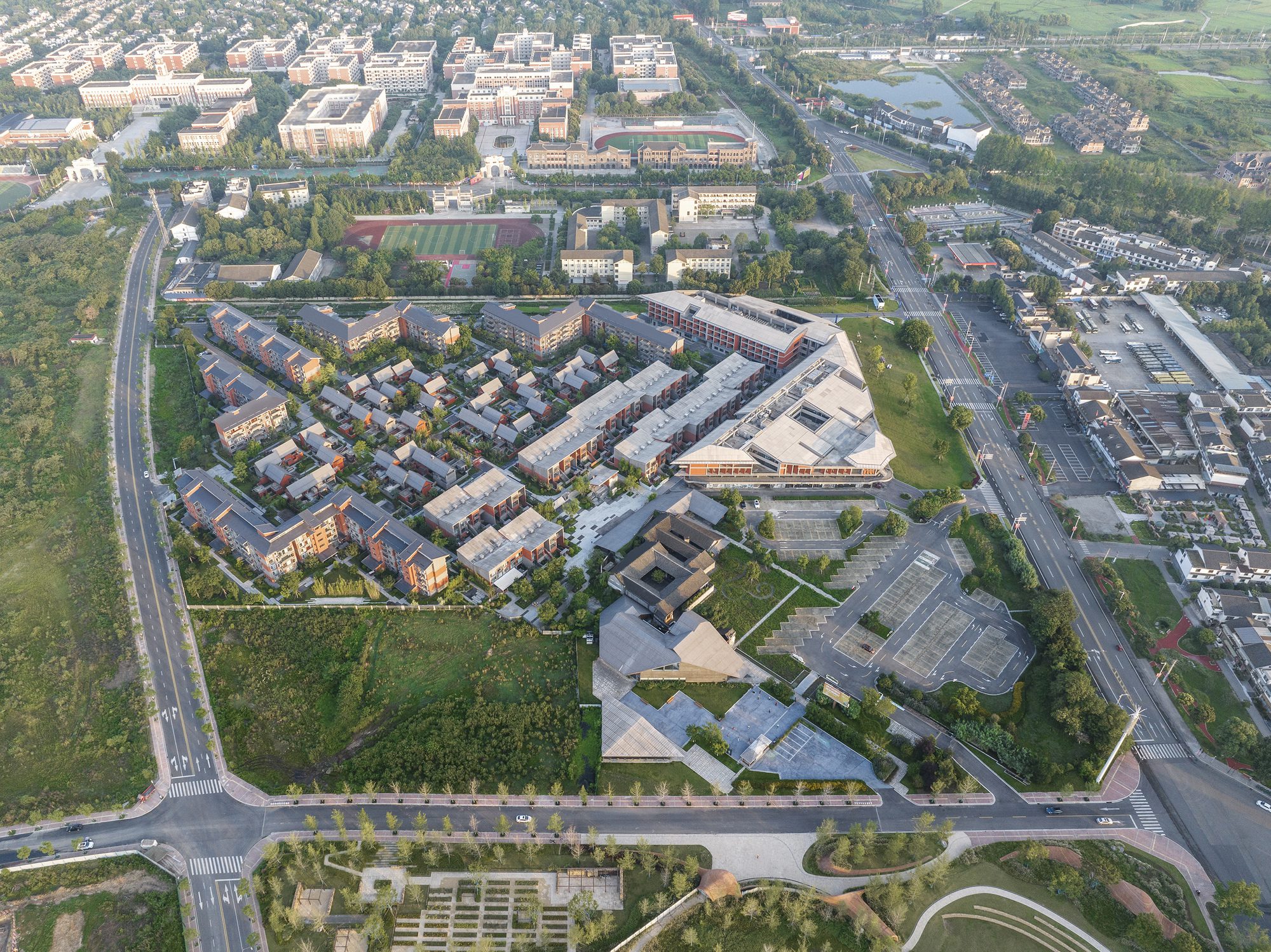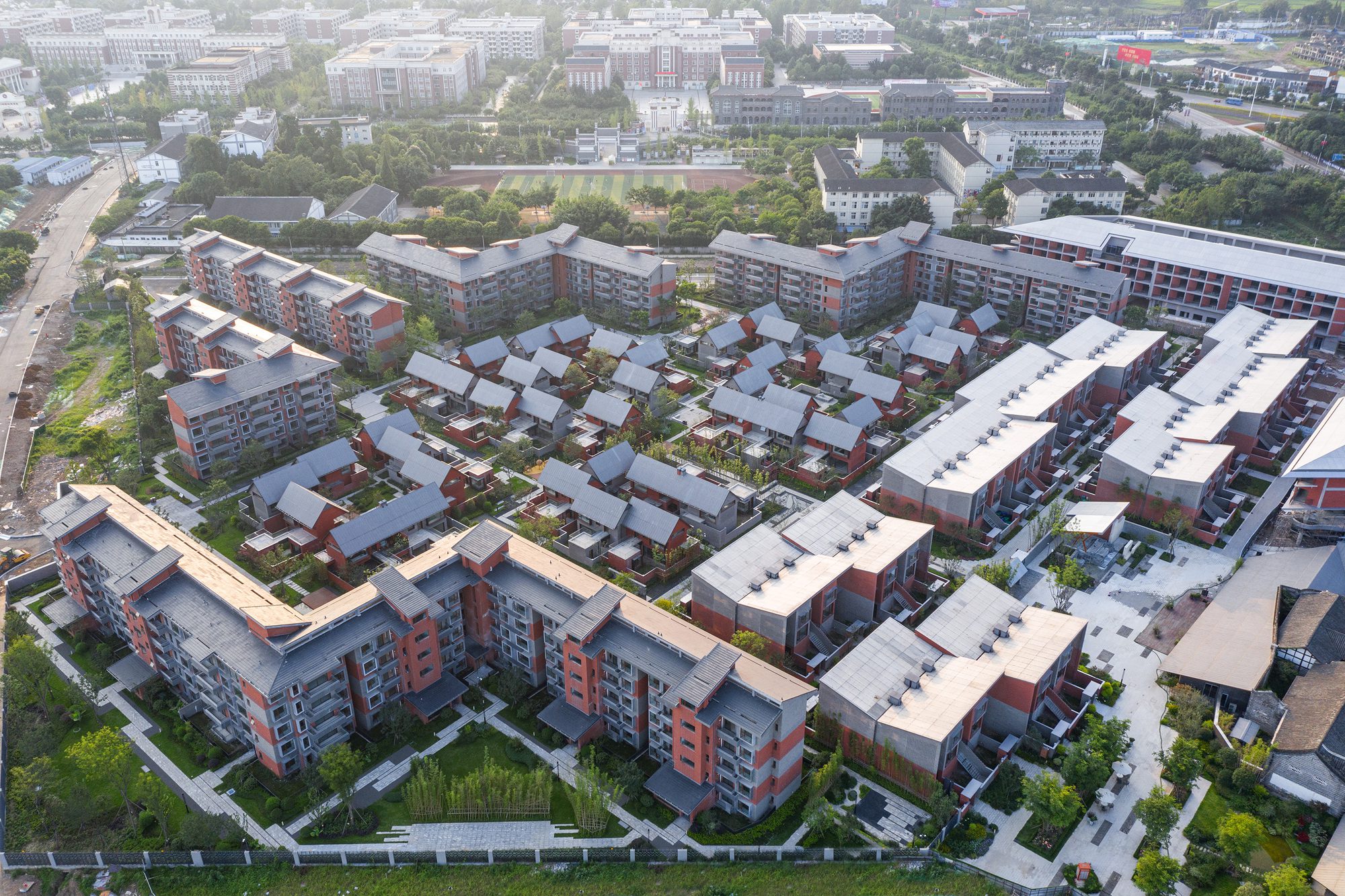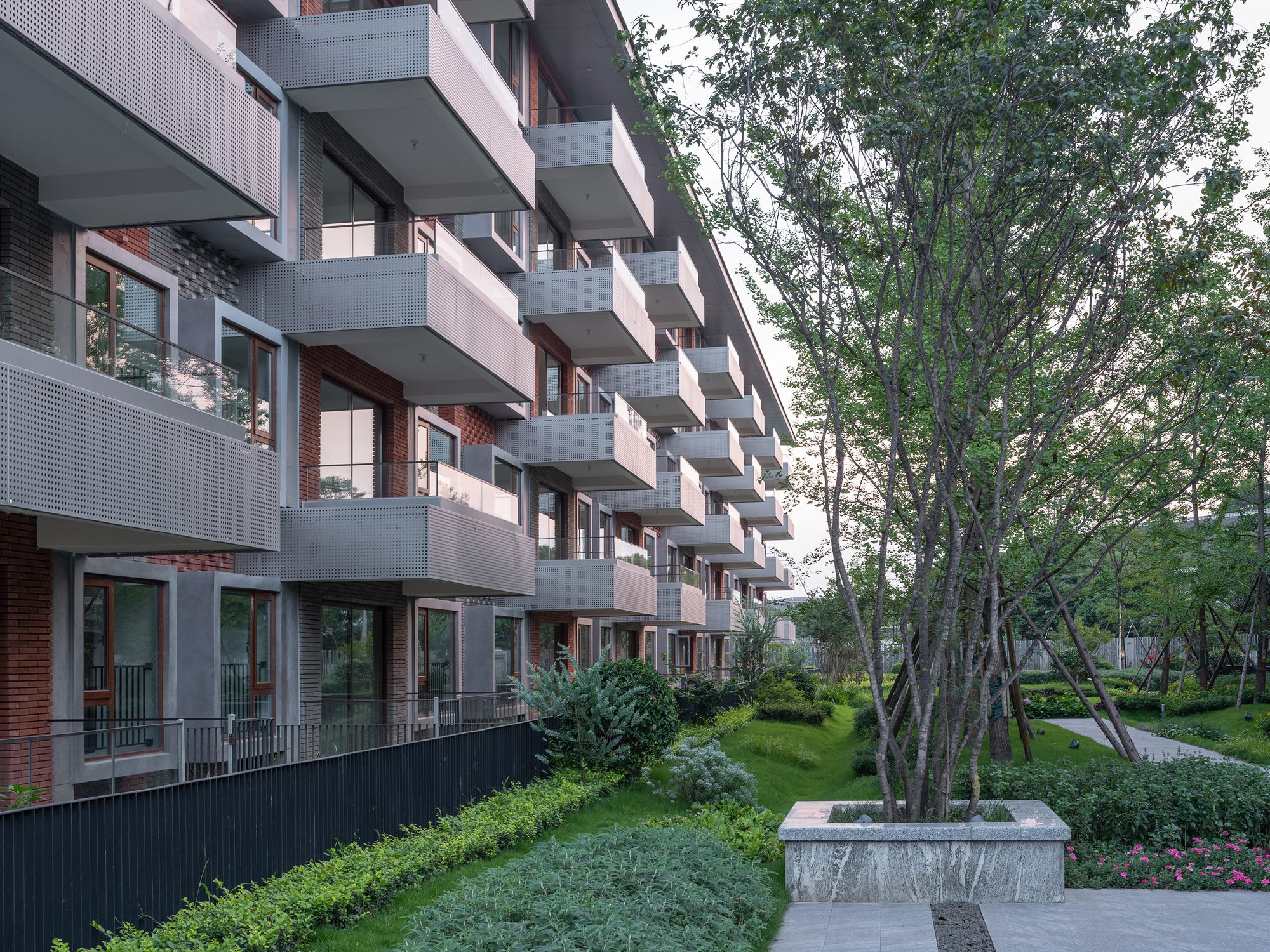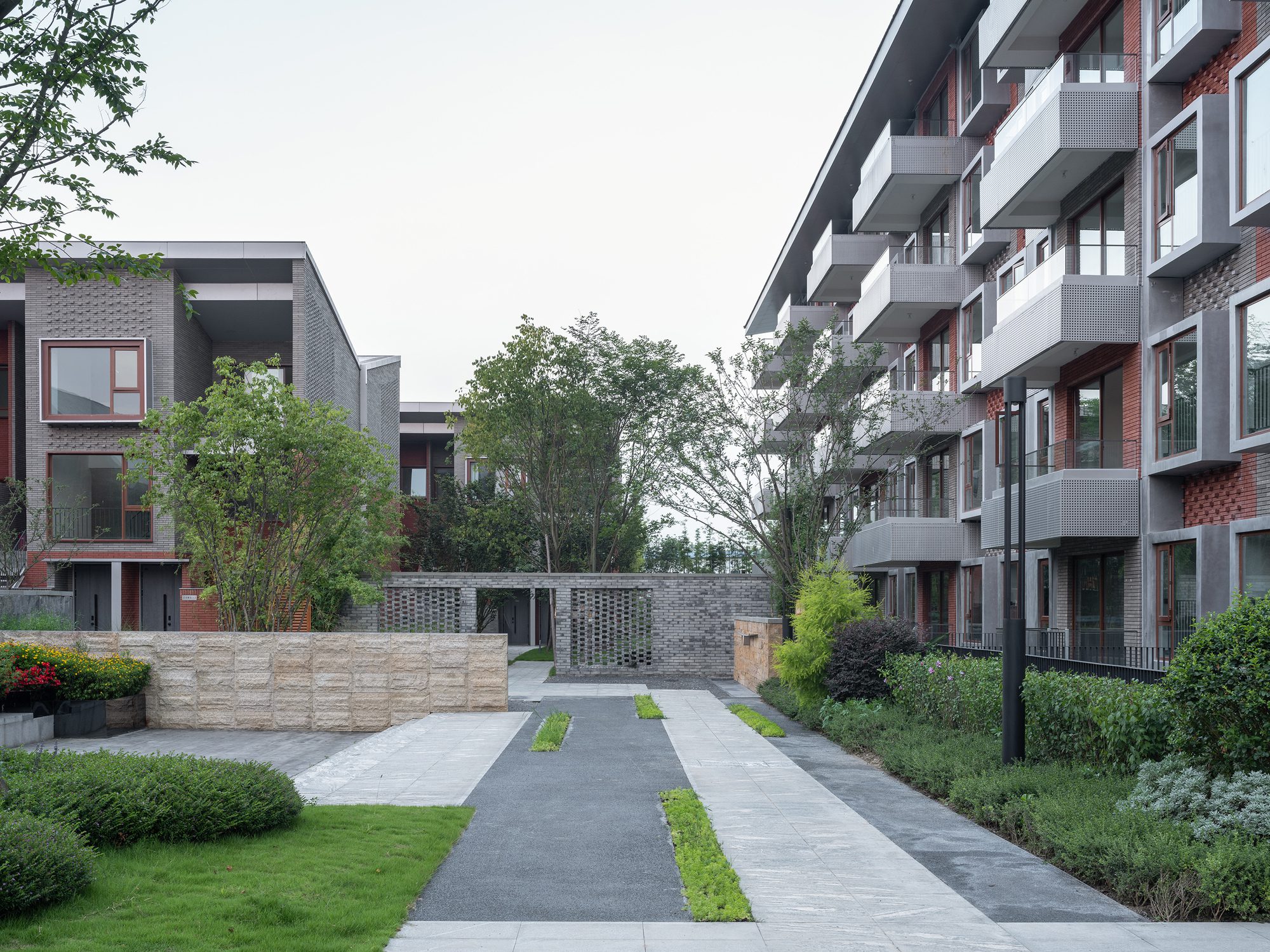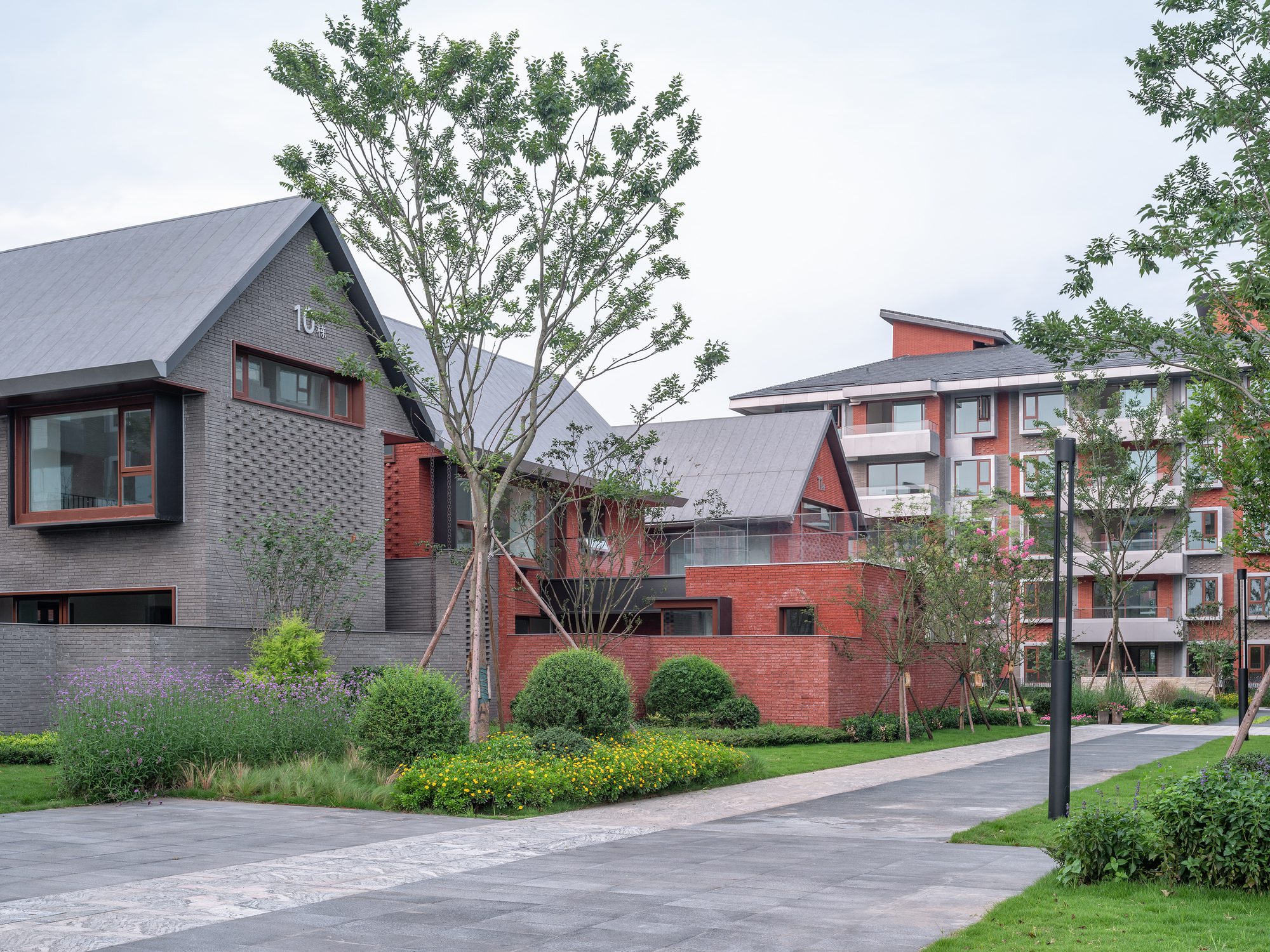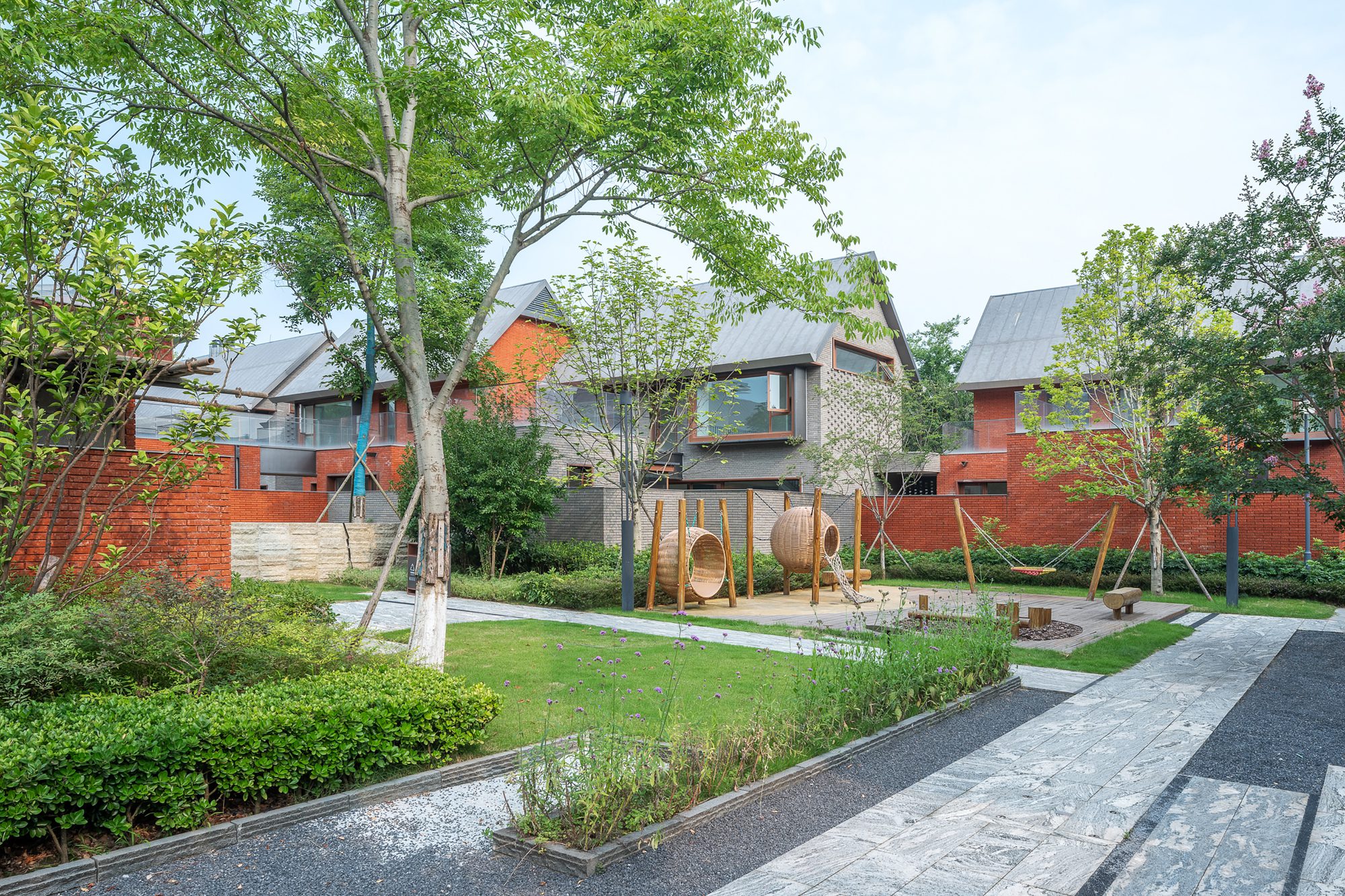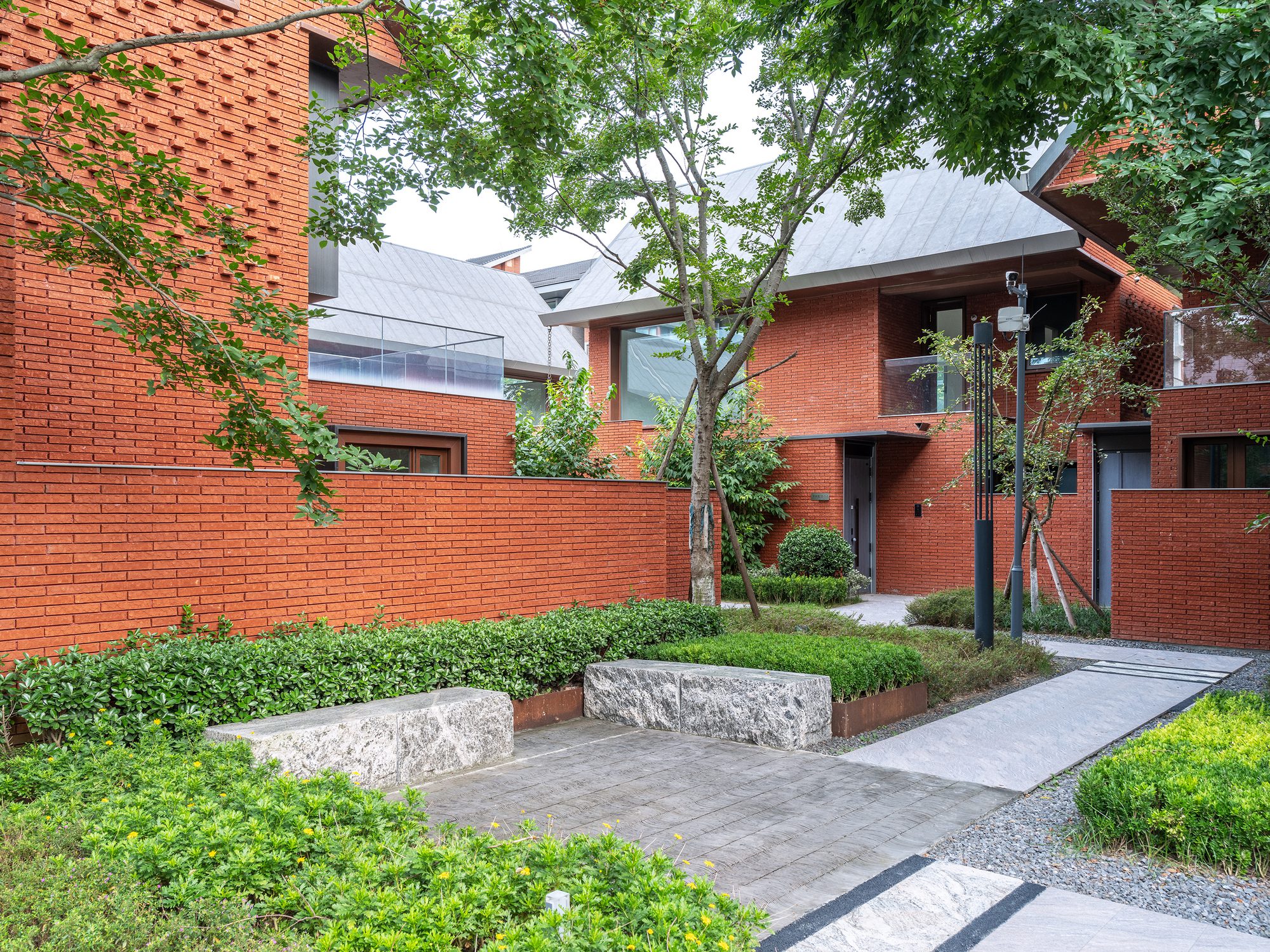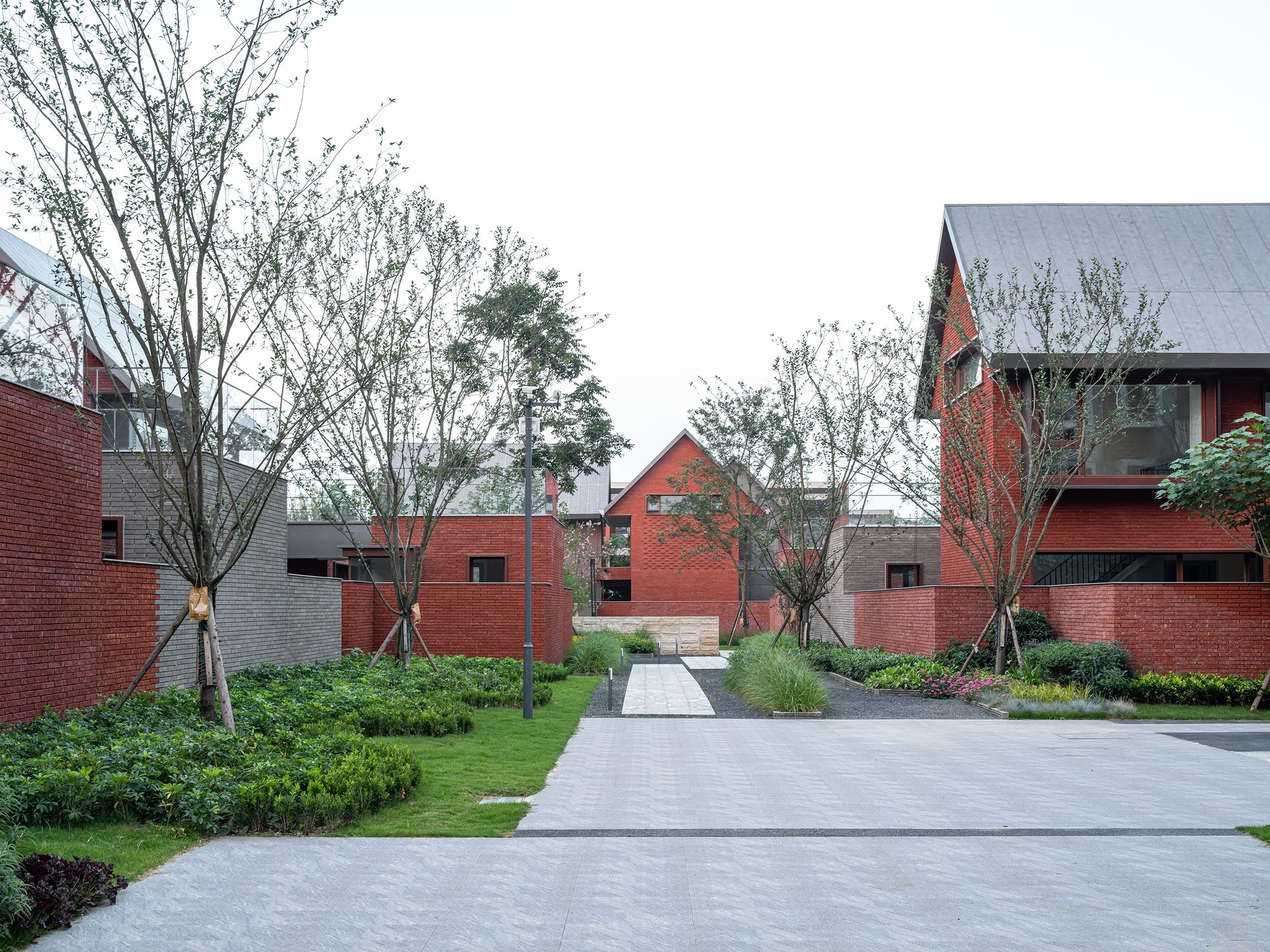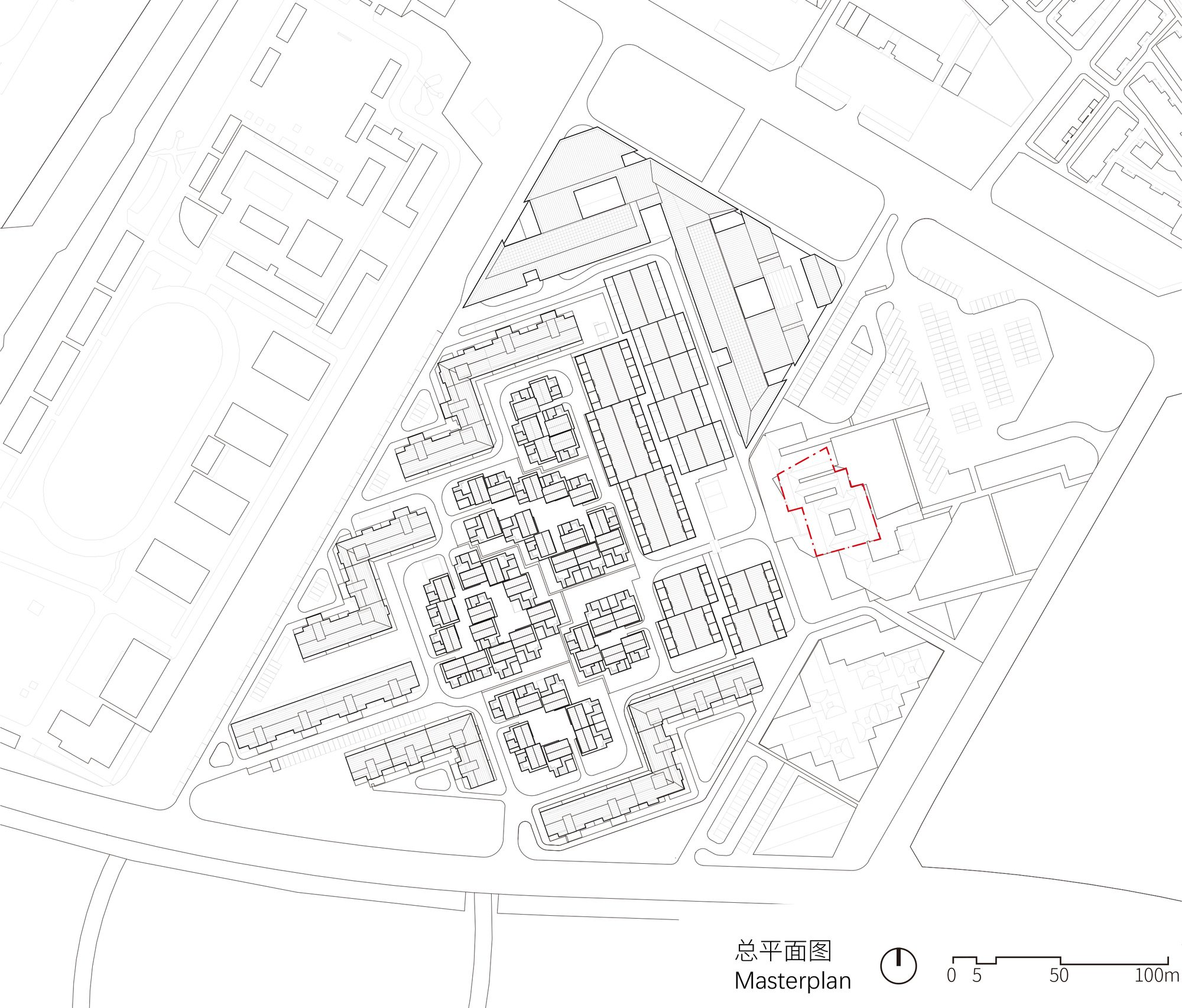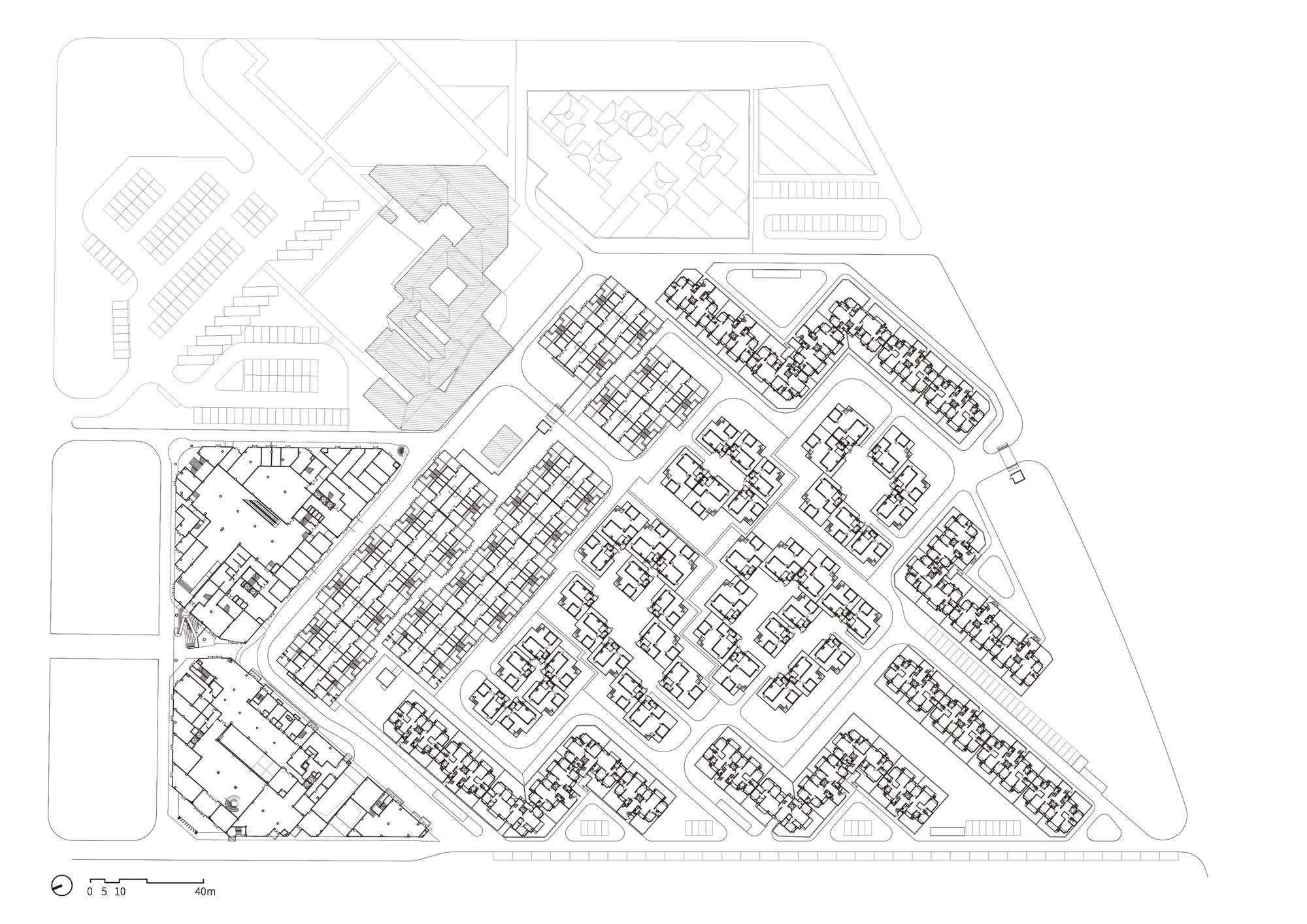


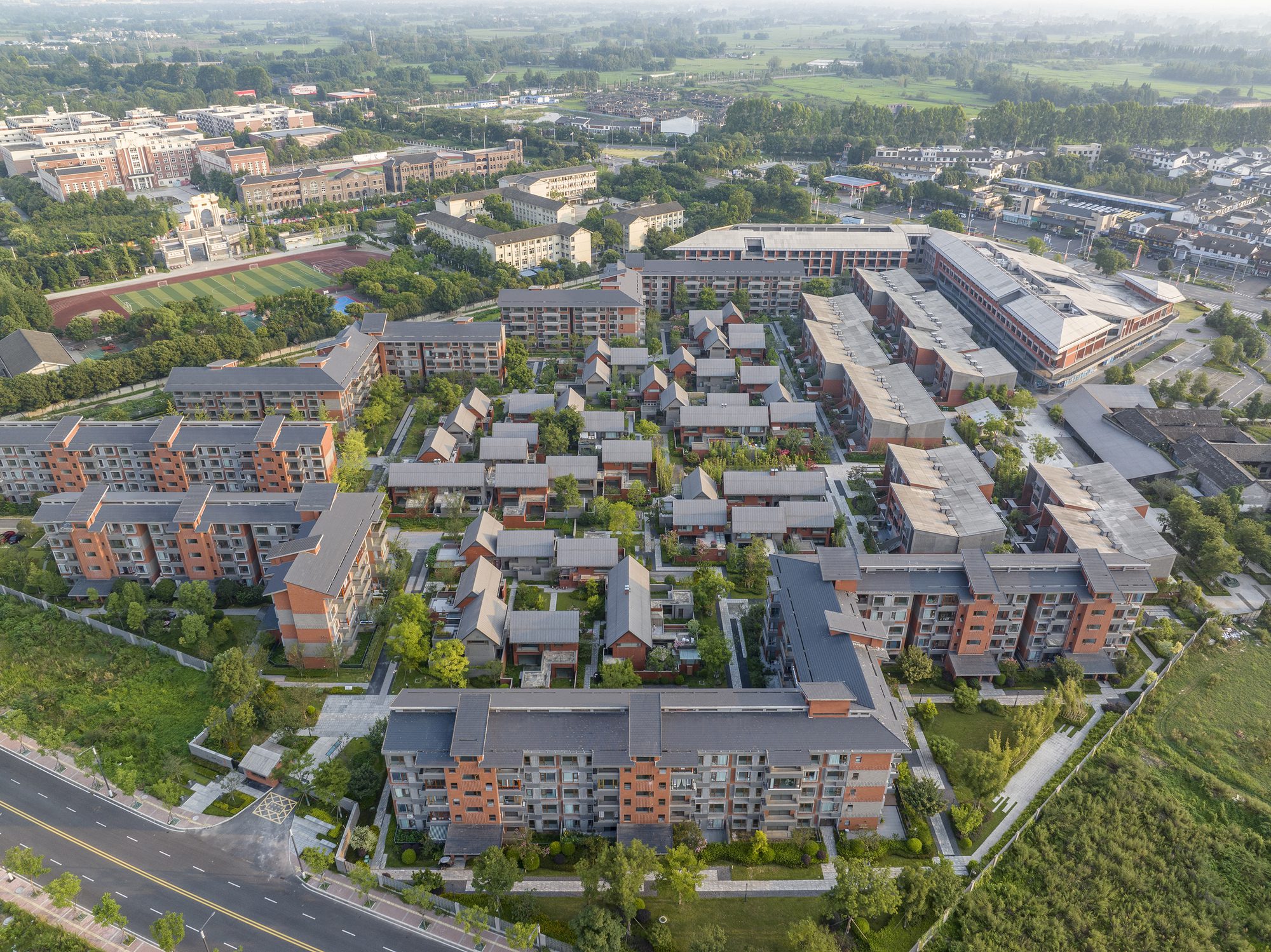
Located on the outskirts of Anren Ancient Town, Chengdu, Sichuan, the Arenli Community is adjacent to the Anren 5A Tourist Center (expanded from the preserved cultural relic building, Liao Wei Residence, from the Republic of China era), the Anren Passenger Station, and the main urban thoroughfare. Covering a land area of 64,265.24㎡, the community boasts a total construction area of 69,873.57㎡ and a floor area ratio of 1.09, serving mixed commercial and residential purposes.
© FangFang Tian
The project is situated at the junction of urban expansion and natural farmland. The adjacent Liao Wei Residence has been transformed and utilized as a historical relic, serving as a tourist center to provide reception and supporting services for visitors, and stimulating the construction of emerging communities in the vicinity, including this project. However, the axis of the historical building differs from that of the newly planned urban roads, reflecting a detached relationship between top-down urban planning and historical relics. The design chooses to use the residence as a starting point in terms of spatial layout and functional orientation, from which buildings, streets, squares, and landscapes emanate, forming a community connected to the site’s historical heritage.
© FangFang Tian
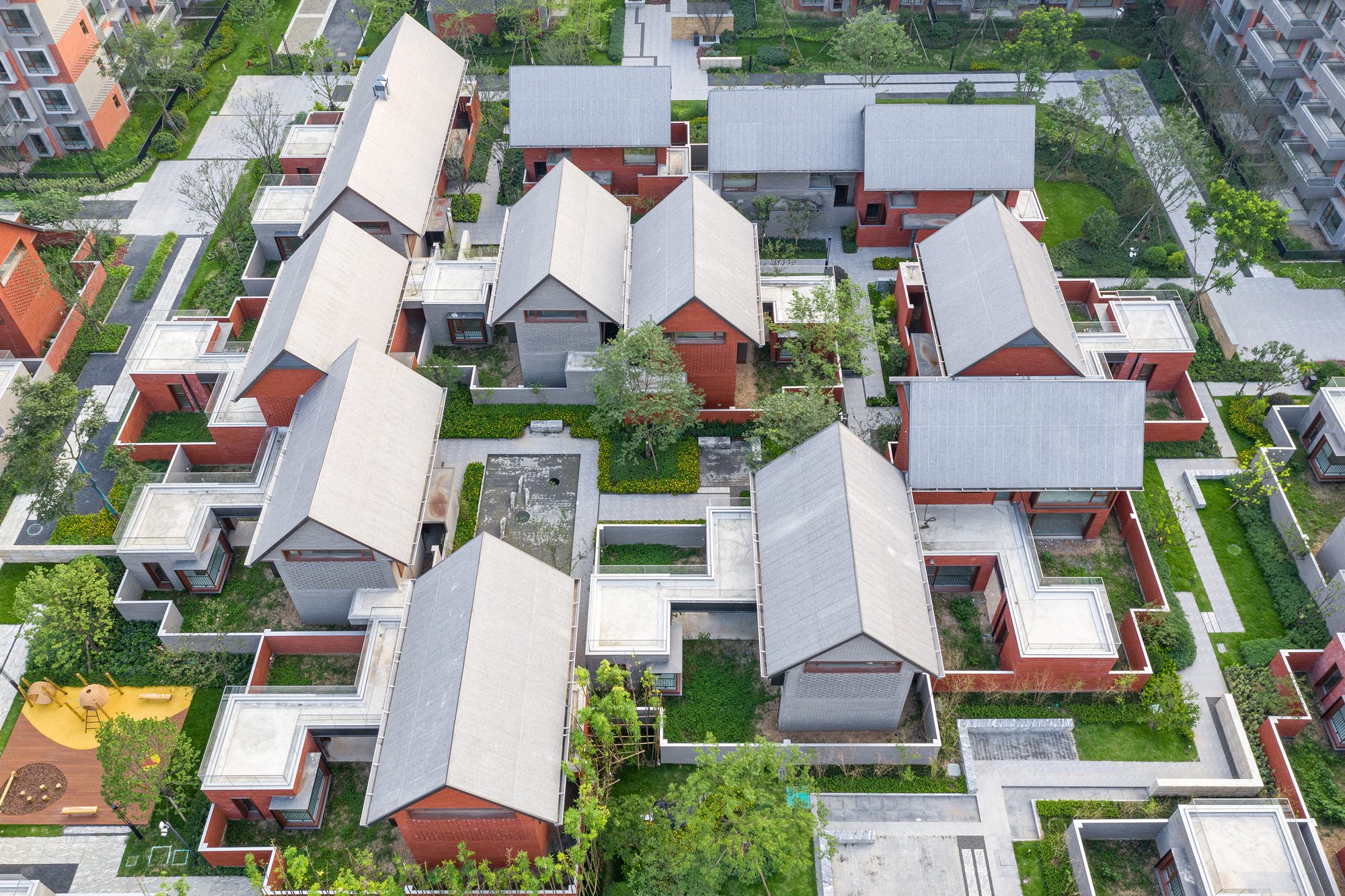
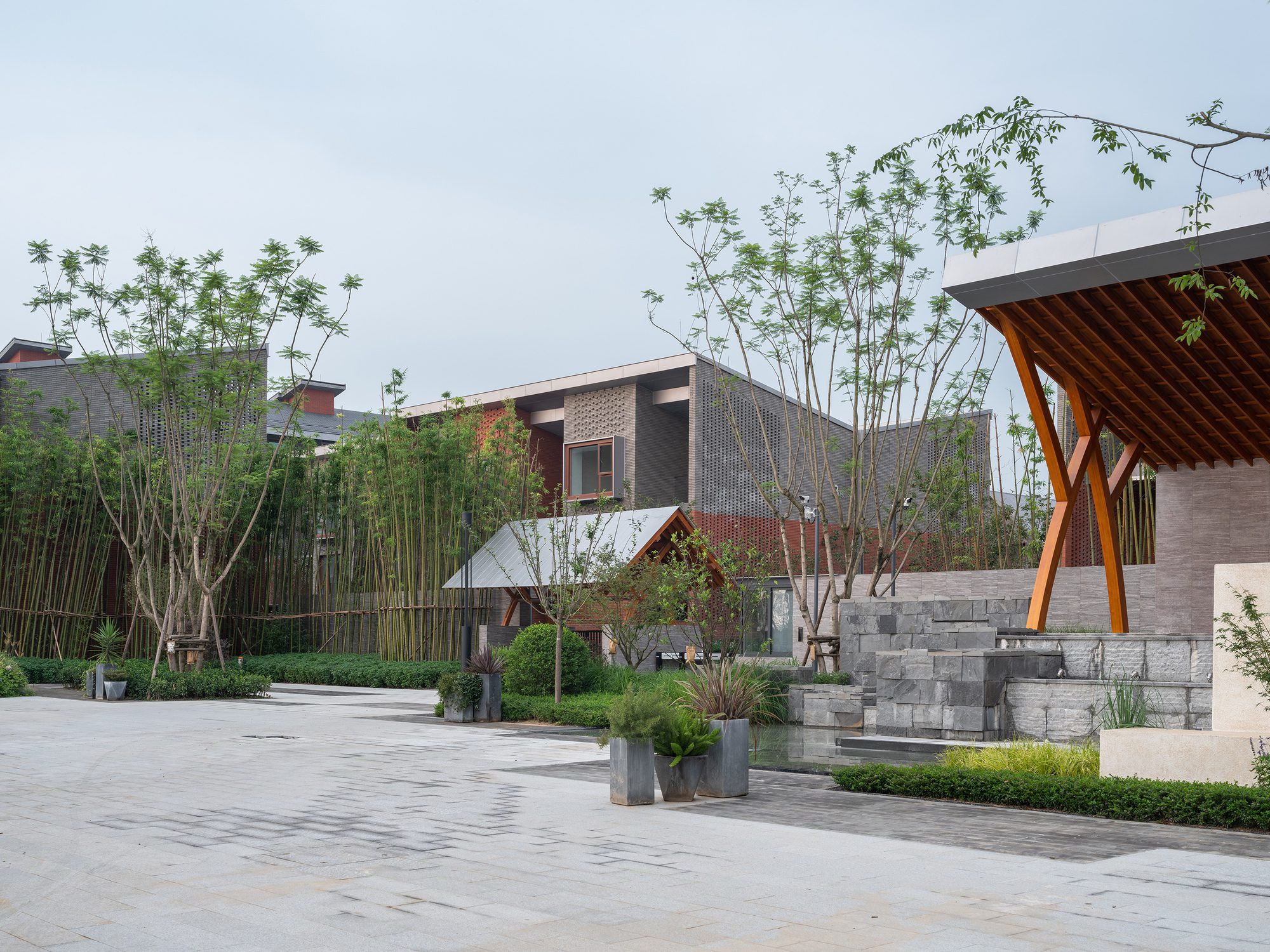
During the evolution of Anren Ancient Town and even the settlements in western Sichuan, various settlement types closely linked to local climate and culture emerged, including Linpan (a traditional rural settlement surrounded by bamboo groves and water) connected to agriculture and nature, and Changzhen (market towns) connected to commerce and urbanization. These settlement types serve as historical references in the design, shaping diverse residential building types and open space types within the community, matching contemporary living and commercial patterns, and creating a miniature contemporary commercial and residential town with historical and cultural context.
© FangFang Tian
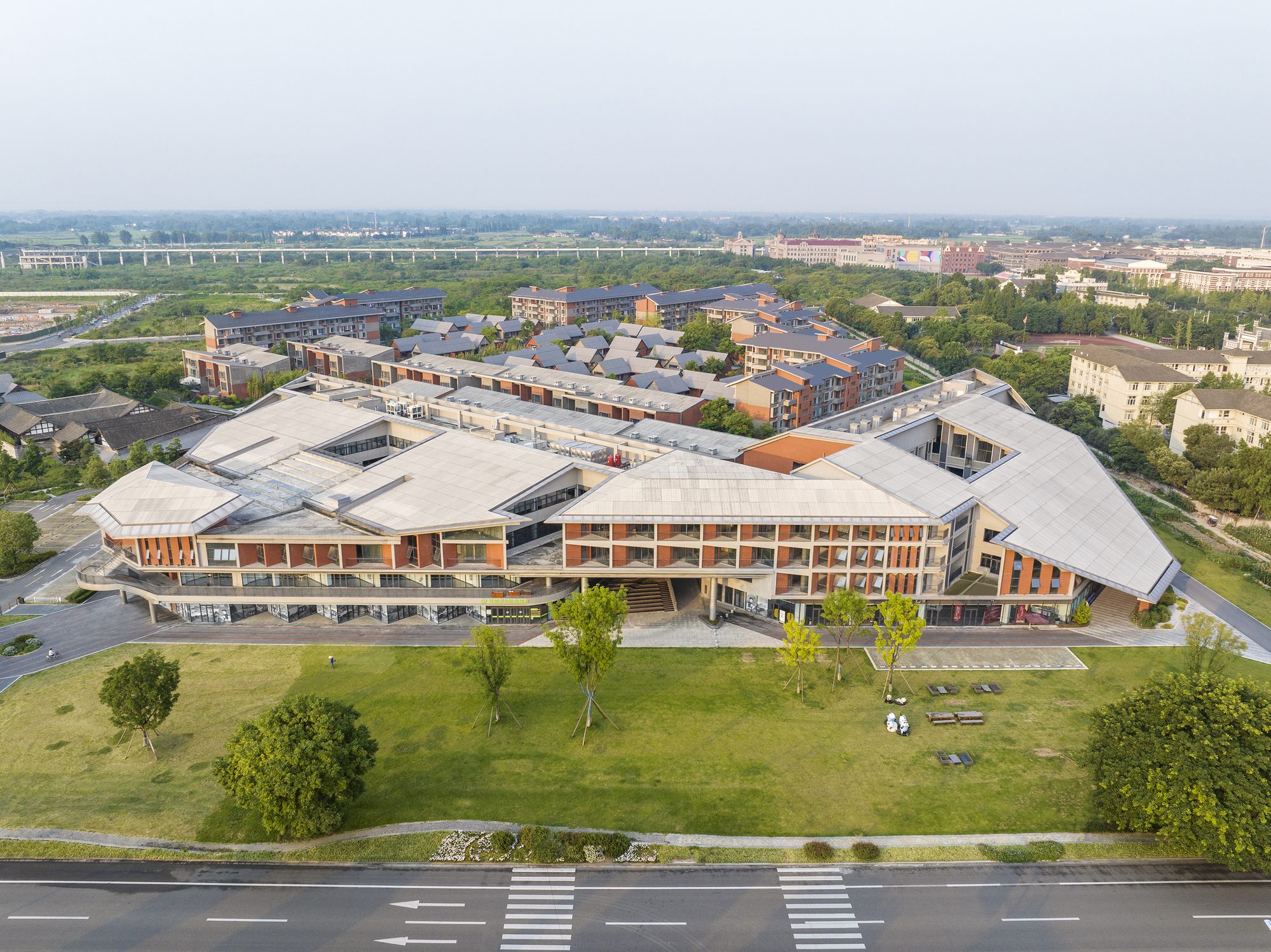
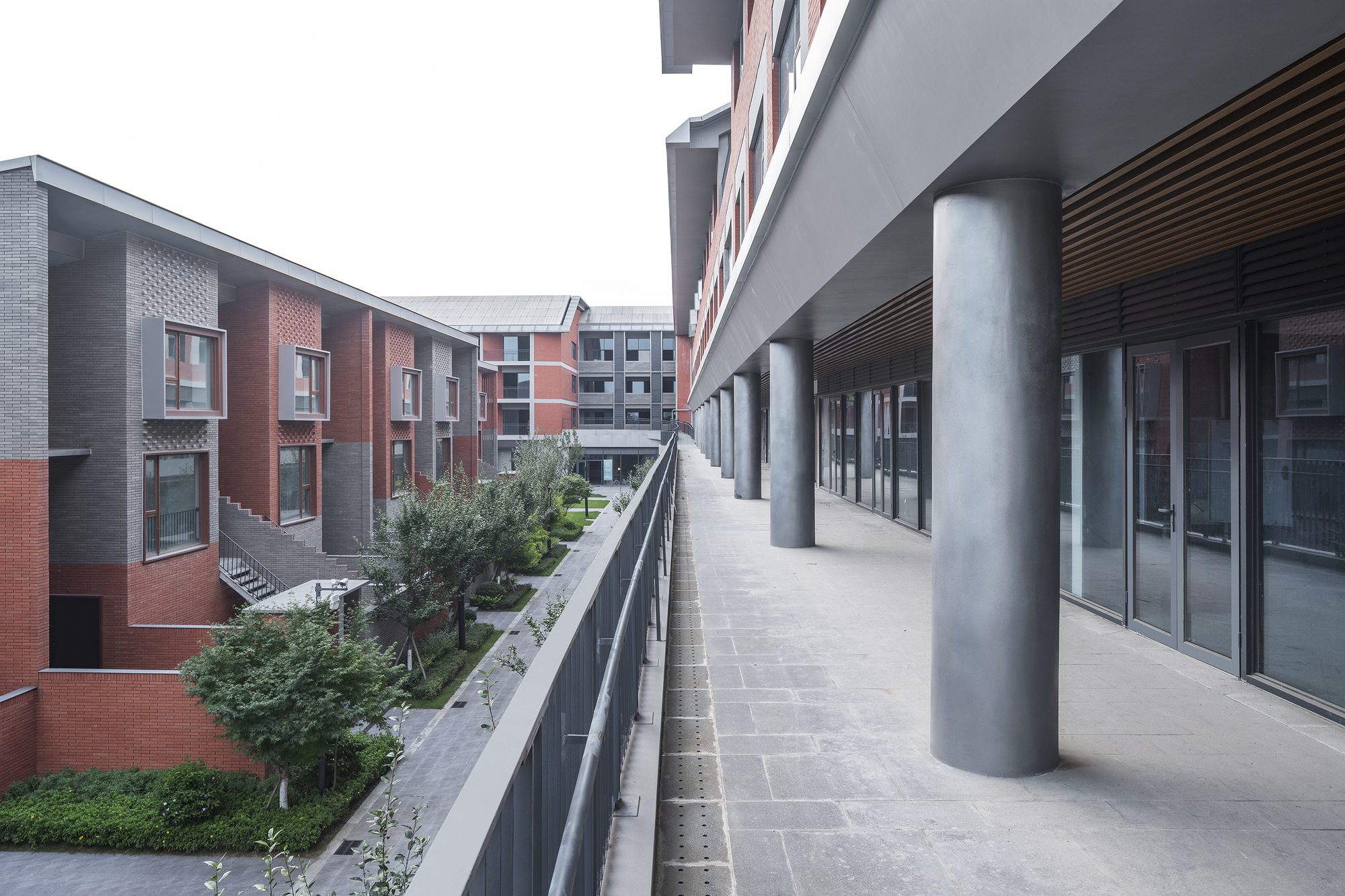
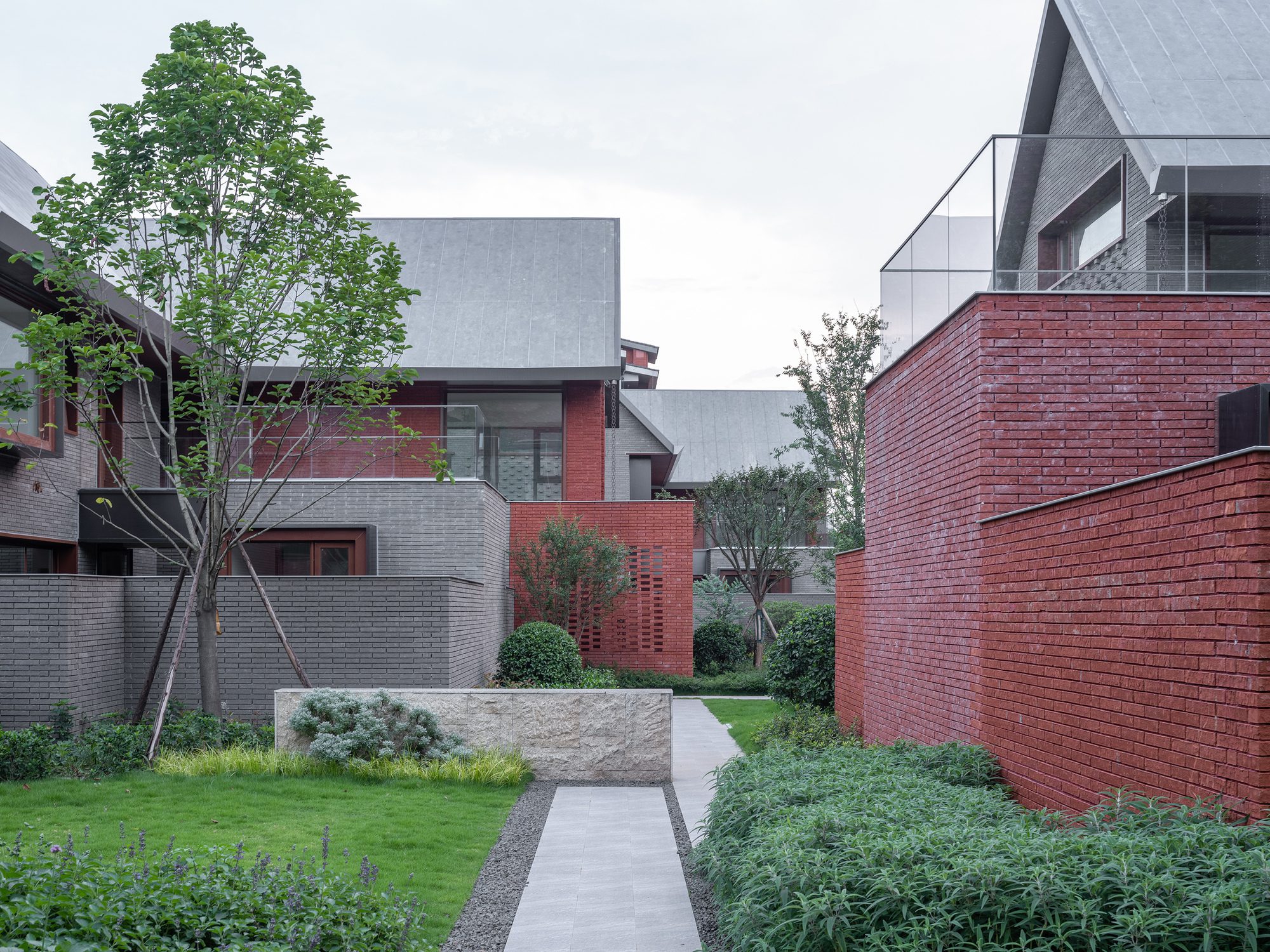
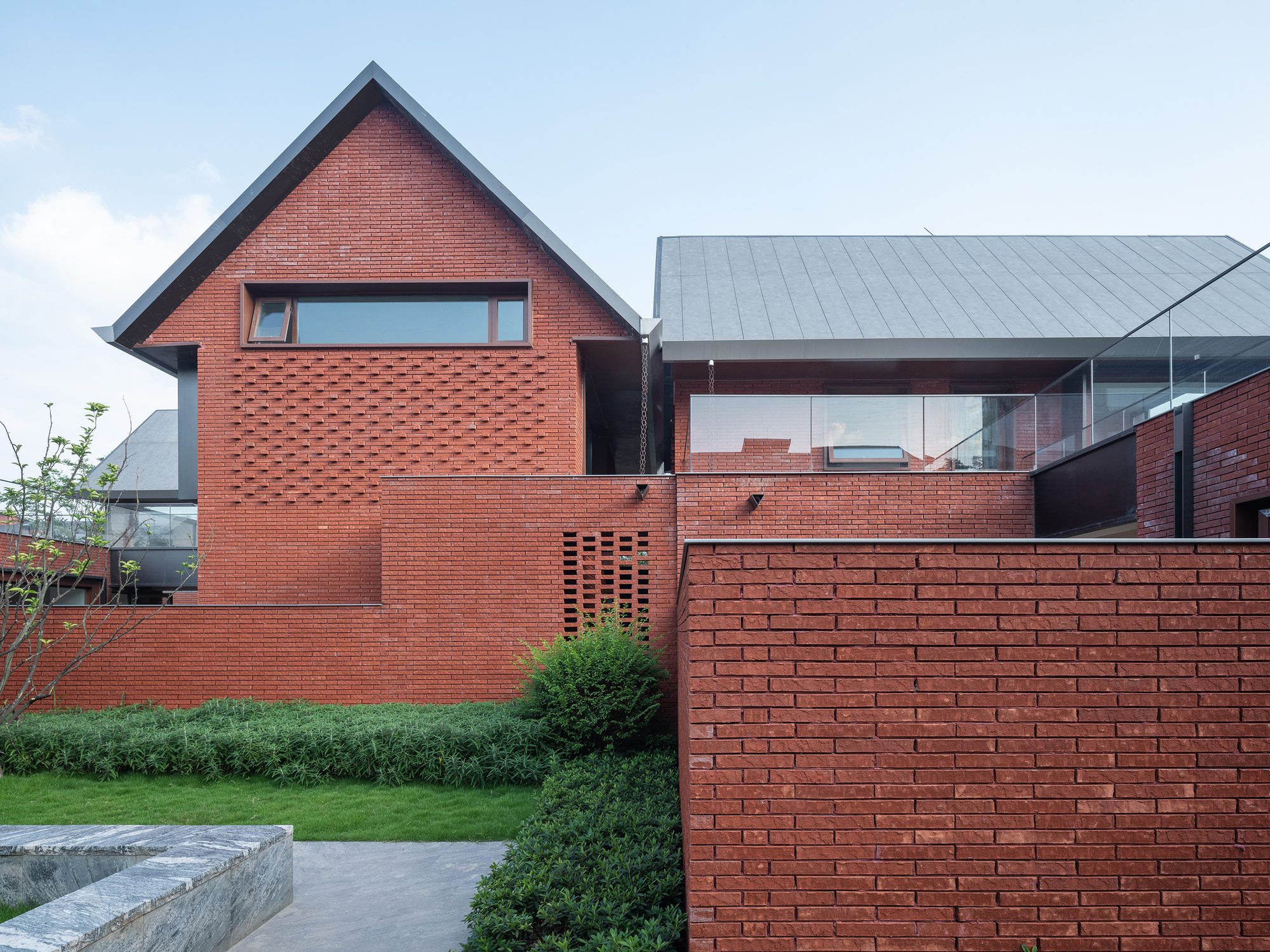
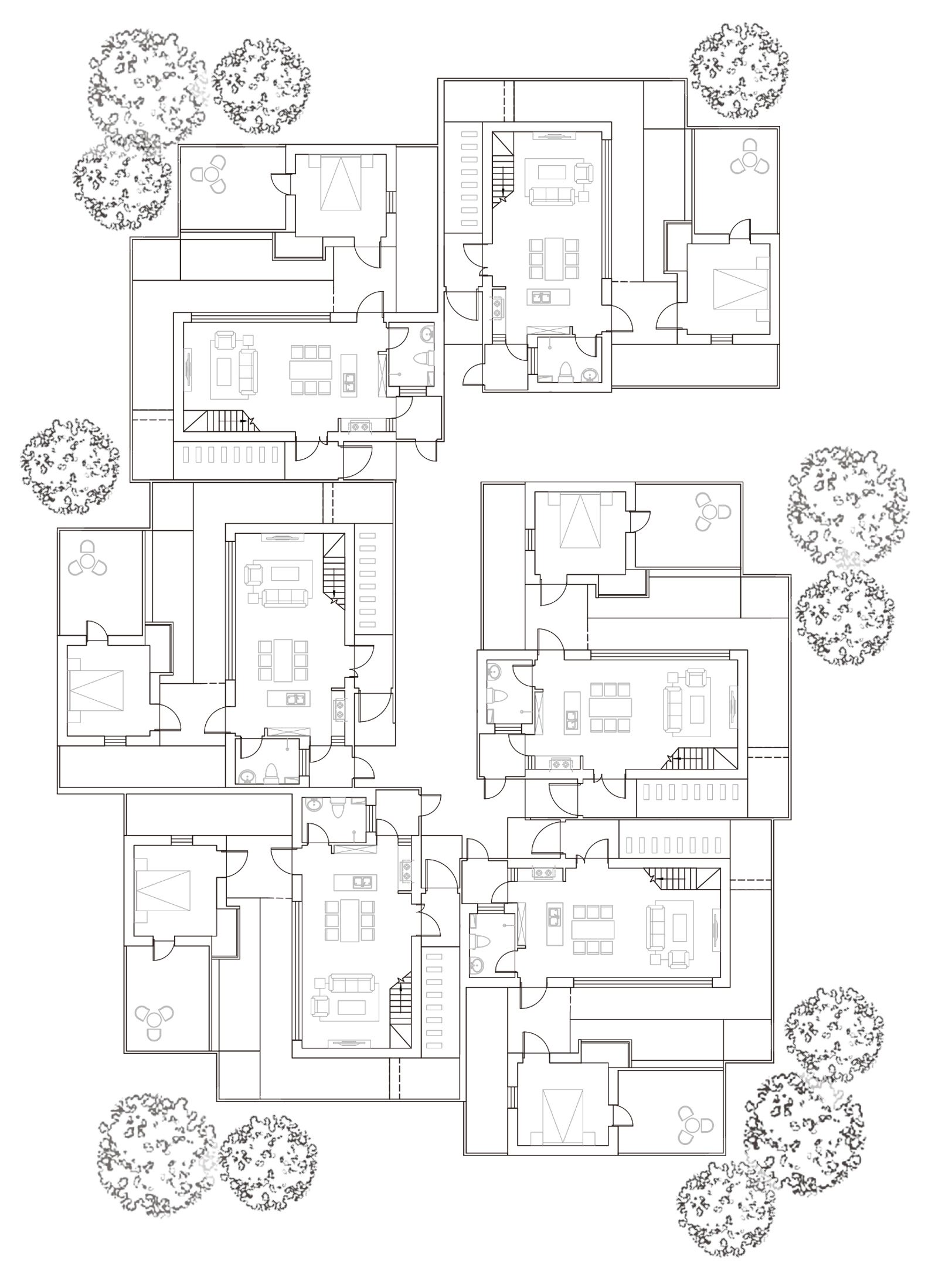
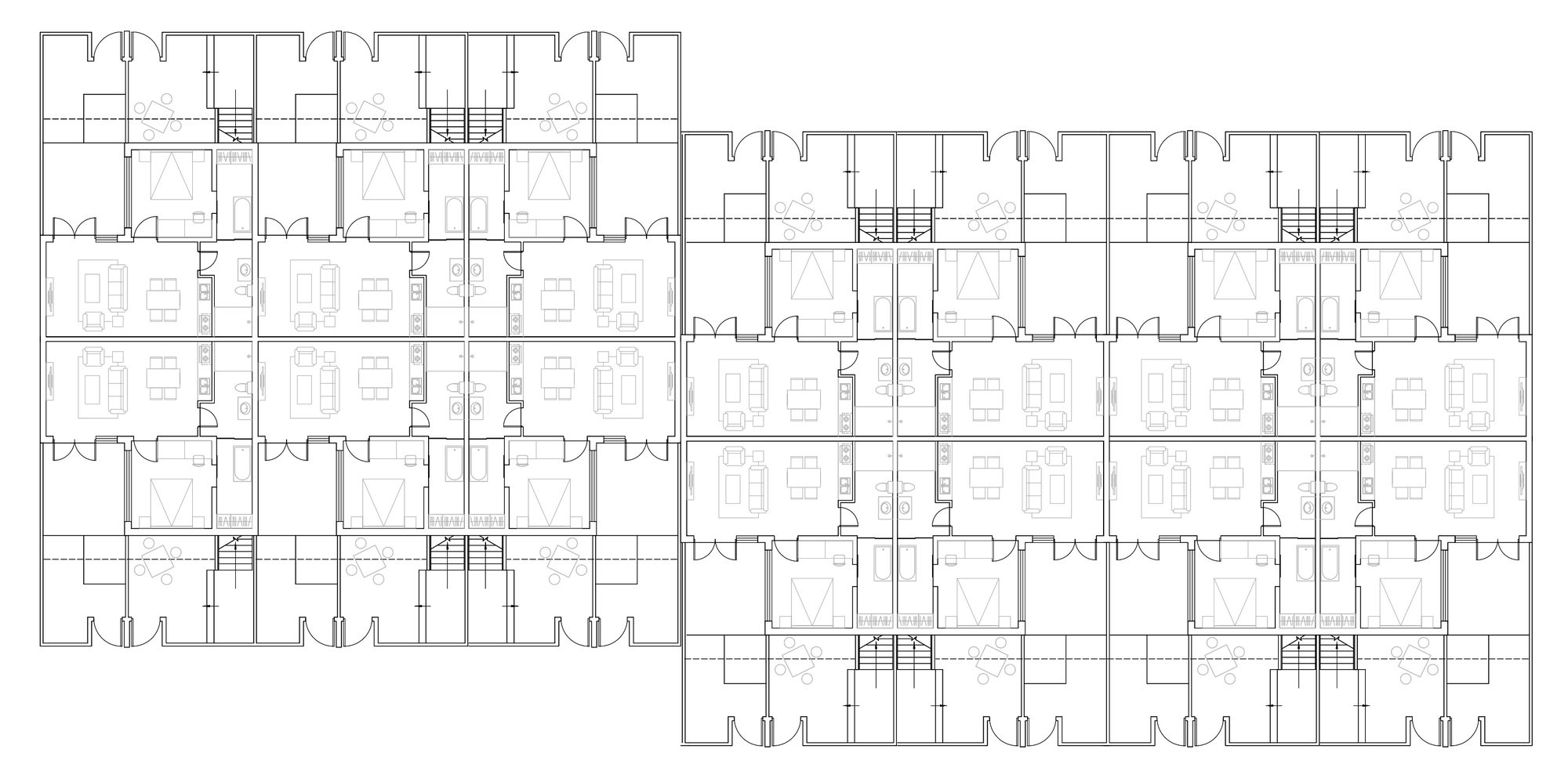
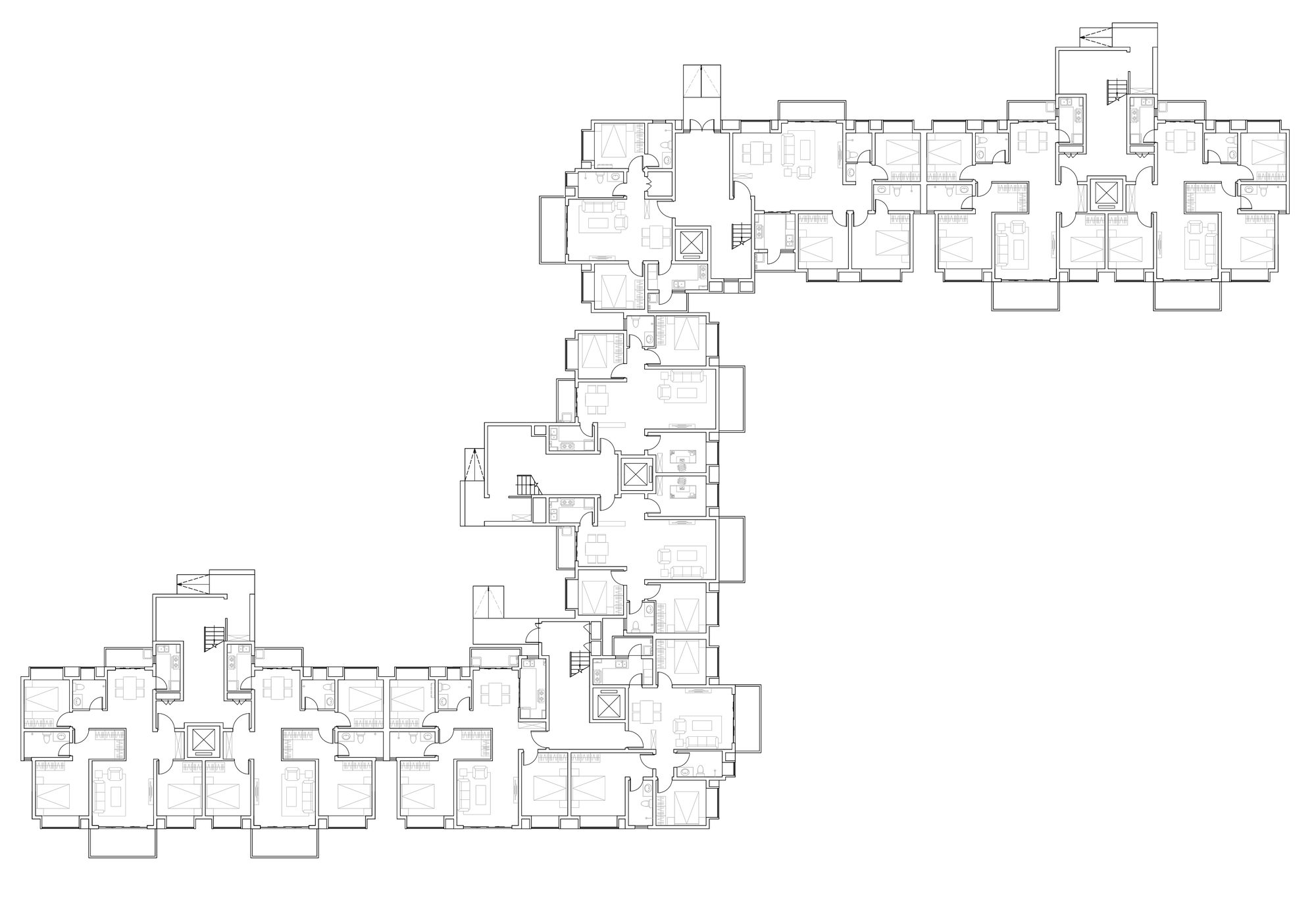
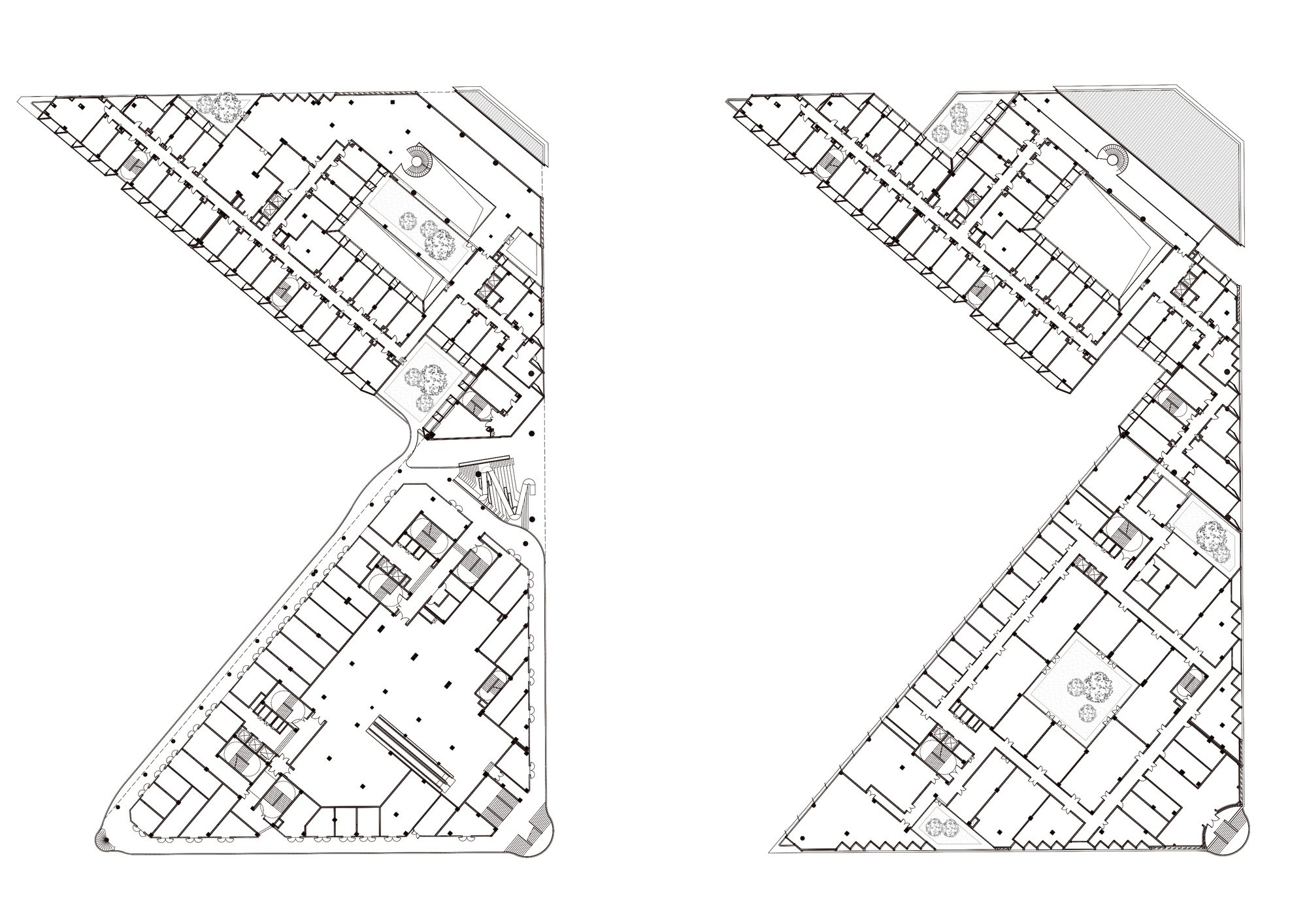
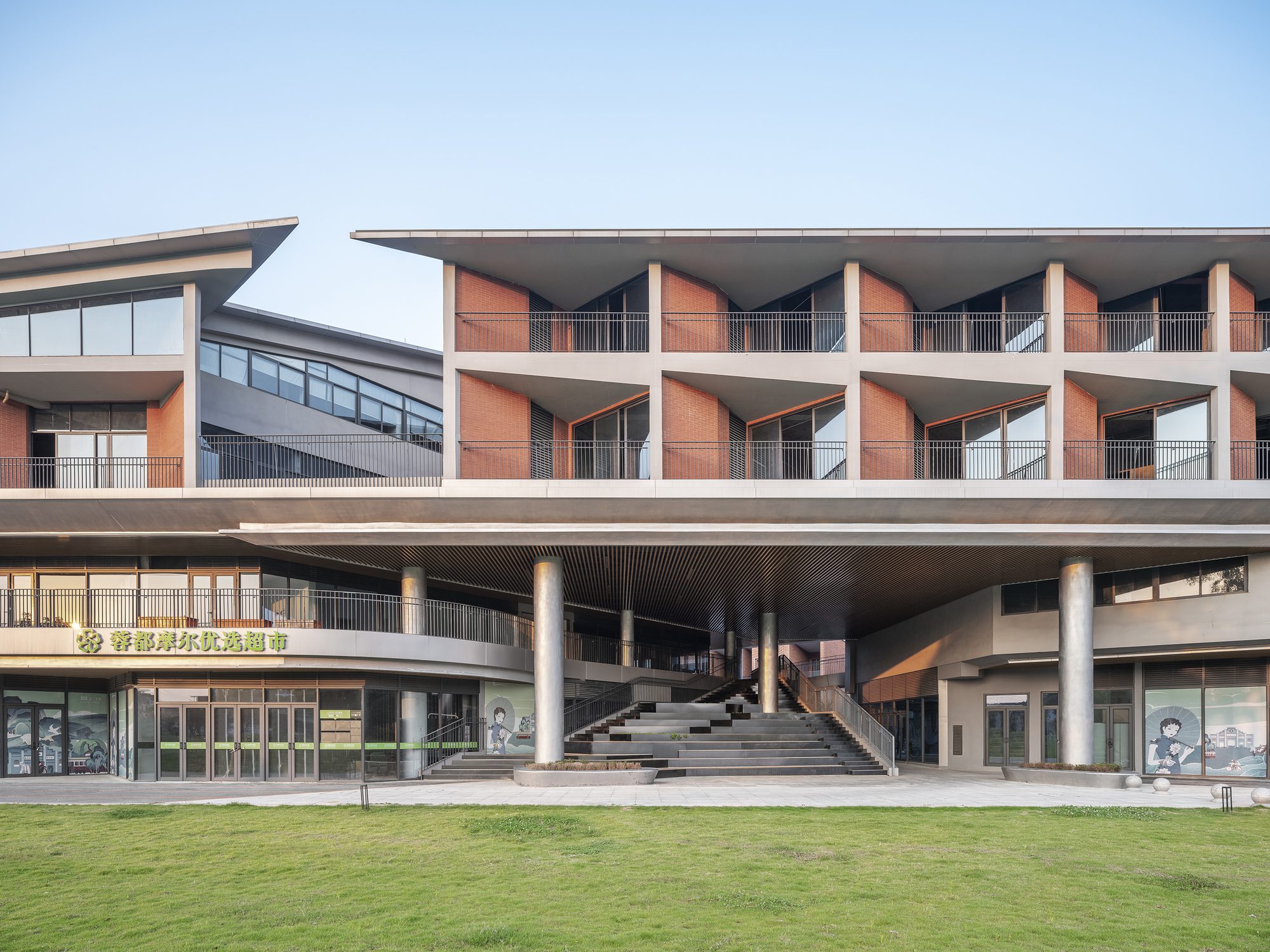
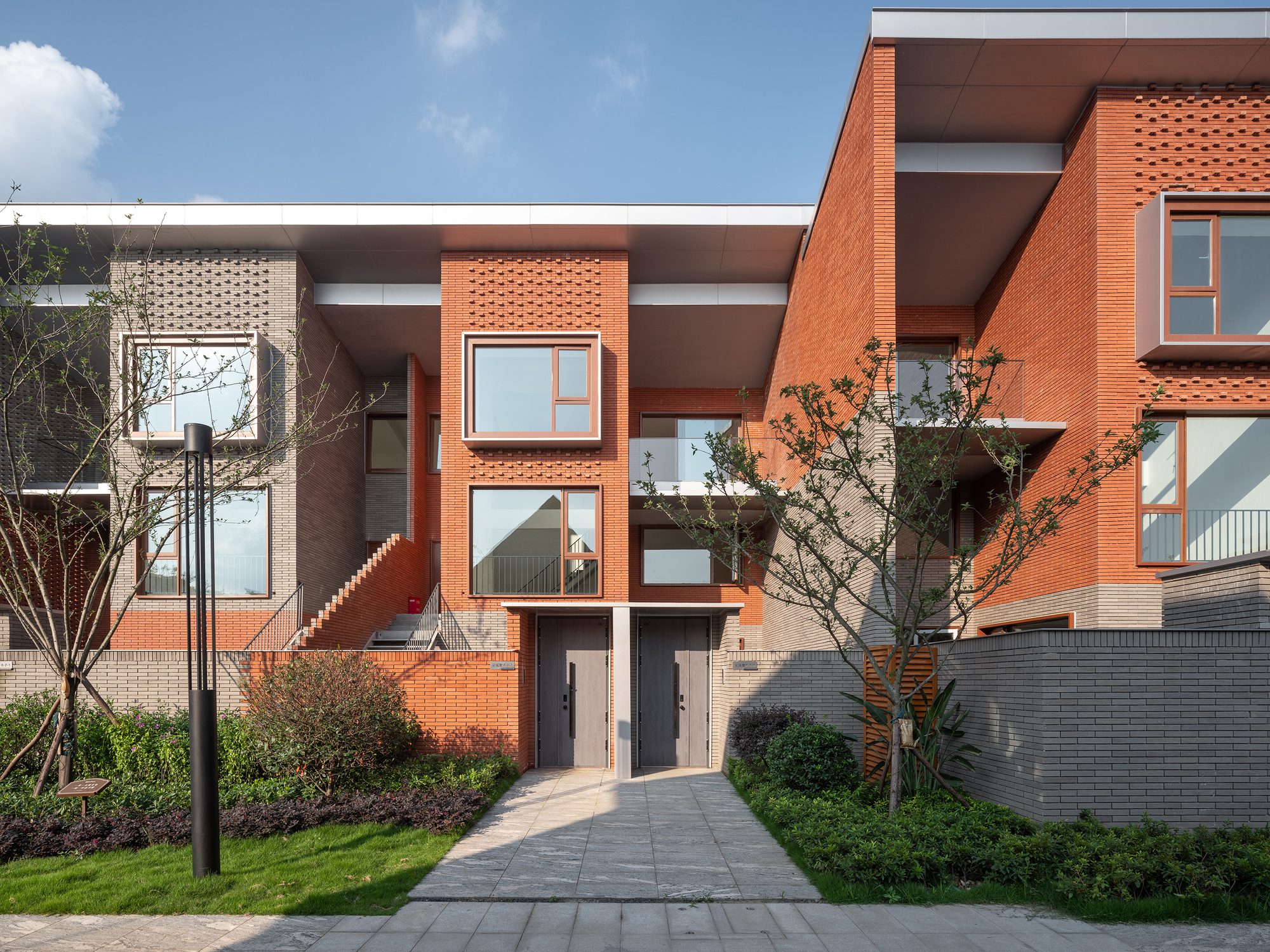
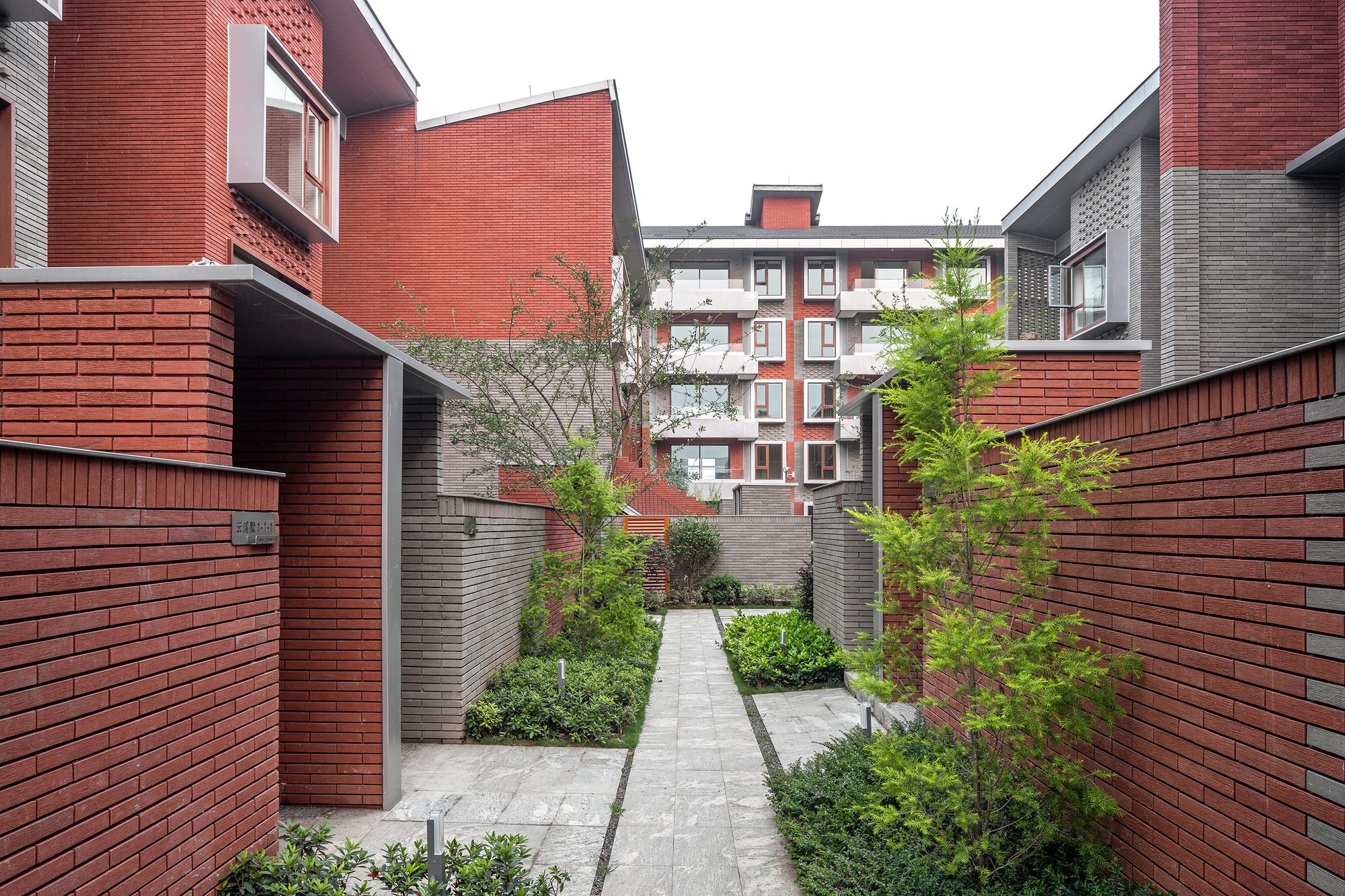
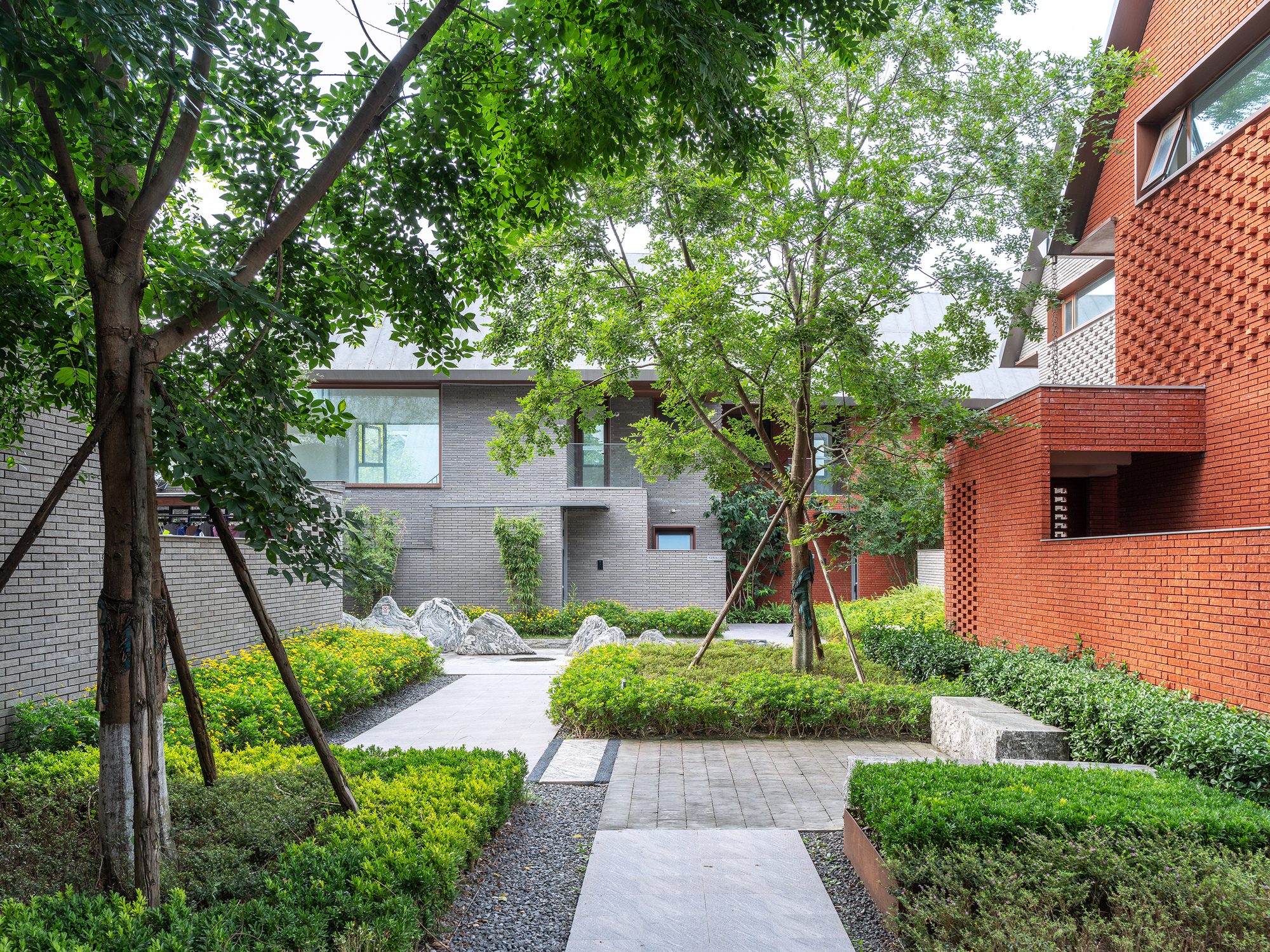
The courtyard houses, townhouses, apartment complexes, and the commercial building within the community not only continue local characteristics in their own architectural space types but also create a community environment where multiple public levels interpenetrate through the meticulous layout among buildings. This encourages interactions between long-term local residents and those who come for vacation or business, thereby enhancing cultural identity among neighbors.
© FangFang Tian
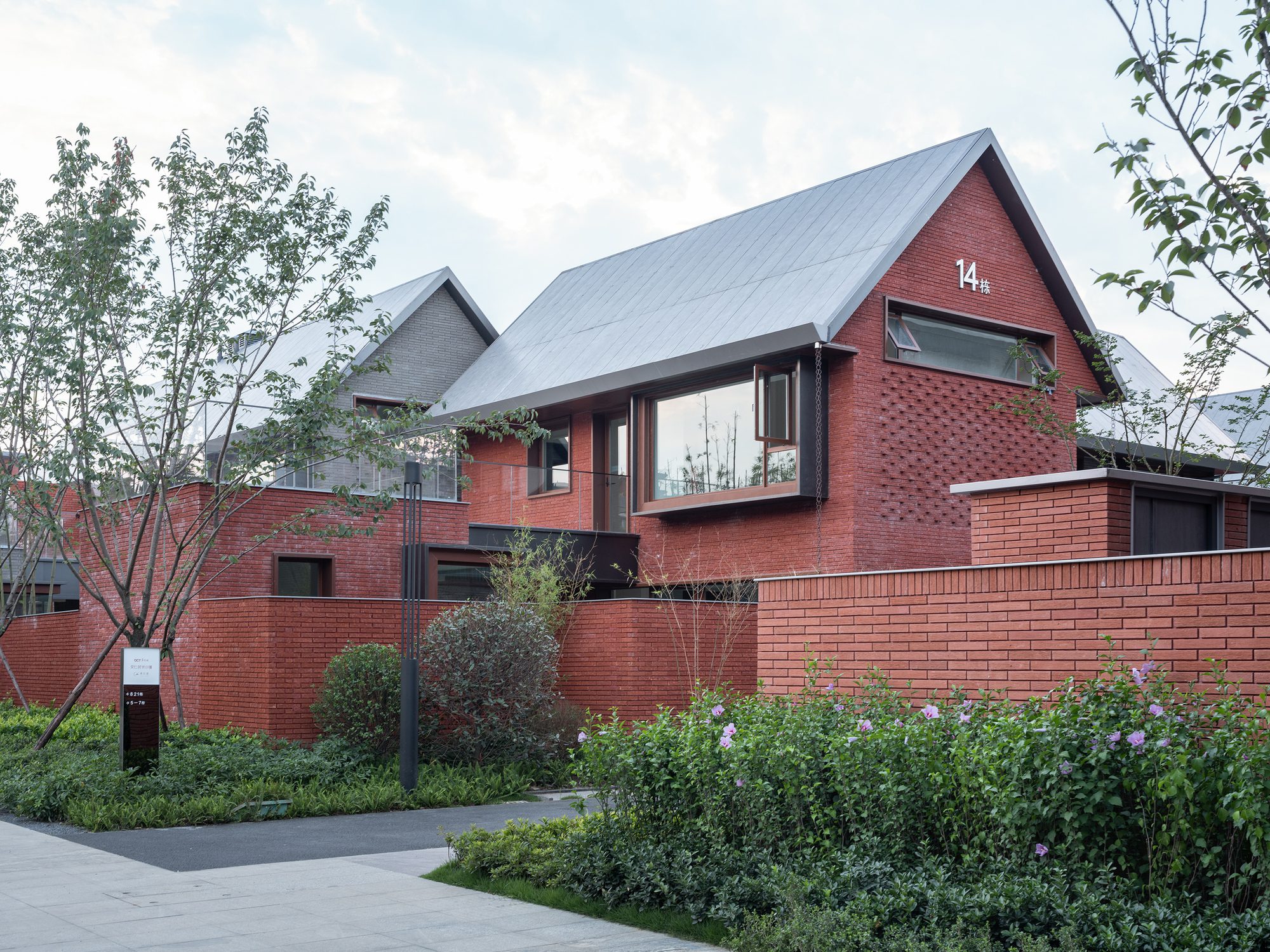
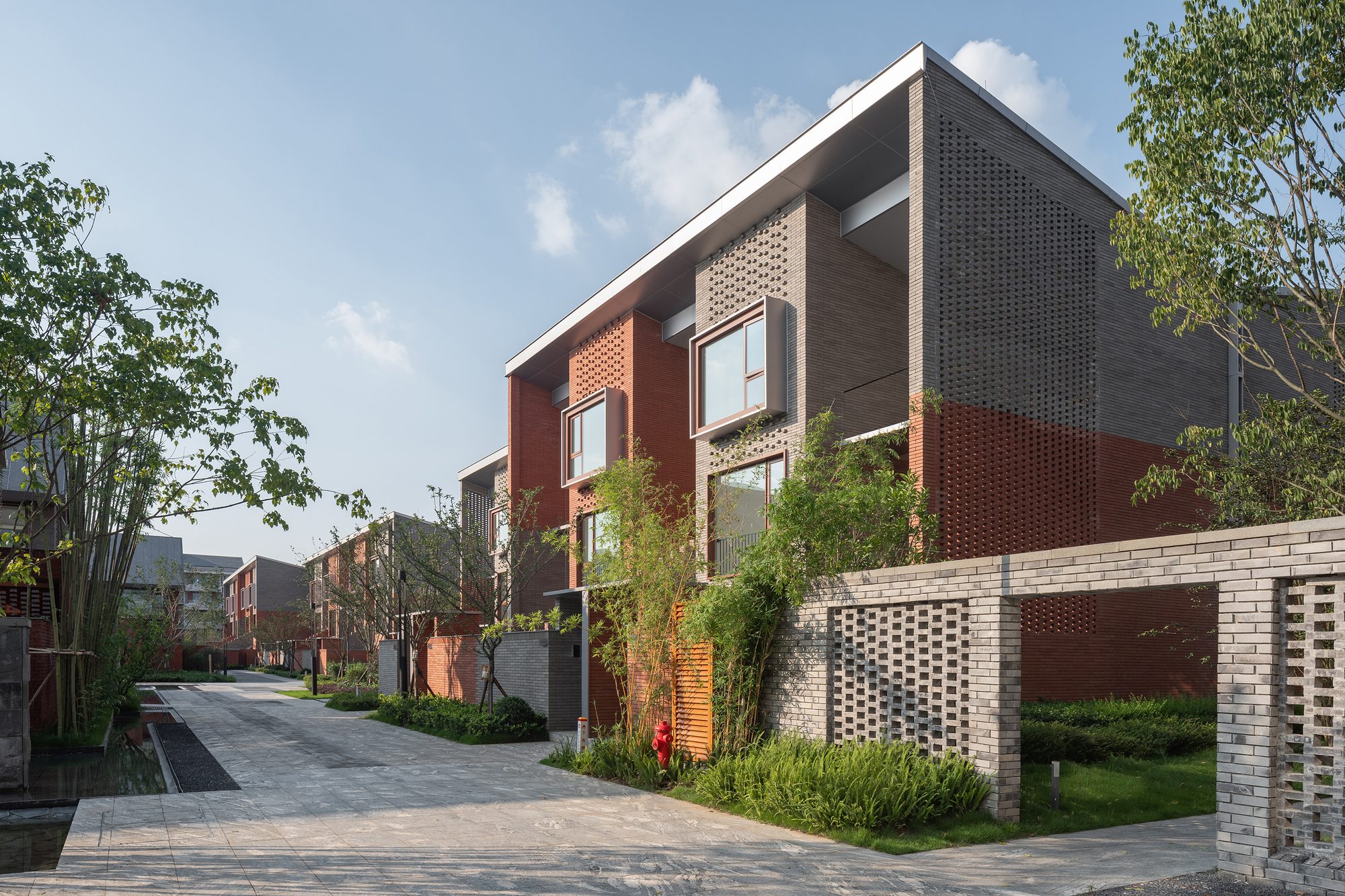
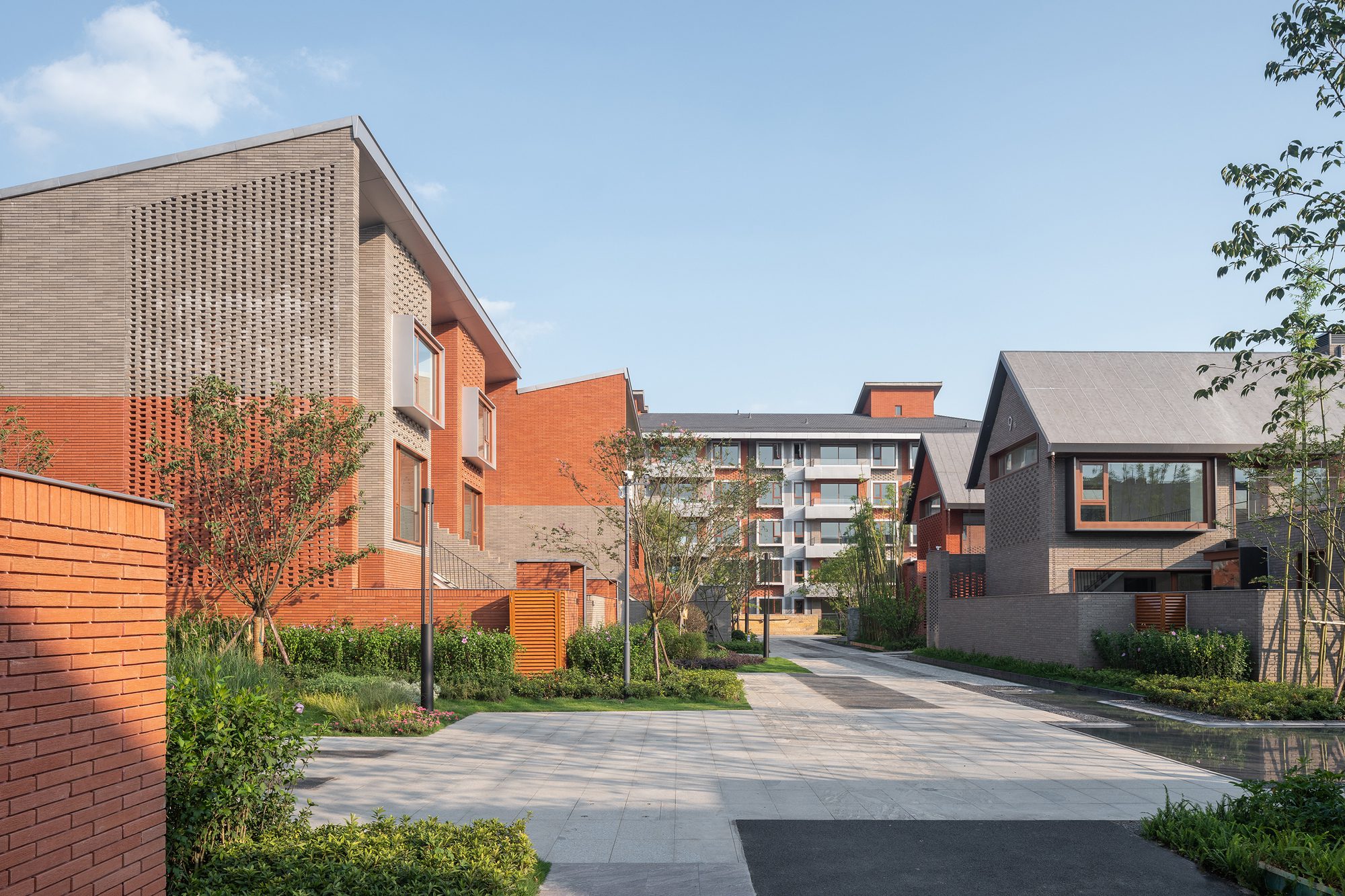
The structural design offers an experience that combines modernity and locality through the combination of bricks, cement boards, and metal panels. The construction of the community took Liao Weigong’s Mansion as its material starting point, and after completion, this place has become the spiritual core of the community. A variety of organized and spontaneous community public activities take place here.
© FangFang Tian
The mansion is to the community what the ancestral hall in Anren Ancient Town is to the entire clan. The roots and lifeblood of development originate from here, and the spirit of returning home after branching out ultimately comes back to this place.
Project Info
Architects: Atelier Li Xinggang
Area: 69874 m²
Year: 2022
Country: Chengdu, China
Photographs: FangFang Tian
Construction Firm: The Third Construction CO.,LTD of China Construction Eighth Engineering Division
Landscape construction drawing design: Chengdu Sina Yulian Architectural Design Co., Ltd.
Principal Architect: Li Xinggang, Liu Zhen
Project Manager: Tan Zeyang
Architectural Design Team: Hou Xinjue, Yu Anran, Sun Zhixing, Li Yunle, Li Mingyan, Li Yunqian, Liang Yixiao General Layout Design: Gao Zhi, Zhou Qingzhao
General Layout Design: Gao Zhi, Zhou Qingzhao
Landscape Designers: Guan Wujun, Lu Lu, Feng Ran, Wei Xiaoyu, Liu Binying, Zhao Jinliang
Clients: Chengdu Anren OCT Renjia Cultural Tourism Development Co., Ltd.
Architectural Construction Drawing Designers: China Building Technique Group Co., Ltd.