

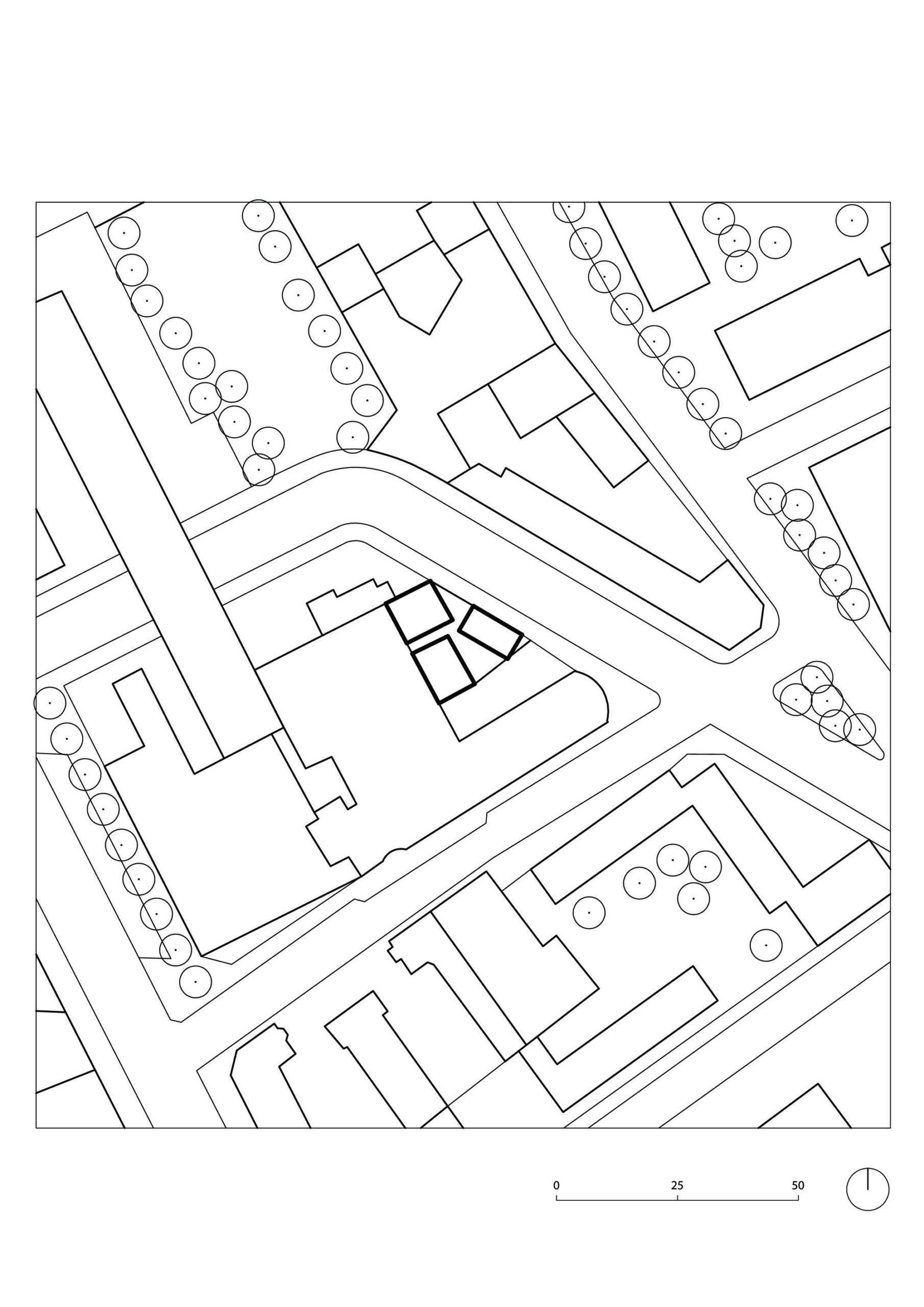
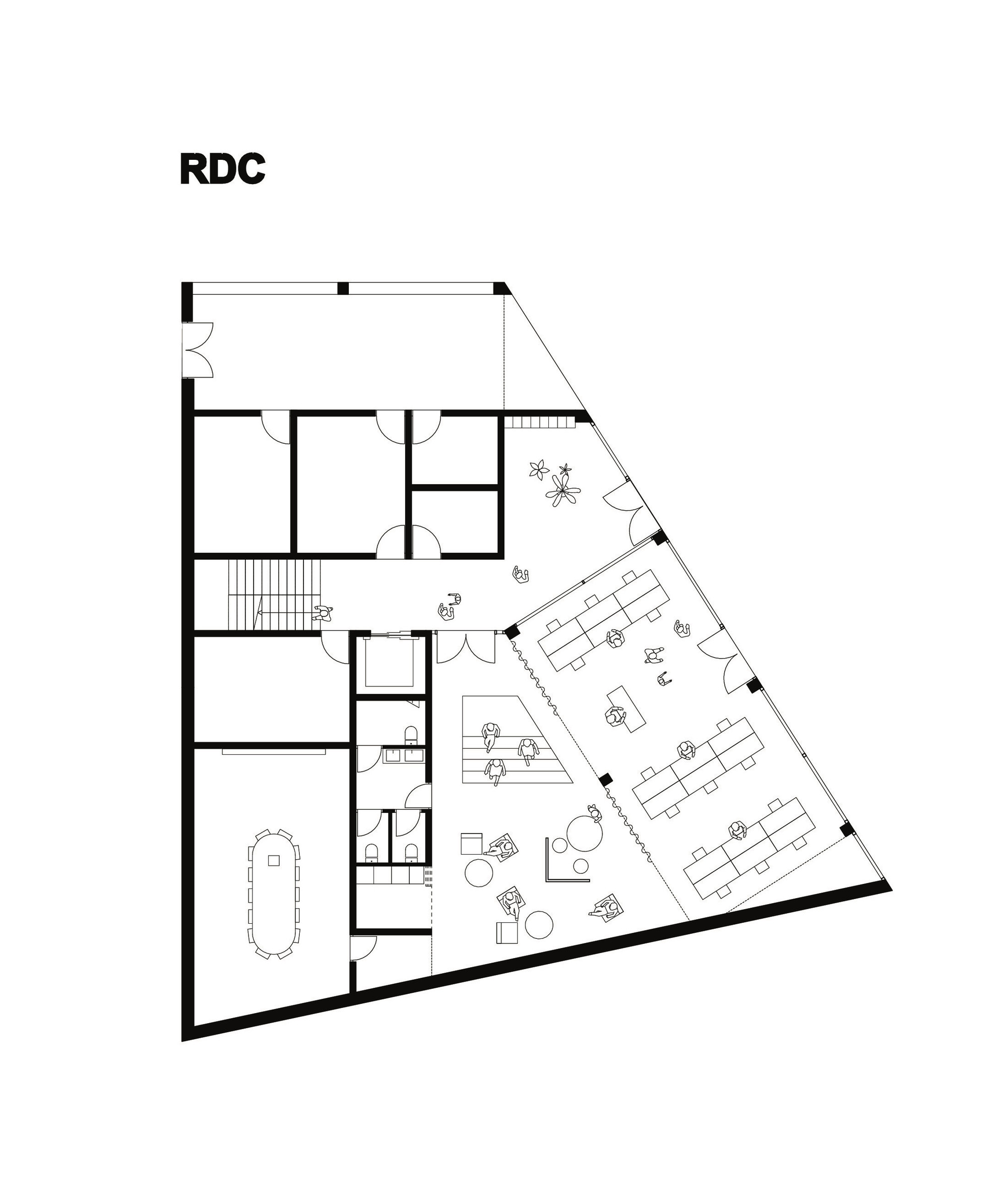
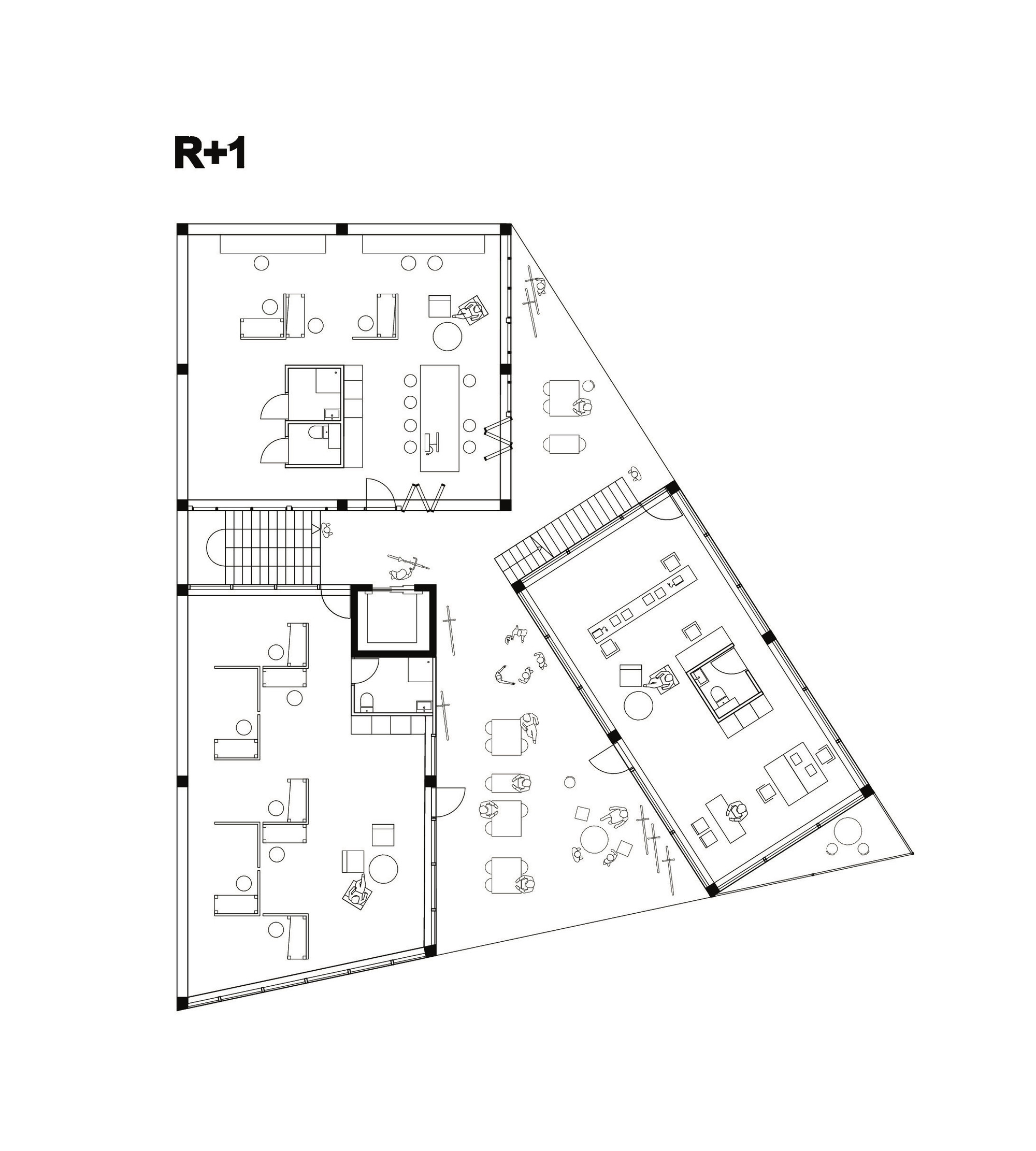
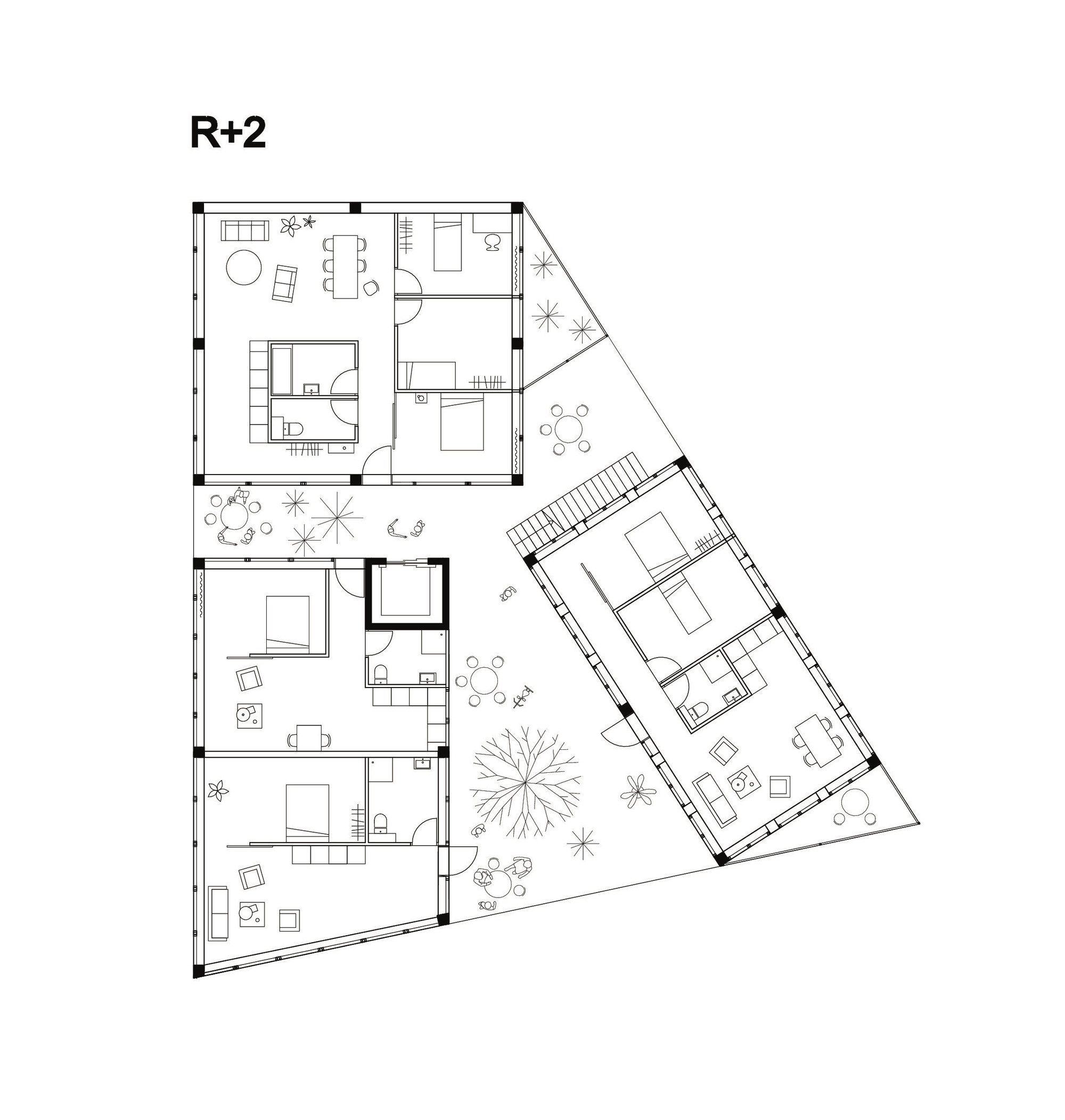
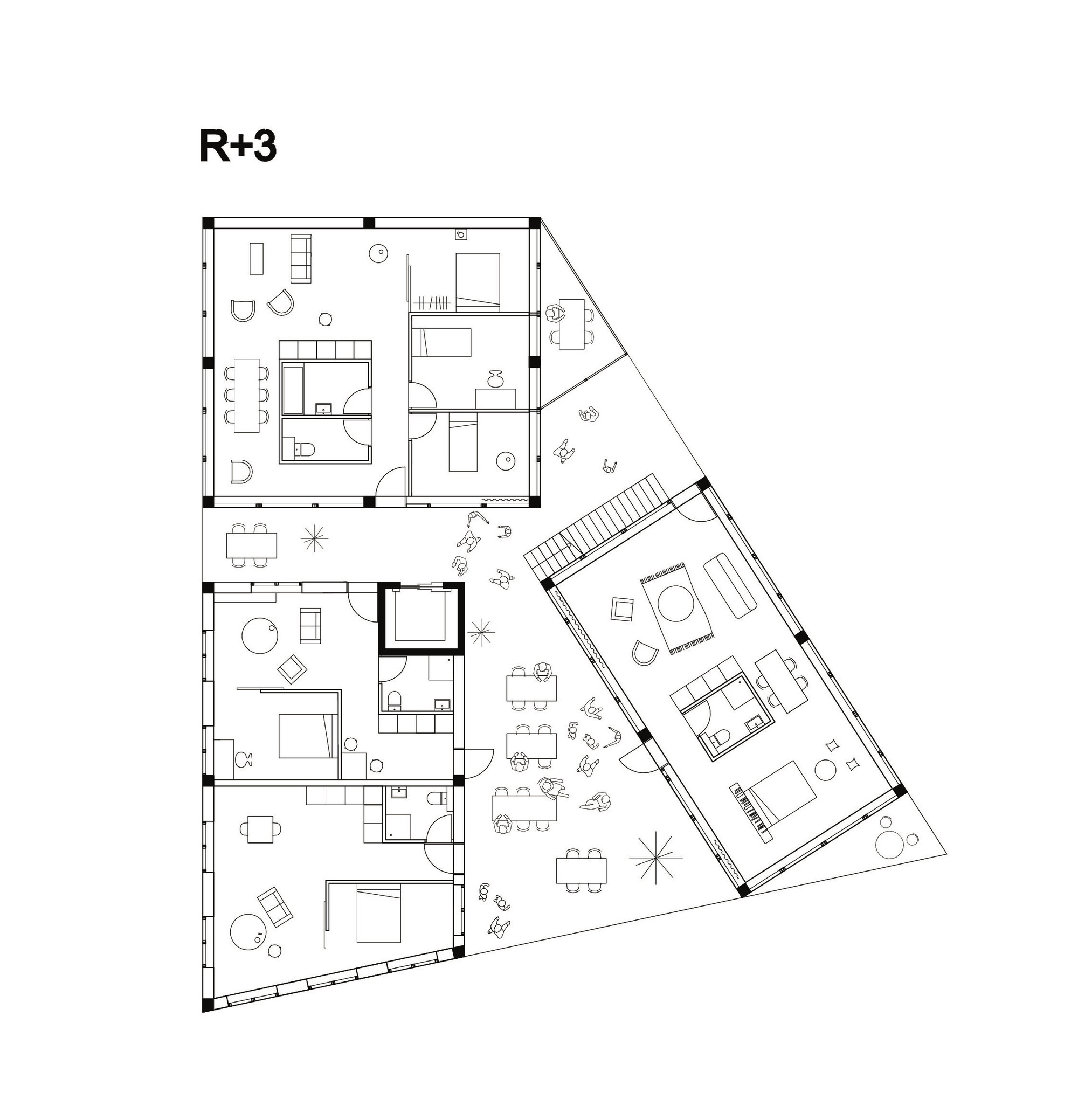
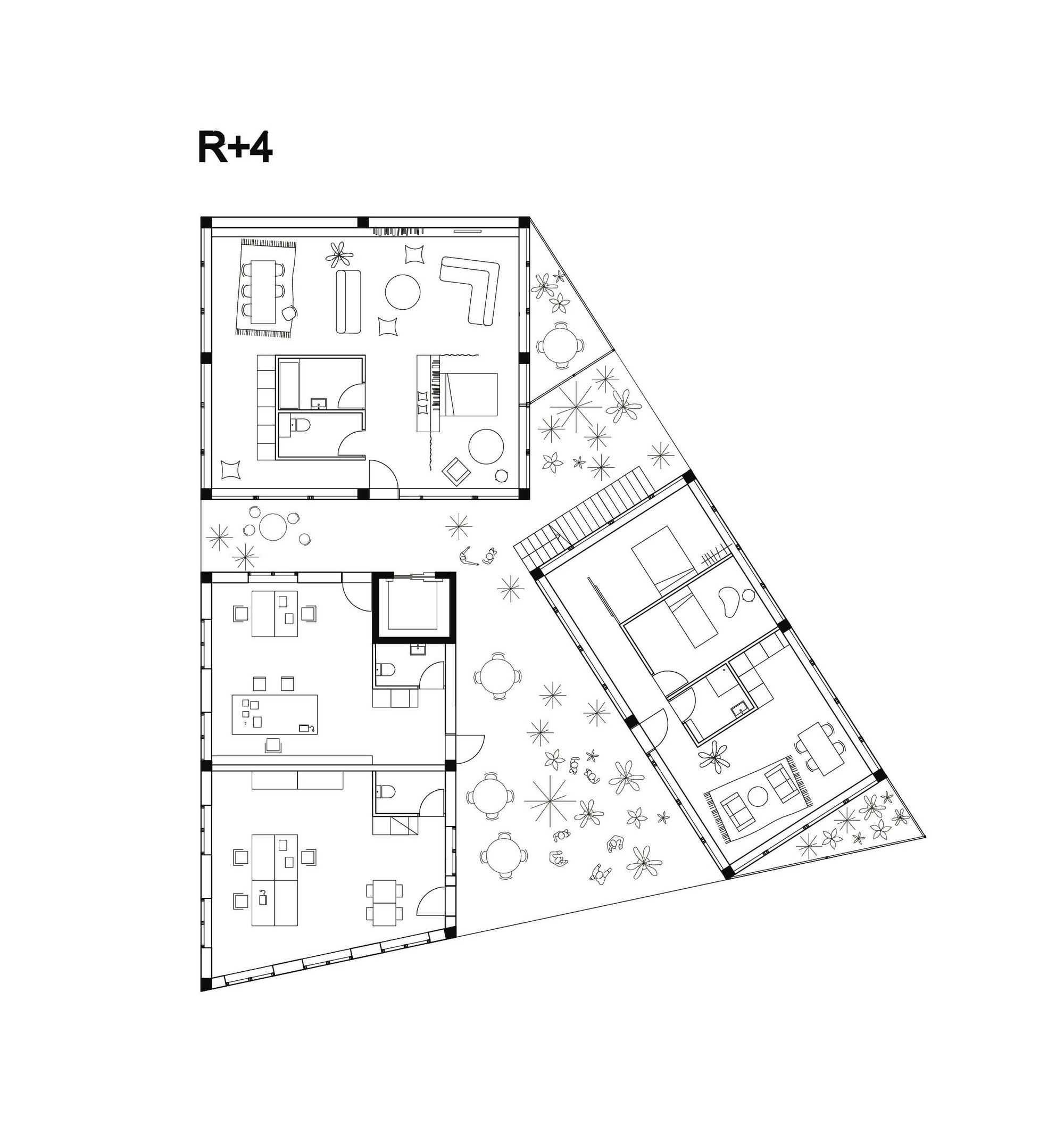
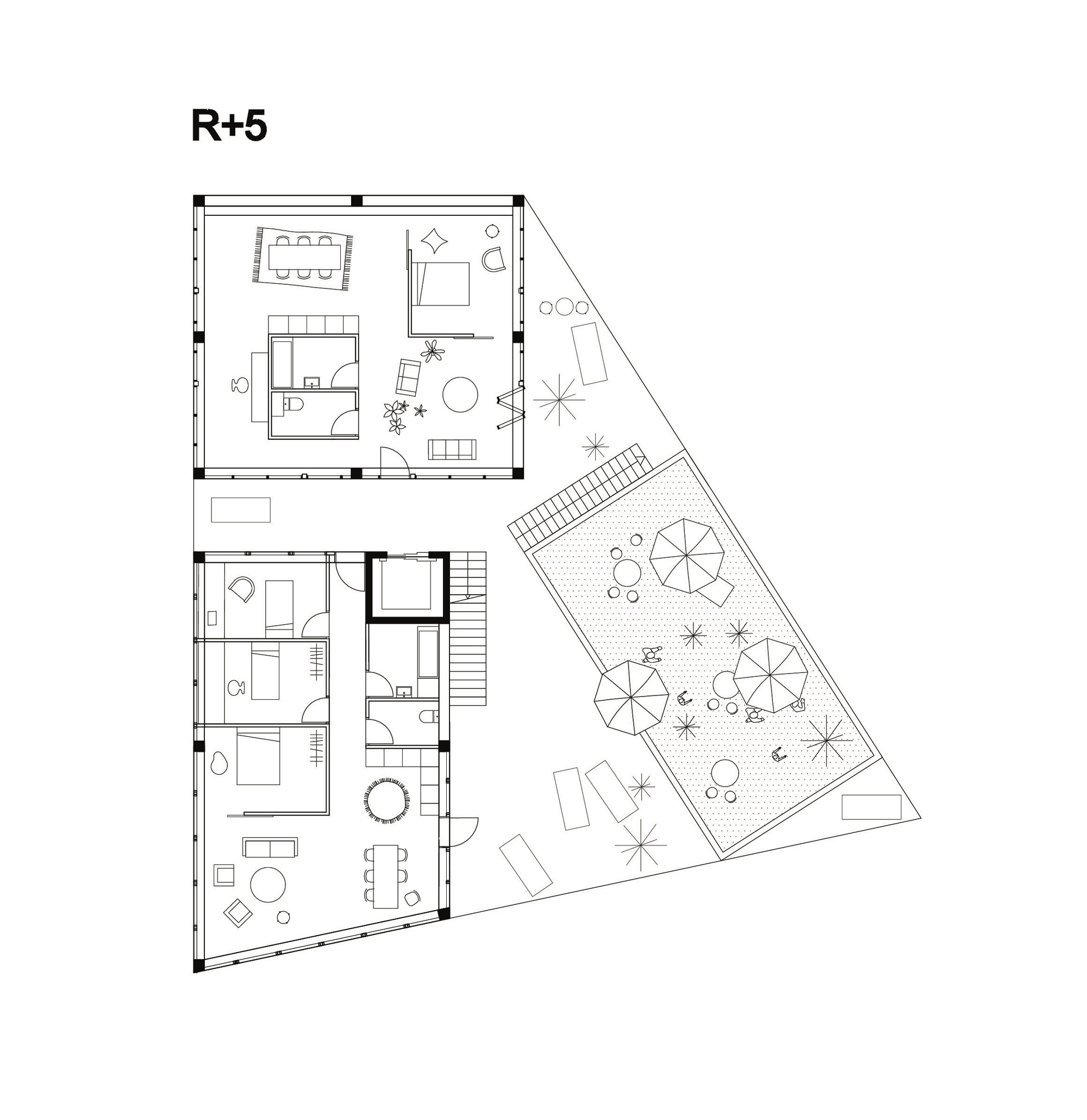
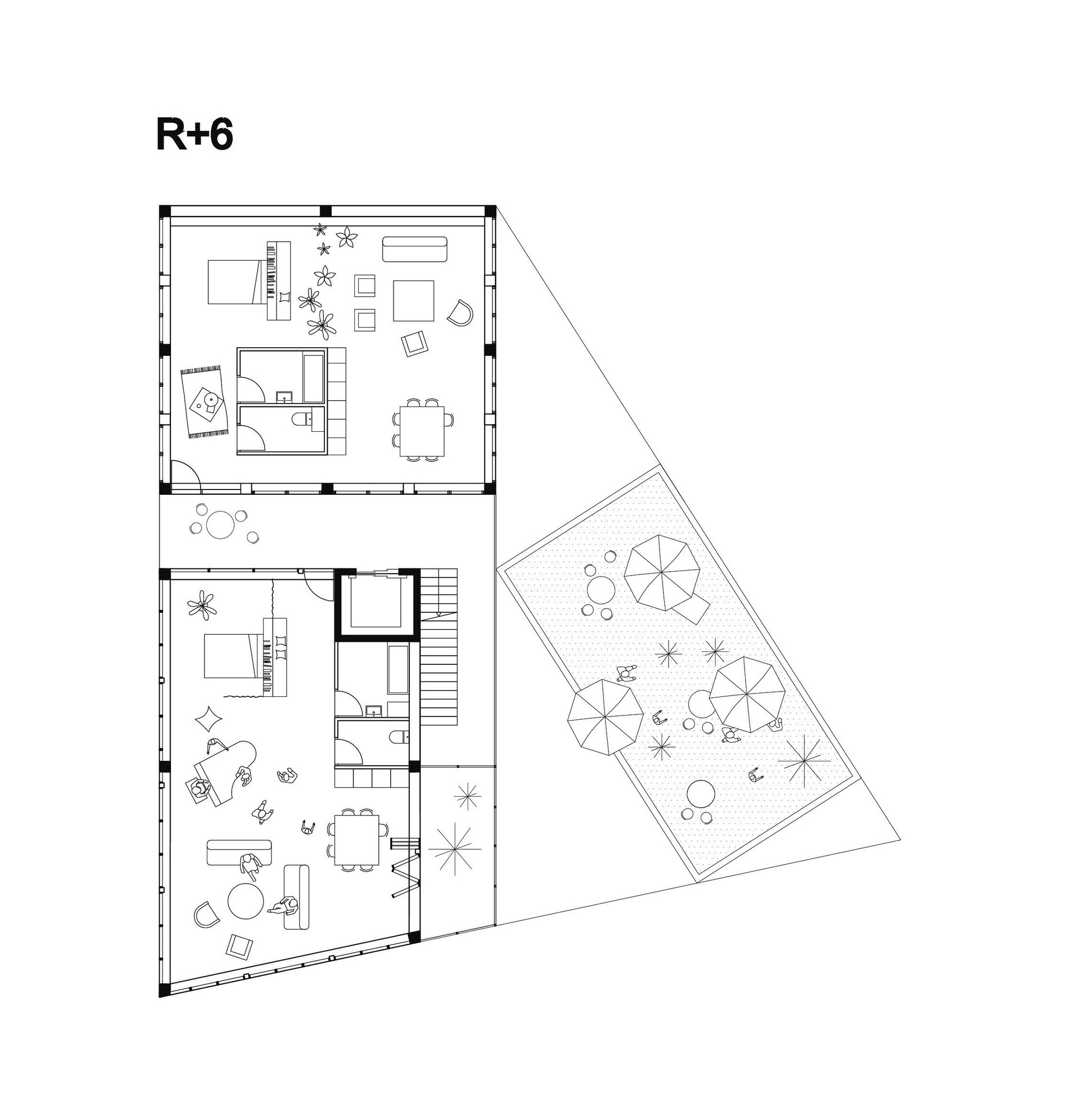
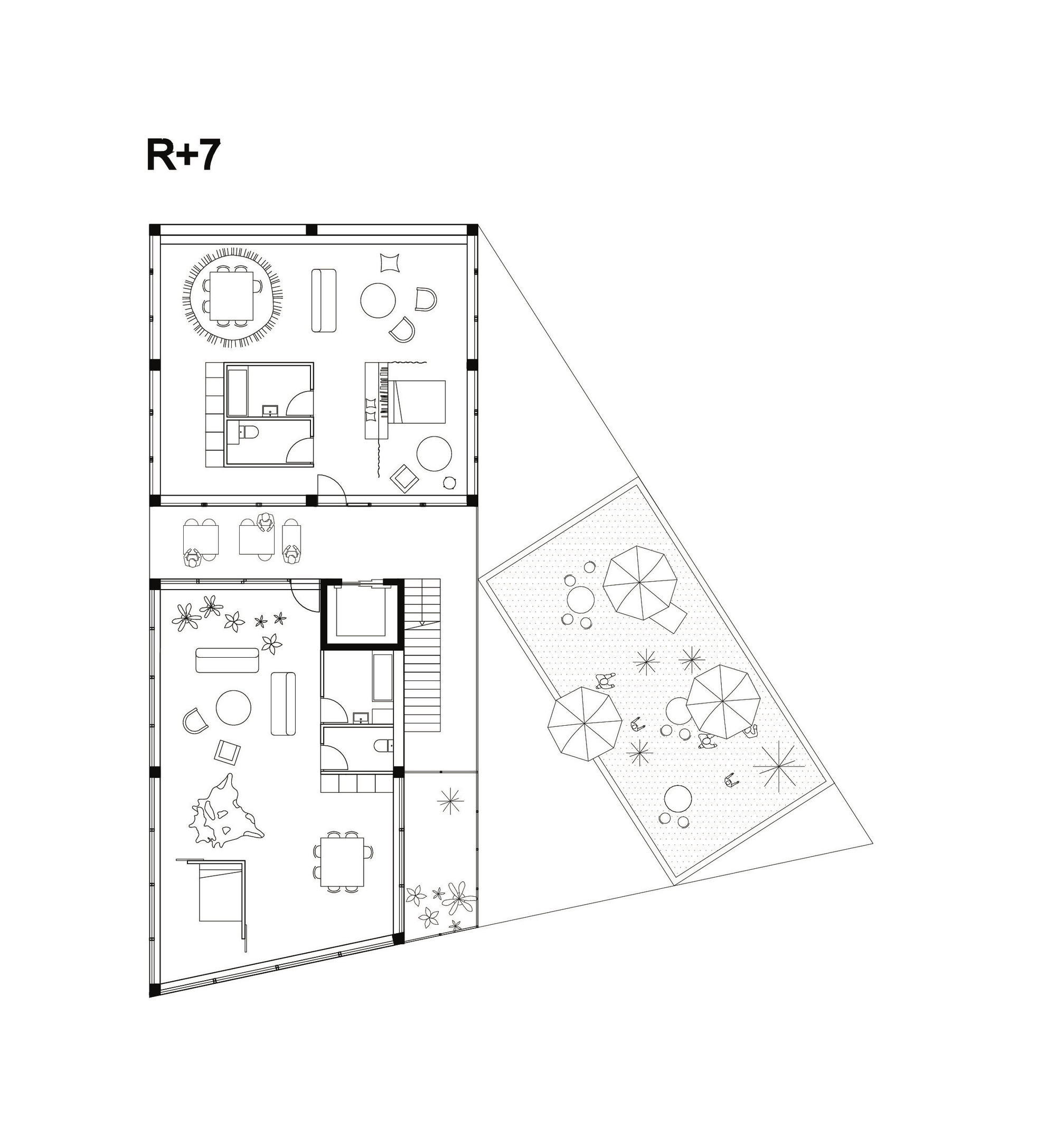
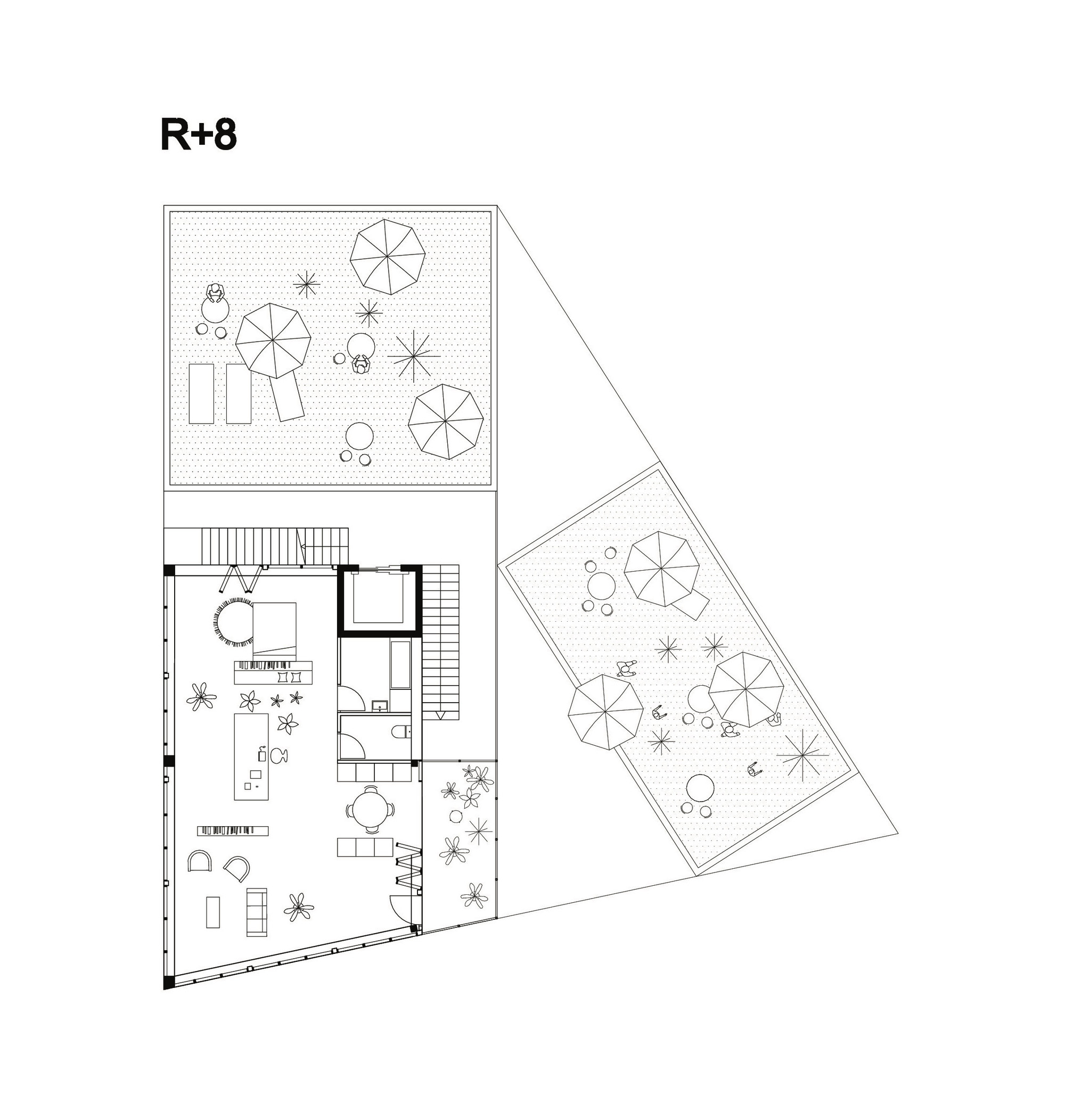
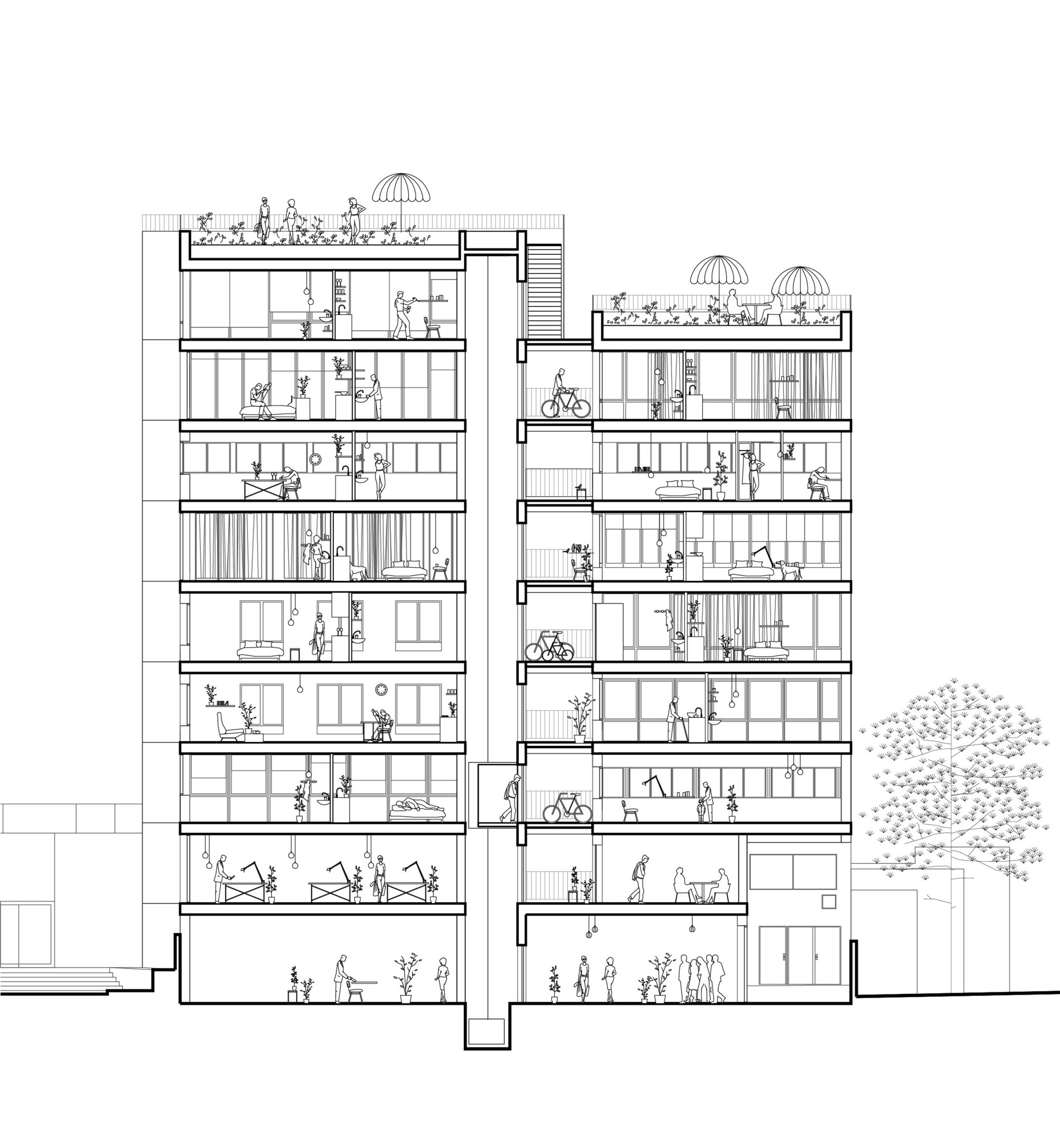
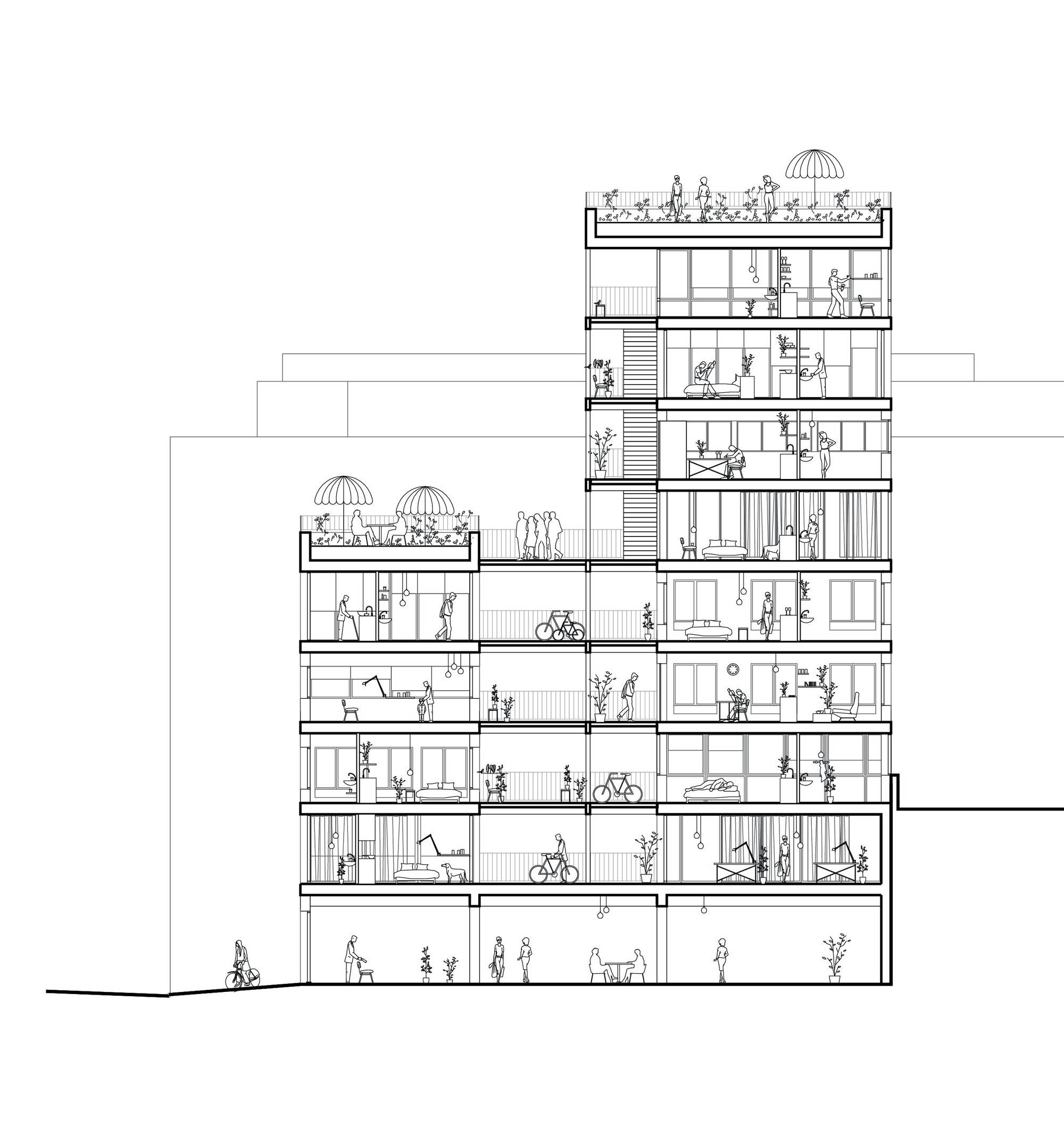
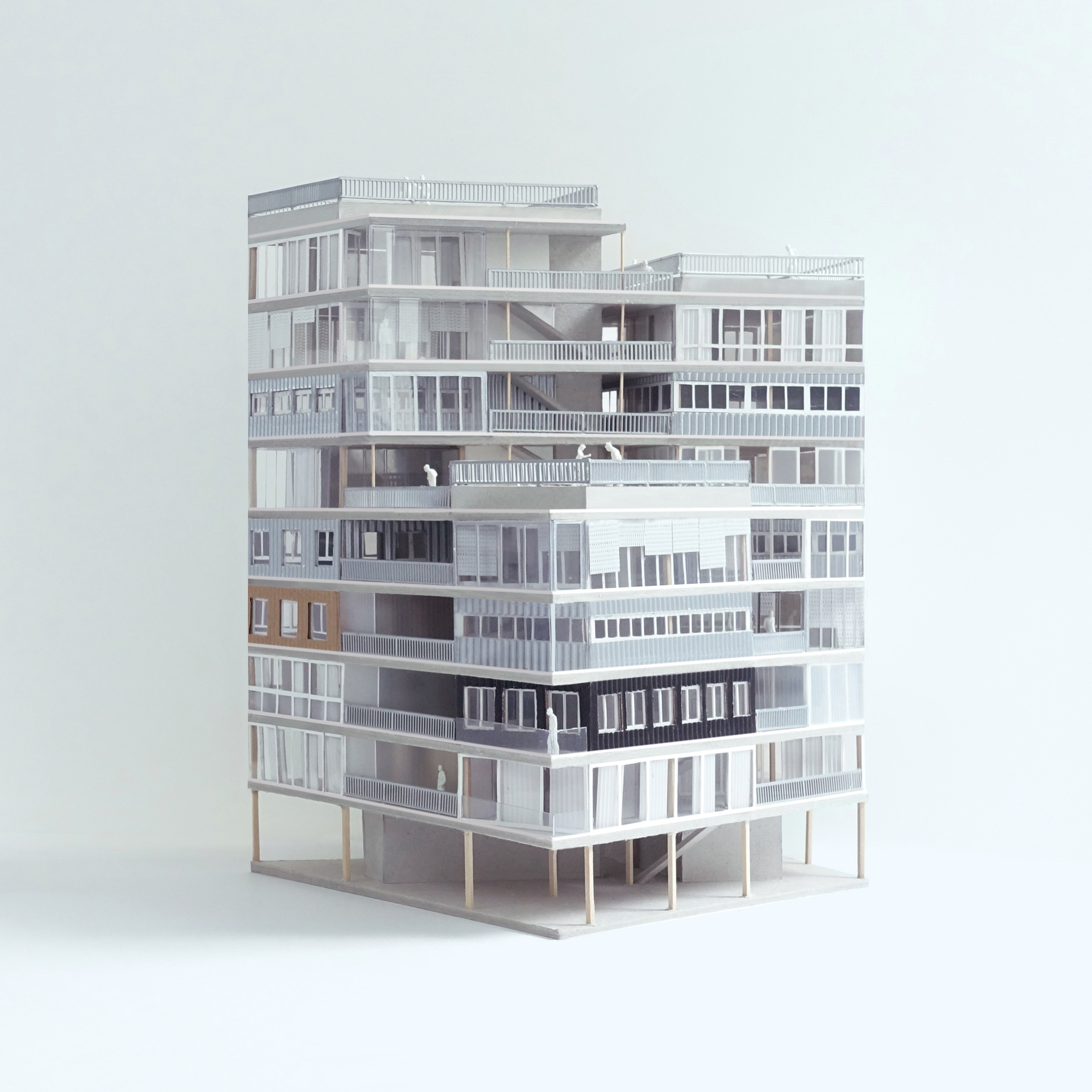
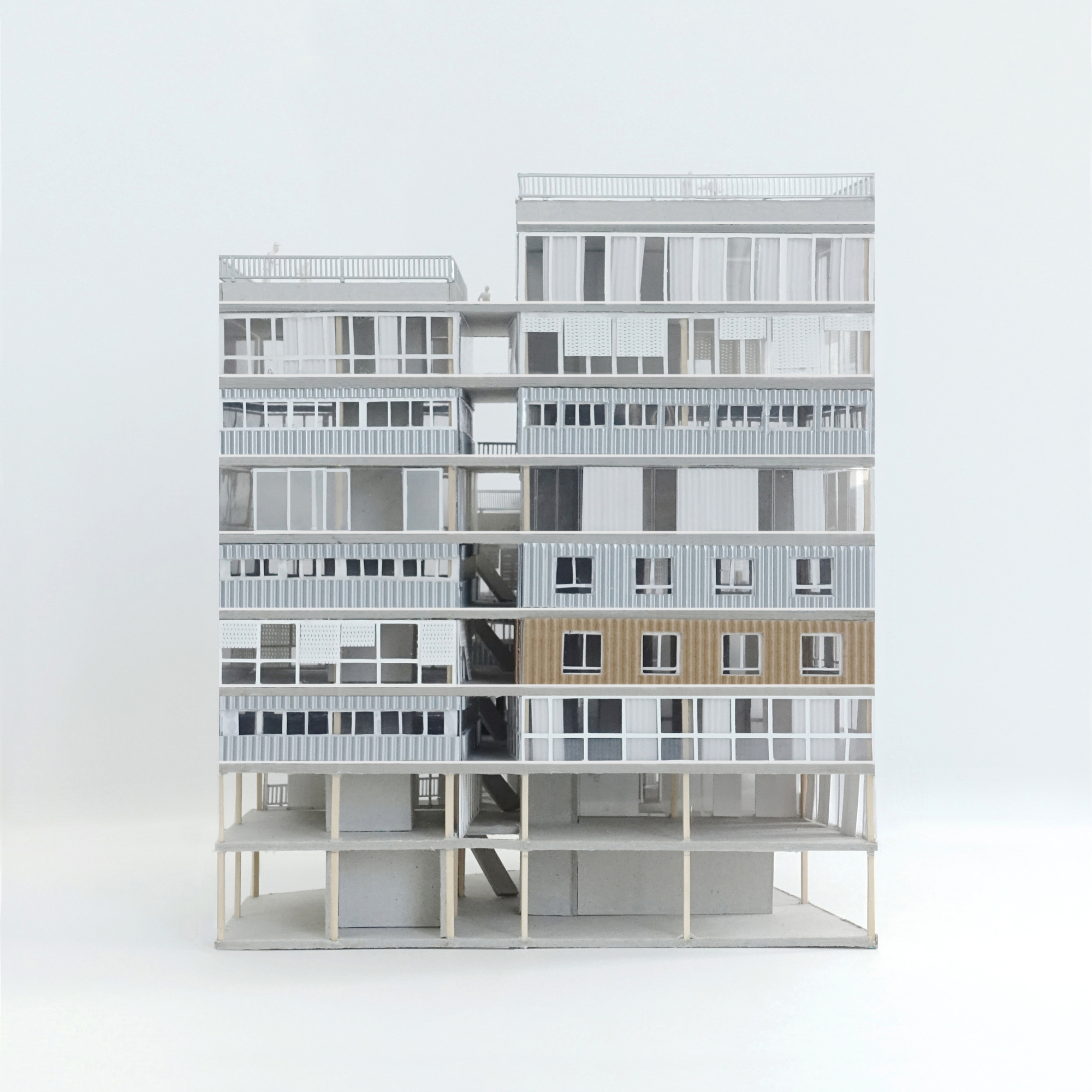
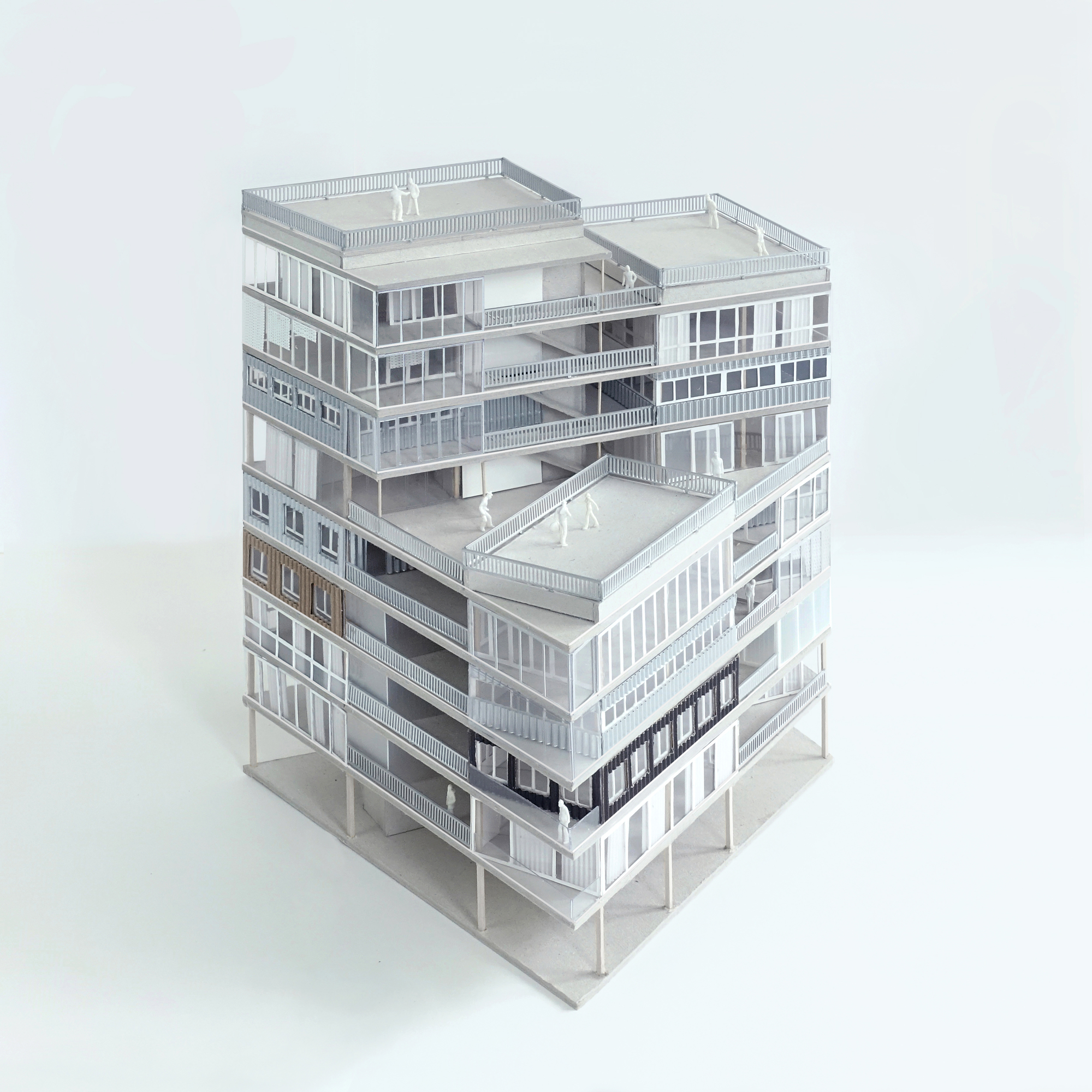
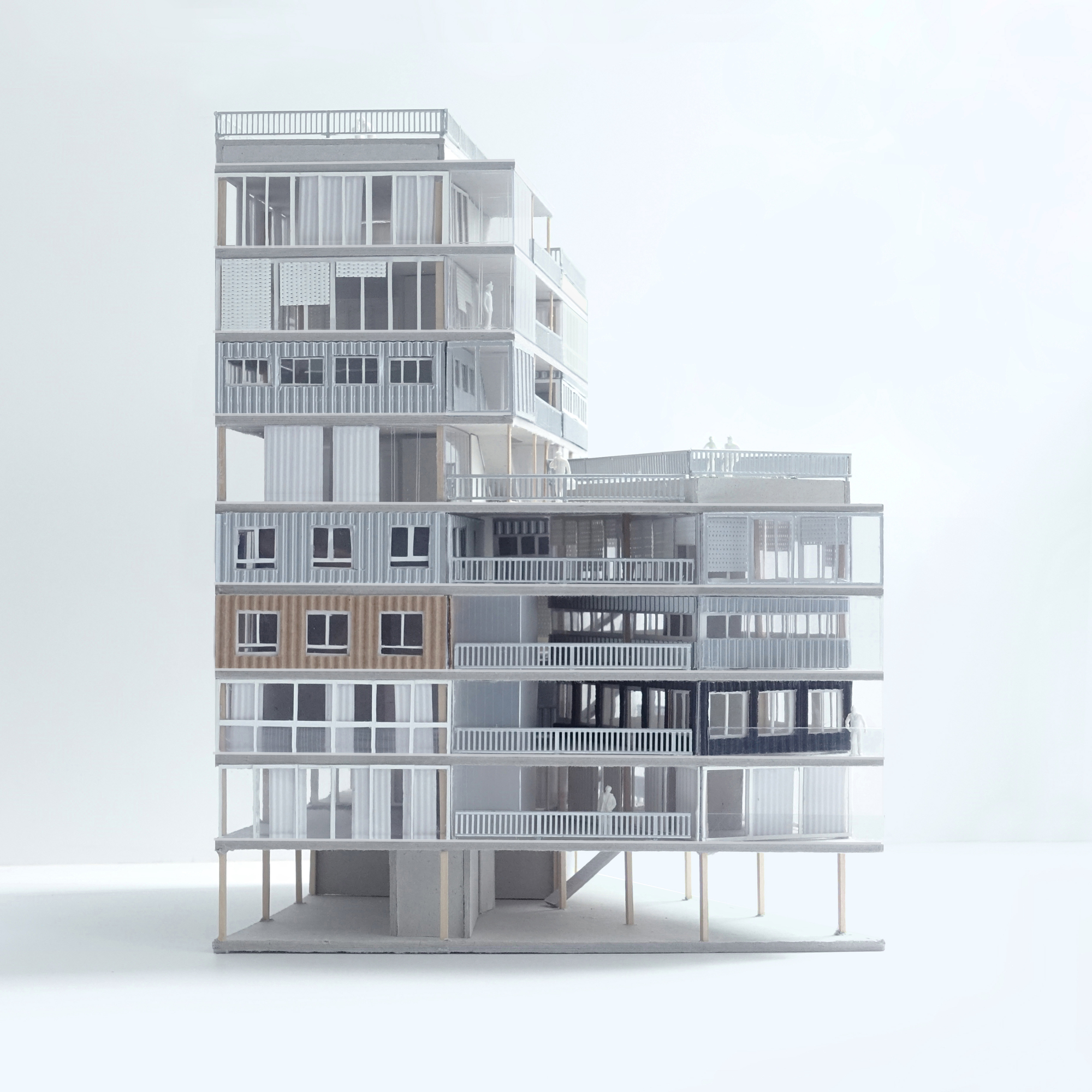
23 Dwellings has as its ambition the reinvention of the collective habitat by integrating the scale and quality of the individual habitat within a dense and flexible structure. The building is designed as an aggregation of stacked villas, conveying ideas of multiple mismatched living areas in the interstices of the light facades and terraces. Its interior spaces can accommodate apartments or offices, such as ateliers.
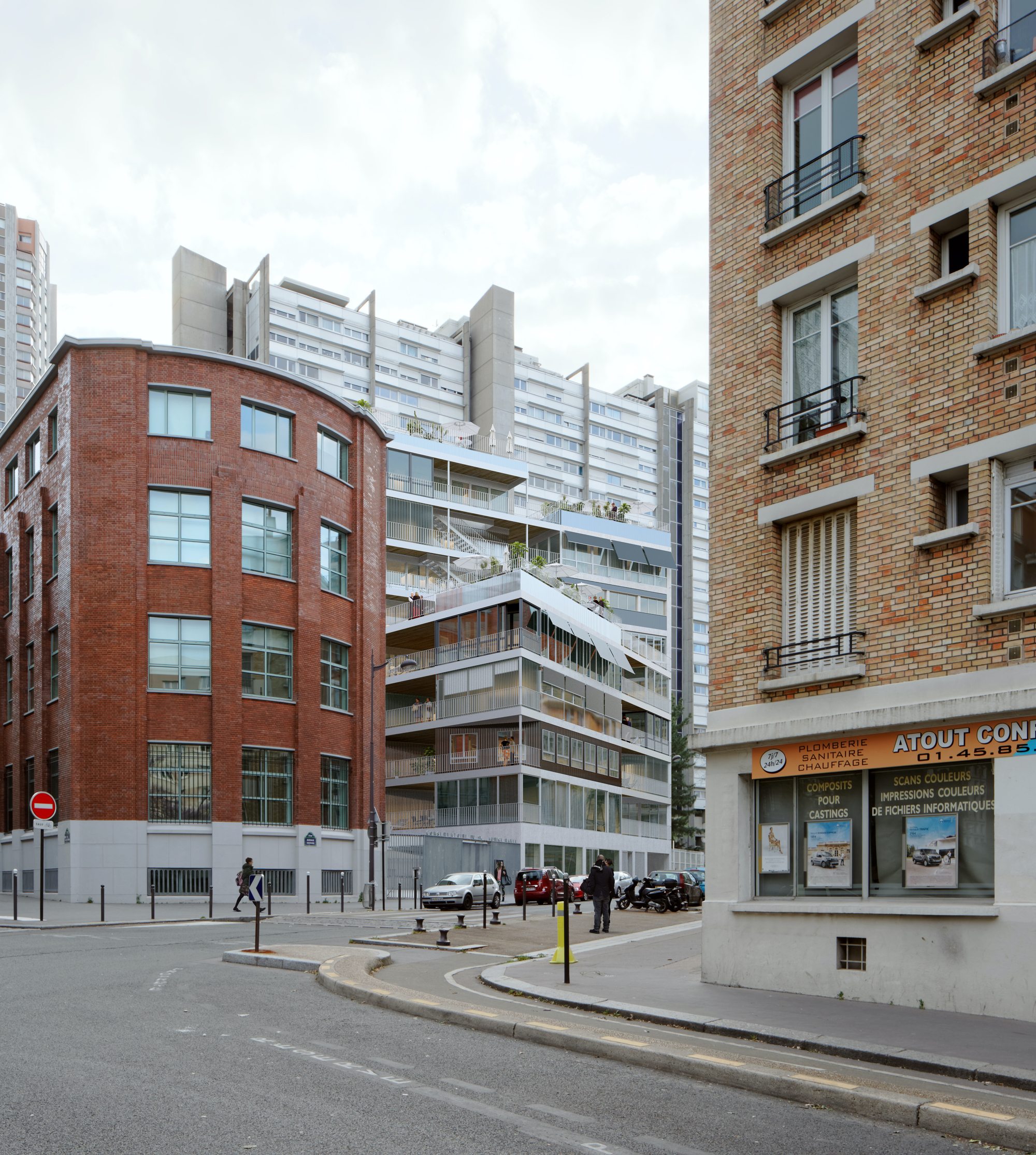
© Artefactorylab
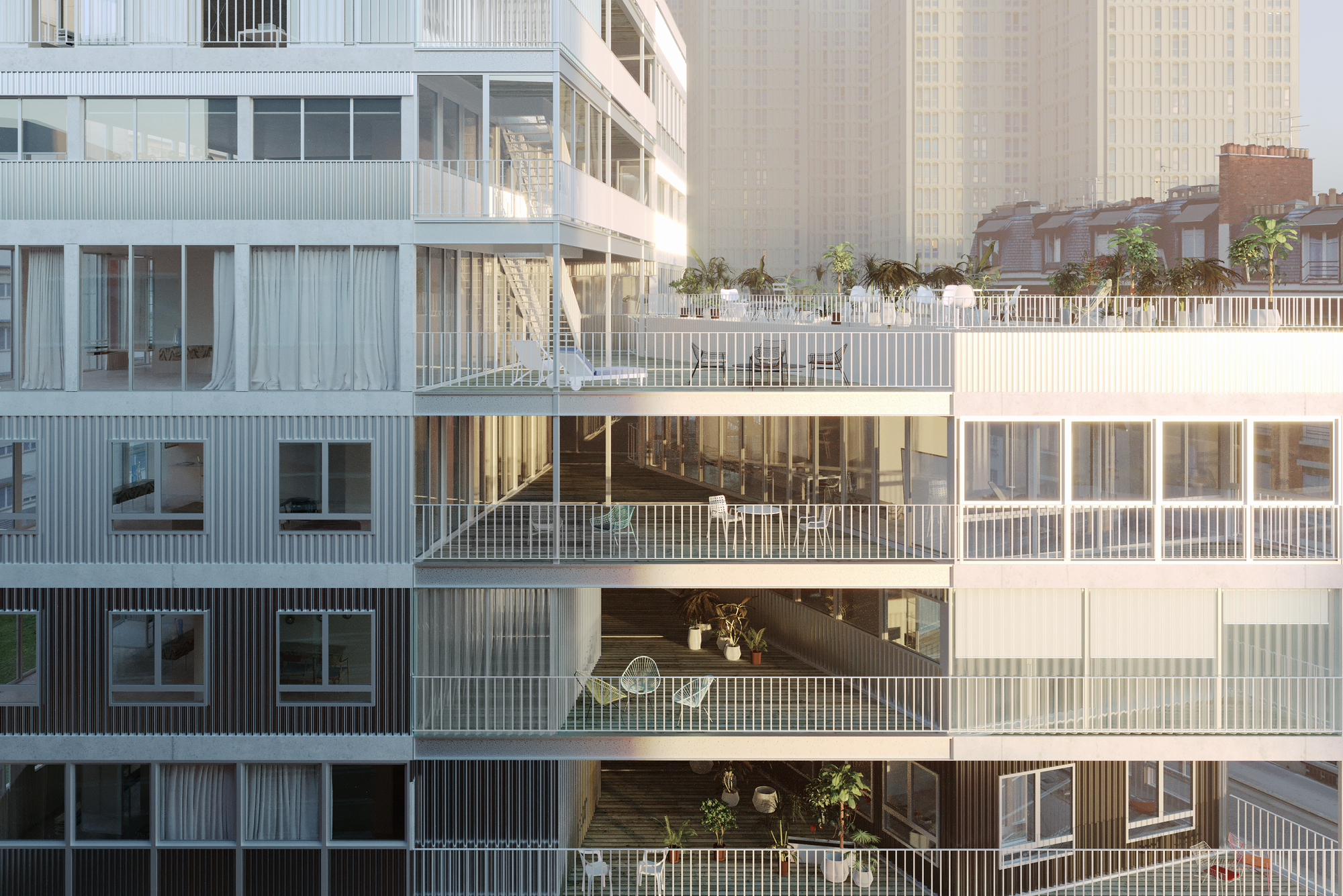
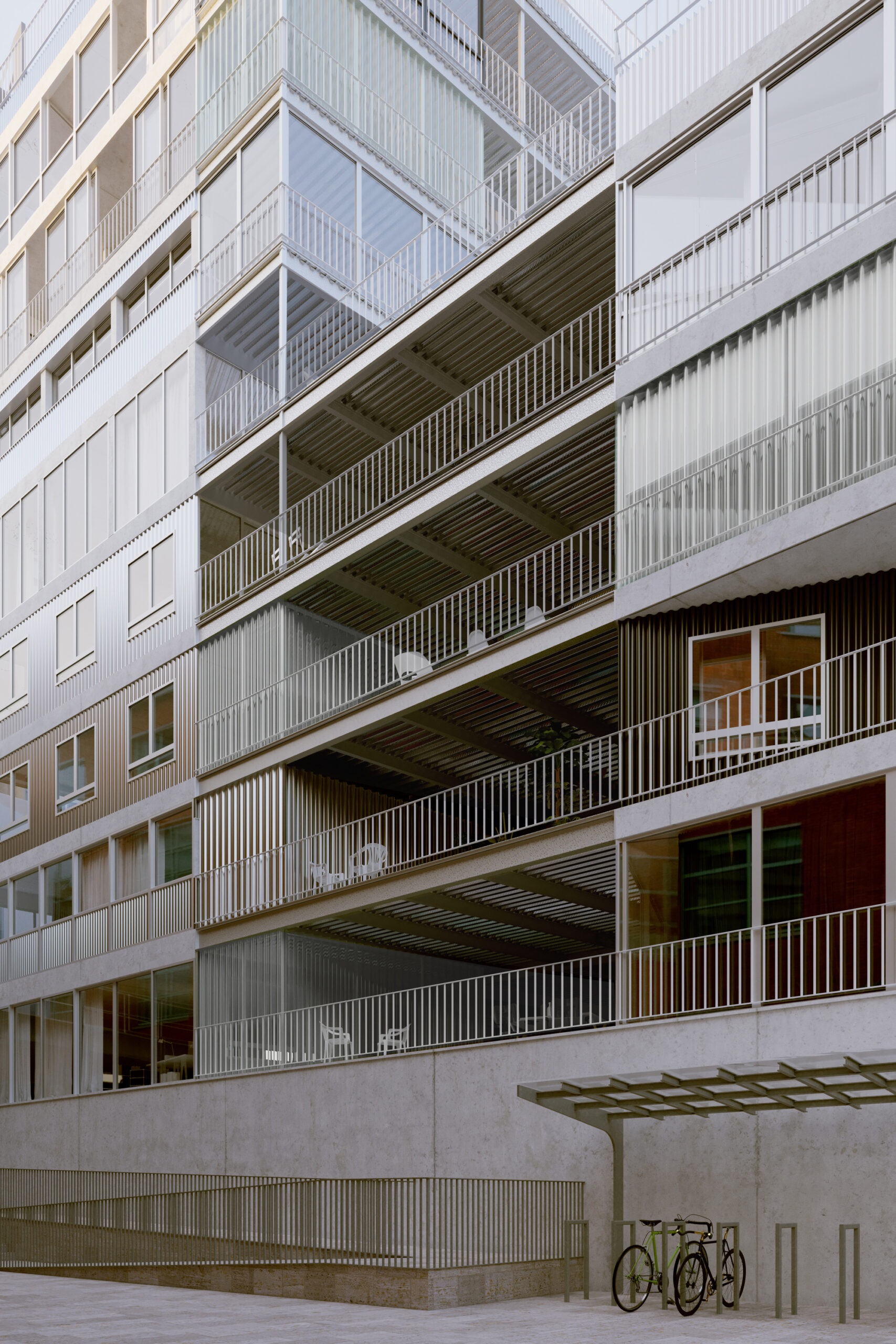
No space has a prescribed, determinate function. As a result of the precise lack of programming, it remains open to the spatial interpretations of the residents, either for life or for work. The flexibility of the structure allows for different surfaces to mingle through the play of terraces, circulation and airy loggia. On the interior, the reversibility is as spatial as it is prescribed. It passes through a reinterpretation of the technical and urban rules that tend to fix architecture in place and compartmentalize activities, in order to maximize the independence and freedom of the residents.
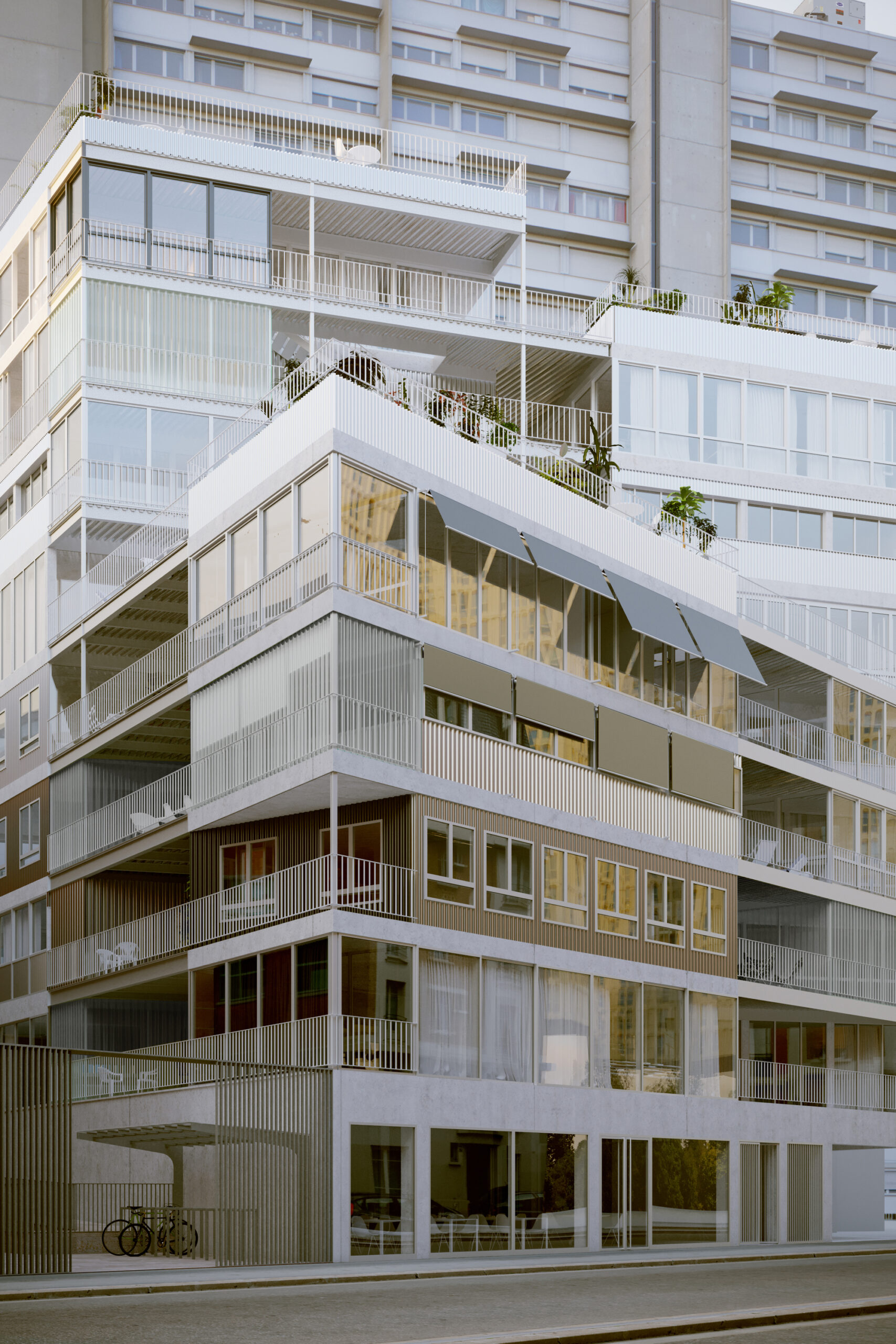
© Artefactorylab
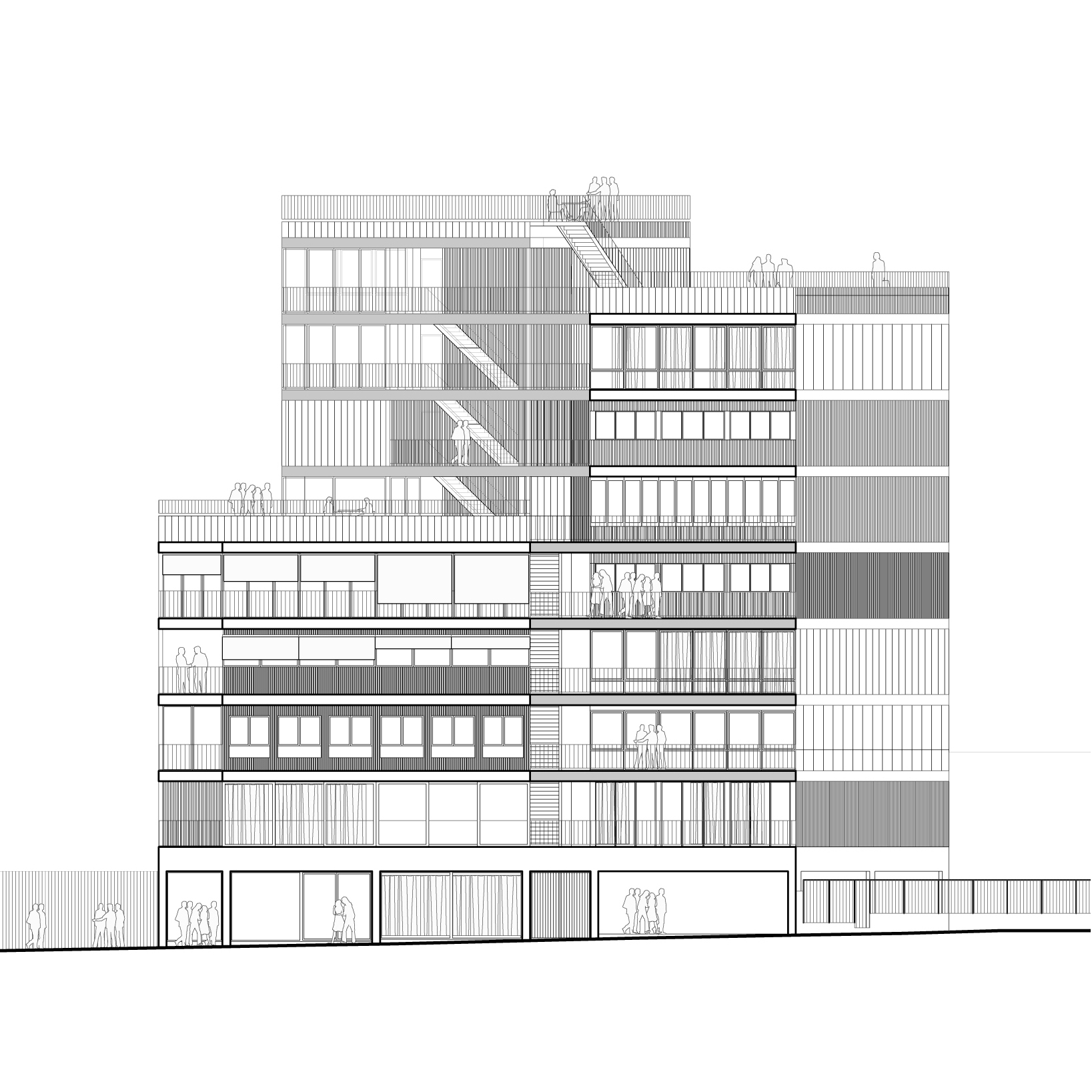
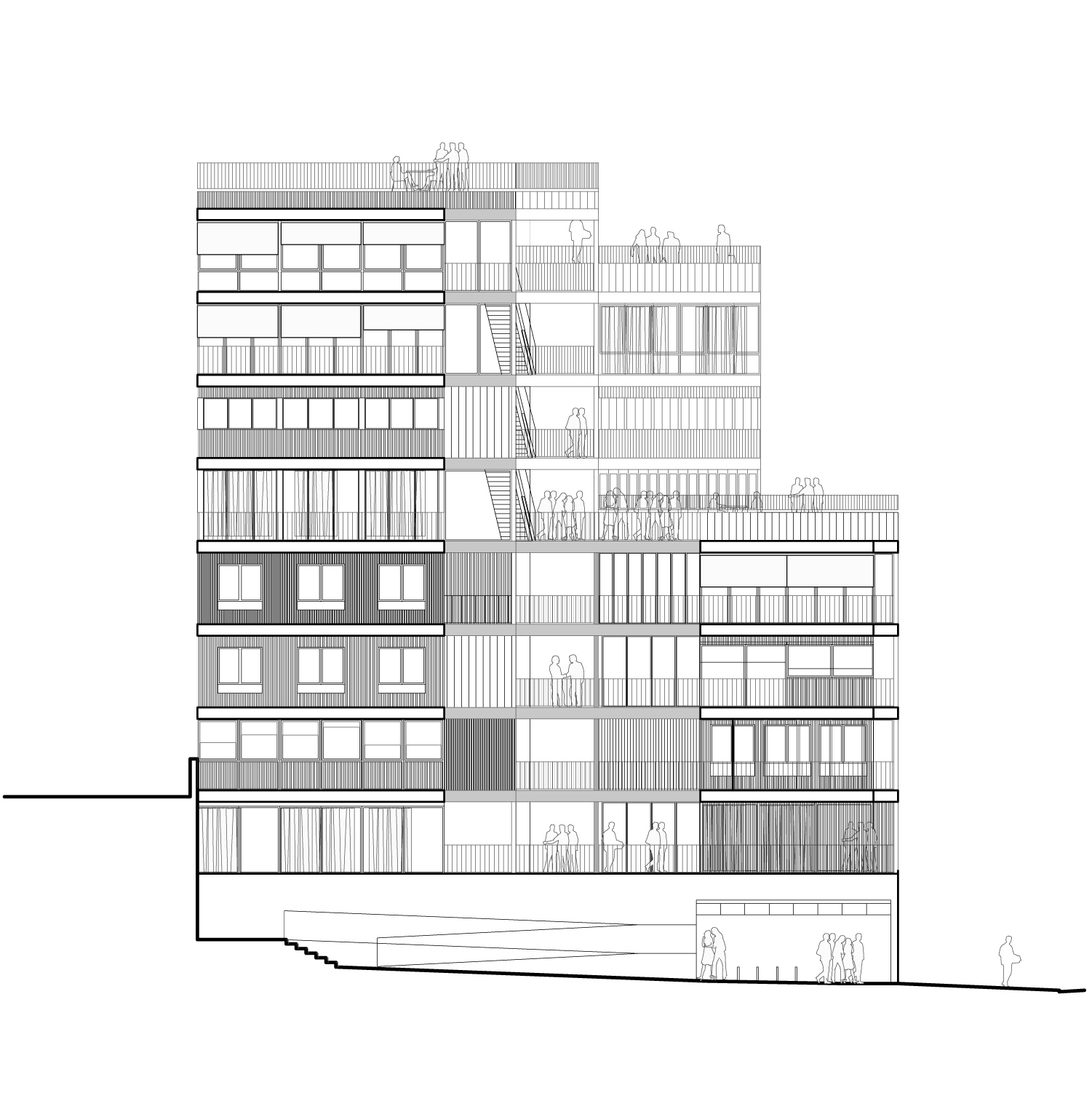
Each unit possesses its own facade, and these spread over the entire building like variations of a rational catalogue, a series of architectural phrases whose invisible grammar was thoughtfully drafted.
Project Info
Architects: MUOTO
Country: Paris, France
Area: 1989 m²
Year: 2015
Photographs: Artefactorylab
Clients: Kaufman & Broad

Sophie Tremblay is a Montreal-based architectural editor and designer with a focus on sustainable urban development. A McGill University architecture graduate, she began her career in adaptive reuse, blending modern design with historical structures. As a Project Editor at Arch2O, she curates stories that connect traditional practice with forward-thinking design. Her writing highlights architecture's role in community engagement and social impact. Sophie has contributed to Canadian Architect and continues to collaborate with local studios on community-driven projects throughout Quebec, maintaining a hands-on approach that informs both her design sensibility and editorial perspective.