

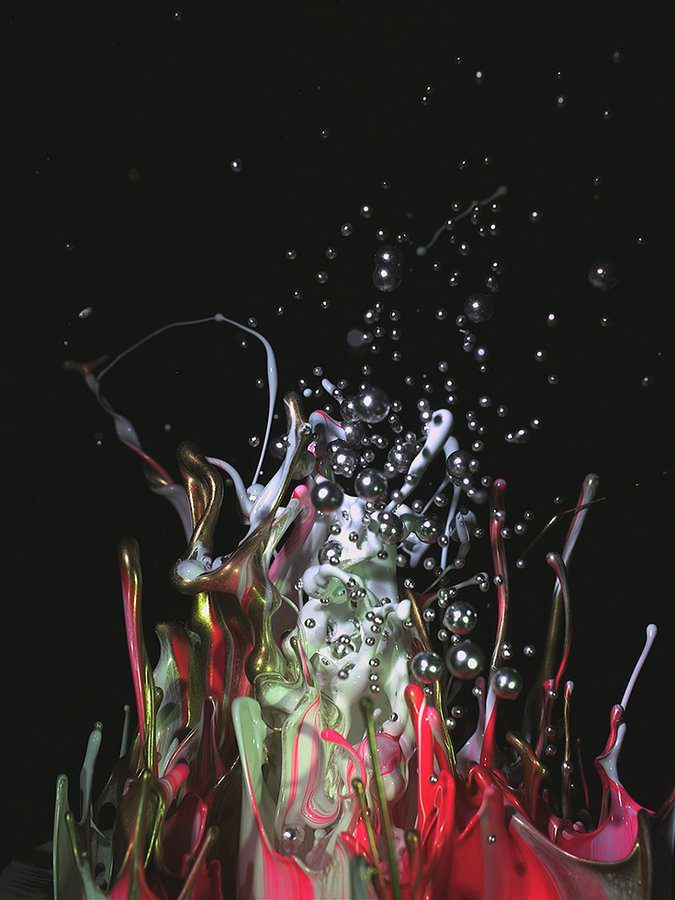
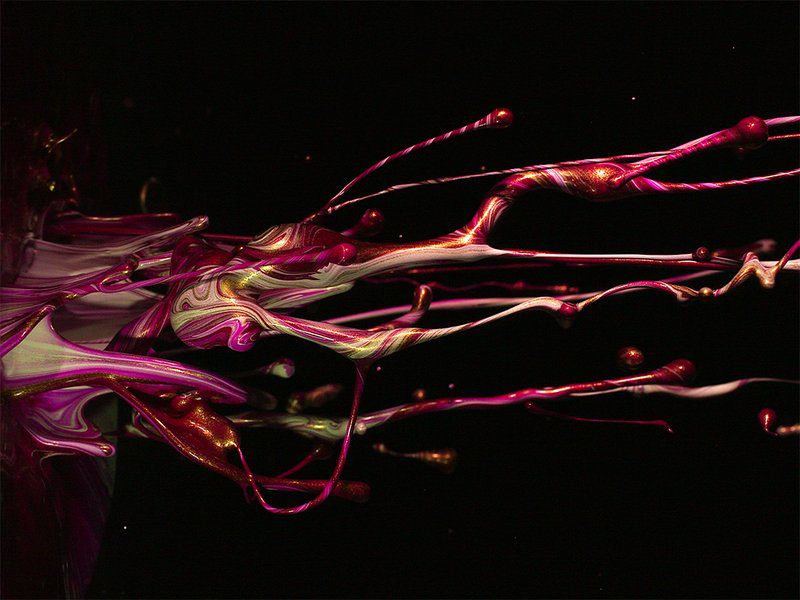
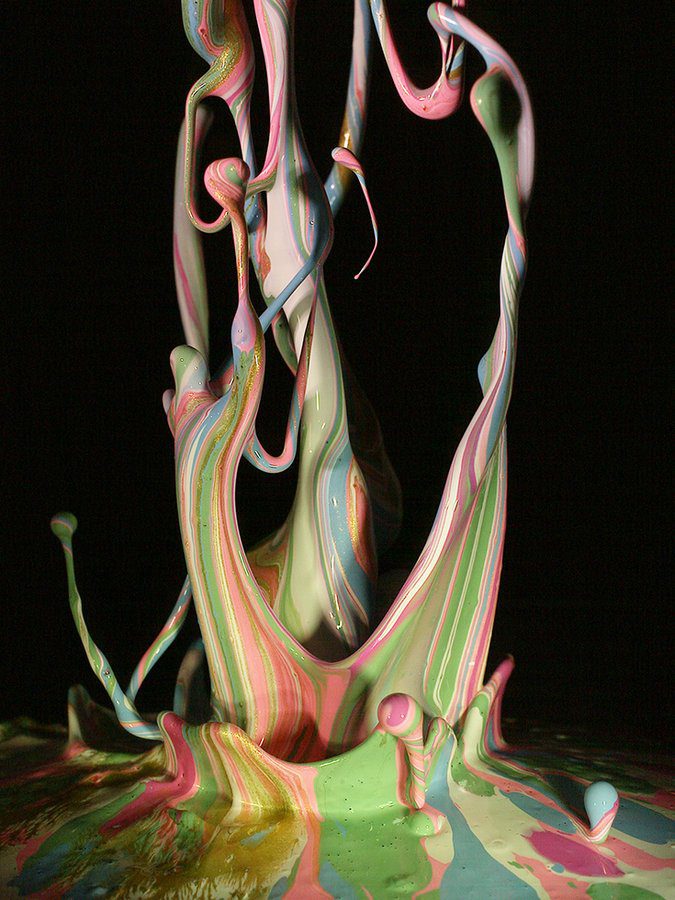
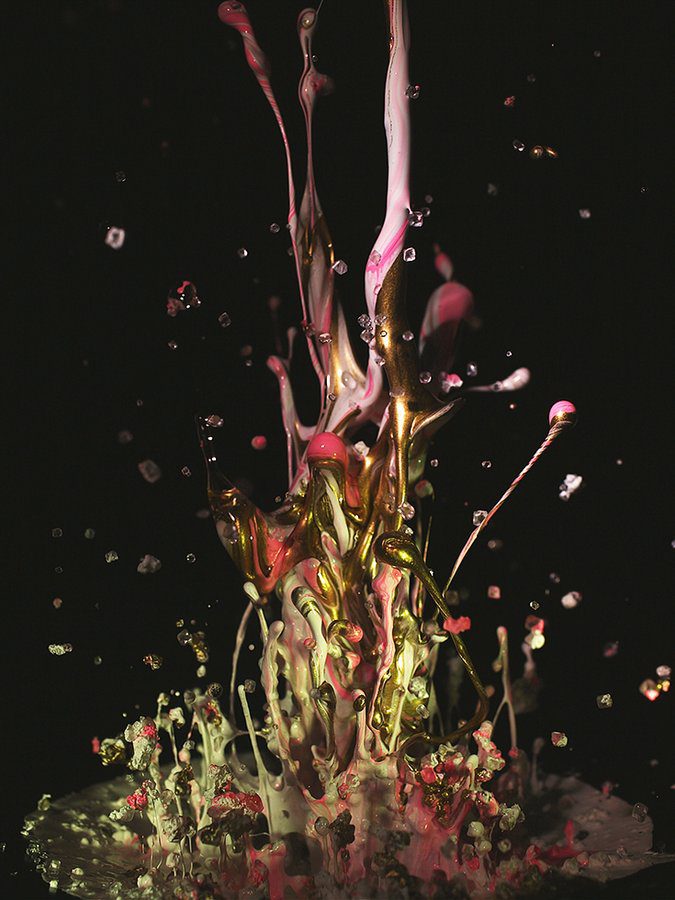
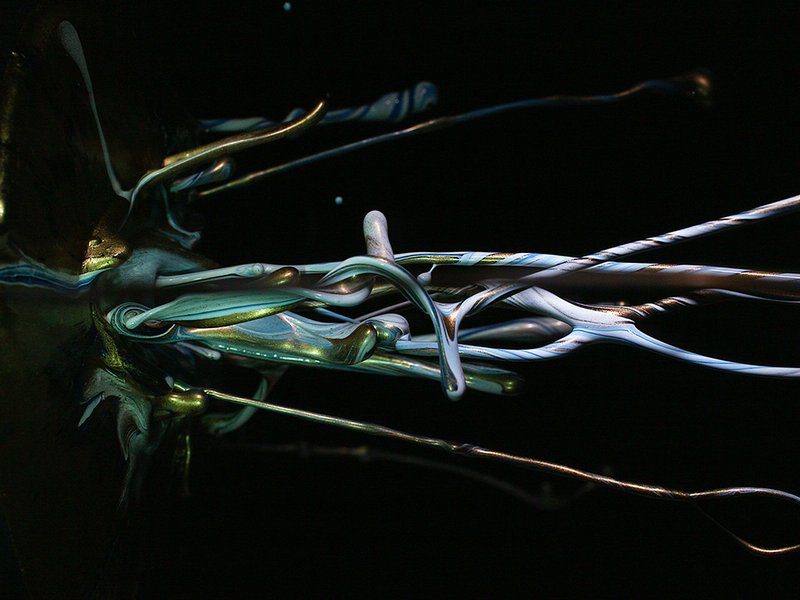
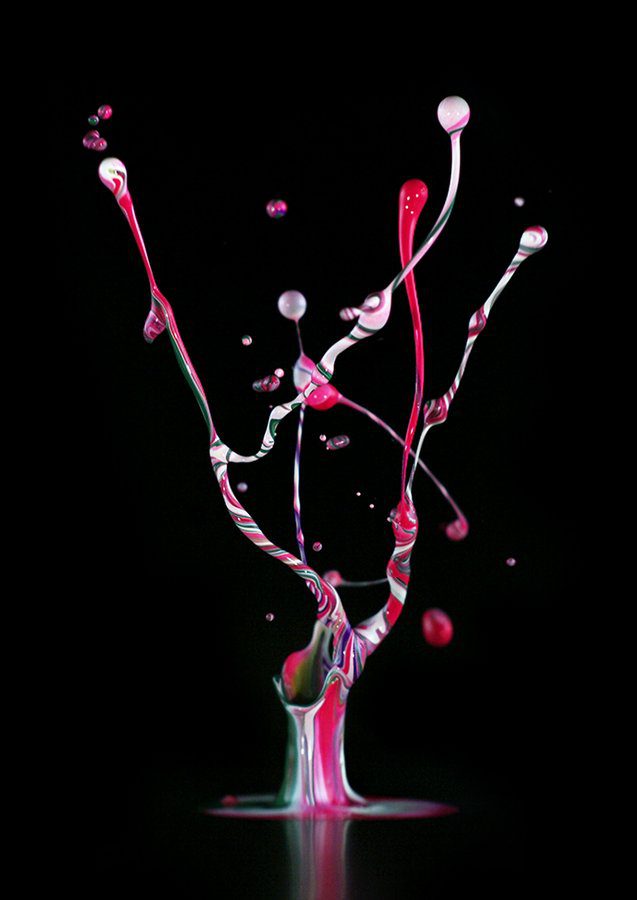
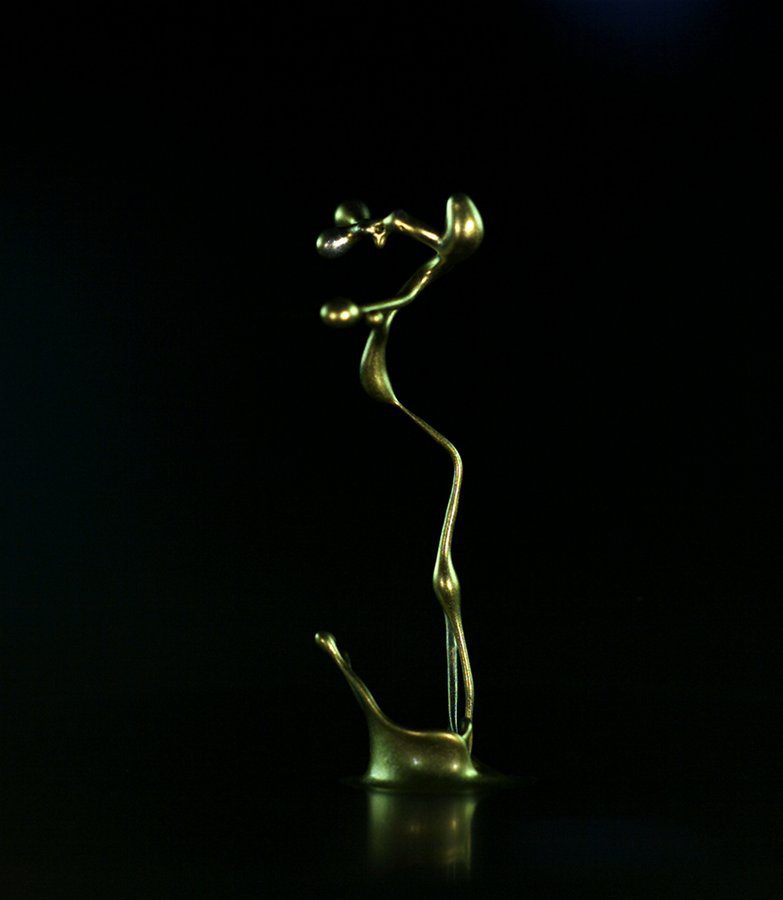
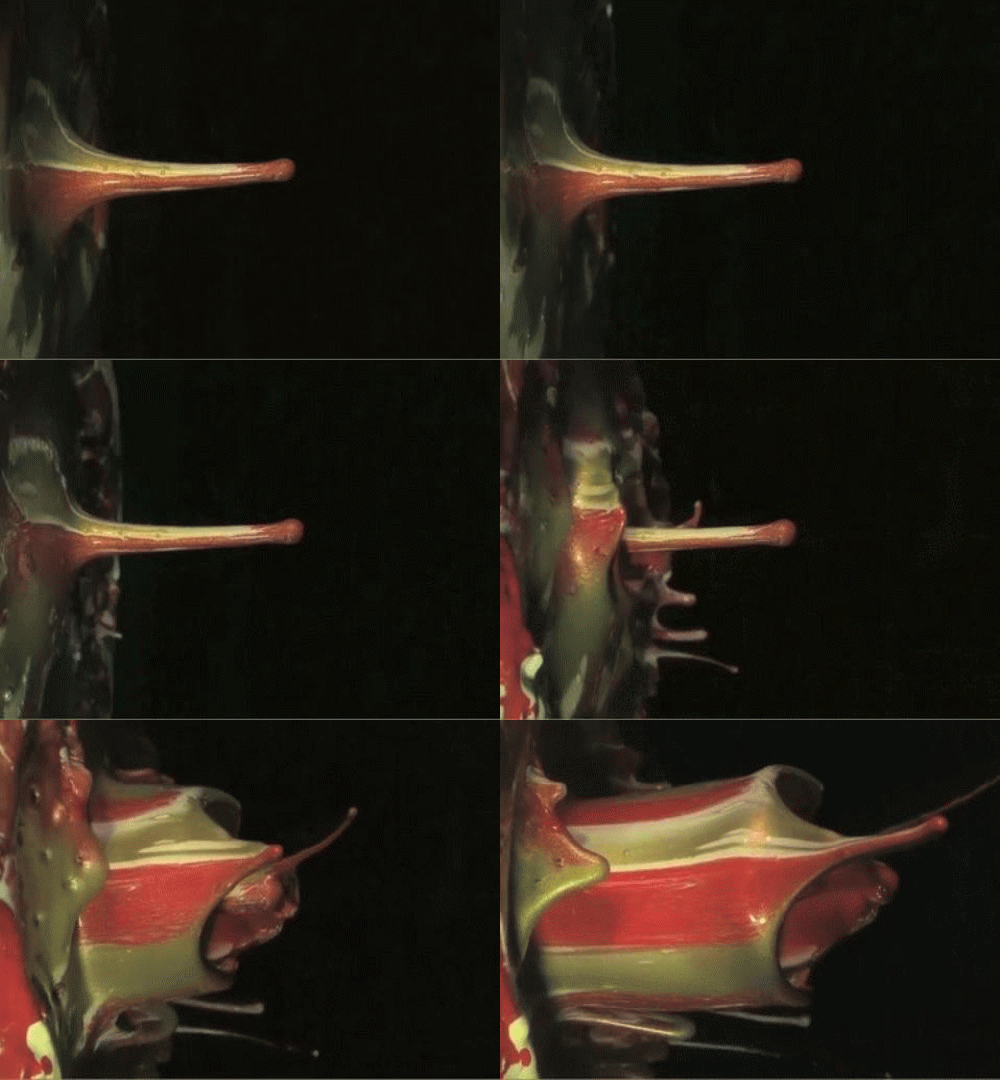
The Sound of ikebana, a new installation for the Singapore Art-Science Museum, maps three-dimensionally the viscosity of richly colored fluids onto the sculptural façade, fusing technological advances with the arts in a vibrant gesture. The artist, Nako Tosa captures the four seasons of Japan with color and geometrical references.

Courtesy of Nako Tosa
The video is an elaborate performance of the 3D mapped projection, in paint and oil dancing as a reaction to sound vibrations.
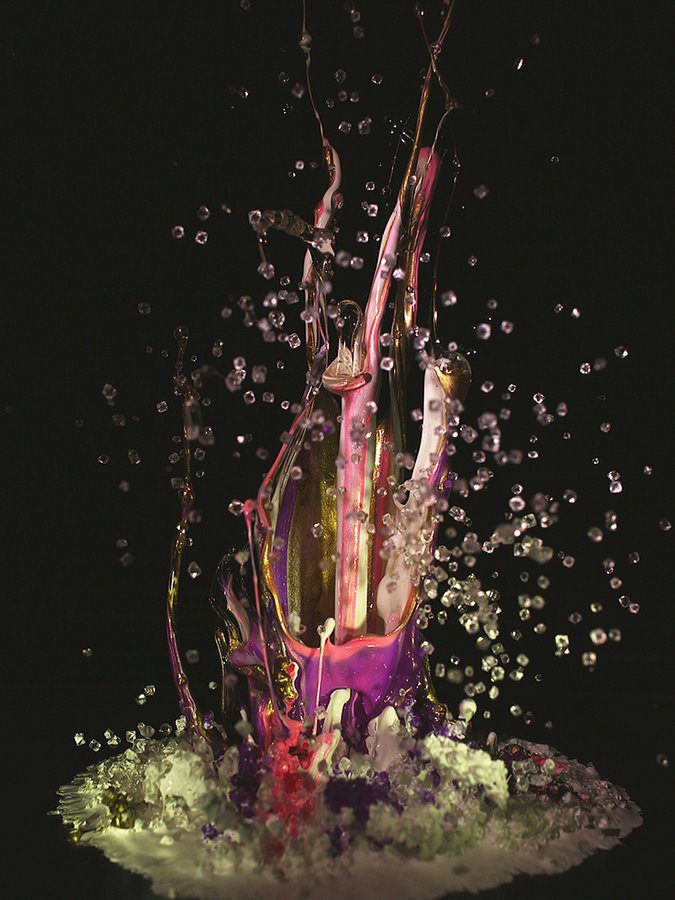
Courtesy of Nako Tosa
The museums façade is redefined, insinuating unity through capturing the abstract genius loci of Japan and the political relationships of China, Malaysia and India; confronting the city of today with the Asia of tomorrow.
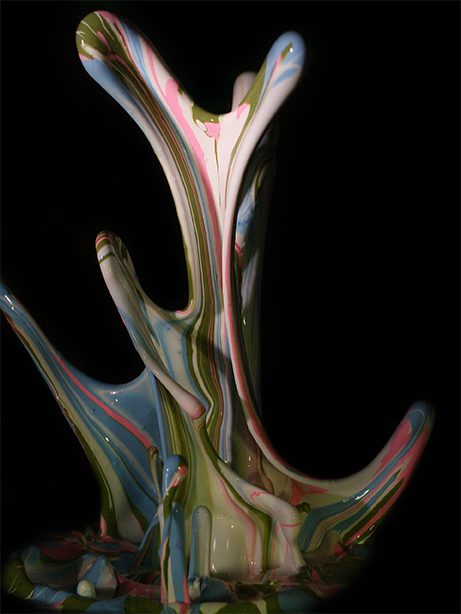
Courtesy of Nako Tosa
Visual space is conventionally defined between light and shadow, however when the light is augmented via projection, definitive tectonic is blurred into the foreign media.
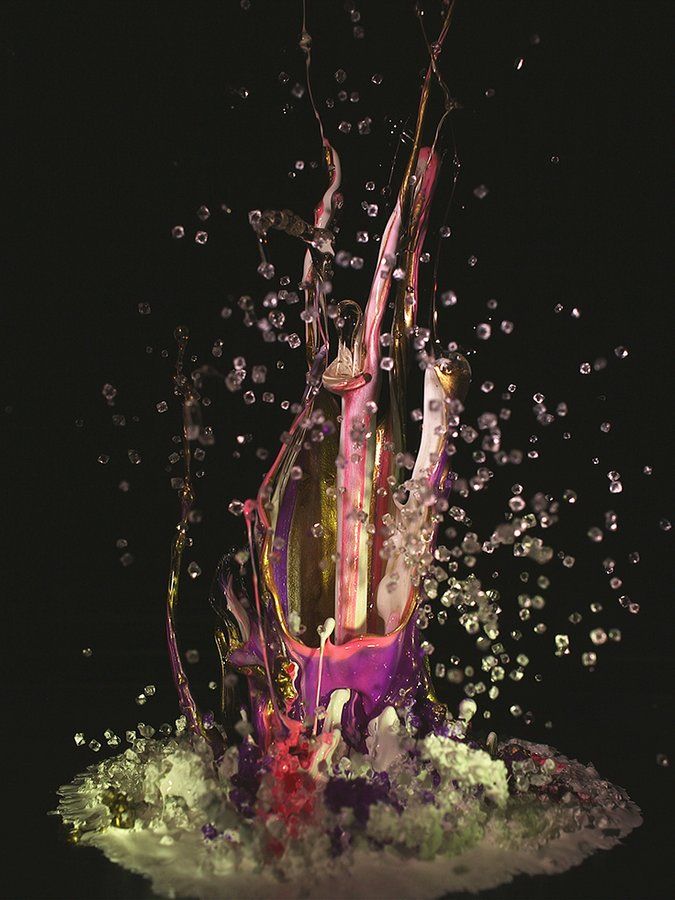
Courtesy of Nako Tosa
The authentic physical and the inauthentic virtual world collaborate to make a third; a new phenomenon whereby technology redefines the art museums in a temporal flux of color and light. The paint both flirts and antagonizes the form in a conversation without hierarchy, questioning the built form as spectacle or background.

Anastasia Andreieva is an accomplished Architectural Projects Editor at Arch2O, bringing a unique blend of linguistic expertise and design enthusiasm to the team. Born and raised in Ukraine, she holds a Master’s degree in Languages from Taras Shevchenko National University of Kyiv. Her deep passion for architecture and visual storytelling led her to transition from translation and editorial roles into the world of design media. With a keen eye for conceptual clarity and narrative structure, Anastasia curates and presents global architectural projects with precision and flair. She is particularly drawn to parametric and digital design, cultural context, and emerging voices in architecture. When I’m not analyzing the latest architectural trends, you’ll probably find me searching for hidden gems in cityscapes or appreciating the beauty of well-crafted spaces. After all, great design—like great connections—can be found in the most unexpected places. Speaking of connections, because architecture isn’t the only thing that brings people together.