

In the recent years 3D-Printing has evolved into a mainstream manufacturing technology, covering a wide range of applications. Nowadays, this additive process can be applied even for the creation of full-scale structures.
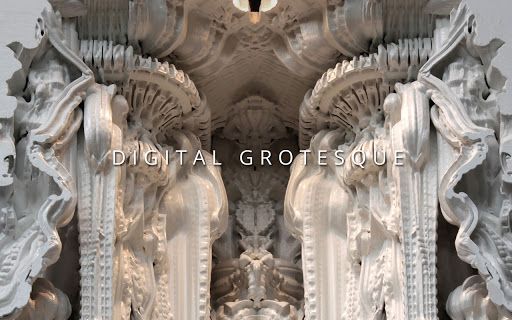
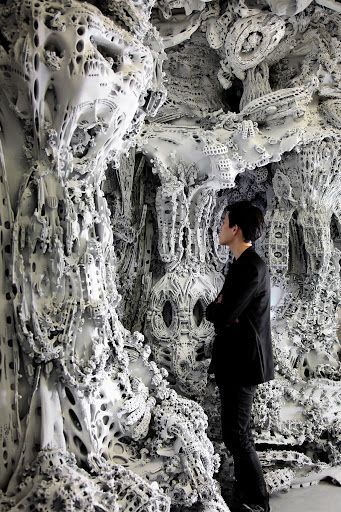
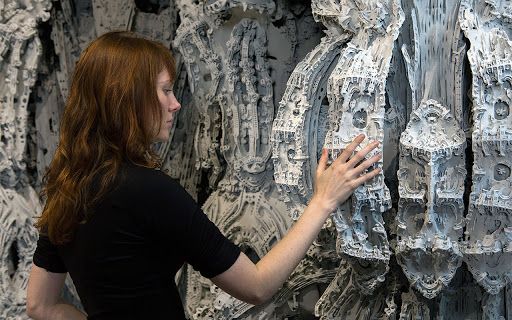
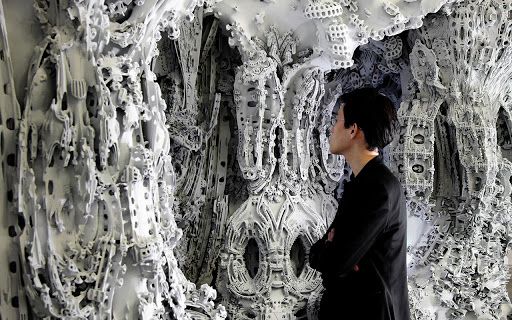
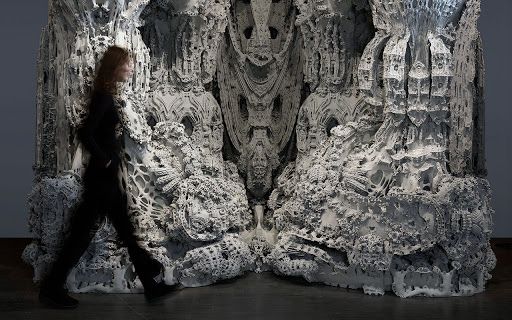
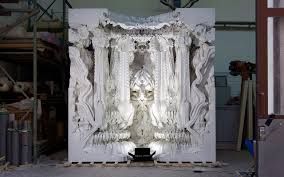
Michael Hansmeyer and Benjamin Dillenburger, Swiss architects and programmers, fabricated a human scale architectural construction taking advantage of the 3D printing by means of sandstone-printing. The extension of this technology will in the future enable architects to apply this innovative 3d printing process not only for the creation of small scale models, but also for development and manufacturing of full scale design projects.
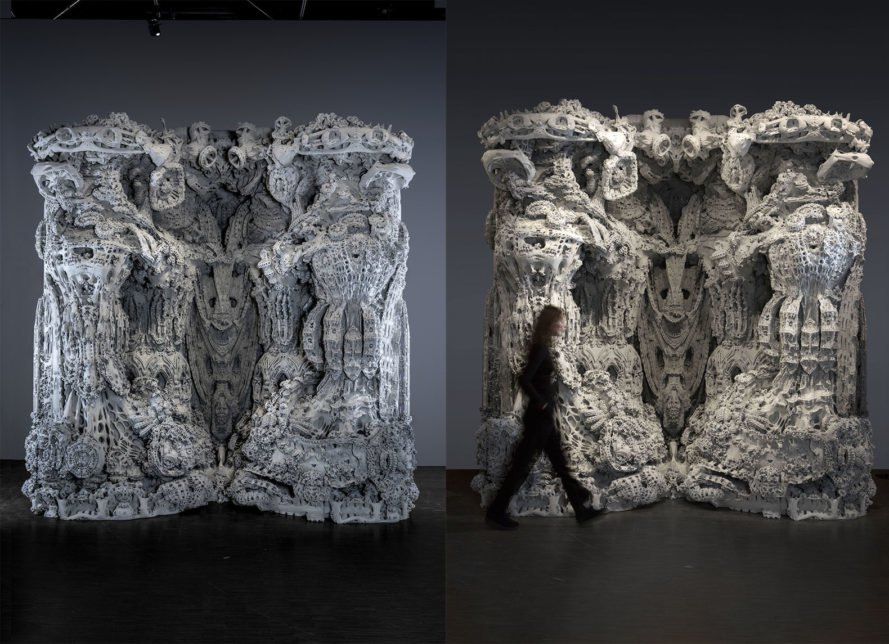
Courtesy of Michael Hansmeyer and Benjamin Dillenburger
“One of the most astounding things is that it costs exactly as much to 3D print a plain box as it does to print the most elaborate form conceivable,” says Hansmeyer. “Not only are the costs identical, but the amount of time required is the same as well.
And it doesn’t cost more to print a different form each time i.e. there are no advantages to standardization. The implications of this are huge. There is no longer a cost for complexity. No cost for ornament. No cost for individuality”.
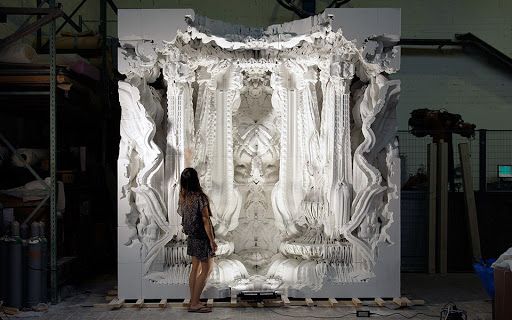
Courtesy of Michael Hansmeyer and Benjamin Dillenburger
By Depy Charalampidou

Anastasia Andreieva is an accomplished Architectural Projects Editor at Arch2O, bringing a unique blend of linguistic expertise and design enthusiasm to the team. Born and raised in Ukraine, she holds a Master’s degree in Languages from Taras Shevchenko National University of Kyiv. Her deep passion for architecture and visual storytelling led her to transition from translation and editorial roles into the world of design media. With a keen eye for conceptual clarity and narrative structure, Anastasia curates and presents global architectural projects with precision and flair. She is particularly drawn to parametric and digital design, cultural context, and emerging voices in architecture. When I’m not analyzing the latest architectural trends, you’ll probably find me searching for hidden gems in cityscapes or appreciating the beauty of well-crafted spaces. After all, great design—like great connections—can be found in the most unexpected places. Speaking of connections, because architecture isn’t the only thing that brings people together.