

We would like to draw your attention to the competition “Wine Culture Center” promoted by YAC in partnership with Foster and Partners, 5+1 AA, The Plan Magazine, Bologna University, Rome University, Venice IUAV University, Santa Fé University and many other Public Institutions.
This is the challenge YAC offers the designers, proposing to transform Valpolicella’s old winery into an architectural manifesto in which wine production has to become the pivotal feature to frame within the architectural design. The proposal shall comprehend a wide range of wine-related activities; spaces for wine tasting experiences / lectures / media showing / media listening / wine museum / hospitality resort / research centre / educational centre.
Prize money: 15.000€.
Target: architects, designers, artists, students, graduates, postgraduates, professionals.
Aim: transform the Valpolicella’s old winery ( in Verona) into an architectural manifesto: a place for culture, training and hospitality
Aarly birds start: 24Mar14
Deadline: 30Jun14.
Jury: Includes Nicola Scaranaro, Alfonso Femia, Fiorenzo Valbonesi, Antonio Ravalli, and Markus Scherer. ‘Early Bird’ registration ends April 30 and the material submission deadline is July 7. For more information, please go to the competition’s official website.
For more information, please go to the competition’s official website.
Some of the websites referring to the new initiative are:
www.youngarchitectscompetitions.com
www.facebook.com/youngarchitectscompetitions
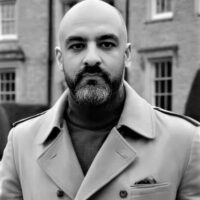
Ibrahim Abdelhady is an architect, academic, and media entrepreneur with over two decades of experience in architecture and digital publishing. He is the Founder and CEO of Arch2O.com, a leading platform in architectural media, renowned for showcasing innovative projects, student work, and critical discourse in design. Holding dual PhDs in Architecture, Dr. Abdelhady combines academic rigor with industry insight, shaping both future architects and architectural thought. He actively teaches, conducts research, and contributes to the global architecture community through his writing, lectures, and media ventures. His work bridges the gap between practice and academia, pushing the boundaries of how architecture is communicated in the digital age.