

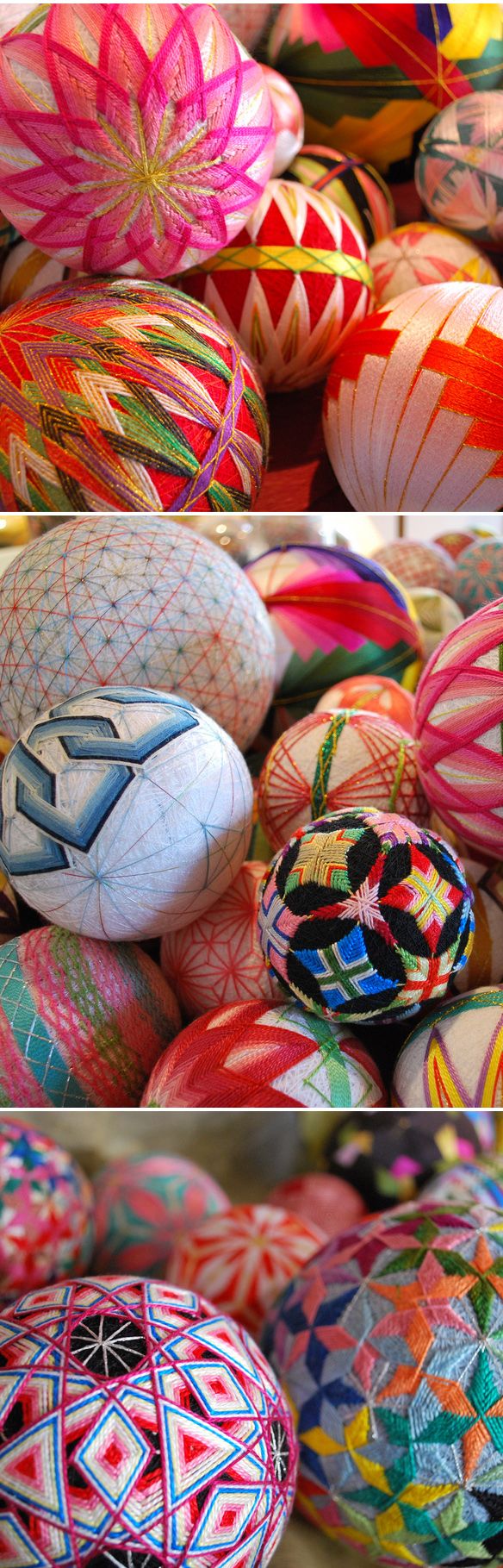
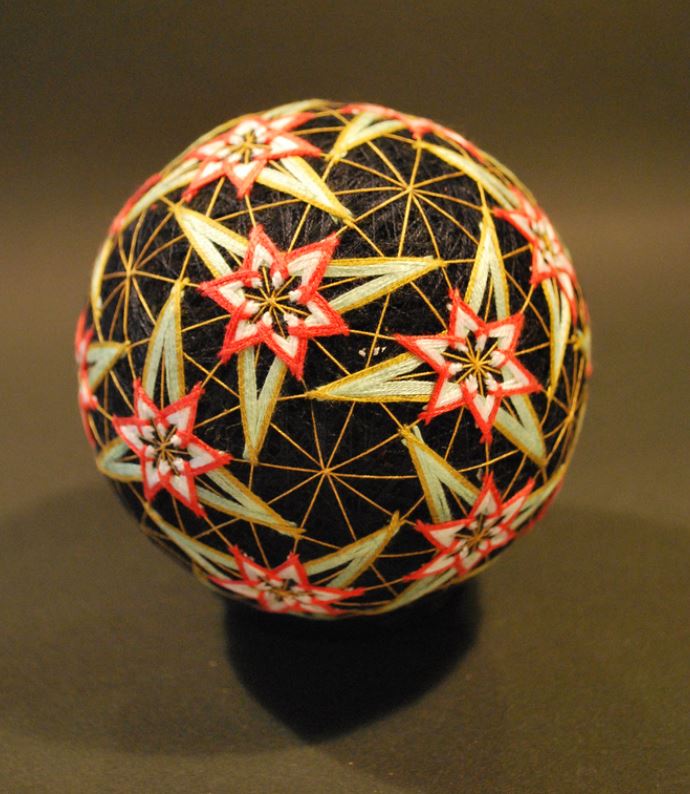
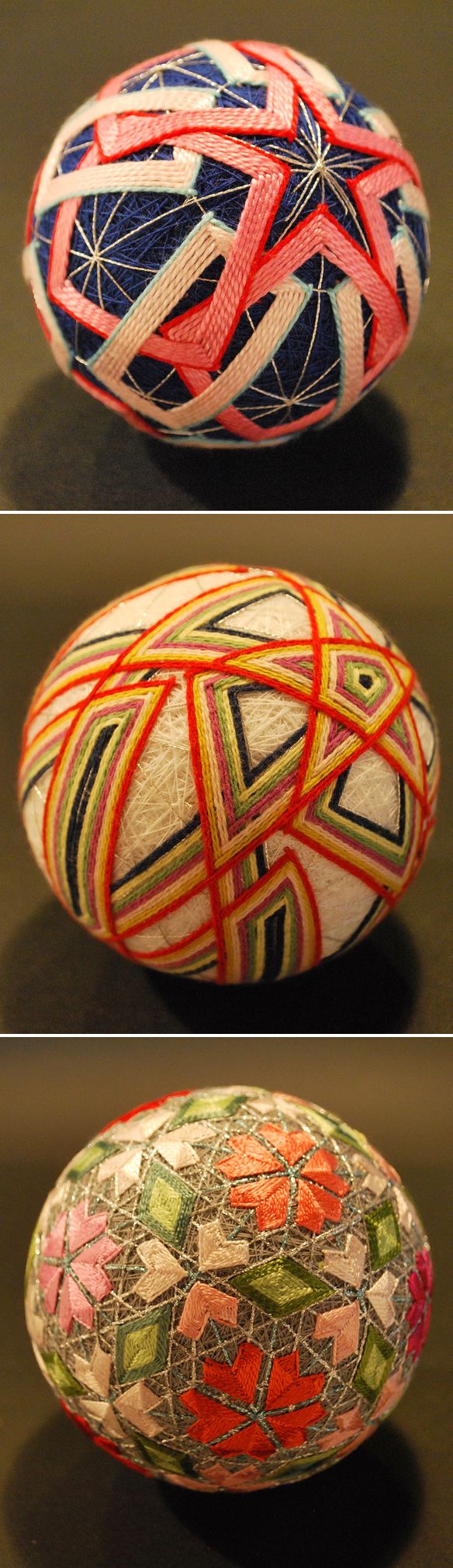
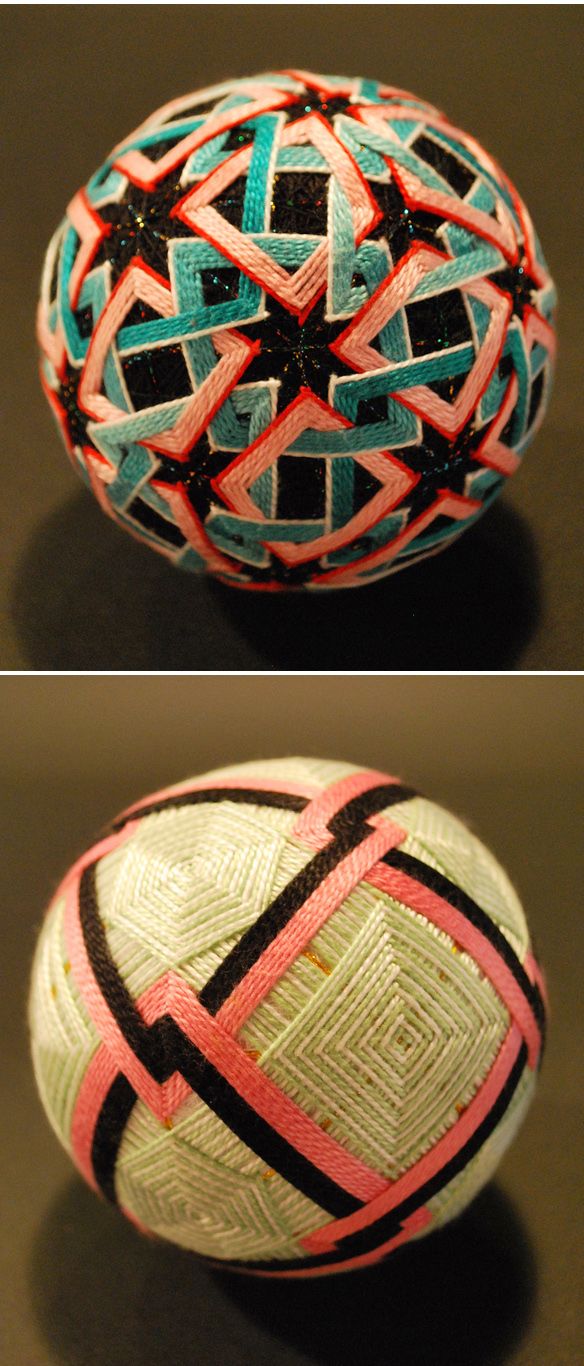
Temari, there are who grandmothers knit and grandmothers who play bingo, but you would never guess a woman going on 93-years-old could do the astonishing work that NanaAkua’s grandmother does with her Temari.
Courtesy of NanaAkua
Temari is a ornamental, embroidered ball given as a gift on New Years Eve to children in a symbolic gesture of wishing someone good fortune in the coming year. The folk art of Temari migrated from China to Japan in the 7th century A.D.. Originally, Temari was crafted out of scraps of Kimono wrapped in silk thread as toys for children.
Courtesy of NanaAkua
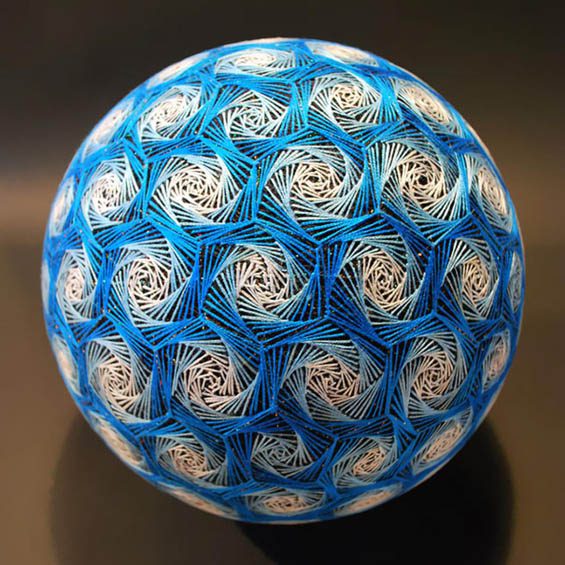
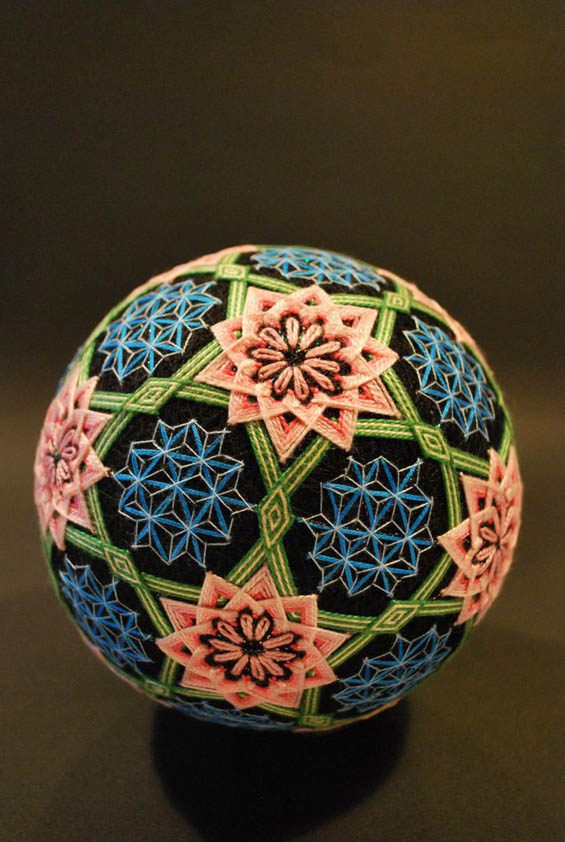
The tradition then evolved into a custom that mothers would perform by writing a goodwill wish for their children on a slip of paper and hiding it in the center of the Temari ball before giving it to the children on New Years. Now, Temari is a handcrafted cherished gift symbolizing deep friendship and loyalty. While spending some time at home on a well deserved break from her vast travels in 2009, accomplished Japanese illustrator and graphic designer, NanaAkua photographed her grandmother’s unique hobby and posted a spectacular gallery of pictures of the Temari on Flikr. NanAkua’s grandmother first learned the technique in the 60’s and has been mastering it ever since.
Courtesy of NanaAkua
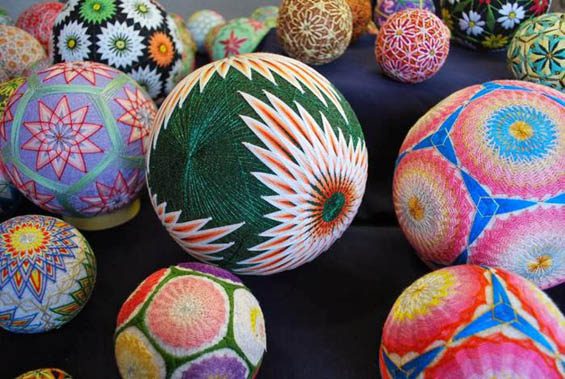
Her collection of painstakingly crafted Temari holds nearly 500 pieces. This is extremely impressive for a woman her age, considering the amount of nimble precision needed to create such beautiful and intricate works of art. NanaAkua’s photography of the Temari went viral on the internet and now people from all over the world are begging to buy her grandmother’s work. Check out NanaAkua’s gallery of the Temari on Flickr and if you are interested in learning how to create Temari yourself then take a look at the guides found on Instrucatbles.com and temari.com.

Anastasia Andreieva is an accomplished Architectural Projects Editor at Arch2O, bringing a unique blend of linguistic expertise and design enthusiasm to the team. Born and raised in Ukraine, she holds a Master’s degree in Languages from Taras Shevchenko National University of Kyiv. Her deep passion for architecture and visual storytelling led her to transition from translation and editorial roles into the world of design media. With a keen eye for conceptual clarity and narrative structure, Anastasia curates and presents global architectural projects with precision and flair. She is particularly drawn to parametric and digital design, cultural context, and emerging voices in architecture. When I’m not analyzing the latest architectural trends, you’ll probably find me searching for hidden gems in cityscapes or appreciating the beauty of well-crafted spaces. After all, great design—like great connections—can be found in the most unexpected places. Speaking of connections, because architecture isn’t the only thing that brings people together.