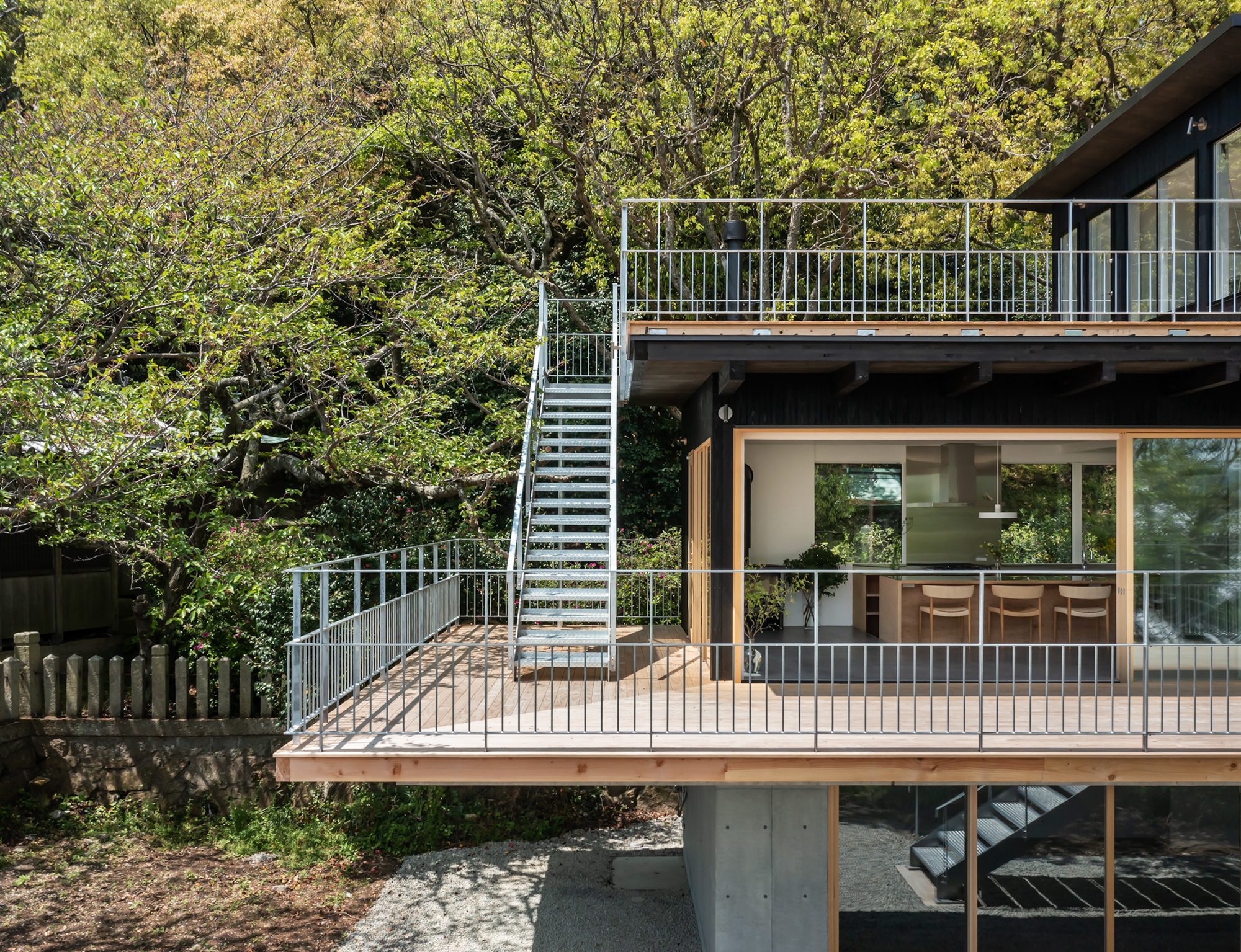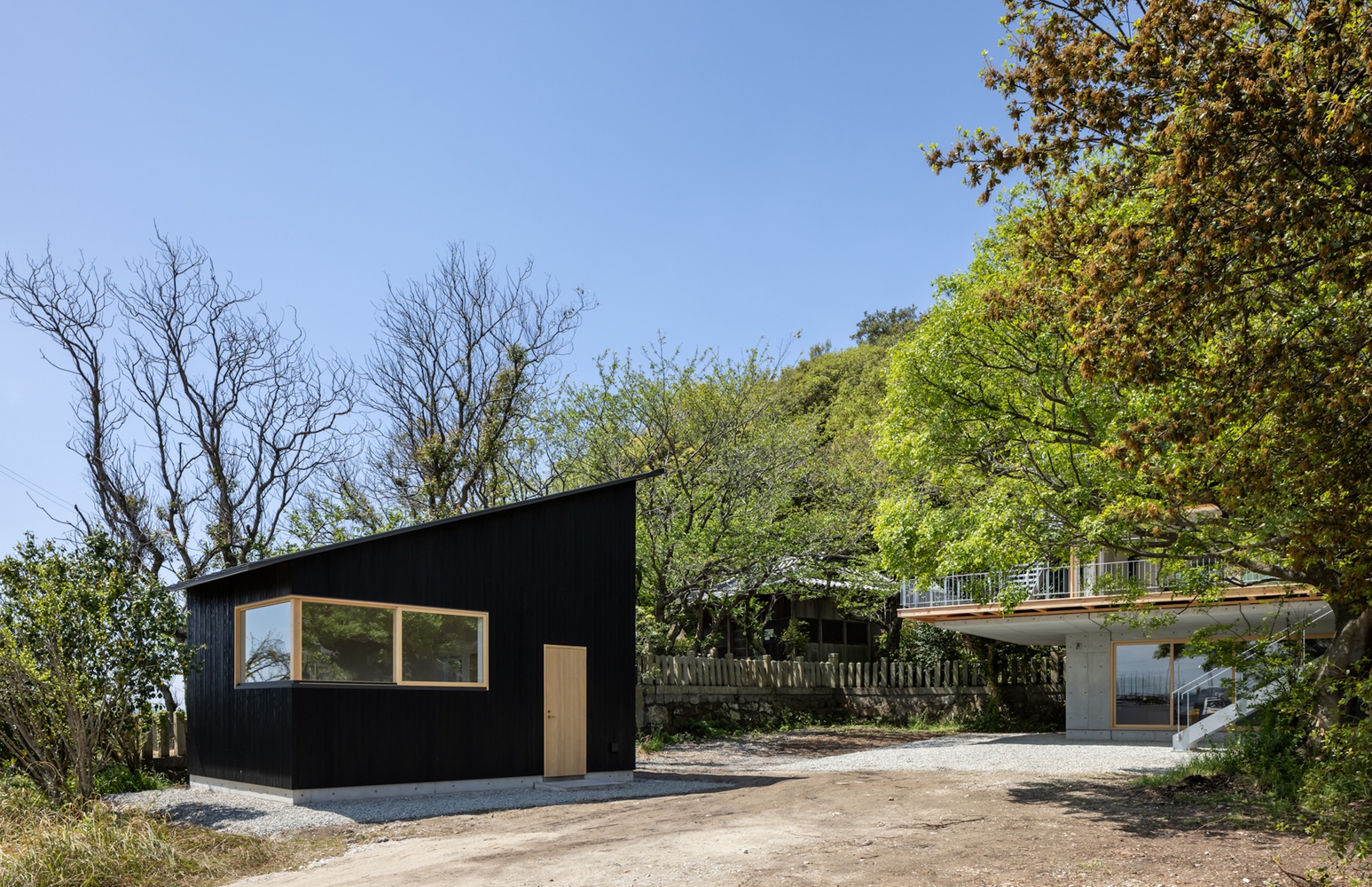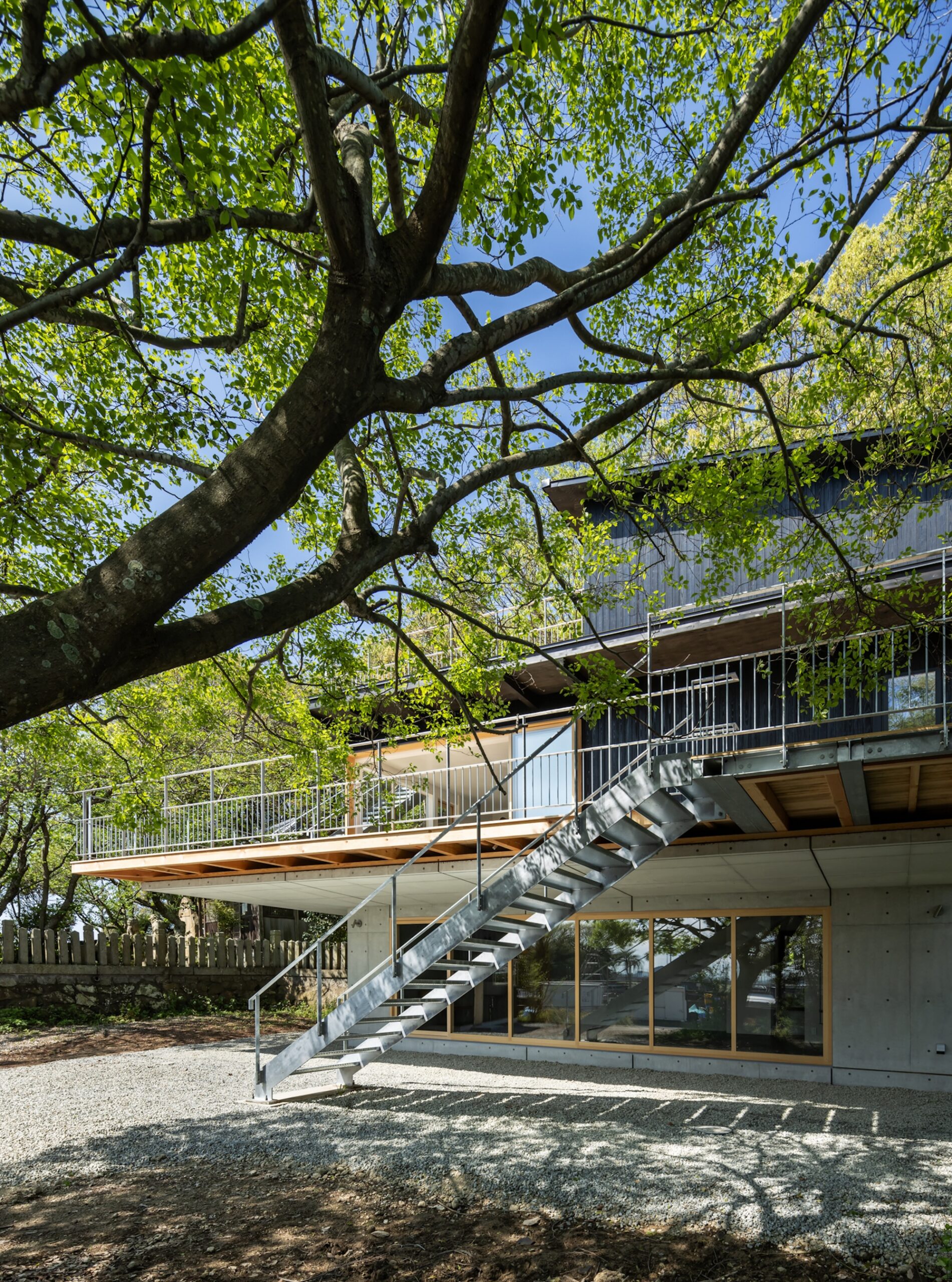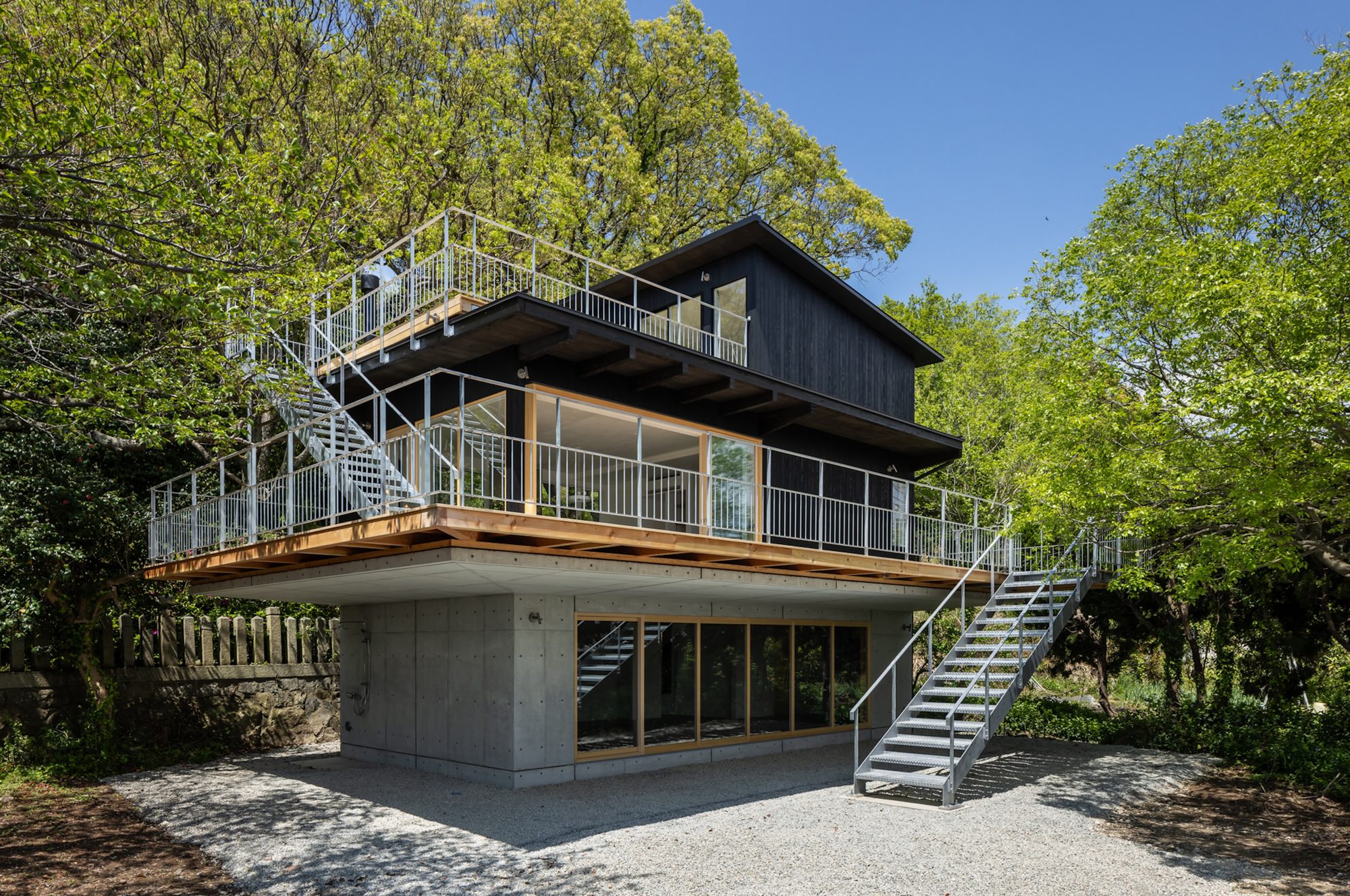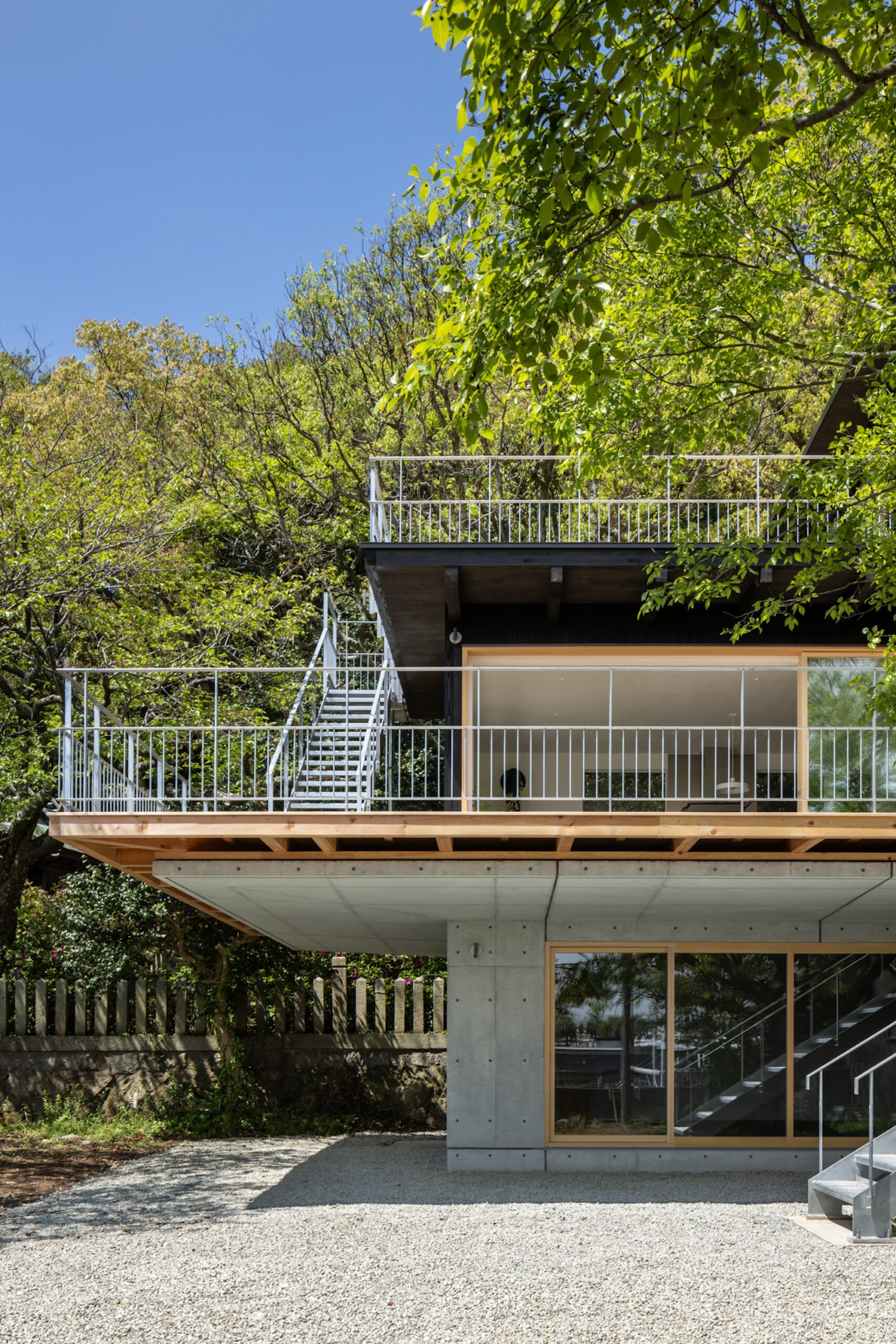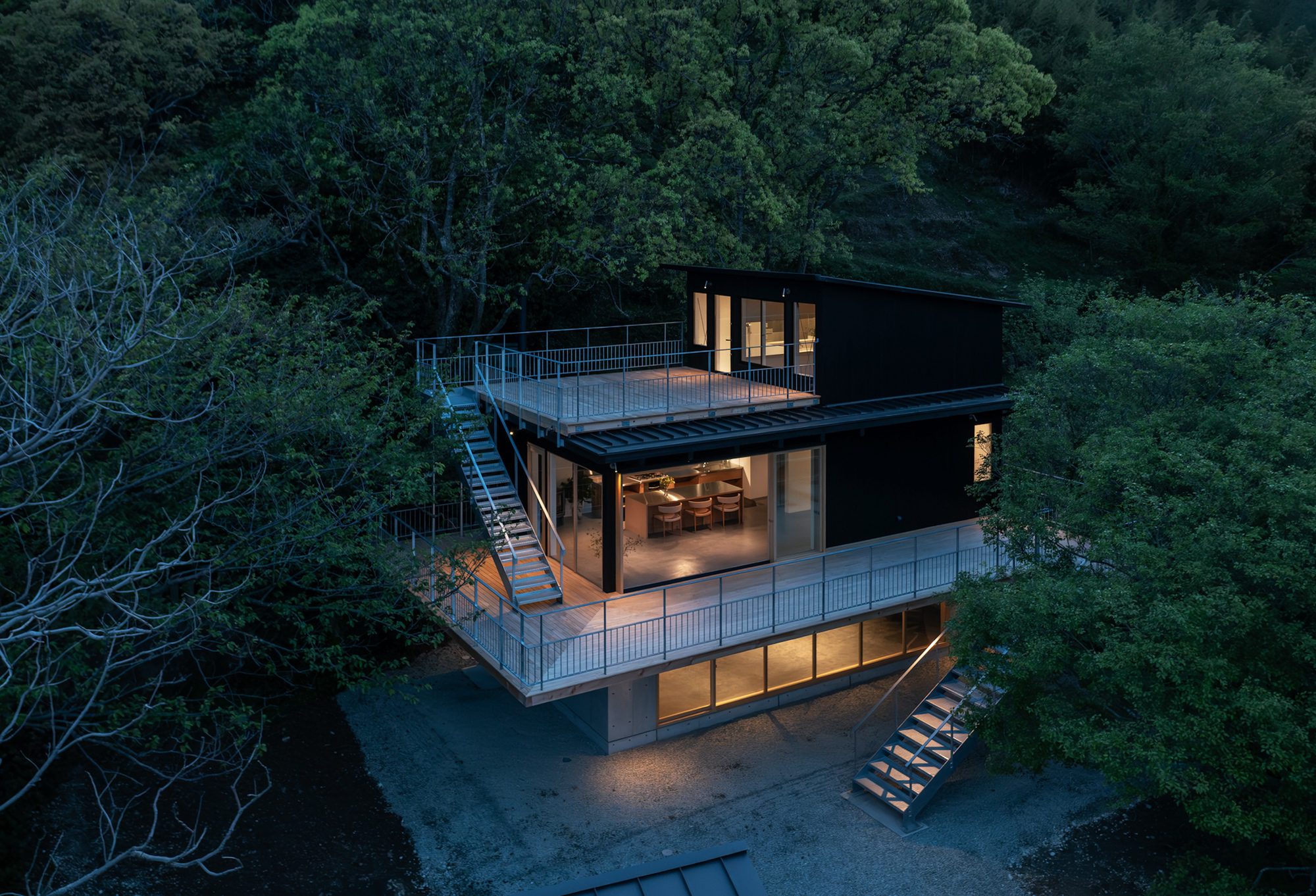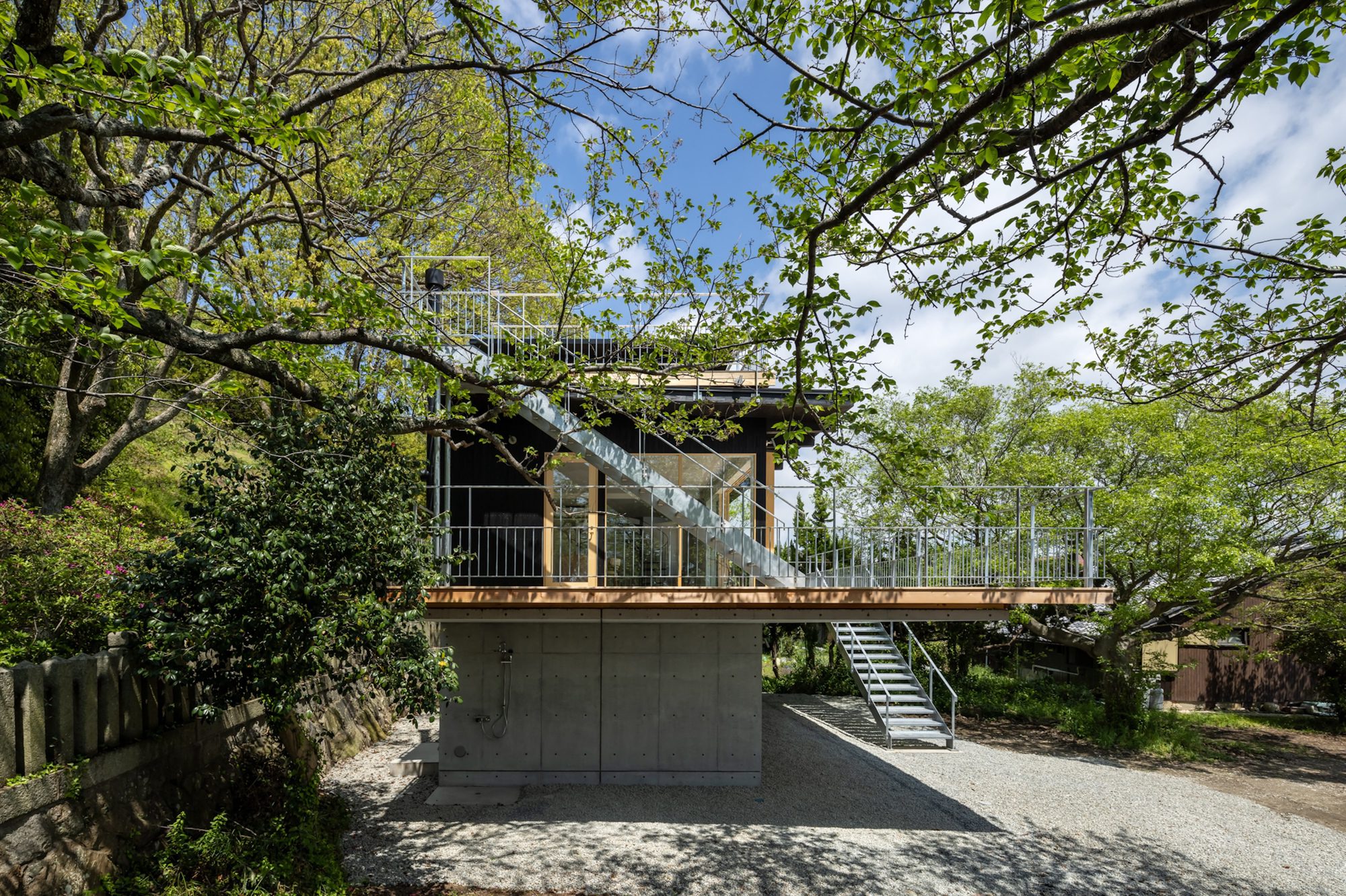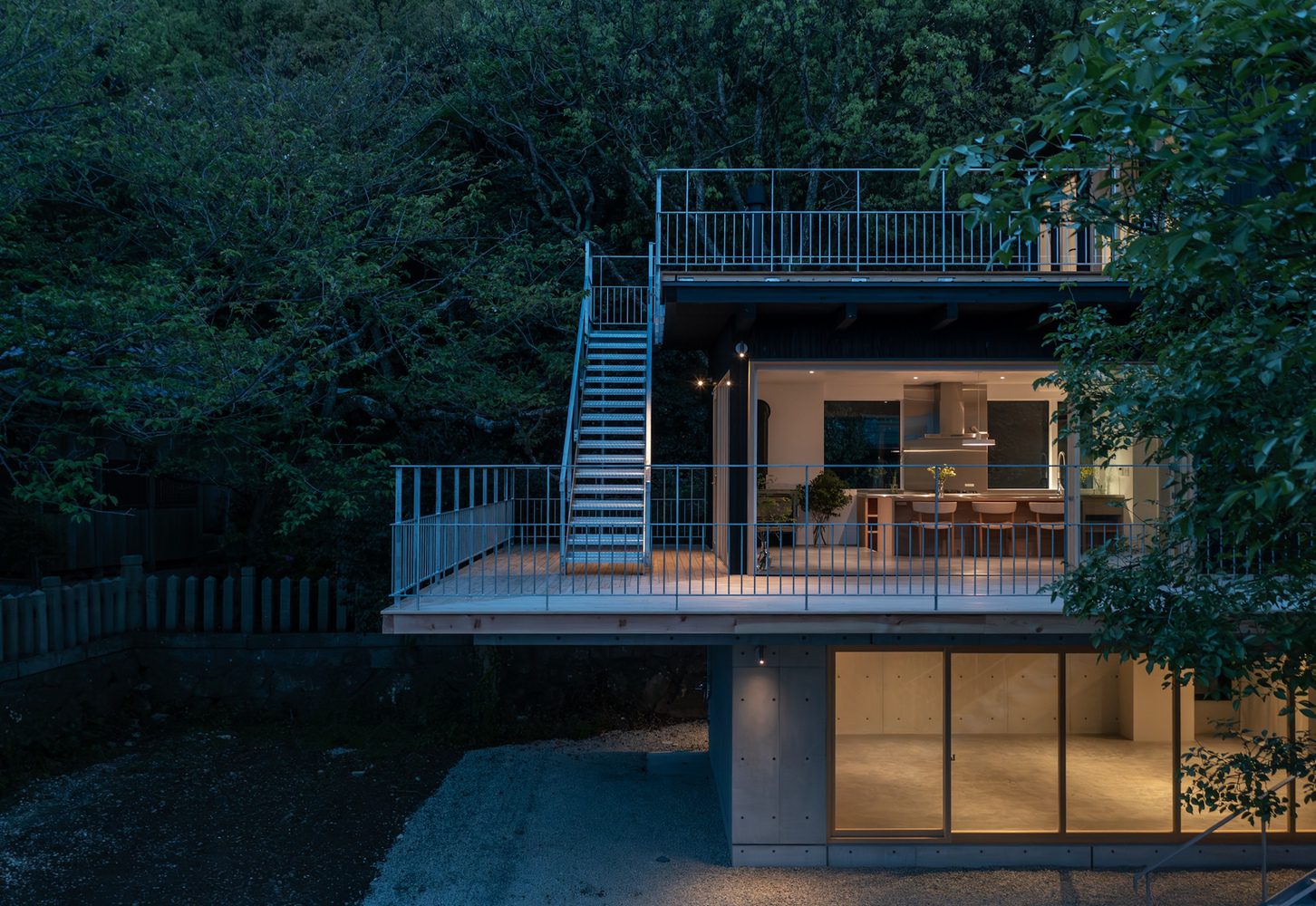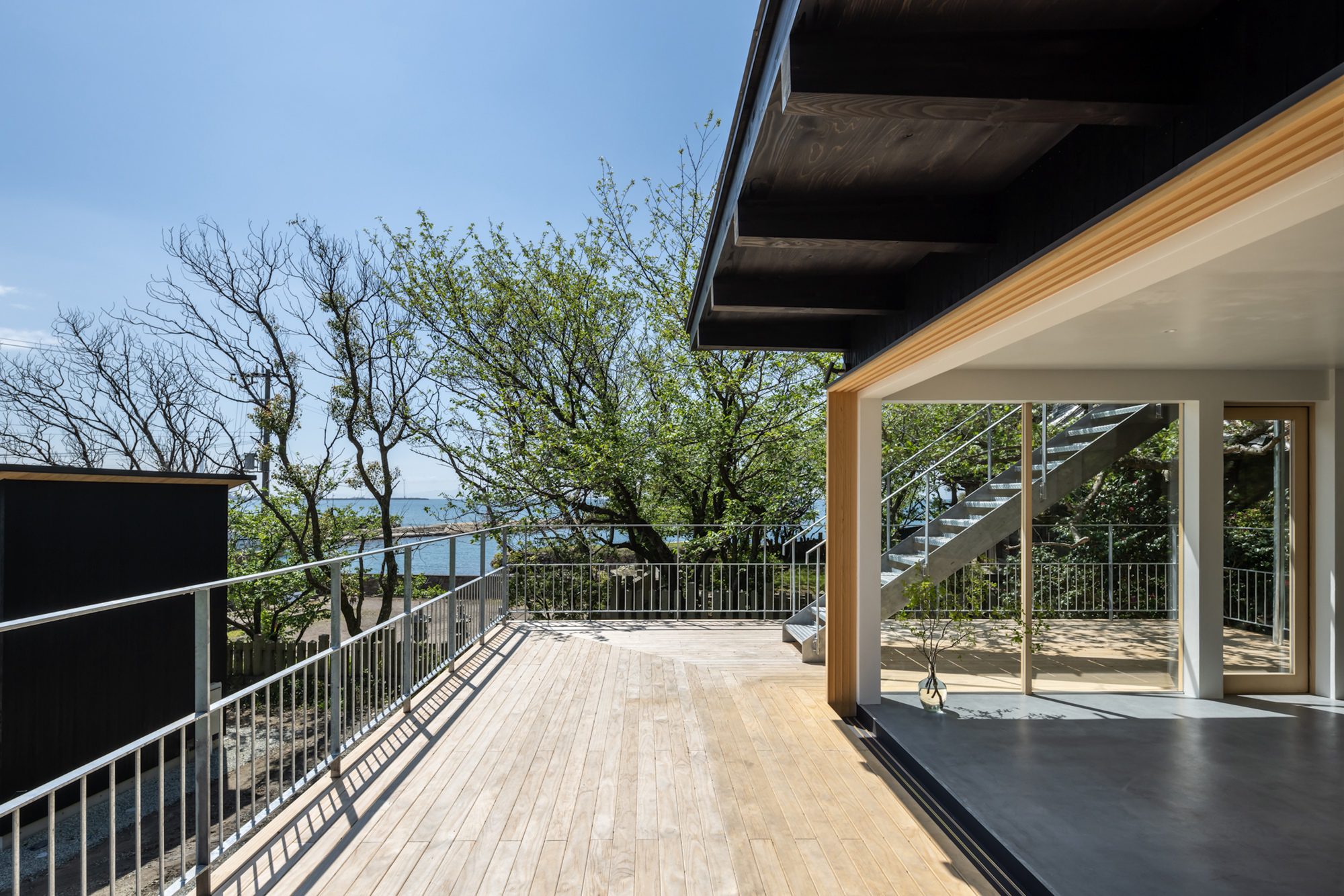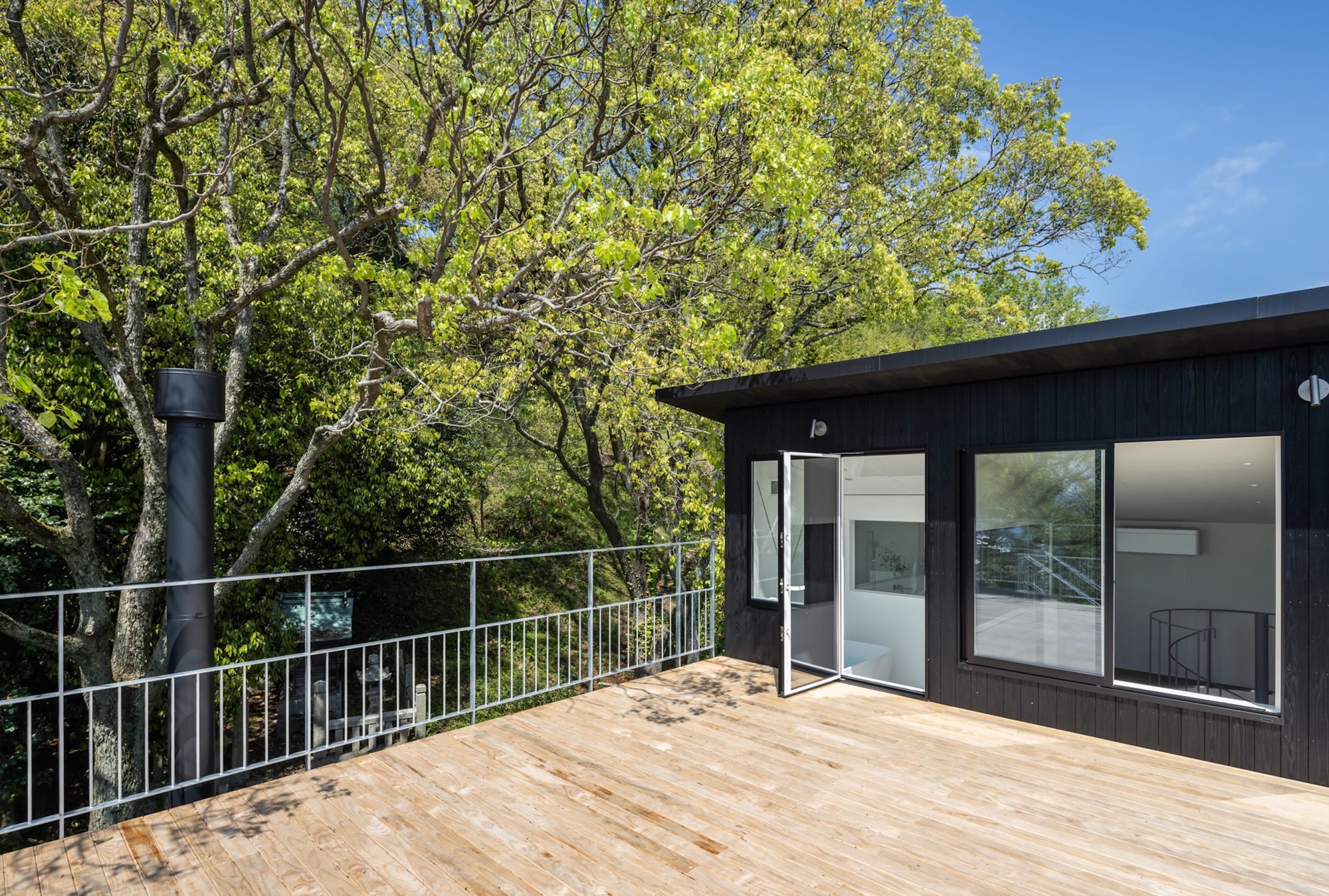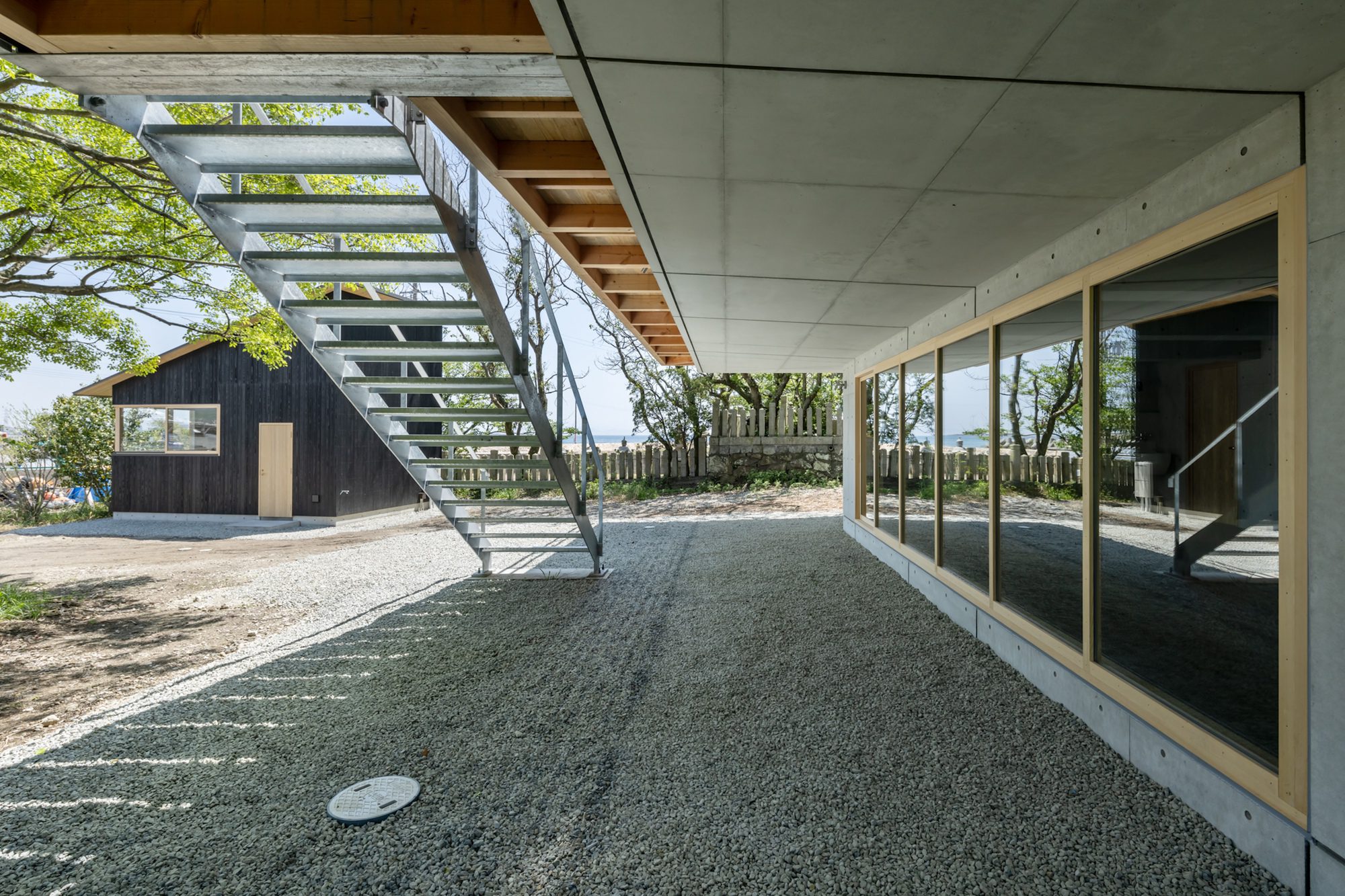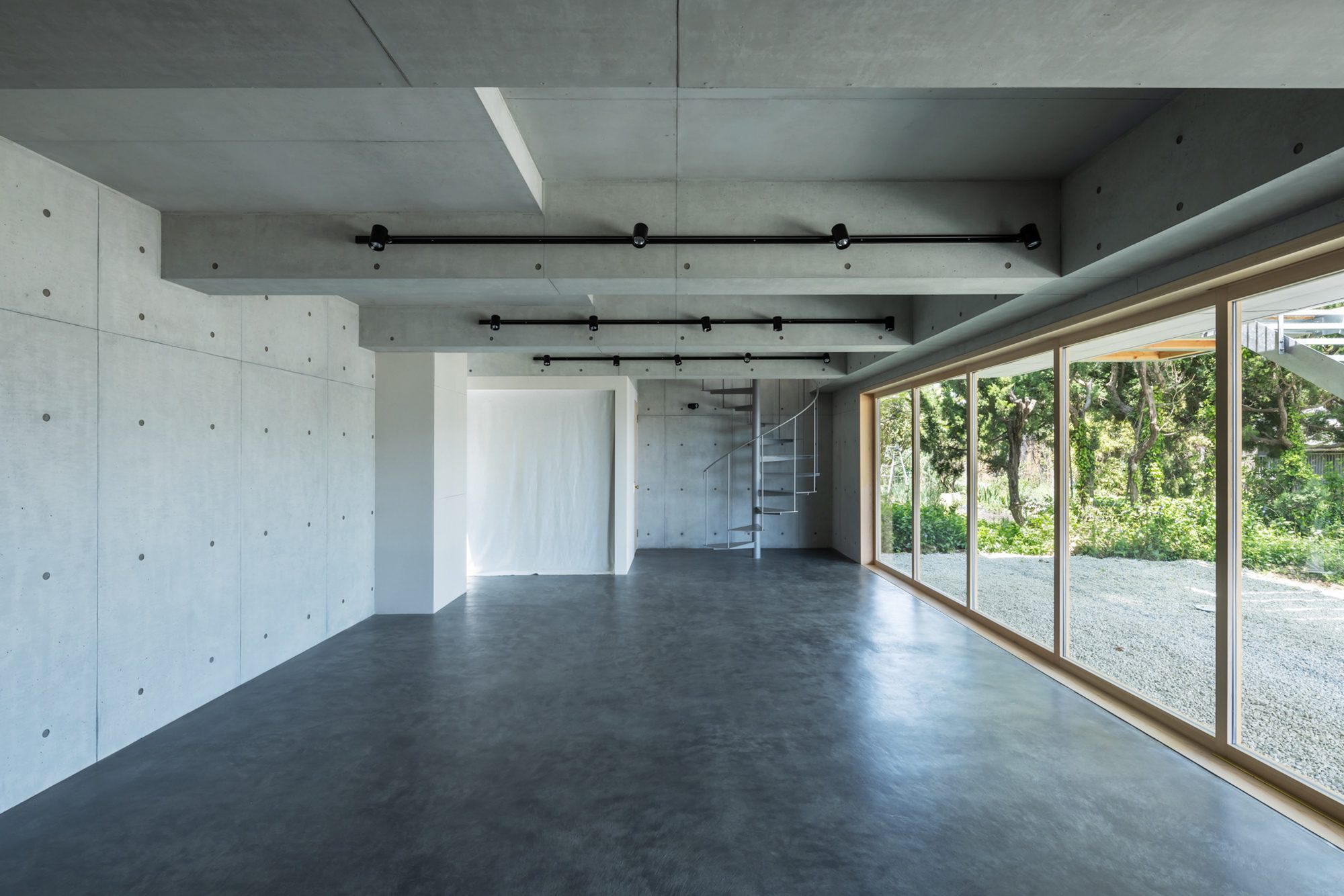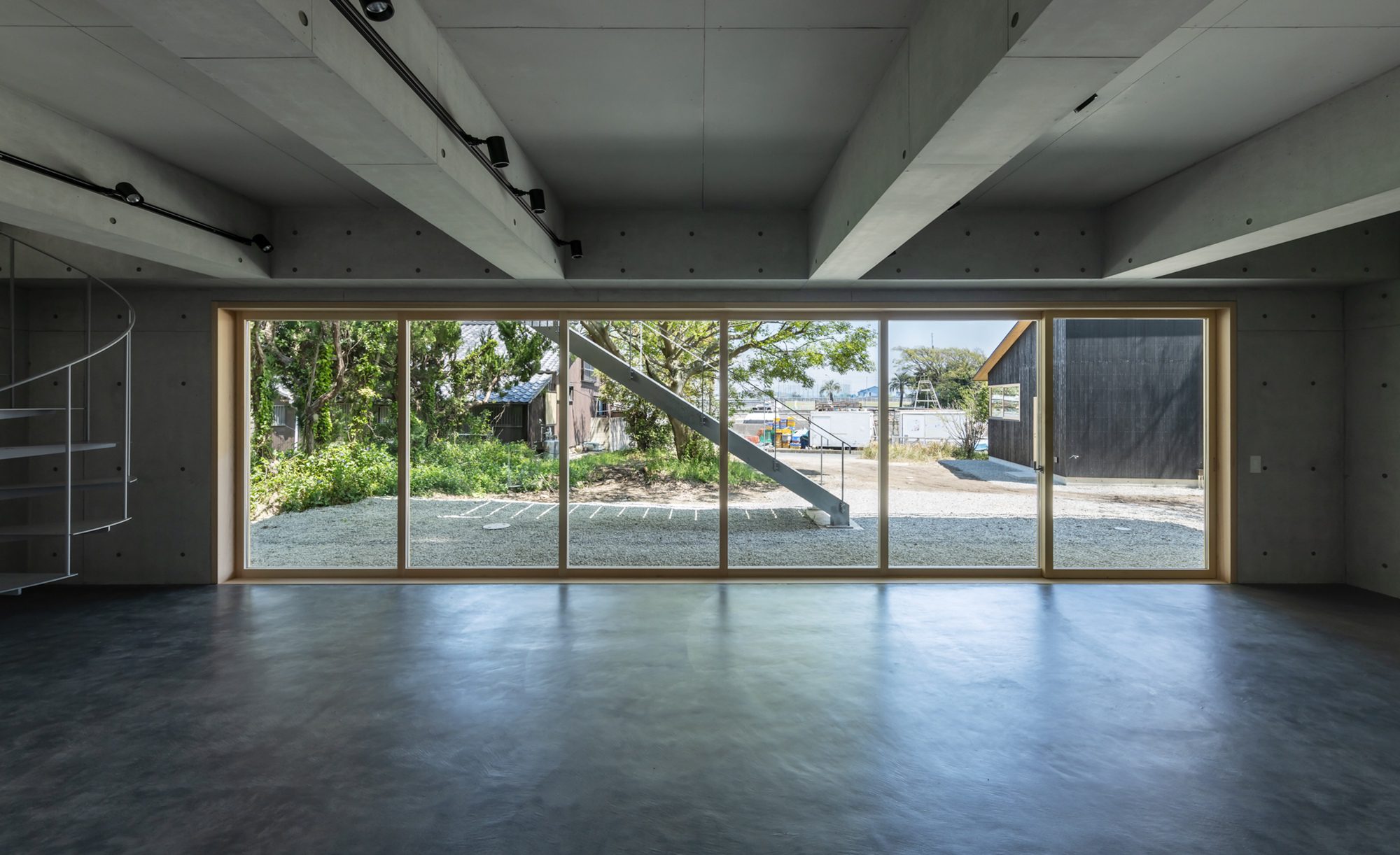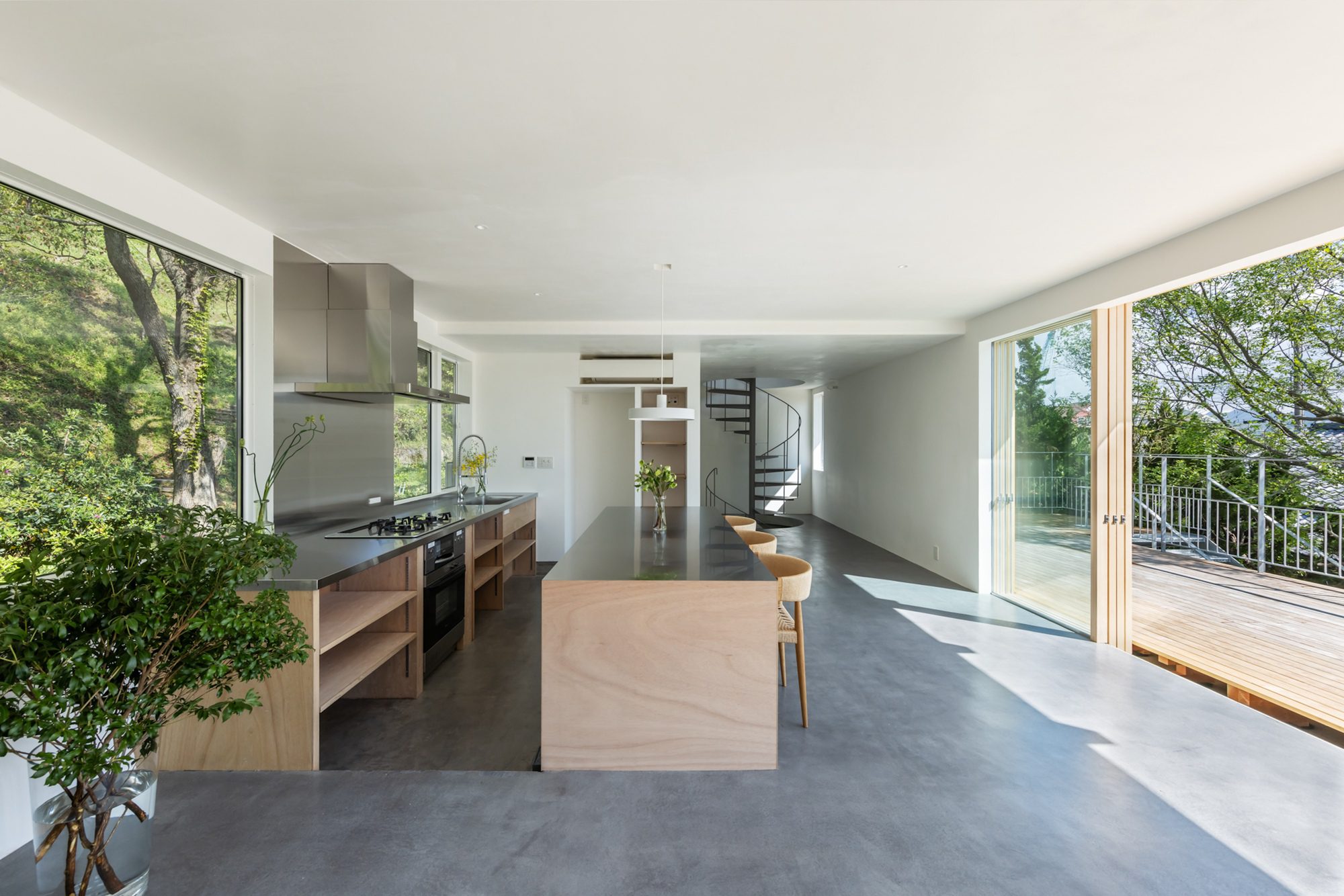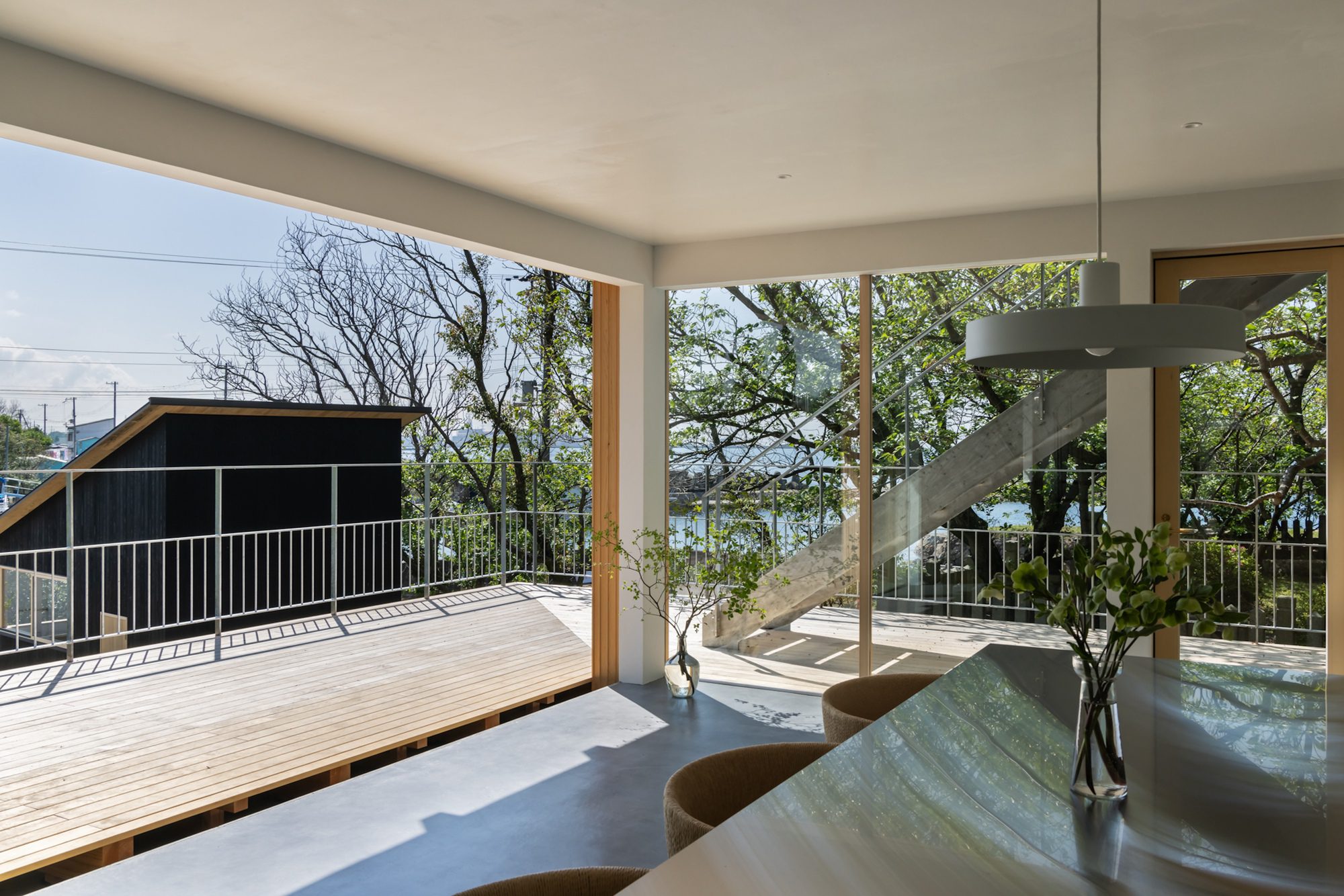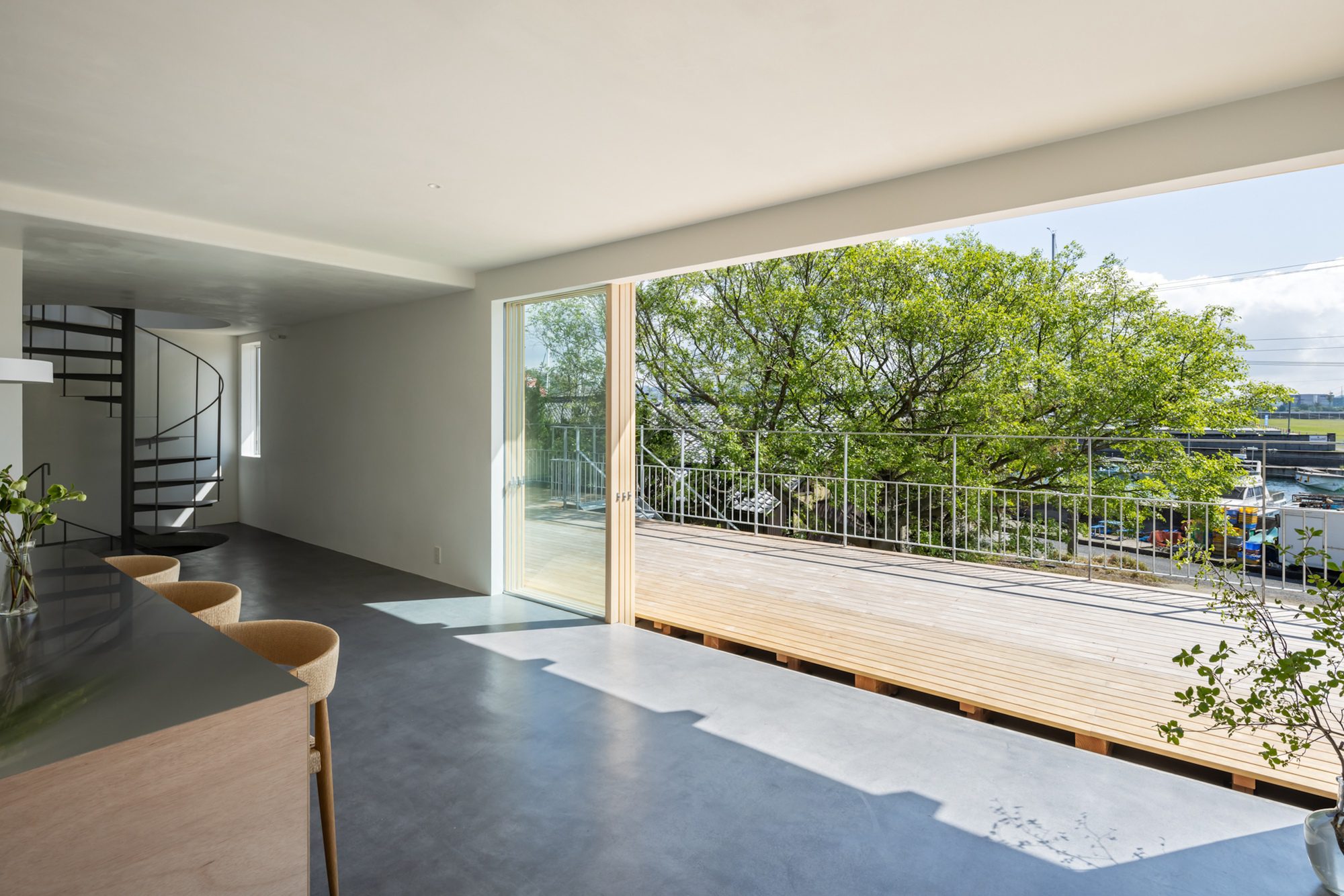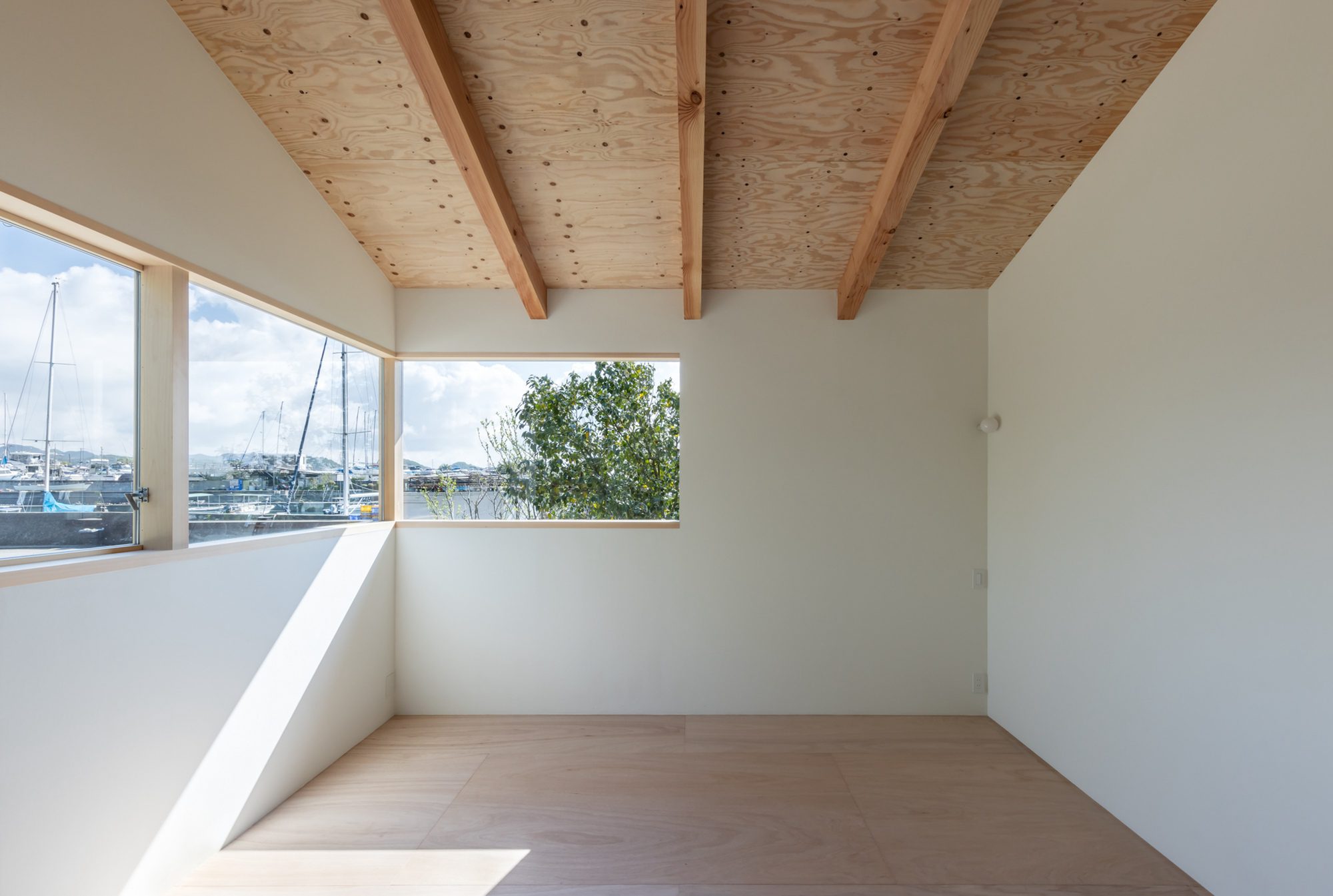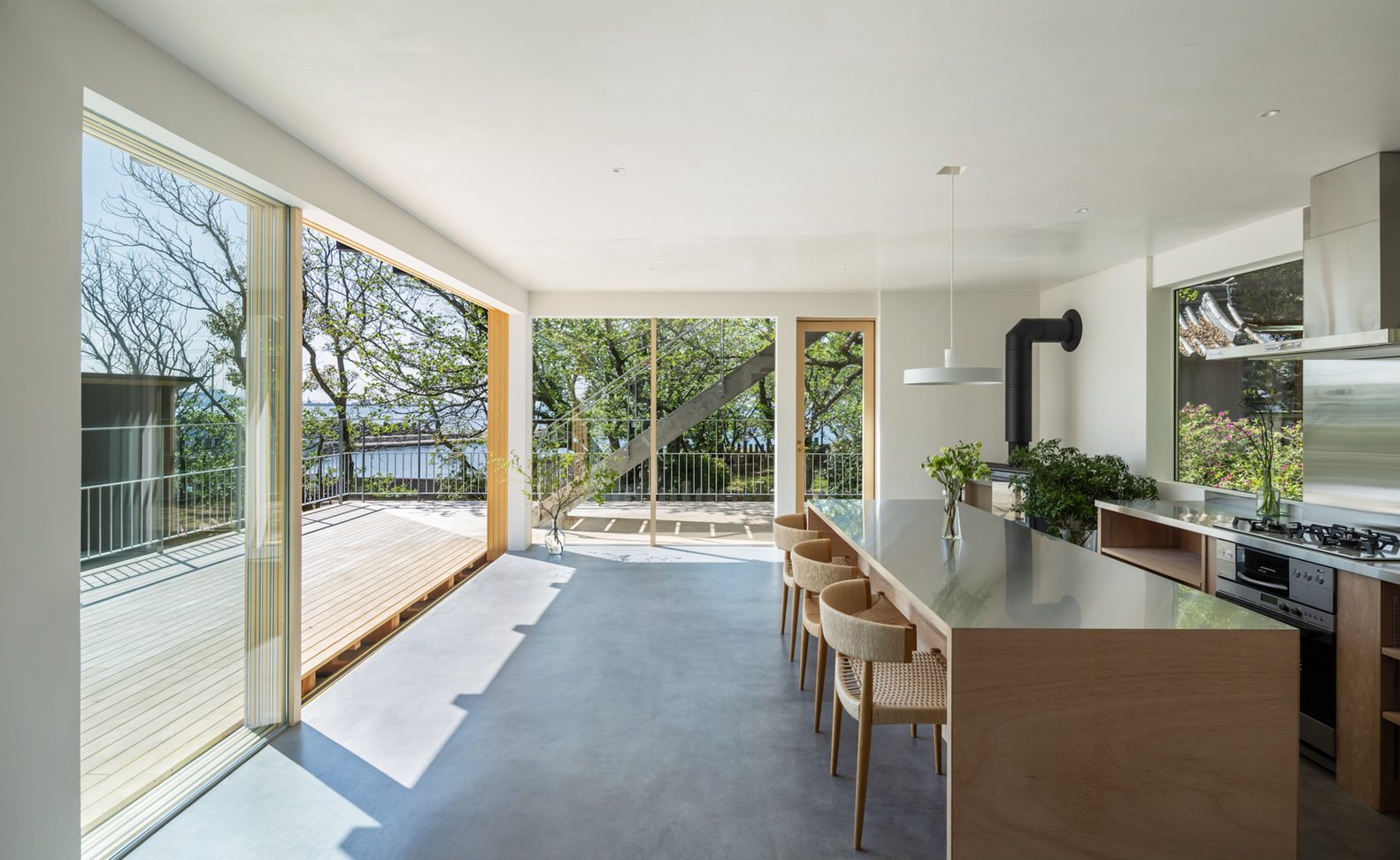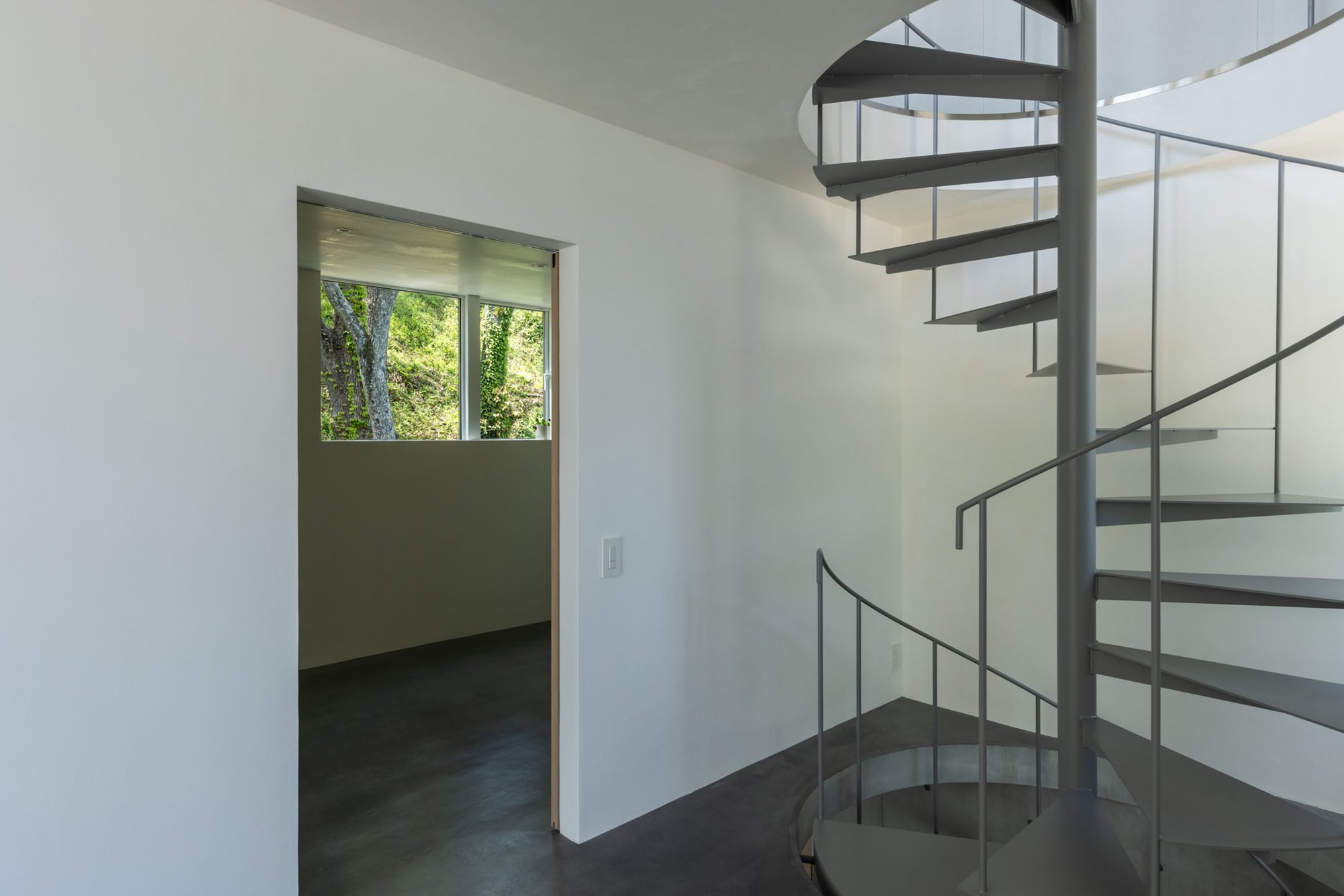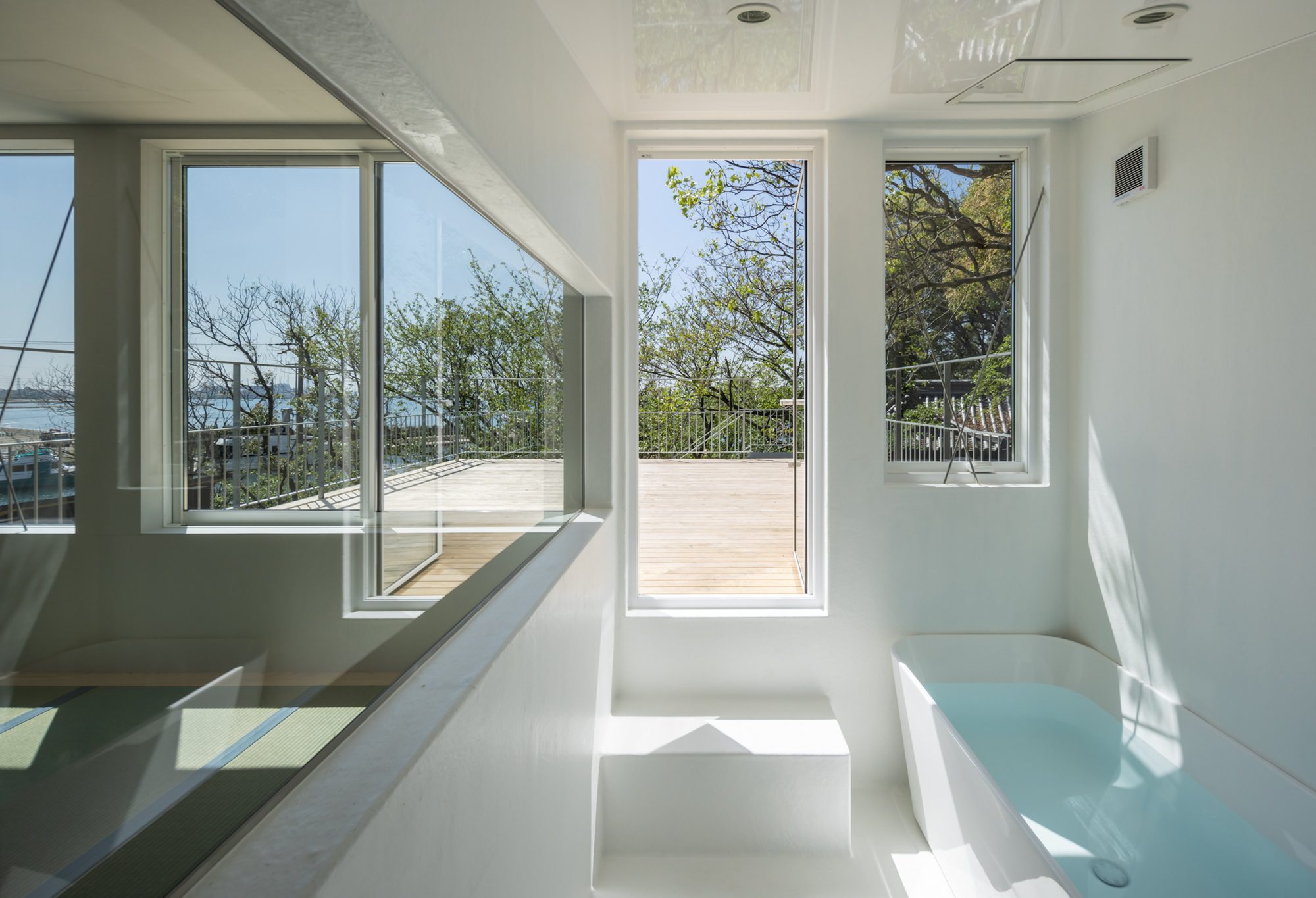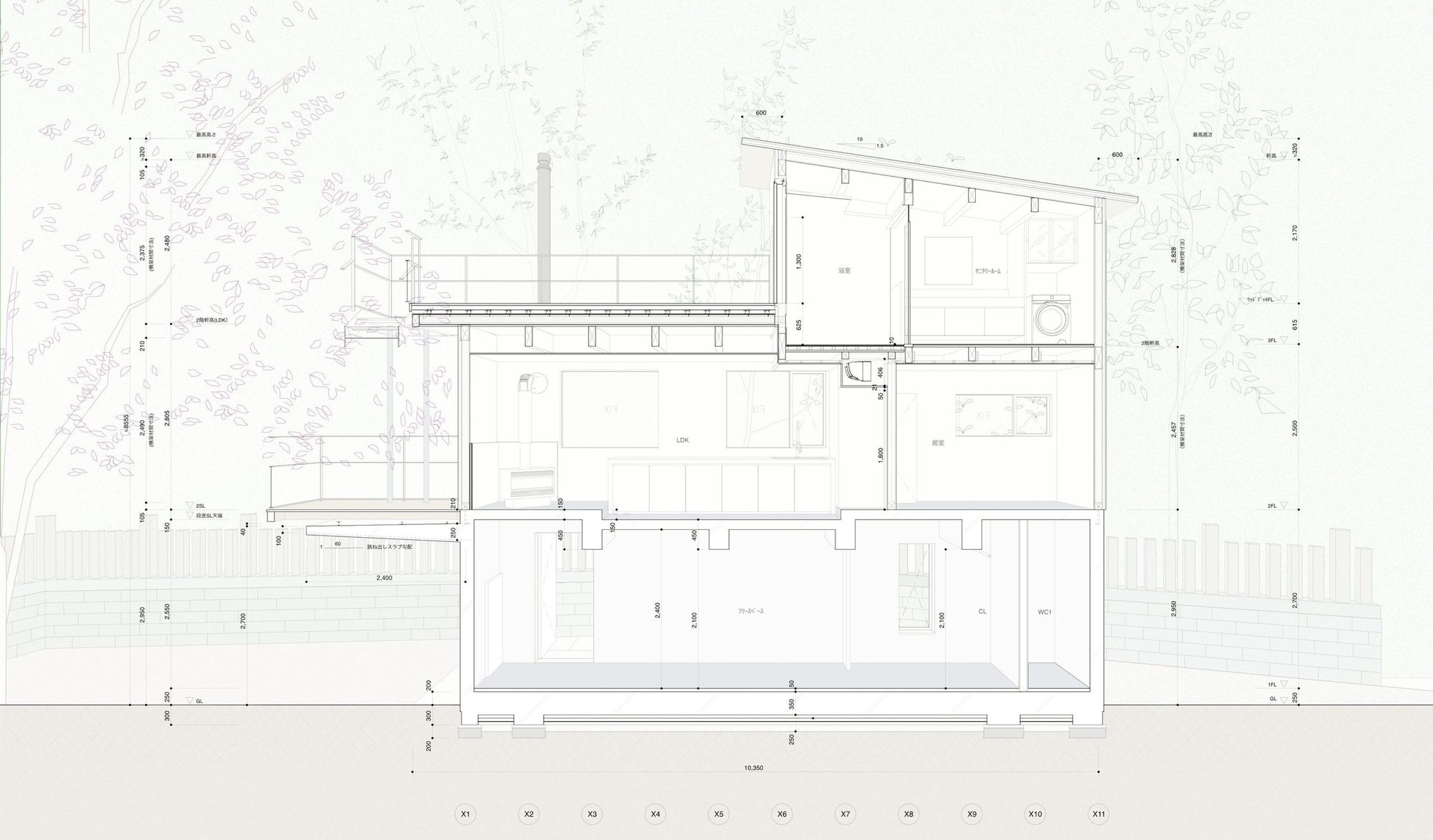


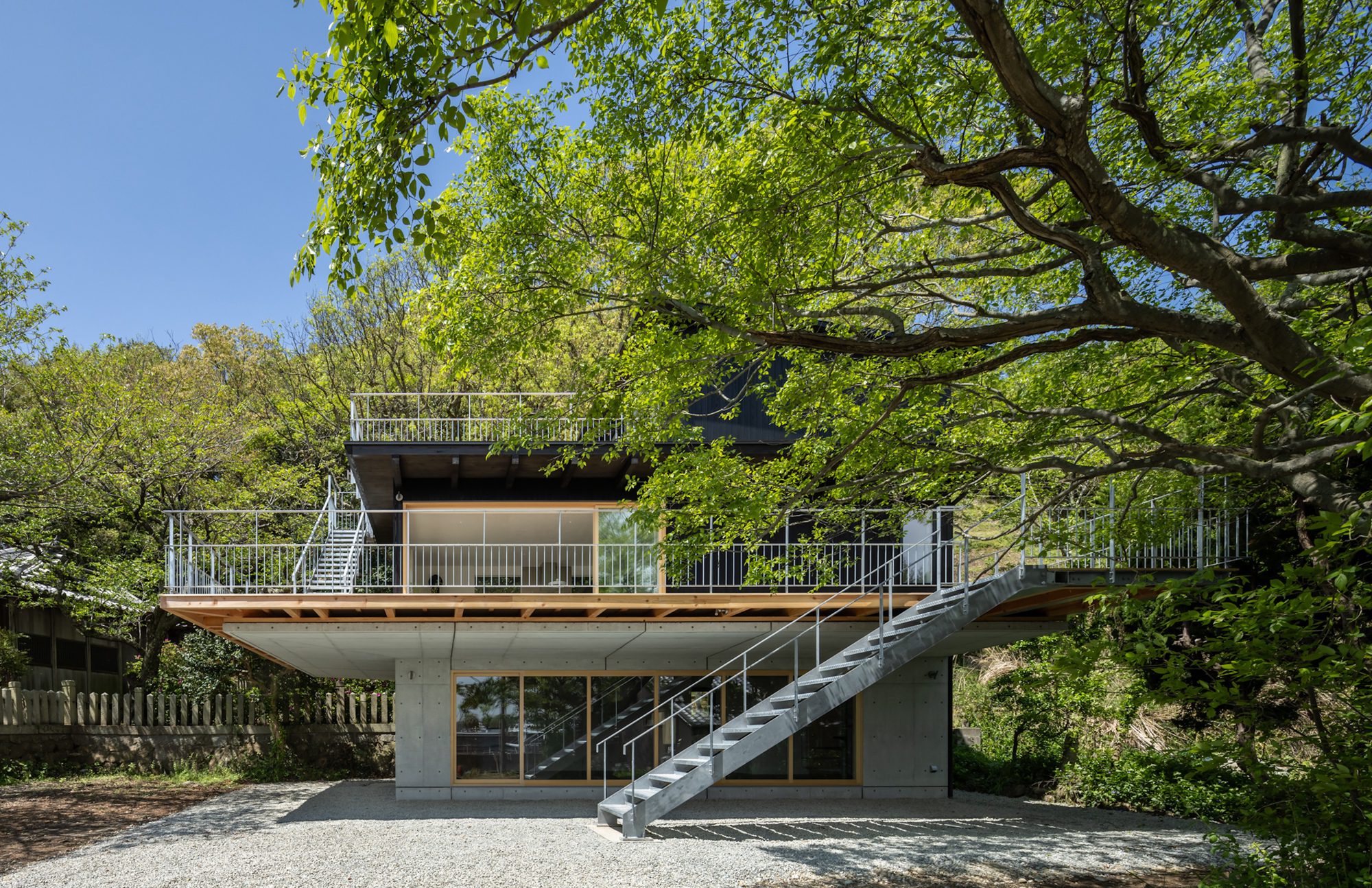
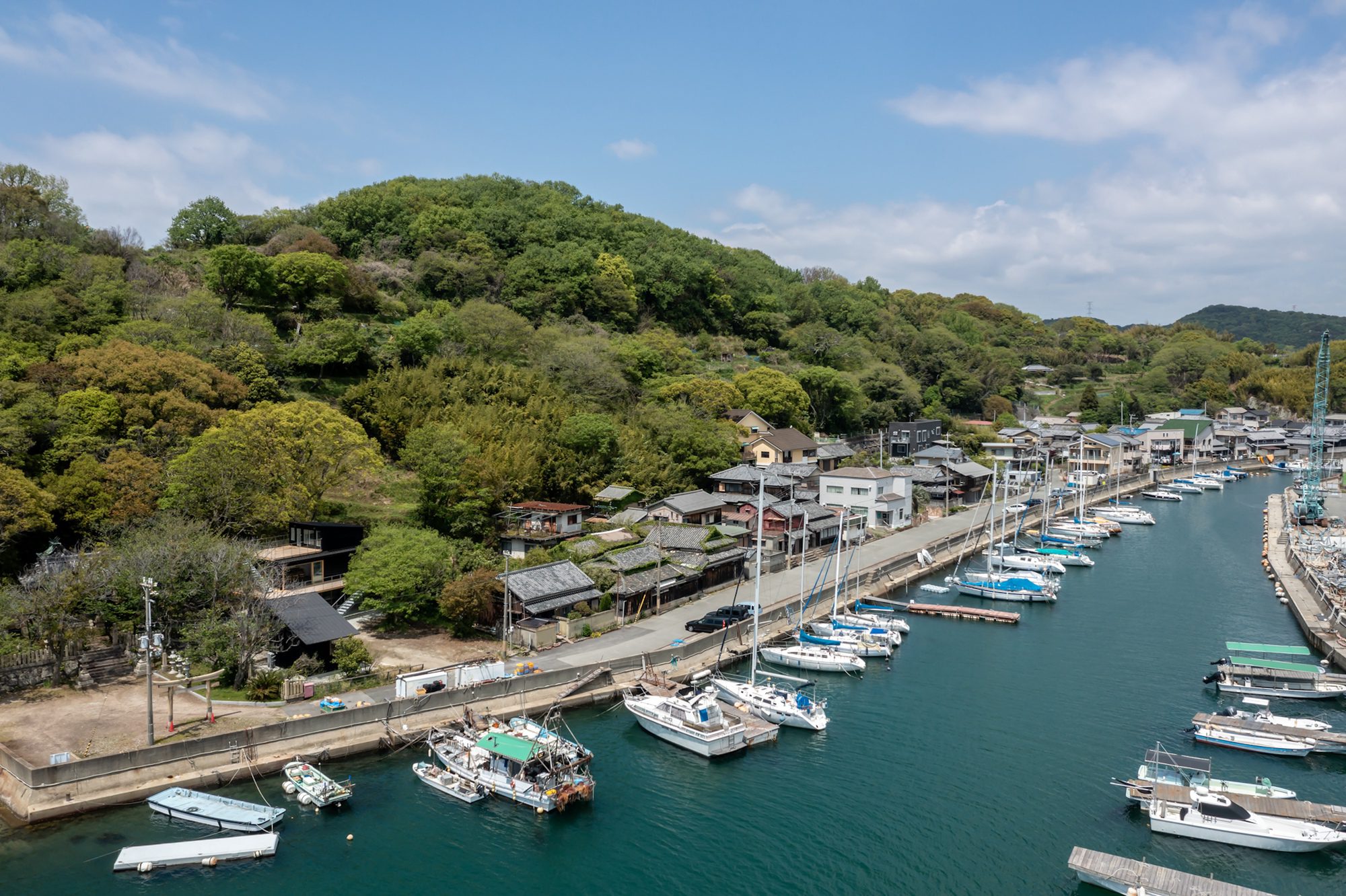
This is a three-story house with a mixed structure of RC on the first floor and wood and steel on the second and third floors. Weekend House was built in the Matogata district in the southwestern part of Hyogo Prefecture. The Matogata district has long prospered from commerce and salt fields, and the streetscape offers glimpses of its former charm. The site is located in the southernmost area of the Matogata district, between an inlet and a small mountain. With a shrine to the southwest and a small mountain to the west, the site overlooks the Seto Inland Sea to the south and the inlet to the east. An architecture that would enjoy this rich view was desired. The aim was to create a building that would not be out of place in the site’s beautiful landscape and would not make a strong statement.
© Yohei Sasakura (SASANOKURASHA)
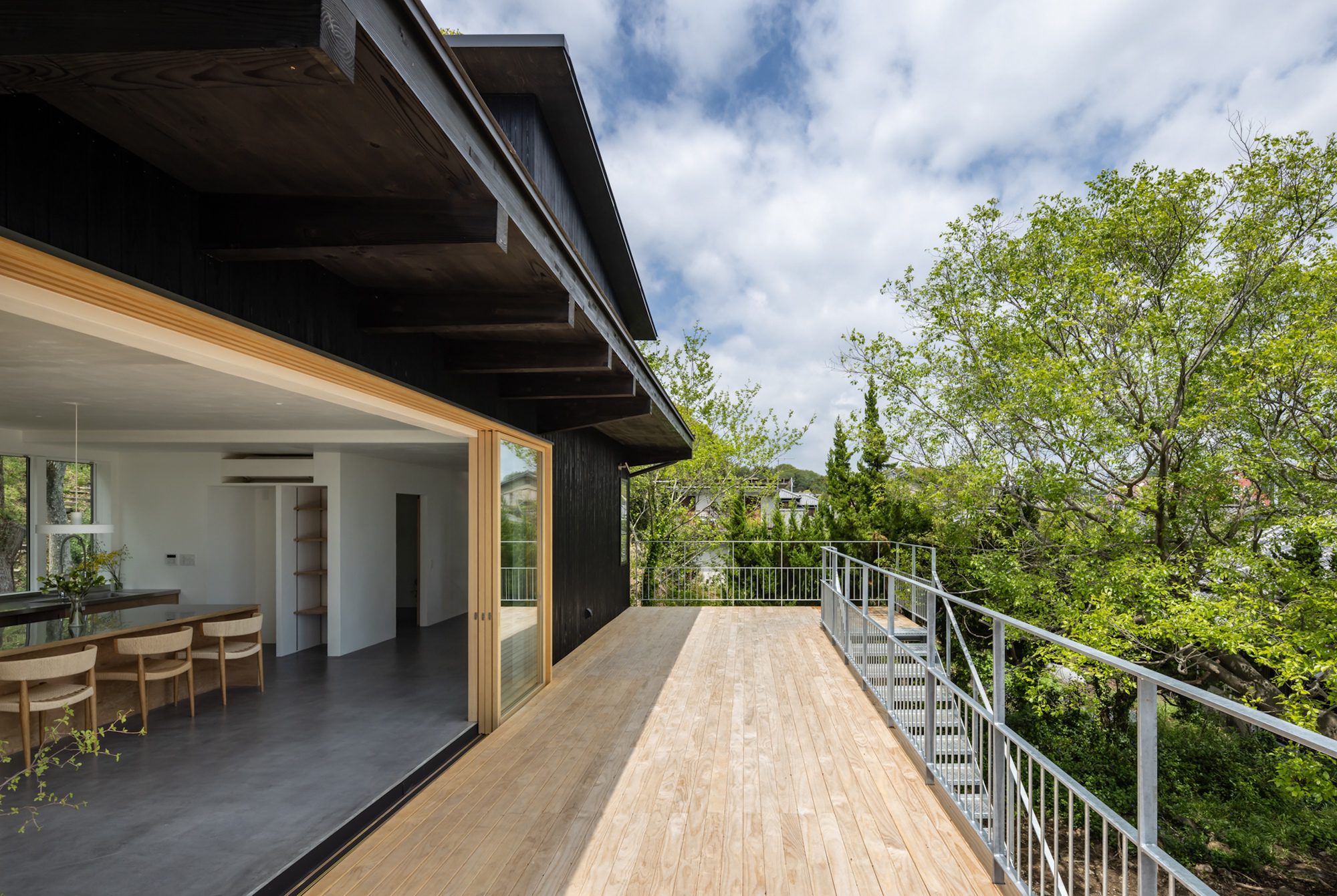
The first floor was to be an RC structure, as the site is located several dozen meters from a cove and the shore, and the second and third floors were made of wood with burned cedar boards, in keeping with the historic houses of the Matogata area. The cedar boards were made narrower than the conventional ready-made boards to match the scale and proportions of the building. The rethinking of scale gave a modern impression to this material, which is highly effective against insects and preservatives and has long been used in coastal townscapes in the Seto Inland Sea region.
© Yohei Sasakura (SASANOKURASHA)
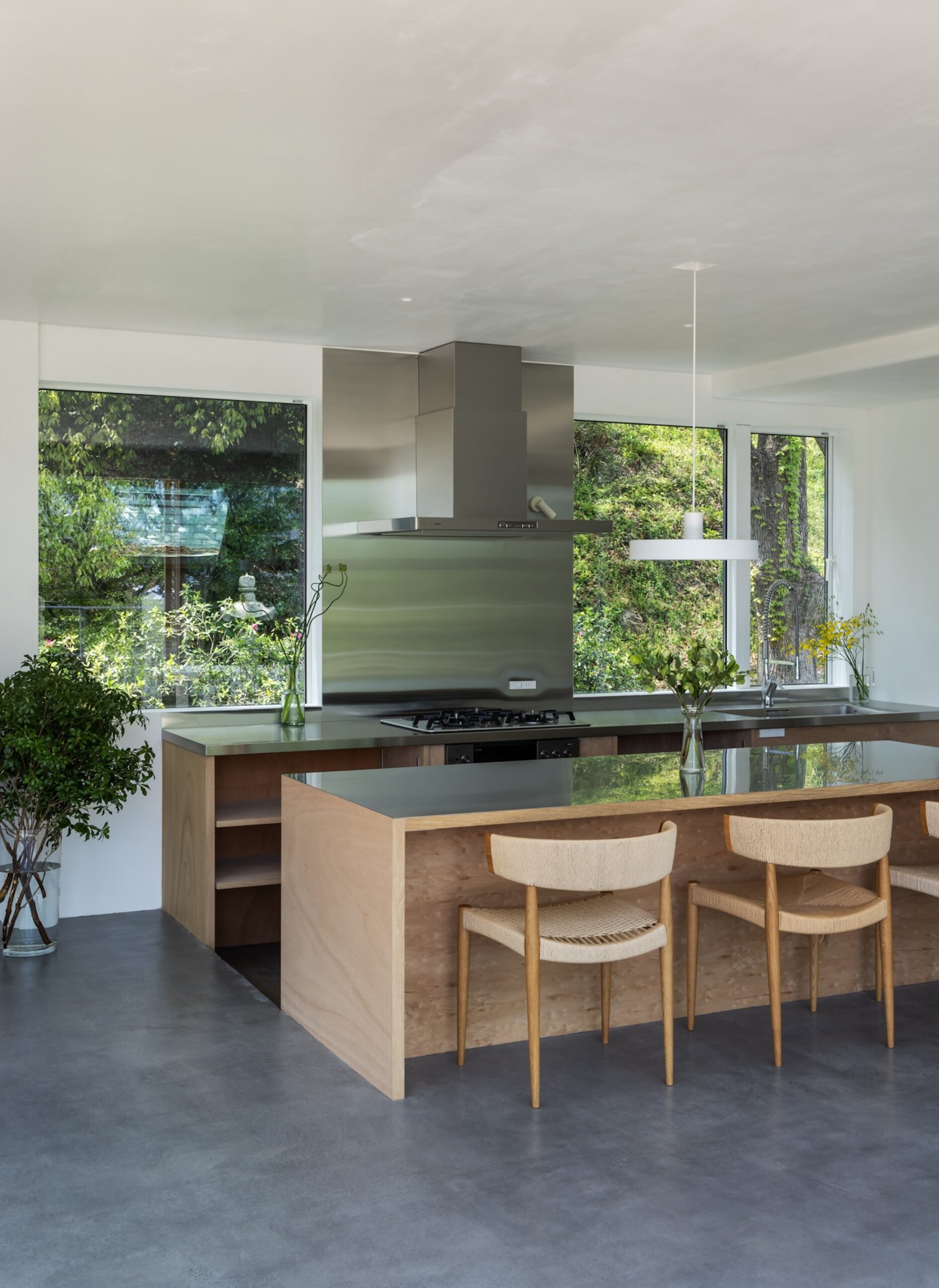
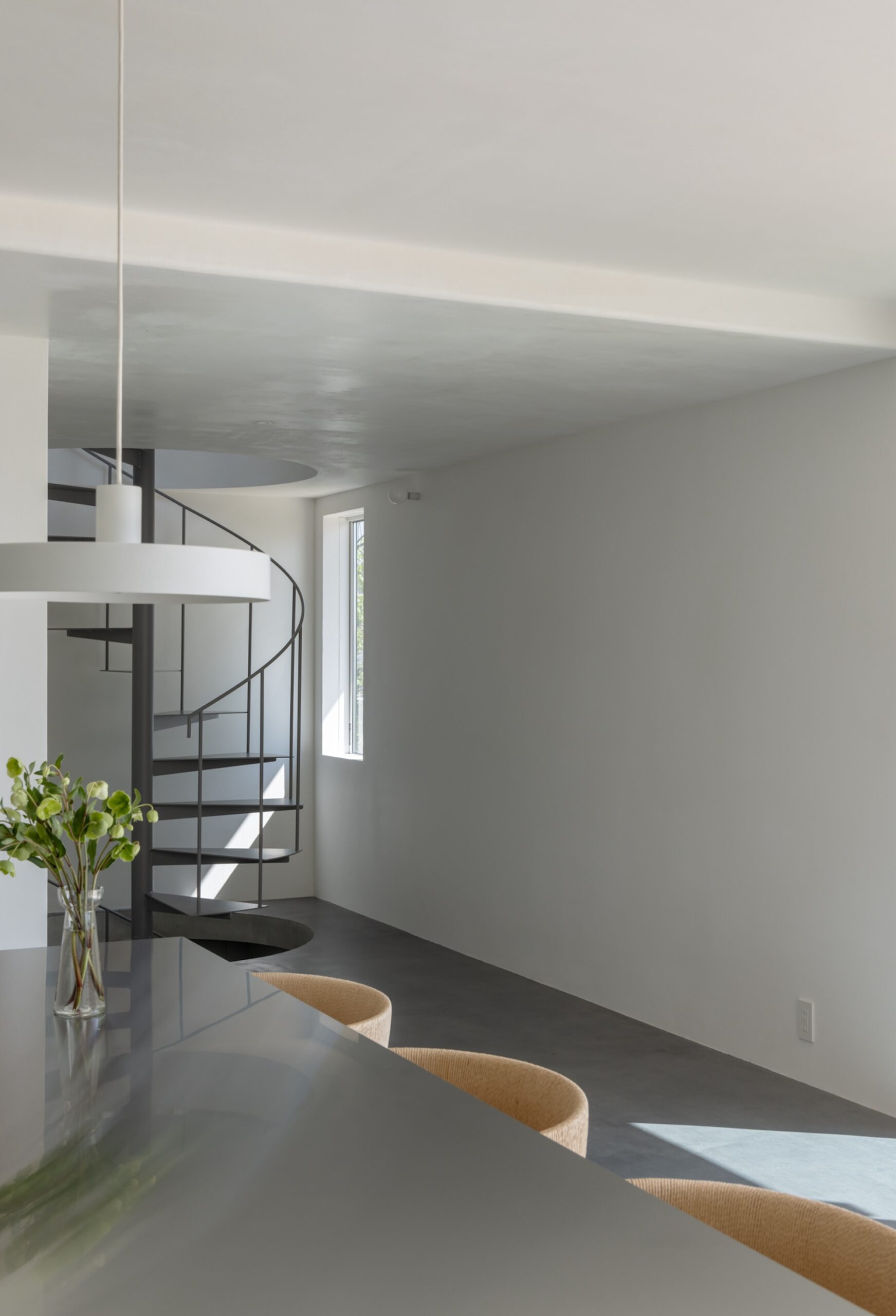
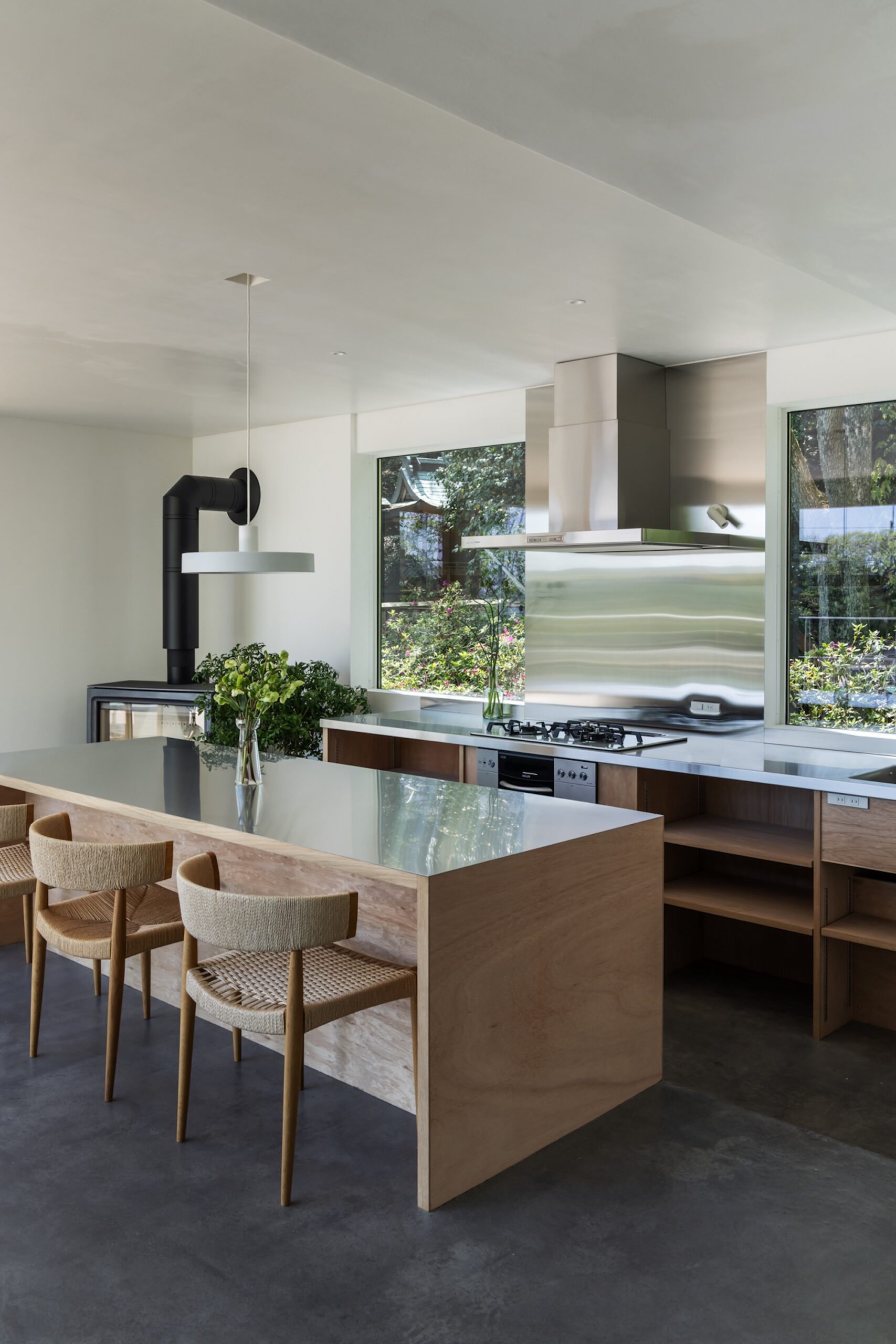
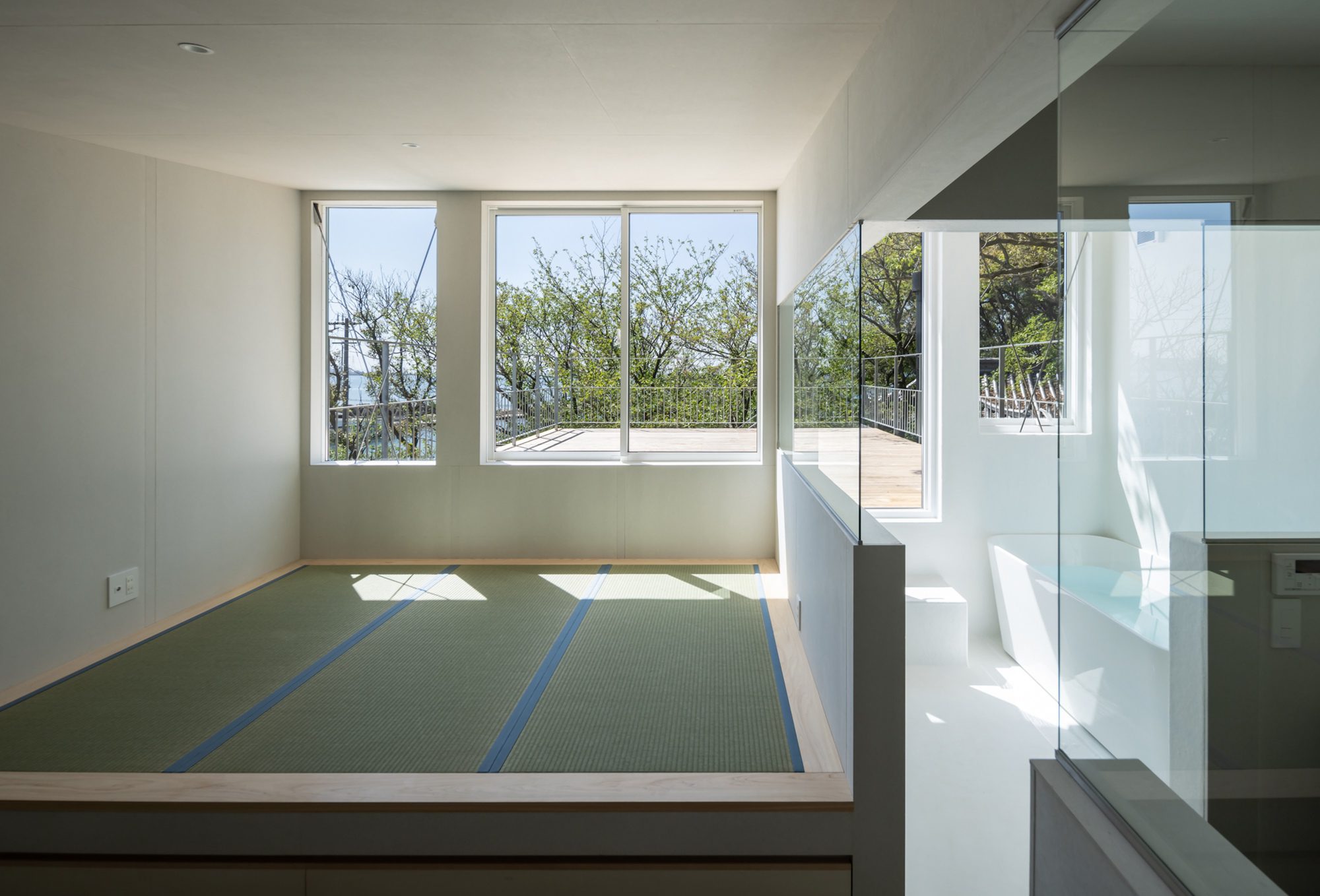
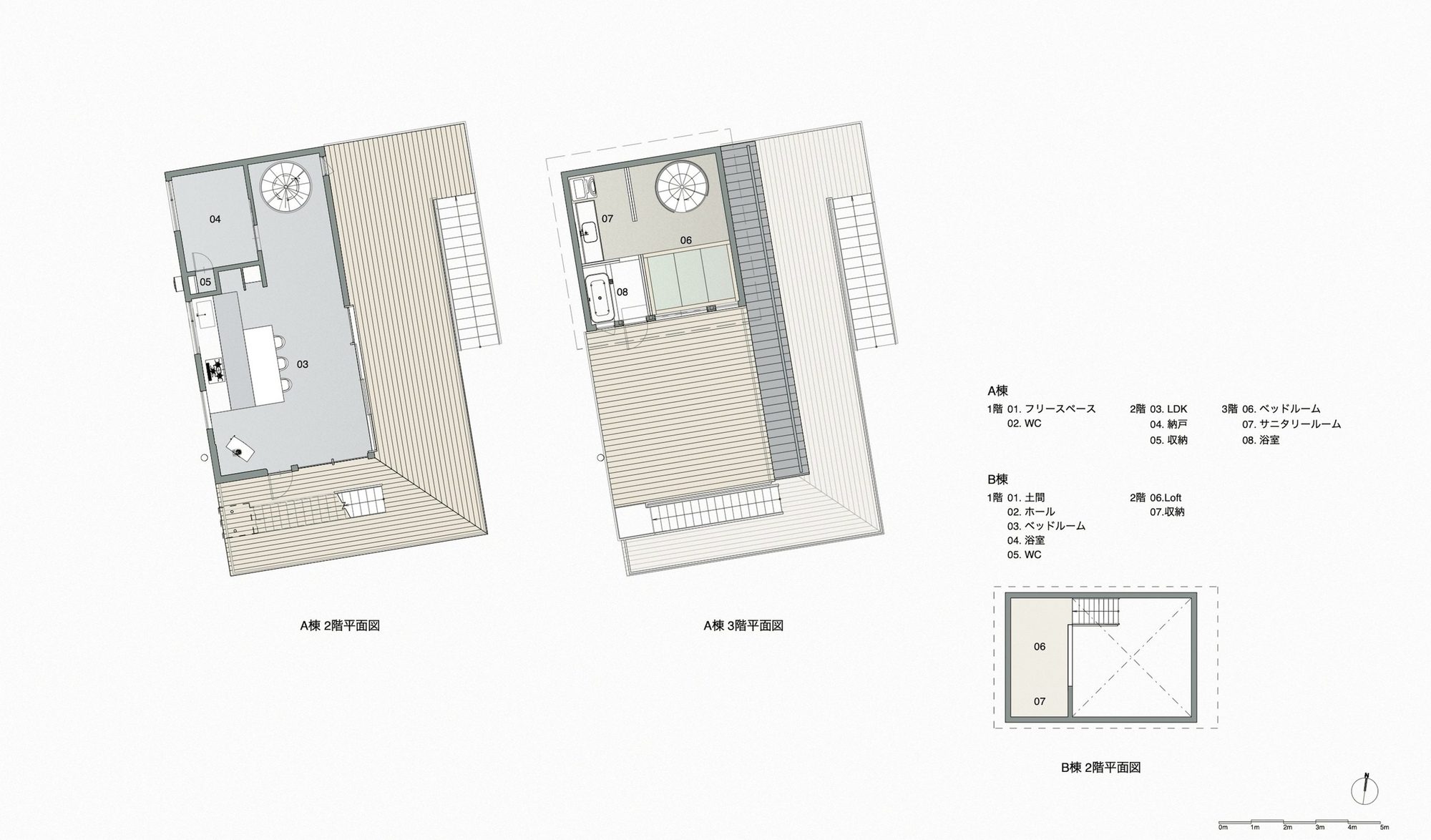
The terrace deck was designed to enjoy the landscape, and an RC cantilevered slab was used to support the terrace deck, with additional beams sprouting out from under the deck. The 3m deep terrace deck surrounds the second-floor LDK. The kitchen, built for the owner who loves to cook, faces the mountainside, allowing him to cook while enjoying the view of the trees. In this building, the openings are designed to provide light, ventilation, and a view from every room that is typical of the target shape. The Seto Inland Sea, the bay, the changing of the trees, and the beautiful scenery of the area are all captured in the building.

© Yohei Sasakura (SASANOKURASHA)
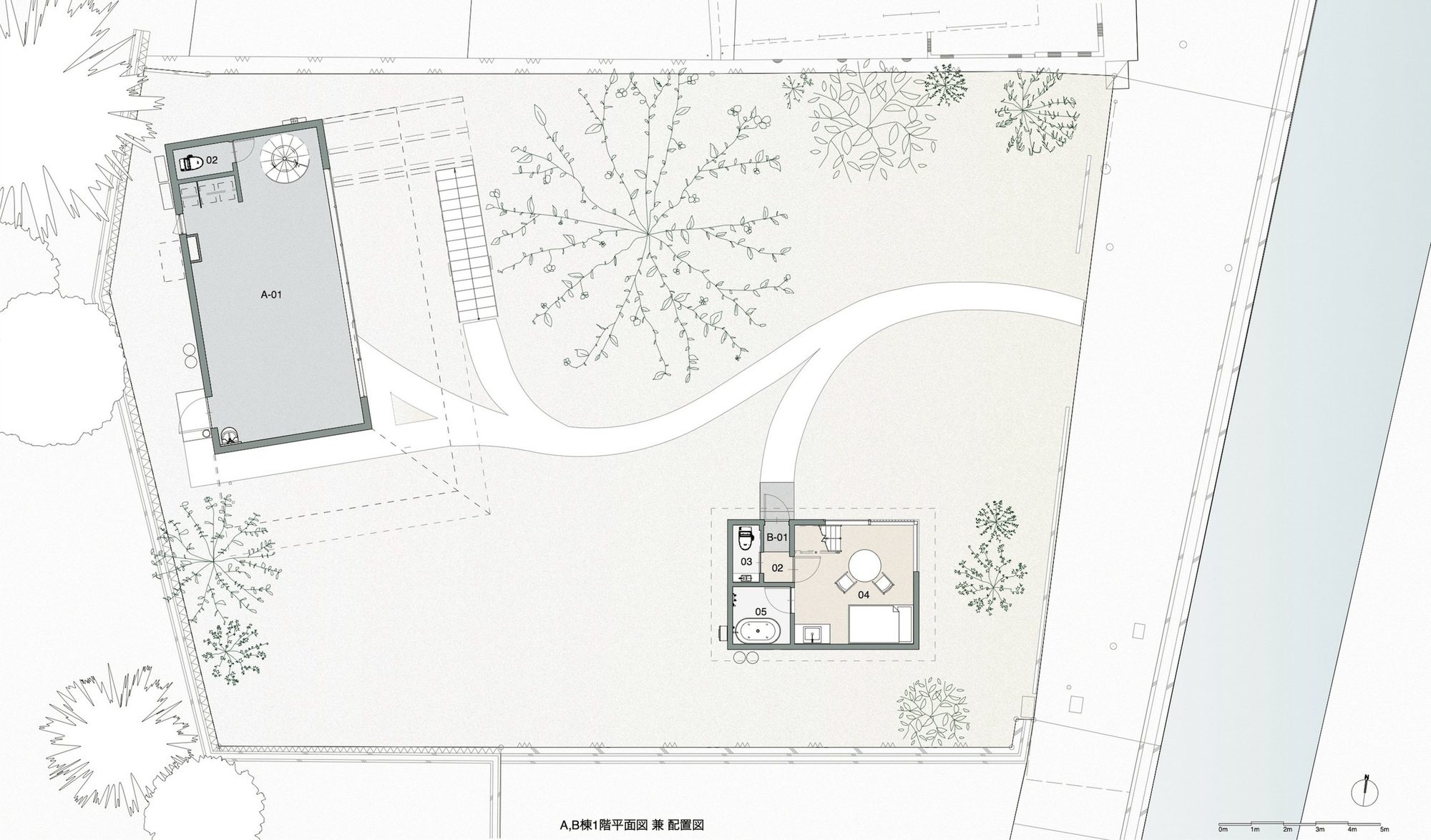
In the layout plan, the trees that originally existed on the site were left as much as possible, and the buildings were placed to intersect with the trees. The main house is shaped like an enoki tree with 10-meter branches in the center of the site, cherry trees, and camphor trees growing from the neighboring shrine. By keeping the building’s proportions low, it will stand quietly among the trees on the site, the shrine, and the trees on the hill behind the house in the future. It is hoped that this building will become a landscape of a similar shape as it ages.
Project Info:
-
Architects: lyhty
- Country: Himeji, Japan
- Area: 175 m²
- Year: 2024
-
Photographs: Yohei Sasakura (SASANOKURASHA)
-
Manufacturers: Flame, KYOEI LUMBER, Tenon + lyhty, Torimoto Joinery Store
-
Lead Architect: Daisuke Kuroki
-
Design: Daisuke Kuroki, Naomi Tamari, Miyuki Koizumi, Tatsuki Inagaki, Miyu Morinaga
-
Structural Design: Route Structural Design Office, JUNTOS
-
Carpenter: Tanimoto Kenchiku Kobo
-
Plastering: Kaziwaragumi
-
Rc Construction: Fukuda Koumuten
-
Sheet Metal: ASTEC, Kajiya Kinzoku Kogei, Miyabi Shoukai
-
Solar Energy: monochrome
-
Electricity: Terada Denki Shokai
-
Equipment: Tsuruta Jusetsu