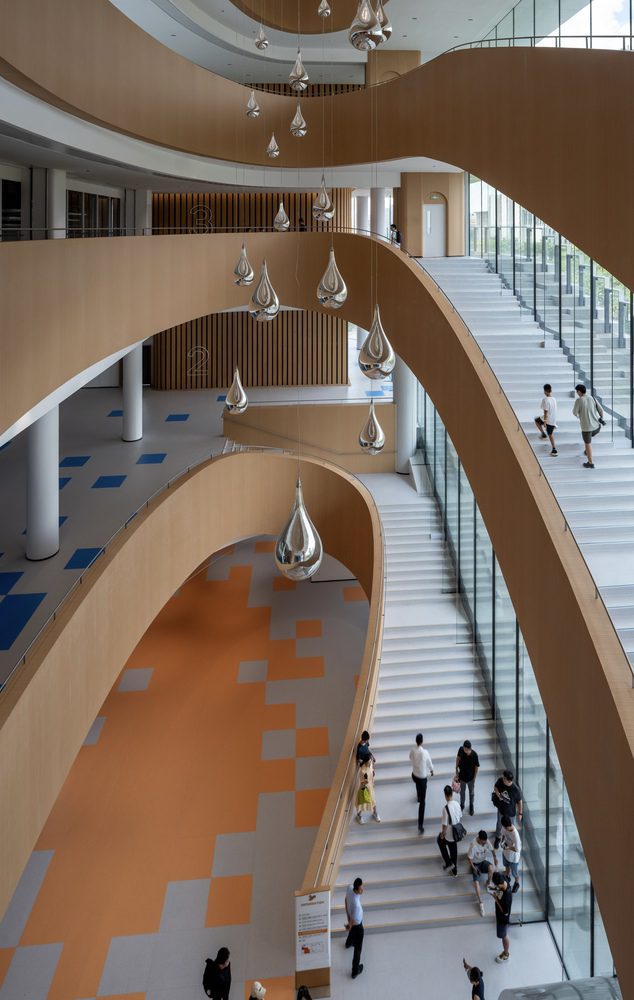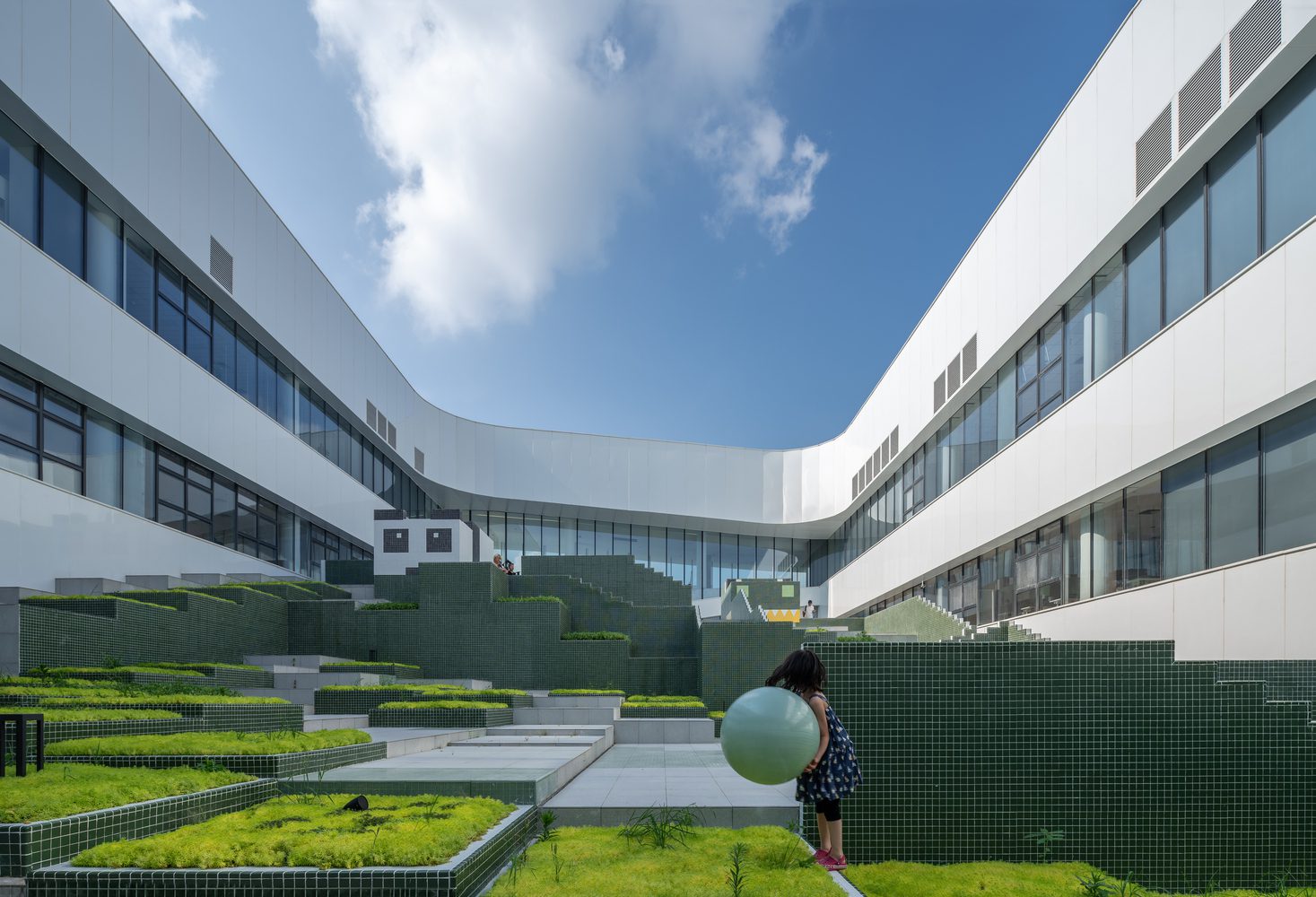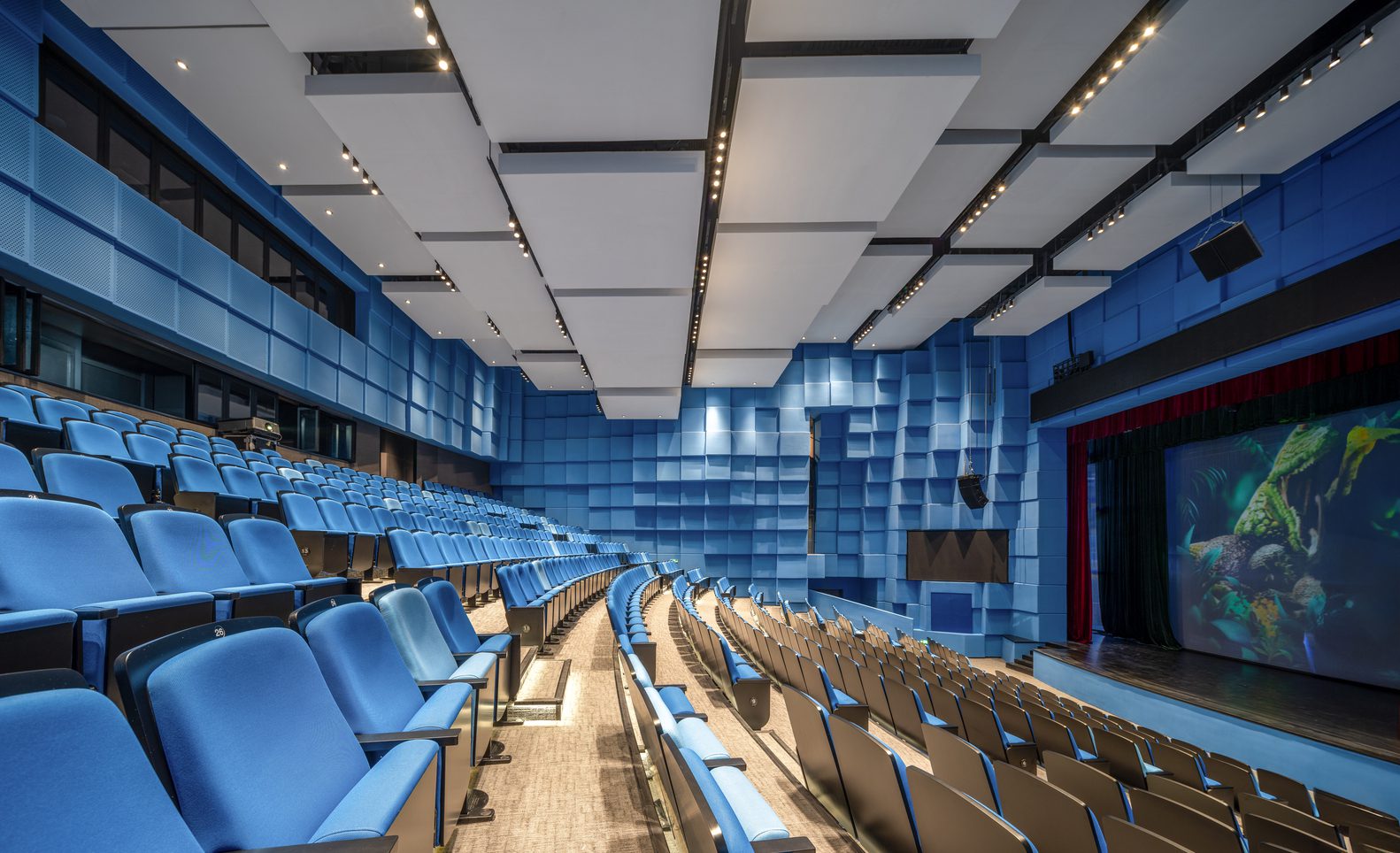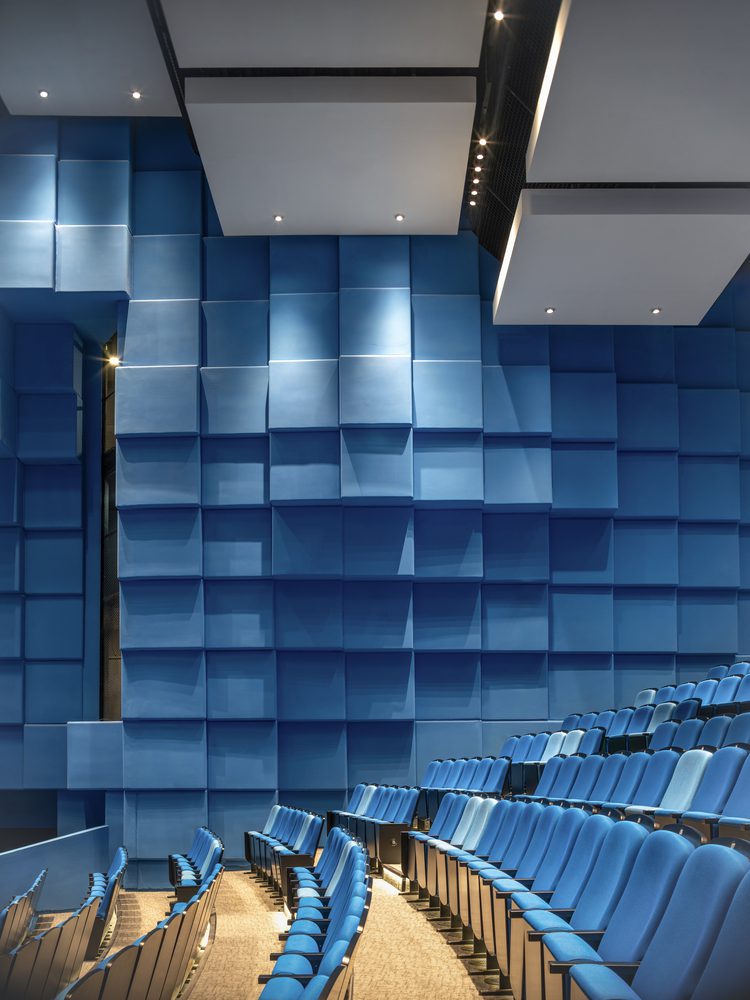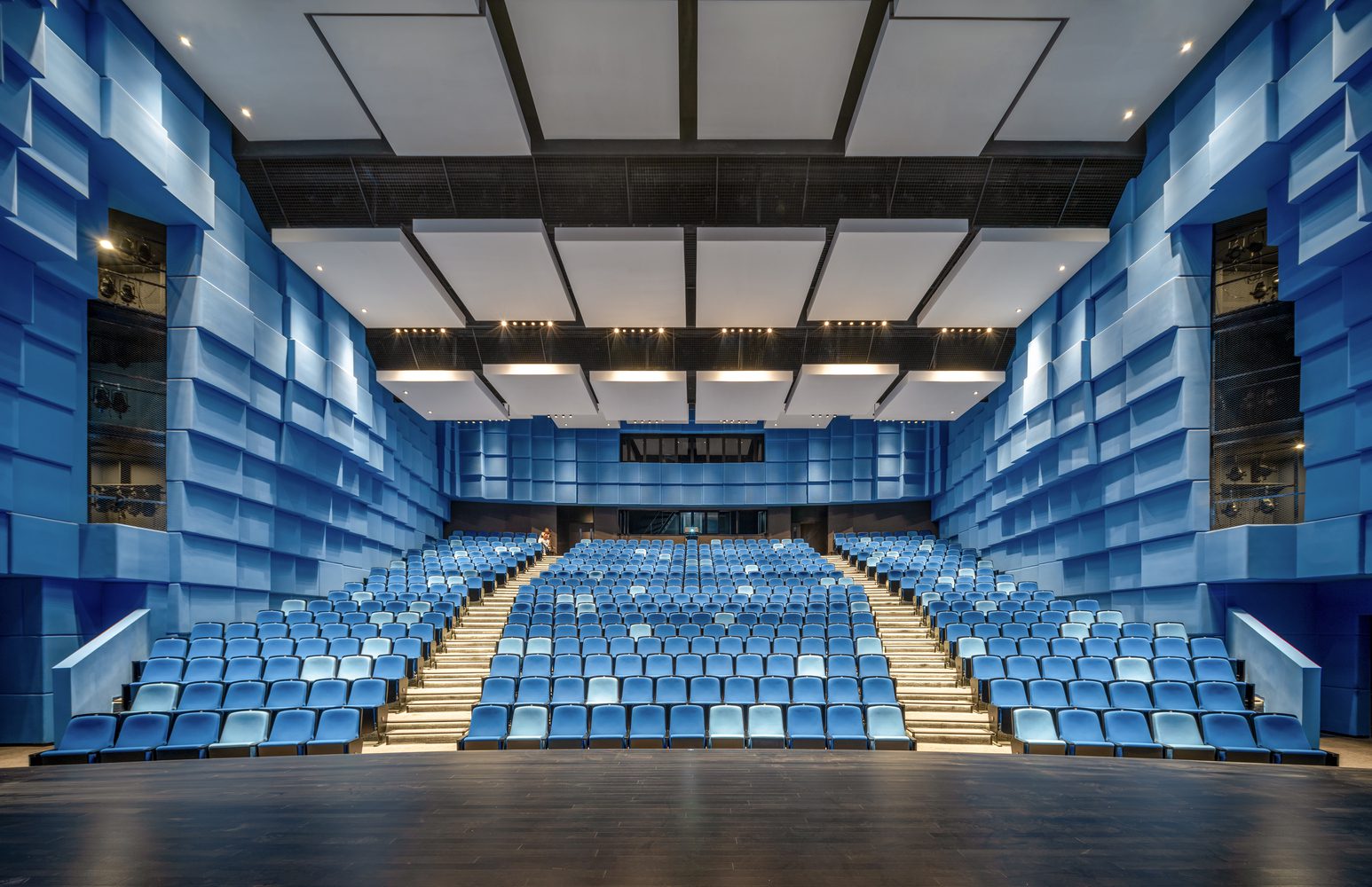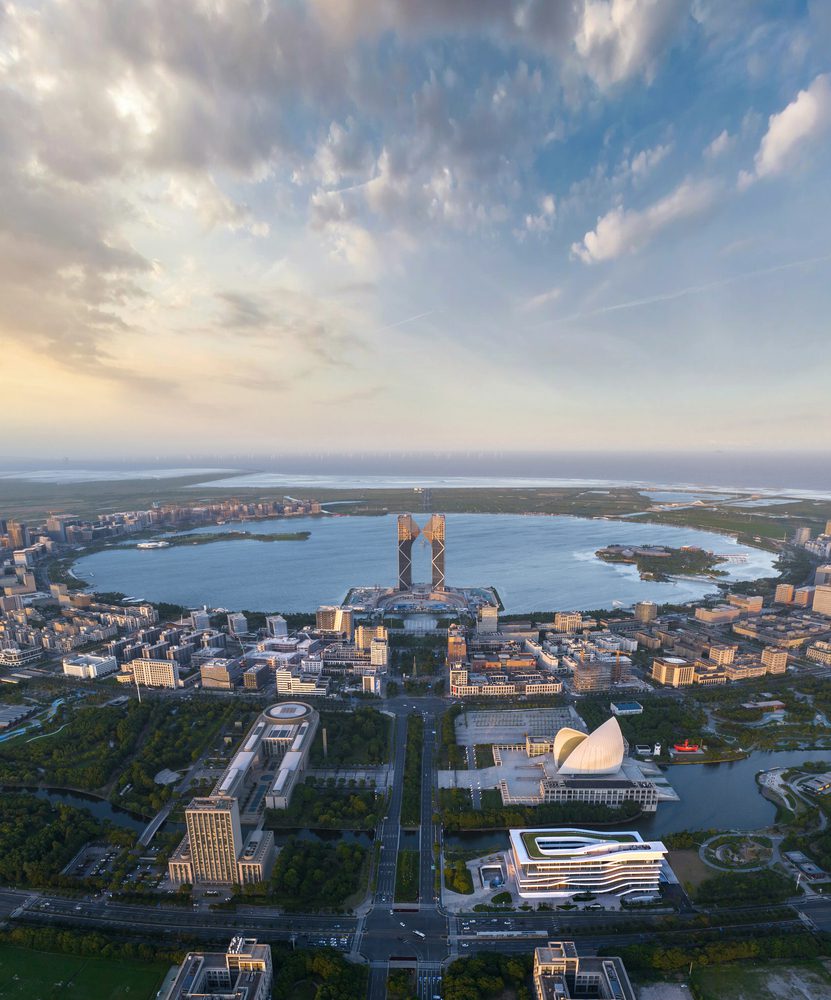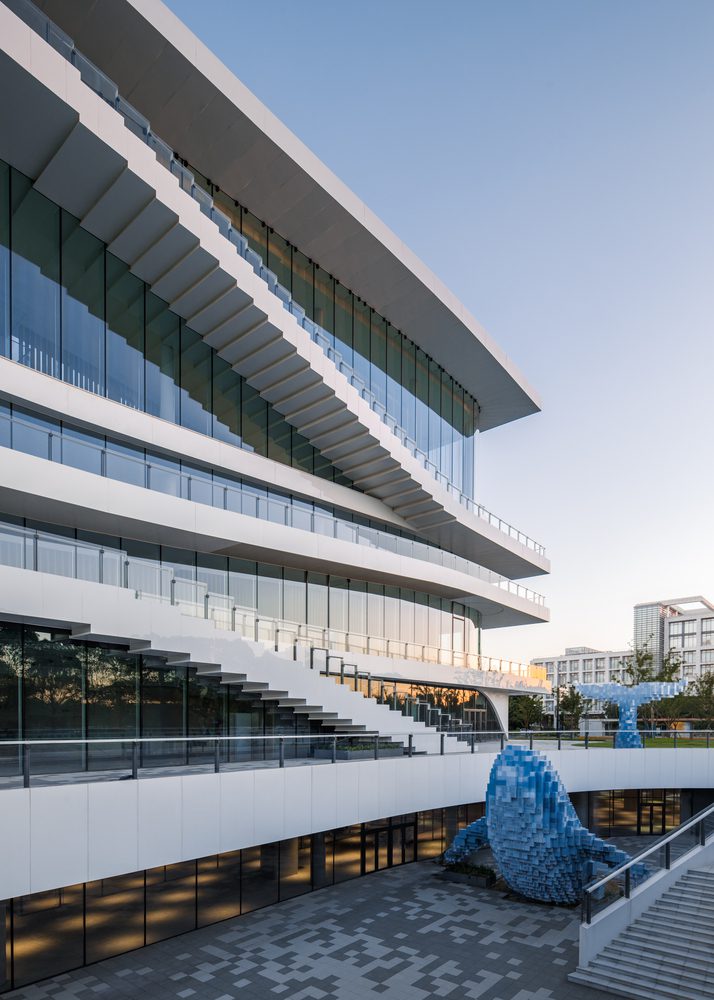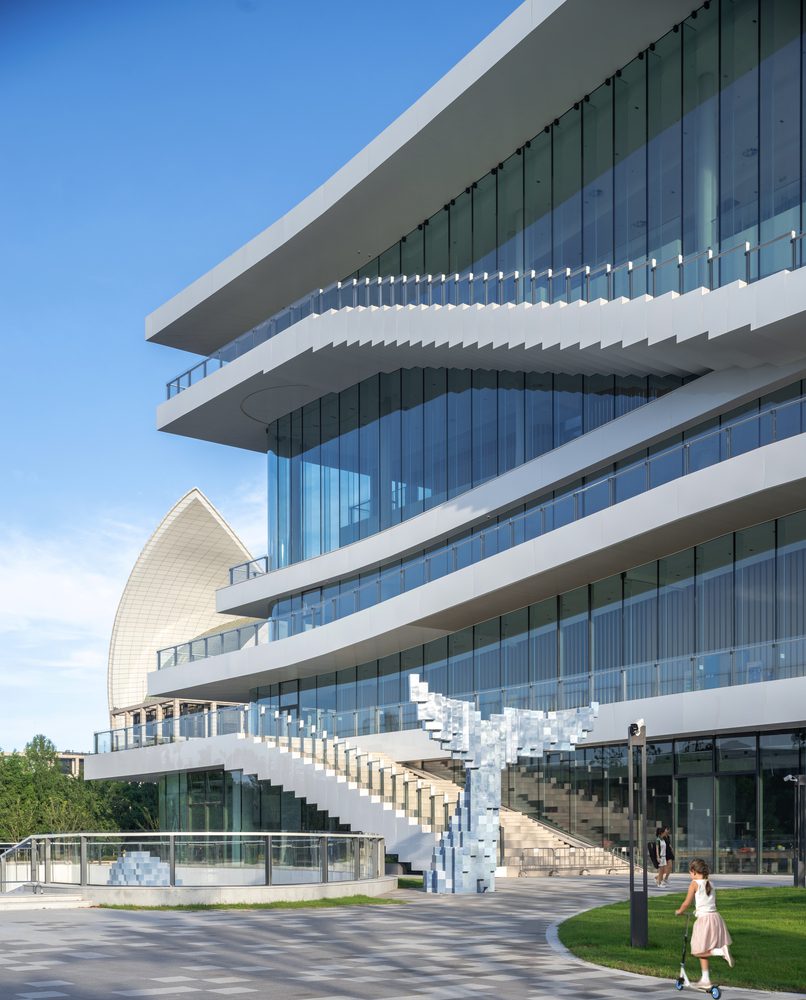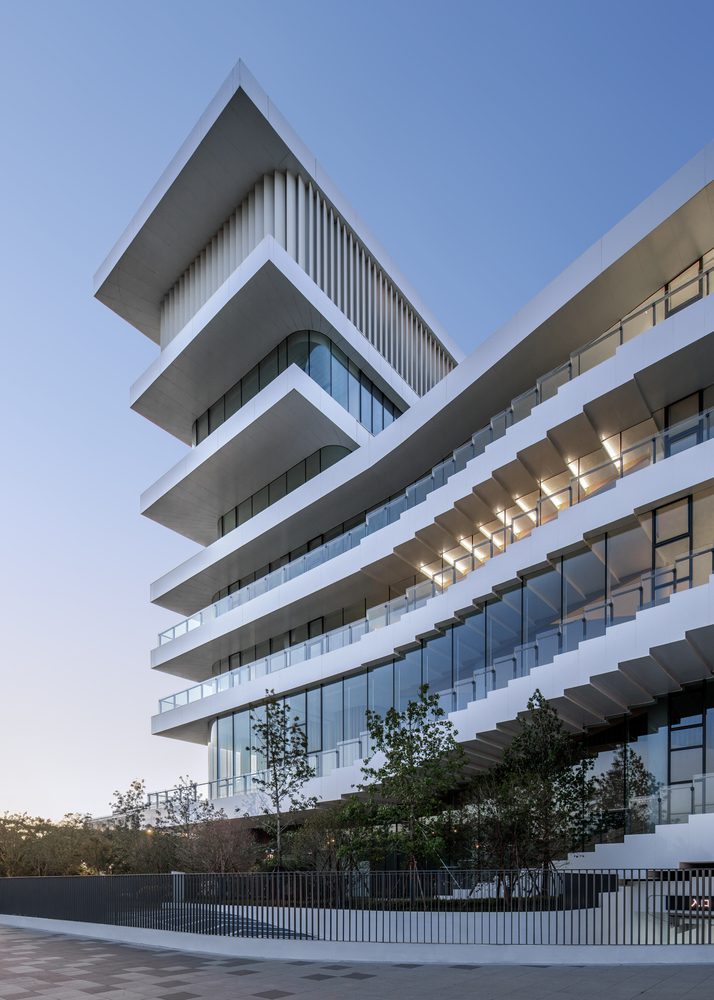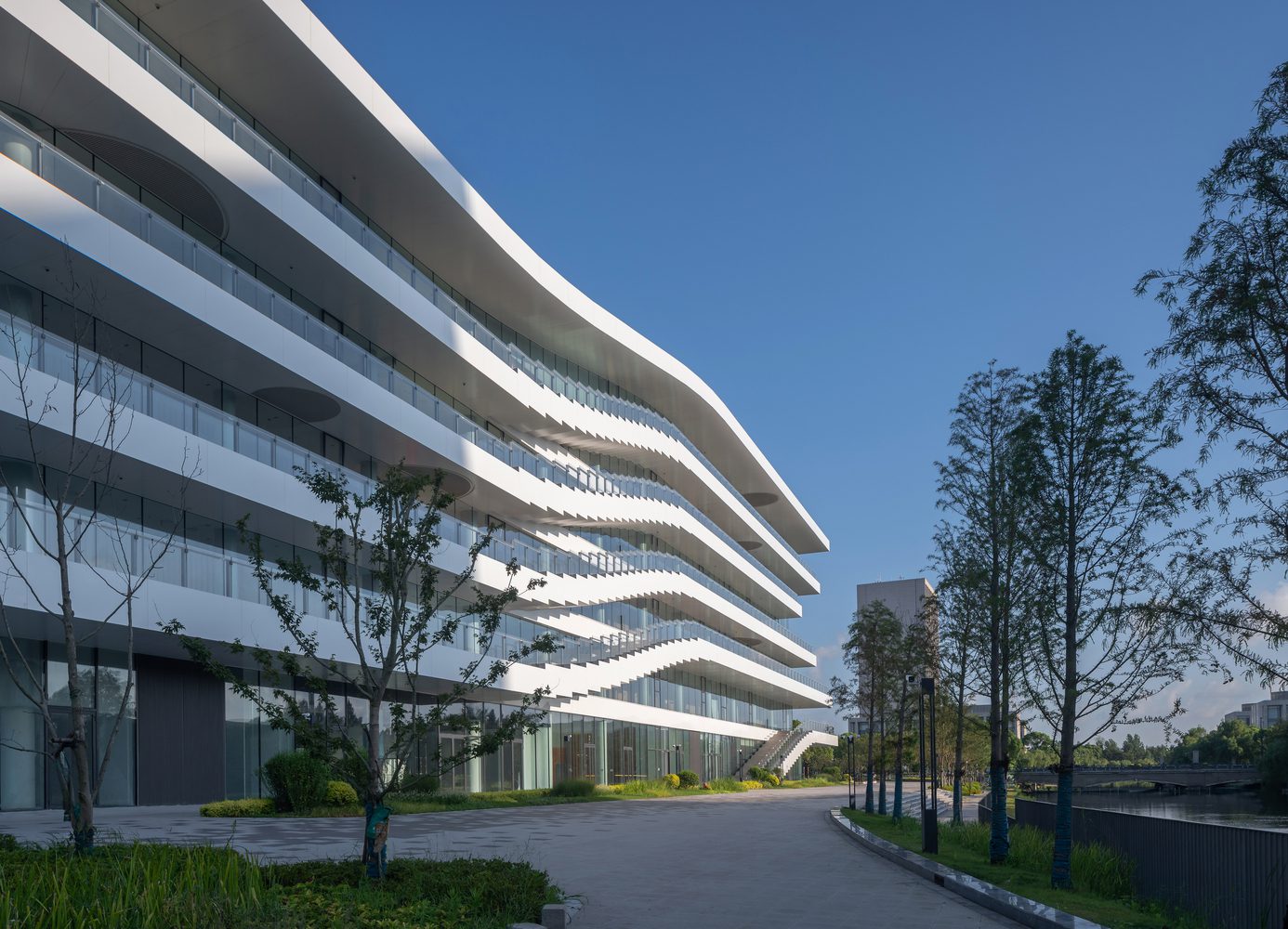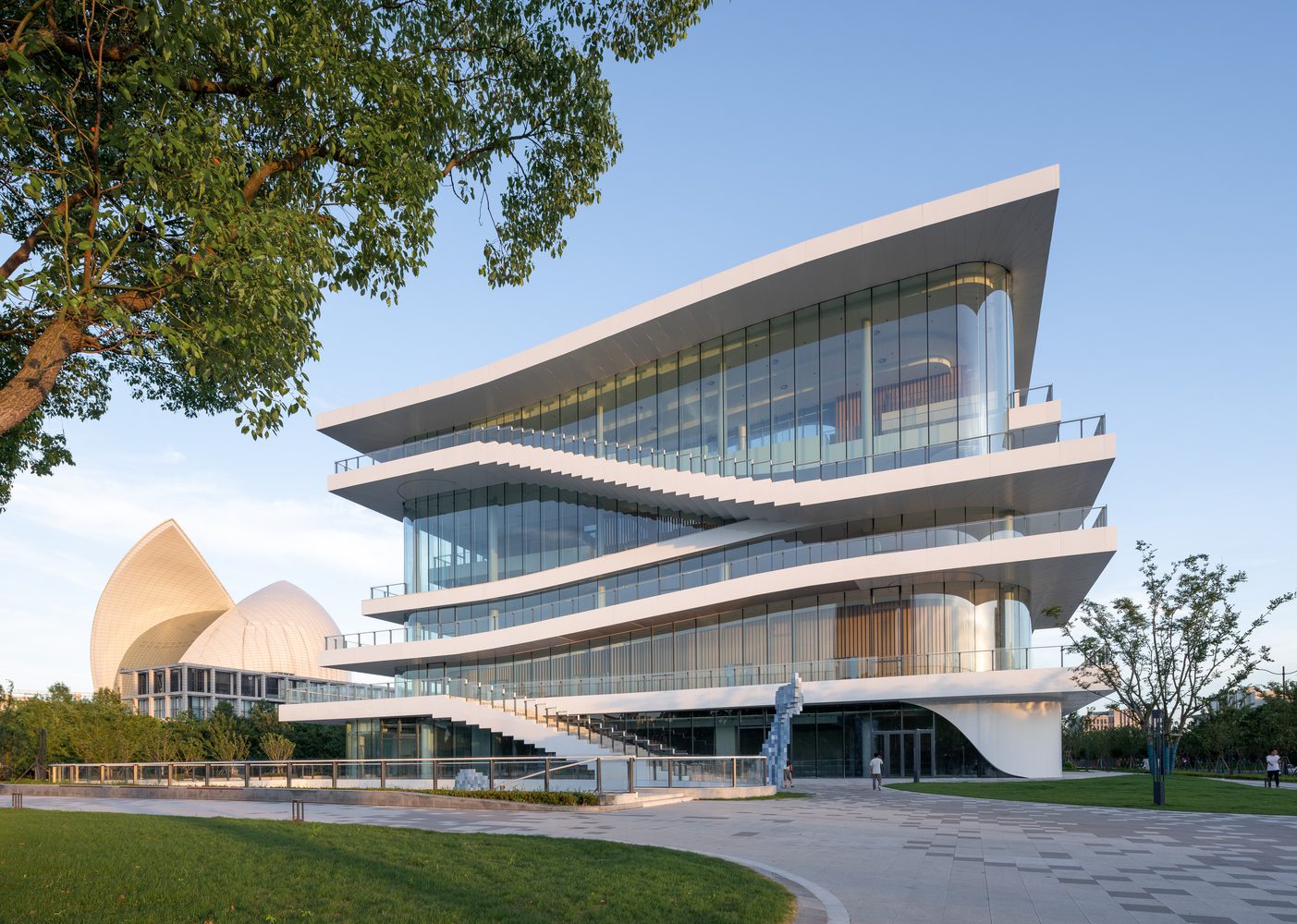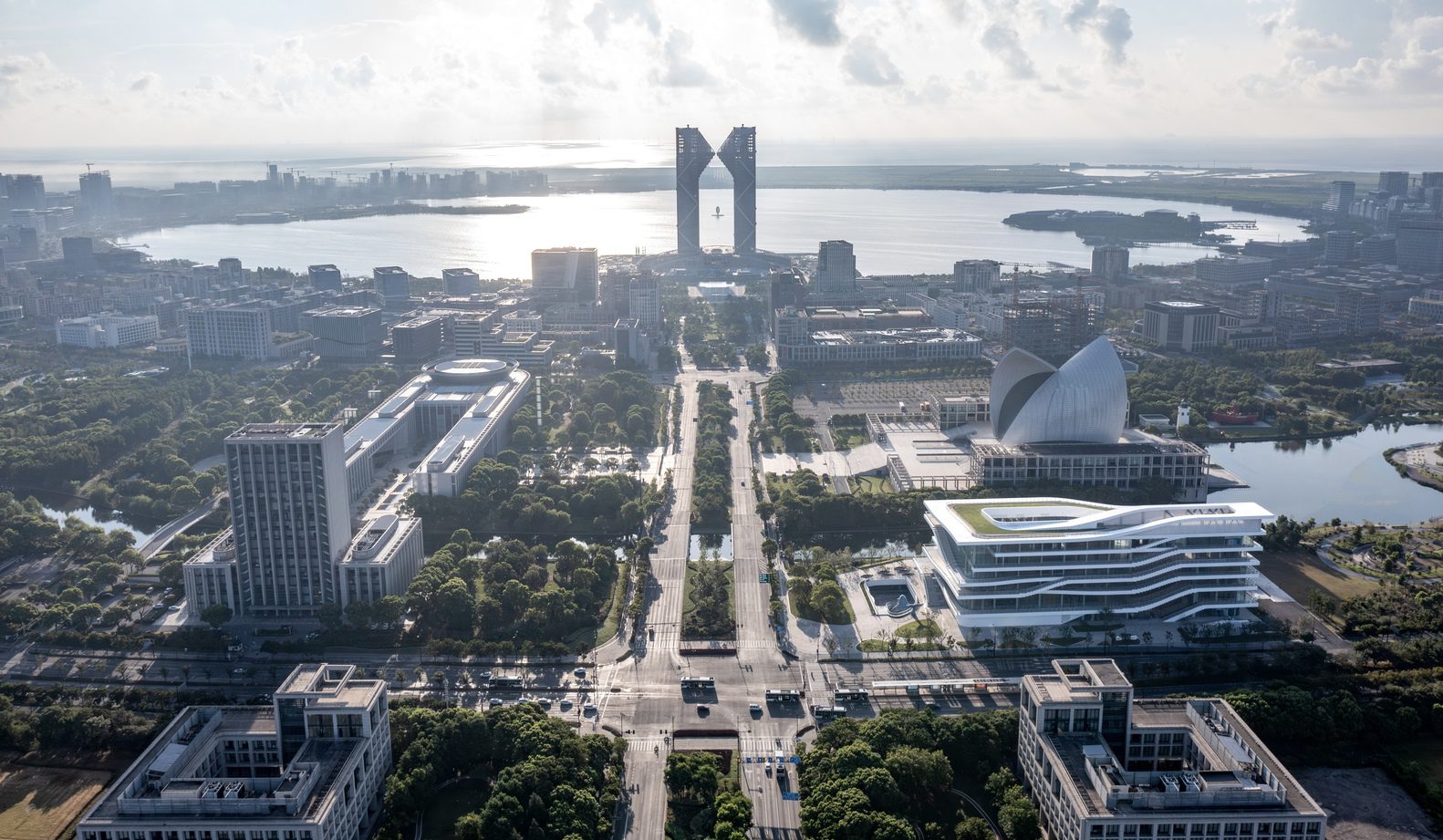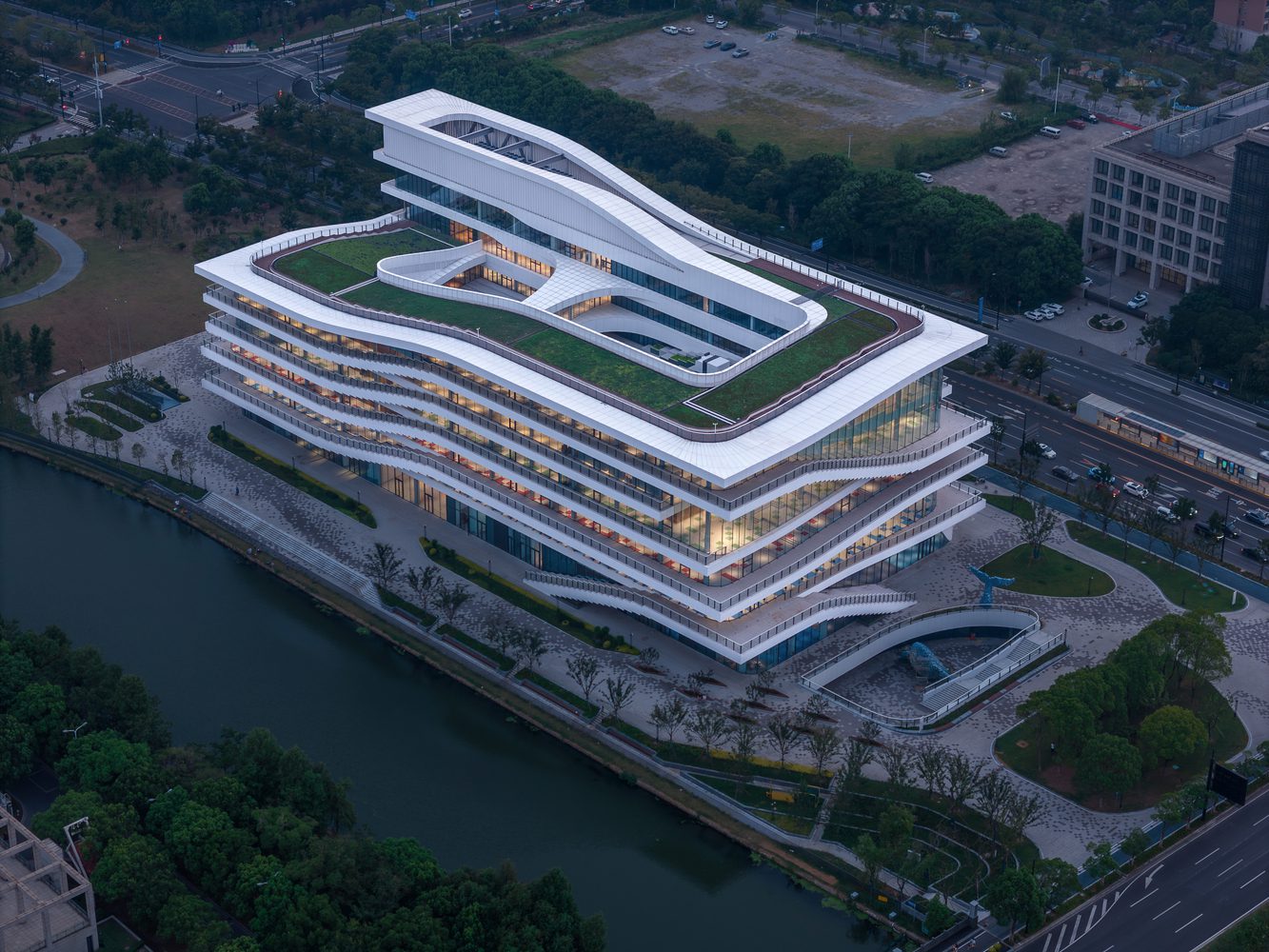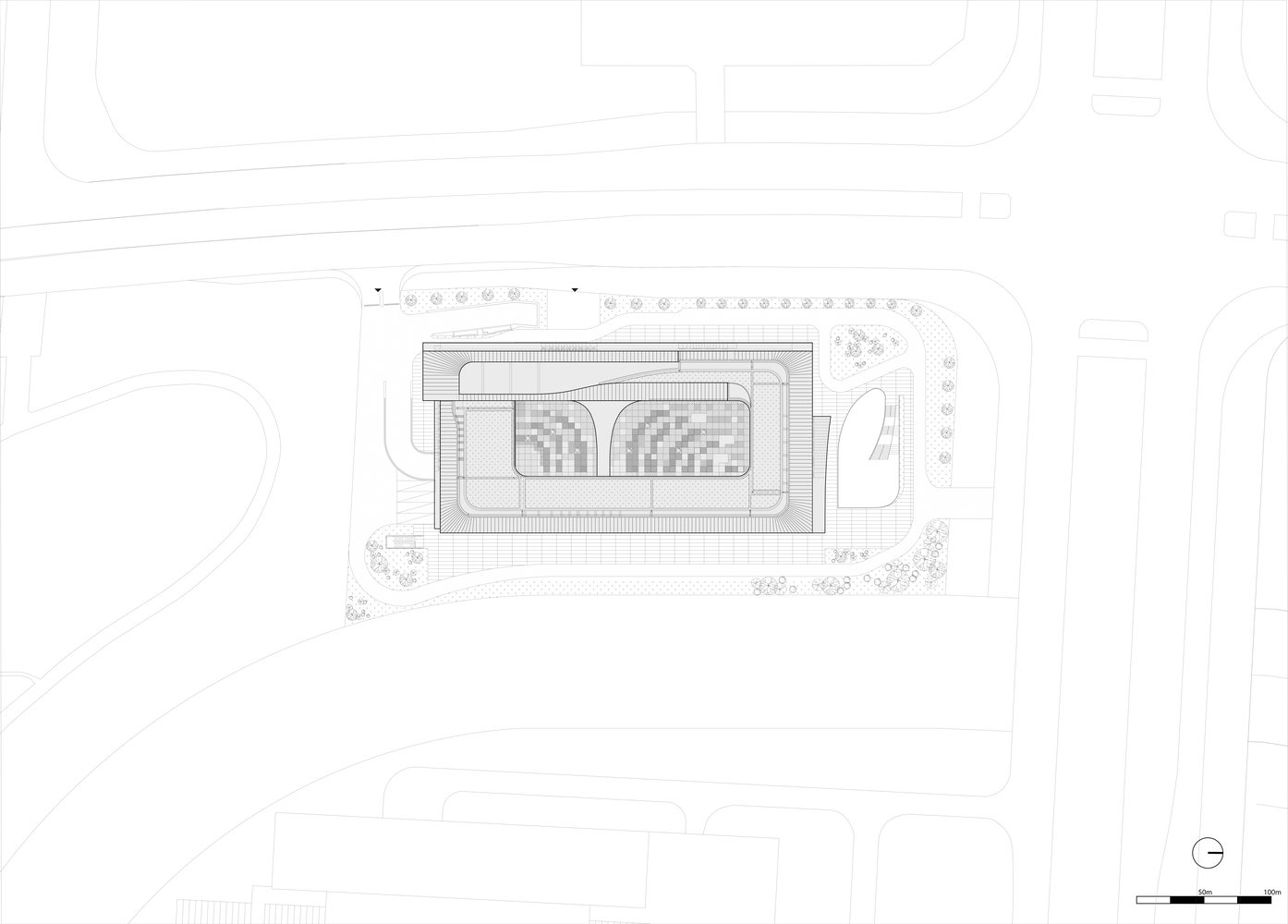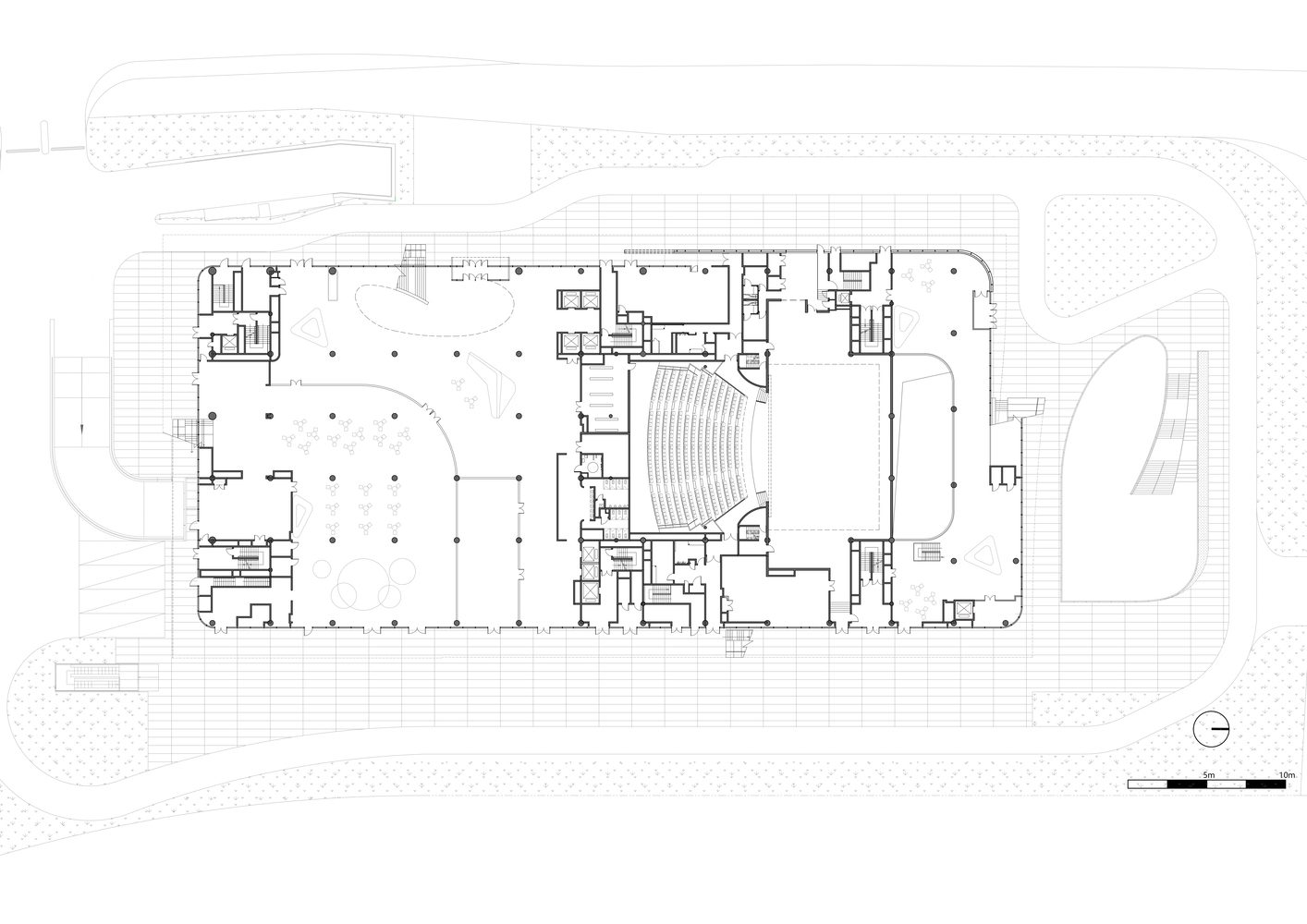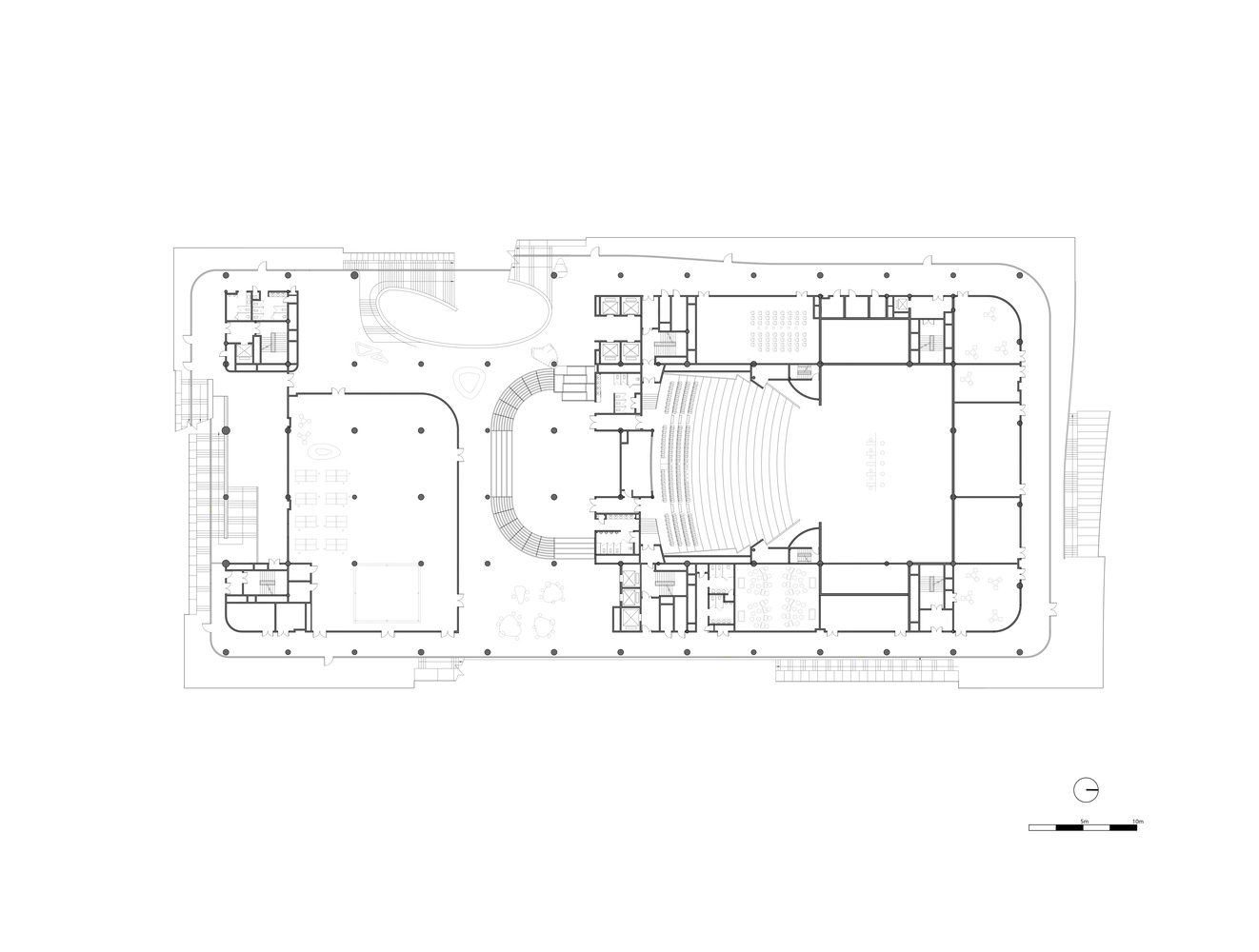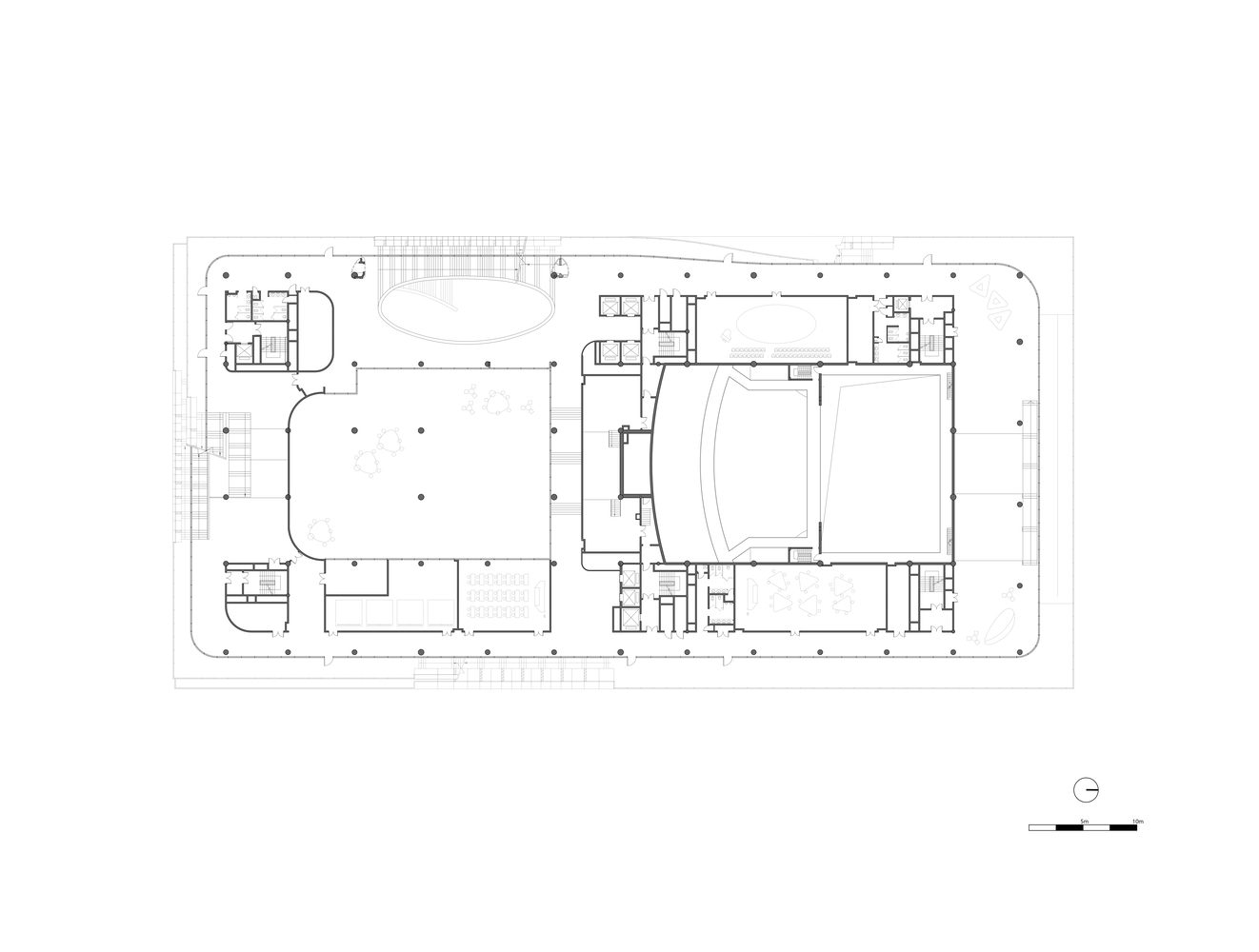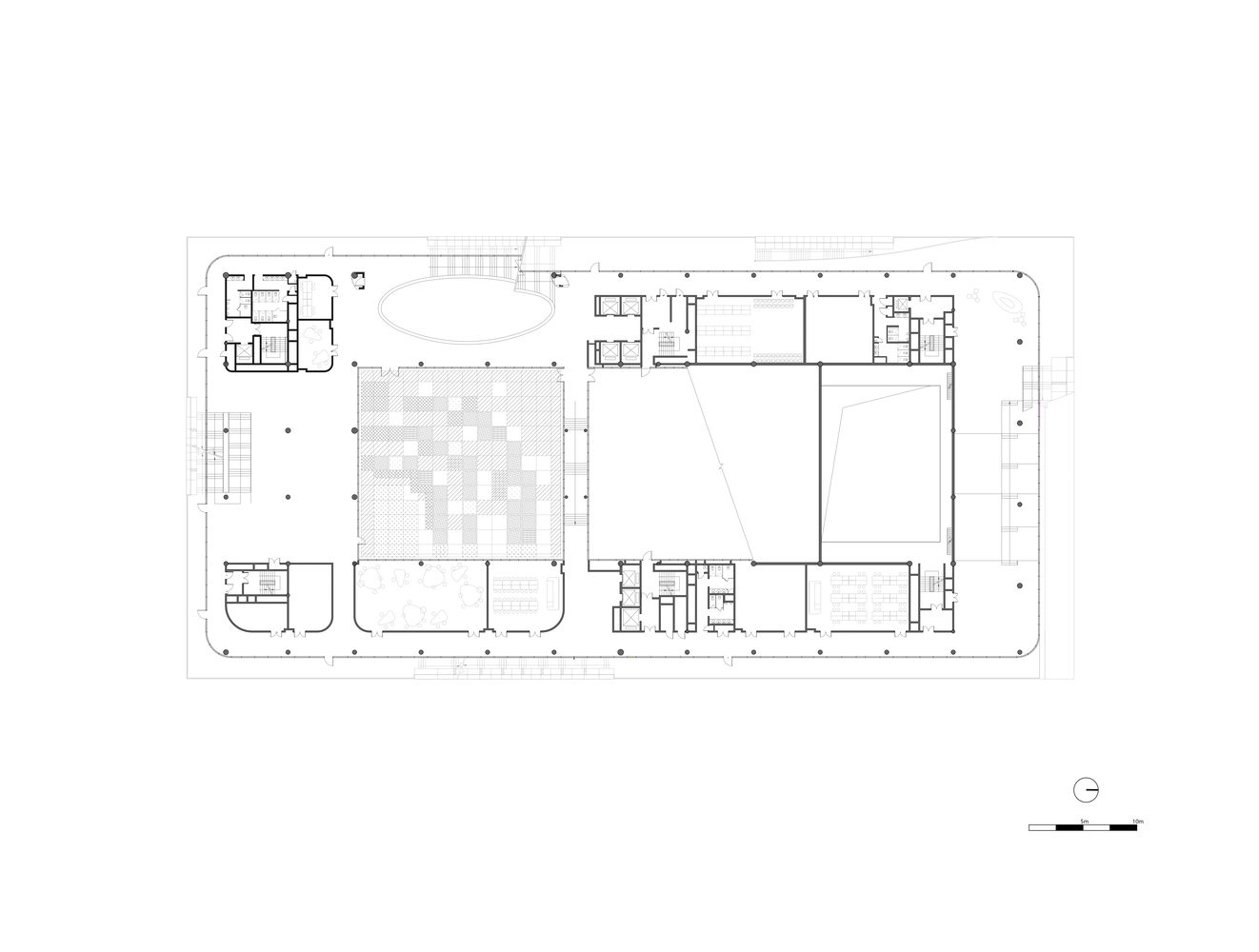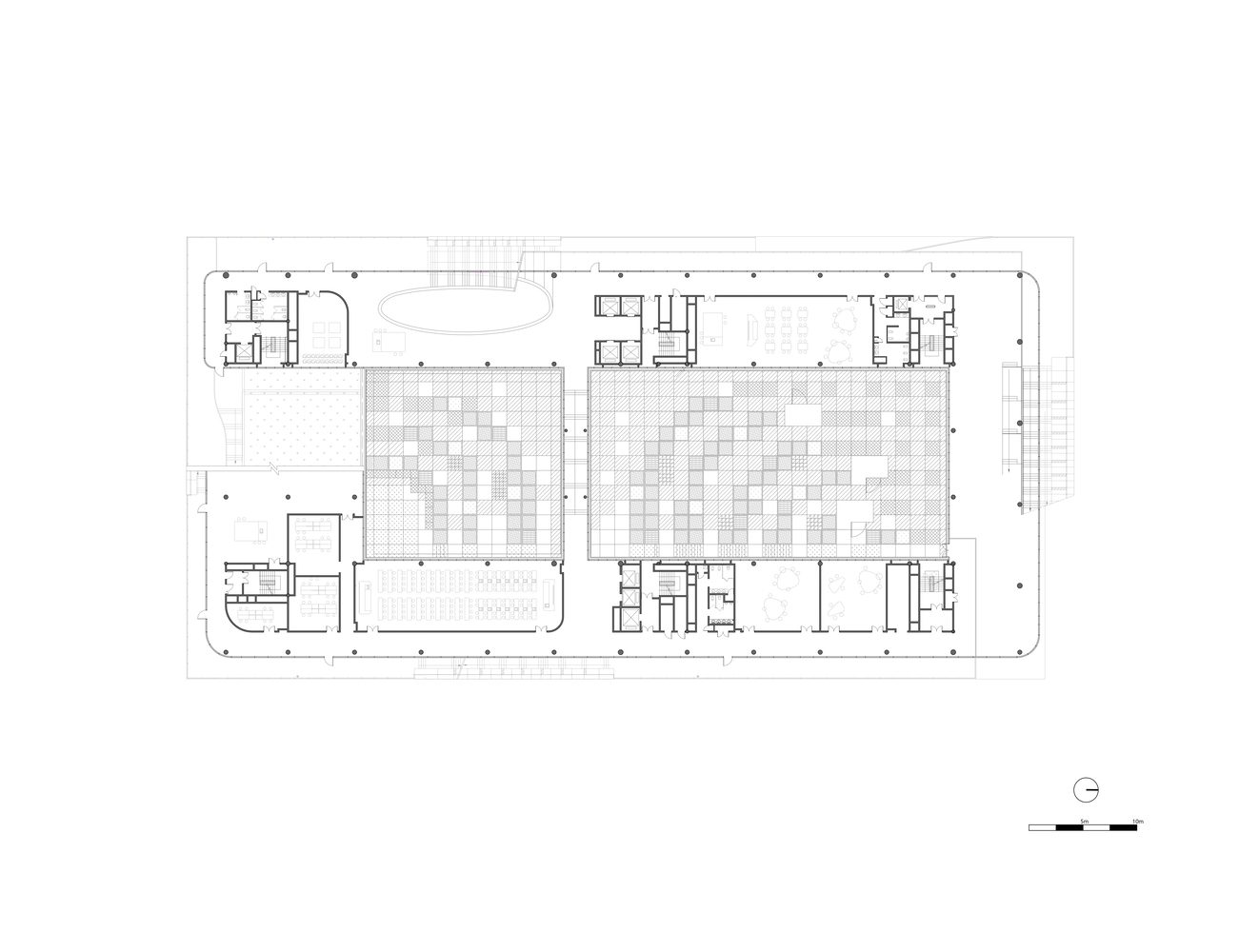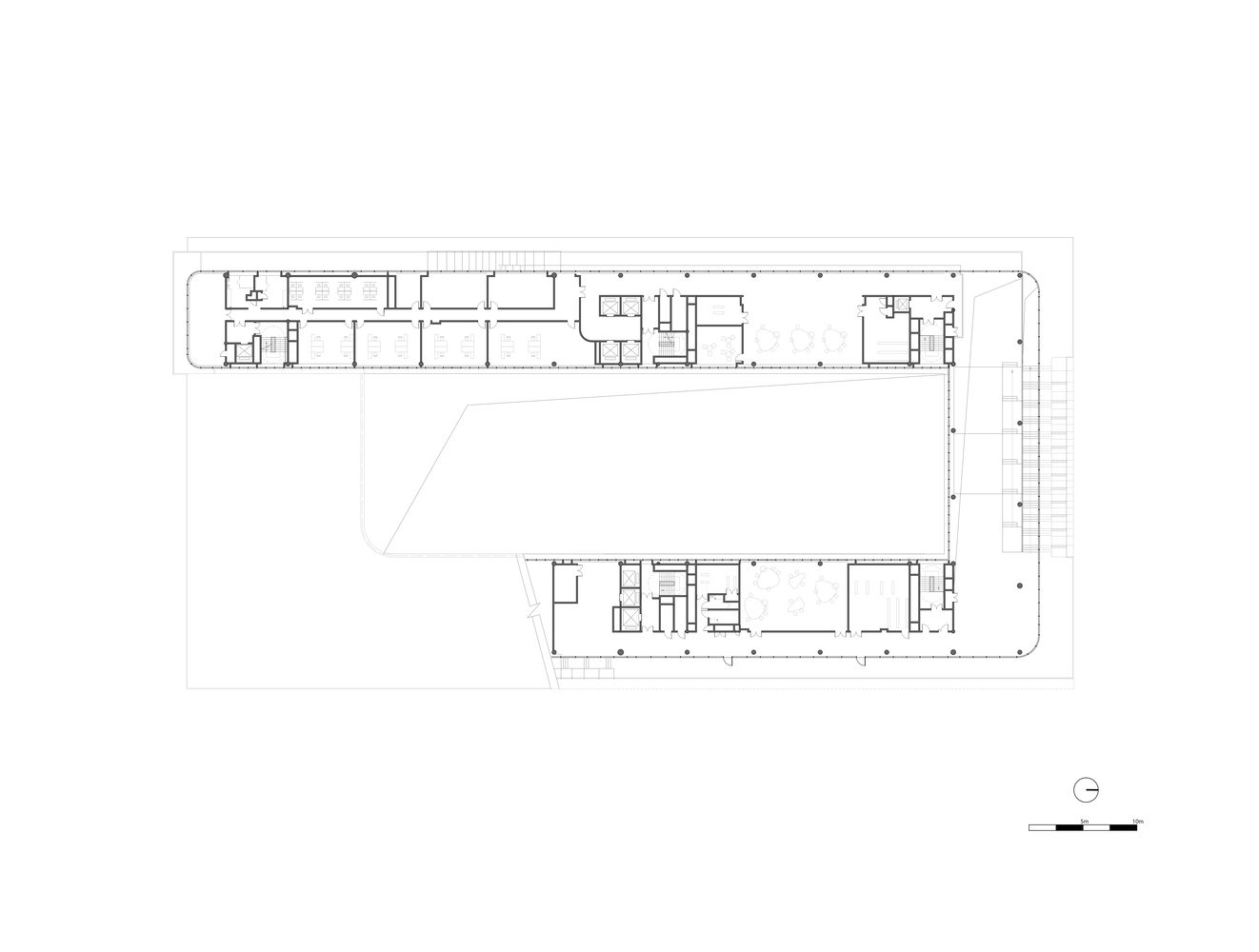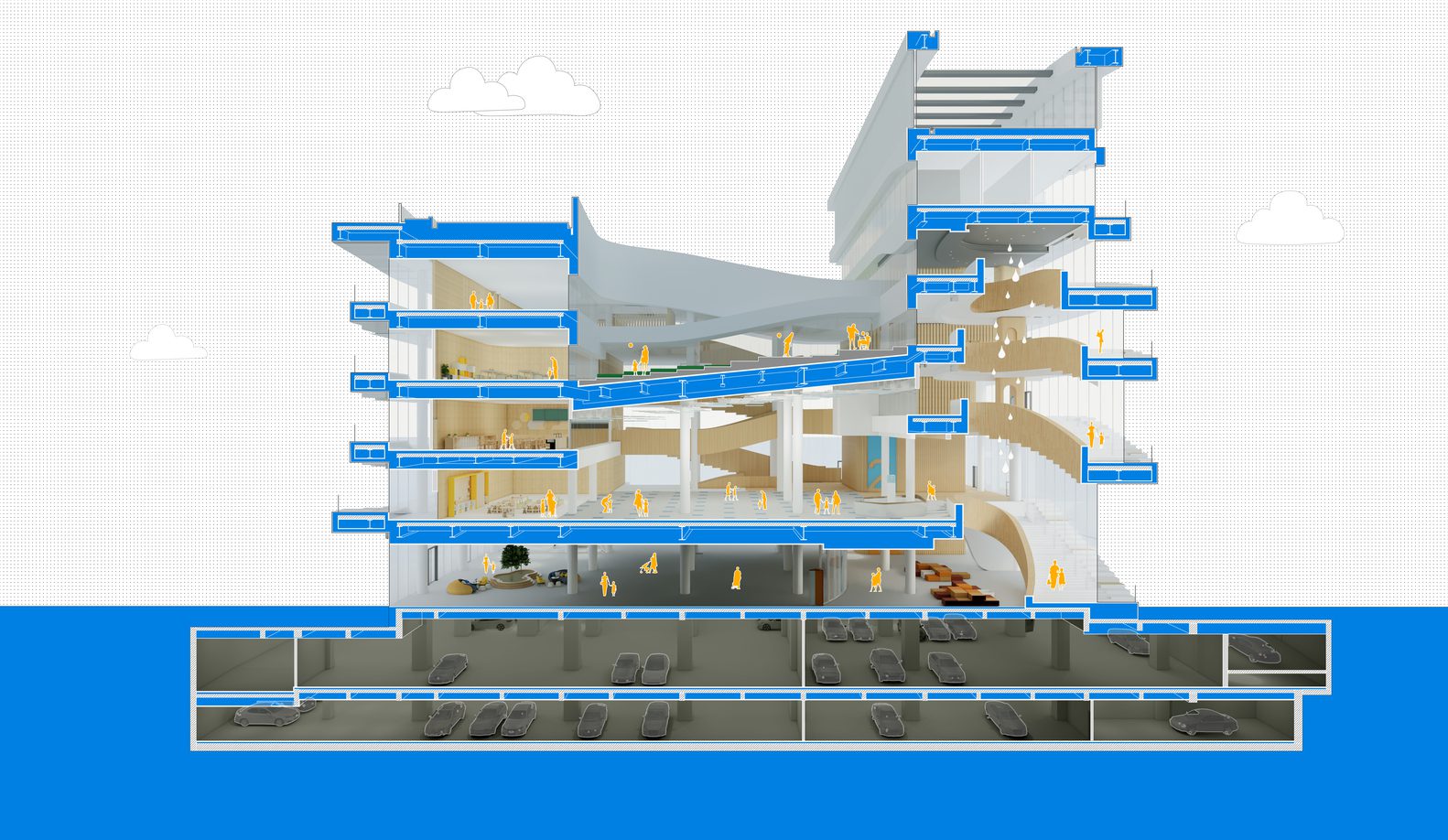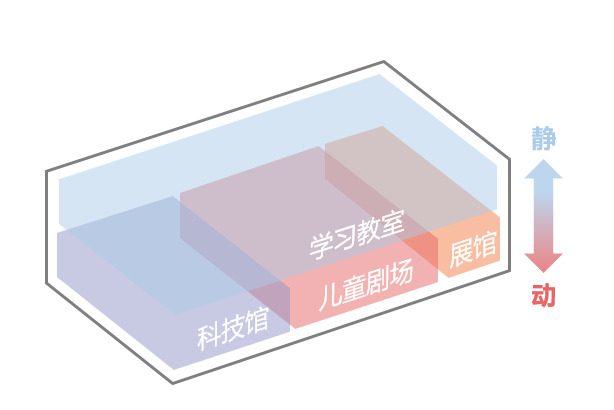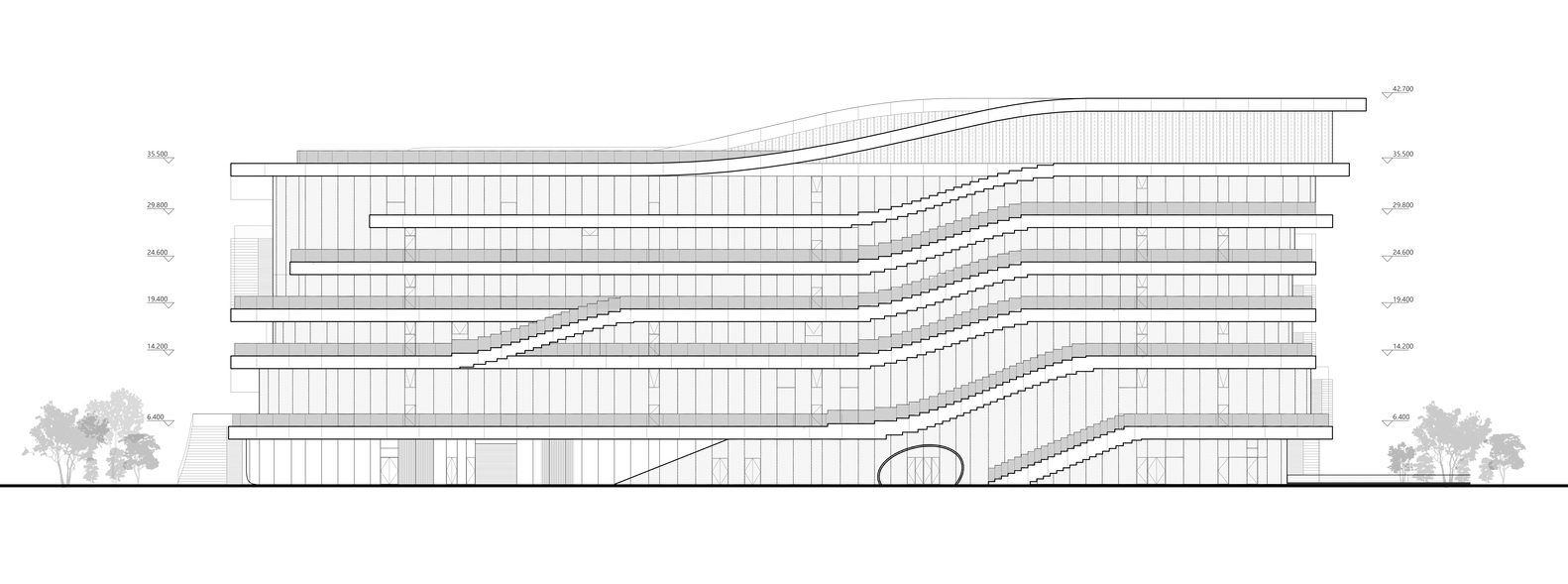


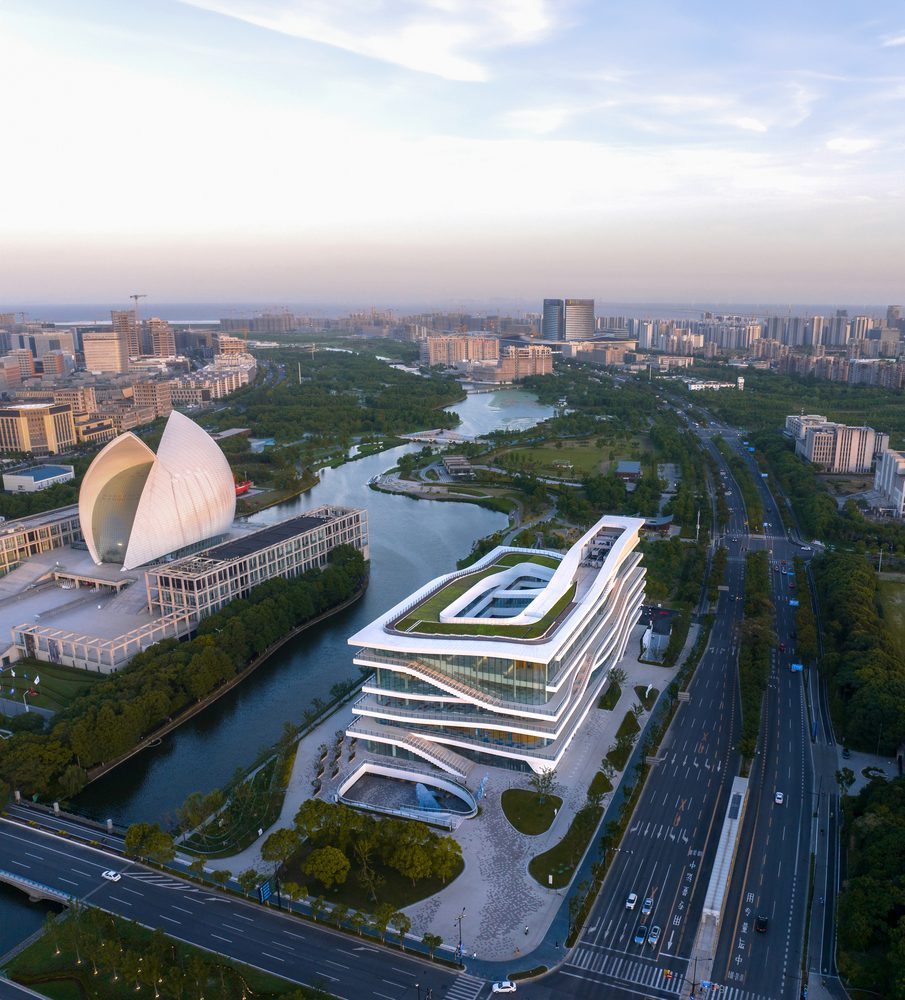
The Lingang Youth Activity Center aims to create a joyful place for teenagers. architects introspect the limitations of the traditional Children’s Palace, hoping to create a comfortable and interesting exploration space through architectural design, not only a place for weekend lessons. The main functions of the ground floor are the experience area of science and technology, children’s theatre and exhibition hall. The second to fifth floors arrange the extracurricular education space for children around the museum and the theater, and the sixth floor is the administrative office area. The main functions of the two basement floors of the building are a parking garage, a theater backstage, an exhibition hall and a small restaurant.
© 3000images
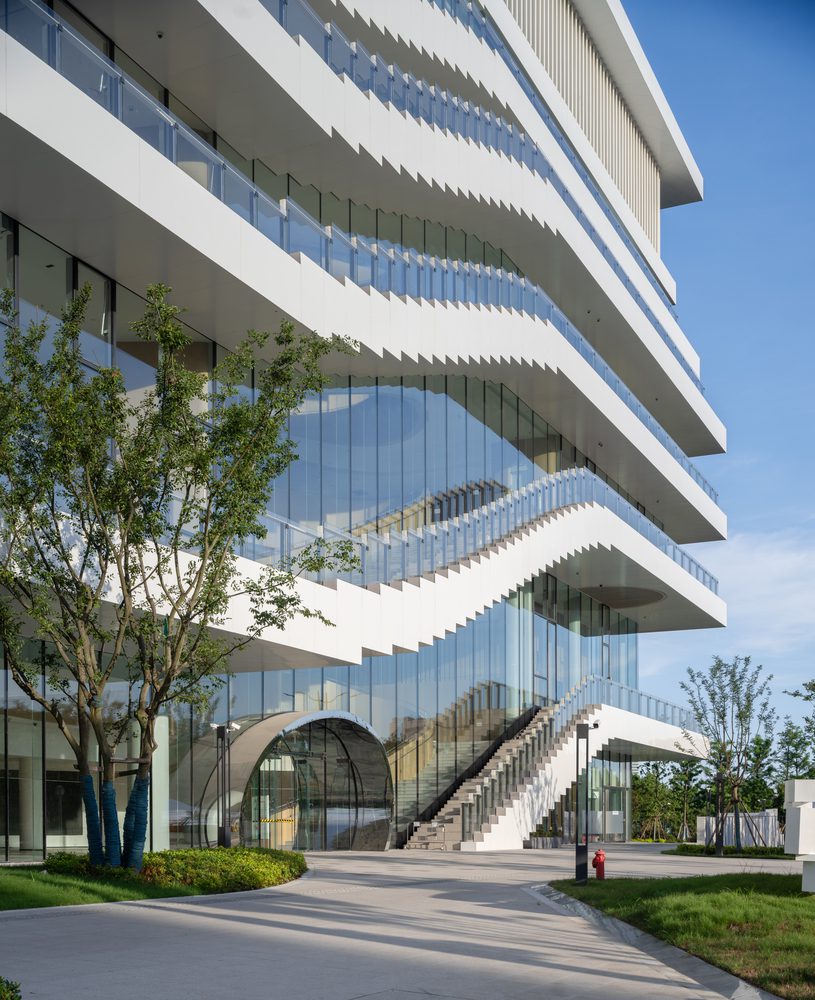
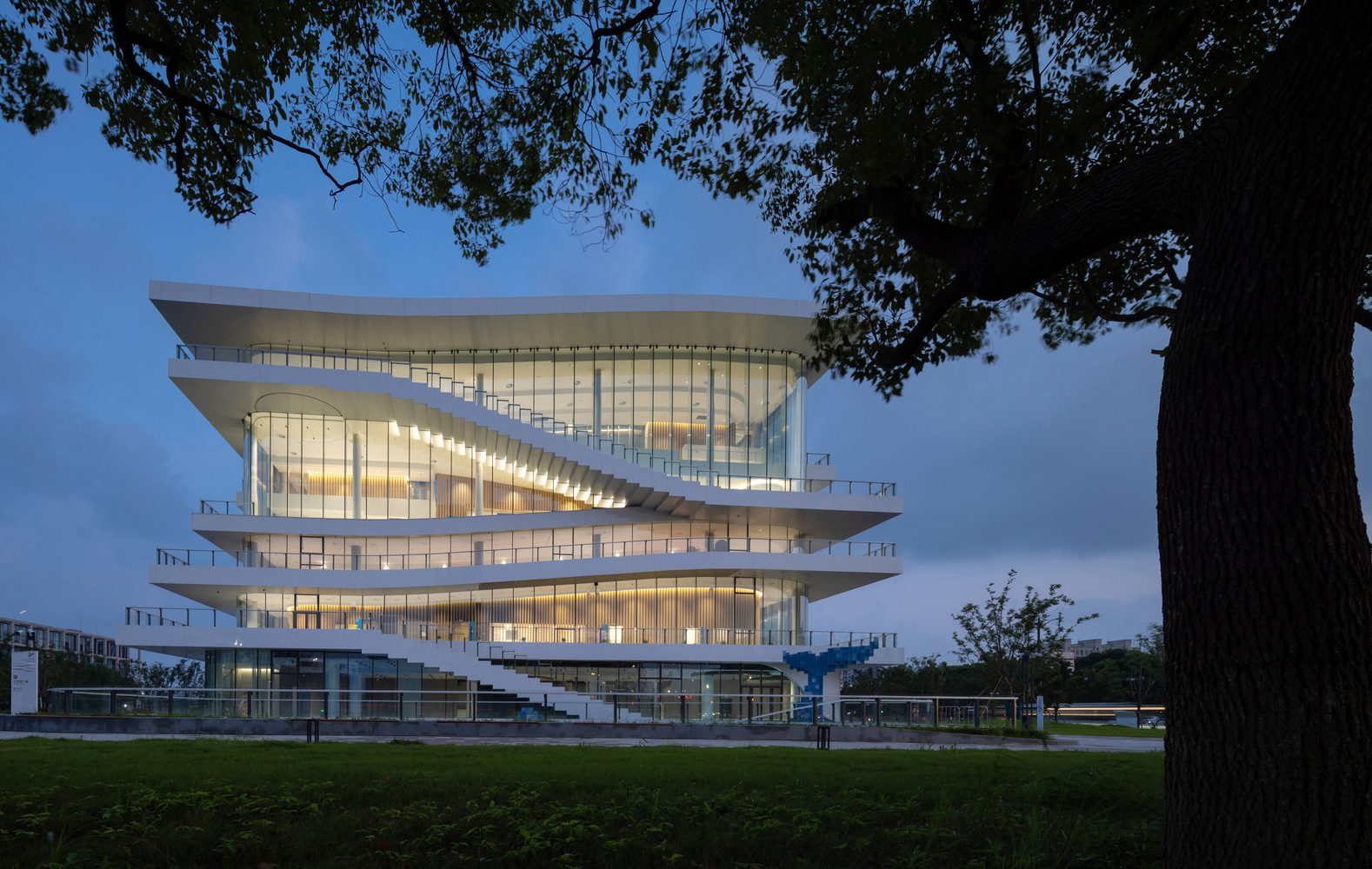
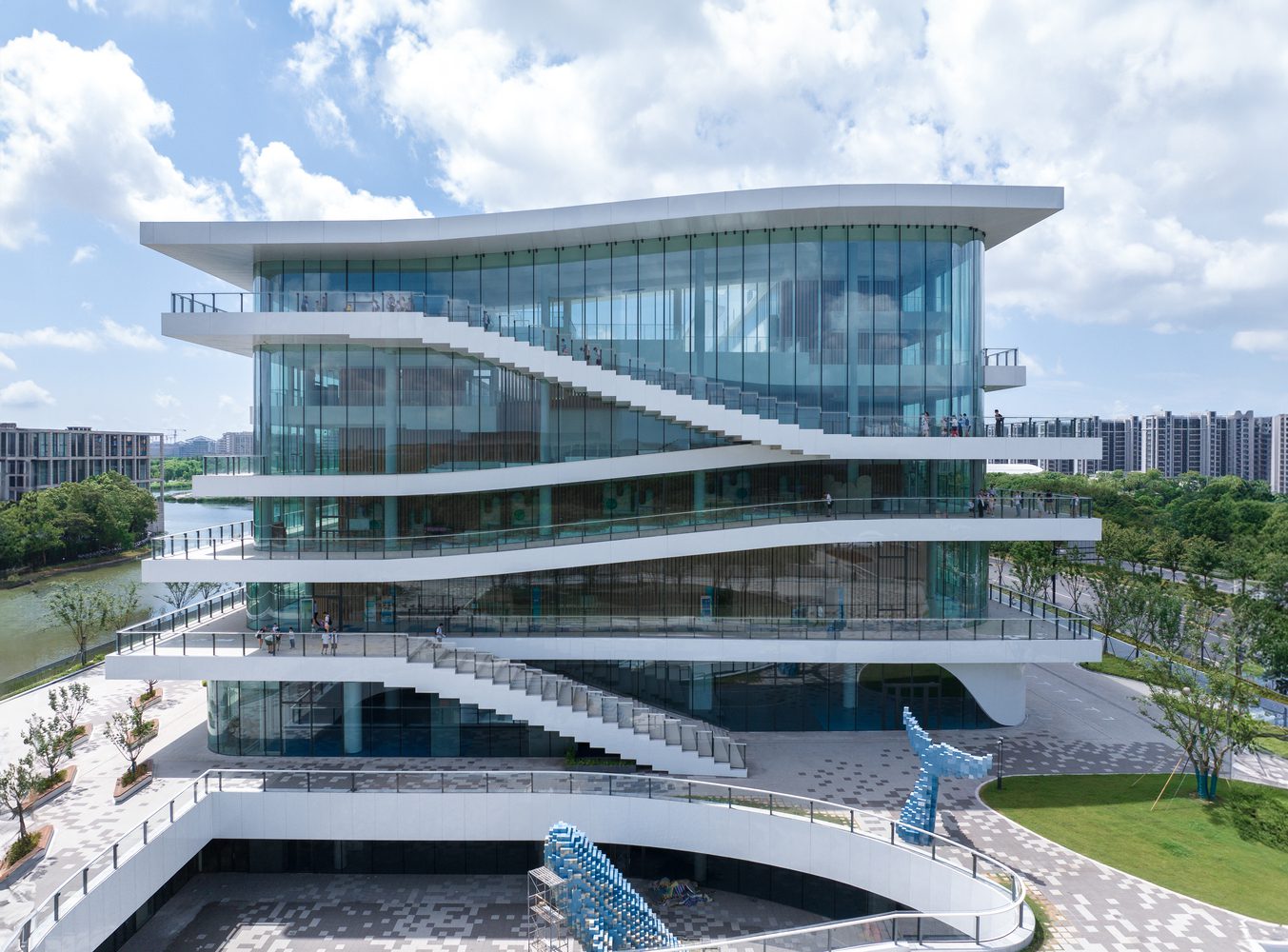
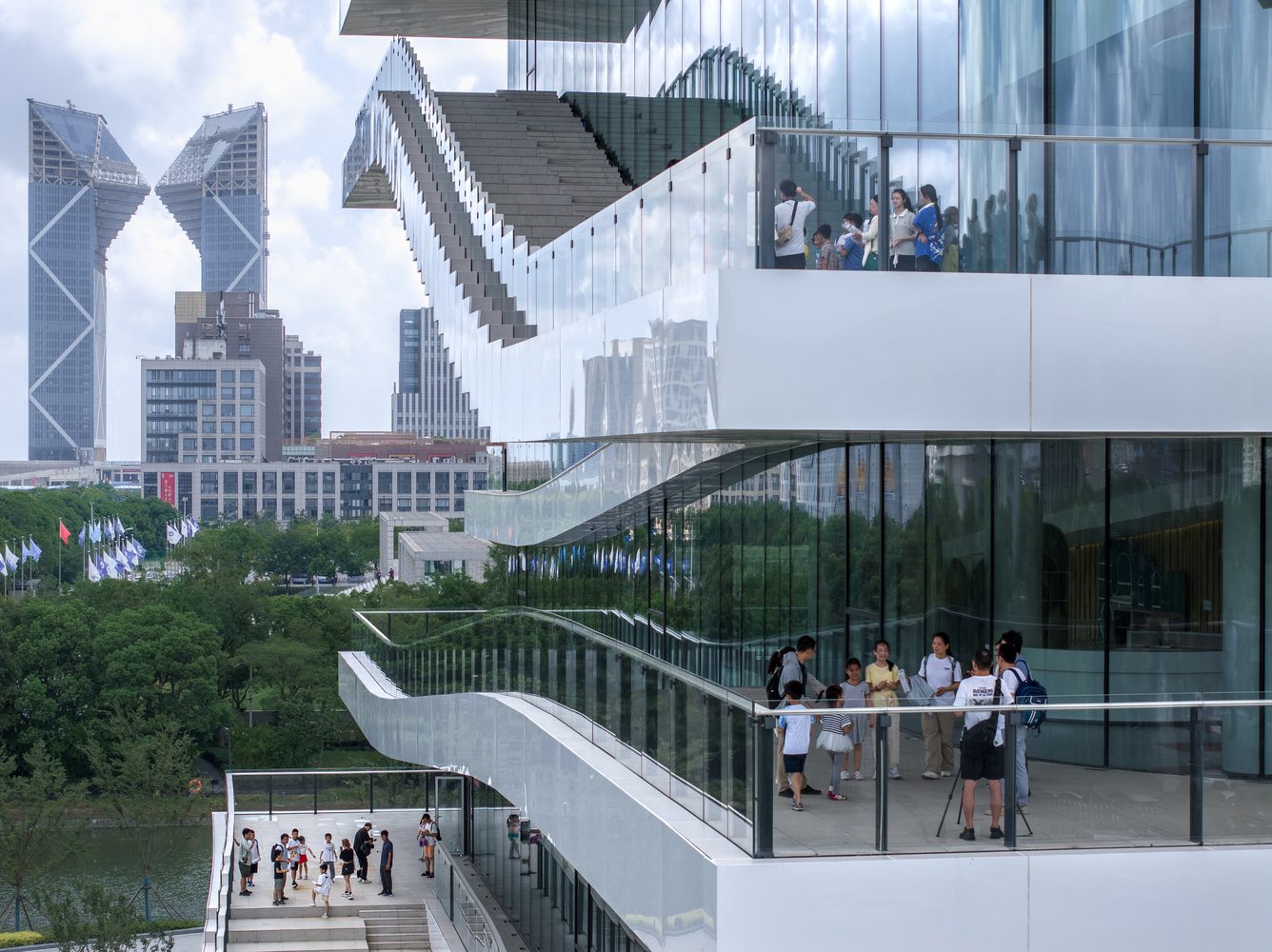
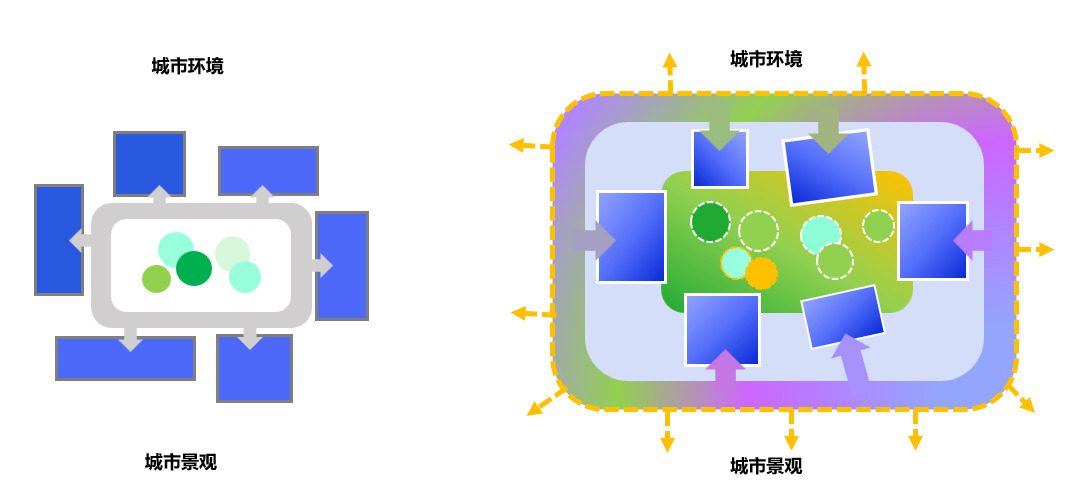
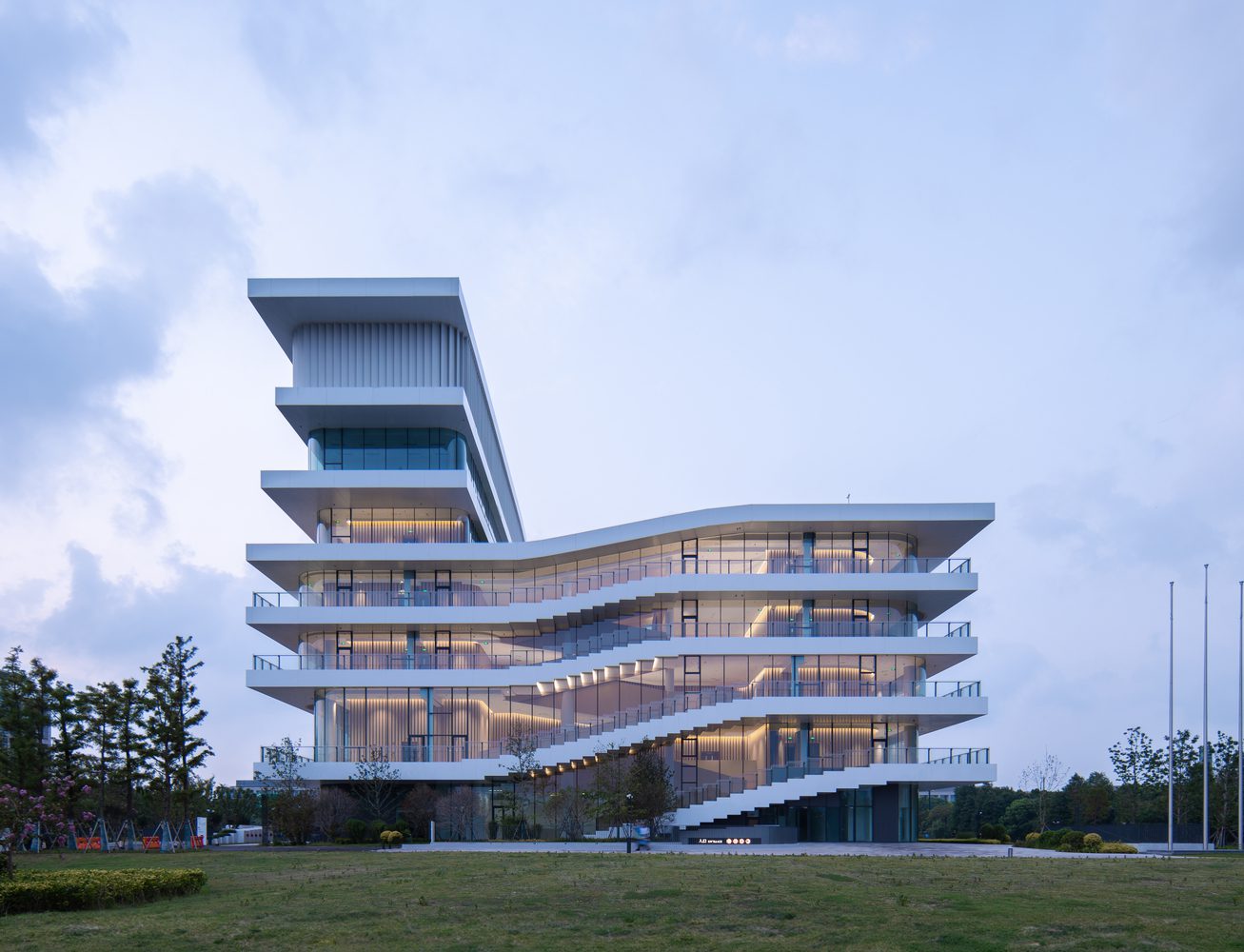
In terms of space design, by flipping the traffic space from inside to outside, people inside can take good advantage of the urban landscape; classrooms and other functions are set inside so that teenagers can concentrate on studying in such a quiet environment.
© 3000images
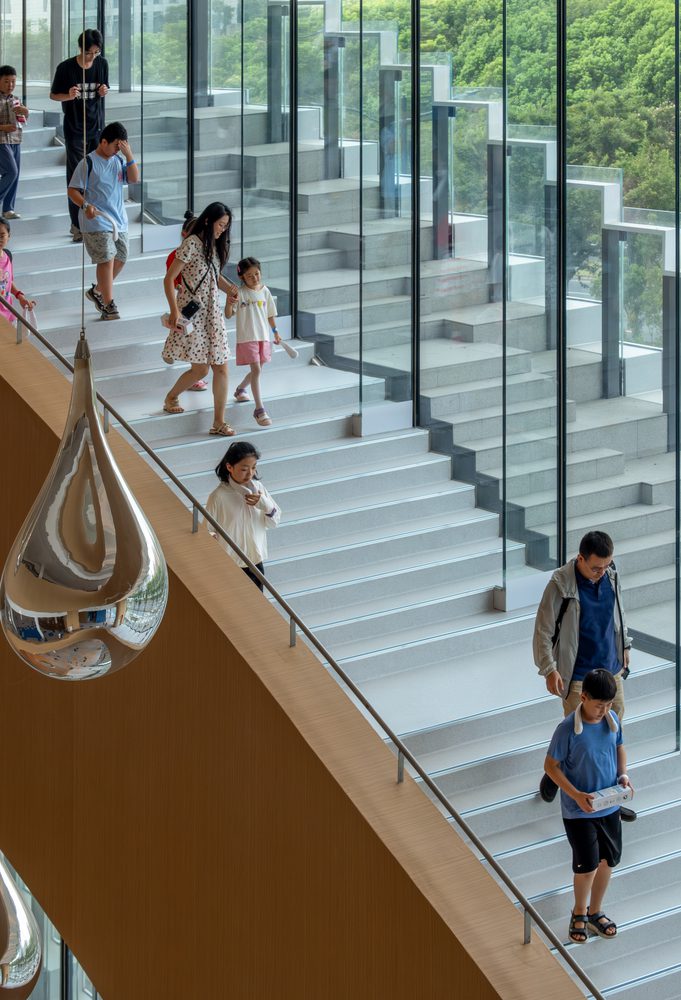
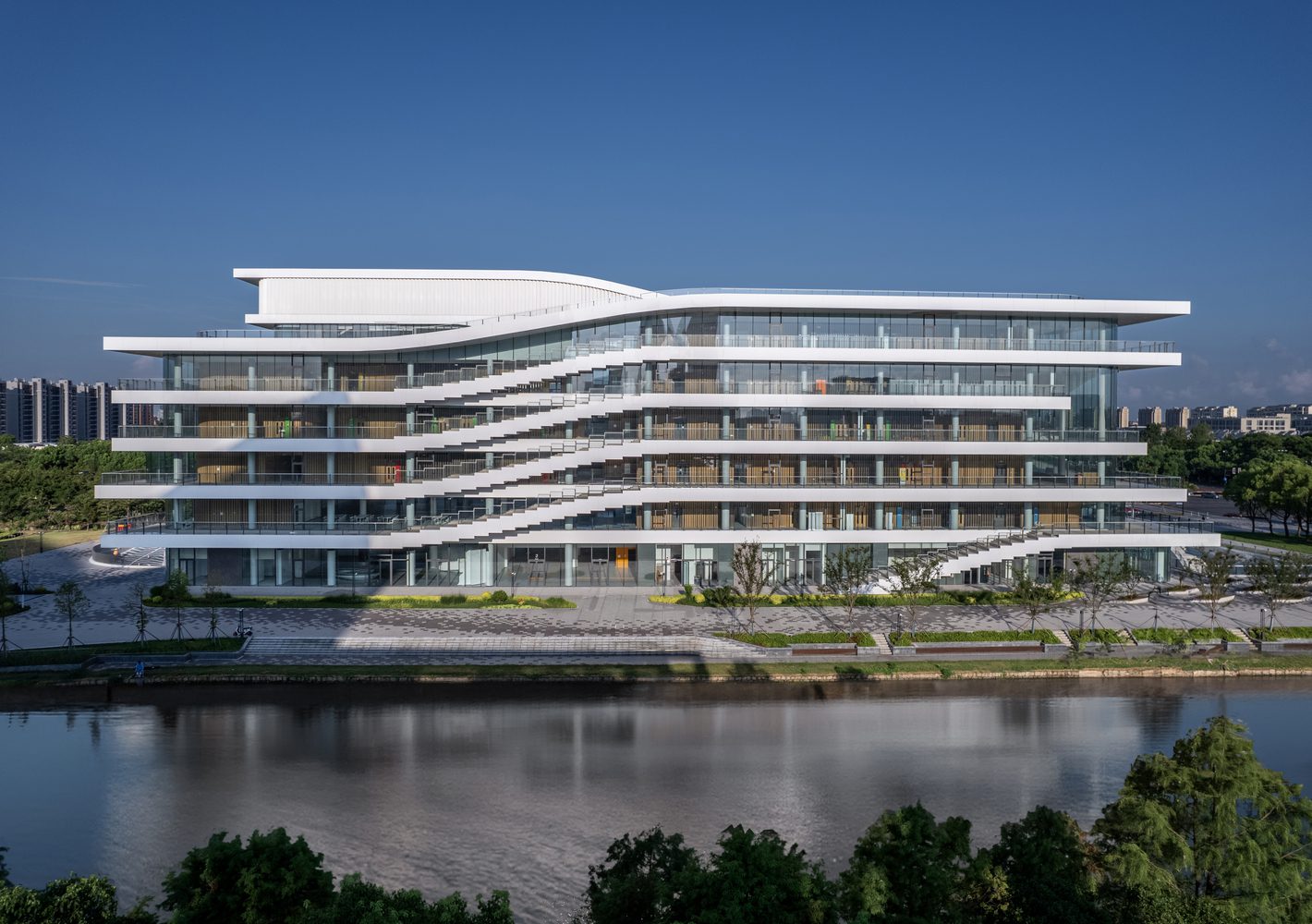
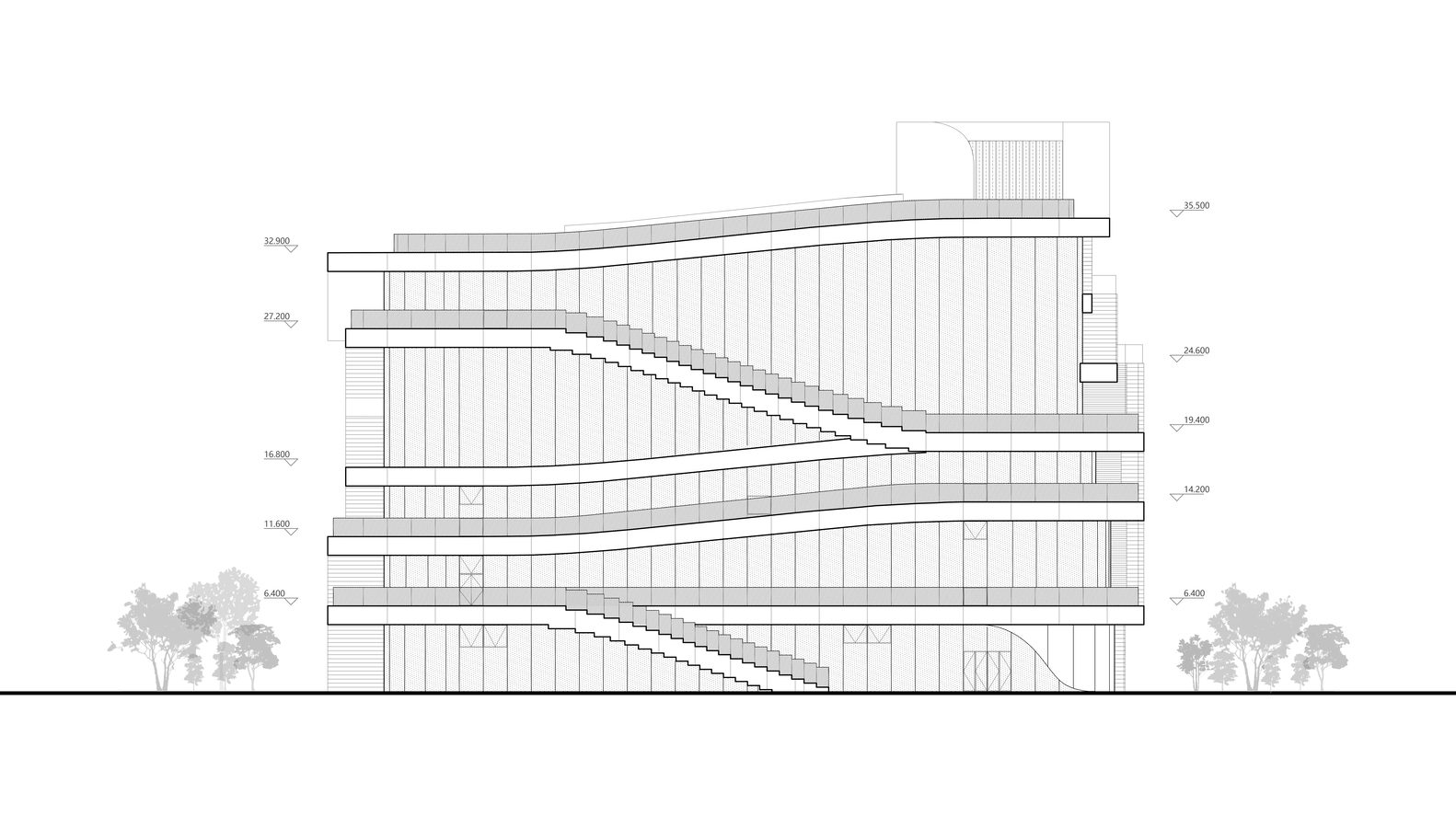
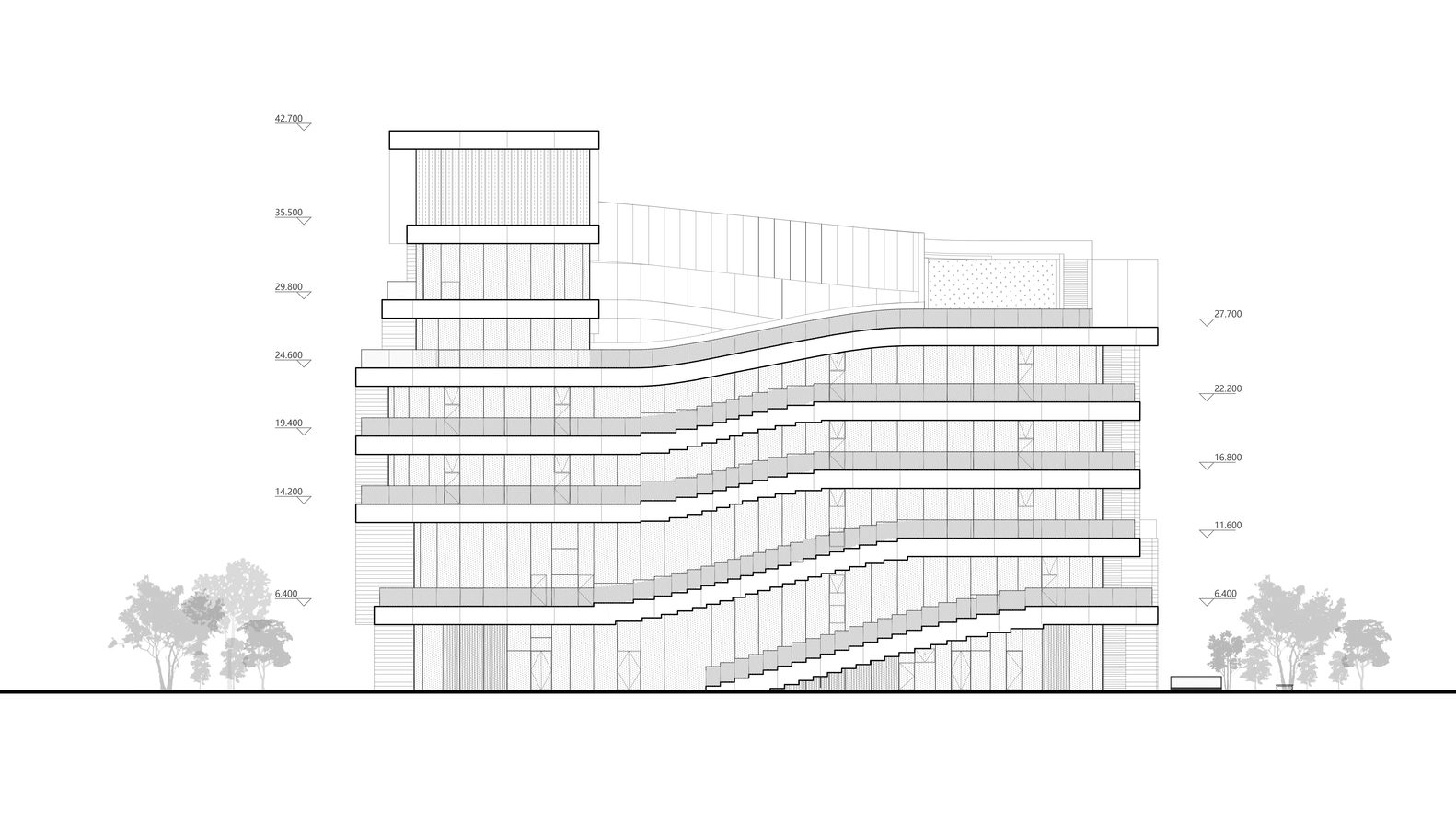
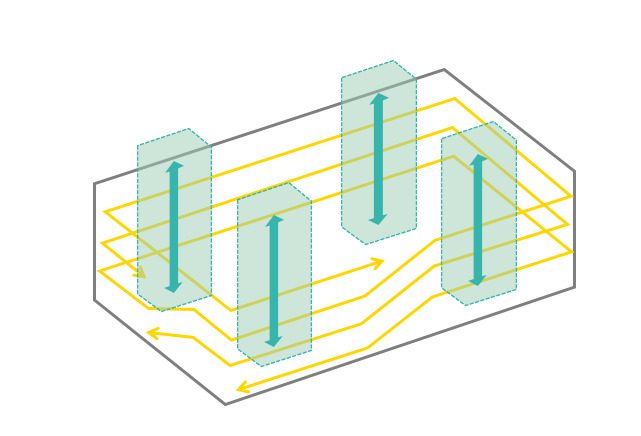
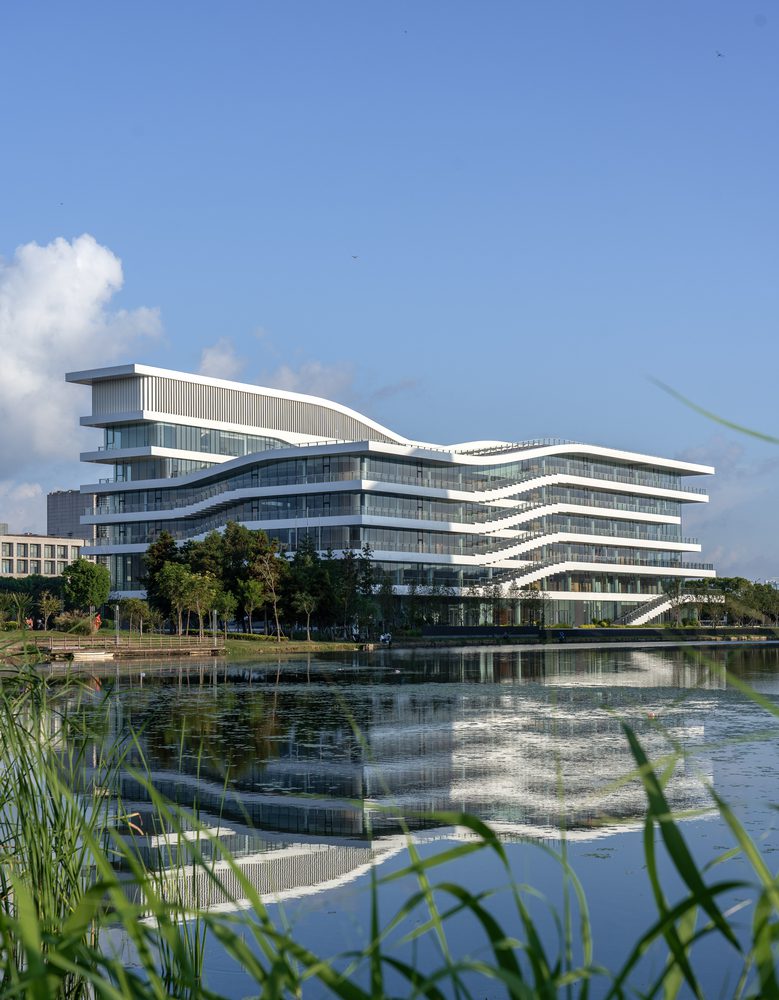
By setting up a floor height difference of 2.6m on the west and east sides of the building, ramps and stairs spaces are created for the north and south sides of the building, which can be used as places of public activities and open classes. The entire building from the ground floor is surrounded by ramps and stairs, connecting educational spaces of different subjects. The architectural space integrates with circling ramps, extending from the ground to the top, breaking the boundary between each floor.
© 3000images
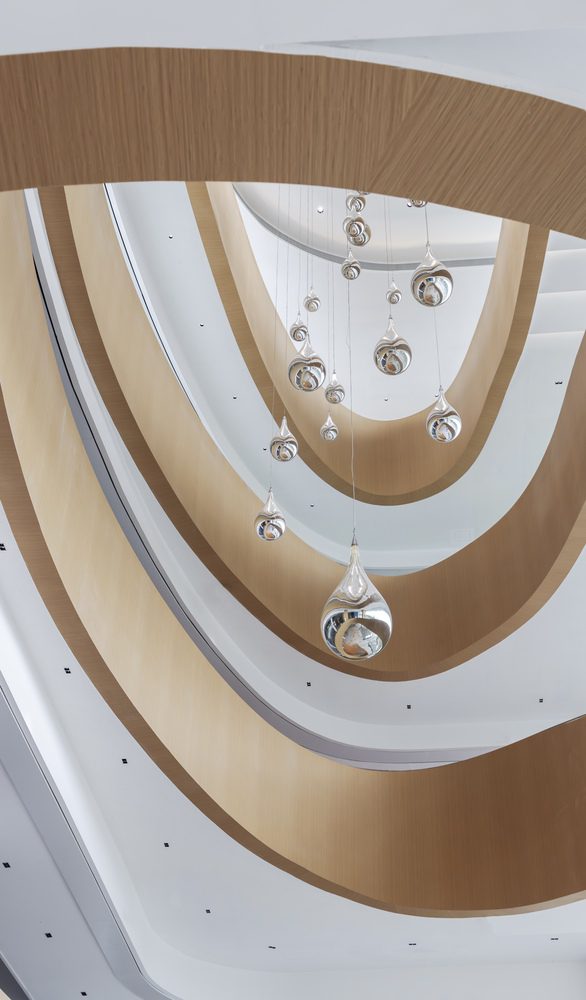
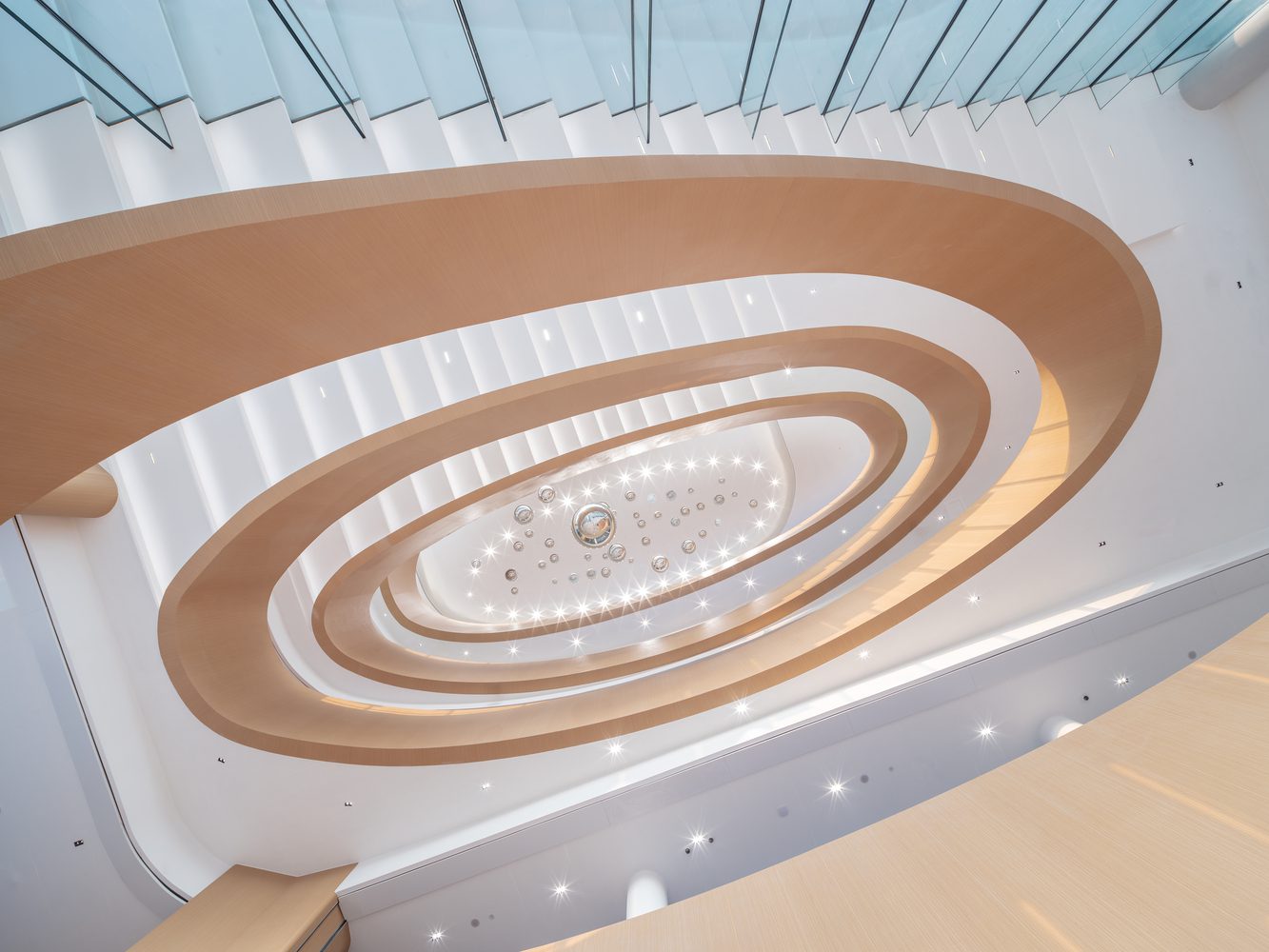
The interior space presents a rich and changeable flow state. Connecting the ramps and steps in different layers increases the richness and interest of the space and satisfies the lively and active nature of children.
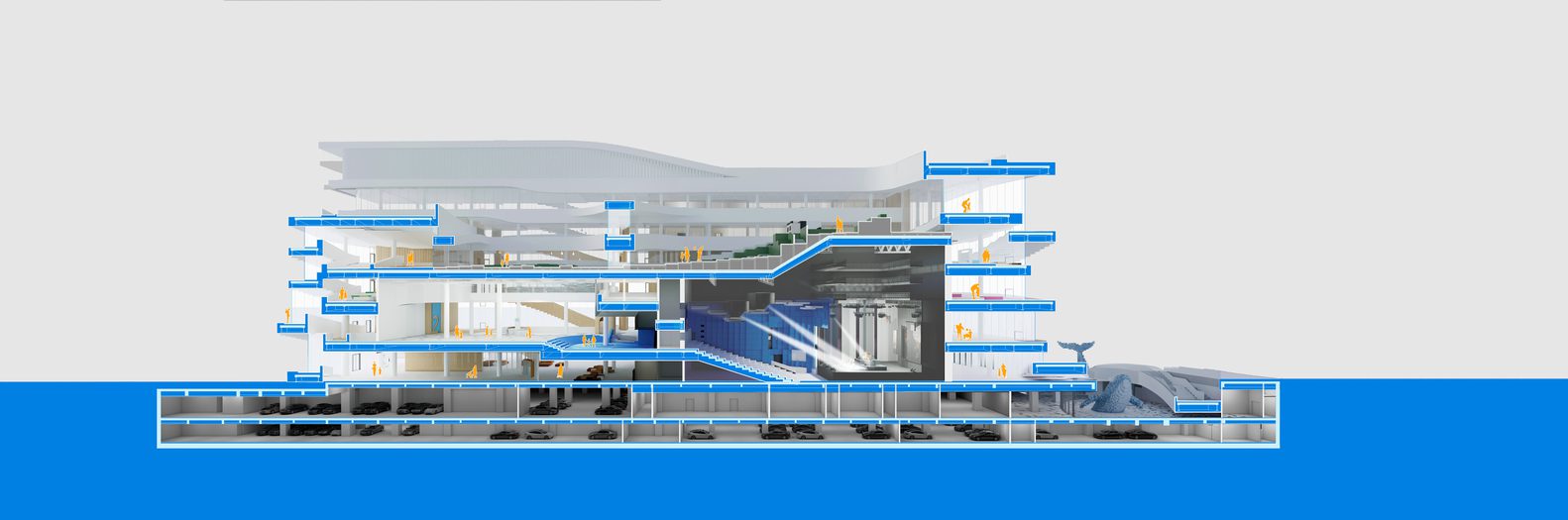
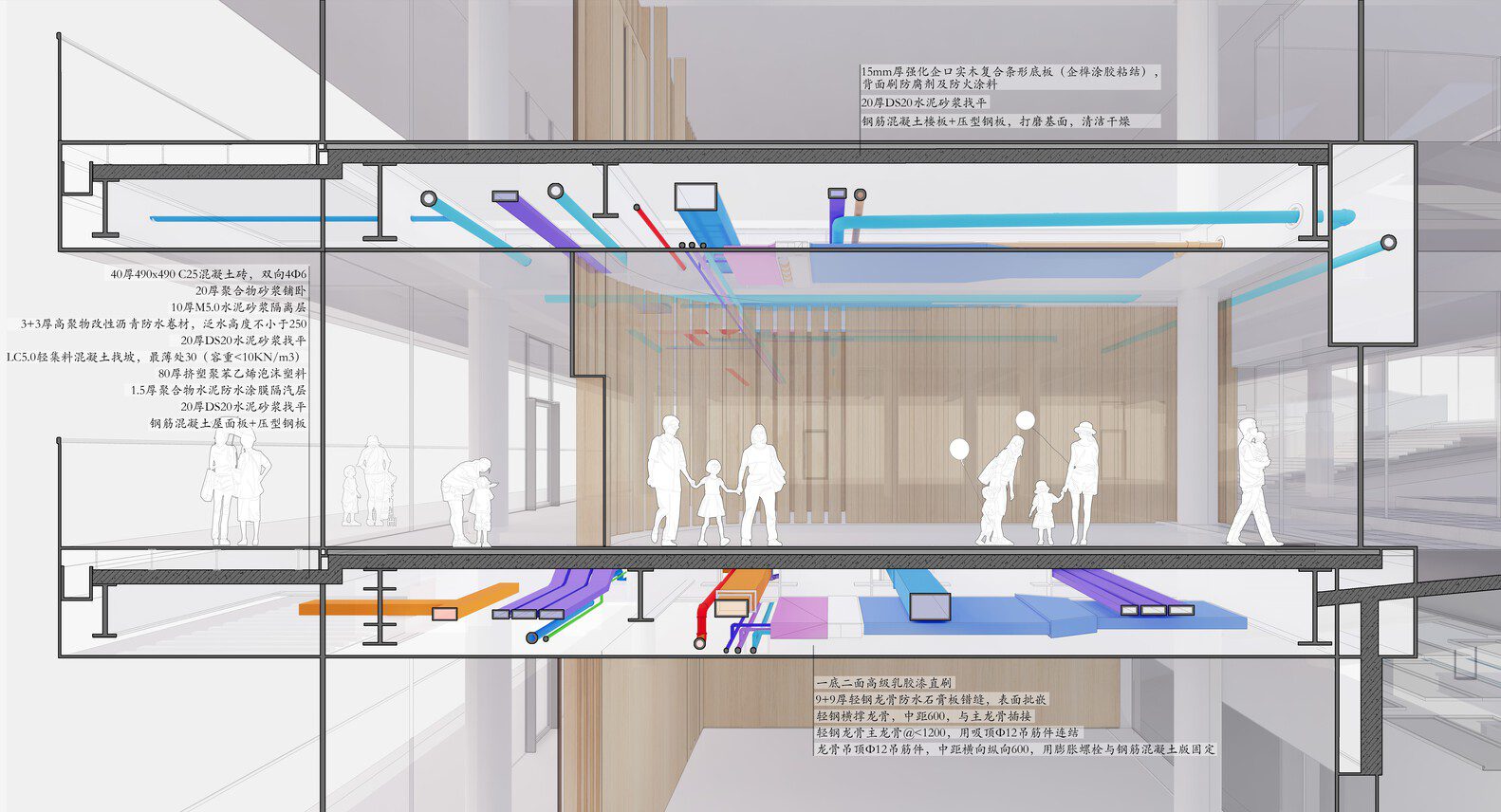
Section perspective 01
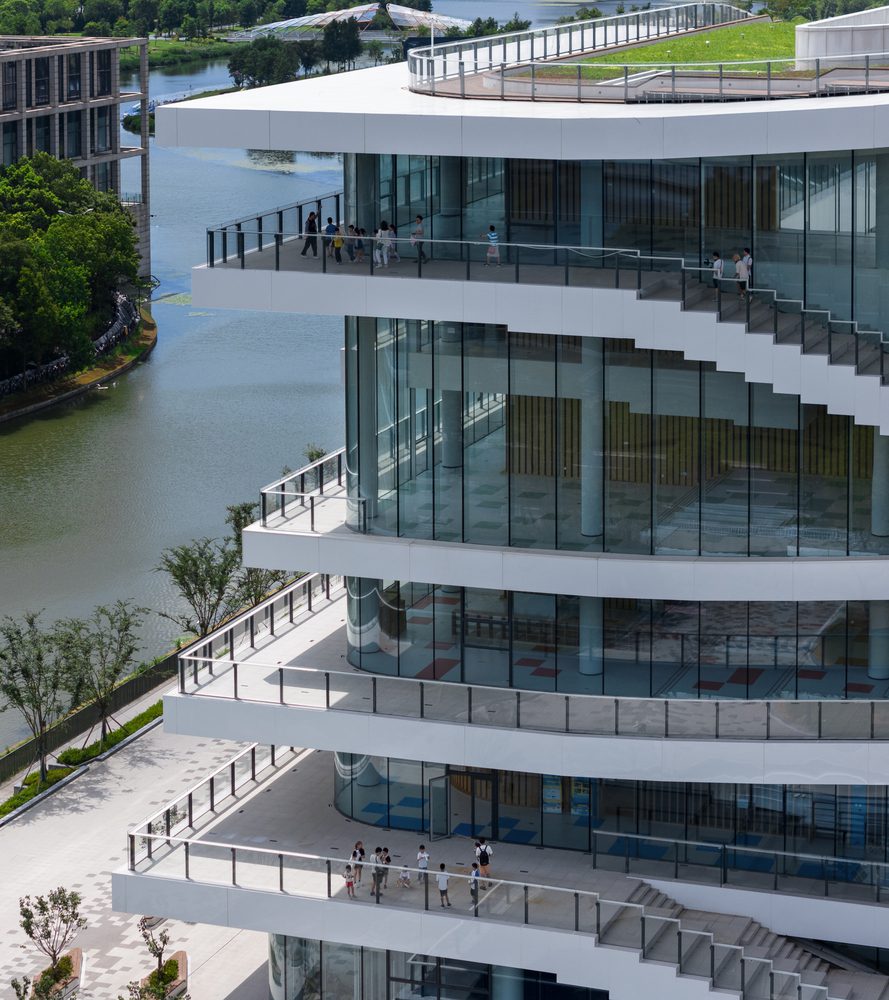
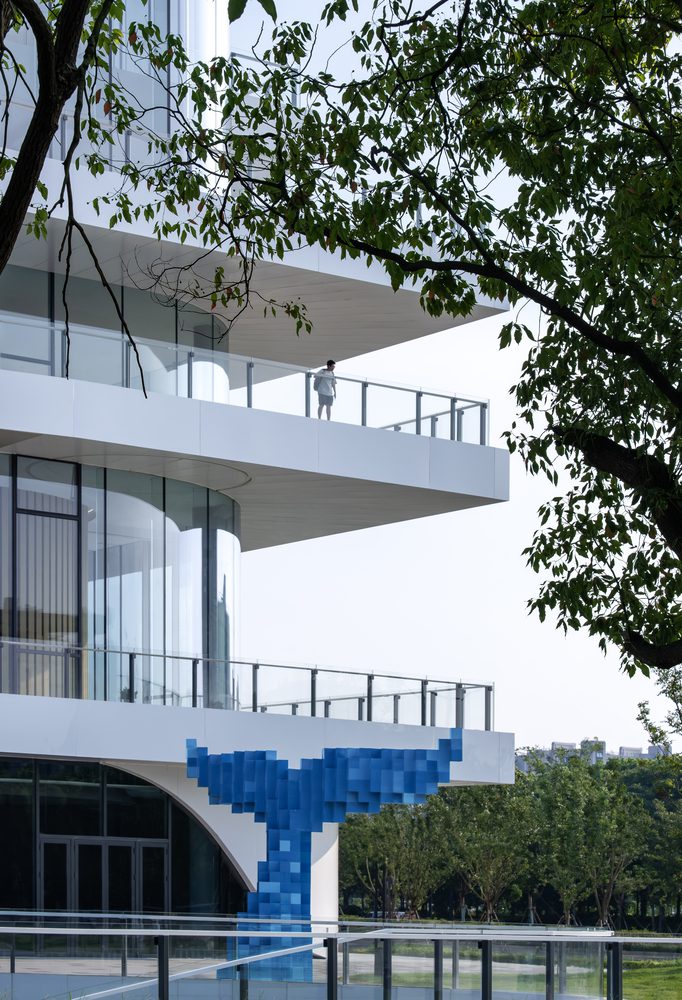
The architectural facade abandons complex decoration and shapes the space and facade through horizontal and vertical transportation systems. The verandahs and ramps on the facade encourage children to walk under sunshine and breathe fresh air, enjoy the landscape of Dishui Lake and the surrounding park, and feel nature. The children who participate in various activities on the verandahs and ramps form a dynamic architectural facade with the building.
© 3000images
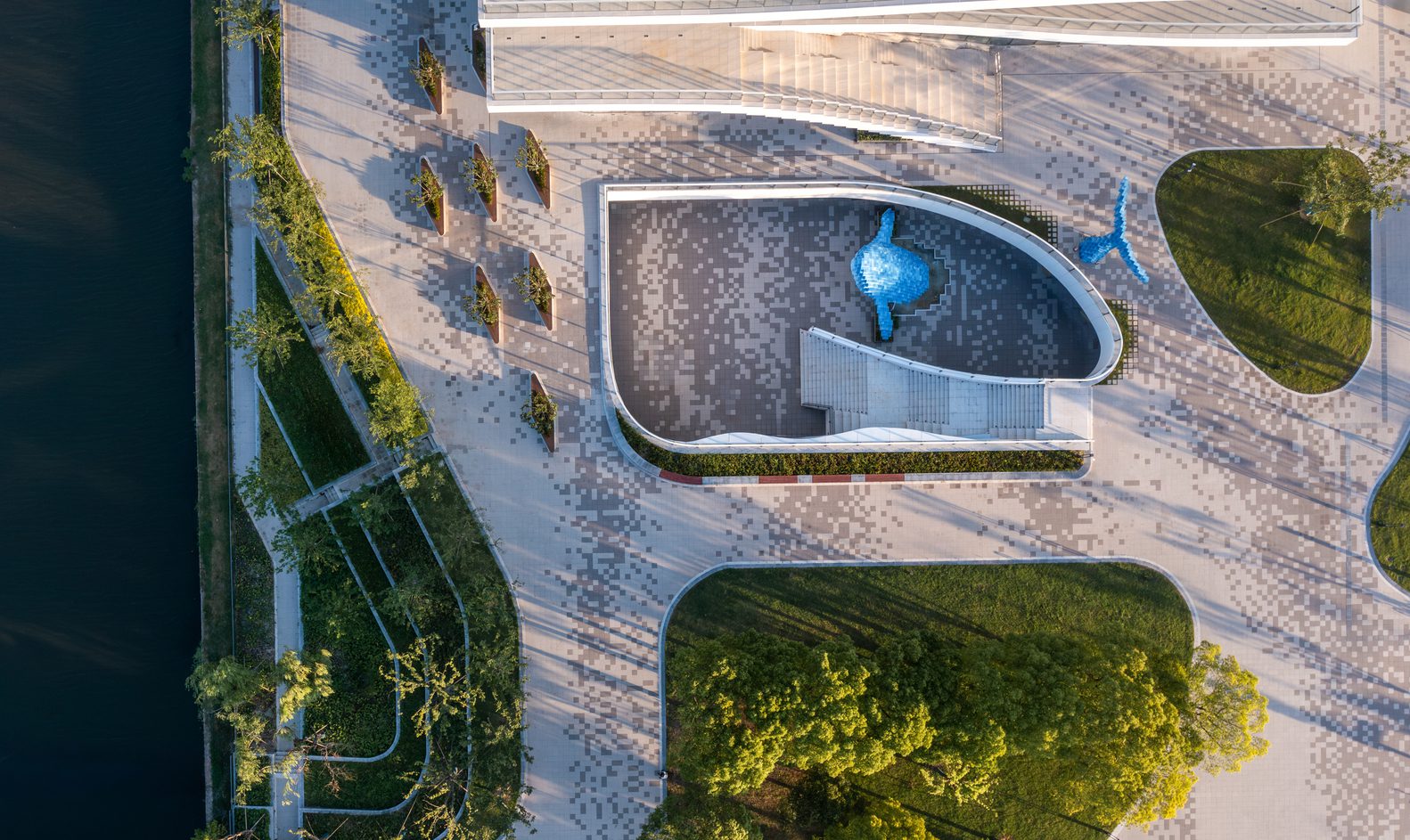
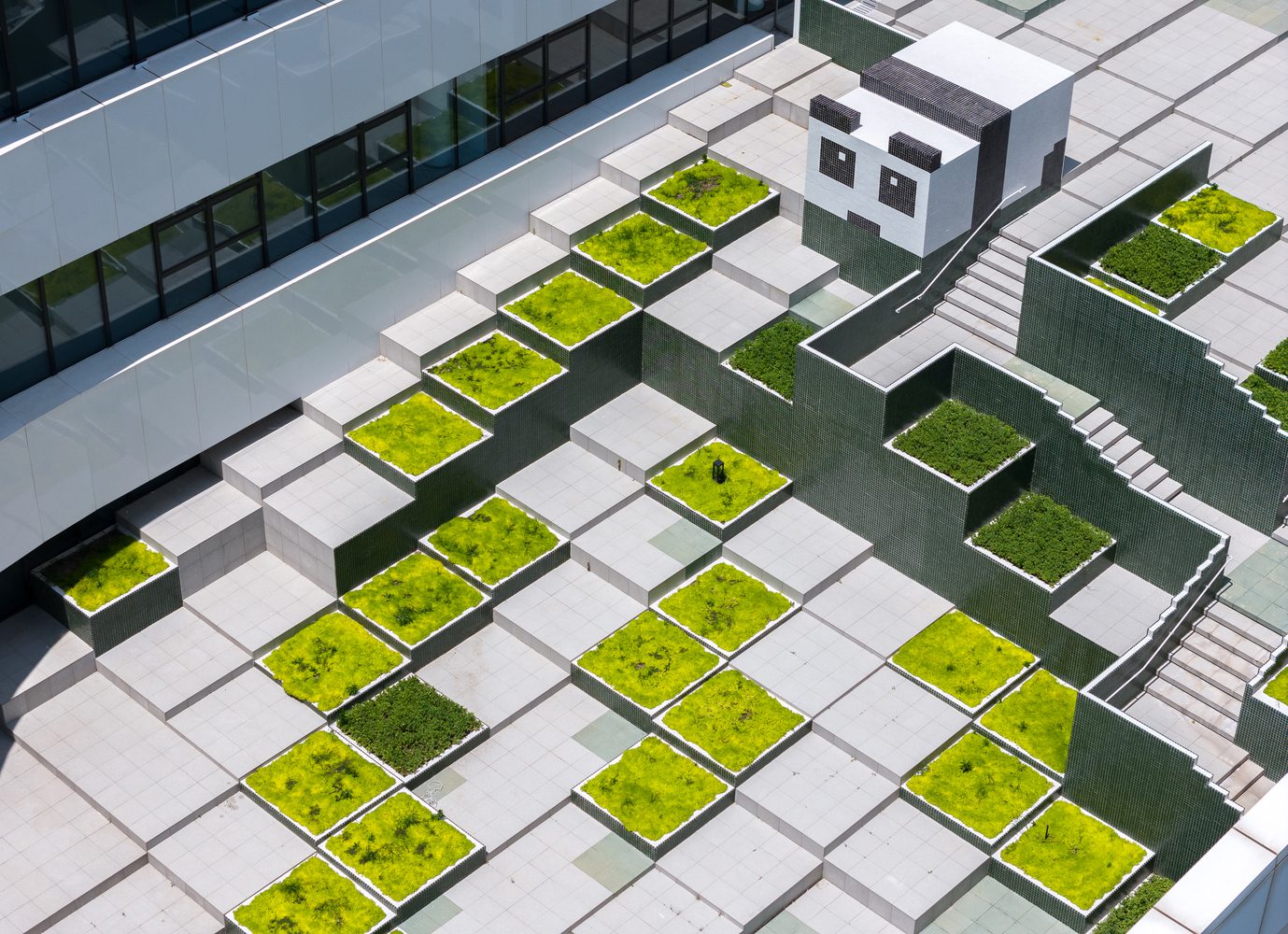
The designs of landscape, interior and floodlight are all using pixelated processing which is childlike innocence. Through the ingenious design and hiding building of mechanical and electrical facilities, the whole building becomes an exploration paradise with rich space and unique details.
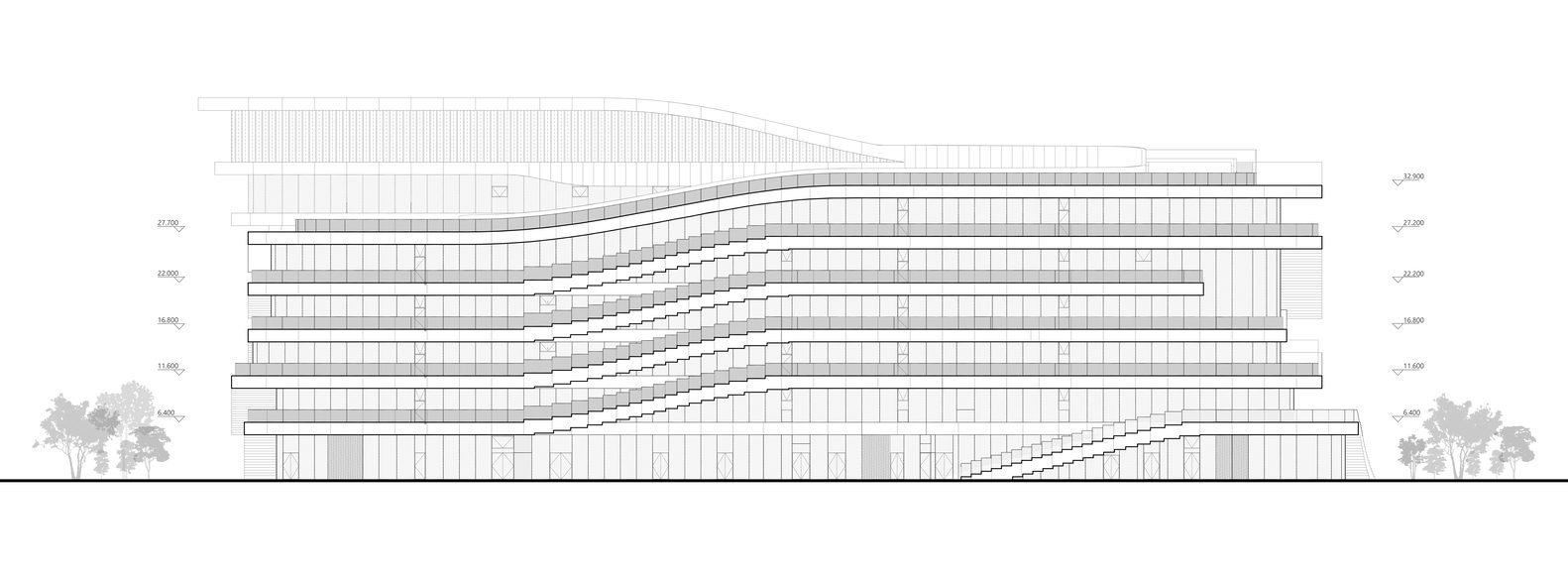
East facade
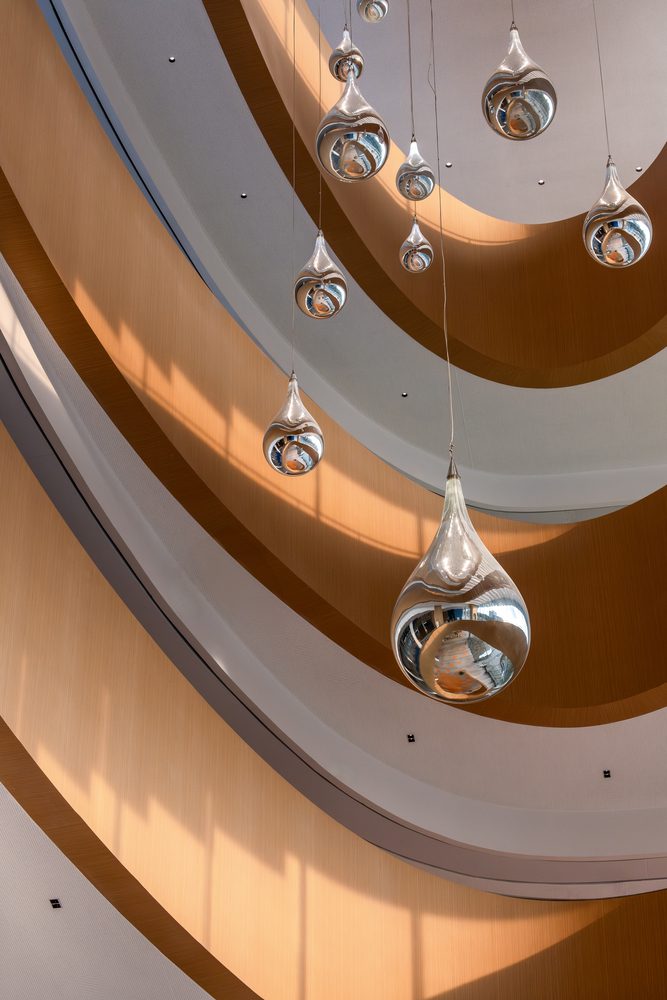
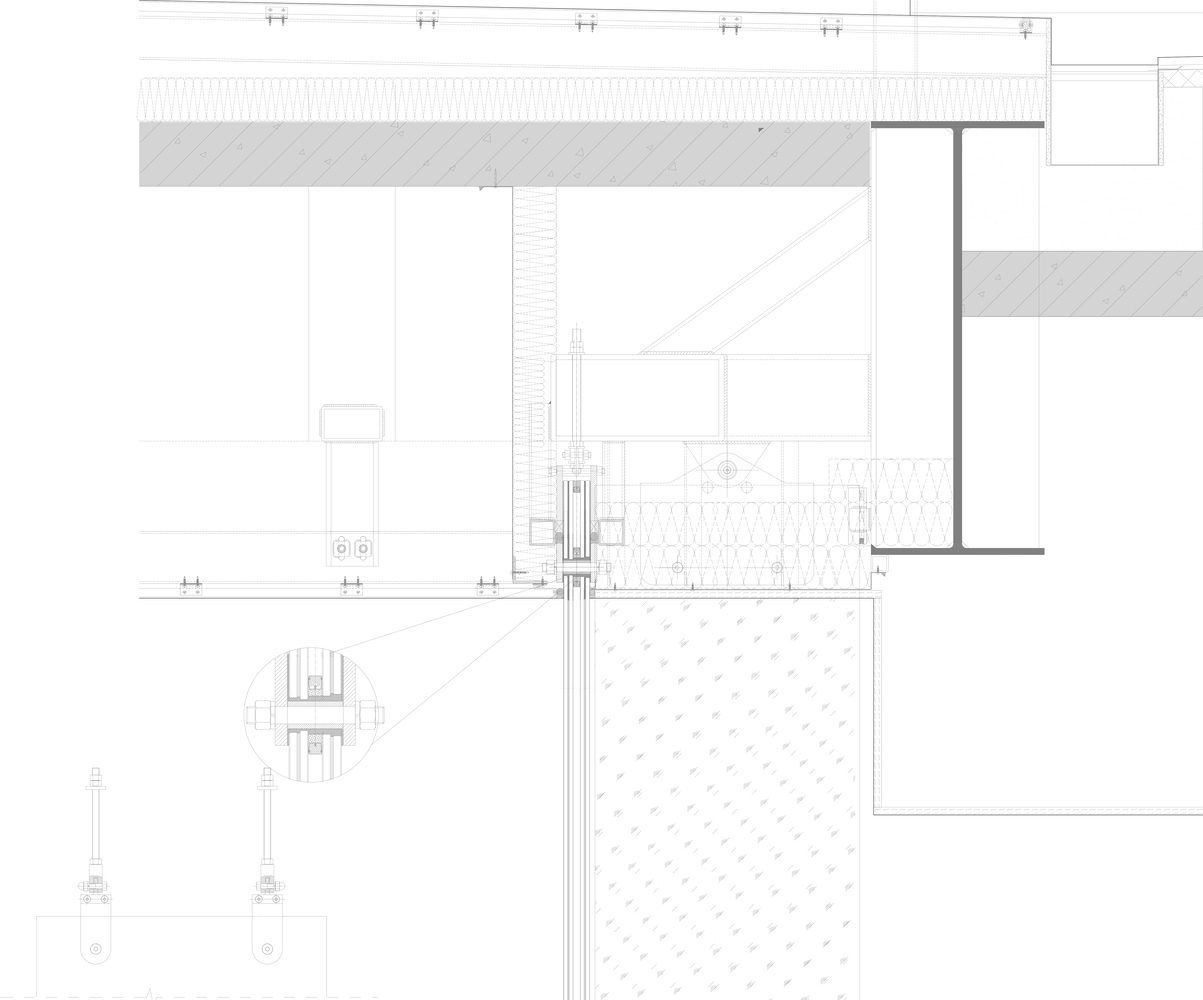
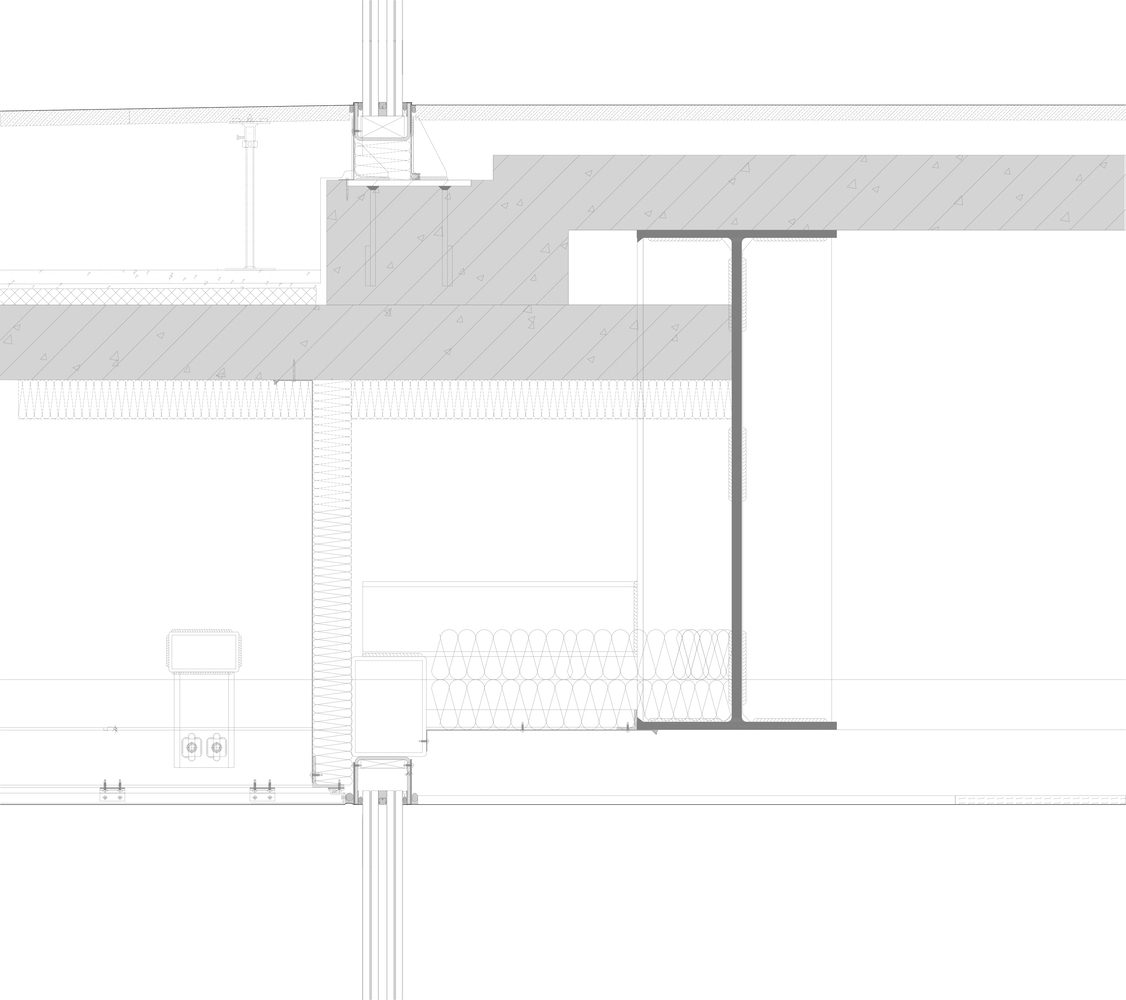
The free-form floor design makes the interior space highly flexible and free, and the space can flow in the vertical direction, creating an open, interactive and free activity space without blind spot, so that children in it can experience the freedom and fun of being in there. Through the optimization of the pipeline arrangement, making the mechanical and electrical pipeline through the beams, etc., We eliminated the electromechanical space between the ceiling and the main beam. so that the height of the indoor and outdoor ceiling is consistent, showing a smooth extension from the outdoor to the indoor ceiling.
Project Info:
- Country: Pudong, China
- Area: 59875 m²
- Year: 2024
-
Photographs: 3000images
-
Lead Architects: Su Chang, Tan Chunhui, Chen Di
-
Engineering: Arcplus Institute of Shanghai Architectural Design & Research(Co.,Ltd.)
-
Landscape: Arcplus Institute of Shanghai Architectural Design & Research(Co.,Ltd.)
- Clients: Shanghai Harbor City Development (Group) Co., Ltd