
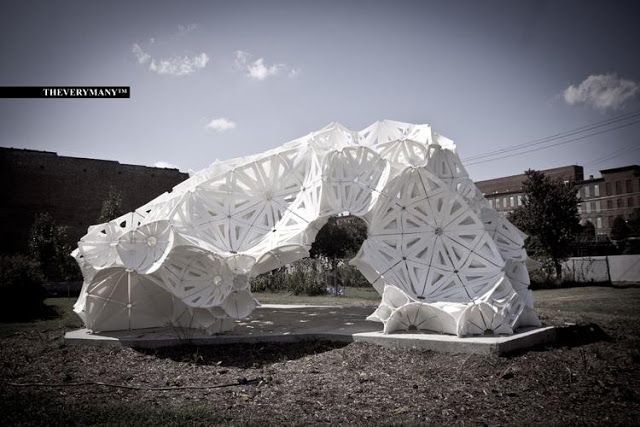
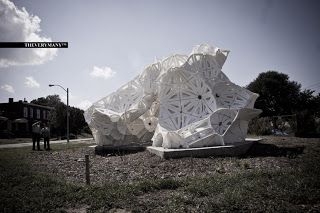
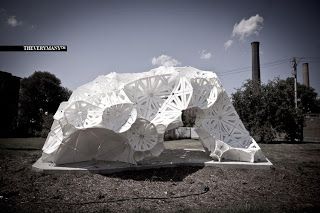
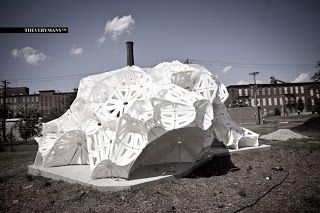
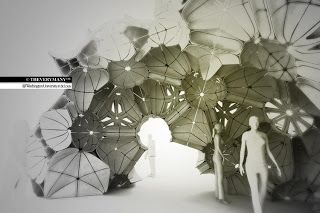
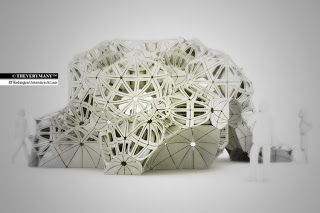
The Plasti(k) Pavilion is a collaboration between Washington University’s School of Architecture and The very many led by Marc Fornes. It’s an exploration into modern materials using algorithmic programs that generate a unique form.
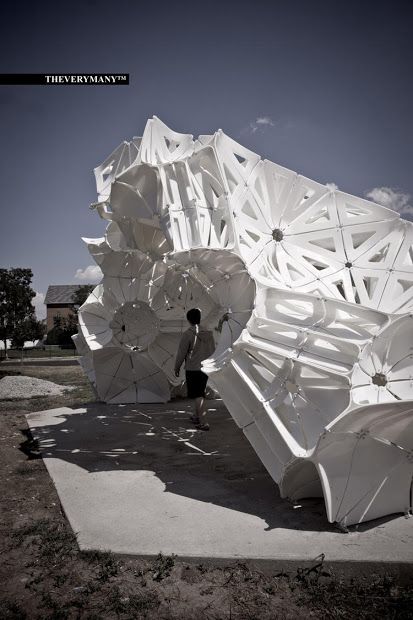
Courtesy of © Theverymany + Washington University
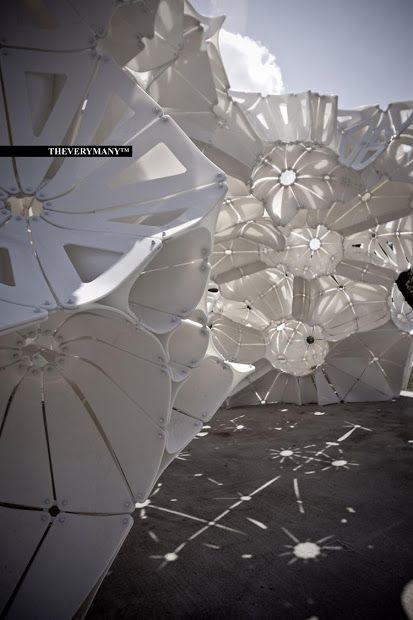
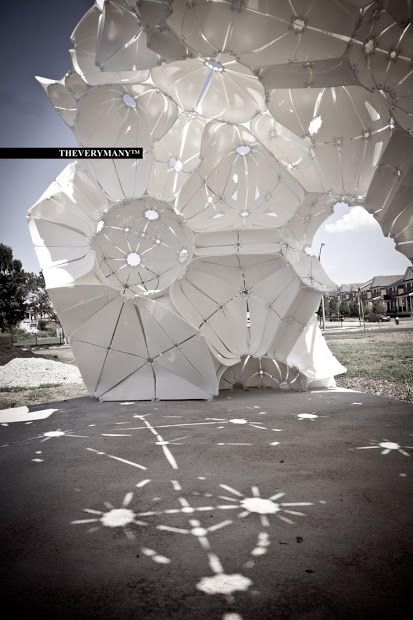
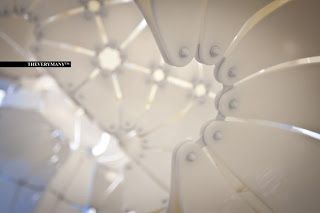
Through utilization of these scripted programs, the students and architects were able to generate a panelized shape that doubles as a structure.
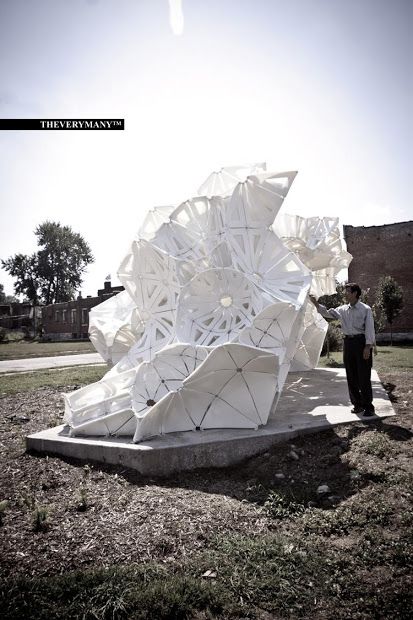
Courtesy of © Theverymany + Washington University
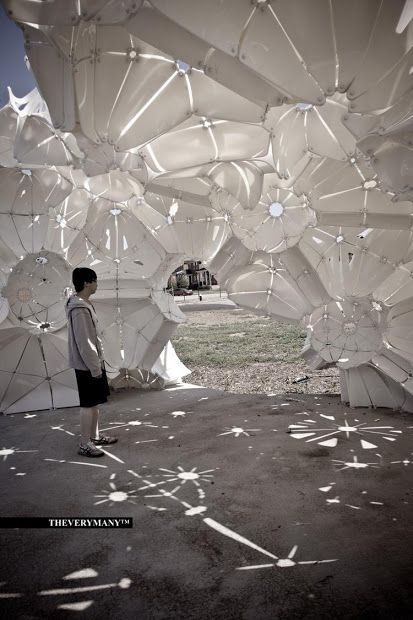
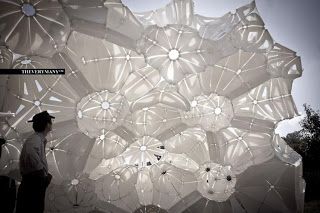
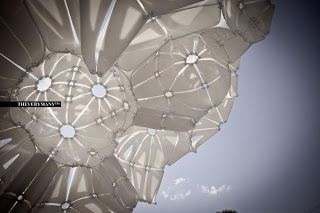
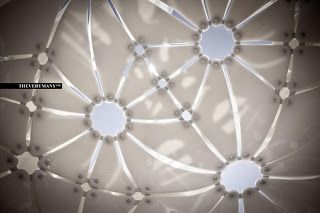
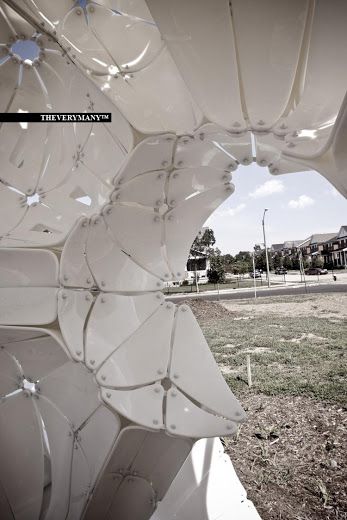
The perforations in the surface create kaleidoscopic patterns onto the ground depending on the time of the day and the direction of the light that hits it. Despite being manufactured from a seemingly thick plastic, its properties allow it to be somewhat translucent so that the various layers in the form are able to be seen. Consequently, the entire form seems foreign and complex yet light and beautiful.
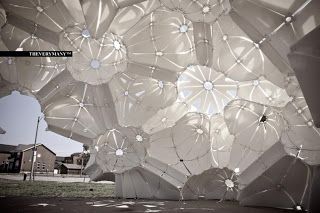
Courtesy of © Theverymany + Washington University


Anastasia Andreieva is an accomplished Architectural Projects Editor at Arch2O, bringing a unique blend of linguistic expertise and design enthusiasm to the team. Born and raised in Ukraine, she holds a Master’s degree in Languages from Taras Shevchenko National University of Kyiv. Her deep passion for architecture and visual storytelling led her to transition from translation and editorial roles into the world of design media. With a keen eye for conceptual clarity and narrative structure, Anastasia curates and presents global architectural projects with precision and flair. She is particularly drawn to parametric and digital design, cultural context, and emerging voices in architecture. When I’m not analyzing the latest architectural trends, you’ll probably find me searching for hidden gems in cityscapes or appreciating the beauty of well-crafted spaces. After all, great design—like great connections—can be found in the most unexpected places. Speaking of connections, because architecture isn’t the only thing that brings people together.