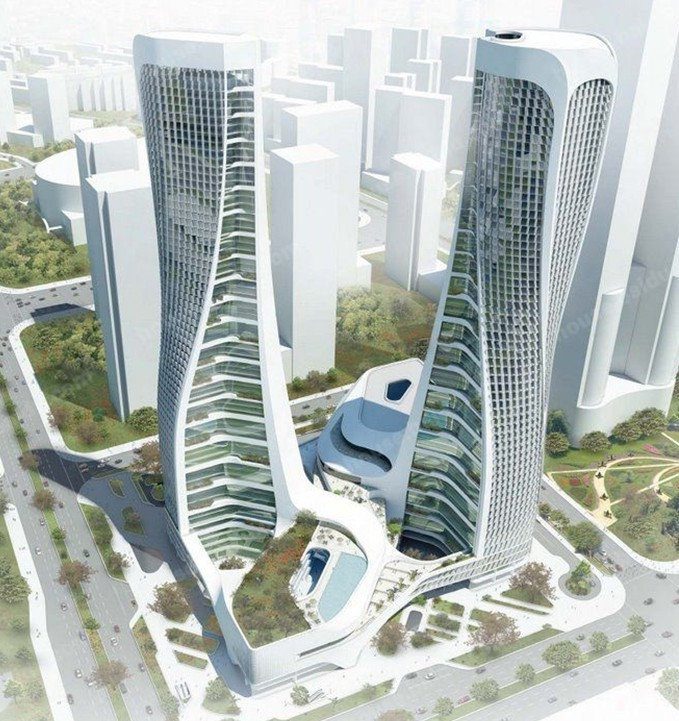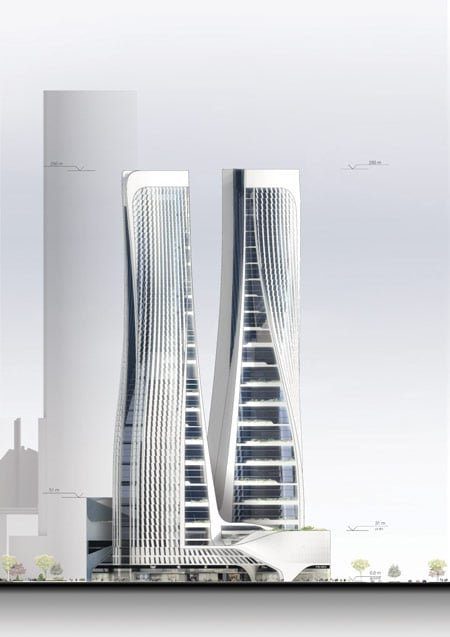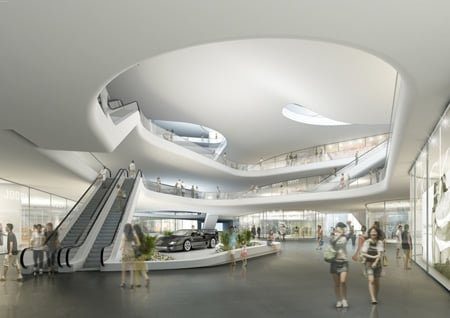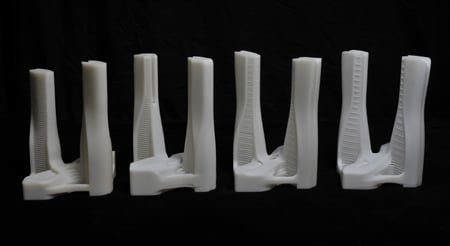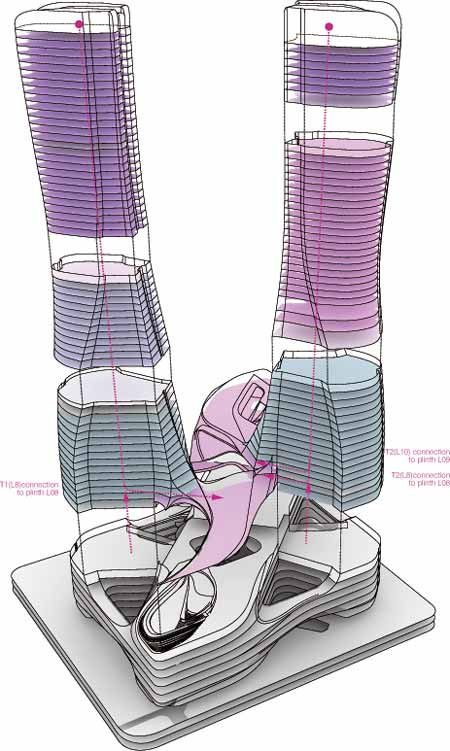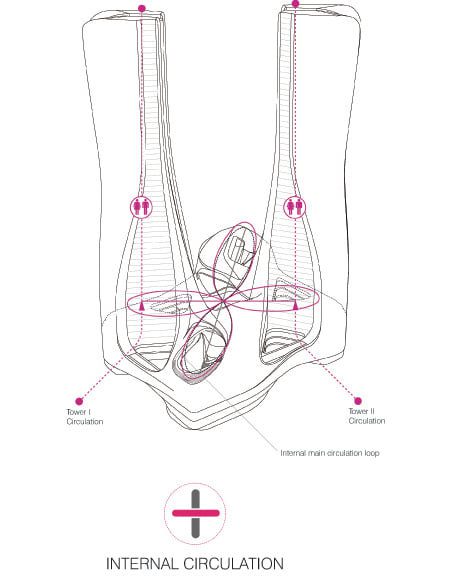


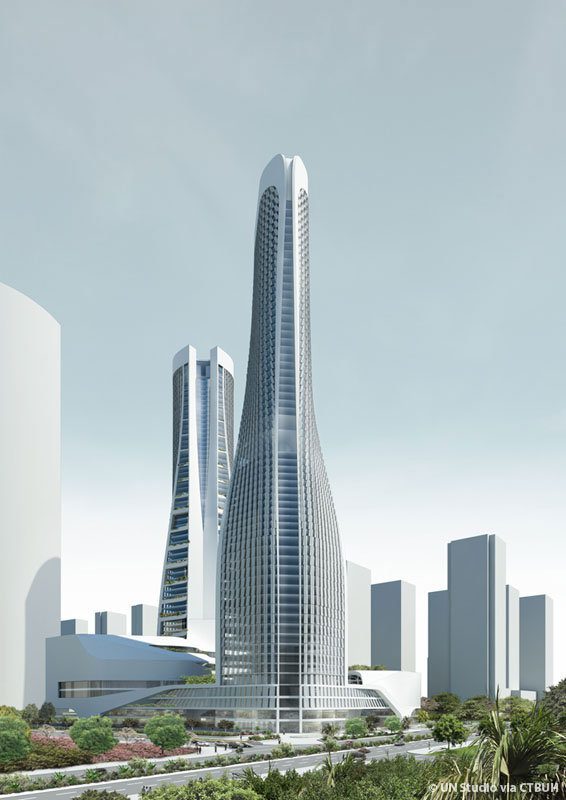
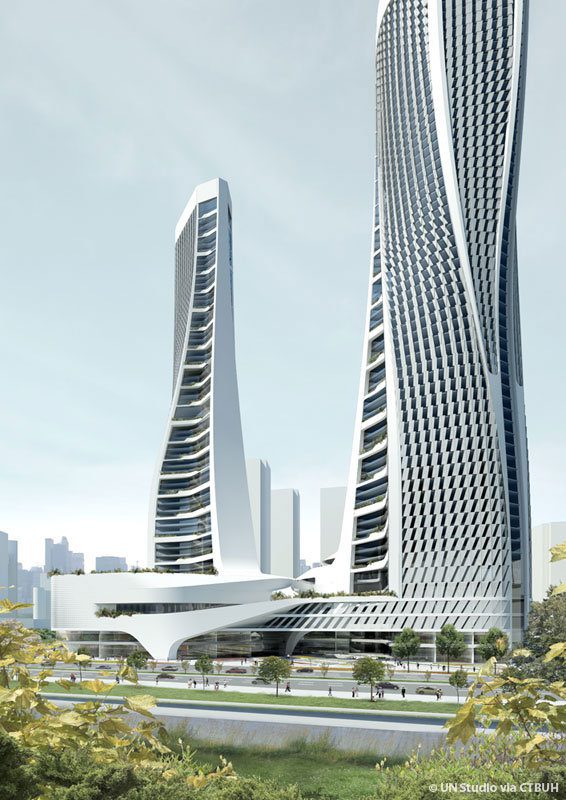
Raffles City Hangzhou development plan located in Hangzhou, China has been revealed by Ben van Berkel of UNStudio. The sixty-story building incorporates the surrounding landscape of a city that is renown for its beauty and natural scenery, particularly in the West Lake area. The landscape twists and turns and is extruded upwards to create the winding façade. UNStudio’s Raffles City concept is focused on integrating a multi-use building and plan into an urban context; it houses retail spaces, offices, housing, and hotels and is due for completion in 2012.
Courtesy of UN Studio
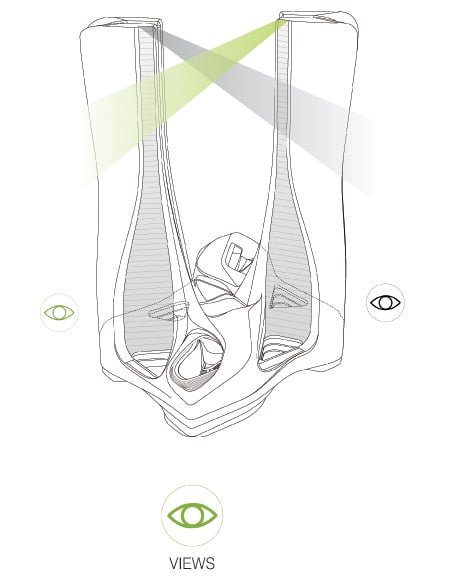
After four years of planning and construction, the new structure will top off at exactly 60 stories providing a total area of almost 300,000 square meters. The development will sit on a plinth that will help it to appear as if it is emerging from the landscape. Raffles City is renown for its prosperity and will now have a building with a strong identity and individual character to show just that. At a height of 60-stories, the edifice will provide views to both the West Lake area as well as the Qiantang River.
Courtesy of UN Studio
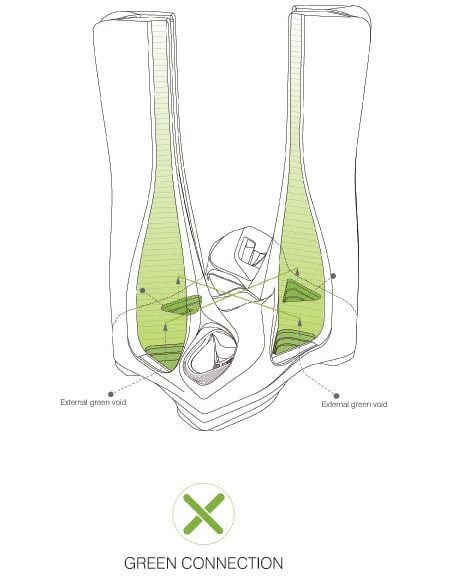
Hoping to receive a LEED Gold certification, UNStudio has implemented a “green” approach as part of their design philosophy. Energy demands are ameliorated by use of natural ventilation while urban sustainability is addressed by allowing the building to have constant activity throughout 24/7.
Project info:
Architects: UNStudio
Country: China, Hangzhou
Year: 2009
Photographs: Courtesy of UNStudio