

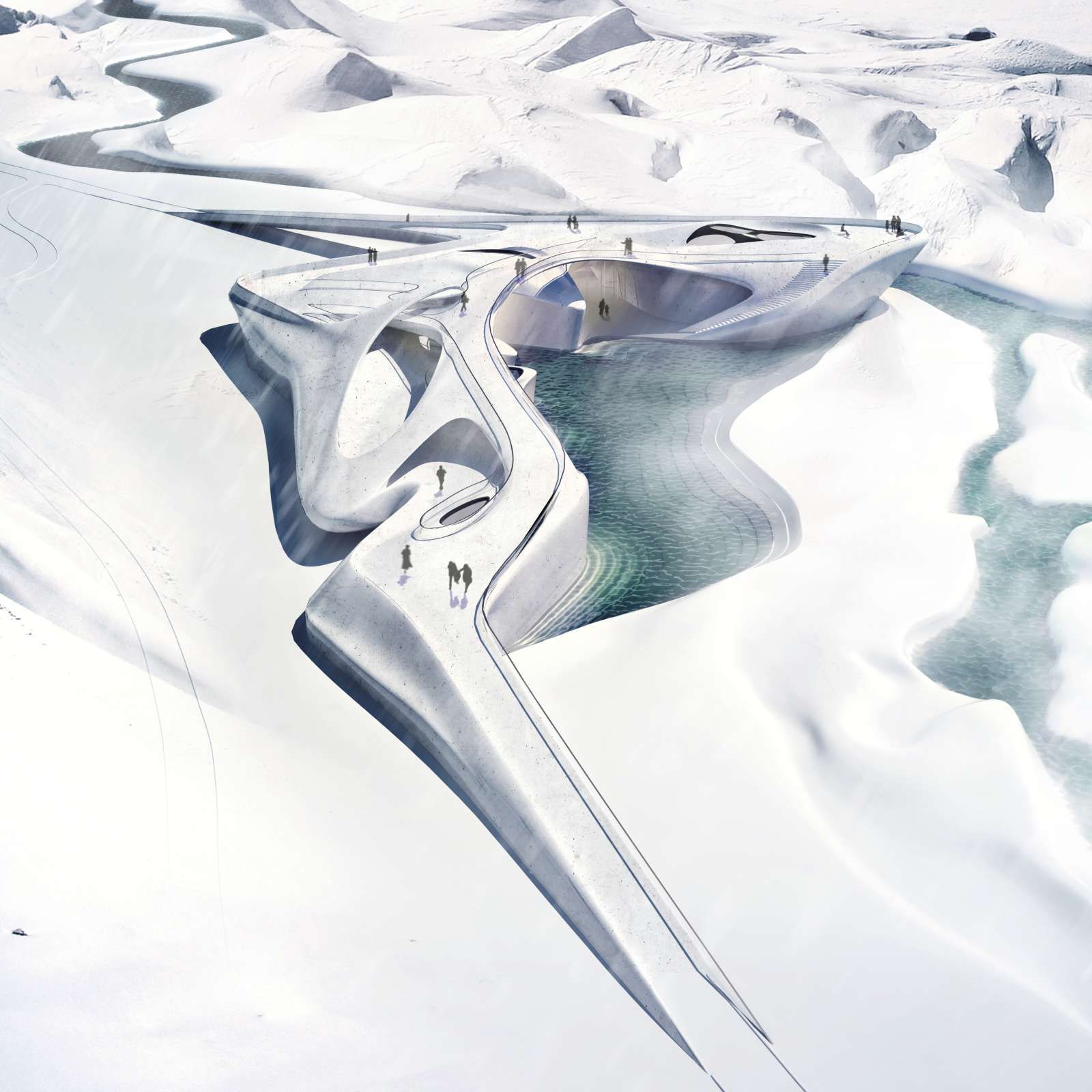
Architecture graduate Matthias Sütterlin presents us with his Diploma Project – the Center for Glaciology and wants to convey a strong message by providing visitors with the opportunity to know more about what is happening with glaciers.
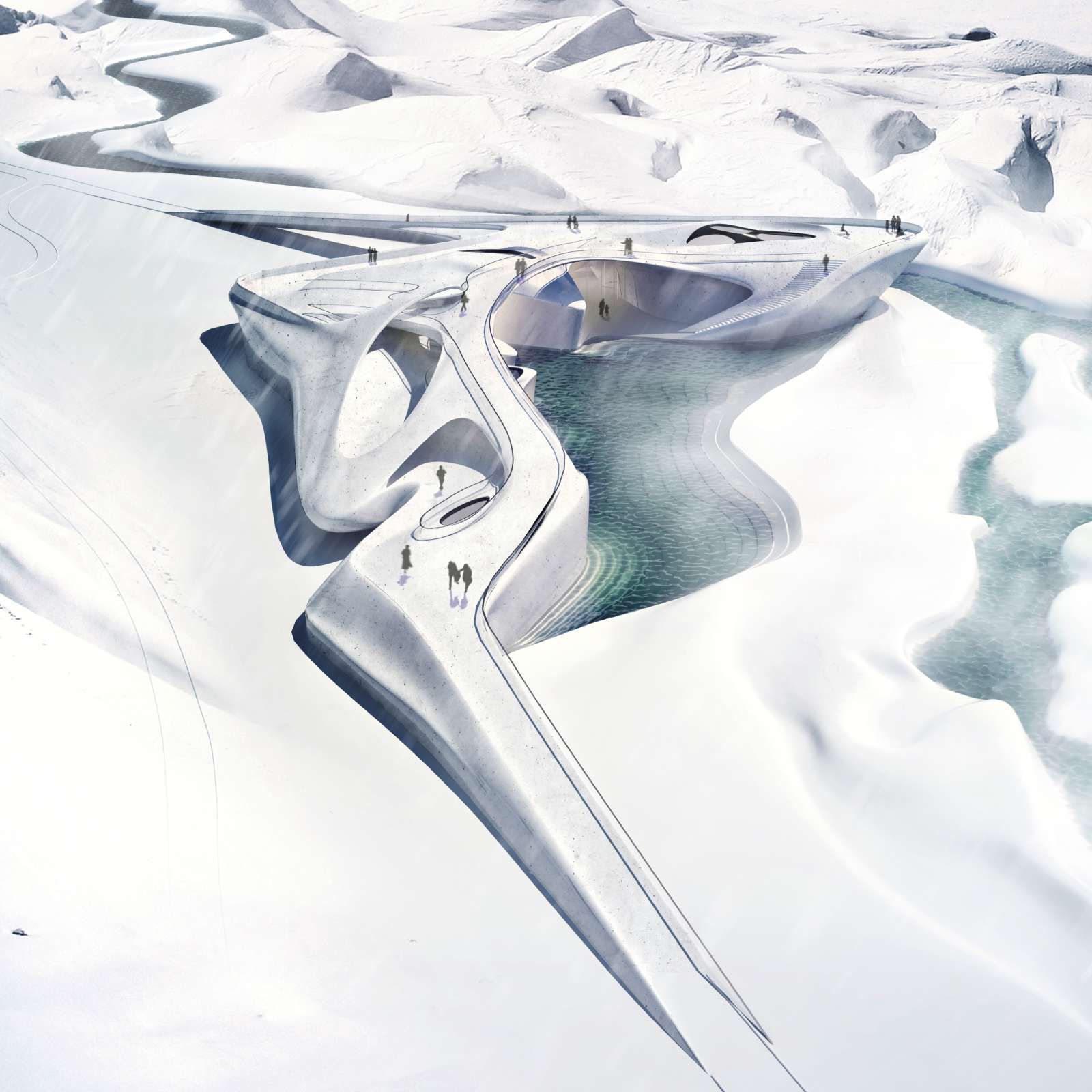
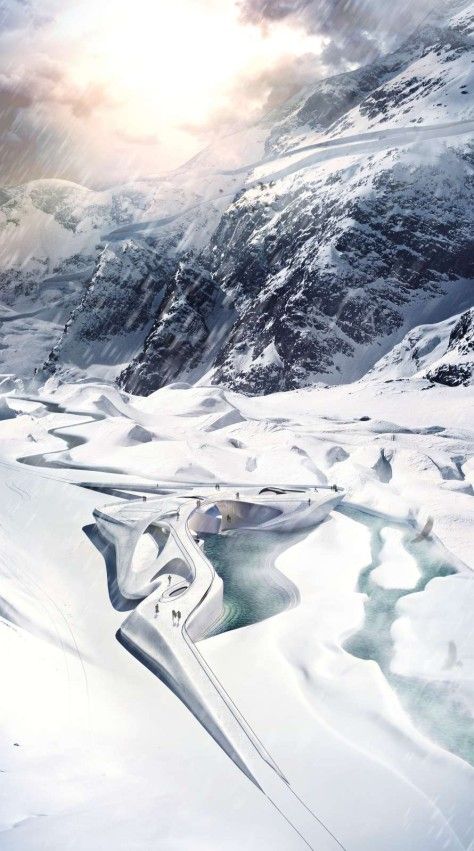
According to statistical observations, there has been a steady decrease in glaciers since mid-nineteenth century and in his project Matthias underlines one key factor for that – global warming. For the past 150 years the Alps have lost 1/3 of its surface. The risk to which glaciers in the Alps are exposed is somewhat beautifully translated into his final visuals. Matthias’ inspiration comes from the idea that glaciers – these pieces of eternal ice, have attracted visitors for centuries, telling stories by forming, shaping and altering landscapes. ‘Nothing is eternal, nothing stays’, yet the architecture student derives his conceptual thinking beyond that in order to give the glaciers’ transitional momentum a long-lasting shape and landscape there to be inhabited.
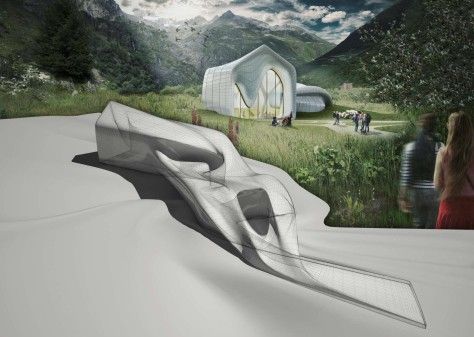
The loss of glacier surfaces that Matthias has observed in his research becomes a focal point in his thesis. Therefore designing a center for researching and studying about glaciers is the outcome. The centre offers experience, clarity and research in glaciology as a science that plays a crucial role both in climate study, and in society. The so-named ‘Glaciology’ centre is aimed to provide a platform for researchers, students and third parties for knowledge sharing within the geosciences.
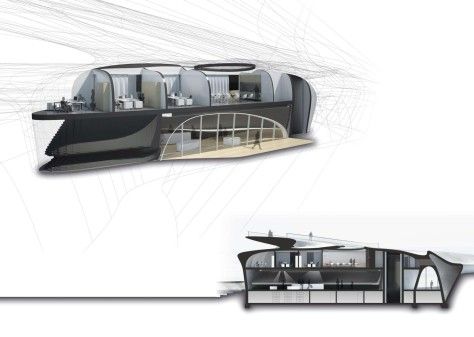
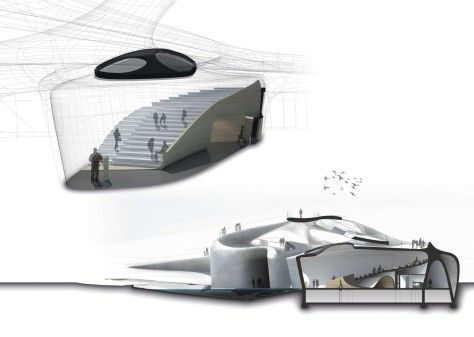
section
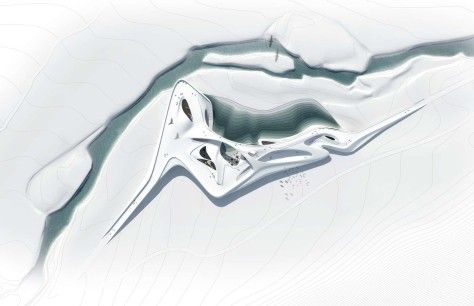
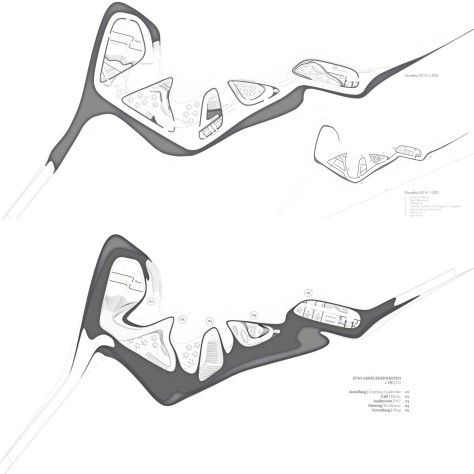
Extravagant in its exterior shape, the building attracts the eye with its smooth organic curves – they naturally set within the whole landscape and follow the riverbank. Those forms beautifully curve towards the interior and are reminiscent of a glacier tongue. This flow of shape and form is orchestrated to invite visitors inside. Five main organic bodies are given different functions: an auditorium and meeting rooms, management space, an exhibition area and a café. The exhibition and café area are merged together to form a larger social environment and are dominated by a floating staircase and a bridge. The restroom facilities are carefully positioned at the back of the auditorium’s seating and staircase. The skylights offer a direct view to the outside landscape that offers a fantastical panorama of the Alps.
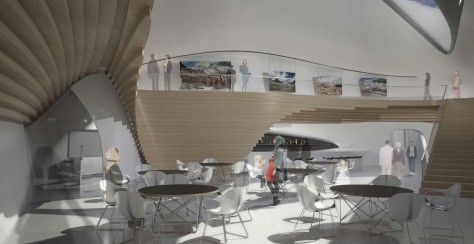
A sense of dynamism is achieved through the connections and slopes between stairs and an arch bridge – those can be visually stimulating for more profound spatial experiences. Being interviewed by ACO, Matthias Sütterlin shares an emotional connection with the glacier inspiration – him and his dad, an avid climber, would often go climbing in the Alpes and Matthias has grown admiring the fascinating beauty of the glaciers. To him, they are a reflection of the development after the Industrial revolution and tell the story of the modern man. Therefore, he wishes to transform his project not only into a knowledge-giving research centre, but to give it a memorial status to preserve the tremendousness of the glaciers with.


Anastasia Andreieva is an accomplished Architectural Projects Editor at Arch2O, bringing a unique blend of linguistic expertise and design enthusiasm to the team. Born and raised in Ukraine, she holds a Master’s degree in Languages from Taras Shevchenko National University of Kyiv. Her deep passion for architecture and visual storytelling led her to transition from translation and editorial roles into the world of design media. With a keen eye for conceptual clarity and narrative structure, Anastasia curates and presents global architectural projects with precision and flair. She is particularly drawn to parametric and digital design, cultural context, and emerging voices in architecture. When I’m not analyzing the latest architectural trends, you’ll probably find me searching for hidden gems in cityscapes or appreciating the beauty of well-crafted spaces. After all, great design—like great connections—can be found in the most unexpected places. Speaking of connections, because architecture isn’t the only thing that brings people together.