

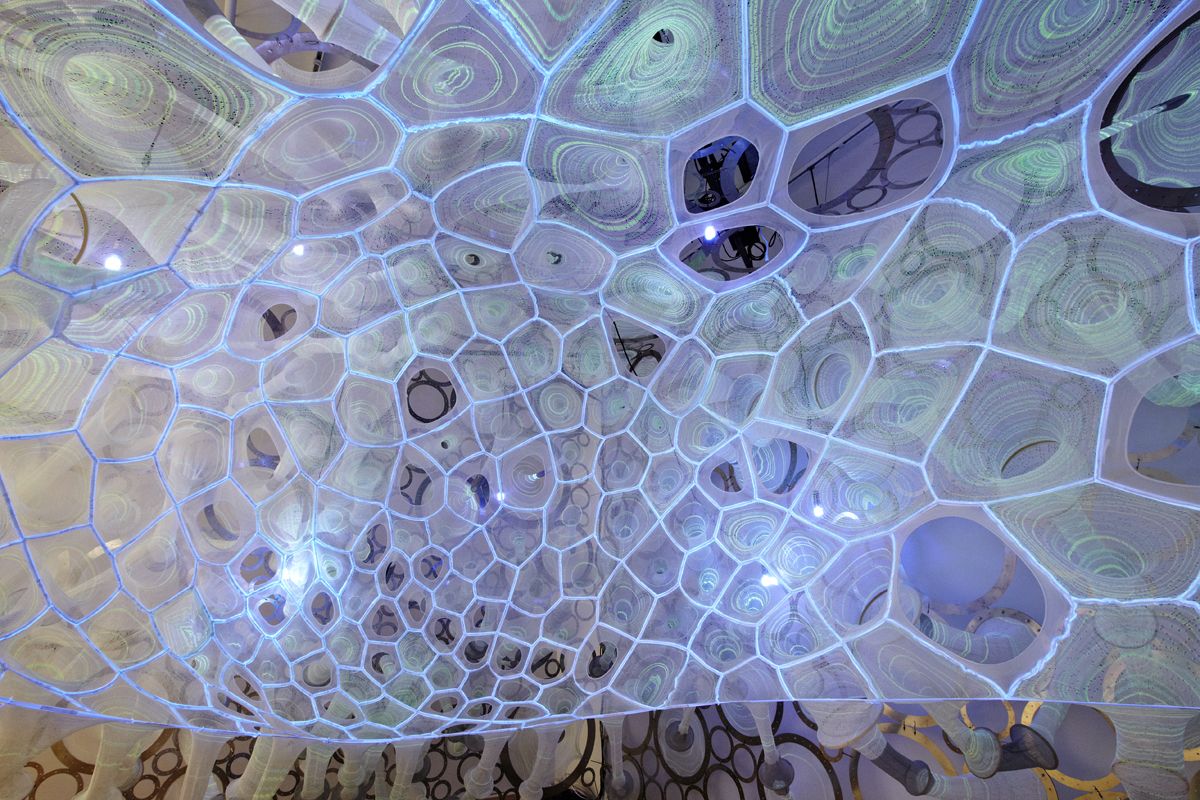
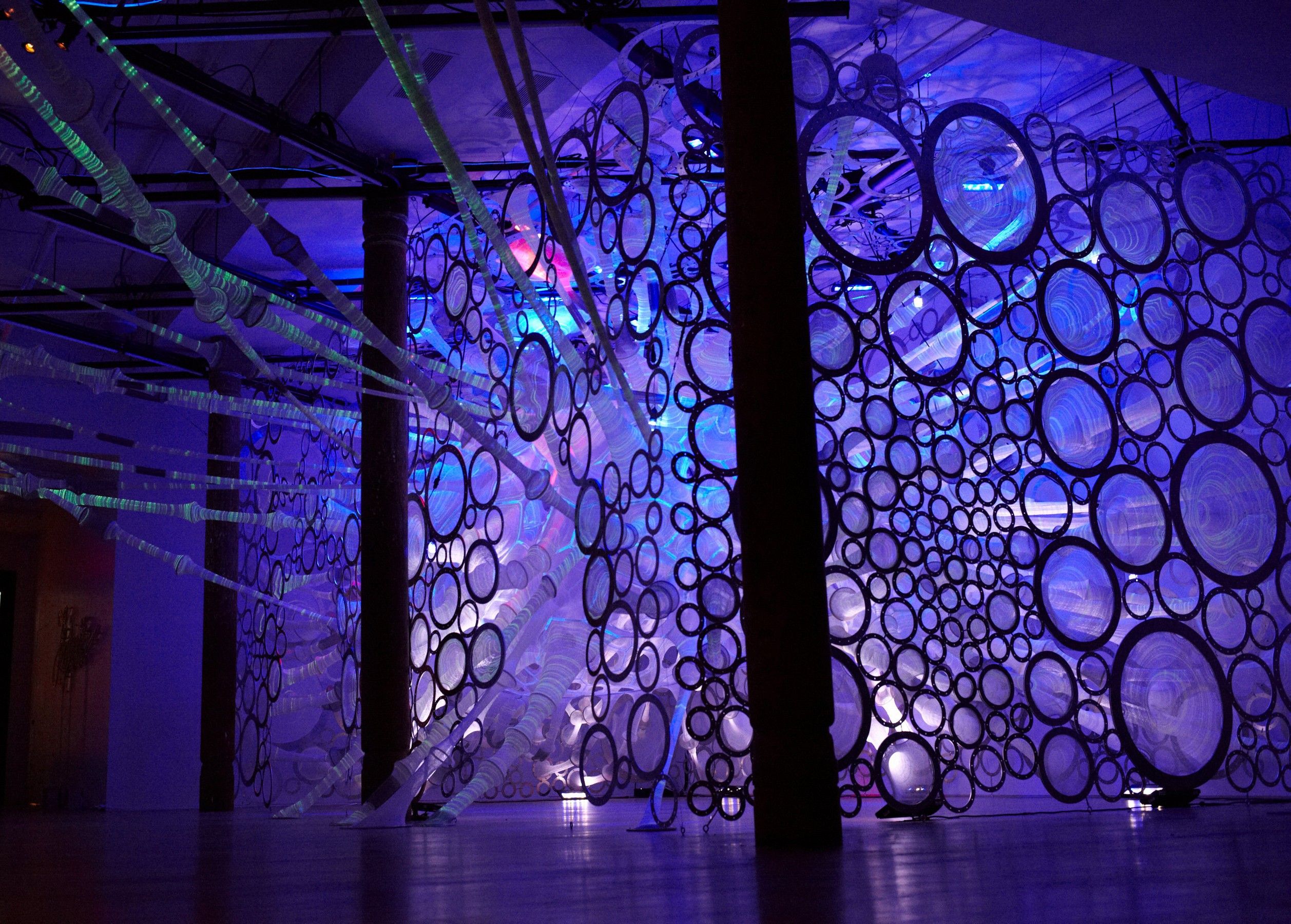
The thread pavilion was created as apart of Nike’s Flyknit collective. The group commissioned six artists, to create artwork based on Nike’s new Flyknit technology. The work produced was on display for a period of six weeks at the Nike’s Bowery Stadium.
Courtesy of © Jenny Sabin’s
Her work focuses on the intersection of art, architecture, design and science. This is evident in the scale at which her work represents, working fro the molecular level to building structures.
Courtesy of © Jenny Sabin’s
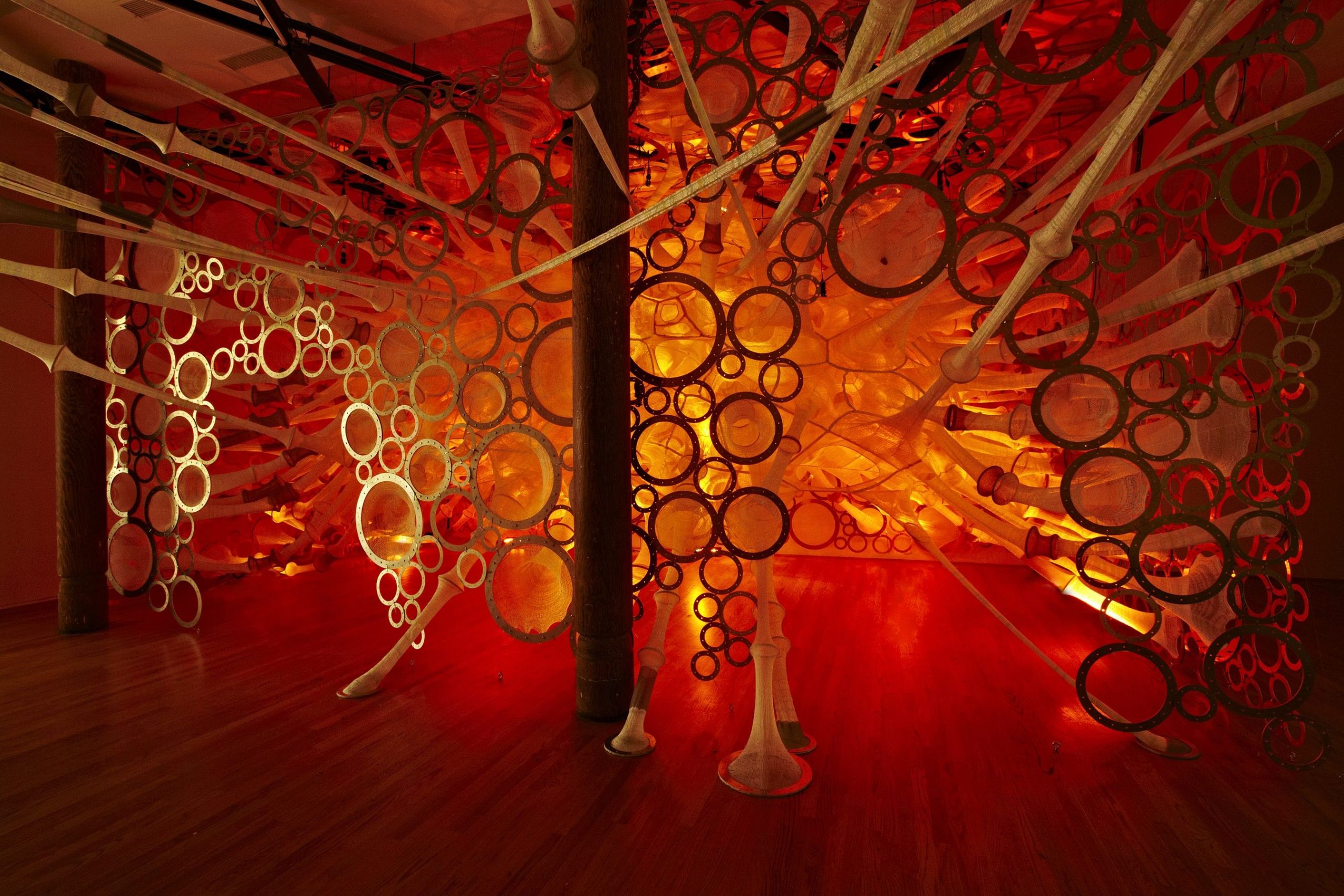
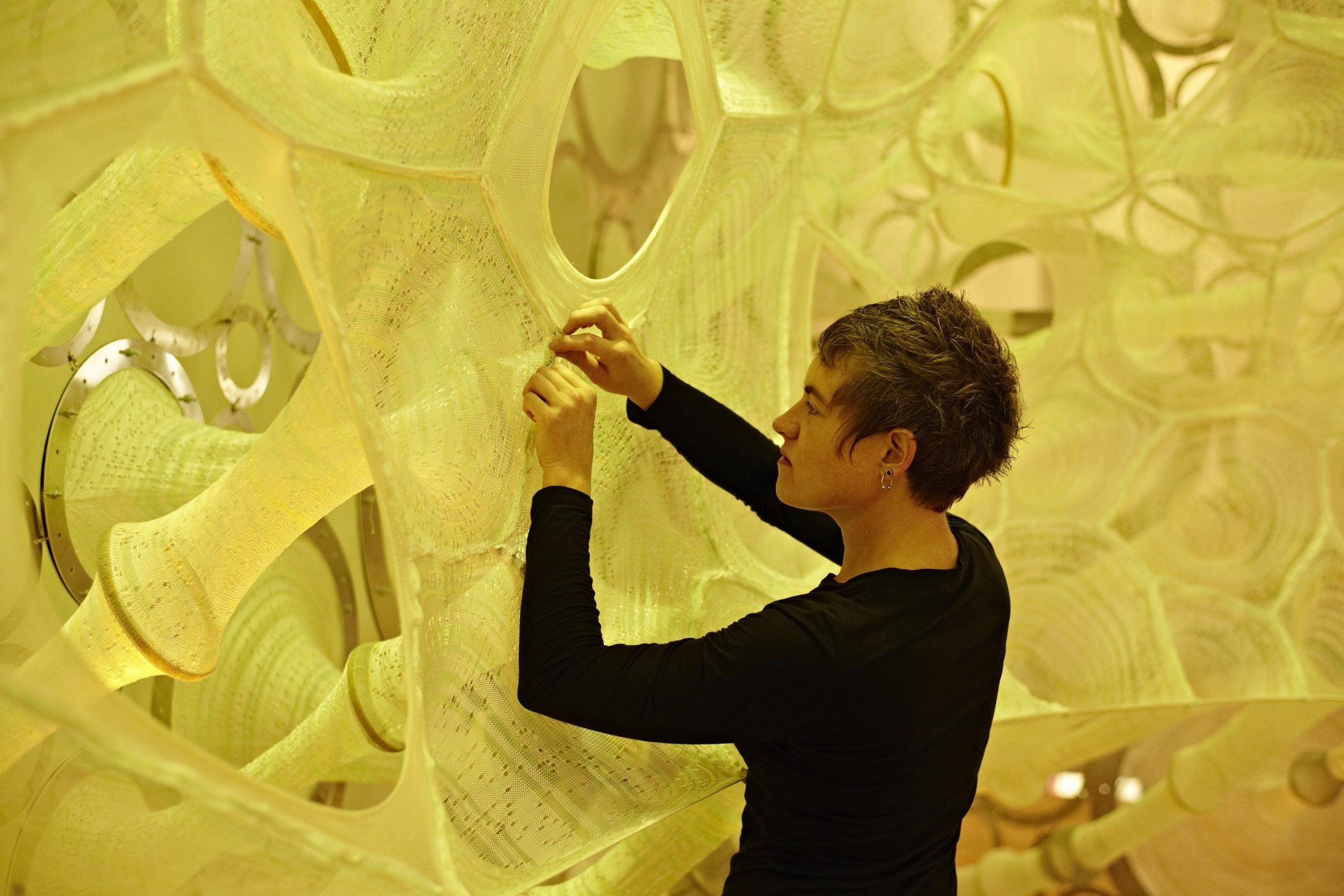
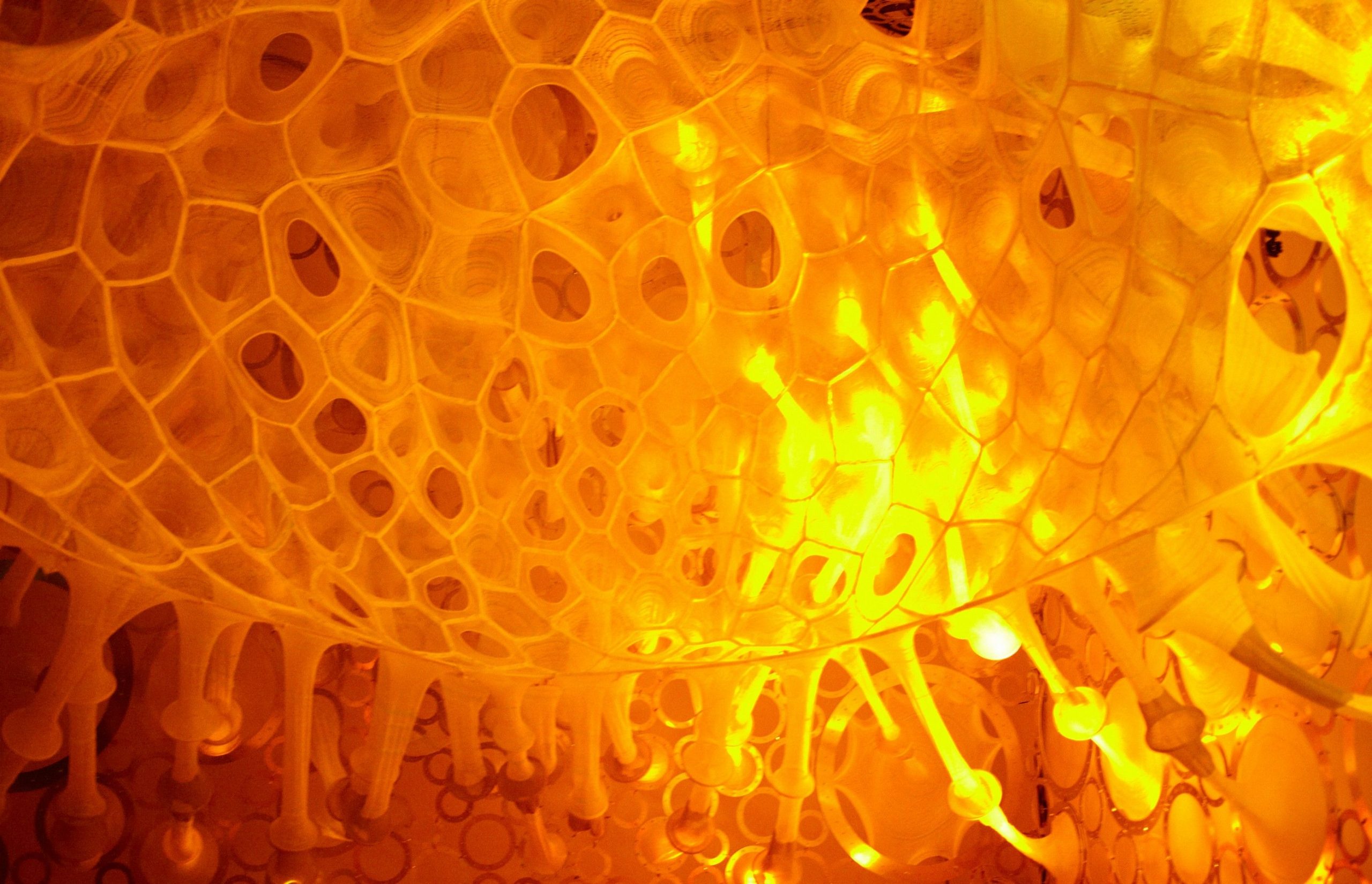
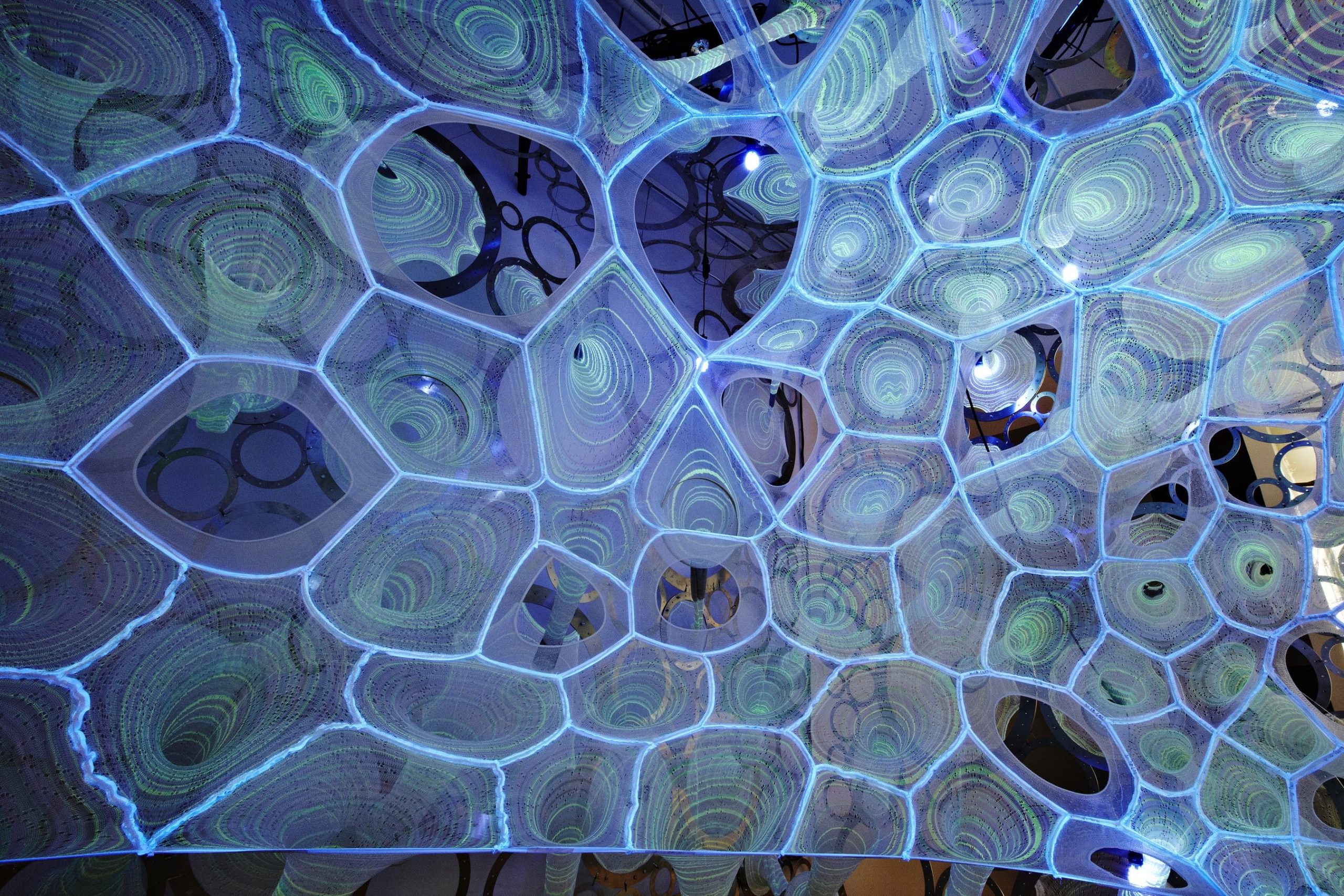
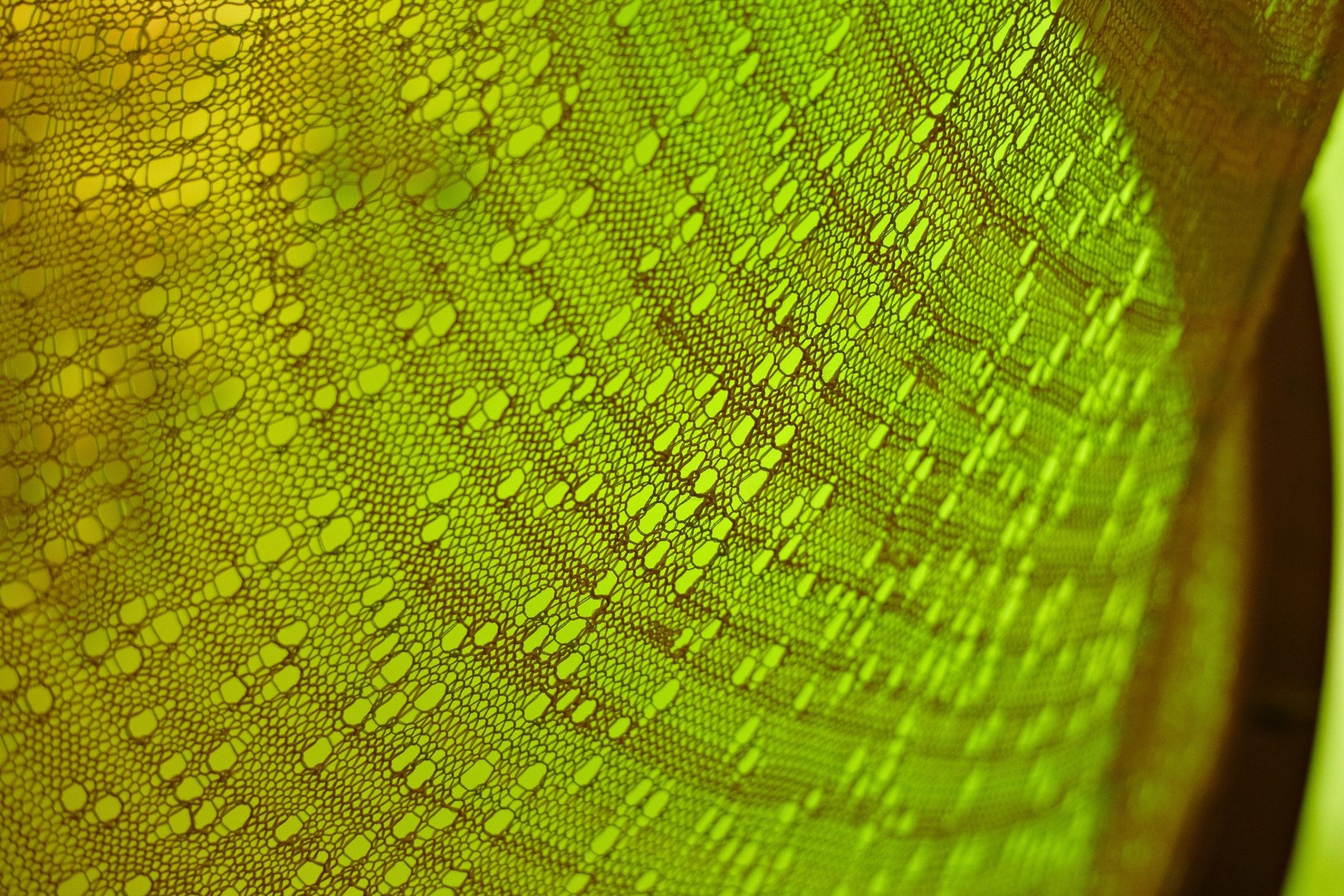
For her work she starts by gathering data from the Nike fuel band, which are a group of New York workers. This information is then analyzed and mapped in order to create a visual structure, through the process of weaving threads into cylindrical segments. These segments are then stitched together forming the pavilion. Two types of threads are used in the construction process, one being solar active and the other reflective photo luminescent.
Courtesy of © Jenny Sabin’s
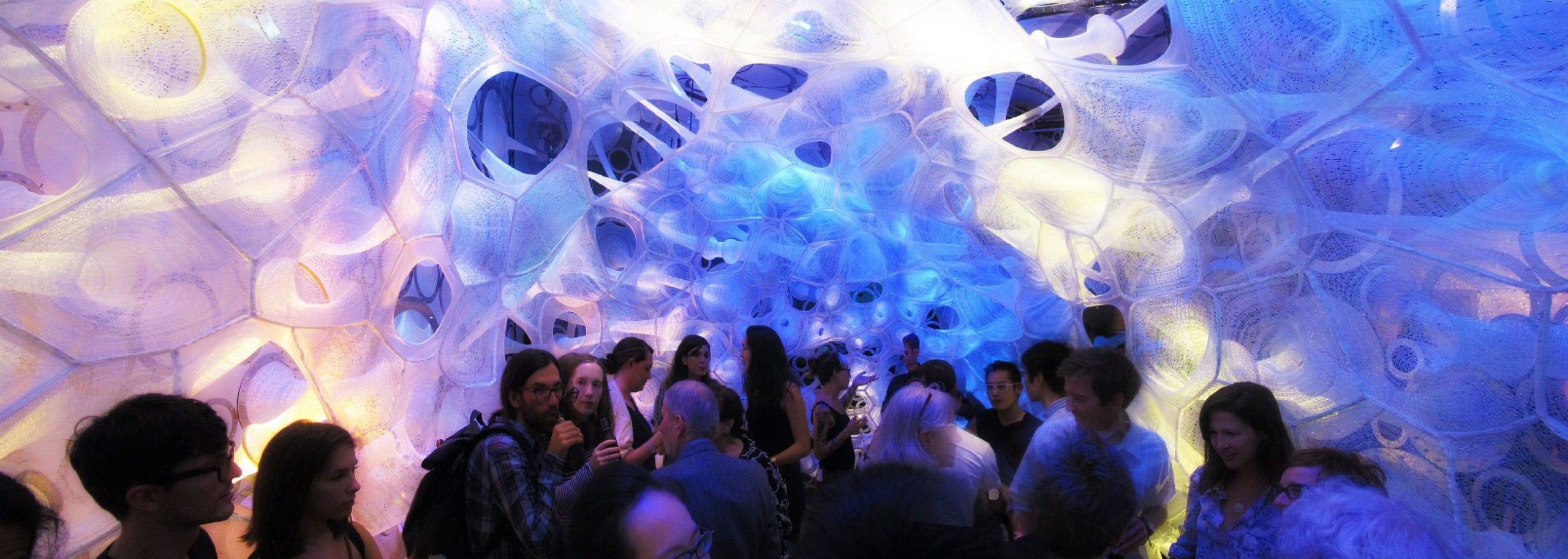
Within the pavilion, the lighting system changes color every five minutes representing various times of day. The color transition starts from white then to green, then blue and finishing with an orange color.
Courtesy of © Jenny Sabin’s

Anastasia Andreieva is an accomplished Architectural Projects Editor at Arch2O, bringing a unique blend of linguistic expertise and design enthusiasm to the team. Born and raised in Ukraine, she holds a Master’s degree in Languages from Taras Shevchenko National University of Kyiv. Her deep passion for architecture and visual storytelling led her to transition from translation and editorial roles into the world of design media. With a keen eye for conceptual clarity and narrative structure, Anastasia curates and presents global architectural projects with precision and flair. She is particularly drawn to parametric and digital design, cultural context, and emerging voices in architecture. When I’m not analyzing the latest architectural trends, you’ll probably find me searching for hidden gems in cityscapes or appreciating the beauty of well-crafted spaces. After all, great design—like great connections—can be found in the most unexpected places. Speaking of connections, because architecture isn’t the only thing that brings people together.