

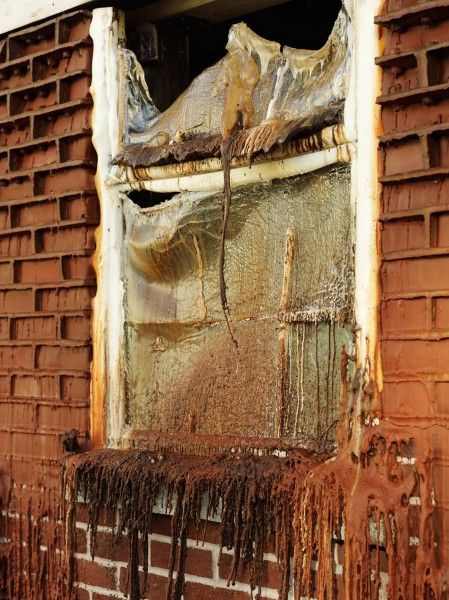
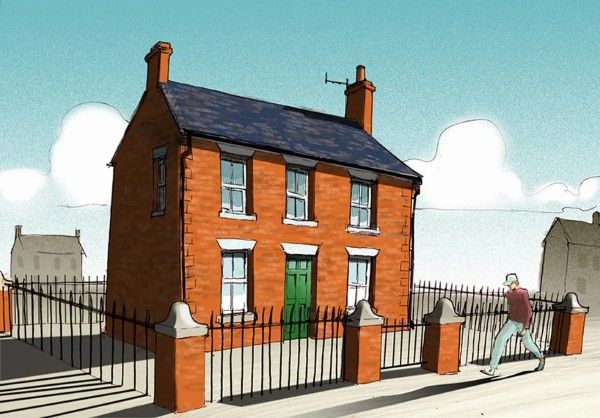
The melting façade. The designer explained the state of the building saying “There were barely any floorboards, it’s very fire-damaged at the back and water-damaged at the front, and had fallen into ruin,”
“I like the contradiction of taking a subject that’s dark or depressing or bleak, something like dereliction which suggests something quite negative socially but also aesthetically, and delivering a playful experience within that context,” the designer explained. “I don’t think it’s a negative comment on society, it’s just trying to give society a positive experience.”
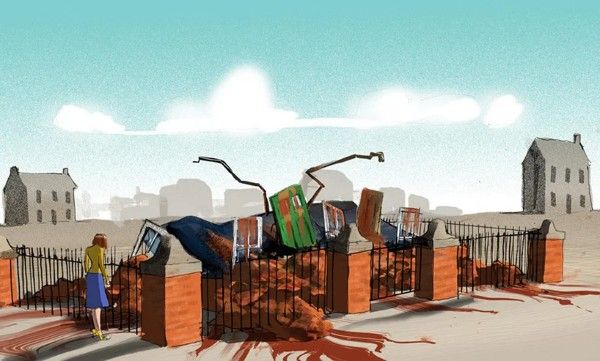
I don’t believe that the experience the designer wanted to deliver is reached. For one thing, there is a fence around the building which gives the sense that this is a restricted territory. This fence would set boarders between the people and the building not allowing them to interact.

photo by tommophoto
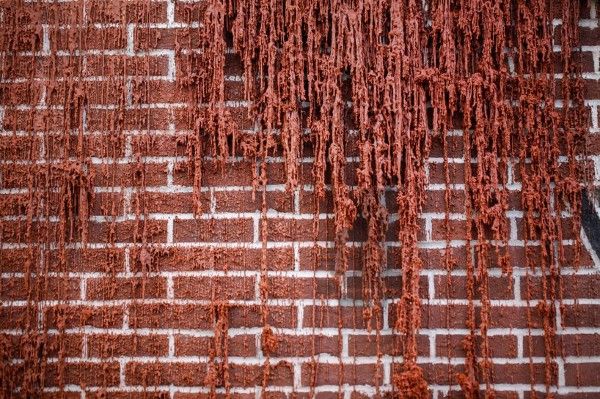
The designer has reached creativity in construction. The technique used to build this curved brick wall was smart and creative.
On the other hand, if we would talk from the artistic perspective, I don’t feel that the “melting façade” is really melting. I see it like imitating architecture not expressing art. For me, melting should be expressed in a sense of fluidity. However, when looking at the stiff static brick façade, I don’t feel that sense. In addition, the art work missed harmony. The whole building speaks a total different language from the façade.
The connection between the façade and the building itself is kind of a weak connection. It feels like just attaching the façade to the building by sticking it. I believe that art is all about harmony. The piece of art is treated as one piece even if it should express different feelings.
By Rehab Ayman Lotfy Abdel Fatah
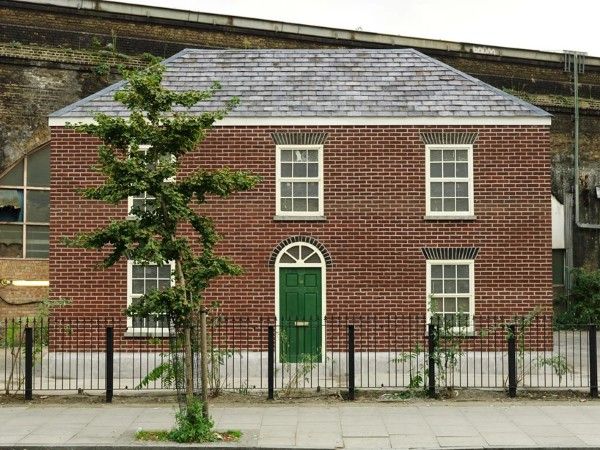
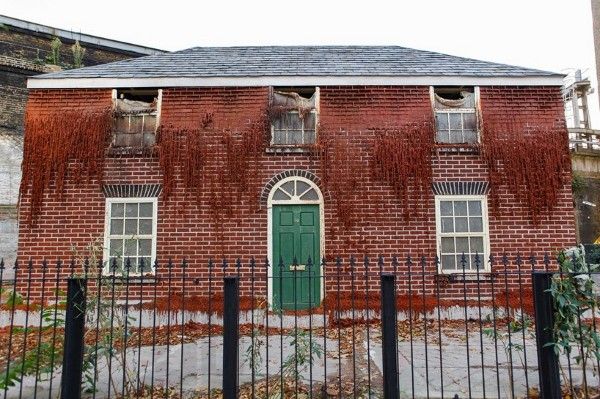
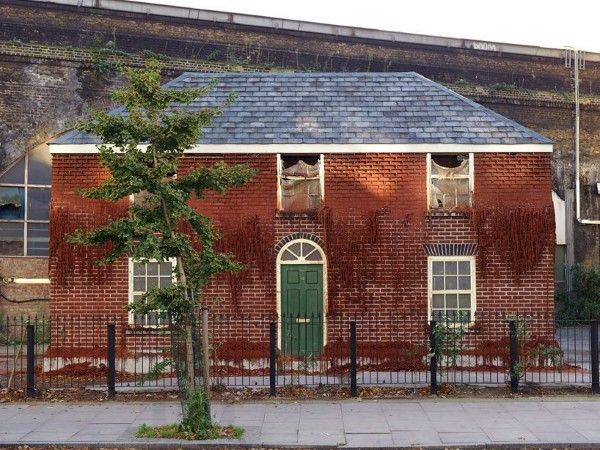
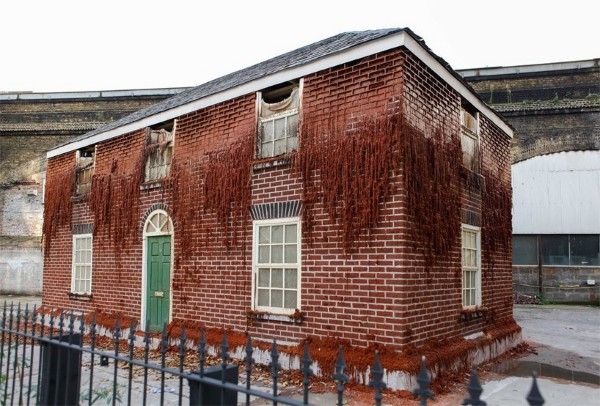

Courtesy of Alex Chinnek

Anastasia Andreieva is an accomplished Architectural Projects Editor at Arch2O, bringing a unique blend of linguistic expertise and design enthusiasm to the team. Born and raised in Ukraine, she holds a Master’s degree in Languages from Taras Shevchenko National University of Kyiv. Her deep passion for architecture and visual storytelling led her to transition from translation and editorial roles into the world of design media. With a keen eye for conceptual clarity and narrative structure, Anastasia curates and presents global architectural projects with precision and flair. She is particularly drawn to parametric and digital design, cultural context, and emerging voices in architecture. When I’m not analyzing the latest architectural trends, you’ll probably find me searching for hidden gems in cityscapes or appreciating the beauty of well-crafted spaces. After all, great design—like great connections—can be found in the most unexpected places. Speaking of connections, because architecture isn’t the only thing that brings people together.