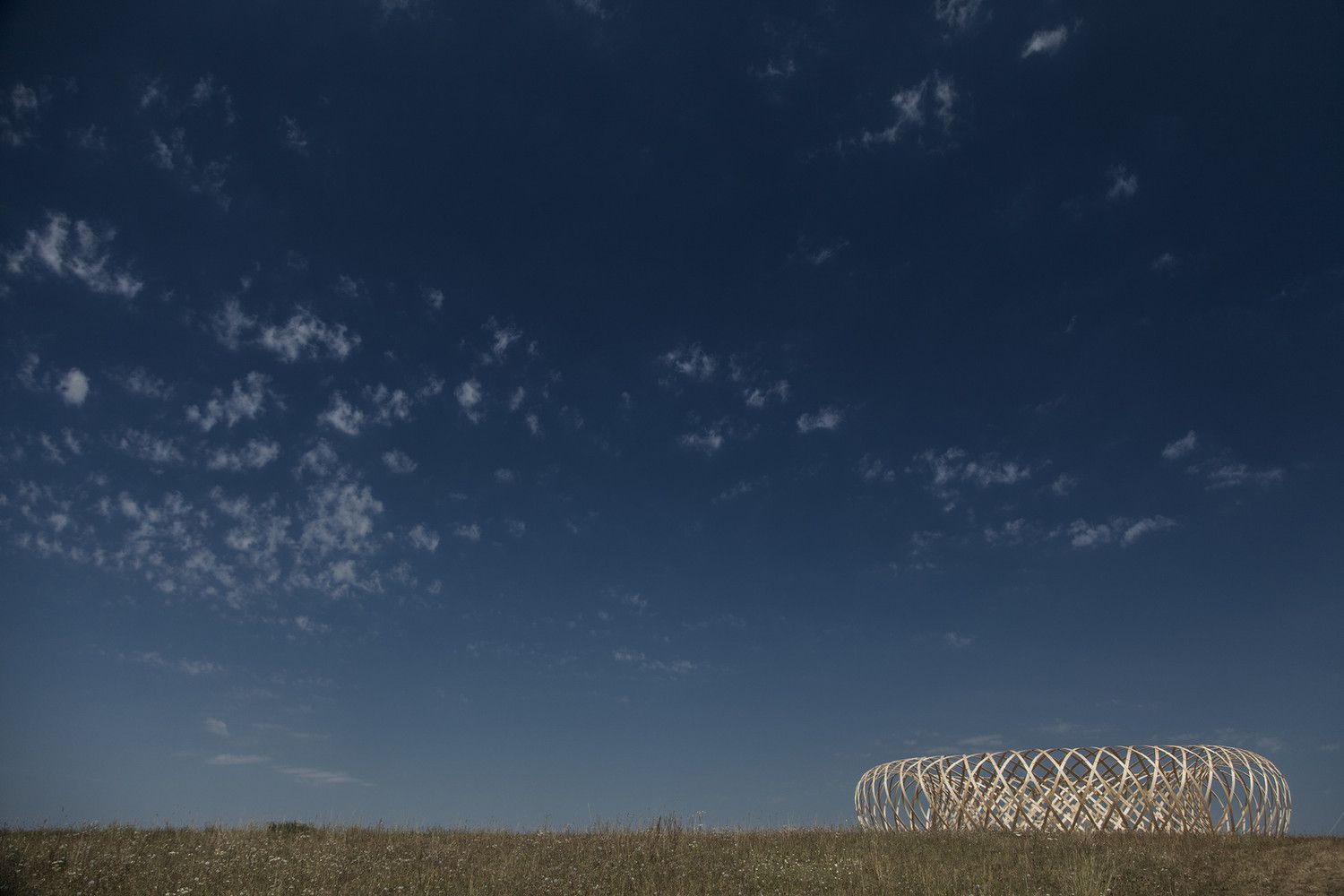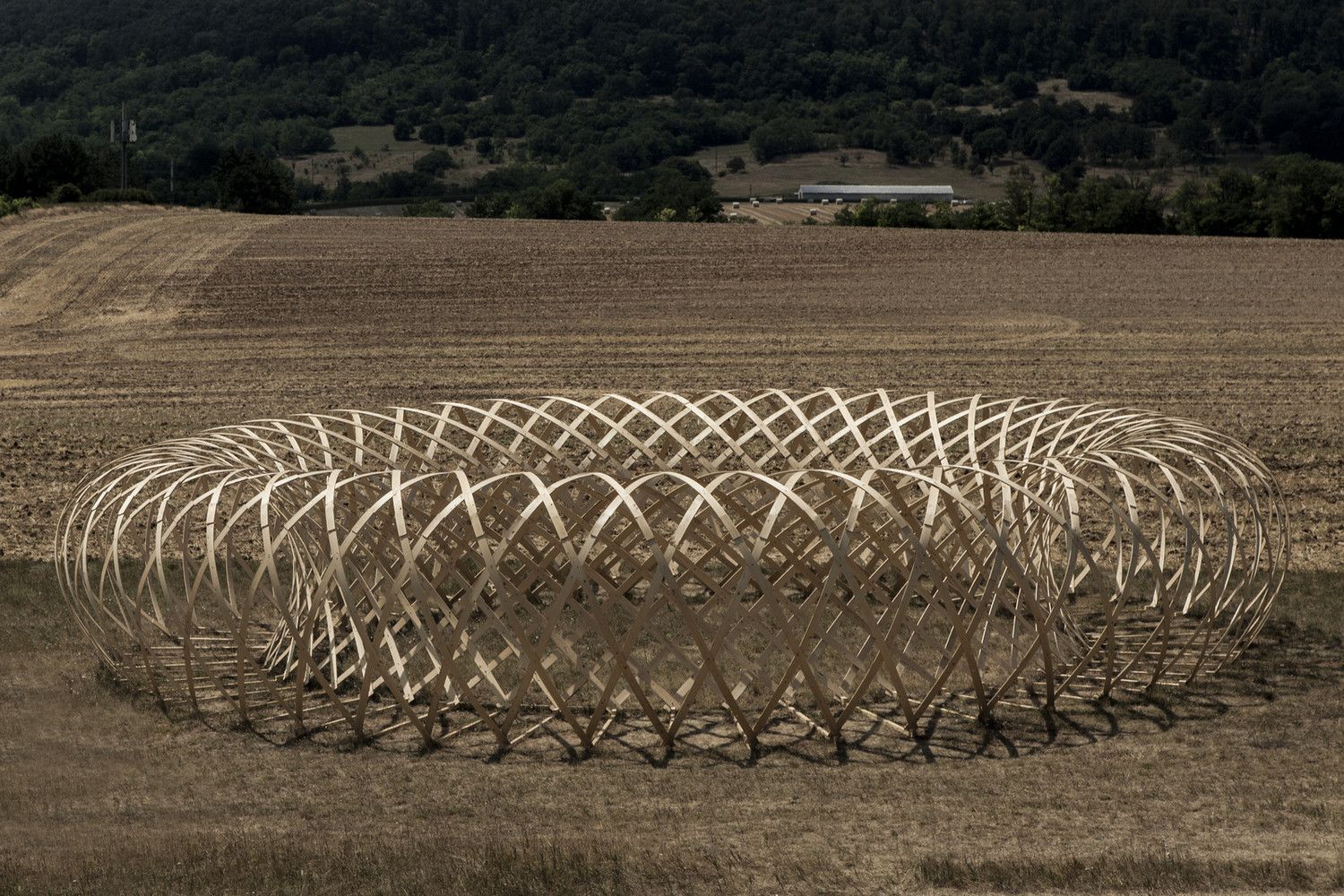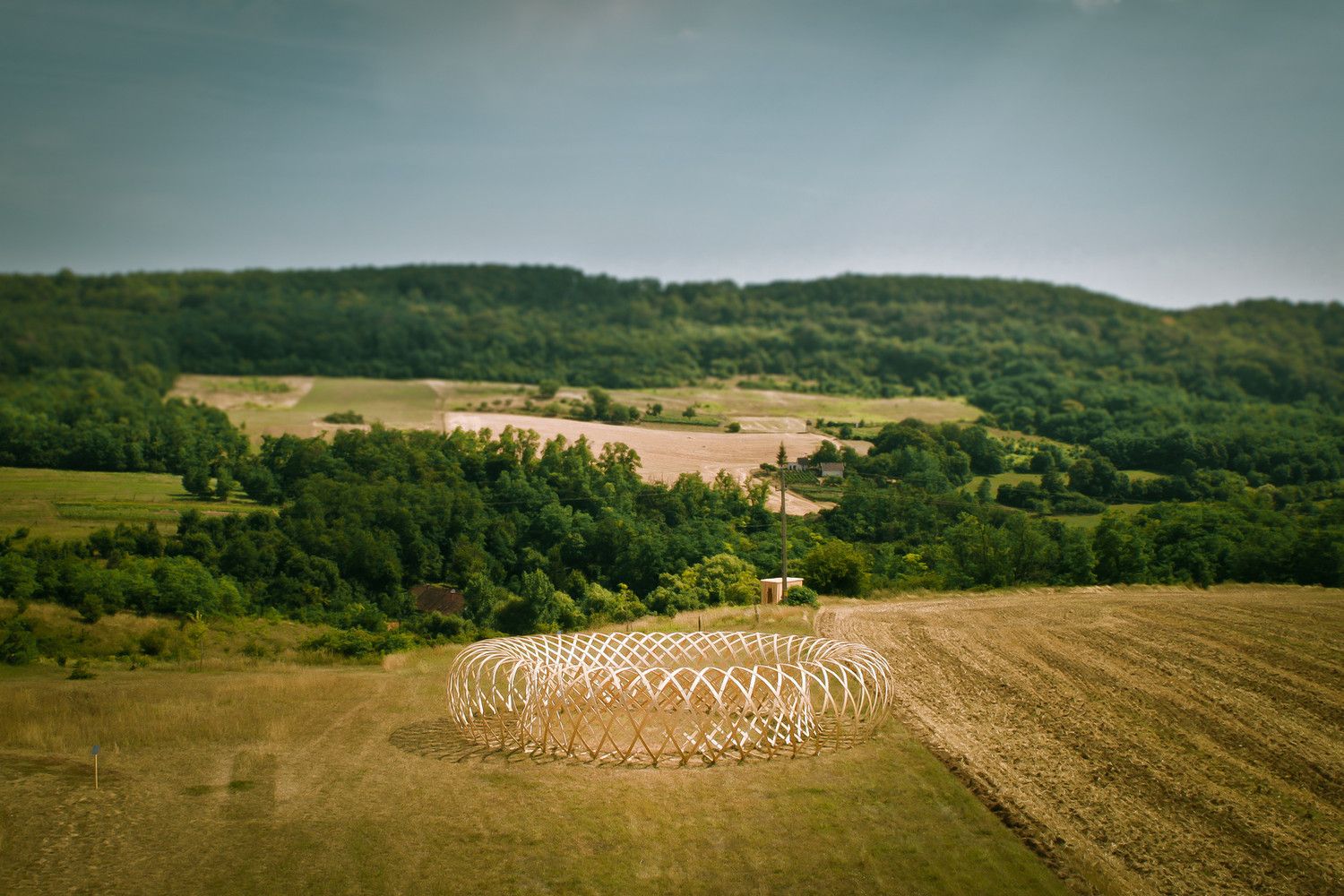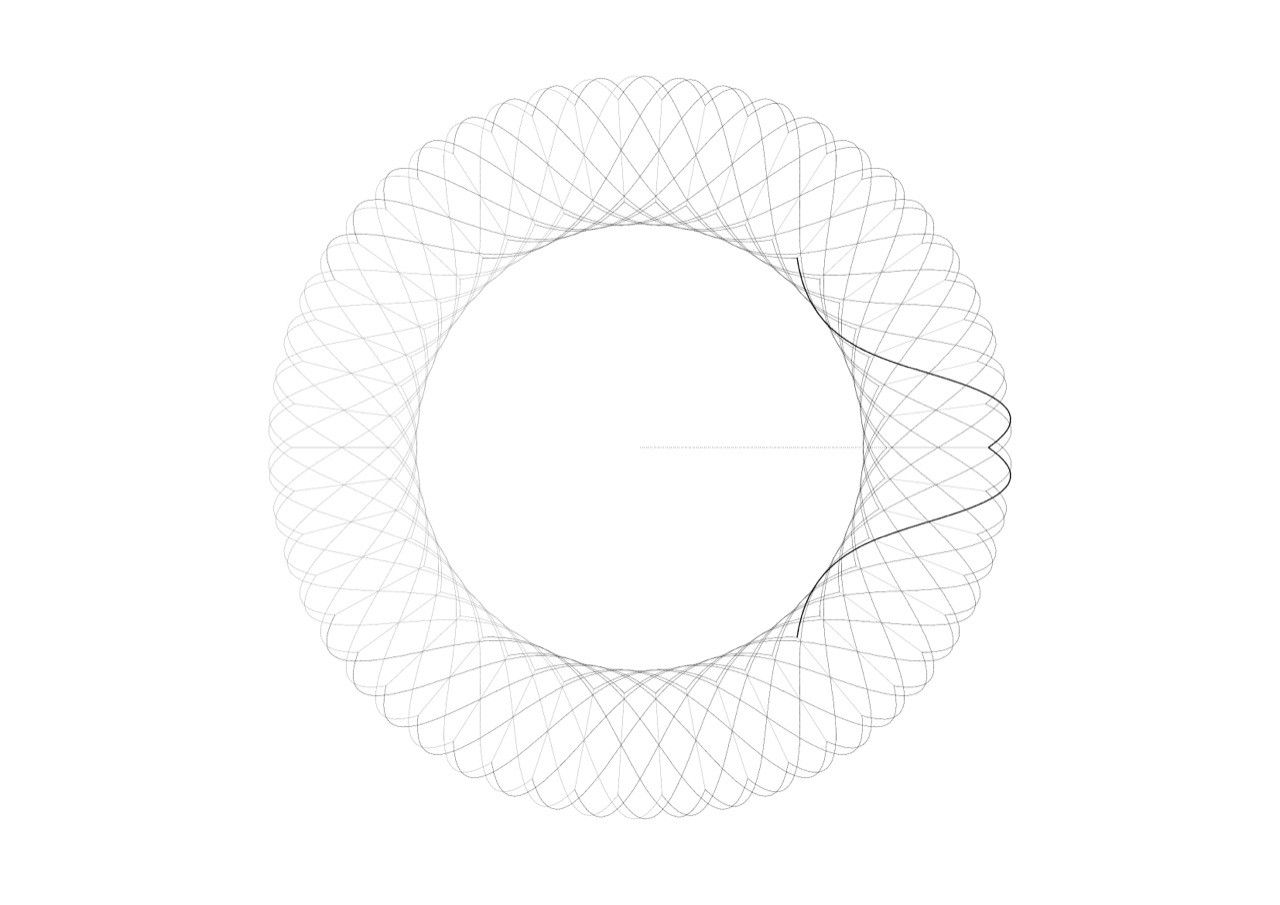


Project BigO, CODA is a Computational Design Affairs research group from UPC (Universitat Politècnica de Catalunya). There focus is the use of computational design to optimize the creation of lightweight structures. In ding so this can aid them to achieve their goal in the reduction of the environmental footprint of constructions through technological efficiency, along with making such solutions more viable on a global scale.
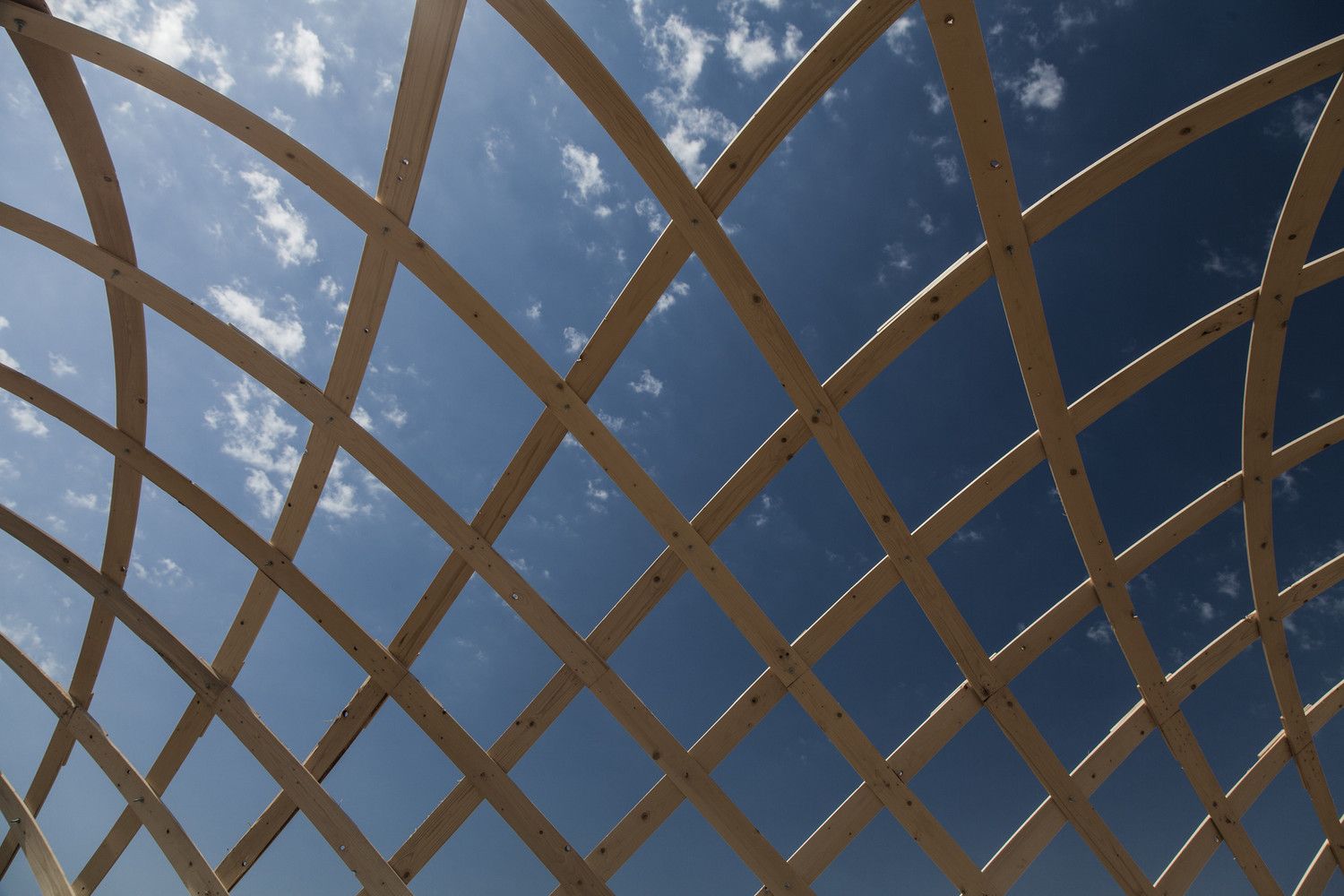
© Donat Kekesi
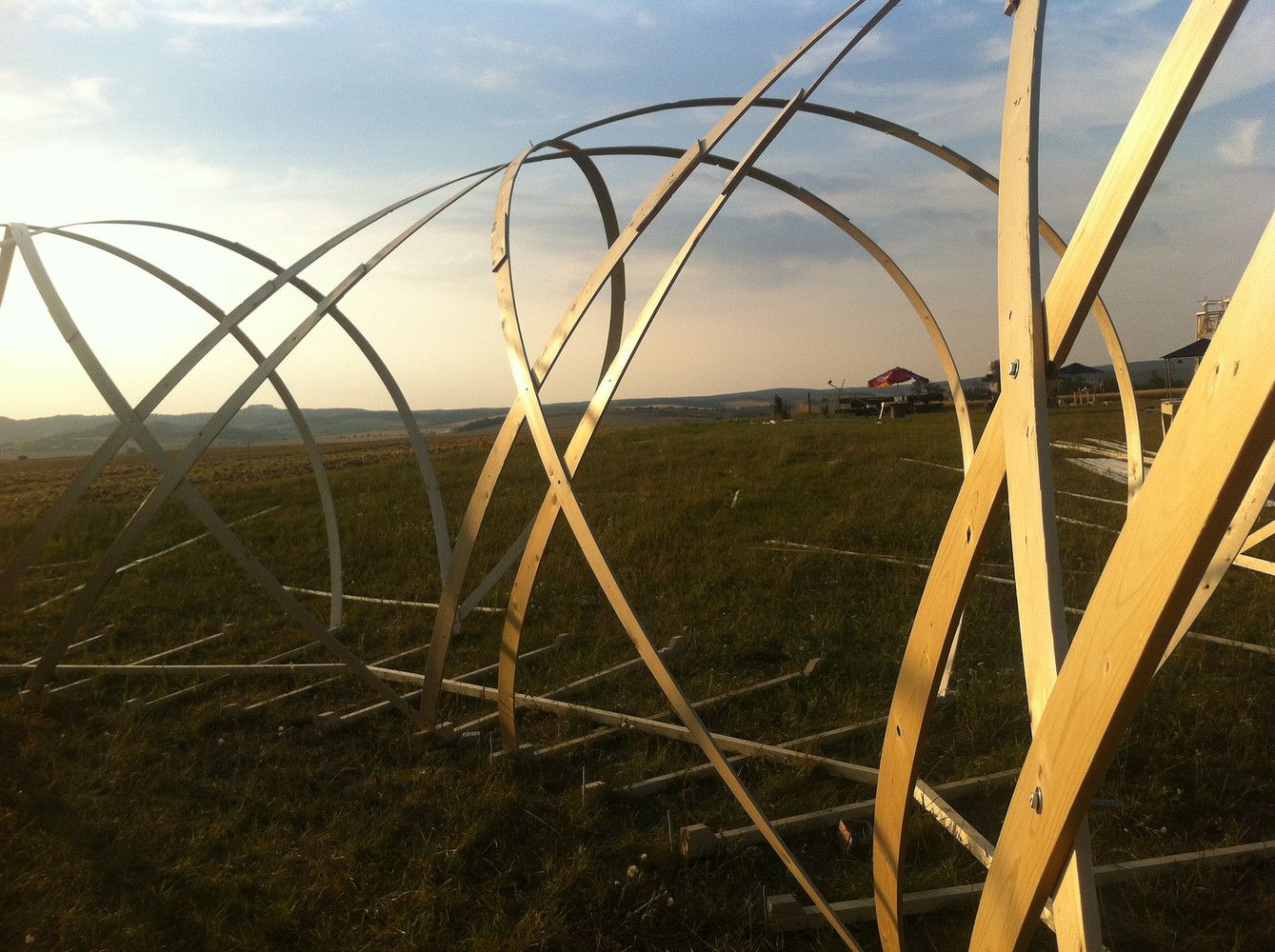
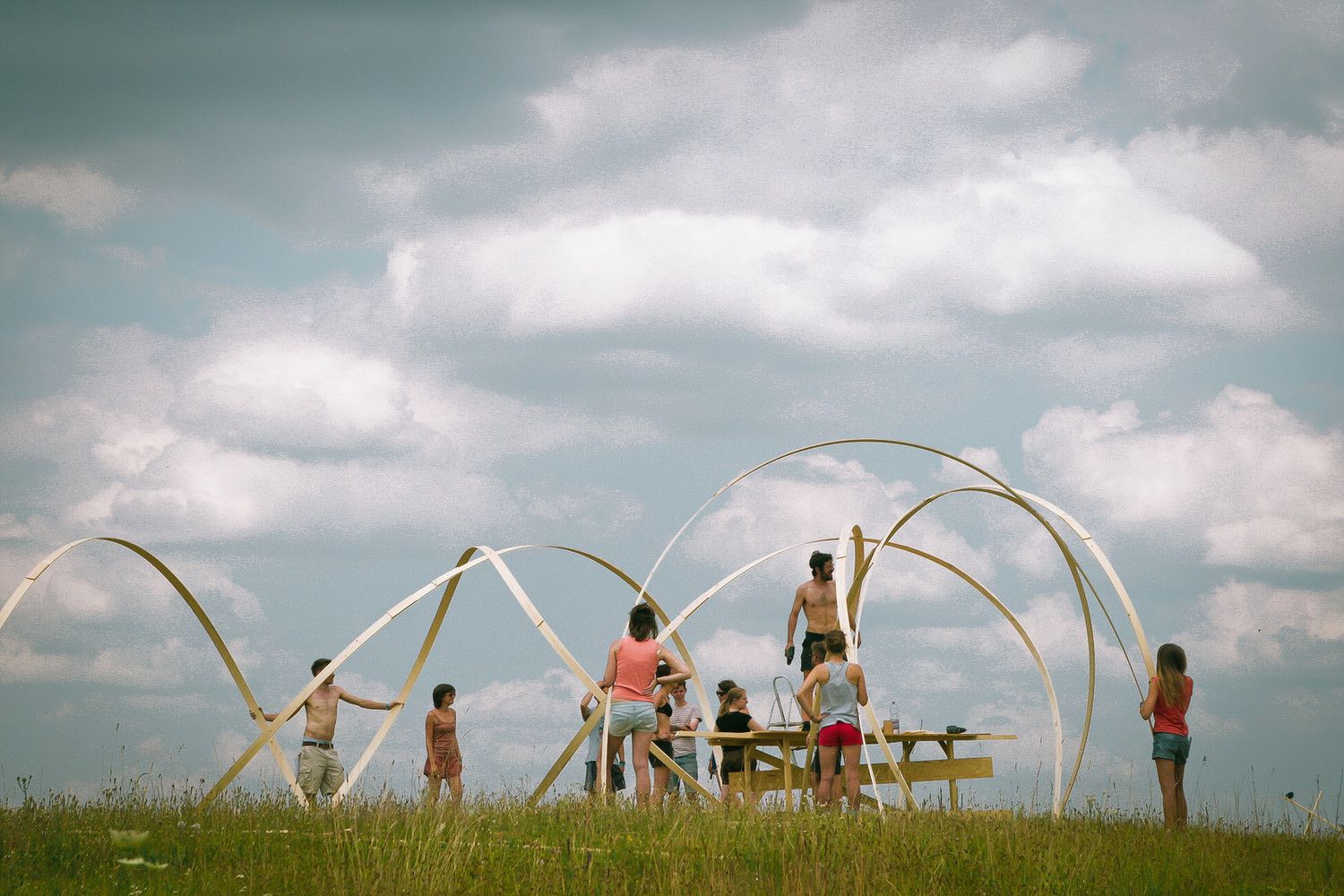
One property of wood that their research focused on was the elastic deformation quality of wooden structures. Which meant after deforming it is not permanently strain to that shape. Therefore this deformation of the wood to form a shell can be done easily and efficiently.
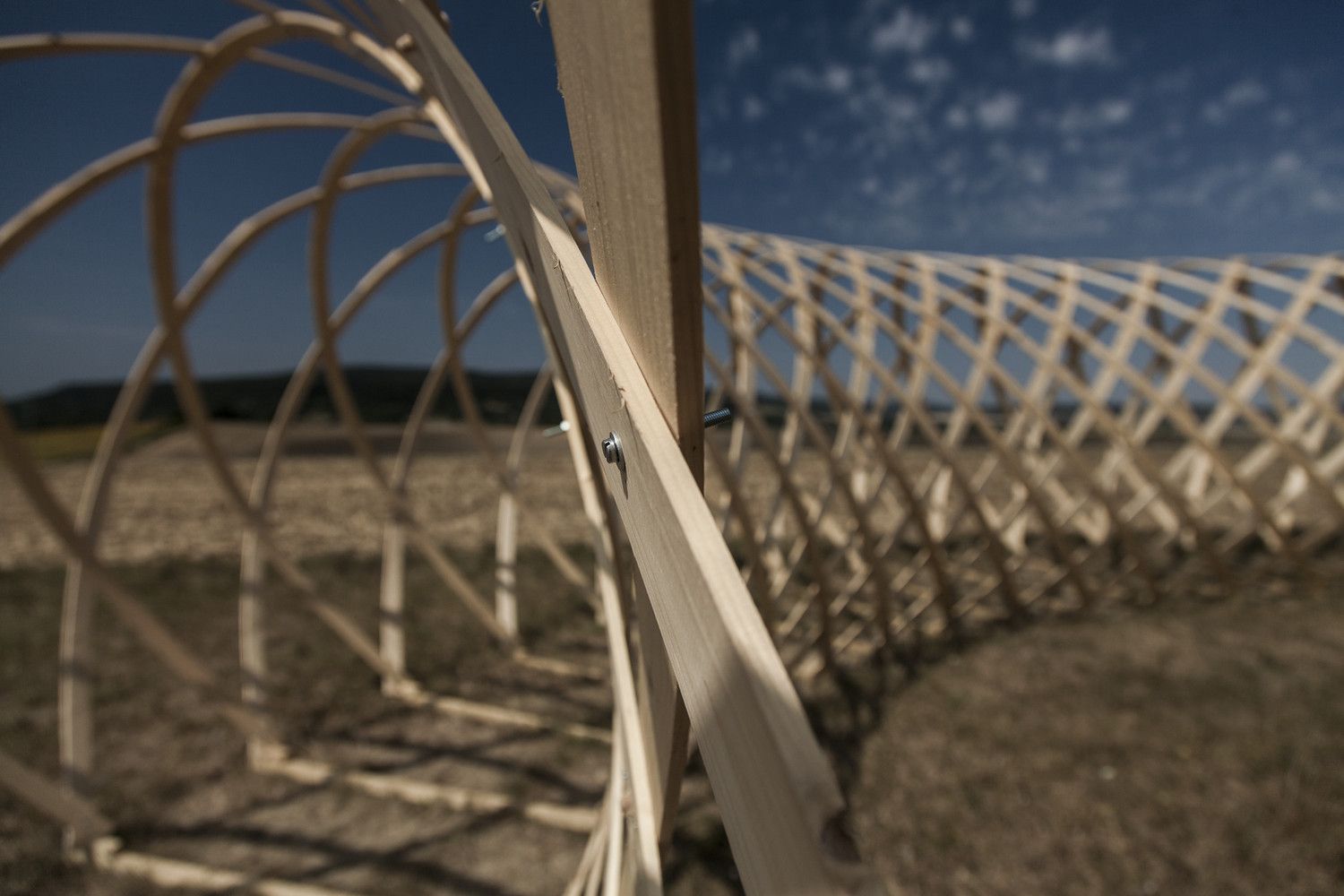
© Donat Kekesi
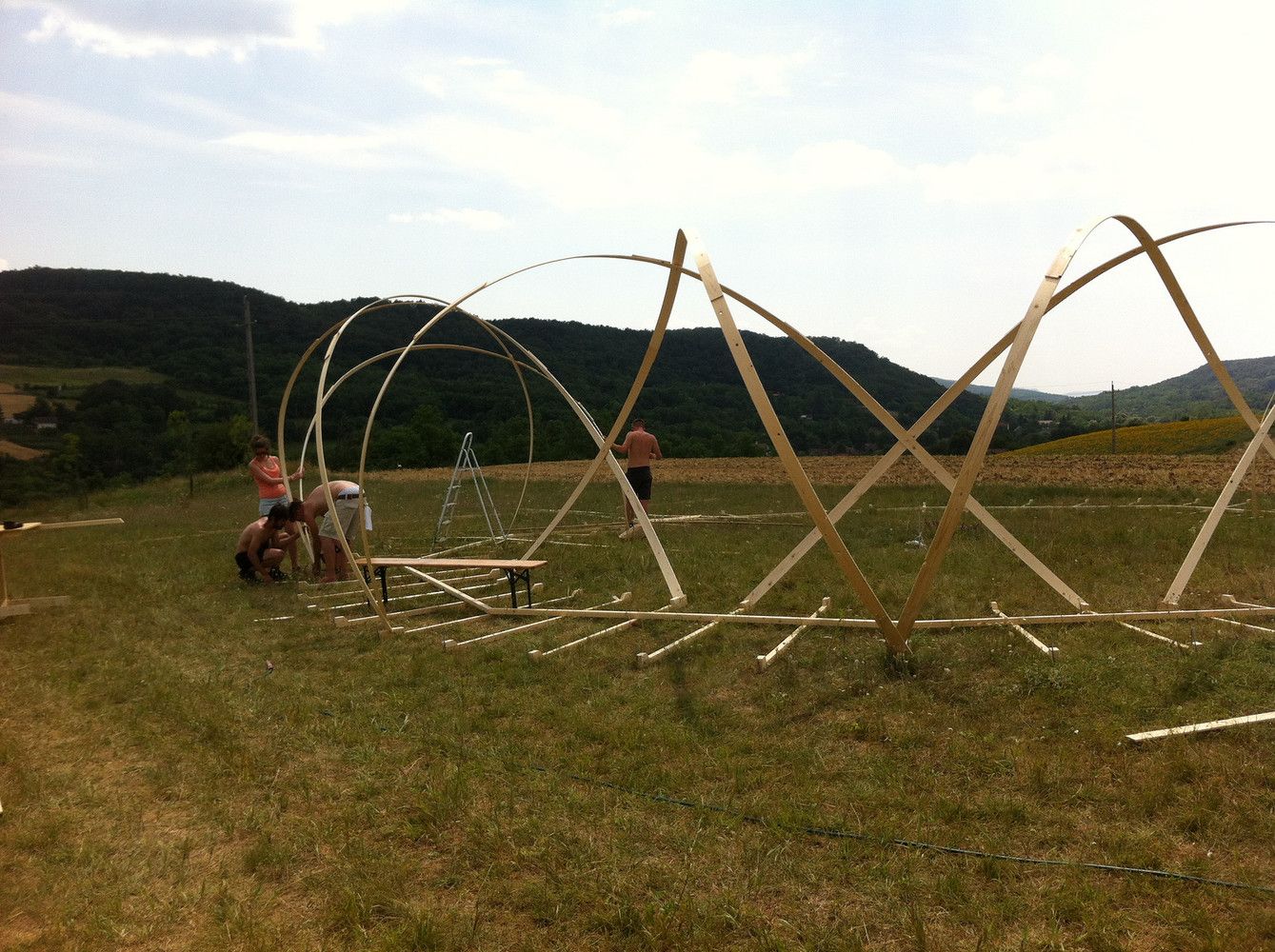
The idea for constructing the BigO came when CODA was invited to the HelloWood festival, which is an annual event held in Hungary. It also attracts young designers and architects with an interest in wood construction. The Project aim was to construct a rigid structure using simple elements using a double curvature shell for strength out of thin straight flat slats, which is a simple yet effective way of constructing a surface with the flat slats by making them flow on a beam of geodesics.
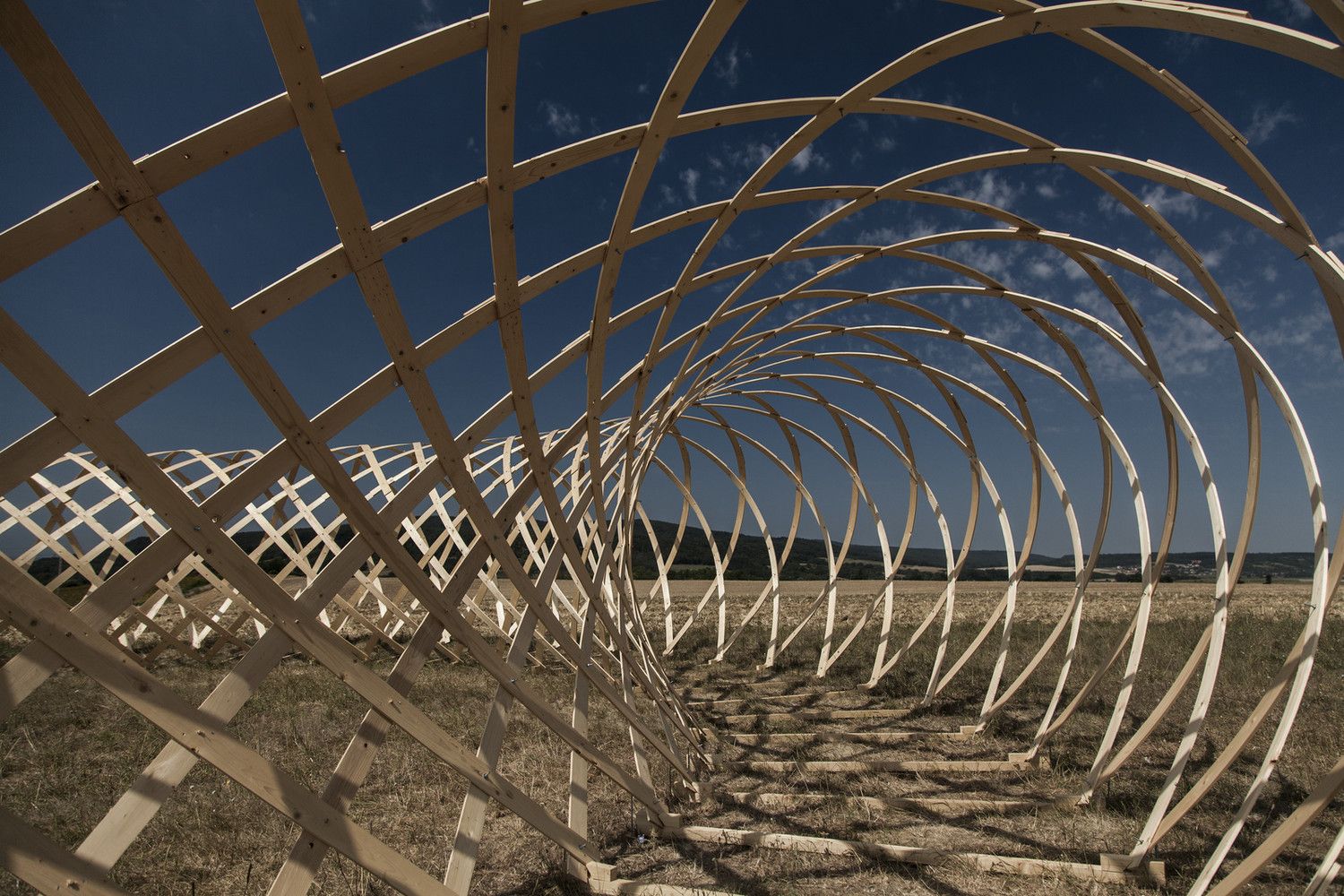
© Donat Kekesi
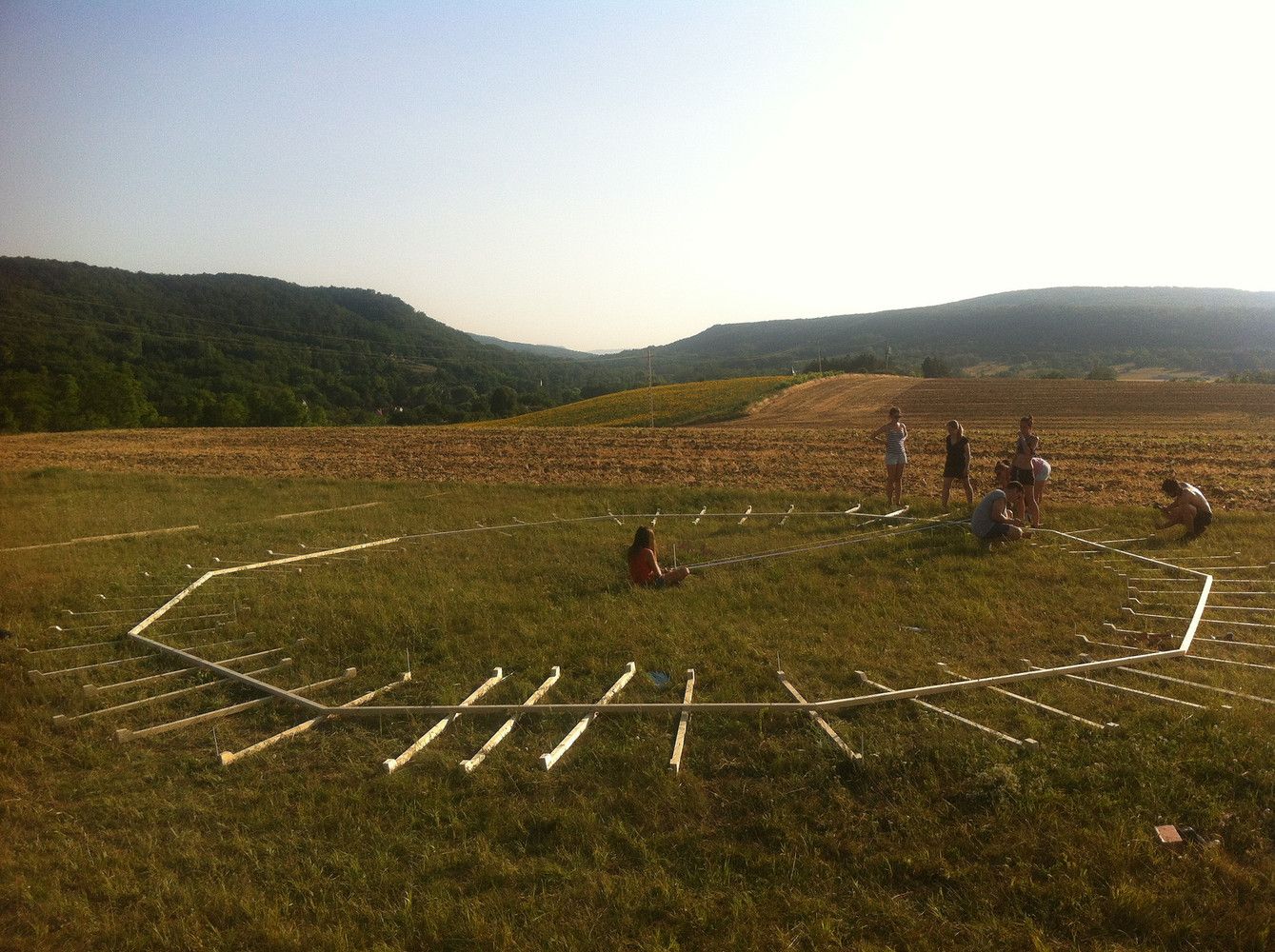
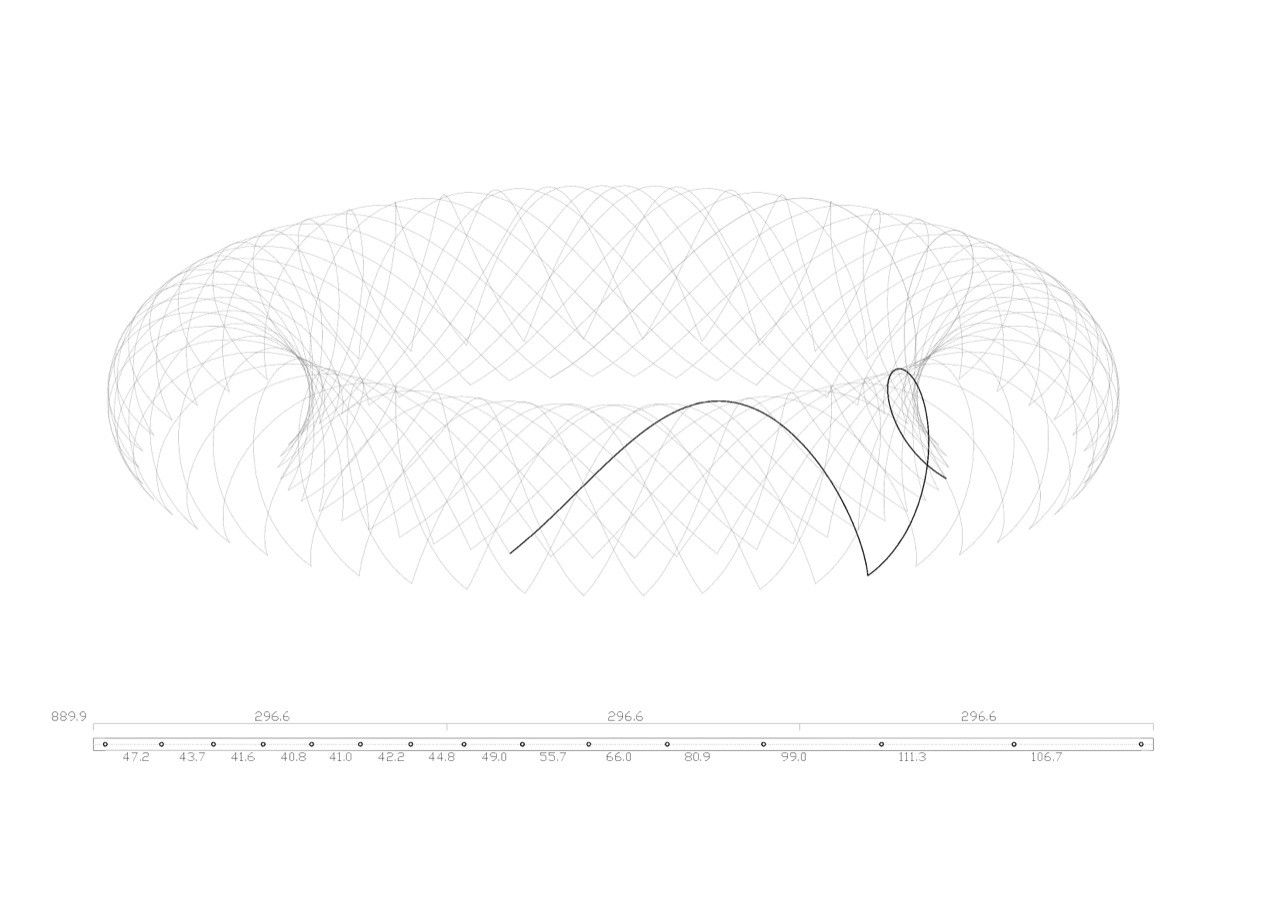
The overall shape of the structure is a torus, so rotating in both directions, creating two beams of conjugated curves, gave the optimal geodesic curvature. The structure was built by assembling 100 identical pieces of 10.5 meters of timbre. As the slats were approximately 4 meters, with a 1 x 10 cm section, this meant they would need resizing, so they needed to be marked cut then assembled. As this was not fully digitalized, both the detail and design where done on site with the available young designers.
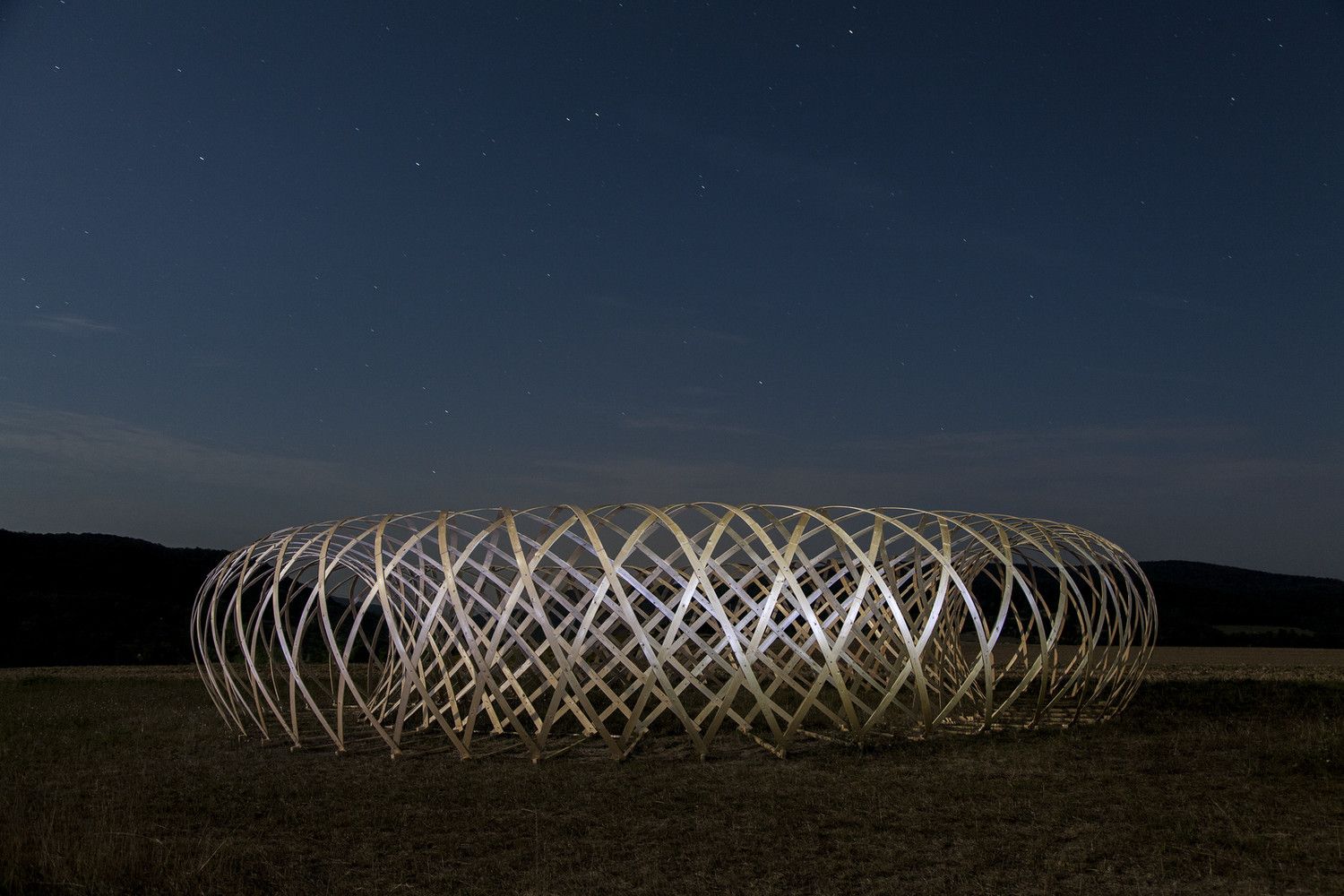
© Donat Kekesi
The experience led to the conclusion, that the combination of anticlastic and synclastic curvature, which is similar to that used in fabric structures known as double curvature which is advantageous in strengthening the material. The curvature on the geodesics induced bending in the strips stiffening the whole structure, despite the weakening in individual elements. Thus the initial goal is achieved in using low technology to produce a high efficiency structure.
Project info:
Architects: CODA Design Consulting
Country: Hungary, Vigántpetend
Year: 2013
Photographs: Donat Kekesi, Somoskoi Gabor, Peter Krompáczki, Enrique Soriano