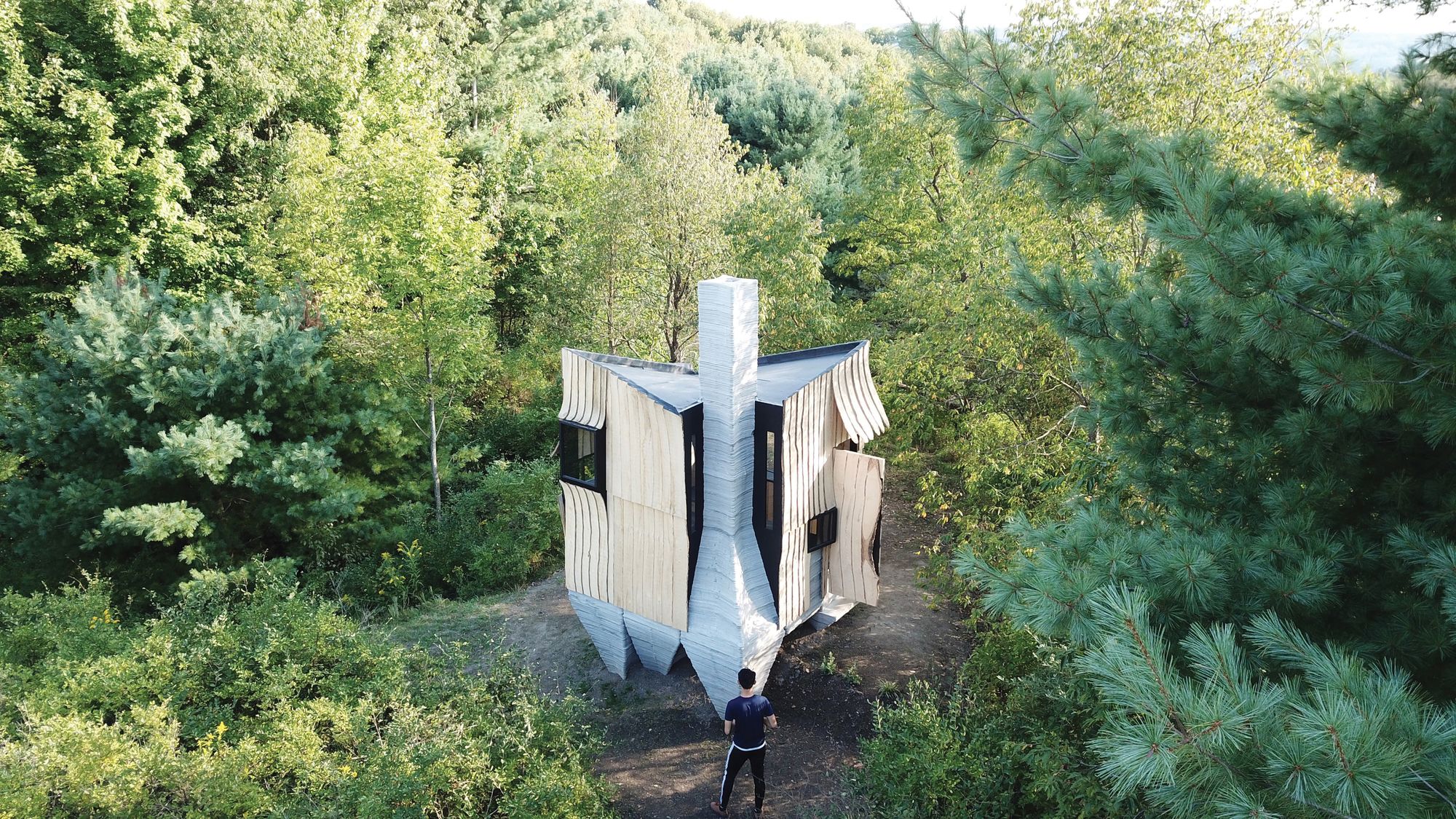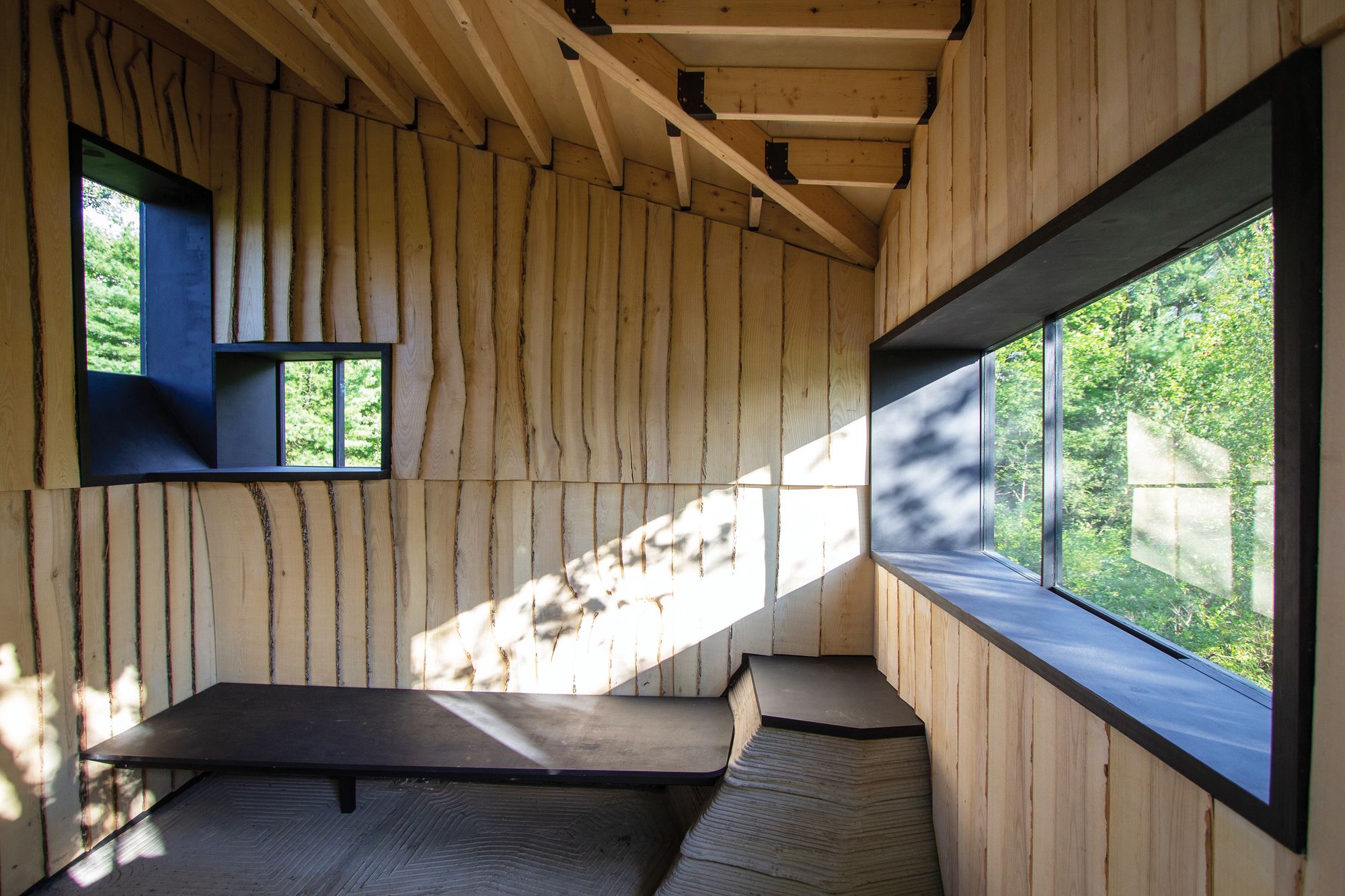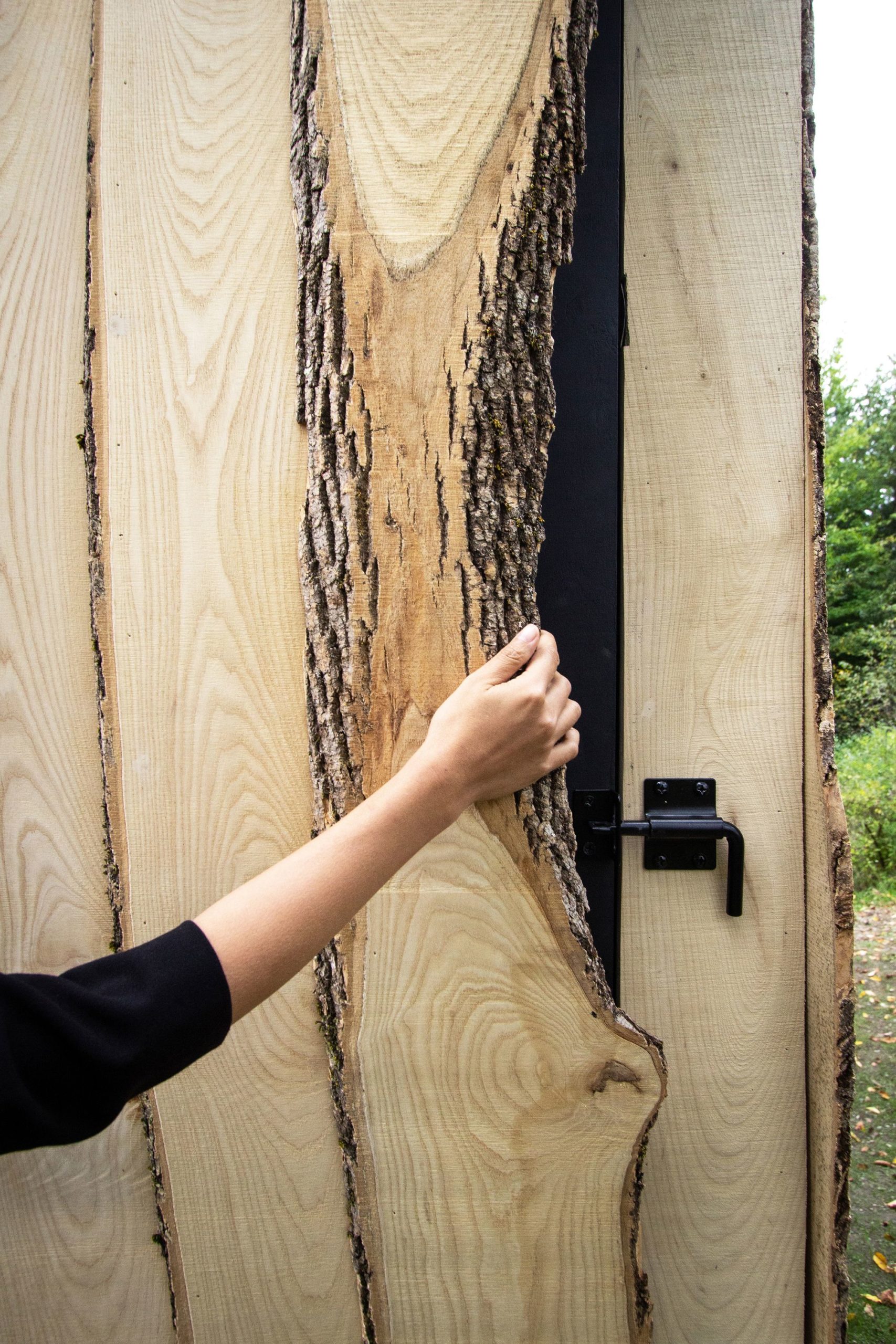


The College of Architecture, Art, and Planning at Cornell University announce an important step in their creative and critical response to the Emerald Ash Borer beetle, an invasive species devastating native Ash trees across the country. The Emerald Ash Borer is thought to have been introduced to American forests via human trade and travel in the summer of 2002, and today threatens 8.7 billion trees across the country and nearly one in ten Ash trees in New York state.
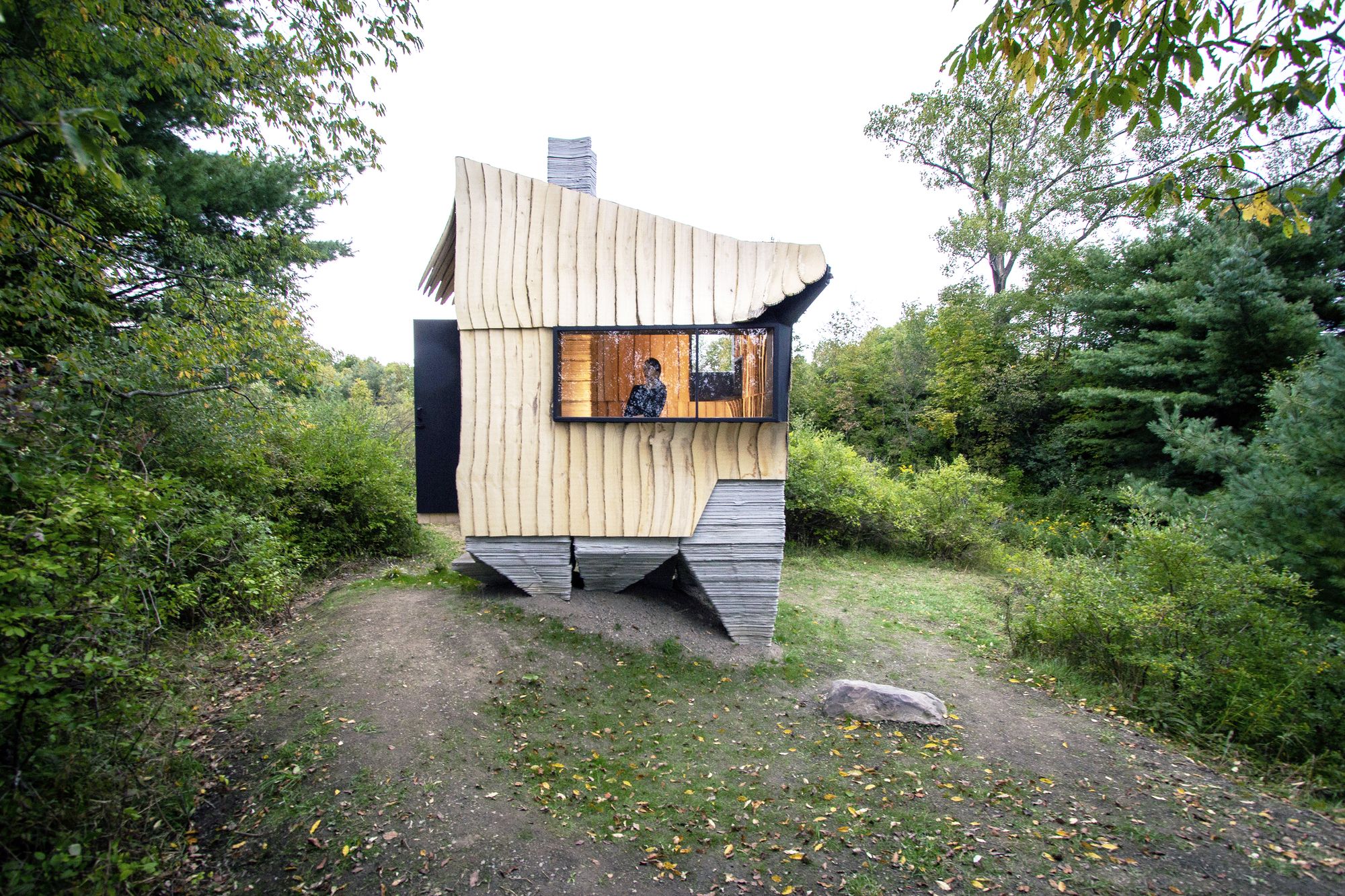
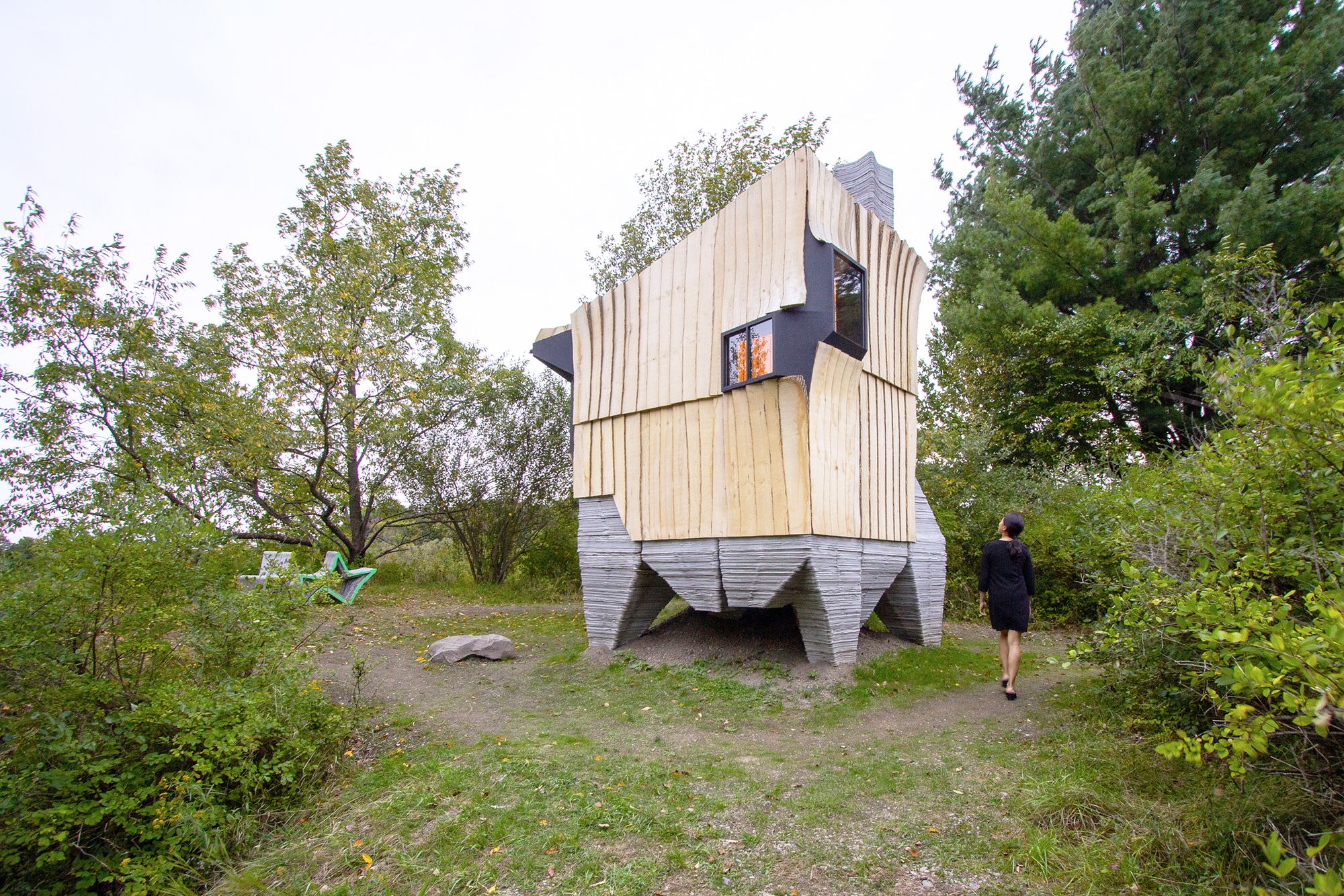
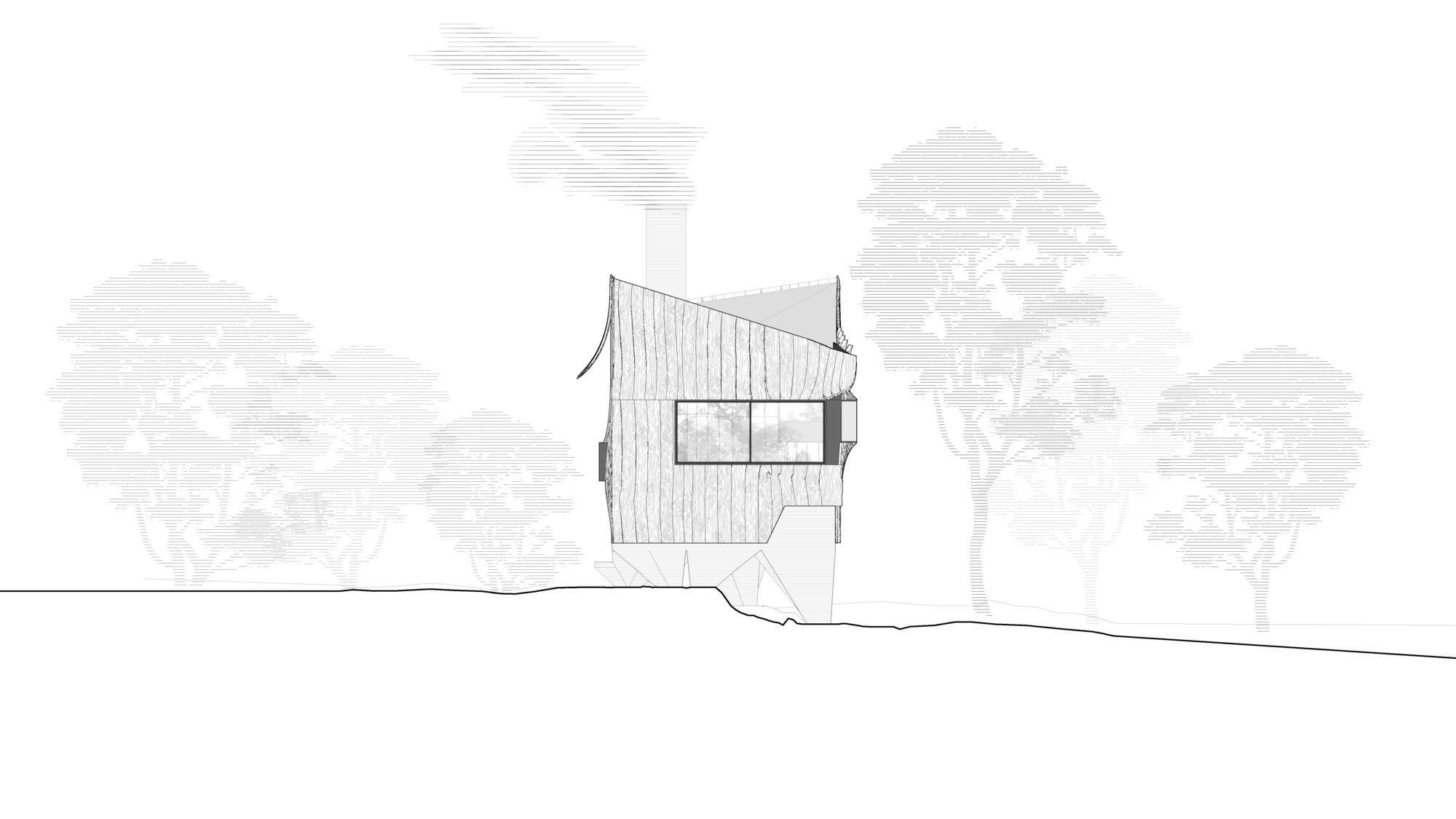
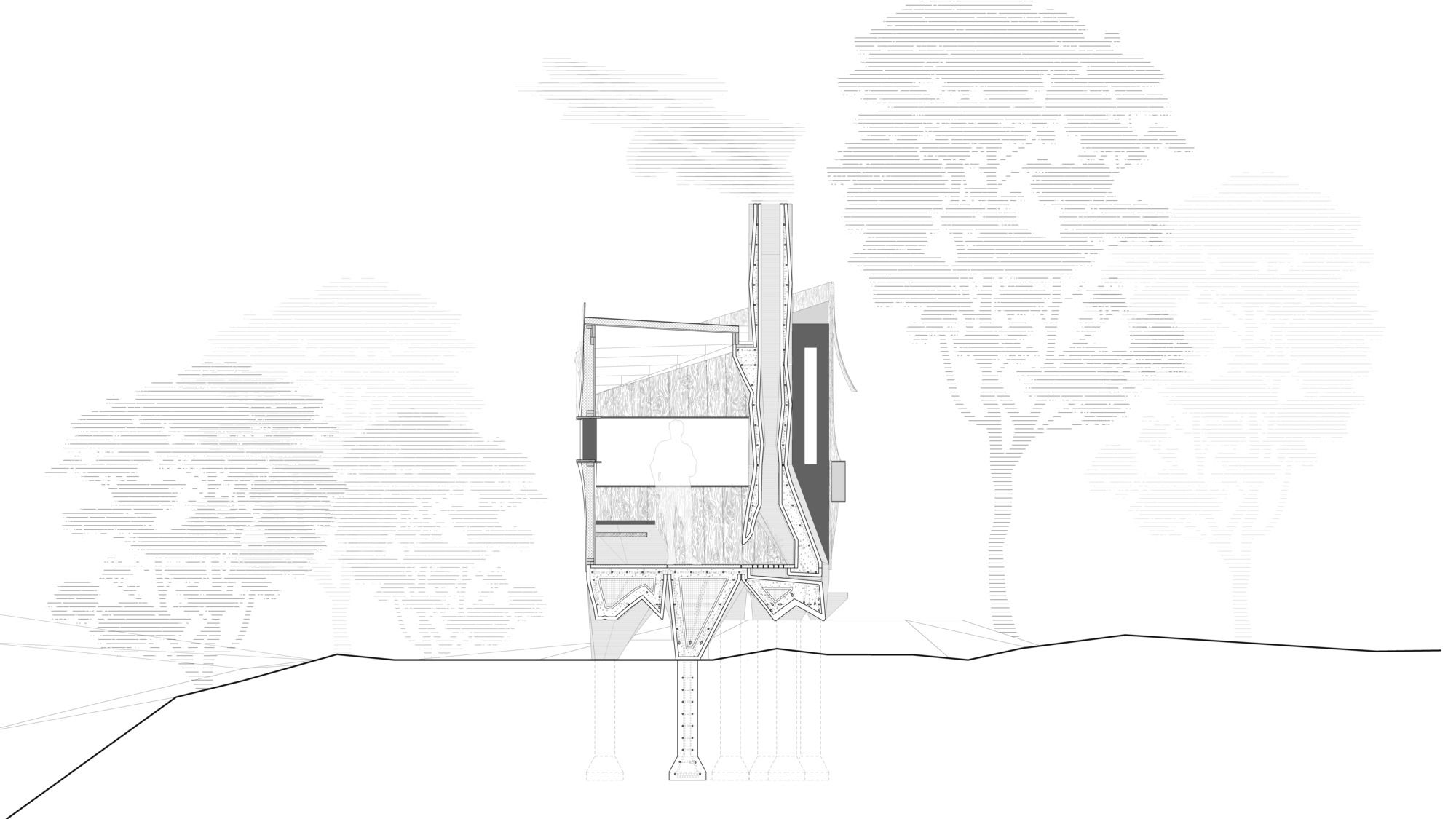
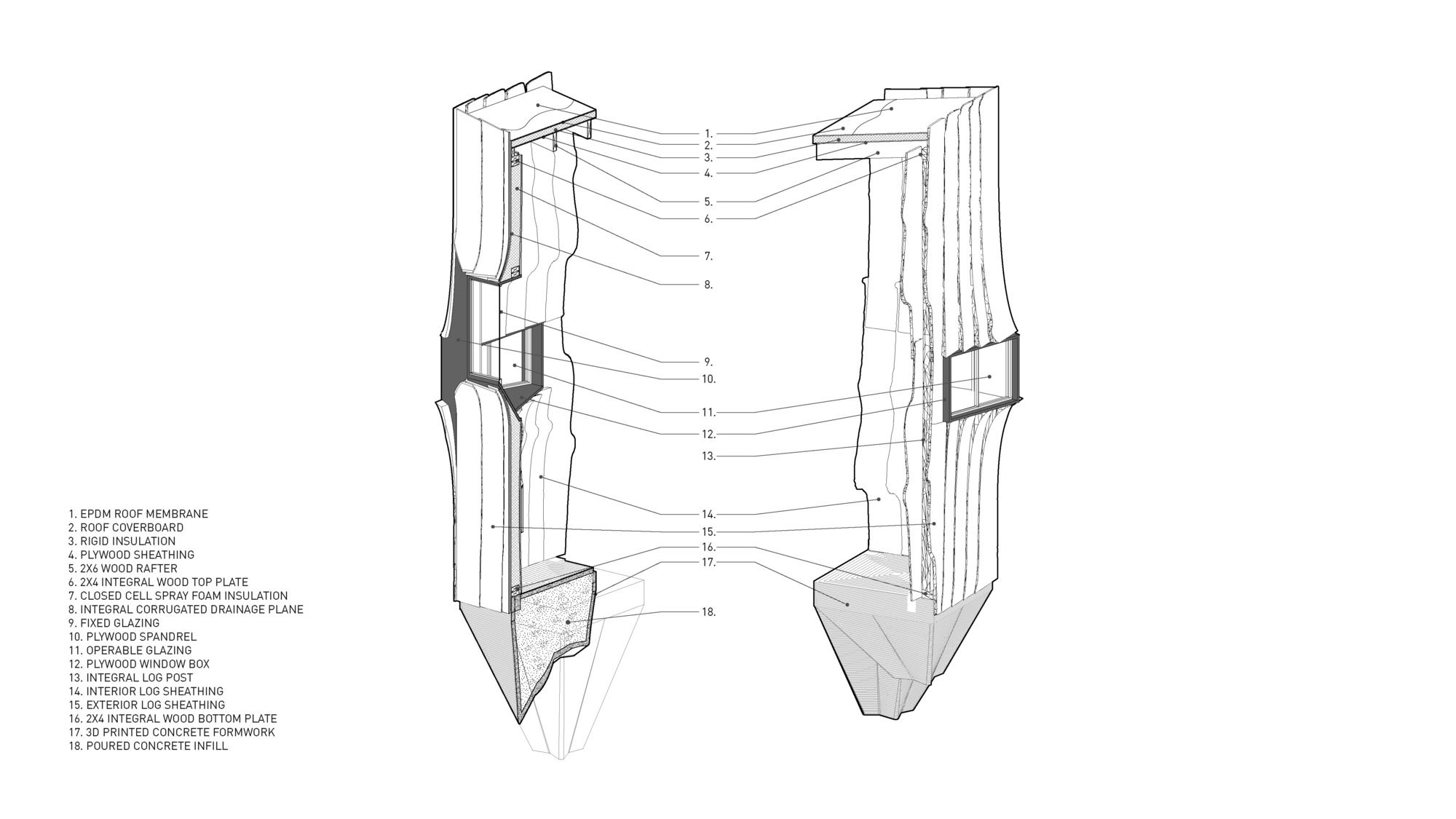
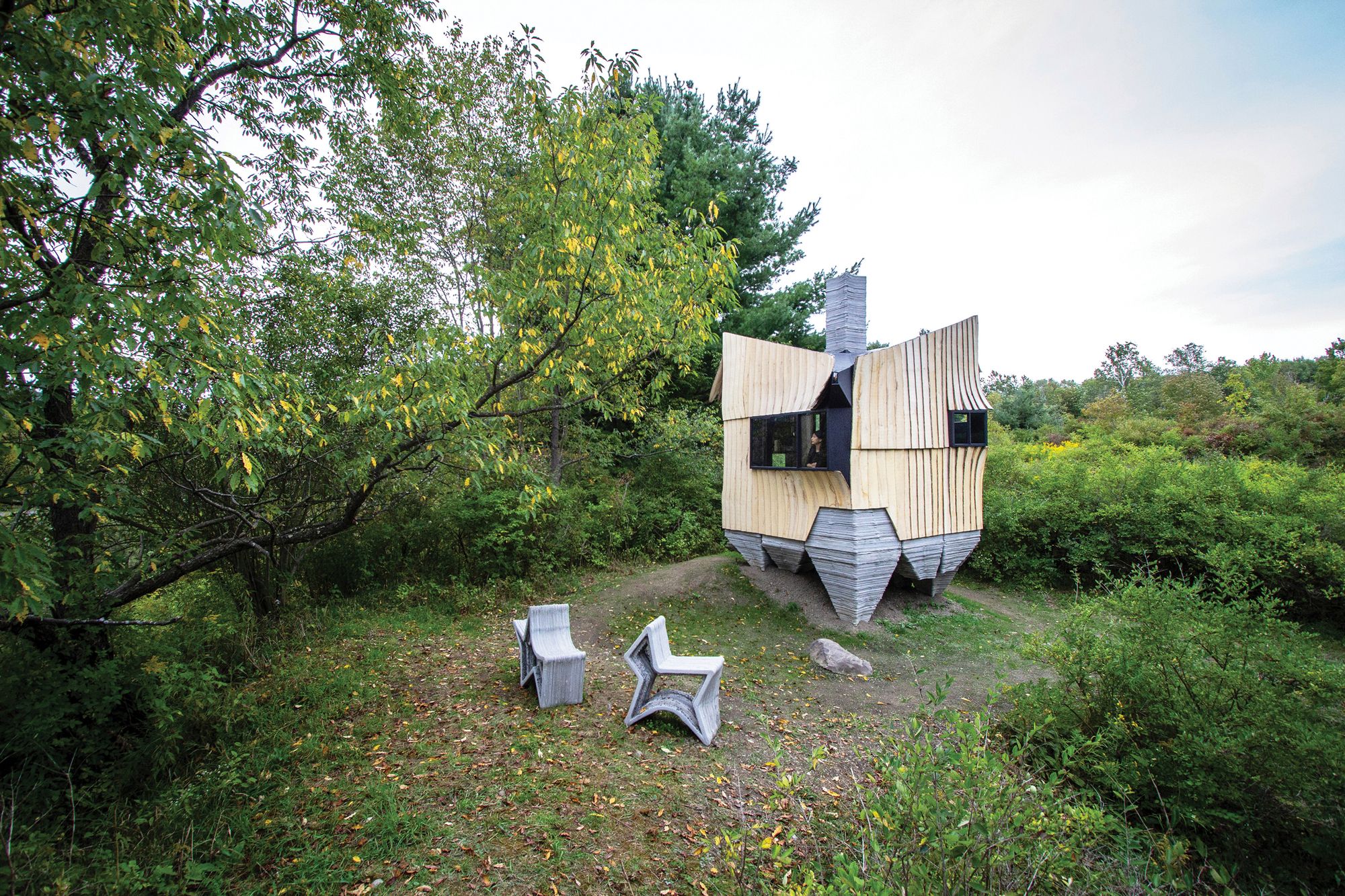
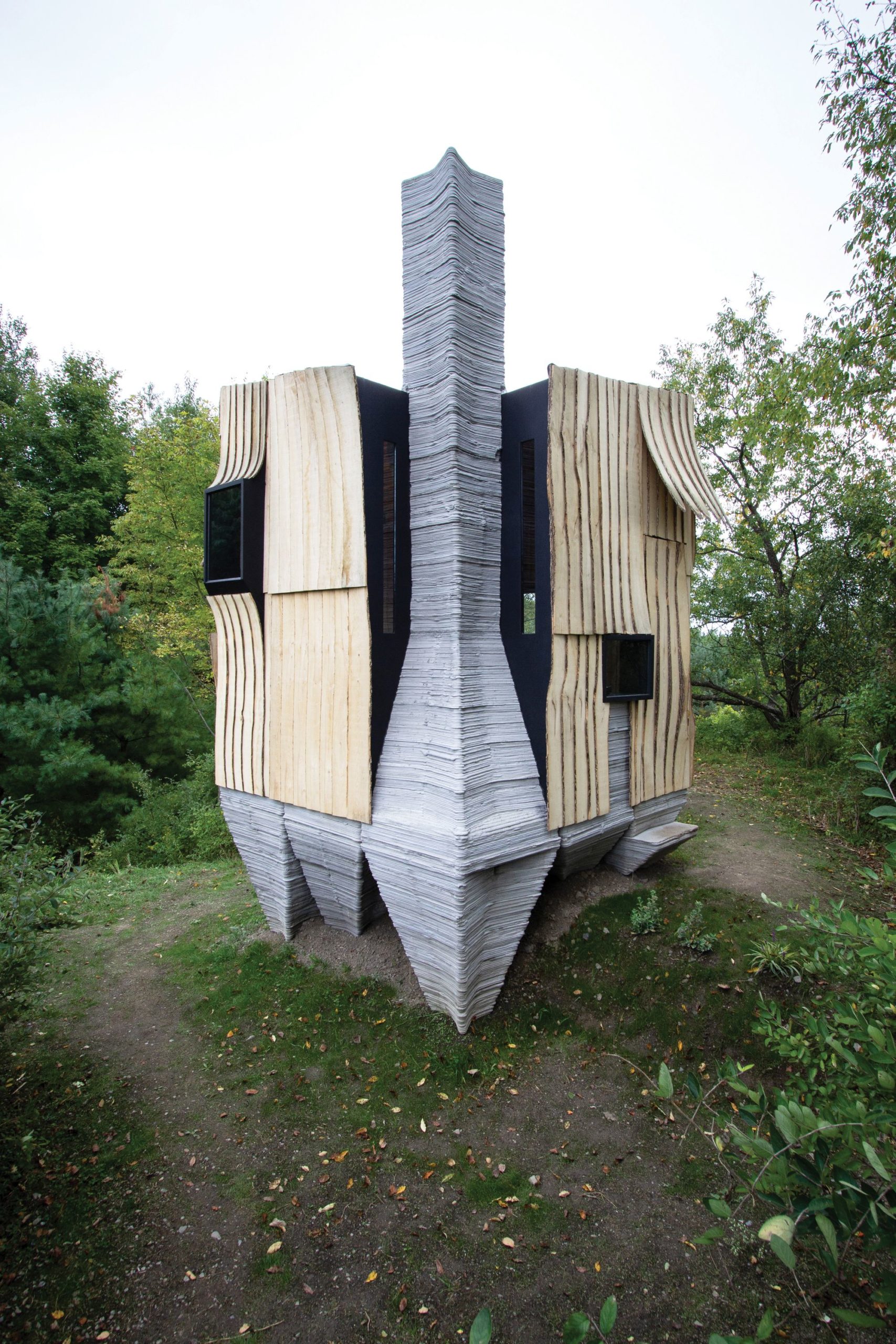
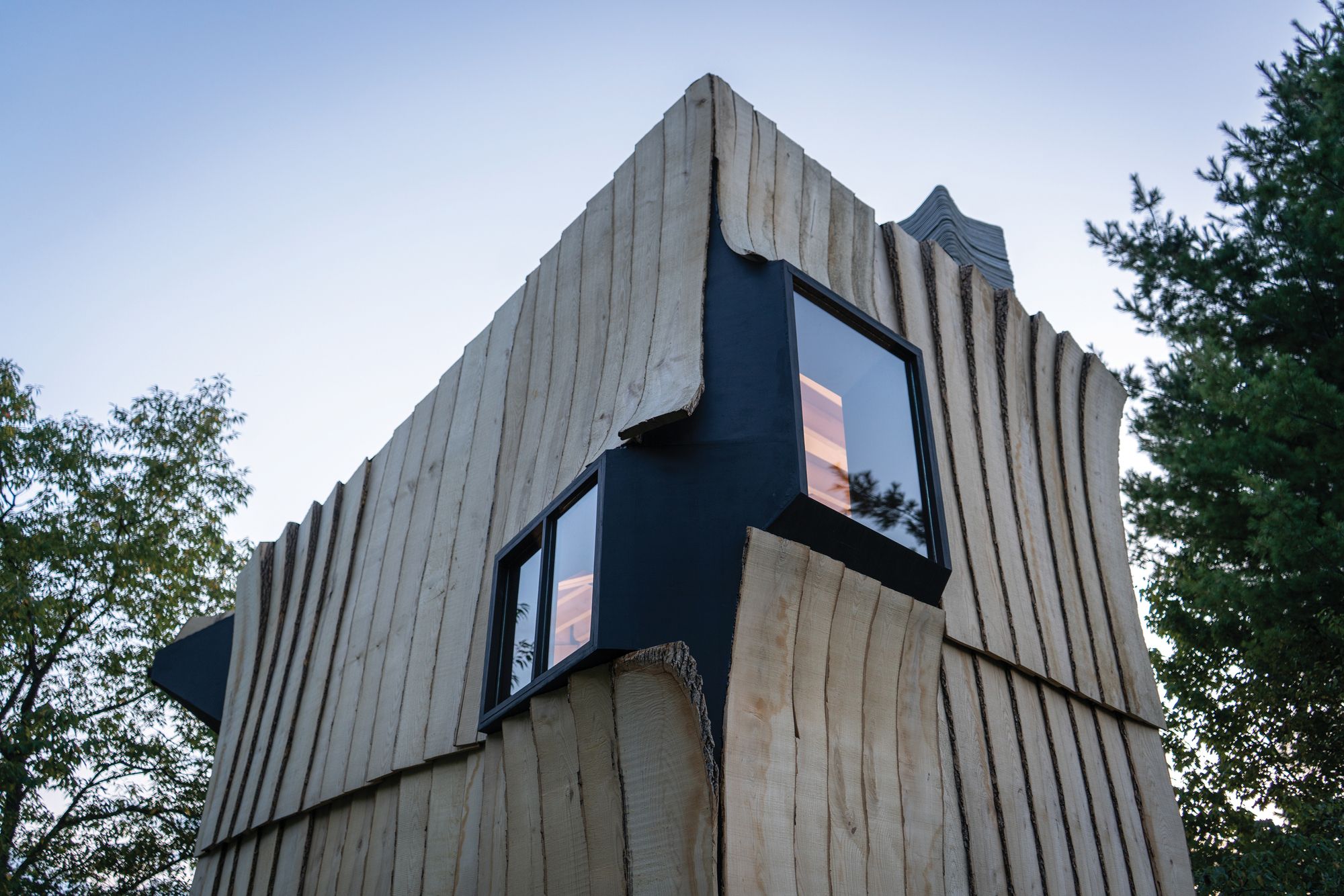
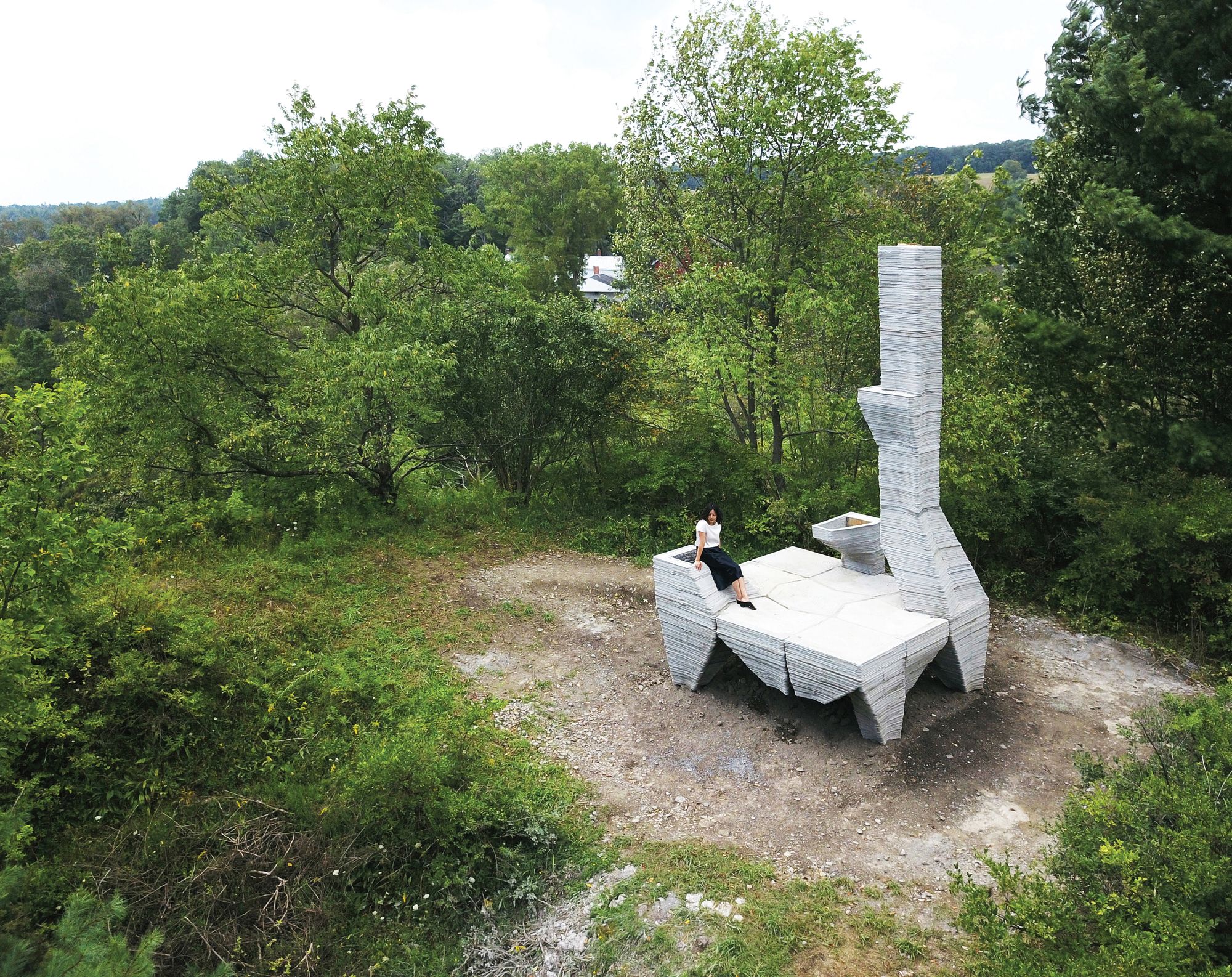
HANNAH Office has designed and constructed a full-scale prototype cabin home in rural Upstate New York, that responds to the environmental crisis, and, advances the use of technologies such as robotics and 3D printing in timber and concrete construction.
© Andy Chen
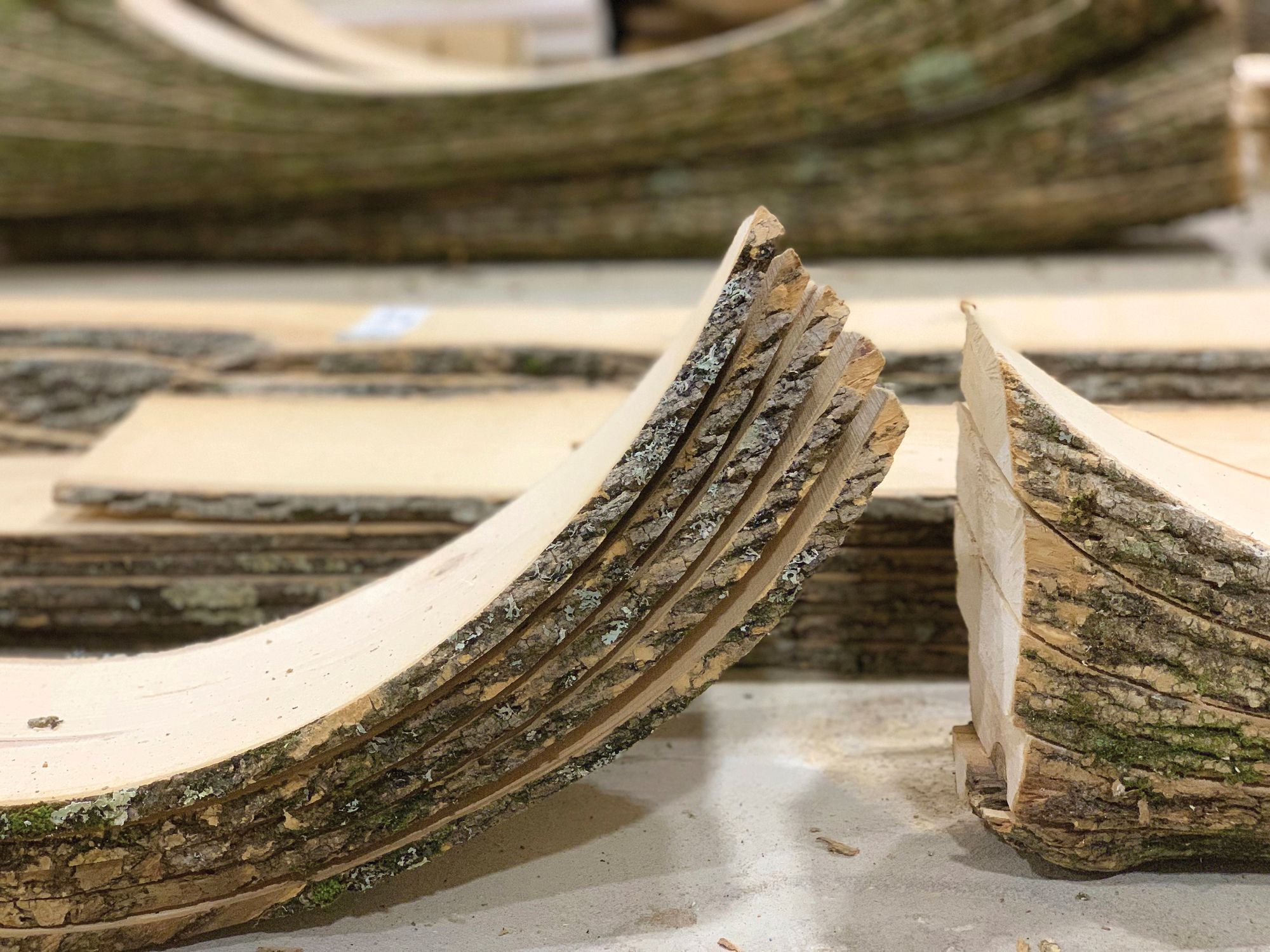
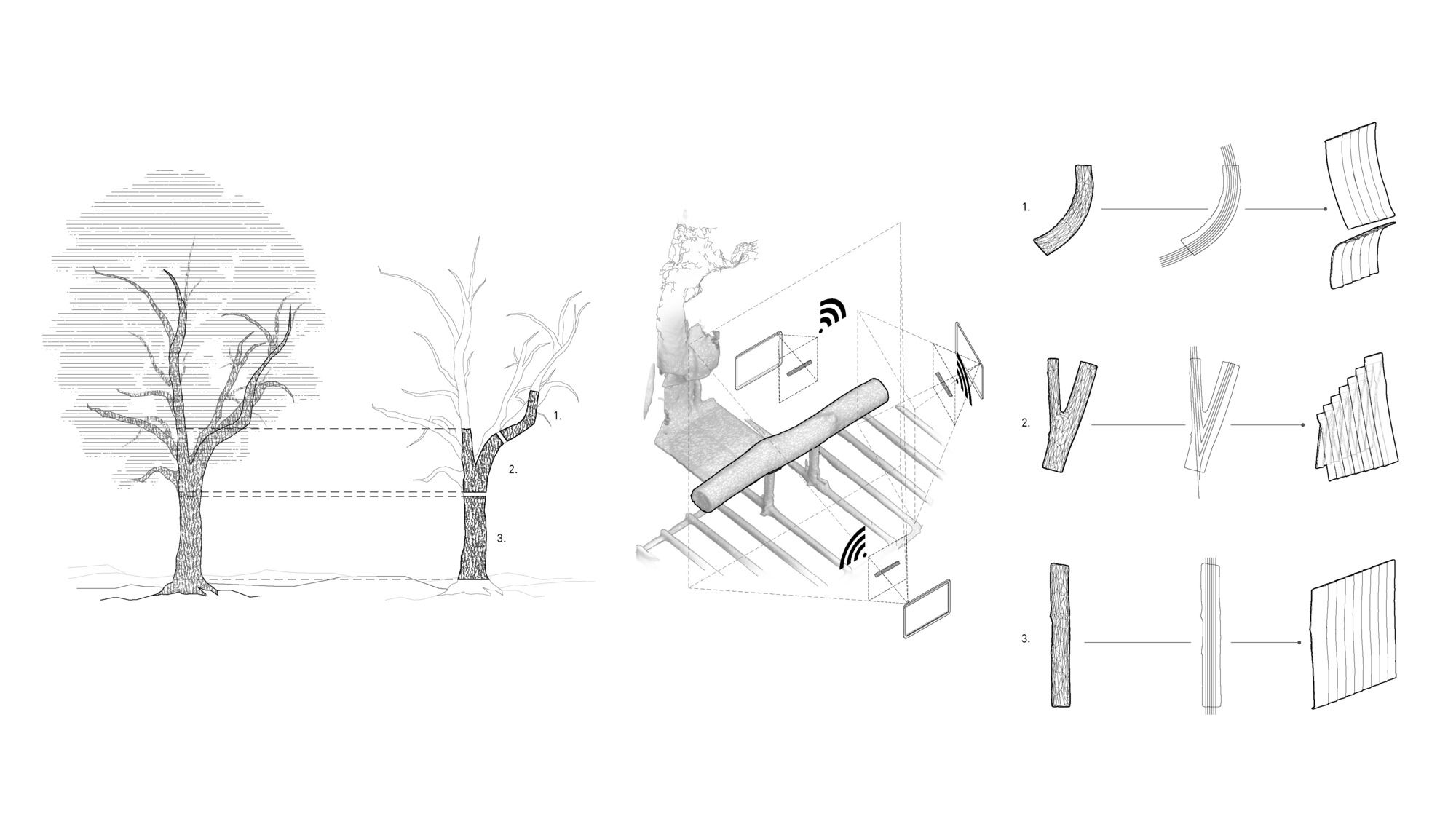
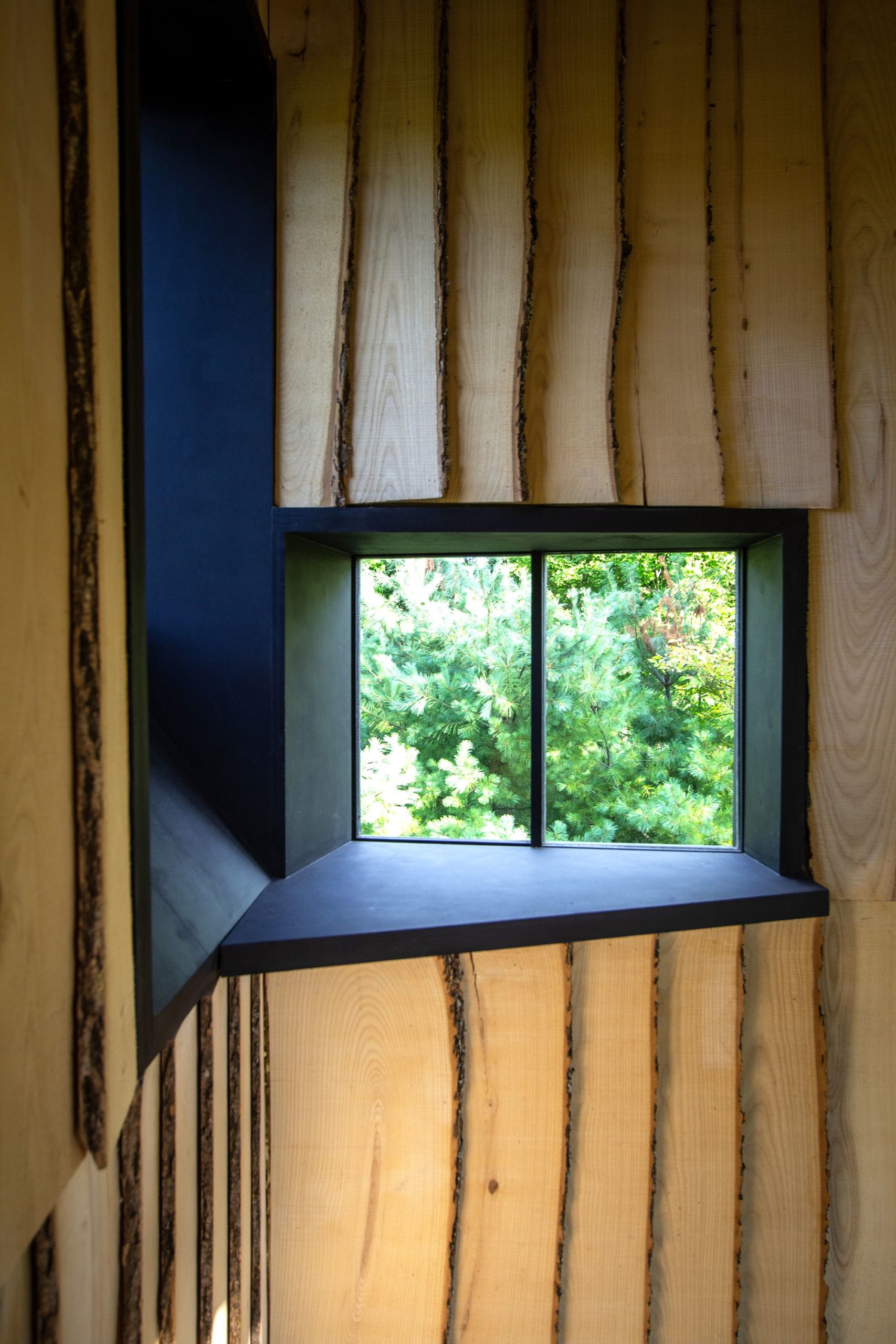
Consistently advancing technologies — specifically robotics and 3D printed concrete — and their use in the architectural design discipline and construction industries make the use of infested ash trees possible. Zivkovic is director of the Robotic Construction Lab (RCL) at Cornell, where the team built a custom robotic platform for the sole purpose of processing the irregular ash trees. The robotic arm they use was discovered on eBay and previously built cars for General Motors. Zivkovic and the RCL team repurposed the robot, reprogramming it to methodically saw and shape the wood at a scale usable for structural and design elements.
© Andy Chen
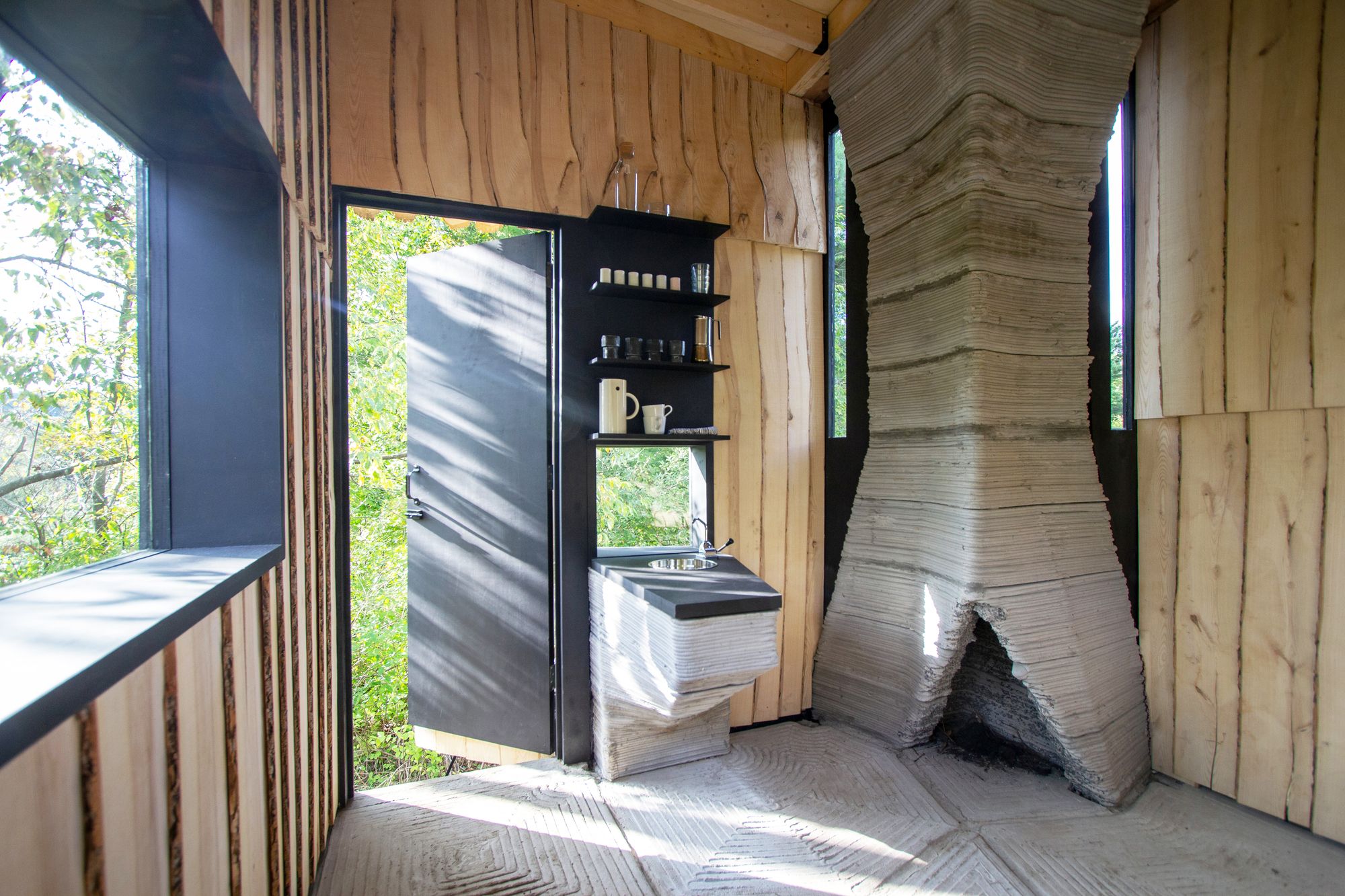
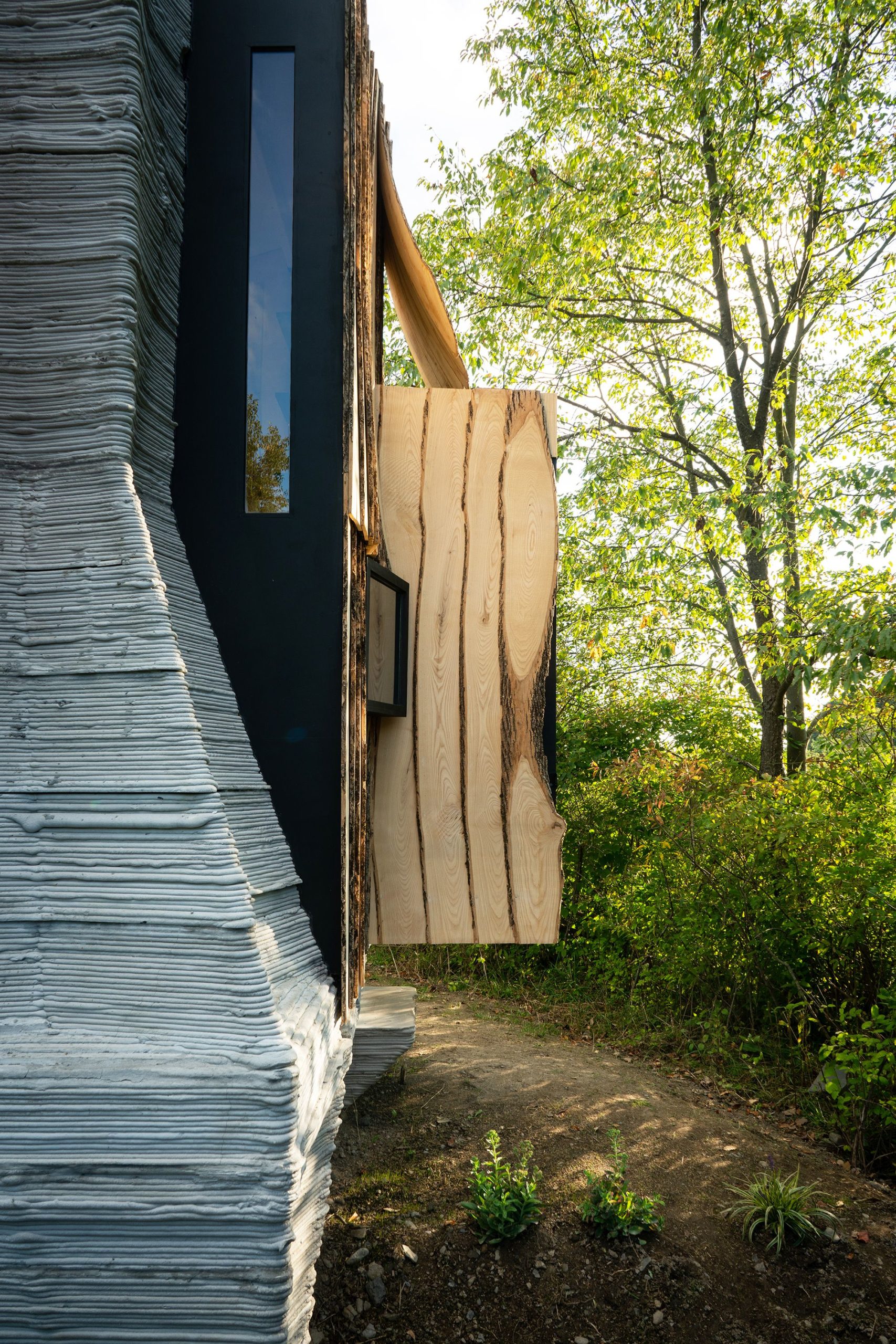
In response to the use of concrete, one of the most widely used building materials on earth, the Cornell researchers developed the full-scale 3D printing system that requires no formwork and uses the absolute minimum amount of concrete in the production process. This saves a significant amount of material, significantly improving the CO2 footprint of concrete construction.
© Andy Chen
The robotic arm they use was discovered on eBay and previously built cars for General Motors. Zivkovic and the RCL team repurposed the robot, reprogramming it to methodically saw and shape the wood at a scale usable for structural and design elements. In response to the use of concrete, one of the most widely used building materials on earth, the Cornell researchers developed the full-scale 3D printing system that requires no formwork and uses the absolute minimum amount of concrete in the production process. This saves a significant amount of material, significantly improving the CO2 footprint of concrete construction.
© Andy Chen
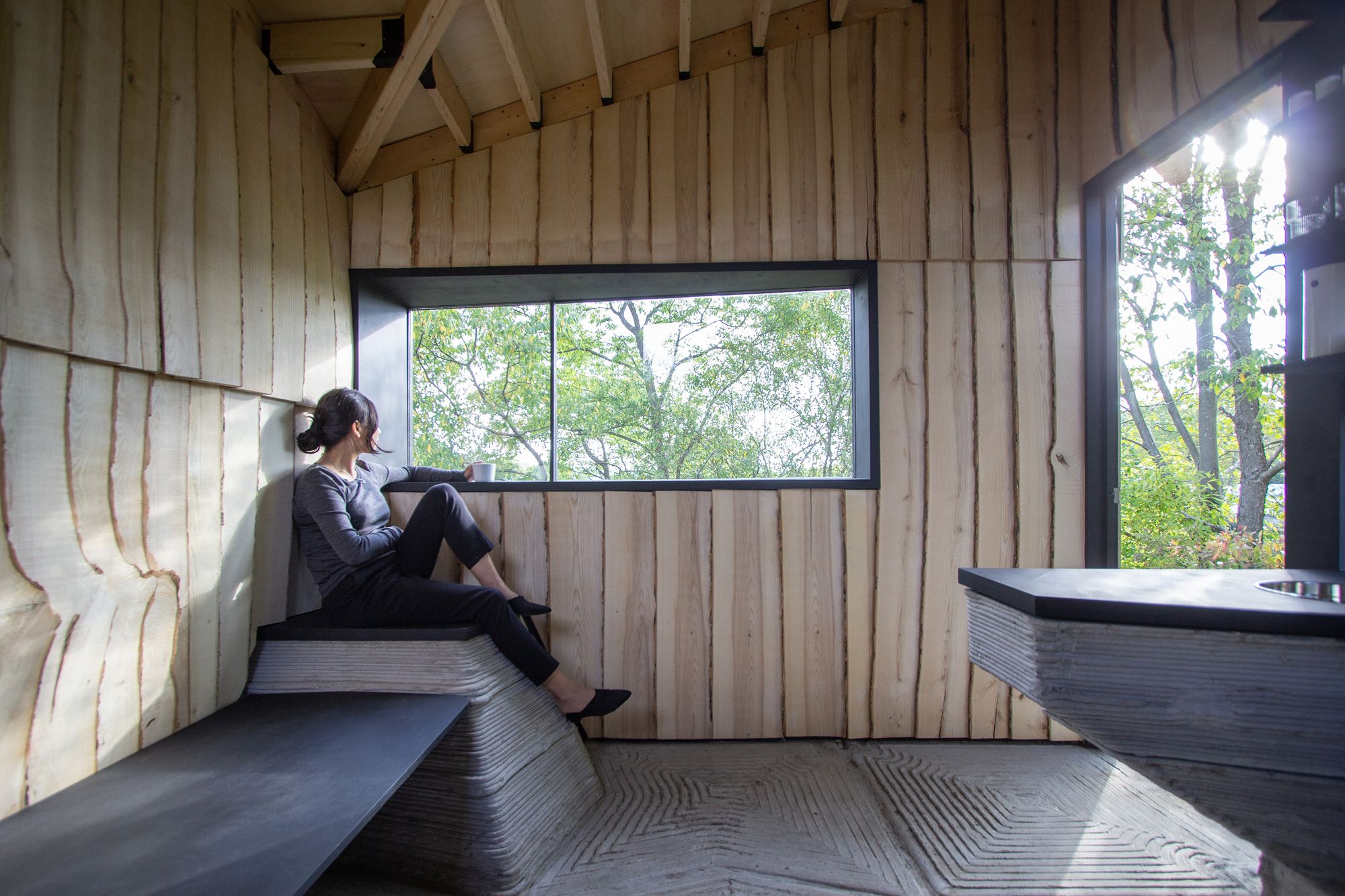
The cabin demonstrates a new way to think about sustainable housing design, development, and construction in the United States and perhaps beyond. Its inventive design combines two of the most widely used construction materials in the US (concrete and timber), rethinking techniques and approaches for using them from the ground up.
© Andy Chen
Other industries have benefited enormously from disruptive technologies that make production more efficient and less resource-intensive. The residential construction industry, however, has remained unchanged for decades. Lok and Zivkovic’s research and development of a design language informed by the context of the current climate emergency make a strong case for a possible future where architects, engineers, and construction professionals can benefit directly from prototypes that emerge from labs or studios geared for iterative testing, sustained critical thinking, and speculative design.
© Andy Chen
The project’s combined environmental concern and inventive use of advancing technologies promise to inspire imaginative design, improve material efficiency in construction, reduce long-term construction costs, and increase the availability and versatility of tools for distributed manufacturing that offer unprecedented mass customization to future homeowners.
© Andy Chen
Project Info:
Architects: HANNAH
Location: United States
Project Year: 2021
Photographs: Andy Chen, Reuben Chen