

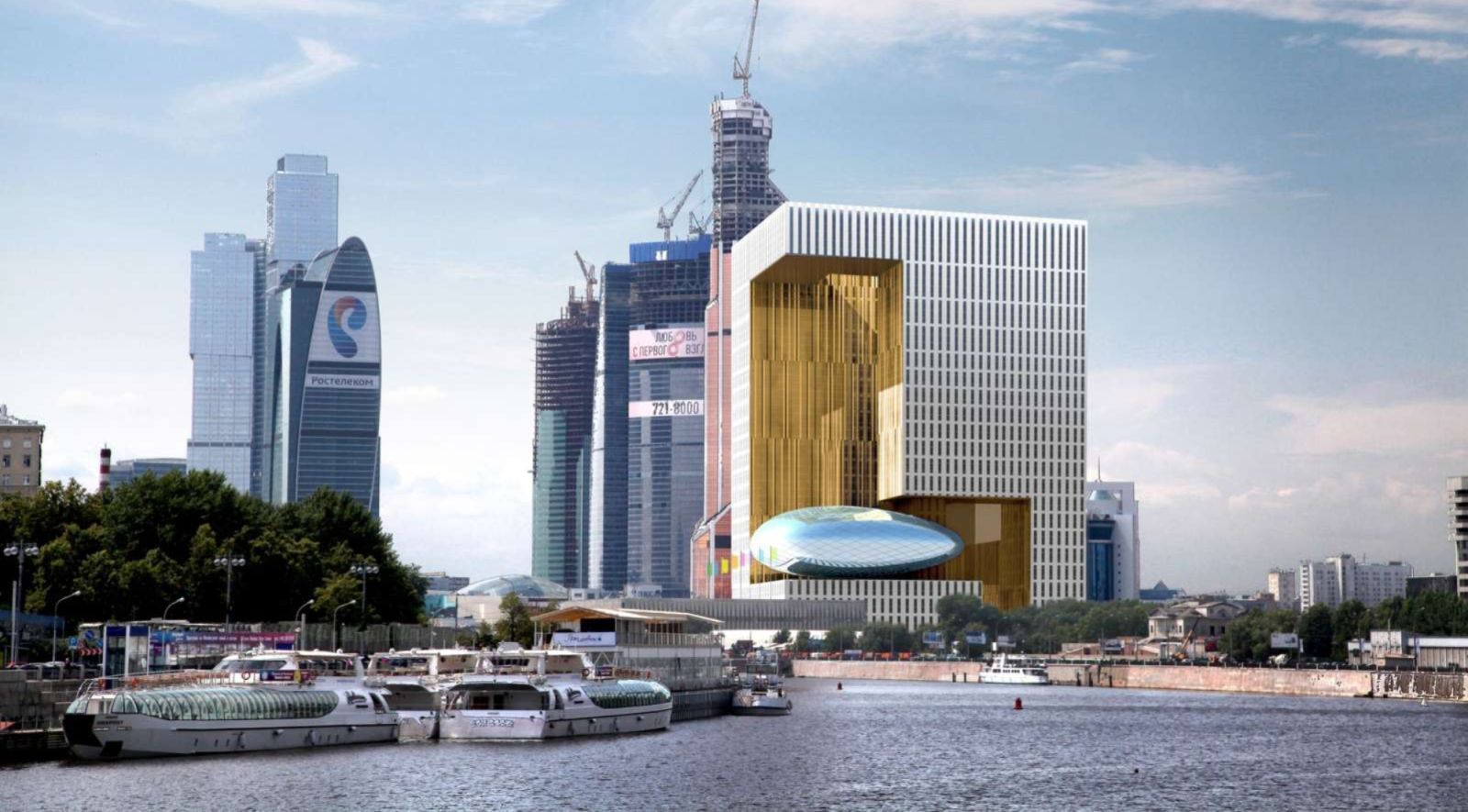
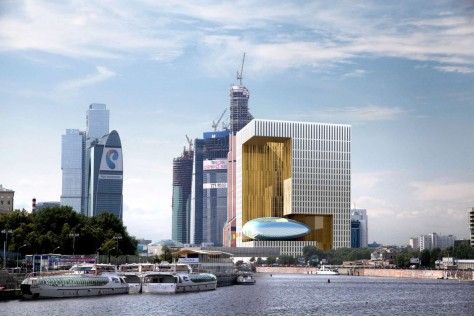
Window of Power, the proposal for the new parliamentary center by architects Alexander Asadov does not look like the majestic parliament houses one is accustomed to nonetheless it’s architectural presence can be felt in the urban landscape. The proposal comes off as a tall building with a golden niche as the main façade housing a giant oblong pebble-like volume.
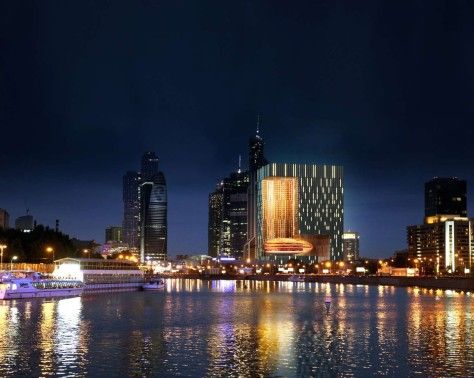
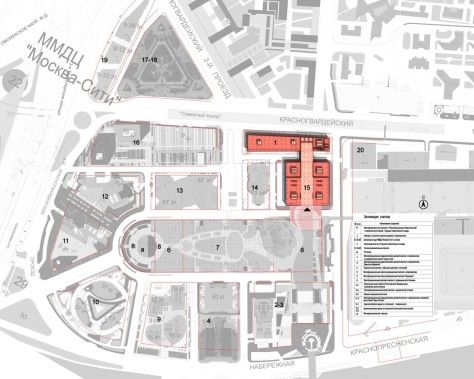
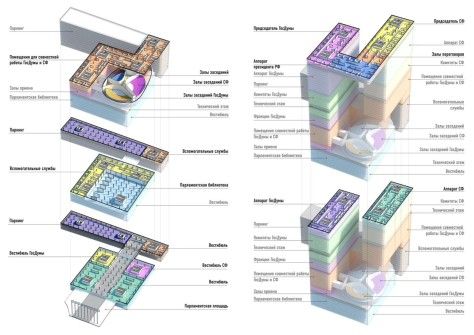
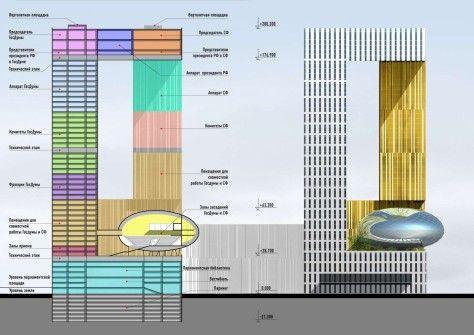
This eye catching design proposal is sure mark the urban-scape with its play of volumes that correspond to the main functional blocks of the center. In talking about the functional organization of the building, the rectangular block forms the independent buildings of the State Duma and Federation Council, the S and n-shaped links form the premises for collaborative work of deputies and members of the federation council, including auxiliary services. The first 6 floors are reserved for the library.
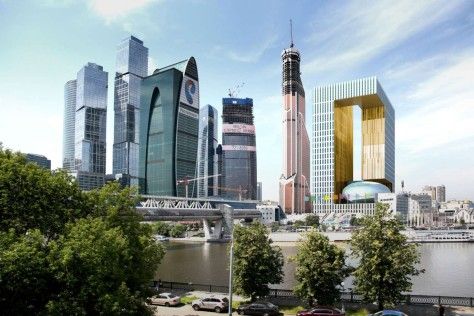
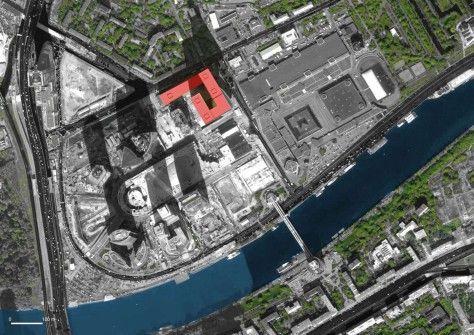
The main car park is completely isolated in a separate “brick” that is set against the main building from behind and is connected to it with a covered passage that serves as the continuation of the main lobby.
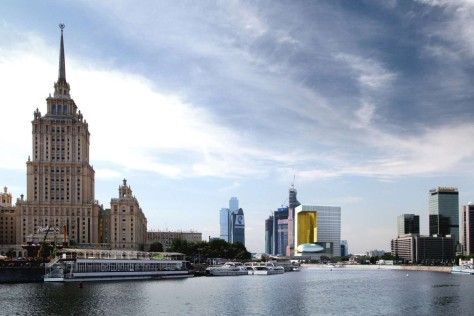
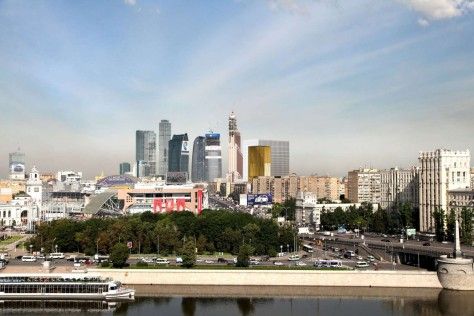
In spite of the general prism shape of the building, the architects carve out a niche at the corner facing the Moskva River, probably as an urban window from the building. This niche is what gives the building its characteristic architectural presence. The coating is enhanced to reinforce its presence by the use of copper metallic panels. The most interesting element in this niche is the oblong shape, which serves as the convention halls. The joining block that gives the n shape and connects the two buildings is 3 floors thick and serves as offices for supporting staff. In all this, the proposal by the architects breaks from the surrounding architecture and will go on to mark the riverfront.

Hassan Yakubu is an editor at Arch2O with a deep academic and professional background in architecture, planning, and urban infrastructure. Currently pursuing his Ph.D. at Cornell University, his editorial focus spans climate urbanism, sustainability transitions, and the intersection of infrastructure and STS. Hassan brings a sharp critical lens shaped by fieldwork in Accra and policy research across Africa. With prior experience leading pedagogical initiatives and contributing to architectural practices in Rabat and Accra, his writing brings clarity, academic depth, and a global perspective to contemporary urban issues and design thinking.